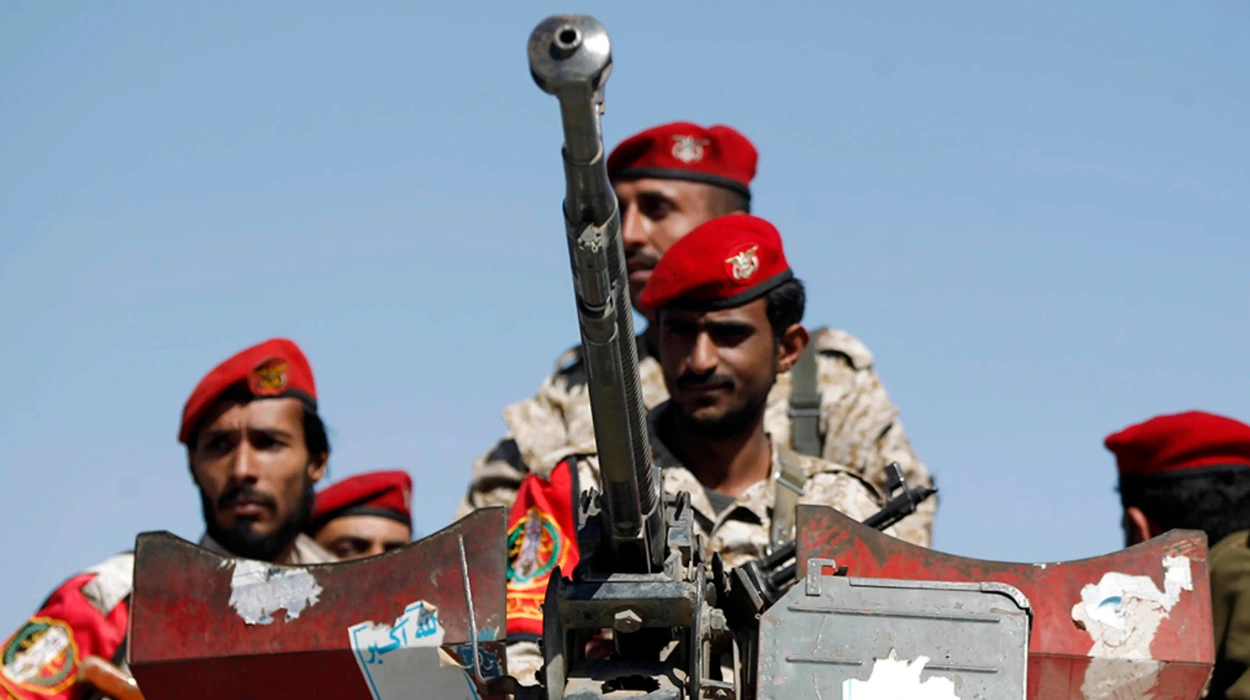
The conflict in Yemen continues to unfold as one of the world’s most severe humanitarian emergencies, underscored by the persistent military and political influence of the Houthi movement. Entering 2025, the Houthis maintain a structured strategy centered on asymmetric warfare, using drones, ballistic missiles, and targeted assaults on regional infrastructure that deepen instability across the Arabian Peninsula. These operations place significant strain on Yemen, Saudi Arabia, and neighboring states that now confront continuously shifting security risks.
The United States remains engaged through a mixed security and diplomatic framework aimed at limiting Houthi advancements while supporting mechanisms for political negotiation. Even though certain ceasefires have offered momentary stability, clashes resume frequently, reinforcing the Houthis’ ability to leverage regional rivalries and maintain a resilient command structure supported by external partners.
Military And Strategic Dimensions Of The Houthi Threat
The strategic evolution of Houthi missile and drone warfare has shaped regional defense planning throughout 2025. The group’s operations against airports, oil processing facilities, and civilian areas in Saudi Arabia and the UAE reflect growing sophistication in long-range precision targeting. American and regional intelligence reports this year show further advancement in strike coordination and telemetry systems, pointing to sustained external supply channels and technical guidance.
The pressure on Gulf air-defense architecture has compelled new deployments of THAAD and Patriot batteries, supported by enhanced US radar integration and early-warning surveillance. US officials have emphasized that limiting Houthi strike capabilities is necessary for protecting regional economic hubs, especially as critical infrastructure across the Gulf continues to experience heightened threat exposure.
Proxy Dynamics And Regional Rivalries
The Houthis function centrally within the broader Saudi-Iran geopolitical rivalry, reinforcing Tehran’s influence via a proxy presence along a strategic maritime corridor. This positioning complicates security calculations for the US, which seeks to curb Iranian material support while simultaneously encouraging diplomatic engagement between Gulf capitals and Tehran-backed networks.
Regional intelligence assessments in early 2025 highlight a widening set of logistical pathways used for weapons transfers into Yemen. In response, Washington has intensified maritime interdiction efforts across the Gulf of Aden and the Arabian Sea, aiming to disrupt weapon flows that have sustained Houthi operational strength. These measures remain part of a wider strategy to prevent the Yemen conflict from escalating into broader cross-border instability.
Humanitarian Crisis And Diplomatic Initiatives
The humanitarian emergency in Yemen persists at grave levels, with an estimated 17 million people requiring life-saving aid. Disrupted supply chains, conflict-driven displacements, and infrastructure collapse have accelerated food insecurity and medical shortages across multiple provinces. Aid organizations reported in 2025 that access constraints and recurring hostilities continue to delay distribution efforts despite increased funding from Western and Gulf donors.
Blockades enforced by coalition forces and restrictions around Houthi-controlled zones complicate the movement of humanitarian convoys, limiting relief access in high-risk districts. As cholera resurgence and severe malnutrition cases rise, international pressure has intensified for broader humanitarian access and negotiated corridors that allow aid groups to operate more freely.
Diplomatic Efforts And Ceasefire Initiatives
Diplomatic efforts led by the United States and United Nations throughout 2025 prioritize rebuilding ceasefire structures capable of reducing frontline engagements. Although earlier truces collapsed due to mutual violations and deep political mistrust, more recent discussions indicate cautious momentum toward localized agreements. US officials have underscored the need for inclusive negotiations involving all Yemen factions, emphasizing that durable governance solutions require a broad political umbrella.
Saudi Arabia has adopted an increasingly dialogue-oriented stance, recognizing that long-term de-escalation cannot be sustained solely through military approaches. Washington continues using its leverage with Riyadh, Abu Dhabi, and international partners to create conditions that facilitate renewed talks and encourage phased confidence-building commitments.
Strategic Implications And Regional Stability
A central component of the US approach in 2025 involves maintaining calibrated pressure on Houthi operations while supporting political pathways that address Yemen’s longstanding governance vacuum. Excessive military intervention carries the risk of deepening humanitarian suffering or unintentionally empowering extremist groups such as AQAP, which have historically exploited instability for recruitment and expansion.
The Biden administration’s strategy documents released this year highlight a dual focus: limiting Houthi access to advanced weaponry and advancing negotiations that include security-sector reform, fragile governance institutions, and regional power-sharing frameworks. These efforts reflect lessons drawn from protracted conflicts where disproportionate military campaigns often produce long-term instability rather than decisive results.
Regional Spillover Risks
Yemen’s conflict continues to influence maritime security conditions around the Bab el-Mandeb strait, a vital artery for global trade connecting the Red Sea to the Gulf of Aden. Disruptions caused by Houthi maritime attacks including documented incidents targeting commercial vessels in early 2025 have raised concerns within the international shipping community and prompted additional naval patrols by Western and regional forces.
The potential for conflict spillover into neighboring territories also remains a pressing issue. Analysts note that shifting alliances and emerging tensions in the Horn of Africa increase the likelihood of external actors becoming entangled in Yemen’s conflict environment. These regional considerations shape Washington’s diplomatic and security calculus as it works to stabilize maritime corridors and manage the strategic risks associated with the conflict’s geographic spread.
The Path Ahead For Security And Humanitarian Stabilization
The intersection of military escalation, humanitarian distress, and regional geopolitical maneuvering has created a complex challenge for the United States and its partners navigating the Yemen crisis in 2025. While the Houthis continue refining their asymmetric approach and expanding their leverage over contested areas, diplomatic channels gradually reopen pathways for negotiated compromises. Whether these developments can reshape the trajectory of the conflict remains uncertain, but the evolving balance between deterrence, relief efforts, and political engagement will shape Yemen’s stability and the wider regional landscape in the months ahead.