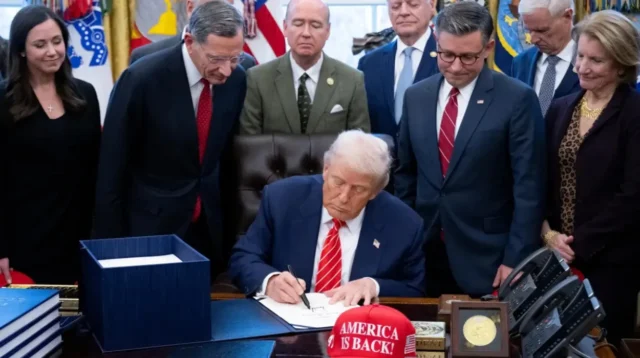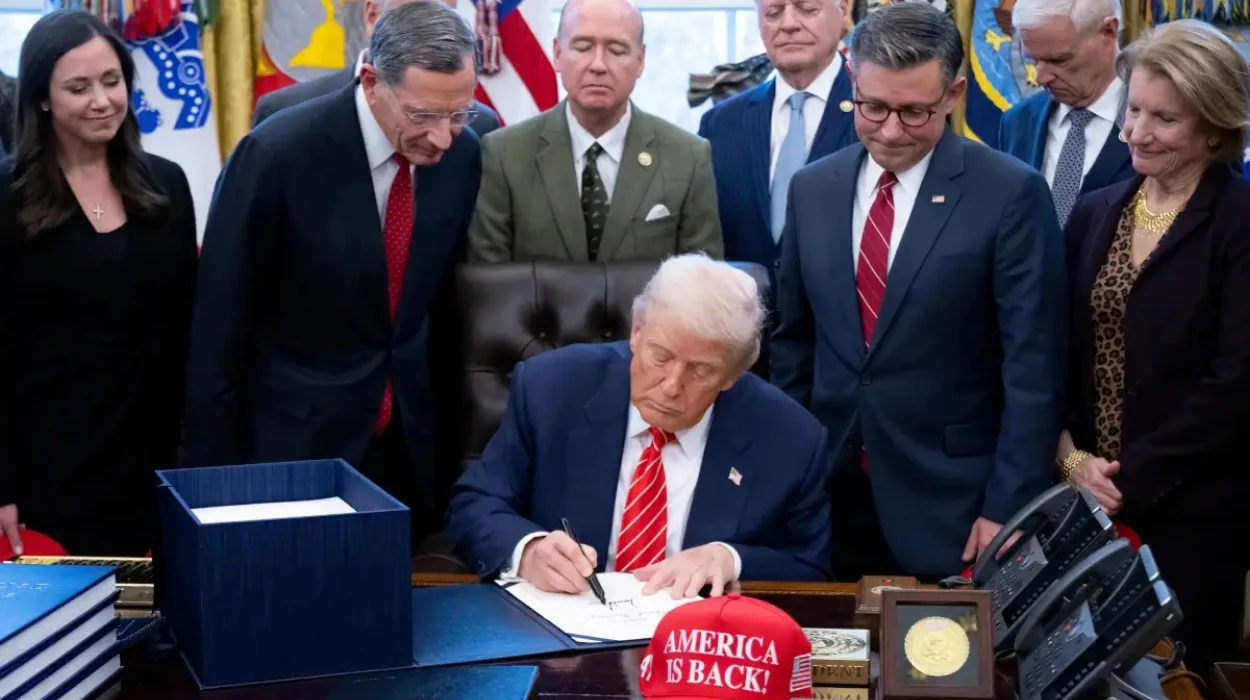
AGOA‘s Fragile Extension was enacted through a one-year renewal signed by President Donald Trump on February 3, 2026, extending the African Growth and Opportunity Act through December 31, 2026, with retroactive effect from its September 30, 2025 expiration. The measure preserves duty-free access for more than 1,800 product categories from 32 eligible sub-Saharan African countries, complementing the broader Generalized System of Preferences covering approximately 5,000 additional items.
The decision followed congressional debate in which longer extensions were proposed but ultimately narrowed to a compromise timeline. While some lawmakers advocated multi-year stability to reinforce investment confidence, the final outcome reflects a preference for short-term leverage and periodic review. Retroactive coverage from the lapse period into early 2026 has partially stabilized shipments disrupted during the interim uncertainty.
Retroactive Trade Continuity
The retroactive clause ensures that exports conducted between late September 2025 and January 2026 remain eligible for preferential treatment. This provision reduces immediate supply chain distortions, particularly for apparel manufacturers dependent on predictable tariff-free access to the US market.
However, the limited duration of the extension means businesses must continue operating under a compressed planning horizon, reinforcing uncertainty in contract negotiations.
Congressional Negotiation Dynamics
Competing proposals ranged from two-year to three-year renewals, reflecting differing views on how to balance predictability with oversight. The final one-year solution underscores a policy approach that treats AGOA as a negotiable instrument rather than a long-term framework.
This legislative structure positions future extensions as opportunities for recalibration rather than automatic renewal.
Tariff Policy Pressures and Trade Alignment
AGOA’s Fragile Extension operates within a broader tariff environment shaped by the Trump administration’s trade agenda. Liberation Day tariffs of 25 to 50 percent on textiles and related imports effectively offset some benefits of duty-free access under AGOA, particularly in sectors most exposed to price competition.
US Trade Representative Jamieson Greer emphasized that future benefits must align with America First objectives, including expanded market access for US exporters and adherence to market-based economic principles. The administration has linked eligibility reviews to governance benchmarks, rule of law standards, and economic reform commitments.
Reciprocity and Market Access Demands
The evolving policy signals suggest a transition from unilateral preference toward greater reciprocity. Officials have indicated that modernization efforts may include adjustments to tariff schedules to ensure reciprocal treatment in African markets.
This approach reframes AGOA as part of a broader bilateral trade architecture rather than a standalone preference program.
Eligibility Reviews and Governance Criteria
Annual eligibility assessments remain central to the framework. Countries must demonstrate progress in democratic governance, anti-corruption measures, and economic transparency to retain access.
These review mechanisms introduce structural uncertainty, as compliance interpretations can influence future access decisions.
Sectoral Exposure and Economic Impacts
The apparel industry remains the most exposed sector under AGOA’s Fragile Extension. Textiles and garments account for a significant share of exports, with countries like South Africa relying heavily on apparel shipments that represent approximately 65 percent of their AGOA-related trade.
Lesotho’s textile sector illustrates the stakes, supporting roughly 40,000 jobs and contributing about 15 percent of national GDP. Without stable preferential access, unemployment risks could rise substantially, given the sector’s dependence on US demand.
Regional Utilization Patterns
Utilization rates vary significantly across sub-Saharan Africa. East African countries demonstrate higher engagement, with utilization levels around 45 percent, reflecting stronger industrial infrastructure and compliance systems. West African utilization, by contrast, has hovered closer to 12 percent.
Overall AGOA exports declined by approximately 14 percent year-over-year to $9.2 billion, highlighting both structural and policy-driven pressures.
Supply Chain Stability Concerns
US apparel retailers and sourcing firms have emphasized the importance of predictable access for maintaining cost competitiveness. Industry associations argue that short-term extensions complicate procurement cycles, particularly for seasonal production lines.
Uncertainty can influence investment decisions, as manufacturers weigh alternative sourcing locations against tariff volatility.
Diplomatic Tensions and Geopolitical Considerations
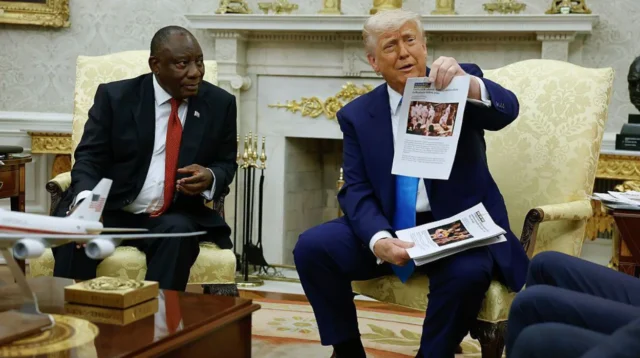
AGOA’s Fragile Extension unfolds amid strained US relations with several African states. South Africa’s eligibility remains under scrutiny due to broader diplomatic disagreements, including tariffs of approximately 30 percent imposed on some South African exports and tensions over geopolitical alignments.
The administration has referenced concerns about governance issues and international partnerships, linking them to eligibility considerations under AGOA criteria. These developments intersect with wider debates about Africa’s engagement with BRICS economies and other emerging trade blocs.
South Africa and Trade Uncertainty
South Africa, one of the largest beneficiaries of AGOA, exported approximately $3.5 billion under the program in 2024. Automotive components and agricultural products complement apparel as key export categories.
Policy unpredictability has prompted Pretoria to emphasize supply chain planning and reciprocal engagement rather than dependency on unilateral preferences.
BRICS and Strategic Trade Alignment
US policymakers have increasingly viewed African participation in BRICS structures as a factor influencing trade strategy. While AGOA remains formally open to eligible countries, broader geopolitical alignments may shape eligibility discussions.
These considerations place trade policy within a larger strategic context that extends beyond tariff lines.
Business Community Perspectives
US business organizations have largely supported AGOA’s Fragile Extension, emphasizing continuity for supply chains linking African manufacturers with American retailers. The American Apparel and Footwear Association has advocated for longer-term renewal to reduce market volatility.
The US Chamber of Commerce has similarly highlighted the importance of predictable access for maintaining competitiveness and supporting employment on both sides of the Atlantic.
Calls for Modernization
Some policy analysts argue that AGOA should transition toward reciprocal free trade agreements. Proposals include integrating structured negotiations that move beyond preference-based frameworks.
Others contend that phasing out preferences without comprehensive alternatives could destabilize established industries and disrupt employment in vulnerable economies.
Investment Confidence Indicators
Empirical evidence suggests that policy stability correlates with higher utilization rates. When trade rules remain predictable, exporters are more likely to expand production and invest in compliance systems.
Conversely, short-term extensions may temper long-term capital commitments due to uncertainty over program continuity.
Strategic Trade Realignment and Future Outlook
AGOA’s Fragile Extension delays a potential program expiration, providing temporary continuity while broader trade debates evolve. It also interacts with US efforts to counterbalance China’s Belt and Road Initiative influence across Africa.
Energy exports remain largely insulated from AGOA’s tariff structure, underscoring the program’s primary focus on manufacturing and value-added sectors. This distinction limits spillover effects but highlights the program’s concentrated impact on labor-intensive industries.
Multipolar Trade Environment
African economies are increasingly navigating a multipolar trade landscape, balancing engagement with the United States, China, and other global partners. AGOA remains a significant channel for US-African commerce, but its renewal cycle reflects shifting geopolitical calculations.
The one-year extension signals that future adjustments may depend on broader policy realignments.
December 2026 Deadline Horizon
With the current extension set to expire at the end of 2026, stakeholders face another review cycle within months. Businesses, governments, and trade advocates must now evaluate contingency strategies.
As tariff structures evolve and modernization proposals advance, the trajectory of AGOA’s Fragile Extension will test whether short-term renewals can sustain long-term confidence, or whether Africa’s export landscape will increasingly adapt to alternative trade architectures in a rapidly rebalancing global economy.