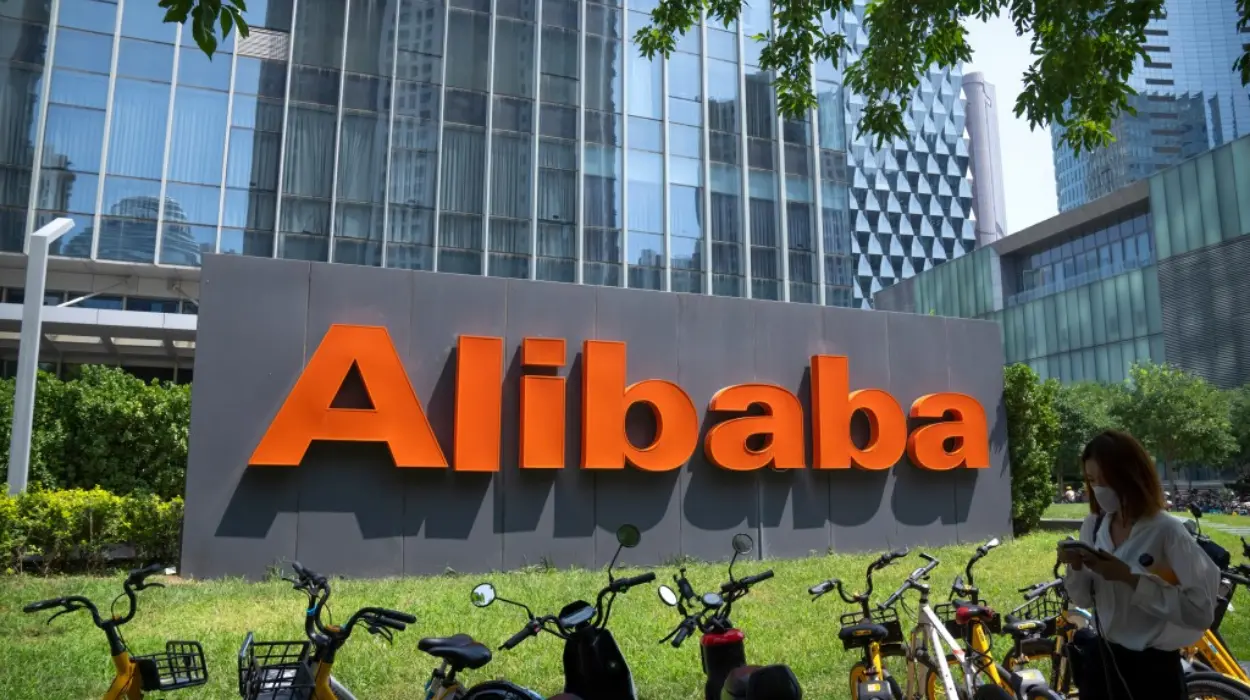
Alibaba has secured a temporary reprieve in its escalating legal fight with the U.S. Defense Department, after a federal judge ordered a short pause on enforcement of the lobbying restriction tied to the Pentagon’s blacklist. The move gives the Chinese e-commerce and cloud giant breathing room after Washington lobbying firms began abandoning it under pressure from a new defense rule that effectively cut off its access to lobbyists with Pentagon-related business. But the order is not a final ruling on the merits, and it does not remove Alibaba from the blacklist. The underlying designation remains in place while the court considers Alibaba’s challenge.
The rationale behind such a choice is that it disrupts an ongoing chain of events which has already caused significant practical damage to Alibaba in Washington. The prohibition against lobbying has meant that the companies which also worked with the Defense Department could not advocate on behalf of companies that have been designated. Thus, Alibaba found itself in a situation where it would have fewer ways to present its case, lobby policy makers and frame the discussion about its listing.
What the judge ordered
As per reports on the story, a temporary stay for 60 days was granted by a US federal judge on the implementation of the ban imposed on Alibaba for recruiting any U.S. lobbyist by the Pentagon-related directive. Practically, this implies that for the time being, the Government should wait to impose such ban on Alibaba at least until the court gives further verdict. The duration of the stay is relatively short, but it is significant because it allows Alibaba to have some room again after its lobbying efforts were interrupted due to the above-mentioned Pentagon directive. The impact of the stay is legally limited. It can be termed as only a pause for Alibaba, not exoneration. Alibaba will have to face other implications of listing in the Defense Department due to the ban imposed on Alibaba.
Why the lobbying ban exists
This lobbying ban falls within a broader policy introduced by the Pentagon that specifically affects firms on the Defense Department’s 1260H list. This list is used to determine which firms the Defense Department believes have business dealings in the U.S., either in or out of China, that involve the Chinese military in some way. According to the defense policy in place, firms doing business with the Pentagon will not be able to represent Chinese firms from this list any longer, since they would no longer be able to keep working for these firms without damaging their Pentagon business.
The strength of this rule lies in the fact that it does not actually ban lobbying as an activity, but can be effectively used as a lobbying blackout for some companies. Within hours of the introduction of the rule, lobbying firms have been terminating relationships with Chinese firms in order to protect Pentagon contracts. Notable victims of this change included Alibaba and Tencent.
Alibaba’s place on the list
Alibaba was included in the revised 1260H list by the Pentagon in June 2026. According to reports, the most recent revision contained a total of 188 entities that, according to the Department of Defense, were either directly or indirectly involved in operations in the US. The inclusion in the list led to immediate ramifications in Washington and financial markets since being listed under such a category entails more than just the legal designation. The company disputes the basis for its listing.
Alibaba argues that it has “no basis” for being designated and claims it is not a military company from China. Alibaba maintains that it is a technology and retail company and not a defense or intelligence firm. In its lawsuit, Alibaba claims that the Pentagon failed to give proper weight to certain pieces of evidence that could have contradicted the case against it. Such an argument goes to the core of the dispute.
How the ban hit lobbying firms
The most immediate effect of the Pentagon-linked lobbying restriction was a pullback by Washington firms. Reporting said five lobbying firms dropped Alibaba, while four dropped Tencent once the rule came into force. That created an abrupt and visible shift in how Chinese technology firms could operate in the U.S. political environment. For companies that rely on policy access to explain themselves, push back on restrictions, and protect business interests, losing that network can create a vacuum almost overnight.
The reason firms moved quickly is straightforward. The rule forces a conflict between representing companies on the Pentagon list and keeping defense-related work. Since many major lobbying firms value their Pentagon relationships, they chose to sever ties with listed Chinese clients rather than risk broader business losses. That tradeoff shows how regulatory tools can influence private-sector behavior without requiring a direct ban on speech or advocacy. In effect, the policy changes the economics of representation.
Alibaba’s legal argument
The lawsuit brought by Alibaba challenges not only the blacklist status but also the effects thereof. In its lawsuit, Alibaba claims that the Pentagon did not provide sufficient evidence and that the entire process was flawed. Alibaba wants the court to either revoke or block the designation or, at the very least, make it impossible for the designation to affect it by making sure it does not suffer any practical consequences in terms of access to Washington as it continues the lawsuit. This is the importance of the temporary injunction in question, since it provides Alibaba with an opportunity to regain some of its access to Washington that it had lost before during the larger litigation.
Alibaba’s strategy also lies in the way it portrays itself in the lawsuit. Specifically, by branding itself as a civilian business entity, Alibaba wants the court to view the designation as an overreach. Such an approach is important in light of the facts that blacklisting by the Pentagon tends to have long-lasting political and reputation effects.
U.S. government stance
The Pentagon has treated Alibaba as part of the problem it is trying to identify through the 1260H list. Although public reporting does not show a detailed merits defense from the Defense Department in this specific legal challenge, the department’s action speaks for itself. By listing Alibaba, it has signaled that the company falls within the category of Chinese firms it believes are linked to military activity or support structures. That designation then triggers downstream restrictions under the lobbying rule.
The stance of the U.S. government is not only on the company but rather a reflection of a change in policies regarding China and its technological companies, especially those seen to be serving military interests. Blacklisting is just one facet of the overall strategy while lobbying prohibition is another. Both are aimed at reducing the influence of the companies within the United States.
Market reaction and investor signal
Alibaba’s stock responded positively to the temporary relief. Reports said the shares rose about 2% in premarket trading after news of the court order. That kind of reaction suggests investors viewed the stay as meaningful, even if limited. It reduces immediate uncertainty and offers a small sign that Alibaba can still defend itself in Washington.
Still, the market move should not be read as a full endorsement of Alibaba’s legal outlook. Investors often respond quickly to any sign that a regulatory burden may ease, especially when a company is as globally followed as Alibaba. But because the blacklist fight remains unresolved, the stock reaction likely reflects hope rather than certainty. The court’s next steps will matter far more than the initial bounce.
Bigger policy picture
The Alibaba case is also a window into how Washington is using rules, not just rhetoric, to reshape its relationship with Chinese firms. The 1260H list and the lobbying restriction work together as a policy package that can isolate targeted companies from both government contracting and political advocacy. That makes the system unusually broad in its reach. It can affect legal defense, public affairs, investor confidence, and business development at the same time.
In the case of Alibaba, the dispute is now at the confluence of issues surrounding national security, the reputation of the corporation itself, and international business dealings. Anything less than a complete ban is good news for Alibaba, since it means that there won’t be a complete ban until they are able to clear their name. However, the larger question still looms: whether the U.S. government will continue to see Alibaba as a military-linked business, or whether the court system will eventually make them change their minds.