The Israel lobby in America is a faceted and multi-layered system of people, interest groups, lobbying committees, and grassroots movements that seek to influence American foreign policy to their benefit, namely Israel.
Although the most recognizable and most powerful participant in this network has always been the American Israel Public Affairs Committee (AIPAC), the larger pro-Israel environment has various other actors with different roles, constituencies, and strategies. It is also a dynamic environment of 2025 because the changing opinion of the population, geopolitics, and legislative activity suggest the changes in the power relations within the lobby.
Formal Lobby Organizations and Their Roles
AIPAC has been one of the pillars of the Israel lobby that is known to be direct and strategic in its activities with the members of the U.S congress. The publicly proclaimed mission of the organization also focuses on strengthening the U.S.-Israel alliance as a key to American national interests and values. The AIPAC has an impressive leverage with bipartisan lobbying, substantial political contributions and sponsorship of congressional delegations to Israel. Its expenditure is over 100 million in a year to sustain and grow its policy objectives in Washington.
The success rate of the group is seen in the fact that it can win its policy battles, as the group success rate is recorded at 60% in all the cases where it is applicable even in cases where the president contradicts its position. The success of AIPAC is partly because it has been trying to match its agenda with the current executive tastes whenever it can, but also because it has an organized lobbying machine that shapes the legislative priorities.
Christians United for Israel: Mobilizing Faith-Based Support
Other than the AIPAC, Christians United for Israel (CUFI) is one of the most popular and fast growing lobbying groups that represent pro-Israel political systems through the Christian evangelical lens. CUFI organizes over 10 million members with grass-root campaigns that call on churches and individual Christians to press the U.S. on behalf of an unblinking alliance of support to Israel. CUFI was established in 2006 and its mission is a combination of theological imperatives and political lobbying in contrast to the lobby groups founded by Jews.
The style of CUFI combines grassroots action and lobbying of the policy through its 501(c)(4) action fund. After the escalation of tensions in 2023 and 2024, CUFI has further increased its efforts to provide more military assistance to Israel, implement sanctions against Iran, and denounce international structures perceived to harm Israeli interests, such as the Boycott, Divestment, and Sanctions (BDS) movement.
The Conference of Presidents and Other Jewish Organizations
The other important formal actor is the Conference of Presidents of Major American Jewish Organizations which represents an amalgamation of goals of 51 major non-profit Jewish organizations. It acts as an important intervener between the Jewish community and the executive arm in promoting strong U.S.-Israel diplomacy.
Other powerful groups are the Anti-Defamation League (ADL), the American Jewish Committee as well as the Zionist Organization of America. These organizations differ in approaches to media surveillance to policy investigation and legal activism but all have one thing in common; backing Israel in United States policymaking.
Think Tanks as Intellectual Engines
The lobbying power of the Israel side is also supported by the fact that there is a web of research institutions and think tanks that influence the discourse and policy debate of people. Some notable ones are the Washington Institute of Near East Policy (WINEP), the Jewish Institute of National security Affairs (JINSA) and the Saban center of Middle East policy at Brookings.
These think tanks generate policy briefings, forums and provide expert analysis in such a manner that has always been in line with pro-Israel views. According to some scholars, the groups have been able to amass intellectual power in the U.S. foreign policy establishment, which is usually used to crowd out any other opinions of the Middle Eastern conflicts.
Political Action Committees and Electoral Influence
Another strategy is the involvement of political action committees (PACs) associated with the lobby of Israel. The PACs like the Republican Jewish Coalition and J Street, which supports the Democratic party, are part of how electoral leverage is achieved through fundraising of candidates who support the pro-Israel policies. This bi-party representation is a form of diversifying the responsiveness of the elected officials to the interests of the lobby.
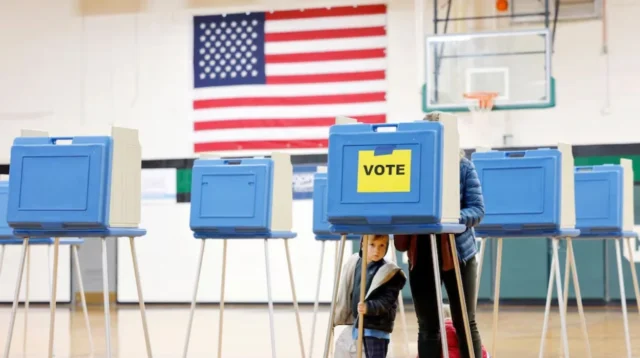
In addition, the voter turnout and opinion amongst the Jewish Americans including the evangelical Christian supporters form an effective electoral block. The analysts give special focus to the so-called Israel swing vote that can change the situation in central battle-ground states and therefore, strengthen the political clout of the lobby.
Public Opinion and Lobby Responses in 2025
According to the recent polls, there is a significant change in the American opinion about Israel. After the violent escalation of events in late 2023, negative attitudes towards Israel have grown among American adults, and some surveys show that more than half of them express a critical opinion. This world creates challenges and opportunities to the lobby group as it tries to fit the message and policy priorities.
The reaction taken by the lobby is through strengthening grassroot mobilization most especially via Christian Zionist networks and increased direct congressional advocacy. Simultaneously, there are still in-house arguments concerning the scope of backing and the sustainability of the present U.S. policies towards Israel and the Middle East in general.
Diversity within the Lobby and Its Geopolitical Impact
Nothing is monolithic in the Israel lobby. In addition to the Jewish groups that focus on the conventional political outlets, Christian Zionist groups contribute a religious belief that drives a unique brand of support, which tends to focus more on the biblical stories relating to modern-day politics.
This multiplicity makes the narratives of influence of the lobby complex and also extends its boundaries. The partnership between the Jewish and evangelical Christian groups goes beyond the ability of the lobby to influence the U.S. foreign policy; be it military aid or tactical diplomatic support. The influence of the lobby extends beyond domestic politics and it affects the U.S. diplomatic policies that affect international negotiations, alliances, and conflicts in the Middle East.
The power of the lobby is not only seen in the congressional votes, the U.S. vetoes in the United Nations Security Council and it represents a unanimous effort to conform the American foreign policy to the preferences of the Israeli government.
Navigating Complexity: Competing Perspectives on Influence
Some of the observers overestimate the influence of the Israel lobby, even describing them as the controllers of the policies in the U.S., but others emphasize a less obvious fact. The diplomatic officials and former U.S. Secretary of State George Shultz warn not to overstate the role of the lobby by noting that there are many conflicting interests that make U.S. foreign policy, including the influence of Gulf Arab states and other geopolitical factors.
The capacity of the lobby to attain the policy objectives is important but limited by the greater U.S. strategic interests as well as domestic politics. The critics claim that this influence may at times limit free discourse and yield polarization in American society and politics.
The Evolving Future of the Lobby’s Role
The evolving nature of the Israel lobby in 2025 underscores a network adapting to new geopolitical realities and internal pressures. As public opinion continues to shift and as the U.S. recalibrates its foreign policy priorities amid global challenges, the diverse players within the Israel lobby are likely to refine their strategies, emphasizing coalition-building and public engagement alongside traditional political lobbying.
The interplay between deeply held religious convictions, political pragmatism, electoral calculations, and global strategic interests makes the Israel lobby a unique and enduring subject of analysis for understanding contemporary U.S. foreign policy.