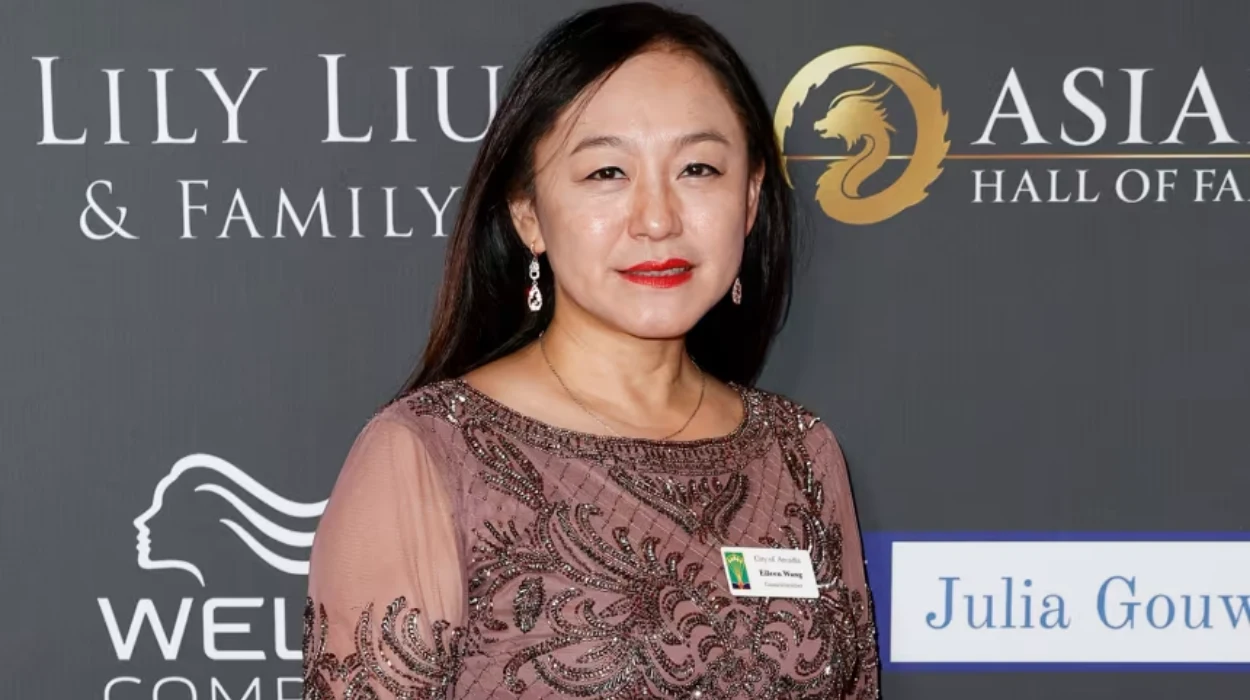
In a political and legal saga that is spreading throughout Southern California’s suburbs, Eileen Wang—a former mayor of the city of Arcadia who is 58 years old—has suddenly resigned from her position and admitted to her guilt in the crime of serving as an illegal agent for the Chinese government in the US. The once-popular local official, who was considered to be an ideal example of civic involvement by the Asian-American community, is now accused of an extensive betrayal of trust as part of which she promoted propaganda for Beijing through her media venture and took orders from Chinese officials.
Her resignation and the unsealed plea agreement mark not only a personal downfall but also a stark illustration of how foreign influence operations can embed themselves in democratic institutions at the municipal level.
The rise and fall of a suburban mayor
The incumbent mayor of Arcadia, a suburb of 60,000 people in east San Gabriel Valley, Eileen Wang, who is a Democrat elected in 2022, has transformed from being a source of local pride into one of national disgrace. Prior to the release of her indictments, her reputation depended significantly on her leadership qualities within the community, multiculturalism, and the representation of a progressive Chinese-American politician in an area populated largely by Asians.
This is reflective of the larger story of economic success and political participation among immigrant groups, which has been shattered by the revelation that she was working on behalf of a foreign government.
As stated by court records and the Department of Justice, Wang’s fall from grace can be attributed not only to her time as mayor but even earlier, when she took office. The federal prosecutor contends that she and her fiancé, Sun, have been maintaining a website that caters to the Chinese-American community since at least 2020, spreading Beijing-friendly information.
The twist, they say, is that this platform was not an independent political voice but a conduit guided by directives from Chinese government officials. As Assistant U.S. Attorney Daniel J. Connolly put it in a statement,
“Eileen Wang secretly served the interests of the Chinese government while serving as an elected official in the City of Arcadia. Eileen Wang is now accepting responsibility for her criminal conduct.”
The above is a concise summary of the entire problem: the clash between the elected representative of America and the secret allegiance to the foreign nation. The additional disturbing aspect of the story is that Wang wields his power not from the capital cities of either Washington or Sacramento but from the suburb city council, which was thought to be immune from such activities.
The legal framework: Acting as an illegal foreign agent
At the heart of the indictment is a single felony count: acting as an illegal agent of a foreign government—in this case, the People’s Republic of China. Under U.S. law, individuals who engage in political or advocacy activities on behalf of a foreign government or party are generally required to register with the Department of Justice through mechanisms such as the Foreign Agents Registration Act (FARA)‑inspired frameworks. The failure to do so while actively carrying out instructions from foreign officials can render someone a criminal “unregistered agent.”
Based on Wang’s plea bargain, as seen through various media outlets reporting on her case, she is expected to plead guilty to this charge. This offense has the possibility of earning the offender ten years imprisonment in federal prison, besides any other penalties such as fines and supervised release, depending on the sentencing discretion of the judge. Sentencing discretion involves many things including whether there was cooperation, how long she has been involved in these activities, and how much damage was caused to the democratic process of the U.S. The federal government has stressed that her race or ideologies are not part of the issue; it all boils down to her hidden allegiance and lack of disclosure.
In court‑related documents, prosecutors allege that Wang and Sun did not disclose to their readership that certain articles and narratives on their website were produced or guided by PRC officials. From the government’s perspective, that omission is critical.
“She did not register as a foreign agent, nor did she disclose that she was publishing content produced or guided by Chinese government officials,”
a Justice Department statement noted. By withholding that information, they argue, Wang effectively disguised state‑sponsored messaging as independent commentary, blurring the line between journalism, activism, and political influence.
Patterns of influence: Propaganda, direction, and digital channels
The details of Wang’s alleged conduct reveal a pattern consistent with what U.S. security and intelligence officials have repeatedly warned about: foreign governments using diaspora‑targeted media and digital platforms to shape political discourse without revealing their hand.
As explained by the Justice Department, the activities of Wang and Sun were focused on an Internet website catering specifically to the Chinese-American community, a community composed of immigrants as well as U.S.-born people who are politically active but can easily be influenced by messages based on culture, language, and nationality.
It is alleged that Wang and Sun received orders from Chinese government officials for several years prior to her resignation to publish articles and stories favorable to China.
These pieces reportedly covered a range of topics, including China’s domestic policies, its foreign‑policy posture, and delicate issues such as Taiwan and U.S.–China relations. In some instances, the government claims, Wang and Sun sought approval from PRC officials before circulating or publishing certain pro‑China material, effectively turning their outlet into a surrogate arm of Beijing’s information strategy.
The federal government views this issue as being much more than simple editor discretion; it is an orchestrated influence operation. Assistant United States Attorney Daniel J. Connolly characterized the behavior as secretly advancing the interests of the Chinese government while occupying elected office. This characterization speaks to the seriousness that the government places on the matter; it is much more than a simple violation of disclosure laws; it is an attempt to further the interests of another nation inside our political process.
Local reverberations: Arcadia’s political landscape shaken
The people of Arcadia were surprised by the announcement since, for them, it broke their civic imagination about the city they live in. Known to be a relatively affluent place, with good schools and a multiracial populace, the community is proud of their stable and pragmatic leadership. But with the exposure of their mayor working in secrecy for another country, the idea of normalcy is no longer the same for the community. Some residents were interviewed about this and were visibly upset.
“This is not just a scandal about one person; it’s about whether we can trust our local leaders,”
said one Arcadia resident, speaking anonymously to a local outlet.
“If someone who was elected to represent us was actually promoting a foreign government’s agenda behind the scenes, it undermines the whole idea of democracy.”
Similar sentiments have echoed in City Council statements and community forums, where questions have been raised about oversight, transparency, and the vulnerability of small‑scale political offices to foreign influence.
Now the Arcadia City Council is faced with the urgent task of choosing a new mayor in their upcoming meeting. It may lead to discussions regarding how to bring back faith in politics, how more disclosures should be demanded from the members of the government, and how they can show that the city cannot put up with such double loyalty anymore. At the same time, this case can provoke discussions in other towns regarding candidate checks and politics of any kind related to foreigners in immigrant-heavy neighborhoods.
Federal framing: A broader battle against foreign influence
From Washington’s perspective, the Eileen Wang case is emblematic of a larger national‑security concern. U.S. authorities have repeatedly warned about “harmful foreign influence operations” and the use of legal, social, and political channels—rather than only clandestine espionage—to sway public opinion and policy. In recent years, the FBI and the Justice Department have highlighted instances where Chinese, Russian, and other foreign governments have sought to influence local elections, community organizations, and media outlets, often through intermediaries who appear to be private citizens.
In this context, Wang’s case is not viewed in isolation but as part of a spectrum of activities that authorities are trying to contain. Federal officials have suggested that the case illustrates how even low‑level or seemingly local officials can become conduits for foreign‑state agendas when they operate without registration or transparency. The emphasis, they say, is less on the stature of the office and more on the method of operation: taking direction from a foreign government, promoting its messaging, and doing so without revealing that connection to the public.
Critics and civil‑liberties advocates, however, have cautioned that the response must be calibrated. They warn that overly broad interpretations of “foreign agent” statutes could risk chilling legitimate diaspora‑focused speech or political engagement, especially among communities that maintain ties to their countries of origin. Balancing national‑security concerns with constitutional protections for free expression remains a central challenge, and the Wang case will likely be cited in future debates over how to define and regulate foreign influence without suppressing lawful political activity.
The human dimension: Identity, loyalty, and divided affiliations
Beneath the legal and geopolitical layers of the case lies a deeply human question about identity, loyalty, and dual affiliations. As a Chinese‑American woman in elected office, Wang occupied a symbolic space that many understood as a bridge between communities. Her story was, on its surface, one of assimilation and success: a person who had navigated the American political system and achieved a position of authority. The revelation that she was also working under the direction of a foreign government raises uncomfortable questions about where such individuals ultimately place their allegiances.
Legal experts note that the issue is not about ethnicity or cultural attachment but about whether public service is being used as a platform for a foreign state’s interests. In U.S. law, the distinction often hinges on disclosure: if someone is receiving instructions and acting on behalf of a foreign government, they must register and make that relationship clear. By failing to do so, Wang crossed a line that transforms advocacy into criminal conduct in the eyes of prosecutors.
At the same time, the case underscores the complexity of diasporic identities. Many Chinese‑Americans feel a strong emotional and cultural connection to their ancestral homeland, even as they affirm their civic loyalty to the United States. The challenge lies in distinguishing between personal sentiment, cultural affinity, and covert political service. When those boundaries blur in a way that involves secret direction from foreign officials, the legal and political consequences can be severe.
Looking ahead: Sentencing, city politics, and precedent
As the case moves forward, several key developments will shape its long‑term impact. The immediate focus will be on Wang’s formal guilty‑plea hearing in federal court, where she will enter her plea and where the judge will begin to outline the parameters of sentencing. The 10‑year maximum provides a wide range of possible outcomes, and sentencing will likely reflect not only the specific facts of her conduct but also the broader message federal authorities wish to send about foreign‑agent cases.
If the judge imposes a significant prison term, the decision may be hailed by some as a strong deterrent against similar conduct, while others may view it as overly punitive, especially given that Wang’s influence was localized and not tied to a high‑level national‑security breach. The Arcadia City Council’s response—how it chooses to appoint a new mayor, whether it strengthens conflict‑of‑interest rules, and how it communicates with residents—will also matter in shaping the case’s legacy at the local level.
Beyond Arcadia, the case may influence future investigations and prosecutions involving foreign influence operations. Law enforcement and intelligence agencies may look to it as a precedent for how to document and charge local‑level actors who are found to be operating under the direction of foreign governments. It may also prompt renewed scrutiny of diaspora‑targeted media outlets, digital platforms, and community organizations that receive political or financial support from foreign sources.