Menu

Xi emphasized that ongoing collaboration on the BRI and the 14+1 cooperation mechanism was necessary in response to the European Union's efforts, via its Global Gateway policy, to counter China's divide and rule policies. As a message to the US and the EU on foreign policy, Xi also hegemonism and power politics. The bilateral relationship between China and Hungary was upgraded to an all-weather comprehensive strategic partnership for the new era in Budapest. In addition to discussing collaboration on the Belt and Road Initiative and the 14+1 mechanism, the statement after the Xi-Orban meeting had two key points.<\/p>\n","post_title":"China's self-deception on full display during Xi's European tour","post_excerpt":"","post_status":"publish","comment_status":"closed","ping_status":"closed","post_password":"","post_name":"chinas-self-deception-on-full-display-during-xis-european-tour","to_ping":"","pinged":"","post_modified":"2025-02-02 08:34:26","post_modified_gmt":"2025-02-02 08:34:26","post_content_filtered":"","post_parent":0,"guid":"https:\/\/dctransparency.com\/?p=7084","menu_order":0,"post_type":"post","post_mime_type":"","comment_count":"0","filter":"raw"}],"next":false,"prev":true,"total_page":2},"paged":1,"column_class":"jeg_col_2o3","class":"epic_block_3"};
China supports Macron's proposal for a more strategically independent Europe. Beijing, however, has fooled itself into believing that Macron's independence is a continuation of the policy of former French President Charles de Gaulle, who cultivated diplomatic ties with Beijing and left the NATO command structure sixty years ago. Actually, NATO and France have a revitalized mission as a result of Russia's invasion of Ukraine. The transatlantic alliance is currently thought to be strengthened by a more competent and independent Europe. Fairness and reciprocity, public subsidies, overcapacity and de-risking<\/a>, as well as economic security, were all included in the discussion of trade and economic relations. China opposes \"decoupling,\" Xi said, rejecting the notion that there is a Chinese over-capacity problem. Xi used a very different strategy in Serbia and Hungary than he did in Paris. Xi emphasized China's \"ironclad friendship\" with Serbia in Belgrade. From a \"comprehensive strategic partnership,\" the two parties elevated their bilateral ties to \"building a China-Serbia community with a shared future in the new era.\"<\/p>\n\n\n\n Xi emphasized that ongoing collaboration on the BRI and the 14+1 cooperation mechanism was necessary in response to the European Union's efforts, via its Global Gateway policy, to counter China's divide and rule policies. As a message to the US and the EU on foreign policy, Xi also hegemonism and power politics. The bilateral relationship between China and Hungary was upgraded to an all-weather comprehensive strategic partnership for the new era in Budapest. In addition to discussing collaboration on the Belt and Road Initiative and the 14+1 mechanism, the statement after the Xi-Orban meeting had two key points.<\/p>\n","post_title":"China's self-deception on full display during Xi's European tour","post_excerpt":"","post_status":"publish","comment_status":"closed","ping_status":"closed","post_password":"","post_name":"chinas-self-deception-on-full-display-during-xis-european-tour","to_ping":"","pinged":"","post_modified":"2025-02-02 08:34:26","post_modified_gmt":"2025-02-02 08:34:26","post_content_filtered":"","post_parent":0,"guid":"https:\/\/dctransparency.com\/?p=7084","menu_order":0,"post_type":"post","post_mime_type":"","comment_count":"0","filter":"raw"}],"next":false,"prev":true,"total_page":2},"paged":1,"column_class":"jeg_col_2o3","class":"epic_block_3"};
China supports Macron's proposal for a more strategically independent Europe. Beijing, however, has fooled itself into believing that Macron's independence is a continuation of the policy of former French President Charles de Gaulle, who cultivated diplomatic ties with Beijing and left the NATO command structure sixty years ago. Actually, NATO and France have a revitalized mission as a result of Russia's invasion of Ukraine. The transatlantic alliance is currently thought to be strengthened by a more competent and independent Europe. Fairness and reciprocity, public subsidies, overcapacity and de-risking<\/a>, as well as economic security, were all included in the discussion of trade and economic relations. China opposes \"decoupling,\" Xi said, rejecting the notion that there is a Chinese over-capacity problem. Xi used a very different strategy in Serbia and Hungary than he did in Paris. Xi emphasized China's \"ironclad friendship\" with Serbia in Belgrade. From a \"comprehensive strategic partnership,\" the two parties elevated their bilateral ties to \"building a China-Serbia community with a shared future in the new era.\"<\/p>\n\n\n\n Xi emphasized that ongoing collaboration on the BRI and the 14+1 cooperation mechanism was necessary in response to the European Union's efforts, via its Global Gateway policy, to counter China's divide and rule policies. As a message to the US and the EU on foreign policy, Xi also hegemonism and power politics. The bilateral relationship between China and Hungary was upgraded to an all-weather comprehensive strategic partnership for the new era in Budapest. In addition to discussing collaboration on the Belt and Road Initiative and the 14+1 mechanism, the statement after the Xi-Orban meeting had two key points.<\/p>\n","post_title":"China's self-deception on full display during Xi's European tour","post_excerpt":"","post_status":"publish","comment_status":"closed","ping_status":"closed","post_password":"","post_name":"chinas-self-deception-on-full-display-during-xis-european-tour","to_ping":"","pinged":"","post_modified":"2025-02-02 08:34:26","post_modified_gmt":"2025-02-02 08:34:26","post_content_filtered":"","post_parent":0,"guid":"https:\/\/dctransparency.com\/?p=7084","menu_order":0,"post_type":"post","post_mime_type":"","comment_count":"0","filter":"raw"}],"next":false,"prev":true,"total_page":2},"paged":1,"column_class":"jeg_col_2o3","class":"epic_block_3"};
A standout in EU foreign policy is Hungary. Hungary was the first nation in Europe to sign a deal with China on the Belt and Road Initiative (BRI), and Prime Minister Viktor Orban maintains cordial relations with both Beijing and Moscow. With 75% of all foreign investments made in Budapest, China is now the country with the greatest share of foreign investors, particularly in industries like EVs and lithium-ion batteries. Following a trilateral meeting with President Ursula von der Leyen of the European Commission, Xi met bilaterally with French President Emmanuel Macron in Paris. The Russian invasion of Ukraine and the economic and commercial connections between the EU and China were two hotly debated topics that were discussed throughout both sessions. Macron and von der Leyen expressed their reliance on China's promise to refrain from providing Russia with military or dual-use equipment, and they urged China to utilize its influence on Russia to assist in putting an end to the conflict in Ukraine. However, Xi remained unyielding in her refusal to respond to the requests, insisting that China had played and would play the role of mediator. Rather, in mid-May 2024, Russia and China reaffirmed their strategic alliance.<\/p>\n\n\n\n China supports Macron's proposal for a more strategically independent Europe. Beijing, however, has fooled itself into believing that Macron's independence is a continuation of the policy of former French President Charles de Gaulle, who cultivated diplomatic ties with Beijing and left the NATO command structure sixty years ago. Actually, NATO and France have a revitalized mission as a result of Russia's invasion of Ukraine. The transatlantic alliance is currently thought to be strengthened by a more competent and independent Europe. Fairness and reciprocity, public subsidies, overcapacity and de-risking<\/a>, as well as economic security, were all included in the discussion of trade and economic relations. China opposes \"decoupling,\" Xi said, rejecting the notion that there is a Chinese over-capacity problem. Xi used a very different strategy in Serbia and Hungary than he did in Paris. Xi emphasized China's \"ironclad friendship\" with Serbia in Belgrade. From a \"comprehensive strategic partnership,\" the two parties elevated their bilateral ties to \"building a China-Serbia community with a shared future in the new era.\"<\/p>\n\n\n\n Xi emphasized that ongoing collaboration on the BRI and the 14+1 cooperation mechanism was necessary in response to the European Union's efforts, via its Global Gateway policy, to counter China's divide and rule policies. As a message to the US and the EU on foreign policy, Xi also hegemonism and power politics. The bilateral relationship between China and Hungary was upgraded to an all-weather comprehensive strategic partnership for the new era in Budapest. In addition to discussing collaboration on the Belt and Road Initiative and the 14+1 mechanism, the statement after the Xi-Orban meeting had two key points.<\/p>\n","post_title":"China's self-deception on full display during Xi's European tour","post_excerpt":"","post_status":"publish","comment_status":"closed","ping_status":"closed","post_password":"","post_name":"chinas-self-deception-on-full-display-during-xis-european-tour","to_ping":"","pinged":"","post_modified":"2025-02-02 08:34:26","post_modified_gmt":"2025-02-02 08:34:26","post_content_filtered":"","post_parent":0,"guid":"https:\/\/dctransparency.com\/?p=7084","menu_order":0,"post_type":"post","post_mime_type":"","comment_count":"0","filter":"raw"}],"next":false,"prev":true,"total_page":2},"paged":1,"column_class":"jeg_col_2o3","class":"epic_block_3"};
A standout in EU foreign policy is Hungary. Hungary was the first nation in Europe to sign a deal with China on the Belt and Road Initiative (BRI), and Prime Minister Viktor Orban maintains cordial relations with both Beijing and Moscow. With 75% of all foreign investments made in Budapest, China is now the country with the greatest share of foreign investors, particularly in industries like EVs and lithium-ion batteries. Following a trilateral meeting with President Ursula von der Leyen of the European Commission, Xi met bilaterally with French President Emmanuel Macron in Paris. The Russian invasion of Ukraine and the economic and commercial connections between the EU and China were two hotly debated topics that were discussed throughout both sessions. Macron and von der Leyen expressed their reliance on China's promise to refrain from providing Russia with military or dual-use equipment, and they urged China to utilize its influence on Russia to assist in putting an end to the conflict in Ukraine. However, Xi remained unyielding in her refusal to respond to the requests, insisting that China had played and would play the role of mediator. Rather, in mid-May 2024, Russia and China reaffirmed their strategic alliance.<\/p>\n\n\n\n China supports Macron's proposal for a more strategically independent Europe. Beijing, however, has fooled itself into believing that Macron's independence is a continuation of the policy of former French President Charles de Gaulle, who cultivated diplomatic ties with Beijing and left the NATO command structure sixty years ago. Actually, NATO and France have a revitalized mission as a result of Russia's invasion of Ukraine. The transatlantic alliance is currently thought to be strengthened by a more competent and independent Europe. Fairness and reciprocity, public subsidies, overcapacity and de-risking<\/a>, as well as economic security, were all included in the discussion of trade and economic relations. China opposes \"decoupling,\" Xi said, rejecting the notion that there is a Chinese over-capacity problem. Xi used a very different strategy in Serbia and Hungary than he did in Paris. Xi emphasized China's \"ironclad friendship\" with Serbia in Belgrade. From a \"comprehensive strategic partnership,\" the two parties elevated their bilateral ties to \"building a China-Serbia community with a shared future in the new era.\"<\/p>\n\n\n\n Xi emphasized that ongoing collaboration on the BRI and the 14+1 cooperation mechanism was necessary in response to the European Union's efforts, via its Global Gateway policy, to counter China's divide and rule policies. As a message to the US and the EU on foreign policy, Xi also hegemonism and power politics. The bilateral relationship between China and Hungary was upgraded to an all-weather comprehensive strategic partnership for the new era in Budapest. In addition to discussing collaboration on the Belt and Road Initiative and the 14+1 mechanism, the statement after the Xi-Orban meeting had two key points.<\/p>\n","post_title":"China's self-deception on full display during Xi's European tour","post_excerpt":"","post_status":"publish","comment_status":"closed","ping_status":"closed","post_password":"","post_name":"chinas-self-deception-on-full-display-during-xis-european-tour","to_ping":"","pinged":"","post_modified":"2025-02-02 08:34:26","post_modified_gmt":"2025-02-02 08:34:26","post_content_filtered":"","post_parent":0,"guid":"https:\/\/dctransparency.com\/?p=7084","menu_order":0,"post_type":"post","post_mime_type":"","comment_count":"0","filter":"raw"}],"next":false,"prev":true,"total_page":2},"paged":1,"column_class":"jeg_col_2o3","class":"epic_block_3"};
It was a failure if the goal of Chinese President Xi Jinping's May 2024 visit to Europe was to thaw transatlantic ties and thaw increasingly chilly relations with the European Union. This was made evident by the European Union's decision of tariffs on Chinese electric cars (EVs) and the G7 Leaders' Communique's anti-Chinese sentiment less than a month later. China has carefully selected three nations for Xi's European visit. Xi commemorated 60 years of diplomatic ties with France. Utilizing the opportunity, the two parties signed letters of intent and cooperation agreements pertaining to environmental, aviation, agricultural, cultural exchange, and other fields. China viewed France as a crucial ally in the fight against possible import tariffs as France was a fervent backer of the European Commission's anti-subsidy probe into Chinese electric vehicles. Since 2012, Serbia has been a candidate for the EU. Because of Serbian President Aleksandar Vucic's pro-Russian and anti-EU views, ties between the EU and Serbia have become more difficult, and Belgrade would not benefit much from cozying up to China. But more than anything, Xi saw the visit as a chance for China to mark the 25th anniversary of NATO's bombing of the Chinese embassy in Belgrade and criticize the United States in international affairs.<\/p>\n\n\n\n A standout in EU foreign policy is Hungary. Hungary was the first nation in Europe to sign a deal with China on the Belt and Road Initiative (BRI), and Prime Minister Viktor Orban maintains cordial relations with both Beijing and Moscow. With 75% of all foreign investments made in Budapest, China is now the country with the greatest share of foreign investors, particularly in industries like EVs and lithium-ion batteries. Following a trilateral meeting with President Ursula von der Leyen of the European Commission, Xi met bilaterally with French President Emmanuel Macron in Paris. The Russian invasion of Ukraine and the economic and commercial connections between the EU and China were two hotly debated topics that were discussed throughout both sessions. Macron and von der Leyen expressed their reliance on China's promise to refrain from providing Russia with military or dual-use equipment, and they urged China to utilize its influence on Russia to assist in putting an end to the conflict in Ukraine. However, Xi remained unyielding in her refusal to respond to the requests, insisting that China had played and would play the role of mediator. Rather, in mid-May 2024, Russia and China reaffirmed their strategic alliance.<\/p>\n\n\n\n China supports Macron's proposal for a more strategically independent Europe. Beijing, however, has fooled itself into believing that Macron's independence is a continuation of the policy of former French President Charles de Gaulle, who cultivated diplomatic ties with Beijing and left the NATO command structure sixty years ago. Actually, NATO and France have a revitalized mission as a result of Russia's invasion of Ukraine. The transatlantic alliance is currently thought to be strengthened by a more competent and independent Europe. Fairness and reciprocity, public subsidies, overcapacity and de-risking<\/a>, as well as economic security, were all included in the discussion of trade and economic relations. China opposes \"decoupling,\" Xi said, rejecting the notion that there is a Chinese over-capacity problem. Xi used a very different strategy in Serbia and Hungary than he did in Paris. Xi emphasized China's \"ironclad friendship\" with Serbia in Belgrade. From a \"comprehensive strategic partnership,\" the two parties elevated their bilateral ties to \"building a China-Serbia community with a shared future in the new era.\"<\/p>\n\n\n\n Xi emphasized that ongoing collaboration on the BRI and the 14+1 cooperation mechanism was necessary in response to the European Union's efforts, via its Global Gateway policy, to counter China's divide and rule policies. As a message to the US and the EU on foreign policy, Xi also hegemonism and power politics. The bilateral relationship between China and Hungary was upgraded to an all-weather comprehensive strategic partnership for the new era in Budapest. In addition to discussing collaboration on the Belt and Road Initiative and the 14+1 mechanism, the statement after the Xi-Orban meeting had two key points.<\/p>\n","post_title":"China's self-deception on full display during Xi's European tour","post_excerpt":"","post_status":"publish","comment_status":"closed","ping_status":"closed","post_password":"","post_name":"chinas-self-deception-on-full-display-during-xis-european-tour","to_ping":"","pinged":"","post_modified":"2025-02-02 08:34:26","post_modified_gmt":"2025-02-02 08:34:26","post_content_filtered":"","post_parent":0,"guid":"https:\/\/dctransparency.com\/?p=7084","menu_order":0,"post_type":"post","post_mime_type":"","comment_count":"0","filter":"raw"}],"next":false,"prev":true,"total_page":2},"paged":1,"column_class":"jeg_col_2o3","class":"epic_block_3"};
It was a failure if the goal of Chinese President Xi Jinping's May 2024 visit to Europe was to thaw transatlantic ties and thaw increasingly chilly relations with the European Union. This was made evident by the European Union's decision of tariffs on Chinese electric cars (EVs) and the G7 Leaders' Communique's anti-Chinese sentiment less than a month later. China has carefully selected three nations for Xi's European visit. Xi commemorated 60 years of diplomatic ties with France. Utilizing the opportunity, the two parties signed letters of intent and cooperation agreements pertaining to environmental, aviation, agricultural, cultural exchange, and other fields. China viewed France as a crucial ally in the fight against possible import tariffs as France was a fervent backer of the European Commission's anti-subsidy probe into Chinese electric vehicles. Since 2012, Serbia has been a candidate for the EU. Because of Serbian President Aleksandar Vucic's pro-Russian and anti-EU views, ties between the EU and Serbia have become more difficult, and Belgrade would not benefit much from cozying up to China. But more than anything, Xi saw the visit as a chance for China to mark the 25th anniversary of NATO's bombing of the Chinese embassy in Belgrade and criticize the United States in international affairs.<\/p>\n\n\n\n A standout in EU foreign policy is Hungary. Hungary was the first nation in Europe to sign a deal with China on the Belt and Road Initiative (BRI), and Prime Minister Viktor Orban maintains cordial relations with both Beijing and Moscow. With 75% of all foreign investments made in Budapest, China is now the country with the greatest share of foreign investors, particularly in industries like EVs and lithium-ion batteries. Following a trilateral meeting with President Ursula von der Leyen of the European Commission, Xi met bilaterally with French President Emmanuel Macron in Paris. The Russian invasion of Ukraine and the economic and commercial connections between the EU and China were two hotly debated topics that were discussed throughout both sessions. Macron and von der Leyen expressed their reliance on China's promise to refrain from providing Russia with military or dual-use equipment, and they urged China to utilize its influence on Russia to assist in putting an end to the conflict in Ukraine. However, Xi remained unyielding in her refusal to respond to the requests, insisting that China had played and would play the role of mediator. Rather, in mid-May 2024, Russia and China reaffirmed their strategic alliance.<\/p>\n\n\n\n China supports Macron's proposal for a more strategically independent Europe. Beijing, however, has fooled itself into believing that Macron's independence is a continuation of the policy of former French President Charles de Gaulle, who cultivated diplomatic ties with Beijing and left the NATO command structure sixty years ago. Actually, NATO and France have a revitalized mission as a result of Russia's invasion of Ukraine. The transatlantic alliance is currently thought to be strengthened by a more competent and independent Europe. Fairness and reciprocity, public subsidies, overcapacity and de-risking<\/a>, as well as economic security, were all included in the discussion of trade and economic relations. China opposes \"decoupling,\" Xi said, rejecting the notion that there is a Chinese over-capacity problem. Xi used a very different strategy in Serbia and Hungary than he did in Paris. Xi emphasized China's \"ironclad friendship\" with Serbia in Belgrade. From a \"comprehensive strategic partnership,\" the two parties elevated their bilateral ties to \"building a China-Serbia community with a shared future in the new era.\"<\/p>\n\n\n\n Xi emphasized that ongoing collaboration on the BRI and the 14+1 cooperation mechanism was necessary in response to the European Union's efforts, via its Global Gateway policy, to counter China's divide and rule policies. As a message to the US and the EU on foreign policy, Xi also hegemonism and power politics. The bilateral relationship between China and Hungary was upgraded to an all-weather comprehensive strategic partnership for the new era in Budapest. In addition to discussing collaboration on the Belt and Road Initiative and the 14+1 mechanism, the statement after the Xi-Orban meeting had two key points.<\/p>\n","post_title":"China's self-deception on full display during Xi's European tour","post_excerpt":"","post_status":"publish","comment_status":"closed","ping_status":"closed","post_password":"","post_name":"chinas-self-deception-on-full-display-during-xis-european-tour","to_ping":"","pinged":"","post_modified":"2025-02-02 08:34:26","post_modified_gmt":"2025-02-02 08:34:26","post_content_filtered":"","post_parent":0,"guid":"https:\/\/dctransparency.com\/?p=7084","menu_order":0,"post_type":"post","post_mime_type":"","comment_count":"0","filter":"raw"}],"next":false,"prev":true,"total_page":2},"paged":1,"column_class":"jeg_col_2o3","class":"epic_block_3"};
The goal of Chinese President Xi Jinping's May 2024 European visit was to erode transatlantic ties while strengthening relationships with the European Union. However, it fell short of its goals, as seen by the European Union's subsequent announcement of tariffs on Chinese electric vehicles and the G7 communique's anti-Chinese sentiment. Although Xi was received with great affection in Serbia and Hungary, China does not appear to have realized how much Europe's foreign policy has changed as a result of Russia's invasion of Ukraine.<\/p>\n\n\n\n It was a failure if the goal of Chinese President Xi Jinping's May 2024 visit to Europe was to thaw transatlantic ties and thaw increasingly chilly relations with the European Union. This was made evident by the European Union's decision of tariffs on Chinese electric cars (EVs) and the G7 Leaders' Communique's anti-Chinese sentiment less than a month later. China has carefully selected three nations for Xi's European visit. Xi commemorated 60 years of diplomatic ties with France. Utilizing the opportunity, the two parties signed letters of intent and cooperation agreements pertaining to environmental, aviation, agricultural, cultural exchange, and other fields. China viewed France as a crucial ally in the fight against possible import tariffs as France was a fervent backer of the European Commission's anti-subsidy probe into Chinese electric vehicles. Since 2012, Serbia has been a candidate for the EU. Because of Serbian President Aleksandar Vucic's pro-Russian and anti-EU views, ties between the EU and Serbia have become more difficult, and Belgrade would not benefit much from cozying up to China. But more than anything, Xi saw the visit as a chance for China to mark the 25th anniversary of NATO's bombing of the Chinese embassy in Belgrade and criticize the United States in international affairs.<\/p>\n\n\n\n A standout in EU foreign policy is Hungary. Hungary was the first nation in Europe to sign a deal with China on the Belt and Road Initiative (BRI), and Prime Minister Viktor Orban maintains cordial relations with both Beijing and Moscow. With 75% of all foreign investments made in Budapest, China is now the country with the greatest share of foreign investors, particularly in industries like EVs and lithium-ion batteries. Following a trilateral meeting with President Ursula von der Leyen of the European Commission, Xi met bilaterally with French President Emmanuel Macron in Paris. The Russian invasion of Ukraine and the economic and commercial connections between the EU and China were two hotly debated topics that were discussed throughout both sessions. Macron and von der Leyen expressed their reliance on China's promise to refrain from providing Russia with military or dual-use equipment, and they urged China to utilize its influence on Russia to assist in putting an end to the conflict in Ukraine. However, Xi remained unyielding in her refusal to respond to the requests, insisting that China had played and would play the role of mediator. Rather, in mid-May 2024, Russia and China reaffirmed their strategic alliance.<\/p>\n\n\n\n China supports Macron's proposal for a more strategically independent Europe. Beijing, however, has fooled itself into believing that Macron's independence is a continuation of the policy of former French President Charles de Gaulle, who cultivated diplomatic ties with Beijing and left the NATO command structure sixty years ago. Actually, NATO and France have a revitalized mission as a result of Russia's invasion of Ukraine. The transatlantic alliance is currently thought to be strengthened by a more competent and independent Europe. Fairness and reciprocity, public subsidies, overcapacity and de-risking<\/a>, as well as economic security, were all included in the discussion of trade and economic relations. China opposes \"decoupling,\" Xi said, rejecting the notion that there is a Chinese over-capacity problem. Xi used a very different strategy in Serbia and Hungary than he did in Paris. Xi emphasized China's \"ironclad friendship\" with Serbia in Belgrade. From a \"comprehensive strategic partnership,\" the two parties elevated their bilateral ties to \"building a China-Serbia community with a shared future in the new era.\"<\/p>\n\n\n\n Xi emphasized that ongoing collaboration on the BRI and the 14+1 cooperation mechanism was necessary in response to the European Union's efforts, via its Global Gateway policy, to counter China's divide and rule policies. As a message to the US and the EU on foreign policy, Xi also hegemonism and power politics. The bilateral relationship between China and Hungary was upgraded to an all-weather comprehensive strategic partnership for the new era in Budapest. In addition to discussing collaboration on the Belt and Road Initiative and the 14+1 mechanism, the statement after the Xi-Orban meeting had two key points.<\/p>\n","post_title":"China's self-deception on full display during Xi's European tour","post_excerpt":"","post_status":"publish","comment_status":"closed","ping_status":"closed","post_password":"","post_name":"chinas-self-deception-on-full-display-during-xis-european-tour","to_ping":"","pinged":"","post_modified":"2025-02-02 08:34:26","post_modified_gmt":"2025-02-02 08:34:26","post_content_filtered":"","post_parent":0,"guid":"https:\/\/dctransparency.com\/?p=7084","menu_order":0,"post_type":"post","post_mime_type":"","comment_count":"0","filter":"raw"}],"next":false,"prev":true,"total_page":2},"paged":1,"column_class":"jeg_col_2o3","class":"epic_block_3"};
Part of the argument that Russia is the source of inspiration for the Georgian administration stems from public remarks made by Georgian Dream leaders that resemble the justifications made by the Kremlin for its foreign agent legislation. \"The draft law is far more lenient than its American version,\" Georgian Dream chairman Irakli Kobakhidze stated, directly quoting Russian President Vladimir Putin's 2012 support of the Russian version. FARA and the Russian statute on foreign agents were compared back in the day by ICNL. The group then emphasized a lot of the distinctions and worries it currently has with the Georgian proposal. For example, FARA is \"not limited to or directed against non-government organizations,\" according to ICNL, in contrast to the law from Russia and the planned legislation from Georgia.<\/p>\n","post_title":"Comparing US FARA and Georgian foreign agents law: Three significant differences","post_excerpt":"","post_status":"publish","comment_status":"closed","ping_status":"closed","post_password":"","post_name":"comparing-us-fara-and-georgian-foreign-agents-law-three-significant-differences","to_ping":"","pinged":"","post_modified":"2025-02-02 08:34:26","post_modified_gmt":"2025-02-02 08:34:26","post_content_filtered":"","post_parent":0,"guid":"https:\/\/dctransparency.com\/?p=7090","menu_order":0,"post_type":"post","post_mime_type":"","comment_count":"0","filter":"raw"},{"ID":7084,"post_author":"7","post_date":"2024-07-20 16:43:37","post_date_gmt":"2024-07-20 16:43:37","post_content":"\n The goal of Chinese President Xi Jinping's May 2024 European visit was to erode transatlantic ties while strengthening relationships with the European Union. However, it fell short of its goals, as seen by the European Union's subsequent announcement of tariffs on Chinese electric vehicles and the G7 communique's anti-Chinese sentiment. Although Xi was received with great affection in Serbia and Hungary, China does not appear to have realized how much Europe's foreign policy has changed as a result of Russia's invasion of Ukraine.<\/p>\n\n\n\n It was a failure if the goal of Chinese President Xi Jinping's May 2024 visit to Europe was to thaw transatlantic ties and thaw increasingly chilly relations with the European Union. This was made evident by the European Union's decision of tariffs on Chinese electric cars (EVs) and the G7 Leaders' Communique's anti-Chinese sentiment less than a month later. China has carefully selected three nations for Xi's European visit. Xi commemorated 60 years of diplomatic ties with France. Utilizing the opportunity, the two parties signed letters of intent and cooperation agreements pertaining to environmental, aviation, agricultural, cultural exchange, and other fields. China viewed France as a crucial ally in the fight against possible import tariffs as France was a fervent backer of the European Commission's anti-subsidy probe into Chinese electric vehicles. Since 2012, Serbia has been a candidate for the EU. Because of Serbian President Aleksandar Vucic's pro-Russian and anti-EU views, ties between the EU and Serbia have become more difficult, and Belgrade would not benefit much from cozying up to China. But more than anything, Xi saw the visit as a chance for China to mark the 25th anniversary of NATO's bombing of the Chinese embassy in Belgrade and criticize the United States in international affairs.<\/p>\n\n\n\n A standout in EU foreign policy is Hungary. Hungary was the first nation in Europe to sign a deal with China on the Belt and Road Initiative (BRI), and Prime Minister Viktor Orban maintains cordial relations with both Beijing and Moscow. With 75% of all foreign investments made in Budapest, China is now the country with the greatest share of foreign investors, particularly in industries like EVs and lithium-ion batteries. Following a trilateral meeting with President Ursula von der Leyen of the European Commission, Xi met bilaterally with French President Emmanuel Macron in Paris. The Russian invasion of Ukraine and the economic and commercial connections between the EU and China were two hotly debated topics that were discussed throughout both sessions. Macron and von der Leyen expressed their reliance on China's promise to refrain from providing Russia with military or dual-use equipment, and they urged China to utilize its influence on Russia to assist in putting an end to the conflict in Ukraine. However, Xi remained unyielding in her refusal to respond to the requests, insisting that China had played and would play the role of mediator. Rather, in mid-May 2024, Russia and China reaffirmed their strategic alliance.<\/p>\n\n\n\n China supports Macron's proposal for a more strategically independent Europe. Beijing, however, has fooled itself into believing that Macron's independence is a continuation of the policy of former French President Charles de Gaulle, who cultivated diplomatic ties with Beijing and left the NATO command structure sixty years ago. Actually, NATO and France have a revitalized mission as a result of Russia's invasion of Ukraine. The transatlantic alliance is currently thought to be strengthened by a more competent and independent Europe. Fairness and reciprocity, public subsidies, overcapacity and de-risking<\/a>, as well as economic security, were all included in the discussion of trade and economic relations. China opposes \"decoupling,\" Xi said, rejecting the notion that there is a Chinese over-capacity problem. Xi used a very different strategy in Serbia and Hungary than he did in Paris. Xi emphasized China's \"ironclad friendship\" with Serbia in Belgrade. From a \"comprehensive strategic partnership,\" the two parties elevated their bilateral ties to \"building a China-Serbia community with a shared future in the new era.\"<\/p>\n\n\n\n Xi emphasized that ongoing collaboration on the BRI and the 14+1 cooperation mechanism was necessary in response to the European Union's efforts, via its Global Gateway policy, to counter China's divide and rule policies. As a message to the US and the EU on foreign policy, Xi also hegemonism and power politics. The bilateral relationship between China and Hungary was upgraded to an all-weather comprehensive strategic partnership for the new era in Budapest. In addition to discussing collaboration on the Belt and Road Initiative and the 14+1 mechanism, the statement after the Xi-Orban meeting had two key points.<\/p>\n","post_title":"China's self-deception on full display during Xi's European tour","post_excerpt":"","post_status":"publish","comment_status":"closed","ping_status":"closed","post_password":"","post_name":"chinas-self-deception-on-full-display-during-xis-european-tour","to_ping":"","pinged":"","post_modified":"2025-02-02 08:34:26","post_modified_gmt":"2025-02-02 08:34:26","post_content_filtered":"","post_parent":0,"guid":"https:\/\/dctransparency.com\/?p=7084","menu_order":0,"post_type":"post","post_mime_type":"","comment_count":"0","filter":"raw"}],"next":false,"prev":true,"total_page":2},"paged":1,"column_class":"jeg_col_2o3","class":"epic_block_3"};
Part of the argument that Russia is the source of inspiration for the Georgian administration stems from public remarks made by Georgian Dream leaders that resemble the justifications made by the Kremlin for its foreign agent legislation. \"The draft law is far more lenient than its American version,\" Georgian Dream chairman Irakli Kobakhidze stated, directly quoting Russian President Vladimir Putin's 2012 support of the Russian version. FARA and the Russian statute on foreign agents were compared back in the day by ICNL. The group then emphasized a lot of the distinctions and worries it currently has with the Georgian proposal. For example, FARA is \"not limited to or directed against non-government organizations,\" according to ICNL, in contrast to the law from Russia and the planned legislation from Georgia.<\/p>\n","post_title":"Comparing US FARA and Georgian foreign agents law: Three significant differences","post_excerpt":"","post_status":"publish","comment_status":"closed","ping_status":"closed","post_password":"","post_name":"comparing-us-fara-and-georgian-foreign-agents-law-three-significant-differences","to_ping":"","pinged":"","post_modified":"2025-02-02 08:34:26","post_modified_gmt":"2025-02-02 08:34:26","post_content_filtered":"","post_parent":0,"guid":"https:\/\/dctransparency.com\/?p=7090","menu_order":0,"post_type":"post","post_mime_type":"","comment_count":"0","filter":"raw"},{"ID":7084,"post_author":"7","post_date":"2024-07-20 16:43:37","post_date_gmt":"2024-07-20 16:43:37","post_content":"\n The goal of Chinese President Xi Jinping's May 2024 European visit was to erode transatlantic ties while strengthening relationships with the European Union. However, it fell short of its goals, as seen by the European Union's subsequent announcement of tariffs on Chinese electric vehicles and the G7 communique's anti-Chinese sentiment. Although Xi was received with great affection in Serbia and Hungary, China does not appear to have realized how much Europe's foreign policy has changed as a result of Russia's invasion of Ukraine.<\/p>\n\n\n\n It was a failure if the goal of Chinese President Xi Jinping's May 2024 visit to Europe was to thaw transatlantic ties and thaw increasingly chilly relations with the European Union. This was made evident by the European Union's decision of tariffs on Chinese electric cars (EVs) and the G7 Leaders' Communique's anti-Chinese sentiment less than a month later. China has carefully selected three nations for Xi's European visit. Xi commemorated 60 years of diplomatic ties with France. Utilizing the opportunity, the two parties signed letters of intent and cooperation agreements pertaining to environmental, aviation, agricultural, cultural exchange, and other fields. China viewed France as a crucial ally in the fight against possible import tariffs as France was a fervent backer of the European Commission's anti-subsidy probe into Chinese electric vehicles. Since 2012, Serbia has been a candidate for the EU. Because of Serbian President Aleksandar Vucic's pro-Russian and anti-EU views, ties between the EU and Serbia have become more difficult, and Belgrade would not benefit much from cozying up to China. But more than anything, Xi saw the visit as a chance for China to mark the 25th anniversary of NATO's bombing of the Chinese embassy in Belgrade and criticize the United States in international affairs.<\/p>\n\n\n\n A standout in EU foreign policy is Hungary. Hungary was the first nation in Europe to sign a deal with China on the Belt and Road Initiative (BRI), and Prime Minister Viktor Orban maintains cordial relations with both Beijing and Moscow. With 75% of all foreign investments made in Budapest, China is now the country with the greatest share of foreign investors, particularly in industries like EVs and lithium-ion batteries. Following a trilateral meeting with President Ursula von der Leyen of the European Commission, Xi met bilaterally with French President Emmanuel Macron in Paris. The Russian invasion of Ukraine and the economic and commercial connections between the EU and China were two hotly debated topics that were discussed throughout both sessions. Macron and von der Leyen expressed their reliance on China's promise to refrain from providing Russia with military or dual-use equipment, and they urged China to utilize its influence on Russia to assist in putting an end to the conflict in Ukraine. However, Xi remained unyielding in her refusal to respond to the requests, insisting that China had played and would play the role of mediator. Rather, in mid-May 2024, Russia and China reaffirmed their strategic alliance.<\/p>\n\n\n\n China supports Macron's proposal for a more strategically independent Europe. Beijing, however, has fooled itself into believing that Macron's independence is a continuation of the policy of former French President Charles de Gaulle, who cultivated diplomatic ties with Beijing and left the NATO command structure sixty years ago. Actually, NATO and France have a revitalized mission as a result of Russia's invasion of Ukraine. The transatlantic alliance is currently thought to be strengthened by a more competent and independent Europe. Fairness and reciprocity, public subsidies, overcapacity and de-risking<\/a>, as well as economic security, were all included in the discussion of trade and economic relations. China opposes \"decoupling,\" Xi said, rejecting the notion that there is a Chinese over-capacity problem. Xi used a very different strategy in Serbia and Hungary than he did in Paris. Xi emphasized China's \"ironclad friendship\" with Serbia in Belgrade. From a \"comprehensive strategic partnership,\" the two parties elevated their bilateral ties to \"building a China-Serbia community with a shared future in the new era.\"<\/p>\n\n\n\n Xi emphasized that ongoing collaboration on the BRI and the 14+1 cooperation mechanism was necessary in response to the European Union's efforts, via its Global Gateway policy, to counter China's divide and rule policies. As a message to the US and the EU on foreign policy, Xi also hegemonism and power politics. The bilateral relationship between China and Hungary was upgraded to an all-weather comprehensive strategic partnership for the new era in Budapest. In addition to discussing collaboration on the Belt and Road Initiative and the 14+1 mechanism, the statement after the Xi-Orban meeting had two key points.<\/p>\n","post_title":"China's self-deception on full display during Xi's European tour","post_excerpt":"","post_status":"publish","comment_status":"closed","ping_status":"closed","post_password":"","post_name":"chinas-self-deception-on-full-display-during-xis-european-tour","to_ping":"","pinged":"","post_modified":"2025-02-02 08:34:26","post_modified_gmt":"2025-02-02 08:34:26","post_content_filtered":"","post_parent":0,"guid":"https:\/\/dctransparency.com\/?p=7084","menu_order":0,"post_type":"post","post_mime_type":"","comment_count":"0","filter":"raw"}],"next":false,"prev":true,"total_page":2},"paged":1,"column_class":"jeg_col_2o3","class":"epic_block_3"};
Nestan Tsetskhladze, editor-in-chief of Netgazeti, a rare independent and professional voice in Georgia's political media sector, stated, \"The goal of this law is clear: make us disappear.\" \"This is a disaster in the making, as we are headed toward a future where citizens are left in an information bubble, without critical news and hope.\" Like other independent and high-quality news content producers in Georgia, Netgazeti is supported by foreign benefactors. Foreign cash is also provided to news organizations that support opposition<\/a>. Without a doubt, Tsetskhladze believes that the bill is the precursor to an impending crackdown on the media and civil society. More than 300 news organizations and NGOs who signed a joint statement against the proposed bill share her concerns. The statement cited Russia, where such laws were passed in 2012 and were applied to intimidate and disperse journalistic organizations and human rights advocates.<\/p>\n\n\n\n Part of the argument that Russia is the source of inspiration for the Georgian administration stems from public remarks made by Georgian Dream leaders that resemble the justifications made by the Kremlin for its foreign agent legislation. \"The draft law is far more lenient than its American version,\" Georgian Dream chairman Irakli Kobakhidze stated, directly quoting Russian President Vladimir Putin's 2012 support of the Russian version. FARA and the Russian statute on foreign agents were compared back in the day by ICNL. The group then emphasized a lot of the distinctions and worries it currently has with the Georgian proposal. For example, FARA is \"not limited to or directed against non-government organizations,\" according to ICNL, in contrast to the law from Russia and the planned legislation from Georgia.<\/p>\n","post_title":"Comparing US FARA and Georgian foreign agents law: Three significant differences","post_excerpt":"","post_status":"publish","comment_status":"closed","ping_status":"closed","post_password":"","post_name":"comparing-us-fara-and-georgian-foreign-agents-law-three-significant-differences","to_ping":"","pinged":"","post_modified":"2025-02-02 08:34:26","post_modified_gmt":"2025-02-02 08:34:26","post_content_filtered":"","post_parent":0,"guid":"https:\/\/dctransparency.com\/?p=7090","menu_order":0,"post_type":"post","post_mime_type":"","comment_count":"0","filter":"raw"},{"ID":7084,"post_author":"7","post_date":"2024-07-20 16:43:37","post_date_gmt":"2024-07-20 16:43:37","post_content":"\n The goal of Chinese President Xi Jinping's May 2024 European visit was to erode transatlantic ties while strengthening relationships with the European Union. However, it fell short of its goals, as seen by the European Union's subsequent announcement of tariffs on Chinese electric vehicles and the G7 communique's anti-Chinese sentiment. Although Xi was received with great affection in Serbia and Hungary, China does not appear to have realized how much Europe's foreign policy has changed as a result of Russia's invasion of Ukraine.<\/p>\n\n\n\n It was a failure if the goal of Chinese President Xi Jinping's May 2024 visit to Europe was to thaw transatlantic ties and thaw increasingly chilly relations with the European Union. This was made evident by the European Union's decision of tariffs on Chinese electric cars (EVs) and the G7 Leaders' Communique's anti-Chinese sentiment less than a month later. China has carefully selected three nations for Xi's European visit. Xi commemorated 60 years of diplomatic ties with France. Utilizing the opportunity, the two parties signed letters of intent and cooperation agreements pertaining to environmental, aviation, agricultural, cultural exchange, and other fields. China viewed France as a crucial ally in the fight against possible import tariffs as France was a fervent backer of the European Commission's anti-subsidy probe into Chinese electric vehicles. Since 2012, Serbia has been a candidate for the EU. Because of Serbian President Aleksandar Vucic's pro-Russian and anti-EU views, ties between the EU and Serbia have become more difficult, and Belgrade would not benefit much from cozying up to China. But more than anything, Xi saw the visit as a chance for China to mark the 25th anniversary of NATO's bombing of the Chinese embassy in Belgrade and criticize the United States in international affairs.<\/p>\n\n\n\n A standout in EU foreign policy is Hungary. Hungary was the first nation in Europe to sign a deal with China on the Belt and Road Initiative (BRI), and Prime Minister Viktor Orban maintains cordial relations with both Beijing and Moscow. With 75% of all foreign investments made in Budapest, China is now the country with the greatest share of foreign investors, particularly in industries like EVs and lithium-ion batteries. Following a trilateral meeting with President Ursula von der Leyen of the European Commission, Xi met bilaterally with French President Emmanuel Macron in Paris. The Russian invasion of Ukraine and the economic and commercial connections between the EU and China were two hotly debated topics that were discussed throughout both sessions. Macron and von der Leyen expressed their reliance on China's promise to refrain from providing Russia with military or dual-use equipment, and they urged China to utilize its influence on Russia to assist in putting an end to the conflict in Ukraine. However, Xi remained unyielding in her refusal to respond to the requests, insisting that China had played and would play the role of mediator. Rather, in mid-May 2024, Russia and China reaffirmed their strategic alliance.<\/p>\n\n\n\n China supports Macron's proposal for a more strategically independent Europe. Beijing, however, has fooled itself into believing that Macron's independence is a continuation of the policy of former French President Charles de Gaulle, who cultivated diplomatic ties with Beijing and left the NATO command structure sixty years ago. Actually, NATO and France have a revitalized mission as a result of Russia's invasion of Ukraine. The transatlantic alliance is currently thought to be strengthened by a more competent and independent Europe. Fairness and reciprocity, public subsidies, overcapacity and de-risking<\/a>, as well as economic security, were all included in the discussion of trade and economic relations. China opposes \"decoupling,\" Xi said, rejecting the notion that there is a Chinese over-capacity problem. Xi used a very different strategy in Serbia and Hungary than he did in Paris. Xi emphasized China's \"ironclad friendship\" with Serbia in Belgrade. From a \"comprehensive strategic partnership,\" the two parties elevated their bilateral ties to \"building a China-Serbia community with a shared future in the new era.\"<\/p>\n\n\n\n Xi emphasized that ongoing collaboration on the BRI and the 14+1 cooperation mechanism was necessary in response to the European Union's efforts, via its Global Gateway policy, to counter China's divide and rule policies. As a message to the US and the EU on foreign policy, Xi also hegemonism and power politics. The bilateral relationship between China and Hungary was upgraded to an all-weather comprehensive strategic partnership for the new era in Budapest. In addition to discussing collaboration on the Belt and Road Initiative and the 14+1 mechanism, the statement after the Xi-Orban meeting had two key points.<\/p>\n","post_title":"China's self-deception on full display during Xi's European tour","post_excerpt":"","post_status":"publish","comment_status":"closed","ping_status":"closed","post_password":"","post_name":"chinas-self-deception-on-full-display-during-xis-european-tour","to_ping":"","pinged":"","post_modified":"2025-02-02 08:34:26","post_modified_gmt":"2025-02-02 08:34:26","post_content_filtered":"","post_parent":0,"guid":"https:\/\/dctransparency.com\/?p=7084","menu_order":0,"post_type":"post","post_mime_type":"","comment_count":"0","filter":"raw"}],"next":false,"prev":true,"total_page":2},"paged":1,"column_class":"jeg_col_2o3","class":"epic_block_3"};
Nestan Tsetskhladze, editor-in-chief of Netgazeti, a rare independent and professional voice in Georgia's political media sector, stated, \"The goal of this law is clear: make us disappear.\" \"This is a disaster in the making, as we are headed toward a future where citizens are left in an information bubble, without critical news and hope.\" Like other independent and high-quality news content producers in Georgia, Netgazeti is supported by foreign benefactors. Foreign cash is also provided to news organizations that support opposition<\/a>. Without a doubt, Tsetskhladze believes that the bill is the precursor to an impending crackdown on the media and civil society. More than 300 news organizations and NGOs who signed a joint statement against the proposed bill share her concerns. The statement cited Russia, where such laws were passed in 2012 and were applied to intimidate and disperse journalistic organizations and human rights advocates.<\/p>\n\n\n\n Part of the argument that Russia is the source of inspiration for the Georgian administration stems from public remarks made by Georgian Dream leaders that resemble the justifications made by the Kremlin for its foreign agent legislation. \"The draft law is far more lenient than its American version,\" Georgian Dream chairman Irakli Kobakhidze stated, directly quoting Russian President Vladimir Putin's 2012 support of the Russian version. FARA and the Russian statute on foreign agents were compared back in the day by ICNL. The group then emphasized a lot of the distinctions and worries it currently has with the Georgian proposal. For example, FARA is \"not limited to or directed against non-government organizations,\" according to ICNL, in contrast to the law from Russia and the planned legislation from Georgia.<\/p>\n","post_title":"Comparing US FARA and Georgian foreign agents law: Three significant differences","post_excerpt":"","post_status":"publish","comment_status":"closed","ping_status":"closed","post_password":"","post_name":"comparing-us-fara-and-georgian-foreign-agents-law-three-significant-differences","to_ping":"","pinged":"","post_modified":"2025-02-02 08:34:26","post_modified_gmt":"2025-02-02 08:34:26","post_content_filtered":"","post_parent":0,"guid":"https:\/\/dctransparency.com\/?p=7090","menu_order":0,"post_type":"post","post_mime_type":"","comment_count":"0","filter":"raw"},{"ID":7084,"post_author":"7","post_date":"2024-07-20 16:43:37","post_date_gmt":"2024-07-20 16:43:37","post_content":"\n The goal of Chinese President Xi Jinping's May 2024 European visit was to erode transatlantic ties while strengthening relationships with the European Union. However, it fell short of its goals, as seen by the European Union's subsequent announcement of tariffs on Chinese electric vehicles and the G7 communique's anti-Chinese sentiment. Although Xi was received with great affection in Serbia and Hungary, China does not appear to have realized how much Europe's foreign policy has changed as a result of Russia's invasion of Ukraine.<\/p>\n\n\n\n It was a failure if the goal of Chinese President Xi Jinping's May 2024 visit to Europe was to thaw transatlantic ties and thaw increasingly chilly relations with the European Union. This was made evident by the European Union's decision of tariffs on Chinese electric cars (EVs) and the G7 Leaders' Communique's anti-Chinese sentiment less than a month later. China has carefully selected three nations for Xi's European visit. Xi commemorated 60 years of diplomatic ties with France. Utilizing the opportunity, the two parties signed letters of intent and cooperation agreements pertaining to environmental, aviation, agricultural, cultural exchange, and other fields. China viewed France as a crucial ally in the fight against possible import tariffs as France was a fervent backer of the European Commission's anti-subsidy probe into Chinese electric vehicles. Since 2012, Serbia has been a candidate for the EU. Because of Serbian President Aleksandar Vucic's pro-Russian and anti-EU views, ties between the EU and Serbia have become more difficult, and Belgrade would not benefit much from cozying up to China. But more than anything, Xi saw the visit as a chance for China to mark the 25th anniversary of NATO's bombing of the Chinese embassy in Belgrade and criticize the United States in international affairs.<\/p>\n\n\n\n A standout in EU foreign policy is Hungary. Hungary was the first nation in Europe to sign a deal with China on the Belt and Road Initiative (BRI), and Prime Minister Viktor Orban maintains cordial relations with both Beijing and Moscow. With 75% of all foreign investments made in Budapest, China is now the country with the greatest share of foreign investors, particularly in industries like EVs and lithium-ion batteries. Following a trilateral meeting with President Ursula von der Leyen of the European Commission, Xi met bilaterally with French President Emmanuel Macron in Paris. The Russian invasion of Ukraine and the economic and commercial connections between the EU and China were two hotly debated topics that were discussed throughout both sessions. Macron and von der Leyen expressed their reliance on China's promise to refrain from providing Russia with military or dual-use equipment, and they urged China to utilize its influence on Russia to assist in putting an end to the conflict in Ukraine. However, Xi remained unyielding in her refusal to respond to the requests, insisting that China had played and would play the role of mediator. Rather, in mid-May 2024, Russia and China reaffirmed their strategic alliance.<\/p>\n\n\n\n China supports Macron's proposal for a more strategically independent Europe. Beijing, however, has fooled itself into believing that Macron's independence is a continuation of the policy of former French President Charles de Gaulle, who cultivated diplomatic ties with Beijing and left the NATO command structure sixty years ago. Actually, NATO and France have a revitalized mission as a result of Russia's invasion of Ukraine. The transatlantic alliance is currently thought to be strengthened by a more competent and independent Europe. Fairness and reciprocity, public subsidies, overcapacity and de-risking<\/a>, as well as economic security, were all included in the discussion of trade and economic relations. China opposes \"decoupling,\" Xi said, rejecting the notion that there is a Chinese over-capacity problem. Xi used a very different strategy in Serbia and Hungary than he did in Paris. Xi emphasized China's \"ironclad friendship\" with Serbia in Belgrade. From a \"comprehensive strategic partnership,\" the two parties elevated their bilateral ties to \"building a China-Serbia community with a shared future in the new era.\"<\/p>\n\n\n\n Xi emphasized that ongoing collaboration on the BRI and the 14+1 cooperation mechanism was necessary in response to the European Union's efforts, via its Global Gateway policy, to counter China's divide and rule policies. As a message to the US and the EU on foreign policy, Xi also hegemonism and power politics. The bilateral relationship between China and Hungary was upgraded to an all-weather comprehensive strategic partnership for the new era in Budapest. In addition to discussing collaboration on the Belt and Road Initiative and the 14+1 mechanism, the statement after the Xi-Orban meeting had two key points.<\/p>\n","post_title":"China's self-deception on full display during Xi's European tour","post_excerpt":"","post_status":"publish","comment_status":"closed","ping_status":"closed","post_password":"","post_name":"chinas-self-deception-on-full-display-during-xis-european-tour","to_ping":"","pinged":"","post_modified":"2025-02-02 08:34:26","post_modified_gmt":"2025-02-02 08:34:26","post_content_filtered":"","post_parent":0,"guid":"https:\/\/dctransparency.com\/?p=7084","menu_order":0,"post_type":"post","post_mime_type":"","comment_count":"0","filter":"raw"}],"next":false,"prev":true,"total_page":2},"paged":1,"column_class":"jeg_col_2o3","class":"epic_block_3"};
Although the Georgia rule would mostly impact the country's thriving civil society, which contributors have fostered for decades, the US law concentrates on political lobbying. A string of Georgian governments has been able to contain and reveal its authoritarian tendencies thanks in part to this civic society. Georgia has worked hard to establish and defend its democracy, according to US Ambassador Kelly Degnan, who made this statement on February 27. \"These laws will undermine that progress that Georgia has spent so many years building.\" Speaker of the Parliament Papuashvili stated that concerns about the draft, both domestically and internationally, are centered on the details after speaking with a number of worried Western diplomats. In addition to denigrating non-profit organizations and the media, the ICNL study contends that the measure will jeopardize their ability to obtain money and impose onerous registration and reporting requirements, \"exposing them to unlimited government inspections and establishing harsh penalties for violations.\" <\/p>\n\n\n\n Nestan Tsetskhladze, editor-in-chief of Netgazeti, a rare independent and professional voice in Georgia's political media sector, stated, \"The goal of this law is clear: make us disappear.\" \"This is a disaster in the making, as we are headed toward a future where citizens are left in an information bubble, without critical news and hope.\" Like other independent and high-quality news content producers in Georgia, Netgazeti is supported by foreign benefactors. Foreign cash is also provided to news organizations that support opposition<\/a>. Without a doubt, Tsetskhladze believes that the bill is the precursor to an impending crackdown on the media and civil society. More than 300 news organizations and NGOs who signed a joint statement against the proposed bill share her concerns. The statement cited Russia, where such laws were passed in 2012 and were applied to intimidate and disperse journalistic organizations and human rights advocates.<\/p>\n\n\n\n Part of the argument that Russia is the source of inspiration for the Georgian administration stems from public remarks made by Georgian Dream leaders that resemble the justifications made by the Kremlin for its foreign agent legislation. \"The draft law is far more lenient than its American version,\" Georgian Dream chairman Irakli Kobakhidze stated, directly quoting Russian President Vladimir Putin's 2012 support of the Russian version. FARA and the Russian statute on foreign agents were compared back in the day by ICNL. The group then emphasized a lot of the distinctions and worries it currently has with the Georgian proposal. For example, FARA is \"not limited to or directed against non-government organizations,\" according to ICNL, in contrast to the law from Russia and the planned legislation from Georgia.<\/p>\n","post_title":"Comparing US FARA and Georgian foreign agents law: Three significant differences","post_excerpt":"","post_status":"publish","comment_status":"closed","ping_status":"closed","post_password":"","post_name":"comparing-us-fara-and-georgian-foreign-agents-law-three-significant-differences","to_ping":"","pinged":"","post_modified":"2025-02-02 08:34:26","post_modified_gmt":"2025-02-02 08:34:26","post_content_filtered":"","post_parent":0,"guid":"https:\/\/dctransparency.com\/?p=7090","menu_order":0,"post_type":"post","post_mime_type":"","comment_count":"0","filter":"raw"},{"ID":7084,"post_author":"7","post_date":"2024-07-20 16:43:37","post_date_gmt":"2024-07-20 16:43:37","post_content":"\n The goal of Chinese President Xi Jinping's May 2024 European visit was to erode transatlantic ties while strengthening relationships with the European Union. However, it fell short of its goals, as seen by the European Union's subsequent announcement of tariffs on Chinese electric vehicles and the G7 communique's anti-Chinese sentiment. Although Xi was received with great affection in Serbia and Hungary, China does not appear to have realized how much Europe's foreign policy has changed as a result of Russia's invasion of Ukraine.<\/p>\n\n\n\n It was a failure if the goal of Chinese President Xi Jinping's May 2024 visit to Europe was to thaw transatlantic ties and thaw increasingly chilly relations with the European Union. This was made evident by the European Union's decision of tariffs on Chinese electric cars (EVs) and the G7 Leaders' Communique's anti-Chinese sentiment less than a month later. China has carefully selected three nations for Xi's European visit. Xi commemorated 60 years of diplomatic ties with France. Utilizing the opportunity, the two parties signed letters of intent and cooperation agreements pertaining to environmental, aviation, agricultural, cultural exchange, and other fields. China viewed France as a crucial ally in the fight against possible import tariffs as France was a fervent backer of the European Commission's anti-subsidy probe into Chinese electric vehicles. Since 2012, Serbia has been a candidate for the EU. Because of Serbian President Aleksandar Vucic's pro-Russian and anti-EU views, ties between the EU and Serbia have become more difficult, and Belgrade would not benefit much from cozying up to China. But more than anything, Xi saw the visit as a chance for China to mark the 25th anniversary of NATO's bombing of the Chinese embassy in Belgrade and criticize the United States in international affairs.<\/p>\n\n\n\n A standout in EU foreign policy is Hungary. Hungary was the first nation in Europe to sign a deal with China on the Belt and Road Initiative (BRI), and Prime Minister Viktor Orban maintains cordial relations with both Beijing and Moscow. With 75% of all foreign investments made in Budapest, China is now the country with the greatest share of foreign investors, particularly in industries like EVs and lithium-ion batteries. Following a trilateral meeting with President Ursula von der Leyen of the European Commission, Xi met bilaterally with French President Emmanuel Macron in Paris. The Russian invasion of Ukraine and the economic and commercial connections between the EU and China were two hotly debated topics that were discussed throughout both sessions. Macron and von der Leyen expressed their reliance on China's promise to refrain from providing Russia with military or dual-use equipment, and they urged China to utilize its influence on Russia to assist in putting an end to the conflict in Ukraine. However, Xi remained unyielding in her refusal to respond to the requests, insisting that China had played and would play the role of mediator. Rather, in mid-May 2024, Russia and China reaffirmed their strategic alliance.<\/p>\n\n\n\n China supports Macron's proposal for a more strategically independent Europe. Beijing, however, has fooled itself into believing that Macron's independence is a continuation of the policy of former French President Charles de Gaulle, who cultivated diplomatic ties with Beijing and left the NATO command structure sixty years ago. Actually, NATO and France have a revitalized mission as a result of Russia's invasion of Ukraine. The transatlantic alliance is currently thought to be strengthened by a more competent and independent Europe. Fairness and reciprocity, public subsidies, overcapacity and de-risking<\/a>, as well as economic security, were all included in the discussion of trade and economic relations. China opposes \"decoupling,\" Xi said, rejecting the notion that there is a Chinese over-capacity problem. Xi used a very different strategy in Serbia and Hungary than he did in Paris. Xi emphasized China's \"ironclad friendship\" with Serbia in Belgrade. From a \"comprehensive strategic partnership,\" the two parties elevated their bilateral ties to \"building a China-Serbia community with a shared future in the new era.\"<\/p>\n\n\n\n Xi emphasized that ongoing collaboration on the BRI and the 14+1 cooperation mechanism was necessary in response to the European Union's efforts, via its Global Gateway policy, to counter China's divide and rule policies. As a message to the US and the EU on foreign policy, Xi also hegemonism and power politics. The bilateral relationship between China and Hungary was upgraded to an all-weather comprehensive strategic partnership for the new era in Budapest. In addition to discussing collaboration on the Belt and Road Initiative and the 14+1 mechanism, the statement after the Xi-Orban meeting had two key points.<\/p>\n","post_title":"China's self-deception on full display during Xi's European tour","post_excerpt":"","post_status":"publish","comment_status":"closed","ping_status":"closed","post_password":"","post_name":"chinas-self-deception-on-full-display-during-xis-european-tour","to_ping":"","pinged":"","post_modified":"2025-02-02 08:34:26","post_modified_gmt":"2025-02-02 08:34:26","post_content_filtered":"","post_parent":0,"guid":"https:\/\/dctransparency.com\/?p=7084","menu_order":0,"post_type":"post","post_mime_type":"","comment_count":"0","filter":"raw"}],"next":false,"prev":true,"total_page":2},"paged":1,"column_class":"jeg_col_2o3","class":"epic_block_3"};
Although the Georgia rule would mostly impact the country's thriving civil society, which contributors have fostered for decades, the US law concentrates on political lobbying. A string of Georgian governments has been able to contain and reveal its authoritarian tendencies thanks in part to this civic society. Georgia has worked hard to establish and defend its democracy, according to US Ambassador Kelly Degnan, who made this statement on February 27. \"These laws will undermine that progress that Georgia has spent so many years building.\" Speaker of the Parliament Papuashvili stated that concerns about the draft, both domestically and internationally, are centered on the details after speaking with a number of worried Western diplomats. In addition to denigrating non-profit organizations and the media, the ICNL study contends that the measure will jeopardize their ability to obtain money and impose onerous registration and reporting requirements, \"exposing them to unlimited government inspections and establishing harsh penalties for violations.\" <\/p>\n\n\n\n Nestan Tsetskhladze, editor-in-chief of Netgazeti, a rare independent and professional voice in Georgia's political media sector, stated, \"The goal of this law is clear: make us disappear.\" \"This is a disaster in the making, as we are headed toward a future where citizens are left in an information bubble, without critical news and hope.\" Like other independent and high-quality news content producers in Georgia, Netgazeti is supported by foreign benefactors. Foreign cash is also provided to news organizations that support opposition<\/a>. Without a doubt, Tsetskhladze believes that the bill is the precursor to an impending crackdown on the media and civil society. More than 300 news organizations and NGOs who signed a joint statement against the proposed bill share her concerns. The statement cited Russia, where such laws were passed in 2012 and were applied to intimidate and disperse journalistic organizations and human rights advocates.<\/p>\n\n\n\n Part of the argument that Russia is the source of inspiration for the Georgian administration stems from public remarks made by Georgian Dream leaders that resemble the justifications made by the Kremlin for its foreign agent legislation. \"The draft law is far more lenient than its American version,\" Georgian Dream chairman Irakli Kobakhidze stated, directly quoting Russian President Vladimir Putin's 2012 support of the Russian version. FARA and the Russian statute on foreign agents were compared back in the day by ICNL. The group then emphasized a lot of the distinctions and worries it currently has with the Georgian proposal. For example, FARA is \"not limited to or directed against non-government organizations,\" according to ICNL, in contrast to the law from Russia and the planned legislation from Georgia.<\/p>\n","post_title":"Comparing US FARA and Georgian foreign agents law: Three significant differences","post_excerpt":"","post_status":"publish","comment_status":"closed","ping_status":"closed","post_password":"","post_name":"comparing-us-fara-and-georgian-foreign-agents-law-three-significant-differences","to_ping":"","pinged":"","post_modified":"2025-02-02 08:34:26","post_modified_gmt":"2025-02-02 08:34:26","post_content_filtered":"","post_parent":0,"guid":"https:\/\/dctransparency.com\/?p=7090","menu_order":0,"post_type":"post","post_mime_type":"","comment_count":"0","filter":"raw"},{"ID":7084,"post_author":"7","post_date":"2024-07-20 16:43:37","post_date_gmt":"2024-07-20 16:43:37","post_content":"\n The goal of Chinese President Xi Jinping's May 2024 European visit was to erode transatlantic ties while strengthening relationships with the European Union. However, it fell short of its goals, as seen by the European Union's subsequent announcement of tariffs on Chinese electric vehicles and the G7 communique's anti-Chinese sentiment. Although Xi was received with great affection in Serbia and Hungary, China does not appear to have realized how much Europe's foreign policy has changed as a result of Russia's invasion of Ukraine.<\/p>\n\n\n\n It was a failure if the goal of Chinese President Xi Jinping's May 2024 visit to Europe was to thaw transatlantic ties and thaw increasingly chilly relations with the European Union. This was made evident by the European Union's decision of tariffs on Chinese electric cars (EVs) and the G7 Leaders' Communique's anti-Chinese sentiment less than a month later. China has carefully selected three nations for Xi's European visit. Xi commemorated 60 years of diplomatic ties with France. Utilizing the opportunity, the two parties signed letters of intent and cooperation agreements pertaining to environmental, aviation, agricultural, cultural exchange, and other fields. China viewed France as a crucial ally in the fight against possible import tariffs as France was a fervent backer of the European Commission's anti-subsidy probe into Chinese electric vehicles. Since 2012, Serbia has been a candidate for the EU. Because of Serbian President Aleksandar Vucic's pro-Russian and anti-EU views, ties between the EU and Serbia have become more difficult, and Belgrade would not benefit much from cozying up to China. But more than anything, Xi saw the visit as a chance for China to mark the 25th anniversary of NATO's bombing of the Chinese embassy in Belgrade and criticize the United States in international affairs.<\/p>\n\n\n\n A standout in EU foreign policy is Hungary. Hungary was the first nation in Europe to sign a deal with China on the Belt and Road Initiative (BRI), and Prime Minister Viktor Orban maintains cordial relations with both Beijing and Moscow. With 75% of all foreign investments made in Budapest, China is now the country with the greatest share of foreign investors, particularly in industries like EVs and lithium-ion batteries. Following a trilateral meeting with President Ursula von der Leyen of the European Commission, Xi met bilaterally with French President Emmanuel Macron in Paris. The Russian invasion of Ukraine and the economic and commercial connections between the EU and China were two hotly debated topics that were discussed throughout both sessions. Macron and von der Leyen expressed their reliance on China's promise to refrain from providing Russia with military or dual-use equipment, and they urged China to utilize its influence on Russia to assist in putting an end to the conflict in Ukraine. However, Xi remained unyielding in her refusal to respond to the requests, insisting that China had played and would play the role of mediator. Rather, in mid-May 2024, Russia and China reaffirmed their strategic alliance.<\/p>\n\n\n\n China supports Macron's proposal for a more strategically independent Europe. Beijing, however, has fooled itself into believing that Macron's independence is a continuation of the policy of former French President Charles de Gaulle, who cultivated diplomatic ties with Beijing and left the NATO command structure sixty years ago. Actually, NATO and France have a revitalized mission as a result of Russia's invasion of Ukraine. The transatlantic alliance is currently thought to be strengthened by a more competent and independent Europe. Fairness and reciprocity, public subsidies, overcapacity and de-risking<\/a>, as well as economic security, were all included in the discussion of trade and economic relations. China opposes \"decoupling,\" Xi said, rejecting the notion that there is a Chinese over-capacity problem. Xi used a very different strategy in Serbia and Hungary than he did in Paris. Xi emphasized China's \"ironclad friendship\" with Serbia in Belgrade. From a \"comprehensive strategic partnership,\" the two parties elevated their bilateral ties to \"building a China-Serbia community with a shared future in the new era.\"<\/p>\n\n\n\n Xi emphasized that ongoing collaboration on the BRI and the 14+1 cooperation mechanism was necessary in response to the European Union's efforts, via its Global Gateway policy, to counter China's divide and rule policies. As a message to the US and the EU on foreign policy, Xi also hegemonism and power politics. The bilateral relationship between China and Hungary was upgraded to an all-weather comprehensive strategic partnership for the new era in Budapest. In addition to discussing collaboration on the Belt and Road Initiative and the 14+1 mechanism, the statement after the Xi-Orban meeting had two key points.<\/p>\n","post_title":"China's self-deception on full display during Xi's European tour","post_excerpt":"","post_status":"publish","comment_status":"closed","ping_status":"closed","post_password":"","post_name":"chinas-self-deception-on-full-display-during-xis-european-tour","to_ping":"","pinged":"","post_modified":"2025-02-02 08:34:26","post_modified_gmt":"2025-02-02 08:34:26","post_content_filtered":"","post_parent":0,"guid":"https:\/\/dctransparency.com\/?p=7084","menu_order":0,"post_type":"post","post_mime_type":"","comment_count":"0","filter":"raw"}],"next":false,"prev":true,"total_page":2},"paged":1,"column_class":"jeg_col_2o3","class":"epic_block_3"};
Stated differently, all those who monitor the country's democratic pledges will be labeled as foreign agents, a term that essentially refers to a foreign spy in Georgian culture. When the ruling Georgian Dream party revealed its support for the contentious law put up by People's Power, a recent offshoot of the ruling party, it did so with the intention of being transparent, according to the party. \"Georgian citizens have the right to know what vested interests and what kind of financing stand behind the entities that participate in formulating and making political decisions,\" stated Shalva Papuashvili, speaker of the parliament. The Foreign Agent Registration Act (FARA), a piece of 1930s American legislation, is cited by the Georgian Dream as explanation. Based on an analysis by the International Center for Not-for-Profit Law (ICNL), a Washington, DC-based advisory network that supports a legal environment that enables civil society, and its partner, the European Center for Not-for-Profit Law, based in The Hague, there are significant differences between the Georgian draft and FARA. According to their analysis, one significant distinction is that FARA does not mandate registration based only on foreign money. \"Rather, one must be an agent of a foreign principal, including if one acts at the direction and control of a foreign government,\" the study states. \"Many US non-profit groups and media organizations receive foreign grants and other support, but the US has not required them to register as foreign agents under FARA.\" According to the research, just 5% of those registered under FARA are non-profit organizations, and even these are mostly overseas political party affiliates. <\/p>\n\n\n\n Although the Georgia rule would mostly impact the country's thriving civil society, which contributors have fostered for decades, the US law concentrates on political lobbying. A string of Georgian governments has been able to contain and reveal its authoritarian tendencies thanks in part to this civic society. Georgia has worked hard to establish and defend its democracy, according to US Ambassador Kelly Degnan, who made this statement on February 27. \"These laws will undermine that progress that Georgia has spent so many years building.\" Speaker of the Parliament Papuashvili stated that concerns about the draft, both domestically and internationally, are centered on the details after speaking with a number of worried Western diplomats. In addition to denigrating non-profit organizations and the media, the ICNL study contends that the measure will jeopardize their ability to obtain money and impose onerous registration and reporting requirements, \"exposing them to unlimited government inspections and establishing harsh penalties for violations.\" <\/p>\n\n\n\n Nestan Tsetskhladze, editor-in-chief of Netgazeti, a rare independent and professional voice in Georgia's political media sector, stated, \"The goal of this law is clear: make us disappear.\" \"This is a disaster in the making, as we are headed toward a future where citizens are left in an information bubble, without critical news and hope.\" Like other independent and high-quality news content producers in Georgia, Netgazeti is supported by foreign benefactors. Foreign cash is also provided to news organizations that support opposition<\/a>. Without a doubt, Tsetskhladze believes that the bill is the precursor to an impending crackdown on the media and civil society. More than 300 news organizations and NGOs who signed a joint statement against the proposed bill share her concerns. The statement cited Russia, where such laws were passed in 2012 and were applied to intimidate and disperse journalistic organizations and human rights advocates.<\/p>\n\n\n\n Part of the argument that Russia is the source of inspiration for the Georgian administration stems from public remarks made by Georgian Dream leaders that resemble the justifications made by the Kremlin for its foreign agent legislation. \"The draft law is far more lenient than its American version,\" Georgian Dream chairman Irakli Kobakhidze stated, directly quoting Russian President Vladimir Putin's 2012 support of the Russian version. FARA and the Russian statute on foreign agents were compared back in the day by ICNL. The group then emphasized a lot of the distinctions and worries it currently has with the Georgian proposal. For example, FARA is \"not limited to or directed against non-government organizations,\" according to ICNL, in contrast to the law from Russia and the planned legislation from Georgia.<\/p>\n","post_title":"Comparing US FARA and Georgian foreign agents law: Three significant differences","post_excerpt":"","post_status":"publish","comment_status":"closed","ping_status":"closed","post_password":"","post_name":"comparing-us-fara-and-georgian-foreign-agents-law-three-significant-differences","to_ping":"","pinged":"","post_modified":"2025-02-02 08:34:26","post_modified_gmt":"2025-02-02 08:34:26","post_content_filtered":"","post_parent":0,"guid":"https:\/\/dctransparency.com\/?p=7090","menu_order":0,"post_type":"post","post_mime_type":"","comment_count":"0","filter":"raw"},{"ID":7084,"post_author":"7","post_date":"2024-07-20 16:43:37","post_date_gmt":"2024-07-20 16:43:37","post_content":"\n The goal of Chinese President Xi Jinping's May 2024 European visit was to erode transatlantic ties while strengthening relationships with the European Union. However, it fell short of its goals, as seen by the European Union's subsequent announcement of tariffs on Chinese electric vehicles and the G7 communique's anti-Chinese sentiment. Although Xi was received with great affection in Serbia and Hungary, China does not appear to have realized how much Europe's foreign policy has changed as a result of Russia's invasion of Ukraine.<\/p>\n\n\n\n It was a failure if the goal of Chinese President Xi Jinping's May 2024 visit to Europe was to thaw transatlantic ties and thaw increasingly chilly relations with the European Union. This was made evident by the European Union's decision of tariffs on Chinese electric cars (EVs) and the G7 Leaders' Communique's anti-Chinese sentiment less than a month later. China has carefully selected three nations for Xi's European visit. Xi commemorated 60 years of diplomatic ties with France. Utilizing the opportunity, the two parties signed letters of intent and cooperation agreements pertaining to environmental, aviation, agricultural, cultural exchange, and other fields. China viewed France as a crucial ally in the fight against possible import tariffs as France was a fervent backer of the European Commission's anti-subsidy probe into Chinese electric vehicles. Since 2012, Serbia has been a candidate for the EU. Because of Serbian President Aleksandar Vucic's pro-Russian and anti-EU views, ties between the EU and Serbia have become more difficult, and Belgrade would not benefit much from cozying up to China. But more than anything, Xi saw the visit as a chance for China to mark the 25th anniversary of NATO's bombing of the Chinese embassy in Belgrade and criticize the United States in international affairs.<\/p>\n\n\n\n A standout in EU foreign policy is Hungary. Hungary was the first nation in Europe to sign a deal with China on the Belt and Road Initiative (BRI), and Prime Minister Viktor Orban maintains cordial relations with both Beijing and Moscow. With 75% of all foreign investments made in Budapest, China is now the country with the greatest share of foreign investors, particularly in industries like EVs and lithium-ion batteries. Following a trilateral meeting with President Ursula von der Leyen of the European Commission, Xi met bilaterally with French President Emmanuel Macron in Paris. The Russian invasion of Ukraine and the economic and commercial connections between the EU and China were two hotly debated topics that were discussed throughout both sessions. Macron and von der Leyen expressed their reliance on China's promise to refrain from providing Russia with military or dual-use equipment, and they urged China to utilize its influence on Russia to assist in putting an end to the conflict in Ukraine. However, Xi remained unyielding in her refusal to respond to the requests, insisting that China had played and would play the role of mediator. Rather, in mid-May 2024, Russia and China reaffirmed their strategic alliance.<\/p>\n\n\n\n China supports Macron's proposal for a more strategically independent Europe. Beijing, however, has fooled itself into believing that Macron's independence is a continuation of the policy of former French President Charles de Gaulle, who cultivated diplomatic ties with Beijing and left the NATO command structure sixty years ago. Actually, NATO and France have a revitalized mission as a result of Russia's invasion of Ukraine. The transatlantic alliance is currently thought to be strengthened by a more competent and independent Europe. Fairness and reciprocity, public subsidies, overcapacity and de-risking<\/a>, as well as economic security, were all included in the discussion of trade and economic relations. China opposes \"decoupling,\" Xi said, rejecting the notion that there is a Chinese over-capacity problem. Xi used a very different strategy in Serbia and Hungary than he did in Paris. Xi emphasized China's \"ironclad friendship\" with Serbia in Belgrade. From a \"comprehensive strategic partnership,\" the two parties elevated their bilateral ties to \"building a China-Serbia community with a shared future in the new era.\"<\/p>\n\n\n\n Xi emphasized that ongoing collaboration on the BRI and the 14+1 cooperation mechanism was necessary in response to the European Union's efforts, via its Global Gateway policy, to counter China's divide and rule policies. As a message to the US and the EU on foreign policy, Xi also hegemonism and power politics. The bilateral relationship between China and Hungary was upgraded to an all-weather comprehensive strategic partnership for the new era in Budapest. In addition to discussing collaboration on the Belt and Road Initiative and the 14+1 mechanism, the statement after the Xi-Orban meeting had two key points.<\/p>\n","post_title":"China's self-deception on full display during Xi's European tour","post_excerpt":"","post_status":"publish","comment_status":"closed","ping_status":"closed","post_password":"","post_name":"chinas-self-deception-on-full-display-during-xis-european-tour","to_ping":"","pinged":"","post_modified":"2025-02-02 08:34:26","post_modified_gmt":"2025-02-02 08:34:26","post_content_filtered":"","post_parent":0,"guid":"https:\/\/dctransparency.com\/?p=7084","menu_order":0,"post_type":"post","post_mime_type":"","comment_count":"0","filter":"raw"}],"next":false,"prev":true,"total_page":2},"paged":1,"column_class":"jeg_col_2o3","class":"epic_block_3"};
Stated differently, all those who monitor the country's democratic pledges will be labeled as foreign agents, a term that essentially refers to a foreign spy in Georgian culture. When the ruling Georgian Dream party revealed its support for the contentious law put up by People's Power, a recent offshoot of the ruling party, it did so with the intention of being transparent, according to the party. \"Georgian citizens have the right to know what vested interests and what kind of financing stand behind the entities that participate in formulating and making political decisions,\" stated Shalva Papuashvili, speaker of the parliament. The Foreign Agent Registration Act (FARA), a piece of 1930s American legislation, is cited by the Georgian Dream as explanation. Based on an analysis by the International Center for Not-for-Profit Law (ICNL), a Washington, DC-based advisory network that supports a legal environment that enables civil society, and its partner, the European Center for Not-for-Profit Law, based in The Hague, there are significant differences between the Georgian draft and FARA. According to their analysis, one significant distinction is that FARA does not mandate registration based only on foreign money. \"Rather, one must be an agent of a foreign principal, including if one acts at the direction and control of a foreign government,\" the study states. \"Many US non-profit groups and media organizations receive foreign grants and other support, but the US has not required them to register as foreign agents under FARA.\" According to the research, just 5% of those registered under FARA are non-profit organizations, and even these are mostly overseas political party affiliates. <\/p>\n\n\n\n Although the Georgia rule would mostly impact the country's thriving civil society, which contributors have fostered for decades, the US law concentrates on political lobbying. A string of Georgian governments has been able to contain and reveal its authoritarian tendencies thanks in part to this civic society. Georgia has worked hard to establish and defend its democracy, according to US Ambassador Kelly Degnan, who made this statement on February 27. \"These laws will undermine that progress that Georgia has spent so many years building.\" Speaker of the Parliament Papuashvili stated that concerns about the draft, both domestically and internationally, are centered on the details after speaking with a number of worried Western diplomats. In addition to denigrating non-profit organizations and the media, the ICNL study contends that the measure will jeopardize their ability to obtain money and impose onerous registration and reporting requirements, \"exposing them to unlimited government inspections and establishing harsh penalties for violations.\" <\/p>\n\n\n\n Nestan Tsetskhladze, editor-in-chief of Netgazeti, a rare independent and professional voice in Georgia's political media sector, stated, \"The goal of this law is clear: make us disappear.\" \"This is a disaster in the making, as we are headed toward a future where citizens are left in an information bubble, without critical news and hope.\" Like other independent and high-quality news content producers in Georgia, Netgazeti is supported by foreign benefactors. Foreign cash is also provided to news organizations that support opposition<\/a>. Without a doubt, Tsetskhladze believes that the bill is the precursor to an impending crackdown on the media and civil society. More than 300 news organizations and NGOs who signed a joint statement against the proposed bill share her concerns. The statement cited Russia, where such laws were passed in 2012 and were applied to intimidate and disperse journalistic organizations and human rights advocates.<\/p>\n\n\n\n Part of the argument that Russia is the source of inspiration for the Georgian administration stems from public remarks made by Georgian Dream leaders that resemble the justifications made by the Kremlin for its foreign agent legislation. \"The draft law is far more lenient than its American version,\" Georgian Dream chairman Irakli Kobakhidze stated, directly quoting Russian President Vladimir Putin's 2012 support of the Russian version. FARA and the Russian statute on foreign agents were compared back in the day by ICNL. The group then emphasized a lot of the distinctions and worries it currently has with the Georgian proposal. For example, FARA is \"not limited to or directed against non-government organizations,\" according to ICNL, in contrast to the law from Russia and the planned legislation from Georgia.<\/p>\n","post_title":"Comparing US FARA and Georgian foreign agents law: Three significant differences","post_excerpt":"","post_status":"publish","comment_status":"closed","ping_status":"closed","post_password":"","post_name":"comparing-us-fara-and-georgian-foreign-agents-law-three-significant-differences","to_ping":"","pinged":"","post_modified":"2025-02-02 08:34:26","post_modified_gmt":"2025-02-02 08:34:26","post_content_filtered":"","post_parent":0,"guid":"https:\/\/dctransparency.com\/?p=7090","menu_order":0,"post_type":"post","post_mime_type":"","comment_count":"0","filter":"raw"},{"ID":7084,"post_author":"7","post_date":"2024-07-20 16:43:37","post_date_gmt":"2024-07-20 16:43:37","post_content":"\n The goal of Chinese President Xi Jinping's May 2024 European visit was to erode transatlantic ties while strengthening relationships with the European Union. However, it fell short of its goals, as seen by the European Union's subsequent announcement of tariffs on Chinese electric vehicles and the G7 communique's anti-Chinese sentiment. Although Xi was received with great affection in Serbia and Hungary, China does not appear to have realized how much Europe's foreign policy has changed as a result of Russia's invasion of Ukraine.<\/p>\n\n\n\n It was a failure if the goal of Chinese President Xi Jinping's May 2024 visit to Europe was to thaw transatlantic ties and thaw increasingly chilly relations with the European Union. This was made evident by the European Union's decision of tariffs on Chinese electric cars (EVs) and the G7 Leaders' Communique's anti-Chinese sentiment less than a month later. China has carefully selected three nations for Xi's European visit. Xi commemorated 60 years of diplomatic ties with France. Utilizing the opportunity, the two parties signed letters of intent and cooperation agreements pertaining to environmental, aviation, agricultural, cultural exchange, and other fields. China viewed France as a crucial ally in the fight against possible import tariffs as France was a fervent backer of the European Commission's anti-subsidy probe into Chinese electric vehicles. Since 2012, Serbia has been a candidate for the EU. Because of Serbian President Aleksandar Vucic's pro-Russian and anti-EU views, ties between the EU and Serbia have become more difficult, and Belgrade would not benefit much from cozying up to China. But more than anything, Xi saw the visit as a chance for China to mark the 25th anniversary of NATO's bombing of the Chinese embassy in Belgrade and criticize the United States in international affairs.<\/p>\n\n\n\n A standout in EU foreign policy is Hungary. Hungary was the first nation in Europe to sign a deal with China on the Belt and Road Initiative (BRI), and Prime Minister Viktor Orban maintains cordial relations with both Beijing and Moscow. With 75% of all foreign investments made in Budapest, China is now the country with the greatest share of foreign investors, particularly in industries like EVs and lithium-ion batteries. Following a trilateral meeting with President Ursula von der Leyen of the European Commission, Xi met bilaterally with French President Emmanuel Macron in Paris. The Russian invasion of Ukraine and the economic and commercial connections between the EU and China were two hotly debated topics that were discussed throughout both sessions. Macron and von der Leyen expressed their reliance on China's promise to refrain from providing Russia with military or dual-use equipment, and they urged China to utilize its influence on Russia to assist in putting an end to the conflict in Ukraine. However, Xi remained unyielding in her refusal to respond to the requests, insisting that China had played and would play the role of mediator. Rather, in mid-May 2024, Russia and China reaffirmed their strategic alliance.<\/p>\n\n\n\n China supports Macron's proposal for a more strategically independent Europe. Beijing, however, has fooled itself into believing that Macron's independence is a continuation of the policy of former French President Charles de Gaulle, who cultivated diplomatic ties with Beijing and left the NATO command structure sixty years ago. Actually, NATO and France have a revitalized mission as a result of Russia's invasion of Ukraine. The transatlantic alliance is currently thought to be strengthened by a more competent and independent Europe. Fairness and reciprocity, public subsidies, overcapacity and de-risking<\/a>, as well as economic security, were all included in the discussion of trade and economic relations. China opposes \"decoupling,\" Xi said, rejecting the notion that there is a Chinese over-capacity problem. Xi used a very different strategy in Serbia and Hungary than he did in Paris. Xi emphasized China's \"ironclad friendship\" with Serbia in Belgrade. From a \"comprehensive strategic partnership,\" the two parties elevated their bilateral ties to \"building a China-Serbia community with a shared future in the new era.\"<\/p>\n\n\n\n Xi emphasized that ongoing collaboration on the BRI and the 14+1 cooperation mechanism was necessary in response to the European Union's efforts, via its Global Gateway policy, to counter China's divide and rule policies. As a message to the US and the EU on foreign policy, Xi also hegemonism and power politics. The bilateral relationship between China and Hungary was upgraded to an all-weather comprehensive strategic partnership for the new era in Budapest. In addition to discussing collaboration on the Belt and Road Initiative and the 14+1 mechanism, the statement after the Xi-Orban meeting had two key points.<\/p>\n","post_title":"China's self-deception on full display during Xi's European tour","post_excerpt":"","post_status":"publish","comment_status":"closed","ping_status":"closed","post_password":"","post_name":"chinas-self-deception-on-full-display-during-xis-european-tour","to_ping":"","pinged":"","post_modified":"2025-02-02 08:34:26","post_modified_gmt":"2025-02-02 08:34:26","post_content_filtered":"","post_parent":0,"guid":"https:\/\/dctransparency.com\/?p=7084","menu_order":0,"post_type":"post","post_mime_type":"","comment_count":"0","filter":"raw"}],"next":false,"prev":true,"total_page":2},"paged":1,"column_class":"jeg_col_2o3","class":"epic_block_3"};
With a measure that might stigmatize and stifle media outlets and nonprofit organizations, which are largely seen as the nation's protectors of democracy, there are rising concerns that Georgia is taking another step toward authoritarianism. Georgia's administration argues that it just wants to imitate America's approach to limiting foreign influences, although a comparison of laws and political climates indicates that Georgia was more influenced by Russia. The contentious \"On Transparency of Foreign Influence\" draft bill mandates that all businesses and nonprofits that get at least 20% of their money from outside be designated as foreign agents. This would essentially encompass the whole gamut of independent media, local chapters and partners of international development and humanitarian organizations, and watchdogs on corruption, democracy, and the rule of law. <\/p>\n\n\n\n Stated differently, all those who monitor the country's democratic pledges will be labeled as foreign agents, a term that essentially refers to a foreign spy in Georgian culture. When the ruling Georgian Dream party revealed its support for the contentious law put up by People's Power, a recent offshoot of the ruling party, it did so with the intention of being transparent, according to the party. \"Georgian citizens have the right to know what vested interests and what kind of financing stand behind the entities that participate in formulating and making political decisions,\" stated Shalva Papuashvili, speaker of the parliament. The Foreign Agent Registration Act (FARA), a piece of 1930s American legislation, is cited by the Georgian Dream as explanation. Based on an analysis by the International Center for Not-for-Profit Law (ICNL), a Washington, DC-based advisory network that supports a legal environment that enables civil society, and its partner, the European Center for Not-for-Profit Law, based in The Hague, there are significant differences between the Georgian draft and FARA. According to their analysis, one significant distinction is that FARA does not mandate registration based only on foreign money. \"Rather, one must be an agent of a foreign principal, including if one acts at the direction and control of a foreign government,\" the study states. \"Many US non-profit groups and media organizations receive foreign grants and other support, but the US has not required them to register as foreign agents under FARA.\" According to the research, just 5% of those registered under FARA are non-profit organizations, and even these are mostly overseas political party affiliates. <\/p>\n\n\n\n Although the Georgia rule would mostly impact the country's thriving civil society, which contributors have fostered for decades, the US law concentrates on political lobbying. A string of Georgian governments has been able to contain and reveal its authoritarian tendencies thanks in part to this civic society. Georgia has worked hard to establish and defend its democracy, according to US Ambassador Kelly Degnan, who made this statement on February 27. \"These laws will undermine that progress that Georgia has spent so many years building.\" Speaker of the Parliament Papuashvili stated that concerns about the draft, both domestically and internationally, are centered on the details after speaking with a number of worried Western diplomats. In addition to denigrating non-profit organizations and the media, the ICNL study contends that the measure will jeopardize their ability to obtain money and impose onerous registration and reporting requirements, \"exposing them to unlimited government inspections and establishing harsh penalties for violations.\" <\/p>\n\n\n\n Nestan Tsetskhladze, editor-in-chief of Netgazeti, a rare independent and professional voice in Georgia's political media sector, stated, \"The goal of this law is clear: make us disappear.\" \"This is a disaster in the making, as we are headed toward a future where citizens are left in an information bubble, without critical news and hope.\" Like other independent and high-quality news content producers in Georgia, Netgazeti is supported by foreign benefactors. Foreign cash is also provided to news organizations that support opposition<\/a>. Without a doubt, Tsetskhladze believes that the bill is the precursor to an impending crackdown on the media and civil society. More than 300 news organizations and NGOs who signed a joint statement against the proposed bill share her concerns. The statement cited Russia, where such laws were passed in 2012 and were applied to intimidate and disperse journalistic organizations and human rights advocates.<\/p>\n\n\n\n Part of the argument that Russia is the source of inspiration for the Georgian administration stems from public remarks made by Georgian Dream leaders that resemble the justifications made by the Kremlin for its foreign agent legislation. \"The draft law is far more lenient than its American version,\" Georgian Dream chairman Irakli Kobakhidze stated, directly quoting Russian President Vladimir Putin's 2012 support of the Russian version. FARA and the Russian statute on foreign agents were compared back in the day by ICNL. The group then emphasized a lot of the distinctions and worries it currently has with the Georgian proposal. For example, FARA is \"not limited to or directed against non-government organizations,\" according to ICNL, in contrast to the law from Russia and the planned legislation from Georgia.<\/p>\n","post_title":"Comparing US FARA and Georgian foreign agents law: Three significant differences","post_excerpt":"","post_status":"publish","comment_status":"closed","ping_status":"closed","post_password":"","post_name":"comparing-us-fara-and-georgian-foreign-agents-law-three-significant-differences","to_ping":"","pinged":"","post_modified":"2025-02-02 08:34:26","post_modified_gmt":"2025-02-02 08:34:26","post_content_filtered":"","post_parent":0,"guid":"https:\/\/dctransparency.com\/?p=7090","menu_order":0,"post_type":"post","post_mime_type":"","comment_count":"0","filter":"raw"},{"ID":7084,"post_author":"7","post_date":"2024-07-20 16:43:37","post_date_gmt":"2024-07-20 16:43:37","post_content":"\n The goal of Chinese President Xi Jinping's May 2024 European visit was to erode transatlantic ties while strengthening relationships with the European Union. However, it fell short of its goals, as seen by the European Union's subsequent announcement of tariffs on Chinese electric vehicles and the G7 communique's anti-Chinese sentiment. Although Xi was received with great affection in Serbia and Hungary, China does not appear to have realized how much Europe's foreign policy has changed as a result of Russia's invasion of Ukraine.<\/p>\n\n\n\n It was a failure if the goal of Chinese President Xi Jinping's May 2024 visit to Europe was to thaw transatlantic ties and thaw increasingly chilly relations with the European Union. This was made evident by the European Union's decision of tariffs on Chinese electric cars (EVs) and the G7 Leaders' Communique's anti-Chinese sentiment less than a month later. China has carefully selected three nations for Xi's European visit. Xi commemorated 60 years of diplomatic ties with France. Utilizing the opportunity, the two parties signed letters of intent and cooperation agreements pertaining to environmental, aviation, agricultural, cultural exchange, and other fields. China viewed France as a crucial ally in the fight against possible import tariffs as France was a fervent backer of the European Commission's anti-subsidy probe into Chinese electric vehicles. Since 2012, Serbia has been a candidate for the EU. Because of Serbian President Aleksandar Vucic's pro-Russian and anti-EU views, ties between the EU and Serbia have become more difficult, and Belgrade would not benefit much from cozying up to China. But more than anything, Xi saw the visit as a chance for China to mark the 25th anniversary of NATO's bombing of the Chinese embassy in Belgrade and criticize the United States in international affairs.<\/p>\n\n\n\n A standout in EU foreign policy is Hungary. Hungary was the first nation in Europe to sign a deal with China on the Belt and Road Initiative (BRI), and Prime Minister Viktor Orban maintains cordial relations with both Beijing and Moscow. With 75% of all foreign investments made in Budapest, China is now the country with the greatest share of foreign investors, particularly in industries like EVs and lithium-ion batteries. Following a trilateral meeting with President Ursula von der Leyen of the European Commission, Xi met bilaterally with French President Emmanuel Macron in Paris. The Russian invasion of Ukraine and the economic and commercial connections between the EU and China were two hotly debated topics that were discussed throughout both sessions. Macron and von der Leyen expressed their reliance on China's promise to refrain from providing Russia with military or dual-use equipment, and they urged China to utilize its influence on Russia to assist in putting an end to the conflict in Ukraine. However, Xi remained unyielding in her refusal to respond to the requests, insisting that China had played and would play the role of mediator. Rather, in mid-May 2024, Russia and China reaffirmed their strategic alliance.<\/p>\n\n\n\n China supports Macron's proposal for a more strategically independent Europe. Beijing, however, has fooled itself into believing that Macron's independence is a continuation of the policy of former French President Charles de Gaulle, who cultivated diplomatic ties with Beijing and left the NATO command structure sixty years ago. Actually, NATO and France have a revitalized mission as a result of Russia's invasion of Ukraine. The transatlantic alliance is currently thought to be strengthened by a more competent and independent Europe. Fairness and reciprocity, public subsidies, overcapacity and de-risking<\/a>, as well as economic security, were all included in the discussion of trade and economic relations. China opposes \"decoupling,\" Xi said, rejecting the notion that there is a Chinese over-capacity problem. Xi used a very different strategy in Serbia and Hungary than he did in Paris. Xi emphasized China's \"ironclad friendship\" with Serbia in Belgrade. From a \"comprehensive strategic partnership,\" the two parties elevated their bilateral ties to \"building a China-Serbia community with a shared future in the new era.\"<\/p>\n\n\n\n Xi emphasized that ongoing collaboration on the BRI and the 14+1 cooperation mechanism was necessary in response to the European Union's efforts, via its Global Gateway policy, to counter China's divide and rule policies. As a message to the US and the EU on foreign policy, Xi also hegemonism and power politics. The bilateral relationship between China and Hungary was upgraded to an all-weather comprehensive strategic partnership for the new era in Budapest. In addition to discussing collaboration on the Belt and Road Initiative and the 14+1 mechanism, the statement after the Xi-Orban meeting had two key points.<\/p>\n","post_title":"China's self-deception on full display during Xi's European tour","post_excerpt":"","post_status":"publish","comment_status":"closed","ping_status":"closed","post_password":"","post_name":"chinas-self-deception-on-full-display-during-xis-european-tour","to_ping":"","pinged":"","post_modified":"2025-02-02 08:34:26","post_modified_gmt":"2025-02-02 08:34:26","post_content_filtered":"","post_parent":0,"guid":"https:\/\/dctransparency.com\/?p=7084","menu_order":0,"post_type":"post","post_mime_type":"","comment_count":"0","filter":"raw"}],"next":false,"prev":true,"total_page":2},"paged":1,"column_class":"jeg_col_2o3","class":"epic_block_3"};
The view of European Union countries clearly highlights the tougher approach. Their main focus is on pressuring regimes rather than easing restrictions. This is the reason that there is some arguments regarding changing the policy.<\/p>\n","post_title":"8 EU member states push for reconsideration of Syria policy","post_excerpt":"","post_status":"publish","comment_status":"closed","ping_status":"closed","post_password":"","post_name":"8-eu-member-states-push-for-reconsideration-of-syria-policy","to_ping":"","pinged":"","post_modified":"2025-02-02 08:34:26","post_modified_gmt":"2025-02-02 08:34:26","post_content_filtered":"","post_parent":0,"guid":"https:\/\/dctransparency.com\/?p=7095","menu_order":0,"post_type":"post","post_mime_type":"","comment_count":"0","filter":"raw"},{"ID":7090,"post_author":"7","post_date":"2024-07-26 17:01:25","post_date_gmt":"2024-07-26 17:01:25","post_content":"\n With a measure that might stigmatize and stifle media outlets and nonprofit organizations, which are largely seen as the nation's protectors of democracy, there are rising concerns that Georgia is taking another step toward authoritarianism. Georgia's administration argues that it just wants to imitate America's approach to limiting foreign influences, although a comparison of laws and political climates indicates that Georgia was more influenced by Russia. The contentious \"On Transparency of Foreign Influence\" draft bill mandates that all businesses and nonprofits that get at least 20% of their money from outside be designated as foreign agents. This would essentially encompass the whole gamut of independent media, local chapters and partners of international development and humanitarian organizations, and watchdogs on corruption, democracy, and the rule of law. <\/p>\n\n\n\n Stated differently, all those who monitor the country's democratic pledges will be labeled as foreign agents, a term that essentially refers to a foreign spy in Georgian culture. When the ruling Georgian Dream party revealed its support for the contentious law put up by People's Power, a recent offshoot of the ruling party, it did so with the intention of being transparent, according to the party. \"Georgian citizens have the right to know what vested interests and what kind of financing stand behind the entities that participate in formulating and making political decisions,\" stated Shalva Papuashvili, speaker of the parliament. The Foreign Agent Registration Act (FARA), a piece of 1930s American legislation, is cited by the Georgian Dream as explanation. Based on an analysis by the International Center for Not-for-Profit Law (ICNL), a Washington, DC-based advisory network that supports a legal environment that enables civil society, and its partner, the European Center for Not-for-Profit Law, based in The Hague, there are significant differences between the Georgian draft and FARA. According to their analysis, one significant distinction is that FARA does not mandate registration based only on foreign money. \"Rather, one must be an agent of a foreign principal, including if one acts at the direction and control of a foreign government,\" the study states. \"Many US non-profit groups and media organizations receive foreign grants and other support, but the US has not required them to register as foreign agents under FARA.\" According to the research, just 5% of those registered under FARA are non-profit organizations, and even these are mostly overseas political party affiliates. <\/p>\n\n\n\n Although the Georgia rule would mostly impact the country's thriving civil society, which contributors have fostered for decades, the US law concentrates on political lobbying. A string of Georgian governments has been able to contain and reveal its authoritarian tendencies thanks in part to this civic society. Georgia has worked hard to establish and defend its democracy, according to US Ambassador Kelly Degnan, who made this statement on February 27. \"These laws will undermine that progress that Georgia has spent so many years building.\" Speaker of the Parliament Papuashvili stated that concerns about the draft, both domestically and internationally, are centered on the details after speaking with a number of worried Western diplomats. In addition to denigrating non-profit organizations and the media, the ICNL study contends that the measure will jeopardize their ability to obtain money and impose onerous registration and reporting requirements, \"exposing them to unlimited government inspections and establishing harsh penalties for violations.\" <\/p>\n\n\n\n Nestan Tsetskhladze, editor-in-chief of Netgazeti, a rare independent and professional voice in Georgia's political media sector, stated, \"The goal of this law is clear: make us disappear.\" \"This is a disaster in the making, as we are headed toward a future where citizens are left in an information bubble, without critical news and hope.\" Like other independent and high-quality news content producers in Georgia, Netgazeti is supported by foreign benefactors. Foreign cash is also provided to news organizations that support opposition<\/a>. Without a doubt, Tsetskhladze believes that the bill is the precursor to an impending crackdown on the media and civil society. More than 300 news organizations and NGOs who signed a joint statement against the proposed bill share her concerns. The statement cited Russia, where such laws were passed in 2012 and were applied to intimidate and disperse journalistic organizations and human rights advocates.<\/p>\n\n\n\n Part of the argument that Russia is the source of inspiration for the Georgian administration stems from public remarks made by Georgian Dream leaders that resemble the justifications made by the Kremlin for its foreign agent legislation. \"The draft law is far more lenient than its American version,\" Georgian Dream chairman Irakli Kobakhidze stated, directly quoting Russian President Vladimir Putin's 2012 support of the Russian version. FARA and the Russian statute on foreign agents were compared back in the day by ICNL. The group then emphasized a lot of the distinctions and worries it currently has with the Georgian proposal. For example, FARA is \"not limited to or directed against non-government organizations,\" according to ICNL, in contrast to the law from Russia and the planned legislation from Georgia.<\/p>\n","post_title":"Comparing US FARA and Georgian foreign agents law: Three significant differences","post_excerpt":"","post_status":"publish","comment_status":"closed","ping_status":"closed","post_password":"","post_name":"comparing-us-fara-and-georgian-foreign-agents-law-three-significant-differences","to_ping":"","pinged":"","post_modified":"2025-02-02 08:34:26","post_modified_gmt":"2025-02-02 08:34:26","post_content_filtered":"","post_parent":0,"guid":"https:\/\/dctransparency.com\/?p=7090","menu_order":0,"post_type":"post","post_mime_type":"","comment_count":"0","filter":"raw"},{"ID":7084,"post_author":"7","post_date":"2024-07-20 16:43:37","post_date_gmt":"2024-07-20 16:43:37","post_content":"\n The goal of Chinese President Xi Jinping's May 2024 European visit was to erode transatlantic ties while strengthening relationships with the European Union. However, it fell short of its goals, as seen by the European Union's subsequent announcement of tariffs on Chinese electric vehicles and the G7 communique's anti-Chinese sentiment. Although Xi was received with great affection in Serbia and Hungary, China does not appear to have realized how much Europe's foreign policy has changed as a result of Russia's invasion of Ukraine.<\/p>\n\n\n\n It was a failure if the goal of Chinese President Xi Jinping's May 2024 visit to Europe was to thaw transatlantic ties and thaw increasingly chilly relations with the European Union. This was made evident by the European Union's decision of tariffs on Chinese electric cars (EVs) and the G7 Leaders' Communique's anti-Chinese sentiment less than a month later. China has carefully selected three nations for Xi's European visit. Xi commemorated 60 years of diplomatic ties with France. Utilizing the opportunity, the two parties signed letters of intent and cooperation agreements pertaining to environmental, aviation, agricultural, cultural exchange, and other fields. China viewed France as a crucial ally in the fight against possible import tariffs as France was a fervent backer of the European Commission's anti-subsidy probe into Chinese electric vehicles. Since 2012, Serbia has been a candidate for the EU. Because of Serbian President Aleksandar Vucic's pro-Russian and anti-EU views, ties between the EU and Serbia have become more difficult, and Belgrade would not benefit much from cozying up to China. But more than anything, Xi saw the visit as a chance for China to mark the 25th anniversary of NATO's bombing of the Chinese embassy in Belgrade and criticize the United States in international affairs.<\/p>\n\n\n\n A standout in EU foreign policy is Hungary. Hungary was the first nation in Europe to sign a deal with China on the Belt and Road Initiative (BRI), and Prime Minister Viktor Orban maintains cordial relations with both Beijing and Moscow. With 75% of all foreign investments made in Budapest, China is now the country with the greatest share of foreign investors, particularly in industries like EVs and lithium-ion batteries. Following a trilateral meeting with President Ursula von der Leyen of the European Commission, Xi met bilaterally with French President Emmanuel Macron in Paris. The Russian invasion of Ukraine and the economic and commercial connections between the EU and China were two hotly debated topics that were discussed throughout both sessions. Macron and von der Leyen expressed their reliance on China's promise to refrain from providing Russia with military or dual-use equipment, and they urged China to utilize its influence on Russia to assist in putting an end to the conflict in Ukraine. However, Xi remained unyielding in her refusal to respond to the requests, insisting that China had played and would play the role of mediator. Rather, in mid-May 2024, Russia and China reaffirmed their strategic alliance.<\/p>\n\n\n\n China supports Macron's proposal for a more strategically independent Europe. Beijing, however, has fooled itself into believing that Macron's independence is a continuation of the policy of former French President Charles de Gaulle, who cultivated diplomatic ties with Beijing and left the NATO command structure sixty years ago. Actually, NATO and France have a revitalized mission as a result of Russia's invasion of Ukraine. The transatlantic alliance is currently thought to be strengthened by a more competent and independent Europe. Fairness and reciprocity, public subsidies, overcapacity and de-risking<\/a>, as well as economic security, were all included in the discussion of trade and economic relations. China opposes \"decoupling,\" Xi said, rejecting the notion that there is a Chinese over-capacity problem. Xi used a very different strategy in Serbia and Hungary than he did in Paris. Xi emphasized China's \"ironclad friendship\" with Serbia in Belgrade. From a \"comprehensive strategic partnership,\" the two parties elevated their bilateral ties to \"building a China-Serbia community with a shared future in the new era.\"<\/p>\n\n\n\n Xi emphasized that ongoing collaboration on the BRI and the 14+1 cooperation mechanism was necessary in response to the European Union's efforts, via its Global Gateway policy, to counter China's divide and rule policies. As a message to the US and the EU on foreign policy, Xi also hegemonism and power politics. The bilateral relationship between China and Hungary was upgraded to an all-weather comprehensive strategic partnership for the new era in Budapest. In addition to discussing collaboration on the Belt and Road Initiative and the 14+1 mechanism, the statement after the Xi-Orban meeting had two key points.<\/p>\n","post_title":"China's self-deception on full display during Xi's European tour","post_excerpt":"","post_status":"publish","comment_status":"closed","ping_status":"closed","post_password":"","post_name":"chinas-self-deception-on-full-display-during-xis-european-tour","to_ping":"","pinged":"","post_modified":"2025-02-02 08:34:26","post_modified_gmt":"2025-02-02 08:34:26","post_content_filtered":"","post_parent":0,"guid":"https:\/\/dctransparency.com\/?p=7084","menu_order":0,"post_type":"post","post_mime_type":"","comment_count":"0","filter":"raw"}],"next":false,"prev":true,"total_page":2},"paged":1,"column_class":"jeg_col_2o3","class":"epic_block_3"};
They argue that the situation will get better if the EU reconsiders its approach towards Syria. It's important to remember that the European Union is enhancing sanctions against the Assad regime and all those who stand in favor of it. It simply means that a big change in Syria policy is on the way. Also EU countries are pushing for it. <\/p>\n\n\n\n The view of European Union countries clearly highlights the tougher approach. Their main focus is on pressuring regimes rather than easing restrictions. This is the reason that there is some arguments regarding changing the policy.<\/p>\n","post_title":"8 EU member states push for reconsideration of Syria policy","post_excerpt":"","post_status":"publish","comment_status":"closed","ping_status":"closed","post_password":"","post_name":"8-eu-member-states-push-for-reconsideration-of-syria-policy","to_ping":"","pinged":"","post_modified":"2025-02-02 08:34:26","post_modified_gmt":"2025-02-02 08:34:26","post_content_filtered":"","post_parent":0,"guid":"https:\/\/dctransparency.com\/?p=7095","menu_order":0,"post_type":"post","post_mime_type":"","comment_count":"0","filter":"raw"},{"ID":7090,"post_author":"7","post_date":"2024-07-26 17:01:25","post_date_gmt":"2024-07-26 17:01:25","post_content":"\n With a measure that might stigmatize and stifle media outlets and nonprofit organizations, which are largely seen as the nation's protectors of democracy, there are rising concerns that Georgia is taking another step toward authoritarianism. Georgia's administration argues that it just wants to imitate America's approach to limiting foreign influences, although a comparison of laws and political climates indicates that Georgia was more influenced by Russia. The contentious \"On Transparency of Foreign Influence\" draft bill mandates that all businesses and nonprofits that get at least 20% of their money from outside be designated as foreign agents. This would essentially encompass the whole gamut of independent media, local chapters and partners of international development and humanitarian organizations, and watchdogs on corruption, democracy, and the rule of law. <\/p>\n\n\n\n Stated differently, all those who monitor the country's democratic pledges will be labeled as foreign agents, a term that essentially refers to a foreign spy in Georgian culture. When the ruling Georgian Dream party revealed its support for the contentious law put up by People's Power, a recent offshoot of the ruling party, it did so with the intention of being transparent, according to the party. \"Georgian citizens have the right to know what vested interests and what kind of financing stand behind the entities that participate in formulating and making political decisions,\" stated Shalva Papuashvili, speaker of the parliament. The Foreign Agent Registration Act (FARA), a piece of 1930s American legislation, is cited by the Georgian Dream as explanation. Based on an analysis by the International Center for Not-for-Profit Law (ICNL), a Washington, DC-based advisory network that supports a legal environment that enables civil society, and its partner, the European Center for Not-for-Profit Law, based in The Hague, there are significant differences between the Georgian draft and FARA. According to their analysis, one significant distinction is that FARA does not mandate registration based only on foreign money. \"Rather, one must be an agent of a foreign principal, including if one acts at the direction and control of a foreign government,\" the study states. \"Many US non-profit groups and media organizations receive foreign grants and other support, but the US has not required them to register as foreign agents under FARA.\" According to the research, just 5% of those registered under FARA are non-profit organizations, and even these are mostly overseas political party affiliates. <\/p>\n\n\n\n Although the Georgia rule would mostly impact the country's thriving civil society, which contributors have fostered for decades, the US law concentrates on political lobbying. A string of Georgian governments has been able to contain and reveal its authoritarian tendencies thanks in part to this civic society. Georgia has worked hard to establish and defend its democracy, according to US Ambassador Kelly Degnan, who made this statement on February 27. \"These laws will undermine that progress that Georgia has spent so many years building.\" Speaker of the Parliament Papuashvili stated that concerns about the draft, both domestically and internationally, are centered on the details after speaking with a number of worried Western diplomats. In addition to denigrating non-profit organizations and the media, the ICNL study contends that the measure will jeopardize their ability to obtain money and impose onerous registration and reporting requirements, \"exposing them to unlimited government inspections and establishing harsh penalties for violations.\" <\/p>\n\n\n\n Nestan Tsetskhladze, editor-in-chief of Netgazeti, a rare independent and professional voice in Georgia's political media sector, stated, \"The goal of this law is clear: make us disappear.\" \"This is a disaster in the making, as we are headed toward a future where citizens are left in an information bubble, without critical news and hope.\" Like other independent and high-quality news content producers in Georgia, Netgazeti is supported by foreign benefactors. Foreign cash is also provided to news organizations that support opposition<\/a>. Without a doubt, Tsetskhladze believes that the bill is the precursor to an impending crackdown on the media and civil society. More than 300 news organizations and NGOs who signed a joint statement against the proposed bill share her concerns. The statement cited Russia, where such laws were passed in 2012 and were applied to intimidate and disperse journalistic organizations and human rights advocates.<\/p>\n\n\n\n Part of the argument that Russia is the source of inspiration for the Georgian administration stems from public remarks made by Georgian Dream leaders that resemble the justifications made by the Kremlin for its foreign agent legislation. \"The draft law is far more lenient than its American version,\" Georgian Dream chairman Irakli Kobakhidze stated, directly quoting Russian President Vladimir Putin's 2012 support of the Russian version. FARA and the Russian statute on foreign agents were compared back in the day by ICNL. The group then emphasized a lot of the distinctions and worries it currently has with the Georgian proposal. For example, FARA is \"not limited to or directed against non-government organizations,\" according to ICNL, in contrast to the law from Russia and the planned legislation from Georgia.<\/p>\n","post_title":"Comparing US FARA and Georgian foreign agents law: Three significant differences","post_excerpt":"","post_status":"publish","comment_status":"closed","ping_status":"closed","post_password":"","post_name":"comparing-us-fara-and-georgian-foreign-agents-law-three-significant-differences","to_ping":"","pinged":"","post_modified":"2025-02-02 08:34:26","post_modified_gmt":"2025-02-02 08:34:26","post_content_filtered":"","post_parent":0,"guid":"https:\/\/dctransparency.com\/?p=7090","menu_order":0,"post_type":"post","post_mime_type":"","comment_count":"0","filter":"raw"},{"ID":7084,"post_author":"7","post_date":"2024-07-20 16:43:37","post_date_gmt":"2024-07-20 16:43:37","post_content":"\n The goal of Chinese President Xi Jinping's May 2024 European visit was to erode transatlantic ties while strengthening relationships with the European Union. However, it fell short of its goals, as seen by the European Union's subsequent announcement of tariffs on Chinese electric vehicles and the G7 communique's anti-Chinese sentiment. Although Xi was received with great affection in Serbia and Hungary, China does not appear to have realized how much Europe's foreign policy has changed as a result of Russia's invasion of Ukraine.<\/p>\n\n\n\n It was a failure if the goal of Chinese President Xi Jinping's May 2024 visit to Europe was to thaw transatlantic ties and thaw increasingly chilly relations with the European Union. This was made evident by the European Union's decision of tariffs on Chinese electric cars (EVs) and the G7 Leaders' Communique's anti-Chinese sentiment less than a month later. China has carefully selected three nations for Xi's European visit. Xi commemorated 60 years of diplomatic ties with France. Utilizing the opportunity, the two parties signed letters of intent and cooperation agreements pertaining to environmental, aviation, agricultural, cultural exchange, and other fields. China viewed France as a crucial ally in the fight against possible import tariffs as France was a fervent backer of the European Commission's anti-subsidy probe into Chinese electric vehicles. Since 2012, Serbia has been a candidate for the EU. Because of Serbian President Aleksandar Vucic's pro-Russian and anti-EU views, ties between the EU and Serbia have become more difficult, and Belgrade would not benefit much from cozying up to China. But more than anything, Xi saw the visit as a chance for China to mark the 25th anniversary of NATO's bombing of the Chinese embassy in Belgrade and criticize the United States in international affairs.<\/p>\n\n\n\n A standout in EU foreign policy is Hungary. Hungary was the first nation in Europe to sign a deal with China on the Belt and Road Initiative (BRI), and Prime Minister Viktor Orban maintains cordial relations with both Beijing and Moscow. With 75% of all foreign investments made in Budapest, China is now the country with the greatest share of foreign investors, particularly in industries like EVs and lithium-ion batteries. Following a trilateral meeting with President Ursula von der Leyen of the European Commission, Xi met bilaterally with French President Emmanuel Macron in Paris. The Russian invasion of Ukraine and the economic and commercial connections between the EU and China were two hotly debated topics that were discussed throughout both sessions. Macron and von der Leyen expressed their reliance on China's promise to refrain from providing Russia with military or dual-use equipment, and they urged China to utilize its influence on Russia to assist in putting an end to the conflict in Ukraine. However, Xi remained unyielding in her refusal to respond to the requests, insisting that China had played and would play the role of mediator. Rather, in mid-May 2024, Russia and China reaffirmed their strategic alliance.<\/p>\n\n\n\n China supports Macron's proposal for a more strategically independent Europe. Beijing, however, has fooled itself into believing that Macron's independence is a continuation of the policy of former French President Charles de Gaulle, who cultivated diplomatic ties with Beijing and left the NATO command structure sixty years ago. Actually, NATO and France have a revitalized mission as a result of Russia's invasion of Ukraine. The transatlantic alliance is currently thought to be strengthened by a more competent and independent Europe. Fairness and reciprocity, public subsidies, overcapacity and de-risking<\/a>, as well as economic security, were all included in the discussion of trade and economic relations. China opposes \"decoupling,\" Xi said, rejecting the notion that there is a Chinese over-capacity problem. Xi used a very different strategy in Serbia and Hungary than he did in Paris. Xi emphasized China's \"ironclad friendship\" with Serbia in Belgrade. From a \"comprehensive strategic partnership,\" the two parties elevated their bilateral ties to \"building a China-Serbia community with a shared future in the new era.\"<\/p>\n\n\n\n Xi emphasized that ongoing collaboration on the BRI and the 14+1 cooperation mechanism was necessary in response to the European Union's efforts, via its Global Gateway policy, to counter China's divide and rule policies. As a message to the US and the EU on foreign policy, Xi also hegemonism and power politics. The bilateral relationship between China and Hungary was upgraded to an all-weather comprehensive strategic partnership for the new era in Budapest. In addition to discussing collaboration on the Belt and Road Initiative and the 14+1 mechanism, the statement after the Xi-Orban meeting had two key points.<\/p>\n","post_title":"China's self-deception on full display during Xi's European tour","post_excerpt":"","post_status":"publish","comment_status":"closed","ping_status":"closed","post_password":"","post_name":"chinas-self-deception-on-full-display-during-xis-european-tour","to_ping":"","pinged":"","post_modified":"2025-02-02 08:34:26","post_modified_gmt":"2025-02-02 08:34:26","post_content_filtered":"","post_parent":0,"guid":"https:\/\/dctransparency.com\/?p=7084","menu_order":0,"post_type":"post","post_mime_type":"","comment_count":"0","filter":"raw"}],"next":false,"prev":true,"total_page":2},"paged":1,"column_class":"jeg_col_2o3","class":"epic_block_3"};
The plan to revise the Syria policy by the European Union has been under discussion for many years. Some EU member states are pushing for Syria to be recognized as \u201csafe\u201d despite the ongoing human rights abuses committed by the Assad regime and continued conflicts in different parts of the country. <\/p>\n\n\n\n They argue that the situation will get better if the EU reconsiders its approach towards Syria. It's important to remember that the European Union is enhancing sanctions against the Assad regime and all those who stand in favor of it. It simply means that a big change in Syria policy is on the way. Also EU countries are pushing for it. <\/p>\n\n\n\n The view of European Union countries clearly highlights the tougher approach. Their main focus is on pressuring regimes rather than easing restrictions. This is the reason that there is some arguments regarding changing the policy.<\/p>\n","post_title":"8 EU member states push for reconsideration of Syria policy","post_excerpt":"","post_status":"publish","comment_status":"closed","ping_status":"closed","post_password":"","post_name":"8-eu-member-states-push-for-reconsideration-of-syria-policy","to_ping":"","pinged":"","post_modified":"2025-02-02 08:34:26","post_modified_gmt":"2025-02-02 08:34:26","post_content_filtered":"","post_parent":0,"guid":"https:\/\/dctransparency.com\/?p=7095","menu_order":0,"post_type":"post","post_mime_type":"","comment_count":"0","filter":"raw"},{"ID":7090,"post_author":"7","post_date":"2024-07-26 17:01:25","post_date_gmt":"2024-07-26 17:01:25","post_content":"\n With a measure that might stigmatize and stifle media outlets and nonprofit organizations, which are largely seen as the nation's protectors of democracy, there are rising concerns that Georgia is taking another step toward authoritarianism. Georgia's administration argues that it just wants to imitate America's approach to limiting foreign influences, although a comparison of laws and political climates indicates that Georgia was more influenced by Russia. The contentious \"On Transparency of Foreign Influence\" draft bill mandates that all businesses and nonprofits that get at least 20% of their money from outside be designated as foreign agents. This would essentially encompass the whole gamut of independent media, local chapters and partners of international development and humanitarian organizations, and watchdogs on corruption, democracy, and the rule of law. <\/p>\n\n\n\n Stated differently, all those who monitor the country's democratic pledges will be labeled as foreign agents, a term that essentially refers to a foreign spy in Georgian culture. When the ruling Georgian Dream party revealed its support for the contentious law put up by People's Power, a recent offshoot of the ruling party, it did so with the intention of being transparent, according to the party. \"Georgian citizens have the right to know what vested interests and what kind of financing stand behind the entities that participate in formulating and making political decisions,\" stated Shalva Papuashvili, speaker of the parliament. The Foreign Agent Registration Act (FARA), a piece of 1930s American legislation, is cited by the Georgian Dream as explanation. Based on an analysis by the International Center for Not-for-Profit Law (ICNL), a Washington, DC-based advisory network that supports a legal environment that enables civil society, and its partner, the European Center for Not-for-Profit Law, based in The Hague, there are significant differences between the Georgian draft and FARA. According to their analysis, one significant distinction is that FARA does not mandate registration based only on foreign money. \"Rather, one must be an agent of a foreign principal, including if one acts at the direction and control of a foreign government,\" the study states. \"Many US non-profit groups and media organizations receive foreign grants and other support, but the US has not required them to register as foreign agents under FARA.\" According to the research, just 5% of those registered under FARA are non-profit organizations, and even these are mostly overseas political party affiliates. <\/p>\n\n\n\n Although the Georgia rule would mostly impact the country's thriving civil society, which contributors have fostered for decades, the US law concentrates on political lobbying. A string of Georgian governments has been able to contain and reveal its authoritarian tendencies thanks in part to this civic society. Georgia has worked hard to establish and defend its democracy, according to US Ambassador Kelly Degnan, who made this statement on February 27. \"These laws will undermine that progress that Georgia has spent so many years building.\" Speaker of the Parliament Papuashvili stated that concerns about the draft, both domestically and internationally, are centered on the details after speaking with a number of worried Western diplomats. In addition to denigrating non-profit organizations and the media, the ICNL study contends that the measure will jeopardize their ability to obtain money and impose onerous registration and reporting requirements, \"exposing them to unlimited government inspections and establishing harsh penalties for violations.\" <\/p>\n\n\n\n Nestan Tsetskhladze, editor-in-chief of Netgazeti, a rare independent and professional voice in Georgia's political media sector, stated, \"The goal of this law is clear: make us disappear.\" \"This is a disaster in the making, as we are headed toward a future where citizens are left in an information bubble, without critical news and hope.\" Like other independent and high-quality news content producers in Georgia, Netgazeti is supported by foreign benefactors. Foreign cash is also provided to news organizations that support opposition<\/a>. Without a doubt, Tsetskhladze believes that the bill is the precursor to an impending crackdown on the media and civil society. More than 300 news organizations and NGOs who signed a joint statement against the proposed bill share her concerns. The statement cited Russia, where such laws were passed in 2012 and were applied to intimidate and disperse journalistic organizations and human rights advocates.<\/p>\n\n\n\n Part of the argument that Russia is the source of inspiration for the Georgian administration stems from public remarks made by Georgian Dream leaders that resemble the justifications made by the Kremlin for its foreign agent legislation. \"The draft law is far more lenient than its American version,\" Georgian Dream chairman Irakli Kobakhidze stated, directly quoting Russian President Vladimir Putin's 2012 support of the Russian version. FARA and the Russian statute on foreign agents were compared back in the day by ICNL. The group then emphasized a lot of the distinctions and worries it currently has with the Georgian proposal. For example, FARA is \"not limited to or directed against non-government organizations,\" according to ICNL, in contrast to the law from Russia and the planned legislation from Georgia.<\/p>\n","post_title":"Comparing US FARA and Georgian foreign agents law: Three significant differences","post_excerpt":"","post_status":"publish","comment_status":"closed","ping_status":"closed","post_password":"","post_name":"comparing-us-fara-and-georgian-foreign-agents-law-three-significant-differences","to_ping":"","pinged":"","post_modified":"2025-02-02 08:34:26","post_modified_gmt":"2025-02-02 08:34:26","post_content_filtered":"","post_parent":0,"guid":"https:\/\/dctransparency.com\/?p=7090","menu_order":0,"post_type":"post","post_mime_type":"","comment_count":"0","filter":"raw"},{"ID":7084,"post_author":"7","post_date":"2024-07-20 16:43:37","post_date_gmt":"2024-07-20 16:43:37","post_content":"\n The goal of Chinese President Xi Jinping's May 2024 European visit was to erode transatlantic ties while strengthening relationships with the European Union. However, it fell short of its goals, as seen by the European Union's subsequent announcement of tariffs on Chinese electric vehicles and the G7 communique's anti-Chinese sentiment. Although Xi was received with great affection in Serbia and Hungary, China does not appear to have realized how much Europe's foreign policy has changed as a result of Russia's invasion of Ukraine.<\/p>\n\n\n\n It was a failure if the goal of Chinese President Xi Jinping's May 2024 visit to Europe was to thaw transatlantic ties and thaw increasingly chilly relations with the European Union. This was made evident by the European Union's decision of tariffs on Chinese electric cars (EVs) and the G7 Leaders' Communique's anti-Chinese sentiment less than a month later. China has carefully selected three nations for Xi's European visit. Xi commemorated 60 years of diplomatic ties with France. Utilizing the opportunity, the two parties signed letters of intent and cooperation agreements pertaining to environmental, aviation, agricultural, cultural exchange, and other fields. China viewed France as a crucial ally in the fight against possible import tariffs as France was a fervent backer of the European Commission's anti-subsidy probe into Chinese electric vehicles. Since 2012, Serbia has been a candidate for the EU. Because of Serbian President Aleksandar Vucic's pro-Russian and anti-EU views, ties between the EU and Serbia have become more difficult, and Belgrade would not benefit much from cozying up to China. But more than anything, Xi saw the visit as a chance for China to mark the 25th anniversary of NATO's bombing of the Chinese embassy in Belgrade and criticize the United States in international affairs.<\/p>\n\n\n\n A standout in EU foreign policy is Hungary. Hungary was the first nation in Europe to sign a deal with China on the Belt and Road Initiative (BRI), and Prime Minister Viktor Orban maintains cordial relations with both Beijing and Moscow. With 75% of all foreign investments made in Budapest, China is now the country with the greatest share of foreign investors, particularly in industries like EVs and lithium-ion batteries. Following a trilateral meeting with President Ursula von der Leyen of the European Commission, Xi met bilaterally with French President Emmanuel Macron in Paris. The Russian invasion of Ukraine and the economic and commercial connections between the EU and China were two hotly debated topics that were discussed throughout both sessions. Macron and von der Leyen expressed their reliance on China's promise to refrain from providing Russia with military or dual-use equipment, and they urged China to utilize its influence on Russia to assist in putting an end to the conflict in Ukraine. However, Xi remained unyielding in her refusal to respond to the requests, insisting that China had played and would play the role of mediator. Rather, in mid-May 2024, Russia and China reaffirmed their strategic alliance.<\/p>\n\n\n\n China supports Macron's proposal for a more strategically independent Europe. Beijing, however, has fooled itself into believing that Macron's independence is a continuation of the policy of former French President Charles de Gaulle, who cultivated diplomatic ties with Beijing and left the NATO command structure sixty years ago. Actually, NATO and France have a revitalized mission as a result of Russia's invasion of Ukraine. The transatlantic alliance is currently thought to be strengthened by a more competent and independent Europe. Fairness and reciprocity, public subsidies, overcapacity and de-risking<\/a>, as well as economic security, were all included in the discussion of trade and economic relations. China opposes \"decoupling,\" Xi said, rejecting the notion that there is a Chinese over-capacity problem. Xi used a very different strategy in Serbia and Hungary than he did in Paris. Xi emphasized China's \"ironclad friendship\" with Serbia in Belgrade. From a \"comprehensive strategic partnership,\" the two parties elevated their bilateral ties to \"building a China-Serbia community with a shared future in the new era.\"<\/p>\n\n\n\n Xi emphasized that ongoing collaboration on the BRI and the 14+1 cooperation mechanism was necessary in response to the European Union's efforts, via its Global Gateway policy, to counter China's divide and rule policies. As a message to the US and the EU on foreign policy, Xi also hegemonism and power politics. The bilateral relationship between China and Hungary was upgraded to an all-weather comprehensive strategic partnership for the new era in Budapest. In addition to discussing collaboration on the Belt and Road Initiative and the 14+1 mechanism, the statement after the Xi-Orban meeting had two key points.<\/p>\n","post_title":"China's self-deception on full display during Xi's European tour","post_excerpt":"","post_status":"publish","comment_status":"closed","ping_status":"closed","post_password":"","post_name":"chinas-self-deception-on-full-display-during-xis-european-tour","to_ping":"","pinged":"","post_modified":"2025-02-02 08:34:26","post_modified_gmt":"2025-02-02 08:34:26","post_content_filtered":"","post_parent":0,"guid":"https:\/\/dctransparency.com\/?p=7084","menu_order":0,"post_type":"post","post_mime_type":"","comment_count":"0","filter":"raw"}],"next":false,"prev":true,"total_page":2},"paged":1,"column_class":"jeg_col_2o3","class":"epic_block_3"};
According to Schallenberg, \u201c Bitter as it is, with the help of Iran and Russia, the Assad regime remains firmly in the saddle, the Syrian opposition is fragmented or in exile altogether \u2013 the European Union cannot turn a blind eye to this reality any longer.\u201d<\/p>\n\n\n\n The plan to revise the Syria policy by the European Union has been under discussion for many years. Some EU member states are pushing for Syria to be recognized as \u201csafe\u201d despite the ongoing human rights abuses committed by the Assad regime and continued conflicts in different parts of the country. <\/p>\n\n\n\n They argue that the situation will get better if the EU reconsiders its approach towards Syria. It's important to remember that the European Union is enhancing sanctions against the Assad regime and all those who stand in favor of it. It simply means that a big change in Syria policy is on the way. Also EU countries are pushing for it. <\/p>\n\n\n\n The view of European Union countries clearly highlights the tougher approach. Their main focus is on pressuring regimes rather than easing restrictions. This is the reason that there is some arguments regarding changing the policy.<\/p>\n","post_title":"8 EU member states push for reconsideration of Syria policy","post_excerpt":"","post_status":"publish","comment_status":"closed","ping_status":"closed","post_password":"","post_name":"8-eu-member-states-push-for-reconsideration-of-syria-policy","to_ping":"","pinged":"","post_modified":"2025-02-02 08:34:26","post_modified_gmt":"2025-02-02 08:34:26","post_content_filtered":"","post_parent":0,"guid":"https:\/\/dctransparency.com\/?p=7095","menu_order":0,"post_type":"post","post_mime_type":"","comment_count":"0","filter":"raw"},{"ID":7090,"post_author":"7","post_date":"2024-07-26 17:01:25","post_date_gmt":"2024-07-26 17:01:25","post_content":"\n With a measure that might stigmatize and stifle media outlets and nonprofit organizations, which are largely seen as the nation's protectors of democracy, there are rising concerns that Georgia is taking another step toward authoritarianism. Georgia's administration argues that it just wants to imitate America's approach to limiting foreign influences, although a comparison of laws and political climates indicates that Georgia was more influenced by Russia. The contentious \"On Transparency of Foreign Influence\" draft bill mandates that all businesses and nonprofits that get at least 20% of their money from outside be designated as foreign agents. This would essentially encompass the whole gamut of independent media, local chapters and partners of international development and humanitarian organizations, and watchdogs on corruption, democracy, and the rule of law. <\/p>\n\n\n\n Stated differently, all those who monitor the country's democratic pledges will be labeled as foreign agents, a term that essentially refers to a foreign spy in Georgian culture. When the ruling Georgian Dream party revealed its support for the contentious law put up by People's Power, a recent offshoot of the ruling party, it did so with the intention of being transparent, according to the party. \"Georgian citizens have the right to know what vested interests and what kind of financing stand behind the entities that participate in formulating and making political decisions,\" stated Shalva Papuashvili, speaker of the parliament. The Foreign Agent Registration Act (FARA), a piece of 1930s American legislation, is cited by the Georgian Dream as explanation. Based on an analysis by the International Center for Not-for-Profit Law (ICNL), a Washington, DC-based advisory network that supports a legal environment that enables civil society, and its partner, the European Center for Not-for-Profit Law, based in The Hague, there are significant differences between the Georgian draft and FARA. According to their analysis, one significant distinction is that FARA does not mandate registration based only on foreign money. \"Rather, one must be an agent of a foreign principal, including if one acts at the direction and control of a foreign government,\" the study states. \"Many US non-profit groups and media organizations receive foreign grants and other support, but the US has not required them to register as foreign agents under FARA.\" According to the research, just 5% of those registered under FARA are non-profit organizations, and even these are mostly overseas political party affiliates. <\/p>\n\n\n\n Although the Georgia rule would mostly impact the country's thriving civil society, which contributors have fostered for decades, the US law concentrates on political lobbying. A string of Georgian governments has been able to contain and reveal its authoritarian tendencies thanks in part to this civic society. Georgia has worked hard to establish and defend its democracy, according to US Ambassador Kelly Degnan, who made this statement on February 27. \"These laws will undermine that progress that Georgia has spent so many years building.\" Speaker of the Parliament Papuashvili stated that concerns about the draft, both domestically and internationally, are centered on the details after speaking with a number of worried Western diplomats. In addition to denigrating non-profit organizations and the media, the ICNL study contends that the measure will jeopardize their ability to obtain money and impose onerous registration and reporting requirements, \"exposing them to unlimited government inspections and establishing harsh penalties for violations.\" <\/p>\n\n\n\n Nestan Tsetskhladze, editor-in-chief of Netgazeti, a rare independent and professional voice in Georgia's political media sector, stated, \"The goal of this law is clear: make us disappear.\" \"This is a disaster in the making, as we are headed toward a future where citizens are left in an information bubble, without critical news and hope.\" Like other independent and high-quality news content producers in Georgia, Netgazeti is supported by foreign benefactors. Foreign cash is also provided to news organizations that support opposition<\/a>. Without a doubt, Tsetskhladze believes that the bill is the precursor to an impending crackdown on the media and civil society. More than 300 news organizations and NGOs who signed a joint statement against the proposed bill share her concerns. The statement cited Russia, where such laws were passed in 2012 and were applied to intimidate and disperse journalistic organizations and human rights advocates.<\/p>\n\n\n\n Part of the argument that Russia is the source of inspiration for the Georgian administration stems from public remarks made by Georgian Dream leaders that resemble the justifications made by the Kremlin for its foreign agent legislation. \"The draft law is far more lenient than its American version,\" Georgian Dream chairman Irakli Kobakhidze stated, directly quoting Russian President Vladimir Putin's 2012 support of the Russian version. FARA and the Russian statute on foreign agents were compared back in the day by ICNL. The group then emphasized a lot of the distinctions and worries it currently has with the Georgian proposal. For example, FARA is \"not limited to or directed against non-government organizations,\" according to ICNL, in contrast to the law from Russia and the planned legislation from Georgia.<\/p>\n","post_title":"Comparing US FARA and Georgian foreign agents law: Three significant differences","post_excerpt":"","post_status":"publish","comment_status":"closed","ping_status":"closed","post_password":"","post_name":"comparing-us-fara-and-georgian-foreign-agents-law-three-significant-differences","to_ping":"","pinged":"","post_modified":"2025-02-02 08:34:26","post_modified_gmt":"2025-02-02 08:34:26","post_content_filtered":"","post_parent":0,"guid":"https:\/\/dctransparency.com\/?p=7090","menu_order":0,"post_type":"post","post_mime_type":"","comment_count":"0","filter":"raw"},{"ID":7084,"post_author":"7","post_date":"2024-07-20 16:43:37","post_date_gmt":"2024-07-20 16:43:37","post_content":"\n The goal of Chinese President Xi Jinping's May 2024 European visit was to erode transatlantic ties while strengthening relationships with the European Union. However, it fell short of its goals, as seen by the European Union's subsequent announcement of tariffs on Chinese electric vehicles and the G7 communique's anti-Chinese sentiment. Although Xi was received with great affection in Serbia and Hungary, China does not appear to have realized how much Europe's foreign policy has changed as a result of Russia's invasion of Ukraine.<\/p>\n\n\n\n It was a failure if the goal of Chinese President Xi Jinping's May 2024 visit to Europe was to thaw transatlantic ties and thaw increasingly chilly relations with the European Union. This was made evident by the European Union's decision of tariffs on Chinese electric cars (EVs) and the G7 Leaders' Communique's anti-Chinese sentiment less than a month later. China has carefully selected three nations for Xi's European visit. Xi commemorated 60 years of diplomatic ties with France. Utilizing the opportunity, the two parties signed letters of intent and cooperation agreements pertaining to environmental, aviation, agricultural, cultural exchange, and other fields. China viewed France as a crucial ally in the fight against possible import tariffs as France was a fervent backer of the European Commission's anti-subsidy probe into Chinese electric vehicles. Since 2012, Serbia has been a candidate for the EU. Because of Serbian President Aleksandar Vucic's pro-Russian and anti-EU views, ties between the EU and Serbia have become more difficult, and Belgrade would not benefit much from cozying up to China. But more than anything, Xi saw the visit as a chance for China to mark the 25th anniversary of NATO's bombing of the Chinese embassy in Belgrade and criticize the United States in international affairs.<\/p>\n\n\n\n A standout in EU foreign policy is Hungary. Hungary was the first nation in Europe to sign a deal with China on the Belt and Road Initiative (BRI), and Prime Minister Viktor Orban maintains cordial relations with both Beijing and Moscow. With 75% of all foreign investments made in Budapest, China is now the country with the greatest share of foreign investors, particularly in industries like EVs and lithium-ion batteries. Following a trilateral meeting with President Ursula von der Leyen of the European Commission, Xi met bilaterally with French President Emmanuel Macron in Paris. The Russian invasion of Ukraine and the economic and commercial connections between the EU and China were two hotly debated topics that were discussed throughout both sessions. Macron and von der Leyen expressed their reliance on China's promise to refrain from providing Russia with military or dual-use equipment, and they urged China to utilize its influence on Russia to assist in putting an end to the conflict in Ukraine. However, Xi remained unyielding in her refusal to respond to the requests, insisting that China had played and would play the role of mediator. Rather, in mid-May 2024, Russia and China reaffirmed their strategic alliance.<\/p>\n\n\n\n China supports Macron's proposal for a more strategically independent Europe. Beijing, however, has fooled itself into believing that Macron's independence is a continuation of the policy of former French President Charles de Gaulle, who cultivated diplomatic ties with Beijing and left the NATO command structure sixty years ago. Actually, NATO and France have a revitalized mission as a result of Russia's invasion of Ukraine. The transatlantic alliance is currently thought to be strengthened by a more competent and independent Europe. Fairness and reciprocity, public subsidies, overcapacity and de-risking<\/a>, as well as economic security, were all included in the discussion of trade and economic relations. China opposes \"decoupling,\" Xi said, rejecting the notion that there is a Chinese over-capacity problem. Xi used a very different strategy in Serbia and Hungary than he did in Paris. Xi emphasized China's \"ironclad friendship\" with Serbia in Belgrade. From a \"comprehensive strategic partnership,\" the two parties elevated their bilateral ties to \"building a China-Serbia community with a shared future in the new era.\"<\/p>\n\n\n\n Xi emphasized that ongoing collaboration on the BRI and the 14+1 cooperation mechanism was necessary in response to the European Union's efforts, via its Global Gateway policy, to counter China's divide and rule policies. As a message to the US and the EU on foreign policy, Xi also hegemonism and power politics. The bilateral relationship between China and Hungary was upgraded to an all-weather comprehensive strategic partnership for the new era in Budapest. In addition to discussing collaboration on the Belt and Road Initiative and the 14+1 mechanism, the statement after the Xi-Orban meeting had two key points.<\/p>\n","post_title":"China's self-deception on full display during Xi's European tour","post_excerpt":"","post_status":"publish","comment_status":"closed","ping_status":"closed","post_password":"","post_name":"chinas-self-deception-on-full-display-during-xis-european-tour","to_ping":"","pinged":"","post_modified":"2025-02-02 08:34:26","post_modified_gmt":"2025-02-02 08:34:26","post_content_filtered":"","post_parent":0,"guid":"https:\/\/dctransparency.com\/?p=7084","menu_order":0,"post_type":"post","post_mime_type":"","comment_count":"0","filter":"raw"}],"next":false,"prev":true,"total_page":2},"paged":1,"column_class":"jeg_col_2o3","class":"epic_block_3"};
Additionally it is also important to provide all those facilities that help to help citizens to safely return to their home in Syria. The foreign Minister of Austria, Alexander Schallenberg said that our Syria policy failed to work as we expect. Furthermore, since the last thirteen years it has not been working well. This is the clear reason that we need to revise the policy in order to make it more impactful and positive. <\/p>\n\n\n\n According to Schallenberg, \u201c Bitter as it is, with the help of Iran and Russia, the Assad regime remains firmly in the saddle, the Syrian opposition is fragmented or in exile altogether \u2013 the European Union cannot turn a blind eye to this reality any longer.\u201d<\/p>\n\n\n\n The plan to revise the Syria policy by the European Union has been under discussion for many years. Some EU member states are pushing for Syria to be recognized as \u201csafe\u201d despite the ongoing human rights abuses committed by the Assad regime and continued conflicts in different parts of the country. <\/p>\n\n\n\n They argue that the situation will get better if the EU reconsiders its approach towards Syria. It's important to remember that the European Union is enhancing sanctions against the Assad regime and all those who stand in favor of it. It simply means that a big change in Syria policy is on the way. Also EU countries are pushing for it. <\/p>\n\n\n\n The view of European Union countries clearly highlights the tougher approach. Their main focus is on pressuring regimes rather than easing restrictions. This is the reason that there is some arguments regarding changing the policy.<\/p>\n","post_title":"8 EU member states push for reconsideration of Syria policy","post_excerpt":"","post_status":"publish","comment_status":"closed","ping_status":"closed","post_password":"","post_name":"8-eu-member-states-push-for-reconsideration-of-syria-policy","to_ping":"","pinged":"","post_modified":"2025-02-02 08:34:26","post_modified_gmt":"2025-02-02 08:34:26","post_content_filtered":"","post_parent":0,"guid":"https:\/\/dctransparency.com\/?p=7095","menu_order":0,"post_type":"post","post_mime_type":"","comment_count":"0","filter":"raw"},{"ID":7090,"post_author":"7","post_date":"2024-07-26 17:01:25","post_date_gmt":"2024-07-26 17:01:25","post_content":"\n With a measure that might stigmatize and stifle media outlets and nonprofit organizations, which are largely seen as the nation's protectors of democracy, there are rising concerns that Georgia is taking another step toward authoritarianism. Georgia's administration argues that it just wants to imitate America's approach to limiting foreign influences, although a comparison of laws and political climates indicates that Georgia was more influenced by Russia. The contentious \"On Transparency of Foreign Influence\" draft bill mandates that all businesses and nonprofits that get at least 20% of their money from outside be designated as foreign agents. This would essentially encompass the whole gamut of independent media, local chapters and partners of international development and humanitarian organizations, and watchdogs on corruption, democracy, and the rule of law. <\/p>\n\n\n\n Stated differently, all those who monitor the country's democratic pledges will be labeled as foreign agents, a term that essentially refers to a foreign spy in Georgian culture. When the ruling Georgian Dream party revealed its support for the contentious law put up by People's Power, a recent offshoot of the ruling party, it did so with the intention of being transparent, according to the party. \"Georgian citizens have the right to know what vested interests and what kind of financing stand behind the entities that participate in formulating and making political decisions,\" stated Shalva Papuashvili, speaker of the parliament. The Foreign Agent Registration Act (FARA), a piece of 1930s American legislation, is cited by the Georgian Dream as explanation. Based on an analysis by the International Center for Not-for-Profit Law (ICNL), a Washington, DC-based advisory network that supports a legal environment that enables civil society, and its partner, the European Center for Not-for-Profit Law, based in The Hague, there are significant differences between the Georgian draft and FARA. According to their analysis, one significant distinction is that FARA does not mandate registration based only on foreign money. \"Rather, one must be an agent of a foreign principal, including if one acts at the direction and control of a foreign government,\" the study states. \"Many US non-profit groups and media organizations receive foreign grants and other support, but the US has not required them to register as foreign agents under FARA.\" According to the research, just 5% of those registered under FARA are non-profit organizations, and even these are mostly overseas political party affiliates. <\/p>\n\n\n\n Although the Georgia rule would mostly impact the country's thriving civil society, which contributors have fostered for decades, the US law concentrates on political lobbying. A string of Georgian governments has been able to contain and reveal its authoritarian tendencies thanks in part to this civic society. Georgia has worked hard to establish and defend its democracy, according to US Ambassador Kelly Degnan, who made this statement on February 27. \"These laws will undermine that progress that Georgia has spent so many years building.\" Speaker of the Parliament Papuashvili stated that concerns about the draft, both domestically and internationally, are centered on the details after speaking with a number of worried Western diplomats. In addition to denigrating non-profit organizations and the media, the ICNL study contends that the measure will jeopardize their ability to obtain money and impose onerous registration and reporting requirements, \"exposing them to unlimited government inspections and establishing harsh penalties for violations.\" <\/p>\n\n\n\n Nestan Tsetskhladze, editor-in-chief of Netgazeti, a rare independent and professional voice in Georgia's political media sector, stated, \"The goal of this law is clear: make us disappear.\" \"This is a disaster in the making, as we are headed toward a future where citizens are left in an information bubble, without critical news and hope.\" Like other independent and high-quality news content producers in Georgia, Netgazeti is supported by foreign benefactors. Foreign cash is also provided to news organizations that support opposition<\/a>. Without a doubt, Tsetskhladze believes that the bill is the precursor to an impending crackdown on the media and civil society. More than 300 news organizations and NGOs who signed a joint statement against the proposed bill share her concerns. The statement cited Russia, where such laws were passed in 2012 and were applied to intimidate and disperse journalistic organizations and human rights advocates.<\/p>\n\n\n\n Part of the argument that Russia is the source of inspiration for the Georgian administration stems from public remarks made by Georgian Dream leaders that resemble the justifications made by the Kremlin for its foreign agent legislation. \"The draft law is far more lenient than its American version,\" Georgian Dream chairman Irakli Kobakhidze stated, directly quoting Russian President Vladimir Putin's 2012 support of the Russian version. FARA and the Russian statute on foreign agents were compared back in the day by ICNL. The group then emphasized a lot of the distinctions and worries it currently has with the Georgian proposal. For example, FARA is \"not limited to or directed against non-government organizations,\" according to ICNL, in contrast to the law from Russia and the planned legislation from Georgia.<\/p>\n","post_title":"Comparing US FARA and Georgian foreign agents law: Three significant differences","post_excerpt":"","post_status":"publish","comment_status":"closed","ping_status":"closed","post_password":"","post_name":"comparing-us-fara-and-georgian-foreign-agents-law-three-significant-differences","to_ping":"","pinged":"","post_modified":"2025-02-02 08:34:26","post_modified_gmt":"2025-02-02 08:34:26","post_content_filtered":"","post_parent":0,"guid":"https:\/\/dctransparency.com\/?p=7090","menu_order":0,"post_type":"post","post_mime_type":"","comment_count":"0","filter":"raw"},{"ID":7084,"post_author":"7","post_date":"2024-07-20 16:43:37","post_date_gmt":"2024-07-20 16:43:37","post_content":"\n The goal of Chinese President Xi Jinping's May 2024 European visit was to erode transatlantic ties while strengthening relationships with the European Union. However, it fell short of its goals, as seen by the European Union's subsequent announcement of tariffs on Chinese electric vehicles and the G7 communique's anti-Chinese sentiment. Although Xi was received with great affection in Serbia and Hungary, China does not appear to have realized how much Europe's foreign policy has changed as a result of Russia's invasion of Ukraine.<\/p>\n\n\n\n It was a failure if the goal of Chinese President Xi Jinping's May 2024 visit to Europe was to thaw transatlantic ties and thaw increasingly chilly relations with the European Union. This was made evident by the European Union's decision of tariffs on Chinese electric cars (EVs) and the G7 Leaders' Communique's anti-Chinese sentiment less than a month later. China has carefully selected three nations for Xi's European visit. Xi commemorated 60 years of diplomatic ties with France. Utilizing the opportunity, the two parties signed letters of intent and cooperation agreements pertaining to environmental, aviation, agricultural, cultural exchange, and other fields. China viewed France as a crucial ally in the fight against possible import tariffs as France was a fervent backer of the European Commission's anti-subsidy probe into Chinese electric vehicles. Since 2012, Serbia has been a candidate for the EU. Because of Serbian President Aleksandar Vucic's pro-Russian and anti-EU views, ties between the EU and Serbia have become more difficult, and Belgrade would not benefit much from cozying up to China. But more than anything, Xi saw the visit as a chance for China to mark the 25th anniversary of NATO's bombing of the Chinese embassy in Belgrade and criticize the United States in international affairs.<\/p>\n\n\n\n A standout in EU foreign policy is Hungary. Hungary was the first nation in Europe to sign a deal with China on the Belt and Road Initiative (BRI), and Prime Minister Viktor Orban maintains cordial relations with both Beijing and Moscow. With 75% of all foreign investments made in Budapest, China is now the country with the greatest share of foreign investors, particularly in industries like EVs and lithium-ion batteries. Following a trilateral meeting with President Ursula von der Leyen of the European Commission, Xi met bilaterally with French President Emmanuel Macron in Paris. The Russian invasion of Ukraine and the economic and commercial connections between the EU and China were two hotly debated topics that were discussed throughout both sessions. Macron and von der Leyen expressed their reliance on China's promise to refrain from providing Russia with military or dual-use equipment, and they urged China to utilize its influence on Russia to assist in putting an end to the conflict in Ukraine. However, Xi remained unyielding in her refusal to respond to the requests, insisting that China had played and would play the role of mediator. Rather, in mid-May 2024, Russia and China reaffirmed their strategic alliance.<\/p>\n\n\n\n China supports Macron's proposal for a more strategically independent Europe. Beijing, however, has fooled itself into believing that Macron's independence is a continuation of the policy of former French President Charles de Gaulle, who cultivated diplomatic ties with Beijing and left the NATO command structure sixty years ago. Actually, NATO and France have a revitalized mission as a result of Russia's invasion of Ukraine. The transatlantic alliance is currently thought to be strengthened by a more competent and independent Europe. Fairness and reciprocity, public subsidies, overcapacity and de-risking<\/a>, as well as economic security, were all included in the discussion of trade and economic relations. China opposes \"decoupling,\" Xi said, rejecting the notion that there is a Chinese over-capacity problem. Xi used a very different strategy in Serbia and Hungary than he did in Paris. Xi emphasized China's \"ironclad friendship\" with Serbia in Belgrade. From a \"comprehensive strategic partnership,\" the two parties elevated their bilateral ties to \"building a China-Serbia community with a shared future in the new era.\"<\/p>\n\n\n\n Xi emphasized that ongoing collaboration on the BRI and the 14+1 cooperation mechanism was necessary in response to the European Union's efforts, via its Global Gateway policy, to counter China's divide and rule policies. As a message to the US and the EU on foreign policy, Xi also hegemonism and power politics. The bilateral relationship between China and Hungary was upgraded to an all-weather comprehensive strategic partnership for the new era in Budapest. In addition to discussing collaboration on the Belt and Road Initiative and the 14+1 mechanism, the statement after the Xi-Orban meeting had two key points.<\/p>\n","post_title":"China's self-deception on full display during Xi's European tour","post_excerpt":"","post_status":"publish","comment_status":"closed","ping_status":"closed","post_password":"","post_name":"chinas-self-deception-on-full-display-during-xis-european-tour","to_ping":"","pinged":"","post_modified":"2025-02-02 08:34:26","post_modified_gmt":"2025-02-02 08:34:26","post_content_filtered":"","post_parent":0,"guid":"https:\/\/dctransparency.com\/?p=7084","menu_order":0,"post_type":"post","post_mime_type":"","comment_count":"0","filter":"raw"}],"next":false,"prev":true,"total_page":2},"paged":1,"column_class":"jeg_col_2o3","class":"epic_block_3"};
It is also important to focus on any negative impacts sanctions might have on people's lives in Syria. It means checking the sanction is necessary that it worked according to plan or doing more harm than good. <\/p>\n\n\n\n Additionally it is also important to provide all those facilities that help to help citizens to safely return to their home in Syria. The foreign Minister of Austria, Alexander Schallenberg said that our Syria policy failed to work as we expect. Furthermore, since the last thirteen years it has not been working well. This is the clear reason that we need to revise the policy in order to make it more impactful and positive. <\/p>\n\n\n\n According to Schallenberg, \u201c Bitter as it is, with the help of Iran and Russia, the Assad regime remains firmly in the saddle, the Syrian opposition is fragmented or in exile altogether \u2013 the European Union cannot turn a blind eye to this reality any longer.\u201d<\/p>\n\n\n\n The plan to revise the Syria policy by the European Union has been under discussion for many years. Some EU member states are pushing for Syria to be recognized as \u201csafe\u201d despite the ongoing human rights abuses committed by the Assad regime and continued conflicts in different parts of the country. <\/p>\n\n\n\n They argue that the situation will get better if the EU reconsiders its approach towards Syria. It's important to remember that the European Union is enhancing sanctions against the Assad regime and all those who stand in favor of it. It simply means that a big change in Syria policy is on the way. Also EU countries are pushing for it. <\/p>\n\n\n\n The view of European Union countries clearly highlights the tougher approach. Their main focus is on pressuring regimes rather than easing restrictions. This is the reason that there is some arguments regarding changing the policy.<\/p>\n","post_title":"8 EU member states push for reconsideration of Syria policy","post_excerpt":"","post_status":"publish","comment_status":"closed","ping_status":"closed","post_password":"","post_name":"8-eu-member-states-push-for-reconsideration-of-syria-policy","to_ping":"","pinged":"","post_modified":"2025-02-02 08:34:26","post_modified_gmt":"2025-02-02 08:34:26","post_content_filtered":"","post_parent":0,"guid":"https:\/\/dctransparency.com\/?p=7095","menu_order":0,"post_type":"post","post_mime_type":"","comment_count":"0","filter":"raw"},{"ID":7090,"post_author":"7","post_date":"2024-07-26 17:01:25","post_date_gmt":"2024-07-26 17:01:25","post_content":"\n With a measure that might stigmatize and stifle media outlets and nonprofit organizations, which are largely seen as the nation's protectors of democracy, there are rising concerns that Georgia is taking another step toward authoritarianism. Georgia's administration argues that it just wants to imitate America's approach to limiting foreign influences, although a comparison of laws and political climates indicates that Georgia was more influenced by Russia. The contentious \"On Transparency of Foreign Influence\" draft bill mandates that all businesses and nonprofits that get at least 20% of their money from outside be designated as foreign agents. This would essentially encompass the whole gamut of independent media, local chapters and partners of international development and humanitarian organizations, and watchdogs on corruption, democracy, and the rule of law. <\/p>\n\n\n\n Stated differently, all those who monitor the country's democratic pledges will be labeled as foreign agents, a term that essentially refers to a foreign spy in Georgian culture. When the ruling Georgian Dream party revealed its support for the contentious law put up by People's Power, a recent offshoot of the ruling party, it did so with the intention of being transparent, according to the party. \"Georgian citizens have the right to know what vested interests and what kind of financing stand behind the entities that participate in formulating and making political decisions,\" stated Shalva Papuashvili, speaker of the parliament. The Foreign Agent Registration Act (FARA), a piece of 1930s American legislation, is cited by the Georgian Dream as explanation. Based on an analysis by the International Center for Not-for-Profit Law (ICNL), a Washington, DC-based advisory network that supports a legal environment that enables civil society, and its partner, the European Center for Not-for-Profit Law, based in The Hague, there are significant differences between the Georgian draft and FARA. According to their analysis, one significant distinction is that FARA does not mandate registration based only on foreign money. \"Rather, one must be an agent of a foreign principal, including if one acts at the direction and control of a foreign government,\" the study states. \"Many US non-profit groups and media organizations receive foreign grants and other support, but the US has not required them to register as foreign agents under FARA.\" According to the research, just 5% of those registered under FARA are non-profit organizations, and even these are mostly overseas political party affiliates. <\/p>\n\n\n\n Although the Georgia rule would mostly impact the country's thriving civil society, which contributors have fostered for decades, the US law concentrates on political lobbying. A string of Georgian governments has been able to contain and reveal its authoritarian tendencies thanks in part to this civic society. Georgia has worked hard to establish and defend its democracy, according to US Ambassador Kelly Degnan, who made this statement on February 27. \"These laws will undermine that progress that Georgia has spent so many years building.\" Speaker of the Parliament Papuashvili stated that concerns about the draft, both domestically and internationally, are centered on the details after speaking with a number of worried Western diplomats. In addition to denigrating non-profit organizations and the media, the ICNL study contends that the measure will jeopardize their ability to obtain money and impose onerous registration and reporting requirements, \"exposing them to unlimited government inspections and establishing harsh penalties for violations.\" <\/p>\n\n\n\n Nestan Tsetskhladze, editor-in-chief of Netgazeti, a rare independent and professional voice in Georgia's political media sector, stated, \"The goal of this law is clear: make us disappear.\" \"This is a disaster in the making, as we are headed toward a future where citizens are left in an information bubble, without critical news and hope.\" Like other independent and high-quality news content producers in Georgia, Netgazeti is supported by foreign benefactors. Foreign cash is also provided to news organizations that support opposition<\/a>. Without a doubt, Tsetskhladze believes that the bill is the precursor to an impending crackdown on the media and civil society. More than 300 news organizations and NGOs who signed a joint statement against the proposed bill share her concerns. The statement cited Russia, where such laws were passed in 2012 and were applied to intimidate and disperse journalistic organizations and human rights advocates.<\/p>\n\n\n\n Part of the argument that Russia is the source of inspiration for the Georgian administration stems from public remarks made by Georgian Dream leaders that resemble the justifications made by the Kremlin for its foreign agent legislation. \"The draft law is far more lenient than its American version,\" Georgian Dream chairman Irakli Kobakhidze stated, directly quoting Russian President Vladimir Putin's 2012 support of the Russian version. FARA and the Russian statute on foreign agents were compared back in the day by ICNL. The group then emphasized a lot of the distinctions and worries it currently has with the Georgian proposal. For example, FARA is \"not limited to or directed against non-government organizations,\" according to ICNL, in contrast to the law from Russia and the planned legislation from Georgia.<\/p>\n","post_title":"Comparing US FARA and Georgian foreign agents law: Three significant differences","post_excerpt":"","post_status":"publish","comment_status":"closed","ping_status":"closed","post_password":"","post_name":"comparing-us-fara-and-georgian-foreign-agents-law-three-significant-differences","to_ping":"","pinged":"","post_modified":"2025-02-02 08:34:26","post_modified_gmt":"2025-02-02 08:34:26","post_content_filtered":"","post_parent":0,"guid":"https:\/\/dctransparency.com\/?p=7090","menu_order":0,"post_type":"post","post_mime_type":"","comment_count":"0","filter":"raw"},{"ID":7084,"post_author":"7","post_date":"2024-07-20 16:43:37","post_date_gmt":"2024-07-20 16:43:37","post_content":"\n The goal of Chinese President Xi Jinping's May 2024 European visit was to erode transatlantic ties while strengthening relationships with the European Union. However, it fell short of its goals, as seen by the European Union's subsequent announcement of tariffs on Chinese electric vehicles and the G7 communique's anti-Chinese sentiment. Although Xi was received with great affection in Serbia and Hungary, China does not appear to have realized how much Europe's foreign policy has changed as a result of Russia's invasion of Ukraine.<\/p>\n\n\n\n It was a failure if the goal of Chinese President Xi Jinping's May 2024 visit to Europe was to thaw transatlantic ties and thaw increasingly chilly relations with the European Union. This was made evident by the European Union's decision of tariffs on Chinese electric cars (EVs) and the G7 Leaders' Communique's anti-Chinese sentiment less than a month later. China has carefully selected three nations for Xi's European visit. Xi commemorated 60 years of diplomatic ties with France. Utilizing the opportunity, the two parties signed letters of intent and cooperation agreements pertaining to environmental, aviation, agricultural, cultural exchange, and other fields. China viewed France as a crucial ally in the fight against possible import tariffs as France was a fervent backer of the European Commission's anti-subsidy probe into Chinese electric vehicles. Since 2012, Serbia has been a candidate for the EU. Because of Serbian President Aleksandar Vucic's pro-Russian and anti-EU views, ties between the EU and Serbia have become more difficult, and Belgrade would not benefit much from cozying up to China. But more than anything, Xi saw the visit as a chance for China to mark the 25th anniversary of NATO's bombing of the Chinese embassy in Belgrade and criticize the United States in international affairs.<\/p>\n\n\n\n A standout in EU foreign policy is Hungary. Hungary was the first nation in Europe to sign a deal with China on the Belt and Road Initiative (BRI), and Prime Minister Viktor Orban maintains cordial relations with both Beijing and Moscow. With 75% of all foreign investments made in Budapest, China is now the country with the greatest share of foreign investors, particularly in industries like EVs and lithium-ion batteries. Following a trilateral meeting with President Ursula von der Leyen of the European Commission, Xi met bilaterally with French President Emmanuel Macron in Paris. The Russian invasion of Ukraine and the economic and commercial connections between the EU and China were two hotly debated topics that were discussed throughout both sessions. Macron and von der Leyen expressed their reliance on China's promise to refrain from providing Russia with military or dual-use equipment, and they urged China to utilize its influence on Russia to assist in putting an end to the conflict in Ukraine. However, Xi remained unyielding in her refusal to respond to the requests, insisting that China had played and would play the role of mediator. Rather, in mid-May 2024, Russia and China reaffirmed their strategic alliance.<\/p>\n\n\n\n China supports Macron's proposal for a more strategically independent Europe. Beijing, however, has fooled itself into believing that Macron's independence is a continuation of the policy of former French President Charles de Gaulle, who cultivated diplomatic ties with Beijing and left the NATO command structure sixty years ago. Actually, NATO and France have a revitalized mission as a result of Russia's invasion of Ukraine. The transatlantic alliance is currently thought to be strengthened by a more competent and independent Europe. Fairness and reciprocity, public subsidies, overcapacity and de-risking<\/a>, as well as economic security, were all included in the discussion of trade and economic relations. China opposes \"decoupling,\" Xi said, rejecting the notion that there is a Chinese over-capacity problem. Xi used a very different strategy in Serbia and Hungary than he did in Paris. Xi emphasized China's \"ironclad friendship\" with Serbia in Belgrade. From a \"comprehensive strategic partnership,\" the two parties elevated their bilateral ties to \"building a China-Serbia community with a shared future in the new era.\"<\/p>\n\n\n\n Xi emphasized that ongoing collaboration on the BRI and the 14+1 cooperation mechanism was necessary in response to the European Union's efforts, via its Global Gateway policy, to counter China's divide and rule policies. As a message to the US and the EU on foreign policy, Xi also hegemonism and power politics. The bilateral relationship between China and Hungary was upgraded to an all-weather comprehensive strategic partnership for the new era in Budapest. In addition to discussing collaboration on the Belt and Road Initiative and the 14+1 mechanism, the statement after the Xi-Orban meeting had two key points.<\/p>\n","post_title":"China's self-deception on full display during Xi's European tour","post_excerpt":"","post_status":"publish","comment_status":"closed","ping_status":"closed","post_password":"","post_name":"chinas-self-deception-on-full-display-during-xis-european-tour","to_ping":"","pinged":"","post_modified":"2025-02-02 08:34:26","post_modified_gmt":"2025-02-02 08:34:26","post_content_filtered":"","post_parent":0,"guid":"https:\/\/dctransparency.com\/?p=7084","menu_order":0,"post_type":"post","post_mime_type":"","comment_count":"0","filter":"raw"}],"next":false,"prev":true,"total_page":2},"paged":1,"column_class":"jeg_col_2o3","class":"epic_block_3"};
There are many areas in Syria that need to focus in order to improve the situation. For this purpose it is important to strengthen the partnership with Arab countries. This action can create a more coordinated and effective response. Furthermore, in order to cope with the severe situation in Syria, it is important to increase humanitarian aid. This aid will help to recover the most affected areas soon. <\/p>\n\n\n\n It is also important to focus on any negative impacts sanctions might have on people's lives in Syria. It means checking the sanction is necessary that it worked according to plan or doing more harm than good. <\/p>\n\n\n\n Additionally it is also important to provide all those facilities that help to help citizens to safely return to their home in Syria. The foreign Minister of Austria, Alexander Schallenberg said that our Syria policy failed to work as we expect. Furthermore, since the last thirteen years it has not been working well. This is the clear reason that we need to revise the policy in order to make it more impactful and positive. <\/p>\n\n\n\n According to Schallenberg, \u201c Bitter as it is, with the help of Iran and Russia, the Assad regime remains firmly in the saddle, the Syrian opposition is fragmented or in exile altogether \u2013 the European Union cannot turn a blind eye to this reality any longer.\u201d<\/p>\n\n\n\n The plan to revise the Syria policy by the European Union has been under discussion for many years. Some EU member states are pushing for Syria to be recognized as \u201csafe\u201d despite the ongoing human rights abuses committed by the Assad regime and continued conflicts in different parts of the country. <\/p>\n\n\n\n They argue that the situation will get better if the EU reconsiders its approach towards Syria. It's important to remember that the European Union is enhancing sanctions against the Assad regime and all those who stand in favor of it. It simply means that a big change in Syria policy is on the way. Also EU countries are pushing for it. <\/p>\n\n\n\n The view of European Union countries clearly highlights the tougher approach. Their main focus is on pressuring regimes rather than easing restrictions. This is the reason that there is some arguments regarding changing the policy.<\/p>\n","post_title":"8 EU member states push for reconsideration of Syria policy","post_excerpt":"","post_status":"publish","comment_status":"closed","ping_status":"closed","post_password":"","post_name":"8-eu-member-states-push-for-reconsideration-of-syria-policy","to_ping":"","pinged":"","post_modified":"2025-02-02 08:34:26","post_modified_gmt":"2025-02-02 08:34:26","post_content_filtered":"","post_parent":0,"guid":"https:\/\/dctransparency.com\/?p=7095","menu_order":0,"post_type":"post","post_mime_type":"","comment_count":"0","filter":"raw"},{"ID":7090,"post_author":"7","post_date":"2024-07-26 17:01:25","post_date_gmt":"2024-07-26 17:01:25","post_content":"\n With a measure that might stigmatize and stifle media outlets and nonprofit organizations, which are largely seen as the nation's protectors of democracy, there are rising concerns that Georgia is taking another step toward authoritarianism. Georgia's administration argues that it just wants to imitate America's approach to limiting foreign influences, although a comparison of laws and political climates indicates that Georgia was more influenced by Russia. The contentious \"On Transparency of Foreign Influence\" draft bill mandates that all businesses and nonprofits that get at least 20% of their money from outside be designated as foreign agents. This would essentially encompass the whole gamut of independent media, local chapters and partners of international development and humanitarian organizations, and watchdogs on corruption, democracy, and the rule of law. <\/p>\n\n\n\n Stated differently, all those who monitor the country's democratic pledges will be labeled as foreign agents, a term that essentially refers to a foreign spy in Georgian culture. When the ruling Georgian Dream party revealed its support for the contentious law put up by People's Power, a recent offshoot of the ruling party, it did so with the intention of being transparent, according to the party. \"Georgian citizens have the right to know what vested interests and what kind of financing stand behind the entities that participate in formulating and making political decisions,\" stated Shalva Papuashvili, speaker of the parliament. The Foreign Agent Registration Act (FARA), a piece of 1930s American legislation, is cited by the Georgian Dream as explanation. Based on an analysis by the International Center for Not-for-Profit Law (ICNL), a Washington, DC-based advisory network that supports a legal environment that enables civil society, and its partner, the European Center for Not-for-Profit Law, based in The Hague, there are significant differences between the Georgian draft and FARA. According to their analysis, one significant distinction is that FARA does not mandate registration based only on foreign money. \"Rather, one must be an agent of a foreign principal, including if one acts at the direction and control of a foreign government,\" the study states. \"Many US non-profit groups and media organizations receive foreign grants and other support, but the US has not required them to register as foreign agents under FARA.\" According to the research, just 5% of those registered under FARA are non-profit organizations, and even these are mostly overseas political party affiliates. <\/p>\n\n\n\n Although the Georgia rule would mostly impact the country's thriving civil society, which contributors have fostered for decades, the US law concentrates on political lobbying. A string of Georgian governments has been able to contain and reveal its authoritarian tendencies thanks in part to this civic society. Georgia has worked hard to establish and defend its democracy, according to US Ambassador Kelly Degnan, who made this statement on February 27. \"These laws will undermine that progress that Georgia has spent so many years building.\" Speaker of the Parliament Papuashvili stated that concerns about the draft, both domestically and internationally, are centered on the details after speaking with a number of worried Western diplomats. In addition to denigrating non-profit organizations and the media, the ICNL study contends that the measure will jeopardize their ability to obtain money and impose onerous registration and reporting requirements, \"exposing them to unlimited government inspections and establishing harsh penalties for violations.\" <\/p>\n\n\n\n Nestan Tsetskhladze, editor-in-chief of Netgazeti, a rare independent and professional voice in Georgia's political media sector, stated, \"The goal of this law is clear: make us disappear.\" \"This is a disaster in the making, as we are headed toward a future where citizens are left in an information bubble, without critical news and hope.\" Like other independent and high-quality news content producers in Georgia, Netgazeti is supported by foreign benefactors. Foreign cash is also provided to news organizations that support opposition<\/a>. Without a doubt, Tsetskhladze believes that the bill is the precursor to an impending crackdown on the media and civil society. More than 300 news organizations and NGOs who signed a joint statement against the proposed bill share her concerns. The statement cited Russia, where such laws were passed in 2012 and were applied to intimidate and disperse journalistic organizations and human rights advocates.<\/p>\n\n\n\n Part of the argument that Russia is the source of inspiration for the Georgian administration stems from public remarks made by Georgian Dream leaders that resemble the justifications made by the Kremlin for its foreign agent legislation. \"The draft law is far more lenient than its American version,\" Georgian Dream chairman Irakli Kobakhidze stated, directly quoting Russian President Vladimir Putin's 2012 support of the Russian version. FARA and the Russian statute on foreign agents were compared back in the day by ICNL. The group then emphasized a lot of the distinctions and worries it currently has with the Georgian proposal. For example, FARA is \"not limited to or directed against non-government organizations,\" according to ICNL, in contrast to the law from Russia and the planned legislation from Georgia.<\/p>\n","post_title":"Comparing US FARA and Georgian foreign agents law: Three significant differences","post_excerpt":"","post_status":"publish","comment_status":"closed","ping_status":"closed","post_password":"","post_name":"comparing-us-fara-and-georgian-foreign-agents-law-three-significant-differences","to_ping":"","pinged":"","post_modified":"2025-02-02 08:34:26","post_modified_gmt":"2025-02-02 08:34:26","post_content_filtered":"","post_parent":0,"guid":"https:\/\/dctransparency.com\/?p=7090","menu_order":0,"post_type":"post","post_mime_type":"","comment_count":"0","filter":"raw"},{"ID":7084,"post_author":"7","post_date":"2024-07-20 16:43:37","post_date_gmt":"2024-07-20 16:43:37","post_content":"\n The goal of Chinese President Xi Jinping's May 2024 European visit was to erode transatlantic ties while strengthening relationships with the European Union. However, it fell short of its goals, as seen by the European Union's subsequent announcement of tariffs on Chinese electric vehicles and the G7 communique's anti-Chinese sentiment. Although Xi was received with great affection in Serbia and Hungary, China does not appear to have realized how much Europe's foreign policy has changed as a result of Russia's invasion of Ukraine.<\/p>\n\n\n\n It was a failure if the goal of Chinese President Xi Jinping's May 2024 visit to Europe was to thaw transatlantic ties and thaw increasingly chilly relations with the European Union. This was made evident by the European Union's decision of tariffs on Chinese electric cars (EVs) and the G7 Leaders' Communique's anti-Chinese sentiment less than a month later. China has carefully selected three nations for Xi's European visit. Xi commemorated 60 years of diplomatic ties with France. Utilizing the opportunity, the two parties signed letters of intent and cooperation agreements pertaining to environmental, aviation, agricultural, cultural exchange, and other fields. China viewed France as a crucial ally in the fight against possible import tariffs as France was a fervent backer of the European Commission's anti-subsidy probe into Chinese electric vehicles. Since 2012, Serbia has been a candidate for the EU. Because of Serbian President Aleksandar Vucic's pro-Russian and anti-EU views, ties between the EU and Serbia have become more difficult, and Belgrade would not benefit much from cozying up to China. But more than anything, Xi saw the visit as a chance for China to mark the 25th anniversary of NATO's bombing of the Chinese embassy in Belgrade and criticize the United States in international affairs.<\/p>\n\n\n\n A standout in EU foreign policy is Hungary. Hungary was the first nation in Europe to sign a deal with China on the Belt and Road Initiative (BRI), and Prime Minister Viktor Orban maintains cordial relations with both Beijing and Moscow. With 75% of all foreign investments made in Budapest, China is now the country with the greatest share of foreign investors, particularly in industries like EVs and lithium-ion batteries. Following a trilateral meeting with President Ursula von der Leyen of the European Commission, Xi met bilaterally with French President Emmanuel Macron in Paris. The Russian invasion of Ukraine and the economic and commercial connections between the EU and China were two hotly debated topics that were discussed throughout both sessions. Macron and von der Leyen expressed their reliance on China's promise to refrain from providing Russia with military or dual-use equipment, and they urged China to utilize its influence on Russia to assist in putting an end to the conflict in Ukraine. However, Xi remained unyielding in her refusal to respond to the requests, insisting that China had played and would play the role of mediator. Rather, in mid-May 2024, Russia and China reaffirmed their strategic alliance.<\/p>\n\n\n\n China supports Macron's proposal for a more strategically independent Europe. Beijing, however, has fooled itself into believing that Macron's independence is a continuation of the policy of former French President Charles de Gaulle, who cultivated diplomatic ties with Beijing and left the NATO command structure sixty years ago. Actually, NATO and France have a revitalized mission as a result of Russia's invasion of Ukraine. The transatlantic alliance is currently thought to be strengthened by a more competent and independent Europe. Fairness and reciprocity, public subsidies, overcapacity and de-risking<\/a>, as well as economic security, were all included in the discussion of trade and economic relations. China opposes \"decoupling,\" Xi said, rejecting the notion that there is a Chinese over-capacity problem. Xi used a very different strategy in Serbia and Hungary than he did in Paris. Xi emphasized China's \"ironclad friendship\" with Serbia in Belgrade. From a \"comprehensive strategic partnership,\" the two parties elevated their bilateral ties to \"building a China-Serbia community with a shared future in the new era.\"<\/p>\n\n\n\n Xi emphasized that ongoing collaboration on the BRI and the 14+1 cooperation mechanism was necessary in response to the European Union's efforts, via its Global Gateway policy, to counter China's divide and rule policies. As a message to the US and the EU on foreign policy, Xi also hegemonism and power politics. The bilateral relationship between China and Hungary was upgraded to an all-weather comprehensive strategic partnership for the new era in Budapest. In addition to discussing collaboration on the Belt and Road Initiative and the 14+1 mechanism, the statement after the Xi-Orban meeting had two key points.<\/p>\n","post_title":"China's self-deception on full display during Xi's European tour","post_excerpt":"","post_status":"publish","comment_status":"closed","ping_status":"closed","post_password":"","post_name":"chinas-self-deception-on-full-display-during-xis-european-tour","to_ping":"","pinged":"","post_modified":"2025-02-02 08:34:26","post_modified_gmt":"2025-02-02 08:34:26","post_content_filtered":"","post_parent":0,"guid":"https:\/\/dctransparency.com\/?p=7084","menu_order":0,"post_type":"post","post_mime_type":"","comment_count":"0","filter":"raw"}],"next":false,"prev":true,"total_page":2},"paged":1,"column_class":"jeg_col_2o3","class":"epic_block_3"};
By establishing this role, the main purpose of the European Union is to make sure that aid reaches all needy areas efficiently. Overall this strategy seems to be a practical step to seriously focus on the Syria situation and also addressing the complex situation of this nation. <\/p>\n\n\n\n There are many areas in Syria that need to focus in order to improve the situation. For this purpose it is important to strengthen the partnership with Arab countries. This action can create a more coordinated and effective response. Furthermore, in order to cope with the severe situation in Syria, it is important to increase humanitarian aid. This aid will help to recover the most affected areas soon. <\/p>\n\n\n\n It is also important to focus on any negative impacts sanctions might have on people's lives in Syria. It means checking the sanction is necessary that it worked according to plan or doing more harm than good. <\/p>\n\n\n\n Additionally it is also important to provide all those facilities that help to help citizens to safely return to their home in Syria. The foreign Minister of Austria, Alexander Schallenberg said that our Syria policy failed to work as we expect. Furthermore, since the last thirteen years it has not been working well. This is the clear reason that we need to revise the policy in order to make it more impactful and positive. <\/p>\n\n\n\n According to Schallenberg, \u201c Bitter as it is, with the help of Iran and Russia, the Assad regime remains firmly in the saddle, the Syrian opposition is fragmented or in exile altogether \u2013 the European Union cannot turn a blind eye to this reality any longer.\u201d<\/p>\n\n\n\n The plan to revise the Syria policy by the European Union has been under discussion for many years. Some EU member states are pushing for Syria to be recognized as \u201csafe\u201d despite the ongoing human rights abuses committed by the Assad regime and continued conflicts in different parts of the country. <\/p>\n\n\n\n They argue that the situation will get better if the EU reconsiders its approach towards Syria. It's important to remember that the European Union is enhancing sanctions against the Assad regime and all those who stand in favor of it. It simply means that a big change in Syria policy is on the way. Also EU countries are pushing for it. <\/p>\n\n\n\n The view of European Union countries clearly highlights the tougher approach. Their main focus is on pressuring regimes rather than easing restrictions. This is the reason that there is some arguments regarding changing the policy.<\/p>\n","post_title":"8 EU member states push for reconsideration of Syria policy","post_excerpt":"","post_status":"publish","comment_status":"closed","ping_status":"closed","post_password":"","post_name":"8-eu-member-states-push-for-reconsideration-of-syria-policy","to_ping":"","pinged":"","post_modified":"2025-02-02 08:34:26","post_modified_gmt":"2025-02-02 08:34:26","post_content_filtered":"","post_parent":0,"guid":"https:\/\/dctransparency.com\/?p=7095","menu_order":0,"post_type":"post","post_mime_type":"","comment_count":"0","filter":"raw"},{"ID":7090,"post_author":"7","post_date":"2024-07-26 17:01:25","post_date_gmt":"2024-07-26 17:01:25","post_content":"\n With a measure that might stigmatize and stifle media outlets and nonprofit organizations, which are largely seen as the nation's protectors of democracy, there are rising concerns that Georgia is taking another step toward authoritarianism. Georgia's administration argues that it just wants to imitate America's approach to limiting foreign influences, although a comparison of laws and political climates indicates that Georgia was more influenced by Russia. The contentious \"On Transparency of Foreign Influence\" draft bill mandates that all businesses and nonprofits that get at least 20% of their money from outside be designated as foreign agents. This would essentially encompass the whole gamut of independent media, local chapters and partners of international development and humanitarian organizations, and watchdogs on corruption, democracy, and the rule of law. <\/p>\n\n\n\n Stated differently, all those who monitor the country's democratic pledges will be labeled as foreign agents, a term that essentially refers to a foreign spy in Georgian culture. When the ruling Georgian Dream party revealed its support for the contentious law put up by People's Power, a recent offshoot of the ruling party, it did so with the intention of being transparent, according to the party. \"Georgian citizens have the right to know what vested interests and what kind of financing stand behind the entities that participate in formulating and making political decisions,\" stated Shalva Papuashvili, speaker of the parliament. The Foreign Agent Registration Act (FARA), a piece of 1930s American legislation, is cited by the Georgian Dream as explanation. Based on an analysis by the International Center for Not-for-Profit Law (ICNL), a Washington, DC-based advisory network that supports a legal environment that enables civil society, and its partner, the European Center for Not-for-Profit Law, based in The Hague, there are significant differences between the Georgian draft and FARA. According to their analysis, one significant distinction is that FARA does not mandate registration based only on foreign money. \"Rather, one must be an agent of a foreign principal, including if one acts at the direction and control of a foreign government,\" the study states. \"Many US non-profit groups and media organizations receive foreign grants and other support, but the US has not required them to register as foreign agents under FARA.\" According to the research, just 5% of those registered under FARA are non-profit organizations, and even these are mostly overseas political party affiliates. <\/p>\n\n\n\n Although the Georgia rule would mostly impact the country's thriving civil society, which contributors have fostered for decades, the US law concentrates on political lobbying. A string of Georgian governments has been able to contain and reveal its authoritarian tendencies thanks in part to this civic society. Georgia has worked hard to establish and defend its democracy, according to US Ambassador Kelly Degnan, who made this statement on February 27. \"These laws will undermine that progress that Georgia has spent so many years building.\" Speaker of the Parliament Papuashvili stated that concerns about the draft, both domestically and internationally, are centered on the details after speaking with a number of worried Western diplomats. In addition to denigrating non-profit organizations and the media, the ICNL study contends that the measure will jeopardize their ability to obtain money and impose onerous registration and reporting requirements, \"exposing them to unlimited government inspections and establishing harsh penalties for violations.\" <\/p>\n\n\n\n Nestan Tsetskhladze, editor-in-chief of Netgazeti, a rare independent and professional voice in Georgia's political media sector, stated, \"The goal of this law is clear: make us disappear.\" \"This is a disaster in the making, as we are headed toward a future where citizens are left in an information bubble, without critical news and hope.\" Like other independent and high-quality news content producers in Georgia, Netgazeti is supported by foreign benefactors. Foreign cash is also provided to news organizations that support opposition<\/a>. Without a doubt, Tsetskhladze believes that the bill is the precursor to an impending crackdown on the media and civil society. More than 300 news organizations and NGOs who signed a joint statement against the proposed bill share her concerns. The statement cited Russia, where such laws were passed in 2012 and were applied to intimidate and disperse journalistic organizations and human rights advocates.<\/p>\n\n\n\n Part of the argument that Russia is the source of inspiration for the Georgian administration stems from public remarks made by Georgian Dream leaders that resemble the justifications made by the Kremlin for its foreign agent legislation. \"The draft law is far more lenient than its American version,\" Georgian Dream chairman Irakli Kobakhidze stated, directly quoting Russian President Vladimir Putin's 2012 support of the Russian version. FARA and the Russian statute on foreign agents were compared back in the day by ICNL. The group then emphasized a lot of the distinctions and worries it currently has with the Georgian proposal. For example, FARA is \"not limited to or directed against non-government organizations,\" according to ICNL, in contrast to the law from Russia and the planned legislation from Georgia.<\/p>\n","post_title":"Comparing US FARA and Georgian foreign agents law: Three significant differences","post_excerpt":"","post_status":"publish","comment_status":"closed","ping_status":"closed","post_password":"","post_name":"comparing-us-fara-and-georgian-foreign-agents-law-three-significant-differences","to_ping":"","pinged":"","post_modified":"2025-02-02 08:34:26","post_modified_gmt":"2025-02-02 08:34:26","post_content_filtered":"","post_parent":0,"guid":"https:\/\/dctransparency.com\/?p=7090","menu_order":0,"post_type":"post","post_mime_type":"","comment_count":"0","filter":"raw"},{"ID":7084,"post_author":"7","post_date":"2024-07-20 16:43:37","post_date_gmt":"2024-07-20 16:43:37","post_content":"\n The goal of Chinese President Xi Jinping's May 2024 European visit was to erode transatlantic ties while strengthening relationships with the European Union. However, it fell short of its goals, as seen by the European Union's subsequent announcement of tariffs on Chinese electric vehicles and the G7 communique's anti-Chinese sentiment. Although Xi was received with great affection in Serbia and Hungary, China does not appear to have realized how much Europe's foreign policy has changed as a result of Russia's invasion of Ukraine.<\/p>\n\n\n\n It was a failure if the goal of Chinese President Xi Jinping's May 2024 visit to Europe was to thaw transatlantic ties and thaw increasingly chilly relations with the European Union. This was made evident by the European Union's decision of tariffs on Chinese electric cars (EVs) and the G7 Leaders' Communique's anti-Chinese sentiment less than a month later. China has carefully selected three nations for Xi's European visit. Xi commemorated 60 years of diplomatic ties with France. Utilizing the opportunity, the two parties signed letters of intent and cooperation agreements pertaining to environmental, aviation, agricultural, cultural exchange, and other fields. China viewed France as a crucial ally in the fight against possible import tariffs as France was a fervent backer of the European Commission's anti-subsidy probe into Chinese electric vehicles. Since 2012, Serbia has been a candidate for the EU. Because of Serbian President Aleksandar Vucic's pro-Russian and anti-EU views, ties between the EU and Serbia have become more difficult, and Belgrade would not benefit much from cozying up to China. But more than anything, Xi saw the visit as a chance for China to mark the 25th anniversary of NATO's bombing of the Chinese embassy in Belgrade and criticize the United States in international affairs.<\/p>\n\n\n\n A standout in EU foreign policy is Hungary. Hungary was the first nation in Europe to sign a deal with China on the Belt and Road Initiative (BRI), and Prime Minister Viktor Orban maintains cordial relations with both Beijing and Moscow. With 75% of all foreign investments made in Budapest, China is now the country with the greatest share of foreign investors, particularly in industries like EVs and lithium-ion batteries. Following a trilateral meeting with President Ursula von der Leyen of the European Commission, Xi met bilaterally with French President Emmanuel Macron in Paris. The Russian invasion of Ukraine and the economic and commercial connections between the EU and China were two hotly debated topics that were discussed throughout both sessions. Macron and von der Leyen expressed their reliance on China's promise to refrain from providing Russia with military or dual-use equipment, and they urged China to utilize its influence on Russia to assist in putting an end to the conflict in Ukraine. However, Xi remained unyielding in her refusal to respond to the requests, insisting that China had played and would play the role of mediator. Rather, in mid-May 2024, Russia and China reaffirmed their strategic alliance.<\/p>\n\n\n\n China supports Macron's proposal for a more strategically independent Europe. Beijing, however, has fooled itself into believing that Macron's independence is a continuation of the policy of former French President Charles de Gaulle, who cultivated diplomatic ties with Beijing and left the NATO command structure sixty years ago. Actually, NATO and France have a revitalized mission as a result of Russia's invasion of Ukraine. The transatlantic alliance is currently thought to be strengthened by a more competent and independent Europe. Fairness and reciprocity, public subsidies, overcapacity and de-risking<\/a>, as well as economic security, were all included in the discussion of trade and economic relations. China opposes \"decoupling,\" Xi said, rejecting the notion that there is a Chinese over-capacity problem. Xi used a very different strategy in Serbia and Hungary than he did in Paris. Xi emphasized China's \"ironclad friendship\" with Serbia in Belgrade. From a \"comprehensive strategic partnership,\" the two parties elevated their bilateral ties to \"building a China-Serbia community with a shared future in the new era.\"<\/p>\n\n\n\n Xi emphasized that ongoing collaboration on the BRI and the 14+1 cooperation mechanism was necessary in response to the European Union's efforts, via its Global Gateway policy, to counter China's divide and rule policies. As a message to the US and the EU on foreign policy, Xi also hegemonism and power politics. The bilateral relationship between China and Hungary was upgraded to an all-weather comprehensive strategic partnership for the new era in Budapest. In addition to discussing collaboration on the Belt and Road Initiative and the 14+1 mechanism, the statement after the Xi-Orban meeting had two key points.<\/p>\n","post_title":"China's self-deception on full display during Xi's European tour","post_excerpt":"","post_status":"publish","comment_status":"closed","ping_status":"closed","post_password":"","post_name":"chinas-self-deception-on-full-display-during-xis-european-tour","to_ping":"","pinged":"","post_modified":"2025-02-02 08:34:26","post_modified_gmt":"2025-02-02 08:34:26","post_content_filtered":"","post_parent":0,"guid":"https:\/\/dctransparency.com\/?p=7084","menu_order":0,"post_type":"post","post_mime_type":"","comment_count":"0","filter":"raw"}],"next":false,"prev":true,"total_page":2},"paged":1,"column_class":"jeg_col_2o3","class":"epic_block_3"};
According to Euractiv, a news outlet that reviewed the original letter, the diplomats are suggesting that the EU create a special envoy position for Syria. This envoy would have the task of re-engaging with the Syrian ambassador in Brussels and working closely with various important figures both in Syria and across the wider region. <\/p>\n\n\n\n By establishing this role, the main purpose of the European Union is to make sure that aid reaches all needy areas efficiently. Overall this strategy seems to be a practical step to seriously focus on the Syria situation and also addressing the complex situation of this nation. <\/p>\n\n\n\n There are many areas in Syria that need to focus in order to improve the situation. For this purpose it is important to strengthen the partnership with Arab countries. This action can create a more coordinated and effective response. Furthermore, in order to cope with the severe situation in Syria, it is important to increase humanitarian aid. This aid will help to recover the most affected areas soon. <\/p>\n\n\n\n It is also important to focus on any negative impacts sanctions might have on people's lives in Syria. It means checking the sanction is necessary that it worked according to plan or doing more harm than good. <\/p>\n\n\n\n Additionally it is also important to provide all those facilities that help to help citizens to safely return to their home in Syria. The foreign Minister of Austria, Alexander Schallenberg said that our Syria policy failed to work as we expect. Furthermore, since the last thirteen years it has not been working well. This is the clear reason that we need to revise the policy in order to make it more impactful and positive. <\/p>\n\n\n\n According to Schallenberg, \u201c Bitter as it is, with the help of Iran and Russia, the Assad regime remains firmly in the saddle, the Syrian opposition is fragmented or in exile altogether \u2013 the European Union cannot turn a blind eye to this reality any longer.\u201d<\/p>\n\n\n\n The plan to revise the Syria policy by the European Union has been under discussion for many years. Some EU member states are pushing for Syria to be recognized as \u201csafe\u201d despite the ongoing human rights abuses committed by the Assad regime and continued conflicts in different parts of the country. <\/p>\n\n\n\n They argue that the situation will get better if the EU reconsiders its approach towards Syria. It's important to remember that the European Union is enhancing sanctions against the Assad regime and all those who stand in favor of it. It simply means that a big change in Syria policy is on the way. Also EU countries are pushing for it. <\/p>\n\n\n\n The view of European Union countries clearly highlights the tougher approach. Their main focus is on pressuring regimes rather than easing restrictions. This is the reason that there is some arguments regarding changing the policy.<\/p>\n","post_title":"8 EU member states push for reconsideration of Syria policy","post_excerpt":"","post_status":"publish","comment_status":"closed","ping_status":"closed","post_password":"","post_name":"8-eu-member-states-push-for-reconsideration-of-syria-policy","to_ping":"","pinged":"","post_modified":"2025-02-02 08:34:26","post_modified_gmt":"2025-02-02 08:34:26","post_content_filtered":"","post_parent":0,"guid":"https:\/\/dctransparency.com\/?p=7095","menu_order":0,"post_type":"post","post_mime_type":"","comment_count":"0","filter":"raw"},{"ID":7090,"post_author":"7","post_date":"2024-07-26 17:01:25","post_date_gmt":"2024-07-26 17:01:25","post_content":"\n With a measure that might stigmatize and stifle media outlets and nonprofit organizations, which are largely seen as the nation's protectors of democracy, there are rising concerns that Georgia is taking another step toward authoritarianism. Georgia's administration argues that it just wants to imitate America's approach to limiting foreign influences, although a comparison of laws and political climates indicates that Georgia was more influenced by Russia. The contentious \"On Transparency of Foreign Influence\" draft bill mandates that all businesses and nonprofits that get at least 20% of their money from outside be designated as foreign agents. This would essentially encompass the whole gamut of independent media, local chapters and partners of international development and humanitarian organizations, and watchdogs on corruption, democracy, and the rule of law. <\/p>\n\n\n\n Stated differently, all those who monitor the country's democratic pledges will be labeled as foreign agents, a term that essentially refers to a foreign spy in Georgian culture. When the ruling Georgian Dream party revealed its support for the contentious law put up by People's Power, a recent offshoot of the ruling party, it did so with the intention of being transparent, according to the party. \"Georgian citizens have the right to know what vested interests and what kind of financing stand behind the entities that participate in formulating and making political decisions,\" stated Shalva Papuashvili, speaker of the parliament. The Foreign Agent Registration Act (FARA), a piece of 1930s American legislation, is cited by the Georgian Dream as explanation. Based on an analysis by the International Center for Not-for-Profit Law (ICNL), a Washington, DC-based advisory network that supports a legal environment that enables civil society, and its partner, the European Center for Not-for-Profit Law, based in The Hague, there are significant differences between the Georgian draft and FARA. According to their analysis, one significant distinction is that FARA does not mandate registration based only on foreign money. \"Rather, one must be an agent of a foreign principal, including if one acts at the direction and control of a foreign government,\" the study states. \"Many US non-profit groups and media organizations receive foreign grants and other support, but the US has not required them to register as foreign agents under FARA.\" According to the research, just 5% of those registered under FARA are non-profit organizations, and even these are mostly overseas political party affiliates. <\/p>\n\n\n\n Although the Georgia rule would mostly impact the country's thriving civil society, which contributors have fostered for decades, the US law concentrates on political lobbying. A string of Georgian governments has been able to contain and reveal its authoritarian tendencies thanks in part to this civic society. Georgia has worked hard to establish and defend its democracy, according to US Ambassador Kelly Degnan, who made this statement on February 27. \"These laws will undermine that progress that Georgia has spent so many years building.\" Speaker of the Parliament Papuashvili stated that concerns about the draft, both domestically and internationally, are centered on the details after speaking with a number of worried Western diplomats. In addition to denigrating non-profit organizations and the media, the ICNL study contends that the measure will jeopardize their ability to obtain money and impose onerous registration and reporting requirements, \"exposing them to unlimited government inspections and establishing harsh penalties for violations.\" <\/p>\n\n\n\n Nestan Tsetskhladze, editor-in-chief of Netgazeti, a rare independent and professional voice in Georgia's political media sector, stated, \"The goal of this law is clear: make us disappear.\" \"This is a disaster in the making, as we are headed toward a future where citizens are left in an information bubble, without critical news and hope.\" Like other independent and high-quality news content producers in Georgia, Netgazeti is supported by foreign benefactors. Foreign cash is also provided to news organizations that support opposition<\/a>. Without a doubt, Tsetskhladze believes that the bill is the precursor to an impending crackdown on the media and civil society. More than 300 news organizations and NGOs who signed a joint statement against the proposed bill share her concerns. The statement cited Russia, where such laws were passed in 2012 and were applied to intimidate and disperse journalistic organizations and human rights advocates.<\/p>\n\n\n\n Part of the argument that Russia is the source of inspiration for the Georgian administration stems from public remarks made by Georgian Dream leaders that resemble the justifications made by the Kremlin for its foreign agent legislation. \"The draft law is far more lenient than its American version,\" Georgian Dream chairman Irakli Kobakhidze stated, directly quoting Russian President Vladimir Putin's 2012 support of the Russian version. FARA and the Russian statute on foreign agents were compared back in the day by ICNL. The group then emphasized a lot of the distinctions and worries it currently has with the Georgian proposal. For example, FARA is \"not limited to or directed against non-government organizations,\" according to ICNL, in contrast to the law from Russia and the planned legislation from Georgia.<\/p>\n","post_title":"Comparing US FARA and Georgian foreign agents law: Three significant differences","post_excerpt":"","post_status":"publish","comment_status":"closed","ping_status":"closed","post_password":"","post_name":"comparing-us-fara-and-georgian-foreign-agents-law-three-significant-differences","to_ping":"","pinged":"","post_modified":"2025-02-02 08:34:26","post_modified_gmt":"2025-02-02 08:34:26","post_content_filtered":"","post_parent":0,"guid":"https:\/\/dctransparency.com\/?p=7090","menu_order":0,"post_type":"post","post_mime_type":"","comment_count":"0","filter":"raw"},{"ID":7084,"post_author":"7","post_date":"2024-07-20 16:43:37","post_date_gmt":"2024-07-20 16:43:37","post_content":"\n The goal of Chinese President Xi Jinping's May 2024 European visit was to erode transatlantic ties while strengthening relationships with the European Union. However, it fell short of its goals, as seen by the European Union's subsequent announcement of tariffs on Chinese electric vehicles and the G7 communique's anti-Chinese sentiment. Although Xi was received with great affection in Serbia and Hungary, China does not appear to have realized how much Europe's foreign policy has changed as a result of Russia's invasion of Ukraine.<\/p>\n\n\n\n It was a failure if the goal of Chinese President Xi Jinping's May 2024 visit to Europe was to thaw transatlantic ties and thaw increasingly chilly relations with the European Union. This was made evident by the European Union's decision of tariffs on Chinese electric cars (EVs) and the G7 Leaders' Communique's anti-Chinese sentiment less than a month later. China has carefully selected three nations for Xi's European visit. Xi commemorated 60 years of diplomatic ties with France. Utilizing the opportunity, the two parties signed letters of intent and cooperation agreements pertaining to environmental, aviation, agricultural, cultural exchange, and other fields. China viewed France as a crucial ally in the fight against possible import tariffs as France was a fervent backer of the European Commission's anti-subsidy probe into Chinese electric vehicles. Since 2012, Serbia has been a candidate for the EU. Because of Serbian President Aleksandar Vucic's pro-Russian and anti-EU views, ties between the EU and Serbia have become more difficult, and Belgrade would not benefit much from cozying up to China. But more than anything, Xi saw the visit as a chance for China to mark the 25th anniversary of NATO's bombing of the Chinese embassy in Belgrade and criticize the United States in international affairs.<\/p>\n\n\n\n A standout in EU foreign policy is Hungary. Hungary was the first nation in Europe to sign a deal with China on the Belt and Road Initiative (BRI), and Prime Minister Viktor Orban maintains cordial relations with both Beijing and Moscow. With 75% of all foreign investments made in Budapest, China is now the country with the greatest share of foreign investors, particularly in industries like EVs and lithium-ion batteries. Following a trilateral meeting with President Ursula von der Leyen of the European Commission, Xi met bilaterally with French President Emmanuel Macron in Paris. The Russian invasion of Ukraine and the economic and commercial connections between the EU and China were two hotly debated topics that were discussed throughout both sessions. Macron and von der Leyen expressed their reliance on China's promise to refrain from providing Russia with military or dual-use equipment, and they urged China to utilize its influence on Russia to assist in putting an end to the conflict in Ukraine. However, Xi remained unyielding in her refusal to respond to the requests, insisting that China had played and would play the role of mediator. Rather, in mid-May 2024, Russia and China reaffirmed their strategic alliance.<\/p>\n\n\n\n China supports Macron's proposal for a more strategically independent Europe. Beijing, however, has fooled itself into believing that Macron's independence is a continuation of the policy of former French President Charles de Gaulle, who cultivated diplomatic ties with Beijing and left the NATO command structure sixty years ago. Actually, NATO and France have a revitalized mission as a result of Russia's invasion of Ukraine. The transatlantic alliance is currently thought to be strengthened by a more competent and independent Europe. Fairness and reciprocity, public subsidies, overcapacity and de-risking<\/a>, as well as economic security, were all included in the discussion of trade and economic relations. China opposes \"decoupling,\" Xi said, rejecting the notion that there is a Chinese over-capacity problem. Xi used a very different strategy in Serbia and Hungary than he did in Paris. Xi emphasized China's \"ironclad friendship\" with Serbia in Belgrade. From a \"comprehensive strategic partnership,\" the two parties elevated their bilateral ties to \"building a China-Serbia community with a shared future in the new era.\"<\/p>\n\n\n\n Xi emphasized that ongoing collaboration on the BRI and the 14+1 cooperation mechanism was necessary in response to the European Union's efforts, via its Global Gateway policy, to counter China's divide and rule policies. As a message to the US and the EU on foreign policy, Xi also hegemonism and power politics. The bilateral relationship between China and Hungary was upgraded to an all-weather comprehensive strategic partnership for the new era in Budapest. In addition to discussing collaboration on the Belt and Road Initiative and the 14+1 mechanism, the statement after the Xi-Orban meeting had two key points.<\/p>\n","post_title":"China's self-deception on full display during Xi's European tour","post_excerpt":"","post_status":"publish","comment_status":"closed","ping_status":"closed","post_password":"","post_name":"chinas-self-deception-on-full-display-during-xis-european-tour","to_ping":"","pinged":"","post_modified":"2025-02-02 08:34:26","post_modified_gmt":"2025-02-02 08:34:26","post_content_filtered":"","post_parent":0,"guid":"https:\/\/dctransparency.com\/?p=7084","menu_order":0,"post_type":"post","post_mime_type":"","comment_count":"0","filter":"raw"}],"next":false,"prev":true,"total_page":2},"paged":1,"column_class":"jeg_col_2o3","class":"epic_block_3"};
The proposal of the policy reform from the foreign minister is one of the promising ideas. They think that this change could boost the political influence in Syria. Also it paves the way to give more humanitarian aid to Syria. There are ten specific areas that they outlined in discussion. They believed that discussion on these areas should be openly and without bias. <\/p>\n\n\n\n According to Euractiv, a news outlet that reviewed the original letter, the diplomats are suggesting that the EU create a special envoy position for Syria. This envoy would have the task of re-engaging with the Syrian ambassador in Brussels and working closely with various important figures both in Syria and across the wider region. <\/p>\n\n\n\n By establishing this role, the main purpose of the European Union is to make sure that aid reaches all needy areas efficiently. Overall this strategy seems to be a practical step to seriously focus on the Syria situation and also addressing the complex situation of this nation. <\/p>\n\n\n\n There are many areas in Syria that need to focus in order to improve the situation. For this purpose it is important to strengthen the partnership with Arab countries. This action can create a more coordinated and effective response. Furthermore, in order to cope with the severe situation in Syria, it is important to increase humanitarian aid. This aid will help to recover the most affected areas soon. <\/p>\n\n\n\n It is also important to focus on any negative impacts sanctions might have on people's lives in Syria. It means checking the sanction is necessary that it worked according to plan or doing more harm than good. <\/p>\n\n\n\n Additionally it is also important to provide all those facilities that help to help citizens to safely return to their home in Syria. The foreign Minister of Austria, Alexander Schallenberg said that our Syria policy failed to work as we expect. Furthermore, since the last thirteen years it has not been working well. This is the clear reason that we need to revise the policy in order to make it more impactful and positive. <\/p>\n\n\n\n According to Schallenberg, \u201c Bitter as it is, with the help of Iran and Russia, the Assad regime remains firmly in the saddle, the Syrian opposition is fragmented or in exile altogether \u2013 the European Union cannot turn a blind eye to this reality any longer.\u201d<\/p>\n\n\n\n The plan to revise the Syria policy by the European Union has been under discussion for many years. Some EU member states are pushing for Syria to be recognized as \u201csafe\u201d despite the ongoing human rights abuses committed by the Assad regime and continued conflicts in different parts of the country. <\/p>\n\n\n\n They argue that the situation will get better if the EU reconsiders its approach towards Syria. It's important to remember that the European Union is enhancing sanctions against the Assad regime and all those who stand in favor of it. It simply means that a big change in Syria policy is on the way. Also EU countries are pushing for it. <\/p>\n\n\n\n The view of European Union countries clearly highlights the tougher approach. Their main focus is on pressuring regimes rather than easing restrictions. This is the reason that there is some arguments regarding changing the policy.<\/p>\n","post_title":"8 EU member states push for reconsideration of Syria policy","post_excerpt":"","post_status":"publish","comment_status":"closed","ping_status":"closed","post_password":"","post_name":"8-eu-member-states-push-for-reconsideration-of-syria-policy","to_ping":"","pinged":"","post_modified":"2025-02-02 08:34:26","post_modified_gmt":"2025-02-02 08:34:26","post_content_filtered":"","post_parent":0,"guid":"https:\/\/dctransparency.com\/?p=7095","menu_order":0,"post_type":"post","post_mime_type":"","comment_count":"0","filter":"raw"},{"ID":7090,"post_author":"7","post_date":"2024-07-26 17:01:25","post_date_gmt":"2024-07-26 17:01:25","post_content":"\n With a measure that might stigmatize and stifle media outlets and nonprofit organizations, which are largely seen as the nation's protectors of democracy, there are rising concerns that Georgia is taking another step toward authoritarianism. Georgia's administration argues that it just wants to imitate America's approach to limiting foreign influences, although a comparison of laws and political climates indicates that Georgia was more influenced by Russia. The contentious \"On Transparency of Foreign Influence\" draft bill mandates that all businesses and nonprofits that get at least 20% of their money from outside be designated as foreign agents. This would essentially encompass the whole gamut of independent media, local chapters and partners of international development and humanitarian organizations, and watchdogs on corruption, democracy, and the rule of law. <\/p>\n\n\n\n Stated differently, all those who monitor the country's democratic pledges will be labeled as foreign agents, a term that essentially refers to a foreign spy in Georgian culture. When the ruling Georgian Dream party revealed its support for the contentious law put up by People's Power, a recent offshoot of the ruling party, it did so with the intention of being transparent, according to the party. \"Georgian citizens have the right to know what vested interests and what kind of financing stand behind the entities that participate in formulating and making political decisions,\" stated Shalva Papuashvili, speaker of the parliament. The Foreign Agent Registration Act (FARA), a piece of 1930s American legislation, is cited by the Georgian Dream as explanation. Based on an analysis by the International Center for Not-for-Profit Law (ICNL), a Washington, DC-based advisory network that supports a legal environment that enables civil society, and its partner, the European Center for Not-for-Profit Law, based in The Hague, there are significant differences between the Georgian draft and FARA. According to their analysis, one significant distinction is that FARA does not mandate registration based only on foreign money. \"Rather, one must be an agent of a foreign principal, including if one acts at the direction and control of a foreign government,\" the study states. \"Many US non-profit groups and media organizations receive foreign grants and other support, but the US has not required them to register as foreign agents under FARA.\" According to the research, just 5% of those registered under FARA are non-profit organizations, and even these are mostly overseas political party affiliates. <\/p>\n\n\n\n Although the Georgia rule would mostly impact the country's thriving civil society, which contributors have fostered for decades, the US law concentrates on political lobbying. A string of Georgian governments has been able to contain and reveal its authoritarian tendencies thanks in part to this civic society. Georgia has worked hard to establish and defend its democracy, according to US Ambassador Kelly Degnan, who made this statement on February 27. \"These laws will undermine that progress that Georgia has spent so many years building.\" Speaker of the Parliament Papuashvili stated that concerns about the draft, both domestically and internationally, are centered on the details after speaking with a number of worried Western diplomats. In addition to denigrating non-profit organizations and the media, the ICNL study contends that the measure will jeopardize their ability to obtain money and impose onerous registration and reporting requirements, \"exposing them to unlimited government inspections and establishing harsh penalties for violations.\" <\/p>\n\n\n\n Nestan Tsetskhladze, editor-in-chief of Netgazeti, a rare independent and professional voice in Georgia's political media sector, stated, \"The goal of this law is clear: make us disappear.\" \"This is a disaster in the making, as we are headed toward a future where citizens are left in an information bubble, without critical news and hope.\" Like other independent and high-quality news content producers in Georgia, Netgazeti is supported by foreign benefactors. Foreign cash is also provided to news organizations that support opposition<\/a>. Without a doubt, Tsetskhladze believes that the bill is the precursor to an impending crackdown on the media and civil society. More than 300 news organizations and NGOs who signed a joint statement against the proposed bill share her concerns. The statement cited Russia, where such laws were passed in 2012 and were applied to intimidate and disperse journalistic organizations and human rights advocates.<\/p>\n\n\n\n Part of the argument that Russia is the source of inspiration for the Georgian administration stems from public remarks made by Georgian Dream leaders that resemble the justifications made by the Kremlin for its foreign agent legislation. \"The draft law is far more lenient than its American version,\" Georgian Dream chairman Irakli Kobakhidze stated, directly quoting Russian President Vladimir Putin's 2012 support of the Russian version. FARA and the Russian statute on foreign agents were compared back in the day by ICNL. The group then emphasized a lot of the distinctions and worries it currently has with the Georgian proposal. For example, FARA is \"not limited to or directed against non-government organizations,\" according to ICNL, in contrast to the law from Russia and the planned legislation from Georgia.<\/p>\n","post_title":"Comparing US FARA and Georgian foreign agents law: Three significant differences","post_excerpt":"","post_status":"publish","comment_status":"closed","ping_status":"closed","post_password":"","post_name":"comparing-us-fara-and-georgian-foreign-agents-law-three-significant-differences","to_ping":"","pinged":"","post_modified":"2025-02-02 08:34:26","post_modified_gmt":"2025-02-02 08:34:26","post_content_filtered":"","post_parent":0,"guid":"https:\/\/dctransparency.com\/?p=7090","menu_order":0,"post_type":"post","post_mime_type":"","comment_count":"0","filter":"raw"},{"ID":7084,"post_author":"7","post_date":"2024-07-20 16:43:37","post_date_gmt":"2024-07-20 16:43:37","post_content":"\n The goal of Chinese President Xi Jinping's May 2024 European visit was to erode transatlantic ties while strengthening relationships with the European Union. However, it fell short of its goals, as seen by the European Union's subsequent announcement of tariffs on Chinese electric vehicles and the G7 communique's anti-Chinese sentiment. Although Xi was received with great affection in Serbia and Hungary, China does not appear to have realized how much Europe's foreign policy has changed as a result of Russia's invasion of Ukraine.<\/p>\n\n\n\n It was a failure if the goal of Chinese President Xi Jinping's May 2024 visit to Europe was to thaw transatlantic ties and thaw increasingly chilly relations with the European Union. This was made evident by the European Union's decision of tariffs on Chinese electric cars (EVs) and the G7 Leaders' Communique's anti-Chinese sentiment less than a month later. China has carefully selected three nations for Xi's European visit. Xi commemorated 60 years of diplomatic ties with France. Utilizing the opportunity, the two parties signed letters of intent and cooperation agreements pertaining to environmental, aviation, agricultural, cultural exchange, and other fields. China viewed France as a crucial ally in the fight against possible import tariffs as France was a fervent backer of the European Commission's anti-subsidy probe into Chinese electric vehicles. Since 2012, Serbia has been a candidate for the EU. Because of Serbian President Aleksandar Vucic's pro-Russian and anti-EU views, ties between the EU and Serbia have become more difficult, and Belgrade would not benefit much from cozying up to China. But more than anything, Xi saw the visit as a chance for China to mark the 25th anniversary of NATO's bombing of the Chinese embassy in Belgrade and criticize the United States in international affairs.<\/p>\n\n\n\n A standout in EU foreign policy is Hungary. Hungary was the first nation in Europe to sign a deal with China on the Belt and Road Initiative (BRI), and Prime Minister Viktor Orban maintains cordial relations with both Beijing and Moscow. With 75% of all foreign investments made in Budapest, China is now the country with the greatest share of foreign investors, particularly in industries like EVs and lithium-ion batteries. Following a trilateral meeting with President Ursula von der Leyen of the European Commission, Xi met bilaterally with French President Emmanuel Macron in Paris. The Russian invasion of Ukraine and the economic and commercial connections between the EU and China were two hotly debated topics that were discussed throughout both sessions. Macron and von der Leyen expressed their reliance on China's promise to refrain from providing Russia with military or dual-use equipment, and they urged China to utilize its influence on Russia to assist in putting an end to the conflict in Ukraine. However, Xi remained unyielding in her refusal to respond to the requests, insisting that China had played and would play the role of mediator. Rather, in mid-May 2024, Russia and China reaffirmed their strategic alliance.<\/p>\n\n\n\n China supports Macron's proposal for a more strategically independent Europe. Beijing, however, has fooled itself into believing that Macron's independence is a continuation of the policy of former French President Charles de Gaulle, who cultivated diplomatic ties with Beijing and left the NATO command structure sixty years ago. Actually, NATO and France have a revitalized mission as a result of Russia's invasion of Ukraine. The transatlantic alliance is currently thought to be strengthened by a more competent and independent Europe. Fairness and reciprocity, public subsidies, overcapacity and de-risking<\/a>, as well as economic security, were all included in the discussion of trade and economic relations. China opposes \"decoupling,\" Xi said, rejecting the notion that there is a Chinese over-capacity problem. Xi used a very different strategy in Serbia and Hungary than he did in Paris. Xi emphasized China's \"ironclad friendship\" with Serbia in Belgrade. From a \"comprehensive strategic partnership,\" the two parties elevated their bilateral ties to \"building a China-Serbia community with a shared future in the new era.\"<\/p>\n\n\n\n Xi emphasized that ongoing collaboration on the BRI and the 14+1 cooperation mechanism was necessary in response to the European Union's efforts, via its Global Gateway policy, to counter China's divide and rule policies. As a message to the US and the EU on foreign policy, Xi also hegemonism and power politics. The bilateral relationship between China and Hungary was upgraded to an all-weather comprehensive strategic partnership for the new era in Budapest. In addition to discussing collaboration on the Belt and Road Initiative and the 14+1 mechanism, the statement after the Xi-Orban meeting had two key points.<\/p>\n","post_title":"China's self-deception on full display during Xi's European tour","post_excerpt":"","post_status":"publish","comment_status":"closed","ping_status":"closed","post_password":"","post_name":"chinas-self-deception-on-full-display-during-xis-european-tour","to_ping":"","pinged":"","post_modified":"2025-02-02 08:34:26","post_modified_gmt":"2025-02-02 08:34:26","post_content_filtered":"","post_parent":0,"guid":"https:\/\/dctransparency.com\/?p=7084","menu_order":0,"post_type":"post","post_mime_type":"","comment_count":"0","filter":"raw"}],"next":false,"prev":true,"total_page":2},"paged":1,"column_class":"jeg_col_2o3","class":"epic_block_3"};
They said that the European Union should focus on methods that are practical and achieve some big goals. This letter was sent just before a meeting where EU diplomats were scheduled to discuss Middle Eastern affairs. The main purpose is to make sure that the European Union approach to Syria is not only dynamic but also discusses the ongoing complexities more effectively. <\/p>\n\n\n\n The proposal of the policy reform from the foreign minister is one of the promising ideas. They think that this change could boost the political influence in Syria. Also it paves the way to give more humanitarian aid to Syria. There are ten specific areas that they outlined in discussion. They believed that discussion on these areas should be openly and without bias. <\/p>\n\n\n\n According to Euractiv, a news outlet that reviewed the original letter, the diplomats are suggesting that the EU create a special envoy position for Syria. This envoy would have the task of re-engaging with the Syrian ambassador in Brussels and working closely with various important figures both in Syria and across the wider region. <\/p>\n\n\n\n By establishing this role, the main purpose of the European Union is to make sure that aid reaches all needy areas efficiently. Overall this strategy seems to be a practical step to seriously focus on the Syria situation and also addressing the complex situation of this nation. <\/p>\n\n\n\n There are many areas in Syria that need to focus in order to improve the situation. For this purpose it is important to strengthen the partnership with Arab countries. This action can create a more coordinated and effective response. Furthermore, in order to cope with the severe situation in Syria, it is important to increase humanitarian aid. This aid will help to recover the most affected areas soon. <\/p>\n\n\n\n It is also important to focus on any negative impacts sanctions might have on people's lives in Syria. It means checking the sanction is necessary that it worked according to plan or doing more harm than good. <\/p>\n\n\n\n Additionally it is also important to provide all those facilities that help to help citizens to safely return to their home in Syria. The foreign Minister of Austria, Alexander Schallenberg said that our Syria policy failed to work as we expect. Furthermore, since the last thirteen years it has not been working well. This is the clear reason that we need to revise the policy in order to make it more impactful and positive. <\/p>\n\n\n\n According to Schallenberg, \u201c Bitter as it is, with the help of Iran and Russia, the Assad regime remains firmly in the saddle, the Syrian opposition is fragmented or in exile altogether \u2013 the European Union cannot turn a blind eye to this reality any longer.\u201d<\/p>\n\n\n\n The plan to revise the Syria policy by the European Union has been under discussion for many years. Some EU member states are pushing for Syria to be recognized as \u201csafe\u201d despite the ongoing human rights abuses committed by the Assad regime and continued conflicts in different parts of the country. <\/p>\n\n\n\n They argue that the situation will get better if the EU reconsiders its approach towards Syria. It's important to remember that the European Union is enhancing sanctions against the Assad regime and all those who stand in favor of it. It simply means that a big change in Syria policy is on the way. Also EU countries are pushing for it. <\/p>\n\n\n\n The view of European Union countries clearly highlights the tougher approach. Their main focus is on pressuring regimes rather than easing restrictions. This is the reason that there is some arguments regarding changing the policy.<\/p>\n","post_title":"8 EU member states push for reconsideration of Syria policy","post_excerpt":"","post_status":"publish","comment_status":"closed","ping_status":"closed","post_password":"","post_name":"8-eu-member-states-push-for-reconsideration-of-syria-policy","to_ping":"","pinged":"","post_modified":"2025-02-02 08:34:26","post_modified_gmt":"2025-02-02 08:34:26","post_content_filtered":"","post_parent":0,"guid":"https:\/\/dctransparency.com\/?p=7095","menu_order":0,"post_type":"post","post_mime_type":"","comment_count":"0","filter":"raw"},{"ID":7090,"post_author":"7","post_date":"2024-07-26 17:01:25","post_date_gmt":"2024-07-26 17:01:25","post_content":"\n With a measure that might stigmatize and stifle media outlets and nonprofit organizations, which are largely seen as the nation's protectors of democracy, there are rising concerns that Georgia is taking another step toward authoritarianism. Georgia's administration argues that it just wants to imitate America's approach to limiting foreign influences, although a comparison of laws and political climates indicates that Georgia was more influenced by Russia. The contentious \"On Transparency of Foreign Influence\" draft bill mandates that all businesses and nonprofits that get at least 20% of their money from outside be designated as foreign agents. This would essentially encompass the whole gamut of independent media, local chapters and partners of international development and humanitarian organizations, and watchdogs on corruption, democracy, and the rule of law. <\/p>\n\n\n\n Stated differently, all those who monitor the country's democratic pledges will be labeled as foreign agents, a term that essentially refers to a foreign spy in Georgian culture. When the ruling Georgian Dream party revealed its support for the contentious law put up by People's Power, a recent offshoot of the ruling party, it did so with the intention of being transparent, according to the party. \"Georgian citizens have the right to know what vested interests and what kind of financing stand behind the entities that participate in formulating and making political decisions,\" stated Shalva Papuashvili, speaker of the parliament. The Foreign Agent Registration Act (FARA), a piece of 1930s American legislation, is cited by the Georgian Dream as explanation. Based on an analysis by the International Center for Not-for-Profit Law (ICNL), a Washington, DC-based advisory network that supports a legal environment that enables civil society, and its partner, the European Center for Not-for-Profit Law, based in The Hague, there are significant differences between the Georgian draft and FARA. According to their analysis, one significant distinction is that FARA does not mandate registration based only on foreign money. \"Rather, one must be an agent of a foreign principal, including if one acts at the direction and control of a foreign government,\" the study states. \"Many US non-profit groups and media organizations receive foreign grants and other support, but the US has not required them to register as foreign agents under FARA.\" According to the research, just 5% of those registered under FARA are non-profit organizations, and even these are mostly overseas political party affiliates. <\/p>\n\n\n\n Although the Georgia rule would mostly impact the country's thriving civil society, which contributors have fostered for decades, the US law concentrates on political lobbying. A string of Georgian governments has been able to contain and reveal its authoritarian tendencies thanks in part to this civic society. Georgia has worked hard to establish and defend its democracy, according to US Ambassador Kelly Degnan, who made this statement on February 27. \"These laws will undermine that progress that Georgia has spent so many years building.\" Speaker of the Parliament Papuashvili stated that concerns about the draft, both domestically and internationally, are centered on the details after speaking with a number of worried Western diplomats. In addition to denigrating non-profit organizations and the media, the ICNL study contends that the measure will jeopardize their ability to obtain money and impose onerous registration and reporting requirements, \"exposing them to unlimited government inspections and establishing harsh penalties for violations.\" <\/p>\n\n\n\n Nestan Tsetskhladze, editor-in-chief of Netgazeti, a rare independent and professional voice in Georgia's political media sector, stated, \"The goal of this law is clear: make us disappear.\" \"This is a disaster in the making, as we are headed toward a future where citizens are left in an information bubble, without critical news and hope.\" Like other independent and high-quality news content producers in Georgia, Netgazeti is supported by foreign benefactors. Foreign cash is also provided to news organizations that support opposition<\/a>. Without a doubt, Tsetskhladze believes that the bill is the precursor to an impending crackdown on the media and civil society. More than 300 news organizations and NGOs who signed a joint statement against the proposed bill share her concerns. The statement cited Russia, where such laws were passed in 2012 and were applied to intimidate and disperse journalistic organizations and human rights advocates.<\/p>\n\n\n\n Part of the argument that Russia is the source of inspiration for the Georgian administration stems from public remarks made by Georgian Dream leaders that resemble the justifications made by the Kremlin for its foreign agent legislation. \"The draft law is far more lenient than its American version,\" Georgian Dream chairman Irakli Kobakhidze stated, directly quoting Russian President Vladimir Putin's 2012 support of the Russian version. FARA and the Russian statute on foreign agents were compared back in the day by ICNL. The group then emphasized a lot of the distinctions and worries it currently has with the Georgian proposal. For example, FARA is \"not limited to or directed against non-government organizations,\" according to ICNL, in contrast to the law from Russia and the planned legislation from Georgia.<\/p>\n","post_title":"Comparing US FARA and Georgian foreign agents law: Three significant differences","post_excerpt":"","post_status":"publish","comment_status":"closed","ping_status":"closed","post_password":"","post_name":"comparing-us-fara-and-georgian-foreign-agents-law-three-significant-differences","to_ping":"","pinged":"","post_modified":"2025-02-02 08:34:26","post_modified_gmt":"2025-02-02 08:34:26","post_content_filtered":"","post_parent":0,"guid":"https:\/\/dctransparency.com\/?p=7090","menu_order":0,"post_type":"post","post_mime_type":"","comment_count":"0","filter":"raw"},{"ID":7084,"post_author":"7","post_date":"2024-07-20 16:43:37","post_date_gmt":"2024-07-20 16:43:37","post_content":"\n The goal of Chinese President Xi Jinping's May 2024 European visit was to erode transatlantic ties while strengthening relationships with the European Union. However, it fell short of its goals, as seen by the European Union's subsequent announcement of tariffs on Chinese electric vehicles and the G7 communique's anti-Chinese sentiment. Although Xi was received with great affection in Serbia and Hungary, China does not appear to have realized how much Europe's foreign policy has changed as a result of Russia's invasion of Ukraine.<\/p>\n\n\n\n It was a failure if the goal of Chinese President Xi Jinping's May 2024 visit to Europe was to thaw transatlantic ties and thaw increasingly chilly relations with the European Union. This was made evident by the European Union's decision of tariffs on Chinese electric cars (EVs) and the G7 Leaders' Communique's anti-Chinese sentiment less than a month later. China has carefully selected three nations for Xi's European visit. Xi commemorated 60 years of diplomatic ties with France. Utilizing the opportunity, the two parties signed letters of intent and cooperation agreements pertaining to environmental, aviation, agricultural, cultural exchange, and other fields. China viewed France as a crucial ally in the fight against possible import tariffs as France was a fervent backer of the European Commission's anti-subsidy probe into Chinese electric vehicles. Since 2012, Serbia has been a candidate for the EU. Because of Serbian President Aleksandar Vucic's pro-Russian and anti-EU views, ties between the EU and Serbia have become more difficult, and Belgrade would not benefit much from cozying up to China. But more than anything, Xi saw the visit as a chance for China to mark the 25th anniversary of NATO's bombing of the Chinese embassy in Belgrade and criticize the United States in international affairs.<\/p>\n\n\n\n A standout in EU foreign policy is Hungary. Hungary was the first nation in Europe to sign a deal with China on the Belt and Road Initiative (BRI), and Prime Minister Viktor Orban maintains cordial relations with both Beijing and Moscow. With 75% of all foreign investments made in Budapest, China is now the country with the greatest share of foreign investors, particularly in industries like EVs and lithium-ion batteries. Following a trilateral meeting with President Ursula von der Leyen of the European Commission, Xi met bilaterally with French President Emmanuel Macron in Paris. The Russian invasion of Ukraine and the economic and commercial connections between the EU and China were two hotly debated topics that were discussed throughout both sessions. Macron and von der Leyen expressed their reliance on China's promise to refrain from providing Russia with military or dual-use equipment, and they urged China to utilize its influence on Russia to assist in putting an end to the conflict in Ukraine. However, Xi remained unyielding in her refusal to respond to the requests, insisting that China had played and would play the role of mediator. Rather, in mid-May 2024, Russia and China reaffirmed their strategic alliance.<\/p>\n\n\n\n China supports Macron's proposal for a more strategically independent Europe. Beijing, however, has fooled itself into believing that Macron's independence is a continuation of the policy of former French President Charles de Gaulle, who cultivated diplomatic ties with Beijing and left the NATO command structure sixty years ago. Actually, NATO and France have a revitalized mission as a result of Russia's invasion of Ukraine. The transatlantic alliance is currently thought to be strengthened by a more competent and independent Europe. Fairness and reciprocity, public subsidies, overcapacity and de-risking<\/a>, as well as economic security, were all included in the discussion of trade and economic relations. China opposes \"decoupling,\" Xi said, rejecting the notion that there is a Chinese over-capacity problem. Xi used a very different strategy in Serbia and Hungary than he did in Paris. Xi emphasized China's \"ironclad friendship\" with Serbia in Belgrade. From a \"comprehensive strategic partnership,\" the two parties elevated their bilateral ties to \"building a China-Serbia community with a shared future in the new era.\"<\/p>\n\n\n\n Xi emphasized that ongoing collaboration on the BRI and the 14+1 cooperation mechanism was necessary in response to the European Union's efforts, via its Global Gateway policy, to counter China's divide and rule policies. As a message to the US and the EU on foreign policy, Xi also hegemonism and power politics. The bilateral relationship between China and Hungary was upgraded to an all-weather comprehensive strategic partnership for the new era in Budapest. In addition to discussing collaboration on the Belt and Road Initiative and the 14+1 mechanism, the statement after the Xi-Orban meeting had two key points.<\/p>\n","post_title":"China's self-deception on full display during Xi's European tour","post_excerpt":"","post_status":"publish","comment_status":"closed","ping_status":"closed","post_password":"","post_name":"chinas-self-deception-on-full-display-during-xis-european-tour","to_ping":"","pinged":"","post_modified":"2025-02-02 08:34:26","post_modified_gmt":"2025-02-02 08:34:26","post_content_filtered":"","post_parent":0,"guid":"https:\/\/dctransparency.com\/?p=7084","menu_order":0,"post_type":"post","post_mime_type":"","comment_count":"0","filter":"raw"}],"next":false,"prev":true,"total_page":2},"paged":1,"column_class":"jeg_col_2o3","class":"epic_block_3"};
There are eight European countries that get instructions to thoroughly review the European Union\u2019s approach to Syria. Thirteen years have passed and the Assad regime remains in power. And these countries have the opinion that this is the time for changing the policy. These 8 countries include Austria, Croatia, Cyprus, Czech Republic, Greece, Italy, Slovakia, and Slovenia. In a letter addressed to Josep Borrell, the EU\u2019s Foreign Policy chief, the foreign ministers from these nations called to rethink about more proactive and effective Syria policy. <\/p>\n\n\n\n They said that the European Union should focus on methods that are practical and achieve some big goals. This letter was sent just before a meeting where EU diplomats were scheduled to discuss Middle Eastern affairs. The main purpose is to make sure that the European Union approach to Syria is not only dynamic but also discusses the ongoing complexities more effectively. <\/p>\n\n\n\n The proposal of the policy reform from the foreign minister is one of the promising ideas. They think that this change could boost the political influence in Syria. Also it paves the way to give more humanitarian aid to Syria. There are ten specific areas that they outlined in discussion. They believed that discussion on these areas should be openly and without bias. <\/p>\n\n\n\n According to Euractiv, a news outlet that reviewed the original letter, the diplomats are suggesting that the EU create a special envoy position for Syria. This envoy would have the task of re-engaging with the Syrian ambassador in Brussels and working closely with various important figures both in Syria and across the wider region. <\/p>\n\n\n\n By establishing this role, the main purpose of the European Union is to make sure that aid reaches all needy areas efficiently. Overall this strategy seems to be a practical step to seriously focus on the Syria situation and also addressing the complex situation of this nation. <\/p>\n\n\n\n There are many areas in Syria that need to focus in order to improve the situation. For this purpose it is important to strengthen the partnership with Arab countries. This action can create a more coordinated and effective response. Furthermore, in order to cope with the severe situation in Syria, it is important to increase humanitarian aid. This aid will help to recover the most affected areas soon. <\/p>\n\n\n\n It is also important to focus on any negative impacts sanctions might have on people's lives in Syria. It means checking the sanction is necessary that it worked according to plan or doing more harm than good. <\/p>\n\n\n\n Additionally it is also important to provide all those facilities that help to help citizens to safely return to their home in Syria. The foreign Minister of Austria, Alexander Schallenberg said that our Syria policy failed to work as we expect. Furthermore, since the last thirteen years it has not been working well. This is the clear reason that we need to revise the policy in order to make it more impactful and positive. <\/p>\n\n\n\n According to Schallenberg, \u201c Bitter as it is, with the help of Iran and Russia, the Assad regime remains firmly in the saddle, the Syrian opposition is fragmented or in exile altogether \u2013 the European Union cannot turn a blind eye to this reality any longer.\u201d<\/p>\n\n\n\n The plan to revise the Syria policy by the European Union has been under discussion for many years. Some EU member states are pushing for Syria to be recognized as \u201csafe\u201d despite the ongoing human rights abuses committed by the Assad regime and continued conflicts in different parts of the country. <\/p>\n\n\n\n They argue that the situation will get better if the EU reconsiders its approach towards Syria. It's important to remember that the European Union is enhancing sanctions against the Assad regime and all those who stand in favor of it. It simply means that a big change in Syria policy is on the way. Also EU countries are pushing for it. <\/p>\n\n\n\n The view of European Union countries clearly highlights the tougher approach. Their main focus is on pressuring regimes rather than easing restrictions. This is the reason that there is some arguments regarding changing the policy.<\/p>\n","post_title":"8 EU member states push for reconsideration of Syria policy","post_excerpt":"","post_status":"publish","comment_status":"closed","ping_status":"closed","post_password":"","post_name":"8-eu-member-states-push-for-reconsideration-of-syria-policy","to_ping":"","pinged":"","post_modified":"2025-02-02 08:34:26","post_modified_gmt":"2025-02-02 08:34:26","post_content_filtered":"","post_parent":0,"guid":"https:\/\/dctransparency.com\/?p=7095","menu_order":0,"post_type":"post","post_mime_type":"","comment_count":"0","filter":"raw"},{"ID":7090,"post_author":"7","post_date":"2024-07-26 17:01:25","post_date_gmt":"2024-07-26 17:01:25","post_content":"\n With a measure that might stigmatize and stifle media outlets and nonprofit organizations, which are largely seen as the nation's protectors of democracy, there are rising concerns that Georgia is taking another step toward authoritarianism. Georgia's administration argues that it just wants to imitate America's approach to limiting foreign influences, although a comparison of laws and political climates indicates that Georgia was more influenced by Russia. The contentious \"On Transparency of Foreign Influence\" draft bill mandates that all businesses and nonprofits that get at least 20% of their money from outside be designated as foreign agents. This would essentially encompass the whole gamut of independent media, local chapters and partners of international development and humanitarian organizations, and watchdogs on corruption, democracy, and the rule of law. <\/p>\n\n\n\n Stated differently, all those who monitor the country's democratic pledges will be labeled as foreign agents, a term that essentially refers to a foreign spy in Georgian culture. When the ruling Georgian Dream party revealed its support for the contentious law put up by People's Power, a recent offshoot of the ruling party, it did so with the intention of being transparent, according to the party. \"Georgian citizens have the right to know what vested interests and what kind of financing stand behind the entities that participate in formulating and making political decisions,\" stated Shalva Papuashvili, speaker of the parliament. The Foreign Agent Registration Act (FARA), a piece of 1930s American legislation, is cited by the Georgian Dream as explanation. Based on an analysis by the International Center for Not-for-Profit Law (ICNL), a Washington, DC-based advisory network that supports a legal environment that enables civil society, and its partner, the European Center for Not-for-Profit Law, based in The Hague, there are significant differences between the Georgian draft and FARA. According to their analysis, one significant distinction is that FARA does not mandate registration based only on foreign money. \"Rather, one must be an agent of a foreign principal, including if one acts at the direction and control of a foreign government,\" the study states. \"Many US non-profit groups and media organizations receive foreign grants and other support, but the US has not required them to register as foreign agents under FARA.\" According to the research, just 5% of those registered under FARA are non-profit organizations, and even these are mostly overseas political party affiliates. <\/p>\n\n\n\n Although the Georgia rule would mostly impact the country's thriving civil society, which contributors have fostered for decades, the US law concentrates on political lobbying. A string of Georgian governments has been able to contain and reveal its authoritarian tendencies thanks in part to this civic society. Georgia has worked hard to establish and defend its democracy, according to US Ambassador Kelly Degnan, who made this statement on February 27. \"These laws will undermine that progress that Georgia has spent so many years building.\" Speaker of the Parliament Papuashvili stated that concerns about the draft, both domestically and internationally, are centered on the details after speaking with a number of worried Western diplomats. In addition to denigrating non-profit organizations and the media, the ICNL study contends that the measure will jeopardize their ability to obtain money and impose onerous registration and reporting requirements, \"exposing them to unlimited government inspections and establishing harsh penalties for violations.\" <\/p>\n\n\n\n Nestan Tsetskhladze, editor-in-chief of Netgazeti, a rare independent and professional voice in Georgia's political media sector, stated, \"The goal of this law is clear: make us disappear.\" \"This is a disaster in the making, as we are headed toward a future where citizens are left in an information bubble, without critical news and hope.\" Like other independent and high-quality news content producers in Georgia, Netgazeti is supported by foreign benefactors. Foreign cash is also provided to news organizations that support opposition<\/a>. Without a doubt, Tsetskhladze believes that the bill is the precursor to an impending crackdown on the media and civil society. More than 300 news organizations and NGOs who signed a joint statement against the proposed bill share her concerns. The statement cited Russia, where such laws were passed in 2012 and were applied to intimidate and disperse journalistic organizations and human rights advocates.<\/p>\n\n\n\n Part of the argument that Russia is the source of inspiration for the Georgian administration stems from public remarks made by Georgian Dream leaders that resemble the justifications made by the Kremlin for its foreign agent legislation. \"The draft law is far more lenient than its American version,\" Georgian Dream chairman Irakli Kobakhidze stated, directly quoting Russian President Vladimir Putin's 2012 support of the Russian version. FARA and the Russian statute on foreign agents were compared back in the day by ICNL. The group then emphasized a lot of the distinctions and worries it currently has with the Georgian proposal. For example, FARA is \"not limited to or directed against non-government organizations,\" according to ICNL, in contrast to the law from Russia and the planned legislation from Georgia.<\/p>\n","post_title":"Comparing US FARA and Georgian foreign agents law: Three significant differences","post_excerpt":"","post_status":"publish","comment_status":"closed","ping_status":"closed","post_password":"","post_name":"comparing-us-fara-and-georgian-foreign-agents-law-three-significant-differences","to_ping":"","pinged":"","post_modified":"2025-02-02 08:34:26","post_modified_gmt":"2025-02-02 08:34:26","post_content_filtered":"","post_parent":0,"guid":"https:\/\/dctransparency.com\/?p=7090","menu_order":0,"post_type":"post","post_mime_type":"","comment_count":"0","filter":"raw"},{"ID":7084,"post_author":"7","post_date":"2024-07-20 16:43:37","post_date_gmt":"2024-07-20 16:43:37","post_content":"\n The goal of Chinese President Xi Jinping's May 2024 European visit was to erode transatlantic ties while strengthening relationships with the European Union. However, it fell short of its goals, as seen by the European Union's subsequent announcement of tariffs on Chinese electric vehicles and the G7 communique's anti-Chinese sentiment. Although Xi was received with great affection in Serbia and Hungary, China does not appear to have realized how much Europe's foreign policy has changed as a result of Russia's invasion of Ukraine.<\/p>\n\n\n\n It was a failure if the goal of Chinese President Xi Jinping's May 2024 visit to Europe was to thaw transatlantic ties and thaw increasingly chilly relations with the European Union. This was made evident by the European Union's decision of tariffs on Chinese electric cars (EVs) and the G7 Leaders' Communique's anti-Chinese sentiment less than a month later. China has carefully selected three nations for Xi's European visit. Xi commemorated 60 years of diplomatic ties with France. Utilizing the opportunity, the two parties signed letters of intent and cooperation agreements pertaining to environmental, aviation, agricultural, cultural exchange, and other fields. China viewed France as a crucial ally in the fight against possible import tariffs as France was a fervent backer of the European Commission's anti-subsidy probe into Chinese electric vehicles. Since 2012, Serbia has been a candidate for the EU. Because of Serbian President Aleksandar Vucic's pro-Russian and anti-EU views, ties between the EU and Serbia have become more difficult, and Belgrade would not benefit much from cozying up to China. But more than anything, Xi saw the visit as a chance for China to mark the 25th anniversary of NATO's bombing of the Chinese embassy in Belgrade and criticize the United States in international affairs.<\/p>\n\n\n\n A standout in EU foreign policy is Hungary. Hungary was the first nation in Europe to sign a deal with China on the Belt and Road Initiative (BRI), and Prime Minister Viktor Orban maintains cordial relations with both Beijing and Moscow. With 75% of all foreign investments made in Budapest, China is now the country with the greatest share of foreign investors, particularly in industries like EVs and lithium-ion batteries. Following a trilateral meeting with President Ursula von der Leyen of the European Commission, Xi met bilaterally with French President Emmanuel Macron in Paris. The Russian invasion of Ukraine and the economic and commercial connections between the EU and China were two hotly debated topics that were discussed throughout both sessions. Macron and von der Leyen expressed their reliance on China's promise to refrain from providing Russia with military or dual-use equipment, and they urged China to utilize its influence on Russia to assist in putting an end to the conflict in Ukraine. However, Xi remained unyielding in her refusal to respond to the requests, insisting that China had played and would play the role of mediator. Rather, in mid-May 2024, Russia and China reaffirmed their strategic alliance.<\/p>\n\n\n\n China supports Macron's proposal for a more strategically independent Europe. Beijing, however, has fooled itself into believing that Macron's independence is a continuation of the policy of former French President Charles de Gaulle, who cultivated diplomatic ties with Beijing and left the NATO command structure sixty years ago. Actually, NATO and France have a revitalized mission as a result of Russia's invasion of Ukraine. The transatlantic alliance is currently thought to be strengthened by a more competent and independent Europe. Fairness and reciprocity, public subsidies, overcapacity and de-risking<\/a>, as well as economic security, were all included in the discussion of trade and economic relations. China opposes \"decoupling,\" Xi said, rejecting the notion that there is a Chinese over-capacity problem. Xi used a very different strategy in Serbia and Hungary than he did in Paris. Xi emphasized China's \"ironclad friendship\" with Serbia in Belgrade. From a \"comprehensive strategic partnership,\" the two parties elevated their bilateral ties to \"building a China-Serbia community with a shared future in the new era.\"<\/p>\n\n\n\n Xi emphasized that ongoing collaboration on the BRI and the 14+1 cooperation mechanism was necessary in response to the European Union's efforts, via its Global Gateway policy, to counter China's divide and rule policies. As a message to the US and the EU on foreign policy, Xi also hegemonism and power politics. The bilateral relationship between China and Hungary was upgraded to an all-weather comprehensive strategic partnership for the new era in Budapest. In addition to discussing collaboration on the Belt and Road Initiative and the 14+1 mechanism, the statement after the Xi-Orban meeting had two key points.<\/p>\n","post_title":"China's self-deception on full display during Xi's European tour","post_excerpt":"","post_status":"publish","comment_status":"closed","ping_status":"closed","post_password":"","post_name":"chinas-self-deception-on-full-display-during-xis-european-tour","to_ping":"","pinged":"","post_modified":"2025-02-02 08:34:26","post_modified_gmt":"2025-02-02 08:34:26","post_content_filtered":"","post_parent":0,"guid":"https:\/\/dctransparency.com\/?p=7084","menu_order":0,"post_type":"post","post_mime_type":"","comment_count":"0","filter":"raw"}],"next":false,"prev":true,"total_page":2},"paged":1,"column_class":"jeg_col_2o3","class":"epic_block_3"};
A European business lobby group said on Friday that the percentage of European companies that consider China to be a top investment destination has dropped to all-time lows, and it may take years for trust in the second-largest economy in the world to rise again. In the most recent edition of its Business Confidence Survey, the European Chamber of Commerce in China reported that, with over 25% of respondents feeling pessimistic about their current growth potential and 44% optimistic about future prospects, the outlook for doing business in China was also at its lowest in the report's 20-year history. Foreign companies are feeling less welcome than previously as a result of China's economy confronting challenges and President Xi Jinping's calls for self-reliance and authorities to continue with a production-focused, debt-driven development model despite opposition from the West. Ursula von der Leyen, the head of the EU Commission, and Emmanuel Macron, the president of France, pressed Xi on Monday to guarantee more balanced trade with Europe, but the Chinese leader did not appear to be prepared to make significant concessions while in Paris.<\/p>\n","post_title":"EU companies in China prioritize risk management overgrowth, says lobby group","post_excerpt":"","post_status":"publish","comment_status":"closed","ping_status":"closed","post_password":"","post_name":"eu-companies-in-china-prioritize-risk-management-overgrowth-says-lobby-group","to_ping":"","pinged":"","post_modified":"2025-02-02 08:34:26","post_modified_gmt":"2025-02-02 08:34:26","post_content_filtered":"","post_parent":0,"guid":"https:\/\/dctransparency.com\/?p=7103","menu_order":0,"post_type":"post","post_mime_type":"","comment_count":"0","filter":"raw"},{"ID":7095,"post_author":"7","post_date":"2024-07-29 13:48:49","post_date_gmt":"2024-07-29 13:48:49","post_content":"\n There are eight European countries that get instructions to thoroughly review the European Union\u2019s approach to Syria. Thirteen years have passed and the Assad regime remains in power. And these countries have the opinion that this is the time for changing the policy. These 8 countries include Austria, Croatia, Cyprus, Czech Republic, Greece, Italy, Slovakia, and Slovenia. In a letter addressed to Josep Borrell, the EU\u2019s Foreign Policy chief, the foreign ministers from these nations called to rethink about more proactive and effective Syria policy. <\/p>\n\n\n\n They said that the European Union should focus on methods that are practical and achieve some big goals. This letter was sent just before a meeting where EU diplomats were scheduled to discuss Middle Eastern affairs. The main purpose is to make sure that the European Union approach to Syria is not only dynamic but also discusses the ongoing complexities more effectively. <\/p>\n\n\n\n The proposal of the policy reform from the foreign minister is one of the promising ideas. They think that this change could boost the political influence in Syria. Also it paves the way to give more humanitarian aid to Syria. There are ten specific areas that they outlined in discussion. They believed that discussion on these areas should be openly and without bias. <\/p>\n\n\n\n According to Euractiv, a news outlet that reviewed the original letter, the diplomats are suggesting that the EU create a special envoy position for Syria. This envoy would have the task of re-engaging with the Syrian ambassador in Brussels and working closely with various important figures both in Syria and across the wider region. <\/p>\n\n\n\n By establishing this role, the main purpose of the European Union is to make sure that aid reaches all needy areas efficiently. Overall this strategy seems to be a practical step to seriously focus on the Syria situation and also addressing the complex situation of this nation. <\/p>\n\n\n\n There are many areas in Syria that need to focus in order to improve the situation. For this purpose it is important to strengthen the partnership with Arab countries. This action can create a more coordinated and effective response. Furthermore, in order to cope with the severe situation in Syria, it is important to increase humanitarian aid. This aid will help to recover the most affected areas soon. <\/p>\n\n\n\n It is also important to focus on any negative impacts sanctions might have on people's lives in Syria. It means checking the sanction is necessary that it worked according to plan or doing more harm than good. <\/p>\n\n\n\n Additionally it is also important to provide all those facilities that help to help citizens to safely return to their home in Syria. The foreign Minister of Austria, Alexander Schallenberg said that our Syria policy failed to work as we expect. Furthermore, since the last thirteen years it has not been working well. This is the clear reason that we need to revise the policy in order to make it more impactful and positive. <\/p>\n\n\n\n According to Schallenberg, \u201c Bitter as it is, with the help of Iran and Russia, the Assad regime remains firmly in the saddle, the Syrian opposition is fragmented or in exile altogether \u2013 the European Union cannot turn a blind eye to this reality any longer.\u201d<\/p>\n\n\n\n The plan to revise the Syria policy by the European Union has been under discussion for many years. Some EU member states are pushing for Syria to be recognized as \u201csafe\u201d despite the ongoing human rights abuses committed by the Assad regime and continued conflicts in different parts of the country. <\/p>\n\n\n\n They argue that the situation will get better if the EU reconsiders its approach towards Syria. It's important to remember that the European Union is enhancing sanctions against the Assad regime and all those who stand in favor of it. It simply means that a big change in Syria policy is on the way. Also EU countries are pushing for it. <\/p>\n\n\n\n The view of European Union countries clearly highlights the tougher approach. Their main focus is on pressuring regimes rather than easing restrictions. This is the reason that there is some arguments regarding changing the policy.<\/p>\n","post_title":"8 EU member states push for reconsideration of Syria policy","post_excerpt":"","post_status":"publish","comment_status":"closed","ping_status":"closed","post_password":"","post_name":"8-eu-member-states-push-for-reconsideration-of-syria-policy","to_ping":"","pinged":"","post_modified":"2025-02-02 08:34:26","post_modified_gmt":"2025-02-02 08:34:26","post_content_filtered":"","post_parent":0,"guid":"https:\/\/dctransparency.com\/?p=7095","menu_order":0,"post_type":"post","post_mime_type":"","comment_count":"0","filter":"raw"},{"ID":7090,"post_author":"7","post_date":"2024-07-26 17:01:25","post_date_gmt":"2024-07-26 17:01:25","post_content":"\n With a measure that might stigmatize and stifle media outlets and nonprofit organizations, which are largely seen as the nation's protectors of democracy, there are rising concerns that Georgia is taking another step toward authoritarianism. Georgia's administration argues that it just wants to imitate America's approach to limiting foreign influences, although a comparison of laws and political climates indicates that Georgia was more influenced by Russia. The contentious \"On Transparency of Foreign Influence\" draft bill mandates that all businesses and nonprofits that get at least 20% of their money from outside be designated as foreign agents. This would essentially encompass the whole gamut of independent media, local chapters and partners of international development and humanitarian organizations, and watchdogs on corruption, democracy, and the rule of law. <\/p>\n\n\n\n Stated differently, all those who monitor the country's democratic pledges will be labeled as foreign agents, a term that essentially refers to a foreign spy in Georgian culture. When the ruling Georgian Dream party revealed its support for the contentious law put up by People's Power, a recent offshoot of the ruling party, it did so with the intention of being transparent, according to the party. \"Georgian citizens have the right to know what vested interests and what kind of financing stand behind the entities that participate in formulating and making political decisions,\" stated Shalva Papuashvili, speaker of the parliament. The Foreign Agent Registration Act (FARA), a piece of 1930s American legislation, is cited by the Georgian Dream as explanation. Based on an analysis by the International Center for Not-for-Profit Law (ICNL), a Washington, DC-based advisory network that supports a legal environment that enables civil society, and its partner, the European Center for Not-for-Profit Law, based in The Hague, there are significant differences between the Georgian draft and FARA. According to their analysis, one significant distinction is that FARA does not mandate registration based only on foreign money. \"Rather, one must be an agent of a foreign principal, including if one acts at the direction and control of a foreign government,\" the study states. \"Many US non-profit groups and media organizations receive foreign grants and other support, but the US has not required them to register as foreign agents under FARA.\" According to the research, just 5% of those registered under FARA are non-profit organizations, and even these are mostly overseas political party affiliates. <\/p>\n\n\n\n Although the Georgia rule would mostly impact the country's thriving civil society, which contributors have fostered for decades, the US law concentrates on political lobbying. A string of Georgian governments has been able to contain and reveal its authoritarian tendencies thanks in part to this civic society. Georgia has worked hard to establish and defend its democracy, according to US Ambassador Kelly Degnan, who made this statement on February 27. \"These laws will undermine that progress that Georgia has spent so many years building.\" Speaker of the Parliament Papuashvili stated that concerns about the draft, both domestically and internationally, are centered on the details after speaking with a number of worried Western diplomats. In addition to denigrating non-profit organizations and the media, the ICNL study contends that the measure will jeopardize their ability to obtain money and impose onerous registration and reporting requirements, \"exposing them to unlimited government inspections and establishing harsh penalties for violations.\" <\/p>\n\n\n\n Nestan Tsetskhladze, editor-in-chief of Netgazeti, a rare independent and professional voice in Georgia's political media sector, stated, \"The goal of this law is clear: make us disappear.\" \"This is a disaster in the making, as we are headed toward a future where citizens are left in an information bubble, without critical news and hope.\" Like other independent and high-quality news content producers in Georgia, Netgazeti is supported by foreign benefactors. Foreign cash is also provided to news organizations that support opposition<\/a>. Without a doubt, Tsetskhladze believes that the bill is the precursor to an impending crackdown on the media and civil society. More than 300 news organizations and NGOs who signed a joint statement against the proposed bill share her concerns. The statement cited Russia, where such laws were passed in 2012 and were applied to intimidate and disperse journalistic organizations and human rights advocates.<\/p>\n\n\n\n Part of the argument that Russia is the source of inspiration for the Georgian administration stems from public remarks made by Georgian Dream leaders that resemble the justifications made by the Kremlin for its foreign agent legislation. \"The draft law is far more lenient than its American version,\" Georgian Dream chairman Irakli Kobakhidze stated, directly quoting Russian President Vladimir Putin's 2012 support of the Russian version. FARA and the Russian statute on foreign agents were compared back in the day by ICNL. The group then emphasized a lot of the distinctions and worries it currently has with the Georgian proposal. For example, FARA is \"not limited to or directed against non-government organizations,\" according to ICNL, in contrast to the law from Russia and the planned legislation from Georgia.<\/p>\n","post_title":"Comparing US FARA and Georgian foreign agents law: Three significant differences","post_excerpt":"","post_status":"publish","comment_status":"closed","ping_status":"closed","post_password":"","post_name":"comparing-us-fara-and-georgian-foreign-agents-law-three-significant-differences","to_ping":"","pinged":"","post_modified":"2025-02-02 08:34:26","post_modified_gmt":"2025-02-02 08:34:26","post_content_filtered":"","post_parent":0,"guid":"https:\/\/dctransparency.com\/?p=7090","menu_order":0,"post_type":"post","post_mime_type":"","comment_count":"0","filter":"raw"},{"ID":7084,"post_author":"7","post_date":"2024-07-20 16:43:37","post_date_gmt":"2024-07-20 16:43:37","post_content":"\n The goal of Chinese President Xi Jinping's May 2024 European visit was to erode transatlantic ties while strengthening relationships with the European Union. However, it fell short of its goals, as seen by the European Union's subsequent announcement of tariffs on Chinese electric vehicles and the G7 communique's anti-Chinese sentiment. Although Xi was received with great affection in Serbia and Hungary, China does not appear to have realized how much Europe's foreign policy has changed as a result of Russia's invasion of Ukraine.<\/p>\n\n\n\n It was a failure if the goal of Chinese President Xi Jinping's May 2024 visit to Europe was to thaw transatlantic ties and thaw increasingly chilly relations with the European Union. This was made evident by the European Union's decision of tariffs on Chinese electric cars (EVs) and the G7 Leaders' Communique's anti-Chinese sentiment less than a month later. China has carefully selected three nations for Xi's European visit. Xi commemorated 60 years of diplomatic ties with France. Utilizing the opportunity, the two parties signed letters of intent and cooperation agreements pertaining to environmental, aviation, agricultural, cultural exchange, and other fields. China viewed France as a crucial ally in the fight against possible import tariffs as France was a fervent backer of the European Commission's anti-subsidy probe into Chinese electric vehicles. Since 2012, Serbia has been a candidate for the EU. Because of Serbian President Aleksandar Vucic's pro-Russian and anti-EU views, ties between the EU and Serbia have become more difficult, and Belgrade would not benefit much from cozying up to China. But more than anything, Xi saw the visit as a chance for China to mark the 25th anniversary of NATO's bombing of the Chinese embassy in Belgrade and criticize the United States in international affairs.<\/p>\n\n\n\n A standout in EU foreign policy is Hungary. Hungary was the first nation in Europe to sign a deal with China on the Belt and Road Initiative (BRI), and Prime Minister Viktor Orban maintains cordial relations with both Beijing and Moscow. With 75% of all foreign investments made in Budapest, China is now the country with the greatest share of foreign investors, particularly in industries like EVs and lithium-ion batteries. Following a trilateral meeting with President Ursula von der Leyen of the European Commission, Xi met bilaterally with French President Emmanuel Macron in Paris. The Russian invasion of Ukraine and the economic and commercial connections between the EU and China were two hotly debated topics that were discussed throughout both sessions. Macron and von der Leyen expressed their reliance on China's promise to refrain from providing Russia with military or dual-use equipment, and they urged China to utilize its influence on Russia to assist in putting an end to the conflict in Ukraine. However, Xi remained unyielding in her refusal to respond to the requests, insisting that China had played and would play the role of mediator. Rather, in mid-May 2024, Russia and China reaffirmed their strategic alliance.<\/p>\n\n\n\n China supports Macron's proposal for a more strategically independent Europe. Beijing, however, has fooled itself into believing that Macron's independence is a continuation of the policy of former French President Charles de Gaulle, who cultivated diplomatic ties with Beijing and left the NATO command structure sixty years ago. Actually, NATO and France have a revitalized mission as a result of Russia's invasion of Ukraine. The transatlantic alliance is currently thought to be strengthened by a more competent and independent Europe. Fairness and reciprocity, public subsidies, overcapacity and de-risking<\/a>, as well as economic security, were all included in the discussion of trade and economic relations. China opposes \"decoupling,\" Xi said, rejecting the notion that there is a Chinese over-capacity problem. Xi used a very different strategy in Serbia and Hungary than he did in Paris. Xi emphasized China's \"ironclad friendship\" with Serbia in Belgrade. From a \"comprehensive strategic partnership,\" the two parties elevated their bilateral ties to \"building a China-Serbia community with a shared future in the new era.\"<\/p>\n\n\n\n Xi emphasized that ongoing collaboration on the BRI and the 14+1 cooperation mechanism was necessary in response to the European Union's efforts, via its Global Gateway policy, to counter China's divide and rule policies. As a message to the US and the EU on foreign policy, Xi also hegemonism and power politics. The bilateral relationship between China and Hungary was upgraded to an all-weather comprehensive strategic partnership for the new era in Budapest. In addition to discussing collaboration on the Belt and Road Initiative and the 14+1 mechanism, the statement after the Xi-Orban meeting had two key points.<\/p>\n","post_title":"China's self-deception on full display during Xi's European tour","post_excerpt":"","post_status":"publish","comment_status":"closed","ping_status":"closed","post_password":"","post_name":"chinas-self-deception-on-full-display-during-xis-european-tour","to_ping":"","pinged":"","post_modified":"2025-02-02 08:34:26","post_modified_gmt":"2025-02-02 08:34:26","post_content_filtered":"","post_parent":0,"guid":"https:\/\/dctransparency.com\/?p=7084","menu_order":0,"post_type":"post","post_mime_type":"","comment_count":"0","filter":"raw"}],"next":false,"prev":true,"total_page":2},"paged":1,"column_class":"jeg_col_2o3","class":"epic_block_3"};
A European business lobby group said on Friday that the percentage of European companies that consider China to be a top investment destination has dropped to all-time lows, and it may take years for trust in the second-largest economy in the world to rise again. In the most recent edition of its Business Confidence Survey, the European Chamber of Commerce in China reported that, with over 25% of respondents feeling pessimistic about their current growth potential and 44% optimistic about future prospects, the outlook for doing business in China was also at its lowest in the report's 20-year history. Foreign companies are feeling less welcome than previously as a result of China's economy confronting challenges and President Xi Jinping's calls for self-reliance and authorities to continue with a production-focused, debt-driven development model despite opposition from the West. Ursula von der Leyen, the head of the EU Commission, and Emmanuel Macron, the president of France, pressed Xi on Monday to guarantee more balanced trade with Europe, but the Chinese leader did not appear to be prepared to make significant concessions while in Paris.<\/p>\n","post_title":"EU companies in China prioritize risk management overgrowth, says lobby group","post_excerpt":"","post_status":"publish","comment_status":"closed","ping_status":"closed","post_password":"","post_name":"eu-companies-in-china-prioritize-risk-management-overgrowth-says-lobby-group","to_ping":"","pinged":"","post_modified":"2025-02-02 08:34:26","post_modified_gmt":"2025-02-02 08:34:26","post_content_filtered":"","post_parent":0,"guid":"https:\/\/dctransparency.com\/?p=7103","menu_order":0,"post_type":"post","post_mime_type":"","comment_count":"0","filter":"raw"},{"ID":7095,"post_author":"7","post_date":"2024-07-29 13:48:49","post_date_gmt":"2024-07-29 13:48:49","post_content":"\n There are eight European countries that get instructions to thoroughly review the European Union\u2019s approach to Syria. Thirteen years have passed and the Assad regime remains in power. And these countries have the opinion that this is the time for changing the policy. These 8 countries include Austria, Croatia, Cyprus, Czech Republic, Greece, Italy, Slovakia, and Slovenia. In a letter addressed to Josep Borrell, the EU\u2019s Foreign Policy chief, the foreign ministers from these nations called to rethink about more proactive and effective Syria policy. <\/p>\n\n\n\n They said that the European Union should focus on methods that are practical and achieve some big goals. This letter was sent just before a meeting where EU diplomats were scheduled to discuss Middle Eastern affairs. The main purpose is to make sure that the European Union approach to Syria is not only dynamic but also discusses the ongoing complexities more effectively. <\/p>\n\n\n\n The proposal of the policy reform from the foreign minister is one of the promising ideas. They think that this change could boost the political influence in Syria. Also it paves the way to give more humanitarian aid to Syria. There are ten specific areas that they outlined in discussion. They believed that discussion on these areas should be openly and without bias. <\/p>\n\n\n\n According to Euractiv, a news outlet that reviewed the original letter, the diplomats are suggesting that the EU create a special envoy position for Syria. This envoy would have the task of re-engaging with the Syrian ambassador in Brussels and working closely with various important figures both in Syria and across the wider region. <\/p>\n\n\n\n By establishing this role, the main purpose of the European Union is to make sure that aid reaches all needy areas efficiently. Overall this strategy seems to be a practical step to seriously focus on the Syria situation and also addressing the complex situation of this nation. <\/p>\n\n\n\n There are many areas in Syria that need to focus in order to improve the situation. For this purpose it is important to strengthen the partnership with Arab countries. This action can create a more coordinated and effective response. Furthermore, in order to cope with the severe situation in Syria, it is important to increase humanitarian aid. This aid will help to recover the most affected areas soon. <\/p>\n\n\n\n It is also important to focus on any negative impacts sanctions might have on people's lives in Syria. It means checking the sanction is necessary that it worked according to plan or doing more harm than good. <\/p>\n\n\n\n Additionally it is also important to provide all those facilities that help to help citizens to safely return to their home in Syria. The foreign Minister of Austria, Alexander Schallenberg said that our Syria policy failed to work as we expect. Furthermore, since the last thirteen years it has not been working well. This is the clear reason that we need to revise the policy in order to make it more impactful and positive. <\/p>\n\n\n\n According to Schallenberg, \u201c Bitter as it is, with the help of Iran and Russia, the Assad regime remains firmly in the saddle, the Syrian opposition is fragmented or in exile altogether \u2013 the European Union cannot turn a blind eye to this reality any longer.\u201d<\/p>\n\n\n\n The plan to revise the Syria policy by the European Union has been under discussion for many years. Some EU member states are pushing for Syria to be recognized as \u201csafe\u201d despite the ongoing human rights abuses committed by the Assad regime and continued conflicts in different parts of the country. <\/p>\n\n\n\n They argue that the situation will get better if the EU reconsiders its approach towards Syria. It's important to remember that the European Union is enhancing sanctions against the Assad regime and all those who stand in favor of it. It simply means that a big change in Syria policy is on the way. Also EU countries are pushing for it. <\/p>\n\n\n\n The view of European Union countries clearly highlights the tougher approach. Their main focus is on pressuring regimes rather than easing restrictions. This is the reason that there is some arguments regarding changing the policy.<\/p>\n","post_title":"8 EU member states push for reconsideration of Syria policy","post_excerpt":"","post_status":"publish","comment_status":"closed","ping_status":"closed","post_password":"","post_name":"8-eu-member-states-push-for-reconsideration-of-syria-policy","to_ping":"","pinged":"","post_modified":"2025-02-02 08:34:26","post_modified_gmt":"2025-02-02 08:34:26","post_content_filtered":"","post_parent":0,"guid":"https:\/\/dctransparency.com\/?p=7095","menu_order":0,"post_type":"post","post_mime_type":"","comment_count":"0","filter":"raw"},{"ID":7090,"post_author":"7","post_date":"2024-07-26 17:01:25","post_date_gmt":"2024-07-26 17:01:25","post_content":"\n With a measure that might stigmatize and stifle media outlets and nonprofit organizations, which are largely seen as the nation's protectors of democracy, there are rising concerns that Georgia is taking another step toward authoritarianism. Georgia's administration argues that it just wants to imitate America's approach to limiting foreign influences, although a comparison of laws and political climates indicates that Georgia was more influenced by Russia. The contentious \"On Transparency of Foreign Influence\" draft bill mandates that all businesses and nonprofits that get at least 20% of their money from outside be designated as foreign agents. This would essentially encompass the whole gamut of independent media, local chapters and partners of international development and humanitarian organizations, and watchdogs on corruption, democracy, and the rule of law. <\/p>\n\n\n\n Stated differently, all those who monitor the country's democratic pledges will be labeled as foreign agents, a term that essentially refers to a foreign spy in Georgian culture. When the ruling Georgian Dream party revealed its support for the contentious law put up by People's Power, a recent offshoot of the ruling party, it did so with the intention of being transparent, according to the party. \"Georgian citizens have the right to know what vested interests and what kind of financing stand behind the entities that participate in formulating and making political decisions,\" stated Shalva Papuashvili, speaker of the parliament. The Foreign Agent Registration Act (FARA), a piece of 1930s American legislation, is cited by the Georgian Dream as explanation. Based on an analysis by the International Center for Not-for-Profit Law (ICNL), a Washington, DC-based advisory network that supports a legal environment that enables civil society, and its partner, the European Center for Not-for-Profit Law, based in The Hague, there are significant differences between the Georgian draft and FARA. According to their analysis, one significant distinction is that FARA does not mandate registration based only on foreign money. \"Rather, one must be an agent of a foreign principal, including if one acts at the direction and control of a foreign government,\" the study states. \"Many US non-profit groups and media organizations receive foreign grants and other support, but the US has not required them to register as foreign agents under FARA.\" According to the research, just 5% of those registered under FARA are non-profit organizations, and even these are mostly overseas political party affiliates. <\/p>\n\n\n\n Although the Georgia rule would mostly impact the country's thriving civil society, which contributors have fostered for decades, the US law concentrates on political lobbying. A string of Georgian governments has been able to contain and reveal its authoritarian tendencies thanks in part to this civic society. Georgia has worked hard to establish and defend its democracy, according to US Ambassador Kelly Degnan, who made this statement on February 27. \"These laws will undermine that progress that Georgia has spent so many years building.\" Speaker of the Parliament Papuashvili stated that concerns about the draft, both domestically and internationally, are centered on the details after speaking with a number of worried Western diplomats. In addition to denigrating non-profit organizations and the media, the ICNL study contends that the measure will jeopardize their ability to obtain money and impose onerous registration and reporting requirements, \"exposing them to unlimited government inspections and establishing harsh penalties for violations.\" <\/p>\n\n\n\n Nestan Tsetskhladze, editor-in-chief of Netgazeti, a rare independent and professional voice in Georgia's political media sector, stated, \"The goal of this law is clear: make us disappear.\" \"This is a disaster in the making, as we are headed toward a future where citizens are left in an information bubble, without critical news and hope.\" Like other independent and high-quality news content producers in Georgia, Netgazeti is supported by foreign benefactors. Foreign cash is also provided to news organizations that support opposition<\/a>. Without a doubt, Tsetskhladze believes that the bill is the precursor to an impending crackdown on the media and civil society. More than 300 news organizations and NGOs who signed a joint statement against the proposed bill share her concerns. The statement cited Russia, where such laws were passed in 2012 and were applied to intimidate and disperse journalistic organizations and human rights advocates.<\/p>\n\n\n\n Part of the argument that Russia is the source of inspiration for the Georgian administration stems from public remarks made by Georgian Dream leaders that resemble the justifications made by the Kremlin for its foreign agent legislation. \"The draft law is far more lenient than its American version,\" Georgian Dream chairman Irakli Kobakhidze stated, directly quoting Russian President Vladimir Putin's 2012 support of the Russian version. FARA and the Russian statute on foreign agents were compared back in the day by ICNL. The group then emphasized a lot of the distinctions and worries it currently has with the Georgian proposal. For example, FARA is \"not limited to or directed against non-government organizations,\" according to ICNL, in contrast to the law from Russia and the planned legislation from Georgia.<\/p>\n","post_title":"Comparing US FARA and Georgian foreign agents law: Three significant differences","post_excerpt":"","post_status":"publish","comment_status":"closed","ping_status":"closed","post_password":"","post_name":"comparing-us-fara-and-georgian-foreign-agents-law-three-significant-differences","to_ping":"","pinged":"","post_modified":"2025-02-02 08:34:26","post_modified_gmt":"2025-02-02 08:34:26","post_content_filtered":"","post_parent":0,"guid":"https:\/\/dctransparency.com\/?p=7090","menu_order":0,"post_type":"post","post_mime_type":"","comment_count":"0","filter":"raw"},{"ID":7084,"post_author":"7","post_date":"2024-07-20 16:43:37","post_date_gmt":"2024-07-20 16:43:37","post_content":"\n The goal of Chinese President Xi Jinping's May 2024 European visit was to erode transatlantic ties while strengthening relationships with the European Union. However, it fell short of its goals, as seen by the European Union's subsequent announcement of tariffs on Chinese electric vehicles and the G7 communique's anti-Chinese sentiment. Although Xi was received with great affection in Serbia and Hungary, China does not appear to have realized how much Europe's foreign policy has changed as a result of Russia's invasion of Ukraine.<\/p>\n\n\n\n It was a failure if the goal of Chinese President Xi Jinping's May 2024 visit to Europe was to thaw transatlantic ties and thaw increasingly chilly relations with the European Union. This was made evident by the European Union's decision of tariffs on Chinese electric cars (EVs) and the G7 Leaders' Communique's anti-Chinese sentiment less than a month later. China has carefully selected three nations for Xi's European visit. Xi commemorated 60 years of diplomatic ties with France. Utilizing the opportunity, the two parties signed letters of intent and cooperation agreements pertaining to environmental, aviation, agricultural, cultural exchange, and other fields. China viewed France as a crucial ally in the fight against possible import tariffs as France was a fervent backer of the European Commission's anti-subsidy probe into Chinese electric vehicles. Since 2012, Serbia has been a candidate for the EU. Because of Serbian President Aleksandar Vucic's pro-Russian and anti-EU views, ties between the EU and Serbia have become more difficult, and Belgrade would not benefit much from cozying up to China. But more than anything, Xi saw the visit as a chance for China to mark the 25th anniversary of NATO's bombing of the Chinese embassy in Belgrade and criticize the United States in international affairs.<\/p>\n\n\n\n A standout in EU foreign policy is Hungary. Hungary was the first nation in Europe to sign a deal with China on the Belt and Road Initiative (BRI), and Prime Minister Viktor Orban maintains cordial relations with both Beijing and Moscow. With 75% of all foreign investments made in Budapest, China is now the country with the greatest share of foreign investors, particularly in industries like EVs and lithium-ion batteries. Following a trilateral meeting with President Ursula von der Leyen of the European Commission, Xi met bilaterally with French President Emmanuel Macron in Paris. The Russian invasion of Ukraine and the economic and commercial connections between the EU and China were two hotly debated topics that were discussed throughout both sessions. Macron and von der Leyen expressed their reliance on China's promise to refrain from providing Russia with military or dual-use equipment, and they urged China to utilize its influence on Russia to assist in putting an end to the conflict in Ukraine. However, Xi remained unyielding in her refusal to respond to the requests, insisting that China had played and would play the role of mediator. Rather, in mid-May 2024, Russia and China reaffirmed their strategic alliance.<\/p>\n\n\n\n China supports Macron's proposal for a more strategically independent Europe. Beijing, however, has fooled itself into believing that Macron's independence is a continuation of the policy of former French President Charles de Gaulle, who cultivated diplomatic ties with Beijing and left the NATO command structure sixty years ago. Actually, NATO and France have a revitalized mission as a result of Russia's invasion of Ukraine. The transatlantic alliance is currently thought to be strengthened by a more competent and independent Europe. Fairness and reciprocity, public subsidies, overcapacity and de-risking<\/a>, as well as economic security, were all included in the discussion of trade and economic relations. China opposes \"decoupling,\" Xi said, rejecting the notion that there is a Chinese over-capacity problem. Xi used a very different strategy in Serbia and Hungary than he did in Paris. Xi emphasized China's \"ironclad friendship\" with Serbia in Belgrade. From a \"comprehensive strategic partnership,\" the two parties elevated their bilateral ties to \"building a China-Serbia community with a shared future in the new era.\"<\/p>\n\n\n\n Xi emphasized that ongoing collaboration on the BRI and the 14+1 cooperation mechanism was necessary in response to the European Union's efforts, via its Global Gateway policy, to counter China's divide and rule policies. As a message to the US and the EU on foreign policy, Xi also hegemonism and power politics. The bilateral relationship between China and Hungary was upgraded to an all-weather comprehensive strategic partnership for the new era in Budapest. In addition to discussing collaboration on the Belt and Road Initiative and the 14+1 mechanism, the statement after the Xi-Orban meeting had two key points.<\/p>\n","post_title":"China's self-deception on full display during Xi's European tour","post_excerpt":"","post_status":"publish","comment_status":"closed","ping_status":"closed","post_password":"","post_name":"chinas-self-deception-on-full-display-during-xis-european-tour","to_ping":"","pinged":"","post_modified":"2025-02-02 08:34:26","post_modified_gmt":"2025-02-02 08:34:26","post_content_filtered":"","post_parent":0,"guid":"https:\/\/dctransparency.com\/?p=7084","menu_order":0,"post_type":"post","post_mime_type":"","comment_count":"0","filter":"raw"}],"next":false,"prev":true,"total_page":2},"paged":1,"column_class":"jeg_col_2o3","class":"epic_block_3"};
\"Actions taken to strengthen economic security and manage risk should be precise, targeted, and proportionate; they should never be used as an excuse for protectionism.\" According to official figures, new foreign direct investment into China dropped to $33 billion in 2023, an 82 percent decrease from the previous year and a 30-year low.<\/a> This week, the State Council of China unveiled a new action plan aimed at attracting foreign investment, with a particular emphasis on important sectors like biopharmaceuticals and advanced semiconductors. A long-standing grievance in the international business sector was that the State Council discriminated against foreign enterprises, and it vowed to change this. <\/p>\n\n\n\n A European business lobby group said on Friday that the percentage of European companies that consider China to be a top investment destination has dropped to all-time lows, and it may take years for trust in the second-largest economy in the world to rise again. In the most recent edition of its Business Confidence Survey, the European Chamber of Commerce in China reported that, with over 25% of respondents feeling pessimistic about their current growth potential and 44% optimistic about future prospects, the outlook for doing business in China was also at its lowest in the report's 20-year history. Foreign companies are feeling less welcome than previously as a result of China's economy confronting challenges and President Xi Jinping's calls for self-reliance and authorities to continue with a production-focused, debt-driven development model despite opposition from the West. Ursula von der Leyen, the head of the EU Commission, and Emmanuel Macron, the president of France, pressed Xi on Monday to guarantee more balanced trade with Europe, but the Chinese leader did not appear to be prepared to make significant concessions while in Paris.<\/p>\n","post_title":"EU companies in China prioritize risk management overgrowth, says lobby group","post_excerpt":"","post_status":"publish","comment_status":"closed","ping_status":"closed","post_password":"","post_name":"eu-companies-in-china-prioritize-risk-management-overgrowth-says-lobby-group","to_ping":"","pinged":"","post_modified":"2025-02-02 08:34:26","post_modified_gmt":"2025-02-02 08:34:26","post_content_filtered":"","post_parent":0,"guid":"https:\/\/dctransparency.com\/?p=7103","menu_order":0,"post_type":"post","post_mime_type":"","comment_count":"0","filter":"raw"},{"ID":7095,"post_author":"7","post_date":"2024-07-29 13:48:49","post_date_gmt":"2024-07-29 13:48:49","post_content":"\n There are eight European countries that get instructions to thoroughly review the European Union\u2019s approach to Syria. Thirteen years have passed and the Assad regime remains in power. And these countries have the opinion that this is the time for changing the policy. These 8 countries include Austria, Croatia, Cyprus, Czech Republic, Greece, Italy, Slovakia, and Slovenia. In a letter addressed to Josep Borrell, the EU\u2019s Foreign Policy chief, the foreign ministers from these nations called to rethink about more proactive and effective Syria policy. <\/p>\n\n\n\n They said that the European Union should focus on methods that are practical and achieve some big goals. This letter was sent just before a meeting where EU diplomats were scheduled to discuss Middle Eastern affairs. The main purpose is to make sure that the European Union approach to Syria is not only dynamic but also discusses the ongoing complexities more effectively. <\/p>\n\n\n\n The proposal of the policy reform from the foreign minister is one of the promising ideas. They think that this change could boost the political influence in Syria. Also it paves the way to give more humanitarian aid to Syria. There are ten specific areas that they outlined in discussion. They believed that discussion on these areas should be openly and without bias. <\/p>\n\n\n\n According to Euractiv, a news outlet that reviewed the original letter, the diplomats are suggesting that the EU create a special envoy position for Syria. This envoy would have the task of re-engaging with the Syrian ambassador in Brussels and working closely with various important figures both in Syria and across the wider region. <\/p>\n\n\n\n By establishing this role, the main purpose of the European Union is to make sure that aid reaches all needy areas efficiently. Overall this strategy seems to be a practical step to seriously focus on the Syria situation and also addressing the complex situation of this nation. <\/p>\n\n\n\n There are many areas in Syria that need to focus in order to improve the situation. For this purpose it is important to strengthen the partnership with Arab countries. This action can create a more coordinated and effective response. Furthermore, in order to cope with the severe situation in Syria, it is important to increase humanitarian aid. This aid will help to recover the most affected areas soon. <\/p>\n\n\n\n It is also important to focus on any negative impacts sanctions might have on people's lives in Syria. It means checking the sanction is necessary that it worked according to plan or doing more harm than good. <\/p>\n\n\n\n Additionally it is also important to provide all those facilities that help to help citizens to safely return to their home in Syria. The foreign Minister of Austria, Alexander Schallenberg said that our Syria policy failed to work as we expect. Furthermore, since the last thirteen years it has not been working well. This is the clear reason that we need to revise the policy in order to make it more impactful and positive. <\/p>\n\n\n\n According to Schallenberg, \u201c Bitter as it is, with the help of Iran and Russia, the Assad regime remains firmly in the saddle, the Syrian opposition is fragmented or in exile altogether \u2013 the European Union cannot turn a blind eye to this reality any longer.\u201d<\/p>\n\n\n\n The plan to revise the Syria policy by the European Union has been under discussion for many years. Some EU member states are pushing for Syria to be recognized as \u201csafe\u201d despite the ongoing human rights abuses committed by the Assad regime and continued conflicts in different parts of the country. <\/p>\n\n\n\n They argue that the situation will get better if the EU reconsiders its approach towards Syria. It's important to remember that the European Union is enhancing sanctions against the Assad regime and all those who stand in favor of it. It simply means that a big change in Syria policy is on the way. Also EU countries are pushing for it. <\/p>\n\n\n\n The view of European Union countries clearly highlights the tougher approach. Their main focus is on pressuring regimes rather than easing restrictions. This is the reason that there is some arguments regarding changing the policy.<\/p>\n","post_title":"8 EU member states push for reconsideration of Syria policy","post_excerpt":"","post_status":"publish","comment_status":"closed","ping_status":"closed","post_password":"","post_name":"8-eu-member-states-push-for-reconsideration-of-syria-policy","to_ping":"","pinged":"","post_modified":"2025-02-02 08:34:26","post_modified_gmt":"2025-02-02 08:34:26","post_content_filtered":"","post_parent":0,"guid":"https:\/\/dctransparency.com\/?p=7095","menu_order":0,"post_type":"post","post_mime_type":"","comment_count":"0","filter":"raw"},{"ID":7090,"post_author":"7","post_date":"2024-07-26 17:01:25","post_date_gmt":"2024-07-26 17:01:25","post_content":"\n With a measure that might stigmatize and stifle media outlets and nonprofit organizations, which are largely seen as the nation's protectors of democracy, there are rising concerns that Georgia is taking another step toward authoritarianism. Georgia's administration argues that it just wants to imitate America's approach to limiting foreign influences, although a comparison of laws and political climates indicates that Georgia was more influenced by Russia. The contentious \"On Transparency of Foreign Influence\" draft bill mandates that all businesses and nonprofits that get at least 20% of their money from outside be designated as foreign agents. This would essentially encompass the whole gamut of independent media, local chapters and partners of international development and humanitarian organizations, and watchdogs on corruption, democracy, and the rule of law. <\/p>\n\n\n\n Stated differently, all those who monitor the country's democratic pledges will be labeled as foreign agents, a term that essentially refers to a foreign spy in Georgian culture. When the ruling Georgian Dream party revealed its support for the contentious law put up by People's Power, a recent offshoot of the ruling party, it did so with the intention of being transparent, according to the party. \"Georgian citizens have the right to know what vested interests and what kind of financing stand behind the entities that participate in formulating and making political decisions,\" stated Shalva Papuashvili, speaker of the parliament. The Foreign Agent Registration Act (FARA), a piece of 1930s American legislation, is cited by the Georgian Dream as explanation. Based on an analysis by the International Center for Not-for-Profit Law (ICNL), a Washington, DC-based advisory network that supports a legal environment that enables civil society, and its partner, the European Center for Not-for-Profit Law, based in The Hague, there are significant differences between the Georgian draft and FARA. According to their analysis, one significant distinction is that FARA does not mandate registration based only on foreign money. \"Rather, one must be an agent of a foreign principal, including if one acts at the direction and control of a foreign government,\" the study states. \"Many US non-profit groups and media organizations receive foreign grants and other support, but the US has not required them to register as foreign agents under FARA.\" According to the research, just 5% of those registered under FARA are non-profit organizations, and even these are mostly overseas political party affiliates. <\/p>\n\n\n\n Although the Georgia rule would mostly impact the country's thriving civil society, which contributors have fostered for decades, the US law concentrates on political lobbying. A string of Georgian governments has been able to contain and reveal its authoritarian tendencies thanks in part to this civic society. Georgia has worked hard to establish and defend its democracy, according to US Ambassador Kelly Degnan, who made this statement on February 27. \"These laws will undermine that progress that Georgia has spent so many years building.\" Speaker of the Parliament Papuashvili stated that concerns about the draft, both domestically and internationally, are centered on the details after speaking with a number of worried Western diplomats. In addition to denigrating non-profit organizations and the media, the ICNL study contends that the measure will jeopardize their ability to obtain money and impose onerous registration and reporting requirements, \"exposing them to unlimited government inspections and establishing harsh penalties for violations.\" <\/p>\n\n\n\n Nestan Tsetskhladze, editor-in-chief of Netgazeti, a rare independent and professional voice in Georgia's political media sector, stated, \"The goal of this law is clear: make us disappear.\" \"This is a disaster in the making, as we are headed toward a future where citizens are left in an information bubble, without critical news and hope.\" Like other independent and high-quality news content producers in Georgia, Netgazeti is supported by foreign benefactors. Foreign cash is also provided to news organizations that support opposition<\/a>. Without a doubt, Tsetskhladze believes that the bill is the precursor to an impending crackdown on the media and civil society. More than 300 news organizations and NGOs who signed a joint statement against the proposed bill share her concerns. The statement cited Russia, where such laws were passed in 2012 and were applied to intimidate and disperse journalistic organizations and human rights advocates.<\/p>\n\n\n\n Part of the argument that Russia is the source of inspiration for the Georgian administration stems from public remarks made by Georgian Dream leaders that resemble the justifications made by the Kremlin for its foreign agent legislation. \"The draft law is far more lenient than its American version,\" Georgian Dream chairman Irakli Kobakhidze stated, directly quoting Russian President Vladimir Putin's 2012 support of the Russian version. FARA and the Russian statute on foreign agents were compared back in the day by ICNL. The group then emphasized a lot of the distinctions and worries it currently has with the Georgian proposal. For example, FARA is \"not limited to or directed against non-government organizations,\" according to ICNL, in contrast to the law from Russia and the planned legislation from Georgia.<\/p>\n","post_title":"Comparing US FARA and Georgian foreign agents law: Three significant differences","post_excerpt":"","post_status":"publish","comment_status":"closed","ping_status":"closed","post_password":"","post_name":"comparing-us-fara-and-georgian-foreign-agents-law-three-significant-differences","to_ping":"","pinged":"","post_modified":"2025-02-02 08:34:26","post_modified_gmt":"2025-02-02 08:34:26","post_content_filtered":"","post_parent":0,"guid":"https:\/\/dctransparency.com\/?p=7090","menu_order":0,"post_type":"post","post_mime_type":"","comment_count":"0","filter":"raw"},{"ID":7084,"post_author":"7","post_date":"2024-07-20 16:43:37","post_date_gmt":"2024-07-20 16:43:37","post_content":"\n The goal of Chinese President Xi Jinping's May 2024 European visit was to erode transatlantic ties while strengthening relationships with the European Union. However, it fell short of its goals, as seen by the European Union's subsequent announcement of tariffs on Chinese electric vehicles and the G7 communique's anti-Chinese sentiment. Although Xi was received with great affection in Serbia and Hungary, China does not appear to have realized how much Europe's foreign policy has changed as a result of Russia's invasion of Ukraine.<\/p>\n\n\n\n It was a failure if the goal of Chinese President Xi Jinping's May 2024 visit to Europe was to thaw transatlantic ties and thaw increasingly chilly relations with the European Union. This was made evident by the European Union's decision of tariffs on Chinese electric cars (EVs) and the G7 Leaders' Communique's anti-Chinese sentiment less than a month later. China has carefully selected three nations for Xi's European visit. Xi commemorated 60 years of diplomatic ties with France. Utilizing the opportunity, the two parties signed letters of intent and cooperation agreements pertaining to environmental, aviation, agricultural, cultural exchange, and other fields. China viewed France as a crucial ally in the fight against possible import tariffs as France was a fervent backer of the European Commission's anti-subsidy probe into Chinese electric vehicles. Since 2012, Serbia has been a candidate for the EU. Because of Serbian President Aleksandar Vucic's pro-Russian and anti-EU views, ties between the EU and Serbia have become more difficult, and Belgrade would not benefit much from cozying up to China. But more than anything, Xi saw the visit as a chance for China to mark the 25th anniversary of NATO's bombing of the Chinese embassy in Belgrade and criticize the United States in international affairs.<\/p>\n\n\n\n A standout in EU foreign policy is Hungary. Hungary was the first nation in Europe to sign a deal with China on the Belt and Road Initiative (BRI), and Prime Minister Viktor Orban maintains cordial relations with both Beijing and Moscow. With 75% of all foreign investments made in Budapest, China is now the country with the greatest share of foreign investors, particularly in industries like EVs and lithium-ion batteries. Following a trilateral meeting with President Ursula von der Leyen of the European Commission, Xi met bilaterally with French President Emmanuel Macron in Paris. The Russian invasion of Ukraine and the economic and commercial connections between the EU and China were two hotly debated topics that were discussed throughout both sessions. Macron and von der Leyen expressed their reliance on China's promise to refrain from providing Russia with military or dual-use equipment, and they urged China to utilize its influence on Russia to assist in putting an end to the conflict in Ukraine. However, Xi remained unyielding in her refusal to respond to the requests, insisting that China had played and would play the role of mediator. Rather, in mid-May 2024, Russia and China reaffirmed their strategic alliance.<\/p>\n\n\n\n China supports Macron's proposal for a more strategically independent Europe. Beijing, however, has fooled itself into believing that Macron's independence is a continuation of the policy of former French President Charles de Gaulle, who cultivated diplomatic ties with Beijing and left the NATO command structure sixty years ago. Actually, NATO and France have a revitalized mission as a result of Russia's invasion of Ukraine. The transatlantic alliance is currently thought to be strengthened by a more competent and independent Europe. Fairness and reciprocity, public subsidies, overcapacity and de-risking<\/a>, as well as economic security, were all included in the discussion of trade and economic relations. China opposes \"decoupling,\" Xi said, rejecting the notion that there is a Chinese over-capacity problem. Xi used a very different strategy in Serbia and Hungary than he did in Paris. Xi emphasized China's \"ironclad friendship\" with Serbia in Belgrade. From a \"comprehensive strategic partnership,\" the two parties elevated their bilateral ties to \"building a China-Serbia community with a shared future in the new era.\"<\/p>\n\n\n\n Xi emphasized that ongoing collaboration on the BRI and the 14+1 cooperation mechanism was necessary in response to the European Union's efforts, via its Global Gateway policy, to counter China's divide and rule policies. As a message to the US and the EU on foreign policy, Xi also hegemonism and power politics. The bilateral relationship between China and Hungary was upgraded to an all-weather comprehensive strategic partnership for the new era in Budapest. In addition to discussing collaboration on the Belt and Road Initiative and the 14+1 mechanism, the statement after the Xi-Orban meeting had two key points.<\/p>\n","post_title":"China's self-deception on full display during Xi's European tour","post_excerpt":"","post_status":"publish","comment_status":"closed","ping_status":"closed","post_password":"","post_name":"chinas-self-deception-on-full-display-during-xis-european-tour","to_ping":"","pinged":"","post_modified":"2025-02-02 08:34:26","post_modified_gmt":"2025-02-02 08:34:26","post_content_filtered":"","post_parent":0,"guid":"https:\/\/dctransparency.com\/?p=7084","menu_order":0,"post_type":"post","post_mime_type":"","comment_count":"0","filter":"raw"}],"next":false,"prev":true,"total_page":2},"paged":1,"column_class":"jeg_col_2o3","class":"epic_block_3"};
\"Actions taken to strengthen economic security and manage risk should be precise, targeted, and proportionate; they should never be used as an excuse for protectionism.\" According to official figures, new foreign direct investment into China dropped to $33 billion in 2023, an 82 percent decrease from the previous year and a 30-year low.<\/a> This week, the State Council of China unveiled a new action plan aimed at attracting foreign investment, with a particular emphasis on important sectors like biopharmaceuticals and advanced semiconductors. A long-standing grievance in the international business sector was that the State Council discriminated against foreign enterprises, and it vowed to change this. <\/p>\n\n\n\n A European business lobby group said on Friday that the percentage of European companies that consider China to be a top investment destination has dropped to all-time lows, and it may take years for trust in the second-largest economy in the world to rise again. In the most recent edition of its Business Confidence Survey, the European Chamber of Commerce in China reported that, with over 25% of respondents feeling pessimistic about their current growth potential and 44% optimistic about future prospects, the outlook for doing business in China was also at its lowest in the report's 20-year history. Foreign companies are feeling less welcome than previously as a result of China's economy confronting challenges and President Xi Jinping's calls for self-reliance and authorities to continue with a production-focused, debt-driven development model despite opposition from the West. Ursula von der Leyen, the head of the EU Commission, and Emmanuel Macron, the president of France, pressed Xi on Monday to guarantee more balanced trade with Europe, but the Chinese leader did not appear to be prepared to make significant concessions while in Paris.<\/p>\n","post_title":"EU companies in China prioritize risk management overgrowth, says lobby group","post_excerpt":"","post_status":"publish","comment_status":"closed","ping_status":"closed","post_password":"","post_name":"eu-companies-in-china-prioritize-risk-management-overgrowth-says-lobby-group","to_ping":"","pinged":"","post_modified":"2025-02-02 08:34:26","post_modified_gmt":"2025-02-02 08:34:26","post_content_filtered":"","post_parent":0,"guid":"https:\/\/dctransparency.com\/?p=7103","menu_order":0,"post_type":"post","post_mime_type":"","comment_count":"0","filter":"raw"},{"ID":7095,"post_author":"7","post_date":"2024-07-29 13:48:49","post_date_gmt":"2024-07-29 13:48:49","post_content":"\n There are eight European countries that get instructions to thoroughly review the European Union\u2019s approach to Syria. Thirteen years have passed and the Assad regime remains in power. And these countries have the opinion that this is the time for changing the policy. These 8 countries include Austria, Croatia, Cyprus, Czech Republic, Greece, Italy, Slovakia, and Slovenia. In a letter addressed to Josep Borrell, the EU\u2019s Foreign Policy chief, the foreign ministers from these nations called to rethink about more proactive and effective Syria policy. <\/p>\n\n\n\n They said that the European Union should focus on methods that are practical and achieve some big goals. This letter was sent just before a meeting where EU diplomats were scheduled to discuss Middle Eastern affairs. The main purpose is to make sure that the European Union approach to Syria is not only dynamic but also discusses the ongoing complexities more effectively. <\/p>\n\n\n\n The proposal of the policy reform from the foreign minister is one of the promising ideas. They think that this change could boost the political influence in Syria. Also it paves the way to give more humanitarian aid to Syria. There are ten specific areas that they outlined in discussion. They believed that discussion on these areas should be openly and without bias. <\/p>\n\n\n\n According to Euractiv, a news outlet that reviewed the original letter, the diplomats are suggesting that the EU create a special envoy position for Syria. This envoy would have the task of re-engaging with the Syrian ambassador in Brussels and working closely with various important figures both in Syria and across the wider region. <\/p>\n\n\n\n By establishing this role, the main purpose of the European Union is to make sure that aid reaches all needy areas efficiently. Overall this strategy seems to be a practical step to seriously focus on the Syria situation and also addressing the complex situation of this nation. <\/p>\n\n\n\n There are many areas in Syria that need to focus in order to improve the situation. For this purpose it is important to strengthen the partnership with Arab countries. This action can create a more coordinated and effective response. Furthermore, in order to cope with the severe situation in Syria, it is important to increase humanitarian aid. This aid will help to recover the most affected areas soon. <\/p>\n\n\n\n It is also important to focus on any negative impacts sanctions might have on people's lives in Syria. It means checking the sanction is necessary that it worked according to plan or doing more harm than good. <\/p>\n\n\n\n Additionally it is also important to provide all those facilities that help to help citizens to safely return to their home in Syria. The foreign Minister of Austria, Alexander Schallenberg said that our Syria policy failed to work as we expect. Furthermore, since the last thirteen years it has not been working well. This is the clear reason that we need to revise the policy in order to make it more impactful and positive. <\/p>\n\n\n\n According to Schallenberg, \u201c Bitter as it is, with the help of Iran and Russia, the Assad regime remains firmly in the saddle, the Syrian opposition is fragmented or in exile altogether \u2013 the European Union cannot turn a blind eye to this reality any longer.\u201d<\/p>\n\n\n\n The plan to revise the Syria policy by the European Union has been under discussion for many years. Some EU member states are pushing for Syria to be recognized as \u201csafe\u201d despite the ongoing human rights abuses committed by the Assad regime and continued conflicts in different parts of the country. <\/p>\n\n\n\n They argue that the situation will get better if the EU reconsiders its approach towards Syria. It's important to remember that the European Union is enhancing sanctions against the Assad regime and all those who stand in favor of it. It simply means that a big change in Syria policy is on the way. Also EU countries are pushing for it. <\/p>\n\n\n\n The view of European Union countries clearly highlights the tougher approach. Their main focus is on pressuring regimes rather than easing restrictions. This is the reason that there is some arguments regarding changing the policy.<\/p>\n","post_title":"8 EU member states push for reconsideration of Syria policy","post_excerpt":"","post_status":"publish","comment_status":"closed","ping_status":"closed","post_password":"","post_name":"8-eu-member-states-push-for-reconsideration-of-syria-policy","to_ping":"","pinged":"","post_modified":"2025-02-02 08:34:26","post_modified_gmt":"2025-02-02 08:34:26","post_content_filtered":"","post_parent":0,"guid":"https:\/\/dctransparency.com\/?p=7095","menu_order":0,"post_type":"post","post_mime_type":"","comment_count":"0","filter":"raw"},{"ID":7090,"post_author":"7","post_date":"2024-07-26 17:01:25","post_date_gmt":"2024-07-26 17:01:25","post_content":"\n With a measure that might stigmatize and stifle media outlets and nonprofit organizations, which are largely seen as the nation's protectors of democracy, there are rising concerns that Georgia is taking another step toward authoritarianism. Georgia's administration argues that it just wants to imitate America's approach to limiting foreign influences, although a comparison of laws and political climates indicates that Georgia was more influenced by Russia. The contentious \"On Transparency of Foreign Influence\" draft bill mandates that all businesses and nonprofits that get at least 20% of their money from outside be designated as foreign agents. This would essentially encompass the whole gamut of independent media, local chapters and partners of international development and humanitarian organizations, and watchdogs on corruption, democracy, and the rule of law. <\/p>\n\n\n\n Stated differently, all those who monitor the country's democratic pledges will be labeled as foreign agents, a term that essentially refers to a foreign spy in Georgian culture. When the ruling Georgian Dream party revealed its support for the contentious law put up by People's Power, a recent offshoot of the ruling party, it did so with the intention of being transparent, according to the party. \"Georgian citizens have the right to know what vested interests and what kind of financing stand behind the entities that participate in formulating and making political decisions,\" stated Shalva Papuashvili, speaker of the parliament. The Foreign Agent Registration Act (FARA), a piece of 1930s American legislation, is cited by the Georgian Dream as explanation. Based on an analysis by the International Center for Not-for-Profit Law (ICNL), a Washington, DC-based advisory network that supports a legal environment that enables civil society, and its partner, the European Center for Not-for-Profit Law, based in The Hague, there are significant differences between the Georgian draft and FARA. According to their analysis, one significant distinction is that FARA does not mandate registration based only on foreign money. \"Rather, one must be an agent of a foreign principal, including if one acts at the direction and control of a foreign government,\" the study states. \"Many US non-profit groups and media organizations receive foreign grants and other support, but the US has not required them to register as foreign agents under FARA.\" According to the research, just 5% of those registered under FARA are non-profit organizations, and even these are mostly overseas political party affiliates. <\/p>\n\n\n\n Although the Georgia rule would mostly impact the country's thriving civil society, which contributors have fostered for decades, the US law concentrates on political lobbying. A string of Georgian governments has been able to contain and reveal its authoritarian tendencies thanks in part to this civic society. Georgia has worked hard to establish and defend its democracy, according to US Ambassador Kelly Degnan, who made this statement on February 27. \"These laws will undermine that progress that Georgia has spent so many years building.\" Speaker of the Parliament Papuashvili stated that concerns about the draft, both domestically and internationally, are centered on the details after speaking with a number of worried Western diplomats. In addition to denigrating non-profit organizations and the media, the ICNL study contends that the measure will jeopardize their ability to obtain money and impose onerous registration and reporting requirements, \"exposing them to unlimited government inspections and establishing harsh penalties for violations.\" <\/p>\n\n\n\n Nestan Tsetskhladze, editor-in-chief of Netgazeti, a rare independent and professional voice in Georgia's political media sector, stated, \"The goal of this law is clear: make us disappear.\" \"This is a disaster in the making, as we are headed toward a future where citizens are left in an information bubble, without critical news and hope.\" Like other independent and high-quality news content producers in Georgia, Netgazeti is supported by foreign benefactors. Foreign cash is also provided to news organizations that support opposition<\/a>. Without a doubt, Tsetskhladze believes that the bill is the precursor to an impending crackdown on the media and civil society. More than 300 news organizations and NGOs who signed a joint statement against the proposed bill share her concerns. The statement cited Russia, where such laws were passed in 2012 and were applied to intimidate and disperse journalistic organizations and human rights advocates.<\/p>\n\n\n\n Part of the argument that Russia is the source of inspiration for the Georgian administration stems from public remarks made by Georgian Dream leaders that resemble the justifications made by the Kremlin for its foreign agent legislation. \"The draft law is far more lenient than its American version,\" Georgian Dream chairman Irakli Kobakhidze stated, directly quoting Russian President Vladimir Putin's 2012 support of the Russian version. FARA and the Russian statute on foreign agents were compared back in the day by ICNL. The group then emphasized a lot of the distinctions and worries it currently has with the Georgian proposal. For example, FARA is \"not limited to or directed against non-government organizations,\" according to ICNL, in contrast to the law from Russia and the planned legislation from Georgia.<\/p>\n","post_title":"Comparing US FARA and Georgian foreign agents law: Three significant differences","post_excerpt":"","post_status":"publish","comment_status":"closed","ping_status":"closed","post_password":"","post_name":"comparing-us-fara-and-georgian-foreign-agents-law-three-significant-differences","to_ping":"","pinged":"","post_modified":"2025-02-02 08:34:26","post_modified_gmt":"2025-02-02 08:34:26","post_content_filtered":"","post_parent":0,"guid":"https:\/\/dctransparency.com\/?p=7090","menu_order":0,"post_type":"post","post_mime_type":"","comment_count":"0","filter":"raw"},{"ID":7084,"post_author":"7","post_date":"2024-07-20 16:43:37","post_date_gmt":"2024-07-20 16:43:37","post_content":"\n The goal of Chinese President Xi Jinping's May 2024 European visit was to erode transatlantic ties while strengthening relationships with the European Union. However, it fell short of its goals, as seen by the European Union's subsequent announcement of tariffs on Chinese electric vehicles and the G7 communique's anti-Chinese sentiment. Although Xi was received with great affection in Serbia and Hungary, China does not appear to have realized how much Europe's foreign policy has changed as a result of Russia's invasion of Ukraine.<\/p>\n\n\n\n It was a failure if the goal of Chinese President Xi Jinping's May 2024 visit to Europe was to thaw transatlantic ties and thaw increasingly chilly relations with the European Union. This was made evident by the European Union's decision of tariffs on Chinese electric cars (EVs) and the G7 Leaders' Communique's anti-Chinese sentiment less than a month later. China has carefully selected three nations for Xi's European visit. Xi commemorated 60 years of diplomatic ties with France. Utilizing the opportunity, the two parties signed letters of intent and cooperation agreements pertaining to environmental, aviation, agricultural, cultural exchange, and other fields. China viewed France as a crucial ally in the fight against possible import tariffs as France was a fervent backer of the European Commission's anti-subsidy probe into Chinese electric vehicles. Since 2012, Serbia has been a candidate for the EU. Because of Serbian President Aleksandar Vucic's pro-Russian and anti-EU views, ties between the EU and Serbia have become more difficult, and Belgrade would not benefit much from cozying up to China. But more than anything, Xi saw the visit as a chance for China to mark the 25th anniversary of NATO's bombing of the Chinese embassy in Belgrade and criticize the United States in international affairs.<\/p>\n\n\n\n A standout in EU foreign policy is Hungary. Hungary was the first nation in Europe to sign a deal with China on the Belt and Road Initiative (BRI), and Prime Minister Viktor Orban maintains cordial relations with both Beijing and Moscow. With 75% of all foreign investments made in Budapest, China is now the country with the greatest share of foreign investors, particularly in industries like EVs and lithium-ion batteries. Following a trilateral meeting with President Ursula von der Leyen of the European Commission, Xi met bilaterally with French President Emmanuel Macron in Paris. The Russian invasion of Ukraine and the economic and commercial connections between the EU and China were two hotly debated topics that were discussed throughout both sessions. Macron and von der Leyen expressed their reliance on China's promise to refrain from providing Russia with military or dual-use equipment, and they urged China to utilize its influence on Russia to assist in putting an end to the conflict in Ukraine. However, Xi remained unyielding in her refusal to respond to the requests, insisting that China had played and would play the role of mediator. Rather, in mid-May 2024, Russia and China reaffirmed their strategic alliance.<\/p>\n\n\n\n China supports Macron's proposal for a more strategically independent Europe. Beijing, however, has fooled itself into believing that Macron's independence is a continuation of the policy of former French President Charles de Gaulle, who cultivated diplomatic ties with Beijing and left the NATO command structure sixty years ago. Actually, NATO and France have a revitalized mission as a result of Russia's invasion of Ukraine. The transatlantic alliance is currently thought to be strengthened by a more competent and independent Europe. Fairness and reciprocity, public subsidies, overcapacity and de-risking<\/a>, as well as economic security, were all included in the discussion of trade and economic relations. China opposes \"decoupling,\" Xi said, rejecting the notion that there is a Chinese over-capacity problem. Xi used a very different strategy in Serbia and Hungary than he did in Paris. Xi emphasized China's \"ironclad friendship\" with Serbia in Belgrade. From a \"comprehensive strategic partnership,\" the two parties elevated their bilateral ties to \"building a China-Serbia community with a shared future in the new era.\"<\/p>\n\n\n\n Xi emphasized that ongoing collaboration on the BRI and the 14+1 cooperation mechanism was necessary in response to the European Union's efforts, via its Global Gateway policy, to counter China's divide and rule policies. As a message to the US and the EU on foreign policy, Xi also hegemonism and power politics. The bilateral relationship between China and Hungary was upgraded to an all-weather comprehensive strategic partnership for the new era in Budapest. In addition to discussing collaboration on the Belt and Road Initiative and the 14+1 mechanism, the statement after the Xi-Orban meeting had two key points.<\/p>\n","post_title":"China's self-deception on full display during Xi's European tour","post_excerpt":"","post_status":"publish","comment_status":"closed","ping_status":"closed","post_password":"","post_name":"chinas-self-deception-on-full-display-during-xis-european-tour","to_ping":"","pinged":"","post_modified":"2025-02-02 08:34:26","post_modified_gmt":"2025-02-02 08:34:26","post_content_filtered":"","post_parent":0,"guid":"https:\/\/dctransparency.com\/?p=7084","menu_order":0,"post_type":"post","post_mime_type":"","comment_count":"0","filter":"raw"}],"next":false,"prev":true,"total_page":2},"paged":1,"column_class":"jeg_col_2o3","class":"epic_block_3"};
Since the EU Commission began looking into whether Chinese imports of state-subsidized electric vehicles are undercutting their European rivals in September, tensions with Europe have also increased. Approximately 55% of participants in the EU Chamber of Commerce study stated that the business environment in China has become more political over the past year, which has caused companies to concentrate more on de-risking their activities there. According to the research, \"as politics has permeated the business environment, the volume, complexity, and severity of the risks companies face have grown exponentially in recent years.\" The president of the chamber, Jens Eskelund, asked European businesses to reconsider unduly cautious behavior in spite of these worries in order to prevent impeding future development and innovation. Eskelund stated, \"Although it is normal for all global actors to want to protect the security of their individual economies, it should be done in a way that disrupts business as little as possible.\" <\/p>\n\n\n\n \"Actions taken to strengthen economic security and manage risk should be precise, targeted, and proportionate; they should never be used as an excuse for protectionism.\" According to official figures, new foreign direct investment into China dropped to $33 billion in 2023, an 82 percent decrease from the previous year and a 30-year low.<\/a> This week, the State Council of China unveiled a new action plan aimed at attracting foreign investment, with a particular emphasis on important sectors like biopharmaceuticals and advanced semiconductors. A long-standing grievance in the international business sector was that the State Council discriminated against foreign enterprises, and it vowed to change this. <\/p>\n\n\n\n A European business lobby group said on Friday that the percentage of European companies that consider China to be a top investment destination has dropped to all-time lows, and it may take years for trust in the second-largest economy in the world to rise again. In the most recent edition of its Business Confidence Survey, the European Chamber of Commerce in China reported that, with over 25% of respondents feeling pessimistic about their current growth potential and 44% optimistic about future prospects, the outlook for doing business in China was also at its lowest in the report's 20-year history. Foreign companies are feeling less welcome than previously as a result of China's economy confronting challenges and President Xi Jinping's calls for self-reliance and authorities to continue with a production-focused, debt-driven development model despite opposition from the West. Ursula von der Leyen, the head of the EU Commission, and Emmanuel Macron, the president of France, pressed Xi on Monday to guarantee more balanced trade with Europe, but the Chinese leader did not appear to be prepared to make significant concessions while in Paris.<\/p>\n","post_title":"EU companies in China prioritize risk management overgrowth, says lobby group","post_excerpt":"","post_status":"publish","comment_status":"closed","ping_status":"closed","post_password":"","post_name":"eu-companies-in-china-prioritize-risk-management-overgrowth-says-lobby-group","to_ping":"","pinged":"","post_modified":"2025-02-02 08:34:26","post_modified_gmt":"2025-02-02 08:34:26","post_content_filtered":"","post_parent":0,"guid":"https:\/\/dctransparency.com\/?p=7103","menu_order":0,"post_type":"post","post_mime_type":"","comment_count":"0","filter":"raw"},{"ID":7095,"post_author":"7","post_date":"2024-07-29 13:48:49","post_date_gmt":"2024-07-29 13:48:49","post_content":"\n There are eight European countries that get instructions to thoroughly review the European Union\u2019s approach to Syria. Thirteen years have passed and the Assad regime remains in power. And these countries have the opinion that this is the time for changing the policy. These 8 countries include Austria, Croatia, Cyprus, Czech Republic, Greece, Italy, Slovakia, and Slovenia. In a letter addressed to Josep Borrell, the EU\u2019s Foreign Policy chief, the foreign ministers from these nations called to rethink about more proactive and effective Syria policy. <\/p>\n\n\n\n They said that the European Union should focus on methods that are practical and achieve some big goals. This letter was sent just before a meeting where EU diplomats were scheduled to discuss Middle Eastern affairs. The main purpose is to make sure that the European Union approach to Syria is not only dynamic but also discusses the ongoing complexities more effectively. <\/p>\n\n\n\n The proposal of the policy reform from the foreign minister is one of the promising ideas. They think that this change could boost the political influence in Syria. Also it paves the way to give more humanitarian aid to Syria. There are ten specific areas that they outlined in discussion. They believed that discussion on these areas should be openly and without bias. <\/p>\n\n\n\n According to Euractiv, a news outlet that reviewed the original letter, the diplomats are suggesting that the EU create a special envoy position for Syria. This envoy would have the task of re-engaging with the Syrian ambassador in Brussels and working closely with various important figures both in Syria and across the wider region. <\/p>\n\n\n\n By establishing this role, the main purpose of the European Union is to make sure that aid reaches all needy areas efficiently. Overall this strategy seems to be a practical step to seriously focus on the Syria situation and also addressing the complex situation of this nation. <\/p>\n\n\n\n There are many areas in Syria that need to focus in order to improve the situation. For this purpose it is important to strengthen the partnership with Arab countries. This action can create a more coordinated and effective response. Furthermore, in order to cope with the severe situation in Syria, it is important to increase humanitarian aid. This aid will help to recover the most affected areas soon. <\/p>\n\n\n\n It is also important to focus on any negative impacts sanctions might have on people's lives in Syria. It means checking the sanction is necessary that it worked according to plan or doing more harm than good. <\/p>\n\n\n\n Additionally it is also important to provide all those facilities that help to help citizens to safely return to their home in Syria. The foreign Minister of Austria, Alexander Schallenberg said that our Syria policy failed to work as we expect. Furthermore, since the last thirteen years it has not been working well. This is the clear reason that we need to revise the policy in order to make it more impactful and positive. <\/p>\n\n\n\n According to Schallenberg, \u201c Bitter as it is, with the help of Iran and Russia, the Assad regime remains firmly in the saddle, the Syrian opposition is fragmented or in exile altogether \u2013 the European Union cannot turn a blind eye to this reality any longer.\u201d<\/p>\n\n\n\n The plan to revise the Syria policy by the European Union has been under discussion for many years. Some EU member states are pushing for Syria to be recognized as \u201csafe\u201d despite the ongoing human rights abuses committed by the Assad regime and continued conflicts in different parts of the country. <\/p>\n\n\n\n They argue that the situation will get better if the EU reconsiders its approach towards Syria. It's important to remember that the European Union is enhancing sanctions against the Assad regime and all those who stand in favor of it. It simply means that a big change in Syria policy is on the way. Also EU countries are pushing for it. <\/p>\n\n\n\n The view of European Union countries clearly highlights the tougher approach. Their main focus is on pressuring regimes rather than easing restrictions. This is the reason that there is some arguments regarding changing the policy.<\/p>\n","post_title":"8 EU member states push for reconsideration of Syria policy","post_excerpt":"","post_status":"publish","comment_status":"closed","ping_status":"closed","post_password":"","post_name":"8-eu-member-states-push-for-reconsideration-of-syria-policy","to_ping":"","pinged":"","post_modified":"2025-02-02 08:34:26","post_modified_gmt":"2025-02-02 08:34:26","post_content_filtered":"","post_parent":0,"guid":"https:\/\/dctransparency.com\/?p=7095","menu_order":0,"post_type":"post","post_mime_type":"","comment_count":"0","filter":"raw"},{"ID":7090,"post_author":"7","post_date":"2024-07-26 17:01:25","post_date_gmt":"2024-07-26 17:01:25","post_content":"\n With a measure that might stigmatize and stifle media outlets and nonprofit organizations, which are largely seen as the nation's protectors of democracy, there are rising concerns that Georgia is taking another step toward authoritarianism. Georgia's administration argues that it just wants to imitate America's approach to limiting foreign influences, although a comparison of laws and political climates indicates that Georgia was more influenced by Russia. The contentious \"On Transparency of Foreign Influence\" draft bill mandates that all businesses and nonprofits that get at least 20% of their money from outside be designated as foreign agents. This would essentially encompass the whole gamut of independent media, local chapters and partners of international development and humanitarian organizations, and watchdogs on corruption, democracy, and the rule of law. <\/p>\n\n\n\n Stated differently, all those who monitor the country's democratic pledges will be labeled as foreign agents, a term that essentially refers to a foreign spy in Georgian culture. When the ruling Georgian Dream party revealed its support for the contentious law put up by People's Power, a recent offshoot of the ruling party, it did so with the intention of being transparent, according to the party. \"Georgian citizens have the right to know what vested interests and what kind of financing stand behind the entities that participate in formulating and making political decisions,\" stated Shalva Papuashvili, speaker of the parliament. The Foreign Agent Registration Act (FARA), a piece of 1930s American legislation, is cited by the Georgian Dream as explanation. Based on an analysis by the International Center for Not-for-Profit Law (ICNL), a Washington, DC-based advisory network that supports a legal environment that enables civil society, and its partner, the European Center for Not-for-Profit Law, based in The Hague, there are significant differences between the Georgian draft and FARA. According to their analysis, one significant distinction is that FARA does not mandate registration based only on foreign money. \"Rather, one must be an agent of a foreign principal, including if one acts at the direction and control of a foreign government,\" the study states. \"Many US non-profit groups and media organizations receive foreign grants and other support, but the US has not required them to register as foreign agents under FARA.\" According to the research, just 5% of those registered under FARA are non-profit organizations, and even these are mostly overseas political party affiliates. <\/p>\n\n\n\n Although the Georgia rule would mostly impact the country's thriving civil society, which contributors have fostered for decades, the US law concentrates on political lobbying. A string of Georgian governments has been able to contain and reveal its authoritarian tendencies thanks in part to this civic society. Georgia has worked hard to establish and defend its democracy, according to US Ambassador Kelly Degnan, who made this statement on February 27. \"These laws will undermine that progress that Georgia has spent so many years building.\" Speaker of the Parliament Papuashvili stated that concerns about the draft, both domestically and internationally, are centered on the details after speaking with a number of worried Western diplomats. In addition to denigrating non-profit organizations and the media, the ICNL study contends that the measure will jeopardize their ability to obtain money and impose onerous registration and reporting requirements, \"exposing them to unlimited government inspections and establishing harsh penalties for violations.\" <\/p>\n\n\n\n Nestan Tsetskhladze, editor-in-chief of Netgazeti, a rare independent and professional voice in Georgia's political media sector, stated, \"The goal of this law is clear: make us disappear.\" \"This is a disaster in the making, as we are headed toward a future where citizens are left in an information bubble, without critical news and hope.\" Like other independent and high-quality news content producers in Georgia, Netgazeti is supported by foreign benefactors. Foreign cash is also provided to news organizations that support opposition<\/a>. Without a doubt, Tsetskhladze believes that the bill is the precursor to an impending crackdown on the media and civil society. More than 300 news organizations and NGOs who signed a joint statement against the proposed bill share her concerns. The statement cited Russia, where such laws were passed in 2012 and were applied to intimidate and disperse journalistic organizations and human rights advocates.<\/p>\n\n\n\n Part of the argument that Russia is the source of inspiration for the Georgian administration stems from public remarks made by Georgian Dream leaders that resemble the justifications made by the Kremlin for its foreign agent legislation. \"The draft law is far more lenient than its American version,\" Georgian Dream chairman Irakli Kobakhidze stated, directly quoting Russian President Vladimir Putin's 2012 support of the Russian version. FARA and the Russian statute on foreign agents were compared back in the day by ICNL. The group then emphasized a lot of the distinctions and worries it currently has with the Georgian proposal. For example, FARA is \"not limited to or directed against non-government organizations,\" according to ICNL, in contrast to the law from Russia and the planned legislation from Georgia.<\/p>\n","post_title":"Comparing US FARA and Georgian foreign agents law: Three significant differences","post_excerpt":"","post_status":"publish","comment_status":"closed","ping_status":"closed","post_password":"","post_name":"comparing-us-fara-and-georgian-foreign-agents-law-three-significant-differences","to_ping":"","pinged":"","post_modified":"2025-02-02 08:34:26","post_modified_gmt":"2025-02-02 08:34:26","post_content_filtered":"","post_parent":0,"guid":"https:\/\/dctransparency.com\/?p=7090","menu_order":0,"post_type":"post","post_mime_type":"","comment_count":"0","filter":"raw"},{"ID":7084,"post_author":"7","post_date":"2024-07-20 16:43:37","post_date_gmt":"2024-07-20 16:43:37","post_content":"\n The goal of Chinese President Xi Jinping's May 2024 European visit was to erode transatlantic ties while strengthening relationships with the European Union. However, it fell short of its goals, as seen by the European Union's subsequent announcement of tariffs on Chinese electric vehicles and the G7 communique's anti-Chinese sentiment. Although Xi was received with great affection in Serbia and Hungary, China does not appear to have realized how much Europe's foreign policy has changed as a result of Russia's invasion of Ukraine.<\/p>\n\n\n\n It was a failure if the goal of Chinese President Xi Jinping's May 2024 visit to Europe was to thaw transatlantic ties and thaw increasingly chilly relations with the European Union. This was made evident by the European Union's decision of tariffs on Chinese electric cars (EVs) and the G7 Leaders' Communique's anti-Chinese sentiment less than a month later. China has carefully selected three nations for Xi's European visit. Xi commemorated 60 years of diplomatic ties with France. Utilizing the opportunity, the two parties signed letters of intent and cooperation agreements pertaining to environmental, aviation, agricultural, cultural exchange, and other fields. China viewed France as a crucial ally in the fight against possible import tariffs as France was a fervent backer of the European Commission's anti-subsidy probe into Chinese electric vehicles. Since 2012, Serbia has been a candidate for the EU. Because of Serbian President Aleksandar Vucic's pro-Russian and anti-EU views, ties between the EU and Serbia have become more difficult, and Belgrade would not benefit much from cozying up to China. But more than anything, Xi saw the visit as a chance for China to mark the 25th anniversary of NATO's bombing of the Chinese embassy in Belgrade and criticize the United States in international affairs.<\/p>\n\n\n\n A standout in EU foreign policy is Hungary. Hungary was the first nation in Europe to sign a deal with China on the Belt and Road Initiative (BRI), and Prime Minister Viktor Orban maintains cordial relations with both Beijing and Moscow. With 75% of all foreign investments made in Budapest, China is now the country with the greatest share of foreign investors, particularly in industries like EVs and lithium-ion batteries. Following a trilateral meeting with President Ursula von der Leyen of the European Commission, Xi met bilaterally with French President Emmanuel Macron in Paris. The Russian invasion of Ukraine and the economic and commercial connections between the EU and China were two hotly debated topics that were discussed throughout both sessions. Macron and von der Leyen expressed their reliance on China's promise to refrain from providing Russia with military or dual-use equipment, and they urged China to utilize its influence on Russia to assist in putting an end to the conflict in Ukraine. However, Xi remained unyielding in her refusal to respond to the requests, insisting that China had played and would play the role of mediator. Rather, in mid-May 2024, Russia and China reaffirmed their strategic alliance.<\/p>\n\n\n\n China supports Macron's proposal for a more strategically independent Europe. Beijing, however, has fooled itself into believing that Macron's independence is a continuation of the policy of former French President Charles de Gaulle, who cultivated diplomatic ties with Beijing and left the NATO command structure sixty years ago. Actually, NATO and France have a revitalized mission as a result of Russia's invasion of Ukraine. The transatlantic alliance is currently thought to be strengthened by a more competent and independent Europe. Fairness and reciprocity, public subsidies, overcapacity and de-risking<\/a>, as well as economic security, were all included in the discussion of trade and economic relations. China opposes \"decoupling,\" Xi said, rejecting the notion that there is a Chinese over-capacity problem. Xi used a very different strategy in Serbia and Hungary than he did in Paris. Xi emphasized China's \"ironclad friendship\" with Serbia in Belgrade. From a \"comprehensive strategic partnership,\" the two parties elevated their bilateral ties to \"building a China-Serbia community with a shared future in the new era.\"<\/p>\n\n\n\n Xi emphasized that ongoing collaboration on the BRI and the 14+1 cooperation mechanism was necessary in response to the European Union's efforts, via its Global Gateway policy, to counter China's divide and rule policies. As a message to the US and the EU on foreign policy, Xi also hegemonism and power politics. The bilateral relationship between China and Hungary was upgraded to an all-weather comprehensive strategic partnership for the new era in Budapest. In addition to discussing collaboration on the Belt and Road Initiative and the 14+1 mechanism, the statement after the Xi-Orban meeting had two key points.<\/p>\n","post_title":"China's self-deception on full display during Xi's European tour","post_excerpt":"","post_status":"publish","comment_status":"closed","ping_status":"closed","post_password":"","post_name":"chinas-self-deception-on-full-display-during-xis-european-tour","to_ping":"","pinged":"","post_modified":"2025-02-02 08:34:26","post_modified_gmt":"2025-02-02 08:34:26","post_content_filtered":"","post_parent":0,"guid":"https:\/\/dctransparency.com\/?p=7084","menu_order":0,"post_type":"post","post_mime_type":"","comment_count":"0","filter":"raw"}],"next":false,"prev":true,"total_page":2},"paged":1,"column_class":"jeg_col_2o3","class":"epic_block_3"};
Since the EU Commission began looking into whether Chinese imports of state-subsidized electric vehicles are undercutting their European rivals in September, tensions with Europe have also increased. Approximately 55% of participants in the EU Chamber of Commerce study stated that the business environment in China has become more political over the past year, which has caused companies to concentrate more on de-risking their activities there. According to the research, \"as politics has permeated the business environment, the volume, complexity, and severity of the risks companies face have grown exponentially in recent years.\" The president of the chamber, Jens Eskelund, asked European businesses to reconsider unduly cautious behavior in spite of these worries in order to prevent impeding future development and innovation. Eskelund stated, \"Although it is normal for all global actors to want to protect the security of their individual economies, it should be done in a way that disrupts business as little as possible.\" <\/p>\n\n\n\n \"Actions taken to strengthen economic security and manage risk should be precise, targeted, and proportionate; they should never be used as an excuse for protectionism.\" According to official figures, new foreign direct investment into China dropped to $33 billion in 2023, an 82 percent decrease from the previous year and a 30-year low.<\/a> This week, the State Council of China unveiled a new action plan aimed at attracting foreign investment, with a particular emphasis on important sectors like biopharmaceuticals and advanced semiconductors. A long-standing grievance in the international business sector was that the State Council discriminated against foreign enterprises, and it vowed to change this. <\/p>\n\n\n\n A European business lobby group said on Friday that the percentage of European companies that consider China to be a top investment destination has dropped to all-time lows, and it may take years for trust in the second-largest economy in the world to rise again. In the most recent edition of its Business Confidence Survey, the European Chamber of Commerce in China reported that, with over 25% of respondents feeling pessimistic about their current growth potential and 44% optimistic about future prospects, the outlook for doing business in China was also at its lowest in the report's 20-year history. Foreign companies are feeling less welcome than previously as a result of China's economy confronting challenges and President Xi Jinping's calls for self-reliance and authorities to continue with a production-focused, debt-driven development model despite opposition from the West. Ursula von der Leyen, the head of the EU Commission, and Emmanuel Macron, the president of France, pressed Xi on Monday to guarantee more balanced trade with Europe, but the Chinese leader did not appear to be prepared to make significant concessions while in Paris.<\/p>\n","post_title":"EU companies in China prioritize risk management overgrowth, says lobby group","post_excerpt":"","post_status":"publish","comment_status":"closed","ping_status":"closed","post_password":"","post_name":"eu-companies-in-china-prioritize-risk-management-overgrowth-says-lobby-group","to_ping":"","pinged":"","post_modified":"2025-02-02 08:34:26","post_modified_gmt":"2025-02-02 08:34:26","post_content_filtered":"","post_parent":0,"guid":"https:\/\/dctransparency.com\/?p=7103","menu_order":0,"post_type":"post","post_mime_type":"","comment_count":"0","filter":"raw"},{"ID":7095,"post_author":"7","post_date":"2024-07-29 13:48:49","post_date_gmt":"2024-07-29 13:48:49","post_content":"\n There are eight European countries that get instructions to thoroughly review the European Union\u2019s approach to Syria. Thirteen years have passed and the Assad regime remains in power. And these countries have the opinion that this is the time for changing the policy. These 8 countries include Austria, Croatia, Cyprus, Czech Republic, Greece, Italy, Slovakia, and Slovenia. In a letter addressed to Josep Borrell, the EU\u2019s Foreign Policy chief, the foreign ministers from these nations called to rethink about more proactive and effective Syria policy. <\/p>\n\n\n\n They said that the European Union should focus on methods that are practical and achieve some big goals. This letter was sent just before a meeting where EU diplomats were scheduled to discuss Middle Eastern affairs. The main purpose is to make sure that the European Union approach to Syria is not only dynamic but also discusses the ongoing complexities more effectively. <\/p>\n\n\n\n The proposal of the policy reform from the foreign minister is one of the promising ideas. They think that this change could boost the political influence in Syria. Also it paves the way to give more humanitarian aid to Syria. There are ten specific areas that they outlined in discussion. They believed that discussion on these areas should be openly and without bias. <\/p>\n\n\n\n According to Euractiv, a news outlet that reviewed the original letter, the diplomats are suggesting that the EU create a special envoy position for Syria. This envoy would have the task of re-engaging with the Syrian ambassador in Brussels and working closely with various important figures both in Syria and across the wider region. <\/p>\n\n\n\n By establishing this role, the main purpose of the European Union is to make sure that aid reaches all needy areas efficiently. Overall this strategy seems to be a practical step to seriously focus on the Syria situation and also addressing the complex situation of this nation. <\/p>\n\n\n\n There are many areas in Syria that need to focus in order to improve the situation. For this purpose it is important to strengthen the partnership with Arab countries. This action can create a more coordinated and effective response. Furthermore, in order to cope with the severe situation in Syria, it is important to increase humanitarian aid. This aid will help to recover the most affected areas soon. <\/p>\n\n\n\n It is also important to focus on any negative impacts sanctions might have on people's lives in Syria. It means checking the sanction is necessary that it worked according to plan or doing more harm than good. <\/p>\n\n\n\n Additionally it is also important to provide all those facilities that help to help citizens to safely return to their home in Syria. The foreign Minister of Austria, Alexander Schallenberg said that our Syria policy failed to work as we expect. Furthermore, since the last thirteen years it has not been working well. This is the clear reason that we need to revise the policy in order to make it more impactful and positive. <\/p>\n\n\n\n According to Schallenberg, \u201c Bitter as it is, with the help of Iran and Russia, the Assad regime remains firmly in the saddle, the Syrian opposition is fragmented or in exile altogether \u2013 the European Union cannot turn a blind eye to this reality any longer.\u201d<\/p>\n\n\n\n The plan to revise the Syria policy by the European Union has been under discussion for many years. Some EU member states are pushing for Syria to be recognized as \u201csafe\u201d despite the ongoing human rights abuses committed by the Assad regime and continued conflicts in different parts of the country. <\/p>\n\n\n\n They argue that the situation will get better if the EU reconsiders its approach towards Syria. It's important to remember that the European Union is enhancing sanctions against the Assad regime and all those who stand in favor of it. It simply means that a big change in Syria policy is on the way. Also EU countries are pushing for it. <\/p>\n\n\n\n The view of European Union countries clearly highlights the tougher approach. Their main focus is on pressuring regimes rather than easing restrictions. This is the reason that there is some arguments regarding changing the policy.<\/p>\n","post_title":"8 EU member states push for reconsideration of Syria policy","post_excerpt":"","post_status":"publish","comment_status":"closed","ping_status":"closed","post_password":"","post_name":"8-eu-member-states-push-for-reconsideration-of-syria-policy","to_ping":"","pinged":"","post_modified":"2025-02-02 08:34:26","post_modified_gmt":"2025-02-02 08:34:26","post_content_filtered":"","post_parent":0,"guid":"https:\/\/dctransparency.com\/?p=7095","menu_order":0,"post_type":"post","post_mime_type":"","comment_count":"0","filter":"raw"},{"ID":7090,"post_author":"7","post_date":"2024-07-26 17:01:25","post_date_gmt":"2024-07-26 17:01:25","post_content":"\n With a measure that might stigmatize and stifle media outlets and nonprofit organizations, which are largely seen as the nation's protectors of democracy, there are rising concerns that Georgia is taking another step toward authoritarianism. Georgia's administration argues that it just wants to imitate America's approach to limiting foreign influences, although a comparison of laws and political climates indicates that Georgia was more influenced by Russia. The contentious \"On Transparency of Foreign Influence\" draft bill mandates that all businesses and nonprofits that get at least 20% of their money from outside be designated as foreign agents. This would essentially encompass the whole gamut of independent media, local chapters and partners of international development and humanitarian organizations, and watchdogs on corruption, democracy, and the rule of law. <\/p>\n\n\n\n Stated differently, all those who monitor the country's democratic pledges will be labeled as foreign agents, a term that essentially refers to a foreign spy in Georgian culture. When the ruling Georgian Dream party revealed its support for the contentious law put up by People's Power, a recent offshoot of the ruling party, it did so with the intention of being transparent, according to the party. \"Georgian citizens have the right to know what vested interests and what kind of financing stand behind the entities that participate in formulating and making political decisions,\" stated Shalva Papuashvili, speaker of the parliament. The Foreign Agent Registration Act (FARA), a piece of 1930s American legislation, is cited by the Georgian Dream as explanation. Based on an analysis by the International Center for Not-for-Profit Law (ICNL), a Washington, DC-based advisory network that supports a legal environment that enables civil society, and its partner, the European Center for Not-for-Profit Law, based in The Hague, there are significant differences between the Georgian draft and FARA. According to their analysis, one significant distinction is that FARA does not mandate registration based only on foreign money. \"Rather, one must be an agent of a foreign principal, including if one acts at the direction and control of a foreign government,\" the study states. \"Many US non-profit groups and media organizations receive foreign grants and other support, but the US has not required them to register as foreign agents under FARA.\" According to the research, just 5% of those registered under FARA are non-profit organizations, and even these are mostly overseas political party affiliates. <\/p>\n\n\n\n Although the Georgia rule would mostly impact the country's thriving civil society, which contributors have fostered for decades, the US law concentrates on political lobbying. A string of Georgian governments has been able to contain and reveal its authoritarian tendencies thanks in part to this civic society. Georgia has worked hard to establish and defend its democracy, according to US Ambassador Kelly Degnan, who made this statement on February 27. \"These laws will undermine that progress that Georgia has spent so many years building.\" Speaker of the Parliament Papuashvili stated that concerns about the draft, both domestically and internationally, are centered on the details after speaking with a number of worried Western diplomats. In addition to denigrating non-profit organizations and the media, the ICNL study contends that the measure will jeopardize their ability to obtain money and impose onerous registration and reporting requirements, \"exposing them to unlimited government inspections and establishing harsh penalties for violations.\" <\/p>\n\n\n\n Nestan Tsetskhladze, editor-in-chief of Netgazeti, a rare independent and professional voice in Georgia's political media sector, stated, \"The goal of this law is clear: make us disappear.\" \"This is a disaster in the making, as we are headed toward a future where citizens are left in an information bubble, without critical news and hope.\" Like other independent and high-quality news content producers in Georgia, Netgazeti is supported by foreign benefactors. Foreign cash is also provided to news organizations that support opposition<\/a>. Without a doubt, Tsetskhladze believes that the bill is the precursor to an impending crackdown on the media and civil society. More than 300 news organizations and NGOs who signed a joint statement against the proposed bill share her concerns. The statement cited Russia, where such laws were passed in 2012 and were applied to intimidate and disperse journalistic organizations and human rights advocates.<\/p>\n\n\n\n Part of the argument that Russia is the source of inspiration for the Georgian administration stems from public remarks made by Georgian Dream leaders that resemble the justifications made by the Kremlin for its foreign agent legislation. \"The draft law is far more lenient than its American version,\" Georgian Dream chairman Irakli Kobakhidze stated, directly quoting Russian President Vladimir Putin's 2012 support of the Russian version. FARA and the Russian statute on foreign agents were compared back in the day by ICNL. The group then emphasized a lot of the distinctions and worries it currently has with the Georgian proposal. For example, FARA is \"not limited to or directed against non-government organizations,\" according to ICNL, in contrast to the law from Russia and the planned legislation from Georgia.<\/p>\n","post_title":"Comparing US FARA and Georgian foreign agents law: Three significant differences","post_excerpt":"","post_status":"publish","comment_status":"closed","ping_status":"closed","post_password":"","post_name":"comparing-us-fara-and-georgian-foreign-agents-law-three-significant-differences","to_ping":"","pinged":"","post_modified":"2025-02-02 08:34:26","post_modified_gmt":"2025-02-02 08:34:26","post_content_filtered":"","post_parent":0,"guid":"https:\/\/dctransparency.com\/?p=7090","menu_order":0,"post_type":"post","post_mime_type":"","comment_count":"0","filter":"raw"},{"ID":7084,"post_author":"7","post_date":"2024-07-20 16:43:37","post_date_gmt":"2024-07-20 16:43:37","post_content":"\n The goal of Chinese President Xi Jinping's May 2024 European visit was to erode transatlantic ties while strengthening relationships with the European Union. However, it fell short of its goals, as seen by the European Union's subsequent announcement of tariffs on Chinese electric vehicles and the G7 communique's anti-Chinese sentiment. Although Xi was received with great affection in Serbia and Hungary, China does not appear to have realized how much Europe's foreign policy has changed as a result of Russia's invasion of Ukraine.<\/p>\n\n\n\n It was a failure if the goal of Chinese President Xi Jinping's May 2024 visit to Europe was to thaw transatlantic ties and thaw increasingly chilly relations with the European Union. This was made evident by the European Union's decision of tariffs on Chinese electric cars (EVs) and the G7 Leaders' Communique's anti-Chinese sentiment less than a month later. China has carefully selected three nations for Xi's European visit. Xi commemorated 60 years of diplomatic ties with France. Utilizing the opportunity, the two parties signed letters of intent and cooperation agreements pertaining to environmental, aviation, agricultural, cultural exchange, and other fields. China viewed France as a crucial ally in the fight against possible import tariffs as France was a fervent backer of the European Commission's anti-subsidy probe into Chinese electric vehicles. Since 2012, Serbia has been a candidate for the EU. Because of Serbian President Aleksandar Vucic's pro-Russian and anti-EU views, ties between the EU and Serbia have become more difficult, and Belgrade would not benefit much from cozying up to China. But more than anything, Xi saw the visit as a chance for China to mark the 25th anniversary of NATO's bombing of the Chinese embassy in Belgrade and criticize the United States in international affairs.<\/p>\n\n\n\n A standout in EU foreign policy is Hungary. Hungary was the first nation in Europe to sign a deal with China on the Belt and Road Initiative (BRI), and Prime Minister Viktor Orban maintains cordial relations with both Beijing and Moscow. With 75% of all foreign investments made in Budapest, China is now the country with the greatest share of foreign investors, particularly in industries like EVs and lithium-ion batteries. Following a trilateral meeting with President Ursula von der Leyen of the European Commission, Xi met bilaterally with French President Emmanuel Macron in Paris. The Russian invasion of Ukraine and the economic and commercial connections between the EU and China were two hotly debated topics that were discussed throughout both sessions. Macron and von der Leyen expressed their reliance on China's promise to refrain from providing Russia with military or dual-use equipment, and they urged China to utilize its influence on Russia to assist in putting an end to the conflict in Ukraine. However, Xi remained unyielding in her refusal to respond to the requests, insisting that China had played and would play the role of mediator. Rather, in mid-May 2024, Russia and China reaffirmed their strategic alliance.<\/p>\n\n\n\n China supports Macron's proposal for a more strategically independent Europe. Beijing, however, has fooled itself into believing that Macron's independence is a continuation of the policy of former French President Charles de Gaulle, who cultivated diplomatic ties with Beijing and left the NATO command structure sixty years ago. Actually, NATO and France have a revitalized mission as a result of Russia's invasion of Ukraine. The transatlantic alliance is currently thought to be strengthened by a more competent and independent Europe. Fairness and reciprocity, public subsidies, overcapacity and de-risking<\/a>, as well as economic security, were all included in the discussion of trade and economic relations. China opposes \"decoupling,\" Xi said, rejecting the notion that there is a Chinese over-capacity problem. Xi used a very different strategy in Serbia and Hungary than he did in Paris. Xi emphasized China's \"ironclad friendship\" with Serbia in Belgrade. From a \"comprehensive strategic partnership,\" the two parties elevated their bilateral ties to \"building a China-Serbia community with a shared future in the new era.\"<\/p>\n\n\n\n Xi emphasized that ongoing collaboration on the BRI and the 14+1 cooperation mechanism was necessary in response to the European Union's efforts, via its Global Gateway policy, to counter China's divide and rule policies. As a message to the US and the EU on foreign policy, Xi also hegemonism and power politics. The bilateral relationship between China and Hungary was upgraded to an all-weather comprehensive strategic partnership for the new era in Budapest. In addition to discussing collaboration on the Belt and Road Initiative and the 14+1 mechanism, the statement after the Xi-Orban meeting had two key points.<\/p>\n","post_title":"China's self-deception on full display during Xi's European tour","post_excerpt":"","post_status":"publish","comment_status":"closed","ping_status":"closed","post_password":"","post_name":"chinas-self-deception-on-full-display-during-xis-european-tour","to_ping":"","pinged":"","post_modified":"2025-02-02 08:34:26","post_modified_gmt":"2025-02-02 08:34:26","post_content_filtered":"","post_parent":0,"guid":"https:\/\/dctransparency.com\/?p=7084","menu_order":0,"post_type":"post","post_mime_type":"","comment_count":"0","filter":"raw"}],"next":false,"prev":true,"total_page":2},"paged":1,"column_class":"jeg_col_2o3","class":"epic_block_3"};
According to the chamber, some 21% of respondents intended to increase their manufacturing in China, while another 12% intended to decrease it. Only 1% of respondents to the study said they intended to completely shift production outside of China. The lobby group stated in a report that accompanied the survey that the results came \"at a time when the global business environment is becoming increasingly politicized, and companies are having to make some very tough decisions about how, or in some cases if, they can continue to engage with the Chinese market.\" According to the research, businesses' attention is now \"skewed disproportionately towards risk management and building resilience,\" and the Chinese market has grown \"less predictable, reliable, and efficient.\" Recent years have brought a number of difficulties for foreign businesses operating in China, including sluggish economic development, extremely stringent COVID rules, geopolitical tensions between the US and China, and national security crackdowns. Beijing has made an effort to reassure companies that the nation is still open for business in the wake of the outbreak, but in the meanwhile, authorities have reinforced anti-espionage and state secrets legislation, limited cross-border data exchange, and conducted high-profile raids on foreign consulting firms.<\/p>\n\n\n\n Since the EU Commission began looking into whether Chinese imports of state-subsidized electric vehicles are undercutting their European rivals in September, tensions with Europe have also increased. Approximately 55% of participants in the EU Chamber of Commerce study stated that the business environment in China has become more political over the past year, which has caused companies to concentrate more on de-risking their activities there. According to the research, \"as politics has permeated the business environment, the volume, complexity, and severity of the risks companies face have grown exponentially in recent years.\" The president of the chamber, Jens Eskelund, asked European businesses to reconsider unduly cautious behavior in spite of these worries in order to prevent impeding future development and innovation. Eskelund stated, \"Although it is normal for all global actors to want to protect the security of their individual economies, it should be done in a way that disrupts business as little as possible.\" <\/p>\n\n\n\n \"Actions taken to strengthen economic security and manage risk should be precise, targeted, and proportionate; they should never be used as an excuse for protectionism.\" According to official figures, new foreign direct investment into China dropped to $33 billion in 2023, an 82 percent decrease from the previous year and a 30-year low.<\/a> This week, the State Council of China unveiled a new action plan aimed at attracting foreign investment, with a particular emphasis on important sectors like biopharmaceuticals and advanced semiconductors. A long-standing grievance in the international business sector was that the State Council discriminated against foreign enterprises, and it vowed to change this. <\/p>\n\n\n\n A European business lobby group said on Friday that the percentage of European companies that consider China to be a top investment destination has dropped to all-time lows, and it may take years for trust in the second-largest economy in the world to rise again. In the most recent edition of its Business Confidence Survey, the European Chamber of Commerce in China reported that, with over 25% of respondents feeling pessimistic about their current growth potential and 44% optimistic about future prospects, the outlook for doing business in China was also at its lowest in the report's 20-year history. Foreign companies are feeling less welcome than previously as a result of China's economy confronting challenges and President Xi Jinping's calls for self-reliance and authorities to continue with a production-focused, debt-driven development model despite opposition from the West. Ursula von der Leyen, the head of the EU Commission, and Emmanuel Macron, the president of France, pressed Xi on Monday to guarantee more balanced trade with Europe, but the Chinese leader did not appear to be prepared to make significant concessions while in Paris.<\/p>\n","post_title":"EU companies in China prioritize risk management overgrowth, says lobby group","post_excerpt":"","post_status":"publish","comment_status":"closed","ping_status":"closed","post_password":"","post_name":"eu-companies-in-china-prioritize-risk-management-overgrowth-says-lobby-group","to_ping":"","pinged":"","post_modified":"2025-02-02 08:34:26","post_modified_gmt":"2025-02-02 08:34:26","post_content_filtered":"","post_parent":0,"guid":"https:\/\/dctransparency.com\/?p=7103","menu_order":0,"post_type":"post","post_mime_type":"","comment_count":"0","filter":"raw"},{"ID":7095,"post_author":"7","post_date":"2024-07-29 13:48:49","post_date_gmt":"2024-07-29 13:48:49","post_content":"\n There are eight European countries that get instructions to thoroughly review the European Union\u2019s approach to Syria. Thirteen years have passed and the Assad regime remains in power. And these countries have the opinion that this is the time for changing the policy. These 8 countries include Austria, Croatia, Cyprus, Czech Republic, Greece, Italy, Slovakia, and Slovenia. In a letter addressed to Josep Borrell, the EU\u2019s Foreign Policy chief, the foreign ministers from these nations called to rethink about more proactive and effective Syria policy. <\/p>\n\n\n\n They said that the European Union should focus on methods that are practical and achieve some big goals. This letter was sent just before a meeting where EU diplomats were scheduled to discuss Middle Eastern affairs. The main purpose is to make sure that the European Union approach to Syria is not only dynamic but also discusses the ongoing complexities more effectively. <\/p>\n\n\n\n The proposal of the policy reform from the foreign minister is one of the promising ideas. They think that this change could boost the political influence in Syria. Also it paves the way to give more humanitarian aid to Syria. There are ten specific areas that they outlined in discussion. They believed that discussion on these areas should be openly and without bias. <\/p>\n\n\n\n According to Euractiv, a news outlet that reviewed the original letter, the diplomats are suggesting that the EU create a special envoy position for Syria. This envoy would have the task of re-engaging with the Syrian ambassador in Brussels and working closely with various important figures both in Syria and across the wider region. <\/p>\n\n\n\n By establishing this role, the main purpose of the European Union is to make sure that aid reaches all needy areas efficiently. Overall this strategy seems to be a practical step to seriously focus on the Syria situation and also addressing the complex situation of this nation. <\/p>\n\n\n\n There are many areas in Syria that need to focus in order to improve the situation. For this purpose it is important to strengthen the partnership with Arab countries. This action can create a more coordinated and effective response. Furthermore, in order to cope with the severe situation in Syria, it is important to increase humanitarian aid. This aid will help to recover the most affected areas soon. <\/p>\n\n\n\n It is also important to focus on any negative impacts sanctions might have on people's lives in Syria. It means checking the sanction is necessary that it worked according to plan or doing more harm than good. <\/p>\n\n\n\n Additionally it is also important to provide all those facilities that help to help citizens to safely return to their home in Syria. The foreign Minister of Austria, Alexander Schallenberg said that our Syria policy failed to work as we expect. Furthermore, since the last thirteen years it has not been working well. This is the clear reason that we need to revise the policy in order to make it more impactful and positive. <\/p>\n\n\n\n According to Schallenberg, \u201c Bitter as it is, with the help of Iran and Russia, the Assad regime remains firmly in the saddle, the Syrian opposition is fragmented or in exile altogether \u2013 the European Union cannot turn a blind eye to this reality any longer.\u201d<\/p>\n\n\n\n The plan to revise the Syria policy by the European Union has been under discussion for many years. Some EU member states are pushing for Syria to be recognized as \u201csafe\u201d despite the ongoing human rights abuses committed by the Assad regime and continued conflicts in different parts of the country. <\/p>\n\n\n\n They argue that the situation will get better if the EU reconsiders its approach towards Syria. It's important to remember that the European Union is enhancing sanctions against the Assad regime and all those who stand in favor of it. It simply means that a big change in Syria policy is on the way. Also EU countries are pushing for it. <\/p>\n\n\n\n The view of European Union countries clearly highlights the tougher approach. Their main focus is on pressuring regimes rather than easing restrictions. This is the reason that there is some arguments regarding changing the policy.<\/p>\n","post_title":"8 EU member states push for reconsideration of Syria policy","post_excerpt":"","post_status":"publish","comment_status":"closed","ping_status":"closed","post_password":"","post_name":"8-eu-member-states-push-for-reconsideration-of-syria-policy","to_ping":"","pinged":"","post_modified":"2025-02-02 08:34:26","post_modified_gmt":"2025-02-02 08:34:26","post_content_filtered":"","post_parent":0,"guid":"https:\/\/dctransparency.com\/?p=7095","menu_order":0,"post_type":"post","post_mime_type":"","comment_count":"0","filter":"raw"},{"ID":7090,"post_author":"7","post_date":"2024-07-26 17:01:25","post_date_gmt":"2024-07-26 17:01:25","post_content":"\n With a measure that might stigmatize and stifle media outlets and nonprofit organizations, which are largely seen as the nation's protectors of democracy, there are rising concerns that Georgia is taking another step toward authoritarianism. Georgia's administration argues that it just wants to imitate America's approach to limiting foreign influences, although a comparison of laws and political climates indicates that Georgia was more influenced by Russia. The contentious \"On Transparency of Foreign Influence\" draft bill mandates that all businesses and nonprofits that get at least 20% of their money from outside be designated as foreign agents. This would essentially encompass the whole gamut of independent media, local chapters and partners of international development and humanitarian organizations, and watchdogs on corruption, democracy, and the rule of law. <\/p>\n\n\n\n Stated differently, all those who monitor the country's democratic pledges will be labeled as foreign agents, a term that essentially refers to a foreign spy in Georgian culture. When the ruling Georgian Dream party revealed its support for the contentious law put up by People's Power, a recent offshoot of the ruling party, it did so with the intention of being transparent, according to the party. \"Georgian citizens have the right to know what vested interests and what kind of financing stand behind the entities that participate in formulating and making political decisions,\" stated Shalva Papuashvili, speaker of the parliament. The Foreign Agent Registration Act (FARA), a piece of 1930s American legislation, is cited by the Georgian Dream as explanation. Based on an analysis by the International Center for Not-for-Profit Law (ICNL), a Washington, DC-based advisory network that supports a legal environment that enables civil society, and its partner, the European Center for Not-for-Profit Law, based in The Hague, there are significant differences between the Georgian draft and FARA. According to their analysis, one significant distinction is that FARA does not mandate registration based only on foreign money. \"Rather, one must be an agent of a foreign principal, including if one acts at the direction and control of a foreign government,\" the study states. \"Many US non-profit groups and media organizations receive foreign grants and other support, but the US has not required them to register as foreign agents under FARA.\" According to the research, just 5% of those registered under FARA are non-profit organizations, and even these are mostly overseas political party affiliates. <\/p>\n\n\n\n Although the Georgia rule would mostly impact the country's thriving civil society, which contributors have fostered for decades, the US law concentrates on political lobbying. A string of Georgian governments has been able to contain and reveal its authoritarian tendencies thanks in part to this civic society. Georgia has worked hard to establish and defend its democracy, according to US Ambassador Kelly Degnan, who made this statement on February 27. \"These laws will undermine that progress that Georgia has spent so many years building.\" Speaker of the Parliament Papuashvili stated that concerns about the draft, both domestically and internationally, are centered on the details after speaking with a number of worried Western diplomats. In addition to denigrating non-profit organizations and the media, the ICNL study contends that the measure will jeopardize their ability to obtain money and impose onerous registration and reporting requirements, \"exposing them to unlimited government inspections and establishing harsh penalties for violations.\" <\/p>\n\n\n\n Nestan Tsetskhladze, editor-in-chief of Netgazeti, a rare independent and professional voice in Georgia's political media sector, stated, \"The goal of this law is clear: make us disappear.\" \"This is a disaster in the making, as we are headed toward a future where citizens are left in an information bubble, without critical news and hope.\" Like other independent and high-quality news content producers in Georgia, Netgazeti is supported by foreign benefactors. Foreign cash is also provided to news organizations that support opposition<\/a>. Without a doubt, Tsetskhladze believes that the bill is the precursor to an impending crackdown on the media and civil society. More than 300 news organizations and NGOs who signed a joint statement against the proposed bill share her concerns. The statement cited Russia, where such laws were passed in 2012 and were applied to intimidate and disperse journalistic organizations and human rights advocates.<\/p>\n\n\n\n Part of the argument that Russia is the source of inspiration for the Georgian administration stems from public remarks made by Georgian Dream leaders that resemble the justifications made by the Kremlin for its foreign agent legislation. \"The draft law is far more lenient than its American version,\" Georgian Dream chairman Irakli Kobakhidze stated, directly quoting Russian President Vladimir Putin's 2012 support of the Russian version. FARA and the Russian statute on foreign agents were compared back in the day by ICNL. The group then emphasized a lot of the distinctions and worries it currently has with the Georgian proposal. For example, FARA is \"not limited to or directed against non-government organizations,\" according to ICNL, in contrast to the law from Russia and the planned legislation from Georgia.<\/p>\n","post_title":"Comparing US FARA and Georgian foreign agents law: Three significant differences","post_excerpt":"","post_status":"publish","comment_status":"closed","ping_status":"closed","post_password":"","post_name":"comparing-us-fara-and-georgian-foreign-agents-law-three-significant-differences","to_ping":"","pinged":"","post_modified":"2025-02-02 08:34:26","post_modified_gmt":"2025-02-02 08:34:26","post_content_filtered":"","post_parent":0,"guid":"https:\/\/dctransparency.com\/?p=7090","menu_order":0,"post_type":"post","post_mime_type":"","comment_count":"0","filter":"raw"},{"ID":7084,"post_author":"7","post_date":"2024-07-20 16:43:37","post_date_gmt":"2024-07-20 16:43:37","post_content":"\n The goal of Chinese President Xi Jinping's May 2024 European visit was to erode transatlantic ties while strengthening relationships with the European Union. However, it fell short of its goals, as seen by the European Union's subsequent announcement of tariffs on Chinese electric vehicles and the G7 communique's anti-Chinese sentiment. Although Xi was received with great affection in Serbia and Hungary, China does not appear to have realized how much Europe's foreign policy has changed as a result of Russia's invasion of Ukraine.<\/p>\n\n\n\n It was a failure if the goal of Chinese President Xi Jinping's May 2024 visit to Europe was to thaw transatlantic ties and thaw increasingly chilly relations with the European Union. This was made evident by the European Union's decision of tariffs on Chinese electric cars (EVs) and the G7 Leaders' Communique's anti-Chinese sentiment less than a month later. China has carefully selected three nations for Xi's European visit. Xi commemorated 60 years of diplomatic ties with France. Utilizing the opportunity, the two parties signed letters of intent and cooperation agreements pertaining to environmental, aviation, agricultural, cultural exchange, and other fields. China viewed France as a crucial ally in the fight against possible import tariffs as France was a fervent backer of the European Commission's anti-subsidy probe into Chinese electric vehicles. Since 2012, Serbia has been a candidate for the EU. Because of Serbian President Aleksandar Vucic's pro-Russian and anti-EU views, ties between the EU and Serbia have become more difficult, and Belgrade would not benefit much from cozying up to China. But more than anything, Xi saw the visit as a chance for China to mark the 25th anniversary of NATO's bombing of the Chinese embassy in Belgrade and criticize the United States in international affairs.<\/p>\n\n\n\n A standout in EU foreign policy is Hungary. Hungary was the first nation in Europe to sign a deal with China on the Belt and Road Initiative (BRI), and Prime Minister Viktor Orban maintains cordial relations with both Beijing and Moscow. With 75% of all foreign investments made in Budapest, China is now the country with the greatest share of foreign investors, particularly in industries like EVs and lithium-ion batteries. Following a trilateral meeting with President Ursula von der Leyen of the European Commission, Xi met bilaterally with French President Emmanuel Macron in Paris. The Russian invasion of Ukraine and the economic and commercial connections between the EU and China were two hotly debated topics that were discussed throughout both sessions. Macron and von der Leyen expressed their reliance on China's promise to refrain from providing Russia with military or dual-use equipment, and they urged China to utilize its influence on Russia to assist in putting an end to the conflict in Ukraine. However, Xi remained unyielding in her refusal to respond to the requests, insisting that China had played and would play the role of mediator. Rather, in mid-May 2024, Russia and China reaffirmed their strategic alliance.<\/p>\n\n\n\n China supports Macron's proposal for a more strategically independent Europe. Beijing, however, has fooled itself into believing that Macron's independence is a continuation of the policy of former French President Charles de Gaulle, who cultivated diplomatic ties with Beijing and left the NATO command structure sixty years ago. Actually, NATO and France have a revitalized mission as a result of Russia's invasion of Ukraine. The transatlantic alliance is currently thought to be strengthened by a more competent and independent Europe. Fairness and reciprocity, public subsidies, overcapacity and de-risking<\/a>, as well as economic security, were all included in the discussion of trade and economic relations. China opposes \"decoupling,\" Xi said, rejecting the notion that there is a Chinese over-capacity problem. Xi used a very different strategy in Serbia and Hungary than he did in Paris. Xi emphasized China's \"ironclad friendship\" with Serbia in Belgrade. From a \"comprehensive strategic partnership,\" the two parties elevated their bilateral ties to \"building a China-Serbia community with a shared future in the new era.\"<\/p>\n\n\n\n Xi emphasized that ongoing collaboration on the BRI and the 14+1 cooperation mechanism was necessary in response to the European Union's efforts, via its Global Gateway policy, to counter China's divide and rule policies. As a message to the US and the EU on foreign policy, Xi also hegemonism and power politics. The bilateral relationship between China and Hungary was upgraded to an all-weather comprehensive strategic partnership for the new era in Budapest. In addition to discussing collaboration on the Belt and Road Initiative and the 14+1 mechanism, the statement after the Xi-Orban meeting had two key points.<\/p>\n","post_title":"China's self-deception on full display during Xi's European tour","post_excerpt":"","post_status":"publish","comment_status":"closed","ping_status":"closed","post_password":"","post_name":"chinas-self-deception-on-full-display-during-xis-european-tour","to_ping":"","pinged":"","post_modified":"2025-02-02 08:34:26","post_modified_gmt":"2025-02-02 08:34:26","post_content_filtered":"","post_parent":0,"guid":"https:\/\/dctransparency.com\/?p=7084","menu_order":0,"post_type":"post","post_mime_type":"","comment_count":"0","filter":"raw"}],"next":false,"prev":true,"total_page":2},"paged":1,"column_class":"jeg_col_2o3","class":"epic_block_3"};
According to the chamber, some 21% of respondents intended to increase their manufacturing in China, while another 12% intended to decrease it. Only 1% of respondents to the study said they intended to completely shift production outside of China. The lobby group stated in a report that accompanied the survey that the results came \"at a time when the global business environment is becoming increasingly politicized, and companies are having to make some very tough decisions about how, or in some cases if, they can continue to engage with the Chinese market.\" According to the research, businesses' attention is now \"skewed disproportionately towards risk management and building resilience,\" and the Chinese market has grown \"less predictable, reliable, and efficient.\" Recent years have brought a number of difficulties for foreign businesses operating in China, including sluggish economic development, extremely stringent COVID rules, geopolitical tensions between the US and China, and national security crackdowns. Beijing has made an effort to reassure companies that the nation is still open for business in the wake of the outbreak, but in the meanwhile, authorities have reinforced anti-espionage and state secrets legislation, limited cross-border data exchange, and conducted high-profile raids on foreign consulting firms.<\/p>\n\n\n\n Since the EU Commission began looking into whether Chinese imports of state-subsidized electric vehicles are undercutting their European rivals in September, tensions with Europe have also increased. Approximately 55% of participants in the EU Chamber of Commerce study stated that the business environment in China has become more political over the past year, which has caused companies to concentrate more on de-risking their activities there. According to the research, \"as politics has permeated the business environment, the volume, complexity, and severity of the risks companies face have grown exponentially in recent years.\" The president of the chamber, Jens Eskelund, asked European businesses to reconsider unduly cautious behavior in spite of these worries in order to prevent impeding future development and innovation. Eskelund stated, \"Although it is normal for all global actors to want to protect the security of their individual economies, it should be done in a way that disrupts business as little as possible.\" <\/p>\n\n\n\n \"Actions taken to strengthen economic security and manage risk should be precise, targeted, and proportionate; they should never be used as an excuse for protectionism.\" According to official figures, new foreign direct investment into China dropped to $33 billion in 2023, an 82 percent decrease from the previous year and a 30-year low.<\/a> This week, the State Council of China unveiled a new action plan aimed at attracting foreign investment, with a particular emphasis on important sectors like biopharmaceuticals and advanced semiconductors. A long-standing grievance in the international business sector was that the State Council discriminated against foreign enterprises, and it vowed to change this. <\/p>\n\n\n\n A European business lobby group said on Friday that the percentage of European companies that consider China to be a top investment destination has dropped to all-time lows, and it may take years for trust in the second-largest economy in the world to rise again. In the most recent edition of its Business Confidence Survey, the European Chamber of Commerce in China reported that, with over 25% of respondents feeling pessimistic about their current growth potential and 44% optimistic about future prospects, the outlook for doing business in China was also at its lowest in the report's 20-year history. Foreign companies are feeling less welcome than previously as a result of China's economy confronting challenges and President Xi Jinping's calls for self-reliance and authorities to continue with a production-focused, debt-driven development model despite opposition from the West. Ursula von der Leyen, the head of the EU Commission, and Emmanuel Macron, the president of France, pressed Xi on Monday to guarantee more balanced trade with Europe, but the Chinese leader did not appear to be prepared to make significant concessions while in Paris.<\/p>\n","post_title":"EU companies in China prioritize risk management overgrowth, says lobby group","post_excerpt":"","post_status":"publish","comment_status":"closed","ping_status":"closed","post_password":"","post_name":"eu-companies-in-china-prioritize-risk-management-overgrowth-says-lobby-group","to_ping":"","pinged":"","post_modified":"2025-02-02 08:34:26","post_modified_gmt":"2025-02-02 08:34:26","post_content_filtered":"","post_parent":0,"guid":"https:\/\/dctransparency.com\/?p=7103","menu_order":0,"post_type":"post","post_mime_type":"","comment_count":"0","filter":"raw"},{"ID":7095,"post_author":"7","post_date":"2024-07-29 13:48:49","post_date_gmt":"2024-07-29 13:48:49","post_content":"\n There are eight European countries that get instructions to thoroughly review the European Union\u2019s approach to Syria. Thirteen years have passed and the Assad regime remains in power. And these countries have the opinion that this is the time for changing the policy. These 8 countries include Austria, Croatia, Cyprus, Czech Republic, Greece, Italy, Slovakia, and Slovenia. In a letter addressed to Josep Borrell, the EU\u2019s Foreign Policy chief, the foreign ministers from these nations called to rethink about more proactive and effective Syria policy. <\/p>\n\n\n\n They said that the European Union should focus on methods that are practical and achieve some big goals. This letter was sent just before a meeting where EU diplomats were scheduled to discuss Middle Eastern affairs. The main purpose is to make sure that the European Union approach to Syria is not only dynamic but also discusses the ongoing complexities more effectively. <\/p>\n\n\n\n The proposal of the policy reform from the foreign minister is one of the promising ideas. They think that this change could boost the political influence in Syria. Also it paves the way to give more humanitarian aid to Syria. There are ten specific areas that they outlined in discussion. They believed that discussion on these areas should be openly and without bias. <\/p>\n\n\n\n According to Euractiv, a news outlet that reviewed the original letter, the diplomats are suggesting that the EU create a special envoy position for Syria. This envoy would have the task of re-engaging with the Syrian ambassador in Brussels and working closely with various important figures both in Syria and across the wider region. <\/p>\n\n\n\n By establishing this role, the main purpose of the European Union is to make sure that aid reaches all needy areas efficiently. Overall this strategy seems to be a practical step to seriously focus on the Syria situation and also addressing the complex situation of this nation. <\/p>\n\n\n\n There are many areas in Syria that need to focus in order to improve the situation. For this purpose it is important to strengthen the partnership with Arab countries. This action can create a more coordinated and effective response. Furthermore, in order to cope with the severe situation in Syria, it is important to increase humanitarian aid. This aid will help to recover the most affected areas soon. <\/p>\n\n\n\n It is also important to focus on any negative impacts sanctions might have on people's lives in Syria. It means checking the sanction is necessary that it worked according to plan or doing more harm than good. <\/p>\n\n\n\n Additionally it is also important to provide all those facilities that help to help citizens to safely return to their home in Syria. The foreign Minister of Austria, Alexander Schallenberg said that our Syria policy failed to work as we expect. Furthermore, since the last thirteen years it has not been working well. This is the clear reason that we need to revise the policy in order to make it more impactful and positive. <\/p>\n\n\n\n According to Schallenberg, \u201c Bitter as it is, with the help of Iran and Russia, the Assad regime remains firmly in the saddle, the Syrian opposition is fragmented or in exile altogether \u2013 the European Union cannot turn a blind eye to this reality any longer.\u201d<\/p>\n\n\n\n The plan to revise the Syria policy by the European Union has been under discussion for many years. Some EU member states are pushing for Syria to be recognized as \u201csafe\u201d despite the ongoing human rights abuses committed by the Assad regime and continued conflicts in different parts of the country. <\/p>\n\n\n\n They argue that the situation will get better if the EU reconsiders its approach towards Syria. It's important to remember that the European Union is enhancing sanctions against the Assad regime and all those who stand in favor of it. It simply means that a big change in Syria policy is on the way. Also EU countries are pushing for it. <\/p>\n\n\n\n The view of European Union countries clearly highlights the tougher approach. Their main focus is on pressuring regimes rather than easing restrictions. This is the reason that there is some arguments regarding changing the policy.<\/p>\n","post_title":"8 EU member states push for reconsideration of Syria policy","post_excerpt":"","post_status":"publish","comment_status":"closed","ping_status":"closed","post_password":"","post_name":"8-eu-member-states-push-for-reconsideration-of-syria-policy","to_ping":"","pinged":"","post_modified":"2025-02-02 08:34:26","post_modified_gmt":"2025-02-02 08:34:26","post_content_filtered":"","post_parent":0,"guid":"https:\/\/dctransparency.com\/?p=7095","menu_order":0,"post_type":"post","post_mime_type":"","comment_count":"0","filter":"raw"},{"ID":7090,"post_author":"7","post_date":"2024-07-26 17:01:25","post_date_gmt":"2024-07-26 17:01:25","post_content":"\n With a measure that might stigmatize and stifle media outlets and nonprofit organizations, which are largely seen as the nation's protectors of democracy, there are rising concerns that Georgia is taking another step toward authoritarianism. Georgia's administration argues that it just wants to imitate America's approach to limiting foreign influences, although a comparison of laws and political climates indicates that Georgia was more influenced by Russia. The contentious \"On Transparency of Foreign Influence\" draft bill mandates that all businesses and nonprofits that get at least 20% of their money from outside be designated as foreign agents. This would essentially encompass the whole gamut of independent media, local chapters and partners of international development and humanitarian organizations, and watchdogs on corruption, democracy, and the rule of law. <\/p>\n\n\n\n Stated differently, all those who monitor the country's democratic pledges will be labeled as foreign agents, a term that essentially refers to a foreign spy in Georgian culture. When the ruling Georgian Dream party revealed its support for the contentious law put up by People's Power, a recent offshoot of the ruling party, it did so with the intention of being transparent, according to the party. \"Georgian citizens have the right to know what vested interests and what kind of financing stand behind the entities that participate in formulating and making political decisions,\" stated Shalva Papuashvili, speaker of the parliament. The Foreign Agent Registration Act (FARA), a piece of 1930s American legislation, is cited by the Georgian Dream as explanation. Based on an analysis by the International Center for Not-for-Profit Law (ICNL), a Washington, DC-based advisory network that supports a legal environment that enables civil society, and its partner, the European Center for Not-for-Profit Law, based in The Hague, there are significant differences between the Georgian draft and FARA. According to their analysis, one significant distinction is that FARA does not mandate registration based only on foreign money. \"Rather, one must be an agent of a foreign principal, including if one acts at the direction and control of a foreign government,\" the study states. \"Many US non-profit groups and media organizations receive foreign grants and other support, but the US has not required them to register as foreign agents under FARA.\" According to the research, just 5% of those registered under FARA are non-profit organizations, and even these are mostly overseas political party affiliates. <\/p>\n\n\n\n Although the Georgia rule would mostly impact the country's thriving civil society, which contributors have fostered for decades, the US law concentrates on political lobbying. A string of Georgian governments has been able to contain and reveal its authoritarian tendencies thanks in part to this civic society. Georgia has worked hard to establish and defend its democracy, according to US Ambassador Kelly Degnan, who made this statement on February 27. \"These laws will undermine that progress that Georgia has spent so many years building.\" Speaker of the Parliament Papuashvili stated that concerns about the draft, both domestically and internationally, are centered on the details after speaking with a number of worried Western diplomats. In addition to denigrating non-profit organizations and the media, the ICNL study contends that the measure will jeopardize their ability to obtain money and impose onerous registration and reporting requirements, \"exposing them to unlimited government inspections and establishing harsh penalties for violations.\" <\/p>\n\n\n\n Nestan Tsetskhladze, editor-in-chief of Netgazeti, a rare independent and professional voice in Georgia's political media sector, stated, \"The goal of this law is clear: make us disappear.\" \"This is a disaster in the making, as we are headed toward a future where citizens are left in an information bubble, without critical news and hope.\" Like other independent and high-quality news content producers in Georgia, Netgazeti is supported by foreign benefactors. Foreign cash is also provided to news organizations that support opposition<\/a>. Without a doubt, Tsetskhladze believes that the bill is the precursor to an impending crackdown on the media and civil society. More than 300 news organizations and NGOs who signed a joint statement against the proposed bill share her concerns. The statement cited Russia, where such laws were passed in 2012 and were applied to intimidate and disperse journalistic organizations and human rights advocates.<\/p>\n\n\n\n Part of the argument that Russia is the source of inspiration for the Georgian administration stems from public remarks made by Georgian Dream leaders that resemble the justifications made by the Kremlin for its foreign agent legislation. \"The draft law is far more lenient than its American version,\" Georgian Dream chairman Irakli Kobakhidze stated, directly quoting Russian President Vladimir Putin's 2012 support of the Russian version. FARA and the Russian statute on foreign agents were compared back in the day by ICNL. The group then emphasized a lot of the distinctions and worries it currently has with the Georgian proposal. For example, FARA is \"not limited to or directed against non-government organizations,\" according to ICNL, in contrast to the law from Russia and the planned legislation from Georgia.<\/p>\n","post_title":"Comparing US FARA and Georgian foreign agents law: Three significant differences","post_excerpt":"","post_status":"publish","comment_status":"closed","ping_status":"closed","post_password":"","post_name":"comparing-us-fara-and-georgian-foreign-agents-law-three-significant-differences","to_ping":"","pinged":"","post_modified":"2025-02-02 08:34:26","post_modified_gmt":"2025-02-02 08:34:26","post_content_filtered":"","post_parent":0,"guid":"https:\/\/dctransparency.com\/?p=7090","menu_order":0,"post_type":"post","post_mime_type":"","comment_count":"0","filter":"raw"},{"ID":7084,"post_author":"7","post_date":"2024-07-20 16:43:37","post_date_gmt":"2024-07-20 16:43:37","post_content":"\n The goal of Chinese President Xi Jinping's May 2024 European visit was to erode transatlantic ties while strengthening relationships with the European Union. However, it fell short of its goals, as seen by the European Union's subsequent announcement of tariffs on Chinese electric vehicles and the G7 communique's anti-Chinese sentiment. Although Xi was received with great affection in Serbia and Hungary, China does not appear to have realized how much Europe's foreign policy has changed as a result of Russia's invasion of Ukraine.<\/p>\n\n\n\n It was a failure if the goal of Chinese President Xi Jinping's May 2024 visit to Europe was to thaw transatlantic ties and thaw increasingly chilly relations with the European Union. This was made evident by the European Union's decision of tariffs on Chinese electric cars (EVs) and the G7 Leaders' Communique's anti-Chinese sentiment less than a month later. China has carefully selected three nations for Xi's European visit. Xi commemorated 60 years of diplomatic ties with France. Utilizing the opportunity, the two parties signed letters of intent and cooperation agreements pertaining to environmental, aviation, agricultural, cultural exchange, and other fields. China viewed France as a crucial ally in the fight against possible import tariffs as France was a fervent backer of the European Commission's anti-subsidy probe into Chinese electric vehicles. Since 2012, Serbia has been a candidate for the EU. Because of Serbian President Aleksandar Vucic's pro-Russian and anti-EU views, ties between the EU and Serbia have become more difficult, and Belgrade would not benefit much from cozying up to China. But more than anything, Xi saw the visit as a chance for China to mark the 25th anniversary of NATO's bombing of the Chinese embassy in Belgrade and criticize the United States in international affairs.<\/p>\n\n\n\n A standout in EU foreign policy is Hungary. Hungary was the first nation in Europe to sign a deal with China on the Belt and Road Initiative (BRI), and Prime Minister Viktor Orban maintains cordial relations with both Beijing and Moscow. With 75% of all foreign investments made in Budapest, China is now the country with the greatest share of foreign investors, particularly in industries like EVs and lithium-ion batteries. Following a trilateral meeting with President Ursula von der Leyen of the European Commission, Xi met bilaterally with French President Emmanuel Macron in Paris. The Russian invasion of Ukraine and the economic and commercial connections between the EU and China were two hotly debated topics that were discussed throughout both sessions. Macron and von der Leyen expressed their reliance on China's promise to refrain from providing Russia with military or dual-use equipment, and they urged China to utilize its influence on Russia to assist in putting an end to the conflict in Ukraine. However, Xi remained unyielding in her refusal to respond to the requests, insisting that China had played and would play the role of mediator. Rather, in mid-May 2024, Russia and China reaffirmed their strategic alliance.<\/p>\n\n\n\n China supports Macron's proposal for a more strategically independent Europe. Beijing, however, has fooled itself into believing that Macron's independence is a continuation of the policy of former French President Charles de Gaulle, who cultivated diplomatic ties with Beijing and left the NATO command structure sixty years ago. Actually, NATO and France have a revitalized mission as a result of Russia's invasion of Ukraine. The transatlantic alliance is currently thought to be strengthened by a more competent and independent Europe. Fairness and reciprocity, public subsidies, overcapacity and de-risking<\/a>, as well as economic security, were all included in the discussion of trade and economic relations. China opposes \"decoupling,\" Xi said, rejecting the notion that there is a Chinese over-capacity problem. Xi used a very different strategy in Serbia and Hungary than he did in Paris. Xi emphasized China's \"ironclad friendship\" with Serbia in Belgrade. From a \"comprehensive strategic partnership,\" the two parties elevated their bilateral ties to \"building a China-Serbia community with a shared future in the new era.\"<\/p>\n\n\n\n Xi emphasized that ongoing collaboration on the BRI and the 14+1 cooperation mechanism was necessary in response to the European Union's efforts, via its Global Gateway policy, to counter China's divide and rule policies. As a message to the US and the EU on foreign policy, Xi also hegemonism and power politics. The bilateral relationship between China and Hungary was upgraded to an all-weather comprehensive strategic partnership for the new era in Budapest. In addition to discussing collaboration on the Belt and Road Initiative and the 14+1 mechanism, the statement after the Xi-Orban meeting had two key points.<\/p>\n","post_title":"China's self-deception on full display during Xi's European tour","post_excerpt":"","post_status":"publish","comment_status":"closed","ping_status":"closed","post_password":"","post_name":"chinas-self-deception-on-full-display-during-xis-european-tour","to_ping":"","pinged":"","post_modified":"2025-02-02 08:34:26","post_modified_gmt":"2025-02-02 08:34:26","post_content_filtered":"","post_parent":0,"guid":"https:\/\/dctransparency.com\/?p=7084","menu_order":0,"post_type":"post","post_mime_type":"","comment_count":"0","filter":"raw"}],"next":false,"prev":true,"total_page":2},"paged":1,"column_class":"jeg_col_2o3","class":"epic_block_3"};
A European business lobby group issued a warning on Wednesday, stating that European companies operating in China are too preoccupied with risk management rather than expanding their market share, which is undermining innovation and efficiency and driving up consumer prices. In its de-risking report, the European Chamber of Commerce stated that the COVID epidemic, the world economic downturn, the conflict in Ukraine, and the geopolitical rivalry between the United States and China had \"skewed disproportionately towards risk management and building resilience\" among businesses.<\/p>\n\n\n\n According to the chamber, some 21% of respondents intended to increase their manufacturing in China, while another 12% intended to decrease it. Only 1% of respondents to the study said they intended to completely shift production outside of China. The lobby group stated in a report that accompanied the survey that the results came \"at a time when the global business environment is becoming increasingly politicized, and companies are having to make some very tough decisions about how, or in some cases if, they can continue to engage with the Chinese market.\" According to the research, businesses' attention is now \"skewed disproportionately towards risk management and building resilience,\" and the Chinese market has grown \"less predictable, reliable, and efficient.\" Recent years have brought a number of difficulties for foreign businesses operating in China, including sluggish economic development, extremely stringent COVID rules, geopolitical tensions between the US and China, and national security crackdowns. Beijing has made an effort to reassure companies that the nation is still open for business in the wake of the outbreak, but in the meanwhile, authorities have reinforced anti-espionage and state secrets legislation, limited cross-border data exchange, and conducted high-profile raids on foreign consulting firms.<\/p>\n\n\n\n Since the EU Commission began looking into whether Chinese imports of state-subsidized electric vehicles are undercutting their European rivals in September, tensions with Europe have also increased. Approximately 55% of participants in the EU Chamber of Commerce study stated that the business environment in China has become more political over the past year, which has caused companies to concentrate more on de-risking their activities there. According to the research, \"as politics has permeated the business environment, the volume, complexity, and severity of the risks companies face have grown exponentially in recent years.\" The president of the chamber, Jens Eskelund, asked European businesses to reconsider unduly cautious behavior in spite of these worries in order to prevent impeding future development and innovation. Eskelund stated, \"Although it is normal for all global actors to want to protect the security of their individual economies, it should be done in a way that disrupts business as little as possible.\" <\/p>\n\n\n\n \"Actions taken to strengthen economic security and manage risk should be precise, targeted, and proportionate; they should never be used as an excuse for protectionism.\" According to official figures, new foreign direct investment into China dropped to $33 billion in 2023, an 82 percent decrease from the previous year and a 30-year low.<\/a> This week, the State Council of China unveiled a new action plan aimed at attracting foreign investment, with a particular emphasis on important sectors like biopharmaceuticals and advanced semiconductors. A long-standing grievance in the international business sector was that the State Council discriminated against foreign enterprises, and it vowed to change this. <\/p>\n\n\n\n A European business lobby group said on Friday that the percentage of European companies that consider China to be a top investment destination has dropped to all-time lows, and it may take years for trust in the second-largest economy in the world to rise again. In the most recent edition of its Business Confidence Survey, the European Chamber of Commerce in China reported that, with over 25% of respondents feeling pessimistic about their current growth potential and 44% optimistic about future prospects, the outlook for doing business in China was also at its lowest in the report's 20-year history. Foreign companies are feeling less welcome than previously as a result of China's economy confronting challenges and President Xi Jinping's calls for self-reliance and authorities to continue with a production-focused, debt-driven development model despite opposition from the West. Ursula von der Leyen, the head of the EU Commission, and Emmanuel Macron, the president of France, pressed Xi on Monday to guarantee more balanced trade with Europe, but the Chinese leader did not appear to be prepared to make significant concessions while in Paris.<\/p>\n","post_title":"EU companies in China prioritize risk management overgrowth, says lobby group","post_excerpt":"","post_status":"publish","comment_status":"closed","ping_status":"closed","post_password":"","post_name":"eu-companies-in-china-prioritize-risk-management-overgrowth-says-lobby-group","to_ping":"","pinged":"","post_modified":"2025-02-02 08:34:26","post_modified_gmt":"2025-02-02 08:34:26","post_content_filtered":"","post_parent":0,"guid":"https:\/\/dctransparency.com\/?p=7103","menu_order":0,"post_type":"post","post_mime_type":"","comment_count":"0","filter":"raw"},{"ID":7095,"post_author":"7","post_date":"2024-07-29 13:48:49","post_date_gmt":"2024-07-29 13:48:49","post_content":"\n There are eight European countries that get instructions to thoroughly review the European Union\u2019s approach to Syria. Thirteen years have passed and the Assad regime remains in power. And these countries have the opinion that this is the time for changing the policy. These 8 countries include Austria, Croatia, Cyprus, Czech Republic, Greece, Italy, Slovakia, and Slovenia. In a letter addressed to Josep Borrell, the EU\u2019s Foreign Policy chief, the foreign ministers from these nations called to rethink about more proactive and effective Syria policy. <\/p>\n\n\n\n They said that the European Union should focus on methods that are practical and achieve some big goals. This letter was sent just before a meeting where EU diplomats were scheduled to discuss Middle Eastern affairs. The main purpose is to make sure that the European Union approach to Syria is not only dynamic but also discusses the ongoing complexities more effectively. <\/p>\n\n\n\n The proposal of the policy reform from the foreign minister is one of the promising ideas. They think that this change could boost the political influence in Syria. Also it paves the way to give more humanitarian aid to Syria. There are ten specific areas that they outlined in discussion. They believed that discussion on these areas should be openly and without bias. <\/p>\n\n\n\n According to Euractiv, a news outlet that reviewed the original letter, the diplomats are suggesting that the EU create a special envoy position for Syria. This envoy would have the task of re-engaging with the Syrian ambassador in Brussels and working closely with various important figures both in Syria and across the wider region. <\/p>\n\n\n\n By establishing this role, the main purpose of the European Union is to make sure that aid reaches all needy areas efficiently. Overall this strategy seems to be a practical step to seriously focus on the Syria situation and also addressing the complex situation of this nation. <\/p>\n\n\n\n There are many areas in Syria that need to focus in order to improve the situation. For this purpose it is important to strengthen the partnership with Arab countries. This action can create a more coordinated and effective response. Furthermore, in order to cope with the severe situation in Syria, it is important to increase humanitarian aid. This aid will help to recover the most affected areas soon. <\/p>\n\n\n\n It is also important to focus on any negative impacts sanctions might have on people's lives in Syria. It means checking the sanction is necessary that it worked according to plan or doing more harm than good. <\/p>\n\n\n\n Additionally it is also important to provide all those facilities that help to help citizens to safely return to their home in Syria. The foreign Minister of Austria, Alexander Schallenberg said that our Syria policy failed to work as we expect. Furthermore, since the last thirteen years it has not been working well. This is the clear reason that we need to revise the policy in order to make it more impactful and positive. <\/p>\n\n\n\n According to Schallenberg, \u201c Bitter as it is, with the help of Iran and Russia, the Assad regime remains firmly in the saddle, the Syrian opposition is fragmented or in exile altogether \u2013 the European Union cannot turn a blind eye to this reality any longer.\u201d<\/p>\n\n\n\n The plan to revise the Syria policy by the European Union has been under discussion for many years. Some EU member states are pushing for Syria to be recognized as \u201csafe\u201d despite the ongoing human rights abuses committed by the Assad regime and continued conflicts in different parts of the country. <\/p>\n\n\n\n They argue that the situation will get better if the EU reconsiders its approach towards Syria. It's important to remember that the European Union is enhancing sanctions against the Assad regime and all those who stand in favor of it. It simply means that a big change in Syria policy is on the way. Also EU countries are pushing for it. <\/p>\n\n\n\n The view of European Union countries clearly highlights the tougher approach. Their main focus is on pressuring regimes rather than easing restrictions. This is the reason that there is some arguments regarding changing the policy.<\/p>\n","post_title":"8 EU member states push for reconsideration of Syria policy","post_excerpt":"","post_status":"publish","comment_status":"closed","ping_status":"closed","post_password":"","post_name":"8-eu-member-states-push-for-reconsideration-of-syria-policy","to_ping":"","pinged":"","post_modified":"2025-02-02 08:34:26","post_modified_gmt":"2025-02-02 08:34:26","post_content_filtered":"","post_parent":0,"guid":"https:\/\/dctransparency.com\/?p=7095","menu_order":0,"post_type":"post","post_mime_type":"","comment_count":"0","filter":"raw"},{"ID":7090,"post_author":"7","post_date":"2024-07-26 17:01:25","post_date_gmt":"2024-07-26 17:01:25","post_content":"\n With a measure that might stigmatize and stifle media outlets and nonprofit organizations, which are largely seen as the nation's protectors of democracy, there are rising concerns that Georgia is taking another step toward authoritarianism. Georgia's administration argues that it just wants to imitate America's approach to limiting foreign influences, although a comparison of laws and political climates indicates that Georgia was more influenced by Russia. The contentious \"On Transparency of Foreign Influence\" draft bill mandates that all businesses and nonprofits that get at least 20% of their money from outside be designated as foreign agents. This would essentially encompass the whole gamut of independent media, local chapters and partners of international development and humanitarian organizations, and watchdogs on corruption, democracy, and the rule of law. <\/p>\n\n\n\n Stated differently, all those who monitor the country's democratic pledges will be labeled as foreign agents, a term that essentially refers to a foreign spy in Georgian culture. When the ruling Georgian Dream party revealed its support for the contentious law put up by People's Power, a recent offshoot of the ruling party, it did so with the intention of being transparent, according to the party. \"Georgian citizens have the right to know what vested interests and what kind of financing stand behind the entities that participate in formulating and making political decisions,\" stated Shalva Papuashvili, speaker of the parliament. The Foreign Agent Registration Act (FARA), a piece of 1930s American legislation, is cited by the Georgian Dream as explanation. Based on an analysis by the International Center for Not-for-Profit Law (ICNL), a Washington, DC-based advisory network that supports a legal environment that enables civil society, and its partner, the European Center for Not-for-Profit Law, based in The Hague, there are significant differences between the Georgian draft and FARA. According to their analysis, one significant distinction is that FARA does not mandate registration based only on foreign money. \"Rather, one must be an agent of a foreign principal, including if one acts at the direction and control of a foreign government,\" the study states. \"Many US non-profit groups and media organizations receive foreign grants and other support, but the US has not required them to register as foreign agents under FARA.\" According to the research, just 5% of those registered under FARA are non-profit organizations, and even these are mostly overseas political party affiliates. <\/p>\n\n\n\n Although the Georgia rule would mostly impact the country's thriving civil society, which contributors have fostered for decades, the US law concentrates on political lobbying. A string of Georgian governments has been able to contain and reveal its authoritarian tendencies thanks in part to this civic society. Georgia has worked hard to establish and defend its democracy, according to US Ambassador Kelly Degnan, who made this statement on February 27. \"These laws will undermine that progress that Georgia has spent so many years building.\" Speaker of the Parliament Papuashvili stated that concerns about the draft, both domestically and internationally, are centered on the details after speaking with a number of worried Western diplomats. In addition to denigrating non-profit organizations and the media, the ICNL study contends that the measure will jeopardize their ability to obtain money and impose onerous registration and reporting requirements, \"exposing them to unlimited government inspections and establishing harsh penalties for violations.\" <\/p>\n\n\n\n Nestan Tsetskhladze, editor-in-chief of Netgazeti, a rare independent and professional voice in Georgia's political media sector, stated, \"The goal of this law is clear: make us disappear.\" \"This is a disaster in the making, as we are headed toward a future where citizens are left in an information bubble, without critical news and hope.\" Like other independent and high-quality news content producers in Georgia, Netgazeti is supported by foreign benefactors. Foreign cash is also provided to news organizations that support opposition<\/a>. Without a doubt, Tsetskhladze believes that the bill is the precursor to an impending crackdown on the media and civil society. More than 300 news organizations and NGOs who signed a joint statement against the proposed bill share her concerns. The statement cited Russia, where such laws were passed in 2012 and were applied to intimidate and disperse journalistic organizations and human rights advocates.<\/p>\n\n\n\n Part of the argument that Russia is the source of inspiration for the Georgian administration stems from public remarks made by Georgian Dream leaders that resemble the justifications made by the Kremlin for its foreign agent legislation. \"The draft law is far more lenient than its American version,\" Georgian Dream chairman Irakli Kobakhidze stated, directly quoting Russian President Vladimir Putin's 2012 support of the Russian version. FARA and the Russian statute on foreign agents were compared back in the day by ICNL. The group then emphasized a lot of the distinctions and worries it currently has with the Georgian proposal. For example, FARA is \"not limited to or directed against non-government organizations,\" according to ICNL, in contrast to the law from Russia and the planned legislation from Georgia.<\/p>\n","post_title":"Comparing US FARA and Georgian foreign agents law: Three significant differences","post_excerpt":"","post_status":"publish","comment_status":"closed","ping_status":"closed","post_password":"","post_name":"comparing-us-fara-and-georgian-foreign-agents-law-three-significant-differences","to_ping":"","pinged":"","post_modified":"2025-02-02 08:34:26","post_modified_gmt":"2025-02-02 08:34:26","post_content_filtered":"","post_parent":0,"guid":"https:\/\/dctransparency.com\/?p=7090","menu_order":0,"post_type":"post","post_mime_type":"","comment_count":"0","filter":"raw"},{"ID":7084,"post_author":"7","post_date":"2024-07-20 16:43:37","post_date_gmt":"2024-07-20 16:43:37","post_content":"\n The goal of Chinese President Xi Jinping's May 2024 European visit was to erode transatlantic ties while strengthening relationships with the European Union. However, it fell short of its goals, as seen by the European Union's subsequent announcement of tariffs on Chinese electric vehicles and the G7 communique's anti-Chinese sentiment. Although Xi was received with great affection in Serbia and Hungary, China does not appear to have realized how much Europe's foreign policy has changed as a result of Russia's invasion of Ukraine.<\/p>\n\n\n\n It was a failure if the goal of Chinese President Xi Jinping's May 2024 visit to Europe was to thaw transatlantic ties and thaw increasingly chilly relations with the European Union. This was made evident by the European Union's decision of tariffs on Chinese electric cars (EVs) and the G7 Leaders' Communique's anti-Chinese sentiment less than a month later. China has carefully selected three nations for Xi's European visit. Xi commemorated 60 years of diplomatic ties with France. Utilizing the opportunity, the two parties signed letters of intent and cooperation agreements pertaining to environmental, aviation, agricultural, cultural exchange, and other fields. China viewed France as a crucial ally in the fight against possible import tariffs as France was a fervent backer of the European Commission's anti-subsidy probe into Chinese electric vehicles. Since 2012, Serbia has been a candidate for the EU. Because of Serbian President Aleksandar Vucic's pro-Russian and anti-EU views, ties between the EU and Serbia have become more difficult, and Belgrade would not benefit much from cozying up to China. But more than anything, Xi saw the visit as a chance for China to mark the 25th anniversary of NATO's bombing of the Chinese embassy in Belgrade and criticize the United States in international affairs.<\/p>\n\n\n\n A standout in EU foreign policy is Hungary. Hungary was the first nation in Europe to sign a deal with China on the Belt and Road Initiative (BRI), and Prime Minister Viktor Orban maintains cordial relations with both Beijing and Moscow. With 75% of all foreign investments made in Budapest, China is now the country with the greatest share of foreign investors, particularly in industries like EVs and lithium-ion batteries. Following a trilateral meeting with President Ursula von der Leyen of the European Commission, Xi met bilaterally with French President Emmanuel Macron in Paris. The Russian invasion of Ukraine and the economic and commercial connections between the EU and China were two hotly debated topics that were discussed throughout both sessions. Macron and von der Leyen expressed their reliance on China's promise to refrain from providing Russia with military or dual-use equipment, and they urged China to utilize its influence on Russia to assist in putting an end to the conflict in Ukraine. However, Xi remained unyielding in her refusal to respond to the requests, insisting that China had played and would play the role of mediator. Rather, in mid-May 2024, Russia and China reaffirmed their strategic alliance.<\/p>\n\n\n\n China supports Macron's proposal for a more strategically independent Europe. Beijing, however, has fooled itself into believing that Macron's independence is a continuation of the policy of former French President Charles de Gaulle, who cultivated diplomatic ties with Beijing and left the NATO command structure sixty years ago. Actually, NATO and France have a revitalized mission as a result of Russia's invasion of Ukraine. The transatlantic alliance is currently thought to be strengthened by a more competent and independent Europe. Fairness and reciprocity, public subsidies, overcapacity and de-risking<\/a>, as well as economic security, were all included in the discussion of trade and economic relations. China opposes \"decoupling,\" Xi said, rejecting the notion that there is a Chinese over-capacity problem. Xi used a very different strategy in Serbia and Hungary than he did in Paris. Xi emphasized China's \"ironclad friendship\" with Serbia in Belgrade. From a \"comprehensive strategic partnership,\" the two parties elevated their bilateral ties to \"building a China-Serbia community with a shared future in the new era.\"<\/p>\n\n\n\n Xi emphasized that ongoing collaboration on the BRI and the 14+1 cooperation mechanism was necessary in response to the European Union's efforts, via its Global Gateway policy, to counter China's divide and rule policies. As a message to the US and the EU on foreign policy, Xi also hegemonism and power politics. The bilateral relationship between China and Hungary was upgraded to an all-weather comprehensive strategic partnership for the new era in Budapest. In addition to discussing collaboration on the Belt and Road Initiative and the 14+1 mechanism, the statement after the Xi-Orban meeting had two key points.<\/p>\n","post_title":"China's self-deception on full display during Xi's European tour","post_excerpt":"","post_status":"publish","comment_status":"closed","ping_status":"closed","post_password":"","post_name":"chinas-self-deception-on-full-display-during-xis-european-tour","to_ping":"","pinged":"","post_modified":"2025-02-02 08:34:26","post_modified_gmt":"2025-02-02 08:34:26","post_content_filtered":"","post_parent":0,"guid":"https:\/\/dctransparency.com\/?p=7084","menu_order":0,"post_type":"post","post_mime_type":"","comment_count":"0","filter":"raw"}],"next":false,"prev":true,"total_page":2},"paged":1,"column_class":"jeg_col_2o3","class":"epic_block_3"};
The EU commission plans to monitor investment flows in four key sectors among the 27 member states and will follow up with a risk assessment report.<\/p>\n","post_title":"Investment screening plan of the European Union faces a lot of criticism ","post_excerpt":"","post_status":"publish","comment_status":"closed","ping_status":"closed","post_password":"","post_name":"investment-screening-plan-of-the-european-union-faces-a-lot-of-criticism","to_ping":"","pinged":"","post_modified":"2025-02-02 08:34:26","post_modified_gmt":"2025-02-02 08:34:26","post_content_filtered":"","post_parent":0,"guid":"https:\/\/dctransparency.com\/?p=7136","menu_order":0,"post_type":"post","post_mime_type":"","comment_count":"0","filter":"raw"},{"ID":7103,"post_author":"7","post_date":"2024-07-31 16:54:14","post_date_gmt":"2024-07-31 16:54:14","post_content":"\n A European business lobby group issued a warning on Wednesday, stating that European companies operating in China are too preoccupied with risk management rather than expanding their market share, which is undermining innovation and efficiency and driving up consumer prices. In its de-risking report, the European Chamber of Commerce stated that the COVID epidemic, the world economic downturn, the conflict in Ukraine, and the geopolitical rivalry between the United States and China had \"skewed disproportionately towards risk management and building resilience\" among businesses.<\/p>\n\n\n\n According to the chamber, some 21% of respondents intended to increase their manufacturing in China, while another 12% intended to decrease it. Only 1% of respondents to the study said they intended to completely shift production outside of China. The lobby group stated in a report that accompanied the survey that the results came \"at a time when the global business environment is becoming increasingly politicized, and companies are having to make some very tough decisions about how, or in some cases if, they can continue to engage with the Chinese market.\" According to the research, businesses' attention is now \"skewed disproportionately towards risk management and building resilience,\" and the Chinese market has grown \"less predictable, reliable, and efficient.\" Recent years have brought a number of difficulties for foreign businesses operating in China, including sluggish economic development, extremely stringent COVID rules, geopolitical tensions between the US and China, and national security crackdowns. Beijing has made an effort to reassure companies that the nation is still open for business in the wake of the outbreak, but in the meanwhile, authorities have reinforced anti-espionage and state secrets legislation, limited cross-border data exchange, and conducted high-profile raids on foreign consulting firms.<\/p>\n\n\n\n Since the EU Commission began looking into whether Chinese imports of state-subsidized electric vehicles are undercutting their European rivals in September, tensions with Europe have also increased. Approximately 55% of participants in the EU Chamber of Commerce study stated that the business environment in China has become more political over the past year, which has caused companies to concentrate more on de-risking their activities there. According to the research, \"as politics has permeated the business environment, the volume, complexity, and severity of the risks companies face have grown exponentially in recent years.\" The president of the chamber, Jens Eskelund, asked European businesses to reconsider unduly cautious behavior in spite of these worries in order to prevent impeding future development and innovation. Eskelund stated, \"Although it is normal for all global actors to want to protect the security of their individual economies, it should be done in a way that disrupts business as little as possible.\" <\/p>\n\n\n\n \"Actions taken to strengthen economic security and manage risk should be precise, targeted, and proportionate; they should never be used as an excuse for protectionism.\" According to official figures, new foreign direct investment into China dropped to $33 billion in 2023, an 82 percent decrease from the previous year and a 30-year low.<\/a> This week, the State Council of China unveiled a new action plan aimed at attracting foreign investment, with a particular emphasis on important sectors like biopharmaceuticals and advanced semiconductors. A long-standing grievance in the international business sector was that the State Council discriminated against foreign enterprises, and it vowed to change this. <\/p>\n\n\n\n A European business lobby group said on Friday that the percentage of European companies that consider China to be a top investment destination has dropped to all-time lows, and it may take years for trust in the second-largest economy in the world to rise again. In the most recent edition of its Business Confidence Survey, the European Chamber of Commerce in China reported that, with over 25% of respondents feeling pessimistic about their current growth potential and 44% optimistic about future prospects, the outlook for doing business in China was also at its lowest in the report's 20-year history. Foreign companies are feeling less welcome than previously as a result of China's economy confronting challenges and President Xi Jinping's calls for self-reliance and authorities to continue with a production-focused, debt-driven development model despite opposition from the West. Ursula von der Leyen, the head of the EU Commission, and Emmanuel Macron, the president of France, pressed Xi on Monday to guarantee more balanced trade with Europe, but the Chinese leader did not appear to be prepared to make significant concessions while in Paris.<\/p>\n","post_title":"EU companies in China prioritize risk management overgrowth, says lobby group","post_excerpt":"","post_status":"publish","comment_status":"closed","ping_status":"closed","post_password":"","post_name":"eu-companies-in-china-prioritize-risk-management-overgrowth-says-lobby-group","to_ping":"","pinged":"","post_modified":"2025-02-02 08:34:26","post_modified_gmt":"2025-02-02 08:34:26","post_content_filtered":"","post_parent":0,"guid":"https:\/\/dctransparency.com\/?p=7103","menu_order":0,"post_type":"post","post_mime_type":"","comment_count":"0","filter":"raw"},{"ID":7095,"post_author":"7","post_date":"2024-07-29 13:48:49","post_date_gmt":"2024-07-29 13:48:49","post_content":"\n There are eight European countries that get instructions to thoroughly review the European Union\u2019s approach to Syria. Thirteen years have passed and the Assad regime remains in power. And these countries have the opinion that this is the time for changing the policy. These 8 countries include Austria, Croatia, Cyprus, Czech Republic, Greece, Italy, Slovakia, and Slovenia. In a letter addressed to Josep Borrell, the EU\u2019s Foreign Policy chief, the foreign ministers from these nations called to rethink about more proactive and effective Syria policy. <\/p>\n\n\n\n They said that the European Union should focus on methods that are practical and achieve some big goals. This letter was sent just before a meeting where EU diplomats were scheduled to discuss Middle Eastern affairs. The main purpose is to make sure that the European Union approach to Syria is not only dynamic but also discusses the ongoing complexities more effectively. <\/p>\n\n\n\n The proposal of the policy reform from the foreign minister is one of the promising ideas. They think that this change could boost the political influence in Syria. Also it paves the way to give more humanitarian aid to Syria. There are ten specific areas that they outlined in discussion. They believed that discussion on these areas should be openly and without bias. <\/p>\n\n\n\n According to Euractiv, a news outlet that reviewed the original letter, the diplomats are suggesting that the EU create a special envoy position for Syria. This envoy would have the task of re-engaging with the Syrian ambassador in Brussels and working closely with various important figures both in Syria and across the wider region. <\/p>\n\n\n\n By establishing this role, the main purpose of the European Union is to make sure that aid reaches all needy areas efficiently. Overall this strategy seems to be a practical step to seriously focus on the Syria situation and also addressing the complex situation of this nation. <\/p>\n\n\n\n There are many areas in Syria that need to focus in order to improve the situation. For this purpose it is important to strengthen the partnership with Arab countries. This action can create a more coordinated and effective response. Furthermore, in order to cope with the severe situation in Syria, it is important to increase humanitarian aid. This aid will help to recover the most affected areas soon. <\/p>\n\n\n\n It is also important to focus on any negative impacts sanctions might have on people's lives in Syria. It means checking the sanction is necessary that it worked according to plan or doing more harm than good. <\/p>\n\n\n\n Additionally it is also important to provide all those facilities that help to help citizens to safely return to their home in Syria. The foreign Minister of Austria, Alexander Schallenberg said that our Syria policy failed to work as we expect. Furthermore, since the last thirteen years it has not been working well. This is the clear reason that we need to revise the policy in order to make it more impactful and positive. <\/p>\n\n\n\n According to Schallenberg, \u201c Bitter as it is, with the help of Iran and Russia, the Assad regime remains firmly in the saddle, the Syrian opposition is fragmented or in exile altogether \u2013 the European Union cannot turn a blind eye to this reality any longer.\u201d<\/p>\n\n\n\n The plan to revise the Syria policy by the European Union has been under discussion for many years. Some EU member states are pushing for Syria to be recognized as \u201csafe\u201d despite the ongoing human rights abuses committed by the Assad regime and continued conflicts in different parts of the country. <\/p>\n\n\n\n They argue that the situation will get better if the EU reconsiders its approach towards Syria. It's important to remember that the European Union is enhancing sanctions against the Assad regime and all those who stand in favor of it. It simply means that a big change in Syria policy is on the way. Also EU countries are pushing for it. <\/p>\n\n\n\n The view of European Union countries clearly highlights the tougher approach. Their main focus is on pressuring regimes rather than easing restrictions. This is the reason that there is some arguments regarding changing the policy.<\/p>\n","post_title":"8 EU member states push for reconsideration of Syria policy","post_excerpt":"","post_status":"publish","comment_status":"closed","ping_status":"closed","post_password":"","post_name":"8-eu-member-states-push-for-reconsideration-of-syria-policy","to_ping":"","pinged":"","post_modified":"2025-02-02 08:34:26","post_modified_gmt":"2025-02-02 08:34:26","post_content_filtered":"","post_parent":0,"guid":"https:\/\/dctransparency.com\/?p=7095","menu_order":0,"post_type":"post","post_mime_type":"","comment_count":"0","filter":"raw"},{"ID":7090,"post_author":"7","post_date":"2024-07-26 17:01:25","post_date_gmt":"2024-07-26 17:01:25","post_content":"\n With a measure that might stigmatize and stifle media outlets and nonprofit organizations, which are largely seen as the nation's protectors of democracy, there are rising concerns that Georgia is taking another step toward authoritarianism. Georgia's administration argues that it just wants to imitate America's approach to limiting foreign influences, although a comparison of laws and political climates indicates that Georgia was more influenced by Russia. The contentious \"On Transparency of Foreign Influence\" draft bill mandates that all businesses and nonprofits that get at least 20% of their money from outside be designated as foreign agents. This would essentially encompass the whole gamut of independent media, local chapters and partners of international development and humanitarian organizations, and watchdogs on corruption, democracy, and the rule of law. <\/p>\n\n\n\n Stated differently, all those who monitor the country's democratic pledges will be labeled as foreign agents, a term that essentially refers to a foreign spy in Georgian culture. When the ruling Georgian Dream party revealed its support for the contentious law put up by People's Power, a recent offshoot of the ruling party, it did so with the intention of being transparent, according to the party. \"Georgian citizens have the right to know what vested interests and what kind of financing stand behind the entities that participate in formulating and making political decisions,\" stated Shalva Papuashvili, speaker of the parliament. The Foreign Agent Registration Act (FARA), a piece of 1930s American legislation, is cited by the Georgian Dream as explanation. Based on an analysis by the International Center for Not-for-Profit Law (ICNL), a Washington, DC-based advisory network that supports a legal environment that enables civil society, and its partner, the European Center for Not-for-Profit Law, based in The Hague, there are significant differences between the Georgian draft and FARA. According to their analysis, one significant distinction is that FARA does not mandate registration based only on foreign money. \"Rather, one must be an agent of a foreign principal, including if one acts at the direction and control of a foreign government,\" the study states. \"Many US non-profit groups and media organizations receive foreign grants and other support, but the US has not required them to register as foreign agents under FARA.\" According to the research, just 5% of those registered under FARA are non-profit organizations, and even these are mostly overseas political party affiliates. <\/p>\n\n\n\n Although the Georgia rule would mostly impact the country's thriving civil society, which contributors have fostered for decades, the US law concentrates on political lobbying. A string of Georgian governments has been able to contain and reveal its authoritarian tendencies thanks in part to this civic society. Georgia has worked hard to establish and defend its democracy, according to US Ambassador Kelly Degnan, who made this statement on February 27. \"These laws will undermine that progress that Georgia has spent so many years building.\" Speaker of the Parliament Papuashvili stated that concerns about the draft, both domestically and internationally, are centered on the details after speaking with a number of worried Western diplomats. In addition to denigrating non-profit organizations and the media, the ICNL study contends that the measure will jeopardize their ability to obtain money and impose onerous registration and reporting requirements, \"exposing them to unlimited government inspections and establishing harsh penalties for violations.\" <\/p>\n\n\n\n Nestan Tsetskhladze, editor-in-chief of Netgazeti, a rare independent and professional voice in Georgia's political media sector, stated, \"The goal of this law is clear: make us disappear.\" \"This is a disaster in the making, as we are headed toward a future where citizens are left in an information bubble, without critical news and hope.\" Like other independent and high-quality news content producers in Georgia, Netgazeti is supported by foreign benefactors. Foreign cash is also provided to news organizations that support opposition<\/a>. Without a doubt, Tsetskhladze believes that the bill is the precursor to an impending crackdown on the media and civil society. More than 300 news organizations and NGOs who signed a joint statement against the proposed bill share her concerns. The statement cited Russia, where such laws were passed in 2012 and were applied to intimidate and disperse journalistic organizations and human rights advocates.<\/p>\n\n\n\n Part of the argument that Russia is the source of inspiration for the Georgian administration stems from public remarks made by Georgian Dream leaders that resemble the justifications made by the Kremlin for its foreign agent legislation. \"The draft law is far more lenient than its American version,\" Georgian Dream chairman Irakli Kobakhidze stated, directly quoting Russian President Vladimir Putin's 2012 support of the Russian version. FARA and the Russian statute on foreign agents were compared back in the day by ICNL. The group then emphasized a lot of the distinctions and worries it currently has with the Georgian proposal. For example, FARA is \"not limited to or directed against non-government organizations,\" according to ICNL, in contrast to the law from Russia and the planned legislation from Georgia.<\/p>\n","post_title":"Comparing US FARA and Georgian foreign agents law: Three significant differences","post_excerpt":"","post_status":"publish","comment_status":"closed","ping_status":"closed","post_password":"","post_name":"comparing-us-fara-and-georgian-foreign-agents-law-three-significant-differences","to_ping":"","pinged":"","post_modified":"2025-02-02 08:34:26","post_modified_gmt":"2025-02-02 08:34:26","post_content_filtered":"","post_parent":0,"guid":"https:\/\/dctransparency.com\/?p=7090","menu_order":0,"post_type":"post","post_mime_type":"","comment_count":"0","filter":"raw"},{"ID":7084,"post_author":"7","post_date":"2024-07-20 16:43:37","post_date_gmt":"2024-07-20 16:43:37","post_content":"\n The goal of Chinese President Xi Jinping's May 2024 European visit was to erode transatlantic ties while strengthening relationships with the European Union. However, it fell short of its goals, as seen by the European Union's subsequent announcement of tariffs on Chinese electric vehicles and the G7 communique's anti-Chinese sentiment. Although Xi was received with great affection in Serbia and Hungary, China does not appear to have realized how much Europe's foreign policy has changed as a result of Russia's invasion of Ukraine.<\/p>\n\n\n\n It was a failure if the goal of Chinese President Xi Jinping's May 2024 visit to Europe was to thaw transatlantic ties and thaw increasingly chilly relations with the European Union. This was made evident by the European Union's decision of tariffs on Chinese electric cars (EVs) and the G7 Leaders' Communique's anti-Chinese sentiment less than a month later. China has carefully selected three nations for Xi's European visit. Xi commemorated 60 years of diplomatic ties with France. Utilizing the opportunity, the two parties signed letters of intent and cooperation agreements pertaining to environmental, aviation, agricultural, cultural exchange, and other fields. China viewed France as a crucial ally in the fight against possible import tariffs as France was a fervent backer of the European Commission's anti-subsidy probe into Chinese electric vehicles. Since 2012, Serbia has been a candidate for the EU. Because of Serbian President Aleksandar Vucic's pro-Russian and anti-EU views, ties between the EU and Serbia have become more difficult, and Belgrade would not benefit much from cozying up to China. But more than anything, Xi saw the visit as a chance for China to mark the 25th anniversary of NATO's bombing of the Chinese embassy in Belgrade and criticize the United States in international affairs.<\/p>\n\n\n\n A standout in EU foreign policy is Hungary. Hungary was the first nation in Europe to sign a deal with China on the Belt and Road Initiative (BRI), and Prime Minister Viktor Orban maintains cordial relations with both Beijing and Moscow. With 75% of all foreign investments made in Budapest, China is now the country with the greatest share of foreign investors, particularly in industries like EVs and lithium-ion batteries. Following a trilateral meeting with President Ursula von der Leyen of the European Commission, Xi met bilaterally with French President Emmanuel Macron in Paris. The Russian invasion of Ukraine and the economic and commercial connections between the EU and China were two hotly debated topics that were discussed throughout both sessions. Macron and von der Leyen expressed their reliance on China's promise to refrain from providing Russia with military or dual-use equipment, and they urged China to utilize its influence on Russia to assist in putting an end to the conflict in Ukraine. However, Xi remained unyielding in her refusal to respond to the requests, insisting that China had played and would play the role of mediator. Rather, in mid-May 2024, Russia and China reaffirmed their strategic alliance.<\/p>\n\n\n\n China supports Macron's proposal for a more strategically independent Europe. Beijing, however, has fooled itself into believing that Macron's independence is a continuation of the policy of former French President Charles de Gaulle, who cultivated diplomatic ties with Beijing and left the NATO command structure sixty years ago. Actually, NATO and France have a revitalized mission as a result of Russia's invasion of Ukraine. The transatlantic alliance is currently thought to be strengthened by a more competent and independent Europe. Fairness and reciprocity, public subsidies, overcapacity and de-risking<\/a>, as well as economic security, were all included in the discussion of trade and economic relations. China opposes \"decoupling,\" Xi said, rejecting the notion that there is a Chinese over-capacity problem. Xi used a very different strategy in Serbia and Hungary than he did in Paris. Xi emphasized China's \"ironclad friendship\" with Serbia in Belgrade. From a \"comprehensive strategic partnership,\" the two parties elevated their bilateral ties to \"building a China-Serbia community with a shared future in the new era.\"<\/p>\n\n\n\n Xi emphasized that ongoing collaboration on the BRI and the 14+1 cooperation mechanism was necessary in response to the European Union's efforts, via its Global Gateway policy, to counter China's divide and rule policies. As a message to the US and the EU on foreign policy, Xi also hegemonism and power politics. The bilateral relationship between China and Hungary was upgraded to an all-weather comprehensive strategic partnership for the new era in Budapest. In addition to discussing collaboration on the Belt and Road Initiative and the 14+1 mechanism, the statement after the Xi-Orban meeting had two key points.<\/p>\n","post_title":"China's self-deception on full display during Xi's European tour","post_excerpt":"","post_status":"publish","comment_status":"closed","ping_status":"closed","post_password":"","post_name":"chinas-self-deception-on-full-display-during-xis-european-tour","to_ping":"","pinged":"","post_modified":"2025-02-02 08:34:26","post_modified_gmt":"2025-02-02 08:34:26","post_content_filtered":"","post_parent":0,"guid":"https:\/\/dctransparency.com\/?p=7084","menu_order":0,"post_type":"post","post_mime_type":"","comment_count":"0","filter":"raw"}],"next":false,"prev":true,"total_page":2},"paged":1,"column_class":"jeg_col_2o3","class":"epic_block_3"};
SEMI Europe, which includes ASML as a member, expressed that better coordination on export controls is crucial for Europe\u2019s economic security. They believe this is the best way to prevent critical technologies from leaking, as these controls already consider technology transfers.<\/p>\n\n\n\n The EU commission plans to monitor investment flows in four key sectors among the 27 member states and will follow up with a risk assessment report.<\/p>\n","post_title":"Investment screening plan of the European Union faces a lot of criticism ","post_excerpt":"","post_status":"publish","comment_status":"closed","ping_status":"closed","post_password":"","post_name":"investment-screening-plan-of-the-european-union-faces-a-lot-of-criticism","to_ping":"","pinged":"","post_modified":"2025-02-02 08:34:26","post_modified_gmt":"2025-02-02 08:34:26","post_content_filtered":"","post_parent":0,"guid":"https:\/\/dctransparency.com\/?p=7136","menu_order":0,"post_type":"post","post_mime_type":"","comment_count":"0","filter":"raw"},{"ID":7103,"post_author":"7","post_date":"2024-07-31 16:54:14","post_date_gmt":"2024-07-31 16:54:14","post_content":"\n A European business lobby group issued a warning on Wednesday, stating that European companies operating in China are too preoccupied with risk management rather than expanding their market share, which is undermining innovation and efficiency and driving up consumer prices. In its de-risking report, the European Chamber of Commerce stated that the COVID epidemic, the world economic downturn, the conflict in Ukraine, and the geopolitical rivalry between the United States and China had \"skewed disproportionately towards risk management and building resilience\" among businesses.<\/p>\n\n\n\n According to the chamber, some 21% of respondents intended to increase their manufacturing in China, while another 12% intended to decrease it. Only 1% of respondents to the study said they intended to completely shift production outside of China. The lobby group stated in a report that accompanied the survey that the results came \"at a time when the global business environment is becoming increasingly politicized, and companies are having to make some very tough decisions about how, or in some cases if, they can continue to engage with the Chinese market.\" According to the research, businesses' attention is now \"skewed disproportionately towards risk management and building resilience,\" and the Chinese market has grown \"less predictable, reliable, and efficient.\" Recent years have brought a number of difficulties for foreign businesses operating in China, including sluggish economic development, extremely stringent COVID rules, geopolitical tensions between the US and China, and national security crackdowns. Beijing has made an effort to reassure companies that the nation is still open for business in the wake of the outbreak, but in the meanwhile, authorities have reinforced anti-espionage and state secrets legislation, limited cross-border data exchange, and conducted high-profile raids on foreign consulting firms.<\/p>\n\n\n\n Since the EU Commission began looking into whether Chinese imports of state-subsidized electric vehicles are undercutting their European rivals in September, tensions with Europe have also increased. Approximately 55% of participants in the EU Chamber of Commerce study stated that the business environment in China has become more political over the past year, which has caused companies to concentrate more on de-risking their activities there. According to the research, \"as politics has permeated the business environment, the volume, complexity, and severity of the risks companies face have grown exponentially in recent years.\" The president of the chamber, Jens Eskelund, asked European businesses to reconsider unduly cautious behavior in spite of these worries in order to prevent impeding future development and innovation. Eskelund stated, \"Although it is normal for all global actors to want to protect the security of their individual economies, it should be done in a way that disrupts business as little as possible.\" <\/p>\n\n\n\n \"Actions taken to strengthen economic security and manage risk should be precise, targeted, and proportionate; they should never be used as an excuse for protectionism.\" According to official figures, new foreign direct investment into China dropped to $33 billion in 2023, an 82 percent decrease from the previous year and a 30-year low.<\/a> This week, the State Council of China unveiled a new action plan aimed at attracting foreign investment, with a particular emphasis on important sectors like biopharmaceuticals and advanced semiconductors. A long-standing grievance in the international business sector was that the State Council discriminated against foreign enterprises, and it vowed to change this. <\/p>\n\n\n\n A European business lobby group said on Friday that the percentage of European companies that consider China to be a top investment destination has dropped to all-time lows, and it may take years for trust in the second-largest economy in the world to rise again. In the most recent edition of its Business Confidence Survey, the European Chamber of Commerce in China reported that, with over 25% of respondents feeling pessimistic about their current growth potential and 44% optimistic about future prospects, the outlook for doing business in China was also at its lowest in the report's 20-year history. Foreign companies are feeling less welcome than previously as a result of China's economy confronting challenges and President Xi Jinping's calls for self-reliance and authorities to continue with a production-focused, debt-driven development model despite opposition from the West. Ursula von der Leyen, the head of the EU Commission, and Emmanuel Macron, the president of France, pressed Xi on Monday to guarantee more balanced trade with Europe, but the Chinese leader did not appear to be prepared to make significant concessions while in Paris.<\/p>\n","post_title":"EU companies in China prioritize risk management overgrowth, says lobby group","post_excerpt":"","post_status":"publish","comment_status":"closed","ping_status":"closed","post_password":"","post_name":"eu-companies-in-china-prioritize-risk-management-overgrowth-says-lobby-group","to_ping":"","pinged":"","post_modified":"2025-02-02 08:34:26","post_modified_gmt":"2025-02-02 08:34:26","post_content_filtered":"","post_parent":0,"guid":"https:\/\/dctransparency.com\/?p=7103","menu_order":0,"post_type":"post","post_mime_type":"","comment_count":"0","filter":"raw"},{"ID":7095,"post_author":"7","post_date":"2024-07-29 13:48:49","post_date_gmt":"2024-07-29 13:48:49","post_content":"\n There are eight European countries that get instructions to thoroughly review the European Union\u2019s approach to Syria. Thirteen years have passed and the Assad regime remains in power. And these countries have the opinion that this is the time for changing the policy. These 8 countries include Austria, Croatia, Cyprus, Czech Republic, Greece, Italy, Slovakia, and Slovenia. In a letter addressed to Josep Borrell, the EU\u2019s Foreign Policy chief, the foreign ministers from these nations called to rethink about more proactive and effective Syria policy. <\/p>\n\n\n\n They said that the European Union should focus on methods that are practical and achieve some big goals. This letter was sent just before a meeting where EU diplomats were scheduled to discuss Middle Eastern affairs. The main purpose is to make sure that the European Union approach to Syria is not only dynamic but also discusses the ongoing complexities more effectively. <\/p>\n\n\n\n The proposal of the policy reform from the foreign minister is one of the promising ideas. They think that this change could boost the political influence in Syria. Also it paves the way to give more humanitarian aid to Syria. There are ten specific areas that they outlined in discussion. They believed that discussion on these areas should be openly and without bias. <\/p>\n\n\n\n According to Euractiv, a news outlet that reviewed the original letter, the diplomats are suggesting that the EU create a special envoy position for Syria. This envoy would have the task of re-engaging with the Syrian ambassador in Brussels and working closely with various important figures both in Syria and across the wider region. <\/p>\n\n\n\n By establishing this role, the main purpose of the European Union is to make sure that aid reaches all needy areas efficiently. Overall this strategy seems to be a practical step to seriously focus on the Syria situation and also addressing the complex situation of this nation. <\/p>\n\n\n\n There are many areas in Syria that need to focus in order to improve the situation. For this purpose it is important to strengthen the partnership with Arab countries. This action can create a more coordinated and effective response. Furthermore, in order to cope with the severe situation in Syria, it is important to increase humanitarian aid. This aid will help to recover the most affected areas soon. <\/p>\n\n\n\n It is also important to focus on any negative impacts sanctions might have on people's lives in Syria. It means checking the sanction is necessary that it worked according to plan or doing more harm than good. <\/p>\n\n\n\n Additionally it is also important to provide all those facilities that help to help citizens to safely return to their home in Syria. The foreign Minister of Austria, Alexander Schallenberg said that our Syria policy failed to work as we expect. Furthermore, since the last thirteen years it has not been working well. This is the clear reason that we need to revise the policy in order to make it more impactful and positive. <\/p>\n\n\n\n According to Schallenberg, \u201c Bitter as it is, with the help of Iran and Russia, the Assad regime remains firmly in the saddle, the Syrian opposition is fragmented or in exile altogether \u2013 the European Union cannot turn a blind eye to this reality any longer.\u201d<\/p>\n\n\n\n The plan to revise the Syria policy by the European Union has been under discussion for many years. Some EU member states are pushing for Syria to be recognized as \u201csafe\u201d despite the ongoing human rights abuses committed by the Assad regime and continued conflicts in different parts of the country. <\/p>\n\n\n\n They argue that the situation will get better if the EU reconsiders its approach towards Syria. It's important to remember that the European Union is enhancing sanctions against the Assad regime and all those who stand in favor of it. It simply means that a big change in Syria policy is on the way. Also EU countries are pushing for it. <\/p>\n\n\n\n The view of European Union countries clearly highlights the tougher approach. Their main focus is on pressuring regimes rather than easing restrictions. This is the reason that there is some arguments regarding changing the policy.<\/p>\n","post_title":"8 EU member states push for reconsideration of Syria policy","post_excerpt":"","post_status":"publish","comment_status":"closed","ping_status":"closed","post_password":"","post_name":"8-eu-member-states-push-for-reconsideration-of-syria-policy","to_ping":"","pinged":"","post_modified":"2025-02-02 08:34:26","post_modified_gmt":"2025-02-02 08:34:26","post_content_filtered":"","post_parent":0,"guid":"https:\/\/dctransparency.com\/?p=7095","menu_order":0,"post_type":"post","post_mime_type":"","comment_count":"0","filter":"raw"},{"ID":7090,"post_author":"7","post_date":"2024-07-26 17:01:25","post_date_gmt":"2024-07-26 17:01:25","post_content":"\n With a measure that might stigmatize and stifle media outlets and nonprofit organizations, which are largely seen as the nation's protectors of democracy, there are rising concerns that Georgia is taking another step toward authoritarianism. Georgia's administration argues that it just wants to imitate America's approach to limiting foreign influences, although a comparison of laws and political climates indicates that Georgia was more influenced by Russia. The contentious \"On Transparency of Foreign Influence\" draft bill mandates that all businesses and nonprofits that get at least 20% of their money from outside be designated as foreign agents. This would essentially encompass the whole gamut of independent media, local chapters and partners of international development and humanitarian organizations, and watchdogs on corruption, democracy, and the rule of law. <\/p>\n\n\n\n Stated differently, all those who monitor the country's democratic pledges will be labeled as foreign agents, a term that essentially refers to a foreign spy in Georgian culture. When the ruling Georgian Dream party revealed its support for the contentious law put up by People's Power, a recent offshoot of the ruling party, it did so with the intention of being transparent, according to the party. \"Georgian citizens have the right to know what vested interests and what kind of financing stand behind the entities that participate in formulating and making political decisions,\" stated Shalva Papuashvili, speaker of the parliament. The Foreign Agent Registration Act (FARA), a piece of 1930s American legislation, is cited by the Georgian Dream as explanation. Based on an analysis by the International Center for Not-for-Profit Law (ICNL), a Washington, DC-based advisory network that supports a legal environment that enables civil society, and its partner, the European Center for Not-for-Profit Law, based in The Hague, there are significant differences between the Georgian draft and FARA. According to their analysis, one significant distinction is that FARA does not mandate registration based only on foreign money. \"Rather, one must be an agent of a foreign principal, including if one acts at the direction and control of a foreign government,\" the study states. \"Many US non-profit groups and media organizations receive foreign grants and other support, but the US has not required them to register as foreign agents under FARA.\" According to the research, just 5% of those registered under FARA are non-profit organizations, and even these are mostly overseas political party affiliates. <\/p>\n\n\n\n Although the Georgia rule would mostly impact the country's thriving civil society, which contributors have fostered for decades, the US law concentrates on political lobbying. A string of Georgian governments has been able to contain and reveal its authoritarian tendencies thanks in part to this civic society. Georgia has worked hard to establish and defend its democracy, according to US Ambassador Kelly Degnan, who made this statement on February 27. \"These laws will undermine that progress that Georgia has spent so many years building.\" Speaker of the Parliament Papuashvili stated that concerns about the draft, both domestically and internationally, are centered on the details after speaking with a number of worried Western diplomats. In addition to denigrating non-profit organizations and the media, the ICNL study contends that the measure will jeopardize their ability to obtain money and impose onerous registration and reporting requirements, \"exposing them to unlimited government inspections and establishing harsh penalties for violations.\" <\/p>\n\n\n\n Nestan Tsetskhladze, editor-in-chief of Netgazeti, a rare independent and professional voice in Georgia's political media sector, stated, \"The goal of this law is clear: make us disappear.\" \"This is a disaster in the making, as we are headed toward a future where citizens are left in an information bubble, without critical news and hope.\" Like other independent and high-quality news content producers in Georgia, Netgazeti is supported by foreign benefactors. Foreign cash is also provided to news organizations that support opposition<\/a>. Without a doubt, Tsetskhladze believes that the bill is the precursor to an impending crackdown on the media and civil society. More than 300 news organizations and NGOs who signed a joint statement against the proposed bill share her concerns. The statement cited Russia, where such laws were passed in 2012 and were applied to intimidate and disperse journalistic organizations and human rights advocates.<\/p>\n\n\n\n Part of the argument that Russia is the source of inspiration for the Georgian administration stems from public remarks made by Georgian Dream leaders that resemble the justifications made by the Kremlin for its foreign agent legislation. \"The draft law is far more lenient than its American version,\" Georgian Dream chairman Irakli Kobakhidze stated, directly quoting Russian President Vladimir Putin's 2012 support of the Russian version. FARA and the Russian statute on foreign agents were compared back in the day by ICNL. The group then emphasized a lot of the distinctions and worries it currently has with the Georgian proposal. For example, FARA is \"not limited to or directed against non-government organizations,\" according to ICNL, in contrast to the law from Russia and the planned legislation from Georgia.<\/p>\n","post_title":"Comparing US FARA and Georgian foreign agents law: Three significant differences","post_excerpt":"","post_status":"publish","comment_status":"closed","ping_status":"closed","post_password":"","post_name":"comparing-us-fara-and-georgian-foreign-agents-law-three-significant-differences","to_ping":"","pinged":"","post_modified":"2025-02-02 08:34:26","post_modified_gmt":"2025-02-02 08:34:26","post_content_filtered":"","post_parent":0,"guid":"https:\/\/dctransparency.com\/?p=7090","menu_order":0,"post_type":"post","post_mime_type":"","comment_count":"0","filter":"raw"},{"ID":7084,"post_author":"7","post_date":"2024-07-20 16:43:37","post_date_gmt":"2024-07-20 16:43:37","post_content":"\n The goal of Chinese President Xi Jinping's May 2024 European visit was to erode transatlantic ties while strengthening relationships with the European Union. However, it fell short of its goals, as seen by the European Union's subsequent announcement of tariffs on Chinese electric vehicles and the G7 communique's anti-Chinese sentiment. Although Xi was received with great affection in Serbia and Hungary, China does not appear to have realized how much Europe's foreign policy has changed as a result of Russia's invasion of Ukraine.<\/p>\n\n\n\n It was a failure if the goal of Chinese President Xi Jinping's May 2024 visit to Europe was to thaw transatlantic ties and thaw increasingly chilly relations with the European Union. This was made evident by the European Union's decision of tariffs on Chinese electric cars (EVs) and the G7 Leaders' Communique's anti-Chinese sentiment less than a month later. China has carefully selected three nations for Xi's European visit. Xi commemorated 60 years of diplomatic ties with France. Utilizing the opportunity, the two parties signed letters of intent and cooperation agreements pertaining to environmental, aviation, agricultural, cultural exchange, and other fields. China viewed France as a crucial ally in the fight against possible import tariffs as France was a fervent backer of the European Commission's anti-subsidy probe into Chinese electric vehicles. Since 2012, Serbia has been a candidate for the EU. Because of Serbian President Aleksandar Vucic's pro-Russian and anti-EU views, ties between the EU and Serbia have become more difficult, and Belgrade would not benefit much from cozying up to China. But more than anything, Xi saw the visit as a chance for China to mark the 25th anniversary of NATO's bombing of the Chinese embassy in Belgrade and criticize the United States in international affairs.<\/p>\n\n\n\n A standout in EU foreign policy is Hungary. Hungary was the first nation in Europe to sign a deal with China on the Belt and Road Initiative (BRI), and Prime Minister Viktor Orban maintains cordial relations with both Beijing and Moscow. With 75% of all foreign investments made in Budapest, China is now the country with the greatest share of foreign investors, particularly in industries like EVs and lithium-ion batteries. Following a trilateral meeting with President Ursula von der Leyen of the European Commission, Xi met bilaterally with French President Emmanuel Macron in Paris. The Russian invasion of Ukraine and the economic and commercial connections between the EU and China were two hotly debated topics that were discussed throughout both sessions. Macron and von der Leyen expressed their reliance on China's promise to refrain from providing Russia with military or dual-use equipment, and they urged China to utilize its influence on Russia to assist in putting an end to the conflict in Ukraine. However, Xi remained unyielding in her refusal to respond to the requests, insisting that China had played and would play the role of mediator. Rather, in mid-May 2024, Russia and China reaffirmed their strategic alliance.<\/p>\n\n\n\n China supports Macron's proposal for a more strategically independent Europe. Beijing, however, has fooled itself into believing that Macron's independence is a continuation of the policy of former French President Charles de Gaulle, who cultivated diplomatic ties with Beijing and left the NATO command structure sixty years ago. Actually, NATO and France have a revitalized mission as a result of Russia's invasion of Ukraine. The transatlantic alliance is currently thought to be strengthened by a more competent and independent Europe. Fairness and reciprocity, public subsidies, overcapacity and de-risking<\/a>, as well as economic security, were all included in the discussion of trade and economic relations. China opposes \"decoupling,\" Xi said, rejecting the notion that there is a Chinese over-capacity problem. Xi used a very different strategy in Serbia and Hungary than he did in Paris. Xi emphasized China's \"ironclad friendship\" with Serbia in Belgrade. From a \"comprehensive strategic partnership,\" the two parties elevated their bilateral ties to \"building a China-Serbia community with a shared future in the new era.\"<\/p>\n\n\n\n Xi emphasized that ongoing collaboration on the BRI and the 14+1 cooperation mechanism was necessary in response to the European Union's efforts, via its Global Gateway policy, to counter China's divide and rule policies. As a message to the US and the EU on foreign policy, Xi also hegemonism and power politics. The bilateral relationship between China and Hungary was upgraded to an all-weather comprehensive strategic partnership for the new era in Budapest. In addition to discussing collaboration on the Belt and Road Initiative and the 14+1 mechanism, the statement after the Xi-Orban meeting had two key points.<\/p>\n","post_title":"China's self-deception on full display during Xi's European tour","post_excerpt":"","post_status":"publish","comment_status":"closed","ping_status":"closed","post_password":"","post_name":"chinas-self-deception-on-full-display-during-xis-european-tour","to_ping":"","pinged":"","post_modified":"2025-02-02 08:34:26","post_modified_gmt":"2025-02-02 08:34:26","post_content_filtered":"","post_parent":0,"guid":"https:\/\/dctransparency.com\/?p=7084","menu_order":0,"post_type":"post","post_mime_type":"","comment_count":"0","filter":"raw"}],"next":false,"prev":true,"total_page":2},"paged":1,"column_class":"jeg_col_2o3","class":"epic_block_3"};
The company is pushing for the European union. They want to unify the rules across the different member states of Europe. They believe that one strong voice is making the deal with the United States more effective. So, all 27 nations should speak with one single voice. <\/p>\n\n\n\n SEMI Europe, which includes ASML as a member, expressed that better coordination on export controls is crucial for Europe\u2019s economic security. They believe this is the best way to prevent critical technologies from leaking, as these controls already consider technology transfers.<\/p>\n\n\n\n The EU commission plans to monitor investment flows in four key sectors among the 27 member states and will follow up with a risk assessment report.<\/p>\n","post_title":"Investment screening plan of the European Union faces a lot of criticism ","post_excerpt":"","post_status":"publish","comment_status":"closed","ping_status":"closed","post_password":"","post_name":"investment-screening-plan-of-the-european-union-faces-a-lot-of-criticism","to_ping":"","pinged":"","post_modified":"2025-02-02 08:34:26","post_modified_gmt":"2025-02-02 08:34:26","post_content_filtered":"","post_parent":0,"guid":"https:\/\/dctransparency.com\/?p=7136","menu_order":0,"post_type":"post","post_mime_type":"","comment_count":"0","filter":"raw"},{"ID":7103,"post_author":"7","post_date":"2024-07-31 16:54:14","post_date_gmt":"2024-07-31 16:54:14","post_content":"\n A European business lobby group issued a warning on Wednesday, stating that European companies operating in China are too preoccupied with risk management rather than expanding their market share, which is undermining innovation and efficiency and driving up consumer prices. In its de-risking report, the European Chamber of Commerce stated that the COVID epidemic, the world economic downturn, the conflict in Ukraine, and the geopolitical rivalry between the United States and China had \"skewed disproportionately towards risk management and building resilience\" among businesses.<\/p>\n\n\n\n According to the chamber, some 21% of respondents intended to increase their manufacturing in China, while another 12% intended to decrease it. Only 1% of respondents to the study said they intended to completely shift production outside of China. The lobby group stated in a report that accompanied the survey that the results came \"at a time when the global business environment is becoming increasingly politicized, and companies are having to make some very tough decisions about how, or in some cases if, they can continue to engage with the Chinese market.\" According to the research, businesses' attention is now \"skewed disproportionately towards risk management and building resilience,\" and the Chinese market has grown \"less predictable, reliable, and efficient.\" Recent years have brought a number of difficulties for foreign businesses operating in China, including sluggish economic development, extremely stringent COVID rules, geopolitical tensions between the US and China, and national security crackdowns. Beijing has made an effort to reassure companies that the nation is still open for business in the wake of the outbreak, but in the meanwhile, authorities have reinforced anti-espionage and state secrets legislation, limited cross-border data exchange, and conducted high-profile raids on foreign consulting firms.<\/p>\n\n\n\n Since the EU Commission began looking into whether Chinese imports of state-subsidized electric vehicles are undercutting their European rivals in September, tensions with Europe have also increased. Approximately 55% of participants in the EU Chamber of Commerce study stated that the business environment in China has become more political over the past year, which has caused companies to concentrate more on de-risking their activities there. According to the research, \"as politics has permeated the business environment, the volume, complexity, and severity of the risks companies face have grown exponentially in recent years.\" The president of the chamber, Jens Eskelund, asked European businesses to reconsider unduly cautious behavior in spite of these worries in order to prevent impeding future development and innovation. Eskelund stated, \"Although it is normal for all global actors to want to protect the security of their individual economies, it should be done in a way that disrupts business as little as possible.\" <\/p>\n\n\n\n \"Actions taken to strengthen economic security and manage risk should be precise, targeted, and proportionate; they should never be used as an excuse for protectionism.\" According to official figures, new foreign direct investment into China dropped to $33 billion in 2023, an 82 percent decrease from the previous year and a 30-year low.<\/a> This week, the State Council of China unveiled a new action plan aimed at attracting foreign investment, with a particular emphasis on important sectors like biopharmaceuticals and advanced semiconductors. A long-standing grievance in the international business sector was that the State Council discriminated against foreign enterprises, and it vowed to change this. <\/p>\n\n\n\n A European business lobby group said on Friday that the percentage of European companies that consider China to be a top investment destination has dropped to all-time lows, and it may take years for trust in the second-largest economy in the world to rise again. In the most recent edition of its Business Confidence Survey, the European Chamber of Commerce in China reported that, with over 25% of respondents feeling pessimistic about their current growth potential and 44% optimistic about future prospects, the outlook for doing business in China was also at its lowest in the report's 20-year history. Foreign companies are feeling less welcome than previously as a result of China's economy confronting challenges and President Xi Jinping's calls for self-reliance and authorities to continue with a production-focused, debt-driven development model despite opposition from the West. Ursula von der Leyen, the head of the EU Commission, and Emmanuel Macron, the president of France, pressed Xi on Monday to guarantee more balanced trade with Europe, but the Chinese leader did not appear to be prepared to make significant concessions while in Paris.<\/p>\n","post_title":"EU companies in China prioritize risk management overgrowth, says lobby group","post_excerpt":"","post_status":"publish","comment_status":"closed","ping_status":"closed","post_password":"","post_name":"eu-companies-in-china-prioritize-risk-management-overgrowth-says-lobby-group","to_ping":"","pinged":"","post_modified":"2025-02-02 08:34:26","post_modified_gmt":"2025-02-02 08:34:26","post_content_filtered":"","post_parent":0,"guid":"https:\/\/dctransparency.com\/?p=7103","menu_order":0,"post_type":"post","post_mime_type":"","comment_count":"0","filter":"raw"},{"ID":7095,"post_author":"7","post_date":"2024-07-29 13:48:49","post_date_gmt":"2024-07-29 13:48:49","post_content":"\n There are eight European countries that get instructions to thoroughly review the European Union\u2019s approach to Syria. Thirteen years have passed and the Assad regime remains in power. And these countries have the opinion that this is the time for changing the policy. These 8 countries include Austria, Croatia, Cyprus, Czech Republic, Greece, Italy, Slovakia, and Slovenia. In a letter addressed to Josep Borrell, the EU\u2019s Foreign Policy chief, the foreign ministers from these nations called to rethink about more proactive and effective Syria policy. <\/p>\n\n\n\n They said that the European Union should focus on methods that are practical and achieve some big goals. This letter was sent just before a meeting where EU diplomats were scheduled to discuss Middle Eastern affairs. The main purpose is to make sure that the European Union approach to Syria is not only dynamic but also discusses the ongoing complexities more effectively. <\/p>\n\n\n\n The proposal of the policy reform from the foreign minister is one of the promising ideas. They think that this change could boost the political influence in Syria. Also it paves the way to give more humanitarian aid to Syria. There are ten specific areas that they outlined in discussion. They believed that discussion on these areas should be openly and without bias. <\/p>\n\n\n\n According to Euractiv, a news outlet that reviewed the original letter, the diplomats are suggesting that the EU create a special envoy position for Syria. This envoy would have the task of re-engaging with the Syrian ambassador in Brussels and working closely with various important figures both in Syria and across the wider region. <\/p>\n\n\n\n By establishing this role, the main purpose of the European Union is to make sure that aid reaches all needy areas efficiently. Overall this strategy seems to be a practical step to seriously focus on the Syria situation and also addressing the complex situation of this nation. <\/p>\n\n\n\n There are many areas in Syria that need to focus in order to improve the situation. For this purpose it is important to strengthen the partnership with Arab countries. This action can create a more coordinated and effective response. Furthermore, in order to cope with the severe situation in Syria, it is important to increase humanitarian aid. This aid will help to recover the most affected areas soon. <\/p>\n\n\n\n It is also important to focus on any negative impacts sanctions might have on people's lives in Syria. It means checking the sanction is necessary that it worked according to plan or doing more harm than good. <\/p>\n\n\n\n Additionally it is also important to provide all those facilities that help to help citizens to safely return to their home in Syria. The foreign Minister of Austria, Alexander Schallenberg said that our Syria policy failed to work as we expect. Furthermore, since the last thirteen years it has not been working well. This is the clear reason that we need to revise the policy in order to make it more impactful and positive. <\/p>\n\n\n\n According to Schallenberg, \u201c Bitter as it is, with the help of Iran and Russia, the Assad regime remains firmly in the saddle, the Syrian opposition is fragmented or in exile altogether \u2013 the European Union cannot turn a blind eye to this reality any longer.\u201d<\/p>\n\n\n\n The plan to revise the Syria policy by the European Union has been under discussion for many years. Some EU member states are pushing for Syria to be recognized as \u201csafe\u201d despite the ongoing human rights abuses committed by the Assad regime and continued conflicts in different parts of the country. <\/p>\n\n\n\n They argue that the situation will get better if the EU reconsiders its approach towards Syria. It's important to remember that the European Union is enhancing sanctions against the Assad regime and all those who stand in favor of it. It simply means that a big change in Syria policy is on the way. Also EU countries are pushing for it. <\/p>\n\n\n\n The view of European Union countries clearly highlights the tougher approach. Their main focus is on pressuring regimes rather than easing restrictions. This is the reason that there is some arguments regarding changing the policy.<\/p>\n","post_title":"8 EU member states push for reconsideration of Syria policy","post_excerpt":"","post_status":"publish","comment_status":"closed","ping_status":"closed","post_password":"","post_name":"8-eu-member-states-push-for-reconsideration-of-syria-policy","to_ping":"","pinged":"","post_modified":"2025-02-02 08:34:26","post_modified_gmt":"2025-02-02 08:34:26","post_content_filtered":"","post_parent":0,"guid":"https:\/\/dctransparency.com\/?p=7095","menu_order":0,"post_type":"post","post_mime_type":"","comment_count":"0","filter":"raw"},{"ID":7090,"post_author":"7","post_date":"2024-07-26 17:01:25","post_date_gmt":"2024-07-26 17:01:25","post_content":"\n With a measure that might stigmatize and stifle media outlets and nonprofit organizations, which are largely seen as the nation's protectors of democracy, there are rising concerns that Georgia is taking another step toward authoritarianism. Georgia's administration argues that it just wants to imitate America's approach to limiting foreign influences, although a comparison of laws and political climates indicates that Georgia was more influenced by Russia. The contentious \"On Transparency of Foreign Influence\" draft bill mandates that all businesses and nonprofits that get at least 20% of their money from outside be designated as foreign agents. This would essentially encompass the whole gamut of independent media, local chapters and partners of international development and humanitarian organizations, and watchdogs on corruption, democracy, and the rule of law. <\/p>\n\n\n\n Stated differently, all those who monitor the country's democratic pledges will be labeled as foreign agents, a term that essentially refers to a foreign spy in Georgian culture. When the ruling Georgian Dream party revealed its support for the contentious law put up by People's Power, a recent offshoot of the ruling party, it did so with the intention of being transparent, according to the party. \"Georgian citizens have the right to know what vested interests and what kind of financing stand behind the entities that participate in formulating and making political decisions,\" stated Shalva Papuashvili, speaker of the parliament. The Foreign Agent Registration Act (FARA), a piece of 1930s American legislation, is cited by the Georgian Dream as explanation. Based on an analysis by the International Center for Not-for-Profit Law (ICNL), a Washington, DC-based advisory network that supports a legal environment that enables civil society, and its partner, the European Center for Not-for-Profit Law, based in The Hague, there are significant differences between the Georgian draft and FARA. According to their analysis, one significant distinction is that FARA does not mandate registration based only on foreign money. \"Rather, one must be an agent of a foreign principal, including if one acts at the direction and control of a foreign government,\" the study states. \"Many US non-profit groups and media organizations receive foreign grants and other support, but the US has not required them to register as foreign agents under FARA.\" According to the research, just 5% of those registered under FARA are non-profit organizations, and even these are mostly overseas political party affiliates. <\/p>\n\n\n\n Although the Georgia rule would mostly impact the country's thriving civil society, which contributors have fostered for decades, the US law concentrates on political lobbying. A string of Georgian governments has been able to contain and reveal its authoritarian tendencies thanks in part to this civic society. Georgia has worked hard to establish and defend its democracy, according to US Ambassador Kelly Degnan, who made this statement on February 27. \"These laws will undermine that progress that Georgia has spent so many years building.\" Speaker of the Parliament Papuashvili stated that concerns about the draft, both domestically and internationally, are centered on the details after speaking with a number of worried Western diplomats. In addition to denigrating non-profit organizations and the media, the ICNL study contends that the measure will jeopardize their ability to obtain money and impose onerous registration and reporting requirements, \"exposing them to unlimited government inspections and establishing harsh penalties for violations.\" <\/p>\n\n\n\n Nestan Tsetskhladze, editor-in-chief of Netgazeti, a rare independent and professional voice in Georgia's political media sector, stated, \"The goal of this law is clear: make us disappear.\" \"This is a disaster in the making, as we are headed toward a future where citizens are left in an information bubble, without critical news and hope.\" Like other independent and high-quality news content producers in Georgia, Netgazeti is supported by foreign benefactors. Foreign cash is also provided to news organizations that support opposition<\/a>. Without a doubt, Tsetskhladze believes that the bill is the precursor to an impending crackdown on the media and civil society. More than 300 news organizations and NGOs who signed a joint statement against the proposed bill share her concerns. The statement cited Russia, where such laws were passed in 2012 and were applied to intimidate and disperse journalistic organizations and human rights advocates.<\/p>\n\n\n\n Part of the argument that Russia is the source of inspiration for the Georgian administration stems from public remarks made by Georgian Dream leaders that resemble the justifications made by the Kremlin for its foreign agent legislation. \"The draft law is far more lenient than its American version,\" Georgian Dream chairman Irakli Kobakhidze stated, directly quoting Russian President Vladimir Putin's 2012 support of the Russian version. FARA and the Russian statute on foreign agents were compared back in the day by ICNL. The group then emphasized a lot of the distinctions and worries it currently has with the Georgian proposal. For example, FARA is \"not limited to or directed against non-government organizations,\" according to ICNL, in contrast to the law from Russia and the planned legislation from Georgia.<\/p>\n","post_title":"Comparing US FARA and Georgian foreign agents law: Three significant differences","post_excerpt":"","post_status":"publish","comment_status":"closed","ping_status":"closed","post_password":"","post_name":"comparing-us-fara-and-georgian-foreign-agents-law-three-significant-differences","to_ping":"","pinged":"","post_modified":"2025-02-02 08:34:26","post_modified_gmt":"2025-02-02 08:34:26","post_content_filtered":"","post_parent":0,"guid":"https:\/\/dctransparency.com\/?p=7090","menu_order":0,"post_type":"post","post_mime_type":"","comment_count":"0","filter":"raw"},{"ID":7084,"post_author":"7","post_date":"2024-07-20 16:43:37","post_date_gmt":"2024-07-20 16:43:37","post_content":"\n The goal of Chinese President Xi Jinping's May 2024 European visit was to erode transatlantic ties while strengthening relationships with the European Union. However, it fell short of its goals, as seen by the European Union's subsequent announcement of tariffs on Chinese electric vehicles and the G7 communique's anti-Chinese sentiment. Although Xi was received with great affection in Serbia and Hungary, China does not appear to have realized how much Europe's foreign policy has changed as a result of Russia's invasion of Ukraine.<\/p>\n\n\n\n It was a failure if the goal of Chinese President Xi Jinping's May 2024 visit to Europe was to thaw transatlantic ties and thaw increasingly chilly relations with the European Union. This was made evident by the European Union's decision of tariffs on Chinese electric cars (EVs) and the G7 Leaders' Communique's anti-Chinese sentiment less than a month later. China has carefully selected three nations for Xi's European visit. Xi commemorated 60 years of diplomatic ties with France. Utilizing the opportunity, the two parties signed letters of intent and cooperation agreements pertaining to environmental, aviation, agricultural, cultural exchange, and other fields. China viewed France as a crucial ally in the fight against possible import tariffs as France was a fervent backer of the European Commission's anti-subsidy probe into Chinese electric vehicles. Since 2012, Serbia has been a candidate for the EU. Because of Serbian President Aleksandar Vucic's pro-Russian and anti-EU views, ties between the EU and Serbia have become more difficult, and Belgrade would not benefit much from cozying up to China. But more than anything, Xi saw the visit as a chance for China to mark the 25th anniversary of NATO's bombing of the Chinese embassy in Belgrade and criticize the United States in international affairs.<\/p>\n\n\n\n A standout in EU foreign policy is Hungary. Hungary was the first nation in Europe to sign a deal with China on the Belt and Road Initiative (BRI), and Prime Minister Viktor Orban maintains cordial relations with both Beijing and Moscow. With 75% of all foreign investments made in Budapest, China is now the country with the greatest share of foreign investors, particularly in industries like EVs and lithium-ion batteries. Following a trilateral meeting with President Ursula von der Leyen of the European Commission, Xi met bilaterally with French President Emmanuel Macron in Paris. The Russian invasion of Ukraine and the economic and commercial connections between the EU and China were two hotly debated topics that were discussed throughout both sessions. Macron and von der Leyen expressed their reliance on China's promise to refrain from providing Russia with military or dual-use equipment, and they urged China to utilize its influence on Russia to assist in putting an end to the conflict in Ukraine. However, Xi remained unyielding in her refusal to respond to the requests, insisting that China had played and would play the role of mediator. Rather, in mid-May 2024, Russia and China reaffirmed their strategic alliance.<\/p>\n\n\n\n China supports Macron's proposal for a more strategically independent Europe. Beijing, however, has fooled itself into believing that Macron's independence is a continuation of the policy of former French President Charles de Gaulle, who cultivated diplomatic ties with Beijing and left the NATO command structure sixty years ago. Actually, NATO and France have a revitalized mission as a result of Russia's invasion of Ukraine. The transatlantic alliance is currently thought to be strengthened by a more competent and independent Europe. Fairness and reciprocity, public subsidies, overcapacity and de-risking<\/a>, as well as economic security, were all included in the discussion of trade and economic relations. China opposes \"decoupling,\" Xi said, rejecting the notion that there is a Chinese over-capacity problem. Xi used a very different strategy in Serbia and Hungary than he did in Paris. Xi emphasized China's \"ironclad friendship\" with Serbia in Belgrade. From a \"comprehensive strategic partnership,\" the two parties elevated their bilateral ties to \"building a China-Serbia community with a shared future in the new era.\"<\/p>\n\n\n\n Xi emphasized that ongoing collaboration on the BRI and the 14+1 cooperation mechanism was necessary in response to the European Union's efforts, via its Global Gateway policy, to counter China's divide and rule policies. As a message to the US and the EU on foreign policy, Xi also hegemonism and power politics. The bilateral relationship between China and Hungary was upgraded to an all-weather comprehensive strategic partnership for the new era in Budapest. In addition to discussing collaboration on the Belt and Road Initiative and the 14+1 mechanism, the statement after the Xi-Orban meeting had two key points.<\/p>\n","post_title":"China's self-deception on full display during Xi's European tour","post_excerpt":"","post_status":"publish","comment_status":"closed","ping_status":"closed","post_password":"","post_name":"chinas-self-deception-on-full-display-during-xis-european-tour","to_ping":"","pinged":"","post_modified":"2025-02-02 08:34:26","post_modified_gmt":"2025-02-02 08:34:26","post_content_filtered":"","post_parent":0,"guid":"https:\/\/dctransparency.com\/?p=7084","menu_order":0,"post_type":"post","post_mime_type":"","comment_count":"0","filter":"raw"}],"next":false,"prev":true,"total_page":2},"paged":1,"column_class":"jeg_col_2o3","class":"epic_block_3"};
A report showed that European investments in key sectors in China are small, mostly led by German companies. Some EU countries think that if they establish a unified export control system, it would reduce the need for this new policy.<\/p>\n\n\n\n The company is pushing for the European union. They want to unify the rules across the different member states of Europe. They believe that one strong voice is making the deal with the United States more effective. So, all 27 nations should speak with one single voice. <\/p>\n\n\n\n SEMI Europe, which includes ASML as a member, expressed that better coordination on export controls is crucial for Europe\u2019s economic security. They believe this is the best way to prevent critical technologies from leaking, as these controls already consider technology transfers.<\/p>\n\n\n\n The EU commission plans to monitor investment flows in four key sectors among the 27 member states and will follow up with a risk assessment report.<\/p>\n","post_title":"Investment screening plan of the European Union faces a lot of criticism ","post_excerpt":"","post_status":"publish","comment_status":"closed","ping_status":"closed","post_password":"","post_name":"investment-screening-plan-of-the-european-union-faces-a-lot-of-criticism","to_ping":"","pinged":"","post_modified":"2025-02-02 08:34:26","post_modified_gmt":"2025-02-02 08:34:26","post_content_filtered":"","post_parent":0,"guid":"https:\/\/dctransparency.com\/?p=7136","menu_order":0,"post_type":"post","post_mime_type":"","comment_count":"0","filter":"raw"},{"ID":7103,"post_author":"7","post_date":"2024-07-31 16:54:14","post_date_gmt":"2024-07-31 16:54:14","post_content":"\n A European business lobby group issued a warning on Wednesday, stating that European companies operating in China are too preoccupied with risk management rather than expanding their market share, which is undermining innovation and efficiency and driving up consumer prices. In its de-risking report, the European Chamber of Commerce stated that the COVID epidemic, the world economic downturn, the conflict in Ukraine, and the geopolitical rivalry between the United States and China had \"skewed disproportionately towards risk management and building resilience\" among businesses.<\/p>\n\n\n\n According to the chamber, some 21% of respondents intended to increase their manufacturing in China, while another 12% intended to decrease it. Only 1% of respondents to the study said they intended to completely shift production outside of China. The lobby group stated in a report that accompanied the survey that the results came \"at a time when the global business environment is becoming increasingly politicized, and companies are having to make some very tough decisions about how, or in some cases if, they can continue to engage with the Chinese market.\" According to the research, businesses' attention is now \"skewed disproportionately towards risk management and building resilience,\" and the Chinese market has grown \"less predictable, reliable, and efficient.\" Recent years have brought a number of difficulties for foreign businesses operating in China, including sluggish economic development, extremely stringent COVID rules, geopolitical tensions between the US and China, and national security crackdowns. Beijing has made an effort to reassure companies that the nation is still open for business in the wake of the outbreak, but in the meanwhile, authorities have reinforced anti-espionage and state secrets legislation, limited cross-border data exchange, and conducted high-profile raids on foreign consulting firms.<\/p>\n\n\n\n Since the EU Commission began looking into whether Chinese imports of state-subsidized electric vehicles are undercutting their European rivals in September, tensions with Europe have also increased. Approximately 55% of participants in the EU Chamber of Commerce study stated that the business environment in China has become more political over the past year, which has caused companies to concentrate more on de-risking their activities there. According to the research, \"as politics has permeated the business environment, the volume, complexity, and severity of the risks companies face have grown exponentially in recent years.\" The president of the chamber, Jens Eskelund, asked European businesses to reconsider unduly cautious behavior in spite of these worries in order to prevent impeding future development and innovation. Eskelund stated, \"Although it is normal for all global actors to want to protect the security of their individual economies, it should be done in a way that disrupts business as little as possible.\" <\/p>\n\n\n\n \"Actions taken to strengthen economic security and manage risk should be precise, targeted, and proportionate; they should never be used as an excuse for protectionism.\" According to official figures, new foreign direct investment into China dropped to $33 billion in 2023, an 82 percent decrease from the previous year and a 30-year low.<\/a> This week, the State Council of China unveiled a new action plan aimed at attracting foreign investment, with a particular emphasis on important sectors like biopharmaceuticals and advanced semiconductors. A long-standing grievance in the international business sector was that the State Council discriminated against foreign enterprises, and it vowed to change this. <\/p>\n\n\n\n A European business lobby group said on Friday that the percentage of European companies that consider China to be a top investment destination has dropped to all-time lows, and it may take years for trust in the second-largest economy in the world to rise again. In the most recent edition of its Business Confidence Survey, the European Chamber of Commerce in China reported that, with over 25% of respondents feeling pessimistic about their current growth potential and 44% optimistic about future prospects, the outlook for doing business in China was also at its lowest in the report's 20-year history. Foreign companies are feeling less welcome than previously as a result of China's economy confronting challenges and President Xi Jinping's calls for self-reliance and authorities to continue with a production-focused, debt-driven development model despite opposition from the West. Ursula von der Leyen, the head of the EU Commission, and Emmanuel Macron, the president of France, pressed Xi on Monday to guarantee more balanced trade with Europe, but the Chinese leader did not appear to be prepared to make significant concessions while in Paris.<\/p>\n","post_title":"EU companies in China prioritize risk management overgrowth, says lobby group","post_excerpt":"","post_status":"publish","comment_status":"closed","ping_status":"closed","post_password":"","post_name":"eu-companies-in-china-prioritize-risk-management-overgrowth-says-lobby-group","to_ping":"","pinged":"","post_modified":"2025-02-02 08:34:26","post_modified_gmt":"2025-02-02 08:34:26","post_content_filtered":"","post_parent":0,"guid":"https:\/\/dctransparency.com\/?p=7103","menu_order":0,"post_type":"post","post_mime_type":"","comment_count":"0","filter":"raw"},{"ID":7095,"post_author":"7","post_date":"2024-07-29 13:48:49","post_date_gmt":"2024-07-29 13:48:49","post_content":"\n There are eight European countries that get instructions to thoroughly review the European Union\u2019s approach to Syria. Thirteen years have passed and the Assad regime remains in power. And these countries have the opinion that this is the time for changing the policy. These 8 countries include Austria, Croatia, Cyprus, Czech Republic, Greece, Italy, Slovakia, and Slovenia. In a letter addressed to Josep Borrell, the EU\u2019s Foreign Policy chief, the foreign ministers from these nations called to rethink about more proactive and effective Syria policy. <\/p>\n\n\n\n They said that the European Union should focus on methods that are practical and achieve some big goals. This letter was sent just before a meeting where EU diplomats were scheduled to discuss Middle Eastern affairs. The main purpose is to make sure that the European Union approach to Syria is not only dynamic but also discusses the ongoing complexities more effectively. <\/p>\n\n\n\n The proposal of the policy reform from the foreign minister is one of the promising ideas. They think that this change could boost the political influence in Syria. Also it paves the way to give more humanitarian aid to Syria. There are ten specific areas that they outlined in discussion. They believed that discussion on these areas should be openly and without bias. <\/p>\n\n\n\n According to Euractiv, a news outlet that reviewed the original letter, the diplomats are suggesting that the EU create a special envoy position for Syria. This envoy would have the task of re-engaging with the Syrian ambassador in Brussels and working closely with various important figures both in Syria and across the wider region. <\/p>\n\n\n\n By establishing this role, the main purpose of the European Union is to make sure that aid reaches all needy areas efficiently. Overall this strategy seems to be a practical step to seriously focus on the Syria situation and also addressing the complex situation of this nation. <\/p>\n\n\n\n There are many areas in Syria that need to focus in order to improve the situation. For this purpose it is important to strengthen the partnership with Arab countries. This action can create a more coordinated and effective response. Furthermore, in order to cope with the severe situation in Syria, it is important to increase humanitarian aid. This aid will help to recover the most affected areas soon. <\/p>\n\n\n\n It is also important to focus on any negative impacts sanctions might have on people's lives in Syria. It means checking the sanction is necessary that it worked according to plan or doing more harm than good. <\/p>\n\n\n\n Additionally it is also important to provide all those facilities that help to help citizens to safely return to their home in Syria. The foreign Minister of Austria, Alexander Schallenberg said that our Syria policy failed to work as we expect. Furthermore, since the last thirteen years it has not been working well. This is the clear reason that we need to revise the policy in order to make it more impactful and positive. <\/p>\n\n\n\n According to Schallenberg, \u201c Bitter as it is, with the help of Iran and Russia, the Assad regime remains firmly in the saddle, the Syrian opposition is fragmented or in exile altogether \u2013 the European Union cannot turn a blind eye to this reality any longer.\u201d<\/p>\n\n\n\n The plan to revise the Syria policy by the European Union has been under discussion for many years. Some EU member states are pushing for Syria to be recognized as \u201csafe\u201d despite the ongoing human rights abuses committed by the Assad regime and continued conflicts in different parts of the country. <\/p>\n\n\n\n They argue that the situation will get better if the EU reconsiders its approach towards Syria. It's important to remember that the European Union is enhancing sanctions against the Assad regime and all those who stand in favor of it. It simply means that a big change in Syria policy is on the way. Also EU countries are pushing for it. <\/p>\n\n\n\n The view of European Union countries clearly highlights the tougher approach. Their main focus is on pressuring regimes rather than easing restrictions. This is the reason that there is some arguments regarding changing the policy.<\/p>\n","post_title":"8 EU member states push for reconsideration of Syria policy","post_excerpt":"","post_status":"publish","comment_status":"closed","ping_status":"closed","post_password":"","post_name":"8-eu-member-states-push-for-reconsideration-of-syria-policy","to_ping":"","pinged":"","post_modified":"2025-02-02 08:34:26","post_modified_gmt":"2025-02-02 08:34:26","post_content_filtered":"","post_parent":0,"guid":"https:\/\/dctransparency.com\/?p=7095","menu_order":0,"post_type":"post","post_mime_type":"","comment_count":"0","filter":"raw"},{"ID":7090,"post_author":"7","post_date":"2024-07-26 17:01:25","post_date_gmt":"2024-07-26 17:01:25","post_content":"\n With a measure that might stigmatize and stifle media outlets and nonprofit organizations, which are largely seen as the nation's protectors of democracy, there are rising concerns that Georgia is taking another step toward authoritarianism. Georgia's administration argues that it just wants to imitate America's approach to limiting foreign influences, although a comparison of laws and political climates indicates that Georgia was more influenced by Russia. The contentious \"On Transparency of Foreign Influence\" draft bill mandates that all businesses and nonprofits that get at least 20% of their money from outside be designated as foreign agents. This would essentially encompass the whole gamut of independent media, local chapters and partners of international development and humanitarian organizations, and watchdogs on corruption, democracy, and the rule of law. <\/p>\n\n\n\n Stated differently, all those who monitor the country's democratic pledges will be labeled as foreign agents, a term that essentially refers to a foreign spy in Georgian culture. When the ruling Georgian Dream party revealed its support for the contentious law put up by People's Power, a recent offshoot of the ruling party, it did so with the intention of being transparent, according to the party. \"Georgian citizens have the right to know what vested interests and what kind of financing stand behind the entities that participate in formulating and making political decisions,\" stated Shalva Papuashvili, speaker of the parliament. The Foreign Agent Registration Act (FARA), a piece of 1930s American legislation, is cited by the Georgian Dream as explanation. Based on an analysis by the International Center for Not-for-Profit Law (ICNL), a Washington, DC-based advisory network that supports a legal environment that enables civil society, and its partner, the European Center for Not-for-Profit Law, based in The Hague, there are significant differences between the Georgian draft and FARA. According to their analysis, one significant distinction is that FARA does not mandate registration based only on foreign money. \"Rather, one must be an agent of a foreign principal, including if one acts at the direction and control of a foreign government,\" the study states. \"Many US non-profit groups and media organizations receive foreign grants and other support, but the US has not required them to register as foreign agents under FARA.\" According to the research, just 5% of those registered under FARA are non-profit organizations, and even these are mostly overseas political party affiliates. <\/p>\n\n\n\n Although the Georgia rule would mostly impact the country's thriving civil society, which contributors have fostered for decades, the US law concentrates on political lobbying. A string of Georgian governments has been able to contain and reveal its authoritarian tendencies thanks in part to this civic society. Georgia has worked hard to establish and defend its democracy, according to US Ambassador Kelly Degnan, who made this statement on February 27. \"These laws will undermine that progress that Georgia has spent so many years building.\" Speaker of the Parliament Papuashvili stated that concerns about the draft, both domestically and internationally, are centered on the details after speaking with a number of worried Western diplomats. In addition to denigrating non-profit organizations and the media, the ICNL study contends that the measure will jeopardize their ability to obtain money and impose onerous registration and reporting requirements, \"exposing them to unlimited government inspections and establishing harsh penalties for violations.\" <\/p>\n\n\n\n Nestan Tsetskhladze, editor-in-chief of Netgazeti, a rare independent and professional voice in Georgia's political media sector, stated, \"The goal of this law is clear: make us disappear.\" \"This is a disaster in the making, as we are headed toward a future where citizens are left in an information bubble, without critical news and hope.\" Like other independent and high-quality news content producers in Georgia, Netgazeti is supported by foreign benefactors. Foreign cash is also provided to news organizations that support opposition<\/a>. Without a doubt, Tsetskhladze believes that the bill is the precursor to an impending crackdown on the media and civil society. More than 300 news organizations and NGOs who signed a joint statement against the proposed bill share her concerns. The statement cited Russia, where such laws were passed in 2012 and were applied to intimidate and disperse journalistic organizations and human rights advocates.<\/p>\n\n\n\n Part of the argument that Russia is the source of inspiration for the Georgian administration stems from public remarks made by Georgian Dream leaders that resemble the justifications made by the Kremlin for its foreign agent legislation. \"The draft law is far more lenient than its American version,\" Georgian Dream chairman Irakli Kobakhidze stated, directly quoting Russian President Vladimir Putin's 2012 support of the Russian version. FARA and the Russian statute on foreign agents were compared back in the day by ICNL. The group then emphasized a lot of the distinctions and worries it currently has with the Georgian proposal. For example, FARA is \"not limited to or directed against non-government organizations,\" according to ICNL, in contrast to the law from Russia and the planned legislation from Georgia.<\/p>\n","post_title":"Comparing US FARA and Georgian foreign agents law: Three significant differences","post_excerpt":"","post_status":"publish","comment_status":"closed","ping_status":"closed","post_password":"","post_name":"comparing-us-fara-and-georgian-foreign-agents-law-three-significant-differences","to_ping":"","pinged":"","post_modified":"2025-02-02 08:34:26","post_modified_gmt":"2025-02-02 08:34:26","post_content_filtered":"","post_parent":0,"guid":"https:\/\/dctransparency.com\/?p=7090","menu_order":0,"post_type":"post","post_mime_type":"","comment_count":"0","filter":"raw"},{"ID":7084,"post_author":"7","post_date":"2024-07-20 16:43:37","post_date_gmt":"2024-07-20 16:43:37","post_content":"\n The goal of Chinese President Xi Jinping's May 2024 European visit was to erode transatlantic ties while strengthening relationships with the European Union. However, it fell short of its goals, as seen by the European Union's subsequent announcement of tariffs on Chinese electric vehicles and the G7 communique's anti-Chinese sentiment. Although Xi was received with great affection in Serbia and Hungary, China does not appear to have realized how much Europe's foreign policy has changed as a result of Russia's invasion of Ukraine.<\/p>\n\n\n\n It was a failure if the goal of Chinese President Xi Jinping's May 2024 visit to Europe was to thaw transatlantic ties and thaw increasingly chilly relations with the European Union. This was made evident by the European Union's decision of tariffs on Chinese electric cars (EVs) and the G7 Leaders' Communique's anti-Chinese sentiment less than a month later. China has carefully selected three nations for Xi's European visit. Xi commemorated 60 years of diplomatic ties with France. Utilizing the opportunity, the two parties signed letters of intent and cooperation agreements pertaining to environmental, aviation, agricultural, cultural exchange, and other fields. China viewed France as a crucial ally in the fight against possible import tariffs as France was a fervent backer of the European Commission's anti-subsidy probe into Chinese electric vehicles. Since 2012, Serbia has been a candidate for the EU. Because of Serbian President Aleksandar Vucic's pro-Russian and anti-EU views, ties between the EU and Serbia have become more difficult, and Belgrade would not benefit much from cozying up to China. But more than anything, Xi saw the visit as a chance for China to mark the 25th anniversary of NATO's bombing of the Chinese embassy in Belgrade and criticize the United States in international affairs.<\/p>\n\n\n\n A standout in EU foreign policy is Hungary. Hungary was the first nation in Europe to sign a deal with China on the Belt and Road Initiative (BRI), and Prime Minister Viktor Orban maintains cordial relations with both Beijing and Moscow. With 75% of all foreign investments made in Budapest, China is now the country with the greatest share of foreign investors, particularly in industries like EVs and lithium-ion batteries. Following a trilateral meeting with President Ursula von der Leyen of the European Commission, Xi met bilaterally with French President Emmanuel Macron in Paris. The Russian invasion of Ukraine and the economic and commercial connections between the EU and China were two hotly debated topics that were discussed throughout both sessions. Macron and von der Leyen expressed their reliance on China's promise to refrain from providing Russia with military or dual-use equipment, and they urged China to utilize its influence on Russia to assist in putting an end to the conflict in Ukraine. However, Xi remained unyielding in her refusal to respond to the requests, insisting that China had played and would play the role of mediator. Rather, in mid-May 2024, Russia and China reaffirmed their strategic alliance.<\/p>\n\n\n\n China supports Macron's proposal for a more strategically independent Europe. Beijing, however, has fooled itself into believing that Macron's independence is a continuation of the policy of former French President Charles de Gaulle, who cultivated diplomatic ties with Beijing and left the NATO command structure sixty years ago. Actually, NATO and France have a revitalized mission as a result of Russia's invasion of Ukraine. The transatlantic alliance is currently thought to be strengthened by a more competent and independent Europe. Fairness and reciprocity, public subsidies, overcapacity and de-risking<\/a>, as well as economic security, were all included in the discussion of trade and economic relations. China opposes \"decoupling,\" Xi said, rejecting the notion that there is a Chinese over-capacity problem. Xi used a very different strategy in Serbia and Hungary than he did in Paris. Xi emphasized China's \"ironclad friendship\" with Serbia in Belgrade. From a \"comprehensive strategic partnership,\" the two parties elevated their bilateral ties to \"building a China-Serbia community with a shared future in the new era.\"<\/p>\n\n\n\n Xi emphasized that ongoing collaboration on the BRI and the 14+1 cooperation mechanism was necessary in response to the European Union's efforts, via its Global Gateway policy, to counter China's divide and rule policies. As a message to the US and the EU on foreign policy, Xi also hegemonism and power politics. The bilateral relationship between China and Hungary was upgraded to an all-weather comprehensive strategic partnership for the new era in Budapest. In addition to discussing collaboration on the Belt and Road Initiative and the 14+1 mechanism, the statement after the Xi-Orban meeting had two key points.<\/p>\n","post_title":"China's self-deception on full display during Xi's European tour","post_excerpt":"","post_status":"publish","comment_status":"closed","ping_status":"closed","post_password":"","post_name":"chinas-self-deception-on-full-display-during-xis-european-tour","to_ping":"","pinged":"","post_modified":"2025-02-02 08:34:26","post_modified_gmt":"2025-02-02 08:34:26","post_content_filtered":"","post_parent":0,"guid":"https:\/\/dctransparency.com\/?p=7084","menu_order":0,"post_type":"post","post_mime_type":"","comment_count":"0","filter":"raw"}],"next":false,"prev":true,"total_page":2},"paged":1,"column_class":"jeg_col_2o3","class":"epic_block_3"};
There isn\u2019t much interest within the EU to move this policy forward, but keeping the discussions alive could be beneficial for future political negotiations. During the EU\u2019s consultations, only three government ministries, from Austria, Czechia, and Sweden, participated. Two of these ministries admitted they lacked knowledge about the potential risks.<\/p>\n\n\n\n A report showed that European investments in key sectors in China are small, mostly led by German companies. Some EU countries think that if they establish a unified export control system, it would reduce the need for this new policy.<\/p>\n\n\n\n The company is pushing for the European union. They want to unify the rules across the different member states of Europe. They believe that one strong voice is making the deal with the United States more effective. So, all 27 nations should speak with one single voice. <\/p>\n\n\n\n SEMI Europe, which includes ASML as a member, expressed that better coordination on export controls is crucial for Europe\u2019s economic security. They believe this is the best way to prevent critical technologies from leaking, as these controls already consider technology transfers.<\/p>\n\n\n\n The EU commission plans to monitor investment flows in four key sectors among the 27 member states and will follow up with a risk assessment report.<\/p>\n","post_title":"Investment screening plan of the European Union faces a lot of criticism ","post_excerpt":"","post_status":"publish","comment_status":"closed","ping_status":"closed","post_password":"","post_name":"investment-screening-plan-of-the-european-union-faces-a-lot-of-criticism","to_ping":"","pinged":"","post_modified":"2025-02-02 08:34:26","post_modified_gmt":"2025-02-02 08:34:26","post_content_filtered":"","post_parent":0,"guid":"https:\/\/dctransparency.com\/?p=7136","menu_order":0,"post_type":"post","post_mime_type":"","comment_count":"0","filter":"raw"},{"ID":7103,"post_author":"7","post_date":"2024-07-31 16:54:14","post_date_gmt":"2024-07-31 16:54:14","post_content":"\n A European business lobby group issued a warning on Wednesday, stating that European companies operating in China are too preoccupied with risk management rather than expanding their market share, which is undermining innovation and efficiency and driving up consumer prices. In its de-risking report, the European Chamber of Commerce stated that the COVID epidemic, the world economic downturn, the conflict in Ukraine, and the geopolitical rivalry between the United States and China had \"skewed disproportionately towards risk management and building resilience\" among businesses.<\/p>\n\n\n\n According to the chamber, some 21% of respondents intended to increase their manufacturing in China, while another 12% intended to decrease it. Only 1% of respondents to the study said they intended to completely shift production outside of China. The lobby group stated in a report that accompanied the survey that the results came \"at a time when the global business environment is becoming increasingly politicized, and companies are having to make some very tough decisions about how, or in some cases if, they can continue to engage with the Chinese market.\" According to the research, businesses' attention is now \"skewed disproportionately towards risk management and building resilience,\" and the Chinese market has grown \"less predictable, reliable, and efficient.\" Recent years have brought a number of difficulties for foreign businesses operating in China, including sluggish economic development, extremely stringent COVID rules, geopolitical tensions between the US and China, and national security crackdowns. Beijing has made an effort to reassure companies that the nation is still open for business in the wake of the outbreak, but in the meanwhile, authorities have reinforced anti-espionage and state secrets legislation, limited cross-border data exchange, and conducted high-profile raids on foreign consulting firms.<\/p>\n\n\n\n Since the EU Commission began looking into whether Chinese imports of state-subsidized electric vehicles are undercutting their European rivals in September, tensions with Europe have also increased. Approximately 55% of participants in the EU Chamber of Commerce study stated that the business environment in China has become more political over the past year, which has caused companies to concentrate more on de-risking their activities there. According to the research, \"as politics has permeated the business environment, the volume, complexity, and severity of the risks companies face have grown exponentially in recent years.\" The president of the chamber, Jens Eskelund, asked European businesses to reconsider unduly cautious behavior in spite of these worries in order to prevent impeding future development and innovation. Eskelund stated, \"Although it is normal for all global actors to want to protect the security of their individual economies, it should be done in a way that disrupts business as little as possible.\" <\/p>\n\n\n\n \"Actions taken to strengthen economic security and manage risk should be precise, targeted, and proportionate; they should never be used as an excuse for protectionism.\" According to official figures, new foreign direct investment into China dropped to $33 billion in 2023, an 82 percent decrease from the previous year and a 30-year low.<\/a> This week, the State Council of China unveiled a new action plan aimed at attracting foreign investment, with a particular emphasis on important sectors like biopharmaceuticals and advanced semiconductors. A long-standing grievance in the international business sector was that the State Council discriminated against foreign enterprises, and it vowed to change this. <\/p>\n\n\n\n A European business lobby group said on Friday that the percentage of European companies that consider China to be a top investment destination has dropped to all-time lows, and it may take years for trust in the second-largest economy in the world to rise again. In the most recent edition of its Business Confidence Survey, the European Chamber of Commerce in China reported that, with over 25% of respondents feeling pessimistic about their current growth potential and 44% optimistic about future prospects, the outlook for doing business in China was also at its lowest in the report's 20-year history. Foreign companies are feeling less welcome than previously as a result of China's economy confronting challenges and President Xi Jinping's calls for self-reliance and authorities to continue with a production-focused, debt-driven development model despite opposition from the West. Ursula von der Leyen, the head of the EU Commission, and Emmanuel Macron, the president of France, pressed Xi on Monday to guarantee more balanced trade with Europe, but the Chinese leader did not appear to be prepared to make significant concessions while in Paris.<\/p>\n","post_title":"EU companies in China prioritize risk management overgrowth, says lobby group","post_excerpt":"","post_status":"publish","comment_status":"closed","ping_status":"closed","post_password":"","post_name":"eu-companies-in-china-prioritize-risk-management-overgrowth-says-lobby-group","to_ping":"","pinged":"","post_modified":"2025-02-02 08:34:26","post_modified_gmt":"2025-02-02 08:34:26","post_content_filtered":"","post_parent":0,"guid":"https:\/\/dctransparency.com\/?p=7103","menu_order":0,"post_type":"post","post_mime_type":"","comment_count":"0","filter":"raw"},{"ID":7095,"post_author":"7","post_date":"2024-07-29 13:48:49","post_date_gmt":"2024-07-29 13:48:49","post_content":"\n There are eight European countries that get instructions to thoroughly review the European Union\u2019s approach to Syria. Thirteen years have passed and the Assad regime remains in power. And these countries have the opinion that this is the time for changing the policy. These 8 countries include Austria, Croatia, Cyprus, Czech Republic, Greece, Italy, Slovakia, and Slovenia. In a letter addressed to Josep Borrell, the EU\u2019s Foreign Policy chief, the foreign ministers from these nations called to rethink about more proactive and effective Syria policy. <\/p>\n\n\n\n They said that the European Union should focus on methods that are practical and achieve some big goals. This letter was sent just before a meeting where EU diplomats were scheduled to discuss Middle Eastern affairs. The main purpose is to make sure that the European Union approach to Syria is not only dynamic but also discusses the ongoing complexities more effectively. <\/p>\n\n\n\n The proposal of the policy reform from the foreign minister is one of the promising ideas. They think that this change could boost the political influence in Syria. Also it paves the way to give more humanitarian aid to Syria. There are ten specific areas that they outlined in discussion. They believed that discussion on these areas should be openly and without bias. <\/p>\n\n\n\n According to Euractiv, a news outlet that reviewed the original letter, the diplomats are suggesting that the EU create a special envoy position for Syria. This envoy would have the task of re-engaging with the Syrian ambassador in Brussels and working closely with various important figures both in Syria and across the wider region. <\/p>\n\n\n\n By establishing this role, the main purpose of the European Union is to make sure that aid reaches all needy areas efficiently. Overall this strategy seems to be a practical step to seriously focus on the Syria situation and also addressing the complex situation of this nation. <\/p>\n\n\n\n There are many areas in Syria that need to focus in order to improve the situation. For this purpose it is important to strengthen the partnership with Arab countries. This action can create a more coordinated and effective response. Furthermore, in order to cope with the severe situation in Syria, it is important to increase humanitarian aid. This aid will help to recover the most affected areas soon. <\/p>\n\n\n\n It is also important to focus on any negative impacts sanctions might have on people's lives in Syria. It means checking the sanction is necessary that it worked according to plan or doing more harm than good. <\/p>\n\n\n\n Additionally it is also important to provide all those facilities that help to help citizens to safely return to their home in Syria. The foreign Minister of Austria, Alexander Schallenberg said that our Syria policy failed to work as we expect. Furthermore, since the last thirteen years it has not been working well. This is the clear reason that we need to revise the policy in order to make it more impactful and positive. <\/p>\n\n\n\n According to Schallenberg, \u201c Bitter as it is, with the help of Iran and Russia, the Assad regime remains firmly in the saddle, the Syrian opposition is fragmented or in exile altogether \u2013 the European Union cannot turn a blind eye to this reality any longer.\u201d<\/p>\n\n\n\n The plan to revise the Syria policy by the European Union has been under discussion for many years. Some EU member states are pushing for Syria to be recognized as \u201csafe\u201d despite the ongoing human rights abuses committed by the Assad regime and continued conflicts in different parts of the country. <\/p>\n\n\n\n They argue that the situation will get better if the EU reconsiders its approach towards Syria. It's important to remember that the European Union is enhancing sanctions against the Assad regime and all those who stand in favor of it. It simply means that a big change in Syria policy is on the way. Also EU countries are pushing for it. <\/p>\n\n\n\n The view of European Union countries clearly highlights the tougher approach. Their main focus is on pressuring regimes rather than easing restrictions. This is the reason that there is some arguments regarding changing the policy.<\/p>\n","post_title":"8 EU member states push for reconsideration of Syria policy","post_excerpt":"","post_status":"publish","comment_status":"closed","ping_status":"closed","post_password":"","post_name":"8-eu-member-states-push-for-reconsideration-of-syria-policy","to_ping":"","pinged":"","post_modified":"2025-02-02 08:34:26","post_modified_gmt":"2025-02-02 08:34:26","post_content_filtered":"","post_parent":0,"guid":"https:\/\/dctransparency.com\/?p=7095","menu_order":0,"post_type":"post","post_mime_type":"","comment_count":"0","filter":"raw"},{"ID":7090,"post_author":"7","post_date":"2024-07-26 17:01:25","post_date_gmt":"2024-07-26 17:01:25","post_content":"\n With a measure that might stigmatize and stifle media outlets and nonprofit organizations, which are largely seen as the nation's protectors of democracy, there are rising concerns that Georgia is taking another step toward authoritarianism. Georgia's administration argues that it just wants to imitate America's approach to limiting foreign influences, although a comparison of laws and political climates indicates that Georgia was more influenced by Russia. The contentious \"On Transparency of Foreign Influence\" draft bill mandates that all businesses and nonprofits that get at least 20% of their money from outside be designated as foreign agents. This would essentially encompass the whole gamut of independent media, local chapters and partners of international development and humanitarian organizations, and watchdogs on corruption, democracy, and the rule of law. <\/p>\n\n\n\n Stated differently, all those who monitor the country's democratic pledges will be labeled as foreign agents, a term that essentially refers to a foreign spy in Georgian culture. When the ruling Georgian Dream party revealed its support for the contentious law put up by People's Power, a recent offshoot of the ruling party, it did so with the intention of being transparent, according to the party. \"Georgian citizens have the right to know what vested interests and what kind of financing stand behind the entities that participate in formulating and making political decisions,\" stated Shalva Papuashvili, speaker of the parliament. The Foreign Agent Registration Act (FARA), a piece of 1930s American legislation, is cited by the Georgian Dream as explanation. Based on an analysis by the International Center for Not-for-Profit Law (ICNL), a Washington, DC-based advisory network that supports a legal environment that enables civil society, and its partner, the European Center for Not-for-Profit Law, based in The Hague, there are significant differences between the Georgian draft and FARA. According to their analysis, one significant distinction is that FARA does not mandate registration based only on foreign money. \"Rather, one must be an agent of a foreign principal, including if one acts at the direction and control of a foreign government,\" the study states. \"Many US non-profit groups and media organizations receive foreign grants and other support, but the US has not required them to register as foreign agents under FARA.\" According to the research, just 5% of those registered under FARA are non-profit organizations, and even these are mostly overseas political party affiliates. <\/p>\n\n\n\n Although the Georgia rule would mostly impact the country's thriving civil society, which contributors have fostered for decades, the US law concentrates on political lobbying. A string of Georgian governments has been able to contain and reveal its authoritarian tendencies thanks in part to this civic society. Georgia has worked hard to establish and defend its democracy, according to US Ambassador Kelly Degnan, who made this statement on February 27. \"These laws will undermine that progress that Georgia has spent so many years building.\" Speaker of the Parliament Papuashvili stated that concerns about the draft, both domestically and internationally, are centered on the details after speaking with a number of worried Western diplomats. In addition to denigrating non-profit organizations and the media, the ICNL study contends that the measure will jeopardize their ability to obtain money and impose onerous registration and reporting requirements, \"exposing them to unlimited government inspections and establishing harsh penalties for violations.\" <\/p>\n\n\n\n Nestan Tsetskhladze, editor-in-chief of Netgazeti, a rare independent and professional voice in Georgia's political media sector, stated, \"The goal of this law is clear: make us disappear.\" \"This is a disaster in the making, as we are headed toward a future where citizens are left in an information bubble, without critical news and hope.\" Like other independent and high-quality news content producers in Georgia, Netgazeti is supported by foreign benefactors. Foreign cash is also provided to news organizations that support opposition<\/a>. Without a doubt, Tsetskhladze believes that the bill is the precursor to an impending crackdown on the media and civil society. More than 300 news organizations and NGOs who signed a joint statement against the proposed bill share her concerns. The statement cited Russia, where such laws were passed in 2012 and were applied to intimidate and disperse journalistic organizations and human rights advocates.<\/p>\n\n\n\n Part of the argument that Russia is the source of inspiration for the Georgian administration stems from public remarks made by Georgian Dream leaders that resemble the justifications made by the Kremlin for its foreign agent legislation. \"The draft law is far more lenient than its American version,\" Georgian Dream chairman Irakli Kobakhidze stated, directly quoting Russian President Vladimir Putin's 2012 support of the Russian version. FARA and the Russian statute on foreign agents were compared back in the day by ICNL. The group then emphasized a lot of the distinctions and worries it currently has with the Georgian proposal. For example, FARA is \"not limited to or directed against non-government organizations,\" according to ICNL, in contrast to the law from Russia and the planned legislation from Georgia.<\/p>\n","post_title":"Comparing US FARA and Georgian foreign agents law: Three significant differences","post_excerpt":"","post_status":"publish","comment_status":"closed","ping_status":"closed","post_password":"","post_name":"comparing-us-fara-and-georgian-foreign-agents-law-three-significant-differences","to_ping":"","pinged":"","post_modified":"2025-02-02 08:34:26","post_modified_gmt":"2025-02-02 08:34:26","post_content_filtered":"","post_parent":0,"guid":"https:\/\/dctransparency.com\/?p=7090","menu_order":0,"post_type":"post","post_mime_type":"","comment_count":"0","filter":"raw"},{"ID":7084,"post_author":"7","post_date":"2024-07-20 16:43:37","post_date_gmt":"2024-07-20 16:43:37","post_content":"\n The goal of Chinese President Xi Jinping's May 2024 European visit was to erode transatlantic ties while strengthening relationships with the European Union. However, it fell short of its goals, as seen by the European Union's subsequent announcement of tariffs on Chinese electric vehicles and the G7 communique's anti-Chinese sentiment. Although Xi was received with great affection in Serbia and Hungary, China does not appear to have realized how much Europe's foreign policy has changed as a result of Russia's invasion of Ukraine.<\/p>\n\n\n\n It was a failure if the goal of Chinese President Xi Jinping's May 2024 visit to Europe was to thaw transatlantic ties and thaw increasingly chilly relations with the European Union. This was made evident by the European Union's decision of tariffs on Chinese electric cars (EVs) and the G7 Leaders' Communique's anti-Chinese sentiment less than a month later. China has carefully selected three nations for Xi's European visit. Xi commemorated 60 years of diplomatic ties with France. Utilizing the opportunity, the two parties signed letters of intent and cooperation agreements pertaining to environmental, aviation, agricultural, cultural exchange, and other fields. China viewed France as a crucial ally in the fight against possible import tariffs as France was a fervent backer of the European Commission's anti-subsidy probe into Chinese electric vehicles. Since 2012, Serbia has been a candidate for the EU. Because of Serbian President Aleksandar Vucic's pro-Russian and anti-EU views, ties between the EU and Serbia have become more difficult, and Belgrade would not benefit much from cozying up to China. But more than anything, Xi saw the visit as a chance for China to mark the 25th anniversary of NATO's bombing of the Chinese embassy in Belgrade and criticize the United States in international affairs.<\/p>\n\n\n\n A standout in EU foreign policy is Hungary. Hungary was the first nation in Europe to sign a deal with China on the Belt and Road Initiative (BRI), and Prime Minister Viktor Orban maintains cordial relations with both Beijing and Moscow. With 75% of all foreign investments made in Budapest, China is now the country with the greatest share of foreign investors, particularly in industries like EVs and lithium-ion batteries. Following a trilateral meeting with President Ursula von der Leyen of the European Commission, Xi met bilaterally with French President Emmanuel Macron in Paris. The Russian invasion of Ukraine and the economic and commercial connections between the EU and China were two hotly debated topics that were discussed throughout both sessions. Macron and von der Leyen expressed their reliance on China's promise to refrain from providing Russia with military or dual-use equipment, and they urged China to utilize its influence on Russia to assist in putting an end to the conflict in Ukraine. However, Xi remained unyielding in her refusal to respond to the requests, insisting that China had played and would play the role of mediator. Rather, in mid-May 2024, Russia and China reaffirmed their strategic alliance.<\/p>\n\n\n\n China supports Macron's proposal for a more strategically independent Europe. Beijing, however, has fooled itself into believing that Macron's independence is a continuation of the policy of former French President Charles de Gaulle, who cultivated diplomatic ties with Beijing and left the NATO command structure sixty years ago. Actually, NATO and France have a revitalized mission as a result of Russia's invasion of Ukraine. The transatlantic alliance is currently thought to be strengthened by a more competent and independent Europe. Fairness and reciprocity, public subsidies, overcapacity and de-risking<\/a>, as well as economic security, were all included in the discussion of trade and economic relations. China opposes \"decoupling,\" Xi said, rejecting the notion that there is a Chinese over-capacity problem. Xi used a very different strategy in Serbia and Hungary than he did in Paris. Xi emphasized China's \"ironclad friendship\" with Serbia in Belgrade. From a \"comprehensive strategic partnership,\" the two parties elevated their bilateral ties to \"building a China-Serbia community with a shared future in the new era.\"<\/p>\n\n\n\n Xi emphasized that ongoing collaboration on the BRI and the 14+1 cooperation mechanism was necessary in response to the European Union's efforts, via its Global Gateway policy, to counter China's divide and rule policies. As a message to the US and the EU on foreign policy, Xi also hegemonism and power politics. The bilateral relationship between China and Hungary was upgraded to an all-weather comprehensive strategic partnership for the new era in Budapest. In addition to discussing collaboration on the Belt and Road Initiative and the 14+1 mechanism, the statement after the Xi-Orban meeting had two key points.<\/p>\n","post_title":"China's self-deception on full display during Xi's European tour","post_excerpt":"","post_status":"publish","comment_status":"closed","ping_status":"closed","post_password":"","post_name":"chinas-self-deception-on-full-display-during-xis-european-tour","to_ping":"","pinged":"","post_modified":"2025-02-02 08:34:26","post_modified_gmt":"2025-02-02 08:34:26","post_content_filtered":"","post_parent":0,"guid":"https:\/\/dctransparency.com\/?p=7084","menu_order":0,"post_type":"post","post_mime_type":"","comment_count":"0","filter":"raw"}],"next":false,"prev":true,"total_page":2},"paged":1,"column_class":"jeg_col_2o3","class":"epic_block_3"};
An expert of geoeconomics, Tobias Gehrke, strongly believes that dealing with the United States is very important. This is the only way that von der Leyen\u2019s best securing support for a new EU investment policy. He explains that the United States plays an important role in this plan. As monitoring investments leaving the EU to prevent technology leaks, is closely connected to US interests. Gehrke also argues that success of this policy strongly depends upon the political relations between the United States and Europe than on actual evidence of harm.<\/p>\n\n\n\n There isn\u2019t much interest within the EU to move this policy forward, but keeping the discussions alive could be beneficial for future political negotiations. During the EU\u2019s consultations, only three government ministries, from Austria, Czechia, and Sweden, participated. Two of these ministries admitted they lacked knowledge about the potential risks.<\/p>\n\n\n\n A report showed that European investments in key sectors in China are small, mostly led by German companies. Some EU countries think that if they establish a unified export control system, it would reduce the need for this new policy.<\/p>\n\n\n\n The company is pushing for the European union. They want to unify the rules across the different member states of Europe. They believe that one strong voice is making the deal with the United States more effective. So, all 27 nations should speak with one single voice. <\/p>\n\n\n\n SEMI Europe, which includes ASML as a member, expressed that better coordination on export controls is crucial for Europe\u2019s economic security. They believe this is the best way to prevent critical technologies from leaking, as these controls already consider technology transfers.<\/p>\n\n\n\n The EU commission plans to monitor investment flows in four key sectors among the 27 member states and will follow up with a risk assessment report.<\/p>\n","post_title":"Investment screening plan of the European Union faces a lot of criticism ","post_excerpt":"","post_status":"publish","comment_status":"closed","ping_status":"closed","post_password":"","post_name":"investment-screening-plan-of-the-european-union-faces-a-lot-of-criticism","to_ping":"","pinged":"","post_modified":"2025-02-02 08:34:26","post_modified_gmt":"2025-02-02 08:34:26","post_content_filtered":"","post_parent":0,"guid":"https:\/\/dctransparency.com\/?p=7136","menu_order":0,"post_type":"post","post_mime_type":"","comment_count":"0","filter":"raw"},{"ID":7103,"post_author":"7","post_date":"2024-07-31 16:54:14","post_date_gmt":"2024-07-31 16:54:14","post_content":"\n A European business lobby group issued a warning on Wednesday, stating that European companies operating in China are too preoccupied with risk management rather than expanding their market share, which is undermining innovation and efficiency and driving up consumer prices. In its de-risking report, the European Chamber of Commerce stated that the COVID epidemic, the world economic downturn, the conflict in Ukraine, and the geopolitical rivalry between the United States and China had \"skewed disproportionately towards risk management and building resilience\" among businesses.<\/p>\n\n\n\n According to the chamber, some 21% of respondents intended to increase their manufacturing in China, while another 12% intended to decrease it. Only 1% of respondents to the study said they intended to completely shift production outside of China. The lobby group stated in a report that accompanied the survey that the results came \"at a time when the global business environment is becoming increasingly politicized, and companies are having to make some very tough decisions about how, or in some cases if, they can continue to engage with the Chinese market.\" According to the research, businesses' attention is now \"skewed disproportionately towards risk management and building resilience,\" and the Chinese market has grown \"less predictable, reliable, and efficient.\" Recent years have brought a number of difficulties for foreign businesses operating in China, including sluggish economic development, extremely stringent COVID rules, geopolitical tensions between the US and China, and national security crackdowns. Beijing has made an effort to reassure companies that the nation is still open for business in the wake of the outbreak, but in the meanwhile, authorities have reinforced anti-espionage and state secrets legislation, limited cross-border data exchange, and conducted high-profile raids on foreign consulting firms.<\/p>\n\n\n\n Since the EU Commission began looking into whether Chinese imports of state-subsidized electric vehicles are undercutting their European rivals in September, tensions with Europe have also increased. Approximately 55% of participants in the EU Chamber of Commerce study stated that the business environment in China has become more political over the past year, which has caused companies to concentrate more on de-risking their activities there. According to the research, \"as politics has permeated the business environment, the volume, complexity, and severity of the risks companies face have grown exponentially in recent years.\" The president of the chamber, Jens Eskelund, asked European businesses to reconsider unduly cautious behavior in spite of these worries in order to prevent impeding future development and innovation. Eskelund stated, \"Although it is normal for all global actors to want to protect the security of their individual economies, it should be done in a way that disrupts business as little as possible.\" <\/p>\n\n\n\n \"Actions taken to strengthen economic security and manage risk should be precise, targeted, and proportionate; they should never be used as an excuse for protectionism.\" According to official figures, new foreign direct investment into China dropped to $33 billion in 2023, an 82 percent decrease from the previous year and a 30-year low.<\/a> This week, the State Council of China unveiled a new action plan aimed at attracting foreign investment, with a particular emphasis on important sectors like biopharmaceuticals and advanced semiconductors. A long-standing grievance in the international business sector was that the State Council discriminated against foreign enterprises, and it vowed to change this. <\/p>\n\n\n\n A European business lobby group said on Friday that the percentage of European companies that consider China to be a top investment destination has dropped to all-time lows, and it may take years for trust in the second-largest economy in the world to rise again. In the most recent edition of its Business Confidence Survey, the European Chamber of Commerce in China reported that, with over 25% of respondents feeling pessimistic about their current growth potential and 44% optimistic about future prospects, the outlook for doing business in China was also at its lowest in the report's 20-year history. Foreign companies are feeling less welcome than previously as a result of China's economy confronting challenges and President Xi Jinping's calls for self-reliance and authorities to continue with a production-focused, debt-driven development model despite opposition from the West. Ursula von der Leyen, the head of the EU Commission, and Emmanuel Macron, the president of France, pressed Xi on Monday to guarantee more balanced trade with Europe, but the Chinese leader did not appear to be prepared to make significant concessions while in Paris.<\/p>\n","post_title":"EU companies in China prioritize risk management overgrowth, says lobby group","post_excerpt":"","post_status":"publish","comment_status":"closed","ping_status":"closed","post_password":"","post_name":"eu-companies-in-china-prioritize-risk-management-overgrowth-says-lobby-group","to_ping":"","pinged":"","post_modified":"2025-02-02 08:34:26","post_modified_gmt":"2025-02-02 08:34:26","post_content_filtered":"","post_parent":0,"guid":"https:\/\/dctransparency.com\/?p=7103","menu_order":0,"post_type":"post","post_mime_type":"","comment_count":"0","filter":"raw"},{"ID":7095,"post_author":"7","post_date":"2024-07-29 13:48:49","post_date_gmt":"2024-07-29 13:48:49","post_content":"\n There are eight European countries that get instructions to thoroughly review the European Union\u2019s approach to Syria. Thirteen years have passed and the Assad regime remains in power. And these countries have the opinion that this is the time for changing the policy. These 8 countries include Austria, Croatia, Cyprus, Czech Republic, Greece, Italy, Slovakia, and Slovenia. In a letter addressed to Josep Borrell, the EU\u2019s Foreign Policy chief, the foreign ministers from these nations called to rethink about more proactive and effective Syria policy. <\/p>\n\n\n\n They said that the European Union should focus on methods that are practical and achieve some big goals. This letter was sent just before a meeting where EU diplomats were scheduled to discuss Middle Eastern affairs. The main purpose is to make sure that the European Union approach to Syria is not only dynamic but also discusses the ongoing complexities more effectively. <\/p>\n\n\n\n The proposal of the policy reform from the foreign minister is one of the promising ideas. They think that this change could boost the political influence in Syria. Also it paves the way to give more humanitarian aid to Syria. There are ten specific areas that they outlined in discussion. They believed that discussion on these areas should be openly and without bias. <\/p>\n\n\n\n According to Euractiv, a news outlet that reviewed the original letter, the diplomats are suggesting that the EU create a special envoy position for Syria. This envoy would have the task of re-engaging with the Syrian ambassador in Brussels and working closely with various important figures both in Syria and across the wider region. <\/p>\n\n\n\n By establishing this role, the main purpose of the European Union is to make sure that aid reaches all needy areas efficiently. Overall this strategy seems to be a practical step to seriously focus on the Syria situation and also addressing the complex situation of this nation. <\/p>\n\n\n\n There are many areas in Syria that need to focus in order to improve the situation. For this purpose it is important to strengthen the partnership with Arab countries. This action can create a more coordinated and effective response. Furthermore, in order to cope with the severe situation in Syria, it is important to increase humanitarian aid. This aid will help to recover the most affected areas soon. <\/p>\n\n\n\n It is also important to focus on any negative impacts sanctions might have on people's lives in Syria. It means checking the sanction is necessary that it worked according to plan or doing more harm than good. <\/p>\n\n\n\n Additionally it is also important to provide all those facilities that help to help citizens to safely return to their home in Syria. The foreign Minister of Austria, Alexander Schallenberg said that our Syria policy failed to work as we expect. Furthermore, since the last thirteen years it has not been working well. This is the clear reason that we need to revise the policy in order to make it more impactful and positive. <\/p>\n\n\n\n According to Schallenberg, \u201c Bitter as it is, with the help of Iran and Russia, the Assad regime remains firmly in the saddle, the Syrian opposition is fragmented or in exile altogether \u2013 the European Union cannot turn a blind eye to this reality any longer.\u201d<\/p>\n\n\n\n The plan to revise the Syria policy by the European Union has been under discussion for many years. Some EU member states are pushing for Syria to be recognized as \u201csafe\u201d despite the ongoing human rights abuses committed by the Assad regime and continued conflicts in different parts of the country. <\/p>\n\n\n\n They argue that the situation will get better if the EU reconsiders its approach towards Syria. It's important to remember that the European Union is enhancing sanctions against the Assad regime and all those who stand in favor of it. It simply means that a big change in Syria policy is on the way. Also EU countries are pushing for it. <\/p>\n\n\n\n The view of European Union countries clearly highlights the tougher approach. Their main focus is on pressuring regimes rather than easing restrictions. This is the reason that there is some arguments regarding changing the policy.<\/p>\n","post_title":"8 EU member states push for reconsideration of Syria policy","post_excerpt":"","post_status":"publish","comment_status":"closed","ping_status":"closed","post_password":"","post_name":"8-eu-member-states-push-for-reconsideration-of-syria-policy","to_ping":"","pinged":"","post_modified":"2025-02-02 08:34:26","post_modified_gmt":"2025-02-02 08:34:26","post_content_filtered":"","post_parent":0,"guid":"https:\/\/dctransparency.com\/?p=7095","menu_order":0,"post_type":"post","post_mime_type":"","comment_count":"0","filter":"raw"},{"ID":7090,"post_author":"7","post_date":"2024-07-26 17:01:25","post_date_gmt":"2024-07-26 17:01:25","post_content":"\n With a measure that might stigmatize and stifle media outlets and nonprofit organizations, which are largely seen as the nation's protectors of democracy, there are rising concerns that Georgia is taking another step toward authoritarianism. Georgia's administration argues that it just wants to imitate America's approach to limiting foreign influences, although a comparison of laws and political climates indicates that Georgia was more influenced by Russia. The contentious \"On Transparency of Foreign Influence\" draft bill mandates that all businesses and nonprofits that get at least 20% of their money from outside be designated as foreign agents. This would essentially encompass the whole gamut of independent media, local chapters and partners of international development and humanitarian organizations, and watchdogs on corruption, democracy, and the rule of law. <\/p>\n\n\n\n Stated differently, all those who monitor the country's democratic pledges will be labeled as foreign agents, a term that essentially refers to a foreign spy in Georgian culture. When the ruling Georgian Dream party revealed its support for the contentious law put up by People's Power, a recent offshoot of the ruling party, it did so with the intention of being transparent, according to the party. \"Georgian citizens have the right to know what vested interests and what kind of financing stand behind the entities that participate in formulating and making political decisions,\" stated Shalva Papuashvili, speaker of the parliament. The Foreign Agent Registration Act (FARA), a piece of 1930s American legislation, is cited by the Georgian Dream as explanation. Based on an analysis by the International Center for Not-for-Profit Law (ICNL), a Washington, DC-based advisory network that supports a legal environment that enables civil society, and its partner, the European Center for Not-for-Profit Law, based in The Hague, there are significant differences between the Georgian draft and FARA. According to their analysis, one significant distinction is that FARA does not mandate registration based only on foreign money. \"Rather, one must be an agent of a foreign principal, including if one acts at the direction and control of a foreign government,\" the study states. \"Many US non-profit groups and media organizations receive foreign grants and other support, but the US has not required them to register as foreign agents under FARA.\" According to the research, just 5% of those registered under FARA are non-profit organizations, and even these are mostly overseas political party affiliates. <\/p>\n\n\n\n Although the Georgia rule would mostly impact the country's thriving civil society, which contributors have fostered for decades, the US law concentrates on political lobbying. A string of Georgian governments has been able to contain and reveal its authoritarian tendencies thanks in part to this civic society. Georgia has worked hard to establish and defend its democracy, according to US Ambassador Kelly Degnan, who made this statement on February 27. \"These laws will undermine that progress that Georgia has spent so many years building.\" Speaker of the Parliament Papuashvili stated that concerns about the draft, both domestically and internationally, are centered on the details after speaking with a number of worried Western diplomats. In addition to denigrating non-profit organizations and the media, the ICNL study contends that the measure will jeopardize their ability to obtain money and impose onerous registration and reporting requirements, \"exposing them to unlimited government inspections and establishing harsh penalties for violations.\" <\/p>\n\n\n\n Nestan Tsetskhladze, editor-in-chief of Netgazeti, a rare independent and professional voice in Georgia's political media sector, stated, \"The goal of this law is clear: make us disappear.\" \"This is a disaster in the making, as we are headed toward a future where citizens are left in an information bubble, without critical news and hope.\" Like other independent and high-quality news content producers in Georgia, Netgazeti is supported by foreign benefactors. Foreign cash is also provided to news organizations that support opposition<\/a>. Without a doubt, Tsetskhladze believes that the bill is the precursor to an impending crackdown on the media and civil society. More than 300 news organizations and NGOs who signed a joint statement against the proposed bill share her concerns. The statement cited Russia, where such laws were passed in 2012 and were applied to intimidate and disperse journalistic organizations and human rights advocates.<\/p>\n\n\n\n Part of the argument that Russia is the source of inspiration for the Georgian administration stems from public remarks made by Georgian Dream leaders that resemble the justifications made by the Kremlin for its foreign agent legislation. \"The draft law is far more lenient than its American version,\" Georgian Dream chairman Irakli Kobakhidze stated, directly quoting Russian President Vladimir Putin's 2012 support of the Russian version. FARA and the Russian statute on foreign agents were compared back in the day by ICNL. The group then emphasized a lot of the distinctions and worries it currently has with the Georgian proposal. For example, FARA is \"not limited to or directed against non-government organizations,\" according to ICNL, in contrast to the law from Russia and the planned legislation from Georgia.<\/p>\n","post_title":"Comparing US FARA and Georgian foreign agents law: Three significant differences","post_excerpt":"","post_status":"publish","comment_status":"closed","ping_status":"closed","post_password":"","post_name":"comparing-us-fara-and-georgian-foreign-agents-law-three-significant-differences","to_ping":"","pinged":"","post_modified":"2025-02-02 08:34:26","post_modified_gmt":"2025-02-02 08:34:26","post_content_filtered":"","post_parent":0,"guid":"https:\/\/dctransparency.com\/?p=7090","menu_order":0,"post_type":"post","post_mime_type":"","comment_count":"0","filter":"raw"},{"ID":7084,"post_author":"7","post_date":"2024-07-20 16:43:37","post_date_gmt":"2024-07-20 16:43:37","post_content":"\n The goal of Chinese President Xi Jinping's May 2024 European visit was to erode transatlantic ties while strengthening relationships with the European Union. However, it fell short of its goals, as seen by the European Union's subsequent announcement of tariffs on Chinese electric vehicles and the G7 communique's anti-Chinese sentiment. Although Xi was received with great affection in Serbia and Hungary, China does not appear to have realized how much Europe's foreign policy has changed as a result of Russia's invasion of Ukraine.<\/p>\n\n\n\n It was a failure if the goal of Chinese President Xi Jinping's May 2024 visit to Europe was to thaw transatlantic ties and thaw increasingly chilly relations with the European Union. This was made evident by the European Union's decision of tariffs on Chinese electric cars (EVs) and the G7 Leaders' Communique's anti-Chinese sentiment less than a month later. China has carefully selected three nations for Xi's European visit. Xi commemorated 60 years of diplomatic ties with France. Utilizing the opportunity, the two parties signed letters of intent and cooperation agreements pertaining to environmental, aviation, agricultural, cultural exchange, and other fields. China viewed France as a crucial ally in the fight against possible import tariffs as France was a fervent backer of the European Commission's anti-subsidy probe into Chinese electric vehicles. Since 2012, Serbia has been a candidate for the EU. Because of Serbian President Aleksandar Vucic's pro-Russian and anti-EU views, ties between the EU and Serbia have become more difficult, and Belgrade would not benefit much from cozying up to China. But more than anything, Xi saw the visit as a chance for China to mark the 25th anniversary of NATO's bombing of the Chinese embassy in Belgrade and criticize the United States in international affairs.<\/p>\n\n\n\n A standout in EU foreign policy is Hungary. Hungary was the first nation in Europe to sign a deal with China on the Belt and Road Initiative (BRI), and Prime Minister Viktor Orban maintains cordial relations with both Beijing and Moscow. With 75% of all foreign investments made in Budapest, China is now the country with the greatest share of foreign investors, particularly in industries like EVs and lithium-ion batteries. Following a trilateral meeting with President Ursula von der Leyen of the European Commission, Xi met bilaterally with French President Emmanuel Macron in Paris. The Russian invasion of Ukraine and the economic and commercial connections between the EU and China were two hotly debated topics that were discussed throughout both sessions. Macron and von der Leyen expressed their reliance on China's promise to refrain from providing Russia with military or dual-use equipment, and they urged China to utilize its influence on Russia to assist in putting an end to the conflict in Ukraine. However, Xi remained unyielding in her refusal to respond to the requests, insisting that China had played and would play the role of mediator. Rather, in mid-May 2024, Russia and China reaffirmed their strategic alliance.<\/p>\n\n\n\n China supports Macron's proposal for a more strategically independent Europe. Beijing, however, has fooled itself into believing that Macron's independence is a continuation of the policy of former French President Charles de Gaulle, who cultivated diplomatic ties with Beijing and left the NATO command structure sixty years ago. Actually, NATO and France have a revitalized mission as a result of Russia's invasion of Ukraine. The transatlantic alliance is currently thought to be strengthened by a more competent and independent Europe. Fairness and reciprocity, public subsidies, overcapacity and de-risking<\/a>, as well as economic security, were all included in the discussion of trade and economic relations. China opposes \"decoupling,\" Xi said, rejecting the notion that there is a Chinese over-capacity problem. Xi used a very different strategy in Serbia and Hungary than he did in Paris. Xi emphasized China's \"ironclad friendship\" with Serbia in Belgrade. From a \"comprehensive strategic partnership,\" the two parties elevated their bilateral ties to \"building a China-Serbia community with a shared future in the new era.\"<\/p>\n\n\n\n Xi emphasized that ongoing collaboration on the BRI and the 14+1 cooperation mechanism was necessary in response to the European Union's efforts, via its Global Gateway policy, to counter China's divide and rule policies. As a message to the US and the EU on foreign policy, Xi also hegemonism and power politics. The bilateral relationship between China and Hungary was upgraded to an all-weather comprehensive strategic partnership for the new era in Budapest. In addition to discussing collaboration on the Belt and Road Initiative and the 14+1 mechanism, the statement after the Xi-Orban meeting had two key points.<\/p>\n","post_title":"China's self-deception on full display during Xi's European tour","post_excerpt":"","post_status":"publish","comment_status":"closed","ping_status":"closed","post_password":"","post_name":"chinas-self-deception-on-full-display-during-xis-european-tour","to_ping":"","pinged":"","post_modified":"2025-02-02 08:34:26","post_modified_gmt":"2025-02-02 08:34:26","post_content_filtered":"","post_parent":0,"guid":"https:\/\/dctransparency.com\/?p=7084","menu_order":0,"post_type":"post","post_mime_type":"","comment_count":"0","filter":"raw"}],"next":false,"prev":true,"total_page":2},"paged":1,"column_class":"jeg_col_2o3","class":"epic_block_3"};
Many countries are doubtful about the plan. It includes the Netherlands and Sweden. One country that strongly supports the idea is Lithuania. Other EU countries wonder if it's necessary, especially since EU investments in these Chinese sectors are low.<\/p>\n\n\n\n An expert of geoeconomics, Tobias Gehrke, strongly believes that dealing with the United States is very important. This is the only way that von der Leyen\u2019s best securing support for a new EU investment policy. He explains that the United States plays an important role in this plan. As monitoring investments leaving the EU to prevent technology leaks, is closely connected to US interests. Gehrke also argues that success of this policy strongly depends upon the political relations between the United States and Europe than on actual evidence of harm.<\/p>\n\n\n\n There isn\u2019t much interest within the EU to move this policy forward, but keeping the discussions alive could be beneficial for future political negotiations. During the EU\u2019s consultations, only three government ministries, from Austria, Czechia, and Sweden, participated. Two of these ministries admitted they lacked knowledge about the potential risks.<\/p>\n\n\n\n A report showed that European investments in key sectors in China are small, mostly led by German companies. Some EU countries think that if they establish a unified export control system, it would reduce the need for this new policy.<\/p>\n\n\n\n The company is pushing for the European union. They want to unify the rules across the different member states of Europe. They believe that one strong voice is making the deal with the United States more effective. So, all 27 nations should speak with one single voice. <\/p>\n\n\n\n SEMI Europe, which includes ASML as a member, expressed that better coordination on export controls is crucial for Europe\u2019s economic security. They believe this is the best way to prevent critical technologies from leaking, as these controls already consider technology transfers.<\/p>\n\n\n\n The EU commission plans to monitor investment flows in four key sectors among the 27 member states and will follow up with a risk assessment report.<\/p>\n","post_title":"Investment screening plan of the European Union faces a lot of criticism ","post_excerpt":"","post_status":"publish","comment_status":"closed","ping_status":"closed","post_password":"","post_name":"investment-screening-plan-of-the-european-union-faces-a-lot-of-criticism","to_ping":"","pinged":"","post_modified":"2025-02-02 08:34:26","post_modified_gmt":"2025-02-02 08:34:26","post_content_filtered":"","post_parent":0,"guid":"https:\/\/dctransparency.com\/?p=7136","menu_order":0,"post_type":"post","post_mime_type":"","comment_count":"0","filter":"raw"},{"ID":7103,"post_author":"7","post_date":"2024-07-31 16:54:14","post_date_gmt":"2024-07-31 16:54:14","post_content":"\n A European business lobby group issued a warning on Wednesday, stating that European companies operating in China are too preoccupied with risk management rather than expanding their market share, which is undermining innovation and efficiency and driving up consumer prices. In its de-risking report, the European Chamber of Commerce stated that the COVID epidemic, the world economic downturn, the conflict in Ukraine, and the geopolitical rivalry between the United States and China had \"skewed disproportionately towards risk management and building resilience\" among businesses.<\/p>\n\n\n\n According to the chamber, some 21% of respondents intended to increase their manufacturing in China, while another 12% intended to decrease it. Only 1% of respondents to the study said they intended to completely shift production outside of China. The lobby group stated in a report that accompanied the survey that the results came \"at a time when the global business environment is becoming increasingly politicized, and companies are having to make some very tough decisions about how, or in some cases if, they can continue to engage with the Chinese market.\" According to the research, businesses' attention is now \"skewed disproportionately towards risk management and building resilience,\" and the Chinese market has grown \"less predictable, reliable, and efficient.\" Recent years have brought a number of difficulties for foreign businesses operating in China, including sluggish economic development, extremely stringent COVID rules, geopolitical tensions between the US and China, and national security crackdowns. Beijing has made an effort to reassure companies that the nation is still open for business in the wake of the outbreak, but in the meanwhile, authorities have reinforced anti-espionage and state secrets legislation, limited cross-border data exchange, and conducted high-profile raids on foreign consulting firms.<\/p>\n\n\n\n Since the EU Commission began looking into whether Chinese imports of state-subsidized electric vehicles are undercutting their European rivals in September, tensions with Europe have also increased. Approximately 55% of participants in the EU Chamber of Commerce study stated that the business environment in China has become more political over the past year, which has caused companies to concentrate more on de-risking their activities there. According to the research, \"as politics has permeated the business environment, the volume, complexity, and severity of the risks companies face have grown exponentially in recent years.\" The president of the chamber, Jens Eskelund, asked European businesses to reconsider unduly cautious behavior in spite of these worries in order to prevent impeding future development and innovation. Eskelund stated, \"Although it is normal for all global actors to want to protect the security of their individual economies, it should be done in a way that disrupts business as little as possible.\" <\/p>\n\n\n\n \"Actions taken to strengthen economic security and manage risk should be precise, targeted, and proportionate; they should never be used as an excuse for protectionism.\" According to official figures, new foreign direct investment into China dropped to $33 billion in 2023, an 82 percent decrease from the previous year and a 30-year low.<\/a> This week, the State Council of China unveiled a new action plan aimed at attracting foreign investment, with a particular emphasis on important sectors like biopharmaceuticals and advanced semiconductors. A long-standing grievance in the international business sector was that the State Council discriminated against foreign enterprises, and it vowed to change this. <\/p>\n\n\n\n A European business lobby group said on Friday that the percentage of European companies that consider China to be a top investment destination has dropped to all-time lows, and it may take years for trust in the second-largest economy in the world to rise again. In the most recent edition of its Business Confidence Survey, the European Chamber of Commerce in China reported that, with over 25% of respondents feeling pessimistic about their current growth potential and 44% optimistic about future prospects, the outlook for doing business in China was also at its lowest in the report's 20-year history. Foreign companies are feeling less welcome than previously as a result of China's economy confronting challenges and President Xi Jinping's calls for self-reliance and authorities to continue with a production-focused, debt-driven development model despite opposition from the West. Ursula von der Leyen, the head of the EU Commission, and Emmanuel Macron, the president of France, pressed Xi on Monday to guarantee more balanced trade with Europe, but the Chinese leader did not appear to be prepared to make significant concessions while in Paris.<\/p>\n","post_title":"EU companies in China prioritize risk management overgrowth, says lobby group","post_excerpt":"","post_status":"publish","comment_status":"closed","ping_status":"closed","post_password":"","post_name":"eu-companies-in-china-prioritize-risk-management-overgrowth-says-lobby-group","to_ping":"","pinged":"","post_modified":"2025-02-02 08:34:26","post_modified_gmt":"2025-02-02 08:34:26","post_content_filtered":"","post_parent":0,"guid":"https:\/\/dctransparency.com\/?p=7103","menu_order":0,"post_type":"post","post_mime_type":"","comment_count":"0","filter":"raw"},{"ID":7095,"post_author":"7","post_date":"2024-07-29 13:48:49","post_date_gmt":"2024-07-29 13:48:49","post_content":"\n There are eight European countries that get instructions to thoroughly review the European Union\u2019s approach to Syria. Thirteen years have passed and the Assad regime remains in power. And these countries have the opinion that this is the time for changing the policy. These 8 countries include Austria, Croatia, Cyprus, Czech Republic, Greece, Italy, Slovakia, and Slovenia. In a letter addressed to Josep Borrell, the EU\u2019s Foreign Policy chief, the foreign ministers from these nations called to rethink about more proactive and effective Syria policy. <\/p>\n\n\n\n They said that the European Union should focus on methods that are practical and achieve some big goals. This letter was sent just before a meeting where EU diplomats were scheduled to discuss Middle Eastern affairs. The main purpose is to make sure that the European Union approach to Syria is not only dynamic but also discusses the ongoing complexities more effectively. <\/p>\n\n\n\n The proposal of the policy reform from the foreign minister is one of the promising ideas. They think that this change could boost the political influence in Syria. Also it paves the way to give more humanitarian aid to Syria. There are ten specific areas that they outlined in discussion. They believed that discussion on these areas should be openly and without bias. <\/p>\n\n\n\n According to Euractiv, a news outlet that reviewed the original letter, the diplomats are suggesting that the EU create a special envoy position for Syria. This envoy would have the task of re-engaging with the Syrian ambassador in Brussels and working closely with various important figures both in Syria and across the wider region. <\/p>\n\n\n\n By establishing this role, the main purpose of the European Union is to make sure that aid reaches all needy areas efficiently. Overall this strategy seems to be a practical step to seriously focus on the Syria situation and also addressing the complex situation of this nation. <\/p>\n\n\n\n There are many areas in Syria that need to focus in order to improve the situation. For this purpose it is important to strengthen the partnership with Arab countries. This action can create a more coordinated and effective response. Furthermore, in order to cope with the severe situation in Syria, it is important to increase humanitarian aid. This aid will help to recover the most affected areas soon. <\/p>\n\n\n\n It is also important to focus on any negative impacts sanctions might have on people's lives in Syria. It means checking the sanction is necessary that it worked according to plan or doing more harm than good. <\/p>\n\n\n\n Additionally it is also important to provide all those facilities that help to help citizens to safely return to their home in Syria. The foreign Minister of Austria, Alexander Schallenberg said that our Syria policy failed to work as we expect. Furthermore, since the last thirteen years it has not been working well. This is the clear reason that we need to revise the policy in order to make it more impactful and positive. <\/p>\n\n\n\n According to Schallenberg, \u201c Bitter as it is, with the help of Iran and Russia, the Assad regime remains firmly in the saddle, the Syrian opposition is fragmented or in exile altogether \u2013 the European Union cannot turn a blind eye to this reality any longer.\u201d<\/p>\n\n\n\n The plan to revise the Syria policy by the European Union has been under discussion for many years. Some EU member states are pushing for Syria to be recognized as \u201csafe\u201d despite the ongoing human rights abuses committed by the Assad regime and continued conflicts in different parts of the country. <\/p>\n\n\n\n They argue that the situation will get better if the EU reconsiders its approach towards Syria. It's important to remember that the European Union is enhancing sanctions against the Assad regime and all those who stand in favor of it. It simply means that a big change in Syria policy is on the way. Also EU countries are pushing for it. <\/p>\n\n\n\n The view of European Union countries clearly highlights the tougher approach. Their main focus is on pressuring regimes rather than easing restrictions. This is the reason that there is some arguments regarding changing the policy.<\/p>\n","post_title":"8 EU member states push for reconsideration of Syria policy","post_excerpt":"","post_status":"publish","comment_status":"closed","ping_status":"closed","post_password":"","post_name":"8-eu-member-states-push-for-reconsideration-of-syria-policy","to_ping":"","pinged":"","post_modified":"2025-02-02 08:34:26","post_modified_gmt":"2025-02-02 08:34:26","post_content_filtered":"","post_parent":0,"guid":"https:\/\/dctransparency.com\/?p=7095","menu_order":0,"post_type":"post","post_mime_type":"","comment_count":"0","filter":"raw"},{"ID":7090,"post_author":"7","post_date":"2024-07-26 17:01:25","post_date_gmt":"2024-07-26 17:01:25","post_content":"\n With a measure that might stigmatize and stifle media outlets and nonprofit organizations, which are largely seen as the nation's protectors of democracy, there are rising concerns that Georgia is taking another step toward authoritarianism. Georgia's administration argues that it just wants to imitate America's approach to limiting foreign influences, although a comparison of laws and political climates indicates that Georgia was more influenced by Russia. The contentious \"On Transparency of Foreign Influence\" draft bill mandates that all businesses and nonprofits that get at least 20% of their money from outside be designated as foreign agents. This would essentially encompass the whole gamut of independent media, local chapters and partners of international development and humanitarian organizations, and watchdogs on corruption, democracy, and the rule of law. <\/p>\n\n\n\n Stated differently, all those who monitor the country's democratic pledges will be labeled as foreign agents, a term that essentially refers to a foreign spy in Georgian culture. When the ruling Georgian Dream party revealed its support for the contentious law put up by People's Power, a recent offshoot of the ruling party, it did so with the intention of being transparent, according to the party. \"Georgian citizens have the right to know what vested interests and what kind of financing stand behind the entities that participate in formulating and making political decisions,\" stated Shalva Papuashvili, speaker of the parliament. The Foreign Agent Registration Act (FARA), a piece of 1930s American legislation, is cited by the Georgian Dream as explanation. Based on an analysis by the International Center for Not-for-Profit Law (ICNL), a Washington, DC-based advisory network that supports a legal environment that enables civil society, and its partner, the European Center for Not-for-Profit Law, based in The Hague, there are significant differences between the Georgian draft and FARA. According to their analysis, one significant distinction is that FARA does not mandate registration based only on foreign money. \"Rather, one must be an agent of a foreign principal, including if one acts at the direction and control of a foreign government,\" the study states. \"Many US non-profit groups and media organizations receive foreign grants and other support, but the US has not required them to register as foreign agents under FARA.\" According to the research, just 5% of those registered under FARA are non-profit organizations, and even these are mostly overseas political party affiliates. <\/p>\n\n\n\n Although the Georgia rule would mostly impact the country's thriving civil society, which contributors have fostered for decades, the US law concentrates on political lobbying. A string of Georgian governments has been able to contain and reveal its authoritarian tendencies thanks in part to this civic society. Georgia has worked hard to establish and defend its democracy, according to US Ambassador Kelly Degnan, who made this statement on February 27. \"These laws will undermine that progress that Georgia has spent so many years building.\" Speaker of the Parliament Papuashvili stated that concerns about the draft, both domestically and internationally, are centered on the details after speaking with a number of worried Western diplomats. In addition to denigrating non-profit organizations and the media, the ICNL study contends that the measure will jeopardize their ability to obtain money and impose onerous registration and reporting requirements, \"exposing them to unlimited government inspections and establishing harsh penalties for violations.\" <\/p>\n\n\n\n Nestan Tsetskhladze, editor-in-chief of Netgazeti, a rare independent and professional voice in Georgia's political media sector, stated, \"The goal of this law is clear: make us disappear.\" \"This is a disaster in the making, as we are headed toward a future where citizens are left in an information bubble, without critical news and hope.\" Like other independent and high-quality news content producers in Georgia, Netgazeti is supported by foreign benefactors. Foreign cash is also provided to news organizations that support opposition<\/a>. Without a doubt, Tsetskhladze believes that the bill is the precursor to an impending crackdown on the media and civil society. More than 300 news organizations and NGOs who signed a joint statement against the proposed bill share her concerns. The statement cited Russia, where such laws were passed in 2012 and were applied to intimidate and disperse journalistic organizations and human rights advocates.<\/p>\n\n\n\n Part of the argument that Russia is the source of inspiration for the Georgian administration stems from public remarks made by Georgian Dream leaders that resemble the justifications made by the Kremlin for its foreign agent legislation. \"The draft law is far more lenient than its American version,\" Georgian Dream chairman Irakli Kobakhidze stated, directly quoting Russian President Vladimir Putin's 2012 support of the Russian version. FARA and the Russian statute on foreign agents were compared back in the day by ICNL. The group then emphasized a lot of the distinctions and worries it currently has with the Georgian proposal. For example, FARA is \"not limited to or directed against non-government organizations,\" according to ICNL, in contrast to the law from Russia and the planned legislation from Georgia.<\/p>\n","post_title":"Comparing US FARA and Georgian foreign agents law: Three significant differences","post_excerpt":"","post_status":"publish","comment_status":"closed","ping_status":"closed","post_password":"","post_name":"comparing-us-fara-and-georgian-foreign-agents-law-three-significant-differences","to_ping":"","pinged":"","post_modified":"2025-02-02 08:34:26","post_modified_gmt":"2025-02-02 08:34:26","post_content_filtered":"","post_parent":0,"guid":"https:\/\/dctransparency.com\/?p=7090","menu_order":0,"post_type":"post","post_mime_type":"","comment_count":"0","filter":"raw"},{"ID":7084,"post_author":"7","post_date":"2024-07-20 16:43:37","post_date_gmt":"2024-07-20 16:43:37","post_content":"\n The goal of Chinese President Xi Jinping's May 2024 European visit was to erode transatlantic ties while strengthening relationships with the European Union. However, it fell short of its goals, as seen by the European Union's subsequent announcement of tariffs on Chinese electric vehicles and the G7 communique's anti-Chinese sentiment. Although Xi was received with great affection in Serbia and Hungary, China does not appear to have realized how much Europe's foreign policy has changed as a result of Russia's invasion of Ukraine.<\/p>\n\n\n\n It was a failure if the goal of Chinese President Xi Jinping's May 2024 visit to Europe was to thaw transatlantic ties and thaw increasingly chilly relations with the European Union. This was made evident by the European Union's decision of tariffs on Chinese electric cars (EVs) and the G7 Leaders' Communique's anti-Chinese sentiment less than a month later. China has carefully selected three nations for Xi's European visit. Xi commemorated 60 years of diplomatic ties with France. Utilizing the opportunity, the two parties signed letters of intent and cooperation agreements pertaining to environmental, aviation, agricultural, cultural exchange, and other fields. China viewed France as a crucial ally in the fight against possible import tariffs as France was a fervent backer of the European Commission's anti-subsidy probe into Chinese electric vehicles. Since 2012, Serbia has been a candidate for the EU. Because of Serbian President Aleksandar Vucic's pro-Russian and anti-EU views, ties between the EU and Serbia have become more difficult, and Belgrade would not benefit much from cozying up to China. But more than anything, Xi saw the visit as a chance for China to mark the 25th anniversary of NATO's bombing of the Chinese embassy in Belgrade and criticize the United States in international affairs.<\/p>\n\n\n\n A standout in EU foreign policy is Hungary. Hungary was the first nation in Europe to sign a deal with China on the Belt and Road Initiative (BRI), and Prime Minister Viktor Orban maintains cordial relations with both Beijing and Moscow. With 75% of all foreign investments made in Budapest, China is now the country with the greatest share of foreign investors, particularly in industries like EVs and lithium-ion batteries. Following a trilateral meeting with President Ursula von der Leyen of the European Commission, Xi met bilaterally with French President Emmanuel Macron in Paris. The Russian invasion of Ukraine and the economic and commercial connections between the EU and China were two hotly debated topics that were discussed throughout both sessions. Macron and von der Leyen expressed their reliance on China's promise to refrain from providing Russia with military or dual-use equipment, and they urged China to utilize its influence on Russia to assist in putting an end to the conflict in Ukraine. However, Xi remained unyielding in her refusal to respond to the requests, insisting that China had played and would play the role of mediator. Rather, in mid-May 2024, Russia and China reaffirmed their strategic alliance.<\/p>\n\n\n\n China supports Macron's proposal for a more strategically independent Europe. Beijing, however, has fooled itself into believing that Macron's independence is a continuation of the policy of former French President Charles de Gaulle, who cultivated diplomatic ties with Beijing and left the NATO command structure sixty years ago. Actually, NATO and France have a revitalized mission as a result of Russia's invasion of Ukraine. The transatlantic alliance is currently thought to be strengthened by a more competent and independent Europe. Fairness and reciprocity, public subsidies, overcapacity and de-risking<\/a>, as well as economic security, were all included in the discussion of trade and economic relations. China opposes \"decoupling,\" Xi said, rejecting the notion that there is a Chinese over-capacity problem. Xi used a very different strategy in Serbia and Hungary than he did in Paris. Xi emphasized China's \"ironclad friendship\" with Serbia in Belgrade. From a \"comprehensive strategic partnership,\" the two parties elevated their bilateral ties to \"building a China-Serbia community with a shared future in the new era.\"<\/p>\n\n\n\n Xi emphasized that ongoing collaboration on the BRI and the 14+1 cooperation mechanism was necessary in response to the European Union's efforts, via its Global Gateway policy, to counter China's divide and rule policies. As a message to the US and the EU on foreign policy, Xi also hegemonism and power politics. The bilateral relationship between China and Hungary was upgraded to an all-weather comprehensive strategic partnership for the new era in Budapest. In addition to discussing collaboration on the Belt and Road Initiative and the 14+1 mechanism, the statement after the Xi-Orban meeting had two key points.<\/p>\n","post_title":"China's self-deception on full display during Xi's European tour","post_excerpt":"","post_status":"publish","comment_status":"closed","ping_status":"closed","post_password":"","post_name":"chinas-self-deception-on-full-display-during-xis-european-tour","to_ping":"","pinged":"","post_modified":"2025-02-02 08:34:26","post_modified_gmt":"2025-02-02 08:34:26","post_content_filtered":"","post_parent":0,"guid":"https:\/\/dctransparency.com\/?p=7084","menu_order":0,"post_type":"post","post_mime_type":"","comment_count":"0","filter":"raw"}],"next":false,"prev":true,"total_page":2},"paged":1,"column_class":"jeg_col_2o3","class":"epic_block_3"};
For example, SEMI Europe, representing electronics companies, thinks controlling European companies' investments abroad isn't the right way to ensure economic security. BusinessEurope, a group representing businesses across EU countries, is also cautious, saying this could hurt research, innovation, and global operations.<\/p>\n\n\n\n Many countries are doubtful about the plan. It includes the Netherlands and Sweden. One country that strongly supports the idea is Lithuania. Other EU countries wonder if it's necessary, especially since EU investments in these Chinese sectors are low.<\/p>\n\n\n\n An expert of geoeconomics, Tobias Gehrke, strongly believes that dealing with the United States is very important. This is the only way that von der Leyen\u2019s best securing support for a new EU investment policy. He explains that the United States plays an important role in this plan. As monitoring investments leaving the EU to prevent technology leaks, is closely connected to US interests. Gehrke also argues that success of this policy strongly depends upon the political relations between the United States and Europe than on actual evidence of harm.<\/p>\n\n\n\n There isn\u2019t much interest within the EU to move this policy forward, but keeping the discussions alive could be beneficial for future political negotiations. During the EU\u2019s consultations, only three government ministries, from Austria, Czechia, and Sweden, participated. Two of these ministries admitted they lacked knowledge about the potential risks.<\/p>\n\n\n\n A report showed that European investments in key sectors in China are small, mostly led by German companies. Some EU countries think that if they establish a unified export control system, it would reduce the need for this new policy.<\/p>\n\n\n\n The company is pushing for the European union. They want to unify the rules across the different member states of Europe. They believe that one strong voice is making the deal with the United States more effective. So, all 27 nations should speak with one single voice. <\/p>\n\n\n\n SEMI Europe, which includes ASML as a member, expressed that better coordination on export controls is crucial for Europe\u2019s economic security. They believe this is the best way to prevent critical technologies from leaking, as these controls already consider technology transfers.<\/p>\n\n\n\n The EU commission plans to monitor investment flows in four key sectors among the 27 member states and will follow up with a risk assessment report.<\/p>\n","post_title":"Investment screening plan of the European Union faces a lot of criticism ","post_excerpt":"","post_status":"publish","comment_status":"closed","ping_status":"closed","post_password":"","post_name":"investment-screening-plan-of-the-european-union-faces-a-lot-of-criticism","to_ping":"","pinged":"","post_modified":"2025-02-02 08:34:26","post_modified_gmt":"2025-02-02 08:34:26","post_content_filtered":"","post_parent":0,"guid":"https:\/\/dctransparency.com\/?p=7136","menu_order":0,"post_type":"post","post_mime_type":"","comment_count":"0","filter":"raw"},{"ID":7103,"post_author":"7","post_date":"2024-07-31 16:54:14","post_date_gmt":"2024-07-31 16:54:14","post_content":"\n A European business lobby group issued a warning on Wednesday, stating that European companies operating in China are too preoccupied with risk management rather than expanding their market share, which is undermining innovation and efficiency and driving up consumer prices. In its de-risking report, the European Chamber of Commerce stated that the COVID epidemic, the world economic downturn, the conflict in Ukraine, and the geopolitical rivalry between the United States and China had \"skewed disproportionately towards risk management and building resilience\" among businesses.<\/p>\n\n\n\n According to the chamber, some 21% of respondents intended to increase their manufacturing in China, while another 12% intended to decrease it. Only 1% of respondents to the study said they intended to completely shift production outside of China. The lobby group stated in a report that accompanied the survey that the results came \"at a time when the global business environment is becoming increasingly politicized, and companies are having to make some very tough decisions about how, or in some cases if, they can continue to engage with the Chinese market.\" According to the research, businesses' attention is now \"skewed disproportionately towards risk management and building resilience,\" and the Chinese market has grown \"less predictable, reliable, and efficient.\" Recent years have brought a number of difficulties for foreign businesses operating in China, including sluggish economic development, extremely stringent COVID rules, geopolitical tensions between the US and China, and national security crackdowns. Beijing has made an effort to reassure companies that the nation is still open for business in the wake of the outbreak, but in the meanwhile, authorities have reinforced anti-espionage and state secrets legislation, limited cross-border data exchange, and conducted high-profile raids on foreign consulting firms.<\/p>\n\n\n\n Since the EU Commission began looking into whether Chinese imports of state-subsidized electric vehicles are undercutting their European rivals in September, tensions with Europe have also increased. Approximately 55% of participants in the EU Chamber of Commerce study stated that the business environment in China has become more political over the past year, which has caused companies to concentrate more on de-risking their activities there. According to the research, \"as politics has permeated the business environment, the volume, complexity, and severity of the risks companies face have grown exponentially in recent years.\" The president of the chamber, Jens Eskelund, asked European businesses to reconsider unduly cautious behavior in spite of these worries in order to prevent impeding future development and innovation. Eskelund stated, \"Although it is normal for all global actors to want to protect the security of their individual economies, it should be done in a way that disrupts business as little as possible.\" <\/p>\n\n\n\n \"Actions taken to strengthen economic security and manage risk should be precise, targeted, and proportionate; they should never be used as an excuse for protectionism.\" According to official figures, new foreign direct investment into China dropped to $33 billion in 2023, an 82 percent decrease from the previous year and a 30-year low.<\/a> This week, the State Council of China unveiled a new action plan aimed at attracting foreign investment, with a particular emphasis on important sectors like biopharmaceuticals and advanced semiconductors. A long-standing grievance in the international business sector was that the State Council discriminated against foreign enterprises, and it vowed to change this. <\/p>\n\n\n\n A European business lobby group said on Friday that the percentage of European companies that consider China to be a top investment destination has dropped to all-time lows, and it may take years for trust in the second-largest economy in the world to rise again. In the most recent edition of its Business Confidence Survey, the European Chamber of Commerce in China reported that, with over 25% of respondents feeling pessimistic about their current growth potential and 44% optimistic about future prospects, the outlook for doing business in China was also at its lowest in the report's 20-year history. Foreign companies are feeling less welcome than previously as a result of China's economy confronting challenges and President Xi Jinping's calls for self-reliance and authorities to continue with a production-focused, debt-driven development model despite opposition from the West. Ursula von der Leyen, the head of the EU Commission, and Emmanuel Macron, the president of France, pressed Xi on Monday to guarantee more balanced trade with Europe, but the Chinese leader did not appear to be prepared to make significant concessions while in Paris.<\/p>\n","post_title":"EU companies in China prioritize risk management overgrowth, says lobby group","post_excerpt":"","post_status":"publish","comment_status":"closed","ping_status":"closed","post_password":"","post_name":"eu-companies-in-china-prioritize-risk-management-overgrowth-says-lobby-group","to_ping":"","pinged":"","post_modified":"2025-02-02 08:34:26","post_modified_gmt":"2025-02-02 08:34:26","post_content_filtered":"","post_parent":0,"guid":"https:\/\/dctransparency.com\/?p=7103","menu_order":0,"post_type":"post","post_mime_type":"","comment_count":"0","filter":"raw"},{"ID":7095,"post_author":"7","post_date":"2024-07-29 13:48:49","post_date_gmt":"2024-07-29 13:48:49","post_content":"\n There are eight European countries that get instructions to thoroughly review the European Union\u2019s approach to Syria. Thirteen years have passed and the Assad regime remains in power. And these countries have the opinion that this is the time for changing the policy. These 8 countries include Austria, Croatia, Cyprus, Czech Republic, Greece, Italy, Slovakia, and Slovenia. In a letter addressed to Josep Borrell, the EU\u2019s Foreign Policy chief, the foreign ministers from these nations called to rethink about more proactive and effective Syria policy. <\/p>\n\n\n\n They said that the European Union should focus on methods that are practical and achieve some big goals. This letter was sent just before a meeting where EU diplomats were scheduled to discuss Middle Eastern affairs. The main purpose is to make sure that the European Union approach to Syria is not only dynamic but also discusses the ongoing complexities more effectively. <\/p>\n\n\n\n The proposal of the policy reform from the foreign minister is one of the promising ideas. They think that this change could boost the political influence in Syria. Also it paves the way to give more humanitarian aid to Syria. There are ten specific areas that they outlined in discussion. They believed that discussion on these areas should be openly and without bias. <\/p>\n\n\n\n According to Euractiv, a news outlet that reviewed the original letter, the diplomats are suggesting that the EU create a special envoy position for Syria. This envoy would have the task of re-engaging with the Syrian ambassador in Brussels and working closely with various important figures both in Syria and across the wider region. <\/p>\n\n\n\n By establishing this role, the main purpose of the European Union is to make sure that aid reaches all needy areas efficiently. Overall this strategy seems to be a practical step to seriously focus on the Syria situation and also addressing the complex situation of this nation. <\/p>\n\n\n\n There are many areas in Syria that need to focus in order to improve the situation. For this purpose it is important to strengthen the partnership with Arab countries. This action can create a more coordinated and effective response. Furthermore, in order to cope with the severe situation in Syria, it is important to increase humanitarian aid. This aid will help to recover the most affected areas soon. <\/p>\n\n\n\n It is also important to focus on any negative impacts sanctions might have on people's lives in Syria. It means checking the sanction is necessary that it worked according to plan or doing more harm than good. <\/p>\n\n\n\n Additionally it is also important to provide all those facilities that help to help citizens to safely return to their home in Syria. The foreign Minister of Austria, Alexander Schallenberg said that our Syria policy failed to work as we expect. Furthermore, since the last thirteen years it has not been working well. This is the clear reason that we need to revise the policy in order to make it more impactful and positive. <\/p>\n\n\n\n According to Schallenberg, \u201c Bitter as it is, with the help of Iran and Russia, the Assad regime remains firmly in the saddle, the Syrian opposition is fragmented or in exile altogether \u2013 the European Union cannot turn a blind eye to this reality any longer.\u201d<\/p>\n\n\n\n The plan to revise the Syria policy by the European Union has been under discussion for many years. Some EU member states are pushing for Syria to be recognized as \u201csafe\u201d despite the ongoing human rights abuses committed by the Assad regime and continued conflicts in different parts of the country. <\/p>\n\n\n\n They argue that the situation will get better if the EU reconsiders its approach towards Syria. It's important to remember that the European Union is enhancing sanctions against the Assad regime and all those who stand in favor of it. It simply means that a big change in Syria policy is on the way. Also EU countries are pushing for it. <\/p>\n\n\n\n The view of European Union countries clearly highlights the tougher approach. Their main focus is on pressuring regimes rather than easing restrictions. This is the reason that there is some arguments regarding changing the policy.<\/p>\n","post_title":"8 EU member states push for reconsideration of Syria policy","post_excerpt":"","post_status":"publish","comment_status":"closed","ping_status":"closed","post_password":"","post_name":"8-eu-member-states-push-for-reconsideration-of-syria-policy","to_ping":"","pinged":"","post_modified":"2025-02-02 08:34:26","post_modified_gmt":"2025-02-02 08:34:26","post_content_filtered":"","post_parent":0,"guid":"https:\/\/dctransparency.com\/?p=7095","menu_order":0,"post_type":"post","post_mime_type":"","comment_count":"0","filter":"raw"},{"ID":7090,"post_author":"7","post_date":"2024-07-26 17:01:25","post_date_gmt":"2024-07-26 17:01:25","post_content":"\n With a measure that might stigmatize and stifle media outlets and nonprofit organizations, which are largely seen as the nation's protectors of democracy, there are rising concerns that Georgia is taking another step toward authoritarianism. Georgia's administration argues that it just wants to imitate America's approach to limiting foreign influences, although a comparison of laws and political climates indicates that Georgia was more influenced by Russia. The contentious \"On Transparency of Foreign Influence\" draft bill mandates that all businesses and nonprofits that get at least 20% of their money from outside be designated as foreign agents. This would essentially encompass the whole gamut of independent media, local chapters and partners of international development and humanitarian organizations, and watchdogs on corruption, democracy, and the rule of law. <\/p>\n\n\n\n Stated differently, all those who monitor the country's democratic pledges will be labeled as foreign agents, a term that essentially refers to a foreign spy in Georgian culture. When the ruling Georgian Dream party revealed its support for the contentious law put up by People's Power, a recent offshoot of the ruling party, it did so with the intention of being transparent, according to the party. \"Georgian citizens have the right to know what vested interests and what kind of financing stand behind the entities that participate in formulating and making political decisions,\" stated Shalva Papuashvili, speaker of the parliament. The Foreign Agent Registration Act (FARA), a piece of 1930s American legislation, is cited by the Georgian Dream as explanation. Based on an analysis by the International Center for Not-for-Profit Law (ICNL), a Washington, DC-based advisory network that supports a legal environment that enables civil society, and its partner, the European Center for Not-for-Profit Law, based in The Hague, there are significant differences between the Georgian draft and FARA. According to their analysis, one significant distinction is that FARA does not mandate registration based only on foreign money. \"Rather, one must be an agent of a foreign principal, including if one acts at the direction and control of a foreign government,\" the study states. \"Many US non-profit groups and media organizations receive foreign grants and other support, but the US has not required them to register as foreign agents under FARA.\" According to the research, just 5% of those registered under FARA are non-profit organizations, and even these are mostly overseas political party affiliates. <\/p>\n\n\n\n Although the Georgia rule would mostly impact the country's thriving civil society, which contributors have fostered for decades, the US law concentrates on political lobbying. A string of Georgian governments has been able to contain and reveal its authoritarian tendencies thanks in part to this civic society. Georgia has worked hard to establish and defend its democracy, according to US Ambassador Kelly Degnan, who made this statement on February 27. \"These laws will undermine that progress that Georgia has spent so many years building.\" Speaker of the Parliament Papuashvili stated that concerns about the draft, both domestically and internationally, are centered on the details after speaking with a number of worried Western diplomats. In addition to denigrating non-profit organizations and the media, the ICNL study contends that the measure will jeopardize their ability to obtain money and impose onerous registration and reporting requirements, \"exposing them to unlimited government inspections and establishing harsh penalties for violations.\" <\/p>\n\n\n\n Nestan Tsetskhladze, editor-in-chief of Netgazeti, a rare independent and professional voice in Georgia's political media sector, stated, \"The goal of this law is clear: make us disappear.\" \"This is a disaster in the making, as we are headed toward a future where citizens are left in an information bubble, without critical news and hope.\" Like other independent and high-quality news content producers in Georgia, Netgazeti is supported by foreign benefactors. Foreign cash is also provided to news organizations that support opposition<\/a>. Without a doubt, Tsetskhladze believes that the bill is the precursor to an impending crackdown on the media and civil society. More than 300 news organizations and NGOs who signed a joint statement against the proposed bill share her concerns. The statement cited Russia, where such laws were passed in 2012 and were applied to intimidate and disperse journalistic organizations and human rights advocates.<\/p>\n\n\n\n Part of the argument that Russia is the source of inspiration for the Georgian administration stems from public remarks made by Georgian Dream leaders that resemble the justifications made by the Kremlin for its foreign agent legislation. \"The draft law is far more lenient than its American version,\" Georgian Dream chairman Irakli Kobakhidze stated, directly quoting Russian President Vladimir Putin's 2012 support of the Russian version. FARA and the Russian statute on foreign agents were compared back in the day by ICNL. The group then emphasized a lot of the distinctions and worries it currently has with the Georgian proposal. For example, FARA is \"not limited to or directed against non-government organizations,\" according to ICNL, in contrast to the law from Russia and the planned legislation from Georgia.<\/p>\n","post_title":"Comparing US FARA and Georgian foreign agents law: Three significant differences","post_excerpt":"","post_status":"publish","comment_status":"closed","ping_status":"closed","post_password":"","post_name":"comparing-us-fara-and-georgian-foreign-agents-law-three-significant-differences","to_ping":"","pinged":"","post_modified":"2025-02-02 08:34:26","post_modified_gmt":"2025-02-02 08:34:26","post_content_filtered":"","post_parent":0,"guid":"https:\/\/dctransparency.com\/?p=7090","menu_order":0,"post_type":"post","post_mime_type":"","comment_count":"0","filter":"raw"},{"ID":7084,"post_author":"7","post_date":"2024-07-20 16:43:37","post_date_gmt":"2024-07-20 16:43:37","post_content":"\n The goal of Chinese President Xi Jinping's May 2024 European visit was to erode transatlantic ties while strengthening relationships with the European Union. However, it fell short of its goals, as seen by the European Union's subsequent announcement of tariffs on Chinese electric vehicles and the G7 communique's anti-Chinese sentiment. Although Xi was received with great affection in Serbia and Hungary, China does not appear to have realized how much Europe's foreign policy has changed as a result of Russia's invasion of Ukraine.<\/p>\n\n\n\n It was a failure if the goal of Chinese President Xi Jinping's May 2024 visit to Europe was to thaw transatlantic ties and thaw increasingly chilly relations with the European Union. This was made evident by the European Union's decision of tariffs on Chinese electric cars (EVs) and the G7 Leaders' Communique's anti-Chinese sentiment less than a month later. China has carefully selected three nations for Xi's European visit. Xi commemorated 60 years of diplomatic ties with France. Utilizing the opportunity, the two parties signed letters of intent and cooperation agreements pertaining to environmental, aviation, agricultural, cultural exchange, and other fields. China viewed France as a crucial ally in the fight against possible import tariffs as France was a fervent backer of the European Commission's anti-subsidy probe into Chinese electric vehicles. Since 2012, Serbia has been a candidate for the EU. Because of Serbian President Aleksandar Vucic's pro-Russian and anti-EU views, ties between the EU and Serbia have become more difficult, and Belgrade would not benefit much from cozying up to China. But more than anything, Xi saw the visit as a chance for China to mark the 25th anniversary of NATO's bombing of the Chinese embassy in Belgrade and criticize the United States in international affairs.<\/p>\n\n\n\n A standout in EU foreign policy is Hungary. Hungary was the first nation in Europe to sign a deal with China on the Belt and Road Initiative (BRI), and Prime Minister Viktor Orban maintains cordial relations with both Beijing and Moscow. With 75% of all foreign investments made in Budapest, China is now the country with the greatest share of foreign investors, particularly in industries like EVs and lithium-ion batteries. Following a trilateral meeting with President Ursula von der Leyen of the European Commission, Xi met bilaterally with French President Emmanuel Macron in Paris. The Russian invasion of Ukraine and the economic and commercial connections between the EU and China were two hotly debated topics that were discussed throughout both sessions. Macron and von der Leyen expressed their reliance on China's promise to refrain from providing Russia with military or dual-use equipment, and they urged China to utilize its influence on Russia to assist in putting an end to the conflict in Ukraine. However, Xi remained unyielding in her refusal to respond to the requests, insisting that China had played and would play the role of mediator. Rather, in mid-May 2024, Russia and China reaffirmed their strategic alliance.<\/p>\n\n\n\n China supports Macron's proposal for a more strategically independent Europe. Beijing, however, has fooled itself into believing that Macron's independence is a continuation of the policy of former French President Charles de Gaulle, who cultivated diplomatic ties with Beijing and left the NATO command structure sixty years ago. Actually, NATO and France have a revitalized mission as a result of Russia's invasion of Ukraine. The transatlantic alliance is currently thought to be strengthened by a more competent and independent Europe. Fairness and reciprocity, public subsidies, overcapacity and de-risking<\/a>, as well as economic security, were all included in the discussion of trade and economic relations. China opposes \"decoupling,\" Xi said, rejecting the notion that there is a Chinese over-capacity problem. Xi used a very different strategy in Serbia and Hungary than he did in Paris. Xi emphasized China's \"ironclad friendship\" with Serbia in Belgrade. From a \"comprehensive strategic partnership,\" the two parties elevated their bilateral ties to \"building a China-Serbia community with a shared future in the new era.\"<\/p>\n\n\n\n Xi emphasized that ongoing collaboration on the BRI and the 14+1 cooperation mechanism was necessary in response to the European Union's efforts, via its Global Gateway policy, to counter China's divide and rule policies. As a message to the US and the EU on foreign policy, Xi also hegemonism and power politics. The bilateral relationship between China and Hungary was upgraded to an all-weather comprehensive strategic partnership for the new era in Budapest. In addition to discussing collaboration on the Belt and Road Initiative and the 14+1 mechanism, the statement after the Xi-Orban meeting had two key points.<\/p>\n","post_title":"China's self-deception on full display during Xi's European tour","post_excerpt":"","post_status":"publish","comment_status":"closed","ping_status":"closed","post_password":"","post_name":"chinas-self-deception-on-full-display-during-xis-european-tour","to_ping":"","pinged":"","post_modified":"2025-02-02 08:34:26","post_modified_gmt":"2025-02-02 08:34:26","post_content_filtered":"","post_parent":0,"guid":"https:\/\/dctransparency.com\/?p=7084","menu_order":0,"post_type":"post","post_mime_type":"","comment_count":"0","filter":"raw"}],"next":false,"prev":true,"total_page":2},"paged":1,"column_class":"jeg_col_2o3","class":"epic_block_3"};
According to the plan the investment is measured in top 4 areas. It includes semiconductors, artificial intelligence, biotechnology, and quantum computing. However, they also plan to add more areas later on. However, Europe is facing many controversies due to the idea of controlling investment. As this strategy would interfere with business special decisions and also harm the international laws. <\/p>\n\n\n\n For example, SEMI Europe, representing electronics companies, thinks controlling European companies' investments abroad isn't the right way to ensure economic security. BusinessEurope, a group representing businesses across EU countries, is also cautious, saying this could hurt research, innovation, and global operations.<\/p>\n\n\n\n Many countries are doubtful about the plan. It includes the Netherlands and Sweden. One country that strongly supports the idea is Lithuania. Other EU countries wonder if it's necessary, especially since EU investments in these Chinese sectors are low.<\/p>\n\n\n\n An expert of geoeconomics, Tobias Gehrke, strongly believes that dealing with the United States is very important. This is the only way that von der Leyen\u2019s best securing support for a new EU investment policy. He explains that the United States plays an important role in this plan. As monitoring investments leaving the EU to prevent technology leaks, is closely connected to US interests. Gehrke also argues that success of this policy strongly depends upon the political relations between the United States and Europe than on actual evidence of harm.<\/p>\n\n\n\n There isn\u2019t much interest within the EU to move this policy forward, but keeping the discussions alive could be beneficial for future political negotiations. During the EU\u2019s consultations, only three government ministries, from Austria, Czechia, and Sweden, participated. Two of these ministries admitted they lacked knowledge about the potential risks.<\/p>\n\n\n\n A report showed that European investments in key sectors in China are small, mostly led by German companies. Some EU countries think that if they establish a unified export control system, it would reduce the need for this new policy.<\/p>\n\n\n\n The company is pushing for the European union. They want to unify the rules across the different member states of Europe. They believe that one strong voice is making the deal with the United States more effective. So, all 27 nations should speak with one single voice. <\/p>\n\n\n\n SEMI Europe, which includes ASML as a member, expressed that better coordination on export controls is crucial for Europe\u2019s economic security. They believe this is the best way to prevent critical technologies from leaking, as these controls already consider technology transfers.<\/p>\n\n\n\n The EU commission plans to monitor investment flows in four key sectors among the 27 member states and will follow up with a risk assessment report.<\/p>\n","post_title":"Investment screening plan of the European Union faces a lot of criticism ","post_excerpt":"","post_status":"publish","comment_status":"closed","ping_status":"closed","post_password":"","post_name":"investment-screening-plan-of-the-european-union-faces-a-lot-of-criticism","to_ping":"","pinged":"","post_modified":"2025-02-02 08:34:26","post_modified_gmt":"2025-02-02 08:34:26","post_content_filtered":"","post_parent":0,"guid":"https:\/\/dctransparency.com\/?p=7136","menu_order":0,"post_type":"post","post_mime_type":"","comment_count":"0","filter":"raw"},{"ID":7103,"post_author":"7","post_date":"2024-07-31 16:54:14","post_date_gmt":"2024-07-31 16:54:14","post_content":"\n A European business lobby group issued a warning on Wednesday, stating that European companies operating in China are too preoccupied with risk management rather than expanding their market share, which is undermining innovation and efficiency and driving up consumer prices. In its de-risking report, the European Chamber of Commerce stated that the COVID epidemic, the world economic downturn, the conflict in Ukraine, and the geopolitical rivalry between the United States and China had \"skewed disproportionately towards risk management and building resilience\" among businesses.<\/p>\n\n\n\n According to the chamber, some 21% of respondents intended to increase their manufacturing in China, while another 12% intended to decrease it. Only 1% of respondents to the study said they intended to completely shift production outside of China. The lobby group stated in a report that accompanied the survey that the results came \"at a time when the global business environment is becoming increasingly politicized, and companies are having to make some very tough decisions about how, or in some cases if, they can continue to engage with the Chinese market.\" According to the research, businesses' attention is now \"skewed disproportionately towards risk management and building resilience,\" and the Chinese market has grown \"less predictable, reliable, and efficient.\" Recent years have brought a number of difficulties for foreign businesses operating in China, including sluggish economic development, extremely stringent COVID rules, geopolitical tensions between the US and China, and national security crackdowns. Beijing has made an effort to reassure companies that the nation is still open for business in the wake of the outbreak, but in the meanwhile, authorities have reinforced anti-espionage and state secrets legislation, limited cross-border data exchange, and conducted high-profile raids on foreign consulting firms.<\/p>\n\n\n\n Since the EU Commission began looking into whether Chinese imports of state-subsidized electric vehicles are undercutting their European rivals in September, tensions with Europe have also increased. Approximately 55% of participants in the EU Chamber of Commerce study stated that the business environment in China has become more political over the past year, which has caused companies to concentrate more on de-risking their activities there. According to the research, \"as politics has permeated the business environment, the volume, complexity, and severity of the risks companies face have grown exponentially in recent years.\" The president of the chamber, Jens Eskelund, asked European businesses to reconsider unduly cautious behavior in spite of these worries in order to prevent impeding future development and innovation. Eskelund stated, \"Although it is normal for all global actors to want to protect the security of their individual economies, it should be done in a way that disrupts business as little as possible.\" <\/p>\n\n\n\n \"Actions taken to strengthen economic security and manage risk should be precise, targeted, and proportionate; they should never be used as an excuse for protectionism.\" According to official figures, new foreign direct investment into China dropped to $33 billion in 2023, an 82 percent decrease from the previous year and a 30-year low.<\/a> This week, the State Council of China unveiled a new action plan aimed at attracting foreign investment, with a particular emphasis on important sectors like biopharmaceuticals and advanced semiconductors. A long-standing grievance in the international business sector was that the State Council discriminated against foreign enterprises, and it vowed to change this. <\/p>\n\n\n\n A European business lobby group said on Friday that the percentage of European companies that consider China to be a top investment destination has dropped to all-time lows, and it may take years for trust in the second-largest economy in the world to rise again. In the most recent edition of its Business Confidence Survey, the European Chamber of Commerce in China reported that, with over 25% of respondents feeling pessimistic about their current growth potential and 44% optimistic about future prospects, the outlook for doing business in China was also at its lowest in the report's 20-year history. Foreign companies are feeling less welcome than previously as a result of China's economy confronting challenges and President Xi Jinping's calls for self-reliance and authorities to continue with a production-focused, debt-driven development model despite opposition from the West. Ursula von der Leyen, the head of the EU Commission, and Emmanuel Macron, the president of France, pressed Xi on Monday to guarantee more balanced trade with Europe, but the Chinese leader did not appear to be prepared to make significant concessions while in Paris.<\/p>\n","post_title":"EU companies in China prioritize risk management overgrowth, says lobby group","post_excerpt":"","post_status":"publish","comment_status":"closed","ping_status":"closed","post_password":"","post_name":"eu-companies-in-china-prioritize-risk-management-overgrowth-says-lobby-group","to_ping":"","pinged":"","post_modified":"2025-02-02 08:34:26","post_modified_gmt":"2025-02-02 08:34:26","post_content_filtered":"","post_parent":0,"guid":"https:\/\/dctransparency.com\/?p=7103","menu_order":0,"post_type":"post","post_mime_type":"","comment_count":"0","filter":"raw"},{"ID":7095,"post_author":"7","post_date":"2024-07-29 13:48:49","post_date_gmt":"2024-07-29 13:48:49","post_content":"\n There are eight European countries that get instructions to thoroughly review the European Union\u2019s approach to Syria. Thirteen years have passed and the Assad regime remains in power. And these countries have the opinion that this is the time for changing the policy. These 8 countries include Austria, Croatia, Cyprus, Czech Republic, Greece, Italy, Slovakia, and Slovenia. In a letter addressed to Josep Borrell, the EU\u2019s Foreign Policy chief, the foreign ministers from these nations called to rethink about more proactive and effective Syria policy. <\/p>\n\n\n\n They said that the European Union should focus on methods that are practical and achieve some big goals. This letter was sent just before a meeting where EU diplomats were scheduled to discuss Middle Eastern affairs. The main purpose is to make sure that the European Union approach to Syria is not only dynamic but also discusses the ongoing complexities more effectively. <\/p>\n\n\n\n The proposal of the policy reform from the foreign minister is one of the promising ideas. They think that this change could boost the political influence in Syria. Also it paves the way to give more humanitarian aid to Syria. There are ten specific areas that they outlined in discussion. They believed that discussion on these areas should be openly and without bias. <\/p>\n\n\n\n According to Euractiv, a news outlet that reviewed the original letter, the diplomats are suggesting that the EU create a special envoy position for Syria. This envoy would have the task of re-engaging with the Syrian ambassador in Brussels and working closely with various important figures both in Syria and across the wider region. <\/p>\n\n\n\n By establishing this role, the main purpose of the European Union is to make sure that aid reaches all needy areas efficiently. Overall this strategy seems to be a practical step to seriously focus on the Syria situation and also addressing the complex situation of this nation. <\/p>\n\n\n\n There are many areas in Syria that need to focus in order to improve the situation. For this purpose it is important to strengthen the partnership with Arab countries. This action can create a more coordinated and effective response. Furthermore, in order to cope with the severe situation in Syria, it is important to increase humanitarian aid. This aid will help to recover the most affected areas soon. <\/p>\n\n\n\n It is also important to focus on any negative impacts sanctions might have on people's lives in Syria. It means checking the sanction is necessary that it worked according to plan or doing more harm than good. <\/p>\n\n\n\n Additionally it is also important to provide all those facilities that help to help citizens to safely return to their home in Syria. The foreign Minister of Austria, Alexander Schallenberg said that our Syria policy failed to work as we expect. Furthermore, since the last thirteen years it has not been working well. This is the clear reason that we need to revise the policy in order to make it more impactful and positive. <\/p>\n\n\n\n According to Schallenberg, \u201c Bitter as it is, with the help of Iran and Russia, the Assad regime remains firmly in the saddle, the Syrian opposition is fragmented or in exile altogether \u2013 the European Union cannot turn a blind eye to this reality any longer.\u201d<\/p>\n\n\n\n The plan to revise the Syria policy by the European Union has been under discussion for many years. Some EU member states are pushing for Syria to be recognized as \u201csafe\u201d despite the ongoing human rights abuses committed by the Assad regime and continued conflicts in different parts of the country. <\/p>\n\n\n\n They argue that the situation will get better if the EU reconsiders its approach towards Syria. It's important to remember that the European Union is enhancing sanctions against the Assad regime and all those who stand in favor of it. It simply means that a big change in Syria policy is on the way. Also EU countries are pushing for it. <\/p>\n\n\n\n The view of European Union countries clearly highlights the tougher approach. Their main focus is on pressuring regimes rather than easing restrictions. This is the reason that there is some arguments regarding changing the policy.<\/p>\n","post_title":"8 EU member states push for reconsideration of Syria policy","post_excerpt":"","post_status":"publish","comment_status":"closed","ping_status":"closed","post_password":"","post_name":"8-eu-member-states-push-for-reconsideration-of-syria-policy","to_ping":"","pinged":"","post_modified":"2025-02-02 08:34:26","post_modified_gmt":"2025-02-02 08:34:26","post_content_filtered":"","post_parent":0,"guid":"https:\/\/dctransparency.com\/?p=7095","menu_order":0,"post_type":"post","post_mime_type":"","comment_count":"0","filter":"raw"},{"ID":7090,"post_author":"7","post_date":"2024-07-26 17:01:25","post_date_gmt":"2024-07-26 17:01:25","post_content":"\n With a measure that might stigmatize and stifle media outlets and nonprofit organizations, which are largely seen as the nation's protectors of democracy, there are rising concerns that Georgia is taking another step toward authoritarianism. Georgia's administration argues that it just wants to imitate America's approach to limiting foreign influences, although a comparison of laws and political climates indicates that Georgia was more influenced by Russia. The contentious \"On Transparency of Foreign Influence\" draft bill mandates that all businesses and nonprofits that get at least 20% of their money from outside be designated as foreign agents. This would essentially encompass the whole gamut of independent media, local chapters and partners of international development and humanitarian organizations, and watchdogs on corruption, democracy, and the rule of law. <\/p>\n\n\n\n Stated differently, all those who monitor the country's democratic pledges will be labeled as foreign agents, a term that essentially refers to a foreign spy in Georgian culture. When the ruling Georgian Dream party revealed its support for the contentious law put up by People's Power, a recent offshoot of the ruling party, it did so with the intention of being transparent, according to the party. \"Georgian citizens have the right to know what vested interests and what kind of financing stand behind the entities that participate in formulating and making political decisions,\" stated Shalva Papuashvili, speaker of the parliament. The Foreign Agent Registration Act (FARA), a piece of 1930s American legislation, is cited by the Georgian Dream as explanation. Based on an analysis by the International Center for Not-for-Profit Law (ICNL), a Washington, DC-based advisory network that supports a legal environment that enables civil society, and its partner, the European Center for Not-for-Profit Law, based in The Hague, there are significant differences between the Georgian draft and FARA. According to their analysis, one significant distinction is that FARA does not mandate registration based only on foreign money. \"Rather, one must be an agent of a foreign principal, including if one acts at the direction and control of a foreign government,\" the study states. \"Many US non-profit groups and media organizations receive foreign grants and other support, but the US has not required them to register as foreign agents under FARA.\" According to the research, just 5% of those registered under FARA are non-profit organizations, and even these are mostly overseas political party affiliates. <\/p>\n\n\n\n Although the Georgia rule would mostly impact the country's thriving civil society, which contributors have fostered for decades, the US law concentrates on political lobbying. A string of Georgian governments has been able to contain and reveal its authoritarian tendencies thanks in part to this civic society. Georgia has worked hard to establish and defend its democracy, according to US Ambassador Kelly Degnan, who made this statement on February 27. \"These laws will undermine that progress that Georgia has spent so many years building.\" Speaker of the Parliament Papuashvili stated that concerns about the draft, both domestically and internationally, are centered on the details after speaking with a number of worried Western diplomats. In addition to denigrating non-profit organizations and the media, the ICNL study contends that the measure will jeopardize their ability to obtain money and impose onerous registration and reporting requirements, \"exposing them to unlimited government inspections and establishing harsh penalties for violations.\" <\/p>\n\n\n\n Nestan Tsetskhladze, editor-in-chief of Netgazeti, a rare independent and professional voice in Georgia's political media sector, stated, \"The goal of this law is clear: make us disappear.\" \"This is a disaster in the making, as we are headed toward a future where citizens are left in an information bubble, without critical news and hope.\" Like other independent and high-quality news content producers in Georgia, Netgazeti is supported by foreign benefactors. Foreign cash is also provided to news organizations that support opposition<\/a>. Without a doubt, Tsetskhladze believes that the bill is the precursor to an impending crackdown on the media and civil society. More than 300 news organizations and NGOs who signed a joint statement against the proposed bill share her concerns. The statement cited Russia, where such laws were passed in 2012 and were applied to intimidate and disperse journalistic organizations and human rights advocates.<\/p>\n\n\n\n Part of the argument that Russia is the source of inspiration for the Georgian administration stems from public remarks made by Georgian Dream leaders that resemble the justifications made by the Kremlin for its foreign agent legislation. \"The draft law is far more lenient than its American version,\" Georgian Dream chairman Irakli Kobakhidze stated, directly quoting Russian President Vladimir Putin's 2012 support of the Russian version. FARA and the Russian statute on foreign agents were compared back in the day by ICNL. The group then emphasized a lot of the distinctions and worries it currently has with the Georgian proposal. For example, FARA is \"not limited to or directed against non-government organizations,\" according to ICNL, in contrast to the law from Russia and the planned legislation from Georgia.<\/p>\n","post_title":"Comparing US FARA and Georgian foreign agents law: Three significant differences","post_excerpt":"","post_status":"publish","comment_status":"closed","ping_status":"closed","post_password":"","post_name":"comparing-us-fara-and-georgian-foreign-agents-law-three-significant-differences","to_ping":"","pinged":"","post_modified":"2025-02-02 08:34:26","post_modified_gmt":"2025-02-02 08:34:26","post_content_filtered":"","post_parent":0,"guid":"https:\/\/dctransparency.com\/?p=7090","menu_order":0,"post_type":"post","post_mime_type":"","comment_count":"0","filter":"raw"},{"ID":7084,"post_author":"7","post_date":"2024-07-20 16:43:37","post_date_gmt":"2024-07-20 16:43:37","post_content":"\n The goal of Chinese President Xi Jinping's May 2024 European visit was to erode transatlantic ties while strengthening relationships with the European Union. However, it fell short of its goals, as seen by the European Union's subsequent announcement of tariffs on Chinese electric vehicles and the G7 communique's anti-Chinese sentiment. Although Xi was received with great affection in Serbia and Hungary, China does not appear to have realized how much Europe's foreign policy has changed as a result of Russia's invasion of Ukraine.<\/p>\n\n\n\n It was a failure if the goal of Chinese President Xi Jinping's May 2024 visit to Europe was to thaw transatlantic ties and thaw increasingly chilly relations with the European Union. This was made evident by the European Union's decision of tariffs on Chinese electric cars (EVs) and the G7 Leaders' Communique's anti-Chinese sentiment less than a month later. China has carefully selected three nations for Xi's European visit. Xi commemorated 60 years of diplomatic ties with France. Utilizing the opportunity, the two parties signed letters of intent and cooperation agreements pertaining to environmental, aviation, agricultural, cultural exchange, and other fields. China viewed France as a crucial ally in the fight against possible import tariffs as France was a fervent backer of the European Commission's anti-subsidy probe into Chinese electric vehicles. Since 2012, Serbia has been a candidate for the EU. Because of Serbian President Aleksandar Vucic's pro-Russian and anti-EU views, ties between the EU and Serbia have become more difficult, and Belgrade would not benefit much from cozying up to China. But more than anything, Xi saw the visit as a chance for China to mark the 25th anniversary of NATO's bombing of the Chinese embassy in Belgrade and criticize the United States in international affairs.<\/p>\n\n\n\n A standout in EU foreign policy is Hungary. Hungary was the first nation in Europe to sign a deal with China on the Belt and Road Initiative (BRI), and Prime Minister Viktor Orban maintains cordial relations with both Beijing and Moscow. With 75% of all foreign investments made in Budapest, China is now the country with the greatest share of foreign investors, particularly in industries like EVs and lithium-ion batteries. Following a trilateral meeting with President Ursula von der Leyen of the European Commission, Xi met bilaterally with French President Emmanuel Macron in Paris. The Russian invasion of Ukraine and the economic and commercial connections between the EU and China were two hotly debated topics that were discussed throughout both sessions. Macron and von der Leyen expressed their reliance on China's promise to refrain from providing Russia with military or dual-use equipment, and they urged China to utilize its influence on Russia to assist in putting an end to the conflict in Ukraine. However, Xi remained unyielding in her refusal to respond to the requests, insisting that China had played and would play the role of mediator. Rather, in mid-May 2024, Russia and China reaffirmed their strategic alliance.<\/p>\n\n\n\n China supports Macron's proposal for a more strategically independent Europe. Beijing, however, has fooled itself into believing that Macron's independence is a continuation of the policy of former French President Charles de Gaulle, who cultivated diplomatic ties with Beijing and left the NATO command structure sixty years ago. Actually, NATO and France have a revitalized mission as a result of Russia's invasion of Ukraine. The transatlantic alliance is currently thought to be strengthened by a more competent and independent Europe. Fairness and reciprocity, public subsidies, overcapacity and de-risking<\/a>, as well as economic security, were all included in the discussion of trade and economic relations. China opposes \"decoupling,\" Xi said, rejecting the notion that there is a Chinese over-capacity problem. Xi used a very different strategy in Serbia and Hungary than he did in Paris. Xi emphasized China's \"ironclad friendship\" with Serbia in Belgrade. From a \"comprehensive strategic partnership,\" the two parties elevated their bilateral ties to \"building a China-Serbia community with a shared future in the new era.\"<\/p>\n\n\n\n Xi emphasized that ongoing collaboration on the BRI and the 14+1 cooperation mechanism was necessary in response to the European Union's efforts, via its Global Gateway policy, to counter China's divide and rule policies. As a message to the US and the EU on foreign policy, Xi also hegemonism and power politics. The bilateral relationship between China and Hungary was upgraded to an all-weather comprehensive strategic partnership for the new era in Budapest. In addition to discussing collaboration on the Belt and Road Initiative and the 14+1 mechanism, the statement after the Xi-Orban meeting had two key points.<\/p>\n","post_title":"China's self-deception on full display during Xi's European tour","post_excerpt":"","post_status":"publish","comment_status":"closed","ping_status":"closed","post_password":"","post_name":"chinas-self-deception-on-full-display-during-xis-european-tour","to_ping":"","pinged":"","post_modified":"2025-02-02 08:34:26","post_modified_gmt":"2025-02-02 08:34:26","post_content_filtered":"","post_parent":0,"guid":"https:\/\/dctransparency.com\/?p=7084","menu_order":0,"post_type":"post","post_mime_type":"","comment_count":"0","filter":"raw"}],"next":false,"prev":true,"total_page":2},"paged":1,"column_class":"jeg_col_2o3","class":"epic_block_3"};
Brussel is worried that the Chinese military might utilize the advanced technology. The main point of concern is that it is not clear which buyers are directly linked to the Chinese defense sector. In order to address this issue, Brussel os collaborate with the United States. This is the nation that already has measures to stop investments in some Chinese industries.<\/p>\n\n\n\n According to the plan the investment is measured in top 4 areas. It includes semiconductors, artificial intelligence, biotechnology, and quantum computing. However, they also plan to add more areas later on. However, Europe is facing many controversies due to the idea of controlling investment. As this strategy would interfere with business special decisions and also harm the international laws. <\/p>\n\n\n\n For example, SEMI Europe, representing electronics companies, thinks controlling European companies' investments abroad isn't the right way to ensure economic security. BusinessEurope, a group representing businesses across EU countries, is also cautious, saying this could hurt research, innovation, and global operations.<\/p>\n\n\n\n Many countries are doubtful about the plan. It includes the Netherlands and Sweden. One country that strongly supports the idea is Lithuania. Other EU countries wonder if it's necessary, especially since EU investments in these Chinese sectors are low.<\/p>\n\n\n\n An expert of geoeconomics, Tobias Gehrke, strongly believes that dealing with the United States is very important. This is the only way that von der Leyen\u2019s best securing support for a new EU investment policy. He explains that the United States plays an important role in this plan. As monitoring investments leaving the EU to prevent technology leaks, is closely connected to US interests. Gehrke also argues that success of this policy strongly depends upon the political relations between the United States and Europe than on actual evidence of harm.<\/p>\n\n\n\n There isn\u2019t much interest within the EU to move this policy forward, but keeping the discussions alive could be beneficial for future political negotiations. During the EU\u2019s consultations, only three government ministries, from Austria, Czechia, and Sweden, participated. Two of these ministries admitted they lacked knowledge about the potential risks.<\/p>\n\n\n\n A report showed that European investments in key sectors in China are small, mostly led by German companies. Some EU countries think that if they establish a unified export control system, it would reduce the need for this new policy.<\/p>\n\n\n\n The company is pushing for the European union. They want to unify the rules across the different member states of Europe. They believe that one strong voice is making the deal with the United States more effective. So, all 27 nations should speak with one single voice. <\/p>\n\n\n\n SEMI Europe, which includes ASML as a member, expressed that better coordination on export controls is crucial for Europe\u2019s economic security. They believe this is the best way to prevent critical technologies from leaking, as these controls already consider technology transfers.<\/p>\n\n\n\n The EU commission plans to monitor investment flows in four key sectors among the 27 member states and will follow up with a risk assessment report.<\/p>\n","post_title":"Investment screening plan of the European Union faces a lot of criticism ","post_excerpt":"","post_status":"publish","comment_status":"closed","ping_status":"closed","post_password":"","post_name":"investment-screening-plan-of-the-european-union-faces-a-lot-of-criticism","to_ping":"","pinged":"","post_modified":"2025-02-02 08:34:26","post_modified_gmt":"2025-02-02 08:34:26","post_content_filtered":"","post_parent":0,"guid":"https:\/\/dctransparency.com\/?p=7136","menu_order":0,"post_type":"post","post_mime_type":"","comment_count":"0","filter":"raw"},{"ID":7103,"post_author":"7","post_date":"2024-07-31 16:54:14","post_date_gmt":"2024-07-31 16:54:14","post_content":"\n A European business lobby group issued a warning on Wednesday, stating that European companies operating in China are too preoccupied with risk management rather than expanding their market share, which is undermining innovation and efficiency and driving up consumer prices. In its de-risking report, the European Chamber of Commerce stated that the COVID epidemic, the world economic downturn, the conflict in Ukraine, and the geopolitical rivalry between the United States and China had \"skewed disproportionately towards risk management and building resilience\" among businesses.<\/p>\n\n\n\n According to the chamber, some 21% of respondents intended to increase their manufacturing in China, while another 12% intended to decrease it. Only 1% of respondents to the study said they intended to completely shift production outside of China. The lobby group stated in a report that accompanied the survey that the results came \"at a time when the global business environment is becoming increasingly politicized, and companies are having to make some very tough decisions about how, or in some cases if, they can continue to engage with the Chinese market.\" According to the research, businesses' attention is now \"skewed disproportionately towards risk management and building resilience,\" and the Chinese market has grown \"less predictable, reliable, and efficient.\" Recent years have brought a number of difficulties for foreign businesses operating in China, including sluggish economic development, extremely stringent COVID rules, geopolitical tensions between the US and China, and national security crackdowns. Beijing has made an effort to reassure companies that the nation is still open for business in the wake of the outbreak, but in the meanwhile, authorities have reinforced anti-espionage and state secrets legislation, limited cross-border data exchange, and conducted high-profile raids on foreign consulting firms.<\/p>\n\n\n\n Since the EU Commission began looking into whether Chinese imports of state-subsidized electric vehicles are undercutting their European rivals in September, tensions with Europe have also increased. Approximately 55% of participants in the EU Chamber of Commerce study stated that the business environment in China has become more political over the past year, which has caused companies to concentrate more on de-risking their activities there. According to the research, \"as politics has permeated the business environment, the volume, complexity, and severity of the risks companies face have grown exponentially in recent years.\" The president of the chamber, Jens Eskelund, asked European businesses to reconsider unduly cautious behavior in spite of these worries in order to prevent impeding future development and innovation. Eskelund stated, \"Although it is normal for all global actors to want to protect the security of their individual economies, it should be done in a way that disrupts business as little as possible.\" <\/p>\n\n\n\n \"Actions taken to strengthen economic security and manage risk should be precise, targeted, and proportionate; they should never be used as an excuse for protectionism.\" According to official figures, new foreign direct investment into China dropped to $33 billion in 2023, an 82 percent decrease from the previous year and a 30-year low.<\/a> This week, the State Council of China unveiled a new action plan aimed at attracting foreign investment, with a particular emphasis on important sectors like biopharmaceuticals and advanced semiconductors. A long-standing grievance in the international business sector was that the State Council discriminated against foreign enterprises, and it vowed to change this. <\/p>\n\n\n\n A European business lobby group said on Friday that the percentage of European companies that consider China to be a top investment destination has dropped to all-time lows, and it may take years for trust in the second-largest economy in the world to rise again. In the most recent edition of its Business Confidence Survey, the European Chamber of Commerce in China reported that, with over 25% of respondents feeling pessimistic about their current growth potential and 44% optimistic about future prospects, the outlook for doing business in China was also at its lowest in the report's 20-year history. Foreign companies are feeling less welcome than previously as a result of China's economy confronting challenges and President Xi Jinping's calls for self-reliance and authorities to continue with a production-focused, debt-driven development model despite opposition from the West. Ursula von der Leyen, the head of the EU Commission, and Emmanuel Macron, the president of France, pressed Xi on Monday to guarantee more balanced trade with Europe, but the Chinese leader did not appear to be prepared to make significant concessions while in Paris.<\/p>\n","post_title":"EU companies in China prioritize risk management overgrowth, says lobby group","post_excerpt":"","post_status":"publish","comment_status":"closed","ping_status":"closed","post_password":"","post_name":"eu-companies-in-china-prioritize-risk-management-overgrowth-says-lobby-group","to_ping":"","pinged":"","post_modified":"2025-02-02 08:34:26","post_modified_gmt":"2025-02-02 08:34:26","post_content_filtered":"","post_parent":0,"guid":"https:\/\/dctransparency.com\/?p=7103","menu_order":0,"post_type":"post","post_mime_type":"","comment_count":"0","filter":"raw"},{"ID":7095,"post_author":"7","post_date":"2024-07-29 13:48:49","post_date_gmt":"2024-07-29 13:48:49","post_content":"\n There are eight European countries that get instructions to thoroughly review the European Union\u2019s approach to Syria. Thirteen years have passed and the Assad regime remains in power. And these countries have the opinion that this is the time for changing the policy. These 8 countries include Austria, Croatia, Cyprus, Czech Republic, Greece, Italy, Slovakia, and Slovenia. In a letter addressed to Josep Borrell, the EU\u2019s Foreign Policy chief, the foreign ministers from these nations called to rethink about more proactive and effective Syria policy. <\/p>\n\n\n\n They said that the European Union should focus on methods that are practical and achieve some big goals. This letter was sent just before a meeting where EU diplomats were scheduled to discuss Middle Eastern affairs. The main purpose is to make sure that the European Union approach to Syria is not only dynamic but also discusses the ongoing complexities more effectively. <\/p>\n\n\n\n The proposal of the policy reform from the foreign minister is one of the promising ideas. They think that this change could boost the political influence in Syria. Also it paves the way to give more humanitarian aid to Syria. There are ten specific areas that they outlined in discussion. They believed that discussion on these areas should be openly and without bias. <\/p>\n\n\n\n According to Euractiv, a news outlet that reviewed the original letter, the diplomats are suggesting that the EU create a special envoy position for Syria. This envoy would have the task of re-engaging with the Syrian ambassador in Brussels and working closely with various important figures both in Syria and across the wider region. <\/p>\n\n\n\n By establishing this role, the main purpose of the European Union is to make sure that aid reaches all needy areas efficiently. Overall this strategy seems to be a practical step to seriously focus on the Syria situation and also addressing the complex situation of this nation. <\/p>\n\n\n\n There are many areas in Syria that need to focus in order to improve the situation. For this purpose it is important to strengthen the partnership with Arab countries. This action can create a more coordinated and effective response. Furthermore, in order to cope with the severe situation in Syria, it is important to increase humanitarian aid. This aid will help to recover the most affected areas soon. <\/p>\n\n\n\n It is also important to focus on any negative impacts sanctions might have on people's lives in Syria. It means checking the sanction is necessary that it worked according to plan or doing more harm than good. <\/p>\n\n\n\n Additionally it is also important to provide all those facilities that help to help citizens to safely return to their home in Syria. The foreign Minister of Austria, Alexander Schallenberg said that our Syria policy failed to work as we expect. Furthermore, since the last thirteen years it has not been working well. This is the clear reason that we need to revise the policy in order to make it more impactful and positive. <\/p>\n\n\n\n According to Schallenberg, \u201c Bitter as it is, with the help of Iran and Russia, the Assad regime remains firmly in the saddle, the Syrian opposition is fragmented or in exile altogether \u2013 the European Union cannot turn a blind eye to this reality any longer.\u201d<\/p>\n\n\n\n The plan to revise the Syria policy by the European Union has been under discussion for many years. Some EU member states are pushing for Syria to be recognized as \u201csafe\u201d despite the ongoing human rights abuses committed by the Assad regime and continued conflicts in different parts of the country. <\/p>\n\n\n\n They argue that the situation will get better if the EU reconsiders its approach towards Syria. It's important to remember that the European Union is enhancing sanctions against the Assad regime and all those who stand in favor of it. It simply means that a big change in Syria policy is on the way. Also EU countries are pushing for it. <\/p>\n\n\n\n The view of European Union countries clearly highlights the tougher approach. Their main focus is on pressuring regimes rather than easing restrictions. This is the reason that there is some arguments regarding changing the policy.<\/p>\n","post_title":"8 EU member states push for reconsideration of Syria policy","post_excerpt":"","post_status":"publish","comment_status":"closed","ping_status":"closed","post_password":"","post_name":"8-eu-member-states-push-for-reconsideration-of-syria-policy","to_ping":"","pinged":"","post_modified":"2025-02-02 08:34:26","post_modified_gmt":"2025-02-02 08:34:26","post_content_filtered":"","post_parent":0,"guid":"https:\/\/dctransparency.com\/?p=7095","menu_order":0,"post_type":"post","post_mime_type":"","comment_count":"0","filter":"raw"},{"ID":7090,"post_author":"7","post_date":"2024-07-26 17:01:25","post_date_gmt":"2024-07-26 17:01:25","post_content":"\n With a measure that might stigmatize and stifle media outlets and nonprofit organizations, which are largely seen as the nation's protectors of democracy, there are rising concerns that Georgia is taking another step toward authoritarianism. Georgia's administration argues that it just wants to imitate America's approach to limiting foreign influences, although a comparison of laws and political climates indicates that Georgia was more influenced by Russia. The contentious \"On Transparency of Foreign Influence\" draft bill mandates that all businesses and nonprofits that get at least 20% of their money from outside be designated as foreign agents. This would essentially encompass the whole gamut of independent media, local chapters and partners of international development and humanitarian organizations, and watchdogs on corruption, democracy, and the rule of law. <\/p>\n\n\n\n Stated differently, all those who monitor the country's democratic pledges will be labeled as foreign agents, a term that essentially refers to a foreign spy in Georgian culture. When the ruling Georgian Dream party revealed its support for the contentious law put up by People's Power, a recent offshoot of the ruling party, it did so with the intention of being transparent, according to the party. \"Georgian citizens have the right to know what vested interests and what kind of financing stand behind the entities that participate in formulating and making political decisions,\" stated Shalva Papuashvili, speaker of the parliament. The Foreign Agent Registration Act (FARA), a piece of 1930s American legislation, is cited by the Georgian Dream as explanation. Based on an analysis by the International Center for Not-for-Profit Law (ICNL), a Washington, DC-based advisory network that supports a legal environment that enables civil society, and its partner, the European Center for Not-for-Profit Law, based in The Hague, there are significant differences between the Georgian draft and FARA. According to their analysis, one significant distinction is that FARA does not mandate registration based only on foreign money. \"Rather, one must be an agent of a foreign principal, including if one acts at the direction and control of a foreign government,\" the study states. \"Many US non-profit groups and media organizations receive foreign grants and other support, but the US has not required them to register as foreign agents under FARA.\" According to the research, just 5% of those registered under FARA are non-profit organizations, and even these are mostly overseas political party affiliates. <\/p>\n\n\n\n Although the Georgia rule would mostly impact the country's thriving civil society, which contributors have fostered for decades, the US law concentrates on political lobbying. A string of Georgian governments has been able to contain and reveal its authoritarian tendencies thanks in part to this civic society. Georgia has worked hard to establish and defend its democracy, according to US Ambassador Kelly Degnan, who made this statement on February 27. \"These laws will undermine that progress that Georgia has spent so many years building.\" Speaker of the Parliament Papuashvili stated that concerns about the draft, both domestically and internationally, are centered on the details after speaking with a number of worried Western diplomats. In addition to denigrating non-profit organizations and the media, the ICNL study contends that the measure will jeopardize their ability to obtain money and impose onerous registration and reporting requirements, \"exposing them to unlimited government inspections and establishing harsh penalties for violations.\" <\/p>\n\n\n\n Nestan Tsetskhladze, editor-in-chief of Netgazeti, a rare independent and professional voice in Georgia's political media sector, stated, \"The goal of this law is clear: make us disappear.\" \"This is a disaster in the making, as we are headed toward a future where citizens are left in an information bubble, without critical news and hope.\" Like other independent and high-quality news content producers in Georgia, Netgazeti is supported by foreign benefactors. Foreign cash is also provided to news organizations that support opposition<\/a>. Without a doubt, Tsetskhladze believes that the bill is the precursor to an impending crackdown on the media and civil society. More than 300 news organizations and NGOs who signed a joint statement against the proposed bill share her concerns. The statement cited Russia, where such laws were passed in 2012 and were applied to intimidate and disperse journalistic organizations and human rights advocates.<\/p>\n\n\n\n Part of the argument that Russia is the source of inspiration for the Georgian administration stems from public remarks made by Georgian Dream leaders that resemble the justifications made by the Kremlin for its foreign agent legislation. \"The draft law is far more lenient than its American version,\" Georgian Dream chairman Irakli Kobakhidze stated, directly quoting Russian President Vladimir Putin's 2012 support of the Russian version. FARA and the Russian statute on foreign agents were compared back in the day by ICNL. The group then emphasized a lot of the distinctions and worries it currently has with the Georgian proposal. For example, FARA is \"not limited to or directed against non-government organizations,\" according to ICNL, in contrast to the law from Russia and the planned legislation from Georgia.<\/p>\n","post_title":"Comparing US FARA and Georgian foreign agents law: Three significant differences","post_excerpt":"","post_status":"publish","comment_status":"closed","ping_status":"closed","post_password":"","post_name":"comparing-us-fara-and-georgian-foreign-agents-law-three-significant-differences","to_ping":"","pinged":"","post_modified":"2025-02-02 08:34:26","post_modified_gmt":"2025-02-02 08:34:26","post_content_filtered":"","post_parent":0,"guid":"https:\/\/dctransparency.com\/?p=7090","menu_order":0,"post_type":"post","post_mime_type":"","comment_count":"0","filter":"raw"},{"ID":7084,"post_author":"7","post_date":"2024-07-20 16:43:37","post_date_gmt":"2024-07-20 16:43:37","post_content":"\n The goal of Chinese President Xi Jinping's May 2024 European visit was to erode transatlantic ties while strengthening relationships with the European Union. However, it fell short of its goals, as seen by the European Union's subsequent announcement of tariffs on Chinese electric vehicles and the G7 communique's anti-Chinese sentiment. Although Xi was received with great affection in Serbia and Hungary, China does not appear to have realized how much Europe's foreign policy has changed as a result of Russia's invasion of Ukraine.<\/p>\n\n\n\n It was a failure if the goal of Chinese President Xi Jinping's May 2024 visit to Europe was to thaw transatlantic ties and thaw increasingly chilly relations with the European Union. This was made evident by the European Union's decision of tariffs on Chinese electric cars (EVs) and the G7 Leaders' Communique's anti-Chinese sentiment less than a month later. China has carefully selected three nations for Xi's European visit. Xi commemorated 60 years of diplomatic ties with France. Utilizing the opportunity, the two parties signed letters of intent and cooperation agreements pertaining to environmental, aviation, agricultural, cultural exchange, and other fields. China viewed France as a crucial ally in the fight against possible import tariffs as France was a fervent backer of the European Commission's anti-subsidy probe into Chinese electric vehicles. Since 2012, Serbia has been a candidate for the EU. Because of Serbian President Aleksandar Vucic's pro-Russian and anti-EU views, ties between the EU and Serbia have become more difficult, and Belgrade would not benefit much from cozying up to China. But more than anything, Xi saw the visit as a chance for China to mark the 25th anniversary of NATO's bombing of the Chinese embassy in Belgrade and criticize the United States in international affairs.<\/p>\n\n\n\n A standout in EU foreign policy is Hungary. Hungary was the first nation in Europe to sign a deal with China on the Belt and Road Initiative (BRI), and Prime Minister Viktor Orban maintains cordial relations with both Beijing and Moscow. With 75% of all foreign investments made in Budapest, China is now the country with the greatest share of foreign investors, particularly in industries like EVs and lithium-ion batteries. Following a trilateral meeting with President Ursula von der Leyen of the European Commission, Xi met bilaterally with French President Emmanuel Macron in Paris. The Russian invasion of Ukraine and the economic and commercial connections between the EU and China were two hotly debated topics that were discussed throughout both sessions. Macron and von der Leyen expressed their reliance on China's promise to refrain from providing Russia with military or dual-use equipment, and they urged China to utilize its influence on Russia to assist in putting an end to the conflict in Ukraine. However, Xi remained unyielding in her refusal to respond to the requests, insisting that China had played and would play the role of mediator. Rather, in mid-May 2024, Russia and China reaffirmed their strategic alliance.<\/p>\n\n\n\n China supports Macron's proposal for a more strategically independent Europe. Beijing, however, has fooled itself into believing that Macron's independence is a continuation of the policy of former French President Charles de Gaulle, who cultivated diplomatic ties with Beijing and left the NATO command structure sixty years ago. Actually, NATO and France have a revitalized mission as a result of Russia's invasion of Ukraine. The transatlantic alliance is currently thought to be strengthened by a more competent and independent Europe. Fairness and reciprocity, public subsidies, overcapacity and de-risking<\/a>, as well as economic security, were all included in the discussion of trade and economic relations. China opposes \"decoupling,\" Xi said, rejecting the notion that there is a Chinese over-capacity problem. Xi used a very different strategy in Serbia and Hungary than he did in Paris. Xi emphasized China's \"ironclad friendship\" with Serbia in Belgrade. From a \"comprehensive strategic partnership,\" the two parties elevated their bilateral ties to \"building a China-Serbia community with a shared future in the new era.\"<\/p>\n\n\n\n Xi emphasized that ongoing collaboration on the BRI and the 14+1 cooperation mechanism was necessary in response to the European Union's efforts, via its Global Gateway policy, to counter China's divide and rule policies. As a message to the US and the EU on foreign policy, Xi also hegemonism and power politics. The bilateral relationship between China and Hungary was upgraded to an all-weather comprehensive strategic partnership for the new era in Budapest. In addition to discussing collaboration on the Belt and Road Initiative and the 14+1 mechanism, the statement after the Xi-Orban meeting had two key points.<\/p>\n","post_title":"China's self-deception on full display during Xi's European tour","post_excerpt":"","post_status":"publish","comment_status":"closed","ping_status":"closed","post_password":"","post_name":"chinas-self-deception-on-full-display-during-xis-european-tour","to_ping":"","pinged":"","post_modified":"2025-02-02 08:34:26","post_modified_gmt":"2025-02-02 08:34:26","post_content_filtered":"","post_parent":0,"guid":"https:\/\/dctransparency.com\/?p=7084","menu_order":0,"post_type":"post","post_mime_type":"","comment_count":"0","filter":"raw"}],"next":false,"prev":true,"total_page":2},"paged":1,"column_class":"jeg_col_2o3","class":"epic_block_3"};
However, the strong pushback suggests that this plan might struggle to be implemented effectively.<\/p>\n\n\n\n Brussel is worried that the Chinese military might utilize the advanced technology. The main point of concern is that it is not clear which buyers are directly linked to the Chinese defense sector. In order to address this issue, Brussel os collaborate with the United States. This is the nation that already has measures to stop investments in some Chinese industries.<\/p>\n\n\n\n According to the plan the investment is measured in top 4 areas. It includes semiconductors, artificial intelligence, biotechnology, and quantum computing. However, they also plan to add more areas later on. However, Europe is facing many controversies due to the idea of controlling investment. As this strategy would interfere with business special decisions and also harm the international laws. <\/p>\n\n\n\n For example, SEMI Europe, representing electronics companies, thinks controlling European companies' investments abroad isn't the right way to ensure economic security. BusinessEurope, a group representing businesses across EU countries, is also cautious, saying this could hurt research, innovation, and global operations.<\/p>\n\n\n\n Many countries are doubtful about the plan. It includes the Netherlands and Sweden. One country that strongly supports the idea is Lithuania. Other EU countries wonder if it's necessary, especially since EU investments in these Chinese sectors are low.<\/p>\n\n\n\n An expert of geoeconomics, Tobias Gehrke, strongly believes that dealing with the United States is very important. This is the only way that von der Leyen\u2019s best securing support for a new EU investment policy. He explains that the United States plays an important role in this plan. As monitoring investments leaving the EU to prevent technology leaks, is closely connected to US interests. Gehrke also argues that success of this policy strongly depends upon the political relations between the United States and Europe than on actual evidence of harm.<\/p>\n\n\n\n There isn\u2019t much interest within the EU to move this policy forward, but keeping the discussions alive could be beneficial for future political negotiations. During the EU\u2019s consultations, only three government ministries, from Austria, Czechia, and Sweden, participated. Two of these ministries admitted they lacked knowledge about the potential risks.<\/p>\n\n\n\n A report showed that European investments in key sectors in China are small, mostly led by German companies. Some EU countries think that if they establish a unified export control system, it would reduce the need for this new policy.<\/p>\n\n\n\n The company is pushing for the European union. They want to unify the rules across the different member states of Europe. They believe that one strong voice is making the deal with the United States more effective. So, all 27 nations should speak with one single voice. <\/p>\n\n\n\n SEMI Europe, which includes ASML as a member, expressed that better coordination on export controls is crucial for Europe\u2019s economic security. They believe this is the best way to prevent critical technologies from leaking, as these controls already consider technology transfers.<\/p>\n\n\n\n The EU commission plans to monitor investment flows in four key sectors among the 27 member states and will follow up with a risk assessment report.<\/p>\n","post_title":"Investment screening plan of the European Union faces a lot of criticism ","post_excerpt":"","post_status":"publish","comment_status":"closed","ping_status":"closed","post_password":"","post_name":"investment-screening-plan-of-the-european-union-faces-a-lot-of-criticism","to_ping":"","pinged":"","post_modified":"2025-02-02 08:34:26","post_modified_gmt":"2025-02-02 08:34:26","post_content_filtered":"","post_parent":0,"guid":"https:\/\/dctransparency.com\/?p=7136","menu_order":0,"post_type":"post","post_mime_type":"","comment_count":"0","filter":"raw"},{"ID":7103,"post_author":"7","post_date":"2024-07-31 16:54:14","post_date_gmt":"2024-07-31 16:54:14","post_content":"\n A European business lobby group issued a warning on Wednesday, stating that European companies operating in China are too preoccupied with risk management rather than expanding their market share, which is undermining innovation and efficiency and driving up consumer prices. In its de-risking report, the European Chamber of Commerce stated that the COVID epidemic, the world economic downturn, the conflict in Ukraine, and the geopolitical rivalry between the United States and China had \"skewed disproportionately towards risk management and building resilience\" among businesses.<\/p>\n\n\n\n According to the chamber, some 21% of respondents intended to increase their manufacturing in China, while another 12% intended to decrease it. Only 1% of respondents to the study said they intended to completely shift production outside of China. The lobby group stated in a report that accompanied the survey that the results came \"at a time when the global business environment is becoming increasingly politicized, and companies are having to make some very tough decisions about how, or in some cases if, they can continue to engage with the Chinese market.\" According to the research, businesses' attention is now \"skewed disproportionately towards risk management and building resilience,\" and the Chinese market has grown \"less predictable, reliable, and efficient.\" Recent years have brought a number of difficulties for foreign businesses operating in China, including sluggish economic development, extremely stringent COVID rules, geopolitical tensions between the US and China, and national security crackdowns. Beijing has made an effort to reassure companies that the nation is still open for business in the wake of the outbreak, but in the meanwhile, authorities have reinforced anti-espionage and state secrets legislation, limited cross-border data exchange, and conducted high-profile raids on foreign consulting firms.<\/p>\n\n\n\n Since the EU Commission began looking into whether Chinese imports of state-subsidized electric vehicles are undercutting their European rivals in September, tensions with Europe have also increased. Approximately 55% of participants in the EU Chamber of Commerce study stated that the business environment in China has become more political over the past year, which has caused companies to concentrate more on de-risking their activities there. According to the research, \"as politics has permeated the business environment, the volume, complexity, and severity of the risks companies face have grown exponentially in recent years.\" The president of the chamber, Jens Eskelund, asked European businesses to reconsider unduly cautious behavior in spite of these worries in order to prevent impeding future development and innovation. Eskelund stated, \"Although it is normal for all global actors to want to protect the security of their individual economies, it should be done in a way that disrupts business as little as possible.\" <\/p>\n\n\n\n \"Actions taken to strengthen economic security and manage risk should be precise, targeted, and proportionate; they should never be used as an excuse for protectionism.\" According to official figures, new foreign direct investment into China dropped to $33 billion in 2023, an 82 percent decrease from the previous year and a 30-year low.<\/a> This week, the State Council of China unveiled a new action plan aimed at attracting foreign investment, with a particular emphasis on important sectors like biopharmaceuticals and advanced semiconductors. A long-standing grievance in the international business sector was that the State Council discriminated against foreign enterprises, and it vowed to change this. <\/p>\n\n\n\n A European business lobby group said on Friday that the percentage of European companies that consider China to be a top investment destination has dropped to all-time lows, and it may take years for trust in the second-largest economy in the world to rise again. In the most recent edition of its Business Confidence Survey, the European Chamber of Commerce in China reported that, with over 25% of respondents feeling pessimistic about their current growth potential and 44% optimistic about future prospects, the outlook for doing business in China was also at its lowest in the report's 20-year history. Foreign companies are feeling less welcome than previously as a result of China's economy confronting challenges and President Xi Jinping's calls for self-reliance and authorities to continue with a production-focused, debt-driven development model despite opposition from the West. Ursula von der Leyen, the head of the EU Commission, and Emmanuel Macron, the president of France, pressed Xi on Monday to guarantee more balanced trade with Europe, but the Chinese leader did not appear to be prepared to make significant concessions while in Paris.<\/p>\n","post_title":"EU companies in China prioritize risk management overgrowth, says lobby group","post_excerpt":"","post_status":"publish","comment_status":"closed","ping_status":"closed","post_password":"","post_name":"eu-companies-in-china-prioritize-risk-management-overgrowth-says-lobby-group","to_ping":"","pinged":"","post_modified":"2025-02-02 08:34:26","post_modified_gmt":"2025-02-02 08:34:26","post_content_filtered":"","post_parent":0,"guid":"https:\/\/dctransparency.com\/?p=7103","menu_order":0,"post_type":"post","post_mime_type":"","comment_count":"0","filter":"raw"},{"ID":7095,"post_author":"7","post_date":"2024-07-29 13:48:49","post_date_gmt":"2024-07-29 13:48:49","post_content":"\n There are eight European countries that get instructions to thoroughly review the European Union\u2019s approach to Syria. Thirteen years have passed and the Assad regime remains in power. And these countries have the opinion that this is the time for changing the policy. These 8 countries include Austria, Croatia, Cyprus, Czech Republic, Greece, Italy, Slovakia, and Slovenia. In a letter addressed to Josep Borrell, the EU\u2019s Foreign Policy chief, the foreign ministers from these nations called to rethink about more proactive and effective Syria policy. <\/p>\n\n\n\n They said that the European Union should focus on methods that are practical and achieve some big goals. This letter was sent just before a meeting where EU diplomats were scheduled to discuss Middle Eastern affairs. The main purpose is to make sure that the European Union approach to Syria is not only dynamic but also discusses the ongoing complexities more effectively. <\/p>\n\n\n\n The proposal of the policy reform from the foreign minister is one of the promising ideas. They think that this change could boost the political influence in Syria. Also it paves the way to give more humanitarian aid to Syria. There are ten specific areas that they outlined in discussion. They believed that discussion on these areas should be openly and without bias. <\/p>\n\n\n\n According to Euractiv, a news outlet that reviewed the original letter, the diplomats are suggesting that the EU create a special envoy position for Syria. This envoy would have the task of re-engaging with the Syrian ambassador in Brussels and working closely with various important figures both in Syria and across the wider region. <\/p>\n\n\n\n By establishing this role, the main purpose of the European Union is to make sure that aid reaches all needy areas efficiently. Overall this strategy seems to be a practical step to seriously focus on the Syria situation and also addressing the complex situation of this nation. <\/p>\n\n\n\n There are many areas in Syria that need to focus in order to improve the situation. For this purpose it is important to strengthen the partnership with Arab countries. This action can create a more coordinated and effective response. Furthermore, in order to cope with the severe situation in Syria, it is important to increase humanitarian aid. This aid will help to recover the most affected areas soon. <\/p>\n\n\n\n It is also important to focus on any negative impacts sanctions might have on people's lives in Syria. It means checking the sanction is necessary that it worked according to plan or doing more harm than good. <\/p>\n\n\n\n Additionally it is also important to provide all those facilities that help to help citizens to safely return to their home in Syria. The foreign Minister of Austria, Alexander Schallenberg said that our Syria policy failed to work as we expect. Furthermore, since the last thirteen years it has not been working well. This is the clear reason that we need to revise the policy in order to make it more impactful and positive. <\/p>\n\n\n\n According to Schallenberg, \u201c Bitter as it is, with the help of Iran and Russia, the Assad regime remains firmly in the saddle, the Syrian opposition is fragmented or in exile altogether \u2013 the European Union cannot turn a blind eye to this reality any longer.\u201d<\/p>\n\n\n\n The plan to revise the Syria policy by the European Union has been under discussion for many years. Some EU member states are pushing for Syria to be recognized as \u201csafe\u201d despite the ongoing human rights abuses committed by the Assad regime and continued conflicts in different parts of the country. <\/p>\n\n\n\n They argue that the situation will get better if the EU reconsiders its approach towards Syria. It's important to remember that the European Union is enhancing sanctions against the Assad regime and all those who stand in favor of it. It simply means that a big change in Syria policy is on the way. Also EU countries are pushing for it. <\/p>\n\n\n\n The view of European Union countries clearly highlights the tougher approach. Their main focus is on pressuring regimes rather than easing restrictions. This is the reason that there is some arguments regarding changing the policy.<\/p>\n","post_title":"8 EU member states push for reconsideration of Syria policy","post_excerpt":"","post_status":"publish","comment_status":"closed","ping_status":"closed","post_password":"","post_name":"8-eu-member-states-push-for-reconsideration-of-syria-policy","to_ping":"","pinged":"","post_modified":"2025-02-02 08:34:26","post_modified_gmt":"2025-02-02 08:34:26","post_content_filtered":"","post_parent":0,"guid":"https:\/\/dctransparency.com\/?p=7095","menu_order":0,"post_type":"post","post_mime_type":"","comment_count":"0","filter":"raw"},{"ID":7090,"post_author":"7","post_date":"2024-07-26 17:01:25","post_date_gmt":"2024-07-26 17:01:25","post_content":"\n With a measure that might stigmatize and stifle media outlets and nonprofit organizations, which are largely seen as the nation's protectors of democracy, there are rising concerns that Georgia is taking another step toward authoritarianism. Georgia's administration argues that it just wants to imitate America's approach to limiting foreign influences, although a comparison of laws and political climates indicates that Georgia was more influenced by Russia. The contentious \"On Transparency of Foreign Influence\" draft bill mandates that all businesses and nonprofits that get at least 20% of their money from outside be designated as foreign agents. This would essentially encompass the whole gamut of independent media, local chapters and partners of international development and humanitarian organizations, and watchdogs on corruption, democracy, and the rule of law. <\/p>\n\n\n\n Stated differently, all those who monitor the country's democratic pledges will be labeled as foreign agents, a term that essentially refers to a foreign spy in Georgian culture. When the ruling Georgian Dream party revealed its support for the contentious law put up by People's Power, a recent offshoot of the ruling party, it did so with the intention of being transparent, according to the party. \"Georgian citizens have the right to know what vested interests and what kind of financing stand behind the entities that participate in formulating and making political decisions,\" stated Shalva Papuashvili, speaker of the parliament. The Foreign Agent Registration Act (FARA), a piece of 1930s American legislation, is cited by the Georgian Dream as explanation. Based on an analysis by the International Center for Not-for-Profit Law (ICNL), a Washington, DC-based advisory network that supports a legal environment that enables civil society, and its partner, the European Center for Not-for-Profit Law, based in The Hague, there are significant differences between the Georgian draft and FARA. According to their analysis, one significant distinction is that FARA does not mandate registration based only on foreign money. \"Rather, one must be an agent of a foreign principal, including if one acts at the direction and control of a foreign government,\" the study states. \"Many US non-profit groups and media organizations receive foreign grants and other support, but the US has not required them to register as foreign agents under FARA.\" According to the research, just 5% of those registered under FARA are non-profit organizations, and even these are mostly overseas political party affiliates. <\/p>\n\n\n\n Although the Georgia rule would mostly impact the country's thriving civil society, which contributors have fostered for decades, the US law concentrates on political lobbying. A string of Georgian governments has been able to contain and reveal its authoritarian tendencies thanks in part to this civic society. Georgia has worked hard to establish and defend its democracy, according to US Ambassador Kelly Degnan, who made this statement on February 27. \"These laws will undermine that progress that Georgia has spent so many years building.\" Speaker of the Parliament Papuashvili stated that concerns about the draft, both domestically and internationally, are centered on the details after speaking with a number of worried Western diplomats. In addition to denigrating non-profit organizations and the media, the ICNL study contends that the measure will jeopardize their ability to obtain money and impose onerous registration and reporting requirements, \"exposing them to unlimited government inspections and establishing harsh penalties for violations.\" <\/p>\n\n\n\n Nestan Tsetskhladze, editor-in-chief of Netgazeti, a rare independent and professional voice in Georgia's political media sector, stated, \"The goal of this law is clear: make us disappear.\" \"This is a disaster in the making, as we are headed toward a future where citizens are left in an information bubble, without critical news and hope.\" Like other independent and high-quality news content producers in Georgia, Netgazeti is supported by foreign benefactors. Foreign cash is also provided to news organizations that support opposition<\/a>. Without a doubt, Tsetskhladze believes that the bill is the precursor to an impending crackdown on the media and civil society. More than 300 news organizations and NGOs who signed a joint statement against the proposed bill share her concerns. The statement cited Russia, where such laws were passed in 2012 and were applied to intimidate and disperse journalistic organizations and human rights advocates.<\/p>\n\n\n\n Part of the argument that Russia is the source of inspiration for the Georgian administration stems from public remarks made by Georgian Dream leaders that resemble the justifications made by the Kremlin for its foreign agent legislation. \"The draft law is far more lenient than its American version,\" Georgian Dream chairman Irakli Kobakhidze stated, directly quoting Russian President Vladimir Putin's 2012 support of the Russian version. FARA and the Russian statute on foreign agents were compared back in the day by ICNL. The group then emphasized a lot of the distinctions and worries it currently has with the Georgian proposal. For example, FARA is \"not limited to or directed against non-government organizations,\" according to ICNL, in contrast to the law from Russia and the planned legislation from Georgia.<\/p>\n","post_title":"Comparing US FARA and Georgian foreign agents law: Three significant differences","post_excerpt":"","post_status":"publish","comment_status":"closed","ping_status":"closed","post_password":"","post_name":"comparing-us-fara-and-georgian-foreign-agents-law-three-significant-differences","to_ping":"","pinged":"","post_modified":"2025-02-02 08:34:26","post_modified_gmt":"2025-02-02 08:34:26","post_content_filtered":"","post_parent":0,"guid":"https:\/\/dctransparency.com\/?p=7090","menu_order":0,"post_type":"post","post_mime_type":"","comment_count":"0","filter":"raw"},{"ID":7084,"post_author":"7","post_date":"2024-07-20 16:43:37","post_date_gmt":"2024-07-20 16:43:37","post_content":"\n The goal of Chinese President Xi Jinping's May 2024 European visit was to erode transatlantic ties while strengthening relationships with the European Union. However, it fell short of its goals, as seen by the European Union's subsequent announcement of tariffs on Chinese electric vehicles and the G7 communique's anti-Chinese sentiment. Although Xi was received with great affection in Serbia and Hungary, China does not appear to have realized how much Europe's foreign policy has changed as a result of Russia's invasion of Ukraine.<\/p>\n\n\n\n It was a failure if the goal of Chinese President Xi Jinping's May 2024 visit to Europe was to thaw transatlantic ties and thaw increasingly chilly relations with the European Union. This was made evident by the European Union's decision of tariffs on Chinese electric cars (EVs) and the G7 Leaders' Communique's anti-Chinese sentiment less than a month later. China has carefully selected three nations for Xi's European visit. Xi commemorated 60 years of diplomatic ties with France. Utilizing the opportunity, the two parties signed letters of intent and cooperation agreements pertaining to environmental, aviation, agricultural, cultural exchange, and other fields. China viewed France as a crucial ally in the fight against possible import tariffs as France was a fervent backer of the European Commission's anti-subsidy probe into Chinese electric vehicles. Since 2012, Serbia has been a candidate for the EU. Because of Serbian President Aleksandar Vucic's pro-Russian and anti-EU views, ties between the EU and Serbia have become more difficult, and Belgrade would not benefit much from cozying up to China. But more than anything, Xi saw the visit as a chance for China to mark the 25th anniversary of NATO's bombing of the Chinese embassy in Belgrade and criticize the United States in international affairs.<\/p>\n\n\n\n A standout in EU foreign policy is Hungary. Hungary was the first nation in Europe to sign a deal with China on the Belt and Road Initiative (BRI), and Prime Minister Viktor Orban maintains cordial relations with both Beijing and Moscow. With 75% of all foreign investments made in Budapest, China is now the country with the greatest share of foreign investors, particularly in industries like EVs and lithium-ion batteries. Following a trilateral meeting with President Ursula von der Leyen of the European Commission, Xi met bilaterally with French President Emmanuel Macron in Paris. The Russian invasion of Ukraine and the economic and commercial connections between the EU and China were two hotly debated topics that were discussed throughout both sessions. Macron and von der Leyen expressed their reliance on China's promise to refrain from providing Russia with military or dual-use equipment, and they urged China to utilize its influence on Russia to assist in putting an end to the conflict in Ukraine. However, Xi remained unyielding in her refusal to respond to the requests, insisting that China had played and would play the role of mediator. Rather, in mid-May 2024, Russia and China reaffirmed their strategic alliance.<\/p>\n\n\n\n China supports Macron's proposal for a more strategically independent Europe. Beijing, however, has fooled itself into believing that Macron's independence is a continuation of the policy of former French President Charles de Gaulle, who cultivated diplomatic ties with Beijing and left the NATO command structure sixty years ago. Actually, NATO and France have a revitalized mission as a result of Russia's invasion of Ukraine. The transatlantic alliance is currently thought to be strengthened by a more competent and independent Europe. Fairness and reciprocity, public subsidies, overcapacity and de-risking<\/a>, as well as economic security, were all included in the discussion of trade and economic relations. China opposes \"decoupling,\" Xi said, rejecting the notion that there is a Chinese over-capacity problem. Xi used a very different strategy in Serbia and Hungary than he did in Paris. Xi emphasized China's \"ironclad friendship\" with Serbia in Belgrade. From a \"comprehensive strategic partnership,\" the two parties elevated their bilateral ties to \"building a China-Serbia community with a shared future in the new era.\"<\/p>\n\n\n\n Xi emphasized that ongoing collaboration on the BRI and the 14+1 cooperation mechanism was necessary in response to the European Union's efforts, via its Global Gateway policy, to counter China's divide and rule policies. As a message to the US and the EU on foreign policy, Xi also hegemonism and power politics. The bilateral relationship between China and Hungary was upgraded to an all-weather comprehensive strategic partnership for the new era in Budapest. In addition to discussing collaboration on the Belt and Road Initiative and the 14+1 mechanism, the statement after the Xi-Orban meeting had two key points.<\/p>\n","post_title":"China's self-deception on full display during Xi's European tour","post_excerpt":"","post_status":"publish","comment_status":"closed","ping_status":"closed","post_password":"","post_name":"chinas-self-deception-on-full-display-during-xis-european-tour","to_ping":"","pinged":"","post_modified":"2025-02-02 08:34:26","post_modified_gmt":"2025-02-02 08:34:26","post_content_filtered":"","post_parent":0,"guid":"https:\/\/dctransparency.com\/?p=7084","menu_order":0,"post_type":"post","post_mime_type":"","comment_count":"0","filter":"raw"}],"next":false,"prev":true,"total_page":2},"paged":1,"column_class":"jeg_col_2o3","class":"epic_block_3"};
Although China isn\u2019t directly mentioned, the plan clearly targets concerns about it. Von der Leyen insists on reviewing investment policies to better manage the EU\u2019s relationship<\/a> with China.<\/p>\n\n\n\n However, the strong pushback suggests that this plan might struggle to be implemented effectively.<\/p>\n\n\n\n Brussel is worried that the Chinese military might utilize the advanced technology. The main point of concern is that it is not clear which buyers are directly linked to the Chinese defense sector. In order to address this issue, Brussel os collaborate with the United States. This is the nation that already has measures to stop investments in some Chinese industries.<\/p>\n\n\n\n According to the plan the investment is measured in top 4 areas. It includes semiconductors, artificial intelligence, biotechnology, and quantum computing. However, they also plan to add more areas later on. However, Europe is facing many controversies due to the idea of controlling investment. As this strategy would interfere with business special decisions and also harm the international laws. <\/p>\n\n\n\n For example, SEMI Europe, representing electronics companies, thinks controlling European companies' investments abroad isn't the right way to ensure economic security. BusinessEurope, a group representing businesses across EU countries, is also cautious, saying this could hurt research, innovation, and global operations.<\/p>\n\n\n\n Many countries are doubtful about the plan. It includes the Netherlands and Sweden. One country that strongly supports the idea is Lithuania. Other EU countries wonder if it's necessary, especially since EU investments in these Chinese sectors are low.<\/p>\n\n\n\n An expert of geoeconomics, Tobias Gehrke, strongly believes that dealing with the United States is very important. This is the only way that von der Leyen\u2019s best securing support for a new EU investment policy. He explains that the United States plays an important role in this plan. As monitoring investments leaving the EU to prevent technology leaks, is closely connected to US interests. Gehrke also argues that success of this policy strongly depends upon the political relations between the United States and Europe than on actual evidence of harm.<\/p>\n\n\n\n There isn\u2019t much interest within the EU to move this policy forward, but keeping the discussions alive could be beneficial for future political negotiations. During the EU\u2019s consultations, only three government ministries, from Austria, Czechia, and Sweden, participated. Two of these ministries admitted they lacked knowledge about the potential risks.<\/p>\n\n\n\n A report showed that European investments in key sectors in China are small, mostly led by German companies. Some EU countries think that if they establish a unified export control system, it would reduce the need for this new policy.<\/p>\n\n\n\n The company is pushing for the European union. They want to unify the rules across the different member states of Europe. They believe that one strong voice is making the deal with the United States more effective. So, all 27 nations should speak with one single voice. <\/p>\n\n\n\n SEMI Europe, which includes ASML as a member, expressed that better coordination on export controls is crucial for Europe\u2019s economic security. They believe this is the best way to prevent critical technologies from leaking, as these controls already consider technology transfers.<\/p>\n\n\n\n The EU commission plans to monitor investment flows in four key sectors among the 27 member states and will follow up with a risk assessment report.<\/p>\n","post_title":"Investment screening plan of the European Union faces a lot of criticism ","post_excerpt":"","post_status":"publish","comment_status":"closed","ping_status":"closed","post_password":"","post_name":"investment-screening-plan-of-the-european-union-faces-a-lot-of-criticism","to_ping":"","pinged":"","post_modified":"2025-02-02 08:34:26","post_modified_gmt":"2025-02-02 08:34:26","post_content_filtered":"","post_parent":0,"guid":"https:\/\/dctransparency.com\/?p=7136","menu_order":0,"post_type":"post","post_mime_type":"","comment_count":"0","filter":"raw"},{"ID":7103,"post_author":"7","post_date":"2024-07-31 16:54:14","post_date_gmt":"2024-07-31 16:54:14","post_content":"\n A European business lobby group issued a warning on Wednesday, stating that European companies operating in China are too preoccupied with risk management rather than expanding their market share, which is undermining innovation and efficiency and driving up consumer prices. In its de-risking report, the European Chamber of Commerce stated that the COVID epidemic, the world economic downturn, the conflict in Ukraine, and the geopolitical rivalry between the United States and China had \"skewed disproportionately towards risk management and building resilience\" among businesses.<\/p>\n\n\n\n According to the chamber, some 21% of respondents intended to increase their manufacturing in China, while another 12% intended to decrease it. Only 1% of respondents to the study said they intended to completely shift production outside of China. The lobby group stated in a report that accompanied the survey that the results came \"at a time when the global business environment is becoming increasingly politicized, and companies are having to make some very tough decisions about how, or in some cases if, they can continue to engage with the Chinese market.\" According to the research, businesses' attention is now \"skewed disproportionately towards risk management and building resilience,\" and the Chinese market has grown \"less predictable, reliable, and efficient.\" Recent years have brought a number of difficulties for foreign businesses operating in China, including sluggish economic development, extremely stringent COVID rules, geopolitical tensions between the US and China, and national security crackdowns. Beijing has made an effort to reassure companies that the nation is still open for business in the wake of the outbreak, but in the meanwhile, authorities have reinforced anti-espionage and state secrets legislation, limited cross-border data exchange, and conducted high-profile raids on foreign consulting firms.<\/p>\n\n\n\n Since the EU Commission began looking into whether Chinese imports of state-subsidized electric vehicles are undercutting their European rivals in September, tensions with Europe have also increased. Approximately 55% of participants in the EU Chamber of Commerce study stated that the business environment in China has become more political over the past year, which has caused companies to concentrate more on de-risking their activities there. According to the research, \"as politics has permeated the business environment, the volume, complexity, and severity of the risks companies face have grown exponentially in recent years.\" The president of the chamber, Jens Eskelund, asked European businesses to reconsider unduly cautious behavior in spite of these worries in order to prevent impeding future development and innovation. Eskelund stated, \"Although it is normal for all global actors to want to protect the security of their individual economies, it should be done in a way that disrupts business as little as possible.\" <\/p>\n\n\n\n \"Actions taken to strengthen economic security and manage risk should be precise, targeted, and proportionate; they should never be used as an excuse for protectionism.\" According to official figures, new foreign direct investment into China dropped to $33 billion in 2023, an 82 percent decrease from the previous year and a 30-year low.<\/a> This week, the State Council of China unveiled a new action plan aimed at attracting foreign investment, with a particular emphasis on important sectors like biopharmaceuticals and advanced semiconductors. A long-standing grievance in the international business sector was that the State Council discriminated against foreign enterprises, and it vowed to change this. <\/p>\n\n\n\n A European business lobby group said on Friday that the percentage of European companies that consider China to be a top investment destination has dropped to all-time lows, and it may take years for trust in the second-largest economy in the world to rise again. In the most recent edition of its Business Confidence Survey, the European Chamber of Commerce in China reported that, with over 25% of respondents feeling pessimistic about their current growth potential and 44% optimistic about future prospects, the outlook for doing business in China was also at its lowest in the report's 20-year history. Foreign companies are feeling less welcome than previously as a result of China's economy confronting challenges and President Xi Jinping's calls for self-reliance and authorities to continue with a production-focused, debt-driven development model despite opposition from the West. Ursula von der Leyen, the head of the EU Commission, and Emmanuel Macron, the president of France, pressed Xi on Monday to guarantee more balanced trade with Europe, but the Chinese leader did not appear to be prepared to make significant concessions while in Paris.<\/p>\n","post_title":"EU companies in China prioritize risk management overgrowth, says lobby group","post_excerpt":"","post_status":"publish","comment_status":"closed","ping_status":"closed","post_password":"","post_name":"eu-companies-in-china-prioritize-risk-management-overgrowth-says-lobby-group","to_ping":"","pinged":"","post_modified":"2025-02-02 08:34:26","post_modified_gmt":"2025-02-02 08:34:26","post_content_filtered":"","post_parent":0,"guid":"https:\/\/dctransparency.com\/?p=7103","menu_order":0,"post_type":"post","post_mime_type":"","comment_count":"0","filter":"raw"},{"ID":7095,"post_author":"7","post_date":"2024-07-29 13:48:49","post_date_gmt":"2024-07-29 13:48:49","post_content":"\n There are eight European countries that get instructions to thoroughly review the European Union\u2019s approach to Syria. Thirteen years have passed and the Assad regime remains in power. And these countries have the opinion that this is the time for changing the policy. These 8 countries include Austria, Croatia, Cyprus, Czech Republic, Greece, Italy, Slovakia, and Slovenia. In a letter addressed to Josep Borrell, the EU\u2019s Foreign Policy chief, the foreign ministers from these nations called to rethink about more proactive and effective Syria policy. <\/p>\n\n\n\n They said that the European Union should focus on methods that are practical and achieve some big goals. This letter was sent just before a meeting where EU diplomats were scheduled to discuss Middle Eastern affairs. The main purpose is to make sure that the European Union approach to Syria is not only dynamic but also discusses the ongoing complexities more effectively. <\/p>\n\n\n\n The proposal of the policy reform from the foreign minister is one of the promising ideas. They think that this change could boost the political influence in Syria. Also it paves the way to give more humanitarian aid to Syria. There are ten specific areas that they outlined in discussion. They believed that discussion on these areas should be openly and without bias. <\/p>\n\n\n\n According to Euractiv, a news outlet that reviewed the original letter, the diplomats are suggesting that the EU create a special envoy position for Syria. This envoy would have the task of re-engaging with the Syrian ambassador in Brussels and working closely with various important figures both in Syria and across the wider region. <\/p>\n\n\n\n By establishing this role, the main purpose of the European Union is to make sure that aid reaches all needy areas efficiently. Overall this strategy seems to be a practical step to seriously focus on the Syria situation and also addressing the complex situation of this nation. <\/p>\n\n\n\n There are many areas in Syria that need to focus in order to improve the situation. For this purpose it is important to strengthen the partnership with Arab countries. This action can create a more coordinated and effective response. Furthermore, in order to cope with the severe situation in Syria, it is important to increase humanitarian aid. This aid will help to recover the most affected areas soon. <\/p>\n\n\n\n It is also important to focus on any negative impacts sanctions might have on people's lives in Syria. It means checking the sanction is necessary that it worked according to plan or doing more harm than good. <\/p>\n\n\n\n Additionally it is also important to provide all those facilities that help to help citizens to safely return to their home in Syria. The foreign Minister of Austria, Alexander Schallenberg said that our Syria policy failed to work as we expect. Furthermore, since the last thirteen years it has not been working well. This is the clear reason that we need to revise the policy in order to make it more impactful and positive. <\/p>\n\n\n\n According to Schallenberg, \u201c Bitter as it is, with the help of Iran and Russia, the Assad regime remains firmly in the saddle, the Syrian opposition is fragmented or in exile altogether \u2013 the European Union cannot turn a blind eye to this reality any longer.\u201d<\/p>\n\n\n\n The plan to revise the Syria policy by the European Union has been under discussion for many years. Some EU member states are pushing for Syria to be recognized as \u201csafe\u201d despite the ongoing human rights abuses committed by the Assad regime and continued conflicts in different parts of the country. <\/p>\n\n\n\n They argue that the situation will get better if the EU reconsiders its approach towards Syria. It's important to remember that the European Union is enhancing sanctions against the Assad regime and all those who stand in favor of it. It simply means that a big change in Syria policy is on the way. Also EU countries are pushing for it. <\/p>\n\n\n\n The view of European Union countries clearly highlights the tougher approach. Their main focus is on pressuring regimes rather than easing restrictions. This is the reason that there is some arguments regarding changing the policy.<\/p>\n","post_title":"8 EU member states push for reconsideration of Syria policy","post_excerpt":"","post_status":"publish","comment_status":"closed","ping_status":"closed","post_password":"","post_name":"8-eu-member-states-push-for-reconsideration-of-syria-policy","to_ping":"","pinged":"","post_modified":"2025-02-02 08:34:26","post_modified_gmt":"2025-02-02 08:34:26","post_content_filtered":"","post_parent":0,"guid":"https:\/\/dctransparency.com\/?p=7095","menu_order":0,"post_type":"post","post_mime_type":"","comment_count":"0","filter":"raw"},{"ID":7090,"post_author":"7","post_date":"2024-07-26 17:01:25","post_date_gmt":"2024-07-26 17:01:25","post_content":"\n With a measure that might stigmatize and stifle media outlets and nonprofit organizations, which are largely seen as the nation's protectors of democracy, there are rising concerns that Georgia is taking another step toward authoritarianism. Georgia's administration argues that it just wants to imitate America's approach to limiting foreign influences, although a comparison of laws and political climates indicates that Georgia was more influenced by Russia. The contentious \"On Transparency of Foreign Influence\" draft bill mandates that all businesses and nonprofits that get at least 20% of their money from outside be designated as foreign agents. This would essentially encompass the whole gamut of independent media, local chapters and partners of international development and humanitarian organizations, and watchdogs on corruption, democracy, and the rule of law. <\/p>\n\n\n\n Stated differently, all those who monitor the country's democratic pledges will be labeled as foreign agents, a term that essentially refers to a foreign spy in Georgian culture. When the ruling Georgian Dream party revealed its support for the contentious law put up by People's Power, a recent offshoot of the ruling party, it did so with the intention of being transparent, according to the party. \"Georgian citizens have the right to know what vested interests and what kind of financing stand behind the entities that participate in formulating and making political decisions,\" stated Shalva Papuashvili, speaker of the parliament. The Foreign Agent Registration Act (FARA), a piece of 1930s American legislation, is cited by the Georgian Dream as explanation. Based on an analysis by the International Center for Not-for-Profit Law (ICNL), a Washington, DC-based advisory network that supports a legal environment that enables civil society, and its partner, the European Center for Not-for-Profit Law, based in The Hague, there are significant differences between the Georgian draft and FARA. According to their analysis, one significant distinction is that FARA does not mandate registration based only on foreign money. \"Rather, one must be an agent of a foreign principal, including if one acts at the direction and control of a foreign government,\" the study states. \"Many US non-profit groups and media organizations receive foreign grants and other support, but the US has not required them to register as foreign agents under FARA.\" According to the research, just 5% of those registered under FARA are non-profit organizations, and even these are mostly overseas political party affiliates. <\/p>\n\n\n\n Although the Georgia rule would mostly impact the country's thriving civil society, which contributors have fostered for decades, the US law concentrates on political lobbying. A string of Georgian governments has been able to contain and reveal its authoritarian tendencies thanks in part to this civic society. Georgia has worked hard to establish and defend its democracy, according to US Ambassador Kelly Degnan, who made this statement on February 27. \"These laws will undermine that progress that Georgia has spent so many years building.\" Speaker of the Parliament Papuashvili stated that concerns about the draft, both domestically and internationally, are centered on the details after speaking with a number of worried Western diplomats. In addition to denigrating non-profit organizations and the media, the ICNL study contends that the measure will jeopardize their ability to obtain money and impose onerous registration and reporting requirements, \"exposing them to unlimited government inspections and establishing harsh penalties for violations.\" <\/p>\n\n\n\n Nestan Tsetskhladze, editor-in-chief of Netgazeti, a rare independent and professional voice in Georgia's political media sector, stated, \"The goal of this law is clear: make us disappear.\" \"This is a disaster in the making, as we are headed toward a future where citizens are left in an information bubble, without critical news and hope.\" Like other independent and high-quality news content producers in Georgia, Netgazeti is supported by foreign benefactors. Foreign cash is also provided to news organizations that support opposition<\/a>. Without a doubt, Tsetskhladze believes that the bill is the precursor to an impending crackdown on the media and civil society. More than 300 news organizations and NGOs who signed a joint statement against the proposed bill share her concerns. The statement cited Russia, where such laws were passed in 2012 and were applied to intimidate and disperse journalistic organizations and human rights advocates.<\/p>\n\n\n\n Part of the argument that Russia is the source of inspiration for the Georgian administration stems from public remarks made by Georgian Dream leaders that resemble the justifications made by the Kremlin for its foreign agent legislation. \"The draft law is far more lenient than its American version,\" Georgian Dream chairman Irakli Kobakhidze stated, directly quoting Russian President Vladimir Putin's 2012 support of the Russian version. FARA and the Russian statute on foreign agents were compared back in the day by ICNL. The group then emphasized a lot of the distinctions and worries it currently has with the Georgian proposal. For example, FARA is \"not limited to or directed against non-government organizations,\" according to ICNL, in contrast to the law from Russia and the planned legislation from Georgia.<\/p>\n","post_title":"Comparing US FARA and Georgian foreign agents law: Three significant differences","post_excerpt":"","post_status":"publish","comment_status":"closed","ping_status":"closed","post_password":"","post_name":"comparing-us-fara-and-georgian-foreign-agents-law-three-significant-differences","to_ping":"","pinged":"","post_modified":"2025-02-02 08:34:26","post_modified_gmt":"2025-02-02 08:34:26","post_content_filtered":"","post_parent":0,"guid":"https:\/\/dctransparency.com\/?p=7090","menu_order":0,"post_type":"post","post_mime_type":"","comment_count":"0","filter":"raw"},{"ID":7084,"post_author":"7","post_date":"2024-07-20 16:43:37","post_date_gmt":"2024-07-20 16:43:37","post_content":"\n The goal of Chinese President Xi Jinping's May 2024 European visit was to erode transatlantic ties while strengthening relationships with the European Union. However, it fell short of its goals, as seen by the European Union's subsequent announcement of tariffs on Chinese electric vehicles and the G7 communique's anti-Chinese sentiment. Although Xi was received with great affection in Serbia and Hungary, China does not appear to have realized how much Europe's foreign policy has changed as a result of Russia's invasion of Ukraine.<\/p>\n\n\n\n It was a failure if the goal of Chinese President Xi Jinping's May 2024 visit to Europe was to thaw transatlantic ties and thaw increasingly chilly relations with the European Union. This was made evident by the European Union's decision of tariffs on Chinese electric cars (EVs) and the G7 Leaders' Communique's anti-Chinese sentiment less than a month later. China has carefully selected three nations for Xi's European visit. Xi commemorated 60 years of diplomatic ties with France. Utilizing the opportunity, the two parties signed letters of intent and cooperation agreements pertaining to environmental, aviation, agricultural, cultural exchange, and other fields. China viewed France as a crucial ally in the fight against possible import tariffs as France was a fervent backer of the European Commission's anti-subsidy probe into Chinese electric vehicles. Since 2012, Serbia has been a candidate for the EU. Because of Serbian President Aleksandar Vucic's pro-Russian and anti-EU views, ties between the EU and Serbia have become more difficult, and Belgrade would not benefit much from cozying up to China. But more than anything, Xi saw the visit as a chance for China to mark the 25th anniversary of NATO's bombing of the Chinese embassy in Belgrade and criticize the United States in international affairs.<\/p>\n\n\n\n A standout in EU foreign policy is Hungary. Hungary was the first nation in Europe to sign a deal with China on the Belt and Road Initiative (BRI), and Prime Minister Viktor Orban maintains cordial relations with both Beijing and Moscow. With 75% of all foreign investments made in Budapest, China is now the country with the greatest share of foreign investors, particularly in industries like EVs and lithium-ion batteries. Following a trilateral meeting with President Ursula von der Leyen of the European Commission, Xi met bilaterally with French President Emmanuel Macron in Paris. The Russian invasion of Ukraine and the economic and commercial connections between the EU and China were two hotly debated topics that were discussed throughout both sessions. Macron and von der Leyen expressed their reliance on China's promise to refrain from providing Russia with military or dual-use equipment, and they urged China to utilize its influence on Russia to assist in putting an end to the conflict in Ukraine. However, Xi remained unyielding in her refusal to respond to the requests, insisting that China had played and would play the role of mediator. Rather, in mid-May 2024, Russia and China reaffirmed their strategic alliance.<\/p>\n\n\n\n China supports Macron's proposal for a more strategically independent Europe. Beijing, however, has fooled itself into believing that Macron's independence is a continuation of the policy of former French President Charles de Gaulle, who cultivated diplomatic ties with Beijing and left the NATO command structure sixty years ago. Actually, NATO and France have a revitalized mission as a result of Russia's invasion of Ukraine. The transatlantic alliance is currently thought to be strengthened by a more competent and independent Europe. Fairness and reciprocity, public subsidies, overcapacity and de-risking<\/a>, as well as economic security, were all included in the discussion of trade and economic relations. China opposes \"decoupling,\" Xi said, rejecting the notion that there is a Chinese over-capacity problem. Xi used a very different strategy in Serbia and Hungary than he did in Paris. Xi emphasized China's \"ironclad friendship\" with Serbia in Belgrade. From a \"comprehensive strategic partnership,\" the two parties elevated their bilateral ties to \"building a China-Serbia community with a shared future in the new era.\"<\/p>\n\n\n\n Xi emphasized that ongoing collaboration on the BRI and the 14+1 cooperation mechanism was necessary in response to the European Union's efforts, via its Global Gateway policy, to counter China's divide and rule policies. As a message to the US and the EU on foreign policy, Xi also hegemonism and power politics. The bilateral relationship between China and Hungary was upgraded to an all-weather comprehensive strategic partnership for the new era in Budapest. In addition to discussing collaboration on the Belt and Road Initiative and the 14+1 mechanism, the statement after the Xi-Orban meeting had two key points.<\/p>\n","post_title":"China's self-deception on full display during Xi's European tour","post_excerpt":"","post_status":"publish","comment_status":"closed","ping_status":"closed","post_password":"","post_name":"chinas-self-deception-on-full-display-during-xis-european-tour","to_ping":"","pinged":"","post_modified":"2025-02-02 08:34:26","post_modified_gmt":"2025-02-02 08:34:26","post_content_filtered":"","post_parent":0,"guid":"https:\/\/dctransparency.com\/?p=7084","menu_order":0,"post_type":"post","post_mime_type":"","comment_count":"0","filter":"raw"}],"next":false,"prev":true,"total_page":2},"paged":1,"column_class":"jeg_col_2o3","class":"epic_block_3"};
Last year, the president of the EU Commision, Ursula von der Leyen introduced the idea of screening. Also it is part of a broader strategy to save Europe\u2019s economic security. China was the central focus point for it. <\/p>\n\n\n\n Although China isn\u2019t directly mentioned, the plan clearly targets concerns about it. Von der Leyen insists on reviewing investment policies to better manage the EU\u2019s relationship<\/a> with China.<\/p>\n\n\n\n However, the strong pushback suggests that this plan might struggle to be implemented effectively.<\/p>\n\n\n\n Brussel is worried that the Chinese military might utilize the advanced technology. The main point of concern is that it is not clear which buyers are directly linked to the Chinese defense sector. In order to address this issue, Brussel os collaborate with the United States. This is the nation that already has measures to stop investments in some Chinese industries.<\/p>\n\n\n\n According to the plan the investment is measured in top 4 areas. It includes semiconductors, artificial intelligence, biotechnology, and quantum computing. However, they also plan to add more areas later on. However, Europe is facing many controversies due to the idea of controlling investment. As this strategy would interfere with business special decisions and also harm the international laws. <\/p>\n\n\n\n For example, SEMI Europe, representing electronics companies, thinks controlling European companies' investments abroad isn't the right way to ensure economic security. BusinessEurope, a group representing businesses across EU countries, is also cautious, saying this could hurt research, innovation, and global operations.<\/p>\n\n\n\n Many countries are doubtful about the plan. It includes the Netherlands and Sweden. One country that strongly supports the idea is Lithuania. Other EU countries wonder if it's necessary, especially since EU investments in these Chinese sectors are low.<\/p>\n\n\n\n An expert of geoeconomics, Tobias Gehrke, strongly believes that dealing with the United States is very important. This is the only way that von der Leyen\u2019s best securing support for a new EU investment policy. He explains that the United States plays an important role in this plan. As monitoring investments leaving the EU to prevent technology leaks, is closely connected to US interests. Gehrke also argues that success of this policy strongly depends upon the political relations between the United States and Europe than on actual evidence of harm.<\/p>\n\n\n\n There isn\u2019t much interest within the EU to move this policy forward, but keeping the discussions alive could be beneficial for future political negotiations. During the EU\u2019s consultations, only three government ministries, from Austria, Czechia, and Sweden, participated. Two of these ministries admitted they lacked knowledge about the potential risks.<\/p>\n\n\n\n A report showed that European investments in key sectors in China are small, mostly led by German companies. Some EU countries think that if they establish a unified export control system, it would reduce the need for this new policy.<\/p>\n\n\n\n The company is pushing for the European union. They want to unify the rules across the different member states of Europe. They believe that one strong voice is making the deal with the United States more effective. So, all 27 nations should speak with one single voice. <\/p>\n\n\n\n SEMI Europe, which includes ASML as a member, expressed that better coordination on export controls is crucial for Europe\u2019s economic security. They believe this is the best way to prevent critical technologies from leaking, as these controls already consider technology transfers.<\/p>\n\n\n\n The EU commission plans to monitor investment flows in four key sectors among the 27 member states and will follow up with a risk assessment report.<\/p>\n","post_title":"Investment screening plan of the European Union faces a lot of criticism ","post_excerpt":"","post_status":"publish","comment_status":"closed","ping_status":"closed","post_password":"","post_name":"investment-screening-plan-of-the-european-union-faces-a-lot-of-criticism","to_ping":"","pinged":"","post_modified":"2025-02-02 08:34:26","post_modified_gmt":"2025-02-02 08:34:26","post_content_filtered":"","post_parent":0,"guid":"https:\/\/dctransparency.com\/?p=7136","menu_order":0,"post_type":"post","post_mime_type":"","comment_count":"0","filter":"raw"},{"ID":7103,"post_author":"7","post_date":"2024-07-31 16:54:14","post_date_gmt":"2024-07-31 16:54:14","post_content":"\n A European business lobby group issued a warning on Wednesday, stating that European companies operating in China are too preoccupied with risk management rather than expanding their market share, which is undermining innovation and efficiency and driving up consumer prices. In its de-risking report, the European Chamber of Commerce stated that the COVID epidemic, the world economic downturn, the conflict in Ukraine, and the geopolitical rivalry between the United States and China had \"skewed disproportionately towards risk management and building resilience\" among businesses.<\/p>\n\n\n\n According to the chamber, some 21% of respondents intended to increase their manufacturing in China, while another 12% intended to decrease it. Only 1% of respondents to the study said they intended to completely shift production outside of China. The lobby group stated in a report that accompanied the survey that the results came \"at a time when the global business environment is becoming increasingly politicized, and companies are having to make some very tough decisions about how, or in some cases if, they can continue to engage with the Chinese market.\" According to the research, businesses' attention is now \"skewed disproportionately towards risk management and building resilience,\" and the Chinese market has grown \"less predictable, reliable, and efficient.\" Recent years have brought a number of difficulties for foreign businesses operating in China, including sluggish economic development, extremely stringent COVID rules, geopolitical tensions between the US and China, and national security crackdowns. Beijing has made an effort to reassure companies that the nation is still open for business in the wake of the outbreak, but in the meanwhile, authorities have reinforced anti-espionage and state secrets legislation, limited cross-border data exchange, and conducted high-profile raids on foreign consulting firms.<\/p>\n\n\n\n Since the EU Commission began looking into whether Chinese imports of state-subsidized electric vehicles are undercutting their European rivals in September, tensions with Europe have also increased. Approximately 55% of participants in the EU Chamber of Commerce study stated that the business environment in China has become more political over the past year, which has caused companies to concentrate more on de-risking their activities there. According to the research, \"as politics has permeated the business environment, the volume, complexity, and severity of the risks companies face have grown exponentially in recent years.\" The president of the chamber, Jens Eskelund, asked European businesses to reconsider unduly cautious behavior in spite of these worries in order to prevent impeding future development and innovation. Eskelund stated, \"Although it is normal for all global actors to want to protect the security of their individual economies, it should be done in a way that disrupts business as little as possible.\" <\/p>\n\n\n\n \"Actions taken to strengthen economic security and manage risk should be precise, targeted, and proportionate; they should never be used as an excuse for protectionism.\" According to official figures, new foreign direct investment into China dropped to $33 billion in 2023, an 82 percent decrease from the previous year and a 30-year low.<\/a> This week, the State Council of China unveiled a new action plan aimed at attracting foreign investment, with a particular emphasis on important sectors like biopharmaceuticals and advanced semiconductors. A long-standing grievance in the international business sector was that the State Council discriminated against foreign enterprises, and it vowed to change this. <\/p>\n\n\n\n A European business lobby group said on Friday that the percentage of European companies that consider China to be a top investment destination has dropped to all-time lows, and it may take years for trust in the second-largest economy in the world to rise again. In the most recent edition of its Business Confidence Survey, the European Chamber of Commerce in China reported that, with over 25% of respondents feeling pessimistic about their current growth potential and 44% optimistic about future prospects, the outlook for doing business in China was also at its lowest in the report's 20-year history. Foreign companies are feeling less welcome than previously as a result of China's economy confronting challenges and President Xi Jinping's calls for self-reliance and authorities to continue with a production-focused, debt-driven development model despite opposition from the West. Ursula von der Leyen, the head of the EU Commission, and Emmanuel Macron, the president of France, pressed Xi on Monday to guarantee more balanced trade with Europe, but the Chinese leader did not appear to be prepared to make significant concessions while in Paris.<\/p>\n","post_title":"EU companies in China prioritize risk management overgrowth, says lobby group","post_excerpt":"","post_status":"publish","comment_status":"closed","ping_status":"closed","post_password":"","post_name":"eu-companies-in-china-prioritize-risk-management-overgrowth-says-lobby-group","to_ping":"","pinged":"","post_modified":"2025-02-02 08:34:26","post_modified_gmt":"2025-02-02 08:34:26","post_content_filtered":"","post_parent":0,"guid":"https:\/\/dctransparency.com\/?p=7103","menu_order":0,"post_type":"post","post_mime_type":"","comment_count":"0","filter":"raw"},{"ID":7095,"post_author":"7","post_date":"2024-07-29 13:48:49","post_date_gmt":"2024-07-29 13:48:49","post_content":"\n There are eight European countries that get instructions to thoroughly review the European Union\u2019s approach to Syria. Thirteen years have passed and the Assad regime remains in power. And these countries have the opinion that this is the time for changing the policy. These 8 countries include Austria, Croatia, Cyprus, Czech Republic, Greece, Italy, Slovakia, and Slovenia. In a letter addressed to Josep Borrell, the EU\u2019s Foreign Policy chief, the foreign ministers from these nations called to rethink about more proactive and effective Syria policy. <\/p>\n\n\n\n They said that the European Union should focus on methods that are practical and achieve some big goals. This letter was sent just before a meeting where EU diplomats were scheduled to discuss Middle Eastern affairs. The main purpose is to make sure that the European Union approach to Syria is not only dynamic but also discusses the ongoing complexities more effectively. <\/p>\n\n\n\n The proposal of the policy reform from the foreign minister is one of the promising ideas. They think that this change could boost the political influence in Syria. Also it paves the way to give more humanitarian aid to Syria. There are ten specific areas that they outlined in discussion. They believed that discussion on these areas should be openly and without bias. <\/p>\n\n\n\n According to Euractiv, a news outlet that reviewed the original letter, the diplomats are suggesting that the EU create a special envoy position for Syria. This envoy would have the task of re-engaging with the Syrian ambassador in Brussels and working closely with various important figures both in Syria and across the wider region. <\/p>\n\n\n\n By establishing this role, the main purpose of the European Union is to make sure that aid reaches all needy areas efficiently. Overall this strategy seems to be a practical step to seriously focus on the Syria situation and also addressing the complex situation of this nation. <\/p>\n\n\n\n There are many areas in Syria that need to focus in order to improve the situation. For this purpose it is important to strengthen the partnership with Arab countries. This action can create a more coordinated and effective response. Furthermore, in order to cope with the severe situation in Syria, it is important to increase humanitarian aid. This aid will help to recover the most affected areas soon. <\/p>\n\n\n\n It is also important to focus on any negative impacts sanctions might have on people's lives in Syria. It means checking the sanction is necessary that it worked according to plan or doing more harm than good. <\/p>\n\n\n\n Additionally it is also important to provide all those facilities that help to help citizens to safely return to their home in Syria. The foreign Minister of Austria, Alexander Schallenberg said that our Syria policy failed to work as we expect. Furthermore, since the last thirteen years it has not been working well. This is the clear reason that we need to revise the policy in order to make it more impactful and positive. <\/p>\n\n\n\n According to Schallenberg, \u201c Bitter as it is, with the help of Iran and Russia, the Assad regime remains firmly in the saddle, the Syrian opposition is fragmented or in exile altogether \u2013 the European Union cannot turn a blind eye to this reality any longer.\u201d<\/p>\n\n\n\n The plan to revise the Syria policy by the European Union has been under discussion for many years. Some EU member states are pushing for Syria to be recognized as \u201csafe\u201d despite the ongoing human rights abuses committed by the Assad regime and continued conflicts in different parts of the country. <\/p>\n\n\n\n They argue that the situation will get better if the EU reconsiders its approach towards Syria. It's important to remember that the European Union is enhancing sanctions against the Assad regime and all those who stand in favor of it. It simply means that a big change in Syria policy is on the way. Also EU countries are pushing for it. <\/p>\n\n\n\n The view of European Union countries clearly highlights the tougher approach. Their main focus is on pressuring regimes rather than easing restrictions. This is the reason that there is some arguments regarding changing the policy.<\/p>\n","post_title":"8 EU member states push for reconsideration of Syria policy","post_excerpt":"","post_status":"publish","comment_status":"closed","ping_status":"closed","post_password":"","post_name":"8-eu-member-states-push-for-reconsideration-of-syria-policy","to_ping":"","pinged":"","post_modified":"2025-02-02 08:34:26","post_modified_gmt":"2025-02-02 08:34:26","post_content_filtered":"","post_parent":0,"guid":"https:\/\/dctransparency.com\/?p=7095","menu_order":0,"post_type":"post","post_mime_type":"","comment_count":"0","filter":"raw"},{"ID":7090,"post_author":"7","post_date":"2024-07-26 17:01:25","post_date_gmt":"2024-07-26 17:01:25","post_content":"\n With a measure that might stigmatize and stifle media outlets and nonprofit organizations, which are largely seen as the nation's protectors of democracy, there are rising concerns that Georgia is taking another step toward authoritarianism. Georgia's administration argues that it just wants to imitate America's approach to limiting foreign influences, although a comparison of laws and political climates indicates that Georgia was more influenced by Russia. The contentious \"On Transparency of Foreign Influence\" draft bill mandates that all businesses and nonprofits that get at least 20% of their money from outside be designated as foreign agents. This would essentially encompass the whole gamut of independent media, local chapters and partners of international development and humanitarian organizations, and watchdogs on corruption, democracy, and the rule of law. <\/p>\n\n\n\n Stated differently, all those who monitor the country's democratic pledges will be labeled as foreign agents, a term that essentially refers to a foreign spy in Georgian culture. When the ruling Georgian Dream party revealed its support for the contentious law put up by People's Power, a recent offshoot of the ruling party, it did so with the intention of being transparent, according to the party. \"Georgian citizens have the right to know what vested interests and what kind of financing stand behind the entities that participate in formulating and making political decisions,\" stated Shalva Papuashvili, speaker of the parliament. The Foreign Agent Registration Act (FARA), a piece of 1930s American legislation, is cited by the Georgian Dream as explanation. Based on an analysis by the International Center for Not-for-Profit Law (ICNL), a Washington, DC-based advisory network that supports a legal environment that enables civil society, and its partner, the European Center for Not-for-Profit Law, based in The Hague, there are significant differences between the Georgian draft and FARA. According to their analysis, one significant distinction is that FARA does not mandate registration based only on foreign money. \"Rather, one must be an agent of a foreign principal, including if one acts at the direction and control of a foreign government,\" the study states. \"Many US non-profit groups and media organizations receive foreign grants and other support, but the US has not required them to register as foreign agents under FARA.\" According to the research, just 5% of those registered under FARA are non-profit organizations, and even these are mostly overseas political party affiliates. <\/p>\n\n\n\n Although the Georgia rule would mostly impact the country's thriving civil society, which contributors have fostered for decades, the US law concentrates on political lobbying. A string of Georgian governments has been able to contain and reveal its authoritarian tendencies thanks in part to this civic society. Georgia has worked hard to establish and defend its democracy, according to US Ambassador Kelly Degnan, who made this statement on February 27. \"These laws will undermine that progress that Georgia has spent so many years building.\" Speaker of the Parliament Papuashvili stated that concerns about the draft, both domestically and internationally, are centered on the details after speaking with a number of worried Western diplomats. In addition to denigrating non-profit organizations and the media, the ICNL study contends that the measure will jeopardize their ability to obtain money and impose onerous registration and reporting requirements, \"exposing them to unlimited government inspections and establishing harsh penalties for violations.\" <\/p>\n\n\n\n Nestan Tsetskhladze, editor-in-chief of Netgazeti, a rare independent and professional voice in Georgia's political media sector, stated, \"The goal of this law is clear: make us disappear.\" \"This is a disaster in the making, as we are headed toward a future where citizens are left in an information bubble, without critical news and hope.\" Like other independent and high-quality news content producers in Georgia, Netgazeti is supported by foreign benefactors. Foreign cash is also provided to news organizations that support opposition<\/a>. Without a doubt, Tsetskhladze believes that the bill is the precursor to an impending crackdown on the media and civil society. More than 300 news organizations and NGOs who signed a joint statement against the proposed bill share her concerns. The statement cited Russia, where such laws were passed in 2012 and were applied to intimidate and disperse journalistic organizations and human rights advocates.<\/p>\n\n\n\n Part of the argument that Russia is the source of inspiration for the Georgian administration stems from public remarks made by Georgian Dream leaders that resemble the justifications made by the Kremlin for its foreign agent legislation. \"The draft law is far more lenient than its American version,\" Georgian Dream chairman Irakli Kobakhidze stated, directly quoting Russian President Vladimir Putin's 2012 support of the Russian version. FARA and the Russian statute on foreign agents were compared back in the day by ICNL. The group then emphasized a lot of the distinctions and worries it currently has with the Georgian proposal. For example, FARA is \"not limited to or directed against non-government organizations,\" according to ICNL, in contrast to the law from Russia and the planned legislation from Georgia.<\/p>\n","post_title":"Comparing US FARA and Georgian foreign agents law: Three significant differences","post_excerpt":"","post_status":"publish","comment_status":"closed","ping_status":"closed","post_password":"","post_name":"comparing-us-fara-and-georgian-foreign-agents-law-three-significant-differences","to_ping":"","pinged":"","post_modified":"2025-02-02 08:34:26","post_modified_gmt":"2025-02-02 08:34:26","post_content_filtered":"","post_parent":0,"guid":"https:\/\/dctransparency.com\/?p=7090","menu_order":0,"post_type":"post","post_mime_type":"","comment_count":"0","filter":"raw"},{"ID":7084,"post_author":"7","post_date":"2024-07-20 16:43:37","post_date_gmt":"2024-07-20 16:43:37","post_content":"\n The goal of Chinese President Xi Jinping's May 2024 European visit was to erode transatlantic ties while strengthening relationships with the European Union. However, it fell short of its goals, as seen by the European Union's subsequent announcement of tariffs on Chinese electric vehicles and the G7 communique's anti-Chinese sentiment. Although Xi was received with great affection in Serbia and Hungary, China does not appear to have realized how much Europe's foreign policy has changed as a result of Russia's invasion of Ukraine.<\/p>\n\n\n\n It was a failure if the goal of Chinese President Xi Jinping's May 2024 visit to Europe was to thaw transatlantic ties and thaw increasingly chilly relations with the European Union. This was made evident by the European Union's decision of tariffs on Chinese electric cars (EVs) and the G7 Leaders' Communique's anti-Chinese sentiment less than a month later. China has carefully selected three nations for Xi's European visit. Xi commemorated 60 years of diplomatic ties with France. Utilizing the opportunity, the two parties signed letters of intent and cooperation agreements pertaining to environmental, aviation, agricultural, cultural exchange, and other fields. China viewed France as a crucial ally in the fight against possible import tariffs as France was a fervent backer of the European Commission's anti-subsidy probe into Chinese electric vehicles. Since 2012, Serbia has been a candidate for the EU. Because of Serbian President Aleksandar Vucic's pro-Russian and anti-EU views, ties between the EU and Serbia have become more difficult, and Belgrade would not benefit much from cozying up to China. But more than anything, Xi saw the visit as a chance for China to mark the 25th anniversary of NATO's bombing of the Chinese embassy in Belgrade and criticize the United States in international affairs.<\/p>\n\n\n\n A standout in EU foreign policy is Hungary. Hungary was the first nation in Europe to sign a deal with China on the Belt and Road Initiative (BRI), and Prime Minister Viktor Orban maintains cordial relations with both Beijing and Moscow. With 75% of all foreign investments made in Budapest, China is now the country with the greatest share of foreign investors, particularly in industries like EVs and lithium-ion batteries. Following a trilateral meeting with President Ursula von der Leyen of the European Commission, Xi met bilaterally with French President Emmanuel Macron in Paris. The Russian invasion of Ukraine and the economic and commercial connections between the EU and China were two hotly debated topics that were discussed throughout both sessions. Macron and von der Leyen expressed their reliance on China's promise to refrain from providing Russia with military or dual-use equipment, and they urged China to utilize its influence on Russia to assist in putting an end to the conflict in Ukraine. However, Xi remained unyielding in her refusal to respond to the requests, insisting that China had played and would play the role of mediator. Rather, in mid-May 2024, Russia and China reaffirmed their strategic alliance.<\/p>\n\n\n\n China supports Macron's proposal for a more strategically independent Europe. Beijing, however, has fooled itself into believing that Macron's independence is a continuation of the policy of former French President Charles de Gaulle, who cultivated diplomatic ties with Beijing and left the NATO command structure sixty years ago. Actually, NATO and France have a revitalized mission as a result of Russia's invasion of Ukraine. The transatlantic alliance is currently thought to be strengthened by a more competent and independent Europe. Fairness and reciprocity, public subsidies, overcapacity and de-risking<\/a>, as well as economic security, were all included in the discussion of trade and economic relations. China opposes \"decoupling,\" Xi said, rejecting the notion that there is a Chinese over-capacity problem. Xi used a very different strategy in Serbia and Hungary than he did in Paris. Xi emphasized China's \"ironclad friendship\" with Serbia in Belgrade. From a \"comprehensive strategic partnership,\" the two parties elevated their bilateral ties to \"building a China-Serbia community with a shared future in the new era.\"<\/p>\n\n\n\n Xi emphasized that ongoing collaboration on the BRI and the 14+1 cooperation mechanism was necessary in response to the European Union's efforts, via its Global Gateway policy, to counter China's divide and rule policies. As a message to the US and the EU on foreign policy, Xi also hegemonism and power politics. The bilateral relationship between China and Hungary was upgraded to an all-weather comprehensive strategic partnership for the new era in Budapest. In addition to discussing collaboration on the Belt and Road Initiative and the 14+1 mechanism, the statement after the Xi-Orban meeting had two key points.<\/p>\n","post_title":"China's self-deception on full display during Xi's European tour","post_excerpt":"","post_status":"publish","comment_status":"closed","ping_status":"closed","post_password":"","post_name":"chinas-self-deception-on-full-display-during-xis-european-tour","to_ping":"","pinged":"","post_modified":"2025-02-02 08:34:26","post_modified_gmt":"2025-02-02 08:34:26","post_content_filtered":"","post_parent":0,"guid":"https:\/\/dctransparency.com\/?p=7084","menu_order":0,"post_type":"post","post_mime_type":"","comment_count":"0","filter":"raw"}],"next":false,"prev":true,"total_page":2},"paged":1,"column_class":"jeg_col_2o3","class":"epic_block_3"};
Many European businesses and governments strongly criticized the European Union plan. They decided to monitor the investments into China. Many companies believe that this decision would hurt international investment and it would interfere too much in company decisions. Recently the Federation of German Industries(BDI) argued that foreign investments proved very beneficial for the growth of German companies. They support the economy and also secure jobs for the new generation. Additionally they strongly stand against any new rule that would control these investments. <\/p>\n\n\n\n Last year, the president of the EU Commision, Ursula von der Leyen introduced the idea of screening. Also it is part of a broader strategy to save Europe\u2019s economic security. China was the central focus point for it. <\/p>\n\n\n\n Although China isn\u2019t directly mentioned, the plan clearly targets concerns about it. Von der Leyen insists on reviewing investment policies to better manage the EU\u2019s relationship<\/a> with China.<\/p>\n\n\n\n However, the strong pushback suggests that this plan might struggle to be implemented effectively.<\/p>\n\n\n\n Brussel is worried that the Chinese military might utilize the advanced technology. The main point of concern is that it is not clear which buyers are directly linked to the Chinese defense sector. In order to address this issue, Brussel os collaborate with the United States. This is the nation that already has measures to stop investments in some Chinese industries.<\/p>\n\n\n\n According to the plan the investment is measured in top 4 areas. It includes semiconductors, artificial intelligence, biotechnology, and quantum computing. However, they also plan to add more areas later on. However, Europe is facing many controversies due to the idea of controlling investment. As this strategy would interfere with business special decisions and also harm the international laws. <\/p>\n\n\n\n For example, SEMI Europe, representing electronics companies, thinks controlling European companies' investments abroad isn't the right way to ensure economic security. BusinessEurope, a group representing businesses across EU countries, is also cautious, saying this could hurt research, innovation, and global operations.<\/p>\n\n\n\n Many countries are doubtful about the plan. It includes the Netherlands and Sweden. One country that strongly supports the idea is Lithuania. Other EU countries wonder if it's necessary, especially since EU investments in these Chinese sectors are low.<\/p>\n\n\n\n An expert of geoeconomics, Tobias Gehrke, strongly believes that dealing with the United States is very important. This is the only way that von der Leyen\u2019s best securing support for a new EU investment policy. He explains that the United States plays an important role in this plan. As monitoring investments leaving the EU to prevent technology leaks, is closely connected to US interests. Gehrke also argues that success of this policy strongly depends upon the political relations between the United States and Europe than on actual evidence of harm.<\/p>\n\n\n\n There isn\u2019t much interest within the EU to move this policy forward, but keeping the discussions alive could be beneficial for future political negotiations. During the EU\u2019s consultations, only three government ministries, from Austria, Czechia, and Sweden, participated. Two of these ministries admitted they lacked knowledge about the potential risks.<\/p>\n\n\n\n A report showed that European investments in key sectors in China are small, mostly led by German companies. Some EU countries think that if they establish a unified export control system, it would reduce the need for this new policy.<\/p>\n\n\n\n The company is pushing for the European union. They want to unify the rules across the different member states of Europe. They believe that one strong voice is making the deal with the United States more effective. So, all 27 nations should speak with one single voice. <\/p>\n\n\n\n SEMI Europe, which includes ASML as a member, expressed that better coordination on export controls is crucial for Europe\u2019s economic security. They believe this is the best way to prevent critical technologies from leaking, as these controls already consider technology transfers.<\/p>\n\n\n\n The EU commission plans to monitor investment flows in four key sectors among the 27 member states and will follow up with a risk assessment report.<\/p>\n","post_title":"Investment screening plan of the European Union faces a lot of criticism ","post_excerpt":"","post_status":"publish","comment_status":"closed","ping_status":"closed","post_password":"","post_name":"investment-screening-plan-of-the-european-union-faces-a-lot-of-criticism","to_ping":"","pinged":"","post_modified":"2025-02-02 08:34:26","post_modified_gmt":"2025-02-02 08:34:26","post_content_filtered":"","post_parent":0,"guid":"https:\/\/dctransparency.com\/?p=7136","menu_order":0,"post_type":"post","post_mime_type":"","comment_count":"0","filter":"raw"},{"ID":7103,"post_author":"7","post_date":"2024-07-31 16:54:14","post_date_gmt":"2024-07-31 16:54:14","post_content":"\n A European business lobby group issued a warning on Wednesday, stating that European companies operating in China are too preoccupied with risk management rather than expanding their market share, which is undermining innovation and efficiency and driving up consumer prices. In its de-risking report, the European Chamber of Commerce stated that the COVID epidemic, the world economic downturn, the conflict in Ukraine, and the geopolitical rivalry between the United States and China had \"skewed disproportionately towards risk management and building resilience\" among businesses.<\/p>\n\n\n\n According to the chamber, some 21% of respondents intended to increase their manufacturing in China, while another 12% intended to decrease it. Only 1% of respondents to the study said they intended to completely shift production outside of China. The lobby group stated in a report that accompanied the survey that the results came \"at a time when the global business environment is becoming increasingly politicized, and companies are having to make some very tough decisions about how, or in some cases if, they can continue to engage with the Chinese market.\" According to the research, businesses' attention is now \"skewed disproportionately towards risk management and building resilience,\" and the Chinese market has grown \"less predictable, reliable, and efficient.\" Recent years have brought a number of difficulties for foreign businesses operating in China, including sluggish economic development, extremely stringent COVID rules, geopolitical tensions between the US and China, and national security crackdowns. Beijing has made an effort to reassure companies that the nation is still open for business in the wake of the outbreak, but in the meanwhile, authorities have reinforced anti-espionage and state secrets legislation, limited cross-border data exchange, and conducted high-profile raids on foreign consulting firms.<\/p>\n\n\n\n Since the EU Commission began looking into whether Chinese imports of state-subsidized electric vehicles are undercutting their European rivals in September, tensions with Europe have also increased. Approximately 55% of participants in the EU Chamber of Commerce study stated that the business environment in China has become more political over the past year, which has caused companies to concentrate more on de-risking their activities there. According to the research, \"as politics has permeated the business environment, the volume, complexity, and severity of the risks companies face have grown exponentially in recent years.\" The president of the chamber, Jens Eskelund, asked European businesses to reconsider unduly cautious behavior in spite of these worries in order to prevent impeding future development and innovation. Eskelund stated, \"Although it is normal for all global actors to want to protect the security of their individual economies, it should be done in a way that disrupts business as little as possible.\" <\/p>\n\n\n\n \"Actions taken to strengthen economic security and manage risk should be precise, targeted, and proportionate; they should never be used as an excuse for protectionism.\" According to official figures, new foreign direct investment into China dropped to $33 billion in 2023, an 82 percent decrease from the previous year and a 30-year low.<\/a> This week, the State Council of China unveiled a new action plan aimed at attracting foreign investment, with a particular emphasis on important sectors like biopharmaceuticals and advanced semiconductors. A long-standing grievance in the international business sector was that the State Council discriminated against foreign enterprises, and it vowed to change this. <\/p>\n\n\n\n A European business lobby group said on Friday that the percentage of European companies that consider China to be a top investment destination has dropped to all-time lows, and it may take years for trust in the second-largest economy in the world to rise again. In the most recent edition of its Business Confidence Survey, the European Chamber of Commerce in China reported that, with over 25% of respondents feeling pessimistic about their current growth potential and 44% optimistic about future prospects, the outlook for doing business in China was also at its lowest in the report's 20-year history. Foreign companies are feeling less welcome than previously as a result of China's economy confronting challenges and President Xi Jinping's calls for self-reliance and authorities to continue with a production-focused, debt-driven development model despite opposition from the West. Ursula von der Leyen, the head of the EU Commission, and Emmanuel Macron, the president of France, pressed Xi on Monday to guarantee more balanced trade with Europe, but the Chinese leader did not appear to be prepared to make significant concessions while in Paris.<\/p>\n","post_title":"EU companies in China prioritize risk management overgrowth, says lobby group","post_excerpt":"","post_status":"publish","comment_status":"closed","ping_status":"closed","post_password":"","post_name":"eu-companies-in-china-prioritize-risk-management-overgrowth-says-lobby-group","to_ping":"","pinged":"","post_modified":"2025-02-02 08:34:26","post_modified_gmt":"2025-02-02 08:34:26","post_content_filtered":"","post_parent":0,"guid":"https:\/\/dctransparency.com\/?p=7103","menu_order":0,"post_type":"post","post_mime_type":"","comment_count":"0","filter":"raw"},{"ID":7095,"post_author":"7","post_date":"2024-07-29 13:48:49","post_date_gmt":"2024-07-29 13:48:49","post_content":"\n There are eight European countries that get instructions to thoroughly review the European Union\u2019s approach to Syria. Thirteen years have passed and the Assad regime remains in power. And these countries have the opinion that this is the time for changing the policy. These 8 countries include Austria, Croatia, Cyprus, Czech Republic, Greece, Italy, Slovakia, and Slovenia. In a letter addressed to Josep Borrell, the EU\u2019s Foreign Policy chief, the foreign ministers from these nations called to rethink about more proactive and effective Syria policy. <\/p>\n\n\n\n They said that the European Union should focus on methods that are practical and achieve some big goals. This letter was sent just before a meeting where EU diplomats were scheduled to discuss Middle Eastern affairs. The main purpose is to make sure that the European Union approach to Syria is not only dynamic but also discusses the ongoing complexities more effectively. <\/p>\n\n\n\n The proposal of the policy reform from the foreign minister is one of the promising ideas. They think that this change could boost the political influence in Syria. Also it paves the way to give more humanitarian aid to Syria. There are ten specific areas that they outlined in discussion. They believed that discussion on these areas should be openly and without bias. <\/p>\n\n\n\n According to Euractiv, a news outlet that reviewed the original letter, the diplomats are suggesting that the EU create a special envoy position for Syria. This envoy would have the task of re-engaging with the Syrian ambassador in Brussels and working closely with various important figures both in Syria and across the wider region. <\/p>\n\n\n\n By establishing this role, the main purpose of the European Union is to make sure that aid reaches all needy areas efficiently. Overall this strategy seems to be a practical step to seriously focus on the Syria situation and also addressing the complex situation of this nation. <\/p>\n\n\n\n There are many areas in Syria that need to focus in order to improve the situation. For this purpose it is important to strengthen the partnership with Arab countries. This action can create a more coordinated and effective response. Furthermore, in order to cope with the severe situation in Syria, it is important to increase humanitarian aid. This aid will help to recover the most affected areas soon. <\/p>\n\n\n\n It is also important to focus on any negative impacts sanctions might have on people's lives in Syria. It means checking the sanction is necessary that it worked according to plan or doing more harm than good. <\/p>\n\n\n\n Additionally it is also important to provide all those facilities that help to help citizens to safely return to their home in Syria. The foreign Minister of Austria, Alexander Schallenberg said that our Syria policy failed to work as we expect. Furthermore, since the last thirteen years it has not been working well. This is the clear reason that we need to revise the policy in order to make it more impactful and positive. <\/p>\n\n\n\n According to Schallenberg, \u201c Bitter as it is, with the help of Iran and Russia, the Assad regime remains firmly in the saddle, the Syrian opposition is fragmented or in exile altogether \u2013 the European Union cannot turn a blind eye to this reality any longer.\u201d<\/p>\n\n\n\n The plan to revise the Syria policy by the European Union has been under discussion for many years. Some EU member states are pushing for Syria to be recognized as \u201csafe\u201d despite the ongoing human rights abuses committed by the Assad regime and continued conflicts in different parts of the country. <\/p>\n\n\n\n They argue that the situation will get better if the EU reconsiders its approach towards Syria. It's important to remember that the European Union is enhancing sanctions against the Assad regime and all those who stand in favor of it. It simply means that a big change in Syria policy is on the way. Also EU countries are pushing for it. <\/p>\n\n\n\n The view of European Union countries clearly highlights the tougher approach. Their main focus is on pressuring regimes rather than easing restrictions. This is the reason that there is some arguments regarding changing the policy.<\/p>\n","post_title":"8 EU member states push for reconsideration of Syria policy","post_excerpt":"","post_status":"publish","comment_status":"closed","ping_status":"closed","post_password":"","post_name":"8-eu-member-states-push-for-reconsideration-of-syria-policy","to_ping":"","pinged":"","post_modified":"2025-02-02 08:34:26","post_modified_gmt":"2025-02-02 08:34:26","post_content_filtered":"","post_parent":0,"guid":"https:\/\/dctransparency.com\/?p=7095","menu_order":0,"post_type":"post","post_mime_type":"","comment_count":"0","filter":"raw"},{"ID":7090,"post_author":"7","post_date":"2024-07-26 17:01:25","post_date_gmt":"2024-07-26 17:01:25","post_content":"\n With a measure that might stigmatize and stifle media outlets and nonprofit organizations, which are largely seen as the nation's protectors of democracy, there are rising concerns that Georgia is taking another step toward authoritarianism. Georgia's administration argues that it just wants to imitate America's approach to limiting foreign influences, although a comparison of laws and political climates indicates that Georgia was more influenced by Russia. The contentious \"On Transparency of Foreign Influence\" draft bill mandates that all businesses and nonprofits that get at least 20% of their money from outside be designated as foreign agents. This would essentially encompass the whole gamut of independent media, local chapters and partners of international development and humanitarian organizations, and watchdogs on corruption, democracy, and the rule of law. <\/p>\n\n\n\n Stated differently, all those who monitor the country's democratic pledges will be labeled as foreign agents, a term that essentially refers to a foreign spy in Georgian culture. When the ruling Georgian Dream party revealed its support for the contentious law put up by People's Power, a recent offshoot of the ruling party, it did so with the intention of being transparent, according to the party. \"Georgian citizens have the right to know what vested interests and what kind of financing stand behind the entities that participate in formulating and making political decisions,\" stated Shalva Papuashvili, speaker of the parliament. The Foreign Agent Registration Act (FARA), a piece of 1930s American legislation, is cited by the Georgian Dream as explanation. Based on an analysis by the International Center for Not-for-Profit Law (ICNL), a Washington, DC-based advisory network that supports a legal environment that enables civil society, and its partner, the European Center for Not-for-Profit Law, based in The Hague, there are significant differences between the Georgian draft and FARA. According to their analysis, one significant distinction is that FARA does not mandate registration based only on foreign money. \"Rather, one must be an agent of a foreign principal, including if one acts at the direction and control of a foreign government,\" the study states. \"Many US non-profit groups and media organizations receive foreign grants and other support, but the US has not required them to register as foreign agents under FARA.\" According to the research, just 5% of those registered under FARA are non-profit organizations, and even these are mostly overseas political party affiliates. <\/p>\n\n\n\n Although the Georgia rule would mostly impact the country's thriving civil society, which contributors have fostered for decades, the US law concentrates on political lobbying. A string of Georgian governments has been able to contain and reveal its authoritarian tendencies thanks in part to this civic society. Georgia has worked hard to establish and defend its democracy, according to US Ambassador Kelly Degnan, who made this statement on February 27. \"These laws will undermine that progress that Georgia has spent so many years building.\" Speaker of the Parliament Papuashvili stated that concerns about the draft, both domestically and internationally, are centered on the details after speaking with a number of worried Western diplomats. In addition to denigrating non-profit organizations and the media, the ICNL study contends that the measure will jeopardize their ability to obtain money and impose onerous registration and reporting requirements, \"exposing them to unlimited government inspections and establishing harsh penalties for violations.\" <\/p>\n\n\n\n Nestan Tsetskhladze, editor-in-chief of Netgazeti, a rare independent and professional voice in Georgia's political media sector, stated, \"The goal of this law is clear: make us disappear.\" \"This is a disaster in the making, as we are headed toward a future where citizens are left in an information bubble, without critical news and hope.\" Like other independent and high-quality news content producers in Georgia, Netgazeti is supported by foreign benefactors. Foreign cash is also provided to news organizations that support opposition<\/a>. Without a doubt, Tsetskhladze believes that the bill is the precursor to an impending crackdown on the media and civil society. More than 300 news organizations and NGOs who signed a joint statement against the proposed bill share her concerns. The statement cited Russia, where such laws were passed in 2012 and were applied to intimidate and disperse journalistic organizations and human rights advocates.<\/p>\n\n\n\n Part of the argument that Russia is the source of inspiration for the Georgian administration stems from public remarks made by Georgian Dream leaders that resemble the justifications made by the Kremlin for its foreign agent legislation. \"The draft law is far more lenient than its American version,\" Georgian Dream chairman Irakli Kobakhidze stated, directly quoting Russian President Vladimir Putin's 2012 support of the Russian version. FARA and the Russian statute on foreign agents were compared back in the day by ICNL. The group then emphasized a lot of the distinctions and worries it currently has with the Georgian proposal. For example, FARA is \"not limited to or directed against non-government organizations,\" according to ICNL, in contrast to the law from Russia and the planned legislation from Georgia.<\/p>\n","post_title":"Comparing US FARA and Georgian foreign agents law: Three significant differences","post_excerpt":"","post_status":"publish","comment_status":"closed","ping_status":"closed","post_password":"","post_name":"comparing-us-fara-and-georgian-foreign-agents-law-three-significant-differences","to_ping":"","pinged":"","post_modified":"2025-02-02 08:34:26","post_modified_gmt":"2025-02-02 08:34:26","post_content_filtered":"","post_parent":0,"guid":"https:\/\/dctransparency.com\/?p=7090","menu_order":0,"post_type":"post","post_mime_type":"","comment_count":"0","filter":"raw"},{"ID":7084,"post_author":"7","post_date":"2024-07-20 16:43:37","post_date_gmt":"2024-07-20 16:43:37","post_content":"\n The goal of Chinese President Xi Jinping's May 2024 European visit was to erode transatlantic ties while strengthening relationships with the European Union. However, it fell short of its goals, as seen by the European Union's subsequent announcement of tariffs on Chinese electric vehicles and the G7 communique's anti-Chinese sentiment. Although Xi was received with great affection in Serbia and Hungary, China does not appear to have realized how much Europe's foreign policy has changed as a result of Russia's invasion of Ukraine.<\/p>\n\n\n\n It was a failure if the goal of Chinese President Xi Jinping's May 2024 visit to Europe was to thaw transatlantic ties and thaw increasingly chilly relations with the European Union. This was made evident by the European Union's decision of tariffs on Chinese electric cars (EVs) and the G7 Leaders' Communique's anti-Chinese sentiment less than a month later. China has carefully selected three nations for Xi's European visit. Xi commemorated 60 years of diplomatic ties with France. Utilizing the opportunity, the two parties signed letters of intent and cooperation agreements pertaining to environmental, aviation, agricultural, cultural exchange, and other fields. China viewed France as a crucial ally in the fight against possible import tariffs as France was a fervent backer of the European Commission's anti-subsidy probe into Chinese electric vehicles. Since 2012, Serbia has been a candidate for the EU. Because of Serbian President Aleksandar Vucic's pro-Russian and anti-EU views, ties between the EU and Serbia have become more difficult, and Belgrade would not benefit much from cozying up to China. But more than anything, Xi saw the visit as a chance for China to mark the 25th anniversary of NATO's bombing of the Chinese embassy in Belgrade and criticize the United States in international affairs.<\/p>\n\n\n\n A standout in EU foreign policy is Hungary. Hungary was the first nation in Europe to sign a deal with China on the Belt and Road Initiative (BRI), and Prime Minister Viktor Orban maintains cordial relations with both Beijing and Moscow. With 75% of all foreign investments made in Budapest, China is now the country with the greatest share of foreign investors, particularly in industries like EVs and lithium-ion batteries. Following a trilateral meeting with President Ursula von der Leyen of the European Commission, Xi met bilaterally with French President Emmanuel Macron in Paris. The Russian invasion of Ukraine and the economic and commercial connections between the EU and China were two hotly debated topics that were discussed throughout both sessions. Macron and von der Leyen expressed their reliance on China's promise to refrain from providing Russia with military or dual-use equipment, and they urged China to utilize its influence on Russia to assist in putting an end to the conflict in Ukraine. However, Xi remained unyielding in her refusal to respond to the requests, insisting that China had played and would play the role of mediator. Rather, in mid-May 2024, Russia and China reaffirmed their strategic alliance.<\/p>\n\n\n\n China supports Macron's proposal for a more strategically independent Europe. Beijing, however, has fooled itself into believing that Macron's independence is a continuation of the policy of former French President Charles de Gaulle, who cultivated diplomatic ties with Beijing and left the NATO command structure sixty years ago. Actually, NATO and France have a revitalized mission as a result of Russia's invasion of Ukraine. The transatlantic alliance is currently thought to be strengthened by a more competent and independent Europe. Fairness and reciprocity, public subsidies, overcapacity and de-risking<\/a>, as well as economic security, were all included in the discussion of trade and economic relations. China opposes \"decoupling,\" Xi said, rejecting the notion that there is a Chinese over-capacity problem. Xi used a very different strategy in Serbia and Hungary than he did in Paris. Xi emphasized China's \"ironclad friendship\" with Serbia in Belgrade. From a \"comprehensive strategic partnership,\" the two parties elevated their bilateral ties to \"building a China-Serbia community with a shared future in the new era.\"<\/p>\n\n\n\n Xi emphasized that ongoing collaboration on the BRI and the 14+1 cooperation mechanism was necessary in response to the European Union's efforts, via its Global Gateway policy, to counter China's divide and rule policies. As a message to the US and the EU on foreign policy, Xi also hegemonism and power politics. The bilateral relationship between China and Hungary was upgraded to an all-weather comprehensive strategic partnership for the new era in Budapest. In addition to discussing collaboration on the Belt and Road Initiative and the 14+1 mechanism, the statement after the Xi-Orban meeting had two key points.<\/p>\n","post_title":"China's self-deception on full display during Xi's European tour","post_excerpt":"","post_status":"publish","comment_status":"closed","ping_status":"closed","post_password":"","post_name":"chinas-self-deception-on-full-display-during-xis-european-tour","to_ping":"","pinged":"","post_modified":"2025-02-02 08:34:26","post_modified_gmt":"2025-02-02 08:34:26","post_content_filtered":"","post_parent":0,"guid":"https:\/\/dctransparency.com\/?p=7084","menu_order":0,"post_type":"post","post_mime_type":"","comment_count":"0","filter":"raw"}],"next":false,"prev":true,"total_page":2},"paged":1,"column_class":"jeg_col_2o3","class":"epic_block_3"};
Many European businesses and governments strongly criticized the European Union plan. They decided to monitor the investments into China. Many... A European business lobby group issued a warning on Wednesday, stating that European companies operating in China are too preoccupied... There are eight European countries that get instructions to thoroughly review the European Union’s approach to Syria. Thirteen years have... With a measure that might stigmatize and stifle media outlets and nonprofit organizations, which are largely seen as the nation's... The goal of Chinese President Xi Jinping's May 2024 European visit was to erode transatlantic ties while strengthening relationships with...The illusion of Chinese influence<\/h2>\n\n\n\n
China's delusional global ambitions<\/h2>\n\n\n\n
The illusion of Chinese influence<\/h2>\n\n\n\n
China's delusional global ambitions<\/h2>\n\n\n\n
The illusion of Chinese influence<\/h2>\n\n\n\n
China's disconnected diplomacy<\/h2>\n\n\n\n
China's delusional global ambitions<\/h2>\n\n\n\n
The illusion of Chinese influence<\/h2>\n\n\n\n
China's disconnected diplomacy<\/h2>\n\n\n\n
China's delusional global ambitions<\/h2>\n\n\n\n
The illusion of Chinese influence<\/h2>\n\n\n\n
Xi's reality distortion tour<\/h2>\n\n\n\n
China's disconnected diplomacy<\/h2>\n\n\n\n
China's delusional global ambitions<\/h2>\n\n\n\n
The illusion of Chinese influence<\/h2>\n\n\n\n
Xi's reality distortion tour<\/h2>\n\n\n\n
China's disconnected diplomacy<\/h2>\n\n\n\n
China's delusional global ambitions<\/h2>\n\n\n\n
The illusion of Chinese influence<\/h2>\n\n\n\n
Xi's reality distortion tour<\/h2>\n\n\n\n
China's disconnected diplomacy<\/h2>\n\n\n\n
China's delusional global ambitions<\/h2>\n\n\n\n
The illusion of Chinese influence<\/h2>\n\n\n\n
Registration requirements<\/h2>\n\n\n\n
Xi's reality distortion tour<\/h2>\n\n\n\n
China's disconnected diplomacy<\/h2>\n\n\n\n
China's delusional global ambitions<\/h2>\n\n\n\n
The illusion of Chinese influence<\/h2>\n\n\n\n
Registration requirements<\/h2>\n\n\n\n
Xi's reality distortion tour<\/h2>\n\n\n\n
China's disconnected diplomacy<\/h2>\n\n\n\n
China's delusional global ambitions<\/h2>\n\n\n\n
The illusion of Chinese influence<\/h2>\n\n\n\n
Objective and reach of Georgian foreign agents law<\/h2>\n\n\n\n
Registration requirements<\/h2>\n\n\n\n
Xi's reality distortion tour<\/h2>\n\n\n\n
China's disconnected diplomacy<\/h2>\n\n\n\n
China's delusional global ambitions<\/h2>\n\n\n\n
The illusion of Chinese influence<\/h2>\n\n\n\n
Objective and reach of Georgian foreign agents law<\/h2>\n\n\n\n
Registration requirements<\/h2>\n\n\n\n
Xi's reality distortion tour<\/h2>\n\n\n\n
China's disconnected diplomacy<\/h2>\n\n\n\n
China's delusional global ambitions<\/h2>\n\n\n\n
The illusion of Chinese influence<\/h2>\n\n\n\n
Purpose and scope of US FARA<\/h2>\n\n\n\n
Objective and reach of Georgian foreign agents law<\/h2>\n\n\n\n
Registration requirements<\/h2>\n\n\n\n
Xi's reality distortion tour<\/h2>\n\n\n\n
China's disconnected diplomacy<\/h2>\n\n\n\n
China's delusional global ambitions<\/h2>\n\n\n\n
The illusion of Chinese influence<\/h2>\n\n\n\n
Purpose and scope of US FARA<\/h2>\n\n\n\n
Objective and reach of Georgian foreign agents law<\/h2>\n\n\n\n
Registration requirements<\/h2>\n\n\n\n
Xi's reality distortion tour<\/h2>\n\n\n\n
China's disconnected diplomacy<\/h2>\n\n\n\n
China's delusional global ambitions<\/h2>\n\n\n\n
The illusion of Chinese influence<\/h2>\n\n\n\n
Introduction to foreign agents laws<\/h2>\n\n\n\n
Purpose and scope of US FARA<\/h2>\n\n\n\n
Objective and reach of Georgian foreign agents law<\/h2>\n\n\n\n
Registration requirements<\/h2>\n\n\n\n
Xi's reality distortion tour<\/h2>\n\n\n\n
China's disconnected diplomacy<\/h2>\n\n\n\n
China's delusional global ambitions<\/h2>\n\n\n\n
The illusion of Chinese influence<\/h2>\n\n\n\n
Introduction to foreign agents laws<\/h2>\n\n\n\n
Purpose and scope of US FARA<\/h2>\n\n\n\n
Objective and reach of Georgian foreign agents law<\/h2>\n\n\n\n
Registration requirements<\/h2>\n\n\n\n
Xi's reality distortion tour<\/h2>\n\n\n\n
China's disconnected diplomacy<\/h2>\n\n\n\n
China's delusional global ambitions<\/h2>\n\n\n\n
The illusion of Chinese influence<\/h2>\n\n\n\n
Introduction to foreign agents laws<\/h2>\n\n\n\n
Purpose and scope of US FARA<\/h2>\n\n\n\n
Objective and reach of Georgian foreign agents law<\/h2>\n\n\n\n
Registration requirements<\/h2>\n\n\n\n
Xi's reality distortion tour<\/h2>\n\n\n\n
China's disconnected diplomacy<\/h2>\n\n\n\n
China's delusional global ambitions<\/h2>\n\n\n\n
The illusion of Chinese influence<\/h2>\n\n\n\n
Introduction to foreign agents laws<\/h2>\n\n\n\n
Purpose and scope of US FARA<\/h2>\n\n\n\n
Objective and reach of Georgian foreign agents law<\/h2>\n\n\n\n
Registration requirements<\/h2>\n\n\n\n
Xi's reality distortion tour<\/h2>\n\n\n\n
China's disconnected diplomacy<\/h2>\n\n\n\n
China's delusional global ambitions<\/h2>\n\n\n\n
The illusion of Chinese influence<\/h2>\n\n\n\n
Introduction to foreign agents laws<\/h2>\n\n\n\n
Purpose and scope of US FARA<\/h2>\n\n\n\n
Objective and reach of Georgian foreign agents law<\/h2>\n\n\n\n
Registration requirements<\/h2>\n\n\n\n
Xi's reality distortion tour<\/h2>\n\n\n\n
China's disconnected diplomacy<\/h2>\n\n\n\n
China's delusional global ambitions<\/h2>\n\n\n\n
The illusion of Chinese influence<\/h2>\n\n\n\n
Introduction to foreign agents laws<\/h2>\n\n\n\n
Purpose and scope of US FARA<\/h2>\n\n\n\n
Objective and reach of Georgian foreign agents law<\/h2>\n\n\n\n
Registration requirements<\/h2>\n\n\n\n
Xi's reality distortion tour<\/h2>\n\n\n\n
China's disconnected diplomacy<\/h2>\n\n\n\n
China's delusional global ambitions<\/h2>\n\n\n\n
The illusion of Chinese influence<\/h2>\n\n\n\n
Introduction to foreign agents laws<\/h2>\n\n\n\n
Purpose and scope of US FARA<\/h2>\n\n\n\n
Objective and reach of Georgian foreign agents law<\/h2>\n\n\n\n
Registration requirements<\/h2>\n\n\n\n
Xi's reality distortion tour<\/h2>\n\n\n\n
China's disconnected diplomacy<\/h2>\n\n\n\n
China's delusional global ambitions<\/h2>\n\n\n\n
The illusion of Chinese influence<\/h2>\n\n\n\n
Introduction to foreign agents laws<\/h2>\n\n\n\n
Purpose and scope of US FARA<\/h2>\n\n\n\n
Objective and reach of Georgian foreign agents law<\/h2>\n\n\n\n
Registration requirements<\/h2>\n\n\n\n
Xi's reality distortion tour<\/h2>\n\n\n\n
China's disconnected diplomacy<\/h2>\n\n\n\n
China's delusional global ambitions<\/h2>\n\n\n\n
The illusion of Chinese influence<\/h2>\n\n\n\n
Introduction to foreign agents laws<\/h2>\n\n\n\n
Purpose and scope of US FARA<\/h2>\n\n\n\n
Objective and reach of Georgian foreign agents law<\/h2>\n\n\n\n
Registration requirements<\/h2>\n\n\n\n
Xi's reality distortion tour<\/h2>\n\n\n\n
China's disconnected diplomacy<\/h2>\n\n\n\n
China's delusional global ambitions<\/h2>\n\n\n\n
The illusion of Chinese influence<\/h2>\n\n\n\n
Introduction to foreign agents laws<\/h2>\n\n\n\n
Purpose and scope of US FARA<\/h2>\n\n\n\n
Objective and reach of Georgian foreign agents law<\/h2>\n\n\n\n
Registration requirements<\/h2>\n\n\n\n
Xi's reality distortion tour<\/h2>\n\n\n\n
China's disconnected diplomacy<\/h2>\n\n\n\n
China's delusional global ambitions<\/h2>\n\n\n\n
The illusion of Chinese influence<\/h2>\n\n\n\n
Introduction to foreign agents laws<\/h2>\n\n\n\n
Purpose and scope of US FARA<\/h2>\n\n\n\n
Objective and reach of Georgian foreign agents law<\/h2>\n\n\n\n
Registration requirements<\/h2>\n\n\n\n
Xi's reality distortion tour<\/h2>\n\n\n\n
China's disconnected diplomacy<\/h2>\n\n\n\n
China's delusional global ambitions<\/h2>\n\n\n\n
The illusion of Chinese influence<\/h2>\n\n\n\n
Introduction to foreign agents laws<\/h2>\n\n\n\n
Purpose and scope of US FARA<\/h2>\n\n\n\n
Objective and reach of Georgian foreign agents law<\/h2>\n\n\n\n
Registration requirements<\/h2>\n\n\n\n
Xi's reality distortion tour<\/h2>\n\n\n\n
China's disconnected diplomacy<\/h2>\n\n\n\n
China's delusional global ambitions<\/h2>\n\n\n\n
The illusion of Chinese influence<\/h2>\n\n\n\n
Introduction to foreign agents laws<\/h2>\n\n\n\n
Purpose and scope of US FARA<\/h2>\n\n\n\n
Objective and reach of Georgian foreign agents law<\/h2>\n\n\n\n
Registration requirements<\/h2>\n\n\n\n
Xi's reality distortion tour<\/h2>\n\n\n\n
China's disconnected diplomacy<\/h2>\n\n\n\n
China's delusional global ambitions<\/h2>\n\n\n\n
The illusion of Chinese influence<\/h2>\n\n\n\n
Introduction to foreign agents laws<\/h2>\n\n\n\n
Purpose and scope of US FARA<\/h2>\n\n\n\n
Objective and reach of Georgian foreign agents law<\/h2>\n\n\n\n
Registration requirements<\/h2>\n\n\n\n
Xi's reality distortion tour<\/h2>\n\n\n\n
China's disconnected diplomacy<\/h2>\n\n\n\n
China's delusional global ambitions<\/h2>\n\n\n\n
The illusion of Chinese influence<\/h2>\n\n\n\n
Introduction to foreign agents laws<\/h2>\n\n\n\n
Purpose and scope of US FARA<\/h2>\n\n\n\n
Objective and reach of Georgian foreign agents law<\/h2>\n\n\n\n
Registration requirements<\/h2>\n\n\n\n
Xi's reality distortion tour<\/h2>\n\n\n\n
China's disconnected diplomacy<\/h2>\n\n\n\n
China's delusional global ambitions<\/h2>\n\n\n\n
The illusion of Chinese influence<\/h2>\n\n\n\n
Future strategies for EU businesses<\/h2>\n\n\n\n
Introduction to foreign agents laws<\/h2>\n\n\n\n
Purpose and scope of US FARA<\/h2>\n\n\n\n
Objective and reach of Georgian foreign agents law<\/h2>\n\n\n\n
Registration requirements<\/h2>\n\n\n\n
Xi's reality distortion tour<\/h2>\n\n\n\n
China's disconnected diplomacy<\/h2>\n\n\n\n
China's delusional global ambitions<\/h2>\n\n\n\n
The illusion of Chinese influence<\/h2>\n\n\n\n
Future strategies for EU businesses<\/h2>\n\n\n\n
Introduction to foreign agents laws<\/h2>\n\n\n\n
Purpose and scope of US FARA<\/h2>\n\n\n\n
Objective and reach of Georgian foreign agents law<\/h2>\n\n\n\n
Registration requirements<\/h2>\n\n\n\n
Xi's reality distortion tour<\/h2>\n\n\n\n
China's disconnected diplomacy<\/h2>\n\n\n\n
China's delusional global ambitions<\/h2>\n\n\n\n
The illusion of Chinese influence<\/h2>\n\n\n\n
Lobby group's insights on market conditions<\/h2>\n\n\n\n
Future strategies for EU businesses<\/h2>\n\n\n\n
Introduction to foreign agents laws<\/h2>\n\n\n\n
Purpose and scope of US FARA<\/h2>\n\n\n\n
Objective and reach of Georgian foreign agents law<\/h2>\n\n\n\n
Registration requirements<\/h2>\n\n\n\n
Xi's reality distortion tour<\/h2>\n\n\n\n
China's disconnected diplomacy<\/h2>\n\n\n\n
China's delusional global ambitions<\/h2>\n\n\n\n
The illusion of Chinese influence<\/h2>\n\n\n\n
Lobby group's insights on market conditions<\/h2>\n\n\n\n
Future strategies for EU businesses<\/h2>\n\n\n\n
Introduction to foreign agents laws<\/h2>\n\n\n\n
Purpose and scope of US FARA<\/h2>\n\n\n\n
Objective and reach of Georgian foreign agents law<\/h2>\n\n\n\n
Registration requirements<\/h2>\n\n\n\n
Xi's reality distortion tour<\/h2>\n\n\n\n
China's disconnected diplomacy<\/h2>\n\n\n\n
China's delusional global ambitions<\/h2>\n\n\n\n
The illusion of Chinese influence<\/h2>\n\n\n\n
Key concerns for European companies<\/h2>\n\n\n\n
Lobby group's insights on market conditions<\/h2>\n\n\n\n
Future strategies for EU businesses<\/h2>\n\n\n\n
Introduction to foreign agents laws<\/h2>\n\n\n\n
Purpose and scope of US FARA<\/h2>\n\n\n\n
Objective and reach of Georgian foreign agents law<\/h2>\n\n\n\n
Registration requirements<\/h2>\n\n\n\n
Xi's reality distortion tour<\/h2>\n\n\n\n
China's disconnected diplomacy<\/h2>\n\n\n\n
China's delusional global ambitions<\/h2>\n\n\n\n
The illusion of Chinese influence<\/h2>\n\n\n\n
Key concerns for European companies<\/h2>\n\n\n\n
Lobby group's insights on market conditions<\/h2>\n\n\n\n
Future strategies for EU businesses<\/h2>\n\n\n\n
Introduction to foreign agents laws<\/h2>\n\n\n\n
Purpose and scope of US FARA<\/h2>\n\n\n\n
Objective and reach of Georgian foreign agents law<\/h2>\n\n\n\n
Registration requirements<\/h2>\n\n\n\n
Xi's reality distortion tour<\/h2>\n\n\n\n
China's disconnected diplomacy<\/h2>\n\n\n\n
China's delusional global ambitions<\/h2>\n\n\n\n
The illusion of Chinese influence<\/h2>\n\n\n\n
Challenges facing EU firms in China<\/h2>\n\n\n\n
Key concerns for European companies<\/h2>\n\n\n\n
Lobby group's insights on market conditions<\/h2>\n\n\n\n
Future strategies for EU businesses<\/h2>\n\n\n\n
Introduction to foreign agents laws<\/h2>\n\n\n\n
Purpose and scope of US FARA<\/h2>\n\n\n\n
Objective and reach of Georgian foreign agents law<\/h2>\n\n\n\n
Registration requirements<\/h2>\n\n\n\n
Xi's reality distortion tour<\/h2>\n\n\n\n
China's disconnected diplomacy<\/h2>\n\n\n\n
China's delusional global ambitions<\/h2>\n\n\n\n
The illusion of Chinese influence<\/h2>\n\n\n\n
Challenges facing EU firms in China<\/h2>\n\n\n\n
Key concerns for European companies<\/h2>\n\n\n\n
Lobby group's insights on market conditions<\/h2>\n\n\n\n
Future strategies for EU businesses<\/h2>\n\n\n\n
Introduction to foreign agents laws<\/h2>\n\n\n\n
Purpose and scope of US FARA<\/h2>\n\n\n\n
Objective and reach of Georgian foreign agents law<\/h2>\n\n\n\n
Registration requirements<\/h2>\n\n\n\n
Xi's reality distortion tour<\/h2>\n\n\n\n
China's disconnected diplomacy<\/h2>\n\n\n\n
China's delusional global ambitions<\/h2>\n\n\n\n
The illusion of Chinese influence<\/h2>\n\n\n\n
Challenges facing EU firms in China<\/h2>\n\n\n\n
Key concerns for European companies<\/h2>\n\n\n\n
Lobby group's insights on market conditions<\/h2>\n\n\n\n
Future strategies for EU businesses<\/h2>\n\n\n\n
Introduction to foreign agents laws<\/h2>\n\n\n\n
Purpose and scope of US FARA<\/h2>\n\n\n\n
Objective and reach of Georgian foreign agents law<\/h2>\n\n\n\n
Registration requirements<\/h2>\n\n\n\n
Xi's reality distortion tour<\/h2>\n\n\n\n
China's disconnected diplomacy<\/h2>\n\n\n\n
China's delusional global ambitions<\/h2>\n\n\n\n
The illusion of Chinese influence<\/h2>\n\n\n\n
Challenges facing EU firms in China<\/h2>\n\n\n\n
Key concerns for European companies<\/h2>\n\n\n\n
Lobby group's insights on market conditions<\/h2>\n\n\n\n
Future strategies for EU businesses<\/h2>\n\n\n\n
Introduction to foreign agents laws<\/h2>\n\n\n\n
Purpose and scope of US FARA<\/h2>\n\n\n\n
Objective and reach of Georgian foreign agents law<\/h2>\n\n\n\n
Registration requirements<\/h2>\n\n\n\n
Xi's reality distortion tour<\/h2>\n\n\n\n
China's disconnected diplomacy<\/h2>\n\n\n\n
China's delusional global ambitions<\/h2>\n\n\n\n
The illusion of Chinese influence<\/h2>\n\n\n\n
Challenges facing EU firms in China<\/h2>\n\n\n\n
Key concerns for European companies<\/h2>\n\n\n\n
Lobby group's insights on market conditions<\/h2>\n\n\n\n
Future strategies for EU businesses<\/h2>\n\n\n\n
Introduction to foreign agents laws<\/h2>\n\n\n\n
Purpose and scope of US FARA<\/h2>\n\n\n\n
Objective and reach of Georgian foreign agents law<\/h2>\n\n\n\n
Registration requirements<\/h2>\n\n\n\n
Xi's reality distortion tour<\/h2>\n\n\n\n
China's disconnected diplomacy<\/h2>\n\n\n\n
China's delusional global ambitions<\/h2>\n\n\n\n
The illusion of Chinese influence<\/h2>\n\n\n\n
Challenges facing EU firms in China<\/h2>\n\n\n\n
Key concerns for European companies<\/h2>\n\n\n\n
Lobby group's insights on market conditions<\/h2>\n\n\n\n
Future strategies for EU businesses<\/h2>\n\n\n\n
Introduction to foreign agents laws<\/h2>\n\n\n\n
Purpose and scope of US FARA<\/h2>\n\n\n\n
Objective and reach of Georgian foreign agents law<\/h2>\n\n\n\n
Registration requirements<\/h2>\n\n\n\n
Xi's reality distortion tour<\/h2>\n\n\n\n
China's disconnected diplomacy<\/h2>\n\n\n\n
China's delusional global ambitions<\/h2>\n\n\n\n
The illusion of Chinese influence<\/h2>\n\n\n\n
Challenges facing EU firms in China<\/h2>\n\n\n\n
Key concerns for European companies<\/h2>\n\n\n\n
Lobby group's insights on market conditions<\/h2>\n\n\n\n
Future strategies for EU businesses<\/h2>\n\n\n\n
Introduction to foreign agents laws<\/h2>\n\n\n\n
Purpose and scope of US FARA<\/h2>\n\n\n\n
Objective and reach of Georgian foreign agents law<\/h2>\n\n\n\n
Registration requirements<\/h2>\n\n\n\n
Xi's reality distortion tour<\/h2>\n\n\n\n
China's disconnected diplomacy<\/h2>\n\n\n\n
China's delusional global ambitions<\/h2>\n\n\n\n
The illusion of Chinese influence<\/h2>\n\n\n\n
Challenges facing EU firms in China<\/h2>\n\n\n\n
Key concerns for European companies<\/h2>\n\n\n\n
Lobby group's insights on market conditions<\/h2>\n\n\n\n
Future strategies for EU businesses<\/h2>\n\n\n\n
Introduction to foreign agents laws<\/h2>\n\n\n\n
Purpose and scope of US FARA<\/h2>\n\n\n\n
Objective and reach of Georgian foreign agents law<\/h2>\n\n\n\n
Registration requirements<\/h2>\n\n\n\n
Xi's reality distortion tour<\/h2>\n\n\n\n
China's disconnected diplomacy<\/h2>\n\n\n\n
China's delusional global ambitions<\/h2>\n\n\n\n
The illusion of Chinese influence<\/h2>\n\n\n\n
Challenges facing EU firms in China<\/h2>\n\n\n\n
Key concerns for European companies<\/h2>\n\n\n\n
Lobby group's insights on market conditions<\/h2>\n\n\n\n
Future strategies for EU businesses<\/h2>\n\n\n\n
Introduction to foreign agents laws<\/h2>\n\n\n\n
Purpose and scope of US FARA<\/h2>\n\n\n\n
Objective and reach of Georgian foreign agents law<\/h2>\n\n\n\n
Registration requirements<\/h2>\n\n\n\n
Xi's reality distortion tour<\/h2>\n\n\n\n
China's disconnected diplomacy<\/h2>\n\n\n\n
China's delusional global ambitions<\/h2>\n\n\n\n
The illusion of Chinese influence<\/h2>\n\n\n\n
Challenges facing EU firms in China<\/h2>\n\n\n\n
Key concerns for European companies<\/h2>\n\n\n\n
Lobby group's insights on market conditions<\/h2>\n\n\n\n
Future strategies for EU businesses<\/h2>\n\n\n\n
Introduction to foreign agents laws<\/h2>\n\n\n\n
Purpose and scope of US FARA<\/h2>\n\n\n\n
Objective and reach of Georgian foreign agents law<\/h2>\n\n\n\n
Registration requirements<\/h2>\n\n\n\n
Xi's reality distortion tour<\/h2>\n\n\n\n
China's disconnected diplomacy<\/h2>\n\n\n\n
China's delusional global ambitions<\/h2>\n\n\n\n
The illusion of Chinese influence<\/h2>\n\n\n\n
Challenges facing EU firms in China<\/h2>\n\n\n\n
Key concerns for European companies<\/h2>\n\n\n\n
Lobby group's insights on market conditions<\/h2>\n\n\n\n
Future strategies for EU businesses<\/h2>\n\n\n\n
Introduction to foreign agents laws<\/h2>\n\n\n\n
Purpose and scope of US FARA<\/h2>\n\n\n\n
Objective and reach of Georgian foreign agents law<\/h2>\n\n\n\n
Registration requirements<\/h2>\n\n\n\n
Xi's reality distortion tour<\/h2>\n\n\n\n
China's disconnected diplomacy<\/h2>\n\n\n\n
China's delusional global ambitions<\/h2>\n\n\n\n
The illusion of Chinese influence<\/h2>\n\n\n\n
Challenges facing EU firms in China<\/h2>\n\n\n\n
Key concerns for European companies<\/h2>\n\n\n\n
Lobby group's insights on market conditions<\/h2>\n\n\n\n
Future strategies for EU businesses<\/h2>\n\n\n\n
Introduction to foreign agents laws<\/h2>\n\n\n\n
Purpose and scope of US FARA<\/h2>\n\n\n\n
Objective and reach of Georgian foreign agents law<\/h2>\n\n\n\n
Registration requirements<\/h2>\n\n\n\n
Xi's reality distortion tour<\/h2>\n\n\n\n
China's disconnected diplomacy<\/h2>\n\n\n\n
China's delusional global ambitions<\/h2>\n\n\n\n
The illusion of Chinese influence<\/h2>\n\n\n\n
Challenges facing EU firms in China<\/h2>\n\n\n\n
Key concerns for European companies<\/h2>\n\n\n\n
Lobby group's insights on market conditions<\/h2>\n\n\n\n
Future strategies for EU businesses<\/h2>\n\n\n\n
Introduction to foreign agents laws<\/h2>\n\n\n\n
Purpose and scope of US FARA<\/h2>\n\n\n\n
Objective and reach of Georgian foreign agents law<\/h2>\n\n\n\n
Registration requirements<\/h2>\n\n\n\n
Xi's reality distortion tour<\/h2>\n\n\n\n
China's disconnected diplomacy<\/h2>\n\n\n\n
China's delusional global ambitions<\/h2>\n\n\n\n
The illusion of Chinese influence<\/h2>\n\n\n\n
Challenges facing EU firms in China<\/h2>\n\n\n\n
Key concerns for European companies<\/h2>\n\n\n\n
Lobby group's insights on market conditions<\/h2>\n\n\n\n
Future strategies for EU businesses<\/h2>\n\n\n\n
Introduction to foreign agents laws<\/h2>\n\n\n\n
Purpose and scope of US FARA<\/h2>\n\n\n\n
Objective and reach of Georgian foreign agents law<\/h2>\n\n\n\n
Registration requirements<\/h2>\n\n\n\n
Xi's reality distortion tour<\/h2>\n\n\n\n
China's disconnected diplomacy<\/h2>\n\n\n\n
China's delusional global ambitions<\/h2>\n\n\n\n
The illusion of Chinese influence<\/h2>\n\n\n\n
Challenges facing EU firms in China<\/h2>\n\n\n\n
Key concerns for European companies<\/h2>\n\n\n\n
Lobby group's insights on market conditions<\/h2>\n\n\n\n
Future strategies for EU businesses<\/h2>\n\n\n\n
Introduction to foreign agents laws<\/h2>\n\n\n\n
Purpose and scope of US FARA<\/h2>\n\n\n\n
Objective and reach of Georgian foreign agents law<\/h2>\n\n\n\n
Registration requirements<\/h2>\n\n\n\n
Xi's reality distortion tour<\/h2>\n\n\n\n
China's disconnected diplomacy<\/h2>\n\n\n\n
China's delusional global ambitions<\/h2>\n\n\n\n
The illusion of Chinese influence<\/h2>\n\n\n\n
Challenges facing EU firms in China<\/h2>\n\n\n\n
Key concerns for European companies<\/h2>\n\n\n\n
Lobby group's insights on market conditions<\/h2>\n\n\n\n
Future strategies for EU businesses<\/h2>\n\n\n\n
Introduction to foreign agents laws<\/h2>\n\n\n\n
Purpose and scope of US FARA<\/h2>\n\n\n\n
Objective and reach of Georgian foreign agents law<\/h2>\n\n\n\n
Registration requirements<\/h2>\n\n\n\n
Xi's reality distortion tour<\/h2>\n\n\n\n
China's disconnected diplomacy<\/h2>\n\n\n\n
China's delusional global ambitions<\/h2>\n\n\n\n
The illusion of Chinese influence<\/h2>\n\n\n\n
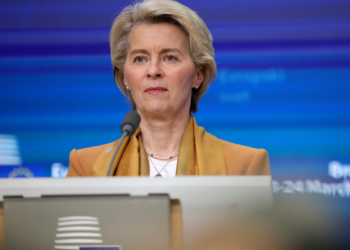
Investment screening plan of the European Union faces a lot of criticism
EU companies in China prioritize risk management overgrowth, says lobby group

8 EU member states push for reconsideration of Syria policy
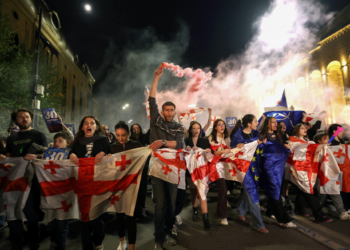
Comparing US FARA and Georgian foreign agents law: Three significant differences
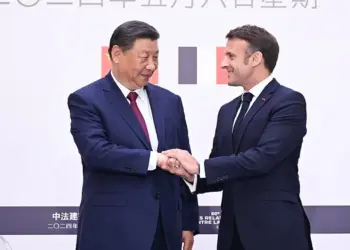
China’s self-deception on full display during Xi’s European tour