Recent projections indicate that halting or significantly reducing US foreign assistance to African nations could result in millions of additional deaths over the coming decade, primarily from preventable diseases, malnutrition, and climate-linked crises. Analysts from Harvard University and the University of California, Los Angeles, estimate that dismantling US-supported health and food-security programs could contribute to more than 14 million additional deaths globally by 2030, with a substantial share in sub-Saharan Africa. For countries reliant on donor funding for HIV, malaria, and primary healthcare, policy decisions in Washington can translate directly into life-or-death outcomes for millions of people.
The structural nature of US aid amplifies the risk. Between 2001 and 2024, USAID disbursed approximately $131.6 billion in assistance to African countries, with Ethiopia, Kenya, the Democratic Republic of the Congo, Nigeria, and South Sudan among the largest recipients. Much of this funding underwrites humanitarian protection, infectious-disease control, maternal and child health, and agricultural programs. In certain African states, foreign assistance covers up to 80% of health-program budgets, meaning abrupt cuts could rapidly undermine clinics, supply chains, and surveillance systems that millions rely on for basic care.
What US aid achieves on the ground?
US foreign assistance to Africa underwrites a broad range of life-saving interventions. Health programs financed by the US provide antiretroviral therapy for HIV, insecticide-treated bed nets for malaria, and maternal and child immunization services in contexts where domestic budgets cannot cover the full cost. Public-health experts have noted that 2025–26 reductions in USAID programs are already affecting mortality trends, with projections of hundreds of thousands of additional deaths annually if these cuts persist. The Africa Centres for Disease Control and Prevention (Africa CDC) has estimated that two to four million Africans could die each year without key US-backed HIV and malaria interventions, citing the loss of treatment, prevention, and outbreak-response capacity.
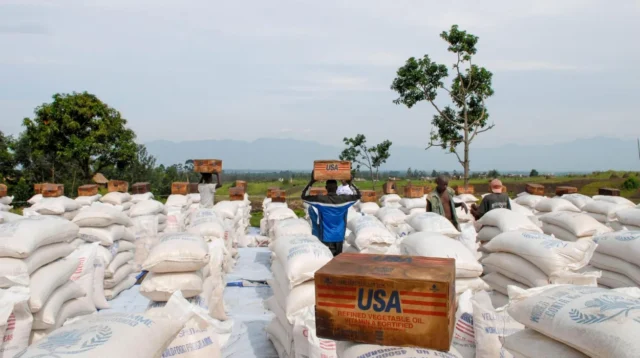
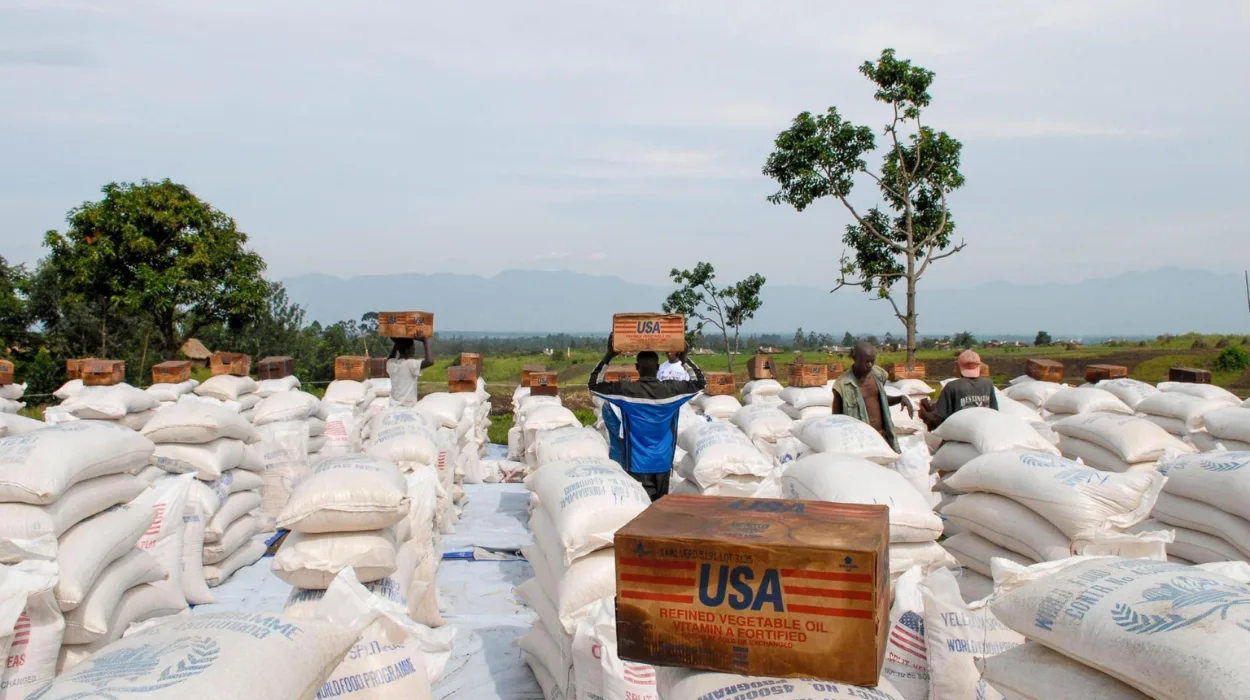
In food-security and humanitarian domains, US aid has been pivotal in preventing famine conditions. Programs providing food assistance and water-sanitation services have been central to responses in the Horn of Africa, the Sahel, and the Great Lakes region. A 2025 re-evaluation of US foreign-aid policy notes that the suspension of emergency feeding and water-sanitation projects has already led to the closure of over a thousand communal kitchens in Sudan, leaving displaced populations exposed to severe malnutrition. International organizations including the World Food Programme and UNICEF warn that reductions in US-funded assistance could place tens of millions of mothers and children at heightened risk of starvation, particularly during recurring droughts and conflicts.
The 2025–26 policy shift and rationale
The urgency of these consequences has increased amid a broader re-assessment of US foreign-assistance priorities in 2025–26. Officials argue that US resources must better align with national interests and that certain development and humanitarian programs are “unaccountable” or poorly connected to strategic objectives. This approach has resulted in the suspension or termination of numerous health, food-security, and humanitarian projects across African countries, including initiatives previously described as “lifesaving” by the State Department.
Democratic members of Congress have pushed back, stressing that foreign assistance is both a humanitarian imperative and a demonstration of American leadership. In a 2025 letter to Secretary of State Marco Rubio, lawmakers warned that cutting aid to Africa “could put millions of lives at risk,” emphasizing that many African governments have built public-health and social-protection systems heavily reliant on US financing. Epidemiological and demographic modeling has been used to quantify potential mortality increases, giving policymakers a concrete understanding of the human stakes involved.
Domestic and regional African responses
African governments and civil-society actors have responded with concern and adaptation. Health ministries and regional agencies like Africa CDC have attempted to offset lost resources by reallocating domestic funds, seeking alternative donors, or scaling back non-essential services. In many fragile or conflict-affected states, however, the technical and fiscal capacity to replace US-backed programs is lacking. Civil-society groups such as Amnesty International have documented closures of clinics, emergency feeding centers, and water-sanitation schemes, leaving entire communities without access to essential services.
Simultaneously, African policymakers are increasingly aware of the risks of dependence on a single donor. Some governments are actively diversifying their donor base, engaging multilateral institutions, private-sector partners, and other bilateral donors. Nonetheless, the abrupt disruption of long-standing US-supported programs leaves many countries exposed, underscoring the persistent influence of foreign aid decisions on immediate survival outcomes.
The long-term questions of cost and responsibility
The projection that ending US aid could cost millions of lives raises pressing questions about how donor nations weigh fiscal decisions against human consequences. If the estimates hold true, these choices are not merely economic—they directly affect mortality. Political debates in Washington about budgets and strategic priorities can therefore determine whether African citizens survive treatable illnesses, avoid starvation, or access basic healthcare.
The discussion is moving beyond abstract numbers. As mortality projections gain wider visibility and local organizations document closures of clinics and communal kitchens, the political calculus in Washington may face increasing pressure to account for human consequences. Whether Congress and the administration will treat preventable deaths as decisive in aid decisions, or continue to prioritize budgetary and ideological considerations, remains uncertain. The coming years will reveal the extent to which foreign-aid choices in donor capitals continue to influence survival and well-being in Africa on a scale measured in millions of lives.