The European Union’s decision to hold a meeting with Afghan Taliban officials regarding the topic of migration in Brussels is a clear example of a unique confrontation between politics and pragmatism. First, there is the stance of the EU that has never recognized the Taliban regime in Afghanistan ever since the regime came into power in the country in 2021 following the withdrawal of foreign troops from the nation. Secondly, there is an increasing debate on the issue of migration among some European nations, and there is growing pressure for the repatriation of Afghan citizens who lack legal permission to remain in the countries.
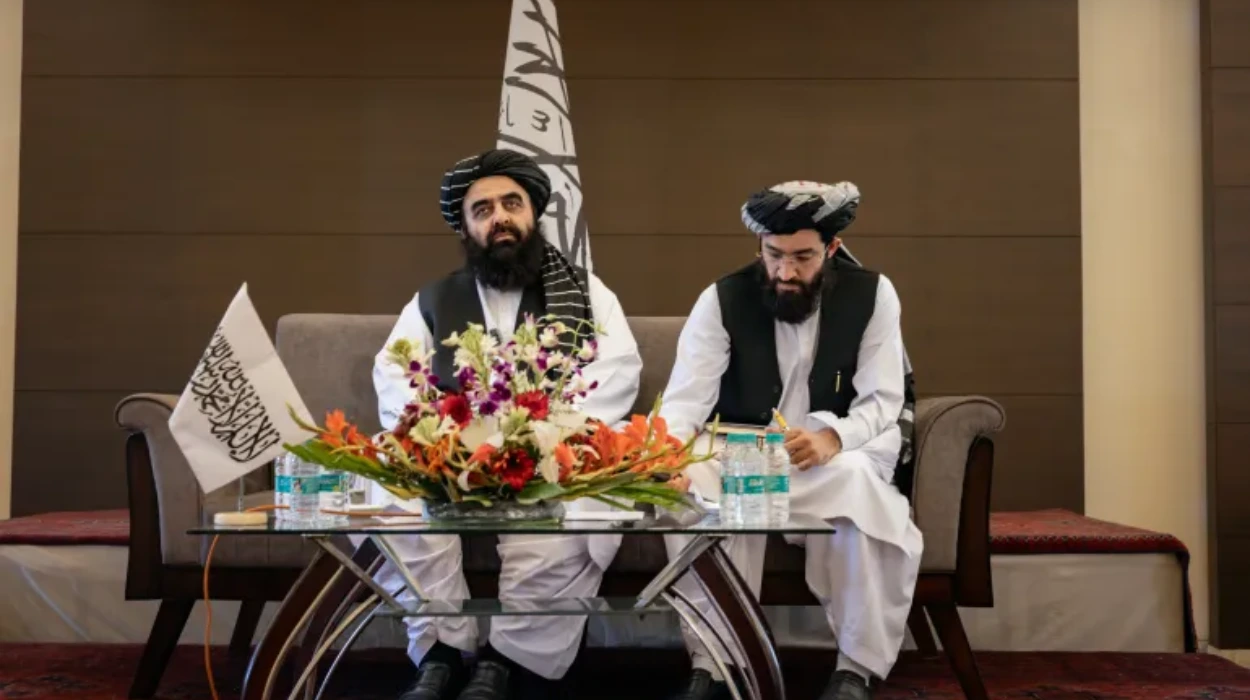
The primary catalyst for this debate is the scheduled meeting in Brussels between the Taliban and the European Union regarding deportation and return procedures for Afghan nationals residing in Europe. From the available information, Belgium has granted visas to the Taliban delegates, and the European Commission has presented the meeting as a technical conversation about migration control, not politics. This point of emphasis is critical for Brussels because of their desire to avoid any semblance of official recognition and still gain cooperation for returns, identification, travel documents, and repatriation. However, the symbolism cannot be ignored because the European Union will be hosting representatives from a regime it has criticized for its stance regarding the rights of women and girls.
Migration pressure drives the policy shift
This political rationale for the conference can be understood through the increasing enforcement challenge. Many Afghan asylum seekers have applied for asylum in Europe over the past ten years, and based on the reported data of the bloc, one million Afghan asylum seekers applied for asylum in the EU from 2013 to 2024. This number explains why the authorities are viewing Afghanistan as not only a humanitarian concern but also a compliance challenge. In light of the growing political backlash in their countries over migration issues, governments are unable to deport unsuccessful applicants.
It is here that the position of the EU becomes more practical than principled. The message coming out of Brussels essentially is that there is a need for a working channel that can be used to discuss deportations, despite the fact that the European leaders do not want to confer any legitimacy to the Taliban. The rationale put forth by the Commission is that managing migration necessarily involves dealing with those who control the land and the required documents for return.
What the meeting is really about
While the gathering has officially been referred to as a technical one, the reality is that it carries political weight. The discussions will probably revolve around Afghan nationals who lack the right to stay in Europe, either because their asylum applications have been turned down or because their permits have run out. The discussion will most likely revolve around the travel documents, verification of the identity of the Afghan nationals and the procedures for effecting the removal. In the context of migration policy, this is normal procedure. But from the perspective of diplomacy, it is very delicate.
This latest claim of Swedish involvement brings further complexities to the story. Representatives from Sweden have been amongst the voices pressing for a better return policy, while the Commission itself has been in talks with member states interested in increased participation in the deportation process. All this hints at Brussels’ actions as part of a much larger trend within Europe where migration policies are increasingly being crafted under the pressure coming from national capitals demanding results from the process. In this light, it seems that for these capitals, the cost of not meeting the Taliban might be higher than the price of a bad reputation.
The numbers behind the urgency
This makes up the factual context in which the policy change takes place. The EU states have an Afghan diaspora to contend with, comprising those who have come in during the various periods of displacement as a result of the wars and instabilities and the subsequent Taliban regime. The figure quoted of around one million Afghan asylum applications in the bloc between 2013 and 2024 is more than just a statistic because this represents an established migration route that forms part of the asylum structure of Europe.
Belgium’s role is also notable. The country has granted five visas to the Taliban delegation, which turns the meeting from abstract policy debate into an actual diplomatic event on EU soil. That is important because the issue is not simply whether Brussels is willing to talk, but whether it is willing to facilitate the physical presence of Taliban officials in the European capital. The practical answer, at least for now, is yes. That decision gives the meeting real-world weight and ensures that the controversy is not just rhetorical.
EU’s balancing act
In presenting the meeting as being free from political considerations, the European Commission has been cautious. The Commission’s officials have pointed out that the discussion will be on technical issues and it does not constitute any sort of recognition of the Taliban administration. This position is critical to Europe because it would be a complete reversal of EU policy should formal recognition take place. This would certainly elicit criticism from human rights organizations, members of Parliament, and even some EU countries who have strong reservations against the Taliban regime.
Still, the firewall is porous. Any meeting with Taliban officials, especially in Brussels, carries symbolic meaning beyond the technical agenda. The EU is not merely processing paperwork; it is receiving representatives of a regime accused of erasing women from public life and suppressing civil liberties. That tension is at the heart of the backlash. Brussels wants the benefits of engagement without the political cost of recognition, but critics argue that even a limited exchange sends the wrong signal.
That conflict is not unusual in foreign policy. States often deal with governments they do not fully accept when security, migration, or humanitarian needs demand it. What makes this case more difficult is that the Taliban’s domestic record is not a marginal concern but the central reason many European actors reject normalization. So the EU’s challenge is not just administrative. It is moral, strategic, and reputational at the same time.
Human rights concerns shape the backlash
The accusations of rights groups and politicians might be expected, but they are relevant all the same. The opposition believes that the presence of representatives of the Taliban regime poses a threat of normalization of a country which has restricted women’s rights and freedoms greatly. This accusation is not only theoretical, because it touches on the very nature of influence that the EU would like to have in its relations with Afghanistan and at the same time cooperate on immigration issues.
The @EU_Commission has invited the Taliban to Brussels today to discuss deportations of Afghan nationals. @amnesty firmly urges the EU and its states to abandon any deportation plans with the Taliban de facto authorities.https://t.co/uUoSBSvhK6
— Amnesty EU (@AmnestyEU) June 23, 2026
The danger for the EU is that migration cooperation could gradually become diplomatic normalization by another name. Once officials are meeting regularly, even on technical issues, the distinction between “contact” and “recognition” can become blurred in the public eye. That is especially true when the regime in question derives political value from being treated as a legitimate interlocutor. For the Taliban, any meeting in Brussels is likely to be portrayed as evidence that the world must deal with them.
Deportation, as such, also entails an issue of rights. According to opponents, sending Afghans back to a country governed by the Taliban may put them at risk of threats, arbitrary penalties, and absence of protection, particularly political prisoners, women, journalists, government employees, and anybody else regarded as associated with the old regime. Although the European Union may argue that it is just enforcing the law by deporting illegal immigrants, the human truth may be otherwise. Thus, the ethical implications of deportation in this case become a matter of debate.
Taliban interest in the talks
The Taliban, for their part, appear willing to engage because the issue affects thousands of Afghans abroad and because any direct channel with the EU carries political value. The reported meeting is centered on deportation and return coordination, which gives the Taliban an opportunity to present themselves as the authority responsible for Afghan nationals everywhere. That is useful to them both practically and symbolically. If returns are to happen, they want to control the terms, the timing, and the diplomatic framing.
At the same time, the Taliban have little incentive to reject engagement that could increase their international relevance. Even without formal recognition, a visit to Brussels puts them in direct contact with one of the world’s largest political blocs. That visibility matters. The meeting therefore serves both sides in different ways: the EU seeks a migration mechanism, while the Taliban seek de facto validation and practical leverage.
Why Brussels matters
The location is part of the story. Brussels is not just any city; it is the political center of the European Union. Hosting Taliban officials there elevates the meeting from a routine administrative contact to a continent-level political signal. It also means that the EU cannot easily hide behind lower-profile diplomatic channels. A meeting in Brussels will be read across Europe and beyond as a deliberate choice, not a bureaucratic accident.
This is part of a wider shift in European politics, whereby immigration policy is increasingly coming to represent one of the most sensitive and crucial arenas of EU activity, driving the organizations towards involvement which they would rather eschew. When states see that their electorate desires stricter immigration controls and higher deportation rates, operational considerations begin to override symbolic concerns. It is in this way that the Brussels conference could be seen in retrospect not as an isolated Taliban outreach but as evidence of just how influential migration pressure can become.
It is also worth noting that the Commission has reportedly already had technical contacts with Afghanistan earlier in 2026, including a January mission to Kabul. That history suggests the Brussels meeting is not a sudden break but an escalation of an existing approach. The EU is gradually moving from indirect contact to direct engagement, all while trying to insist that none of it amounts to recognition. Whether that distinction holds in practice will depend on how often such meetings are repeated and how far cooperation on returns eventually extends.
Wider implications for Europe
Implications extend further than Afghanistan. Should the EU succeed in establishing a functional returns arrangement with the Taliban, then it could potentially establish a precedent when it comes to the way that Europe will treat other de facto powers in the future. This would be a paradigm shift in terms of migration diplomacy, as it would demonstrate that the bloc is able to segment governance issues and work with regimes which it officially does not recognize.
But there is a cost. The more the EU relies on technical engagement with authoritarian or unrecognized actors, the harder it becomes to defend its rights-based foreign policy. Brussels has long tried to present itself as a principled actor on women’s rights, rule of law, and humanitarian norms. Deals like this expose the limits of that image. The Taliban meeting may therefore become a case study in the tension between values and statecraft.
For now, the key point is simple: the EU wants Afghan returns, the Taliban want engagement, and both sides appear ready to use a technical meeting in Brussels to advance their goals. The political language will remain careful, but the implications are not. This is what migration pressure looks like when it reaches the level of foreign policy.