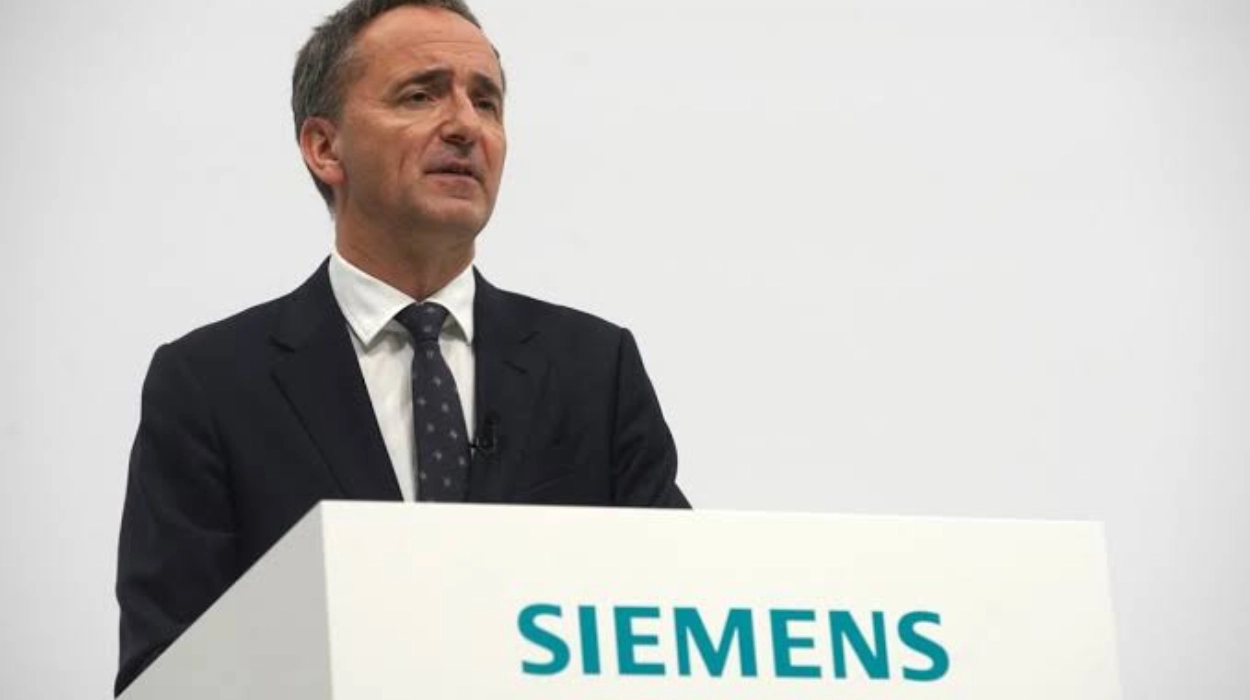
Appointing Siemens board chairman Jim Hagemann Snabe as the special envoy of the European Commission on industrial artificial intelligence has sparked a controversy about conflict of interests and influence of corporations on EU policy-making processes. After only a few weeks since Siemens was involved in an effort to water down important parts of the EU Artificial Intelligence Act via lobbying, the selection of Snabe, who is a tech CEO and serves on multiple boards of directors, has been criticized by MEPs and digital rights activists.
“Forty-one MEPs challenge von der Leyen’s choice of Siemens chairman Jim Hagemann Snabe as EU industrial AI envoy, demanding full disclosure of mandate, selection procedure, and conflict-of-interest safeguards,”
according to a recent report by IndexBox. The appointment, announced by European Commission President Ursula von der Leyen, underscores a growing tension between accelerating Europe’s industrial AI ambitions and maintaining the integrity of its regulatory framework.
The Man Behind the AI Envoy Title
Jim Hagemann Snabe: A Tech CEO with Global Ties
Snabe does not fit the definition of a policy maker in the usual sense. He is an experienced executive in the tech world who currently holds the position of chairman of the board of supervisors at Siemens, one of the biggest industrial conglomerates in Europe. Aside from Siemens, Snabe is also a member of the boards of directors at Google Cloud and C3.ai, which are both heavily invested in the infrastructure of AI.
“Critics say it hands policy influence to industry lobbyists,”
noted The Next Web in its analysis of the controversy. Snabe’s background in global tech governance, combined with his proximity to major AI players, has raised questions about whether the EU envoy role will serve the broader European ecosystem or primarily advance the interests of multinational tech giants.
Why the AI Envoy Role Matters
An Unseen Mandate with High-Stakes Implications
The AI envoy position is yet to be clearly defined. The AI envoy position was proposed initially at a private meeting with CEOs and is seen to serve as an international representation for the EU while guiding its policies on industrial AI and the upcoming AI gigafactories project by the bloc.
“The mandate is still being defined. Critics also question how much influence a single envoy could realistically have over the deeper structural issues that continue to undermine Europe’s innovation capacity,”
wrote Luca Bertuzzi, a Brussels-based policy analyst, in a LinkedIn post. The uncertainty surrounding the envoy’s scope has made it harder for critics and supporters alike to assess whether the role will deliver tangible outcomes or merely serve as a publicity stunt.
The Conflict-of-Interest Backlash
Siemens’ Role in Gutting the AI Act
This situation was further aggravated by reports of the fact that Siemens had been lobbying against some provisions of the EU AI Act mere weeks before Snabe took up his post at the Commission. The timing of the move raised suspicions about whether Siemens had been rewarded for its opposition.
“Von der Leyen’s AI envoy pick triggers conflict-of-interest backlash weeks after Siemens helped gut the AI Act,”
reported TechNewsTube. The perceived revolving-door dynamic—where a corporate lobbyist becomes a policy advisor—has raised alarms about the erosion of public trust in EU institutions.
MEPs Demand Transparency and Safeguards
In reaction to this, MEPs numbering 41 from the centre-left have officially raised objections over the appointment. The MEPs have called for total transparency regarding the mandate of the envoy, the process of appointment, and measures put in place to protect the envoy from conflicts of interests.
“MEPs question von der Leyen’s AI envoy appointment over conflict of interest,”
reported IndexBox, highlighting the political divide over the move. The call for transparency reflects growing pressure on the Commission to demonstrate that its policymaking remains independent of corporate lobbying.
Von der Leyen’s Strategic Gamble
Pushing for Industrial AI Sovereignty
The President of the European Commission, Ursula von der Leyen, has portrayed the decision to appoint the AI envoy as a strategy designed to speed up the process of developing AI industrially within Europe. Von der Leyen intends to make the EU the leading player in terms of AI manufacture and infrastructure in competition with other superpowers such as the US and China. According to von der Leyen, who spoke in a private meeting with some CEOs, the EU was considering the idea of having an AI envoy.
“Europe’s top CEOs call for Commission to slow down on AI Act,”
said a Euronews report from July 2025, reflecting business leaders’ concerns about compliance timelines. Von der Leyen’s decision to appoint a tech CEO as envoy may be seen as an attempt to bridge the gap between regulation and industry, but it has instead deepened the divide.
The Commission’s Defense: Safeguards in Place
Suspension, Not Divestment
As an answer to such criticism, the Commission clarified that the envoy will temporarily suspend some of his positions on boards, especially those related to Google Cloud and C3.ai, while holding the position of envoy. It was stressed that the position of envoy does not carry any payment and is time limited, and is intended to limit any financial benefits.
“Suspension is not divestment, and may not address completely the revolving door issue,”
stated analysts. The absence of any divestment requirement implies the potential for Snabe to go back to his corporate positions after finishing the envoy mandate.
Unpaid, Time-Limited, but Still Influential
The Commission’s emphasis on the envoy’s unpaid, time-limited nature is meant to signal neutrality. Yet, the role’s potential to shape AI policy—especially in areas like gigafactories, cloud sovereignty, and industrial AI standards—gives it significant leverage. Critics worry that even without direct financial compensation, the envoy could still advance corporate interests through informal channels.
Broader Implications for EU Tech Governance
A Test of Institutional Integrity
AI envoy debate is not just a personal issue, but it is much more than that. This is an attempt of the EU to find a balance between innovation and regulatory policy. In the wake of the EU’s ambition to achieve technological sovereignty and develop artificial intelligence industry, issues related to corporate influence over policy-making processes are becoming more and more relevant. Debates concerning the choice of the European Commission’s lead scientist for AI in 2024 had already touched upon the issue of industry influence.
Global Ripple Effects
While the debate is EU-focused, its outcomes could have global implications. AI policy standards set in Europe often influence international norms, especially in areas like data governance, AI ethics, and cross-border data flows. If the envoy role is perceived as favoring corporate interests, it could undermine the EU’s credibility as a regulator of global tech standards.
What Comes Next?
Calls for Formal Guidelines
In light of the ongoing dispute, there is an increasing need for the Commission to adopt formal guidelines in relation to the role of the AI envoy. This includes having provisions for the avoidance of conflict of interest, recusal process, and the necessity for disclosures. Failure to do so means that the credibility of the envoy would be constantly called into question. One positive move would be the call from the centre-left MEPs to have a complete disclosure of both the mandate and the selection process.
A Pivotal Moment for EU Tech Policy
The AI envoy appointment marks a pivotal moment in EU tech governance. It will either reinforce the bloc’s commitment to transparent, independent policymaking or signal a shift toward industry-led regulation. The outcome will shape not only Europe’s AI future but also the global perception of the EU’s regulatory integrity.
“Von der Leyen’s AI envoy pick draws conflict of interest questions,”
concluded Euronews, capturing the core of the political debate. As the EU navigates this challenge, the balance between innovation and accountability will define its tech policy legacy.