The Marathon Geneva Sessions marked the most prolonged and intensive phase of indirect nuclear negotiations between Washington and Tehran since diplomatic contacts resumed in 2025. US envoys Steve Witkoff and Jared Kushner engaged through Omani intermediaries with Iranian Foreign Minister Abbas Araghchi, reflecting a structure designed to maintain deniability while probing compromise.
Omani Foreign Minister Badr al-Busaidi described the exchanges as “the longest and most serious yet,” citing what he termed unprecedented openness. While no final agreement emerged, both delegations reportedly explored technical sequencing on sanctions relief and uranium management. The atmosphere differed from earlier rounds by extending beyond formal timeframes, underscoring the urgency created by external military and political pressures.
The presence of Rafael Grossi, head of the International Atomic Energy Agency, provided institutional weight. His verification role underscored that the discussions were not abstract political exercises but tethered to concrete compliance benchmarks.
Session Length and Negotiation Intensity
Talks reportedly stretched hours beyond schedule, with Omani diplomats relaying draft language between hotel suites. The drawn-out format reflected deliberate testing of flexibility rather than ceremonial dialogue.
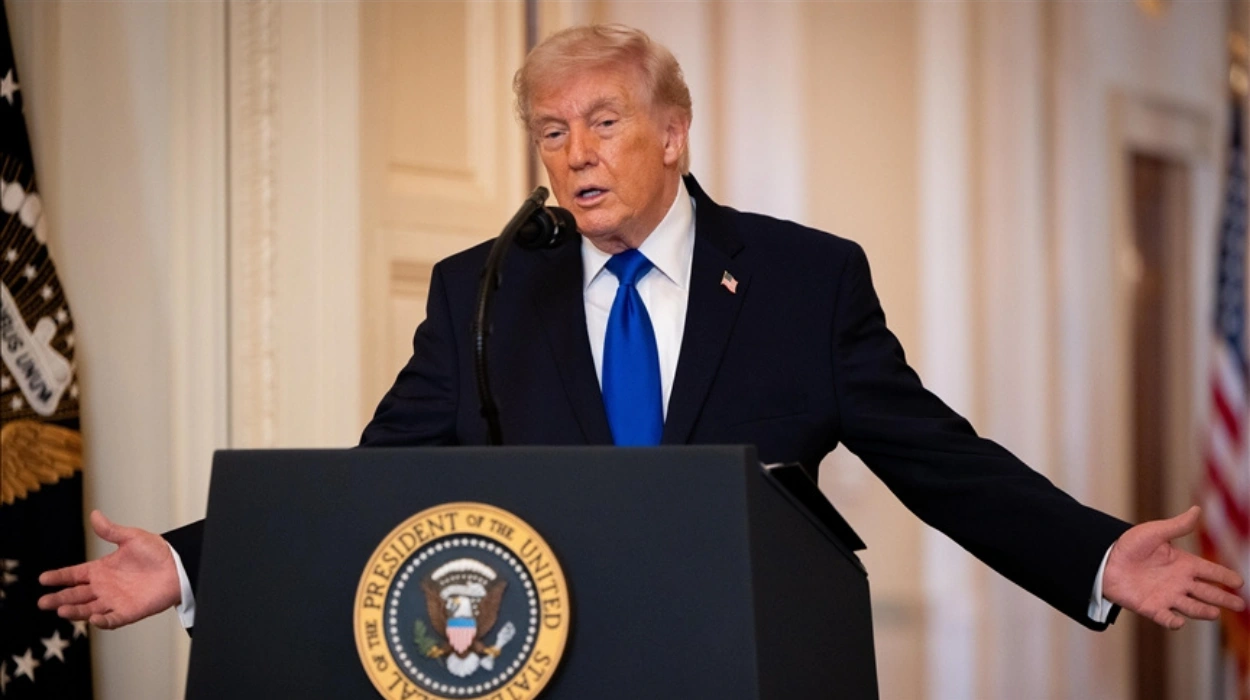
The urgency stemmed partly from President Donald Trump’s public declaration on February 19 that Iran had “10 to 15 days at most” to show measurable progress. That compressed timeline infused every exchange with implicit consequence.
Delegation Structure and Authority
Witkoff and Kushner represented a highly centralized US approach, reflecting Trump’s preference for tight advisory circles. Araghchi led a delegation empowered to discuss enrichment levels, sanctions sequencing, and verification modalities, signaling Tehran’s intent to treat the round as consequential rather than exploratory.
Trump’s Deadline Strategy and Its 2025 Roots
President Trump’s ultimatum framed the Marathon Geneva Sessions within a broader doctrine revived after his January 2025 inauguration. In his State of the Union address earlier this year, he reiterated that diplomacy was preferable but insisted Iran “cannot possess a nuclear weapon.” Vice President JD Vance reinforced that position, noting that military paths remained available if diplomacy faltered.
This dual-track posture mirrored mid-2025 developments, when a 60-day diplomatic window preceded coordinated Israeli strikes on three nuclear-linked facilities after talks stalled. That episode halted aspects of cooperation with the International Atomic Energy Agency and hardened Tehran’s suspicion of Western timelines.
Secretary of State Marco Rubio publicly characterized Iran’s ballistic missile posture as “a major obstacle,” signaling that the nuclear file could not be compartmentalized from regional security concerns. The February 2026 ultimatum thus served not merely as rhetoric but as a calibrated escalation tool.
Military Deployments Reinforcing Diplomacy
Parallel to negotiations, the US deployed the aircraft carriers USS Gerald R. Ford and USS Abraham Lincoln to the region. Supported by destroyers capable of launching Tomahawk missiles and E-3 Sentry surveillance aircraft, the deployment represented the most significant American naval posture in the Middle East since 2003.
The proximity of these assets to Iranian airspace functioned as strategic signaling. Diplomacy unfolded in Geneva while operational readiness unfolded at sea, intertwining dialogue with deterrence.
Lessons Drawn From 2025 Unrest and Escalations
Domestic unrest in Iran during January 2025, with disputed casualty figures between official reports and independent groups, had prompted earlier rounds of sanctions and military signaling. Those events shaped the administration’s conviction that deadlines and pressure could generate concessions.
The Marathon Geneva Sessions therefore carried historical memory. Both sides entered aware that expired timelines in 2025 translated into kinetic outcomes.
Iran’s Position and Internal Constraints
Iranian Foreign Minister Abbas Araghchi framed Tehran’s objective as achieving a “fair and just agreement in the shortest possible time.” He rejected submission to threats while reiterating that peaceful nuclear activity was a sovereign right.
Iran reportedly floated a consortium-based management model for its stockpile, estimated at roughly 400 kilograms of highly enriched uranium according to late-2025 assessments by the International Atomic Energy Agency. Under such a proposal, enrichment would continue under multilateral supervision rather than be dismantled entirely.
Domestic political realities constrained maneuverability. Economic protests in 2025 strengthened hardline voices skeptical of Western assurances. Supreme Leader oversight ensured that concessions would not be interpreted as capitulation, particularly under overt military pressure.
Enrichment and Missile Sequencing
Iran signaled conditional openness to discussions on enrichment ceilings tied to phased sanctions relief. However, ballistic missile talks remained sensitive, with Tehran maintaining that defensive capabilities were non-negotiable at this stage.
US negotiators sought to test these boundaries during the extended sessions. The absence of an immediate breakdown suggested that both sides recognized the costs of abrupt termination.
The Influence of External Intelligence
Reports circulating among diplomatic observers indicated that China provided Tehran with intelligence regarding US deployments. Such awareness may have reduced uncertainty about immediate strike risk, enabling Iran to negotiate without perceiving imminent attack.
While unconfirmed publicly, the notion of enhanced situational awareness aligns with the broader 2025 expansion of Sino-Iran strategic cooperation. Intelligence clarity can alter negotiation psychology by narrowing miscalculation margins.
The Strategic Environment Surrounding the Talks
The Marathon Geneva Sessions unfolded within a wider geopolitical recalibration. Russia and China criticized the scale of US military deployments, framing them as destabilizing. Gulf states monitored developments carefully, wary of spillover into shipping lanes and energy markets.
European mediation efforts, particularly those led by France in 2025, appeared less central as Washington asserted direct control over pacing. The involvement of the International Atomic Energy Agency remained the principal multilateral anchor, yet its authority had been strained by past cooperation suspensions.
Proxy Dynamics and Controlled Restraint
Iran-aligned groups in Lebanon and Yemen demonstrated relative restraint during the Geneva round. Analysts suggested that calibrated quiet served Tehran’s diplomatic interest, preventing derailment while core negotiations remained active.
US surveillance assets, including those operating from the USS Abraham Lincoln strike group, tracked regional movements closely. The combination of monitoring and restraint reduced immediate escalation risk during the talks’ most sensitive hours.
Measuring Progress Without Agreement
Omani officials described progress in aligning on general principles, though technical verification details were deferred to anticipated Vienna sessions. That distinction matters: principle-level understanding can sustain dialogue even absent textual agreement.
The absence of a signed framework did not equate to failure. Instead, it reflected a cautious approach shaped by prior experiences where premature declarations unraveled under domestic scrutiny.
Testing Resolve in a Narrowing Window
The Marathon Geneva Sessions demonstrated endurance on both sides. Trump acknowledged indirect personal involvement and described Iran as a “tough negotiator,” reflecting frustration yet continued engagement. Araghchi emphasized that diplomacy remained viable if mutual respect guided the process.
With the ultimatum clock advancing and naval assets holding position, the next phase hinges on whether technical talks can convert principle into verifiable architecture. The interplay between deadlines and deliberation, military readiness and mediated dialogue, defines this moment.
As Vienna’s laboratories prepare for potential inspection frameworks and carriers continue their patrol arcs, the Geneva experience raises a broader question: whether sustained engagement under pressure refines compromise or merely delays confrontation. The answer may depend less on rhetoric than on how each side interprets the other’s threshold for risk in the tightening days ahead.