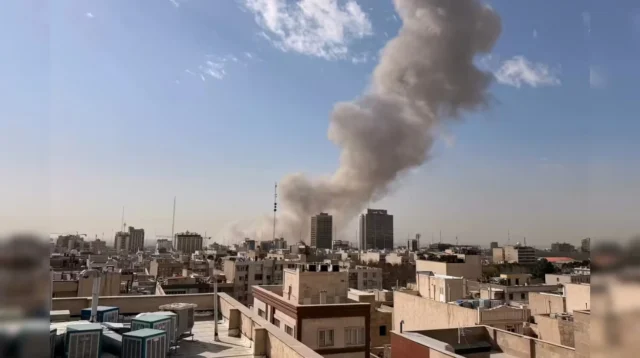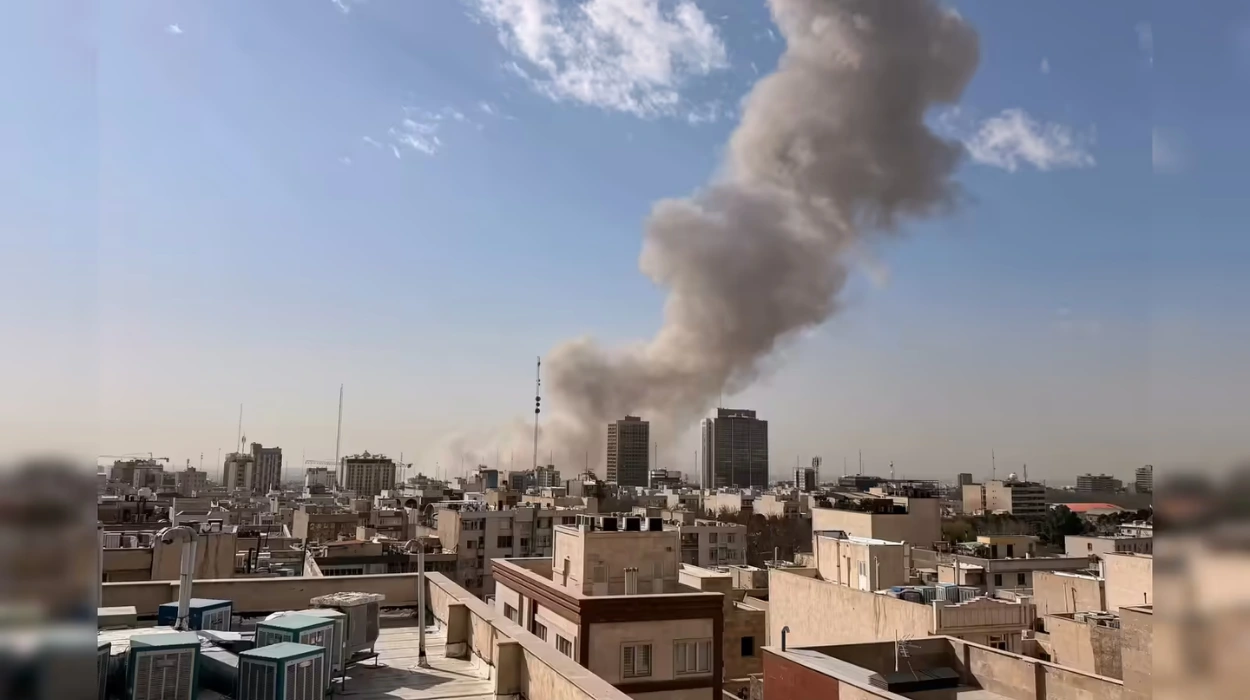
The WWIII Warning written by Sachs has elicited controversy among the diplomats and analysts because the tensions in the Middle East had increased in early 2026. Economist Jeffrey Sachs openly presented the thesis that the latest military interventions of the United States and Israel into targets belonging to the Iranian state denote a hazardous break of the accepted world legal standards. His words were in a widely transmissible interview in March 2026 when he termed the conflict a war of choice that raised the question of how it was strategic and legally justified to escalate it.
This caution was raised at a tumultuous energy and security political juncture in the world. The announcement by Iran to shut the Strait of Hormuz, which is a major shipping route of oil, caused a disruption in the market and made the policymakers fear the potential of a larger regional conflict. These developments supported the argument by Sachs that the crisis has the potential to weaken the international order based on the United Nations Charter.
International reactions to the escalating conflict
The responses of diplomats to the crisis were extremely diverse within the international community. Various governments outed their backing towards the security interests of Israel as well as the military operations were seen as the response to the perceived threats of Iran. Other criticisms of the actions included that it was destabilizing because unilateral military actions undermined collective security structures.
In the United Nations Security Council, the divisions were also seen when the members argued on a resolution that was deemed to condemn the attacks on American allies without explicitly condemning the American or Israeli activities. Analysts noted that the language in the resolution indicated geopolitical inclinations by the permanent members, which explains how conflicting interests determine multilateral reactions to crises.
Energy markets amplify global anxiety
The shutting down of the Strait of Hormuz resulted in real-time effects on the energy markets of the world. A disruption of the strait would be a big economic issue as about a fifth of the world’s oil is being transited through the strait. This was highly reactive by the energy traders who sent the price of crude soaring sky high with the governments preparing contingency measures to maintain supply.
Economic experts cautioned that long-term disruption would lead to inflationary pressures in most economies. Asian and European states, which relied on imports, started evaluating emergency reserves, and shipping firms found another option in making adjustments to prevent possible security threats in the Gulf.
Historical roots of US–Iran hostility shape current confrontation
The severity of the current crisis can only be understood in the light of the long history of tensions between Washington and Tehran. The situation worsened greatly after the Iranian Revolution in 1979 and was always tense because of the sanctions, diplomatic misunderstanding, and proxy wars in the area.
Jeffrey Sachs stated that the new confrontation is the continuation of the old strategic rivalry and not the abrupt one.
Decades of sanctions and diplomatic confrontation
Among the most prominent instruments employed by the United States to pressure Iran since the end of the twentieth century, there have been economic sanctions. These have been greatly increased in the 2010s due to fear of the Iranian nuclear program, to the point where intricate negotiations led to the signing of the 2015 nuclear deal.
But the failure of the accord and reimbursement of sanctions transformed the game in the region. Economic pressure campaigns again escalated by 2025 further restricting the diplomatic interaction between the two governments.
Regional conflicts intensify geopolitical rivalry
The competition between the United States and Iran is not limited to the bilateral conflicts and affects the conflicts in the Middle East. Iran has often been in conflict with American strategic interests and Israeli security interests because of its support of allied groups in Lebanon, Iraq and Yemen.
According to analysts, such regional dynamics tend to form overlapping confrontations, with the local conflicts playing a role in expanding geopolitical confrontation. The statements of Sachs indicated that the upscale at present should be considered in the framework of this larger history.
Implications for the united nations charter and multilateral governance
The WWIII Warning by Sachs paid much attention to the possible outcomes to the international legal norms. The Charter of the United Nations which was formed at the end of the Second World War does not allow the use of force unless in cases of self-protection or when given the permission of the Security Council.
Sachs has claimed that the recent military acts are going to cripple this structure in case they are seen to be circumventing multilateral control.
Debates over legality of military actions
The question on whether the strikes on the targets of Iran can be justified according to the current international law has been debated by legal scholars. Governments that back the moves assert that they were preemptive or defensive acts that were meant to curb the security threats.
Critics believe that preventive strikes that do not explicitly mention Security Council approval are defiant of the Charter principles. This dispute points to the overall challenges of international law application in fast-changing security crises.
Security council divisions and institutional limits
Where permanent members have opposed geopolitical interests, the United Nations Security Council has a difficult time reaching a consensus. These structural constraints were manifested in the 2026 debate of the Middle East crisis.
Major states are given veto powers to ensure they prevent adoption of resolutions that violate their strategic allies. This means that numerous diplomatic efforts have been derailed with unanswered questions regarding the implementation of international legal norms.
Leadership decisions and domestic political pressures
Political leadership is a decisive factor in the reaction to international crises. Sachs presented the thesis that the American domestic politics and Israeli domestic politics were some of the driving forces behind the swift intensification of military operations.
During periods of high tension, leaders are usually under pressure from domestic constituencies and the security institutions as well as the allied governments and as such, diplomatic compromises are harder to achieve.
Influence of leadership strategies in washington and tel aviv
In 2025 and early 2026, Washington and Tel Aviv were characterized by policy choices that were more confrontational toward Iran. Military readiness and deterrence were also highlighted by security officials as the main elements of the regional strategy.
According to critics, such as Sachs, the policies pose a threat of escalating conflict but fail to address underlying conflicts. Those in support added that harsh actions are required to ensure that opponents do not gain ground in the region.
Domestic opinion and political divisions
The foreign policy decisions in the United States are also affected by public opinion. Polls carried out in 2025 revealed the increasing controversy surrounding the cost and the benefits of prolonged military engagements in the international sphere among American voters.
These divisions make the political environment very complicated as it is the place where policymakers have to consider both strategic goals and electoral issues.
Economic and strategic consequences of the strait of hormuz crisis
In addition to legal and diplomatic issues, the conflict has a strong economic impact. The Strait of Hormuz acts as one of the most significant maritime routes to world energy supply.
Disruptions in this narrow waterway can affect shipping, energy prices, and global trade flows within days.
Impact on global energy supply chains
Energy analysts estimate that millions of barrels of oil pass through the strait each day. Temporary closures or security threats force shipping companies to delay transit or reroute cargo through longer and more expensive pathways.
These adjustments increase transportation costs and contribute to price volatility across international markets.
Ripple effects on international economies
Rising energy prices often produce cascading effects across national economies. Manufacturing costs increase, transportation expenses rise, and governments face pressure to subsidize fuel imports.
Several countries began exploring diplomatic efforts to reopen the shipping corridor, recognizing that prolonged disruption could threaten economic recovery efforts following previous global crises.
Pathways toward diplomatic de-escalation
Although the tensions are intensified, the diplomats are still seeking the mechanisms, which could mitigate the threat of further conflict. International bodies and mediators in the region have silently promoted negotiations among the conflicting governments.
Jeffrey Sachs has highlighted the fact that diplomatic intervention is the surest way of restoring sanity.
Role of neutral mediators
Neutral states within the Middle East have in the past made significant contributions as far as communication between opponents is concerned. It is not the first time that indirect negotiations between Iranian and Western representatives took place in Oman or Qatar.
Limited agreements, such as confidence-building actions and short-term ceasefires, have a chance to be made, through diplomatic avenues of this sort.
Potential economic incentives for negotiation
De-escalation may also be stimulated by economic factors. The uncertainties in the energy markets have an impact on the exporting and importing countries, where they have a common interest to stabilize the transporting ship lines.
The negotiated agreements with reopening of the maritime corridors and consideration of the security issues may help to decrease the acute tensions and provide an opportunity to discuss the further political issue.
The ultimate point of the WWIII Warning by Sachs is a wider issue that most analysts are worried about when it comes to the sustainability of international institutions in times of geopolitical competition. The question of whether to resort to unilateral military action or collective legal frameworks is considered to be one of the clearest questions of modern international politics. With the crisis involving Iran, Israel and the United States still in the process of development, the viability of a multilateral system of governance could be a factor of whether diplomacy gains momentum before the confrontations gain momentum and reform the borders of international order.