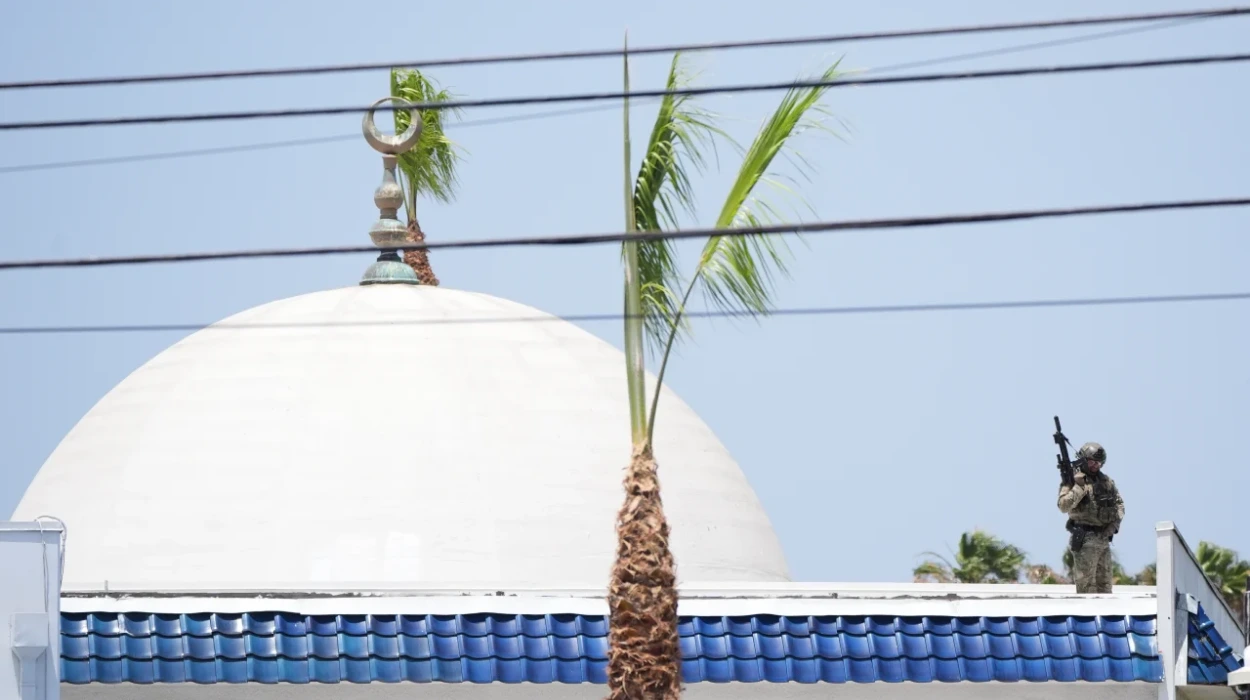
The Islamic Center of San Diego was the scene of an outrageous act of violence on the afternoon of May 17, 2026, when shots rang out inside the center while worshippers were praying. Three people lost their lives in the shooting, among whom was the dedicated security guard who worked in the mosque for many years, and both teenagers who committed the murders took their own lives near the scene of the crime.
The case being talked about here is not only an isolated case of violence but an aspect of an entire and escalating national crisis in that discrimination against Muslims has been hitting unprecedented levels in recent years. The shooting at the San Diego mosque is but a wake-up call to all that will be the end result of this kind of discrimination.
The Attack: What Happened at the Islamic Center
A Day of Prayer Turned Deadly
The Islamic Center of San Diego goes beyond being merely a house of worship because the center has various facilities including a learning institution. The worshippers had already assembled at noon for their prayers when the shooters, both teenagers between the ages of 17 and 18 years, burst into the mosque and started firing their guns inside the premises.
Three men lost their lives in the attack:
- The mosque’s security guard, who reportedly attempted to intervene
- Two congregants who were caught in the gunfire
- All three victims were adult males, though their identities have not yet been fully released pending notification of next of kin
Both suspects fled the scene but were later found dead at a nearby location, having died by suicide. Authorities have not yet released their names publicly but confirmed they are teenagers.
Police Response and Investigation
The response from the San Diego Police Department was within minutes following the 911 calls, only to find that the shooter(s) had left the area. Active shooter protocol was immediately put in place and the location secured. Motive then became one of the key questions, with evidence already beginning to suggest religious hate as being involved. Evidence collected includes any and all digital media information on what may have led the suspects to commit their heinous act. There is also a separate investigation opened by the FBI regarding the federal hate crime.
“This is being treated as a hate crime. We’ve uncovered generalized hate rhetoric tied to the perpetrators,”
said San Diego Police Chief Scott Wahl during a press conference on May 18, 2026.
A Pattern of Violence: Mosque Shootings in America
This is not an isolated case. For a period of about a decade now, mosques around America have witnessed many instances of violence ranging from shooting to arson and even vandalism. The one thing that connects all these instances of violence is that they stem from hatred against Muslims.
Notable Previous Incidents
- 2015, Charleston, South Carolina: A white supremacist opened fire at a historically Black church, killing nine people, many of whom were Muslim allies.
- 2017, Portland, Oregon: Two men were killed while intervening to stop a man who was attacking Muslim women on a train.
- 2019, San Jose, California: A man of color drove a truck through a Muslim community event, injuring several people before being arrested.
- 2023, Multiple States: At least 12 mosques reported acts of vandalism, threats, or attempted arson, according to CAIR.
The San Diego mosque shooting marks one of the deadliest single incidents targeting a Muslim place of worship in recent years, underscoring the urgency of addressing hate-driven violence.
Rising Anti-Muslim Discrimination in the U.S.
Record-Breaking Numbers
The Council on American-Islamic Relations (CAIR), the nation’s largest Muslim civil rights organization, has documented a sharp and sustained increase in anti-Muslim bias complaints. In 2023, CAIR received over 8,000 complaints of anti-Muslim bias—a record high at the time. In 2024, the number climbed even higher, reaching a new peak.
Types of Incidents Reported
CAIR’s data reveals a wide range of anti-Muslim incidents, including:
- Verbal harassment and threats in public spaces
- Workplace discrimination and job loss
- School bullying targeting Muslim children
- Vandalism of mosques and Islamic centers
- Physical assault and attempted murders
- Online hate speech and doxxingabcnews.
These numbers are not just statistics—they represent real people whose lives have been disrupted, traumatized, or ended due to prejudice.
What’s Driving the Surge?
Experts point to several factors contributing to the rise in anti-Muslim discrimination:
- Geopolitical conflicts: Ongoing wars in the Middle East and global tensions often fuel xenophobic narratives.
- Social media algorithms: Radicalizing content and hate speech spread rapidly online, especially on unmoderated platforms.
- Political rhetoric: Some public figures have used anti-Muslim language that legitimizes prejudice in the public discourse.
- Lack of education: Many Americans have limited exposure to Islam or Muslim communities, leading to fear and misunderstanding.
Official and Community Reactions
Statements from Law Enforcement and Officials
“Our hearts go out to the families of the victims. This is a dark day for our community,”
said San Diego Mayor Todd Gloria in a statement released shortly after the shooting.
“We stand with the Muslim community and condemn this act of hatred in the strongest terms.”
California Governor Gavin Newsom also weighed in, stating:
“California will not tolerate hate crimes against any faith community. We will support local law enforcement and work with federal agencies to bring justice to the victims.”
Interfaith and Community Support
Within hours of the shooting, interfaith leaders from Christian, Jewish, Hindu, and Sikh communities gathered outside the Islamic Center to offer prayers and solidarity. Many held signs reading “Love Over Hate” and “Stand With Muslims.”
“Muslims are our neighbors, our friends, our fellow Americans. This attack on their place of worship is an attack on all of us,”
said Rabbi David Stolinger of Congregation Emanu-El in San Diego.
Community members also organized vigils, blood drives, and donation campaigns to support the victims’ families and the mosque’s recovery efforts.
The Human Cost: Victims and Families
Though the identities of the victims officially remain unknown, it is clear from the initial reports that one of the victims, the guard, was a dearly loved member of the mosque’s family. Having been a guard for more than ten years, he earned himself a reputation for being kind, vigilant, and protective towards worshippers. The two other victims were worshippers who had been attending the mosque for a number of years.
“He was a good man, a faithful servant, and a protector of our community. He didn’t deserve this,”
said one family member of the security guard, speaking on condition of anonymity.
What Comes Next? Justice, Safety, and Prevention
Legal Proceedings
Since the suspects are deceased, no charges can be made against them because of their death. However, there may be a possibility that federal agencies will try to ascertain their guilt even after death to prove that the crime committed was a hate crime. There might be some consequences of this crime in the future. The Justice Department will examine the incident in line with the Matthew Shepard and James Byrd Jr. Hate Crimes Prevention Act.
Strengthening Mosque Security
In the wake of the attack, mosques across the country are reevaluating their security protocols. Many are considering:
- Hiring trained security personnel
- Installing surveillance cameras
- Coordinating with local law enforcement
- Conducting active shooter drills
- Creating emergency response plan
National Policy Responses
Advocacy groups are calling for stronger federal action to combat hate crimes, including:
- Increased funding for the FBI’s hate crime task forces
- Mandatory reporting of hate crimes by law enforcement
- Enhanced penalties for hate-motivated violence
- Public education campaigns to counter Islamophobia
A Call to Action: Why This Matters to All Americans
The San Diego mosque shooting is not just a Muslim issue—it is an American issue. When one community is targeted because of their faith, all communities are at risk. The rise in anti-Muslim discrimination reflects a broader erosion of tolerance and respect in public discourse.
“We must not let fear divide us. We must stand together against hate, in all its forms,”
said CAIR National Executive Director Nihad Awad.
Interfaith unity, educational efforts, and legislation changes are necessary in order to prevent future incidents. There should be something more done beyond grieving those that perished in San Diego. In this regard, the shooting incident at the San Diego mosque becomes a painful reality check regarding the consequences of allowing hatred and discrimination to run amok in a person’s life. With the death of innocents, the country not only mourns but it also needs to take some time to consider the ways of creating an environment where all Americans will feel protected.