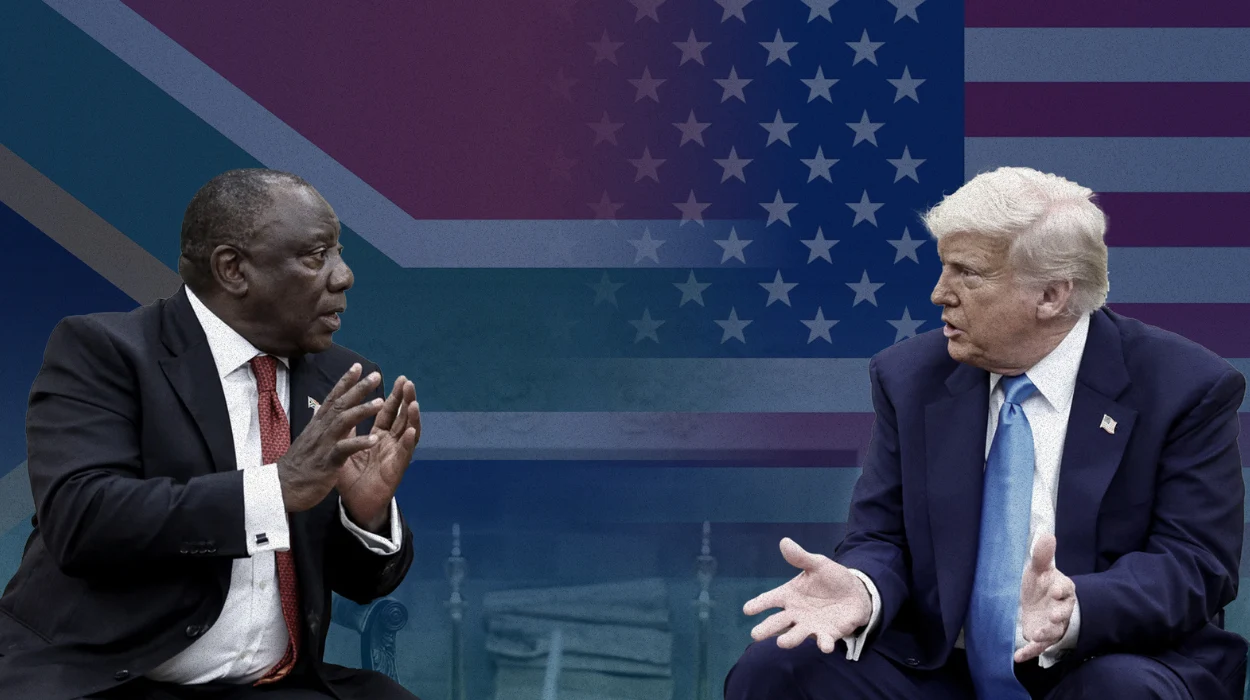
South Africa’s decision to summon the newly appointed US ambassador, Leo Brent Bozell III, barely a month into his tenure, represents one of the most visible diplomatic rebukes in recent years. The action followed Bozell’s comments at a business forum in the Western Cape, where he criticized South Africa’s affirmative‑action and land‑reform policies, describing them as discriminatory against white citizens, and questioned the legal interpretation of the slogan “Kill the Boer.” DIRCO characterized these remarks as “undiplomatic” and inconsistent with established norms of diplomatic conduct, prompting a formal reprimand. The episode underscores both the fragility of everyday diplomatic etiquette and the political cost of public friction between historically intertwined partners.
Timing amplifies the significance of the incident. US–South Africa relations had already been under strain since 2025, amid Washington’s criticism of Pretoria’s alignment with BRICS, its posture on the Israel–Gaza conflict, and perceived closeness to Iran. Bozell’s blunt commentary could be interpreted as a deliberate signal from the Trump administration that it is unwilling to overlook policy differences, even at the risk of provoking public rebuke. Simultaneously, South Africa’s readiness to act demonstrates a growing unwillingness to accept external judgment on domestic policy and judicial matters.
What the ambassador’s remarks revealed?
Bozell’s statements intersected several sensitive domains. He claimed South Africa’s affirmative‑action and land‑reform policies, including the Expropriation Act, reflected systemic discrimination against white citizens and suggested over 150 laws disproportionately affected them. He also framed the “Kill the Boer” slogan as hate speech, dismissing South African court rulings that determined it did not meet the legal threshold. According to the ambassador, these remarks were intended to signal Washington’s growing impatience with Pretoria’s foreign-policy choices and encourage a recalibration toward a more “non-aligned” stance.
South African officials note that Bozell later expressed regret for aspects of his remarks, though DIRCO maintained that a formal demarche was warranted. Foreign Minister Ronald Lamola emphasized that Pretoria welcomes “active public diplomacy,” but insists that envoys respect local laws and court determinations. By publicly challenging judicial authority, Bozell inadvertently heightened tensions and highlighted a fundamental question in diplomacy: to what extent can an ally critique domestic legal interpretations without infringing on sovereignty?
Public versus legal sensitivity
The episode also underscores the intersection of public perception and legal norms. South Africa’s courts have consistently adjudicated that certain politically charged slogans do not constitute hate speech. By publicly rejecting this legal framework, the ambassador’s remarks challenged domestic authority and risked inflaming both political and civil-society debate. This tension illuminates the broader fragility of US–South Africa relations, where domestic legal interpretation, historical redress, and international diplomacy intersect.
How Pretoria framed its pushback
South Africa’s response served both procedural and symbolic purposes. By summoning Bozell, DIRCO reinforced that ambassadors are expected to operate within the host country’s legal and constitutional framework. Officials highlighted affirmative-action and land-reform policies as integral to the post-apartheid transformation agenda and framed these policies as corrective rather than punitive measures. For Pretoria, the goal was not to rupture relations but to clarify boundaries around core aspects of its democratic project.
Domestic messaging and political considerations
The reprimand also conveyed a domestic political message. Race, land, and historical justice remain deeply divisive issues, and the government is attentive to perceptions of either leniency or rigidity. Taking a firm stance against “undiplomatic” remarks signaled that foreign diplomats cannot unilaterally redefine South Africa’s policy agenda. Political and civil-society actors largely welcomed the pushback as a defense of national sovereignty and a reaffirmation that post-apartheid policy debates are to be resolved internally.
The wider strain in US–South Africa ties
The ambassador controversy coincides with broader economic and geopolitical friction. In 2025, Washington imposed a 30% tariff on South African exports, including agricultural products and automotive components, while AGOA’s renewal stalled in Congress. Analysts warned that these developments could reduce South Africa’s growth by roughly one percentage point, compounding the modest 1.1% expansion achieved in 2025. The convergence of trade pressures and diplomatic disputes contributes to a perception in Pretoria that Washington is leveraging multiple channels—economic, political, and rhetorical—to influence South African policy.
From the US perspective, concerns extend beyond BRICS alignment to broader regional influence. South Africa is considered a pivotal node in Southern African logistics, finance, and security networks. Bozell reportedly conveyed that President Trump had given him a “five‑ask” list of demands, including policy adjustments on land reform, BRICS participation, and Iran relations. This reflects a more transactional approach to diplomacy, combining tariffs, public critique, and leverage to shape foreign-policy behavior.
Transactional diplomacy and strategic risk
The combination of tariff measures and direct diplomatic confrontation illustrates the limits and risks of transactional diplomacy. While intended to secure policy concessions, this strategy may accelerate South Africa’s engagement with BRICS or other non-Western partners, potentially diminishing US influence in Southern Africa. Both sides must consider whether the short-term gains of pressure outweigh the long-term risk of strategic drift.
Implications for the future of bilateral ties
South Africa’s pushback against the US ambassador is emblematic of a recalibrated bilateral dynamic. It highlights Pretoria’s commitment to safeguarding its legal and policy sovereignty while demonstrating that Washington is prepared to test limits through direct and public critique. The result is an alliance that remains operational but increasingly contingent, sensitive to shifts in rhetoric, trade policy, and geopolitical alignment.
Managing partnership under tension
Looking forward, the central challenge is defining the operational terms of the relationship. Will traditional diplomatic channels prevail, emphasizing private engagement and restrained criticism, or will the Bozell episode set a precedent for public, high-profile confrontations? The answer could determine whether South Africa hedges further toward BRICS and other non-Western networks, or whether it continues managing tensions with Washington to preserve cooperation on economic, security, and development fronts. The episode raises broader questions about how mid-tier powers navigate relations with strategically important but increasingly assertive partners, and how diplomacy adapts when historical alliances encounter the pressures of contemporary geopolitics.