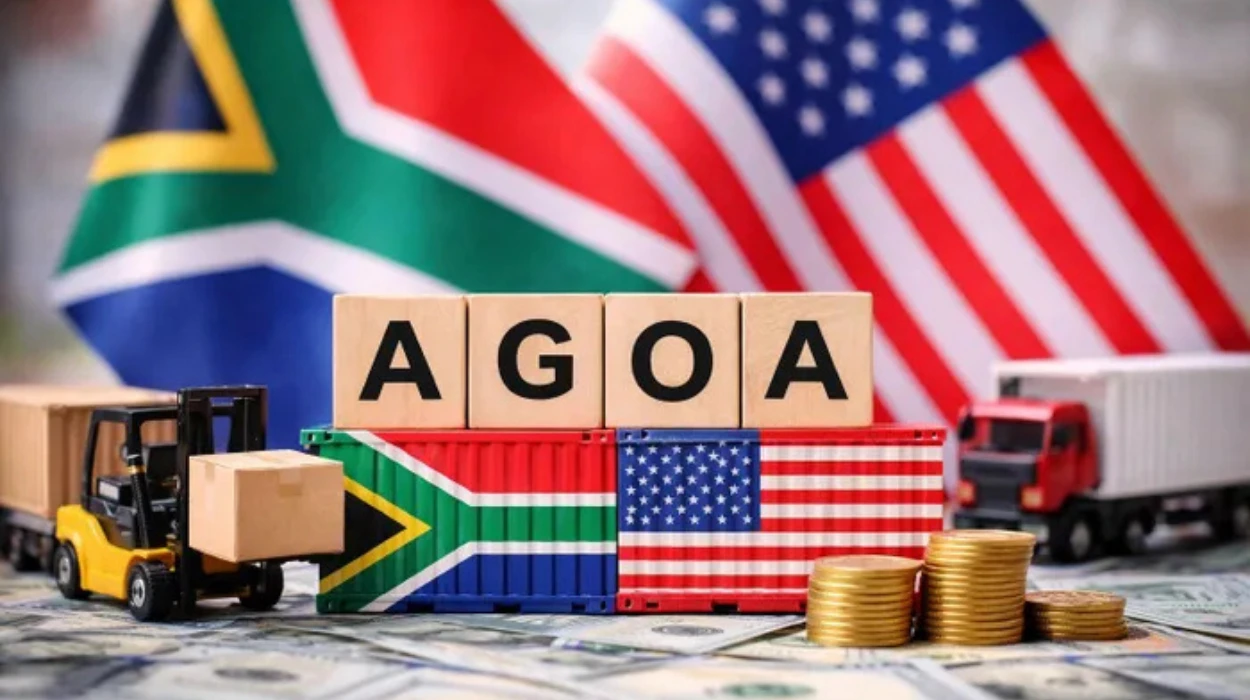
The United States and South Africa remain important trading partners, yet the relationship is asymmetrical. South Africa’s status as one of Africa’s larger economies exposes it to sudden shifts in US import and tariff policies. In 2025, bilateral trade relied heavily on South African exports of agricultural products, niche manufactured goods, and commodities under the African Growth and Opportunity Act (AGOA). The trade architecture, however, has become increasingly fragile. In August 2025, the Trump administration introduced a 30% reciprocal tariff on a wide range of South African exports, targeting citrus, table grapes, wine, and automotive manufacturing. This policy marked a departure from decades of preferential access and highlighted how quickly the US–South Africa trade nexus can be recalibrated through unilateral measures.
Even prior to the tariff shock, South Africa’s export-oriented sectors were navigating uncertainty around AGOA’s 2025 renewal. The bill, originally scheduled to expire in September, had stalled in the US Congress, threatening duty-free treatment for many exports. Analysts projected that the combination of new tariffs and AGOA’s potential lapse could reduce South Africa’s economic growth by about one percentage point, compounding a modest 1% growth rate for the year. US importers, in turn, face higher costs for South African goods and pressure to diversify sourcing toward other African or global suppliers.
Sectoral vulnerabilities and trade exposure
The 30% tariff disproportionately affects South Africa’s agriculture and automotive sectors, which previously depended on AGOA-related advantages. Citrus, table grapes, and wine producers now face a steep cost increase that undercuts competitiveness in US retail and distribution networks. Early estimates indicate that automotive exports to the United States have dropped by over 80%, threatening assembly plants and supplier networks. The broader economic impact could include job losses approaching 100,000, with the citrus sector alone at risk of shedding around 35,000 positions.
From a macroeconomic perspective, these shocks amplify structural vulnerabilities. Although the economy expanded by 1.1% in 2025—the highest annual growth since 2022—exports are critical for sustaining industrial momentum. Tariff-induced revenue losses reduce investor confidence, particularly for US-linked firms with local operations, while the rand’s depreciation adds inflationary pressure and complicates monetary policy decisions.
AGOA’s strategic importance and uncertainty
AGOA has served as the cornerstone of US–South Africa trade, offering preferential access and framing the relationship within broader development goals. Its potential lapse, however, would dramatically alter incentives for exporters. Domestic institutions such as Nedbank have warned that the combined impact of AGOA’s expiration and the new tariffs could depress export volumes and constrain long-term industrial development. South Africa’s ability to sustain growth in export-oriented sectors relies on either preserving AGOA or mitigating tariff impacts through alternative trade channels.
US policy considerations
In Washington, the AGOA debate reflects intersecting factors. Congressional discussions have cited governance, human-rights concerns, and dissatisfaction with South Africa’s foreign policy, including positions on Israel–Gaza and alignment with BRICS. Yet officials are also aware that severing AGOA benefits could push South Africa further toward alternative economic blocs, undermining US influence in key African markets and logistics hubs. The fragility of the US–South Africa trade nexus lies not merely in tariffs but in the strategic interplay of trade policy, political leverage, and global positioning.
South African hedging strategies
Pretoria has responded with a mix of public reassurance and strategic diversification. President Cyril Ramaphosa emphasized ongoing growth, noting five consecutive quarters of expansion and a 1.1% annual increase in 2025. Improvements in sovereign credit, such as the S&P Global Ratings upgrade from BB‑ to BB with a positive outlook, signal financial resilience. At the same time, Foreign Minister Ronald Lamola has defended South Africa’s economic trajectory, highlighting reforms under initiatives like Operation Vulindlela and efforts to resolve load-shedding constraints.
The government is thus balancing political autonomy with trade imperatives. Policies aim to protect export industries while exploring new partnerships beyond the United States, including BRICS-linked supply chains and regional African networks. These efforts reflect a calculated hedging approach, seeking to preserve economic ties with Washington without compromising independent foreign-policy objectives.
Sectoral and structural implications
The tariff and AGOA dynamics expose systemic vulnerabilities within South Africa’s export structure. Agricultural and automotive sectors are highly sensitive to US policy shifts, while the broader economy faces structural bottlenecks, particularly in energy and fiscal space. The 30% tariff acts as both a direct economic shock and a signal to other US–Africa trade partners that political alignment and compliance with US preferences are increasingly relevant to access.
Investment and industrial consequences
Reduced export revenues affect capital investment decisions and long-term industrial planning. US-affiliated firms may scale back commitments, while domestic suppliers face higher input costs and uncertainty. Currency fluctuations further compound costs, introducing a feedback loop that discourages expansion in critical manufacturing and agricultural value chains. These pressures reinforce the importance of AGOA as a stabilizing instrument within the bilateral framework.
Broader US strategic calculus
The combination of tariffs and AGOA policy illustrates the transactional nature of US trade strategy in the Global South. Washington appears willing to impose significant economic costs to signal disapproval of policy decisions, yet must balance these measures against the risk of pushing South Africa toward alternative economic blocs. This balancing act underscores a strategic tension: achieving leverage without undermining the very partnerships the United States seeks to sustain.
The US–South Africa trade nexus in 2026 and beyond will serve as a test case for managing mid-tier partners. A rigid tariff and AGOA approach could accelerate South Africa’s pivot to BRICS-oriented trade and finance networks. Alternatively, calibrated measures such as phased tariff adjustments, sector-specific safeguards, or selective AGOA extensions could preserve influence while mitigating economic disruption. The enduring question is whether the United States can maintain strategic leverage without fragmenting an economic relationship that underpins both regional and bilateral stability. The interplay between policy signaling, sectoral resilience, and diplomatic maneuvering will define whether South Africa remains a reliable trading partner or increasingly reorients toward alternative global alignments.