Oregon has become the latest battleground in America’s escalating fight over election integrity, state sovereignty, and federal power. The Trump administration’s warning that Oregon election officials could face criminal prosecution over noncitizen voting has pushed a long-running dispute into sharper political and legal territory, with both sides framing the issue as a test of law, legitimacy, and control over the voting system.
Federal warning escalates pressure
The direct cause of the debate centers around a warning from the Department of Justice of the United States of America that officials in Oregon will be charged with criminal offenses should they know that there are non-citizens voting in the elections in the state. While this warning does not charge the Oregon officials with any criminal activity, it serves as a notice to the officials of the close eye that the federal government is keeping on voter eligibility in the state. This is an important point in that it transforms the discussion from one of a simple oversight to one of criminal liability.
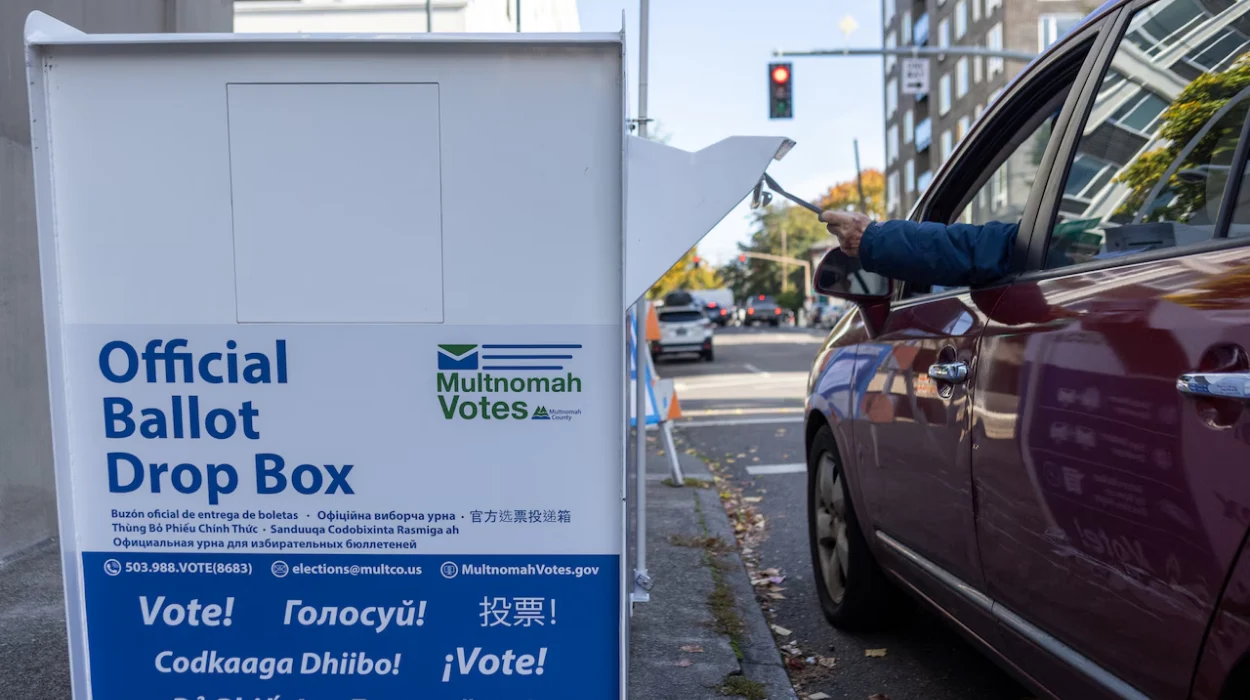
For Oregon, the message from Washington is not just about one state’s voter rolls. It is also part of a wider Trump-era push to tighten election rules, especially in states that rely heavily on mail voting and state-managed registration systems. Oregon has long been one of the most visible examples of that model, which makes it a natural target in a broader national debate.
Oregon’s election problems
This federal warning came in context. There have already been instances where Oregon was publicly questioned on the grounds of noncitizen voting due to state’s erroneous registrations of non-citizens to vote. Over 1,600 potentially eligible non-citizens were found to be registered to vote due to state’s error, which gained nationwide interest. State officials claimed that they reported any case of noncitizen voting for investigation. In their report for February 2025, Oregon stated that it started investigations of three cases and there were seven more potentially eligible cases pending investigation. These figures are significant in understanding both the magnitude of the administrative problem and the effort made by the state to resolve it through the process of law.
Attorney General Dan Rayfield made that position explicit when he said,
“We are opening an investigation to learn more about what happened in the matters referred to our office by the Secretary of State as per ORS 260.345 involving individuals who may have voted when they were not eligible to do so.”
He added,
“While these cases are rare, it is our responsibility to investigate thoroughly and ensure…”.
The statement underscores Oregon’s argument that it is addressing the matter through existing legal channels and that confirmed cases are unusual rather than systemic.
Why the number matters
The numbers in this story are central because they shape how serious the public should view the problem. More than 1,600 potentially ineligible registrations sound alarming, but the phrase “potential” is doing a lot of work. It does not mean 1,600 confirmed illegal votes. It means the state found records requiring review, correction, or investigation.
The difference is important to election reporting due to the possibility that the mistakes in the registration system can arise from various factors, such as database mismatch, outdated information, double registration, or other technical mistakes. The reaction of Oregon in this case indicates that the voting violations confirmed thus far are rare. In the second study conducted later, the state government considered the violations rare, suggesting a limited number of violations as opposed to a wide range. Nonetheless, even few cases can have significant political consequences. In the course of an election, trust is just as important as votes themselves, and several recorded violations can cause an impression of system vulnerability, which may serve as justification for any further limitations or federal oversight.
Trump’s broader election agenda
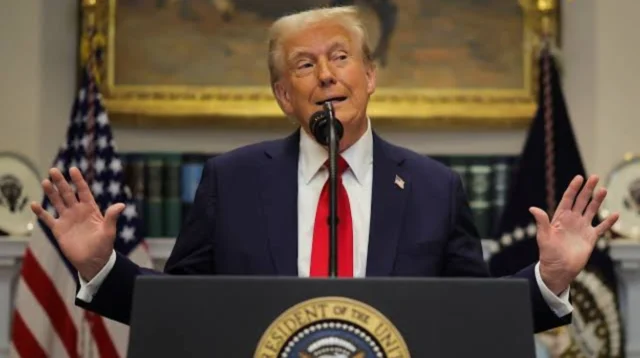
The Oregon threat of warning is also part of a larger strategy of the Trump administration towards elections. President Donald Trump has been advocating for strict standards of proof of citizenship, more stringent controls over ballots, and federal intervention in states that employ a broad use of vote-by-mail. The State of Oregon, which has an established system of vote by mail, has often been a target of such policies. Previous reports have highlighted how officials in Oregon have been resisting the executive order on voting issued by Trump and threatened with possible legal action. Officials in the state said they would employ all possible legal methods to stop any attempt to change the way elections are conducted.
The conflict is not only about one alleged voting violation. It is about who gets to define election security: the federal government or the states. Trump’s DOJ is signaling that it believes state officials may bear legal responsibility if they fail to stop unlawful voting. Oregon, meanwhile, is emphasizing investigation, due process, and the state’s own authority to police its rolls.
Legal and political stakes
At the legal level, the DOJ warning raises the question of what “knowingly allow” means in practice. If election officials ignore clear evidence of ineligible voting, federal prosecutors could argue that they crossed a legal line. But if the issue stems from registration errors, incomplete databases, or disputed eligibility records, the burden of proof becomes much harder.
This is precisely where the strategy of Oregon comes into play. By opening an investigation, the state will be able to claim that it does not refuse to do anything. Instead, it analyzes all the information and acts in accordance with the procedures defined by the law. This allows the state to protect itself from any claims regarding its inaction while ensuring at the same time that the officials cannot be accused of knowingly ignoring any issue. However, politically, this news benefits both parties. For Republicans and Trump supporters, this news only proves their point about the need for more stringent measures in elections. For Democrats in Oregon, it is yet another example of federal interference.
State-federal conflict grows
The Oregon dispute is also connected to a separate fight over election data. Reporting earlier in 2025 noted that President Trump’s DOJ sued Oregon and Secretary of State Tobias Read for failing to turn over full voter information. That legal battle suggests the administration is not only demanding enforcement but also seeking deeper access to voter records.
Oregon, however, has stood its ground, with officials citing issues of privacy and limits on the power of the federal government. According to a subsequent report, a federal judge reviewed the case of Trump’s demand for voter data in Oregon, which included personally identifiable information for more than three million voters. Such numbers are incredible and demonstrate how much is at stake in terms of something else other than the problem of non-citizen voting. This wider legal dispute is important in relation to the prosecution threat as part of a larger federal strategy. In case the federal government succeeds in putting pressure on the states to provide more election data, it will have the ability to increase oversight, discover irregularities, and use it in their favor during future conflicts.
How Oregon is responding
Oregon’s response has been measured but firm. Attorney General Dan Rayfield has said the state will investigate the referred cases and use the legal process to determine what happened. That language is careful, because it avoids conceding that a widespread problem exists while still acknowledging that a real issue was serious enough to merit review.
The state has also tried to frame the problem as isolated. By describing the cases as rare, Oregon is signaling that it does not view noncitizen voting as a systemic feature of its elections. That distinction is important politically, because if the problem were systemic, federal intervention would appear easier to justify. If it is rare, the state can argue that local corrections are sufficient.
At the same time, Oregon officials know that public confidence is fragile. Even limited errors can be amplified in national politics, especially when they involve citizenship and voting, two issues that are highly emotive and politically charged. That is why Oregon’s language has focused on investigation, responsibility, and evidence rather than denial.
The immediate significance of this story is that it pushes Oregon into a more aggressive federal spotlight. The DOJ warning is not the same as an indictment, but it is not routine either. It signals that the Trump administration is willing to use the threat of criminal prosecution to pressure state election systems.
For Oregon, it is now about showing how seriously it treats the matter while at the same time not lending credibility to the wider political campaign against its system of voting. With the evidence presented by the state itself in terms of more than 1,600 suspected noncitizens registering, three referrals for prosecution, and another seven cases pending examination, it was clear there were real problems worthy of investigation. But these alone did not in themselves amount to proof of systemic or deliberate misconduct on the part of government officials. And this is why the case is such an important political one.