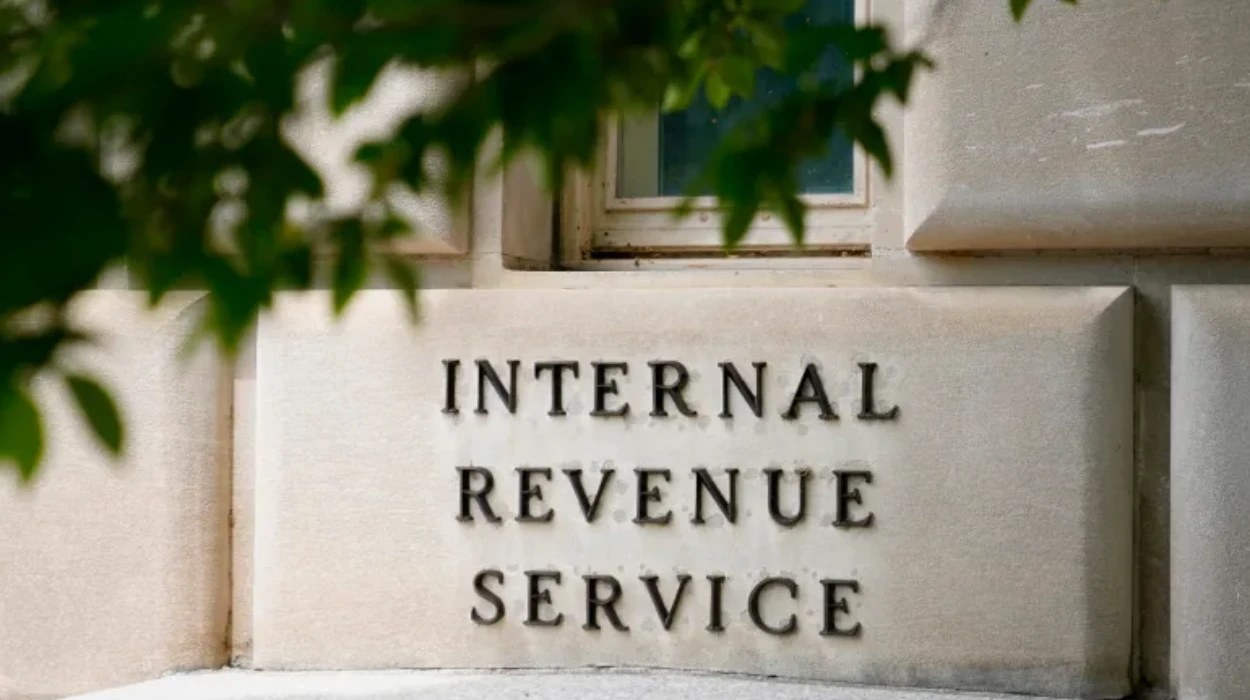
The legal and political sea change that has taken place at the crossroads of tax law, executive authority, and political animus is profound. Through an arrangement that changes the dynamics between the IRS and the presidency, President Donald Trump, his immediate family members, and his affiliated businesses have been granted complete immunity from any and all future audits by the IRS for any years already reported. This unique level of protection is part of the new deal struck with regard to Trump’s $10 billion lawsuit against the IRS with respect to his tax returns, alongside the creation of the $1.776 billion “Anti-Weaponization Fund” in the Department of Justice.
For the first time in contemporary American history, a sitting president and his extended family are protected from past tax enforcement measures not because of any law or decision by the Supreme Court but through a negotiation deal secured with the help of a recently created federal fund. Opponents criticize the agreement for creating a precedent wherein the president and his close associates become a unique category of citizens exempt from regular tax investigations, while supporters of the president see it as a necessary safeguard against the “weaponization” of federal agencies.
In a post on X, Rep. Jamie Raskin said:
“As if a $1.8 billion slush fund weren’t a severe enough violation of the rule of law, Trump’s “settlement” with the IRS also includes a permanent get-out-of-jail-free card for any tax crimes committed by the president, his family and his companies.
How much grifting and scamming will it take to get the fiscal conservatives of the GOP to join us and put a stop to this presidential plundering of taxpayer dollars?”
How do we feel about this Trump DOJ IRS tax settlement? (stay on topic)
— Marcel (@BasicallyIDoWrk) May 20, 2026
The settlement and the “Anti‑Weaponization Fund”
The central part of the agreement is the continuation and transformation of the $10 billion lawsuit that Trump had brought against the IRS in 2019 when his tax records became public knowledge. In this agreement, the government has promised to stop all ongoing investigations on Trump and his family members regarding taxes and at the same time transform some parts of the lawsuit into an $1.776 billion “Anti-Weaponization Fund,” which will be kept in the judgment fund of the Department of Justice. This fund will pay out anyone who proves themselves as political targets of federal agencies like the IRS and FBI.
The establishment of the Anti‑Weaponization Fund has been characterized by members of the administration as a tool to “level the playing field” and “bring an end to the era of weaponized government,” according to senior officials at the Justice Department talking to the media. This, the officials assert, will enable private individuals who feel they have been investigated for political reasons to claim compensation, despite the fact that the very same law now shields the president from back-taxes audit. The deliberately selected amount of $1.776 billion, which reflects the year America gained independence, is not a coincidence, according to administration officials.
However, critics point out that the structure of the deal is highly asymmetrical: while the fund is technically open to others, the only concrete immunity granted so far is to Trump and his family.
“Other people can apply to the fund, but the only person who actually gets a no‑audits guarantee is the president,”
said one Democratic congressional aide familiar with the negotiations.
“That’s not balance; that’s bespoke protection for one man and his family.”
What the immunity actually means
The legal language of the settlement is brief but stark. In an addendum signed by Acting Attorney General Todd Blanche, the government states that officials are “VER BAR and PRE”—understood in legal shorthand as “forever barred and precluded”—from bringing any tax claims against Donald Trump, his immediate family, the Trump Organization, and a wide array of related entities. Those entities include trusts, parent companies, affiliates, and subsidiaries, creating a broad protective umbrella that extends far beyond the president himself.
This essentially translates into the ending of all audits by the IRS against Trump, his family members, and the Trump Organization. The government will not be able to re-examine any closed tax years or conduct further audits or penalties against any of those individuals or entities for the period before the settlement agreement. For the Trump Organization and its affiliates, this means that a clean slate is effectively achieved with respect to investigations conducted into their past tax affairs in relation to their real estate dealings, among others.
The settlement does not, however, shield Trump from audits of future tax returns. The IRS retains the legal authority to examine and challenge any tax filings submitted after the effective date of the agreement. Yet, given the political and institutional sensitivity of auditing a sitting president, the practical effect is that Trump and his family now occupy a de facto protected zone. As one former IRS official, who spoke on condition of anonymity, put it:
“The law is one thing; the politics are another. After this, no IRS commissioner is going to touch Trump’s future returns without a political earthquake.”
Reactions from the White House and DOJ
The Trump administration has framed the settlement as a victory for the rule of law and for the principle that no one should be singled out for political reasons by federal agencies. Senior White House officials have described the deal as proof that the president
“followed the law, fought back when the government broke the law, and won.”
They emphasize that the IRS acted unlawfully in leaking Trump’s tax returns, and that the settlement both punishes that misconduct and curbs any future abuse of investigative tools.
Acting Attorney General Todd Blanche has defended the structure of the agreement in a brief statement, saying that the Justice Department is
“upholding the Constitution and protecting citizens from politically motivated investigations.”
He added that the Anti‑Weaponization Fund will allow the government to “make whole” those who have been unfairly targeted, while also ensuring that the president is not held to a different standard than the rest of the public.
“This is not special treatment,” Blanche said; “this is long‑overdue accountability for weaponized federal power.”
Within the Justice Department, voices are more divided. Some career prosecutors and compliance‑office staff have reportedly expressed concern that the settlement effectively rewards the president with a unique immunity that no other taxpayer enjoys. Privately, one senior Justice Department official described the arrangement as “a legal curiosity, if not a full‑blown constitutional anomaly.” That same official added that, while no court has ruled the deal unconstitutional,
“the optics are terrible, and the precedent is terrifying.”
Criticism from Democrats and watchdogs
Democratic lawmakers and government‑ethics organizations have responded with sharp condemnation. Congressional leaders have called for legislative hearings and, in some cases, outright repeal of the agreement’s immunity provisions. Senator Elizabeth Warren, a longtime critic of Trump’s tax practices, said:
“What we’re seeing is the creation of a royal class for one president and his family. No one should be above the IRS; that’s what ‘taxation with representation’ is supposed to mean.”
House Oversight Committee Chair Jamie Raskin issued a statement calling the deal an “unprecedented grant of tax immunity” that “breaks the most basic principle of equal treatment under the law.” Raskin vowed that the committee would investigate not only the terms of the settlement but also the internal Justice Department discussions that led to its approval.
“If the IRS can be barred from auditing a president for past tax conduct, then the entire tax system is at risk,” Raskin said. “This is not justice; it’s deal‑making for the powerful.”
Ethics watchdog groups have echoed that concern. The nonpartisan Citizens for Responsibility and Ethics in Washington (CREW) released an analysis warning that the arrangement could embolden future presidents to seek similar sweetheart deals. CREW’s president, Noah Bookbinder, said:
“Once the idea spreads that a president can trade a lawsuit for audit immunity, every future commander‑in‑chief will think they can negotiate themselves out of tax scrutiny.”
Legal and constitutional questions
It is expected that the legality of the deal will be tested in court, despite the fact that, at least for now, its direct effect will be halting IRS investigations into Trump and his family members. On the issue of whether the deal is an abuse of executive power or circumvents separation of powers, experts remain divided. In their opinion, there is considerable leeway granted to the Justice Department in settling civil disputes, which include IRS cases, and there is nothing in the Constitution prohibiting such a thing.
Others disagree. Constitutional law professor Laurence Tribe, speaking in a recent interview, suggested that the deal may raise serious questions about equal protection and the president’s duty to “faithfully execute the laws.”
“If the president is asking the IRS to exempt him from the very law he is supposed to enforce, then something is fundamentally out of alignment,”
Tribe said. He added that the fact that the immunity is tied to a fund whose beneficiaries are not yet clearly defined only heightens suspicions of self‑serving design.
Tax‑law experts have also raised questions about whether the arrangement undermines the IRS’s statutory mandate to enforce tax law uniformly. The Internal Revenue Code does not contemplate a special class of “immune” taxpayers, and the modern income‑tax system relies on the perception that everyone, including the president, is subject to the same rules.
“When the IRS signals that one family is off‑limits, the credibility of the entire system erodes,”
said Rita Selvaggi, a senior tax policy analyst at the Center on Budget and Policy Priorities.
How this affects the IRS and future presidents
The effect of the agreement on the operations of the IRS is both legal and cultural. The organization has been known to maintain that no individual is above the law, despite some attempts by the White House to bring political pressure. However, it seems that this tradition has been broken. Current and former IRS officials have been worried about the difficulty of attracting and retaining auditors and investigators due to the new agreement.
In the future, the implications of the agreement will affect any presidency when a future president is faced with a similar predicament. If another administration decided to use the same strategy to reach an agreement, the previous agreement reached between the Trump family and the IRS would serve as a precedent. Some experts in the area believe that the Anti-Weaponization Fund could become an annual affair, whereby the president uses the possibility of litigation to influence the IRS and the Justice Department.
The political narrative and public perception
Politically, the Trump administration has already begun to spin the settlement as a vindication of the president’s long‑running claims of being unfairly targeted. The White House communications team has circulated a narrative that
“the president exposed a corrupt system and used the law to fix it,”
cast‑ing the creation of the Anti‑Weaponization Fund as a populist victory against “deep‑state” overreach.
At the same time, Democratic strategists and progressive commentators have seized on the deal as evidence of a broader drift toward a more personalized, less transparent presidency. For many voters, the combination of the president’s prior tax‑returns controversy, the $10 billion lawsuit, and the new immunity clause creates a sense that the tax system is being reshaped to serve political interests rather than public fairness.
In public‑opinion polling, early reactions are split along partisan lines. Republican‑leaning respondents tend to view the settlement as a long‑overdue check on federal abuse, while Democratic‑leaning respondents see it as a self‑dealing power grab. A small independent‑voter segment is more undecided but troubled by the appearance of preferential treatment.
“People don’t care only about the law,”
said one Democratic pollster.
“They care about the optics of one family being untouchable by the IRS.”