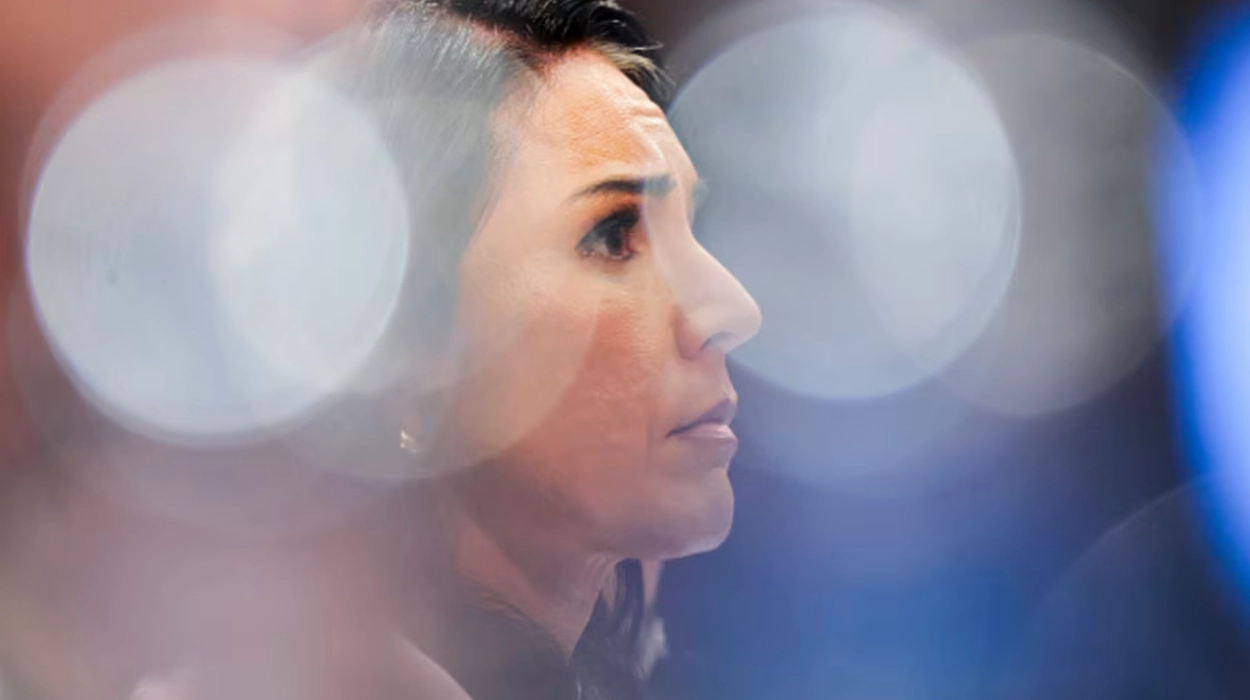
The political path of Tulsi Gabbard over the last few months illustrates a sharp departure from the hot-button issues associated with US foreign policy and into the struggles of Trumpian politics within the US government. The core of the article lies in an observation of how, while she was supposedly being sidelined from any involvement with sensitive issues like Iran and Venezuela, she turned her focus toward the grievances that President Donald Trump had against the infamous “Deep State.” What makes this move so important is the way that it says as much about Gabbard’s place in the US administration as her personal political inclinations.
Why was Tulsi Gabbard sidelined on Iran and Venezuela?
The reporting portrays Gabbard as a senior intelligence figure who was not fully trusted on the administration’s biggest foreign-policy pressures, particularly Iran and Venezuela. In the case of Iran, she warned that the world was
“closer to the brink of nuclear annihilation than ever before,”
a statement that reportedly angered Trump and White House officials because it cut against the administration’s preferred tone on the issue. That kind of public warning, especially from someone in the intelligence chain, would naturally be seen as disruptive in a White House that prefers message discipline.
The case of Venezuela also shows that her stance was controversial. According to the report, she had already stated before that intervention in Venezuela on the part of the United States would prove disastrous, thus making her someone who was wary of the kind of pressure that was typically used by regime changers. Being an advocate for no interference, it appears as if she was now at odds with some of the more aggressive members of the policy-making community every time the administration sought to escalate the crisis.
Her “Deep State” focus?
She was losing influence in Iran and Venezuela, and she relied more heavily on one of President Trump’s central political obsessions – the “Deep State.” According to the sources, Gabbard was actively involved in conducting internal investigations and leaking information to expose what she and Trump saw as the resistance within intelligence organizations and the bureaucratic government machinery itself. In that respect, she appears to be focusing on the problem closer to home rather than dealing with geopolitical crises.
From the political perspective, the above point implies that Gabbard shares Trump’s grievances and fears. She does not try to compete with him for control of foreign-policy decisions; instead, she helps prove that the intelligence agencies, electoral system, and various federal institutions had been infiltrated by those who were trying to harm the United States from within. In other words, Gabbard seems to be helping to strengthen Trump’s position in his power struggle.
How did she act on those suspicions?
Gabbard declassified documents tied to the 2016 Russia election interference assessment and used them to argue that Obama-era officials had engaged in what she called a “treasonous conspiracy” against Trump.
This is a serious charge, and the story uses it as an example of the clearest cases where she has used suspicions to take action publicly. Politically speaking, declassification is anything but neutral administration. On the contrary, it is a very powerful act, and sometimes it transforms the intelligence community’s past disagreements into new proof of institutional betrayal.
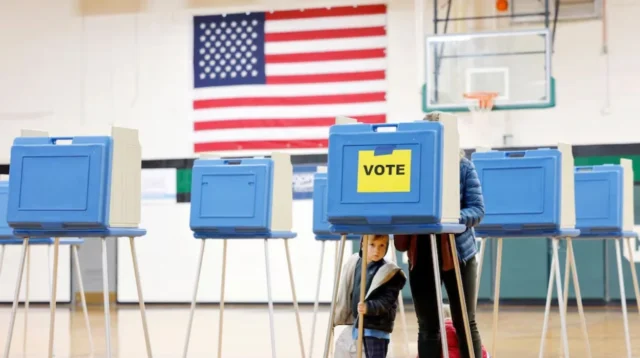
In addition to all that, the story reveals that she looked into election-related matters in Puerto Rico for what seemed to be the purpose of confirming allegations of ballot rigging. This is important because it implies that her efforts were part of building an overall case proving that the election system was flawed and vulnerable, just as Trump firmly believed.
What happened in Fulton County?
There are many other episodes reported in the sources, including one in which it is alleged that she was present on the scene as the FBI seized ballots for what was said to be an incident related to the 2020 elections in Fulton County, Georgia. The Director of National Intelligence, according to the report, is not supposed to take part in any domestic law enforcement activity, thus making this particular incident quite controversial if it was part of her job.
However, the relevance of the incident extends beyond one instance. It is important to remember that the incident reveals the way in which the sources characterizes Gabbard as less of a conventional intelligence official and more of a political actor participating in Trump’s network of post-election grievances. In that context, her behavior in Fulton County takes on a broader meaning as she uses her position for political purposes.
What do these moves say about her political stance?
The position of Gabbard, according to the reportage, is quite unique. She is depicted as being suspicious of foreign interference while at the same time being wary of engaging with Iran or Venezuela, yet she appears to be quite hawkish when dealing with her own government institutions, which she thinks have been acting against Trump. This attitude is not coincidental, since it stems from her conviction that foreign countries do not pose the greatest threat, but domestic ones do.
This is what makes her marginalization possible on the former issue and mobilization on the latter plausible. While dealing with Iran and Venezuela, she was hindered by the machinery of US policy making and national security management. However, on “Deep State” issues, she could maneuver better, for here it was a matter of political discourse rather than policy implementation. From a practical point of view, she was now more effective due to her involvement in grievance politics rather than expert consensus building.
Why does the story matter politically?
On a more political level, Gabbard is presented as a reflection and an instrument of President Donald Trump’s second-term governing approach. In other words, while serving within the executive office, Gabbard was someone who actively contributed to advancing an administration’s agenda rooted in elements of hostility and counterattacks against those institutions considered threatening. This aspect makes Gabbard an important component of the process whereby the president’s inner circle transforms its suspicions into practical steps.
Moreover, this example demonstrates certain limitations one encounters in a political system highly focused on centrality. Thus, a senior intelligence official can be marginalized if her concerns do not fit a particular political narrative. However, marginalization cannot be equated with insignificance because the author implies that once the scope of policy influence became narrower, the woman intensified the kind of struggle Trump likes most: conspiracy theories, the treachery of the intelligence community, and the illegitimacy of the electoral system.
What are the main factual claims in the reporting?
The key claims regarding facts include: Gabbard was raising concerns about Iran with regards to its nuclear power capability; Gabbard was reportedly sidelined on both Iran and Venezuela; Gabbard declassified Russian assessment papers; Gabbard was promoting election stories in Puerto Rico; and, lastly, she participated in Fulton County’s election politics. The above claims each relate to one of Gabbard’s political identities in some way—independent.
However, there is also a key interpretive claim that Gabbard’s actions were driven not by chance but by a particular trend, driven by Trump’s priorities, as well as Gabbard’s suspicions herself. In other words, implying that Gabbard did not just respond to being sidelined; rather, she redirected her efforts to the area, which coincided with Trump’s views.
This should be read less as a simple personnel story and more as a study in political alignment. Gabbard’s significance lies in the way she bridges two worlds that are usually separate: national-security authority and anti-establishment grievance politics. When those worlds meet, the result is not a conventional intelligence posture but a highly politicized use of power, message, and selective disclosure.
Her case also illustrates a recurring Trump-era dynamic: officials can lose access to policy influence yet gain relevance by becoming more useful in internal political warfare. She may have been sidelined on Iran and Venezuela, but she remained active where Trump’s distrust of institutions could be most effectively weaponized.