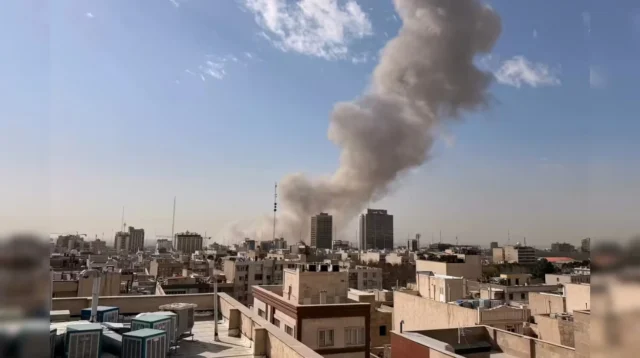
War And Peace Cannot Be Left To One Man Especially Not Trumps Whims has become a sharp mantra in Washington policy circles after another series of American military attacks on Iranian targets in 2026. President Donald Trump approved the operations without another roll vote citing that the commander-in-chief authorities under Article II gave enough power to act promptly in case of an escalating threat.
The move has led to renewed constitutional battles between the executive and Congress in the area of war making. Although the administration did give notice to the lawmakers under the auspices of the War Powers Resolution, critics say that notification is not the same as authorization. The 60-day cap that is enshrined in the legislation presents a legal framework that might limit the course of the further interaction.
A number of congress people have indicated that there is no widespread national opinion to engage in an open-ended war with Iran. Their interests reflect on the historical arguments of unilateral military action and whether contemporary security conditions warrant greater executive authority.
Historical Patterns of Congressional Involvement
Presidential dependence on legislative ratification has fluctuated through the history of modernity. The Gulf War in 1991 had taken place with authorization of the Congress that had taken much time to debate about it. The Authorization of Use of Military Force against those responsible for the September 11 attacks passed by a huge majority in 2001 with bipartisan support.
By comparison, smaller-scale intervention in Libya in 2011 and targeted intervention in Syria depended more on executive discretion of powers. The present aggressions towards Iran seem more like those precedents but geopolitical interests are much higher considering the geographical presence of Iran and alliances.
Judicial and Political Guardrails
The judiciary has long been reluctant to challenge the executive on an active military course of action, citing political question doctrine. Consequently, significant constraint is likely to occur through congressional funding powers or electoral responsibility as opposed to judicial injunctions.
The resultant dynamic presents the political will as the main check. As party lines become the focus of discussion before the midterm elections, the unilateral force debate could also become part of the campaign discourse rather than a legislative process.
Strategic Calculations Behind the Escalation
The administration has presented attacks as preemptive and preemptive, stating that the intelligence was such that there were imminent attacks to the American assets in the area. The operations are denounced by Iranian officials who threaten to react proportionately with regard to sovereignty.
The local climate is unstable. The proxy tensions which escalated in 2025 in the Iraq and Syria front prepared the groundwork for confrontation and the diplomatic lines through which the nuclear restrictions had been revived in the past stagnated to a considerable degree. It is on this background that the decisiveness of executives can be aimed at sending a message of determination at home and in foreign countries.
Iran’s Response and Regional Ripple Effects
Iran has also shown the ability to retaliate in a controlled manner, and in most occasions, it has been achieved using allied militia and not the state itself. Analysts are looking forward to asymmetric reactions to U.S. positions, without taking any measures that would escalate into full-scale war.
The partners in the region are also making defensive preparations. Israel has increased the level of alertness, and Gulf nations are strengthening its air defense. All these developments bring home the fact that a decision made in Washington is felt in more than one security theater.
Alliance Dynamics and NATO Implications
NATO allies have reacted with reservation demanding a de-escalation, though they have renewed their commitments to collective defense. The governments of Europe, which are yet to overcome the energy diversification issue after the protracted effect of the Ukraine conflict experienced up to 2025, have economic sensitivities associated with Gulf stability.
The question of alliance cohesion can be dependent on the fact that the operation should be restricted or extended. An extended counteroffensive would probably lead to more discussions in NATO on the issue of sharing burdens and strategic priorities.
Domestic Political Reverberations
Back home, opinion is tired of the protracted military actions. In early 2026, polling results show that there is doubt about large-scale deployments not targeting U.S. soil itself. Classified briefings to lawmakers of both parties have been requested to evaluate intelligence assertions behind the strikes.
The War And Peace Cannot Be Left To One Man Especially Not Trump Whims sums up worries that individualized decision-making is likely to push institutional consultation into the background. The supporters respond that the bigger conflicts can be stopped by acting fast, focusing on deterrence rather than reflection.
Congressional Oversight Efforts
A number of senators have proposed resolutions in order to reestablish congress control in terms of declarations of war. Although passage is still uncertain, institutional discomfort is indicated by such actions. Hearings in foreign affairs committees are likely to research the proviability of the strikes.
The leverage points might be budgetary tools. The Congress reserves its power to control defense appropriations and can make funding subject to the reporting or strategic constraints.
Electoral Context in 2026
As the midterm elections are at hand, the foreign policy discussions are combined with the domestic politics discourses. The opponents present the move by a single state as overstepping boundaries, whereas the proponents of the administration deem that robustness in other countries bolsters credibility in the country.
The campaign message will probably focus on the difference in the vision of executive leadership. The issue of voters putting constitutional process or a sense of decisiveness could affect legislative interest in reform.
Broader Implications for Democratic Governance
The perpetual conflict over authority to war is a manifestation of structural ambiguities in the U.S. constitution. The founders divided powers to declare war by the congress but appointed the presidency as the commander in chief. The lines have been blurred by the modern threats that are fast and transnational in nature.
The dilemma is made worse by changes in technology. Accurate firing and remote strikes are achievable within hours and deliberative timelines are condensed. The institutional issue is whether the institutionally implied rapid-response capability is a matter of increased executive discretion.
International Law and Normative Signals
Unilateral military action has implications as well under international law. In the United Nations Charter, use of force is allowed in self-defense or at the approval of the Security Council. The argument concerning the interpretation is frequently relevant to the formulation of diplomatic responses and affects the judgments of legitimacy all over the world.
The capitals of allied nations observe the way Washington explains the legal due process. Norm-setting in the present might be used to inform precedents in the future, especially in a period where some great powers are pushing the boundaries in a more aggressive manner.
Precedent Beyond Iran
It is not just one theater that debates. The same could be applied in future crises in the Indo-Pacific or Eastern Europe in the name of executive initiative. The institutional practices developed in one of the confrontations can be carried to the next.
The lasting anxiety in the wording, War And Peace Cannot Be Left To One Man Especially Not TrumpS Whims, is based not only on current belligerence but on precedent. Every incident of the unilateral force adjusts the expectation of the executive power in a subtle way.
As the relations with Iran develop and the Congress considers the possibilities, the United States is facing an old yet unanswered question of the democracy system’s adjustment to speed and consent in war. The solution will not only determine the short-term course of the US-Iran relationships, but also the constitutional equilibrium that characterizes American governance in the increasingly hostile strategic environment.