The arrest of John Andrew Spillman, a 33-year-old U.S. Secret Service Agent, for indecent exposure in a Miami hotel has brought back memories and revived debate concerning transparency in US government security agencies.
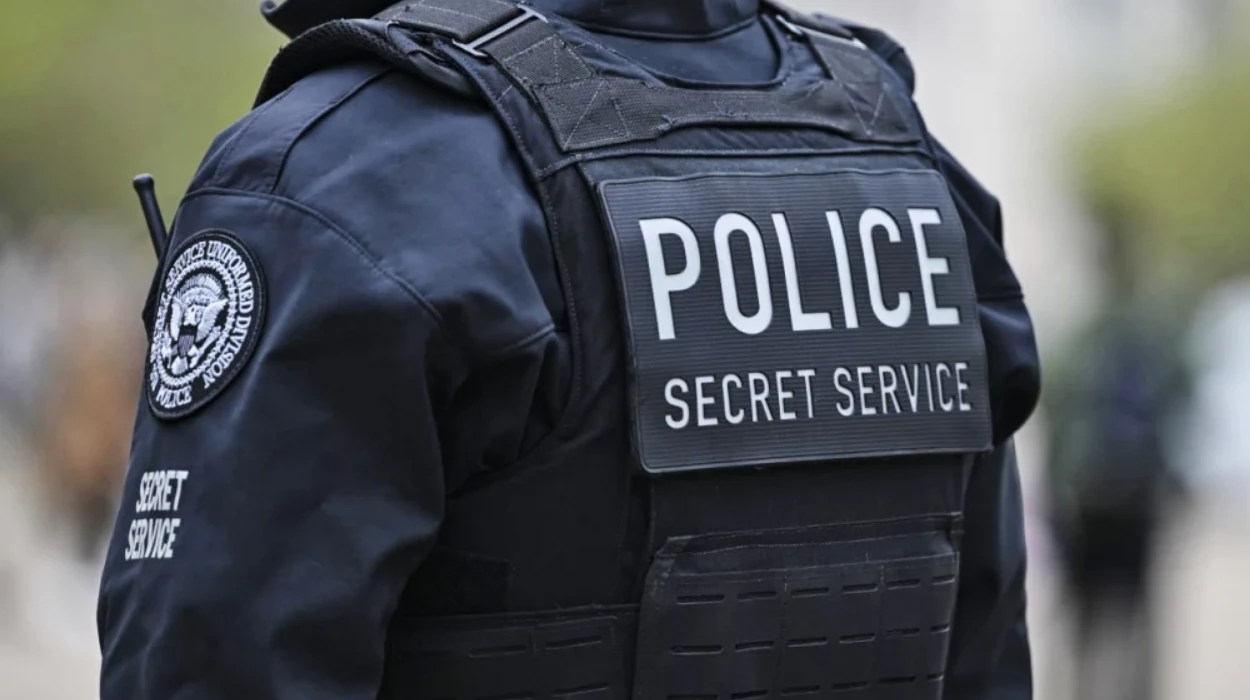
Spillman, who works for the US Secret Service Uniform Division out of Washington D.C., was arrested by the Miami-Dade Sheriff’s office when he was observed masturbating in the hotel corridor after having worked as part of a security detail connected to President Donald Trump.
The event happened at the DoubleTree by Hilton Miami Airport & Convention Center, a hotel located near the Miami International Airport, which Spillman visited as part of his duty for the upcoming 2026 PGA Cadillac Championship at Trump National Doral.
It was late in the night, around 11:59 pm on 3 May 2026, when a visitor complained about feeling followed and rushed into her room; she said that she witnessed a man in the hall with his pants down. Upon arrival, the hotel’s security team and deputies discovered Spillman, who “was nude from the waist down and engaging in sexual acts”, and placed him under arrest on a $1,000 bond for indecent exposure.
That an officer tasked with safeguarding the president could be arrested just hours after completing a high‑profile assignment prompts obvious questions: How transparent are the internal‑review and public‑disclosure mechanisms that govern such cases, and what do they tell us about the integrity of the US security apparatus?
The Secret Service’s carefully calibrated narrative
The Secret Service has been quick to position this case as a lone employee issue, and not a general failure of the organization, as well as to point out that Spillman was on his personal time when the arrest took place. According to the agency, the event for which Spillman had been providing security services concluded on the previous day, and the officer was not on official duty during his arrest.
Internally, the Secret Service Office of Professional Responsibility has opened a misconduct investigation, standard protocol for any criminal allegation against an agent, and Spillman has been placed on administrative leave pending the outcome of both the criminal case and the internal review.
Agency officials have told NBC‑affiliate WTVJ that the Service
“expects its personnel to adhere to the highest standards”,
and that any confirmed misconduct will be met with appropriate disciplinary measures, including possible termination and professional disqualification.
This carefully rehearsed script—
“single bad actor, not systemic failure; off‑duty behavior, not protection‑lapse”
—mirrors the way the Secret Service has handled earlier misconduct scandals, from 2024 sexual‑misconduct probes involving agents and political aides to decades‑old revelations of bachelor‑party trips with foreign prostitutes and weapon‑related hotel incidents.
The pattern is clear: the agency acknowledges the allegations, suspends the officer, and promises a review, but offers minimal public detail about the scope of internal findings, leaving stakeholders to infer whether the behavior is anomalous or indicative of a broader culture problem.
The transparency gap between criminal exposure and institutional opacity
The contrast between criminal‑justice transparency and institutional‑opacity is stark in this case. The Miami‑Dade Sheriff’s Office has released a public arrest affidavit describing Spillman’s alleged conduct in explicit, if clinical, detail; local TV cameras have captured his booking and bond‑setting process; and Florida‑state court records will, in due course, document the prosecution, plea, and sentencing timeline.
By contrast, the Secret Service’s internal‑investigation file is shielded behind the typical federal‑law‑enforcement confidentiality curtain. The agency is not obligated to disclose the full evidentiary file, personnel‑dossier background, or long‑term disciplinary history of John Spillman, even if prior infractions existed.
A Senate‑level report from 2015 already warned that the Secret Service operates in an environment of “weak internal controls” and “managerial discretion” when adjudicating misconduct, creating a risk that serious‑case reviews never fully see the light of day.
The episode crystallizes a core dilemma: the public knows the criminal facts of the incident, but not the institutional facts—whether Spillman had previous behavioral red flags, how often the Service investigates such allegations, or how consistently it applies discipline across rank and status. The result is a lopsided transparency: the officer’s misbehavior is exposed in the glare of the Miami‑Dade criminal‑justice system, while the agency’s response remains partially cloaked in bureaucratic‑internal‑affairs language.
Off‑duty conduct and the boundaries of accountability
The “off‑duty” defense is central to the Secret Service’s narrative, but it also exposes a conceptual fault line in transparency and accountability. Spillman was not in a protective role at the moment he was arrested, yet he remains a federal law‑enforcement officer employed by an agency entrusted with guarding the president. For many observers, that distinction feels hollow: the jacket, the agency, and the inherent public‑trust association do not disappear when the shift ends.
Analysts argue that off‑duty criminal conduct by federal agents should be treated as a public‑interest matter, not just an internal‑HR issue. The reason is simple: misconduct in private frequently erodes public‑confidence in public performance. The 2015 bipartisan House Oversight Committee report on the Secret Service warned that repeated misconduct episodes—often handled discreetly—had created a “crisis of trust” in the agency, highlighting how closed‑door adjudication feeds public skepticism about whether the government is truly policing its own.
In Spillman’s case, the Service’s public‑facing statement is notably cautious: it stresses that he was on administrative leave and under investigation, but avoids offering specifics about past‑performance records, any prior complaints, or the projected timeline for closing the internal case. That opacity leaves room for critics to argue that the agency is managing reputational risk, not maximizing transparency about the standards it applies to its own personnel.
The political‑news cycle and the temptation to shrink the scandal
The presence of Donald Trump in the background of the story only amplifies the tendency of the US government and media to shrink the scandal into a single‑incident headline. Spillman was in Miami specifically for presidential‑security duties, and the proximity of the indecent‑exposure arrest to the Trump‑event deployment has given some outlets a ready‑made narrative: a “rogue agent” behaving badly after guarding the president, a story that fits the personal‑and‑sensational mold of modern political‑news coverage.
For the Secret Service, that framing is both a problem and an opportunity: the problem is that the misconduct is impossible to ignore, but the opportunity is that the agency can portray the case as politically charged theater, rather than a sober reflection on institutional culture. The agency’s emphasis on the “off‑duty” status neatly separates the officer’s behavior from the operational‑performance surrounding Trump’s security, allowing the Service to treat the matter as a personnel‑misconduct episode rather than a security‑lapse story.
From a transparency‑oriented perspective, however, the political‑spin risk is that the broader governance‑questions get crowded out:
- Are there transparent metrics on how often Secret Service agents face criminal charges or serious internal‑conduct allegations?
- Are there public summaries of disciplinary outcomes, rather than merely vague assurances that the agency “holds personnel to the highest standards”?
- Is there an independent‑oversight body with the power to audit the Office of Professional Responsibility’s files, or does the Secret Service remain judge, jury, and archivist of its own misconduct?
The current episode, like past scandals, suggests that the government’s answer is closer to the latter: the details stay within the agency’s internal‑review ecosystem, with only the criminal‑justice side of the case fully exposed in public.
Can the US security‑state be transparent by default?
The Secret Service officer indecent exposure arrest is not, in and of itself, a national‑security crisis. Yet it is a test case for the US government’s broader commitment to transparency in its security institutions. The public knows the who, where, and what of the offense, but the how, why, and with‑how‑much‑recurrence remain in the shadows.