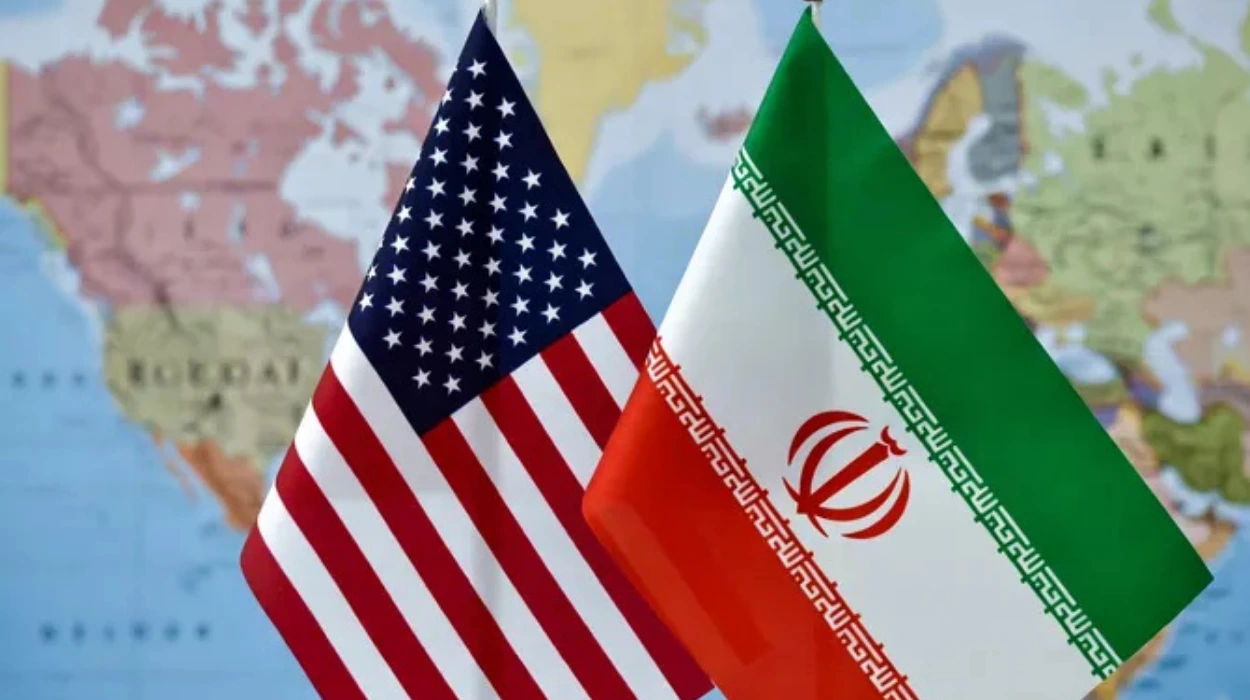
The question of why the US-Iran ceasefire may not survive Lebanon has become central to assessing the durability of the fragile pause between the United States and Iran in 2026. While the agreement has temporarily halted direct escalation, it has not resolved deeper disagreements about the scope of conflict across the region. Lebanon has emerged as the primary fault line because it sits outside the shared understanding of what the ceasefire actually covers.
The core issue lies in divergent interpretations. Washington frames the ceasefire narrowly as a mechanism to stop direct confrontation and stabilize strategic chokepoints such as the Strait of Hormuz. Tehran, by contrast, appears to view any meaningful pause as one that must extend to its regional network, particularly in Lebanon. This conceptual gap creates a structural weakness that risks undermining the agreement even before its initial timeline expires.
Lebanon as the central arena of contestation
Lebanon has become more than a peripheral theater; it is now the space where competing ceasefire interpretations are tested in real time. The continuation of hostilities there has transformed a bilateral pause into a multidimensional challenge.
Conflicting definitions of ceasefire boundaries
The most immediate vulnerability stems from disagreement over whether Lebanon is included in the ceasefire framework. U.S. officials have treated the arrangement as limited to direct hostilities with Iran, while Israel has continued operations in Lebanon under the premise that its security concerns remain unchanged.
Iranian signaling suggests a broader interpretation, implying that sustained Israeli strikes undermine the spirit of any ceasefire. This divergence illustrates a classic problem in conflict resolution: agreements that lack clarity in scope often fail when actors enforce different versions of the same understanding. Lebanon, in this case, becomes the first testing ground where those inconsistencies surface.
Hezbollah’s role in escalating ambiguity
Hezbollah plays a decisive role in shaping the dynamics of the ceasefire. As a key Iranian-aligned actor operating independently of direct state control, Hezbollah introduces a layer of unpredictability that complicates enforcement mechanisms.
Its capacity to respond rapidly to Israeli actions means that even limited strikes can trigger broader escalation. For Tehran, Hezbollah’s position is strategically significant, as it represents both a deterrent and a bargaining tool. For Israel, it remains an immediate security threat that justifies continued operations. This dual perception ensures that Lebanon remains active even when other fronts quiet down.
Military actions versus diplomatic intent
The continuation of military activity in Lebanon highlights the disconnect between diplomatic agreements and operational realities. While ceasefires are negotiated at the state level, their success often depends on the behavior of non-state actors and allied forces.
In this context, each Israeli strike risks being interpreted by Iran as a violation of the broader understanding, even if it falls outside the narrow legal framing of the agreement. This tension between legal definitions and perceived intent contributes to the fragility of the ceasefire.
Strategic objectives shaping each side’s approach
Understanding why the US-Iran ceasefire may not survive Lebanon requires examining the underlying strategic goals of both Washington and Tehran. These objectives reveal why the agreement remains limited in scope and vulnerable to external pressures.
Washington’s focus on containment and stability
The United States appears to prioritize immediate containment over comprehensive resolution. Its primary objectives include preventing escalation, ensuring the stability of global energy markets, and maintaining freedom of navigation through critical maritime routes.
This approach reflects lessons from 2025, when disruptions in shipping lanes and energy supplies had significant economic repercussions. By focusing on strategic chokepoints, Washington seeks to manage risks without becoming entangled in broader regional conflicts. However, this narrow focus leaves gaps, particularly in areas like Lebanon where allied actions continue independently.
Tehran’s broader regional calculus
Iran’s strategy extends beyond the immediate ceasefire, encompassing its wider network of alliances and influence across the region. For Tehran, Lebanon represents a critical component of its deterrence architecture and regional leverage.
The expectation that ceasefire conditions should include restraint in Lebanon reflects this broader perspective. If Iran perceives that its allies remain vulnerable while direct hostilities are paused, the incentive to uphold the agreement diminishes. This asymmetry in objectives contributes to the instability of the arrangement.
The 2025 buildup and its lasting impact
The fragility of the 2026 ceasefire cannot be separated from the developments of 2025, which set the stage for current tensions. The preceding year saw escalating confrontations involving Israeli forces and Iranian-aligned groups, particularly along Lebanon’s southern border.
These dynamics created an environment of heightened mistrust, where each actor entered 2026 with entrenched positions and unresolved grievances. The ceasefire, therefore, operates not as a fresh start but as a temporary interruption layered over ongoing disputes. Lebanon, having been a focal point of earlier tensions, naturally reemerges as the first arena where these issues resurface.
Economic pressures also play a role but remain insufficient to guarantee stability. While all parties have incentives to avoid disruptions to global energy markets, these considerations do not override strategic imperatives related to security and influence. As a result, the ceasefire remains vulnerable to shifts in military dynamics.
Competing narratives and the risk of breakdown
The persistence of conflicting narratives further complicates the situation. Each actor presents a version of the ceasefire that aligns with its strategic interests, shaping both domestic and international perceptions.
Narrative divergence and operational consequences
The United States frames the ceasefire as a tactical pause designed to create space for negotiations. Israel emphasizes its right to continue defensive operations in Lebanon. Iran, meanwhile, signals that regional de-escalation must be comprehensive to be meaningful.
These narratives are not merely rhetorical; they influence decision-making on the ground. Commanders and allied groups interpret actions through these lenses, increasing the likelihood of miscalculation. Lebanon, where these interpretations intersect, becomes a flashpoint for potential escalation.
Proxy dynamics and limited control
A critical challenge lies in the limited control that both Washington and Tehran exert over their respective partners. While the United States maintains close ties with Israel, it cannot fully dictate operational decisions. Similarly, Iran’s influence over Hezbollah, though significant, does not guarantee complete alignment in all scenarios.
This decentralization of control introduces uncertainty into the ceasefire framework. Actions taken by proxies or allies can trigger reactions that escalate beyond the intentions of the primary parties. The result is a system where formal agreements struggle to contain informal dynamics.
Implications for regional stability
The uncertainty surrounding Lebanon has broader implications for regional stability. If the ceasefire fails to address this theater, it risks becoming a localized arrangement that does not translate into wider de-escalation.
The persistence of conflict in Lebanon undermines confidence in the agreement and reduces incentives for long-term commitment. It also signals to other regional actors that the ceasefire may be temporary, encouraging hedging behavior and continued military preparedness.
At the same time, the situation highlights the complexity of modern conflict, where state and non-state actors operate simultaneously across multiple fronts. Traditional ceasefire models, which focus on bilateral agreements, may be insufficient in such environments.
The durability of the current pause will likely depend on whether mechanisms can be developed to address these complexities. Without such adjustments, Lebanon will continue to function as a pressure point that exposes the limitations of the agreement.
The unfolding dynamics suggest that the real test of the ceasefire lies not in the absence of direct confrontation between Washington and Tehran, but in the ability to manage interconnected conflicts that extend beyond their immediate control. As events in Lebanon continue to evolve, the interaction between diplomatic language and military action will determine whether the ceasefire can transition into a more stable framework or remains a temporary pause shaped by unresolved tensions.