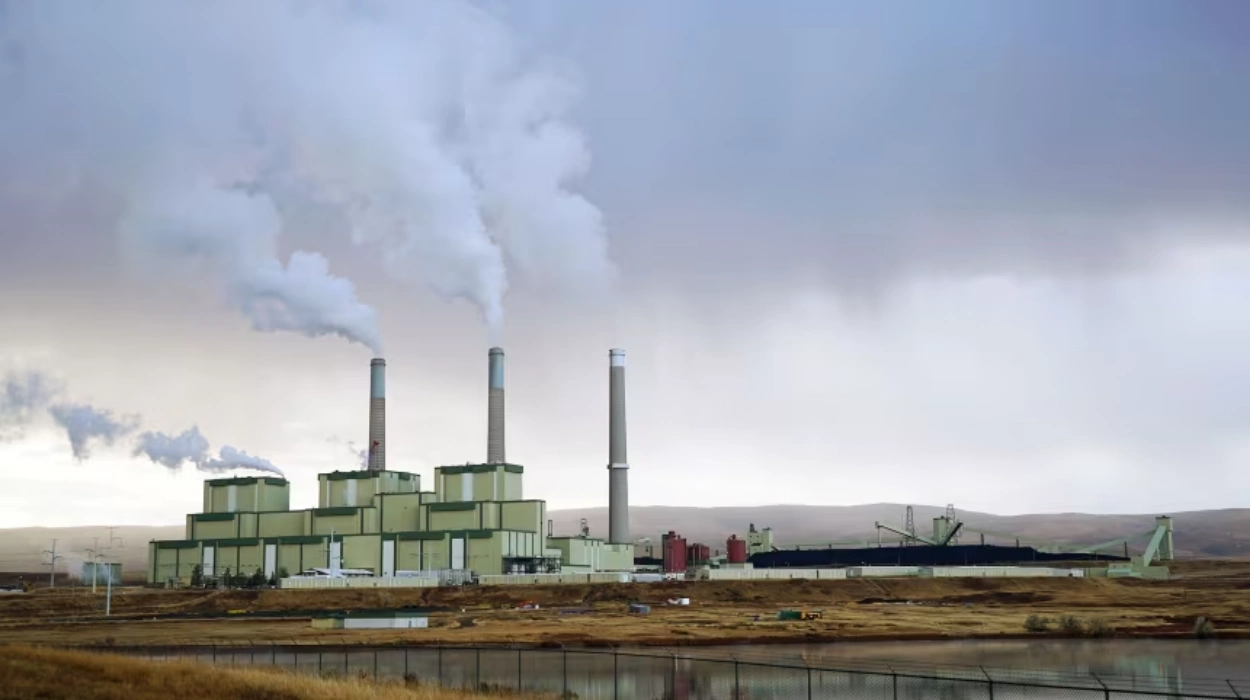
The Trump administration has now compelled an aging coal power plant in Colorado to stay in operation just one day before its closure. All this is in line with a push for retaining fossil fuel plants in operation despite increased spending and legal cases.
The order, signed on Tuesday by Energy Secretary Chris Wright, mandates the nearly 50-year-old Craig Generating Station Unit 1 in northwest Colorado to continue operating until the end of March or beyond.
The order represents the sixth federal intervention of this nature for the Department of Energy this year alone in the year 2025 and indicates an overall shift in energy policy by the federal government under the leadership of President Donald Trump’s second term, which specifically focuses on coal-fired energy even as states and energy organizations pursue faster transitions to cleaner energy resources.
The Trump administration ordered Tri-State to keep its Craig Unit 1 coal-burning plant open past its Dec. 30 retirement date. But the 45-year-old plant broke down two weeks ago and it will cost millions to repair.https://t.co/GrWuiqWc00
— Noelle Phillips (@Noelle_Phillips) December 31, 2025
Why did the Trump administration intervene at the last minute?
The order on the Craig Unit 1 plant came from Section 202(c) of the Federal Power Act, which was specifically created for emergency purposes, such as handling situations within the electricity infrastructure that pose potential threats against maintaining reliability. According to Wright, the order came as a means of ensuring “an affordable, reliable, and secure supply of electricity.”
However, critics say the administration is stretching emergency powers far beyond their original purpose. The Craig plant was slated for retirement after years of declining use, and state energy officials insist there was no reliability emergency that justified federal intervention.
This move follows similar orders compelling coal plants in Indiana, Michigan, and Washington state to remain open past retirement, along with a Pennsylvania oil-fired facility—each decision drawing scrutiny from regulators, utilities, and environmental groups.
Is Craig Generating Station actually capable of producing power?
Nevertheless, Craig Unit 1 remains out of service, despite the government request. It should be noted that Tri-State Generation and Transmission Association attributed the current power outage to a failure in a crucial part of the plant, which began on December 19. Tri-State CEO Duane Highley stated,
“Because Tri-State operates as a not-for-profit cooperative, if costs must be borne regionally, they will ultimately be imposed on our member utilities and their customer constituents.”
Colorado Governor Jared Polis said restarting the plant would require extensive repairs costing millions of dollars before it could generate any electricity at all.
“This order passes tens of millions in costs to Colorado ratepayers in order to keep a coal plant open that is broken and not needed,”
Polis said in a statement.
In a statement, Colorado Gov. Jared Polis, a Democrat, said the order would pass “tens of millions in costs to Colorado ratepayers, in order to keep a coal plant open that is broken and not needed.” https://t.co/KjhYf6H9hZ
— Will Toor (@WillToor) December 31, 2025
How much will keeping the coal plant open cost ratepayers?
Independent analysis puts the costs at significant. A report from power-sector consulting firm Grid Strategies, prepared for the Sierra Club, estimates it would cost at least $20 million to keep Craig Unit 1 running for just 90 days. Running the unit for an entire year could reach about $85 million, mostly driven by the cost of coal procurement.
Trump’s tariff tax is putting a new lump of coal in families’ stockings: higher prices.
— Rep Josh Gottheimer (@RepJoshG) December 16, 2025
We need to focus on getting costs down and making life more affordable for families, especially during the holiday season.https://t.co/QDupcXAkXq
Under certain operating requirements set by the Department of Energy, those costs could rise to as much as $150 million annually. Compounding the issue, the coal seam originally adjacent to the plant has already been exhausted, meaning fuel would have to be transported from elsewhere—further increasing expenses.
Colorado Energy Office executive director Will Toor said those costs would deliver no tangible benefit to the grid.
“We think there would be a very significant cost to ratepayers for no benefit,”
Toor said, noting that replacement power capacity is already in place.
Does Colorado actually need this plant for grid reliability?
State officials and grid experts say no. Toor confirmed that Tri-State has already developed natural gas and renewable energy projects to replace the power Craig Unit 1 once supplied. Moreover, the North American Electric Reliability Corporation (NERC), which monitors grid stability across the continent, has not identified any reliability risks in the region tied to the plant’s closure.
In effect, Colorado officials argue the federal order undermines state-level planning and ignores years of investment in modern energy infrastructure. Toor accused the administration of prioritising ideology over evidence, saying the move
“is purely for the purpose of trying to keep coal in the system”
while making it harder to deploy wind and solar projects that can be built more quickly.
Is this part of a broader national pattern?
The Craig order fits into a wider trend. In Michigan, Consumers Energy reported it cost $80 million to keep the retiring J.H. Campbell coal plant running for four months after a similar federal directive. Those costs are now expected to raise electricity bills across Michigan and 10 other states served by the utility.
Advocacy groups, including the Sierra Club and Earthjustice, have filed, according to the groups, the first-ever lawsuit challenging the use by the Department of Energy of Section 202(c). The groups claim that the perpetual 90-day extensions constitute an unlawful use of emergency powers.
Environmental lawyers say that if this trend is allowed to continue, this sets a precedent that means the federal government will now be able to delay indefinitely the retirement of coal-fired plants across the country, no matter the expense or level of pollution,
What are communities and environmental groups saying?
Reaction from advocacy organisations has been swift and forceful. Jessica Herrera, in-house counsel for GreenLatinos, said the decision threatens public health and reverses years of progress toward cleaner energy.
“This order puts our communities at risk and turns back progress that Coloradans have fought tirelessly for,”
she said.
Vote Solar’s regulatory director for the West, Claudine Custodio, warned that the order saddles families with higher utility bills while prolonging exposure to coal pollution.
“Coloradans deserve a responsible, just transition to clean energy, not last-minute federal interventions that put our communities and progress at risk,”
she said.
The National Parks Conservation Association pointed out some of the ways in which the natural environments, and not just prices for electricity, might be affected, citing the fact that the Craig Station power plant affects the Rocky Mountain National Park and other protected areas in the Southwest because of the pollution it creates in the form of haze.
Earthjustice said it is prepared to pursue legal action, calling the order unlawful and unnecessary.
“This will benefit no one but the struggling coal industry,”
said Michael Hiatt, deputy managing attorney at Earthjustice’s Rocky Mountain Office.
What does this signal for US energy policy under Trump?
The forced extension of Craig Unit 1 underscores a deeper policy divide between federal and state governments over the future of the US energy system. While many states are pushing ahead coal plant retirements to reduce costs and emissions, the Trump administration seems poised to thwart this process, using emergency powers for this purpose.
As litigation escalates and expenses add up, this Colorado case has all the making of becoming a definitive test of exactly how much the federal government is entitled to alter the energy paradigm of the whole country—and what the real cost will be.