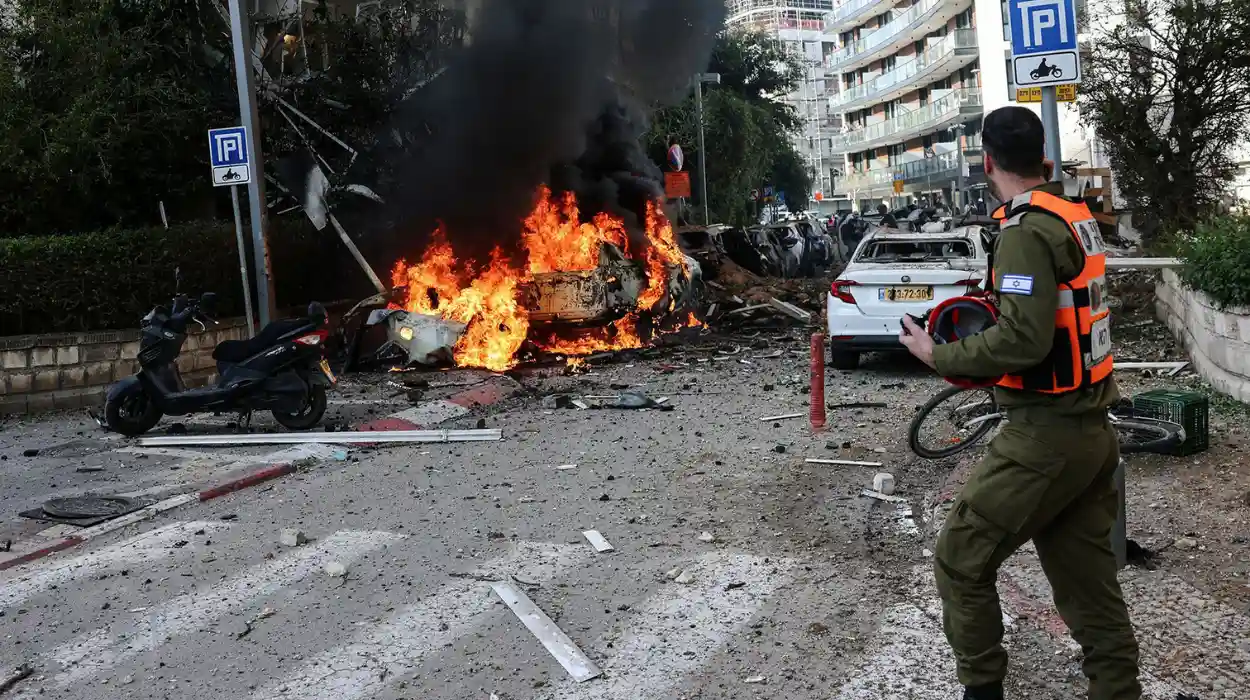
The International Monetary Fund has issued a stark warning that the Middle East conflict risks pushing the world into higher inflation and slower growth, reviving the macroeconomic pattern long known as stagflation. In a February 2026 update and accompanying blog post, IMF economists emphasized that the US–Israel war against Iran and the wider regional turbulence could shave at least 0.3 percentage points off global GDP growth over the next two years while simultaneously driving up energy and food prices. The fund underlined that “all roads lead to higher prices and slower growth,” signaling that the conflict is not a peripheral shock but a core driver of broader economic vulnerability.
Prior to the outbreak of hostilities, the IMF projected global growth at roughly 3.3% for 2026, supported by productivity gains from artificial-intelligence deployments and other technological advances. However, the escalation around the Strait of Hormuz, attacks on critical energy infrastructure, and disruptions to maritime and financial networks have altered that trajectory. Even without a full regional war, recurring threats to this strategic oil-transit chokepoint are enough to increase risk premiums, tighten financial conditions, and slow investment decisions. For policymakers, the IMF’s assessment reframes the Middle East crisis from a regional-security problem into a central macroeconomic risk that must influence growth, inflation, and debt-management planning.
Shifts in global economic expectations
The fund highlights that investor confidence has already been shaken. Commodity markets reacted sharply in early 2026, while bond yields in emerging markets rose due to heightened perceived risk. Analysts note that the combination of physical risk to energy flows and geopolitical uncertainty is recalibrating long-term growth expectations, particularly for economies heavily reliant on imported hydrocarbons.
Inflation as a contagion
Rising energy and food costs are not confined to the Middle East. Price pressures have quickly transmitted across borders, affecting supply chains and consumer behavior worldwide. The IMF stresses that this pattern could embed higher price expectations, potentially prolonging inflationary cycles even after immediate conflict risks subside.
How price pressures are piling up
Energy and food prices form the core of the IMF’s stagflation warning. Sustained oil-price increases, even of 10% over a year, could raise global inflation by around 40 basis points—a meaningful impact in economies that only recently returned to target inflation ranges. Since February 2026, Brent crude has surged more than 25% above pre-war levels, and analysts caution that prolonged disruptions in the Strait of Hormuz could push prices toward $100 per barrel for months, echoing the energy shocks seen during the 2022 Russia–Ukraine conflict.
Beyond energy, the fund highlights that food systems are under strain. Rising fuel and fertilizer costs, disruptions to Gulf-linked agricultural inputs, and shipping bottlenecks are increasing the price of staples such as wheat, rice, and vegetable oils. The timing is critical: planting and harvesting cycles are already underway, and any additional pressure could weaken yields and sustain food inflation. The consequences are particularly severe for low- and middle-income countries, where households spend a substantial portion of income on food. Even modest price increases can translate into heightened poverty, social unrest, and fiscal stress, creating the perfect storm for stagflationary conditions.
Regional vulnerabilities
Countries in Africa, South Asia, and parts of Latin America are most exposed. Many depend heavily on imported energy and food, and limited fiscal flexibility reduces their capacity to absorb sudden shocks. IMF models indicate that these regions may require additional lending, temporary subsidies, or debt-relief programs if disruptions continue.
The human impact
While headline figures describe macroeconomic shifts, the real effect is on households and labor markets. Higher food and fuel prices reduce disposable income, slowing consumption and weakening domestic demand. Simultaneously, investment hesitancy and tighter credit conditions limit employment growth, creating a scenario in which households face both higher prices and fewer job opportunities.
The asymmetry of growth and inflation shocks
The IMF stresses that the war’s impact is “global, yet asymmetric.” Low- and middle-income countries bear a disproportionate burden relative to their size, reflecting dependency on imports, fragile fiscal positions, and political vulnerability. Several African and South Asian nations, already grappling with high debt and limited foreign-exchange reserves, are at acute risk. IMF scenarios prioritize identifying states most likely to need emergency support, including balance-of-payments assistance and concessional lending.
Advanced economies may experience less direct growth disruption, yet indirect effects—through energy and food price inflation, tighter financial conditions, and diminished business confidence—can still slow expansion and embed longer-term inflation expectations. If firms and households anticipate persistent higher prices, these expectations could translate into wage-price spirals, making it difficult for central banks to normalize inflation without causing economic contraction. The fund frames stagflation risk not as a transient blip but as a structural shift triggered by the Middle East conflict.
Inflation expectations and wage dynamics
Embedded inflation expectations can reinforce pricing behavior across sectors, influencing labor negotiations and consumer pricing strategies. The IMF warns that if unchecked, these dynamics could solidify into a persistent macroeconomic environment that resembles the 1970s-style stagflation.
Divergent policy pressures
Policymakers face competing imperatives: restraining inflation without deepening growth slowdowns, while shielding vulnerable populations from the worst effects of higher prices. The asymmetric burden complicates coordinated policy responses and heightens the risk of uneven recovery trajectories.
Policy dilemmas and the “lasting scars” warning
The IMF cautions that prolonged conflict combined with delayed or poorly calibrated policy could inflict “lasting scars” on the global economy. Investment could be permanently deferred, human capital eroded, and inequality exacerbated in countries already facing debt distress and weak institutions. The fund urges central banks to avoid over-tightening monetary policy in response to supply-driven price spikes, as sharp rate hikes could deepen recessions without addressing the underlying causes.
Instead, targeted fiscal interventions—such as temporary subsidies, social-protection programs, and support for small and medium-sized firms—are recommended to protect vulnerable households without destabilizing long-term fiscal balances. IMF economists also highlight the potential need for expanded institutional support, including emergency lending and advisory programs for countries experiencing balance-of-payments crises resulting from higher import bills, weaker remittance flows, or capital flight.
Managing structural risk
Beyond short-term stabilization, the fund’s analysis emphasizes preemptive structural measures. Investment in resilient supply chains, alternative energy sources, and food security initiatives can mitigate the long-term impact of recurring geopolitical shocks.
Implications for development trajectories
Countries with fragile institutions and limited fiscal space are most at risk of seeing temporary shocks harden into permanent setbacks. The IMF warns that without coordinated responses, some economies could experience multi-year stagnation, with generational consequences for employment, poverty, and growth potential.
The IMF’s latest warning underscores a pivotal challenge: the Middle East conflict is not only a regional security crisis but also a macroeconomic event with global repercussions. Policymakers, investors, and multilateral institutions must navigate a delicate balance between managing immediate price pressures and preventing the conflict from enduring structural damage. The unfolding scenario is a reminder that geopolitical crises can no longer be treated as isolated events; they intersect with energy markets, food systems, and financial stability, fundamentally reshaping expectations and strategies across the global economy.