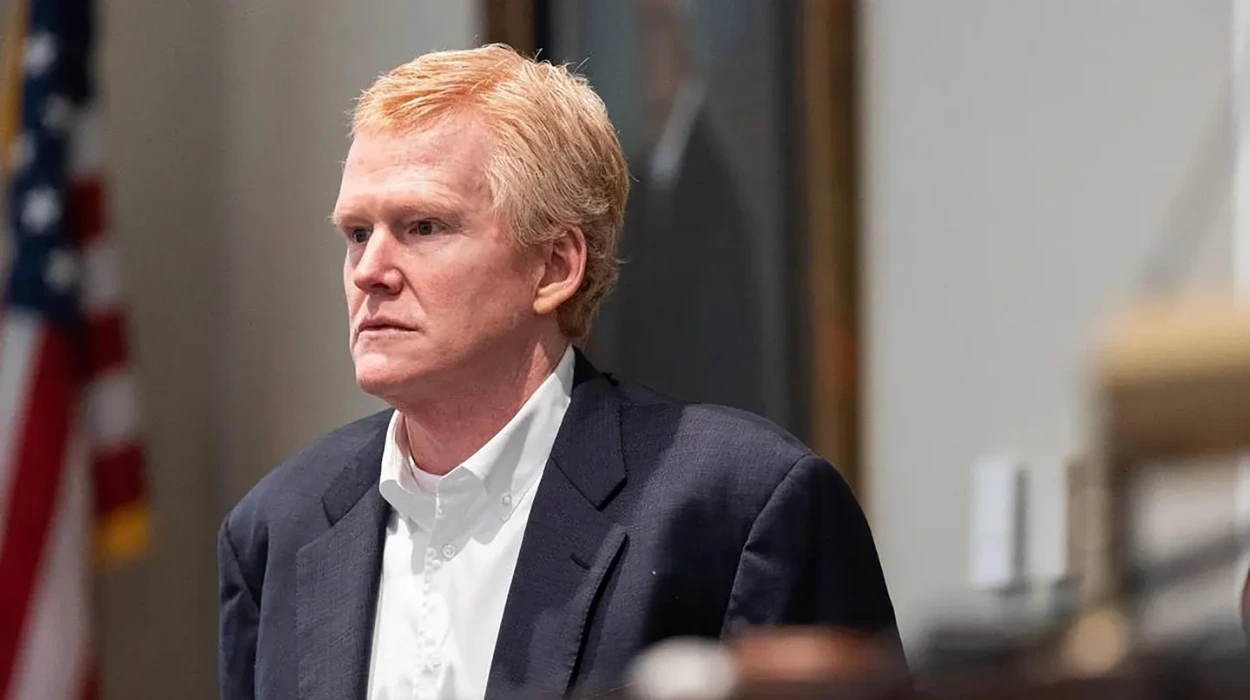
The South Carolina Supreme Court has issued an earthquake of a judgment against one of the most sensational criminal cases in the history of the United States, unanimously reversing the murder convictions of Alex Murdaugh on May 13, 2026. Based on clear evidence of jury tampering committed by Colleton County Clerk of Court Becky Hill, the ruling requires a retrial for the 2021 murders of Murdaugh’s wife, Maggie, and his son, Paul. This verdict not only brings back a case that mesmerized the country through its mix of family legacy, bankruptcy, and brutality but also highlights critical problems within the judicial system of high-profile trials.
The Murdaugh Murder Convictions Overturned saga underscores the fragility of verdicts when external influences creep in, forcing prosecutors to rebuild their case amid fresh scrutiny.
⚖️ ‼️SHOCK: Murdaugh Murder Convictions Just OVERTURNED
— Tosca Austen (@ToscaAusten) May 13, 2026
Alex Murdaugh is one step closer to walking free.
Just hours ago, the South Carolina Supreme Court unanimously tossed his double-murder convictions for the brutal killings of his wife Maggie and son Paul — citing shocking… https://t.co/qZktlkr9kM pic.twitter.com/iNCV1qGw94
The Infamous Murdaugh Dynasty and the Night of Horror
The name Murdaugh is one of strength within the vast Lowcountry area of South Carolina, having been a part of local history in the form of prosecution attorneys for decades. Alex Murdaugh, former partner in the well-known law firm PMPED, fell from grace in 2021 due to his addiction to opioids and the theft of millions of dollars. Tragedy occurred on June 7, 2021, at the family’s 1,700 acre estate known as the Moselle hunting lodge when Maggie Murdaugh, 52 years old, was shot multiple times with a powerful rifle.
Paul, 22, lay dead nearby, blasted twice with a shotgun at close range. Prosecutors painted a picture of a desperate man silencing his family to evade mounting financial scandals, pointing to a damning video captured on Paul’s phone just minutes before the gunfire—featuring Alex’s voice insisting, “I told you multiple times,” captured in a frantic exchange.
The trial process in Walterboro, Colleton County in March 2023 became another hit miniseries for the audience. Murdaugh confessed before the audience to stealing more than nine million dollars from his victims but denied killing. When asked about killing, “I did it,” was all he had to say while on the stand.
Still, the defense claimed that it was a result of Paul’s boat crash case that occurred in 2019 when he drove drunk and caused a car accident that led to the death of a 19-year-old woman and consequently led to filing for wrongful death. This is because the footprints, DNA, and inconsistency of their accounts were what made the prosecution win on two charges of murder, and life imprisonment sentences were handed out.
Clerk Becky Hill: From Courtroom Fixture to Tampering Villain
At the heart of the Murdaugh Murder Convictions Overturned lies Becky Hill, the Colleton County Clerk of Court whose actions the Supreme Court deemed “disturbing” and “stunning.”
Shortly following the verdict rendered in 2023, Judge Hill, who was presiding over the jury as it deliberated, came under fire for apparent bias. Several jurors and alternates reported her comments made during the deliberation period, such as those directed to at least three jurors regarding Murdaugh’s behavior in court indicating his guilt—statements like watching his impassivity while giving testimony on a gruesome subject matter. This was not all; Hill herself had written a book, entitled Behind the Doors of Justice, sensationalizing the case and implying Murdaugh’s guilt.
The row went on for two more years. In the first instance, the lower court threw out the tampering accusations, stating that there was no evidence to show that Hill’s influence had any bearing on the results of the case. However, in May 2025, she faced indictment for perjury, obstruction of justice, and misconduct in office. By December 2025, she had confessed to the crime of exhibiting sealed documents to the jury, an act that prosecutors in the murder case retrial investigation said jeopardized the whole trial process.
The Supreme Court’s 5-0 opinion on May 13, 2026, rejected prior findings, stating Hill’s
“external influence… deprived Murdaugh of a fair trial.”
Chief Justice Donald Beatty authored the ruling, emphasizing that even subtle clerk interference breaches constitutional safeguards. This wasn’t mere gossip; affidavits from jurors confirmed Hill’s sway, tipping the scales in a case already rife with reasonable doubt.
Legal Ramifications and the Path to Retrial
Murdaugh Murder Convictions Overturned is an excellent example of the precise nature of an appeal, as the Sixth Amendment’s fair trial requirement served as the basis for overturning the case. In this case, the judge examined Hill’s double identity as not only an administrator but someone who went past the ethical line with his book and other statements made. While retrials can be conducted in cases involving new evidence, this particular case relies on procedural grounds, which is unusual yet effective for high-profile cases.
Yet the ruling breathes life into his defense, led by attorneys Dick Harpootlian and Jim Griffin, who hailed it as “a victory for due process and the rule of law.”
Prosecutors, spearheaded by South Carolina Attorney General Alan Wilson, vowed swift action.
“The evidence against Murdaugh remains overwhelming,”
Wilson declared post-ruling, signaling a retrial likely in late 2026 or 2027.
Major obstacles lie ahead: picking an impartial jury amid media saturation in the area, analyzing decade-old evidence such as shot shells and rifle parts, and refuting Murdaugh’s story that he has been set up in light of his involvement in the Paul boat case. There were over 70 witnesses in the first trial, with one of them being a person in charge of the kennel who had heard people quarreling, as well as experts who found Murdaugh’s DNA on blue raincoat particles.
Public Reaction and Broader Judicial Fallout
News of the Murdaugh Murder Convictions Overturned spread like wildfire, dominating headlines from The New York Times to local outlets. Victims’ advocates decried it as a miscarriage for Maggie and Paul, while legal reformers praised the court’s vigilance. Social media erupted, with hashtags trending nationwide; one viral post from a true-crime influencer quipped,
“Becky Hill just gave Murdaugh a second life—literally.”
Murdaugh’s surviving son, Buster, issued a measured statement:
“We continue to seek justice for my mother and brother.”
The family’s tarnished legacy—marked by prior tragedies like the 2015 death of housekeeper Gloria Satterfield—fuels endless speculation.
This case not only creates waves in South Carolina but highlights the problem of clerk malfeasance across America. Although cases such as that of O.J. Simpson and Derek Chauvin have flirted with similar problems, there aren’t many who have gone this far. There are talks about judicial training and how court employees should be more carefully monitored. In Murdaugh’s case, a new trial becomes a tightrope walk where he can use the clerk controversy to create doubts while the prosecution slams him on lying under oath.
Unpacking the Evidence: What Stands and What May Fall
Examining further forensic details, the initial case had a number of strong connections: a video from Paul’s mobile phone that was filmed at 8:44 p.m., gunshots at 9:06 p.m., and Murdaugh’s 911 call made at 9:11 p.m., saying that he had just discovered the dead bodies. The lost blue raincoat provided the DNA of Maggie and also gunshot traces that originated from the property of Murdaugh. However, the data from the servers of the security system of the estate showed abnormalities, indicating potential manipulation.
The motive for the trial was financial in nature; Murdaugh was threatened by financial ruin by the debt he had acquired due to the use of opioids. He wanted to murder in order to gain sympathy from his wife through an insurance scam worth $10 million. The boat-related case will play a crucial role in the retrial, especially considering that Paul faces felony charges. There will be new jury selections following the overturning of the verdict. Retrial statistics are not favorable; less than 30 percent of cases end up with a guilty verdict.
Legacy of a Case That Defies Closure
The overturning of the Murdaugh murder convictions is more than legal drama; it’s reflective of America’s fixation on the downfall of its elite members. The case has earned millions for media moguls from Netflix documentaries to podcast companies mourning the tragedy of a family shattered to pieces. The story of Becky Hill from an innocent clerk to convicted felon is a prime example of a cautionary tale, her guilty plea giving the justices their reasons for overturning the decision. In May 2026, everyone in Colleton County eagerly awaits the results of the trial.