Donald Trump’s decision to pardon men convicted of Clean Air Act violations, alongside a major donor, has become a lightning rod for concerns over pollution, favoritism, and the weaponization of presidential clemency. The move, announced as part of a broader rollback of criminal enforcement against diesel emissions tampering, raises urgent questions about who benefits from justice and who pays the price in the air they breathe.
The Announcement: A President “Setting Them Free”
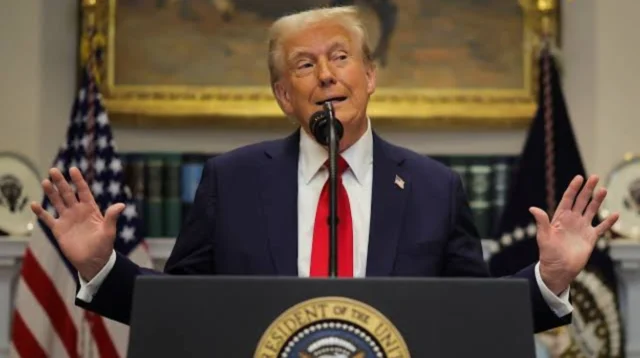
White House spokespersons stated that Trump had pardoned a certain number of individuals, most of whom were convicted of Clean Air Act offenses related to diesel “defeat devices.” Soon after the pardons were announced, Trump highlighted his decision through his Truth Social account, referring to the men as victims of partisan enforcement by his predecessor. Trump claimed to be freeing people who he believed were being wrongly persecuted for working on cars when under Biden’s Justice Department.
He insisted that environmental prosecutions had been turned into tools of political vengeance rather than neutral law enforcement, writing that he was
“setting them free from a weaponized system that punished people for repairing their vehicle”
— Donald Trump.
This framing—part grievance, part populist appeal—positions the pardons not as an indulgence for polluters, but as a correction of what Trump portrays as regulatory tyranny. Yet the underlying cases involve not routine repairs, but systematic tampering with emissions controls designed to keep diesel exhaust within legal limits.
Who Benefited: Diesel Tampering and a Major Donor
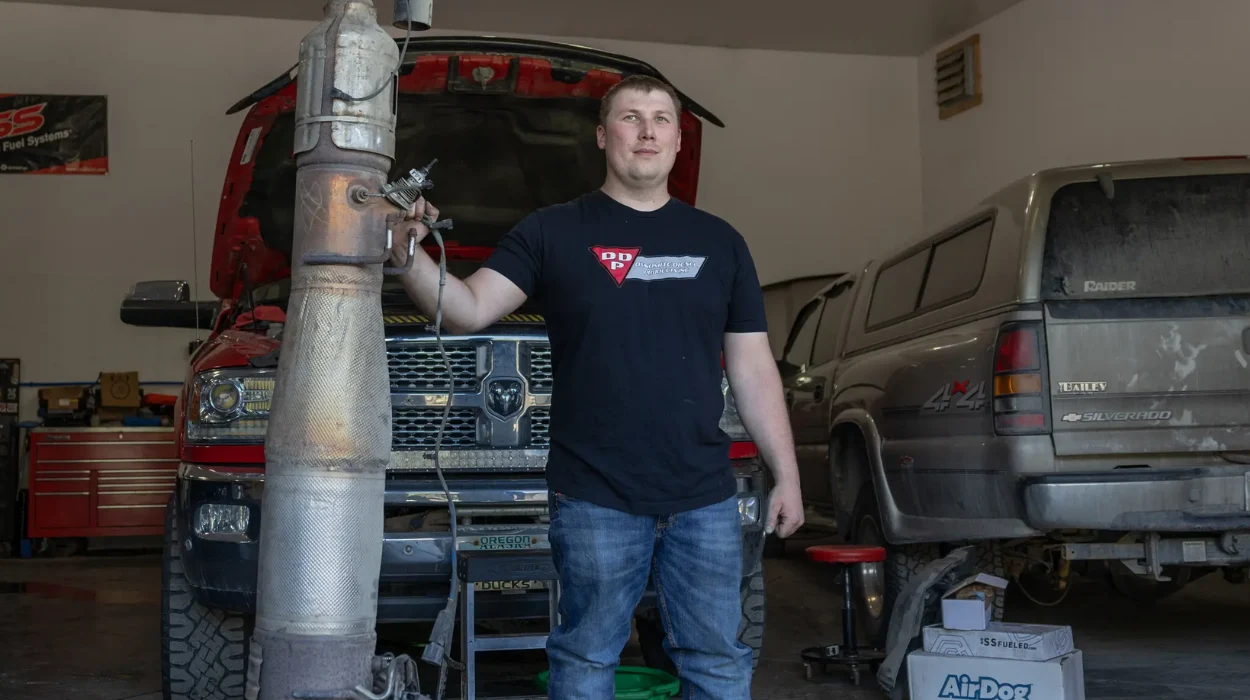
Reporting indicates that 11 men received pardons in this latest batch, with nine tied directly to Clean Air Act violations. These were not isolated backyard mechanics. Court records and enforcement summaries describe businesses that manufactured, sold, or installed hardware and software to disable emissions systems on diesel trucks—“delete” kits that allow engines to run harder and dirtier.
One of the beneficiaries is referred to by the media outlets monitoring Trump’s pardons as a “major donor,” continuing a trend in which donors, business associates, and politically well-connected individuals have been treated exceptionally leniently. As previously reported in other clemency batches, Trump has issued pardons to such individuals as Changpeng Zhao, an executive of a cryptocurrency firm that backed a project involving Trump’s family. This particular pardoning of a major donor in the Clean Air Act group continues the same trend.
According to those who criticized Trump’s pardon practice, the only continuity in Trump’s clemency was that it was always a reward for loyalty rather than correcting any injustice. The investigations into the issue have revealed that during Trump’s second term, more than 1,600 pardons have been granted in favor of associates, supporters of the Trump campaign, and individuals who were connected to him politically and business-wise.
Legal Context: The Clean Air Act and Defeat Devices
At the core of these cases are the provisions of the Clean Air Act, which is the foundational legislation in the United States for the regulation of air pollutants produced by vehicles and industries. Over the years, the EPA and the Department of Justice have gone after “defeat devices,” such as chips, software and mechanical alterations, used by people in the after-market industry because defeat devices have been found to allow vehicles to produce way more pollutants than is legal under the Clean Air Act.
One example of a past case that is mentioned in the trucking industry report is that of Elite Diesel Service Inc. and Troy Lake, who disabled diagnostics of at least 344 heavy-duty trucks between 2017 and 2020, thus allowing them to operate without important emission controls. Troy Lake pled guilty to conspiracy for violating the Clean Air Act and was sentenced to a year in prison, while eight co-conspirators in seven states were also sentenced.
Defeat devices have been prioritized as an EPA enforcement target due to the risks of increased levels of nitrogen oxides and particulates in air pollution, which contributes to smog and respiratory illnesses. In the research of diesel fuel emission cheating, including the Dieselgate investigations in light of the scandal of Volkswagen, vehicles can produce far more pollutants than are legally permitted when controls are disabled, with estimated global emissions of nitrogen oxides exceeding the certification levels by over 50 percent. In such scientific context, the crimes committed by Trump are no technicalities but rather a junction of environmental and public health issues.
A Shift in Enforcement: DOJ Steps Back
The pardons were not an isolated event. Early in 2026, the Justice Department issued a quiet announcement that it would no longer criminally prosecute for diesel emissions tampering. In a memo written by Deputy Attorney General Todd Blanche, it was stated that tampering with emissions software should be handled as a civil issue rather than a criminal offense pursuant to the Clean Air Act. While it appears that the federal government will continue to take steps to enforce through civil means fines, injunctions, and joint action with the EPA, this decision certainly marks a shift in its enforcement stance. Having spent years pursuing defeat device vendors on criminal charges, it looks as if prison time will now be off the table for such pollution crimes.
Trump welcomed that pivot. Industry-aligned voices echoed the move, arguing that criminal liability had unfairly targeted small garages and performance shops. One defense attorney told reporters,
“We believe that the Trump administration got it right when they eliminated the criminal liability for this conduct”
— Cables. From this perspective, the pardons and enforcement changes are part of a coherent agenda: redefining emissions tampering as a regulatory infraction rather than a criminal offense.
Trump’s Narrative: Weaponized Regulation and “Ordinary Americans”
Trump has framed the entire episode—pardon, donor inclusion, and DOJ policy shift—as a stand against what he calls “weaponized” environmental regulation. In his messaging, the defendants are small business owners and ordinary Americans crushed by overzealous bureaucrats and political opponents.
By describing prosecuted mechanics and tuners as people punished “for repairing their vehicle,” Trump compresses complex conspiracies into a simple story of unfair treatment. It is a powerful narrative for his base: a president defending entrepreneurs against distant regulators, and undoing what he claims are partisan abuses of the law.
“These are hard‑working Americans, not criminals. I am setting them free from Biden’s witch hunts”
— Donald Trump.
However, there are several things missing in this narrative. First, the pardoned cases involved repeated, deliberate attempts to circumvent emissions systems, and the effort usually took place on an industrial scale across hundreds of vehicles. As EPA specialists and public health researchers have noted, such actions result in more smog and particulate matter in the lungs of people who reside along the truck routes and highways, including a significant number of poor and minority communities.
Environmental and Health Stakes: Who Breathes the Cost?
Diesel exhaust is not abstract. EPA materials note that emissions from diesel engines contribute to ground-level ozone, which damages crops and vegetation, and to fine particles that penetrate deep into the lungs. Long-term exposure is linked to asthma attacks, heart disease, and premature death, especially among children, older adults, and people already living near major transportation infrastructure.
Research into excess diesel emissions in the international context has placed the problem into numbers – according to one estimate, diesel cars in major markets pollute the atmosphere by at least 50 percent of nitrogen oxides more than is indicated by emission standards, thus causing many premature deaths. An analysis a decade after the Dieselgate scandal revealed that some of the cheating cars produced as much as 35 times more emissions than the permitted rate during actual driving conditions.
Although the details of particular cases of using defeat devices in the United States are different, the underlying physics of pollutants stays the same – take away the control measures and the pollutants will soar. In this regard, the cases of violation of Clean Air Act which Trump pardoned do not constitute any kind of paper offenses – they deal with the actual increase of pollution that is hardest for the communities which have no political leverage to oppose it.
Donor Influence and the Integrity of Clemency
The presence of a major donor among the pardoned amplifies existing concerns about how Trump wields the pardon power. Watchdog groups and legal scholars have warned since his first term that clemency has become another channel through which financial and political allies gain special treatment.
The Brennan Center has argued that such patterns blur the line between public service and private gain, contending that
“political donors should not be above the law”
— Brennan Center analysis.
Attempts by state governments to track such cases, for example, through Gavin Newsom’s “Trump criminals” tracker, show that many criminals or regulatory offenders have profited from Trump’s pardons, often in accordance with Trump’s own political and economic priorities. In the present case, there is a confluence between the pardoning of the donors and a withdrawal from federal enforcement of the criminal law on the environment. From the standpoint of the critics, it shows that whenever the powerful people clash with the environmental law, it is always the law that gives in.
Constitutional Power vs. Political Accountability
According to the U.S. Constitution, the president has extensive powers in terms of issuing pardons, which include the ability to clear the accused from their criminal responsibility under the law, reduce their sentences and release them from paying fines, among other actions. This has been acknowledged in legal circles as the fact that the presidents have been accorded extensive discretion for the issuance of pardons despite the fact that they could appear self-serving or politically motivated. The question here is not legality, but rather morality. In the eyes of many, this power should be applied to situations where an injustice has been done in the administration of criminal justice, especially through excessive sentencing.
Environmental law specialists warn that on pollution crimes, clemency sends a potent signal. When the president declares that those who profit from illegal diesel tampering are not criminals, and the Justice Department downgrades similar conduct to civil offenses, the deterrent effect of the Clean Air Act erodes. For industry actors weighing the costs of compliance, the message is clear: the risk of serious consequences has fallen dramatically.