One of the newest and most significant legal challenges facing the Trump administration trade policy has emerged with the filing of a lawsuit by 25 Democratic-controlled American states against his government over the recently imposed tariffs on goods coming from more than 60 trading partners. The states have accused the president of abusing his powers by imposing the tariffs based on claims of forced labor as part of an import-tax regime which is both illegal and too broad in scope. The case has been filed in the U.S. Court of International Trade in New York City in order to stop the implementation of the tariffs imposed in mid-July at rates of 10% and 12.5% on countries and territories accounting for virtually all imports into the United States.
What triggered the lawsuit
The Trump administration said the tariffs were tied to countries’ failure to stop imports of goods produced with forced labor. U.S. Trade Representative Jamieson Greer said his office conducted 60 investigations into forced-labor enforcement practices and found violations across all 60 economies targeted, which the administration says justified punitive tariffs.
The states reject that justification. In their filing, they argue there is
“no rational fit between the purported problem of forced labor in international supply chains and the blanket global tariffs the USTR imposed”.
They also say the administration cannot use forced labor
“as a pretext to continue its illegal tariff scheme”.
Legal fight over presidential power
Underlying this particular case is a wider debate on what extent a President may be able to abuse trade laws for imposition of tariffs. The state governments claim that Trump went above his powers in terms of Section 301 of the Trade Act of 1974, which does not allow for imposition of de facto blanket tariffs in such massive scale. Additionally, the complaint mentions that Trump started imposing the tariffs in light of some recent legal defeats on his part concerning his trade policy decisions. As reported in the news, in the documents filed, the administration resorted to the tariffs because previous attempts at introducing them were rejected in courts or expired. In their attempt, the states do not aim merely at proving illegality but also at remedying the situation.
Who is suing
The coalition includes a wide Democratic-led bloc spanning large and medium-sized states. Reports identify New York, California, Illinois, Massachusetts, Michigan, Minnesota, New Jersey, Washington, Wisconsin, Virginia, Maryland, and several others among the plaintiffs.
That broad coalition matters politically because it turns the case into a coordinated state-level challenge rather than a narrow dispute from a few companies or activist groups. The message from the plaintiffs is that the impact is not abstract: they say the tariffs will increase costs for consumers, businesses, and state economies across the country.
The tariff scope and scale
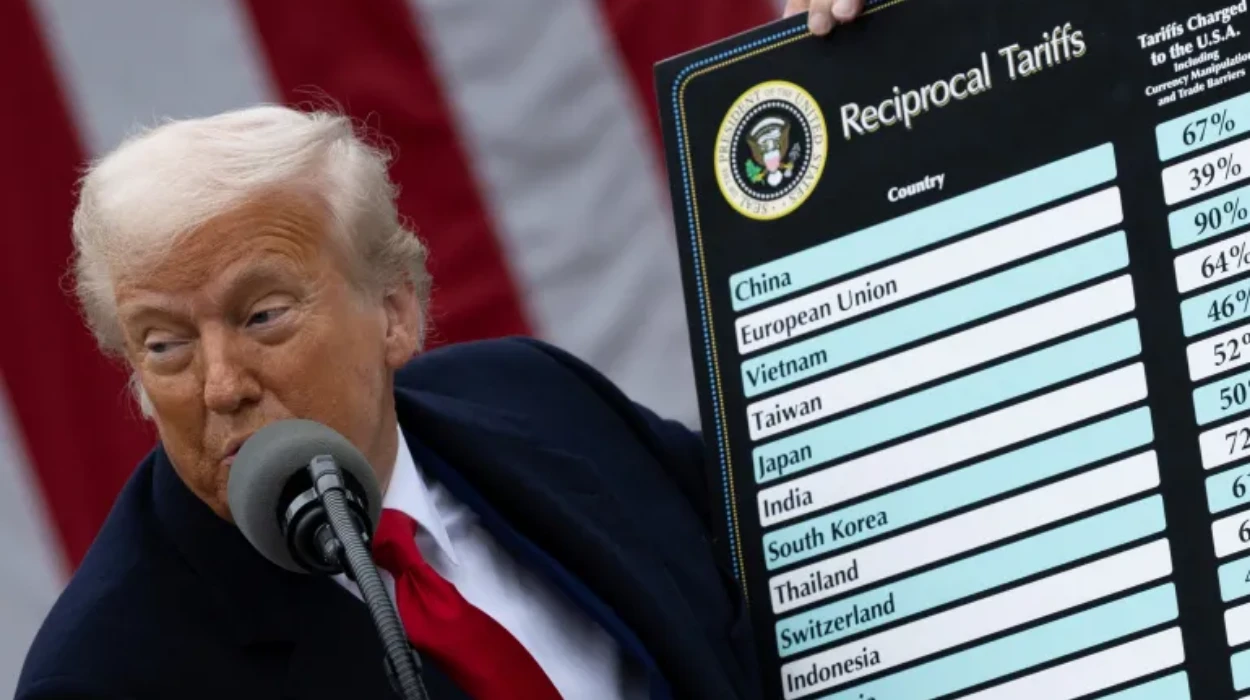
This new trade policy of the administration is rather unique in its scope. According to reports, the tariffs apply to some 60 trading countries, including large ones like China, Japan, the European Union, the United Kingdom, Canada, Mexico, South Korea, India, Taiwan, Switzerland, and Australia. In addition, the impacted economies represent almost all of U.S. imports; with one report suggesting that the figure is 99.4% and the other – 99%. The tariffs were imposed in the range from 10% to 12.5% and served as replacements for previous stopgap tariffs. Such a scale is crucial since it turns the tariffs into something different than merely trade enforcement and closer to the quasi-global import system. This is precisely why, according to critics, the new policy violates law as they maintain that Section 301 was never intended to work as such.
Political and economic stakes
The states are framing the case not just as a legal challenge but as a consumer and business-cost issue. They argue the tariffs will ripple through supply chains, raise prices, and impose costs on state governments and residents without meaningfully addressing forced labor.
The Trump administration, meanwhile, is presenting the move as a forced-labor enforcement action rather than a protectionist tariff policy. Greer’s explanation suggests the administration wants the tariffs to look like a targeted response to labor abuses in supply chains, even though the result is a sweeping tax on imports from almost the entire trading system.
That tension is likely to define the litigation. If the court sees the measure as a genuine enforcement tool, the administration has a stronger legal argument; if it sees it as a disguised attempt to restore invalid tariffs, the states’ case becomes much stronger.
The importance of this lawsuit is not just in one particular tariff pronouncement. This is yet another attempt to measure how far the trade authority of a president reaches following some previous judicial losses, and whether a novel legal basis will help restore a policy that has been previously defeated in essence by its opponents. Besides, there are some economic consequences of this case. With tariffs set at 10 percent and 12.5 percent for important trading partners, the outcome of this case might have an effect on pricing and imports.