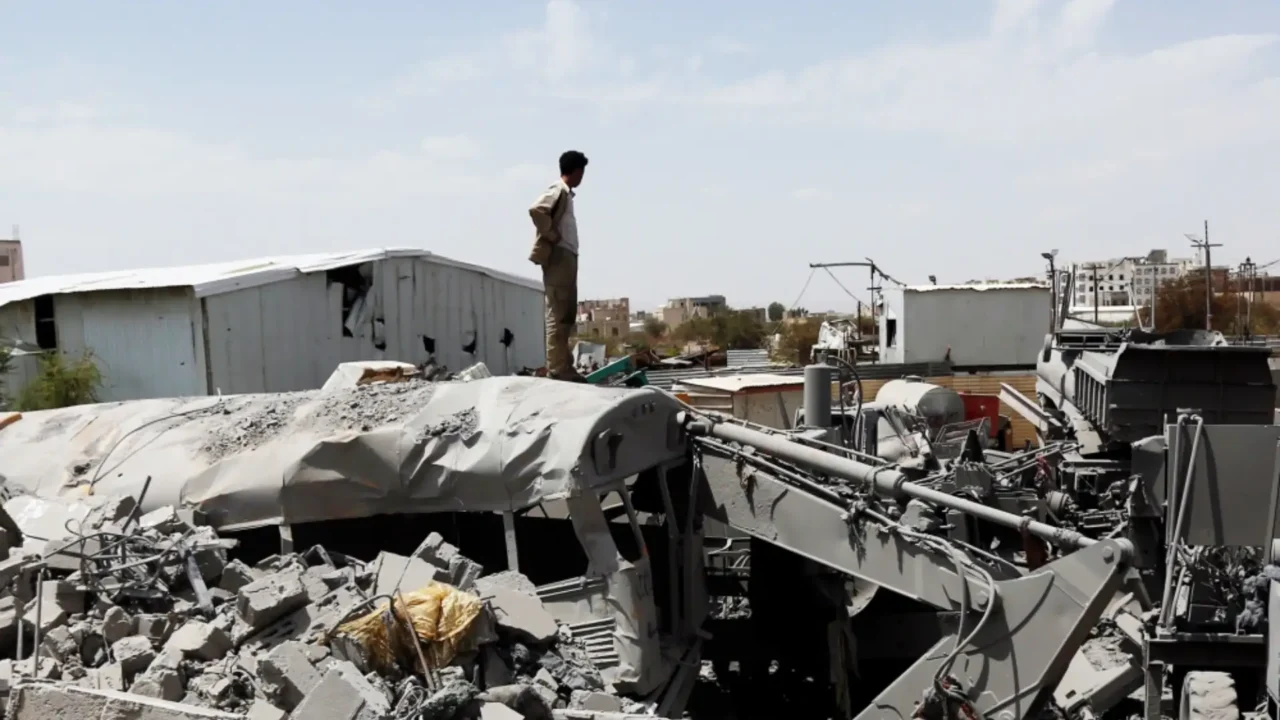
U.S. airstrikes in Yemen killed or wounded hundreds of civilians during the 2025 military campaign against the Houthi movement, according to Pentagon documents, rights groups and people familiar with the attacks. Yet more than a year after the strikes, the U.S. administration has not publicly acknowledged the full civilian toll or released a comprehensive account of the incidents.
This new report has raised issues regarding the targeting policies of the U.S., the effectiveness of their procedures when it comes to protecting civilians and the transparency of their military operations. It also raises issues regarding the nature of the war being fought in Yemen, a country that has been under conflict for many years which has affected the hospitals, destroyed the infrastructure and made millions of people dependent on aid from outside sources. According to reports, there are three incidents reported to have occurred in April 2025. Derrick Anderson, assistant secretary for special operations and low-intensity conflict at the Pentagon, informed this to Sen. Elizabeth Warren in his letter.
These three cases reported in the Pentagon’s report took place on April 17 at Ras Isa port in Hodeidah, on April 28 at the Ayn Wadi Barracks Warehouses, and on April 6 at a private house. None of the three incidents has been accompanied by casualty figures in the letter. According to two individuals familiar with the cases, the first two incidents might have resulted in deaths of around 150 civilians and injuries of around 200 more people. The casualty numbers from the third attack have yet to be established. These figures have yet to be independently verified in full. Nonetheless, the data largely coincide with the results of investigations carried out by Airwars, Yemen Data Project, Human Rights Watch, Amnesty International and UN officials.
Operation Rough Rider
The strikes were part of Operation Rough Rider, a U.S. military campaign launched on March 15, 2025, against Houthi targets across Yemen. The operation was ordered by President Donald Trump after months of Houthi attacks on ships in the Red Sea and Gulf of Aden.
Washington said the operation aimed to restore freedom of navigation, protect U.S. and commercial shipping and deter Houthi attacks. The Houthis had begun attacking vessels after the outbreak of the Gaza war, saying they were targeting ships linked to Israel or countries supporting Israel. The group described its campaign as pressure on Israel to end its military operations in Gaza.
According to the U.S. military, the airstrikes were targeting Houthi command and control sites, missile launchers, weapons storage facilities, air defenses, drones, and military infrastructure. Up until April end, the U.S. forces said they attacked more than 800 targets. A separate study by the Combating Terrorism Center of West Point claimed that the United States conducted more than 1,100 strikes as part of the operation. The strike campaign took approximately 52-53 days and was finished in early May after Oman successfully facilitated an agreement between Washington and the Houthis.
The agreement lowered U.S.-Houthi hostilities but could not solve Yemen’s political conflict and humanitarian crisis. In comparison with previous U.S.-led campaigns, the scale of the attack campaign was significantly higher. According to Yemen Data Project, there were 339 U.S. attacks in the period from March 15 to May 6. There were at least 238 civilian deaths and 467 civilian injuries in total, including 24 children’s and 31 children’s respectively.
Airwars recorded a lower but still significant figure of at least 224 civilians killed. It said that number was nearly equal to the 258 civilians allegedly killed by U.S. military actions in Yemen during the previous 23 years, from 2002 to January 2025. These figures are not directly interchangeable. Monitoring groups use different definitions, geographic coverage and standards of confirmation. Some count only cases where civilian status has been established, while others include reported casualties that remain unresolved. Nevertheless, all point to a substantial civilian impact.
Ras Isa port attack
The most fatal attack in the course of the campaign took place in Ras Isa port in western Yemen, which occurred on April 17. This port, which is situated in Hodeidah province, became a target of the attack, since it was claimed by the United States to be under control of the Houthis and it provided them with fuel for financing their military operations. Initially the number of victims announced by the authorities linked to the Houthis was in the dozens. Further reports indicated at least 74 people dead and more than 170 people injured. Airwars recorded 84 civilians who were killed during the attack and about 150 wounded people. Among those who were killed and injured there were port workers, truck drivers, first responders and members of families working or living nearby.
The organisation said Ras Isa was not merely a military or economic site. Hodeidah’s port network was essential for the delivery of food, fuel and humanitarian assistance to areas controlled by the Houthis. Human Rights Watch said the port handled a major share of fuel and aid entering northern Yemen. Human Rights Watch described the attack as an “apparent war crime” and called for an independent investigation. The organisation argued that even if the fuel terminal provided economic support to the Houthis, the United States was required to assess the likely impact on civilians and essential services.
The U.S. Central Command defended the operation. It said the objective was to reduce the Houthis’ economic capacity and claimed that the strike
“was not intended to harm the people of Yemen.”
That statement reflects the central dispute. Under international humanitarian law, the absence of an intention to kill civilians does not by itself establish that an attack was lawful. Investigators must also determine whether the target was a legitimate military objective, whether the expected civilian harm was excessive and whether feasible precautions were taken.
Saada detention-centre strike
Another attack that generated international condemnation occurred on April 28 in Saada, a Houthi stronghold in north-western Yemen. Houthi authorities said a U.S. strike hit a detention centre holding African migrants and killed 68 people. They said another 47 detainees were injured. Amnesty International investigated the attack and reported that the centre held approximately 115 African migrants. It said witnesses described chaotic scenes at nearby hospitals, with large numbers of dead and wounded people arriving after the strike.
The organization reported that the fragments were compatible with U.S.-produced GBU-39 Small Diameter Bombs. Just because American weapons were used does not automatically mean that America conducted an illegal airstrike. There are several legal issues surrounding the case, including the nature of the target, the intelligence U.S. military officials had at the time, civilian presence, and precautions before the attack. According to Amnesty, the facility was known to humanitarian organizations and should have been identified as civilian. Amnesty later demanded that the airstrike be investigated as a potential war crime. The letter sent from the Pentagon to Senator Elizabeth Warren mentioned the April 28 airstrike against “Ayn Wadi Barracks Warehouses”. Public sources have yet to clarify whether or not the designation matches the Saada detention centre strike as documented by human rights organizations.
Pentagon’s changing position
The Pentagon’s public position has come under particular scrutiny. On March 17, shortly after the campaign began, the Defense Department said there was “no indication of civilian casualties” from the initial attacks. As reports of deaths increased, U.S. Central Command said it was reviewing allegations and conducting battle-damage assessments. However, in June 2025, Under Secretary of Defense for Policy Elbridge Colby wrote to Warren that the Pentagon
“has not assessed that civilian casualties have resulted from recent U.S. operations in Yemen since March 15, 2025.”
The findings seemed to be in contrast to information provided by local health departments, human rights organizations, and war monitors. At a later date, the Pentagon stated that some of these incidents deserved a closer look, and that in three cases, it was more likely than not that there had been civilian casualties. The distinction between “no assessed civilian casualties” and “more likely than not civilian casualties” is important. The former is the official statement of the Pentagon at the time, while the latter means that subsequent analysis revealed enough evidence to determine that civilian casualties were probable. However, the Pentagon has yet to release the number of civilians killed and injured, the names of the locations that were attacked, legal justification for the attacks, and the findings of their investigation.
International law and accountability
The allegations raise possible violations of the three fundamental principles governing the conduct of hostilities: distinction, proportionality and precaution. The principle of distinction requires attacking forces to distinguish civilians and civilian objects from military targets. Proportionality prohibits attacks expected to cause civilian harm excessive in relation to the anticipated military advantage. The precautionary principle requires commanders to verify targets and take all feasible steps to reduce civilian casualties.
A port, fuel terminal or warehouse can become a lawful military objective if it makes an effective contribution to military action and its destruction offers a definite military advantage. But economic value alone does not automatically make a civilian facility a lawful target.
UN special rapporteurs cited reports that the Ras Isa attack killed at least 74 people and injured 171, while the Saada strike killed 68 and injured 47. They expressed concern over the possible consequences of damage to fuel infrastructure, including disruption to hospitals, water systems, electricity, transport, food distribution and sanitation. The UN experts have not issued a final judicial determination that the United States committed war crimes. Instead, they requested information about target verification, civilian-harm assessments, investigations, accountability and possible reparations for victims.
Political and humanitarian consequences
The issue has also raised objections in Washington. Sen. Elizabeth Warren, Sen. Tim Kaine and Sen. Chris Van Hollen have requested details from the Pentagon regarding civilian casualties as well as the legal basis for the operation. This included whether the Trump Administration had undermined civilian protection measures or any institutional restraints prior to the authorisation of the strikes. There have also been accusations that the strikes against economic infrastructure in an overcrowded and impoverished nation could have caused more harm outside the blast radius. The humanitarian implications are even greater in Yemen.
The country has seen several years of civil wars, economic crisis, forced displacements and limitations on humanitarian aid. The attack against ports, oil storage or transport infrastructure can raise the price of food and water, and disrupt the flow of humanitarian aid. The Houthi authorities have claimed that the US strikes killed at least 123 people and injured 247 people by April 14th. These numbers could not be confirmed as they were provided by Houthi-affiliated institutions.
That limitation must be acknowledged, but it does not eliminate the evidence of civilian harm. Independent monitors recorded similar patterns, while satellite imagery, hospital accounts and witness testimony supported reports of casualties at several locations.
An unresolved record
What the evidence demonstrates is that the crucial issue is not whether the civilians were targeted in the U.S. air strikes. The key issues rather concern how many civilians died or were injured, whether the military commanders were aware of the presence of civilians at the scene, and whether or not the air strikes adhered to international law. The estimates offered by Airwars (224 civilians), Yemen Data Project (238 deaths and 467 injuries) and sources used by NBC News provide different ways of assessing the campaign in question. These figures cannot be accepted as an incontrovertible final tally. The most convincing way to assess the situation is that the U.S. airstrikes in Yemen in 2025 resulted in civilian casualties in numbers that were not immediately acknowledged by the Pentagon. The U.S. justified the operation with the necessity of responding to the Houthi attacks on ships, but deaths at Ras Isa, Saada and elsewhere cast doubt on proportionality of the action and its target selection.
Until Washington releases its complete assessments and independent investigators gain access to the strike sites, the full human cost of Operation Rough Rider will remain disputed. What is already clear is that the campaign produced a civilian toll far greater than the Pentagon’s early public statements suggested—and that accountability for those deaths remains unresolved.