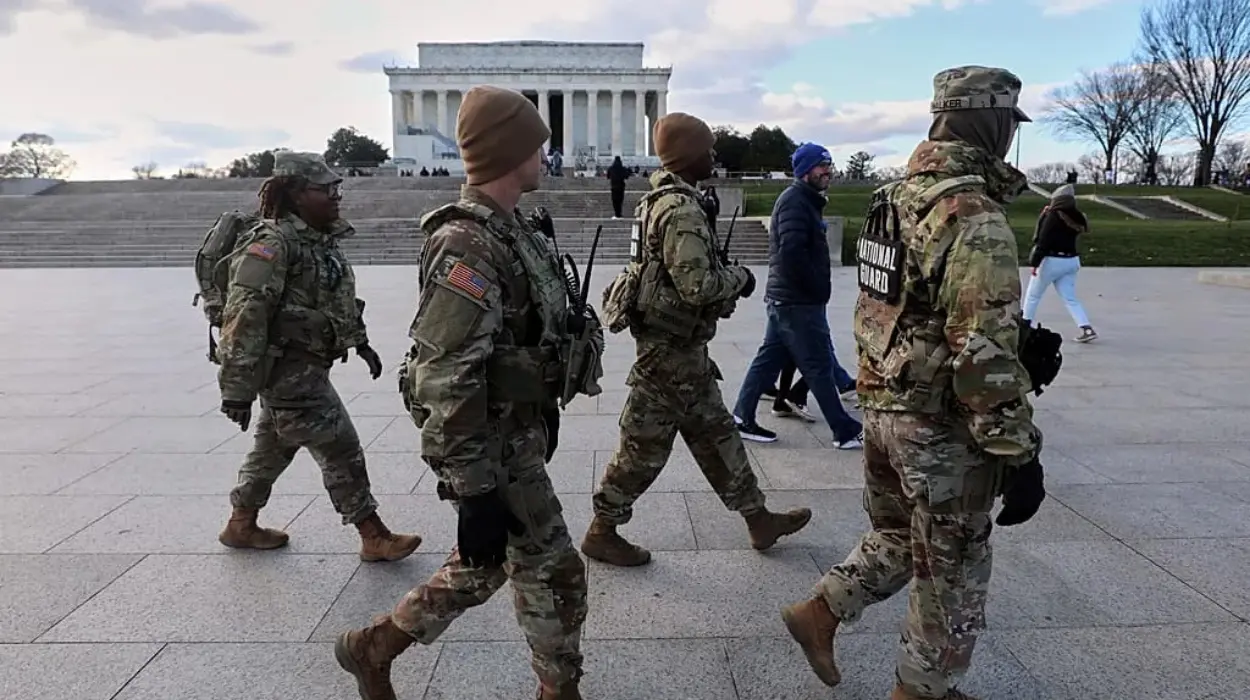
The US asylum shutdown 2025 marks one of the most sweeping immigration suspensions in recent years, triggered by the shooting of two National Guard members near the White House on November 26, 2025. The attack, which left one guardsman dead, refocused national attention on migrant vetting and domestic security preparedness.
The Trump administration’s immediate halt of all asylum decisions reflects deep institutional concerns about screening reliability after the attacker, an Afghan national, was found to have entered through a prior evacuation program. The consequences now extend across migration systems, humanitarian structures, and foreign policy relationships.
Unfolding Details Of The White House Perimeter Attack
The shooting occurred on a reinforced security route at 17th and High Northwest, where West Virginia National Guard members were stationed for pre-holiday protection. Federal investigators stated that the assailant, 29-year-old Rahmanullah Lakanwal, approached the guards before opening fire. Other members returned fire and subdued him. He was transferred to a Washington medical facility under strict supervision.
Lakanwal arrived in the United States in 2021 through Operation Allies Welcome and was granted asylum in early 2025. Despite the administration’s tightened screening protocols, his case proceeded through established review channels. President Trump condemned the act as a “monstrous ambush,” assigning blame to what he called “dangerously weak” vetting inherited from prior leadership.
Administrative Reaction Shaping The US Asylum Shutdown 2025
The Department of Homeland Security responded immediately, announcing an indefinite suspension of asylum decisions for all nationalities. USCIS directed officers to continue interviews but freeze final adjudications. Scheduled decision notifications were canceled pending an internal evaluation of vetting frameworks.
Suspension Mechanisms Within Immigration Agencies
The shutdown halts decision issuance while allowing case processing and interviews to continue. This structure preserves administrative workflow while pausing the public-facing component of adjudications.
Reassessment Of Previous Admissions
The review includes immigration benefits approved since 2021, targeting emergency pathways and cases involving unreliable documentation. DHS officials confirmed that this involves at least 19 countries with inconsistent record-verification systems.
Intersecting Security Restrictions
Secretary of State Marco Rubio separately froze visa issuance for Afghan passport holders, reflecting a coordinated tightening across multiple federal departments.
Security Recalibration And Its Influence On Immigration Governance
Asylum shutdown 2025 of the US reflects a reposition of the national security focus, replacing the humanitarian tensions of the past. Authorities insist that the break will be necessary to regain trust in the vetting process, but experts say that the administrative implications will be far-reaching.
Pressure On Overstretched Vetting Structures
Before the shutdown, more than 1.4 million pending cases of asylum were in the backlog. This open-ended break is expected to add several years to the wait time, making the already tense operations at USCIS and border processing centers even worse.
Judicial Oversight Considerations
Legal experts foresee possible litigation like the previous problems whenever there is immigration restrictions. Although there is no executive order that officially codifies the shutdown, an unlimited freeze may undergo questioning on the issue of due process requirements as provided in the U.S. asylum laws.
Humanitarian Implications Of Halted Protections
The freeze interferes with the lives of the migrants of the conflict countries like Afghanistan, Sudan, Somalia, Myanmar and Venezuela. The advocacy groups caution that halting the protection systems, without an expiry date means that international humanitarian standards will be undermined.
Disruptions For Vulnerable Populations
The organizations in California, Texas, and New York declare the increasing distress among asylum seekers due to the expiration of documents, work authorization, and even the sluggish family reunification procedures.
Pressures Within Domestic Refugee Networks
Attention is being given to local resettlement agencies witnessing dwindling placement numbers following the slowdown of the federal travel approvals in the earlier fall 2025. The shutdown can undermine resettlement abilities in the event that caseloads are stagnant over a lengthy time.
Broader Migration Impacts Across Continents
The US asylum shutdown 2025 has an effect on various migration pathways. International collaborators are evaluating the impact of the freeze on mobility, transdiaspora societies, and local migration trends.
Influence On African And Latin American Migration Patterns
The asylum channels slug to an increased uncertainty of African migrants. The applicants, who are already going through long procedures, Eritrean, Ethiopian, and Nigerian find themselves in endless waiting queues. The freeze intersects with the growing border encounters registered in October through November 2025 in Latin America.
Impacts On Global Remittances And Workforce Mobility
Economic commentators observe that there might be reduced remittances to weak economies as the movement of migrants reduces. Projected by the World Bank by early 2025, potential decline in remittance inflows to 2026 is possible in Sub-Saharan Africa and Central America.
Political Reactions And Evolving National Discourse
The USCIS Director Joseph Edlow confirmed that the safety of the American people is always the priority and this explains the administration’s stance that the continuity of processing is secondary to security threats.
President Trump announced that the freeze of asylum was necessary to prevent future infiltration and it was the first step toward eliminating security-risk migrants. The civil society groups argue that the restrictions will stigmatize the vulnerable groups when it comes to their cases that are subject to multilayered scrutiny. Scholars of policy point out that even admissions of refugees have some of the stringent vetting measures in the federal immigration system.
Global Implications And Emerging Geopolitical Tensions
The change of policy puts the diplomatic relations with the countries that absorb the large populations of refugees under scrutiny. European governments controlling the migration pressure in their governments caution that U.S. retrenchment would only escalate their load on the asylum systems.
Major partners to the humanitarian programs such as Canada and Australia are examining intake planning to counteract volatility in U.S. commitments of refugees. The National Guard scandal is a turning point in contemporary U.S. immigration policy. Whether the course of the asylum shutdown will be reinstated is yet to be seen, but its immediate effects give an idea of the magnitude of tensions between national security concerns and humanitarian duties at the time when the number of displaced people is steadily increasing the world over.