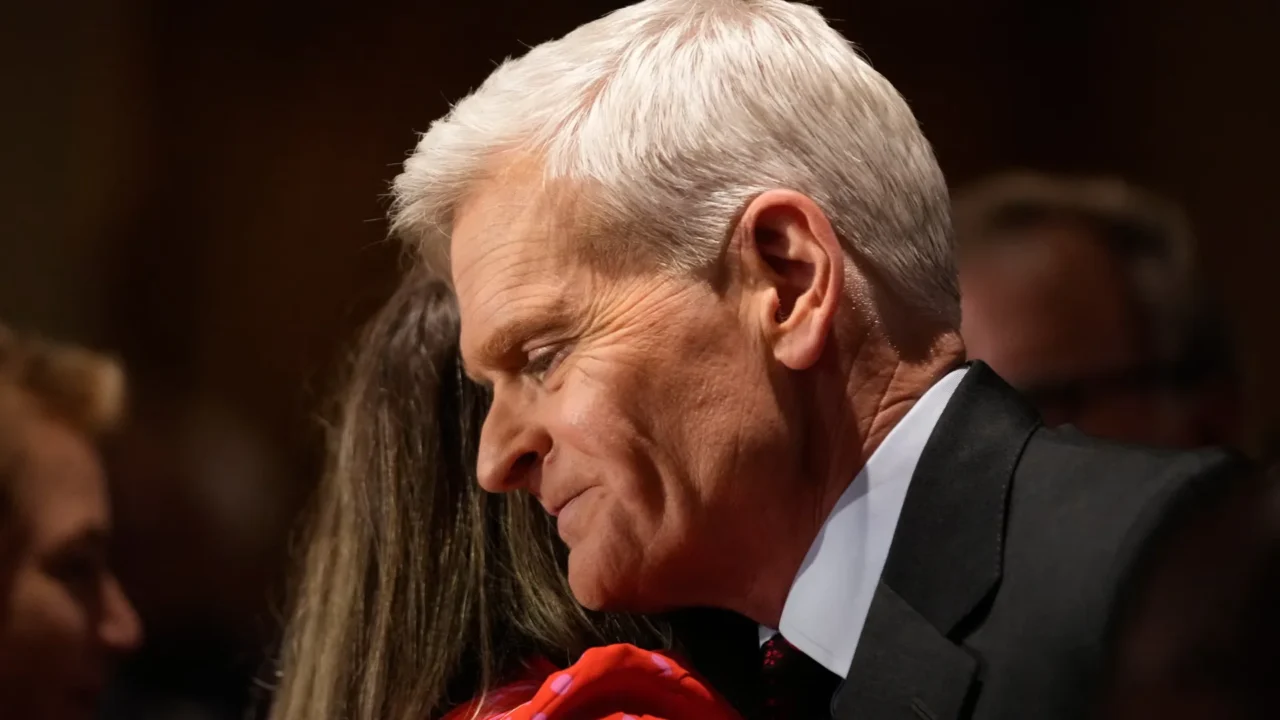
In addition to being a defeat for an incumbent candidate, Cassidy’s loss in the primary race highlights how much Donald Trump still dominates the Republican Party. His loss reflects not just the power that the former president continues to hold within the party but also the extent to which his support and popularity have become necessary elements for any candidate to succeed in primaries.
Cassidy, among the leading members of the Republican Senate party in the nation, was not only defeated due to being outshone by a competitor who had greater funding and more polish. Instead, he found himself in perilous political waters due to his clash with the political machinery of Trump following his presidency. In this regard, what made all the difference was Cassidy’s support for Trump’s conviction in the second impeachment trial following the insurrection of January 6 at the Capitol Building.
Trump’s Revenge Politics
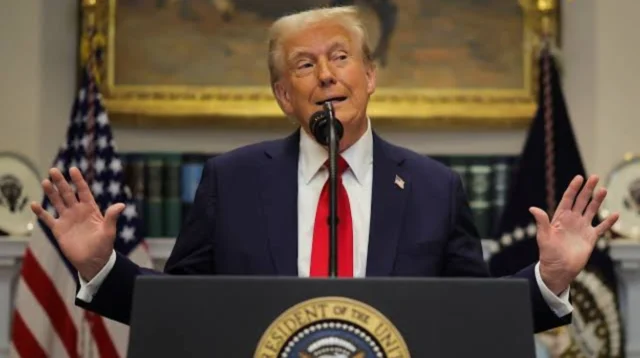
The outcome in Louisiana should be seen as an example of how Trump operates politically when it comes to enforcing. Trump doesn’t just support; he also punishes. The fact that Cassidy voted to impeach Donald Trump meant that Cassidy had put himself in Trump’s sights, and Trump made it clear that there would be no room for forgiveness. Trump didn’t just make quiet suggestions about who he thought should run.
This factor was significant because the state’s GOP voters are still swayed by the politics of Trump. The senator could be easily painted by his opponents as a Republican politician who betrayed his political ideology during an important period. For a primary electorate consisting mainly of loyalists, this strategy usually works well, and it did for Trump.
It also shows that the GOP has become an even more insular party in recent years. While disagreements on policies might not necessarily disqualify a senator from serving in office, betraying Trump is another story. This makes Cassidy’s defeat much more than a personal tragedy; it is institutionalized within the party itself.
The Vote That Defined Him
The impeachment vote of Cassidy would continue to be the emotional and political focal point of the story. Cassidy is one of the Republicans who voted for the conviction following the Capitol Hill riot, but he, alongside those with the same position, believed it to be a constitutional responsibility and not a partisan issue.
However, within today’s Republican Party, such a difference is inconsequential. Trump and his followers considered the move to be disloyal rather than a difference in opinion. Such a view altered how Cassidy appeared to the average conservative voter, seeing him no longer as an experienced and competent Senator but rather as a traitor. Such a reputation spells doom in a primary election.
Cassidy’s case shows how Trump has transformed impeachment into a permanent political dividing line. Even years later, it remains an active test of loyalty. For Republican officials, the message is stark: one high-profile break with Trump can become the defining fact of an entire career. Cassidy’s defeat proves that the political penalty has not faded with time.
The Numbers Behind the Collapse
The vote totals tell their own story. Cassidy finished third, meaning he not only lost but failed to even survive to the runoff stage. Julia Letlow led the field with roughly 45 percent, John Fleming followed with about 28 percent, and Cassidy trailed at around 24 to 25 percent. Those figures are especially striking because they show a fragmented anti-Cassidy field, yet even with opposition split, the incumbent still could not hold on.
That is the clearest numerical sign of how weak Cassidy had become within his own party. Incumbents usually benefit from name recognition, donor networks, and the assumption of competence. But when the base turns hostile, those advantages can evaporate quickly. Cassidy’s numbers suggest that the anti-incumbent feeling was strong enough to overcome the usual structural benefits of holding office.
The runoff now shifts the race into a new phase, but Cassidy’s failure to qualify is the defining event. In practical terms, the runoff will decide the Republican nominee between Letlow and Fleming on June 27. In political terms, the more important story is that Cassidy is out.
Letlow and Fleming Rise
Julia Letlow’s emergence as the frontrunner in the primary is important because she represents the Trump-backed lane of the race. Her lead reflects the success of the campaign to consolidate anti-Cassidy and pro-Trump sentiment around a viable alternative. John Fleming, meanwhile, also appealed to the conservative and Trump-aligned electorate, ensuring that the runoff would remain firmly inside the pro-Trump orbit.
The runoff between Letlow and Fleming is less about ideological contrast than about positioning within Trump-era Republicanism. Both candidates are acceptable to the movement that wanted Cassidy removed. That is significant because it reveals how little room remains for a senator who, like Cassidy, tries to occupy a more institutionally traditional Republican space.
The likely effect is that Louisiana’s eventual Republican nominee will come from within the Trump-aligned wing rather than from the party’s more establishment-minded ranks. That outcome would not be surprising given the state’s conservative lean, but it is still a strong indicator of the party’s direction.
Statements That Mattered
The language used around Cassidy’s defeat matters because it reflects how political narratives are built. Trump reportedly attacked Cassidy directly, calling him “a sleazebag” and “a terrible guy”, rhetoric that was designed not just to criticize but to delegitimize. That kind of language has a clear function: it signals to supporters that the target is beyond redemption.
Trump’s push for Letlow was equally important. It showed that he was not merely angry at Cassidy; he was actively seeking replacement. That distinction matters because it turns the story from a symbolic rebuke into a strategic intervention. Trump was shaping the field, not just commenting on it.
Coverage of the race framed the result as another major win for Trump and as evidence of the cost of dissent inside the GOP. That interpretation is hard to avoid. Cassidy’s defeat did not happen in a vacuum. It happened in a political environment where Trump remains the party’s dominant force, even outside the White House.
What It Means for Louisiana
For Louisiana, the primary result is a reminder that the state’s Republican politics are deeply intertwined with national conservative identity. Cassidy had the seniority and statewide profile that usually protect incumbents, but that was not enough against a primary electorate animated by loyalty tests and Trump-era politics.
The state’s broader conservative tilt also means that the Republican nominee will be heavily favored in the general election. That makes the primary the real contest, and in that contest Cassidy has already been eliminated. The runoff will determine the nominee, but the main power struggle has already been resolved in Trump’s favor.
The result also raises questions about what kind of Republican leadership Louisiana voters now prefer. Cassidy represented a more traditional Senate style: policy-focused, institutional, and willing to work inside the chamber’s norms. The runoff field suggests a different model, one more closely linked to Trump’s insurgent politics and less to Senate tradition.
A Broader Republican Warning
Cassidy’s defeat should be read as a warning to other Republicans who may believe incumbency alone can protect them from Trump-backed opposition. The lesson is not simply that Trump is influential. It is that his influence is still operational, still personal, and still capable of reshaping nominations in real time.
This has consequences beyond Louisiana. Republican lawmakers across the country are watching to see whether dissent carries a permanent cost. Cassidy’s loss sends a chilling message to those who might be tempted to cross Trump on matters of principle. It says that party memory is long when Trump decides it should be.
It also demonstrates the durability of grievance politics. Trump did not need Cassidy to be the most vulnerable senator in America. He only needed him to be the kind of Republican the base could be persuaded to reject. Once that dynamic was established, the contest became less about Cassidy’s record and more about punishment.
The Political Legacy
In the end, Cassidy’s defeat is about far more than one Senate primary. It is about the transformation of Republican politics into a loyalty-based system where alignment with Trump often outweighs almost every other credential. Cassidy’s impeachment vote placed him outside that system, and the Louisiana primary confirmed the cost.
The runoff will now decide who becomes the Republican nominee, but the larger story is already clear. Trump remains the central arbiter of Republican legitimacy. Cassidy’s loss is evidence that even established officeholders can be swept aside when they become symbols of resistance. That makes this race not just a local political event, but a national signal.
Bill Cassidy’s career in this race ended because he confronted the one figure who still defines Republican survival in the Trump era. That reality, more than any single slogan or attack ad, explains the significance of his defeat. It is a reminder that in today’s GOP, disloyalty can be more politically fatal than incompetence, and conviction can become a liability rather than a virtue.