Menu

In the last election season, AIPAC mostly targeted open seats; however, it now seems to be preparing to target incumbents, with prominent progressives in the House of Representatives at the center of its attention. The extreme power of AIPAC's election expenditures, which is partially funded by right-wing billionaires who have backed conservatives like former President Donald Trump, has been criticized by progressives. In addition, the pro-Israel lobby group has supported several Republicans in Congress, many of whom declined to acknowledge President Joe Biden's victory in the 2020 election. Justice Democrats' spokesman, Usamah Andrabi, stated that other coalition organizations have already<\/a> been fighting AIPAC and its \"right-wing influence in Congress.\" <\/p>\n\n\n\n \"Our aim was to unite not just to become more structured, but also to organize the Democratic Party, its supporters, and elected officials to firmly oppose the disruptive impact of AIPAC, a Republican-backed super donor, on the Democratic primary process and our government's approach to Palestine and Israel,\" stated Andrabi. Progressive Democrats have been going all out in the polls for some time. The party establishment was rocked in 2018 when 28-year-old Alexandria Ocasio-Cortez, backed by Justice Democrats, upset a prominent House Democrat who had served for over 20 years.<\/p>\n","post_title":"Greek opposition leader Snubs AIPAC amid Palestinian solidarity","post_excerpt":"","post_status":"publish","comment_status":"closed","ping_status":"closed","post_password":"","post_name":"greek-opposition-leader-snubs-aipac-amid-palestinian-solidarity","to_ping":"","pinged":"","post_modified":"2025-02-02 08:34:26","post_modified_gmt":"2025-02-02 08:34:26","post_content_filtered":"","post_parent":0,"guid":"https:\/\/dctransparency.com\/?p=7058","menu_order":0,"post_type":"post","post_mime_type":"","comment_count":"0","filter":"raw"}],"next":false,"prev":true,"total_page":18},"paged":1,"column_class":"jeg_col_2o3","class":"epic_block_3"};
In the last election season, AIPAC mostly targeted open seats; however, it now seems to be preparing to target incumbents, with prominent progressives in the House of Representatives at the center of its attention. The extreme power of AIPAC's election expenditures, which is partially funded by right-wing billionaires who have backed conservatives like former President Donald Trump, has been criticized by progressives. In addition, the pro-Israel lobby group has supported several Republicans in Congress, many of whom declined to acknowledge President Joe Biden's victory in the 2020 election. Justice Democrats' spokesman, Usamah Andrabi, stated that other coalition organizations have already<\/a> been fighting AIPAC and its \"right-wing influence in Congress.\" <\/p>\n\n\n\n \"Our aim was to unite not just to become more structured, but also to organize the Democratic Party, its supporters, and elected officials to firmly oppose the disruptive impact of AIPAC, a Republican-backed super donor, on the Democratic primary process and our government's approach to Palestine and Israel,\" stated Andrabi. Progressive Democrats have been going all out in the polls for some time. The party establishment was rocked in 2018 when 28-year-old Alexandria Ocasio-Cortez, backed by Justice Democrats, upset a prominent House Democrat who had served for over 20 years.<\/p>\n","post_title":"Greek opposition leader Snubs AIPAC amid Palestinian solidarity","post_excerpt":"","post_status":"publish","comment_status":"closed","ping_status":"closed","post_password":"","post_name":"greek-opposition-leader-snubs-aipac-amid-palestinian-solidarity","to_ping":"","pinged":"","post_modified":"2025-02-02 08:34:26","post_modified_gmt":"2025-02-02 08:34:26","post_content_filtered":"","post_parent":0,"guid":"https:\/\/dctransparency.com\/?p=7058","menu_order":0,"post_type":"post","post_mime_type":"","comment_count":"0","filter":"raw"}],"next":false,"prev":true,"total_page":18},"paged":1,"column_class":"jeg_col_2o3","class":"epic_block_3"};
Progressive candidates are more likely to win in Democratic primaries in liberal-leaning congressional districts, which is where AIPAC PAC and UDP concentrated their efforts. Their opponents call this strategy dishonest. They invested millions of dollars in elections around the nation, saturating the media with criticism of politicians who support Israel and frequently concentrating on unrelated domestic concerns. At the time of publication, AIPAC has not responded to a request for comment.<\/p>\n\n\n\n In the last election season, AIPAC mostly targeted open seats; however, it now seems to be preparing to target incumbents, with prominent progressives in the House of Representatives at the center of its attention. The extreme power of AIPAC's election expenditures, which is partially funded by right-wing billionaires who have backed conservatives like former President Donald Trump, has been criticized by progressives. In addition, the pro-Israel lobby group has supported several Republicans in Congress, many of whom declined to acknowledge President Joe Biden's victory in the 2020 election. Justice Democrats' spokesman, Usamah Andrabi, stated that other coalition organizations have already<\/a> been fighting AIPAC and its \"right-wing influence in Congress.\" <\/p>\n\n\n\n \"Our aim was to unite not just to become more structured, but also to organize the Democratic Party, its supporters, and elected officials to firmly oppose the disruptive impact of AIPAC, a Republican-backed super donor, on the Democratic primary process and our government's approach to Palestine and Israel,\" stated Andrabi. Progressive Democrats have been going all out in the polls for some time. The party establishment was rocked in 2018 when 28-year-old Alexandria Ocasio-Cortez, backed by Justice Democrats, upset a prominent House Democrat who had served for over 20 years.<\/p>\n","post_title":"Greek opposition leader Snubs AIPAC amid Palestinian solidarity","post_excerpt":"","post_status":"publish","comment_status":"closed","ping_status":"closed","post_password":"","post_name":"greek-opposition-leader-snubs-aipac-amid-palestinian-solidarity","to_ping":"","pinged":"","post_modified":"2025-02-02 08:34:26","post_modified_gmt":"2025-02-02 08:34:26","post_content_filtered":"","post_parent":0,"guid":"https:\/\/dctransparency.com\/?p=7058","menu_order":0,"post_type":"post","post_mime_type":"","comment_count":"0","filter":"raw"}],"next":false,"prev":true,"total_page":18},"paged":1,"column_class":"jeg_col_2o3","class":"epic_block_3"};
AIPAC has backed an unrestricted flow of US military supplies and finance to the Israeli government, which has been used to facilitate human rights atrocities against Palestinians. AIPAC works for a US foreign policy that is clearly at conflict with international humanitarian law and human rights. Known for being one of the most potent special interest organizations in Washington, AIPAC had officially refrained from participating in direct electioneering until 2022, when it established a political action committee and a corresponding \u201csuper PAC\u201d to obstruct the election of critics of Israel. <\/p>\n\n\n\n Progressive candidates are more likely to win in Democratic primaries in liberal-leaning congressional districts, which is where AIPAC PAC and UDP concentrated their efforts. Their opponents call this strategy dishonest. They invested millions of dollars in elections around the nation, saturating the media with criticism of politicians who support Israel and frequently concentrating on unrelated domestic concerns. At the time of publication, AIPAC has not responded to a request for comment.<\/p>\n\n\n\n In the last election season, AIPAC mostly targeted open seats; however, it now seems to be preparing to target incumbents, with prominent progressives in the House of Representatives at the center of its attention. The extreme power of AIPAC's election expenditures, which is partially funded by right-wing billionaires who have backed conservatives like former President Donald Trump, has been criticized by progressives. In addition, the pro-Israel lobby group has supported several Republicans in Congress, many of whom declined to acknowledge President Joe Biden's victory in the 2020 election. Justice Democrats' spokesman, Usamah Andrabi, stated that other coalition organizations have already<\/a> been fighting AIPAC and its \"right-wing influence in Congress.\" <\/p>\n\n\n\n \"Our aim was to unite not just to become more structured, but also to organize the Democratic Party, its supporters, and elected officials to firmly oppose the disruptive impact of AIPAC, a Republican-backed super donor, on the Democratic primary process and our government's approach to Palestine and Israel,\" stated Andrabi. Progressive Democrats have been going all out in the polls for some time. The party establishment was rocked in 2018 when 28-year-old Alexandria Ocasio-Cortez, backed by Justice Democrats, upset a prominent House Democrat who had served for over 20 years.<\/p>\n","post_title":"Greek opposition leader Snubs AIPAC amid Palestinian solidarity","post_excerpt":"","post_status":"publish","comment_status":"closed","ping_status":"closed","post_password":"","post_name":"greek-opposition-leader-snubs-aipac-amid-palestinian-solidarity","to_ping":"","pinged":"","post_modified":"2025-02-02 08:34:26","post_modified_gmt":"2025-02-02 08:34:26","post_content_filtered":"","post_parent":0,"guid":"https:\/\/dctransparency.com\/?p=7058","menu_order":0,"post_type":"post","post_mime_type":"","comment_count":"0","filter":"raw"}],"next":false,"prev":true,"total_page":18},"paged":1,"column_class":"jeg_col_2o3","class":"epic_block_3"};
AIPAC has backed an unrestricted flow of US military supplies and finance to the Israeli government, which has been used to facilitate human rights atrocities against Palestinians. AIPAC works for a US foreign policy that is clearly at conflict with international humanitarian law and human rights. Known for being one of the most potent special interest organizations in Washington, AIPAC had officially refrained from participating in direct electioneering until 2022, when it established a political action committee and a corresponding \u201csuper PAC\u201d to obstruct the election of critics of Israel. <\/p>\n\n\n\n Progressive candidates are more likely to win in Democratic primaries in liberal-leaning congressional districts, which is where AIPAC PAC and UDP concentrated their efforts. Their opponents call this strategy dishonest. They invested millions of dollars in elections around the nation, saturating the media with criticism of politicians who support Israel and frequently concentrating on unrelated domestic concerns. At the time of publication, AIPAC has not responded to a request for comment.<\/p>\n\n\n\n In the last election season, AIPAC mostly targeted open seats; however, it now seems to be preparing to target incumbents, with prominent progressives in the House of Representatives at the center of its attention. The extreme power of AIPAC's election expenditures, which is partially funded by right-wing billionaires who have backed conservatives like former President Donald Trump, has been criticized by progressives. In addition, the pro-Israel lobby group has supported several Republicans in Congress, many of whom declined to acknowledge President Joe Biden's victory in the 2020 election. Justice Democrats' spokesman, Usamah Andrabi, stated that other coalition organizations have already<\/a> been fighting AIPAC and its \"right-wing influence in Congress.\" <\/p>\n\n\n\n \"Our aim was to unite not just to become more structured, but also to organize the Democratic Party, its supporters, and elected officials to firmly oppose the disruptive impact of AIPAC, a Republican-backed super donor, on the Democratic primary process and our government's approach to Palestine and Israel,\" stated Andrabi. Progressive Democrats have been going all out in the polls for some time. The party establishment was rocked in 2018 when 28-year-old Alexandria Ocasio-Cortez, backed by Justice Democrats, upset a prominent House Democrat who had served for over 20 years.<\/p>\n","post_title":"Greek opposition leader Snubs AIPAC amid Palestinian solidarity","post_excerpt":"","post_status":"publish","comment_status":"closed","ping_status":"closed","post_password":"","post_name":"greek-opposition-leader-snubs-aipac-amid-palestinian-solidarity","to_ping":"","pinged":"","post_modified":"2025-02-02 08:34:26","post_modified_gmt":"2025-02-02 08:34:26","post_content_filtered":"","post_parent":0,"guid":"https:\/\/dctransparency.com\/?p=7058","menu_order":0,"post_type":"post","post_mime_type":"","comment_count":"0","filter":"raw"}],"next":false,"prev":true,"total_page":18},"paged":1,"column_class":"jeg_col_2o3","class":"epic_block_3"};
According to the coalition's official statement, the anti-AIPAC coalition's plan is to use an advertising campaign to support progressives that AIPAC has targeted, petition Congress to oppose the organization's objectives, and urge Democrats to reject AIPAC. Therefore, Reject AIPAC is pushing policymakers to ratify a proclamation against AIPAC funding. The promise states, \"For decades, AIPAC has been a hawkish, warmongering, and bullying force in US politics.\"<\/p>\n\n\n\n AIPAC has backed an unrestricted flow of US military supplies and finance to the Israeli government, which has been used to facilitate human rights atrocities against Palestinians. AIPAC works for a US foreign policy that is clearly at conflict with international humanitarian law and human rights. Known for being one of the most potent special interest organizations in Washington, AIPAC had officially refrained from participating in direct electioneering until 2022, when it established a political action committee and a corresponding \u201csuper PAC\u201d to obstruct the election of critics of Israel. <\/p>\n\n\n\n Progressive candidates are more likely to win in Democratic primaries in liberal-leaning congressional districts, which is where AIPAC PAC and UDP concentrated their efforts. Their opponents call this strategy dishonest. They invested millions of dollars in elections around the nation, saturating the media with criticism of politicians who support Israel and frequently concentrating on unrelated domestic concerns. At the time of publication, AIPAC has not responded to a request for comment.<\/p>\n\n\n\n In the last election season, AIPAC mostly targeted open seats; however, it now seems to be preparing to target incumbents, with prominent progressives in the House of Representatives at the center of its attention. The extreme power of AIPAC's election expenditures, which is partially funded by right-wing billionaires who have backed conservatives like former President Donald Trump, has been criticized by progressives. In addition, the pro-Israel lobby group has supported several Republicans in Congress, many of whom declined to acknowledge President Joe Biden's victory in the 2020 election. Justice Democrats' spokesman, Usamah Andrabi, stated that other coalition organizations have already<\/a> been fighting AIPAC and its \"right-wing influence in Congress.\" <\/p>\n\n\n\n \"Our aim was to unite not just to become more structured, but also to organize the Democratic Party, its supporters, and elected officials to firmly oppose the disruptive impact of AIPAC, a Republican-backed super donor, on the Democratic primary process and our government's approach to Palestine and Israel,\" stated Andrabi. Progressive Democrats have been going all out in the polls for some time. The party establishment was rocked in 2018 when 28-year-old Alexandria Ocasio-Cortez, backed by Justice Democrats, upset a prominent House Democrat who had served for over 20 years.<\/p>\n","post_title":"Greek opposition leader Snubs AIPAC amid Palestinian solidarity","post_excerpt":"","post_status":"publish","comment_status":"closed","ping_status":"closed","post_password":"","post_name":"greek-opposition-leader-snubs-aipac-amid-palestinian-solidarity","to_ping":"","pinged":"","post_modified":"2025-02-02 08:34:26","post_modified_gmt":"2025-02-02 08:34:26","post_content_filtered":"","post_parent":0,"guid":"https:\/\/dctransparency.com\/?p=7058","menu_order":0,"post_type":"post","post_mime_type":"","comment_count":"0","filter":"raw"}],"next":false,"prev":true,"total_page":18},"paged":1,"column_class":"jeg_col_2o3","class":"epic_block_3"};
Officially nonpartisan, AIPAC defends US backing for Israel without conditions and retaliates against criticism of the Israeli government and its record on human rights. The group has continued to openly support Israel even as Israeli politics have shifted farther to the right. The current administration, which is leading the war in Gaza and is sometimes referred to as the most far-right cabinet in Israeli history, has continued to support Israel without reservation. Progressives in the US claim that AIPAC frequently pushes right-wing agendas at home by attacking left-wing politicians. <\/p>\n\n\n\n According to the coalition's official statement, the anti-AIPAC coalition's plan is to use an advertising campaign to support progressives that AIPAC has targeted, petition Congress to oppose the organization's objectives, and urge Democrats to reject AIPAC. Therefore, Reject AIPAC is pushing policymakers to ratify a proclamation against AIPAC funding. The promise states, \"For decades, AIPAC has been a hawkish, warmongering, and bullying force in US politics.\"<\/p>\n\n\n\n AIPAC has backed an unrestricted flow of US military supplies and finance to the Israeli government, which has been used to facilitate human rights atrocities against Palestinians. AIPAC works for a US foreign policy that is clearly at conflict with international humanitarian law and human rights. Known for being one of the most potent special interest organizations in Washington, AIPAC had officially refrained from participating in direct electioneering until 2022, when it established a political action committee and a corresponding \u201csuper PAC\u201d to obstruct the election of critics of Israel. <\/p>\n\n\n\n Progressive candidates are more likely to win in Democratic primaries in liberal-leaning congressional districts, which is where AIPAC PAC and UDP concentrated their efforts. Their opponents call this strategy dishonest. They invested millions of dollars in elections around the nation, saturating the media with criticism of politicians who support Israel and frequently concentrating on unrelated domestic concerns. At the time of publication, AIPAC has not responded to a request for comment.<\/p>\n\n\n\n In the last election season, AIPAC mostly targeted open seats; however, it now seems to be preparing to target incumbents, with prominent progressives in the House of Representatives at the center of its attention. The extreme power of AIPAC's election expenditures, which is partially funded by right-wing billionaires who have backed conservatives like former President Donald Trump, has been criticized by progressives. In addition, the pro-Israel lobby group has supported several Republicans in Congress, many of whom declined to acknowledge President Joe Biden's victory in the 2020 election. Justice Democrats' spokesman, Usamah Andrabi, stated that other coalition organizations have already<\/a> been fighting AIPAC and its \"right-wing influence in Congress.\" <\/p>\n\n\n\n \"Our aim was to unite not just to become more structured, but also to organize the Democratic Party, its supporters, and elected officials to firmly oppose the disruptive impact of AIPAC, a Republican-backed super donor, on the Democratic primary process and our government's approach to Palestine and Israel,\" stated Andrabi. Progressive Democrats have been going all out in the polls for some time. The party establishment was rocked in 2018 when 28-year-old Alexandria Ocasio-Cortez, backed by Justice Democrats, upset a prominent House Democrat who had served for over 20 years.<\/p>\n","post_title":"Greek opposition leader Snubs AIPAC amid Palestinian solidarity","post_excerpt":"","post_status":"publish","comment_status":"closed","ping_status":"closed","post_password":"","post_name":"greek-opposition-leader-snubs-aipac-amid-palestinian-solidarity","to_ping":"","pinged":"","post_modified":"2025-02-02 08:34:26","post_modified_gmt":"2025-02-02 08:34:26","post_content_filtered":"","post_parent":0,"guid":"https:\/\/dctransparency.com\/?p=7058","menu_order":0,"post_type":"post","post_mime_type":"","comment_count":"0","filter":"raw"}],"next":false,"prev":true,"total_page":18},"paged":1,"column_class":"jeg_col_2o3","class":"epic_block_3"};
Officially nonpartisan, AIPAC defends US backing for Israel without conditions and retaliates against criticism of the Israeli government and its record on human rights. The group has continued to openly support Israel even as Israeli politics have shifted farther to the right. The current administration, which is leading the war in Gaza and is sometimes referred to as the most far-right cabinet in Israeli history, has continued to support Israel without reservation. Progressives in the US claim that AIPAC frequently pushes right-wing agendas at home by attacking left-wing politicians. <\/p>\n\n\n\n According to the coalition's official statement, the anti-AIPAC coalition's plan is to use an advertising campaign to support progressives that AIPAC has targeted, petition Congress to oppose the organization's objectives, and urge Democrats to reject AIPAC. Therefore, Reject AIPAC is pushing policymakers to ratify a proclamation against AIPAC funding. The promise states, \"For decades, AIPAC has been a hawkish, warmongering, and bullying force in US politics.\"<\/p>\n\n\n\n AIPAC has backed an unrestricted flow of US military supplies and finance to the Israeli government, which has been used to facilitate human rights atrocities against Palestinians. AIPAC works for a US foreign policy that is clearly at conflict with international humanitarian law and human rights. Known for being one of the most potent special interest organizations in Washington, AIPAC had officially refrained from participating in direct electioneering until 2022, when it established a political action committee and a corresponding \u201csuper PAC\u201d to obstruct the election of critics of Israel. <\/p>\n\n\n\n Progressive candidates are more likely to win in Democratic primaries in liberal-leaning congressional districts, which is where AIPAC PAC and UDP concentrated their efforts. Their opponents call this strategy dishonest. They invested millions of dollars in elections around the nation, saturating the media with criticism of politicians who support Israel and frequently concentrating on unrelated domestic concerns. At the time of publication, AIPAC has not responded to a request for comment.<\/p>\n\n\n\n In the last election season, AIPAC mostly targeted open seats; however, it now seems to be preparing to target incumbents, with prominent progressives in the House of Representatives at the center of its attention. The extreme power of AIPAC's election expenditures, which is partially funded by right-wing billionaires who have backed conservatives like former President Donald Trump, has been criticized by progressives. In addition, the pro-Israel lobby group has supported several Republicans in Congress, many of whom declined to acknowledge President Joe Biden's victory in the 2020 election. Justice Democrats' spokesman, Usamah Andrabi, stated that other coalition organizations have already<\/a> been fighting AIPAC and its \"right-wing influence in Congress.\" <\/p>\n\n\n\n \"Our aim was to unite not just to become more structured, but also to organize the Democratic Party, its supporters, and elected officials to firmly oppose the disruptive impact of AIPAC, a Republican-backed super donor, on the Democratic primary process and our government's approach to Palestine and Israel,\" stated Andrabi. Progressive Democrats have been going all out in the polls for some time. The party establishment was rocked in 2018 when 28-year-old Alexandria Ocasio-Cortez, backed by Justice Democrats, upset a prominent House Democrat who had served for over 20 years.<\/p>\n","post_title":"Greek opposition leader Snubs AIPAC amid Palestinian solidarity","post_excerpt":"","post_status":"publish","comment_status":"closed","ping_status":"closed","post_password":"","post_name":"greek-opposition-leader-snubs-aipac-amid-palestinian-solidarity","to_ping":"","pinged":"","post_modified":"2025-02-02 08:34:26","post_modified_gmt":"2025-02-02 08:34:26","post_content_filtered":"","post_parent":0,"guid":"https:\/\/dctransparency.com\/?p=7058","menu_order":0,"post_type":"post","post_mime_type":"","comment_count":"0","filter":"raw"}],"next":false,"prev":true,"total_page":18},"paged":1,"column_class":"jeg_col_2o3","class":"epic_block_3"};
Although certain politicians and organizations have previously criticized AIPAC for their role in US political campaigns, the coalition represents a concerted effort directed towards the pro-Israel organization. Mainstream left-wing organizations that support Palestinian rights, such as the US Campaign for Palestinian Rights Action, Jewish Voice for Peace (JVP) Action, and the IfNotNow Movement, are included in the Reject AIPAC coalition. JVP Action's political director, Beth Miller, called the progressive groups' display of cooperation \"incredibly significant.\" The coalition, she continued, is \"a unified response\" by the American political left to \"the threat that AIPAC poses to Palestinian lives in Palestine as well as to the work that progressive groups are building here at home.\"<\/p>\n\n\n\n Officially nonpartisan, AIPAC defends US backing for Israel without conditions and retaliates against criticism of the Israeli government and its record on human rights. The group has continued to openly support Israel even as Israeli politics have shifted farther to the right. The current administration, which is leading the war in Gaza and is sometimes referred to as the most far-right cabinet in Israeli history, has continued to support Israel without reservation. Progressives in the US claim that AIPAC frequently pushes right-wing agendas at home by attacking left-wing politicians. <\/p>\n\n\n\n According to the coalition's official statement, the anti-AIPAC coalition's plan is to use an advertising campaign to support progressives that AIPAC has targeted, petition Congress to oppose the organization's objectives, and urge Democrats to reject AIPAC. Therefore, Reject AIPAC is pushing policymakers to ratify a proclamation against AIPAC funding. The promise states, \"For decades, AIPAC has been a hawkish, warmongering, and bullying force in US politics.\"<\/p>\n\n\n\n AIPAC has backed an unrestricted flow of US military supplies and finance to the Israeli government, which has been used to facilitate human rights atrocities against Palestinians. AIPAC works for a US foreign policy that is clearly at conflict with international humanitarian law and human rights. Known for being one of the most potent special interest organizations in Washington, AIPAC had officially refrained from participating in direct electioneering until 2022, when it established a political action committee and a corresponding \u201csuper PAC\u201d to obstruct the election of critics of Israel. <\/p>\n\n\n\n Progressive candidates are more likely to win in Democratic primaries in liberal-leaning congressional districts, which is where AIPAC PAC and UDP concentrated their efforts. Their opponents call this strategy dishonest. They invested millions of dollars in elections around the nation, saturating the media with criticism of politicians who support Israel and frequently concentrating on unrelated domestic concerns. At the time of publication, AIPAC has not responded to a request for comment.<\/p>\n\n\n\n In the last election season, AIPAC mostly targeted open seats; however, it now seems to be preparing to target incumbents, with prominent progressives in the House of Representatives at the center of its attention. The extreme power of AIPAC's election expenditures, which is partially funded by right-wing billionaires who have backed conservatives like former President Donald Trump, has been criticized by progressives. In addition, the pro-Israel lobby group has supported several Republicans in Congress, many of whom declined to acknowledge President Joe Biden's victory in the 2020 election. Justice Democrats' spokesman, Usamah Andrabi, stated that other coalition organizations have already<\/a> been fighting AIPAC and its \"right-wing influence in Congress.\" <\/p>\n\n\n\n \"Our aim was to unite not just to become more structured, but also to organize the Democratic Party, its supporters, and elected officials to firmly oppose the disruptive impact of AIPAC, a Republican-backed super donor, on the Democratic primary process and our government's approach to Palestine and Israel,\" stated Andrabi. Progressive Democrats have been going all out in the polls for some time. The party establishment was rocked in 2018 when 28-year-old Alexandria Ocasio-Cortez, backed by Justice Democrats, upset a prominent House Democrat who had served for over 20 years.<\/p>\n","post_title":"Greek opposition leader Snubs AIPAC amid Palestinian solidarity","post_excerpt":"","post_status":"publish","comment_status":"closed","ping_status":"closed","post_password":"","post_name":"greek-opposition-leader-snubs-aipac-amid-palestinian-solidarity","to_ping":"","pinged":"","post_modified":"2025-02-02 08:34:26","post_modified_gmt":"2025-02-02 08:34:26","post_content_filtered":"","post_parent":0,"guid":"https:\/\/dctransparency.com\/?p=7058","menu_order":0,"post_type":"post","post_mime_type":"","comment_count":"0","filter":"raw"}],"next":false,"prev":true,"total_page":18},"paged":1,"column_class":"jeg_col_2o3","class":"epic_block_3"};
The recently established alliance referenced information indicating AIPAC is preparing a $100 million campaign via its political wings, AIPAC PAC and the United Democracy Project (UDP), to challenge a few progressive members of Congress who demanded a ceasefire in Gaza at the beginning of the conflict. The group stated in a statement that \"rejecting AIPAC is a crucial step in putting voters back at the center of our democracy.\" <\/p>\n\n\n\n Although certain politicians and organizations have previously criticized AIPAC for their role in US political campaigns, the coalition represents a concerted effort directed towards the pro-Israel organization. Mainstream left-wing organizations that support Palestinian rights, such as the US Campaign for Palestinian Rights Action, Jewish Voice for Peace (JVP) Action, and the IfNotNow Movement, are included in the Reject AIPAC coalition. JVP Action's political director, Beth Miller, called the progressive groups' display of cooperation \"incredibly significant.\" The coalition, she continued, is \"a unified response\" by the American political left to \"the threat that AIPAC poses to Palestinian lives in Palestine as well as to the work that progressive groups are building here at home.\"<\/p>\n\n\n\n Officially nonpartisan, AIPAC defends US backing for Israel without conditions and retaliates against criticism of the Israeli government and its record on human rights. The group has continued to openly support Israel even as Israeli politics have shifted farther to the right. The current administration, which is leading the war in Gaza and is sometimes referred to as the most far-right cabinet in Israeli history, has continued to support Israel without reservation. Progressives in the US claim that AIPAC frequently pushes right-wing agendas at home by attacking left-wing politicians. <\/p>\n\n\n\n According to the coalition's official statement, the anti-AIPAC coalition's plan is to use an advertising campaign to support progressives that AIPAC has targeted, petition Congress to oppose the organization's objectives, and urge Democrats to reject AIPAC. Therefore, Reject AIPAC is pushing policymakers to ratify a proclamation against AIPAC funding. The promise states, \"For decades, AIPAC has been a hawkish, warmongering, and bullying force in US politics.\"<\/p>\n\n\n\n AIPAC has backed an unrestricted flow of US military supplies and finance to the Israeli government, which has been used to facilitate human rights atrocities against Palestinians. AIPAC works for a US foreign policy that is clearly at conflict with international humanitarian law and human rights. Known for being one of the most potent special interest organizations in Washington, AIPAC had officially refrained from participating in direct electioneering until 2022, when it established a political action committee and a corresponding \u201csuper PAC\u201d to obstruct the election of critics of Israel. <\/p>\n\n\n\n Progressive candidates are more likely to win in Democratic primaries in liberal-leaning congressional districts, which is where AIPAC PAC and UDP concentrated their efforts. Their opponents call this strategy dishonest. They invested millions of dollars in elections around the nation, saturating the media with criticism of politicians who support Israel and frequently concentrating on unrelated domestic concerns. At the time of publication, AIPAC has not responded to a request for comment.<\/p>\n\n\n\n In the last election season, AIPAC mostly targeted open seats; however, it now seems to be preparing to target incumbents, with prominent progressives in the House of Representatives at the center of its attention. The extreme power of AIPAC's election expenditures, which is partially funded by right-wing billionaires who have backed conservatives like former President Donald Trump, has been criticized by progressives. In addition, the pro-Israel lobby group has supported several Republicans in Congress, many of whom declined to acknowledge President Joe Biden's victory in the 2020 election. Justice Democrats' spokesman, Usamah Andrabi, stated that other coalition organizations have already<\/a> been fighting AIPAC and its \"right-wing influence in Congress.\" <\/p>\n\n\n\n \"Our aim was to unite not just to become more structured, but also to organize the Democratic Party, its supporters, and elected officials to firmly oppose the disruptive impact of AIPAC, a Republican-backed super donor, on the Democratic primary process and our government's approach to Palestine and Israel,\" stated Andrabi. Progressive Democrats have been going all out in the polls for some time. The party establishment was rocked in 2018 when 28-year-old Alexandria Ocasio-Cortez, backed by Justice Democrats, upset a prominent House Democrat who had served for over 20 years.<\/p>\n","post_title":"Greek opposition leader Snubs AIPAC amid Palestinian solidarity","post_excerpt":"","post_status":"publish","comment_status":"closed","ping_status":"closed","post_password":"","post_name":"greek-opposition-leader-snubs-aipac-amid-palestinian-solidarity","to_ping":"","pinged":"","post_modified":"2025-02-02 08:34:26","post_modified_gmt":"2025-02-02 08:34:26","post_content_filtered":"","post_parent":0,"guid":"https:\/\/dctransparency.com\/?p=7058","menu_order":0,"post_type":"post","post_mime_type":"","comment_count":"0","filter":"raw"}],"next":false,"prev":true,"total_page":18},"paged":1,"column_class":"jeg_col_2o3","class":"epic_block_3"};
The recently established alliance referenced information indicating AIPAC is preparing a $100 million campaign via its political wings, AIPAC PAC and the United Democracy Project (UDP), to challenge a few progressive members of Congress who demanded a ceasefire in Gaza at the beginning of the conflict. The group stated in a statement that \"rejecting AIPAC is a crucial step in putting voters back at the center of our democracy.\" <\/p>\n\n\n\n Although certain politicians and organizations have previously criticized AIPAC for their role in US political campaigns, the coalition represents a concerted effort directed towards the pro-Israel organization. Mainstream left-wing organizations that support Palestinian rights, such as the US Campaign for Palestinian Rights Action, Jewish Voice for Peace (JVP) Action, and the IfNotNow Movement, are included in the Reject AIPAC coalition. JVP Action's political director, Beth Miller, called the progressive groups' display of cooperation \"incredibly significant.\" The coalition, she continued, is \"a unified response\" by the American political left to \"the threat that AIPAC poses to Palestinian lives in Palestine as well as to the work that progressive groups are building here at home.\"<\/p>\n\n\n\n Officially nonpartisan, AIPAC defends US backing for Israel without conditions and retaliates against criticism of the Israeli government and its record on human rights. The group has continued to openly support Israel even as Israeli politics have shifted farther to the right. The current administration, which is leading the war in Gaza and is sometimes referred to as the most far-right cabinet in Israeli history, has continued to support Israel without reservation. Progressives in the US claim that AIPAC frequently pushes right-wing agendas at home by attacking left-wing politicians. <\/p>\n\n\n\n According to the coalition's official statement, the anti-AIPAC coalition's plan is to use an advertising campaign to support progressives that AIPAC has targeted, petition Congress to oppose the organization's objectives, and urge Democrats to reject AIPAC. Therefore, Reject AIPAC is pushing policymakers to ratify a proclamation against AIPAC funding. The promise states, \"For decades, AIPAC has been a hawkish, warmongering, and bullying force in US politics.\"<\/p>\n\n\n\n AIPAC has backed an unrestricted flow of US military supplies and finance to the Israeli government, which has been used to facilitate human rights atrocities against Palestinians. AIPAC works for a US foreign policy that is clearly at conflict with international humanitarian law and human rights. Known for being one of the most potent special interest organizations in Washington, AIPAC had officially refrained from participating in direct electioneering until 2022, when it established a political action committee and a corresponding \u201csuper PAC\u201d to obstruct the election of critics of Israel. <\/p>\n\n\n\n Progressive candidates are more likely to win in Democratic primaries in liberal-leaning congressional districts, which is where AIPAC PAC and UDP concentrated their efforts. Their opponents call this strategy dishonest. They invested millions of dollars in elections around the nation, saturating the media with criticism of politicians who support Israel and frequently concentrating on unrelated domestic concerns. At the time of publication, AIPAC has not responded to a request for comment.<\/p>\n\n\n\n In the last election season, AIPAC mostly targeted open seats; however, it now seems to be preparing to target incumbents, with prominent progressives in the House of Representatives at the center of its attention. The extreme power of AIPAC's election expenditures, which is partially funded by right-wing billionaires who have backed conservatives like former President Donald Trump, has been criticized by progressives. In addition, the pro-Israel lobby group has supported several Republicans in Congress, many of whom declined to acknowledge President Joe Biden's victory in the 2020 election. Justice Democrats' spokesman, Usamah Andrabi, stated that other coalition organizations have already<\/a> been fighting AIPAC and its \"right-wing influence in Congress.\" <\/p>\n\n\n\n \"Our aim was to unite not just to become more structured, but also to organize the Democratic Party, its supporters, and elected officials to firmly oppose the disruptive impact of AIPAC, a Republican-backed super donor, on the Democratic primary process and our government's approach to Palestine and Israel,\" stated Andrabi. Progressive Democrats have been going all out in the polls for some time. The party establishment was rocked in 2018 when 28-year-old Alexandria Ocasio-Cortez, backed by Justice Democrats, upset a prominent House Democrat who had served for over 20 years.<\/p>\n","post_title":"Greek opposition leader Snubs AIPAC amid Palestinian solidarity","post_excerpt":"","post_status":"publish","comment_status":"closed","ping_status":"closed","post_password":"","post_name":"greek-opposition-leader-snubs-aipac-amid-palestinian-solidarity","to_ping":"","pinged":"","post_modified":"2025-02-02 08:34:26","post_modified_gmt":"2025-02-02 08:34:26","post_content_filtered":"","post_parent":0,"guid":"https:\/\/dctransparency.com\/?p=7058","menu_order":0,"post_type":"post","post_mime_type":"","comment_count":"0","filter":"raw"}],"next":false,"prev":true,"total_page":18},"paged":1,"column_class":"jeg_col_2o3","class":"epic_block_3"};
Rejecting the political and electoral sway of the nation's most potent pro-Israel lobby group, the American Israel Public Affairs Committee (AIPAC), prominent progressive organizations in the US are banding together. More than 20 advocacy organizations organized under the formal coalition name \"Reject AIPAC\" to oppose what they perceived as AIPAC's effort to stifle the \"growing dissent in Congress\" about Israel's Gaza conflict.<\/p>\n\n\n\n The recently established alliance referenced information indicating AIPAC is preparing a $100 million campaign via its political wings, AIPAC PAC and the United Democracy Project (UDP), to challenge a few progressive members of Congress who demanded a ceasefire in Gaza at the beginning of the conflict. The group stated in a statement that \"rejecting AIPAC is a crucial step in putting voters back at the center of our democracy.\" <\/p>\n\n\n\n Although certain politicians and organizations have previously criticized AIPAC for their role in US political campaigns, the coalition represents a concerted effort directed towards the pro-Israel organization. Mainstream left-wing organizations that support Palestinian rights, such as the US Campaign for Palestinian Rights Action, Jewish Voice for Peace (JVP) Action, and the IfNotNow Movement, are included in the Reject AIPAC coalition. JVP Action's political director, Beth Miller, called the progressive groups' display of cooperation \"incredibly significant.\" The coalition, she continued, is \"a unified response\" by the American political left to \"the threat that AIPAC poses to Palestinian lives in Palestine as well as to the work that progressive groups are building here at home.\"<\/p>\n\n\n\n Officially nonpartisan, AIPAC defends US backing for Israel without conditions and retaliates against criticism of the Israeli government and its record on human rights. The group has continued to openly support Israel even as Israeli politics have shifted farther to the right. The current administration, which is leading the war in Gaza and is sometimes referred to as the most far-right cabinet in Israeli history, has continued to support Israel without reservation. Progressives in the US claim that AIPAC frequently pushes right-wing agendas at home by attacking left-wing politicians. <\/p>\n\n\n\n According to the coalition's official statement, the anti-AIPAC coalition's plan is to use an advertising campaign to support progressives that AIPAC has targeted, petition Congress to oppose the organization's objectives, and urge Democrats to reject AIPAC. Therefore, Reject AIPAC is pushing policymakers to ratify a proclamation against AIPAC funding. The promise states, \"For decades, AIPAC has been a hawkish, warmongering, and bullying force in US politics.\"<\/p>\n\n\n\n AIPAC has backed an unrestricted flow of US military supplies and finance to the Israeli government, which has been used to facilitate human rights atrocities against Palestinians. AIPAC works for a US foreign policy that is clearly at conflict with international humanitarian law and human rights. Known for being one of the most potent special interest organizations in Washington, AIPAC had officially refrained from participating in direct electioneering until 2022, when it established a political action committee and a corresponding \u201csuper PAC\u201d to obstruct the election of critics of Israel. <\/p>\n\n\n\n Progressive candidates are more likely to win in Democratic primaries in liberal-leaning congressional districts, which is where AIPAC PAC and UDP concentrated their efforts. Their opponents call this strategy dishonest. They invested millions of dollars in elections around the nation, saturating the media with criticism of politicians who support Israel and frequently concentrating on unrelated domestic concerns. At the time of publication, AIPAC has not responded to a request for comment.<\/p>\n\n\n\n In the last election season, AIPAC mostly targeted open seats; however, it now seems to be preparing to target incumbents, with prominent progressives in the House of Representatives at the center of its attention. The extreme power of AIPAC's election expenditures, which is partially funded by right-wing billionaires who have backed conservatives like former President Donald Trump, has been criticized by progressives. In addition, the pro-Israel lobby group has supported several Republicans in Congress, many of whom declined to acknowledge President Joe Biden's victory in the 2020 election. Justice Democrats' spokesman, Usamah Andrabi, stated that other coalition organizations have already<\/a> been fighting AIPAC and its \"right-wing influence in Congress.\" <\/p>\n\n\n\n \"Our aim was to unite not just to become more structured, but also to organize the Democratic Party, its supporters, and elected officials to firmly oppose the disruptive impact of AIPAC, a Republican-backed super donor, on the Democratic primary process and our government's approach to Palestine and Israel,\" stated Andrabi. Progressive Democrats have been going all out in the polls for some time. The party establishment was rocked in 2018 when 28-year-old Alexandria Ocasio-Cortez, backed by Justice Democrats, upset a prominent House Democrat who had served for over 20 years.<\/p>\n","post_title":"Greek opposition leader Snubs AIPAC amid Palestinian solidarity","post_excerpt":"","post_status":"publish","comment_status":"closed","ping_status":"closed","post_password":"","post_name":"greek-opposition-leader-snubs-aipac-amid-palestinian-solidarity","to_ping":"","pinged":"","post_modified":"2025-02-02 08:34:26","post_modified_gmt":"2025-02-02 08:34:26","post_content_filtered":"","post_parent":0,"guid":"https:\/\/dctransparency.com\/?p=7058","menu_order":0,"post_type":"post","post_mime_type":"","comment_count":"0","filter":"raw"}],"next":false,"prev":true,"total_page":18},"paged":1,"column_class":"jeg_col_2o3","class":"epic_block_3"};
These actions have drawn criticism for what some perceive as a \"quid pro quo\" approach to policy making, where favorable policies are exchanged for financial support. The Democratic-controlled US Senate Budget Committee is now investigating Trump's promises to donors from the oil and gas industry.<\/p>\n","post_title":"Trump plan to change his view on immigration to bend the view of healthy donors","post_excerpt":"","post_status":"publish","comment_status":"closed","ping_status":"closed","post_password":"","post_name":"trump-plan-to-change-his-view-on-immigration-to-bend-the-view-of-healthy-donors","to_ping":"","pinged":"","post_modified":"2025-02-02 08:34:26","post_modified_gmt":"2025-02-02 08:34:26","post_content_filtered":"","post_parent":0,"guid":"https:\/\/dctransparency.com\/?p=7061","menu_order":0,"post_type":"post","post_mime_type":"","comment_count":"0","filter":"raw"},{"ID":7058,"post_author":"7","post_date":"2024-06-26 17:07:12","post_date_gmt":"2024-06-26 17:07:12","post_content":"\n Rejecting the political and electoral sway of the nation's most potent pro-Israel lobby group, the American Israel Public Affairs Committee (AIPAC), prominent progressive organizations in the US are banding together. More than 20 advocacy organizations organized under the formal coalition name \"Reject AIPAC\" to oppose what they perceived as AIPAC's effort to stifle the \"growing dissent in Congress\" about Israel's Gaza conflict.<\/p>\n\n\n\n The recently established alliance referenced information indicating AIPAC is preparing a $100 million campaign via its political wings, AIPAC PAC and the United Democracy Project (UDP), to challenge a few progressive members of Congress who demanded a ceasefire in Gaza at the beginning of the conflict. The group stated in a statement that \"rejecting AIPAC is a crucial step in putting voters back at the center of our democracy.\" <\/p>\n\n\n\n Although certain politicians and organizations have previously criticized AIPAC for their role in US political campaigns, the coalition represents a concerted effort directed towards the pro-Israel organization. Mainstream left-wing organizations that support Palestinian rights, such as the US Campaign for Palestinian Rights Action, Jewish Voice for Peace (JVP) Action, and the IfNotNow Movement, are included in the Reject AIPAC coalition. JVP Action's political director, Beth Miller, called the progressive groups' display of cooperation \"incredibly significant.\" The coalition, she continued, is \"a unified response\" by the American political left to \"the threat that AIPAC poses to Palestinian lives in Palestine as well as to the work that progressive groups are building here at home.\"<\/p>\n\n\n\n Officially nonpartisan, AIPAC defends US backing for Israel without conditions and retaliates against criticism of the Israeli government and its record on human rights. The group has continued to openly support Israel even as Israeli politics have shifted farther to the right. The current administration, which is leading the war in Gaza and is sometimes referred to as the most far-right cabinet in Israeli history, has continued to support Israel without reservation. Progressives in the US claim that AIPAC frequently pushes right-wing agendas at home by attacking left-wing politicians. <\/p>\n\n\n\n According to the coalition's official statement, the anti-AIPAC coalition's plan is to use an advertising campaign to support progressives that AIPAC has targeted, petition Congress to oppose the organization's objectives, and urge Democrats to reject AIPAC. Therefore, Reject AIPAC is pushing policymakers to ratify a proclamation against AIPAC funding. The promise states, \"For decades, AIPAC has been a hawkish, warmongering, and bullying force in US politics.\"<\/p>\n\n\n\n AIPAC has backed an unrestricted flow of US military supplies and finance to the Israeli government, which has been used to facilitate human rights atrocities against Palestinians. AIPAC works for a US foreign policy that is clearly at conflict with international humanitarian law and human rights. Known for being one of the most potent special interest organizations in Washington, AIPAC had officially refrained from participating in direct electioneering until 2022, when it established a political action committee and a corresponding \u201csuper PAC\u201d to obstruct the election of critics of Israel. <\/p>\n\n\n\n Progressive candidates are more likely to win in Democratic primaries in liberal-leaning congressional districts, which is where AIPAC PAC and UDP concentrated their efforts. Their opponents call this strategy dishonest. They invested millions of dollars in elections around the nation, saturating the media with criticism of politicians who support Israel and frequently concentrating on unrelated domestic concerns. At the time of publication, AIPAC has not responded to a request for comment.<\/p>\n\n\n\n In the last election season, AIPAC mostly targeted open seats; however, it now seems to be preparing to target incumbents, with prominent progressives in the House of Representatives at the center of its attention. The extreme power of AIPAC's election expenditures, which is partially funded by right-wing billionaires who have backed conservatives like former President Donald Trump, has been criticized by progressives. In addition, the pro-Israel lobby group has supported several Republicans in Congress, many of whom declined to acknowledge President Joe Biden's victory in the 2020 election. Justice Democrats' spokesman, Usamah Andrabi, stated that other coalition organizations have already<\/a> been fighting AIPAC and its \"right-wing influence in Congress.\" <\/p>\n\n\n\n \"Our aim was to unite not just to become more structured, but also to organize the Democratic Party, its supporters, and elected officials to firmly oppose the disruptive impact of AIPAC, a Republican-backed super donor, on the Democratic primary process and our government's approach to Palestine and Israel,\" stated Andrabi. Progressive Democrats have been going all out in the polls for some time. The party establishment was rocked in 2018 when 28-year-old Alexandria Ocasio-Cortez, backed by Justice Democrats, upset a prominent House Democrat who had served for over 20 years.<\/p>\n","post_title":"Greek opposition leader Snubs AIPAC amid Palestinian solidarity","post_excerpt":"","post_status":"publish","comment_status":"closed","ping_status":"closed","post_password":"","post_name":"greek-opposition-leader-snubs-aipac-amid-palestinian-solidarity","to_ping":"","pinged":"","post_modified":"2025-02-02 08:34:26","post_modified_gmt":"2025-02-02 08:34:26","post_content_filtered":"","post_parent":0,"guid":"https:\/\/dctransparency.com\/?p=7058","menu_order":0,"post_type":"post","post_mime_type":"","comment_count":"0","filter":"raw"}],"next":false,"prev":true,"total_page":18},"paged":1,"column_class":"jeg_col_2o3","class":"epic_block_3"};
Additionally, Trump has been offering future tax cuts for corporations and the rich in exchange for campaign donations. Trumps warned the donors that if Joe Biden wins again then Trump's tax cuts policies could expire. He implemented these tax cuts policies in 2017. <\/p>\n\n\n\n These actions have drawn criticism for what some perceive as a \"quid pro quo\" approach to policy making, where favorable policies are exchanged for financial support. The Democratic-controlled US Senate Budget Committee is now investigating Trump's promises to donors from the oil and gas industry.<\/p>\n","post_title":"Trump plan to change his view on immigration to bend the view of healthy donors","post_excerpt":"","post_status":"publish","comment_status":"closed","ping_status":"closed","post_password":"","post_name":"trump-plan-to-change-his-view-on-immigration-to-bend-the-view-of-healthy-donors","to_ping":"","pinged":"","post_modified":"2025-02-02 08:34:26","post_modified_gmt":"2025-02-02 08:34:26","post_content_filtered":"","post_parent":0,"guid":"https:\/\/dctransparency.com\/?p=7061","menu_order":0,"post_type":"post","post_mime_type":"","comment_count":"0","filter":"raw"},{"ID":7058,"post_author":"7","post_date":"2024-06-26 17:07:12","post_date_gmt":"2024-06-26 17:07:12","post_content":"\n Rejecting the political and electoral sway of the nation's most potent pro-Israel lobby group, the American Israel Public Affairs Committee (AIPAC), prominent progressive organizations in the US are banding together. More than 20 advocacy organizations organized under the formal coalition name \"Reject AIPAC\" to oppose what they perceived as AIPAC's effort to stifle the \"growing dissent in Congress\" about Israel's Gaza conflict.<\/p>\n\n\n\n The recently established alliance referenced information indicating AIPAC is preparing a $100 million campaign via its political wings, AIPAC PAC and the United Democracy Project (UDP), to challenge a few progressive members of Congress who demanded a ceasefire in Gaza at the beginning of the conflict. The group stated in a statement that \"rejecting AIPAC is a crucial step in putting voters back at the center of our democracy.\" <\/p>\n\n\n\n Although certain politicians and organizations have previously criticized AIPAC for their role in US political campaigns, the coalition represents a concerted effort directed towards the pro-Israel organization. Mainstream left-wing organizations that support Palestinian rights, such as the US Campaign for Palestinian Rights Action, Jewish Voice for Peace (JVP) Action, and the IfNotNow Movement, are included in the Reject AIPAC coalition. JVP Action's political director, Beth Miller, called the progressive groups' display of cooperation \"incredibly significant.\" The coalition, she continued, is \"a unified response\" by the American political left to \"the threat that AIPAC poses to Palestinian lives in Palestine as well as to the work that progressive groups are building here at home.\"<\/p>\n\n\n\n Officially nonpartisan, AIPAC defends US backing for Israel without conditions and retaliates against criticism of the Israeli government and its record on human rights. The group has continued to openly support Israel even as Israeli politics have shifted farther to the right. The current administration, which is leading the war in Gaza and is sometimes referred to as the most far-right cabinet in Israeli history, has continued to support Israel without reservation. Progressives in the US claim that AIPAC frequently pushes right-wing agendas at home by attacking left-wing politicians. <\/p>\n\n\n\n According to the coalition's official statement, the anti-AIPAC coalition's plan is to use an advertising campaign to support progressives that AIPAC has targeted, petition Congress to oppose the organization's objectives, and urge Democrats to reject AIPAC. Therefore, Reject AIPAC is pushing policymakers to ratify a proclamation against AIPAC funding. The promise states, \"For decades, AIPAC has been a hawkish, warmongering, and bullying force in US politics.\"<\/p>\n\n\n\n AIPAC has backed an unrestricted flow of US military supplies and finance to the Israeli government, which has been used to facilitate human rights atrocities against Palestinians. AIPAC works for a US foreign policy that is clearly at conflict with international humanitarian law and human rights. Known for being one of the most potent special interest organizations in Washington, AIPAC had officially refrained from participating in direct electioneering until 2022, when it established a political action committee and a corresponding \u201csuper PAC\u201d to obstruct the election of critics of Israel. <\/p>\n\n\n\n Progressive candidates are more likely to win in Democratic primaries in liberal-leaning congressional districts, which is where AIPAC PAC and UDP concentrated their efforts. Their opponents call this strategy dishonest. They invested millions of dollars in elections around the nation, saturating the media with criticism of politicians who support Israel and frequently concentrating on unrelated domestic concerns. At the time of publication, AIPAC has not responded to a request for comment.<\/p>\n\n\n\n In the last election season, AIPAC mostly targeted open seats; however, it now seems to be preparing to target incumbents, with prominent progressives in the House of Representatives at the center of its attention. The extreme power of AIPAC's election expenditures, which is partially funded by right-wing billionaires who have backed conservatives like former President Donald Trump, has been criticized by progressives. In addition, the pro-Israel lobby group has supported several Republicans in Congress, many of whom declined to acknowledge President Joe Biden's victory in the 2020 election. Justice Democrats' spokesman, Usamah Andrabi, stated that other coalition organizations have already<\/a> been fighting AIPAC and its \"right-wing influence in Congress.\" <\/p>\n\n\n\n \"Our aim was to unite not just to become more structured, but also to organize the Democratic Party, its supporters, and elected officials to firmly oppose the disruptive impact of AIPAC, a Republican-backed super donor, on the Democratic primary process and our government's approach to Palestine and Israel,\" stated Andrabi. Progressive Democrats have been going all out in the polls for some time. The party establishment was rocked in 2018 when 28-year-old Alexandria Ocasio-Cortez, backed by Justice Democrats, upset a prominent House Democrat who had served for over 20 years.<\/p>\n","post_title":"Greek opposition leader Snubs AIPAC amid Palestinian solidarity","post_excerpt":"","post_status":"publish","comment_status":"closed","ping_status":"closed","post_password":"","post_name":"greek-opposition-leader-snubs-aipac-amid-palestinian-solidarity","to_ping":"","pinged":"","post_modified":"2025-02-02 08:34:26","post_modified_gmt":"2025-02-02 08:34:26","post_content_filtered":"","post_parent":0,"guid":"https:\/\/dctransparency.com\/?p=7058","menu_order":0,"post_type":"post","post_mime_type":"","comment_count":"0","filter":"raw"}],"next":false,"prev":true,"total_page":18},"paged":1,"column_class":"jeg_col_2o3","class":"epic_block_3"};
Trump has been seeking support from rich donors in his 2024 campaign. He promised them to introduce favorable policies that prove beneficial for these donors. These policies are related to financial support. A notable example is his pledge to oil and gas industry donors to roll back Biden's green energy policies in return for $1 billion in campaign contributions. Now the Democratic-led US Senate Budget Committee is investigating this move. Many critics opposed this action as \"quid pro quo\" pitches, suggesting a potential exchange of favorable policy decisions for donations. Furthermore, Trump has also dangled future tax cuts for corporations and the wealthy in exchange for financial support for his campaign. <\/p>\n\n\n\n Additionally, Trump has been offering future tax cuts for corporations and the rich in exchange for campaign donations. Trumps warned the donors that if Joe Biden wins again then Trump's tax cuts policies could expire. He implemented these tax cuts policies in 2017. <\/p>\n\n\n\n These actions have drawn criticism for what some perceive as a \"quid pro quo\" approach to policy making, where favorable policies are exchanged for financial support. The Democratic-controlled US Senate Budget Committee is now investigating Trump's promises to donors from the oil and gas industry.<\/p>\n","post_title":"Trump plan to change his view on immigration to bend the view of healthy donors","post_excerpt":"","post_status":"publish","comment_status":"closed","ping_status":"closed","post_password":"","post_name":"trump-plan-to-change-his-view-on-immigration-to-bend-the-view-of-healthy-donors","to_ping":"","pinged":"","post_modified":"2025-02-02 08:34:26","post_modified_gmt":"2025-02-02 08:34:26","post_content_filtered":"","post_parent":0,"guid":"https:\/\/dctransparency.com\/?p=7061","menu_order":0,"post_type":"post","post_mime_type":"","comment_count":"0","filter":"raw"},{"ID":7058,"post_author":"7","post_date":"2024-06-26 17:07:12","post_date_gmt":"2024-06-26 17:07:12","post_content":"\n Rejecting the political and electoral sway of the nation's most potent pro-Israel lobby group, the American Israel Public Affairs Committee (AIPAC), prominent progressive organizations in the US are banding together. More than 20 advocacy organizations organized under the formal coalition name \"Reject AIPAC\" to oppose what they perceived as AIPAC's effort to stifle the \"growing dissent in Congress\" about Israel's Gaza conflict.<\/p>\n\n\n\n The recently established alliance referenced information indicating AIPAC is preparing a $100 million campaign via its political wings, AIPAC PAC and the United Democracy Project (UDP), to challenge a few progressive members of Congress who demanded a ceasefire in Gaza at the beginning of the conflict. The group stated in a statement that \"rejecting AIPAC is a crucial step in putting voters back at the center of our democracy.\" <\/p>\n\n\n\n Although certain politicians and organizations have previously criticized AIPAC for their role in US political campaigns, the coalition represents a concerted effort directed towards the pro-Israel organization. Mainstream left-wing organizations that support Palestinian rights, such as the US Campaign for Palestinian Rights Action, Jewish Voice for Peace (JVP) Action, and the IfNotNow Movement, are included in the Reject AIPAC coalition. JVP Action's political director, Beth Miller, called the progressive groups' display of cooperation \"incredibly significant.\" The coalition, she continued, is \"a unified response\" by the American political left to \"the threat that AIPAC poses to Palestinian lives in Palestine as well as to the work that progressive groups are building here at home.\"<\/p>\n\n\n\n Officially nonpartisan, AIPAC defends US backing for Israel without conditions and retaliates against criticism of the Israeli government and its record on human rights. The group has continued to openly support Israel even as Israeli politics have shifted farther to the right. The current administration, which is leading the war in Gaza and is sometimes referred to as the most far-right cabinet in Israeli history, has continued to support Israel without reservation. Progressives in the US claim that AIPAC frequently pushes right-wing agendas at home by attacking left-wing politicians. <\/p>\n\n\n\n According to the coalition's official statement, the anti-AIPAC coalition's plan is to use an advertising campaign to support progressives that AIPAC has targeted, petition Congress to oppose the organization's objectives, and urge Democrats to reject AIPAC. Therefore, Reject AIPAC is pushing policymakers to ratify a proclamation against AIPAC funding. The promise states, \"For decades, AIPAC has been a hawkish, warmongering, and bullying force in US politics.\"<\/p>\n\n\n\n AIPAC has backed an unrestricted flow of US military supplies and finance to the Israeli government, which has been used to facilitate human rights atrocities against Palestinians. AIPAC works for a US foreign policy that is clearly at conflict with international humanitarian law and human rights. Known for being one of the most potent special interest organizations in Washington, AIPAC had officially refrained from participating in direct electioneering until 2022, when it established a political action committee and a corresponding \u201csuper PAC\u201d to obstruct the election of critics of Israel. <\/p>\n\n\n\n Progressive candidates are more likely to win in Democratic primaries in liberal-leaning congressional districts, which is where AIPAC PAC and UDP concentrated their efforts. Their opponents call this strategy dishonest. They invested millions of dollars in elections around the nation, saturating the media with criticism of politicians who support Israel and frequently concentrating on unrelated domestic concerns. At the time of publication, AIPAC has not responded to a request for comment.<\/p>\n\n\n\n In the last election season, AIPAC mostly targeted open seats; however, it now seems to be preparing to target incumbents, with prominent progressives in the House of Representatives at the center of its attention. The extreme power of AIPAC's election expenditures, which is partially funded by right-wing billionaires who have backed conservatives like former President Donald Trump, has been criticized by progressives. In addition, the pro-Israel lobby group has supported several Republicans in Congress, many of whom declined to acknowledge President Joe Biden's victory in the 2020 election. Justice Democrats' spokesman, Usamah Andrabi, stated that other coalition organizations have already<\/a> been fighting AIPAC and its \"right-wing influence in Congress.\" <\/p>\n\n\n\n \"Our aim was to unite not just to become more structured, but also to organize the Democratic Party, its supporters, and elected officials to firmly oppose the disruptive impact of AIPAC, a Republican-backed super donor, on the Democratic primary process and our government's approach to Palestine and Israel,\" stated Andrabi. Progressive Democrats have been going all out in the polls for some time. The party establishment was rocked in 2018 when 28-year-old Alexandria Ocasio-Cortez, backed by Justice Democrats, upset a prominent House Democrat who had served for over 20 years.<\/p>\n","post_title":"Greek opposition leader Snubs AIPAC amid Palestinian solidarity","post_excerpt":"","post_status":"publish","comment_status":"closed","ping_status":"closed","post_password":"","post_name":"greek-opposition-leader-snubs-aipac-amid-palestinian-solidarity","to_ping":"","pinged":"","post_modified":"2025-02-02 08:34:26","post_modified_gmt":"2025-02-02 08:34:26","post_content_filtered":"","post_parent":0,"guid":"https:\/\/dctransparency.com\/?p=7058","menu_order":0,"post_type":"post","post_mime_type":"","comment_count":"0","filter":"raw"}],"next":false,"prev":true,"total_page":18},"paged":1,"column_class":"jeg_col_2o3","class":"epic_block_3"};
This behavior is the clear sign that to get advantage politically and financially, he might change his stance. It also raised questions about his policies. Is these policies best for the country or only benefits him personally. Voters should think all about this before casting a vote. So, it is important to consider his position on issues like immigration before voting. <\/p>\n\n\n\n Trump has been seeking support from rich donors in his 2024 campaign. He promised them to introduce favorable policies that prove beneficial for these donors. These policies are related to financial support. A notable example is his pledge to oil and gas industry donors to roll back Biden's green energy policies in return for $1 billion in campaign contributions. Now the Democratic-led US Senate Budget Committee is investigating this move. Many critics opposed this action as \"quid pro quo\" pitches, suggesting a potential exchange of favorable policy decisions for donations. Furthermore, Trump has also dangled future tax cuts for corporations and the wealthy in exchange for financial support for his campaign. <\/p>\n\n\n\n Additionally, Trump has been offering future tax cuts for corporations and the rich in exchange for campaign donations. Trumps warned the donors that if Joe Biden wins again then Trump's tax cuts policies could expire. He implemented these tax cuts policies in 2017. <\/p>\n\n\n\n These actions have drawn criticism for what some perceive as a \"quid pro quo\" approach to policy making, where favorable policies are exchanged for financial support. The Democratic-controlled US Senate Budget Committee is now investigating Trump's promises to donors from the oil and gas industry.<\/p>\n","post_title":"Trump plan to change his view on immigration to bend the view of healthy donors","post_excerpt":"","post_status":"publish","comment_status":"closed","ping_status":"closed","post_password":"","post_name":"trump-plan-to-change-his-view-on-immigration-to-bend-the-view-of-healthy-donors","to_ping":"","pinged":"","post_modified":"2025-02-02 08:34:26","post_modified_gmt":"2025-02-02 08:34:26","post_content_filtered":"","post_parent":0,"guid":"https:\/\/dctransparency.com\/?p=7061","menu_order":0,"post_type":"post","post_mime_type":"","comment_count":"0","filter":"raw"},{"ID":7058,"post_author":"7","post_date":"2024-06-26 17:07:12","post_date_gmt":"2024-06-26 17:07:12","post_content":"\n Rejecting the political and electoral sway of the nation's most potent pro-Israel lobby group, the American Israel Public Affairs Committee (AIPAC), prominent progressive organizations in the US are banding together. More than 20 advocacy organizations organized under the formal coalition name \"Reject AIPAC\" to oppose what they perceived as AIPAC's effort to stifle the \"growing dissent in Congress\" about Israel's Gaza conflict.<\/p>\n\n\n\n The recently established alliance referenced information indicating AIPAC is preparing a $100 million campaign via its political wings, AIPAC PAC and the United Democracy Project (UDP), to challenge a few progressive members of Congress who demanded a ceasefire in Gaza at the beginning of the conflict. The group stated in a statement that \"rejecting AIPAC is a crucial step in putting voters back at the center of our democracy.\" <\/p>\n\n\n\n Although certain politicians and organizations have previously criticized AIPAC for their role in US political campaigns, the coalition represents a concerted effort directed towards the pro-Israel organization. Mainstream left-wing organizations that support Palestinian rights, such as the US Campaign for Palestinian Rights Action, Jewish Voice for Peace (JVP) Action, and the IfNotNow Movement, are included in the Reject AIPAC coalition. JVP Action's political director, Beth Miller, called the progressive groups' display of cooperation \"incredibly significant.\" The coalition, she continued, is \"a unified response\" by the American political left to \"the threat that AIPAC poses to Palestinian lives in Palestine as well as to the work that progressive groups are building here at home.\"<\/p>\n\n\n\n Officially nonpartisan, AIPAC defends US backing for Israel without conditions and retaliates against criticism of the Israeli government and its record on human rights. The group has continued to openly support Israel even as Israeli politics have shifted farther to the right. The current administration, which is leading the war in Gaza and is sometimes referred to as the most far-right cabinet in Israeli history, has continued to support Israel without reservation. Progressives in the US claim that AIPAC frequently pushes right-wing agendas at home by attacking left-wing politicians. <\/p>\n\n\n\n According to the coalition's official statement, the anti-AIPAC coalition's plan is to use an advertising campaign to support progressives that AIPAC has targeted, petition Congress to oppose the organization's objectives, and urge Democrats to reject AIPAC. Therefore, Reject AIPAC is pushing policymakers to ratify a proclamation against AIPAC funding. The promise states, \"For decades, AIPAC has been a hawkish, warmongering, and bullying force in US politics.\"<\/p>\n\n\n\n AIPAC has backed an unrestricted flow of US military supplies and finance to the Israeli government, which has been used to facilitate human rights atrocities against Palestinians. AIPAC works for a US foreign policy that is clearly at conflict with international humanitarian law and human rights. Known for being one of the most potent special interest organizations in Washington, AIPAC had officially refrained from participating in direct electioneering until 2022, when it established a political action committee and a corresponding \u201csuper PAC\u201d to obstruct the election of critics of Israel. <\/p>\n\n\n\n Progressive candidates are more likely to win in Democratic primaries in liberal-leaning congressional districts, which is where AIPAC PAC and UDP concentrated their efforts. Their opponents call this strategy dishonest. They invested millions of dollars in elections around the nation, saturating the media with criticism of politicians who support Israel and frequently concentrating on unrelated domestic concerns. At the time of publication, AIPAC has not responded to a request for comment.<\/p>\n\n\n\n In the last election season, AIPAC mostly targeted open seats; however, it now seems to be preparing to target incumbents, with prominent progressives in the House of Representatives at the center of its attention. The extreme power of AIPAC's election expenditures, which is partially funded by right-wing billionaires who have backed conservatives like former President Donald Trump, has been criticized by progressives. In addition, the pro-Israel lobby group has supported several Republicans in Congress, many of whom declined to acknowledge President Joe Biden's victory in the 2020 election. Justice Democrats' spokesman, Usamah Andrabi, stated that other coalition organizations have already<\/a> been fighting AIPAC and its \"right-wing influence in Congress.\" <\/p>\n\n\n\n \"Our aim was to unite not just to become more structured, but also to organize the Democratic Party, its supporters, and elected officials to firmly oppose the disruptive impact of AIPAC, a Republican-backed super donor, on the Democratic primary process and our government's approach to Palestine and Israel,\" stated Andrabi. Progressive Democrats have been going all out in the polls for some time. The party establishment was rocked in 2018 when 28-year-old Alexandria Ocasio-Cortez, backed by Justice Democrats, upset a prominent House Democrat who had served for over 20 years.<\/p>\n","post_title":"Greek opposition leader Snubs AIPAC amid Palestinian solidarity","post_excerpt":"","post_status":"publish","comment_status":"closed","ping_status":"closed","post_password":"","post_name":"greek-opposition-leader-snubs-aipac-amid-palestinian-solidarity","to_ping":"","pinged":"","post_modified":"2025-02-02 08:34:26","post_modified_gmt":"2025-02-02 08:34:26","post_content_filtered":"","post_parent":0,"guid":"https:\/\/dctransparency.com\/?p=7058","menu_order":0,"post_type":"post","post_mime_type":"","comment_count":"0","filter":"raw"}],"next":false,"prev":true,"total_page":18},"paged":1,"column_class":"jeg_col_2o3","class":"epic_block_3"};
President Joe Biden asked for help from both parties. This help is to support more funding for border security and to close the border if illegal crossings got too high. Trump boasted about convincing Republicans to oppose this. He disagreed with the bill so did not do this. <\/p>\n\n\n\n This behavior is the clear sign that to get advantage politically and financially, he might change his stance. It also raised questions about his policies. Is these policies best for the country or only benefits him personally. Voters should think all about this before casting a vote. So, it is important to consider his position on issues like immigration before voting. <\/p>\n\n\n\n Trump has been seeking support from rich donors in his 2024 campaign. He promised them to introduce favorable policies that prove beneficial for these donors. These policies are related to financial support. A notable example is his pledge to oil and gas industry donors to roll back Biden's green energy policies in return for $1 billion in campaign contributions. Now the Democratic-led US Senate Budget Committee is investigating this move. Many critics opposed this action as \"quid pro quo\" pitches, suggesting a potential exchange of favorable policy decisions for donations. Furthermore, Trump has also dangled future tax cuts for corporations and the wealthy in exchange for financial support for his campaign. <\/p>\n\n\n\n Additionally, Trump has been offering future tax cuts for corporations and the rich in exchange for campaign donations. Trumps warned the donors that if Joe Biden wins again then Trump's tax cuts policies could expire. He implemented these tax cuts policies in 2017. <\/p>\n\n\n\n These actions have drawn criticism for what some perceive as a \"quid pro quo\" approach to policy making, where favorable policies are exchanged for financial support. The Democratic-controlled US Senate Budget Committee is now investigating Trump's promises to donors from the oil and gas industry.<\/p>\n","post_title":"Trump plan to change his view on immigration to bend the view of healthy donors","post_excerpt":"","post_status":"publish","comment_status":"closed","ping_status":"closed","post_password":"","post_name":"trump-plan-to-change-his-view-on-immigration-to-bend-the-view-of-healthy-donors","to_ping":"","pinged":"","post_modified":"2025-02-02 08:34:26","post_modified_gmt":"2025-02-02 08:34:26","post_content_filtered":"","post_parent":0,"guid":"https:\/\/dctransparency.com\/?p=7061","menu_order":0,"post_type":"post","post_mime_type":"","comment_count":"0","filter":"raw"},{"ID":7058,"post_author":"7","post_date":"2024-06-26 17:07:12","post_date_gmt":"2024-06-26 17:07:12","post_content":"\n Rejecting the political and electoral sway of the nation's most potent pro-Israel lobby group, the American Israel Public Affairs Committee (AIPAC), prominent progressive organizations in the US are banding together. More than 20 advocacy organizations organized under the formal coalition name \"Reject AIPAC\" to oppose what they perceived as AIPAC's effort to stifle the \"growing dissent in Congress\" about Israel's Gaza conflict.<\/p>\n\n\n\n The recently established alliance referenced information indicating AIPAC is preparing a $100 million campaign via its political wings, AIPAC PAC and the United Democracy Project (UDP), to challenge a few progressive members of Congress who demanded a ceasefire in Gaza at the beginning of the conflict. The group stated in a statement that \"rejecting AIPAC is a crucial step in putting voters back at the center of our democracy.\" <\/p>\n\n\n\n Although certain politicians and organizations have previously criticized AIPAC for their role in US political campaigns, the coalition represents a concerted effort directed towards the pro-Israel organization. Mainstream left-wing organizations that support Palestinian rights, such as the US Campaign for Palestinian Rights Action, Jewish Voice for Peace (JVP) Action, and the IfNotNow Movement, are included in the Reject AIPAC coalition. JVP Action's political director, Beth Miller, called the progressive groups' display of cooperation \"incredibly significant.\" The coalition, she continued, is \"a unified response\" by the American political left to \"the threat that AIPAC poses to Palestinian lives in Palestine as well as to the work that progressive groups are building here at home.\"<\/p>\n\n\n\n Officially nonpartisan, AIPAC defends US backing for Israel without conditions and retaliates against criticism of the Israeli government and its record on human rights. The group has continued to openly support Israel even as Israeli politics have shifted farther to the right. The current administration, which is leading the war in Gaza and is sometimes referred to as the most far-right cabinet in Israeli history, has continued to support Israel without reservation. Progressives in the US claim that AIPAC frequently pushes right-wing agendas at home by attacking left-wing politicians. <\/p>\n\n\n\n According to the coalition's official statement, the anti-AIPAC coalition's plan is to use an advertising campaign to support progressives that AIPAC has targeted, petition Congress to oppose the organization's objectives, and urge Democrats to reject AIPAC. Therefore, Reject AIPAC is pushing policymakers to ratify a proclamation against AIPAC funding. The promise states, \"For decades, AIPAC has been a hawkish, warmongering, and bullying force in US politics.\"<\/p>\n\n\n\n AIPAC has backed an unrestricted flow of US military supplies and finance to the Israeli government, which has been used to facilitate human rights atrocities against Palestinians. AIPAC works for a US foreign policy that is clearly at conflict with international humanitarian law and human rights. Known for being one of the most potent special interest organizations in Washington, AIPAC had officially refrained from participating in direct electioneering until 2022, when it established a political action committee and a corresponding \u201csuper PAC\u201d to obstruct the election of critics of Israel. <\/p>\n\n\n\n Progressive candidates are more likely to win in Democratic primaries in liberal-leaning congressional districts, which is where AIPAC PAC and UDP concentrated their efforts. Their opponents call this strategy dishonest. They invested millions of dollars in elections around the nation, saturating the media with criticism of politicians who support Israel and frequently concentrating on unrelated domestic concerns. At the time of publication, AIPAC has not responded to a request for comment.<\/p>\n\n\n\n In the last election season, AIPAC mostly targeted open seats; however, it now seems to be preparing to target incumbents, with prominent progressives in the House of Representatives at the center of its attention. The extreme power of AIPAC's election expenditures, which is partially funded by right-wing billionaires who have backed conservatives like former President Donald Trump, has been criticized by progressives. In addition, the pro-Israel lobby group has supported several Republicans in Congress, many of whom declined to acknowledge President Joe Biden's victory in the 2020 election. Justice Democrats' spokesman, Usamah Andrabi, stated that other coalition organizations have already<\/a> been fighting AIPAC and its \"right-wing influence in Congress.\" <\/p>\n\n\n\n \"Our aim was to unite not just to become more structured, but also to organize the Democratic Party, its supporters, and elected officials to firmly oppose the disruptive impact of AIPAC, a Republican-backed super donor, on the Democratic primary process and our government's approach to Palestine and Israel,\" stated Andrabi. Progressive Democrats have been going all out in the polls for some time. The party establishment was rocked in 2018 when 28-year-old Alexandria Ocasio-Cortez, backed by Justice Democrats, upset a prominent House Democrat who had served for over 20 years.<\/p>\n","post_title":"Greek opposition leader Snubs AIPAC amid Palestinian solidarity","post_excerpt":"","post_status":"publish","comment_status":"closed","ping_status":"closed","post_password":"","post_name":"greek-opposition-leader-snubs-aipac-amid-palestinian-solidarity","to_ping":"","pinged":"","post_modified":"2025-02-02 08:34:26","post_modified_gmt":"2025-02-02 08:34:26","post_content_filtered":"","post_parent":0,"guid":"https:\/\/dctransparency.com\/?p=7058","menu_order":0,"post_type":"post","post_mime_type":"","comment_count":"0","filter":"raw"}],"next":false,"prev":true,"total_page":18},"paged":1,"column_class":"jeg_col_2o3","class":"epic_block_3"};
Former president changing views on immigration is a sign that his policies might be influenced by people with lots of money. According to last year's New York Times, if Trump got the second term, he would deport tens of millions of immigrants. He also wanted to develop big new detention camps. The aim of these camps is to conduct the large immigration raids in major United State cities. <\/p>\n\n\n\n President Joe Biden asked for help from both parties. This help is to support more funding for border security and to close the border if illegal crossings got too high. Trump boasted about convincing Republicans to oppose this. He disagreed with the bill so did not do this. <\/p>\n\n\n\n This behavior is the clear sign that to get advantage politically and financially, he might change his stance. It also raised questions about his policies. Is these policies best for the country or only benefits him personally. Voters should think all about this before casting a vote. So, it is important to consider his position on issues like immigration before voting. <\/p>\n\n\n\n Trump has been seeking support from rich donors in his 2024 campaign. He promised them to introduce favorable policies that prove beneficial for these donors. These policies are related to financial support. A notable example is his pledge to oil and gas industry donors to roll back Biden's green energy policies in return for $1 billion in campaign contributions. Now the Democratic-led US Senate Budget Committee is investigating this move. Many critics opposed this action as \"quid pro quo\" pitches, suggesting a potential exchange of favorable policy decisions for donations. Furthermore, Trump has also dangled future tax cuts for corporations and the wealthy in exchange for financial support for his campaign. <\/p>\n\n\n\n Additionally, Trump has been offering future tax cuts for corporations and the rich in exchange for campaign donations. Trumps warned the donors that if Joe Biden wins again then Trump's tax cuts policies could expire. He implemented these tax cuts policies in 2017. <\/p>\n\n\n\n These actions have drawn criticism for what some perceive as a \"quid pro quo\" approach to policy making, where favorable policies are exchanged for financial support. The Democratic-controlled US Senate Budget Committee is now investigating Trump's promises to donors from the oil and gas industry.<\/p>\n","post_title":"Trump plan to change his view on immigration to bend the view of healthy donors","post_excerpt":"","post_status":"publish","comment_status":"closed","ping_status":"closed","post_password":"","post_name":"trump-plan-to-change-his-view-on-immigration-to-bend-the-view-of-healthy-donors","to_ping":"","pinged":"","post_modified":"2025-02-02 08:34:26","post_modified_gmt":"2025-02-02 08:34:26","post_content_filtered":"","post_parent":0,"guid":"https:\/\/dctransparency.com\/?p=7061","menu_order":0,"post_type":"post","post_mime_type":"","comment_count":"0","filter":"raw"},{"ID":7058,"post_author":"7","post_date":"2024-06-26 17:07:12","post_date_gmt":"2024-06-26 17:07:12","post_content":"\n Rejecting the political and electoral sway of the nation's most potent pro-Israel lobby group, the American Israel Public Affairs Committee (AIPAC), prominent progressive organizations in the US are banding together. More than 20 advocacy organizations organized under the formal coalition name \"Reject AIPAC\" to oppose what they perceived as AIPAC's effort to stifle the \"growing dissent in Congress\" about Israel's Gaza conflict.<\/p>\n\n\n\n The recently established alliance referenced information indicating AIPAC is preparing a $100 million campaign via its political wings, AIPAC PAC and the United Democracy Project (UDP), to challenge a few progressive members of Congress who demanded a ceasefire in Gaza at the beginning of the conflict. The group stated in a statement that \"rejecting AIPAC is a crucial step in putting voters back at the center of our democracy.\" <\/p>\n\n\n\n Although certain politicians and organizations have previously criticized AIPAC for their role in US political campaigns, the coalition represents a concerted effort directed towards the pro-Israel organization. Mainstream left-wing organizations that support Palestinian rights, such as the US Campaign for Palestinian Rights Action, Jewish Voice for Peace (JVP) Action, and the IfNotNow Movement, are included in the Reject AIPAC coalition. JVP Action's political director, Beth Miller, called the progressive groups' display of cooperation \"incredibly significant.\" The coalition, she continued, is \"a unified response\" by the American political left to \"the threat that AIPAC poses to Palestinian lives in Palestine as well as to the work that progressive groups are building here at home.\"<\/p>\n\n\n\n Officially nonpartisan, AIPAC defends US backing for Israel without conditions and retaliates against criticism of the Israeli government and its record on human rights. The group has continued to openly support Israel even as Israeli politics have shifted farther to the right. The current administration, which is leading the war in Gaza and is sometimes referred to as the most far-right cabinet in Israeli history, has continued to support Israel without reservation. Progressives in the US claim that AIPAC frequently pushes right-wing agendas at home by attacking left-wing politicians. <\/p>\n\n\n\n According to the coalition's official statement, the anti-AIPAC coalition's plan is to use an advertising campaign to support progressives that AIPAC has targeted, petition Congress to oppose the organization's objectives, and urge Democrats to reject AIPAC. Therefore, Reject AIPAC is pushing policymakers to ratify a proclamation against AIPAC funding. The promise states, \"For decades, AIPAC has been a hawkish, warmongering, and bullying force in US politics.\"<\/p>\n\n\n\n AIPAC has backed an unrestricted flow of US military supplies and finance to the Israeli government, which has been used to facilitate human rights atrocities against Palestinians. AIPAC works for a US foreign policy that is clearly at conflict with international humanitarian law and human rights. Known for being one of the most potent special interest organizations in Washington, AIPAC had officially refrained from participating in direct electioneering until 2022, when it established a political action committee and a corresponding \u201csuper PAC\u201d to obstruct the election of critics of Israel. <\/p>\n\n\n\n Progressive candidates are more likely to win in Democratic primaries in liberal-leaning congressional districts, which is where AIPAC PAC and UDP concentrated their efforts. Their opponents call this strategy dishonest. They invested millions of dollars in elections around the nation, saturating the media with criticism of politicians who support Israel and frequently concentrating on unrelated domestic concerns. At the time of publication, AIPAC has not responded to a request for comment.<\/p>\n\n\n\n In the last election season, AIPAC mostly targeted open seats; however, it now seems to be preparing to target incumbents, with prominent progressives in the House of Representatives at the center of its attention. The extreme power of AIPAC's election expenditures, which is partially funded by right-wing billionaires who have backed conservatives like former President Donald Trump, has been criticized by progressives. In addition, the pro-Israel lobby group has supported several Republicans in Congress, many of whom declined to acknowledge President Joe Biden's victory in the 2020 election. Justice Democrats' spokesman, Usamah Andrabi, stated that other coalition organizations have already<\/a> been fighting AIPAC and its \"right-wing influence in Congress.\" <\/p>\n\n\n\n \"Our aim was to unite not just to become more structured, but also to organize the Democratic Party, its supporters, and elected officials to firmly oppose the disruptive impact of AIPAC, a Republican-backed super donor, on the Democratic primary process and our government's approach to Palestine and Israel,\" stated Andrabi. Progressive Democrats have been going all out in the polls for some time. The party establishment was rocked in 2018 when 28-year-old Alexandria Ocasio-Cortez, backed by Justice Democrats, upset a prominent House Democrat who had served for over 20 years.<\/p>\n","post_title":"Greek opposition leader Snubs AIPAC amid Palestinian solidarity","post_excerpt":"","post_status":"publish","comment_status":"closed","ping_status":"closed","post_password":"","post_name":"greek-opposition-leader-snubs-aipac-amid-palestinian-solidarity","to_ping":"","pinged":"","post_modified":"2025-02-02 08:34:26","post_modified_gmt":"2025-02-02 08:34:26","post_content_filtered":"","post_parent":0,"guid":"https:\/\/dctransparency.com\/?p=7058","menu_order":0,"post_type":"post","post_mime_type":"","comment_count":"0","filter":"raw"}],"next":false,"prev":true,"total_page":18},"paged":1,"column_class":"jeg_col_2o3","class":"epic_block_3"};
Republican strategist David Urban suggests that Trump is open to diverse perspectives, from big-time donors like Steve Schwarzman to everyday people, which supposedly helps him make informed decisions. However, Trump's flip-flopping on policies, like immigration and cryptocurrency, seems more about chasing campaign cash than thoughtful reflection. For example, Trump once called cryptocurrency a \"scam\" but recently rebranded himself as the \"crypto president\" to woo Silicon Valley donors. This shows his readiness to change positions based on who\u2019s funding his campaigns.<\/p>\n\n\n\n Former president changing views on immigration is a sign that his policies might be influenced by people with lots of money. According to last year's New York Times, if Trump got the second term, he would deport tens of millions of immigrants. He also wanted to develop big new detention camps. The aim of these camps is to conduct the large immigration raids in major United State cities. <\/p>\n\n\n\n President Joe Biden asked for help from both parties. This help is to support more funding for border security and to close the border if illegal crossings got too high. Trump boasted about convincing Republicans to oppose this. He disagreed with the bill so did not do this. <\/p>\n\n\n\n This behavior is the clear sign that to get advantage politically and financially, he might change his stance. It also raised questions about his policies. Is these policies best for the country or only benefits him personally. Voters should think all about this before casting a vote. So, it is important to consider his position on issues like immigration before voting. <\/p>\n\n\n\n Trump has been seeking support from rich donors in his 2024 campaign. He promised them to introduce favorable policies that prove beneficial for these donors. These policies are related to financial support. A notable example is his pledge to oil and gas industry donors to roll back Biden's green energy policies in return for $1 billion in campaign contributions. Now the Democratic-led US Senate Budget Committee is investigating this move. Many critics opposed this action as \"quid pro quo\" pitches, suggesting a potential exchange of favorable policy decisions for donations. Furthermore, Trump has also dangled future tax cuts for corporations and the wealthy in exchange for financial support for his campaign. <\/p>\n\n\n\n Additionally, Trump has been offering future tax cuts for corporations and the rich in exchange for campaign donations. Trumps warned the donors that if Joe Biden wins again then Trump's tax cuts policies could expire. He implemented these tax cuts policies in 2017. <\/p>\n\n\n\n These actions have drawn criticism for what some perceive as a \"quid pro quo\" approach to policy making, where favorable policies are exchanged for financial support. The Democratic-controlled US Senate Budget Committee is now investigating Trump's promises to donors from the oil and gas industry.<\/p>\n","post_title":"Trump plan to change his view on immigration to bend the view of healthy donors","post_excerpt":"","post_status":"publish","comment_status":"closed","ping_status":"closed","post_password":"","post_name":"trump-plan-to-change-his-view-on-immigration-to-bend-the-view-of-healthy-donors","to_ping":"","pinged":"","post_modified":"2025-02-02 08:34:26","post_modified_gmt":"2025-02-02 08:34:26","post_content_filtered":"","post_parent":0,"guid":"https:\/\/dctransparency.com\/?p=7061","menu_order":0,"post_type":"post","post_mime_type":"","comment_count":"0","filter":"raw"},{"ID":7058,"post_author":"7","post_date":"2024-06-26 17:07:12","post_date_gmt":"2024-06-26 17:07:12","post_content":"\n Rejecting the political and electoral sway of the nation's most potent pro-Israel lobby group, the American Israel Public Affairs Committee (AIPAC), prominent progressive organizations in the US are banding together. More than 20 advocacy organizations organized under the formal coalition name \"Reject AIPAC\" to oppose what they perceived as AIPAC's effort to stifle the \"growing dissent in Congress\" about Israel's Gaza conflict.<\/p>\n\n\n\n The recently established alliance referenced information indicating AIPAC is preparing a $100 million campaign via its political wings, AIPAC PAC and the United Democracy Project (UDP), to challenge a few progressive members of Congress who demanded a ceasefire in Gaza at the beginning of the conflict. The group stated in a statement that \"rejecting AIPAC is a crucial step in putting voters back at the center of our democracy.\" <\/p>\n\n\n\n Although certain politicians and organizations have previously criticized AIPAC for their role in US political campaigns, the coalition represents a concerted effort directed towards the pro-Israel organization. Mainstream left-wing organizations that support Palestinian rights, such as the US Campaign for Palestinian Rights Action, Jewish Voice for Peace (JVP) Action, and the IfNotNow Movement, are included in the Reject AIPAC coalition. JVP Action's political director, Beth Miller, called the progressive groups' display of cooperation \"incredibly significant.\" The coalition, she continued, is \"a unified response\" by the American political left to \"the threat that AIPAC poses to Palestinian lives in Palestine as well as to the work that progressive groups are building here at home.\"<\/p>\n\n\n\n Officially nonpartisan, AIPAC defends US backing for Israel without conditions and retaliates against criticism of the Israeli government and its record on human rights. The group has continued to openly support Israel even as Israeli politics have shifted farther to the right. The current administration, which is leading the war in Gaza and is sometimes referred to as the most far-right cabinet in Israeli history, has continued to support Israel without reservation. Progressives in the US claim that AIPAC frequently pushes right-wing agendas at home by attacking left-wing politicians. <\/p>\n\n\n\n According to the coalition's official statement, the anti-AIPAC coalition's plan is to use an advertising campaign to support progressives that AIPAC has targeted, petition Congress to oppose the organization's objectives, and urge Democrats to reject AIPAC. Therefore, Reject AIPAC is pushing policymakers to ratify a proclamation against AIPAC funding. The promise states, \"For decades, AIPAC has been a hawkish, warmongering, and bullying force in US politics.\"<\/p>\n\n\n\n AIPAC has backed an unrestricted flow of US military supplies and finance to the Israeli government, which has been used to facilitate human rights atrocities against Palestinians. AIPAC works for a US foreign policy that is clearly at conflict with international humanitarian law and human rights. Known for being one of the most potent special interest organizations in Washington, AIPAC had officially refrained from participating in direct electioneering until 2022, when it established a political action committee and a corresponding \u201csuper PAC\u201d to obstruct the election of critics of Israel. <\/p>\n\n\n\n Progressive candidates are more likely to win in Democratic primaries in liberal-leaning congressional districts, which is where AIPAC PAC and UDP concentrated their efforts. Their opponents call this strategy dishonest. They invested millions of dollars in elections around the nation, saturating the media with criticism of politicians who support Israel and frequently concentrating on unrelated domestic concerns. At the time of publication, AIPAC has not responded to a request for comment.<\/p>\n\n\n\n In the last election season, AIPAC mostly targeted open seats; however, it now seems to be preparing to target incumbents, with prominent progressives in the House of Representatives at the center of its attention. The extreme power of AIPAC's election expenditures, which is partially funded by right-wing billionaires who have backed conservatives like former President Donald Trump, has been criticized by progressives. In addition, the pro-Israel lobby group has supported several Republicans in Congress, many of whom declined to acknowledge President Joe Biden's victory in the 2020 election. Justice Democrats' spokesman, Usamah Andrabi, stated that other coalition organizations have already<\/a> been fighting AIPAC and its \"right-wing influence in Congress.\" <\/p>\n\n\n\n \"Our aim was to unite not just to become more structured, but also to organize the Democratic Party, its supporters, and elected officials to firmly oppose the disruptive impact of AIPAC, a Republican-backed super donor, on the Democratic primary process and our government's approach to Palestine and Israel,\" stated Andrabi. Progressive Democrats have been going all out in the polls for some time. The party establishment was rocked in 2018 when 28-year-old Alexandria Ocasio-Cortez, backed by Justice Democrats, upset a prominent House Democrat who had served for over 20 years.<\/p>\n","post_title":"Greek opposition leader Snubs AIPAC amid Palestinian solidarity","post_excerpt":"","post_status":"publish","comment_status":"closed","ping_status":"closed","post_password":"","post_name":"greek-opposition-leader-snubs-aipac-amid-palestinian-solidarity","to_ping":"","pinged":"","post_modified":"2025-02-02 08:34:26","post_modified_gmt":"2025-02-02 08:34:26","post_content_filtered":"","post_parent":0,"guid":"https:\/\/dctransparency.com\/?p=7058","menu_order":0,"post_type":"post","post_mime_type":"","comment_count":"0","filter":"raw"}],"next":false,"prev":true,"total_page":18},"paged":1,"column_class":"jeg_col_2o3","class":"epic_block_3"};
This changing stance on immigration highlights a pattern of aligning his immigration related views with wealthy donors and business interests. At the same time, his supporters claim that this changing stance is the sign of his ability to adapt. <\/p>\n\n\n\n Republican strategist David Urban suggests that Trump is open to diverse perspectives, from big-time donors like Steve Schwarzman to everyday people, which supposedly helps him make informed decisions. However, Trump's flip-flopping on policies, like immigration and cryptocurrency, seems more about chasing campaign cash than thoughtful reflection. For example, Trump once called cryptocurrency a \"scam\" but recently rebranded himself as the \"crypto president\" to woo Silicon Valley donors. This shows his readiness to change positions based on who\u2019s funding his campaigns.<\/p>\n\n\n\n Former president changing views on immigration is a sign that his policies might be influenced by people with lots of money. According to last year's New York Times, if Trump got the second term, he would deport tens of millions of immigrants. He also wanted to develop big new detention camps. The aim of these camps is to conduct the large immigration raids in major United State cities. <\/p>\n\n\n\n President Joe Biden asked for help from both parties. This help is to support more funding for border security and to close the border if illegal crossings got too high. Trump boasted about convincing Republicans to oppose this. He disagreed with the bill so did not do this. <\/p>\n\n\n\n This behavior is the clear sign that to get advantage politically and financially, he might change his stance. It also raised questions about his policies. Is these policies best for the country or only benefits him personally. Voters should think all about this before casting a vote. So, it is important to consider his position on issues like immigration before voting. <\/p>\n\n\n\n Trump has been seeking support from rich donors in his 2024 campaign. He promised them to introduce favorable policies that prove beneficial for these donors. These policies are related to financial support. A notable example is his pledge to oil and gas industry donors to roll back Biden's green energy policies in return for $1 billion in campaign contributions. Now the Democratic-led US Senate Budget Committee is investigating this move. Many critics opposed this action as \"quid pro quo\" pitches, suggesting a potential exchange of favorable policy decisions for donations. Furthermore, Trump has also dangled future tax cuts for corporations and the wealthy in exchange for financial support for his campaign. <\/p>\n\n\n\n Additionally, Trump has been offering future tax cuts for corporations and the rich in exchange for campaign donations. Trumps warned the donors that if Joe Biden wins again then Trump's tax cuts policies could expire. He implemented these tax cuts policies in 2017. <\/p>\n\n\n\n These actions have drawn criticism for what some perceive as a \"quid pro quo\" approach to policy making, where favorable policies are exchanged for financial support. The Democratic-controlled US Senate Budget Committee is now investigating Trump's promises to donors from the oil and gas industry.<\/p>\n","post_title":"Trump plan to change his view on immigration to bend the view of healthy donors","post_excerpt":"","post_status":"publish","comment_status":"closed","ping_status":"closed","post_password":"","post_name":"trump-plan-to-change-his-view-on-immigration-to-bend-the-view-of-healthy-donors","to_ping":"","pinged":"","post_modified":"2025-02-02 08:34:26","post_modified_gmt":"2025-02-02 08:34:26","post_content_filtered":"","post_parent":0,"guid":"https:\/\/dctransparency.com\/?p=7061","menu_order":0,"post_type":"post","post_mime_type":"","comment_count":"0","filter":"raw"},{"ID":7058,"post_author":"7","post_date":"2024-06-26 17:07:12","post_date_gmt":"2024-06-26 17:07:12","post_content":"\n Rejecting the political and electoral sway of the nation's most potent pro-Israel lobby group, the American Israel Public Affairs Committee (AIPAC), prominent progressive organizations in the US are banding together. More than 20 advocacy organizations organized under the formal coalition name \"Reject AIPAC\" to oppose what they perceived as AIPAC's effort to stifle the \"growing dissent in Congress\" about Israel's Gaza conflict.<\/p>\n\n\n\n The recently established alliance referenced information indicating AIPAC is preparing a $100 million campaign via its political wings, AIPAC PAC and the United Democracy Project (UDP), to challenge a few progressive members of Congress who demanded a ceasefire in Gaza at the beginning of the conflict. The group stated in a statement that \"rejecting AIPAC is a crucial step in putting voters back at the center of our democracy.\" <\/p>\n\n\n\n Although certain politicians and organizations have previously criticized AIPAC for their role in US political campaigns, the coalition represents a concerted effort directed towards the pro-Israel organization. Mainstream left-wing organizations that support Palestinian rights, such as the US Campaign for Palestinian Rights Action, Jewish Voice for Peace (JVP) Action, and the IfNotNow Movement, are included in the Reject AIPAC coalition. JVP Action's political director, Beth Miller, called the progressive groups' display of cooperation \"incredibly significant.\" The coalition, she continued, is \"a unified response\" by the American political left to \"the threat that AIPAC poses to Palestinian lives in Palestine as well as to the work that progressive groups are building here at home.\"<\/p>\n\n\n\n Officially nonpartisan, AIPAC defends US backing for Israel without conditions and retaliates against criticism of the Israeli government and its record on human rights. The group has continued to openly support Israel even as Israeli politics have shifted farther to the right. The current administration, which is leading the war in Gaza and is sometimes referred to as the most far-right cabinet in Israeli history, has continued to support Israel without reservation. Progressives in the US claim that AIPAC frequently pushes right-wing agendas at home by attacking left-wing politicians. <\/p>\n\n\n\n According to the coalition's official statement, the anti-AIPAC coalition's plan is to use an advertising campaign to support progressives that AIPAC has targeted, petition Congress to oppose the organization's objectives, and urge Democrats to reject AIPAC. Therefore, Reject AIPAC is pushing policymakers to ratify a proclamation against AIPAC funding. The promise states, \"For decades, AIPAC has been a hawkish, warmongering, and bullying force in US politics.\"<\/p>\n\n\n\n AIPAC has backed an unrestricted flow of US military supplies and finance to the Israeli government, which has been used to facilitate human rights atrocities against Palestinians. AIPAC works for a US foreign policy that is clearly at conflict with international humanitarian law and human rights. Known for being one of the most potent special interest organizations in Washington, AIPAC had officially refrained from participating in direct electioneering until 2022, when it established a political action committee and a corresponding \u201csuper PAC\u201d to obstruct the election of critics of Israel. <\/p>\n\n\n\n Progressive candidates are more likely to win in Democratic primaries in liberal-leaning congressional districts, which is where AIPAC PAC and UDP concentrated their efforts. Their opponents call this strategy dishonest. They invested millions of dollars in elections around the nation, saturating the media with criticism of politicians who support Israel and frequently concentrating on unrelated domestic concerns. At the time of publication, AIPAC has not responded to a request for comment.<\/p>\n\n\n\n In the last election season, AIPAC mostly targeted open seats; however, it now seems to be preparing to target incumbents, with prominent progressives in the House of Representatives at the center of its attention. The extreme power of AIPAC's election expenditures, which is partially funded by right-wing billionaires who have backed conservatives like former President Donald Trump, has been criticized by progressives. In addition, the pro-Israel lobby group has supported several Republicans in Congress, many of whom declined to acknowledge President Joe Biden's victory in the 2020 election. Justice Democrats' spokesman, Usamah Andrabi, stated that other coalition organizations have already<\/a> been fighting AIPAC and its \"right-wing influence in Congress.\" <\/p>\n\n\n\n \"Our aim was to unite not just to become more structured, but also to organize the Democratic Party, its supporters, and elected officials to firmly oppose the disruptive impact of AIPAC, a Republican-backed super donor, on the Democratic primary process and our government's approach to Palestine and Israel,\" stated Andrabi. Progressive Democrats have been going all out in the polls for some time. The party establishment was rocked in 2018 when 28-year-old Alexandria Ocasio-Cortez, backed by Justice Democrats, upset a prominent House Democrat who had served for over 20 years.<\/p>\n","post_title":"Greek opposition leader Snubs AIPAC amid Palestinian solidarity","post_excerpt":"","post_status":"publish","comment_status":"closed","ping_status":"closed","post_password":"","post_name":"greek-opposition-leader-snubs-aipac-amid-palestinian-solidarity","to_ping":"","pinged":"","post_modified":"2025-02-02 08:34:26","post_modified_gmt":"2025-02-02 08:34:26","post_content_filtered":"","post_parent":0,"guid":"https:\/\/dctransparency.com\/?p=7058","menu_order":0,"post_type":"post","post_mime_type":"","comment_count":"0","filter":"raw"}],"next":false,"prev":true,"total_page":18},"paged":1,"column_class":"jeg_col_2o3","class":"epic_block_3"};
Previously Trump had strict views on immigration. But now his new plan to fast-track green cards for foreign students graduating from American universities is a big change in his political career. Now the question is what's the reason behind this change? This might be because business leaders of the United States, who he recently met with, need immigrant workers. They need workers for both low-wage and highly skilled jobs. This action looks like these CEOs influenced Trump's sudden change of heart.<\/p>\n\n\n\n This changing stance on immigration highlights a pattern of aligning his immigration related views with wealthy donors and business interests. At the same time, his supporters claim that this changing stance is the sign of his ability to adapt. <\/p>\n\n\n\n Republican strategist David Urban suggests that Trump is open to diverse perspectives, from big-time donors like Steve Schwarzman to everyday people, which supposedly helps him make informed decisions. However, Trump's flip-flopping on policies, like immigration and cryptocurrency, seems more about chasing campaign cash than thoughtful reflection. For example, Trump once called cryptocurrency a \"scam\" but recently rebranded himself as the \"crypto president\" to woo Silicon Valley donors. This shows his readiness to change positions based on who\u2019s funding his campaigns.<\/p>\n\n\n\n Former president changing views on immigration is a sign that his policies might be influenced by people with lots of money. According to last year's New York Times, if Trump got the second term, he would deport tens of millions of immigrants. He also wanted to develop big new detention camps. The aim of these camps is to conduct the large immigration raids in major United State cities. <\/p>\n\n\n\n President Joe Biden asked for help from both parties. This help is to support more funding for border security and to close the border if illegal crossings got too high. Trump boasted about convincing Republicans to oppose this. He disagreed with the bill so did not do this. <\/p>\n\n\n\n This behavior is the clear sign that to get advantage politically and financially, he might change his stance. It also raised questions about his policies. Is these policies best for the country or only benefits him personally. Voters should think all about this before casting a vote. So, it is important to consider his position on issues like immigration before voting. <\/p>\n\n\n\n Trump has been seeking support from rich donors in his 2024 campaign. He promised them to introduce favorable policies that prove beneficial for these donors. These policies are related to financial support. A notable example is his pledge to oil and gas industry donors to roll back Biden's green energy policies in return for $1 billion in campaign contributions. Now the Democratic-led US Senate Budget Committee is investigating this move. Many critics opposed this action as \"quid pro quo\" pitches, suggesting a potential exchange of favorable policy decisions for donations. Furthermore, Trump has also dangled future tax cuts for corporations and the wealthy in exchange for financial support for his campaign. <\/p>\n\n\n\n Additionally, Trump has been offering future tax cuts for corporations and the rich in exchange for campaign donations. Trumps warned the donors that if Joe Biden wins again then Trump's tax cuts policies could expire. He implemented these tax cuts policies in 2017. <\/p>\n\n\n\n These actions have drawn criticism for what some perceive as a \"quid pro quo\" approach to policy making, where favorable policies are exchanged for financial support. The Democratic-controlled US Senate Budget Committee is now investigating Trump's promises to donors from the oil and gas industry.<\/p>\n","post_title":"Trump plan to change his view on immigration to bend the view of healthy donors","post_excerpt":"","post_status":"publish","comment_status":"closed","ping_status":"closed","post_password":"","post_name":"trump-plan-to-change-his-view-on-immigration-to-bend-the-view-of-healthy-donors","to_ping":"","pinged":"","post_modified":"2025-02-02 08:34:26","post_modified_gmt":"2025-02-02 08:34:26","post_content_filtered":"","post_parent":0,"guid":"https:\/\/dctransparency.com\/?p=7061","menu_order":0,"post_type":"post","post_mime_type":"","comment_count":"0","filter":"raw"},{"ID":7058,"post_author":"7","post_date":"2024-06-26 17:07:12","post_date_gmt":"2024-06-26 17:07:12","post_content":"\n Rejecting the political and electoral sway of the nation's most potent pro-Israel lobby group, the American Israel Public Affairs Committee (AIPAC), prominent progressive organizations in the US are banding together. More than 20 advocacy organizations organized under the formal coalition name \"Reject AIPAC\" to oppose what they perceived as AIPAC's effort to stifle the \"growing dissent in Congress\" about Israel's Gaza conflict.<\/p>\n\n\n\n The recently established alliance referenced information indicating AIPAC is preparing a $100 million campaign via its political wings, AIPAC PAC and the United Democracy Project (UDP), to challenge a few progressive members of Congress who demanded a ceasefire in Gaza at the beginning of the conflict. The group stated in a statement that \"rejecting AIPAC is a crucial step in putting voters back at the center of our democracy.\" <\/p>\n\n\n\n Although certain politicians and organizations have previously criticized AIPAC for their role in US political campaigns, the coalition represents a concerted effort directed towards the pro-Israel organization. Mainstream left-wing organizations that support Palestinian rights, such as the US Campaign for Palestinian Rights Action, Jewish Voice for Peace (JVP) Action, and the IfNotNow Movement, are included in the Reject AIPAC coalition. JVP Action's political director, Beth Miller, called the progressive groups' display of cooperation \"incredibly significant.\" The coalition, she continued, is \"a unified response\" by the American political left to \"the threat that AIPAC poses to Palestinian lives in Palestine as well as to the work that progressive groups are building here at home.\"<\/p>\n\n\n\n Officially nonpartisan, AIPAC defends US backing for Israel without conditions and retaliates against criticism of the Israeli government and its record on human rights. The group has continued to openly support Israel even as Israeli politics have shifted farther to the right. The current administration, which is leading the war in Gaza and is sometimes referred to as the most far-right cabinet in Israeli history, has continued to support Israel without reservation. Progressives in the US claim that AIPAC frequently pushes right-wing agendas at home by attacking left-wing politicians. <\/p>\n\n\n\n According to the coalition's official statement, the anti-AIPAC coalition's plan is to use an advertising campaign to support progressives that AIPAC has targeted, petition Congress to oppose the organization's objectives, and urge Democrats to reject AIPAC. Therefore, Reject AIPAC is pushing policymakers to ratify a proclamation against AIPAC funding. The promise states, \"For decades, AIPAC has been a hawkish, warmongering, and bullying force in US politics.\"<\/p>\n\n\n\n AIPAC has backed an unrestricted flow of US military supplies and finance to the Israeli government, which has been used to facilitate human rights atrocities against Palestinians. AIPAC works for a US foreign policy that is clearly at conflict with international humanitarian law and human rights. Known for being one of the most potent special interest organizations in Washington, AIPAC had officially refrained from participating in direct electioneering until 2022, when it established a political action committee and a corresponding \u201csuper PAC\u201d to obstruct the election of critics of Israel. <\/p>\n\n\n\n Progressive candidates are more likely to win in Democratic primaries in liberal-leaning congressional districts, which is where AIPAC PAC and UDP concentrated their efforts. Their opponents call this strategy dishonest. They invested millions of dollars in elections around the nation, saturating the media with criticism of politicians who support Israel and frequently concentrating on unrelated domestic concerns. At the time of publication, AIPAC has not responded to a request for comment.<\/p>\n\n\n\n In the last election season, AIPAC mostly targeted open seats; however, it now seems to be preparing to target incumbents, with prominent progressives in the House of Representatives at the center of its attention. The extreme power of AIPAC's election expenditures, which is partially funded by right-wing billionaires who have backed conservatives like former President Donald Trump, has been criticized by progressives. In addition, the pro-Israel lobby group has supported several Republicans in Congress, many of whom declined to acknowledge President Joe Biden's victory in the 2020 election. Justice Democrats' spokesman, Usamah Andrabi, stated that other coalition organizations have already<\/a> been fighting AIPAC and its \"right-wing influence in Congress.\" <\/p>\n\n\n\n \"Our aim was to unite not just to become more structured, but also to organize the Democratic Party, its supporters, and elected officials to firmly oppose the disruptive impact of AIPAC, a Republican-backed super donor, on the Democratic primary process and our government's approach to Palestine and Israel,\" stated Andrabi. Progressive Democrats have been going all out in the polls for some time. The party establishment was rocked in 2018 when 28-year-old Alexandria Ocasio-Cortez, backed by Justice Democrats, upset a prominent House Democrat who had served for over 20 years.<\/p>\n","post_title":"Greek opposition leader Snubs AIPAC amid Palestinian solidarity","post_excerpt":"","post_status":"publish","comment_status":"closed","ping_status":"closed","post_password":"","post_name":"greek-opposition-leader-snubs-aipac-amid-palestinian-solidarity","to_ping":"","pinged":"","post_modified":"2025-02-02 08:34:26","post_modified_gmt":"2025-02-02 08:34:26","post_content_filtered":"","post_parent":0,"guid":"https:\/\/dctransparency.com\/?p=7058","menu_order":0,"post_type":"post","post_mime_type":"","comment_count":"0","filter":"raw"}],"next":false,"prev":true,"total_page":18},"paged":1,"column_class":"jeg_col_2o3","class":"epic_block_3"};
One of the key issues for the former president Donald Trump is immigration. He is attempting to return to the White House and decided to change his stance on immigration. According to the report this decision is part of his effort to win favor with potential political donors. Changing stance on immigration helps him to grab the attention of people and get more votes for his campaign. This action is seen as a strategic attempt to appeal to a broader range of supporters and secure the necessary funding. And definitely this funding increases his chance to win the upcoming presidential election. <\/p>\n\n\n\n Previously Trump had strict views on immigration. But now his new plan to fast-track green cards for foreign students graduating from American universities is a big change in his political career. Now the question is what's the reason behind this change? This might be because business leaders of the United States, who he recently met with, need immigrant workers. They need workers for both low-wage and highly skilled jobs. This action looks like these CEOs influenced Trump's sudden change of heart.<\/p>\n\n\n\n This changing stance on immigration highlights a pattern of aligning his immigration related views with wealthy donors and business interests. At the same time, his supporters claim that this changing stance is the sign of his ability to adapt. <\/p>\n\n\n\n Republican strategist David Urban suggests that Trump is open to diverse perspectives, from big-time donors like Steve Schwarzman to everyday people, which supposedly helps him make informed decisions. However, Trump's flip-flopping on policies, like immigration and cryptocurrency, seems more about chasing campaign cash than thoughtful reflection. For example, Trump once called cryptocurrency a \"scam\" but recently rebranded himself as the \"crypto president\" to woo Silicon Valley donors. This shows his readiness to change positions based on who\u2019s funding his campaigns.<\/p>\n\n\n\n Former president changing views on immigration is a sign that his policies might be influenced by people with lots of money. According to last year's New York Times, if Trump got the second term, he would deport tens of millions of immigrants. He also wanted to develop big new detention camps. The aim of these camps is to conduct the large immigration raids in major United State cities. <\/p>\n\n\n\n President Joe Biden asked for help from both parties. This help is to support more funding for border security and to close the border if illegal crossings got too high. Trump boasted about convincing Republicans to oppose this. He disagreed with the bill so did not do this. <\/p>\n\n\n\n This behavior is the clear sign that to get advantage politically and financially, he might change his stance. It also raised questions about his policies. Is these policies best for the country or only benefits him personally. Voters should think all about this before casting a vote. So, it is important to consider his position on issues like immigration before voting. <\/p>\n\n\n\n Trump has been seeking support from rich donors in his 2024 campaign. He promised them to introduce favorable policies that prove beneficial for these donors. These policies are related to financial support. A notable example is his pledge to oil and gas industry donors to roll back Biden's green energy policies in return for $1 billion in campaign contributions. Now the Democratic-led US Senate Budget Committee is investigating this move. Many critics opposed this action as \"quid pro quo\" pitches, suggesting a potential exchange of favorable policy decisions for donations. Furthermore, Trump has also dangled future tax cuts for corporations and the wealthy in exchange for financial support for his campaign. <\/p>\n\n\n\n Additionally, Trump has been offering future tax cuts for corporations and the rich in exchange for campaign donations. Trumps warned the donors that if Joe Biden wins again then Trump's tax cuts policies could expire. He implemented these tax cuts policies in 2017. <\/p>\n\n\n\n These actions have drawn criticism for what some perceive as a \"quid pro quo\" approach to policy making, where favorable policies are exchanged for financial support. The Democratic-controlled US Senate Budget Committee is now investigating Trump's promises to donors from the oil and gas industry.<\/p>\n","post_title":"Trump plan to change his view on immigration to bend the view of healthy donors","post_excerpt":"","post_status":"publish","comment_status":"closed","ping_status":"closed","post_password":"","post_name":"trump-plan-to-change-his-view-on-immigration-to-bend-the-view-of-healthy-donors","to_ping":"","pinged":"","post_modified":"2025-02-02 08:34:26","post_modified_gmt":"2025-02-02 08:34:26","post_content_filtered":"","post_parent":0,"guid":"https:\/\/dctransparency.com\/?p=7061","menu_order":0,"post_type":"post","post_mime_type":"","comment_count":"0","filter":"raw"},{"ID":7058,"post_author":"7","post_date":"2024-06-26 17:07:12","post_date_gmt":"2024-06-26 17:07:12","post_content":"\n Rejecting the political and electoral sway of the nation's most potent pro-Israel lobby group, the American Israel Public Affairs Committee (AIPAC), prominent progressive organizations in the US are banding together. More than 20 advocacy organizations organized under the formal coalition name \"Reject AIPAC\" to oppose what they perceived as AIPAC's effort to stifle the \"growing dissent in Congress\" about Israel's Gaza conflict.<\/p>\n\n\n\n The recently established alliance referenced information indicating AIPAC is preparing a $100 million campaign via its political wings, AIPAC PAC and the United Democracy Project (UDP), to challenge a few progressive members of Congress who demanded a ceasefire in Gaza at the beginning of the conflict. The group stated in a statement that \"rejecting AIPAC is a crucial step in putting voters back at the center of our democracy.\" <\/p>\n\n\n\n Although certain politicians and organizations have previously criticized AIPAC for their role in US political campaigns, the coalition represents a concerted effort directed towards the pro-Israel organization. Mainstream left-wing organizations that support Palestinian rights, such as the US Campaign for Palestinian Rights Action, Jewish Voice for Peace (JVP) Action, and the IfNotNow Movement, are included in the Reject AIPAC coalition. JVP Action's political director, Beth Miller, called the progressive groups' display of cooperation \"incredibly significant.\" The coalition, she continued, is \"a unified response\" by the American political left to \"the threat that AIPAC poses to Palestinian lives in Palestine as well as to the work that progressive groups are building here at home.\"<\/p>\n\n\n\n Officially nonpartisan, AIPAC defends US backing for Israel without conditions and retaliates against criticism of the Israeli government and its record on human rights. The group has continued to openly support Israel even as Israeli politics have shifted farther to the right. The current administration, which is leading the war in Gaza and is sometimes referred to as the most far-right cabinet in Israeli history, has continued to support Israel without reservation. Progressives in the US claim that AIPAC frequently pushes right-wing agendas at home by attacking left-wing politicians. <\/p>\n\n\n\n According to the coalition's official statement, the anti-AIPAC coalition's plan is to use an advertising campaign to support progressives that AIPAC has targeted, petition Congress to oppose the organization's objectives, and urge Democrats to reject AIPAC. Therefore, Reject AIPAC is pushing policymakers to ratify a proclamation against AIPAC funding. The promise states, \"For decades, AIPAC has been a hawkish, warmongering, and bullying force in US politics.\"<\/p>\n\n\n\n AIPAC has backed an unrestricted flow of US military supplies and finance to the Israeli government, which has been used to facilitate human rights atrocities against Palestinians. AIPAC works for a US foreign policy that is clearly at conflict with international humanitarian law and human rights. Known for being one of the most potent special interest organizations in Washington, AIPAC had officially refrained from participating in direct electioneering until 2022, when it established a political action committee and a corresponding \u201csuper PAC\u201d to obstruct the election of critics of Israel. <\/p>\n\n\n\n Progressive candidates are more likely to win in Democratic primaries in liberal-leaning congressional districts, which is where AIPAC PAC and UDP concentrated their efforts. Their opponents call this strategy dishonest. They invested millions of dollars in elections around the nation, saturating the media with criticism of politicians who support Israel and frequently concentrating on unrelated domestic concerns. At the time of publication, AIPAC has not responded to a request for comment.<\/p>\n\n\n\n In the last election season, AIPAC mostly targeted open seats; however, it now seems to be preparing to target incumbents, with prominent progressives in the House of Representatives at the center of its attention. The extreme power of AIPAC's election expenditures, which is partially funded by right-wing billionaires who have backed conservatives like former President Donald Trump, has been criticized by progressives. In addition, the pro-Israel lobby group has supported several Republicans in Congress, many of whom declined to acknowledge President Joe Biden's victory in the 2020 election. Justice Democrats' spokesman, Usamah Andrabi, stated that other coalition organizations have already<\/a> been fighting AIPAC and its \"right-wing influence in Congress.\" <\/p>\n\n\n\n \"Our aim was to unite not just to become more structured, but also to organize the Democratic Party, its supporters, and elected officials to firmly oppose the disruptive impact of AIPAC, a Republican-backed super donor, on the Democratic primary process and our government's approach to Palestine and Israel,\" stated Andrabi. Progressive Democrats have been going all out in the polls for some time. The party establishment was rocked in 2018 when 28-year-old Alexandria Ocasio-Cortez, backed by Justice Democrats, upset a prominent House Democrat who had served for over 20 years.<\/p>\n","post_title":"Greek opposition leader Snubs AIPAC amid Palestinian solidarity","post_excerpt":"","post_status":"publish","comment_status":"closed","ping_status":"closed","post_password":"","post_name":"greek-opposition-leader-snubs-aipac-amid-palestinian-solidarity","to_ping":"","pinged":"","post_modified":"2025-02-02 08:34:26","post_modified_gmt":"2025-02-02 08:34:26","post_content_filtered":"","post_parent":0,"guid":"https:\/\/dctransparency.com\/?p=7058","menu_order":0,"post_type":"post","post_mime_type":"","comment_count":"0","filter":"raw"}],"next":false,"prev":true,"total_page":18},"paged":1,"column_class":"jeg_col_2o3","class":"epic_block_3"};
It also raised significant concerns about how foreign entities influence American democracy. These issues underscore ongoing debates and challenges within the party, revealing broader ideological and geopolitical tensions.<\/p>\n","post_title":"The impact of Israel\u2019s lobby on black candidate\u2019s primary loss","post_excerpt":"","post_status":"publish","comment_status":"closed","ping_status":"closed","post_password":"","post_name":"the-impact-of-israels-lobby-on-black-candidates-primary-loss","to_ping":"","pinged":"","post_modified":"2025-02-02 08:34:26","post_modified_gmt":"2025-02-02 08:34:26","post_content_filtered":"","post_parent":0,"guid":"https:\/\/dctransparency.com\/?p=7065","menu_order":0,"post_type":"post","post_mime_type":"","comment_count":"0","filter":"raw"},{"ID":7061,"post_author":"7","post_date":"2024-06-28 17:58:28","post_date_gmt":"2024-06-28 17:58:28","post_content":"\n One of the key issues for the former president Donald Trump is immigration. He is attempting to return to the White House and decided to change his stance on immigration. According to the report this decision is part of his effort to win favor with potential political donors. Changing stance on immigration helps him to grab the attention of people and get more votes for his campaign. This action is seen as a strategic attempt to appeal to a broader range of supporters and secure the necessary funding. And definitely this funding increases his chance to win the upcoming presidential election. <\/p>\n\n\n\n Previously Trump had strict views on immigration. But now his new plan to fast-track green cards for foreign students graduating from American universities is a big change in his political career. Now the question is what's the reason behind this change? This might be because business leaders of the United States, who he recently met with, need immigrant workers. They need workers for both low-wage and highly skilled jobs. This action looks like these CEOs influenced Trump's sudden change of heart.<\/p>\n\n\n\n This changing stance on immigration highlights a pattern of aligning his immigration related views with wealthy donors and business interests. At the same time, his supporters claim that this changing stance is the sign of his ability to adapt. <\/p>\n\n\n\n Republican strategist David Urban suggests that Trump is open to diverse perspectives, from big-time donors like Steve Schwarzman to everyday people, which supposedly helps him make informed decisions. However, Trump's flip-flopping on policies, like immigration and cryptocurrency, seems more about chasing campaign cash than thoughtful reflection. For example, Trump once called cryptocurrency a \"scam\" but recently rebranded himself as the \"crypto president\" to woo Silicon Valley donors. This shows his readiness to change positions based on who\u2019s funding his campaigns.<\/p>\n\n\n\n Former president changing views on immigration is a sign that his policies might be influenced by people with lots of money. According to last year's New York Times, if Trump got the second term, he would deport tens of millions of immigrants. He also wanted to develop big new detention camps. The aim of these camps is to conduct the large immigration raids in major United State cities. <\/p>\n\n\n\n President Joe Biden asked for help from both parties. This help is to support more funding for border security and to close the border if illegal crossings got too high. Trump boasted about convincing Republicans to oppose this. He disagreed with the bill so did not do this. <\/p>\n\n\n\n This behavior is the clear sign that to get advantage politically and financially, he might change his stance. It also raised questions about his policies. Is these policies best for the country or only benefits him personally. Voters should think all about this before casting a vote. So, it is important to consider his position on issues like immigration before voting. <\/p>\n\n\n\n Trump has been seeking support from rich donors in his 2024 campaign. He promised them to introduce favorable policies that prove beneficial for these donors. These policies are related to financial support. A notable example is his pledge to oil and gas industry donors to roll back Biden's green energy policies in return for $1 billion in campaign contributions. Now the Democratic-led US Senate Budget Committee is investigating this move. Many critics opposed this action as \"quid pro quo\" pitches, suggesting a potential exchange of favorable policy decisions for donations. Furthermore, Trump has also dangled future tax cuts for corporations and the wealthy in exchange for financial support for his campaign. <\/p>\n\n\n\n Additionally, Trump has been offering future tax cuts for corporations and the rich in exchange for campaign donations. Trumps warned the donors that if Joe Biden wins again then Trump's tax cuts policies could expire. He implemented these tax cuts policies in 2017. <\/p>\n\n\n\n These actions have drawn criticism for what some perceive as a \"quid pro quo\" approach to policy making, where favorable policies are exchanged for financial support. The Democratic-controlled US Senate Budget Committee is now investigating Trump's promises to donors from the oil and gas industry.<\/p>\n","post_title":"Trump plan to change his view on immigration to bend the view of healthy donors","post_excerpt":"","post_status":"publish","comment_status":"closed","ping_status":"closed","post_password":"","post_name":"trump-plan-to-change-his-view-on-immigration-to-bend-the-view-of-healthy-donors","to_ping":"","pinged":"","post_modified":"2025-02-02 08:34:26","post_modified_gmt":"2025-02-02 08:34:26","post_content_filtered":"","post_parent":0,"guid":"https:\/\/dctransparency.com\/?p=7061","menu_order":0,"post_type":"post","post_mime_type":"","comment_count":"0","filter":"raw"},{"ID":7058,"post_author":"7","post_date":"2024-06-26 17:07:12","post_date_gmt":"2024-06-26 17:07:12","post_content":"\n Rejecting the political and electoral sway of the nation's most potent pro-Israel lobby group, the American Israel Public Affairs Committee (AIPAC), prominent progressive organizations in the US are banding together. More than 20 advocacy organizations organized under the formal coalition name \"Reject AIPAC\" to oppose what they perceived as AIPAC's effort to stifle the \"growing dissent in Congress\" about Israel's Gaza conflict.<\/p>\n\n\n\n The recently established alliance referenced information indicating AIPAC is preparing a $100 million campaign via its political wings, AIPAC PAC and the United Democracy Project (UDP), to challenge a few progressive members of Congress who demanded a ceasefire in Gaza at the beginning of the conflict. The group stated in a statement that \"rejecting AIPAC is a crucial step in putting voters back at the center of our democracy.\" <\/p>\n\n\n\n Although certain politicians and organizations have previously criticized AIPAC for their role in US political campaigns, the coalition represents a concerted effort directed towards the pro-Israel organization. Mainstream left-wing organizations that support Palestinian rights, such as the US Campaign for Palestinian Rights Action, Jewish Voice for Peace (JVP) Action, and the IfNotNow Movement, are included in the Reject AIPAC coalition. JVP Action's political director, Beth Miller, called the progressive groups' display of cooperation \"incredibly significant.\" The coalition, she continued, is \"a unified response\" by the American political left to \"the threat that AIPAC poses to Palestinian lives in Palestine as well as to the work that progressive groups are building here at home.\"<\/p>\n\n\n\n Officially nonpartisan, AIPAC defends US backing for Israel without conditions and retaliates against criticism of the Israeli government and its record on human rights. The group has continued to openly support Israel even as Israeli politics have shifted farther to the right. The current administration, which is leading the war in Gaza and is sometimes referred to as the most far-right cabinet in Israeli history, has continued to support Israel without reservation. Progressives in the US claim that AIPAC frequently pushes right-wing agendas at home by attacking left-wing politicians. <\/p>\n\n\n\n According to the coalition's official statement, the anti-AIPAC coalition's plan is to use an advertising campaign to support progressives that AIPAC has targeted, petition Congress to oppose the organization's objectives, and urge Democrats to reject AIPAC. Therefore, Reject AIPAC is pushing policymakers to ratify a proclamation against AIPAC funding. The promise states, \"For decades, AIPAC has been a hawkish, warmongering, and bullying force in US politics.\"<\/p>\n\n\n\n AIPAC has backed an unrestricted flow of US military supplies and finance to the Israeli government, which has been used to facilitate human rights atrocities against Palestinians. AIPAC works for a US foreign policy that is clearly at conflict with international humanitarian law and human rights. Known for being one of the most potent special interest organizations in Washington, AIPAC had officially refrained from participating in direct electioneering until 2022, when it established a political action committee and a corresponding \u201csuper PAC\u201d to obstruct the election of critics of Israel. <\/p>\n\n\n\n Progressive candidates are more likely to win in Democratic primaries in liberal-leaning congressional districts, which is where AIPAC PAC and UDP concentrated their efforts. Their opponents call this strategy dishonest. They invested millions of dollars in elections around the nation, saturating the media with criticism of politicians who support Israel and frequently concentrating on unrelated domestic concerns. At the time of publication, AIPAC has not responded to a request for comment.<\/p>\n\n\n\n In the last election season, AIPAC mostly targeted open seats; however, it now seems to be preparing to target incumbents, with prominent progressives in the House of Representatives at the center of its attention. The extreme power of AIPAC's election expenditures, which is partially funded by right-wing billionaires who have backed conservatives like former President Donald Trump, has been criticized by progressives. In addition, the pro-Israel lobby group has supported several Republicans in Congress, many of whom declined to acknowledge President Joe Biden's victory in the 2020 election. Justice Democrats' spokesman, Usamah Andrabi, stated that other coalition organizations have already<\/a> been fighting AIPAC and its \"right-wing influence in Congress.\" <\/p>\n\n\n\n \"Our aim was to unite not just to become more structured, but also to organize the Democratic Party, its supporters, and elected officials to firmly oppose the disruptive impact of AIPAC, a Republican-backed super donor, on the Democratic primary process and our government's approach to Palestine and Israel,\" stated Andrabi. Progressive Democrats have been going all out in the polls for some time. The party establishment was rocked in 2018 when 28-year-old Alexandria Ocasio-Cortez, backed by Justice Democrats, upset a prominent House Democrat who had served for over 20 years.<\/p>\n","post_title":"Greek opposition leader Snubs AIPAC amid Palestinian solidarity","post_excerpt":"","post_status":"publish","comment_status":"closed","ping_status":"closed","post_password":"","post_name":"greek-opposition-leader-snubs-aipac-amid-palestinian-solidarity","to_ping":"","pinged":"","post_modified":"2025-02-02 08:34:26","post_modified_gmt":"2025-02-02 08:34:26","post_content_filtered":"","post_parent":0,"guid":"https:\/\/dctransparency.com\/?p=7058","menu_order":0,"post_type":"post","post_mime_type":"","comment_count":"0","filter":"raw"}],"next":false,"prev":true,"total_page":18},"paged":1,"column_class":"jeg_col_2o3","class":"epic_block_3"};
The defeat of Bowman\u2019s marks a great setback for many political leaders. It\u2019s still unclear that this approach will prove impactful against other progressive Democrats or not? However this primary race suggests deep division within the Democratic Party. And concerning Israel's settler-colonization of Palestine. <\/p>\n\n\n\n It also raised significant concerns about how foreign entities influence American democracy. These issues underscore ongoing debates and challenges within the party, revealing broader ideological and geopolitical tensions.<\/p>\n","post_title":"The impact of Israel\u2019s lobby on black candidate\u2019s primary loss","post_excerpt":"","post_status":"publish","comment_status":"closed","ping_status":"closed","post_password":"","post_name":"the-impact-of-israels-lobby-on-black-candidates-primary-loss","to_ping":"","pinged":"","post_modified":"2025-02-02 08:34:26","post_modified_gmt":"2025-02-02 08:34:26","post_content_filtered":"","post_parent":0,"guid":"https:\/\/dctransparency.com\/?p=7065","menu_order":0,"post_type":"post","post_mime_type":"","comment_count":"0","filter":"raw"},{"ID":7061,"post_author":"7","post_date":"2024-06-28 17:58:28","post_date_gmt":"2024-06-28 17:58:28","post_content":"\n One of the key issues for the former president Donald Trump is immigration. He is attempting to return to the White House and decided to change his stance on immigration. According to the report this decision is part of his effort to win favor with potential political donors. Changing stance on immigration helps him to grab the attention of people and get more votes for his campaign. This action is seen as a strategic attempt to appeal to a broader range of supporters and secure the necessary funding. And definitely this funding increases his chance to win the upcoming presidential election. <\/p>\n\n\n\n Previously Trump had strict views on immigration. But now his new plan to fast-track green cards for foreign students graduating from American universities is a big change in his political career. Now the question is what's the reason behind this change? This might be because business leaders of the United States, who he recently met with, need immigrant workers. They need workers for both low-wage and highly skilled jobs. This action looks like these CEOs influenced Trump's sudden change of heart.<\/p>\n\n\n\n This changing stance on immigration highlights a pattern of aligning his immigration related views with wealthy donors and business interests. At the same time, his supporters claim that this changing stance is the sign of his ability to adapt. <\/p>\n\n\n\n Republican strategist David Urban suggests that Trump is open to diverse perspectives, from big-time donors like Steve Schwarzman to everyday people, which supposedly helps him make informed decisions. However, Trump's flip-flopping on policies, like immigration and cryptocurrency, seems more about chasing campaign cash than thoughtful reflection. For example, Trump once called cryptocurrency a \"scam\" but recently rebranded himself as the \"crypto president\" to woo Silicon Valley donors. This shows his readiness to change positions based on who\u2019s funding his campaigns.<\/p>\n\n\n\n Former president changing views on immigration is a sign that his policies might be influenced by people with lots of money. According to last year's New York Times, if Trump got the second term, he would deport tens of millions of immigrants. He also wanted to develop big new detention camps. The aim of these camps is to conduct the large immigration raids in major United State cities. <\/p>\n\n\n\n President Joe Biden asked for help from both parties. This help is to support more funding for border security and to close the border if illegal crossings got too high. Trump boasted about convincing Republicans to oppose this. He disagreed with the bill so did not do this. <\/p>\n\n\n\n This behavior is the clear sign that to get advantage politically and financially, he might change his stance. It also raised questions about his policies. Is these policies best for the country or only benefits him personally. Voters should think all about this before casting a vote. So, it is important to consider his position on issues like immigration before voting. <\/p>\n\n\n\n Trump has been seeking support from rich donors in his 2024 campaign. He promised them to introduce favorable policies that prove beneficial for these donors. These policies are related to financial support. A notable example is his pledge to oil and gas industry donors to roll back Biden's green energy policies in return for $1 billion in campaign contributions. Now the Democratic-led US Senate Budget Committee is investigating this move. Many critics opposed this action as \"quid pro quo\" pitches, suggesting a potential exchange of favorable policy decisions for donations. Furthermore, Trump has also dangled future tax cuts for corporations and the wealthy in exchange for financial support for his campaign. <\/p>\n\n\n\n Additionally, Trump has been offering future tax cuts for corporations and the rich in exchange for campaign donations. Trumps warned the donors that if Joe Biden wins again then Trump's tax cuts policies could expire. He implemented these tax cuts policies in 2017. <\/p>\n\n\n\n These actions have drawn criticism for what some perceive as a \"quid pro quo\" approach to policy making, where favorable policies are exchanged for financial support. The Democratic-controlled US Senate Budget Committee is now investigating Trump's promises to donors from the oil and gas industry.<\/p>\n","post_title":"Trump plan to change his view on immigration to bend the view of healthy donors","post_excerpt":"","post_status":"publish","comment_status":"closed","ping_status":"closed","post_password":"","post_name":"trump-plan-to-change-his-view-on-immigration-to-bend-the-view-of-healthy-donors","to_ping":"","pinged":"","post_modified":"2025-02-02 08:34:26","post_modified_gmt":"2025-02-02 08:34:26","post_content_filtered":"","post_parent":0,"guid":"https:\/\/dctransparency.com\/?p=7061","menu_order":0,"post_type":"post","post_mime_type":"","comment_count":"0","filter":"raw"},{"ID":7058,"post_author":"7","post_date":"2024-06-26 17:07:12","post_date_gmt":"2024-06-26 17:07:12","post_content":"\n Rejecting the political and electoral sway of the nation's most potent pro-Israel lobby group, the American Israel Public Affairs Committee (AIPAC), prominent progressive organizations in the US are banding together. More than 20 advocacy organizations organized under the formal coalition name \"Reject AIPAC\" to oppose what they perceived as AIPAC's effort to stifle the \"growing dissent in Congress\" about Israel's Gaza conflict.<\/p>\n\n\n\n The recently established alliance referenced information indicating AIPAC is preparing a $100 million campaign via its political wings, AIPAC PAC and the United Democracy Project (UDP), to challenge a few progressive members of Congress who demanded a ceasefire in Gaza at the beginning of the conflict. The group stated in a statement that \"rejecting AIPAC is a crucial step in putting voters back at the center of our democracy.\" <\/p>\n\n\n\n Although certain politicians and organizations have previously criticized AIPAC for their role in US political campaigns, the coalition represents a concerted effort directed towards the pro-Israel organization. Mainstream left-wing organizations that support Palestinian rights, such as the US Campaign for Palestinian Rights Action, Jewish Voice for Peace (JVP) Action, and the IfNotNow Movement, are included in the Reject AIPAC coalition. JVP Action's political director, Beth Miller, called the progressive groups' display of cooperation \"incredibly significant.\" The coalition, she continued, is \"a unified response\" by the American political left to \"the threat that AIPAC poses to Palestinian lives in Palestine as well as to the work that progressive groups are building here at home.\"<\/p>\n\n\n\n Officially nonpartisan, AIPAC defends US backing for Israel without conditions and retaliates against criticism of the Israeli government and its record on human rights. The group has continued to openly support Israel even as Israeli politics have shifted farther to the right. The current administration, which is leading the war in Gaza and is sometimes referred to as the most far-right cabinet in Israeli history, has continued to support Israel without reservation. Progressives in the US claim that AIPAC frequently pushes right-wing agendas at home by attacking left-wing politicians. <\/p>\n\n\n\n According to the coalition's official statement, the anti-AIPAC coalition's plan is to use an advertising campaign to support progressives that AIPAC has targeted, petition Congress to oppose the organization's objectives, and urge Democrats to reject AIPAC. Therefore, Reject AIPAC is pushing policymakers to ratify a proclamation against AIPAC funding. The promise states, \"For decades, AIPAC has been a hawkish, warmongering, and bullying force in US politics.\"<\/p>\n\n\n\n AIPAC has backed an unrestricted flow of US military supplies and finance to the Israeli government, which has been used to facilitate human rights atrocities against Palestinians. AIPAC works for a US foreign policy that is clearly at conflict with international humanitarian law and human rights. Known for being one of the most potent special interest organizations in Washington, AIPAC had officially refrained from participating in direct electioneering until 2022, when it established a political action committee and a corresponding \u201csuper PAC\u201d to obstruct the election of critics of Israel. <\/p>\n\n\n\n Progressive candidates are more likely to win in Democratic primaries in liberal-leaning congressional districts, which is where AIPAC PAC and UDP concentrated their efforts. Their opponents call this strategy dishonest. They invested millions of dollars in elections around the nation, saturating the media with criticism of politicians who support Israel and frequently concentrating on unrelated domestic concerns. At the time of publication, AIPAC has not responded to a request for comment.<\/p>\n\n\n\n In the last election season, AIPAC mostly targeted open seats; however, it now seems to be preparing to target incumbents, with prominent progressives in the House of Representatives at the center of its attention. The extreme power of AIPAC's election expenditures, which is partially funded by right-wing billionaires who have backed conservatives like former President Donald Trump, has been criticized by progressives. In addition, the pro-Israel lobby group has supported several Republicans in Congress, many of whom declined to acknowledge President Joe Biden's victory in the 2020 election. Justice Democrats' spokesman, Usamah Andrabi, stated that other coalition organizations have already<\/a> been fighting AIPAC and its \"right-wing influence in Congress.\" <\/p>\n\n\n\n \"Our aim was to unite not just to become more structured, but also to organize the Democratic Party, its supporters, and elected officials to firmly oppose the disruptive impact of AIPAC, a Republican-backed super donor, on the Democratic primary process and our government's approach to Palestine and Israel,\" stated Andrabi. Progressive Democrats have been going all out in the polls for some time. The party establishment was rocked in 2018 when 28-year-old Alexandria Ocasio-Cortez, backed by Justice Democrats, upset a prominent House Democrat who had served for over 20 years.<\/p>\n","post_title":"Greek opposition leader Snubs AIPAC amid Palestinian solidarity","post_excerpt":"","post_status":"publish","comment_status":"closed","ping_status":"closed","post_password":"","post_name":"greek-opposition-leader-snubs-aipac-amid-palestinian-solidarity","to_ping":"","pinged":"","post_modified":"2025-02-02 08:34:26","post_modified_gmt":"2025-02-02 08:34:26","post_content_filtered":"","post_parent":0,"guid":"https:\/\/dctransparency.com\/?p=7058","menu_order":0,"post_type":"post","post_mime_type":"","comment_count":"0","filter":"raw"}],"next":false,"prev":true,"total_page":18},"paged":1,"column_class":"jeg_col_2o3","class":"epic_block_3"};
The defeat of Bowman and the targeting of progressives like Cori Bush by pro-Israel groups suggest a push to shift the Democratic Party rightward on Israel. Bowman\u2019s defeat is the victory of the American Israel Public Affairs Committee and Democratic Majority for Israel. Also this effort clearly reflects the broad strategy to shape the party\u2019s position on Israel\u2019s policies. It also reveals internal divisions within the Democratic Party on foreign policy, especially concerning Israel\u2019s role in the Middle East. The outcomes showed the hot topic of discussions and also changes within the party related to global issues and how to solve it. <\/p>\n\n\n\n The defeat of Bowman\u2019s marks a great setback for many political leaders. It\u2019s still unclear that this approach will prove impactful against other progressive Democrats or not? However this primary race suggests deep division within the Democratic Party. And concerning Israel's settler-colonization of Palestine. <\/p>\n\n\n\n It also raised significant concerns about how foreign entities influence American democracy. These issues underscore ongoing debates and challenges within the party, revealing broader ideological and geopolitical tensions.<\/p>\n","post_title":"The impact of Israel\u2019s lobby on black candidate\u2019s primary loss","post_excerpt":"","post_status":"publish","comment_status":"closed","ping_status":"closed","post_password":"","post_name":"the-impact-of-israels-lobby-on-black-candidates-primary-loss","to_ping":"","pinged":"","post_modified":"2025-02-02 08:34:26","post_modified_gmt":"2025-02-02 08:34:26","post_content_filtered":"","post_parent":0,"guid":"https:\/\/dctransparency.com\/?p=7065","menu_order":0,"post_type":"post","post_mime_type":"","comment_count":"0","filter":"raw"},{"ID":7061,"post_author":"7","post_date":"2024-06-28 17:58:28","post_date_gmt":"2024-06-28 17:58:28","post_content":"\n One of the key issues for the former president Donald Trump is immigration. He is attempting to return to the White House and decided to change his stance on immigration. According to the report this decision is part of his effort to win favor with potential political donors. Changing stance on immigration helps him to grab the attention of people and get more votes for his campaign. This action is seen as a strategic attempt to appeal to a broader range of supporters and secure the necessary funding. And definitely this funding increases his chance to win the upcoming presidential election. <\/p>\n\n\n\n Previously Trump had strict views on immigration. But now his new plan to fast-track green cards for foreign students graduating from American universities is a big change in his political career. Now the question is what's the reason behind this change? This might be because business leaders of the United States, who he recently met with, need immigrant workers. They need workers for both low-wage and highly skilled jobs. This action looks like these CEOs influenced Trump's sudden change of heart.<\/p>\n\n\n\n This changing stance on immigration highlights a pattern of aligning his immigration related views with wealthy donors and business interests. At the same time, his supporters claim that this changing stance is the sign of his ability to adapt. <\/p>\n\n\n\n Republican strategist David Urban suggests that Trump is open to diverse perspectives, from big-time donors like Steve Schwarzman to everyday people, which supposedly helps him make informed decisions. However, Trump's flip-flopping on policies, like immigration and cryptocurrency, seems more about chasing campaign cash than thoughtful reflection. For example, Trump once called cryptocurrency a \"scam\" but recently rebranded himself as the \"crypto president\" to woo Silicon Valley donors. This shows his readiness to change positions based on who\u2019s funding his campaigns.<\/p>\n\n\n\n Former president changing views on immigration is a sign that his policies might be influenced by people with lots of money. According to last year's New York Times, if Trump got the second term, he would deport tens of millions of immigrants. He also wanted to develop big new detention camps. The aim of these camps is to conduct the large immigration raids in major United State cities. <\/p>\n\n\n\n President Joe Biden asked for help from both parties. This help is to support more funding for border security and to close the border if illegal crossings got too high. Trump boasted about convincing Republicans to oppose this. He disagreed with the bill so did not do this. <\/p>\n\n\n\n This behavior is the clear sign that to get advantage politically and financially, he might change his stance. It also raised questions about his policies. Is these policies best for the country or only benefits him personally. Voters should think all about this before casting a vote. So, it is important to consider his position on issues like immigration before voting. <\/p>\n\n\n\n Trump has been seeking support from rich donors in his 2024 campaign. He promised them to introduce favorable policies that prove beneficial for these donors. These policies are related to financial support. A notable example is his pledge to oil and gas industry donors to roll back Biden's green energy policies in return for $1 billion in campaign contributions. Now the Democratic-led US Senate Budget Committee is investigating this move. Many critics opposed this action as \"quid pro quo\" pitches, suggesting a potential exchange of favorable policy decisions for donations. Furthermore, Trump has also dangled future tax cuts for corporations and the wealthy in exchange for financial support for his campaign. <\/p>\n\n\n\n Additionally, Trump has been offering future tax cuts for corporations and the rich in exchange for campaign donations. Trumps warned the donors that if Joe Biden wins again then Trump's tax cuts policies could expire. He implemented these tax cuts policies in 2017. <\/p>\n\n\n\n These actions have drawn criticism for what some perceive as a \"quid pro quo\" approach to policy making, where favorable policies are exchanged for financial support. The Democratic-controlled US Senate Budget Committee is now investigating Trump's promises to donors from the oil and gas industry.<\/p>\n","post_title":"Trump plan to change his view on immigration to bend the view of healthy donors","post_excerpt":"","post_status":"publish","comment_status":"closed","ping_status":"closed","post_password":"","post_name":"trump-plan-to-change-his-view-on-immigration-to-bend-the-view-of-healthy-donors","to_ping":"","pinged":"","post_modified":"2025-02-02 08:34:26","post_modified_gmt":"2025-02-02 08:34:26","post_content_filtered":"","post_parent":0,"guid":"https:\/\/dctransparency.com\/?p=7061","menu_order":0,"post_type":"post","post_mime_type":"","comment_count":"0","filter":"raw"},{"ID":7058,"post_author":"7","post_date":"2024-06-26 17:07:12","post_date_gmt":"2024-06-26 17:07:12","post_content":"\n Rejecting the political and electoral sway of the nation's most potent pro-Israel lobby group, the American Israel Public Affairs Committee (AIPAC), prominent progressive organizations in the US are banding together. More than 20 advocacy organizations organized under the formal coalition name \"Reject AIPAC\" to oppose what they perceived as AIPAC's effort to stifle the \"growing dissent in Congress\" about Israel's Gaza conflict.<\/p>\n\n\n\n The recently established alliance referenced information indicating AIPAC is preparing a $100 million campaign via its political wings, AIPAC PAC and the United Democracy Project (UDP), to challenge a few progressive members of Congress who demanded a ceasefire in Gaza at the beginning of the conflict. The group stated in a statement that \"rejecting AIPAC is a crucial step in putting voters back at the center of our democracy.\" <\/p>\n\n\n\n Although certain politicians and organizations have previously criticized AIPAC for their role in US political campaigns, the coalition represents a concerted effort directed towards the pro-Israel organization. Mainstream left-wing organizations that support Palestinian rights, such as the US Campaign for Palestinian Rights Action, Jewish Voice for Peace (JVP) Action, and the IfNotNow Movement, are included in the Reject AIPAC coalition. JVP Action's political director, Beth Miller, called the progressive groups' display of cooperation \"incredibly significant.\" The coalition, she continued, is \"a unified response\" by the American political left to \"the threat that AIPAC poses to Palestinian lives in Palestine as well as to the work that progressive groups are building here at home.\"<\/p>\n\n\n\n Officially nonpartisan, AIPAC defends US backing for Israel without conditions and retaliates against criticism of the Israeli government and its record on human rights. The group has continued to openly support Israel even as Israeli politics have shifted farther to the right. The current administration, which is leading the war in Gaza and is sometimes referred to as the most far-right cabinet in Israeli history, has continued to support Israel without reservation. Progressives in the US claim that AIPAC frequently pushes right-wing agendas at home by attacking left-wing politicians. <\/p>\n\n\n\n According to the coalition's official statement, the anti-AIPAC coalition's plan is to use an advertising campaign to support progressives that AIPAC has targeted, petition Congress to oppose the organization's objectives, and urge Democrats to reject AIPAC. Therefore, Reject AIPAC is pushing policymakers to ratify a proclamation against AIPAC funding. The promise states, \"For decades, AIPAC has been a hawkish, warmongering, and bullying force in US politics.\"<\/p>\n\n\n\n AIPAC has backed an unrestricted flow of US military supplies and finance to the Israeli government, which has been used to facilitate human rights atrocities against Palestinians. AIPAC works for a US foreign policy that is clearly at conflict with international humanitarian law and human rights. Known for being one of the most potent special interest organizations in Washington, AIPAC had officially refrained from participating in direct electioneering until 2022, when it established a political action committee and a corresponding \u201csuper PAC\u201d to obstruct the election of critics of Israel. <\/p>\n\n\n\n Progressive candidates are more likely to win in Democratic primaries in liberal-leaning congressional districts, which is where AIPAC PAC and UDP concentrated their efforts. Their opponents call this strategy dishonest. They invested millions of dollars in elections around the nation, saturating the media with criticism of politicians who support Israel and frequently concentrating on unrelated domestic concerns. At the time of publication, AIPAC has not responded to a request for comment.<\/p>\n\n\n\n In the last election season, AIPAC mostly targeted open seats; however, it now seems to be preparing to target incumbents, with prominent progressives in the House of Representatives at the center of its attention. The extreme power of AIPAC's election expenditures, which is partially funded by right-wing billionaires who have backed conservatives like former President Donald Trump, has been criticized by progressives. In addition, the pro-Israel lobby group has supported several Republicans in Congress, many of whom declined to acknowledge President Joe Biden's victory in the 2020 election. Justice Democrats' spokesman, Usamah Andrabi, stated that other coalition organizations have already<\/a> been fighting AIPAC and its \"right-wing influence in Congress.\" <\/p>\n\n\n\n \"Our aim was to unite not just to become more structured, but also to organize the Democratic Party, its supporters, and elected officials to firmly oppose the disruptive impact of AIPAC, a Republican-backed super donor, on the Democratic primary process and our government's approach to Palestine and Israel,\" stated Andrabi. Progressive Democrats have been going all out in the polls for some time. The party establishment was rocked in 2018 when 28-year-old Alexandria Ocasio-Cortez, backed by Justice Democrats, upset a prominent House Democrat who had served for over 20 years.<\/p>\n","post_title":"Greek opposition leader Snubs AIPAC amid Palestinian solidarity","post_excerpt":"","post_status":"publish","comment_status":"closed","ping_status":"closed","post_password":"","post_name":"greek-opposition-leader-snubs-aipac-amid-palestinian-solidarity","to_ping":"","pinged":"","post_modified":"2025-02-02 08:34:26","post_modified_gmt":"2025-02-02 08:34:26","post_content_filtered":"","post_parent":0,"guid":"https:\/\/dctransparency.com\/?p=7058","menu_order":0,"post_type":"post","post_mime_type":"","comment_count":"0","filter":"raw"}],"next":false,"prev":true,"total_page":18},"paged":1,"column_class":"jeg_col_2o3","class":"epic_block_3"};
This race clearly highlights the Israel attempts in United State politics in order to change the views of its citizens. Many investigations revealed the efforts of Israel's government to reshape the United State political discussion and possibly sway elections. The top of the name in this group is \u201cPR Commando Unit\u201d Named \u201cConcert\u201d or \u201cVoices of Israel\u201d, this initiative reportedly involves spending millions on covertly funding government propaganda in the US and other Western nations.<\/p>\n\n\n\n The defeat of Bowman and the targeting of progressives like Cori Bush by pro-Israel groups suggest a push to shift the Democratic Party rightward on Israel. Bowman\u2019s defeat is the victory of the American Israel Public Affairs Committee and Democratic Majority for Israel. Also this effort clearly reflects the broad strategy to shape the party\u2019s position on Israel\u2019s policies. It also reveals internal divisions within the Democratic Party on foreign policy, especially concerning Israel\u2019s role in the Middle East. The outcomes showed the hot topic of discussions and also changes within the party related to global issues and how to solve it. <\/p>\n\n\n\n The defeat of Bowman\u2019s marks a great setback for many political leaders. It\u2019s still unclear that this approach will prove impactful against other progressive Democrats or not? However this primary race suggests deep division within the Democratic Party. And concerning Israel's settler-colonization of Palestine. <\/p>\n\n\n\n It also raised significant concerns about how foreign entities influence American democracy. These issues underscore ongoing debates and challenges within the party, revealing broader ideological and geopolitical tensions.<\/p>\n","post_title":"The impact of Israel\u2019s lobby on black candidate\u2019s primary loss","post_excerpt":"","post_status":"publish","comment_status":"closed","ping_status":"closed","post_password":"","post_name":"the-impact-of-israels-lobby-on-black-candidates-primary-loss","to_ping":"","pinged":"","post_modified":"2025-02-02 08:34:26","post_modified_gmt":"2025-02-02 08:34:26","post_content_filtered":"","post_parent":0,"guid":"https:\/\/dctransparency.com\/?p=7065","menu_order":0,"post_type":"post","post_mime_type":"","comment_count":"0","filter":"raw"},{"ID":7061,"post_author":"7","post_date":"2024-06-28 17:58:28","post_date_gmt":"2024-06-28 17:58:28","post_content":"\n One of the key issues for the former president Donald Trump is immigration. He is attempting to return to the White House and decided to change his stance on immigration. According to the report this decision is part of his effort to win favor with potential political donors. Changing stance on immigration helps him to grab the attention of people and get more votes for his campaign. This action is seen as a strategic attempt to appeal to a broader range of supporters and secure the necessary funding. And definitely this funding increases his chance to win the upcoming presidential election. <\/p>\n\n\n\n Previously Trump had strict views on immigration. But now his new plan to fast-track green cards for foreign students graduating from American universities is a big change in his political career. Now the question is what's the reason behind this change? This might be because business leaders of the United States, who he recently met with, need immigrant workers. They need workers for both low-wage and highly skilled jobs. This action looks like these CEOs influenced Trump's sudden change of heart.<\/p>\n\n\n\n This changing stance on immigration highlights a pattern of aligning his immigration related views with wealthy donors and business interests. At the same time, his supporters claim that this changing stance is the sign of his ability to adapt. <\/p>\n\n\n\n Republican strategist David Urban suggests that Trump is open to diverse perspectives, from big-time donors like Steve Schwarzman to everyday people, which supposedly helps him make informed decisions. However, Trump's flip-flopping on policies, like immigration and cryptocurrency, seems more about chasing campaign cash than thoughtful reflection. For example, Trump once called cryptocurrency a \"scam\" but recently rebranded himself as the \"crypto president\" to woo Silicon Valley donors. This shows his readiness to change positions based on who\u2019s funding his campaigns.<\/p>\n\n\n\n Former president changing views on immigration is a sign that his policies might be influenced by people with lots of money. According to last year's New York Times, if Trump got the second term, he would deport tens of millions of immigrants. He also wanted to develop big new detention camps. The aim of these camps is to conduct the large immigration raids in major United State cities. <\/p>\n\n\n\n President Joe Biden asked for help from both parties. This help is to support more funding for border security and to close the border if illegal crossings got too high. Trump boasted about convincing Republicans to oppose this. He disagreed with the bill so did not do this. <\/p>\n\n\n\n This behavior is the clear sign that to get advantage politically and financially, he might change his stance. It also raised questions about his policies. Is these policies best for the country or only benefits him personally. Voters should think all about this before casting a vote. So, it is important to consider his position on issues like immigration before voting. <\/p>\n\n\n\n Trump has been seeking support from rich donors in his 2024 campaign. He promised them to introduce favorable policies that prove beneficial for these donors. These policies are related to financial support. A notable example is his pledge to oil and gas industry donors to roll back Biden's green energy policies in return for $1 billion in campaign contributions. Now the Democratic-led US Senate Budget Committee is investigating this move. Many critics opposed this action as \"quid pro quo\" pitches, suggesting a potential exchange of favorable policy decisions for donations. Furthermore, Trump has also dangled future tax cuts for corporations and the wealthy in exchange for financial support for his campaign. <\/p>\n\n\n\n Additionally, Trump has been offering future tax cuts for corporations and the rich in exchange for campaign donations. Trumps warned the donors that if Joe Biden wins again then Trump's tax cuts policies could expire. He implemented these tax cuts policies in 2017. <\/p>\n\n\n\n These actions have drawn criticism for what some perceive as a \"quid pro quo\" approach to policy making, where favorable policies are exchanged for financial support. The Democratic-controlled US Senate Budget Committee is now investigating Trump's promises to donors from the oil and gas industry.<\/p>\n","post_title":"Trump plan to change his view on immigration to bend the view of healthy donors","post_excerpt":"","post_status":"publish","comment_status":"closed","ping_status":"closed","post_password":"","post_name":"trump-plan-to-change-his-view-on-immigration-to-bend-the-view-of-healthy-donors","to_ping":"","pinged":"","post_modified":"2025-02-02 08:34:26","post_modified_gmt":"2025-02-02 08:34:26","post_content_filtered":"","post_parent":0,"guid":"https:\/\/dctransparency.com\/?p=7061","menu_order":0,"post_type":"post","post_mime_type":"","comment_count":"0","filter":"raw"},{"ID":7058,"post_author":"7","post_date":"2024-06-26 17:07:12","post_date_gmt":"2024-06-26 17:07:12","post_content":"\n Rejecting the political and electoral sway of the nation's most potent pro-Israel lobby group, the American Israel Public Affairs Committee (AIPAC), prominent progressive organizations in the US are banding together. More than 20 advocacy organizations organized under the formal coalition name \"Reject AIPAC\" to oppose what they perceived as AIPAC's effort to stifle the \"growing dissent in Congress\" about Israel's Gaza conflict.<\/p>\n\n\n\n The recently established alliance referenced information indicating AIPAC is preparing a $100 million campaign via its political wings, AIPAC PAC and the United Democracy Project (UDP), to challenge a few progressive members of Congress who demanded a ceasefire in Gaza at the beginning of the conflict. The group stated in a statement that \"rejecting AIPAC is a crucial step in putting voters back at the center of our democracy.\" <\/p>\n\n\n\n Although certain politicians and organizations have previously criticized AIPAC for their role in US political campaigns, the coalition represents a concerted effort directed towards the pro-Israel organization. Mainstream left-wing organizations that support Palestinian rights, such as the US Campaign for Palestinian Rights Action, Jewish Voice for Peace (JVP) Action, and the IfNotNow Movement, are included in the Reject AIPAC coalition. JVP Action's political director, Beth Miller, called the progressive groups' display of cooperation \"incredibly significant.\" The coalition, she continued, is \"a unified response\" by the American political left to \"the threat that AIPAC poses to Palestinian lives in Palestine as well as to the work that progressive groups are building here at home.\"<\/p>\n\n\n\n Officially nonpartisan, AIPAC defends US backing for Israel without conditions and retaliates against criticism of the Israeli government and its record on human rights. The group has continued to openly support Israel even as Israeli politics have shifted farther to the right. The current administration, which is leading the war in Gaza and is sometimes referred to as the most far-right cabinet in Israeli history, has continued to support Israel without reservation. Progressives in the US claim that AIPAC frequently pushes right-wing agendas at home by attacking left-wing politicians. <\/p>\n\n\n\n According to the coalition's official statement, the anti-AIPAC coalition's plan is to use an advertising campaign to support progressives that AIPAC has targeted, petition Congress to oppose the organization's objectives, and urge Democrats to reject AIPAC. Therefore, Reject AIPAC is pushing policymakers to ratify a proclamation against AIPAC funding. The promise states, \"For decades, AIPAC has been a hawkish, warmongering, and bullying force in US politics.\"<\/p>\n\n\n\n AIPAC has backed an unrestricted flow of US military supplies and finance to the Israeli government, which has been used to facilitate human rights atrocities against Palestinians. AIPAC works for a US foreign policy that is clearly at conflict with international humanitarian law and human rights. Known for being one of the most potent special interest organizations in Washington, AIPAC had officially refrained from participating in direct electioneering until 2022, when it established a political action committee and a corresponding \u201csuper PAC\u201d to obstruct the election of critics of Israel. <\/p>\n\n\n\n Progressive candidates are more likely to win in Democratic primaries in liberal-leaning congressional districts, which is where AIPAC PAC and UDP concentrated their efforts. Their opponents call this strategy dishonest. They invested millions of dollars in elections around the nation, saturating the media with criticism of politicians who support Israel and frequently concentrating on unrelated domestic concerns. At the time of publication, AIPAC has not responded to a request for comment.<\/p>\n\n\n\n In the last election season, AIPAC mostly targeted open seats; however, it now seems to be preparing to target incumbents, with prominent progressives in the House of Representatives at the center of its attention. The extreme power of AIPAC's election expenditures, which is partially funded by right-wing billionaires who have backed conservatives like former President Donald Trump, has been criticized by progressives. In addition, the pro-Israel lobby group has supported several Republicans in Congress, many of whom declined to acknowledge President Joe Biden's victory in the 2020 election. Justice Democrats' spokesman, Usamah Andrabi, stated that other coalition organizations have already<\/a> been fighting AIPAC and its \"right-wing influence in Congress.\" <\/p>\n\n\n\n \"Our aim was to unite not just to become more structured, but also to organize the Democratic Party, its supporters, and elected officials to firmly oppose the disruptive impact of AIPAC, a Republican-backed super donor, on the Democratic primary process and our government's approach to Palestine and Israel,\" stated Andrabi. Progressive Democrats have been going all out in the polls for some time. The party establishment was rocked in 2018 when 28-year-old Alexandria Ocasio-Cortez, backed by Justice Democrats, upset a prominent House Democrat who had served for over 20 years.<\/p>\n","post_title":"Greek opposition leader Snubs AIPAC amid Palestinian solidarity","post_excerpt":"","post_status":"publish","comment_status":"closed","ping_status":"closed","post_password":"","post_name":"greek-opposition-leader-snubs-aipac-amid-palestinian-solidarity","to_ping":"","pinged":"","post_modified":"2025-02-02 08:34:26","post_modified_gmt":"2025-02-02 08:34:26","post_content_filtered":"","post_parent":0,"guid":"https:\/\/dctransparency.com\/?p=7058","menu_order":0,"post_type":"post","post_mime_type":"","comment_count":"0","filter":"raw"}],"next":false,"prev":true,"total_page":18},"paged":1,"column_class":"jeg_col_2o3","class":"epic_block_3"};
There is debate over the significant influence of these groups in shaping debates on Israel and influencing election results. Bowman's defeat has highlighted these dynamics, prompting questions about power balances and representation in US politics, especially regarding policies and viewpoints on the Middle East.<\/p>\n\n\n\n This race clearly highlights the Israel attempts in United State politics in order to change the views of its citizens. Many investigations revealed the efforts of Israel's government to reshape the United State political discussion and possibly sway elections. The top of the name in this group is \u201cPR Commando Unit\u201d Named \u201cConcert\u201d or \u201cVoices of Israel\u201d, this initiative reportedly involves spending millions on covertly funding government propaganda in the US and other Western nations.<\/p>\n\n\n\n The defeat of Bowman and the targeting of progressives like Cori Bush by pro-Israel groups suggest a push to shift the Democratic Party rightward on Israel. Bowman\u2019s defeat is the victory of the American Israel Public Affairs Committee and Democratic Majority for Israel. Also this effort clearly reflects the broad strategy to shape the party\u2019s position on Israel\u2019s policies. It also reveals internal divisions within the Democratic Party on foreign policy, especially concerning Israel\u2019s role in the Middle East. The outcomes showed the hot topic of discussions and also changes within the party related to global issues and how to solve it. <\/p>\n\n\n\n The defeat of Bowman\u2019s marks a great setback for many political leaders. It\u2019s still unclear that this approach will prove impactful against other progressive Democrats or not? However this primary race suggests deep division within the Democratic Party. And concerning Israel's settler-colonization of Palestine. <\/p>\n\n\n\n It also raised significant concerns about how foreign entities influence American democracy. These issues underscore ongoing debates and challenges within the party, revealing broader ideological and geopolitical tensions.<\/p>\n","post_title":"The impact of Israel\u2019s lobby on black candidate\u2019s primary loss","post_excerpt":"","post_status":"publish","comment_status":"closed","ping_status":"closed","post_password":"","post_name":"the-impact-of-israels-lobby-on-black-candidates-primary-loss","to_ping":"","pinged":"","post_modified":"2025-02-02 08:34:26","post_modified_gmt":"2025-02-02 08:34:26","post_content_filtered":"","post_parent":0,"guid":"https:\/\/dctransparency.com\/?p=7065","menu_order":0,"post_type":"post","post_mime_type":"","comment_count":"0","filter":"raw"},{"ID":7061,"post_author":"7","post_date":"2024-06-28 17:58:28","post_date_gmt":"2024-06-28 17:58:28","post_content":"\n One of the key issues for the former president Donald Trump is immigration. He is attempting to return to the White House and decided to change his stance on immigration. According to the report this decision is part of his effort to win favor with potential political donors. Changing stance on immigration helps him to grab the attention of people and get more votes for his campaign. This action is seen as a strategic attempt to appeal to a broader range of supporters and secure the necessary funding. And definitely this funding increases his chance to win the upcoming presidential election. <\/p>\n\n\n\n Previously Trump had strict views on immigration. But now his new plan to fast-track green cards for foreign students graduating from American universities is a big change in his political career. Now the question is what's the reason behind this change? This might be because business leaders of the United States, who he recently met with, need immigrant workers. They need workers for both low-wage and highly skilled jobs. This action looks like these CEOs influenced Trump's sudden change of heart.<\/p>\n\n\n\n This changing stance on immigration highlights a pattern of aligning his immigration related views with wealthy donors and business interests. At the same time, his supporters claim that this changing stance is the sign of his ability to adapt. <\/p>\n\n\n\n Republican strategist David Urban suggests that Trump is open to diverse perspectives, from big-time donors like Steve Schwarzman to everyday people, which supposedly helps him make informed decisions. However, Trump's flip-flopping on policies, like immigration and cryptocurrency, seems more about chasing campaign cash than thoughtful reflection. For example, Trump once called cryptocurrency a \"scam\" but recently rebranded himself as the \"crypto president\" to woo Silicon Valley donors. This shows his readiness to change positions based on who\u2019s funding his campaigns.<\/p>\n\n\n\n Former president changing views on immigration is a sign that his policies might be influenced by people with lots of money. According to last year's New York Times, if Trump got the second term, he would deport tens of millions of immigrants. He also wanted to develop big new detention camps. The aim of these camps is to conduct the large immigration raids in major United State cities. <\/p>\n\n\n\n President Joe Biden asked for help from both parties. This help is to support more funding for border security and to close the border if illegal crossings got too high. Trump boasted about convincing Republicans to oppose this. He disagreed with the bill so did not do this. <\/p>\n\n\n\n This behavior is the clear sign that to get advantage politically and financially, he might change his stance. It also raised questions about his policies. Is these policies best for the country or only benefits him personally. Voters should think all about this before casting a vote. So, it is important to consider his position on issues like immigration before voting. <\/p>\n\n\n\n Trump has been seeking support from rich donors in his 2024 campaign. He promised them to introduce favorable policies that prove beneficial for these donors. These policies are related to financial support. A notable example is his pledge to oil and gas industry donors to roll back Biden's green energy policies in return for $1 billion in campaign contributions. Now the Democratic-led US Senate Budget Committee is investigating this move. Many critics opposed this action as \"quid pro quo\" pitches, suggesting a potential exchange of favorable policy decisions for donations. Furthermore, Trump has also dangled future tax cuts for corporations and the wealthy in exchange for financial support for his campaign. <\/p>\n\n\n\n Additionally, Trump has been offering future tax cuts for corporations and the rich in exchange for campaign donations. Trumps warned the donors that if Joe Biden wins again then Trump's tax cuts policies could expire. He implemented these tax cuts policies in 2017. <\/p>\n\n\n\n These actions have drawn criticism for what some perceive as a \"quid pro quo\" approach to policy making, where favorable policies are exchanged for financial support. The Democratic-controlled US Senate Budget Committee is now investigating Trump's promises to donors from the oil and gas industry.<\/p>\n","post_title":"Trump plan to change his view on immigration to bend the view of healthy donors","post_excerpt":"","post_status":"publish","comment_status":"closed","ping_status":"closed","post_password":"","post_name":"trump-plan-to-change-his-view-on-immigration-to-bend-the-view-of-healthy-donors","to_ping":"","pinged":"","post_modified":"2025-02-02 08:34:26","post_modified_gmt":"2025-02-02 08:34:26","post_content_filtered":"","post_parent":0,"guid":"https:\/\/dctransparency.com\/?p=7061","menu_order":0,"post_type":"post","post_mime_type":"","comment_count":"0","filter":"raw"},{"ID":7058,"post_author":"7","post_date":"2024-06-26 17:07:12","post_date_gmt":"2024-06-26 17:07:12","post_content":"\n Rejecting the political and electoral sway of the nation's most potent pro-Israel lobby group, the American Israel Public Affairs Committee (AIPAC), prominent progressive organizations in the US are banding together. More than 20 advocacy organizations organized under the formal coalition name \"Reject AIPAC\" to oppose what they perceived as AIPAC's effort to stifle the \"growing dissent in Congress\" about Israel's Gaza conflict.<\/p>\n\n\n\n The recently established alliance referenced information indicating AIPAC is preparing a $100 million campaign via its political wings, AIPAC PAC and the United Democracy Project (UDP), to challenge a few progressive members of Congress who demanded a ceasefire in Gaza at the beginning of the conflict. The group stated in a statement that \"rejecting AIPAC is a crucial step in putting voters back at the center of our democracy.\" <\/p>\n\n\n\n Although certain politicians and organizations have previously criticized AIPAC for their role in US political campaigns, the coalition represents a concerted effort directed towards the pro-Israel organization. Mainstream left-wing organizations that support Palestinian rights, such as the US Campaign for Palestinian Rights Action, Jewish Voice for Peace (JVP) Action, and the IfNotNow Movement, are included in the Reject AIPAC coalition. JVP Action's political director, Beth Miller, called the progressive groups' display of cooperation \"incredibly significant.\" The coalition, she continued, is \"a unified response\" by the American political left to \"the threat that AIPAC poses to Palestinian lives in Palestine as well as to the work that progressive groups are building here at home.\"<\/p>\n\n\n\n Officially nonpartisan, AIPAC defends US backing for Israel without conditions and retaliates against criticism of the Israeli government and its record on human rights. The group has continued to openly support Israel even as Israeli politics have shifted farther to the right. The current administration, which is leading the war in Gaza and is sometimes referred to as the most far-right cabinet in Israeli history, has continued to support Israel without reservation. Progressives in the US claim that AIPAC frequently pushes right-wing agendas at home by attacking left-wing politicians. <\/p>\n\n\n\n According to the coalition's official statement, the anti-AIPAC coalition's plan is to use an advertising campaign to support progressives that AIPAC has targeted, petition Congress to oppose the organization's objectives, and urge Democrats to reject AIPAC. Therefore, Reject AIPAC is pushing policymakers to ratify a proclamation against AIPAC funding. The promise states, \"For decades, AIPAC has been a hawkish, warmongering, and bullying force in US politics.\"<\/p>\n\n\n\n AIPAC has backed an unrestricted flow of US military supplies and finance to the Israeli government, which has been used to facilitate human rights atrocities against Palestinians. AIPAC works for a US foreign policy that is clearly at conflict with international humanitarian law and human rights. Known for being one of the most potent special interest organizations in Washington, AIPAC had officially refrained from participating in direct electioneering until 2022, when it established a political action committee and a corresponding \u201csuper PAC\u201d to obstruct the election of critics of Israel. <\/p>\n\n\n\n Progressive candidates are more likely to win in Democratic primaries in liberal-leaning congressional districts, which is where AIPAC PAC and UDP concentrated their efforts. Their opponents call this strategy dishonest. They invested millions of dollars in elections around the nation, saturating the media with criticism of politicians who support Israel and frequently concentrating on unrelated domestic concerns. At the time of publication, AIPAC has not responded to a request for comment.<\/p>\n\n\n\n In the last election season, AIPAC mostly targeted open seats; however, it now seems to be preparing to target incumbents, with prominent progressives in the House of Representatives at the center of its attention. The extreme power of AIPAC's election expenditures, which is partially funded by right-wing billionaires who have backed conservatives like former President Donald Trump, has been criticized by progressives. In addition, the pro-Israel lobby group has supported several Republicans in Congress, many of whom declined to acknowledge President Joe Biden's victory in the 2020 election. Justice Democrats' spokesman, Usamah Andrabi, stated that other coalition organizations have already<\/a> been fighting AIPAC and its \"right-wing influence in Congress.\" <\/p>\n\n\n\n \"Our aim was to unite not just to become more structured, but also to organize the Democratic Party, its supporters, and elected officials to firmly oppose the disruptive impact of AIPAC, a Republican-backed super donor, on the Democratic primary process and our government's approach to Palestine and Israel,\" stated Andrabi. Progressive Democrats have been going all out in the polls for some time. The party establishment was rocked in 2018 when 28-year-old Alexandria Ocasio-Cortez, backed by Justice Democrats, upset a prominent House Democrat who had served for over 20 years.<\/p>\n","post_title":"Greek opposition leader Snubs AIPAC amid Palestinian solidarity","post_excerpt":"","post_status":"publish","comment_status":"closed","ping_status":"closed","post_password":"","post_name":"greek-opposition-leader-snubs-aipac-amid-palestinian-solidarity","to_ping":"","pinged":"","post_modified":"2025-02-02 08:34:26","post_modified_gmt":"2025-02-02 08:34:26","post_content_filtered":"","post_parent":0,"guid":"https:\/\/dctransparency.com\/?p=7058","menu_order":0,"post_type":"post","post_mime_type":"","comment_count":"0","filter":"raw"}],"next":false,"prev":true,"total_page":18},"paged":1,"column_class":"jeg_col_2o3","class":"epic_block_3"};
Many political leaders believed that Bowman\u2019s views took a very hard time for him. Due to his alignment with the progressive \u201cSquad\u201d in Congress, he faced tough challenges. The recent defeat of Bowman has sparked discussions. Different leaders discussed about the United State politics and impact of pro-Israel groupon it. Also many people discuss public discourse.<\/p>\n\n\n\n There is debate over the significant influence of these groups in shaping debates on Israel and influencing election results. Bowman's defeat has highlighted these dynamics, prompting questions about power balances and representation in US politics, especially regarding policies and viewpoints on the Middle East.<\/p>\n\n\n\n This race clearly highlights the Israel attempts in United State politics in order to change the views of its citizens. Many investigations revealed the efforts of Israel's government to reshape the United State political discussion and possibly sway elections. The top of the name in this group is \u201cPR Commando Unit\u201d Named \u201cConcert\u201d or \u201cVoices of Israel\u201d, this initiative reportedly involves spending millions on covertly funding government propaganda in the US and other Western nations.<\/p>\n\n\n\n The defeat of Bowman and the targeting of progressives like Cori Bush by pro-Israel groups suggest a push to shift the Democratic Party rightward on Israel. Bowman\u2019s defeat is the victory of the American Israel Public Affairs Committee and Democratic Majority for Israel. Also this effort clearly reflects the broad strategy to shape the party\u2019s position on Israel\u2019s policies. It also reveals internal divisions within the Democratic Party on foreign policy, especially concerning Israel\u2019s role in the Middle East. The outcomes showed the hot topic of discussions and also changes within the party related to global issues and how to solve it. <\/p>\n\n\n\n The defeat of Bowman\u2019s marks a great setback for many political leaders. It\u2019s still unclear that this approach will prove impactful against other progressive Democrats or not? However this primary race suggests deep division within the Democratic Party. And concerning Israel's settler-colonization of Palestine. <\/p>\n\n\n\n It also raised significant concerns about how foreign entities influence American democracy. These issues underscore ongoing debates and challenges within the party, revealing broader ideological and geopolitical tensions.<\/p>\n","post_title":"The impact of Israel\u2019s lobby on black candidate\u2019s primary loss","post_excerpt":"","post_status":"publish","comment_status":"closed","ping_status":"closed","post_password":"","post_name":"the-impact-of-israels-lobby-on-black-candidates-primary-loss","to_ping":"","pinged":"","post_modified":"2025-02-02 08:34:26","post_modified_gmt":"2025-02-02 08:34:26","post_content_filtered":"","post_parent":0,"guid":"https:\/\/dctransparency.com\/?p=7065","menu_order":0,"post_type":"post","post_mime_type":"","comment_count":"0","filter":"raw"},{"ID":7061,"post_author":"7","post_date":"2024-06-28 17:58:28","post_date_gmt":"2024-06-28 17:58:28","post_content":"\n One of the key issues for the former president Donald Trump is immigration. He is attempting to return to the White House and decided to change his stance on immigration. According to the report this decision is part of his effort to win favor with potential political donors. Changing stance on immigration helps him to grab the attention of people and get more votes for his campaign. This action is seen as a strategic attempt to appeal to a broader range of supporters and secure the necessary funding. And definitely this funding increases his chance to win the upcoming presidential election. <\/p>\n\n\n\n Previously Trump had strict views on immigration. But now his new plan to fast-track green cards for foreign students graduating from American universities is a big change in his political career. Now the question is what's the reason behind this change? This might be because business leaders of the United States, who he recently met with, need immigrant workers. They need workers for both low-wage and highly skilled jobs. This action looks like these CEOs influenced Trump's sudden change of heart.<\/p>\n\n\n\n This changing stance on immigration highlights a pattern of aligning his immigration related views with wealthy donors and business interests. At the same time, his supporters claim that this changing stance is the sign of his ability to adapt. <\/p>\n\n\n\n Republican strategist David Urban suggests that Trump is open to diverse perspectives, from big-time donors like Steve Schwarzman to everyday people, which supposedly helps him make informed decisions. However, Trump's flip-flopping on policies, like immigration and cryptocurrency, seems more about chasing campaign cash than thoughtful reflection. For example, Trump once called cryptocurrency a \"scam\" but recently rebranded himself as the \"crypto president\" to woo Silicon Valley donors. This shows his readiness to change positions based on who\u2019s funding his campaigns.<\/p>\n\n\n\n Former president changing views on immigration is a sign that his policies might be influenced by people with lots of money. According to last year's New York Times, if Trump got the second term, he would deport tens of millions of immigrants. He also wanted to develop big new detention camps. The aim of these camps is to conduct the large immigration raids in major United State cities. <\/p>\n\n\n\n President Joe Biden asked for help from both parties. This help is to support more funding for border security and to close the border if illegal crossings got too high. Trump boasted about convincing Republicans to oppose this. He disagreed with the bill so did not do this. <\/p>\n\n\n\n This behavior is the clear sign that to get advantage politically and financially, he might change his stance. It also raised questions about his policies. Is these policies best for the country or only benefits him personally. Voters should think all about this before casting a vote. So, it is important to consider his position on issues like immigration before voting. <\/p>\n\n\n\n Trump has been seeking support from rich donors in his 2024 campaign. He promised them to introduce favorable policies that prove beneficial for these donors. These policies are related to financial support. A notable example is his pledge to oil and gas industry donors to roll back Biden's green energy policies in return for $1 billion in campaign contributions. Now the Democratic-led US Senate Budget Committee is investigating this move. Many critics opposed this action as \"quid pro quo\" pitches, suggesting a potential exchange of favorable policy decisions for donations. Furthermore, Trump has also dangled future tax cuts for corporations and the wealthy in exchange for financial support for his campaign. <\/p>\n\n\n\n Additionally, Trump has been offering future tax cuts for corporations and the rich in exchange for campaign donations. Trumps warned the donors that if Joe Biden wins again then Trump's tax cuts policies could expire. He implemented these tax cuts policies in 2017. <\/p>\n\n\n\n These actions have drawn criticism for what some perceive as a \"quid pro quo\" approach to policy making, where favorable policies are exchanged for financial support. The Democratic-controlled US Senate Budget Committee is now investigating Trump's promises to donors from the oil and gas industry.<\/p>\n","post_title":"Trump plan to change his view on immigration to bend the view of healthy donors","post_excerpt":"","post_status":"publish","comment_status":"closed","ping_status":"closed","post_password":"","post_name":"trump-plan-to-change-his-view-on-immigration-to-bend-the-view-of-healthy-donors","to_ping":"","pinged":"","post_modified":"2025-02-02 08:34:26","post_modified_gmt":"2025-02-02 08:34:26","post_content_filtered":"","post_parent":0,"guid":"https:\/\/dctransparency.com\/?p=7061","menu_order":0,"post_type":"post","post_mime_type":"","comment_count":"0","filter":"raw"},{"ID":7058,"post_author":"7","post_date":"2024-06-26 17:07:12","post_date_gmt":"2024-06-26 17:07:12","post_content":"\n Rejecting the political and electoral sway of the nation's most potent pro-Israel lobby group, the American Israel Public Affairs Committee (AIPAC), prominent progressive organizations in the US are banding together. More than 20 advocacy organizations organized under the formal coalition name \"Reject AIPAC\" to oppose what they perceived as AIPAC's effort to stifle the \"growing dissent in Congress\" about Israel's Gaza conflict.<\/p>\n\n\n\n The recently established alliance referenced information indicating AIPAC is preparing a $100 million campaign via its political wings, AIPAC PAC and the United Democracy Project (UDP), to challenge a few progressive members of Congress who demanded a ceasefire in Gaza at the beginning of the conflict. The group stated in a statement that \"rejecting AIPAC is a crucial step in putting voters back at the center of our democracy.\" <\/p>\n\n\n\n Although certain politicians and organizations have previously criticized AIPAC for their role in US political campaigns, the coalition represents a concerted effort directed towards the pro-Israel organization. Mainstream left-wing organizations that support Palestinian rights, such as the US Campaign for Palestinian Rights Action, Jewish Voice for Peace (JVP) Action, and the IfNotNow Movement, are included in the Reject AIPAC coalition. JVP Action's political director, Beth Miller, called the progressive groups' display of cooperation \"incredibly significant.\" The coalition, she continued, is \"a unified response\" by the American political left to \"the threat that AIPAC poses to Palestinian lives in Palestine as well as to the work that progressive groups are building here at home.\"<\/p>\n\n\n\n Officially nonpartisan, AIPAC defends US backing for Israel without conditions and retaliates against criticism of the Israeli government and its record on human rights. The group has continued to openly support Israel even as Israeli politics have shifted farther to the right. The current administration, which is leading the war in Gaza and is sometimes referred to as the most far-right cabinet in Israeli history, has continued to support Israel without reservation. Progressives in the US claim that AIPAC frequently pushes right-wing agendas at home by attacking left-wing politicians. <\/p>\n\n\n\n According to the coalition's official statement, the anti-AIPAC coalition's plan is to use an advertising campaign to support progressives that AIPAC has targeted, petition Congress to oppose the organization's objectives, and urge Democrats to reject AIPAC. Therefore, Reject AIPAC is pushing policymakers to ratify a proclamation against AIPAC funding. The promise states, \"For decades, AIPAC has been a hawkish, warmongering, and bullying force in US politics.\"<\/p>\n\n\n\n AIPAC has backed an unrestricted flow of US military supplies and finance to the Israeli government, which has been used to facilitate human rights atrocities against Palestinians. AIPAC works for a US foreign policy that is clearly at conflict with international humanitarian law and human rights. Known for being one of the most potent special interest organizations in Washington, AIPAC had officially refrained from participating in direct electioneering until 2022, when it established a political action committee and a corresponding \u201csuper PAC\u201d to obstruct the election of critics of Israel. <\/p>\n\n\n\n Progressive candidates are more likely to win in Democratic primaries in liberal-leaning congressional districts, which is where AIPAC PAC and UDP concentrated their efforts. Their opponents call this strategy dishonest. They invested millions of dollars in elections around the nation, saturating the media with criticism of politicians who support Israel and frequently concentrating on unrelated domestic concerns. At the time of publication, AIPAC has not responded to a request for comment.<\/p>\n\n\n\n In the last election season, AIPAC mostly targeted open seats; however, it now seems to be preparing to target incumbents, with prominent progressives in the House of Representatives at the center of its attention. The extreme power of AIPAC's election expenditures, which is partially funded by right-wing billionaires who have backed conservatives like former President Donald Trump, has been criticized by progressives. In addition, the pro-Israel lobby group has supported several Republicans in Congress, many of whom declined to acknowledge President Joe Biden's victory in the 2020 election. Justice Democrats' spokesman, Usamah Andrabi, stated that other coalition organizations have already<\/a> been fighting AIPAC and its \"right-wing influence in Congress.\" <\/p>\n\n\n\n \"Our aim was to unite not just to become more structured, but also to organize the Democratic Party, its supporters, and elected officials to firmly oppose the disruptive impact of AIPAC, a Republican-backed super donor, on the Democratic primary process and our government's approach to Palestine and Israel,\" stated Andrabi. Progressive Democrats have been going all out in the polls for some time. The party establishment was rocked in 2018 when 28-year-old Alexandria Ocasio-Cortez, backed by Justice Democrats, upset a prominent House Democrat who had served for over 20 years.<\/p>\n","post_title":"Greek opposition leader Snubs AIPAC amid Palestinian solidarity","post_excerpt":"","post_status":"publish","comment_status":"closed","ping_status":"closed","post_password":"","post_name":"greek-opposition-leader-snubs-aipac-amid-palestinian-solidarity","to_ping":"","pinged":"","post_modified":"2025-02-02 08:34:26","post_modified_gmt":"2025-02-02 08:34:26","post_content_filtered":"","post_parent":0,"guid":"https:\/\/dctransparency.com\/?p=7058","menu_order":0,"post_type":"post","post_mime_type":"","comment_count":"0","filter":"raw"}],"next":false,"prev":true,"total_page":18},"paged":1,"column_class":"jeg_col_2o3","class":"epic_block_3"};
Bowman firmly believes that the organization is trying to \u201cbuy\u201d the race in New York\u2019s 16th congressional district. His strong statement became the reason to increase the internal conflicts. Also his words point out the deep division over the United State foreign policy and influence of strong lobbying groups. <\/p>\n\n\n\n Many political leaders believed that Bowman\u2019s views took a very hard time for him. Due to his alignment with the progressive \u201cSquad\u201d in Congress, he faced tough challenges. The recent defeat of Bowman has sparked discussions. Different leaders discussed about the United State politics and impact of pro-Israel groupon it. Also many people discuss public discourse.<\/p>\n\n\n\n There is debate over the significant influence of these groups in shaping debates on Israel and influencing election results. Bowman's defeat has highlighted these dynamics, prompting questions about power balances and representation in US politics, especially regarding policies and viewpoints on the Middle East.<\/p>\n\n\n\n This race clearly highlights the Israel attempts in United State politics in order to change the views of its citizens. Many investigations revealed the efforts of Israel's government to reshape the United State political discussion and possibly sway elections. The top of the name in this group is \u201cPR Commando Unit\u201d Named \u201cConcert\u201d or \u201cVoices of Israel\u201d, this initiative reportedly involves spending millions on covertly funding government propaganda in the US and other Western nations.<\/p>\n\n\n\n The defeat of Bowman and the targeting of progressives like Cori Bush by pro-Israel groups suggest a push to shift the Democratic Party rightward on Israel. Bowman\u2019s defeat is the victory of the American Israel Public Affairs Committee and Democratic Majority for Israel. Also this effort clearly reflects the broad strategy to shape the party\u2019s position on Israel\u2019s policies. It also reveals internal divisions within the Democratic Party on foreign policy, especially concerning Israel\u2019s role in the Middle East. The outcomes showed the hot topic of discussions and also changes within the party related to global issues and how to solve it. <\/p>\n\n\n\n The defeat of Bowman\u2019s marks a great setback for many political leaders. It\u2019s still unclear that this approach will prove impactful against other progressive Democrats or not? However this primary race suggests deep division within the Democratic Party. And concerning Israel's settler-colonization of Palestine. <\/p>\n\n\n\n It also raised significant concerns about how foreign entities influence American democracy. These issues underscore ongoing debates and challenges within the party, revealing broader ideological and geopolitical tensions.<\/p>\n","post_title":"The impact of Israel\u2019s lobby on black candidate\u2019s primary loss","post_excerpt":"","post_status":"publish","comment_status":"closed","ping_status":"closed","post_password":"","post_name":"the-impact-of-israels-lobby-on-black-candidates-primary-loss","to_ping":"","pinged":"","post_modified":"2025-02-02 08:34:26","post_modified_gmt":"2025-02-02 08:34:26","post_content_filtered":"","post_parent":0,"guid":"https:\/\/dctransparency.com\/?p=7065","menu_order":0,"post_type":"post","post_mime_type":"","comment_count":"0","filter":"raw"},{"ID":7061,"post_author":"7","post_date":"2024-06-28 17:58:28","post_date_gmt":"2024-06-28 17:58:28","post_content":"\n One of the key issues for the former president Donald Trump is immigration. He is attempting to return to the White House and decided to change his stance on immigration. According to the report this decision is part of his effort to win favor with potential political donors. Changing stance on immigration helps him to grab the attention of people and get more votes for his campaign. This action is seen as a strategic attempt to appeal to a broader range of supporters and secure the necessary funding. And definitely this funding increases his chance to win the upcoming presidential election. <\/p>\n\n\n\n Previously Trump had strict views on immigration. But now his new plan to fast-track green cards for foreign students graduating from American universities is a big change in his political career. Now the question is what's the reason behind this change? This might be because business leaders of the United States, who he recently met with, need immigrant workers. They need workers for both low-wage and highly skilled jobs. This action looks like these CEOs influenced Trump's sudden change of heart.<\/p>\n\n\n\n This changing stance on immigration highlights a pattern of aligning his immigration related views with wealthy donors and business interests. At the same time, his supporters claim that this changing stance is the sign of his ability to adapt. <\/p>\n\n\n\n Republican strategist David Urban suggests that Trump is open to diverse perspectives, from big-time donors like Steve Schwarzman to everyday people, which supposedly helps him make informed decisions. However, Trump's flip-flopping on policies, like immigration and cryptocurrency, seems more about chasing campaign cash than thoughtful reflection. For example, Trump once called cryptocurrency a \"scam\" but recently rebranded himself as the \"crypto president\" to woo Silicon Valley donors. This shows his readiness to change positions based on who\u2019s funding his campaigns.<\/p>\n\n\n\n Former president changing views on immigration is a sign that his policies might be influenced by people with lots of money. According to last year's New York Times, if Trump got the second term, he would deport tens of millions of immigrants. He also wanted to develop big new detention camps. The aim of these camps is to conduct the large immigration raids in major United State cities. <\/p>\n\n\n\n President Joe Biden asked for help from both parties. This help is to support more funding for border security and to close the border if illegal crossings got too high. Trump boasted about convincing Republicans to oppose this. He disagreed with the bill so did not do this. <\/p>\n\n\n\n This behavior is the clear sign that to get advantage politically and financially, he might change his stance. It also raised questions about his policies. Is these policies best for the country or only benefits him personally. Voters should think all about this before casting a vote. So, it is important to consider his position on issues like immigration before voting. <\/p>\n\n\n\n Trump has been seeking support from rich donors in his 2024 campaign. He promised them to introduce favorable policies that prove beneficial for these donors. These policies are related to financial support. A notable example is his pledge to oil and gas industry donors to roll back Biden's green energy policies in return for $1 billion in campaign contributions. Now the Democratic-led US Senate Budget Committee is investigating this move. Many critics opposed this action as \"quid pro quo\" pitches, suggesting a potential exchange of favorable policy decisions for donations. Furthermore, Trump has also dangled future tax cuts for corporations and the wealthy in exchange for financial support for his campaign. <\/p>\n\n\n\n Additionally, Trump has been offering future tax cuts for corporations and the rich in exchange for campaign donations. Trumps warned the donors that if Joe Biden wins again then Trump's tax cuts policies could expire. He implemented these tax cuts policies in 2017. <\/p>\n\n\n\n These actions have drawn criticism for what some perceive as a \"quid pro quo\" approach to policy making, where favorable policies are exchanged for financial support. The Democratic-controlled US Senate Budget Committee is now investigating Trump's promises to donors from the oil and gas industry.<\/p>\n","post_title":"Trump plan to change his view on immigration to bend the view of healthy donors","post_excerpt":"","post_status":"publish","comment_status":"closed","ping_status":"closed","post_password":"","post_name":"trump-plan-to-change-his-view-on-immigration-to-bend-the-view-of-healthy-donors","to_ping":"","pinged":"","post_modified":"2025-02-02 08:34:26","post_modified_gmt":"2025-02-02 08:34:26","post_content_filtered":"","post_parent":0,"guid":"https:\/\/dctransparency.com\/?p=7061","menu_order":0,"post_type":"post","post_mime_type":"","comment_count":"0","filter":"raw"},{"ID":7058,"post_author":"7","post_date":"2024-06-26 17:07:12","post_date_gmt":"2024-06-26 17:07:12","post_content":"\n Rejecting the political and electoral sway of the nation's most potent pro-Israel lobby group, the American Israel Public Affairs Committee (AIPAC), prominent progressive organizations in the US are banding together. More than 20 advocacy organizations organized under the formal coalition name \"Reject AIPAC\" to oppose what they perceived as AIPAC's effort to stifle the \"growing dissent in Congress\" about Israel's Gaza conflict.<\/p>\n\n\n\n The recently established alliance referenced information indicating AIPAC is preparing a $100 million campaign via its political wings, AIPAC PAC and the United Democracy Project (UDP), to challenge a few progressive members of Congress who demanded a ceasefire in Gaza at the beginning of the conflict. The group stated in a statement that \"rejecting AIPAC is a crucial step in putting voters back at the center of our democracy.\" <\/p>\n\n\n\n Although certain politicians and organizations have previously criticized AIPAC for their role in US political campaigns, the coalition represents a concerted effort directed towards the pro-Israel organization. Mainstream left-wing organizations that support Palestinian rights, such as the US Campaign for Palestinian Rights Action, Jewish Voice for Peace (JVP) Action, and the IfNotNow Movement, are included in the Reject AIPAC coalition. JVP Action's political director, Beth Miller, called the progressive groups' display of cooperation \"incredibly significant.\" The coalition, she continued, is \"a unified response\" by the American political left to \"the threat that AIPAC poses to Palestinian lives in Palestine as well as to the work that progressive groups are building here at home.\"<\/p>\n\n\n\n Officially nonpartisan, AIPAC defends US backing for Israel without conditions and retaliates against criticism of the Israeli government and its record on human rights. The group has continued to openly support Israel even as Israeli politics have shifted farther to the right. The current administration, which is leading the war in Gaza and is sometimes referred to as the most far-right cabinet in Israeli history, has continued to support Israel without reservation. Progressives in the US claim that AIPAC frequently pushes right-wing agendas at home by attacking left-wing politicians. <\/p>\n\n\n\n According to the coalition's official statement, the anti-AIPAC coalition's plan is to use an advertising campaign to support progressives that AIPAC has targeted, petition Congress to oppose the organization's objectives, and urge Democrats to reject AIPAC. Therefore, Reject AIPAC is pushing policymakers to ratify a proclamation against AIPAC funding. The promise states, \"For decades, AIPAC has been a hawkish, warmongering, and bullying force in US politics.\"<\/p>\n\n\n\n AIPAC has backed an unrestricted flow of US military supplies and finance to the Israeli government, which has been used to facilitate human rights atrocities against Palestinians. AIPAC works for a US foreign policy that is clearly at conflict with international humanitarian law and human rights. Known for being one of the most potent special interest organizations in Washington, AIPAC had officially refrained from participating in direct electioneering until 2022, when it established a political action committee and a corresponding \u201csuper PAC\u201d to obstruct the election of critics of Israel. <\/p>\n\n\n\n Progressive candidates are more likely to win in Democratic primaries in liberal-leaning congressional districts, which is where AIPAC PAC and UDP concentrated their efforts. Their opponents call this strategy dishonest. They invested millions of dollars in elections around the nation, saturating the media with criticism of politicians who support Israel and frequently concentrating on unrelated domestic concerns. At the time of publication, AIPAC has not responded to a request for comment.<\/p>\n\n\n\n In the last election season, AIPAC mostly targeted open seats; however, it now seems to be preparing to target incumbents, with prominent progressives in the House of Representatives at the center of its attention. The extreme power of AIPAC's election expenditures, which is partially funded by right-wing billionaires who have backed conservatives like former President Donald Trump, has been criticized by progressives. In addition, the pro-Israel lobby group has supported several Republicans in Congress, many of whom declined to acknowledge President Joe Biden's victory in the 2020 election. Justice Democrats' spokesman, Usamah Andrabi, stated that other coalition organizations have already<\/a> been fighting AIPAC and its \"right-wing influence in Congress.\" <\/p>\n\n\n\n \"Our aim was to unite not just to become more structured, but also to organize the Democratic Party, its supporters, and elected officials to firmly oppose the disruptive impact of AIPAC, a Republican-backed super donor, on the Democratic primary process and our government's approach to Palestine and Israel,\" stated Andrabi. Progressive Democrats have been going all out in the polls for some time. The party establishment was rocked in 2018 when 28-year-old Alexandria Ocasio-Cortez, backed by Justice Democrats, upset a prominent House Democrat who had served for over 20 years.<\/p>\n","post_title":"Greek opposition leader Snubs AIPAC amid Palestinian solidarity","post_excerpt":"","post_status":"publish","comment_status":"closed","ping_status":"closed","post_password":"","post_name":"greek-opposition-leader-snubs-aipac-amid-palestinian-solidarity","to_ping":"","pinged":"","post_modified":"2025-02-02 08:34:26","post_modified_gmt":"2025-02-02 08:34:26","post_content_filtered":"","post_parent":0,"guid":"https:\/\/dctransparency.com\/?p=7058","menu_order":0,"post_type":"post","post_mime_type":"","comment_count":"0","filter":"raw"}],"next":false,"prev":true,"total_page":18},"paged":1,"column_class":"jeg_col_2o3","class":"epic_block_3"};
Bowman is now at the center of a major rift within the Democratic Party. He is one who blamed Israel of genocide and questioned the United State support for Tel-Aviv. He expressed strong opposition to the American Israel Public Affairs Committee and stated, \u201c We should be outraged when a Super PAC of dark money can spend $20 million to brainwash people into believing something that isn\u2019t true.\u201d<\/p>\n\n\n\n Bowman firmly believes that the organization is trying to \u201cbuy\u201d the race in New York\u2019s 16th congressional district. His strong statement became the reason to increase the internal conflicts. Also his words point out the deep division over the United State foreign policy and influence of strong lobbying groups. <\/p>\n\n\n\n Many political leaders believed that Bowman\u2019s views took a very hard time for him. Due to his alignment with the progressive \u201cSquad\u201d in Congress, he faced tough challenges. The recent defeat of Bowman has sparked discussions. Different leaders discussed about the United State politics and impact of pro-Israel groupon it. Also many people discuss public discourse.<\/p>\n\n\n\n There is debate over the significant influence of these groups in shaping debates on Israel and influencing election results. Bowman's defeat has highlighted these dynamics, prompting questions about power balances and representation in US politics, especially regarding policies and viewpoints on the Middle East.<\/p>\n\n\n\n This race clearly highlights the Israel attempts in United State politics in order to change the views of its citizens. Many investigations revealed the efforts of Israel's government to reshape the United State political discussion and possibly sway elections. The top of the name in this group is \u201cPR Commando Unit\u201d Named \u201cConcert\u201d or \u201cVoices of Israel\u201d, this initiative reportedly involves spending millions on covertly funding government propaganda in the US and other Western nations.<\/p>\n\n\n\n The defeat of Bowman and the targeting of progressives like Cori Bush by pro-Israel groups suggest a push to shift the Democratic Party rightward on Israel. Bowman\u2019s defeat is the victory of the American Israel Public Affairs Committee and Democratic Majority for Israel. Also this effort clearly reflects the broad strategy to shape the party\u2019s position on Israel\u2019s policies. It also reveals internal divisions within the Democratic Party on foreign policy, especially concerning Israel\u2019s role in the Middle East. The outcomes showed the hot topic of discussions and also changes within the party related to global issues and how to solve it. <\/p>\n\n\n\n The defeat of Bowman\u2019s marks a great setback for many political leaders. It\u2019s still unclear that this approach will prove impactful against other progressive Democrats or not? However this primary race suggests deep division within the Democratic Party. And concerning Israel's settler-colonization of Palestine. <\/p>\n\n\n\n It also raised significant concerns about how foreign entities influence American democracy. These issues underscore ongoing debates and challenges within the party, revealing broader ideological and geopolitical tensions.<\/p>\n","post_title":"The impact of Israel\u2019s lobby on black candidate\u2019s primary loss","post_excerpt":"","post_status":"publish","comment_status":"closed","ping_status":"closed","post_password":"","post_name":"the-impact-of-israels-lobby-on-black-candidates-primary-loss","to_ping":"","pinged":"","post_modified":"2025-02-02 08:34:26","post_modified_gmt":"2025-02-02 08:34:26","post_content_filtered":"","post_parent":0,"guid":"https:\/\/dctransparency.com\/?p=7065","menu_order":0,"post_type":"post","post_mime_type":"","comment_count":"0","filter":"raw"},{"ID":7061,"post_author":"7","post_date":"2024-06-28 17:58:28","post_date_gmt":"2024-06-28 17:58:28","post_content":"\n One of the key issues for the former president Donald Trump is immigration. He is attempting to return to the White House and decided to change his stance on immigration. According to the report this decision is part of his effort to win favor with potential political donors. Changing stance on immigration helps him to grab the attention of people and get more votes for his campaign. This action is seen as a strategic attempt to appeal to a broader range of supporters and secure the necessary funding. And definitely this funding increases his chance to win the upcoming presidential election. <\/p>\n\n\n\n Previously Trump had strict views on immigration. But now his new plan to fast-track green cards for foreign students graduating from American universities is a big change in his political career. Now the question is what's the reason behind this change? This might be because business leaders of the United States, who he recently met with, need immigrant workers. They need workers for both low-wage and highly skilled jobs. This action looks like these CEOs influenced Trump's sudden change of heart.<\/p>\n\n\n\n This changing stance on immigration highlights a pattern of aligning his immigration related views with wealthy donors and business interests. At the same time, his supporters claim that this changing stance is the sign of his ability to adapt. <\/p>\n\n\n\n Republican strategist David Urban suggests that Trump is open to diverse perspectives, from big-time donors like Steve Schwarzman to everyday people, which supposedly helps him make informed decisions. However, Trump's flip-flopping on policies, like immigration and cryptocurrency, seems more about chasing campaign cash than thoughtful reflection. For example, Trump once called cryptocurrency a \"scam\" but recently rebranded himself as the \"crypto president\" to woo Silicon Valley donors. This shows his readiness to change positions based on who\u2019s funding his campaigns.<\/p>\n\n\n\n Former president changing views on immigration is a sign that his policies might be influenced by people with lots of money. According to last year's New York Times, if Trump got the second term, he would deport tens of millions of immigrants. He also wanted to develop big new detention camps. The aim of these camps is to conduct the large immigration raids in major United State cities. <\/p>\n\n\n\n President Joe Biden asked for help from both parties. This help is to support more funding for border security and to close the border if illegal crossings got too high. Trump boasted about convincing Republicans to oppose this. He disagreed with the bill so did not do this. <\/p>\n\n\n\n This behavior is the clear sign that to get advantage politically and financially, he might change his stance. It also raised questions about his policies. Is these policies best for the country or only benefits him personally. Voters should think all about this before casting a vote. So, it is important to consider his position on issues like immigration before voting. <\/p>\n\n\n\n Trump has been seeking support from rich donors in his 2024 campaign. He promised them to introduce favorable policies that prove beneficial for these donors. These policies are related to financial support. A notable example is his pledge to oil and gas industry donors to roll back Biden's green energy policies in return for $1 billion in campaign contributions. Now the Democratic-led US Senate Budget Committee is investigating this move. Many critics opposed this action as \"quid pro quo\" pitches, suggesting a potential exchange of favorable policy decisions for donations. Furthermore, Trump has also dangled future tax cuts for corporations and the wealthy in exchange for financial support for his campaign. <\/p>\n\n\n\n Additionally, Trump has been offering future tax cuts for corporations and the rich in exchange for campaign donations. Trumps warned the donors that if Joe Biden wins again then Trump's tax cuts policies could expire. He implemented these tax cuts policies in 2017. <\/p>\n\n\n\n These actions have drawn criticism for what some perceive as a \"quid pro quo\" approach to policy making, where favorable policies are exchanged for financial support. The Democratic-controlled US Senate Budget Committee is now investigating Trump's promises to donors from the oil and gas industry.<\/p>\n","post_title":"Trump plan to change his view on immigration to bend the view of healthy donors","post_excerpt":"","post_status":"publish","comment_status":"closed","ping_status":"closed","post_password":"","post_name":"trump-plan-to-change-his-view-on-immigration-to-bend-the-view-of-healthy-donors","to_ping":"","pinged":"","post_modified":"2025-02-02 08:34:26","post_modified_gmt":"2025-02-02 08:34:26","post_content_filtered":"","post_parent":0,"guid":"https:\/\/dctransparency.com\/?p=7061","menu_order":0,"post_type":"post","post_mime_type":"","comment_count":"0","filter":"raw"},{"ID":7058,"post_author":"7","post_date":"2024-06-26 17:07:12","post_date_gmt":"2024-06-26 17:07:12","post_content":"\n Rejecting the political and electoral sway of the nation's most potent pro-Israel lobby group, the American Israel Public Affairs Committee (AIPAC), prominent progressive organizations in the US are banding together. More than 20 advocacy organizations organized under the formal coalition name \"Reject AIPAC\" to oppose what they perceived as AIPAC's effort to stifle the \"growing dissent in Congress\" about Israel's Gaza conflict.<\/p>\n\n\n\n The recently established alliance referenced information indicating AIPAC is preparing a $100 million campaign via its political wings, AIPAC PAC and the United Democracy Project (UDP), to challenge a few progressive members of Congress who demanded a ceasefire in Gaza at the beginning of the conflict. The group stated in a statement that \"rejecting AIPAC is a crucial step in putting voters back at the center of our democracy.\" <\/p>\n\n\n\n Although certain politicians and organizations have previously criticized AIPAC for their role in US political campaigns, the coalition represents a concerted effort directed towards the pro-Israel organization. Mainstream left-wing organizations that support Palestinian rights, such as the US Campaign for Palestinian Rights Action, Jewish Voice for Peace (JVP) Action, and the IfNotNow Movement, are included in the Reject AIPAC coalition. JVP Action's political director, Beth Miller, called the progressive groups' display of cooperation \"incredibly significant.\" The coalition, she continued, is \"a unified response\" by the American political left to \"the threat that AIPAC poses to Palestinian lives in Palestine as well as to the work that progressive groups are building here at home.\"<\/p>\n\n\n\n Officially nonpartisan, AIPAC defends US backing for Israel without conditions and retaliates against criticism of the Israeli government and its record on human rights. The group has continued to openly support Israel even as Israeli politics have shifted farther to the right. The current administration, which is leading the war in Gaza and is sometimes referred to as the most far-right cabinet in Israeli history, has continued to support Israel without reservation. Progressives in the US claim that AIPAC frequently pushes right-wing agendas at home by attacking left-wing politicians. <\/p>\n\n\n\n According to the coalition's official statement, the anti-AIPAC coalition's plan is to use an advertising campaign to support progressives that AIPAC has targeted, petition Congress to oppose the organization's objectives, and urge Democrats to reject AIPAC. Therefore, Reject AIPAC is pushing policymakers to ratify a proclamation against AIPAC funding. The promise states, \"For decades, AIPAC has been a hawkish, warmongering, and bullying force in US politics.\"<\/p>\n\n\n\n AIPAC has backed an unrestricted flow of US military supplies and finance to the Israeli government, which has been used to facilitate human rights atrocities against Palestinians. AIPAC works for a US foreign policy that is clearly at conflict with international humanitarian law and human rights. Known for being one of the most potent special interest organizations in Washington, AIPAC had officially refrained from participating in direct electioneering until 2022, when it established a political action committee and a corresponding \u201csuper PAC\u201d to obstruct the election of critics of Israel. <\/p>\n\n\n\n Progressive candidates are more likely to win in Democratic primaries in liberal-leaning congressional districts, which is where AIPAC PAC and UDP concentrated their efforts. Their opponents call this strategy dishonest. They invested millions of dollars in elections around the nation, saturating the media with criticism of politicians who support Israel and frequently concentrating on unrelated domestic concerns. At the time of publication, AIPAC has not responded to a request for comment.<\/p>\n\n\n\n In the last election season, AIPAC mostly targeted open seats; however, it now seems to be preparing to target incumbents, with prominent progressives in the House of Representatives at the center of its attention. The extreme power of AIPAC's election expenditures, which is partially funded by right-wing billionaires who have backed conservatives like former President Donald Trump, has been criticized by progressives. In addition, the pro-Israel lobby group has supported several Republicans in Congress, many of whom declined to acknowledge President Joe Biden's victory in the 2020 election. Justice Democrats' spokesman, Usamah Andrabi, stated that other coalition organizations have already<\/a> been fighting AIPAC and its \"right-wing influence in Congress.\" <\/p>\n\n\n\n \"Our aim was to unite not just to become more structured, but also to organize the Democratic Party, its supporters, and elected officials to firmly oppose the disruptive impact of AIPAC, a Republican-backed super donor, on the Democratic primary process and our government's approach to Palestine and Israel,\" stated Andrabi. Progressive Democrats have been going all out in the polls for some time. The party establishment was rocked in 2018 when 28-year-old Alexandria Ocasio-Cortez, backed by Justice Democrats, upset a prominent House Democrat who had served for over 20 years.<\/p>\n","post_title":"Greek opposition leader Snubs AIPAC amid Palestinian solidarity","post_excerpt":"","post_status":"publish","comment_status":"closed","ping_status":"closed","post_password":"","post_name":"greek-opposition-leader-snubs-aipac-amid-palestinian-solidarity","to_ping":"","pinged":"","post_modified":"2025-02-02 08:34:26","post_modified_gmt":"2025-02-02 08:34:26","post_content_filtered":"","post_parent":0,"guid":"https:\/\/dctransparency.com\/?p=7058","menu_order":0,"post_type":"post","post_mime_type":"","comment_count":"0","filter":"raw"}],"next":false,"prev":true,"total_page":18},"paged":1,"column_class":"jeg_col_2o3","class":"epic_block_3"};
It is important to discuss the different issues in American Politics. These complexities arise when sitting politicians face a variety of challenges from the person belonging to their own party. At this time same thing is happening with George Latimer, 70, who decided to run for office in December after local pro-Israel leaders encouraged him. They are not happy with Bowman\u2019s outspoken criticism of Israel's actions.<\/p>\n\n\n\n Bowman is now at the center of a major rift within the Democratic Party. He is one who blamed Israel of genocide and questioned the United State support for Tel-Aviv. He expressed strong opposition to the American Israel Public Affairs Committee and stated, \u201c We should be outraged when a Super PAC of dark money can spend $20 million to brainwash people into believing something that isn\u2019t true.\u201d<\/p>\n\n\n\n Bowman firmly believes that the organization is trying to \u201cbuy\u201d the race in New York\u2019s 16th congressional district. His strong statement became the reason to increase the internal conflicts. Also his words point out the deep division over the United State foreign policy and influence of strong lobbying groups. <\/p>\n\n\n\n Many political leaders believed that Bowman\u2019s views took a very hard time for him. Due to his alignment with the progressive \u201cSquad\u201d in Congress, he faced tough challenges. The recent defeat of Bowman has sparked discussions. Different leaders discussed about the United State politics and impact of pro-Israel groupon it. Also many people discuss public discourse.<\/p>\n\n\n\n There is debate over the significant influence of these groups in shaping debates on Israel and influencing election results. Bowman's defeat has highlighted these dynamics, prompting questions about power balances and representation in US politics, especially regarding policies and viewpoints on the Middle East.<\/p>\n\n\n\n This race clearly highlights the Israel attempts in United State politics in order to change the views of its citizens. Many investigations revealed the efforts of Israel's government to reshape the United State political discussion and possibly sway elections. The top of the name in this group is \u201cPR Commando Unit\u201d Named \u201cConcert\u201d or \u201cVoices of Israel\u201d, this initiative reportedly involves spending millions on covertly funding government propaganda in the US and other Western nations.<\/p>\n\n\n\n The defeat of Bowman and the targeting of progressives like Cori Bush by pro-Israel groups suggest a push to shift the Democratic Party rightward on Israel. Bowman\u2019s defeat is the victory of the American Israel Public Affairs Committee and Democratic Majority for Israel. Also this effort clearly reflects the broad strategy to shape the party\u2019s position on Israel\u2019s policies. It also reveals internal divisions within the Democratic Party on foreign policy, especially concerning Israel\u2019s role in the Middle East. The outcomes showed the hot topic of discussions and also changes within the party related to global issues and how to solve it. <\/p>\n\n\n\n The defeat of Bowman\u2019s marks a great setback for many political leaders. It\u2019s still unclear that this approach will prove impactful against other progressive Democrats or not? However this primary race suggests deep division within the Democratic Party. And concerning Israel's settler-colonization of Palestine. <\/p>\n\n\n\n It also raised significant concerns about how foreign entities influence American democracy. These issues underscore ongoing debates and challenges within the party, revealing broader ideological and geopolitical tensions.<\/p>\n","post_title":"The impact of Israel\u2019s lobby on black candidate\u2019s primary loss","post_excerpt":"","post_status":"publish","comment_status":"closed","ping_status":"closed","post_password":"","post_name":"the-impact-of-israels-lobby-on-black-candidates-primary-loss","to_ping":"","pinged":"","post_modified":"2025-02-02 08:34:26","post_modified_gmt":"2025-02-02 08:34:26","post_content_filtered":"","post_parent":0,"guid":"https:\/\/dctransparency.com\/?p=7065","menu_order":0,"post_type":"post","post_mime_type":"","comment_count":"0","filter":"raw"},{"ID":7061,"post_author":"7","post_date":"2024-06-28 17:58:28","post_date_gmt":"2024-06-28 17:58:28","post_content":"\n One of the key issues for the former president Donald Trump is immigration. He is attempting to return to the White House and decided to change his stance on immigration. According to the report this decision is part of his effort to win favor with potential political donors. Changing stance on immigration helps him to grab the attention of people and get more votes for his campaign. This action is seen as a strategic attempt to appeal to a broader range of supporters and secure the necessary funding. And definitely this funding increases his chance to win the upcoming presidential election. <\/p>\n\n\n\n Previously Trump had strict views on immigration. But now his new plan to fast-track green cards for foreign students graduating from American universities is a big change in his political career. Now the question is what's the reason behind this change? This might be because business leaders of the United States, who he recently met with, need immigrant workers. They need workers for both low-wage and highly skilled jobs. This action looks like these CEOs influenced Trump's sudden change of heart.<\/p>\n\n\n\n This changing stance on immigration highlights a pattern of aligning his immigration related views with wealthy donors and business interests. At the same time, his supporters claim that this changing stance is the sign of his ability to adapt. <\/p>\n\n\n\n Republican strategist David Urban suggests that Trump is open to diverse perspectives, from big-time donors like Steve Schwarzman to everyday people, which supposedly helps him make informed decisions. However, Trump's flip-flopping on policies, like immigration and cryptocurrency, seems more about chasing campaign cash than thoughtful reflection. For example, Trump once called cryptocurrency a \"scam\" but recently rebranded himself as the \"crypto president\" to woo Silicon Valley donors. This shows his readiness to change positions based on who\u2019s funding his campaigns.<\/p>\n\n\n\n Former president changing views on immigration is a sign that his policies might be influenced by people with lots of money. According to last year's New York Times, if Trump got the second term, he would deport tens of millions of immigrants. He also wanted to develop big new detention camps. The aim of these camps is to conduct the large immigration raids in major United State cities. <\/p>\n\n\n\n President Joe Biden asked for help from both parties. This help is to support more funding for border security and to close the border if illegal crossings got too high. Trump boasted about convincing Republicans to oppose this. He disagreed with the bill so did not do this. <\/p>\n\n\n\n This behavior is the clear sign that to get advantage politically and financially, he might change his stance. It also raised questions about his policies. Is these policies best for the country or only benefits him personally. Voters should think all about this before casting a vote. So, it is important to consider his position on issues like immigration before voting. <\/p>\n\n\n\n Trump has been seeking support from rich donors in his 2024 campaign. He promised them to introduce favorable policies that prove beneficial for these donors. These policies are related to financial support. A notable example is his pledge to oil and gas industry donors to roll back Biden's green energy policies in return for $1 billion in campaign contributions. Now the Democratic-led US Senate Budget Committee is investigating this move. Many critics opposed this action as \"quid pro quo\" pitches, suggesting a potential exchange of favorable policy decisions for donations. Furthermore, Trump has also dangled future tax cuts for corporations and the wealthy in exchange for financial support for his campaign. <\/p>\n\n\n\n Additionally, Trump has been offering future tax cuts for corporations and the rich in exchange for campaign donations. Trumps warned the donors that if Joe Biden wins again then Trump's tax cuts policies could expire. He implemented these tax cuts policies in 2017. <\/p>\n\n\n\n These actions have drawn criticism for what some perceive as a \"quid pro quo\" approach to policy making, where favorable policies are exchanged for financial support. The Democratic-controlled US Senate Budget Committee is now investigating Trump's promises to donors from the oil and gas industry.<\/p>\n","post_title":"Trump plan to change his view on immigration to bend the view of healthy donors","post_excerpt":"","post_status":"publish","comment_status":"closed","ping_status":"closed","post_password":"","post_name":"trump-plan-to-change-his-view-on-immigration-to-bend-the-view-of-healthy-donors","to_ping":"","pinged":"","post_modified":"2025-02-02 08:34:26","post_modified_gmt":"2025-02-02 08:34:26","post_content_filtered":"","post_parent":0,"guid":"https:\/\/dctransparency.com\/?p=7061","menu_order":0,"post_type":"post","post_mime_type":"","comment_count":"0","filter":"raw"},{"ID":7058,"post_author":"7","post_date":"2024-06-26 17:07:12","post_date_gmt":"2024-06-26 17:07:12","post_content":"\n Rejecting the political and electoral sway of the nation's most potent pro-Israel lobby group, the American Israel Public Affairs Committee (AIPAC), prominent progressive organizations in the US are banding together. More than 20 advocacy organizations organized under the formal coalition name \"Reject AIPAC\" to oppose what they perceived as AIPAC's effort to stifle the \"growing dissent in Congress\" about Israel's Gaza conflict.<\/p>\n\n\n\n The recently established alliance referenced information indicating AIPAC is preparing a $100 million campaign via its political wings, AIPAC PAC and the United Democracy Project (UDP), to challenge a few progressive members of Congress who demanded a ceasefire in Gaza at the beginning of the conflict. The group stated in a statement that \"rejecting AIPAC is a crucial step in putting voters back at the center of our democracy.\" <\/p>\n\n\n\n Although certain politicians and organizations have previously criticized AIPAC for their role in US political campaigns, the coalition represents a concerted effort directed towards the pro-Israel organization. Mainstream left-wing organizations that support Palestinian rights, such as the US Campaign for Palestinian Rights Action, Jewish Voice for Peace (JVP) Action, and the IfNotNow Movement, are included in the Reject AIPAC coalition. JVP Action's political director, Beth Miller, called the progressive groups' display of cooperation \"incredibly significant.\" The coalition, she continued, is \"a unified response\" by the American political left to \"the threat that AIPAC poses to Palestinian lives in Palestine as well as to the work that progressive groups are building here at home.\"<\/p>\n\n\n\n Officially nonpartisan, AIPAC defends US backing for Israel without conditions and retaliates against criticism of the Israeli government and its record on human rights. The group has continued to openly support Israel even as Israeli politics have shifted farther to the right. The current administration, which is leading the war in Gaza and is sometimes referred to as the most far-right cabinet in Israeli history, has continued to support Israel without reservation. Progressives in the US claim that AIPAC frequently pushes right-wing agendas at home by attacking left-wing politicians. <\/p>\n\n\n\n According to the coalition's official statement, the anti-AIPAC coalition's plan is to use an advertising campaign to support progressives that AIPAC has targeted, petition Congress to oppose the organization's objectives, and urge Democrats to reject AIPAC. Therefore, Reject AIPAC is pushing policymakers to ratify a proclamation against AIPAC funding. The promise states, \"For decades, AIPAC has been a hawkish, warmongering, and bullying force in US politics.\"<\/p>\n\n\n\n AIPAC has backed an unrestricted flow of US military supplies and finance to the Israeli government, which has been used to facilitate human rights atrocities against Palestinians. AIPAC works for a US foreign policy that is clearly at conflict with international humanitarian law and human rights. Known for being one of the most potent special interest organizations in Washington, AIPAC had officially refrained from participating in direct electioneering until 2022, when it established a political action committee and a corresponding \u201csuper PAC\u201d to obstruct the election of critics of Israel. <\/p>\n\n\n\n Progressive candidates are more likely to win in Democratic primaries in liberal-leaning congressional districts, which is where AIPAC PAC and UDP concentrated their efforts. Their opponents call this strategy dishonest. They invested millions of dollars in elections around the nation, saturating the media with criticism of politicians who support Israel and frequently concentrating on unrelated domestic concerns. At the time of publication, AIPAC has not responded to a request for comment.<\/p>\n\n\n\n In the last election season, AIPAC mostly targeted open seats; however, it now seems to be preparing to target incumbents, with prominent progressives in the House of Representatives at the center of its attention. The extreme power of AIPAC's election expenditures, which is partially funded by right-wing billionaires who have backed conservatives like former President Donald Trump, has been criticized by progressives. In addition, the pro-Israel lobby group has supported several Republicans in Congress, many of whom declined to acknowledge President Joe Biden's victory in the 2020 election. Justice Democrats' spokesman, Usamah Andrabi, stated that other coalition organizations have already<\/a> been fighting AIPAC and its \"right-wing influence in Congress.\" <\/p>\n\n\n\n \"Our aim was to unite not just to become more structured, but also to organize the Democratic Party, its supporters, and elected officials to firmly oppose the disruptive impact of AIPAC, a Republican-backed super donor, on the Democratic primary process and our government's approach to Palestine and Israel,\" stated Andrabi. Progressive Democrats have been going all out in the polls for some time. The party establishment was rocked in 2018 when 28-year-old Alexandria Ocasio-Cortez, backed by Justice Democrats, upset a prominent House Democrat who had served for over 20 years.<\/p>\n","post_title":"Greek opposition leader Snubs AIPAC amid Palestinian solidarity","post_excerpt":"","post_status":"publish","comment_status":"closed","ping_status":"closed","post_password":"","post_name":"greek-opposition-leader-snubs-aipac-amid-palestinian-solidarity","to_ping":"","pinged":"","post_modified":"2025-02-02 08:34:26","post_modified_gmt":"2025-02-02 08:34:26","post_content_filtered":"","post_parent":0,"guid":"https:\/\/dctransparency.com\/?p=7058","menu_order":0,"post_type":"post","post_mime_type":"","comment_count":"0","filter":"raw"}],"next":false,"prev":true,"total_page":18},"paged":1,"column_class":"jeg_col_2o3","class":"epic_block_3"};
It also raises concerns about the power of money in the United State elections and also its impact on democratic representation. <\/p>\n\n\n\n It is important to discuss the different issues in American Politics. These complexities arise when sitting politicians face a variety of challenges from the person belonging to their own party. At this time same thing is happening with George Latimer, 70, who decided to run for office in December after local pro-Israel leaders encouraged him. They are not happy with Bowman\u2019s outspoken criticism of Israel's actions.<\/p>\n\n\n\n Bowman is now at the center of a major rift within the Democratic Party. He is one who blamed Israel of genocide and questioned the United State support for Tel-Aviv. He expressed strong opposition to the American Israel Public Affairs Committee and stated, \u201c We should be outraged when a Super PAC of dark money can spend $20 million to brainwash people into believing something that isn\u2019t true.\u201d<\/p>\n\n\n\n Bowman firmly believes that the organization is trying to \u201cbuy\u201d the race in New York\u2019s 16th congressional district. His strong statement became the reason to increase the internal conflicts. Also his words point out the deep division over the United State foreign policy and influence of strong lobbying groups. <\/p>\n\n\n\n Many political leaders believed that Bowman\u2019s views took a very hard time for him. Due to his alignment with the progressive \u201cSquad\u201d in Congress, he faced tough challenges. The recent defeat of Bowman has sparked discussions. Different leaders discussed about the United State politics and impact of pro-Israel groupon it. Also many people discuss public discourse.<\/p>\n\n\n\n There is debate over the significant influence of these groups in shaping debates on Israel and influencing election results. Bowman's defeat has highlighted these dynamics, prompting questions about power balances and representation in US politics, especially regarding policies and viewpoints on the Middle East.<\/p>\n\n\n\n This race clearly highlights the Israel attempts in United State politics in order to change the views of its citizens. Many investigations revealed the efforts of Israel's government to reshape the United State political discussion and possibly sway elections. The top of the name in this group is \u201cPR Commando Unit\u201d Named \u201cConcert\u201d or \u201cVoices of Israel\u201d, this initiative reportedly involves spending millions on covertly funding government propaganda in the US and other Western nations.<\/p>\n\n\n\n The defeat of Bowman and the targeting of progressives like Cori Bush by pro-Israel groups suggest a push to shift the Democratic Party rightward on Israel. Bowman\u2019s defeat is the victory of the American Israel Public Affairs Committee and Democratic Majority for Israel. Also this effort clearly reflects the broad strategy to shape the party\u2019s position on Israel\u2019s policies. It also reveals internal divisions within the Democratic Party on foreign policy, especially concerning Israel\u2019s role in the Middle East. The outcomes showed the hot topic of discussions and also changes within the party related to global issues and how to solve it. <\/p>\n\n\n\n The defeat of Bowman\u2019s marks a great setback for many political leaders. It\u2019s still unclear that this approach will prove impactful against other progressive Democrats or not? However this primary race suggests deep division within the Democratic Party. And concerning Israel's settler-colonization of Palestine. <\/p>\n\n\n\n It also raised significant concerns about how foreign entities influence American democracy. These issues underscore ongoing debates and challenges within the party, revealing broader ideological and geopolitical tensions.<\/p>\n","post_title":"The impact of Israel\u2019s lobby on black candidate\u2019s primary loss","post_excerpt":"","post_status":"publish","comment_status":"closed","ping_status":"closed","post_password":"","post_name":"the-impact-of-israels-lobby-on-black-candidates-primary-loss","to_ping":"","pinged":"","post_modified":"2025-02-02 08:34:26","post_modified_gmt":"2025-02-02 08:34:26","post_content_filtered":"","post_parent":0,"guid":"https:\/\/dctransparency.com\/?p=7065","menu_order":0,"post_type":"post","post_mime_type":"","comment_count":"0","filter":"raw"},{"ID":7061,"post_author":"7","post_date":"2024-06-28 17:58:28","post_date_gmt":"2024-06-28 17:58:28","post_content":"\n One of the key issues for the former president Donald Trump is immigration. He is attempting to return to the White House and decided to change his stance on immigration. According to the report this decision is part of his effort to win favor with potential political donors. Changing stance on immigration helps him to grab the attention of people and get more votes for his campaign. This action is seen as a strategic attempt to appeal to a broader range of supporters and secure the necessary funding. And definitely this funding increases his chance to win the upcoming presidential election. <\/p>\n\n\n\n Previously Trump had strict views on immigration. But now his new plan to fast-track green cards for foreign students graduating from American universities is a big change in his political career. Now the question is what's the reason behind this change? This might be because business leaders of the United States, who he recently met with, need immigrant workers. They need workers for both low-wage and highly skilled jobs. This action looks like these CEOs influenced Trump's sudden change of heart.<\/p>\n\n\n\n This changing stance on immigration highlights a pattern of aligning his immigration related views with wealthy donors and business interests. At the same time, his supporters claim that this changing stance is the sign of his ability to adapt. <\/p>\n\n\n\n Republican strategist David Urban suggests that Trump is open to diverse perspectives, from big-time donors like Steve Schwarzman to everyday people, which supposedly helps him make informed decisions. However, Trump's flip-flopping on policies, like immigration and cryptocurrency, seems more about chasing campaign cash than thoughtful reflection. For example, Trump once called cryptocurrency a \"scam\" but recently rebranded himself as the \"crypto president\" to woo Silicon Valley donors. This shows his readiness to change positions based on who\u2019s funding his campaigns.<\/p>\n\n\n\n Former president changing views on immigration is a sign that his policies might be influenced by people with lots of money. According to last year's New York Times, if Trump got the second term, he would deport tens of millions of immigrants. He also wanted to develop big new detention camps. The aim of these camps is to conduct the large immigration raids in major United State cities. <\/p>\n\n\n\n President Joe Biden asked for help from both parties. This help is to support more funding for border security and to close the border if illegal crossings got too high. Trump boasted about convincing Republicans to oppose this. He disagreed with the bill so did not do this. <\/p>\n\n\n\n This behavior is the clear sign that to get advantage politically and financially, he might change his stance. It also raised questions about his policies. Is these policies best for the country or only benefits him personally. Voters should think all about this before casting a vote. So, it is important to consider his position on issues like immigration before voting. <\/p>\n\n\n\n Trump has been seeking support from rich donors in his 2024 campaign. He promised them to introduce favorable policies that prove beneficial for these donors. These policies are related to financial support. A notable example is his pledge to oil and gas industry donors to roll back Biden's green energy policies in return for $1 billion in campaign contributions. Now the Democratic-led US Senate Budget Committee is investigating this move. Many critics opposed this action as \"quid pro quo\" pitches, suggesting a potential exchange of favorable policy decisions for donations. Furthermore, Trump has also dangled future tax cuts for corporations and the wealthy in exchange for financial support for his campaign. <\/p>\n\n\n\n Additionally, Trump has been offering future tax cuts for corporations and the rich in exchange for campaign donations. Trumps warned the donors that if Joe Biden wins again then Trump's tax cuts policies could expire. He implemented these tax cuts policies in 2017. <\/p>\n\n\n\n These actions have drawn criticism for what some perceive as a \"quid pro quo\" approach to policy making, where favorable policies are exchanged for financial support. The Democratic-controlled US Senate Budget Committee is now investigating Trump's promises to donors from the oil and gas industry.<\/p>\n","post_title":"Trump plan to change his view on immigration to bend the view of healthy donors","post_excerpt":"","post_status":"publish","comment_status":"closed","ping_status":"closed","post_password":"","post_name":"trump-plan-to-change-his-view-on-immigration-to-bend-the-view-of-healthy-donors","to_ping":"","pinged":"","post_modified":"2025-02-02 08:34:26","post_modified_gmt":"2025-02-02 08:34:26","post_content_filtered":"","post_parent":0,"guid":"https:\/\/dctransparency.com\/?p=7061","menu_order":0,"post_type":"post","post_mime_type":"","comment_count":"0","filter":"raw"},{"ID":7058,"post_author":"7","post_date":"2024-06-26 17:07:12","post_date_gmt":"2024-06-26 17:07:12","post_content":"\n Rejecting the political and electoral sway of the nation's most potent pro-Israel lobby group, the American Israel Public Affairs Committee (AIPAC), prominent progressive organizations in the US are banding together. More than 20 advocacy organizations organized under the formal coalition name \"Reject AIPAC\" to oppose what they perceived as AIPAC's effort to stifle the \"growing dissent in Congress\" about Israel's Gaza conflict.<\/p>\n\n\n\n The recently established alliance referenced information indicating AIPAC is preparing a $100 million campaign via its political wings, AIPAC PAC and the United Democracy Project (UDP), to challenge a few progressive members of Congress who demanded a ceasefire in Gaza at the beginning of the conflict. The group stated in a statement that \"rejecting AIPAC is a crucial step in putting voters back at the center of our democracy.\" <\/p>\n\n\n\n Although certain politicians and organizations have previously criticized AIPAC for their role in US political campaigns, the coalition represents a concerted effort directed towards the pro-Israel organization. Mainstream left-wing organizations that support Palestinian rights, such as the US Campaign for Palestinian Rights Action, Jewish Voice for Peace (JVP) Action, and the IfNotNow Movement, are included in the Reject AIPAC coalition. JVP Action's political director, Beth Miller, called the progressive groups' display of cooperation \"incredibly significant.\" The coalition, she continued, is \"a unified response\" by the American political left to \"the threat that AIPAC poses to Palestinian lives in Palestine as well as to the work that progressive groups are building here at home.\"<\/p>\n\n\n\n Officially nonpartisan, AIPAC defends US backing for Israel without conditions and retaliates against criticism of the Israeli government and its record on human rights. The group has continued to openly support Israel even as Israeli politics have shifted farther to the right. The current administration, which is leading the war in Gaza and is sometimes referred to as the most far-right cabinet in Israeli history, has continued to support Israel without reservation. Progressives in the US claim that AIPAC frequently pushes right-wing agendas at home by attacking left-wing politicians. <\/p>\n\n\n\n According to the coalition's official statement, the anti-AIPAC coalition's plan is to use an advertising campaign to support progressives that AIPAC has targeted, petition Congress to oppose the organization's objectives, and urge Democrats to reject AIPAC. Therefore, Reject AIPAC is pushing policymakers to ratify a proclamation against AIPAC funding. The promise states, \"For decades, AIPAC has been a hawkish, warmongering, and bullying force in US politics.\"<\/p>\n\n\n\n AIPAC has backed an unrestricted flow of US military supplies and finance to the Israeli government, which has been used to facilitate human rights atrocities against Palestinians. AIPAC works for a US foreign policy that is clearly at conflict with international humanitarian law and human rights. Known for being one of the most potent special interest organizations in Washington, AIPAC had officially refrained from participating in direct electioneering until 2022, when it established a political action committee and a corresponding \u201csuper PAC\u201d to obstruct the election of critics of Israel. <\/p>\n\n\n\n Progressive candidates are more likely to win in Democratic primaries in liberal-leaning congressional districts, which is where AIPAC PAC and UDP concentrated their efforts. Their opponents call this strategy dishonest. They invested millions of dollars in elections around the nation, saturating the media with criticism of politicians who support Israel and frequently concentrating on unrelated domestic concerns. At the time of publication, AIPAC has not responded to a request for comment.<\/p>\n\n\n\n In the last election season, AIPAC mostly targeted open seats; however, it now seems to be preparing to target incumbents, with prominent progressives in the House of Representatives at the center of its attention. The extreme power of AIPAC's election expenditures, which is partially funded by right-wing billionaires who have backed conservatives like former President Donald Trump, has been criticized by progressives. In addition, the pro-Israel lobby group has supported several Republicans in Congress, many of whom declined to acknowledge President Joe Biden's victory in the 2020 election. Justice Democrats' spokesman, Usamah Andrabi, stated that other coalition organizations have already<\/a> been fighting AIPAC and its \"right-wing influence in Congress.\" <\/p>\n\n\n\n \"Our aim was to unite not just to become more structured, but also to organize the Democratic Party, its supporters, and elected officials to firmly oppose the disruptive impact of AIPAC, a Republican-backed super donor, on the Democratic primary process and our government's approach to Palestine and Israel,\" stated Andrabi. Progressive Democrats have been going all out in the polls for some time. The party establishment was rocked in 2018 when 28-year-old Alexandria Ocasio-Cortez, backed by Justice Democrats, upset a prominent House Democrat who had served for over 20 years.<\/p>\n","post_title":"Greek opposition leader Snubs AIPAC amid Palestinian solidarity","post_excerpt":"","post_status":"publish","comment_status":"closed","ping_status":"closed","post_password":"","post_name":"greek-opposition-leader-snubs-aipac-amid-palestinian-solidarity","to_ping":"","pinged":"","post_modified":"2025-02-02 08:34:26","post_modified_gmt":"2025-02-02 08:34:26","post_content_filtered":"","post_parent":0,"guid":"https:\/\/dctransparency.com\/?p=7058","menu_order":0,"post_type":"post","post_mime_type":"","comment_count":"0","filter":"raw"}],"next":false,"prev":true,"total_page":18},"paged":1,"column_class":"jeg_col_2o3","class":"epic_block_3"};
Furthermore, in order to unseat the left-wing representative, the Committee and its allies spent nearly $25 million. From this situation one clearly gets to know how significant financial backing from powerful groups can shape political outcomes. <\/p>\n\n\n\n It also raises concerns about the power of money in the United State elections and also its impact on democratic representation. <\/p>\n\n\n\n It is important to discuss the different issues in American Politics. These complexities arise when sitting politicians face a variety of challenges from the person belonging to their own party. At this time same thing is happening with George Latimer, 70, who decided to run for office in December after local pro-Israel leaders encouraged him. They are not happy with Bowman\u2019s outspoken criticism of Israel's actions.<\/p>\n\n\n\n Bowman is now at the center of a major rift within the Democratic Party. He is one who blamed Israel of genocide and questioned the United State support for Tel-Aviv. He expressed strong opposition to the American Israel Public Affairs Committee and stated, \u201c We should be outraged when a Super PAC of dark money can spend $20 million to brainwash people into believing something that isn\u2019t true.\u201d<\/p>\n\n\n\n Bowman firmly believes that the organization is trying to \u201cbuy\u201d the race in New York\u2019s 16th congressional district. His strong statement became the reason to increase the internal conflicts. Also his words point out the deep division over the United State foreign policy and influence of strong lobbying groups. <\/p>\n\n\n\n Many political leaders believed that Bowman\u2019s views took a very hard time for him. Due to his alignment with the progressive \u201cSquad\u201d in Congress, he faced tough challenges. The recent defeat of Bowman has sparked discussions. Different leaders discussed about the United State politics and impact of pro-Israel groupon it. Also many people discuss public discourse.<\/p>\n\n\n\n There is debate over the significant influence of these groups in shaping debates on Israel and influencing election results. Bowman's defeat has highlighted these dynamics, prompting questions about power balances and representation in US politics, especially regarding policies and viewpoints on the Middle East.<\/p>\n\n\n\n This race clearly highlights the Israel attempts in United State politics in order to change the views of its citizens. Many investigations revealed the efforts of Israel's government to reshape the United State political discussion and possibly sway elections. The top of the name in this group is \u201cPR Commando Unit\u201d Named \u201cConcert\u201d or \u201cVoices of Israel\u201d, this initiative reportedly involves spending millions on covertly funding government propaganda in the US and other Western nations.<\/p>\n\n\n\n The defeat of Bowman and the targeting of progressives like Cori Bush by pro-Israel groups suggest a push to shift the Democratic Party rightward on Israel. Bowman\u2019s defeat is the victory of the American Israel Public Affairs Committee and Democratic Majority for Israel. Also this effort clearly reflects the broad strategy to shape the party\u2019s position on Israel\u2019s policies. It also reveals internal divisions within the Democratic Party on foreign policy, especially concerning Israel\u2019s role in the Middle East. The outcomes showed the hot topic of discussions and also changes within the party related to global issues and how to solve it. <\/p>\n\n\n\n The defeat of Bowman\u2019s marks a great setback for many political leaders. It\u2019s still unclear that this approach will prove impactful against other progressive Democrats or not? However this primary race suggests deep division within the Democratic Party. And concerning Israel's settler-colonization of Palestine. <\/p>\n\n\n\n It also raised significant concerns about how foreign entities influence American democracy. These issues underscore ongoing debates and challenges within the party, revealing broader ideological and geopolitical tensions.<\/p>\n","post_title":"The impact of Israel\u2019s lobby on black candidate\u2019s primary loss","post_excerpt":"","post_status":"publish","comment_status":"closed","ping_status":"closed","post_password":"","post_name":"the-impact-of-israels-lobby-on-black-candidates-primary-loss","to_ping":"","pinged":"","post_modified":"2025-02-02 08:34:26","post_modified_gmt":"2025-02-02 08:34:26","post_content_filtered":"","post_parent":0,"guid":"https:\/\/dctransparency.com\/?p=7065","menu_order":0,"post_type":"post","post_mime_type":"","comment_count":"0","filter":"raw"},{"ID":7061,"post_author":"7","post_date":"2024-06-28 17:58:28","post_date_gmt":"2024-06-28 17:58:28","post_content":"\n One of the key issues for the former president Donald Trump is immigration. He is attempting to return to the White House and decided to change his stance on immigration. According to the report this decision is part of his effort to win favor with potential political donors. Changing stance on immigration helps him to grab the attention of people and get more votes for his campaign. This action is seen as a strategic attempt to appeal to a broader range of supporters and secure the necessary funding. And definitely this funding increases his chance to win the upcoming presidential election. <\/p>\n\n\n\n Previously Trump had strict views on immigration. But now his new plan to fast-track green cards for foreign students graduating from American universities is a big change in his political career. Now the question is what's the reason behind this change? This might be because business leaders of the United States, who he recently met with, need immigrant workers. They need workers for both low-wage and highly skilled jobs. This action looks like these CEOs influenced Trump's sudden change of heart.<\/p>\n\n\n\n This changing stance on immigration highlights a pattern of aligning his immigration related views with wealthy donors and business interests. At the same time, his supporters claim that this changing stance is the sign of his ability to adapt. <\/p>\n\n\n\n Republican strategist David Urban suggests that Trump is open to diverse perspectives, from big-time donors like Steve Schwarzman to everyday people, which supposedly helps him make informed decisions. However, Trump's flip-flopping on policies, like immigration and cryptocurrency, seems more about chasing campaign cash than thoughtful reflection. For example, Trump once called cryptocurrency a \"scam\" but recently rebranded himself as the \"crypto president\" to woo Silicon Valley donors. This shows his readiness to change positions based on who\u2019s funding his campaigns.<\/p>\n\n\n\n Former president changing views on immigration is a sign that his policies might be influenced by people with lots of money. According to last year's New York Times, if Trump got the second term, he would deport tens of millions of immigrants. He also wanted to develop big new detention camps. The aim of these camps is to conduct the large immigration raids in major United State cities. <\/p>\n\n\n\n President Joe Biden asked for help from both parties. This help is to support more funding for border security and to close the border if illegal crossings got too high. Trump boasted about convincing Republicans to oppose this. He disagreed with the bill so did not do this. <\/p>\n\n\n\n This behavior is the clear sign that to get advantage politically and financially, he might change his stance. It also raised questions about his policies. Is these policies best for the country or only benefits him personally. Voters should think all about this before casting a vote. So, it is important to consider his position on issues like immigration before voting. <\/p>\n\n\n\n Trump has been seeking support from rich donors in his 2024 campaign. He promised them to introduce favorable policies that prove beneficial for these donors. These policies are related to financial support. A notable example is his pledge to oil and gas industry donors to roll back Biden's green energy policies in return for $1 billion in campaign contributions. Now the Democratic-led US Senate Budget Committee is investigating this move. Many critics opposed this action as \"quid pro quo\" pitches, suggesting a potential exchange of favorable policy decisions for donations. Furthermore, Trump has also dangled future tax cuts for corporations and the wealthy in exchange for financial support for his campaign. <\/p>\n\n\n\n Additionally, Trump has been offering future tax cuts for corporations and the rich in exchange for campaign donations. Trumps warned the donors that if Joe Biden wins again then Trump's tax cuts policies could expire. He implemented these tax cuts policies in 2017. <\/p>\n\n\n\n These actions have drawn criticism for what some perceive as a \"quid pro quo\" approach to policy making, where favorable policies are exchanged for financial support. The Democratic-controlled US Senate Budget Committee is now investigating Trump's promises to donors from the oil and gas industry.<\/p>\n","post_title":"Trump plan to change his view on immigration to bend the view of healthy donors","post_excerpt":"","post_status":"publish","comment_status":"closed","ping_status":"closed","post_password":"","post_name":"trump-plan-to-change-his-view-on-immigration-to-bend-the-view-of-healthy-donors","to_ping":"","pinged":"","post_modified":"2025-02-02 08:34:26","post_modified_gmt":"2025-02-02 08:34:26","post_content_filtered":"","post_parent":0,"guid":"https:\/\/dctransparency.com\/?p=7061","menu_order":0,"post_type":"post","post_mime_type":"","comment_count":"0","filter":"raw"},{"ID":7058,"post_author":"7","post_date":"2024-06-26 17:07:12","post_date_gmt":"2024-06-26 17:07:12","post_content":"\n Rejecting the political and electoral sway of the nation's most potent pro-Israel lobby group, the American Israel Public Affairs Committee (AIPAC), prominent progressive organizations in the US are banding together. More than 20 advocacy organizations organized under the formal coalition name \"Reject AIPAC\" to oppose what they perceived as AIPAC's effort to stifle the \"growing dissent in Congress\" about Israel's Gaza conflict.<\/p>\n\n\n\n The recently established alliance referenced information indicating AIPAC is preparing a $100 million campaign via its political wings, AIPAC PAC and the United Democracy Project (UDP), to challenge a few progressive members of Congress who demanded a ceasefire in Gaza at the beginning of the conflict. The group stated in a statement that \"rejecting AIPAC is a crucial step in putting voters back at the center of our democracy.\" <\/p>\n\n\n\n Although certain politicians and organizations have previously criticized AIPAC for their role in US political campaigns, the coalition represents a concerted effort directed towards the pro-Israel organization. Mainstream left-wing organizations that support Palestinian rights, such as the US Campaign for Palestinian Rights Action, Jewish Voice for Peace (JVP) Action, and the IfNotNow Movement, are included in the Reject AIPAC coalition. JVP Action's political director, Beth Miller, called the progressive groups' display of cooperation \"incredibly significant.\" The coalition, she continued, is \"a unified response\" by the American political left to \"the threat that AIPAC poses to Palestinian lives in Palestine as well as to the work that progressive groups are building here at home.\"<\/p>\n\n\n\n Officially nonpartisan, AIPAC defends US backing for Israel without conditions and retaliates against criticism of the Israeli government and its record on human rights. The group has continued to openly support Israel even as Israeli politics have shifted farther to the right. The current administration, which is leading the war in Gaza and is sometimes referred to as the most far-right cabinet in Israeli history, has continued to support Israel without reservation. Progressives in the US claim that AIPAC frequently pushes right-wing agendas at home by attacking left-wing politicians. <\/p>\n\n\n\n According to the coalition's official statement, the anti-AIPAC coalition's plan is to use an advertising campaign to support progressives that AIPAC has targeted, petition Congress to oppose the organization's objectives, and urge Democrats to reject AIPAC. Therefore, Reject AIPAC is pushing policymakers to ratify a proclamation against AIPAC funding. The promise states, \"For decades, AIPAC has been a hawkish, warmongering, and bullying force in US politics.\"<\/p>\n\n\n\n AIPAC has backed an unrestricted flow of US military supplies and finance to the Israeli government, which has been used to facilitate human rights atrocities against Palestinians. AIPAC works for a US foreign policy that is clearly at conflict with international humanitarian law and human rights. Known for being one of the most potent special interest organizations in Washington, AIPAC had officially refrained from participating in direct electioneering until 2022, when it established a political action committee and a corresponding \u201csuper PAC\u201d to obstruct the election of critics of Israel. <\/p>\n\n\n\n Progressive candidates are more likely to win in Democratic primaries in liberal-leaning congressional districts, which is where AIPAC PAC and UDP concentrated their efforts. Their opponents call this strategy dishonest. They invested millions of dollars in elections around the nation, saturating the media with criticism of politicians who support Israel and frequently concentrating on unrelated domestic concerns. At the time of publication, AIPAC has not responded to a request for comment.<\/p>\n\n\n\n In the last election season, AIPAC mostly targeted open seats; however, it now seems to be preparing to target incumbents, with prominent progressives in the House of Representatives at the center of its attention. The extreme power of AIPAC's election expenditures, which is partially funded by right-wing billionaires who have backed conservatives like former President Donald Trump, has been criticized by progressives. In addition, the pro-Israel lobby group has supported several Republicans in Congress, many of whom declined to acknowledge President Joe Biden's victory in the 2020 election. Justice Democrats' spokesman, Usamah Andrabi, stated that other coalition organizations have already<\/a> been fighting AIPAC and its \"right-wing influence in Congress.\" <\/p>\n\n\n\n \"Our aim was to unite not just to become more structured, but also to organize the Democratic Party, its supporters, and elected officials to firmly oppose the disruptive impact of AIPAC, a Republican-backed super donor, on the Democratic primary process and our government's approach to Palestine and Israel,\" stated Andrabi. Progressive Democrats have been going all out in the polls for some time. The party establishment was rocked in 2018 when 28-year-old Alexandria Ocasio-Cortez, backed by Justice Democrats, upset a prominent House Democrat who had served for over 20 years.<\/p>\n","post_title":"Greek opposition leader Snubs AIPAC amid Palestinian solidarity","post_excerpt":"","post_status":"publish","comment_status":"closed","ping_status":"closed","post_password":"","post_name":"greek-opposition-leader-snubs-aipac-amid-palestinian-solidarity","to_ping":"","pinged":"","post_modified":"2025-02-02 08:34:26","post_modified_gmt":"2025-02-02 08:34:26","post_content_filtered":"","post_parent":0,"guid":"https:\/\/dctransparency.com\/?p=7058","menu_order":0,"post_type":"post","post_mime_type":"","comment_count":"0","filter":"raw"}],"next":false,"prev":true,"total_page":18},"paged":1,"column_class":"jeg_col_2o3","class":"epic_block_3"};
Recently the defeat of Congressman Jamal Bowman clearly highlights that pro-Israel lobby group grows day by day in the United State politics. This loss was due to a massive influx of funds from a Committee named as AIPAC (American Israel Public Affairs Committee). <\/p>\n\n\n\n Furthermore, in order to unseat the left-wing representative, the Committee and its allies spent nearly $25 million. From this situation one clearly gets to know how significant financial backing from powerful groups can shape political outcomes. <\/p>\n\n\n\n It also raises concerns about the power of money in the United State elections and also its impact on democratic representation. <\/p>\n\n\n\n It is important to discuss the different issues in American Politics. These complexities arise when sitting politicians face a variety of challenges from the person belonging to their own party. At this time same thing is happening with George Latimer, 70, who decided to run for office in December after local pro-Israel leaders encouraged him. They are not happy with Bowman\u2019s outspoken criticism of Israel's actions.<\/p>\n\n\n\n Bowman is now at the center of a major rift within the Democratic Party. He is one who blamed Israel of genocide and questioned the United State support for Tel-Aviv. He expressed strong opposition to the American Israel Public Affairs Committee and stated, \u201c We should be outraged when a Super PAC of dark money can spend $20 million to brainwash people into believing something that isn\u2019t true.\u201d<\/p>\n\n\n\n Bowman firmly believes that the organization is trying to \u201cbuy\u201d the race in New York\u2019s 16th congressional district. His strong statement became the reason to increase the internal conflicts. Also his words point out the deep division over the United State foreign policy and influence of strong lobbying groups. <\/p>\n\n\n\n Many political leaders believed that Bowman\u2019s views took a very hard time for him. Due to his alignment with the progressive \u201cSquad\u201d in Congress, he faced tough challenges. The recent defeat of Bowman has sparked discussions. Different leaders discussed about the United State politics and impact of pro-Israel groupon it. Also many people discuss public discourse.<\/p>\n\n\n\n There is debate over the significant influence of these groups in shaping debates on Israel and influencing election results. Bowman's defeat has highlighted these dynamics, prompting questions about power balances and representation in US politics, especially regarding policies and viewpoints on the Middle East.<\/p>\n\n\n\n This race clearly highlights the Israel attempts in United State politics in order to change the views of its citizens. Many investigations revealed the efforts of Israel's government to reshape the United State political discussion and possibly sway elections. The top of the name in this group is \u201cPR Commando Unit\u201d Named \u201cConcert\u201d or \u201cVoices of Israel\u201d, this initiative reportedly involves spending millions on covertly funding government propaganda in the US and other Western nations.<\/p>\n\n\n\n The defeat of Bowman and the targeting of progressives like Cori Bush by pro-Israel groups suggest a push to shift the Democratic Party rightward on Israel. Bowman\u2019s defeat is the victory of the American Israel Public Affairs Committee and Democratic Majority for Israel. Also this effort clearly reflects the broad strategy to shape the party\u2019s position on Israel\u2019s policies. It also reveals internal divisions within the Democratic Party on foreign policy, especially concerning Israel\u2019s role in the Middle East. The outcomes showed the hot topic of discussions and also changes within the party related to global issues and how to solve it. <\/p>\n\n\n\n The defeat of Bowman\u2019s marks a great setback for many political leaders. It\u2019s still unclear that this approach will prove impactful against other progressive Democrats or not? However this primary race suggests deep division within the Democratic Party. And concerning Israel's settler-colonization of Palestine. <\/p>\n\n\n\n It also raised significant concerns about how foreign entities influence American democracy. These issues underscore ongoing debates and challenges within the party, revealing broader ideological and geopolitical tensions.<\/p>\n","post_title":"The impact of Israel\u2019s lobby on black candidate\u2019s primary loss","post_excerpt":"","post_status":"publish","comment_status":"closed","ping_status":"closed","post_password":"","post_name":"the-impact-of-israels-lobby-on-black-candidates-primary-loss","to_ping":"","pinged":"","post_modified":"2025-02-02 08:34:26","post_modified_gmt":"2025-02-02 08:34:26","post_content_filtered":"","post_parent":0,"guid":"https:\/\/dctransparency.com\/?p=7065","menu_order":0,"post_type":"post","post_mime_type":"","comment_count":"0","filter":"raw"},{"ID":7061,"post_author":"7","post_date":"2024-06-28 17:58:28","post_date_gmt":"2024-06-28 17:58:28","post_content":"\n One of the key issues for the former president Donald Trump is immigration. He is attempting to return to the White House and decided to change his stance on immigration. According to the report this decision is part of his effort to win favor with potential political donors. Changing stance on immigration helps him to grab the attention of people and get more votes for his campaign. This action is seen as a strategic attempt to appeal to a broader range of supporters and secure the necessary funding. And definitely this funding increases his chance to win the upcoming presidential election. <\/p>\n\n\n\n Previously Trump had strict views on immigration. But now his new plan to fast-track green cards for foreign students graduating from American universities is a big change in his political career. Now the question is what's the reason behind this change? This might be because business leaders of the United States, who he recently met with, need immigrant workers. They need workers for both low-wage and highly skilled jobs. This action looks like these CEOs influenced Trump's sudden change of heart.<\/p>\n\n\n\n This changing stance on immigration highlights a pattern of aligning his immigration related views with wealthy donors and business interests. At the same time, his supporters claim that this changing stance is the sign of his ability to adapt. <\/p>\n\n\n\n Republican strategist David Urban suggests that Trump is open to diverse perspectives, from big-time donors like Steve Schwarzman to everyday people, which supposedly helps him make informed decisions. However, Trump's flip-flopping on policies, like immigration and cryptocurrency, seems more about chasing campaign cash than thoughtful reflection. For example, Trump once called cryptocurrency a \"scam\" but recently rebranded himself as the \"crypto president\" to woo Silicon Valley donors. This shows his readiness to change positions based on who\u2019s funding his campaigns.<\/p>\n\n\n\n Former president changing views on immigration is a sign that his policies might be influenced by people with lots of money. According to last year's New York Times, if Trump got the second term, he would deport tens of millions of immigrants. He also wanted to develop big new detention camps. The aim of these camps is to conduct the large immigration raids in major United State cities. <\/p>\n\n\n\n President Joe Biden asked for help from both parties. This help is to support more funding for border security and to close the border if illegal crossings got too high. Trump boasted about convincing Republicans to oppose this. He disagreed with the bill so did not do this. <\/p>\n\n\n\n This behavior is the clear sign that to get advantage politically and financially, he might change his stance. It also raised questions about his policies. Is these policies best for the country or only benefits him personally. Voters should think all about this before casting a vote. So, it is important to consider his position on issues like immigration before voting. <\/p>\n\n\n\n Trump has been seeking support from rich donors in his 2024 campaign. He promised them to introduce favorable policies that prove beneficial for these donors. These policies are related to financial support. A notable example is his pledge to oil and gas industry donors to roll back Biden's green energy policies in return for $1 billion in campaign contributions. Now the Democratic-led US Senate Budget Committee is investigating this move. Many critics opposed this action as \"quid pro quo\" pitches, suggesting a potential exchange of favorable policy decisions for donations. Furthermore, Trump has also dangled future tax cuts for corporations and the wealthy in exchange for financial support for his campaign. <\/p>\n\n\n\n Additionally, Trump has been offering future tax cuts for corporations and the rich in exchange for campaign donations. Trumps warned the donors that if Joe Biden wins again then Trump's tax cuts policies could expire. He implemented these tax cuts policies in 2017. <\/p>\n\n\n\n These actions have drawn criticism for what some perceive as a \"quid pro quo\" approach to policy making, where favorable policies are exchanged for financial support. The Democratic-controlled US Senate Budget Committee is now investigating Trump's promises to donors from the oil and gas industry.<\/p>\n","post_title":"Trump plan to change his view on immigration to bend the view of healthy donors","post_excerpt":"","post_status":"publish","comment_status":"closed","ping_status":"closed","post_password":"","post_name":"trump-plan-to-change-his-view-on-immigration-to-bend-the-view-of-healthy-donors","to_ping":"","pinged":"","post_modified":"2025-02-02 08:34:26","post_modified_gmt":"2025-02-02 08:34:26","post_content_filtered":"","post_parent":0,"guid":"https:\/\/dctransparency.com\/?p=7061","menu_order":0,"post_type":"post","post_mime_type":"","comment_count":"0","filter":"raw"},{"ID":7058,"post_author":"7","post_date":"2024-06-26 17:07:12","post_date_gmt":"2024-06-26 17:07:12","post_content":"\n Rejecting the political and electoral sway of the nation's most potent pro-Israel lobby group, the American Israel Public Affairs Committee (AIPAC), prominent progressive organizations in the US are banding together. More than 20 advocacy organizations organized under the formal coalition name \"Reject AIPAC\" to oppose what they perceived as AIPAC's effort to stifle the \"growing dissent in Congress\" about Israel's Gaza conflict.<\/p>\n\n\n\n The recently established alliance referenced information indicating AIPAC is preparing a $100 million campaign via its political wings, AIPAC PAC and the United Democracy Project (UDP), to challenge a few progressive members of Congress who demanded a ceasefire in Gaza at the beginning of the conflict. The group stated in a statement that \"rejecting AIPAC is a crucial step in putting voters back at the center of our democracy.\" <\/p>\n\n\n\n Although certain politicians and organizations have previously criticized AIPAC for their role in US political campaigns, the coalition represents a concerted effort directed towards the pro-Israel organization. Mainstream left-wing organizations that support Palestinian rights, such as the US Campaign for Palestinian Rights Action, Jewish Voice for Peace (JVP) Action, and the IfNotNow Movement, are included in the Reject AIPAC coalition. JVP Action's political director, Beth Miller, called the progressive groups' display of cooperation \"incredibly significant.\" The coalition, she continued, is \"a unified response\" by the American political left to \"the threat that AIPAC poses to Palestinian lives in Palestine as well as to the work that progressive groups are building here at home.\"<\/p>\n\n\n\n Officially nonpartisan, AIPAC defends US backing for Israel without conditions and retaliates against criticism of the Israeli government and its record on human rights. The group has continued to openly support Israel even as Israeli politics have shifted farther to the right. The current administration, which is leading the war in Gaza and is sometimes referred to as the most far-right cabinet in Israeli history, has continued to support Israel without reservation. Progressives in the US claim that AIPAC frequently pushes right-wing agendas at home by attacking left-wing politicians. <\/p>\n\n\n\n According to the coalition's official statement, the anti-AIPAC coalition's plan is to use an advertising campaign to support progressives that AIPAC has targeted, petition Congress to oppose the organization's objectives, and urge Democrats to reject AIPAC. Therefore, Reject AIPAC is pushing policymakers to ratify a proclamation against AIPAC funding. The promise states, \"For decades, AIPAC has been a hawkish, warmongering, and bullying force in US politics.\"<\/p>\n\n\n\n AIPAC has backed an unrestricted flow of US military supplies and finance to the Israeli government, which has been used to facilitate human rights atrocities against Palestinians. AIPAC works for a US foreign policy that is clearly at conflict with international humanitarian law and human rights. Known for being one of the most potent special interest organizations in Washington, AIPAC had officially refrained from participating in direct electioneering until 2022, when it established a political action committee and a corresponding \u201csuper PAC\u201d to obstruct the election of critics of Israel. <\/p>\n\n\n\n Progressive candidates are more likely to win in Democratic primaries in liberal-leaning congressional districts, which is where AIPAC PAC and UDP concentrated their efforts. Their opponents call this strategy dishonest. They invested millions of dollars in elections around the nation, saturating the media with criticism of politicians who support Israel and frequently concentrating on unrelated domestic concerns. At the time of publication, AIPAC has not responded to a request for comment.<\/p>\n\n\n\n In the last election season, AIPAC mostly targeted open seats; however, it now seems to be preparing to target incumbents, with prominent progressives in the House of Representatives at the center of its attention. The extreme power of AIPAC's election expenditures, which is partially funded by right-wing billionaires who have backed conservatives like former President Donald Trump, has been criticized by progressives. In addition, the pro-Israel lobby group has supported several Republicans in Congress, many of whom declined to acknowledge President Joe Biden's victory in the 2020 election. Justice Democrats' spokesman, Usamah Andrabi, stated that other coalition organizations have already<\/a> been fighting AIPAC and its \"right-wing influence in Congress.\" <\/p>\n\n\n\n \"Our aim was to unite not just to become more structured, but also to organize the Democratic Party, its supporters, and elected officials to firmly oppose the disruptive impact of AIPAC, a Republican-backed super donor, on the Democratic primary process and our government's approach to Palestine and Israel,\" stated Andrabi. Progressive Democrats have been going all out in the polls for some time. The party establishment was rocked in 2018 when 28-year-old Alexandria Ocasio-Cortez, backed by Justice Democrats, upset a prominent House Democrat who had served for over 20 years.<\/p>\n","post_title":"Greek opposition leader Snubs AIPAC amid Palestinian solidarity","post_excerpt":"","post_status":"publish","comment_status":"closed","ping_status":"closed","post_password":"","post_name":"greek-opposition-leader-snubs-aipac-amid-palestinian-solidarity","to_ping":"","pinged":"","post_modified":"2025-02-02 08:34:26","post_modified_gmt":"2025-02-02 08:34:26","post_content_filtered":"","post_parent":0,"guid":"https:\/\/dctransparency.com\/?p=7058","menu_order":0,"post_type":"post","post_mime_type":"","comment_count":"0","filter":"raw"}],"next":false,"prev":true,"total_page":18},"paged":1,"column_class":"jeg_col_2o3","class":"epic_block_3"};
The crypto lobby's political ties also seem one-sided. Claiming that bitcoin executives could swing an election by delivering 5 million votes to Trump sounds hard to believe, even for Trump himself.<\/p>\n","post_title":"US election under threat due to cryptocurrency looby","post_excerpt":"","post_status":"publish","comment_status":"closed","ping_status":"closed","post_password":"","post_name":"us-election-under-threat-due-to-cryptocurrency-looby","to_ping":"","pinged":"","post_modified":"2025-02-02 08:34:26","post_modified_gmt":"2025-02-02 08:34:26","post_content_filtered":"","post_parent":0,"guid":"https:\/\/dctransparency.com\/?p=7069","menu_order":0,"post_type":"post","post_mime_type":"","comment_count":"0","filter":"raw"},{"ID":7065,"post_author":"7","post_date":"2024-07-01 14:02:27","post_date_gmt":"2024-07-01 14:02:27","post_content":"\n Recently the defeat of Congressman Jamal Bowman clearly highlights that pro-Israel lobby group grows day by day in the United State politics. This loss was due to a massive influx of funds from a Committee named as AIPAC (American Israel Public Affairs Committee). <\/p>\n\n\n\n Furthermore, in order to unseat the left-wing representative, the Committee and its allies spent nearly $25 million. From this situation one clearly gets to know how significant financial backing from powerful groups can shape political outcomes. <\/p>\n\n\n\n It also raises concerns about the power of money in the United State elections and also its impact on democratic representation. <\/p>\n\n\n\n It is important to discuss the different issues in American Politics. These complexities arise when sitting politicians face a variety of challenges from the person belonging to their own party. At this time same thing is happening with George Latimer, 70, who decided to run for office in December after local pro-Israel leaders encouraged him. They are not happy with Bowman\u2019s outspoken criticism of Israel's actions.<\/p>\n\n\n\n Bowman is now at the center of a major rift within the Democratic Party. He is one who blamed Israel of genocide and questioned the United State support for Tel-Aviv. He expressed strong opposition to the American Israel Public Affairs Committee and stated, \u201c We should be outraged when a Super PAC of dark money can spend $20 million to brainwash people into believing something that isn\u2019t true.\u201d<\/p>\n\n\n\n Bowman firmly believes that the organization is trying to \u201cbuy\u201d the race in New York\u2019s 16th congressional district. His strong statement became the reason to increase the internal conflicts. Also his words point out the deep division over the United State foreign policy and influence of strong lobbying groups. <\/p>\n\n\n\n Many political leaders believed that Bowman\u2019s views took a very hard time for him. Due to his alignment with the progressive \u201cSquad\u201d in Congress, he faced tough challenges. The recent defeat of Bowman has sparked discussions. Different leaders discussed about the United State politics and impact of pro-Israel groupon it. Also many people discuss public discourse.<\/p>\n\n\n\n There is debate over the significant influence of these groups in shaping debates on Israel and influencing election results. Bowman's defeat has highlighted these dynamics, prompting questions about power balances and representation in US politics, especially regarding policies and viewpoints on the Middle East.<\/p>\n\n\n\n This race clearly highlights the Israel attempts in United State politics in order to change the views of its citizens. Many investigations revealed the efforts of Israel's government to reshape the United State political discussion and possibly sway elections. The top of the name in this group is \u201cPR Commando Unit\u201d Named \u201cConcert\u201d or \u201cVoices of Israel\u201d, this initiative reportedly involves spending millions on covertly funding government propaganda in the US and other Western nations.<\/p>\n\n\n\n The defeat of Bowman and the targeting of progressives like Cori Bush by pro-Israel groups suggest a push to shift the Democratic Party rightward on Israel. Bowman\u2019s defeat is the victory of the American Israel Public Affairs Committee and Democratic Majority for Israel. Also this effort clearly reflects the broad strategy to shape the party\u2019s position on Israel\u2019s policies. It also reveals internal divisions within the Democratic Party on foreign policy, especially concerning Israel\u2019s role in the Middle East. The outcomes showed the hot topic of discussions and also changes within the party related to global issues and how to solve it. <\/p>\n\n\n\n The defeat of Bowman\u2019s marks a great setback for many political leaders. It\u2019s still unclear that this approach will prove impactful against other progressive Democrats or not? However this primary race suggests deep division within the Democratic Party. And concerning Israel's settler-colonization of Palestine. <\/p>\n\n\n\n It also raised significant concerns about how foreign entities influence American democracy. These issues underscore ongoing debates and challenges within the party, revealing broader ideological and geopolitical tensions.<\/p>\n","post_title":"The impact of Israel\u2019s lobby on black candidate\u2019s primary loss","post_excerpt":"","post_status":"publish","comment_status":"closed","ping_status":"closed","post_password":"","post_name":"the-impact-of-israels-lobby-on-black-candidates-primary-loss","to_ping":"","pinged":"","post_modified":"2025-02-02 08:34:26","post_modified_gmt":"2025-02-02 08:34:26","post_content_filtered":"","post_parent":0,"guid":"https:\/\/dctransparency.com\/?p=7065","menu_order":0,"post_type":"post","post_mime_type":"","comment_count":"0","filter":"raw"},{"ID":7061,"post_author":"7","post_date":"2024-06-28 17:58:28","post_date_gmt":"2024-06-28 17:58:28","post_content":"\n One of the key issues for the former president Donald Trump is immigration. He is attempting to return to the White House and decided to change his stance on immigration. According to the report this decision is part of his effort to win favor with potential political donors. Changing stance on immigration helps him to grab the attention of people and get more votes for his campaign. This action is seen as a strategic attempt to appeal to a broader range of supporters and secure the necessary funding. And definitely this funding increases his chance to win the upcoming presidential election. <\/p>\n\n\n\n Previously Trump had strict views on immigration. But now his new plan to fast-track green cards for foreign students graduating from American universities is a big change in his political career. Now the question is what's the reason behind this change? This might be because business leaders of the United States, who he recently met with, need immigrant workers. They need workers for both low-wage and highly skilled jobs. This action looks like these CEOs influenced Trump's sudden change of heart.<\/p>\n\n\n\n This changing stance on immigration highlights a pattern of aligning his immigration related views with wealthy donors and business interests. At the same time, his supporters claim that this changing stance is the sign of his ability to adapt. <\/p>\n\n\n\n Republican strategist David Urban suggests that Trump is open to diverse perspectives, from big-time donors like Steve Schwarzman to everyday people, which supposedly helps him make informed decisions. However, Trump's flip-flopping on policies, like immigration and cryptocurrency, seems more about chasing campaign cash than thoughtful reflection. For example, Trump once called cryptocurrency a \"scam\" but recently rebranded himself as the \"crypto president\" to woo Silicon Valley donors. This shows his readiness to change positions based on who\u2019s funding his campaigns.<\/p>\n\n\n\n Former president changing views on immigration is a sign that his policies might be influenced by people with lots of money. According to last year's New York Times, if Trump got the second term, he would deport tens of millions of immigrants. He also wanted to develop big new detention camps. The aim of these camps is to conduct the large immigration raids in major United State cities. <\/p>\n\n\n\n President Joe Biden asked for help from both parties. This help is to support more funding for border security and to close the border if illegal crossings got too high. Trump boasted about convincing Republicans to oppose this. He disagreed with the bill so did not do this. <\/p>\n\n\n\n This behavior is the clear sign that to get advantage politically and financially, he might change his stance. It also raised questions about his policies. Is these policies best for the country or only benefits him personally. Voters should think all about this before casting a vote. So, it is important to consider his position on issues like immigration before voting. <\/p>\n\n\n\n Trump has been seeking support from rich donors in his 2024 campaign. He promised them to introduce favorable policies that prove beneficial for these donors. These policies are related to financial support. A notable example is his pledge to oil and gas industry donors to roll back Biden's green energy policies in return for $1 billion in campaign contributions. Now the Democratic-led US Senate Budget Committee is investigating this move. Many critics opposed this action as \"quid pro quo\" pitches, suggesting a potential exchange of favorable policy decisions for donations. Furthermore, Trump has also dangled future tax cuts for corporations and the wealthy in exchange for financial support for his campaign. <\/p>\n\n\n\n Additionally, Trump has been offering future tax cuts for corporations and the rich in exchange for campaign donations. Trumps warned the donors that if Joe Biden wins again then Trump's tax cuts policies could expire. He implemented these tax cuts policies in 2017. <\/p>\n\n\n\n These actions have drawn criticism for what some perceive as a \"quid pro quo\" approach to policy making, where favorable policies are exchanged for financial support. The Democratic-controlled US Senate Budget Committee is now investigating Trump's promises to donors from the oil and gas industry.<\/p>\n","post_title":"Trump plan to change his view on immigration to bend the view of healthy donors","post_excerpt":"","post_status":"publish","comment_status":"closed","ping_status":"closed","post_password":"","post_name":"trump-plan-to-change-his-view-on-immigration-to-bend-the-view-of-healthy-donors","to_ping":"","pinged":"","post_modified":"2025-02-02 08:34:26","post_modified_gmt":"2025-02-02 08:34:26","post_content_filtered":"","post_parent":0,"guid":"https:\/\/dctransparency.com\/?p=7061","menu_order":0,"post_type":"post","post_mime_type":"","comment_count":"0","filter":"raw"},{"ID":7058,"post_author":"7","post_date":"2024-06-26 17:07:12","post_date_gmt":"2024-06-26 17:07:12","post_content":"\n Rejecting the political and electoral sway of the nation's most potent pro-Israel lobby group, the American Israel Public Affairs Committee (AIPAC), prominent progressive organizations in the US are banding together. More than 20 advocacy organizations organized under the formal coalition name \"Reject AIPAC\" to oppose what they perceived as AIPAC's effort to stifle the \"growing dissent in Congress\" about Israel's Gaza conflict.<\/p>\n\n\n\n The recently established alliance referenced information indicating AIPAC is preparing a $100 million campaign via its political wings, AIPAC PAC and the United Democracy Project (UDP), to challenge a few progressive members of Congress who demanded a ceasefire in Gaza at the beginning of the conflict. The group stated in a statement that \"rejecting AIPAC is a crucial step in putting voters back at the center of our democracy.\" <\/p>\n\n\n\n Although certain politicians and organizations have previously criticized AIPAC for their role in US political campaigns, the coalition represents a concerted effort directed towards the pro-Israel organization. Mainstream left-wing organizations that support Palestinian rights, such as the US Campaign for Palestinian Rights Action, Jewish Voice for Peace (JVP) Action, and the IfNotNow Movement, are included in the Reject AIPAC coalition. JVP Action's political director, Beth Miller, called the progressive groups' display of cooperation \"incredibly significant.\" The coalition, she continued, is \"a unified response\" by the American political left to \"the threat that AIPAC poses to Palestinian lives in Palestine as well as to the work that progressive groups are building here at home.\"<\/p>\n\n\n\n Officially nonpartisan, AIPAC defends US backing for Israel without conditions and retaliates against criticism of the Israeli government and its record on human rights. The group has continued to openly support Israel even as Israeli politics have shifted farther to the right. The current administration, which is leading the war in Gaza and is sometimes referred to as the most far-right cabinet in Israeli history, has continued to support Israel without reservation. Progressives in the US claim that AIPAC frequently pushes right-wing agendas at home by attacking left-wing politicians. <\/p>\n\n\n\n According to the coalition's official statement, the anti-AIPAC coalition's plan is to use an advertising campaign to support progressives that AIPAC has targeted, petition Congress to oppose the organization's objectives, and urge Democrats to reject AIPAC. Therefore, Reject AIPAC is pushing policymakers to ratify a proclamation against AIPAC funding. The promise states, \"For decades, AIPAC has been a hawkish, warmongering, and bullying force in US politics.\"<\/p>\n\n\n\n AIPAC has backed an unrestricted flow of US military supplies and finance to the Israeli government, which has been used to facilitate human rights atrocities against Palestinians. AIPAC works for a US foreign policy that is clearly at conflict with international humanitarian law and human rights. Known for being one of the most potent special interest organizations in Washington, AIPAC had officially refrained from participating in direct electioneering until 2022, when it established a political action committee and a corresponding \u201csuper PAC\u201d to obstruct the election of critics of Israel. <\/p>\n\n\n\n Progressive candidates are more likely to win in Democratic primaries in liberal-leaning congressional districts, which is where AIPAC PAC and UDP concentrated their efforts. Their opponents call this strategy dishonest. They invested millions of dollars in elections around the nation, saturating the media with criticism of politicians who support Israel and frequently concentrating on unrelated domestic concerns. At the time of publication, AIPAC has not responded to a request for comment.<\/p>\n\n\n\n In the last election season, AIPAC mostly targeted open seats; however, it now seems to be preparing to target incumbents, with prominent progressives in the House of Representatives at the center of its attention. The extreme power of AIPAC's election expenditures, which is partially funded by right-wing billionaires who have backed conservatives like former President Donald Trump, has been criticized by progressives. In addition, the pro-Israel lobby group has supported several Republicans in Congress, many of whom declined to acknowledge President Joe Biden's victory in the 2020 election. Justice Democrats' spokesman, Usamah Andrabi, stated that other coalition organizations have already<\/a> been fighting AIPAC and its \"right-wing influence in Congress.\" <\/p>\n\n\n\n \"Our aim was to unite not just to become more structured, but also to organize the Democratic Party, its supporters, and elected officials to firmly oppose the disruptive impact of AIPAC, a Republican-backed super donor, on the Democratic primary process and our government's approach to Palestine and Israel,\" stated Andrabi. Progressive Democrats have been going all out in the polls for some time. The party establishment was rocked in 2018 when 28-year-old Alexandria Ocasio-Cortez, backed by Justice Democrats, upset a prominent House Democrat who had served for over 20 years.<\/p>\n","post_title":"Greek opposition leader Snubs AIPAC amid Palestinian solidarity","post_excerpt":"","post_status":"publish","comment_status":"closed","ping_status":"closed","post_password":"","post_name":"greek-opposition-leader-snubs-aipac-amid-palestinian-solidarity","to_ping":"","pinged":"","post_modified":"2025-02-02 08:34:26","post_modified_gmt":"2025-02-02 08:34:26","post_content_filtered":"","post_parent":0,"guid":"https:\/\/dctransparency.com\/?p=7058","menu_order":0,"post_type":"post","post_mime_type":"","comment_count":"0","filter":"raw"}],"next":false,"prev":true,"total_page":18},"paged":1,"column_class":"jeg_col_2o3","class":"epic_block_3"};
The crypto lobby's growing influence is a big worry. They often don't stand up for regular American crypto investors. Instead, regulators target big crypto companies whose founders have made huge profits from these small investors. This focus shows a big gap in how different parts of the industry are treated.<\/p>\n\n\n\n The crypto lobby's political ties also seem one-sided. Claiming that bitcoin executives could swing an election by delivering 5 million votes to Trump sounds hard to believe, even for Trump himself.<\/p>\n","post_title":"US election under threat due to cryptocurrency looby","post_excerpt":"","post_status":"publish","comment_status":"closed","ping_status":"closed","post_password":"","post_name":"us-election-under-threat-due-to-cryptocurrency-looby","to_ping":"","pinged":"","post_modified":"2025-02-02 08:34:26","post_modified_gmt":"2025-02-02 08:34:26","post_content_filtered":"","post_parent":0,"guid":"https:\/\/dctransparency.com\/?p=7069","menu_order":0,"post_type":"post","post_mime_type":"","comment_count":"0","filter":"raw"},{"ID":7065,"post_author":"7","post_date":"2024-07-01 14:02:27","post_date_gmt":"2024-07-01 14:02:27","post_content":"\n Recently the defeat of Congressman Jamal Bowman clearly highlights that pro-Israel lobby group grows day by day in the United State politics. This loss was due to a massive influx of funds from a Committee named as AIPAC (American Israel Public Affairs Committee). <\/p>\n\n\n\n Furthermore, in order to unseat the left-wing representative, the Committee and its allies spent nearly $25 million. From this situation one clearly gets to know how significant financial backing from powerful groups can shape political outcomes. <\/p>\n\n\n\n It also raises concerns about the power of money in the United State elections and also its impact on democratic representation. <\/p>\n\n\n\n It is important to discuss the different issues in American Politics. These complexities arise when sitting politicians face a variety of challenges from the person belonging to their own party. At this time same thing is happening with George Latimer, 70, who decided to run for office in December after local pro-Israel leaders encouraged him. They are not happy with Bowman\u2019s outspoken criticism of Israel's actions.<\/p>\n\n\n\n Bowman is now at the center of a major rift within the Democratic Party. He is one who blamed Israel of genocide and questioned the United State support for Tel-Aviv. He expressed strong opposition to the American Israel Public Affairs Committee and stated, \u201c We should be outraged when a Super PAC of dark money can spend $20 million to brainwash people into believing something that isn\u2019t true.\u201d<\/p>\n\n\n\n Bowman firmly believes that the organization is trying to \u201cbuy\u201d the race in New York\u2019s 16th congressional district. His strong statement became the reason to increase the internal conflicts. Also his words point out the deep division over the United State foreign policy and influence of strong lobbying groups. <\/p>\n\n\n\n Many political leaders believed that Bowman\u2019s views took a very hard time for him. Due to his alignment with the progressive \u201cSquad\u201d in Congress, he faced tough challenges. The recent defeat of Bowman has sparked discussions. Different leaders discussed about the United State politics and impact of pro-Israel groupon it. Also many people discuss public discourse.<\/p>\n\n\n\n There is debate over the significant influence of these groups in shaping debates on Israel and influencing election results. Bowman's defeat has highlighted these dynamics, prompting questions about power balances and representation in US politics, especially regarding policies and viewpoints on the Middle East.<\/p>\n\n\n\n This race clearly highlights the Israel attempts in United State politics in order to change the views of its citizens. Many investigations revealed the efforts of Israel's government to reshape the United State political discussion and possibly sway elections. The top of the name in this group is \u201cPR Commando Unit\u201d Named \u201cConcert\u201d or \u201cVoices of Israel\u201d, this initiative reportedly involves spending millions on covertly funding government propaganda in the US and other Western nations.<\/p>\n\n\n\n The defeat of Bowman and the targeting of progressives like Cori Bush by pro-Israel groups suggest a push to shift the Democratic Party rightward on Israel. Bowman\u2019s defeat is the victory of the American Israel Public Affairs Committee and Democratic Majority for Israel. Also this effort clearly reflects the broad strategy to shape the party\u2019s position on Israel\u2019s policies. It also reveals internal divisions within the Democratic Party on foreign policy, especially concerning Israel\u2019s role in the Middle East. The outcomes showed the hot topic of discussions and also changes within the party related to global issues and how to solve it. <\/p>\n\n\n\n The defeat of Bowman\u2019s marks a great setback for many political leaders. It\u2019s still unclear that this approach will prove impactful against other progressive Democrats or not? However this primary race suggests deep division within the Democratic Party. And concerning Israel's settler-colonization of Palestine. <\/p>\n\n\n\n It also raised significant concerns about how foreign entities influence American democracy. These issues underscore ongoing debates and challenges within the party, revealing broader ideological and geopolitical tensions.<\/p>\n","post_title":"The impact of Israel\u2019s lobby on black candidate\u2019s primary loss","post_excerpt":"","post_status":"publish","comment_status":"closed","ping_status":"closed","post_password":"","post_name":"the-impact-of-israels-lobby-on-black-candidates-primary-loss","to_ping":"","pinged":"","post_modified":"2025-02-02 08:34:26","post_modified_gmt":"2025-02-02 08:34:26","post_content_filtered":"","post_parent":0,"guid":"https:\/\/dctransparency.com\/?p=7065","menu_order":0,"post_type":"post","post_mime_type":"","comment_count":"0","filter":"raw"},{"ID":7061,"post_author":"7","post_date":"2024-06-28 17:58:28","post_date_gmt":"2024-06-28 17:58:28","post_content":"\n One of the key issues for the former president Donald Trump is immigration. He is attempting to return to the White House and decided to change his stance on immigration. According to the report this decision is part of his effort to win favor with potential political donors. Changing stance on immigration helps him to grab the attention of people and get more votes for his campaign. This action is seen as a strategic attempt to appeal to a broader range of supporters and secure the necessary funding. And definitely this funding increases his chance to win the upcoming presidential election. <\/p>\n\n\n\n Previously Trump had strict views on immigration. But now his new plan to fast-track green cards for foreign students graduating from American universities is a big change in his political career. Now the question is what's the reason behind this change? This might be because business leaders of the United States, who he recently met with, need immigrant workers. They need workers for both low-wage and highly skilled jobs. This action looks like these CEOs influenced Trump's sudden change of heart.<\/p>\n\n\n\n This changing stance on immigration highlights a pattern of aligning his immigration related views with wealthy donors and business interests. At the same time, his supporters claim that this changing stance is the sign of his ability to adapt. <\/p>\n\n\n\n Republican strategist David Urban suggests that Trump is open to diverse perspectives, from big-time donors like Steve Schwarzman to everyday people, which supposedly helps him make informed decisions. However, Trump's flip-flopping on policies, like immigration and cryptocurrency, seems more about chasing campaign cash than thoughtful reflection. For example, Trump once called cryptocurrency a \"scam\" but recently rebranded himself as the \"crypto president\" to woo Silicon Valley donors. This shows his readiness to change positions based on who\u2019s funding his campaigns.<\/p>\n\n\n\n Former president changing views on immigration is a sign that his policies might be influenced by people with lots of money. According to last year's New York Times, if Trump got the second term, he would deport tens of millions of immigrants. He also wanted to develop big new detention camps. The aim of these camps is to conduct the large immigration raids in major United State cities. <\/p>\n\n\n\n President Joe Biden asked for help from both parties. This help is to support more funding for border security and to close the border if illegal crossings got too high. Trump boasted about convincing Republicans to oppose this. He disagreed with the bill so did not do this. <\/p>\n\n\n\n This behavior is the clear sign that to get advantage politically and financially, he might change his stance. It also raised questions about his policies. Is these policies best for the country or only benefits him personally. Voters should think all about this before casting a vote. So, it is important to consider his position on issues like immigration before voting. <\/p>\n\n\n\n Trump has been seeking support from rich donors in his 2024 campaign. He promised them to introduce favorable policies that prove beneficial for these donors. These policies are related to financial support. A notable example is his pledge to oil and gas industry donors to roll back Biden's green energy policies in return for $1 billion in campaign contributions. Now the Democratic-led US Senate Budget Committee is investigating this move. Many critics opposed this action as \"quid pro quo\" pitches, suggesting a potential exchange of favorable policy decisions for donations. Furthermore, Trump has also dangled future tax cuts for corporations and the wealthy in exchange for financial support for his campaign. <\/p>\n\n\n\n Additionally, Trump has been offering future tax cuts for corporations and the rich in exchange for campaign donations. Trumps warned the donors that if Joe Biden wins again then Trump's tax cuts policies could expire. He implemented these tax cuts policies in 2017. <\/p>\n\n\n\n These actions have drawn criticism for what some perceive as a \"quid pro quo\" approach to policy making, where favorable policies are exchanged for financial support. The Democratic-controlled US Senate Budget Committee is now investigating Trump's promises to donors from the oil and gas industry.<\/p>\n","post_title":"Trump plan to change his view on immigration to bend the view of healthy donors","post_excerpt":"","post_status":"publish","comment_status":"closed","ping_status":"closed","post_password":"","post_name":"trump-plan-to-change-his-view-on-immigration-to-bend-the-view-of-healthy-donors","to_ping":"","pinged":"","post_modified":"2025-02-02 08:34:26","post_modified_gmt":"2025-02-02 08:34:26","post_content_filtered":"","post_parent":0,"guid":"https:\/\/dctransparency.com\/?p=7061","menu_order":0,"post_type":"post","post_mime_type":"","comment_count":"0","filter":"raw"},{"ID":7058,"post_author":"7","post_date":"2024-06-26 17:07:12","post_date_gmt":"2024-06-26 17:07:12","post_content":"\n Rejecting the political and electoral sway of the nation's most potent pro-Israel lobby group, the American Israel Public Affairs Committee (AIPAC), prominent progressive organizations in the US are banding together. More than 20 advocacy organizations organized under the formal coalition name \"Reject AIPAC\" to oppose what they perceived as AIPAC's effort to stifle the \"growing dissent in Congress\" about Israel's Gaza conflict.<\/p>\n\n\n\n The recently established alliance referenced information indicating AIPAC is preparing a $100 million campaign via its political wings, AIPAC PAC and the United Democracy Project (UDP), to challenge a few progressive members of Congress who demanded a ceasefire in Gaza at the beginning of the conflict. The group stated in a statement that \"rejecting AIPAC is a crucial step in putting voters back at the center of our democracy.\" <\/p>\n\n\n\n Although certain politicians and organizations have previously criticized AIPAC for their role in US political campaigns, the coalition represents a concerted effort directed towards the pro-Israel organization. Mainstream left-wing organizations that support Palestinian rights, such as the US Campaign for Palestinian Rights Action, Jewish Voice for Peace (JVP) Action, and the IfNotNow Movement, are included in the Reject AIPAC coalition. JVP Action's political director, Beth Miller, called the progressive groups' display of cooperation \"incredibly significant.\" The coalition, she continued, is \"a unified response\" by the American political left to \"the threat that AIPAC poses to Palestinian lives in Palestine as well as to the work that progressive groups are building here at home.\"<\/p>\n\n\n\n Officially nonpartisan, AIPAC defends US backing for Israel without conditions and retaliates against criticism of the Israeli government and its record on human rights. The group has continued to openly support Israel even as Israeli politics have shifted farther to the right. The current administration, which is leading the war in Gaza and is sometimes referred to as the most far-right cabinet in Israeli history, has continued to support Israel without reservation. Progressives in the US claim that AIPAC frequently pushes right-wing agendas at home by attacking left-wing politicians. <\/p>\n\n\n\n According to the coalition's official statement, the anti-AIPAC coalition's plan is to use an advertising campaign to support progressives that AIPAC has targeted, petition Congress to oppose the organization's objectives, and urge Democrats to reject AIPAC. Therefore, Reject AIPAC is pushing policymakers to ratify a proclamation against AIPAC funding. The promise states, \"For decades, AIPAC has been a hawkish, warmongering, and bullying force in US politics.\"<\/p>\n\n\n\n AIPAC has backed an unrestricted flow of US military supplies and finance to the Israeli government, which has been used to facilitate human rights atrocities against Palestinians. AIPAC works for a US foreign policy that is clearly at conflict with international humanitarian law and human rights. Known for being one of the most potent special interest organizations in Washington, AIPAC had officially refrained from participating in direct electioneering until 2022, when it established a political action committee and a corresponding \u201csuper PAC\u201d to obstruct the election of critics of Israel. <\/p>\n\n\n\n Progressive candidates are more likely to win in Democratic primaries in liberal-leaning congressional districts, which is where AIPAC PAC and UDP concentrated their efforts. Their opponents call this strategy dishonest. They invested millions of dollars in elections around the nation, saturating the media with criticism of politicians who support Israel and frequently concentrating on unrelated domestic concerns. At the time of publication, AIPAC has not responded to a request for comment.<\/p>\n\n\n\n In the last election season, AIPAC mostly targeted open seats; however, it now seems to be preparing to target incumbents, with prominent progressives in the House of Representatives at the center of its attention. The extreme power of AIPAC's election expenditures, which is partially funded by right-wing billionaires who have backed conservatives like former President Donald Trump, has been criticized by progressives. In addition, the pro-Israel lobby group has supported several Republicans in Congress, many of whom declined to acknowledge President Joe Biden's victory in the 2020 election. Justice Democrats' spokesman, Usamah Andrabi, stated that other coalition organizations have already<\/a> been fighting AIPAC and its \"right-wing influence in Congress.\" <\/p>\n\n\n\n \"Our aim was to unite not just to become more structured, but also to organize the Democratic Party, its supporters, and elected officials to firmly oppose the disruptive impact of AIPAC, a Republican-backed super donor, on the Democratic primary process and our government's approach to Palestine and Israel,\" stated Andrabi. Progressive Democrats have been going all out in the polls for some time. The party establishment was rocked in 2018 when 28-year-old Alexandria Ocasio-Cortez, backed by Justice Democrats, upset a prominent House Democrat who had served for over 20 years.<\/p>\n","post_title":"Greek opposition leader Snubs AIPAC amid Palestinian solidarity","post_excerpt":"","post_status":"publish","comment_status":"closed","ping_status":"closed","post_password":"","post_name":"greek-opposition-leader-snubs-aipac-amid-palestinian-solidarity","to_ping":"","pinged":"","post_modified":"2025-02-02 08:34:26","post_modified_gmt":"2025-02-02 08:34:26","post_content_filtered":"","post_parent":0,"guid":"https:\/\/dctransparency.com\/?p=7058","menu_order":0,"post_type":"post","post_mime_type":"","comment_count":"0","filter":"raw"}],"next":false,"prev":true,"total_page":18},"paged":1,"column_class":"jeg_col_2o3","class":"epic_block_3"};
Their support seems effective since many of the candidates who favor cryptocurrencies and receive their backing have emerged victorious in their House and Senate races.<\/p>\n\n\n\n The crypto lobby's growing influence is a big worry. They often don't stand up for regular American crypto investors. Instead, regulators target big crypto companies whose founders have made huge profits from these small investors. This focus shows a big gap in how different parts of the industry are treated.<\/p>\n\n\n\n The crypto lobby's political ties also seem one-sided. Claiming that bitcoin executives could swing an election by delivering 5 million votes to Trump sounds hard to believe, even for Trump himself.<\/p>\n","post_title":"US election under threat due to cryptocurrency looby","post_excerpt":"","post_status":"publish","comment_status":"closed","ping_status":"closed","post_password":"","post_name":"us-election-under-threat-due-to-cryptocurrency-looby","to_ping":"","pinged":"","post_modified":"2025-02-02 08:34:26","post_modified_gmt":"2025-02-02 08:34:26","post_content_filtered":"","post_parent":0,"guid":"https:\/\/dctransparency.com\/?p=7069","menu_order":0,"post_type":"post","post_mime_type":"","comment_count":"0","filter":"raw"},{"ID":7065,"post_author":"7","post_date":"2024-07-01 14:02:27","post_date_gmt":"2024-07-01 14:02:27","post_content":"\n Recently the defeat of Congressman Jamal Bowman clearly highlights that pro-Israel lobby group grows day by day in the United State politics. This loss was due to a massive influx of funds from a Committee named as AIPAC (American Israel Public Affairs Committee). <\/p>\n\n\n\n Furthermore, in order to unseat the left-wing representative, the Committee and its allies spent nearly $25 million. From this situation one clearly gets to know how significant financial backing from powerful groups can shape political outcomes. <\/p>\n\n\n\n It also raises concerns about the power of money in the United State elections and also its impact on democratic representation. <\/p>\n\n\n\n It is important to discuss the different issues in American Politics. These complexities arise when sitting politicians face a variety of challenges from the person belonging to their own party. At this time same thing is happening with George Latimer, 70, who decided to run for office in December after local pro-Israel leaders encouraged him. They are not happy with Bowman\u2019s outspoken criticism of Israel's actions.<\/p>\n\n\n\n Bowman is now at the center of a major rift within the Democratic Party. He is one who blamed Israel of genocide and questioned the United State support for Tel-Aviv. He expressed strong opposition to the American Israel Public Affairs Committee and stated, \u201c We should be outraged when a Super PAC of dark money can spend $20 million to brainwash people into believing something that isn\u2019t true.\u201d<\/p>\n\n\n\n Bowman firmly believes that the organization is trying to \u201cbuy\u201d the race in New York\u2019s 16th congressional district. His strong statement became the reason to increase the internal conflicts. Also his words point out the deep division over the United State foreign policy and influence of strong lobbying groups. <\/p>\n\n\n\n Many political leaders believed that Bowman\u2019s views took a very hard time for him. Due to his alignment with the progressive \u201cSquad\u201d in Congress, he faced tough challenges. The recent defeat of Bowman has sparked discussions. Different leaders discussed about the United State politics and impact of pro-Israel groupon it. Also many people discuss public discourse.<\/p>\n\n\n\n There is debate over the significant influence of these groups in shaping debates on Israel and influencing election results. Bowman's defeat has highlighted these dynamics, prompting questions about power balances and representation in US politics, especially regarding policies and viewpoints on the Middle East.<\/p>\n\n\n\n This race clearly highlights the Israel attempts in United State politics in order to change the views of its citizens. Many investigations revealed the efforts of Israel's government to reshape the United State political discussion and possibly sway elections. The top of the name in this group is \u201cPR Commando Unit\u201d Named \u201cConcert\u201d or \u201cVoices of Israel\u201d, this initiative reportedly involves spending millions on covertly funding government propaganda in the US and other Western nations.<\/p>\n\n\n\n The defeat of Bowman and the targeting of progressives like Cori Bush by pro-Israel groups suggest a push to shift the Democratic Party rightward on Israel. Bowman\u2019s defeat is the victory of the American Israel Public Affairs Committee and Democratic Majority for Israel. Also this effort clearly reflects the broad strategy to shape the party\u2019s position on Israel\u2019s policies. It also reveals internal divisions within the Democratic Party on foreign policy, especially concerning Israel\u2019s role in the Middle East. The outcomes showed the hot topic of discussions and also changes within the party related to global issues and how to solve it. <\/p>\n\n\n\n The defeat of Bowman\u2019s marks a great setback for many political leaders. It\u2019s still unclear that this approach will prove impactful against other progressive Democrats or not? However this primary race suggests deep division within the Democratic Party. And concerning Israel's settler-colonization of Palestine. <\/p>\n\n\n\n It also raised significant concerns about how foreign entities influence American democracy. These issues underscore ongoing debates and challenges within the party, revealing broader ideological and geopolitical tensions.<\/p>\n","post_title":"The impact of Israel\u2019s lobby on black candidate\u2019s primary loss","post_excerpt":"","post_status":"publish","comment_status":"closed","ping_status":"closed","post_password":"","post_name":"the-impact-of-israels-lobby-on-black-candidates-primary-loss","to_ping":"","pinged":"","post_modified":"2025-02-02 08:34:26","post_modified_gmt":"2025-02-02 08:34:26","post_content_filtered":"","post_parent":0,"guid":"https:\/\/dctransparency.com\/?p=7065","menu_order":0,"post_type":"post","post_mime_type":"","comment_count":"0","filter":"raw"},{"ID":7061,"post_author":"7","post_date":"2024-06-28 17:58:28","post_date_gmt":"2024-06-28 17:58:28","post_content":"\n One of the key issues for the former president Donald Trump is immigration. He is attempting to return to the White House and decided to change his stance on immigration. According to the report this decision is part of his effort to win favor with potential political donors. Changing stance on immigration helps him to grab the attention of people and get more votes for his campaign. This action is seen as a strategic attempt to appeal to a broader range of supporters and secure the necessary funding. And definitely this funding increases his chance to win the upcoming presidential election. <\/p>\n\n\n\n Previously Trump had strict views on immigration. But now his new plan to fast-track green cards for foreign students graduating from American universities is a big change in his political career. Now the question is what's the reason behind this change? This might be because business leaders of the United States, who he recently met with, need immigrant workers. They need workers for both low-wage and highly skilled jobs. This action looks like these CEOs influenced Trump's sudden change of heart.<\/p>\n\n\n\n This changing stance on immigration highlights a pattern of aligning his immigration related views with wealthy donors and business interests. At the same time, his supporters claim that this changing stance is the sign of his ability to adapt. <\/p>\n\n\n\n Republican strategist David Urban suggests that Trump is open to diverse perspectives, from big-time donors like Steve Schwarzman to everyday people, which supposedly helps him make informed decisions. However, Trump's flip-flopping on policies, like immigration and cryptocurrency, seems more about chasing campaign cash than thoughtful reflection. For example, Trump once called cryptocurrency a \"scam\" but recently rebranded himself as the \"crypto president\" to woo Silicon Valley donors. This shows his readiness to change positions based on who\u2019s funding his campaigns.<\/p>\n\n\n\n Former president changing views on immigration is a sign that his policies might be influenced by people with lots of money. According to last year's New York Times, if Trump got the second term, he would deport tens of millions of immigrants. He also wanted to develop big new detention camps. The aim of these camps is to conduct the large immigration raids in major United State cities. <\/p>\n\n\n\n President Joe Biden asked for help from both parties. This help is to support more funding for border security and to close the border if illegal crossings got too high. Trump boasted about convincing Republicans to oppose this. He disagreed with the bill so did not do this. <\/p>\n\n\n\n This behavior is the clear sign that to get advantage politically and financially, he might change his stance. It also raised questions about his policies. Is these policies best for the country or only benefits him personally. Voters should think all about this before casting a vote. So, it is important to consider his position on issues like immigration before voting. <\/p>\n\n\n\n Trump has been seeking support from rich donors in his 2024 campaign. He promised them to introduce favorable policies that prove beneficial for these donors. These policies are related to financial support. A notable example is his pledge to oil and gas industry donors to roll back Biden's green energy policies in return for $1 billion in campaign contributions. Now the Democratic-led US Senate Budget Committee is investigating this move. Many critics opposed this action as \"quid pro quo\" pitches, suggesting a potential exchange of favorable policy decisions for donations. Furthermore, Trump has also dangled future tax cuts for corporations and the wealthy in exchange for financial support for his campaign. <\/p>\n\n\n\n Additionally, Trump has been offering future tax cuts for corporations and the rich in exchange for campaign donations. Trumps warned the donors that if Joe Biden wins again then Trump's tax cuts policies could expire. He implemented these tax cuts policies in 2017. <\/p>\n\n\n\n These actions have drawn criticism for what some perceive as a \"quid pro quo\" approach to policy making, where favorable policies are exchanged for financial support. The Democratic-controlled US Senate Budget Committee is now investigating Trump's promises to donors from the oil and gas industry.<\/p>\n","post_title":"Trump plan to change his view on immigration to bend the view of healthy donors","post_excerpt":"","post_status":"publish","comment_status":"closed","ping_status":"closed","post_password":"","post_name":"trump-plan-to-change-his-view-on-immigration-to-bend-the-view-of-healthy-donors","to_ping":"","pinged":"","post_modified":"2025-02-02 08:34:26","post_modified_gmt":"2025-02-02 08:34:26","post_content_filtered":"","post_parent":0,"guid":"https:\/\/dctransparency.com\/?p=7061","menu_order":0,"post_type":"post","post_mime_type":"","comment_count":"0","filter":"raw"},{"ID":7058,"post_author":"7","post_date":"2024-06-26 17:07:12","post_date_gmt":"2024-06-26 17:07:12","post_content":"\n Rejecting the political and electoral sway of the nation's most potent pro-Israel lobby group, the American Israel Public Affairs Committee (AIPAC), prominent progressive organizations in the US are banding together. More than 20 advocacy organizations organized under the formal coalition name \"Reject AIPAC\" to oppose what they perceived as AIPAC's effort to stifle the \"growing dissent in Congress\" about Israel's Gaza conflict.<\/p>\n\n\n\n The recently established alliance referenced information indicating AIPAC is preparing a $100 million campaign via its political wings, AIPAC PAC and the United Democracy Project (UDP), to challenge a few progressive members of Congress who demanded a ceasefire in Gaza at the beginning of the conflict. The group stated in a statement that \"rejecting AIPAC is a crucial step in putting voters back at the center of our democracy.\" <\/p>\n\n\n\n Although certain politicians and organizations have previously criticized AIPAC for their role in US political campaigns, the coalition represents a concerted effort directed towards the pro-Israel organization. Mainstream left-wing organizations that support Palestinian rights, such as the US Campaign for Palestinian Rights Action, Jewish Voice for Peace (JVP) Action, and the IfNotNow Movement, are included in the Reject AIPAC coalition. JVP Action's political director, Beth Miller, called the progressive groups' display of cooperation \"incredibly significant.\" The coalition, she continued, is \"a unified response\" by the American political left to \"the threat that AIPAC poses to Palestinian lives in Palestine as well as to the work that progressive groups are building here at home.\"<\/p>\n\n\n\n Officially nonpartisan, AIPAC defends US backing for Israel without conditions and retaliates against criticism of the Israeli government and its record on human rights. The group has continued to openly support Israel even as Israeli politics have shifted farther to the right. The current administration, which is leading the war in Gaza and is sometimes referred to as the most far-right cabinet in Israeli history, has continued to support Israel without reservation. Progressives in the US claim that AIPAC frequently pushes right-wing agendas at home by attacking left-wing politicians. <\/p>\n\n\n\n According to the coalition's official statement, the anti-AIPAC coalition's plan is to use an advertising campaign to support progressives that AIPAC has targeted, petition Congress to oppose the organization's objectives, and urge Democrats to reject AIPAC. Therefore, Reject AIPAC is pushing policymakers to ratify a proclamation against AIPAC funding. The promise states, \"For decades, AIPAC has been a hawkish, warmongering, and bullying force in US politics.\"<\/p>\n\n\n\n AIPAC has backed an unrestricted flow of US military supplies and finance to the Israeli government, which has been used to facilitate human rights atrocities against Palestinians. AIPAC works for a US foreign policy that is clearly at conflict with international humanitarian law and human rights. Known for being one of the most potent special interest organizations in Washington, AIPAC had officially refrained from participating in direct electioneering until 2022, when it established a political action committee and a corresponding \u201csuper PAC\u201d to obstruct the election of critics of Israel. <\/p>\n\n\n\n Progressive candidates are more likely to win in Democratic primaries in liberal-leaning congressional districts, which is where AIPAC PAC and UDP concentrated their efforts. Their opponents call this strategy dishonest. They invested millions of dollars in elections around the nation, saturating the media with criticism of politicians who support Israel and frequently concentrating on unrelated domestic concerns. At the time of publication, AIPAC has not responded to a request for comment.<\/p>\n\n\n\n In the last election season, AIPAC mostly targeted open seats; however, it now seems to be preparing to target incumbents, with prominent progressives in the House of Representatives at the center of its attention. The extreme power of AIPAC's election expenditures, which is partially funded by right-wing billionaires who have backed conservatives like former President Donald Trump, has been criticized by progressives. In addition, the pro-Israel lobby group has supported several Republicans in Congress, many of whom declined to acknowledge President Joe Biden's victory in the 2020 election. Justice Democrats' spokesman, Usamah Andrabi, stated that other coalition organizations have already<\/a> been fighting AIPAC and its \"right-wing influence in Congress.\" <\/p>\n\n\n\n \"Our aim was to unite not just to become more structured, but also to organize the Democratic Party, its supporters, and elected officials to firmly oppose the disruptive impact of AIPAC, a Republican-backed super donor, on the Democratic primary process and our government's approach to Palestine and Israel,\" stated Andrabi. Progressive Democrats have been going all out in the polls for some time. The party establishment was rocked in 2018 when 28-year-old Alexandria Ocasio-Cortez, backed by Justice Democrats, upset a prominent House Democrat who had served for over 20 years.<\/p>\n","post_title":"Greek opposition leader Snubs AIPAC amid Palestinian solidarity","post_excerpt":"","post_status":"publish","comment_status":"closed","ping_status":"closed","post_password":"","post_name":"greek-opposition-leader-snubs-aipac-amid-palestinian-solidarity","to_ping":"","pinged":"","post_modified":"2025-02-02 08:34:26","post_modified_gmt":"2025-02-02 08:34:26","post_content_filtered":"","post_parent":0,"guid":"https:\/\/dctransparency.com\/?p=7058","menu_order":0,"post_type":"post","post_mime_type":"","comment_count":"0","filter":"raw"}],"next":false,"prev":true,"total_page":18},"paged":1,"column_class":"jeg_col_2o3","class":"epic_block_3"};
It is very interesting to note that Fairshake along with its partners poured a huge amount into advertising for the primaries. The amount was approximately $37 million. This information is reported by AdImpact. <\/p>\n\n\n\n Their support seems effective since many of the candidates who favor cryptocurrencies and receive their backing have emerged victorious in their House and Senate races.<\/p>\n\n\n\n The crypto lobby's growing influence is a big worry. They often don't stand up for regular American crypto investors. Instead, regulators target big crypto companies whose founders have made huge profits from these small investors. This focus shows a big gap in how different parts of the industry are treated.<\/p>\n\n\n\n The crypto lobby's political ties also seem one-sided. Claiming that bitcoin executives could swing an election by delivering 5 million votes to Trump sounds hard to believe, even for Trump himself.<\/p>\n","post_title":"US election under threat due to cryptocurrency looby","post_excerpt":"","post_status":"publish","comment_status":"closed","ping_status":"closed","post_password":"","post_name":"us-election-under-threat-due-to-cryptocurrency-looby","to_ping":"","pinged":"","post_modified":"2025-02-02 08:34:26","post_modified_gmt":"2025-02-02 08:34:26","post_content_filtered":"","post_parent":0,"guid":"https:\/\/dctransparency.com\/?p=7069","menu_order":0,"post_type":"post","post_mime_type":"","comment_count":"0","filter":"raw"},{"ID":7065,"post_author":"7","post_date":"2024-07-01 14:02:27","post_date_gmt":"2024-07-01 14:02:27","post_content":"\n Recently the defeat of Congressman Jamal Bowman clearly highlights that pro-Israel lobby group grows day by day in the United State politics. This loss was due to a massive influx of funds from a Committee named as AIPAC (American Israel Public Affairs Committee). <\/p>\n\n\n\n Furthermore, in order to unseat the left-wing representative, the Committee and its allies spent nearly $25 million. From this situation one clearly gets to know how significant financial backing from powerful groups can shape political outcomes. <\/p>\n\n\n\n It also raises concerns about the power of money in the United State elections and also its impact on democratic representation. <\/p>\n\n\n\n It is important to discuss the different issues in American Politics. These complexities arise when sitting politicians face a variety of challenges from the person belonging to their own party. At this time same thing is happening with George Latimer, 70, who decided to run for office in December after local pro-Israel leaders encouraged him. They are not happy with Bowman\u2019s outspoken criticism of Israel's actions.<\/p>\n\n\n\n Bowman is now at the center of a major rift within the Democratic Party. He is one who blamed Israel of genocide and questioned the United State support for Tel-Aviv. He expressed strong opposition to the American Israel Public Affairs Committee and stated, \u201c We should be outraged when a Super PAC of dark money can spend $20 million to brainwash people into believing something that isn\u2019t true.\u201d<\/p>\n\n\n\n Bowman firmly believes that the organization is trying to \u201cbuy\u201d the race in New York\u2019s 16th congressional district. His strong statement became the reason to increase the internal conflicts. Also his words point out the deep division over the United State foreign policy and influence of strong lobbying groups. <\/p>\n\n\n\n Many political leaders believed that Bowman\u2019s views took a very hard time for him. Due to his alignment with the progressive \u201cSquad\u201d in Congress, he faced tough challenges. The recent defeat of Bowman has sparked discussions. Different leaders discussed about the United State politics and impact of pro-Israel groupon it. Also many people discuss public discourse.<\/p>\n\n\n\n There is debate over the significant influence of these groups in shaping debates on Israel and influencing election results. Bowman's defeat has highlighted these dynamics, prompting questions about power balances and representation in US politics, especially regarding policies and viewpoints on the Middle East.<\/p>\n\n\n\n This race clearly highlights the Israel attempts in United State politics in order to change the views of its citizens. Many investigations revealed the efforts of Israel's government to reshape the United State political discussion and possibly sway elections. The top of the name in this group is \u201cPR Commando Unit\u201d Named \u201cConcert\u201d or \u201cVoices of Israel\u201d, this initiative reportedly involves spending millions on covertly funding government propaganda in the US and other Western nations.<\/p>\n\n\n\n The defeat of Bowman and the targeting of progressives like Cori Bush by pro-Israel groups suggest a push to shift the Democratic Party rightward on Israel. Bowman\u2019s defeat is the victory of the American Israel Public Affairs Committee and Democratic Majority for Israel. Also this effort clearly reflects the broad strategy to shape the party\u2019s position on Israel\u2019s policies. It also reveals internal divisions within the Democratic Party on foreign policy, especially concerning Israel\u2019s role in the Middle East. The outcomes showed the hot topic of discussions and also changes within the party related to global issues and how to solve it. <\/p>\n\n\n\n The defeat of Bowman\u2019s marks a great setback for many political leaders. It\u2019s still unclear that this approach will prove impactful against other progressive Democrats or not? However this primary race suggests deep division within the Democratic Party. And concerning Israel's settler-colonization of Palestine. <\/p>\n\n\n\n It also raised significant concerns about how foreign entities influence American democracy. These issues underscore ongoing debates and challenges within the party, revealing broader ideological and geopolitical tensions.<\/p>\n","post_title":"The impact of Israel\u2019s lobby on black candidate\u2019s primary loss","post_excerpt":"","post_status":"publish","comment_status":"closed","ping_status":"closed","post_password":"","post_name":"the-impact-of-israels-lobby-on-black-candidates-primary-loss","to_ping":"","pinged":"","post_modified":"2025-02-02 08:34:26","post_modified_gmt":"2025-02-02 08:34:26","post_content_filtered":"","post_parent":0,"guid":"https:\/\/dctransparency.com\/?p=7065","menu_order":0,"post_type":"post","post_mime_type":"","comment_count":"0","filter":"raw"},{"ID":7061,"post_author":"7","post_date":"2024-06-28 17:58:28","post_date_gmt":"2024-06-28 17:58:28","post_content":"\n One of the key issues for the former president Donald Trump is immigration. He is attempting to return to the White House and decided to change his stance on immigration. According to the report this decision is part of his effort to win favor with potential political donors. Changing stance on immigration helps him to grab the attention of people and get more votes for his campaign. This action is seen as a strategic attempt to appeal to a broader range of supporters and secure the necessary funding. And definitely this funding increases his chance to win the upcoming presidential election. <\/p>\n\n\n\n Previously Trump had strict views on immigration. But now his new plan to fast-track green cards for foreign students graduating from American universities is a big change in his political career. Now the question is what's the reason behind this change? This might be because business leaders of the United States, who he recently met with, need immigrant workers. They need workers for both low-wage and highly skilled jobs. This action looks like these CEOs influenced Trump's sudden change of heart.<\/p>\n\n\n\n This changing stance on immigration highlights a pattern of aligning his immigration related views with wealthy donors and business interests. At the same time, his supporters claim that this changing stance is the sign of his ability to adapt. <\/p>\n\n\n\n Republican strategist David Urban suggests that Trump is open to diverse perspectives, from big-time donors like Steve Schwarzman to everyday people, which supposedly helps him make informed decisions. However, Trump's flip-flopping on policies, like immigration and cryptocurrency, seems more about chasing campaign cash than thoughtful reflection. For example, Trump once called cryptocurrency a \"scam\" but recently rebranded himself as the \"crypto president\" to woo Silicon Valley donors. This shows his readiness to change positions based on who\u2019s funding his campaigns.<\/p>\n\n\n\n Former president changing views on immigration is a sign that his policies might be influenced by people with lots of money. According to last year's New York Times, if Trump got the second term, he would deport tens of millions of immigrants. He also wanted to develop big new detention camps. The aim of these camps is to conduct the large immigration raids in major United State cities. <\/p>\n\n\n\n President Joe Biden asked for help from both parties. This help is to support more funding for border security and to close the border if illegal crossings got too high. Trump boasted about convincing Republicans to oppose this. He disagreed with the bill so did not do this. <\/p>\n\n\n\n This behavior is the clear sign that to get advantage politically and financially, he might change his stance. It also raised questions about his policies. Is these policies best for the country or only benefits him personally. Voters should think all about this before casting a vote. So, it is important to consider his position on issues like immigration before voting. <\/p>\n\n\n\n Trump has been seeking support from rich donors in his 2024 campaign. He promised them to introduce favorable policies that prove beneficial for these donors. These policies are related to financial support. A notable example is his pledge to oil and gas industry donors to roll back Biden's green energy policies in return for $1 billion in campaign contributions. Now the Democratic-led US Senate Budget Committee is investigating this move. Many critics opposed this action as \"quid pro quo\" pitches, suggesting a potential exchange of favorable policy decisions for donations. Furthermore, Trump has also dangled future tax cuts for corporations and the wealthy in exchange for financial support for his campaign. <\/p>\n\n\n\n Additionally, Trump has been offering future tax cuts for corporations and the rich in exchange for campaign donations. Trumps warned the donors that if Joe Biden wins again then Trump's tax cuts policies could expire. He implemented these tax cuts policies in 2017. <\/p>\n\n\n\n These actions have drawn criticism for what some perceive as a \"quid pro quo\" approach to policy making, where favorable policies are exchanged for financial support. The Democratic-controlled US Senate Budget Committee is now investigating Trump's promises to donors from the oil and gas industry.<\/p>\n","post_title":"Trump plan to change his view on immigration to bend the view of healthy donors","post_excerpt":"","post_status":"publish","comment_status":"closed","ping_status":"closed","post_password":"","post_name":"trump-plan-to-change-his-view-on-immigration-to-bend-the-view-of-healthy-donors","to_ping":"","pinged":"","post_modified":"2025-02-02 08:34:26","post_modified_gmt":"2025-02-02 08:34:26","post_content_filtered":"","post_parent":0,"guid":"https:\/\/dctransparency.com\/?p=7061","menu_order":0,"post_type":"post","post_mime_type":"","comment_count":"0","filter":"raw"},{"ID":7058,"post_author":"7","post_date":"2024-06-26 17:07:12","post_date_gmt":"2024-06-26 17:07:12","post_content":"\n Rejecting the political and electoral sway of the nation's most potent pro-Israel lobby group, the American Israel Public Affairs Committee (AIPAC), prominent progressive organizations in the US are banding together. More than 20 advocacy organizations organized under the formal coalition name \"Reject AIPAC\" to oppose what they perceived as AIPAC's effort to stifle the \"growing dissent in Congress\" about Israel's Gaza conflict.<\/p>\n\n\n\n The recently established alliance referenced information indicating AIPAC is preparing a $100 million campaign via its political wings, AIPAC PAC and the United Democracy Project (UDP), to challenge a few progressive members of Congress who demanded a ceasefire in Gaza at the beginning of the conflict. The group stated in a statement that \"rejecting AIPAC is a crucial step in putting voters back at the center of our democracy.\" <\/p>\n\n\n\n Although certain politicians and organizations have previously criticized AIPAC for their role in US political campaigns, the coalition represents a concerted effort directed towards the pro-Israel organization. Mainstream left-wing organizations that support Palestinian rights, such as the US Campaign for Palestinian Rights Action, Jewish Voice for Peace (JVP) Action, and the IfNotNow Movement, are included in the Reject AIPAC coalition. JVP Action's political director, Beth Miller, called the progressive groups' display of cooperation \"incredibly significant.\" The coalition, she continued, is \"a unified response\" by the American political left to \"the threat that AIPAC poses to Palestinian lives in Palestine as well as to the work that progressive groups are building here at home.\"<\/p>\n\n\n\n Officially nonpartisan, AIPAC defends US backing for Israel without conditions and retaliates against criticism of the Israeli government and its record on human rights. The group has continued to openly support Israel even as Israeli politics have shifted farther to the right. The current administration, which is leading the war in Gaza and is sometimes referred to as the most far-right cabinet in Israeli history, has continued to support Israel without reservation. Progressives in the US claim that AIPAC frequently pushes right-wing agendas at home by attacking left-wing politicians. <\/p>\n\n\n\n According to the coalition's official statement, the anti-AIPAC coalition's plan is to use an advertising campaign to support progressives that AIPAC has targeted, petition Congress to oppose the organization's objectives, and urge Democrats to reject AIPAC. Therefore, Reject AIPAC is pushing policymakers to ratify a proclamation against AIPAC funding. The promise states, \"For decades, AIPAC has been a hawkish, warmongering, and bullying force in US politics.\"<\/p>\n\n\n\n AIPAC has backed an unrestricted flow of US military supplies and finance to the Israeli government, which has been used to facilitate human rights atrocities against Palestinians. AIPAC works for a US foreign policy that is clearly at conflict with international humanitarian law and human rights. Known for being one of the most potent special interest organizations in Washington, AIPAC had officially refrained from participating in direct electioneering until 2022, when it established a political action committee and a corresponding \u201csuper PAC\u201d to obstruct the election of critics of Israel. <\/p>\n\n\n\n Progressive candidates are more likely to win in Democratic primaries in liberal-leaning congressional districts, which is where AIPAC PAC and UDP concentrated their efforts. Their opponents call this strategy dishonest. They invested millions of dollars in elections around the nation, saturating the media with criticism of politicians who support Israel and frequently concentrating on unrelated domestic concerns. At the time of publication, AIPAC has not responded to a request for comment.<\/p>\n\n\n\n In the last election season, AIPAC mostly targeted open seats; however, it now seems to be preparing to target incumbents, with prominent progressives in the House of Representatives at the center of its attention. The extreme power of AIPAC's election expenditures, which is partially funded by right-wing billionaires who have backed conservatives like former President Donald Trump, has been criticized by progressives. In addition, the pro-Israel lobby group has supported several Republicans in Congress, many of whom declined to acknowledge President Joe Biden's victory in the 2020 election. Justice Democrats' spokesman, Usamah Andrabi, stated that other coalition organizations have already<\/a> been fighting AIPAC and its \"right-wing influence in Congress.\" <\/p>\n\n\n\n \"Our aim was to unite not just to become more structured, but also to organize the Democratic Party, its supporters, and elected officials to firmly oppose the disruptive impact of AIPAC, a Republican-backed super donor, on the Democratic primary process and our government's approach to Palestine and Israel,\" stated Andrabi. Progressive Democrats have been going all out in the polls for some time. The party establishment was rocked in 2018 when 28-year-old Alexandria Ocasio-Cortez, backed by Justice Democrats, upset a prominent House Democrat who had served for over 20 years.<\/p>\n","post_title":"Greek opposition leader Snubs AIPAC amid Palestinian solidarity","post_excerpt":"","post_status":"publish","comment_status":"closed","ping_status":"closed","post_password":"","post_name":"greek-opposition-leader-snubs-aipac-amid-palestinian-solidarity","to_ping":"","pinged":"","post_modified":"2025-02-02 08:34:26","post_modified_gmt":"2025-02-02 08:34:26","post_content_filtered":"","post_parent":0,"guid":"https:\/\/dctransparency.com\/?p=7058","menu_order":0,"post_type":"post","post_mime_type":"","comment_count":"0","filter":"raw"}],"next":false,"prev":true,"total_page":18},"paged":1,"column_class":"jeg_col_2o3","class":"epic_block_3"};
Fairshake spent over $2 million on ads against Bowman in the New York primary. Other big crypto companies like Ripple, Coinbase, and Andreessen Horowitz also donated millions to Fairshake. Their goal was to protect their interests from politicians like Democratic Senator Elizabeth Warren, who is against cryptocurrency.<\/p>\n\n\n\n It is very interesting to note that Fairshake along with its partners poured a huge amount into advertising for the primaries. The amount was approximately $37 million. This information is reported by AdImpact. <\/p>\n\n\n\n Their support seems effective since many of the candidates who favor cryptocurrencies and receive their backing have emerged victorious in their House and Senate races.<\/p>\n\n\n\n The crypto lobby's growing influence is a big worry. They often don't stand up for regular American crypto investors. Instead, regulators target big crypto companies whose founders have made huge profits from these small investors. This focus shows a big gap in how different parts of the industry are treated.<\/p>\n\n\n\n The crypto lobby's political ties also seem one-sided. Claiming that bitcoin executives could swing an election by delivering 5 million votes to Trump sounds hard to believe, even for Trump himself.<\/p>\n","post_title":"US election under threat due to cryptocurrency looby","post_excerpt":"","post_status":"publish","comment_status":"closed","ping_status":"closed","post_password":"","post_name":"us-election-under-threat-due-to-cryptocurrency-looby","to_ping":"","pinged":"","post_modified":"2025-02-02 08:34:26","post_modified_gmt":"2025-02-02 08:34:26","post_content_filtered":"","post_parent":0,"guid":"https:\/\/dctransparency.com\/?p=7069","menu_order":0,"post_type":"post","post_mime_type":"","comment_count":"0","filter":"raw"},{"ID":7065,"post_author":"7","post_date":"2024-07-01 14:02:27","post_date_gmt":"2024-07-01 14:02:27","post_content":"\n Recently the defeat of Congressman Jamal Bowman clearly highlights that pro-Israel lobby group grows day by day in the United State politics. This loss was due to a massive influx of funds from a Committee named as AIPAC (American Israel Public Affairs Committee). <\/p>\n\n\n\n Furthermore, in order to unseat the left-wing representative, the Committee and its allies spent nearly $25 million. From this situation one clearly gets to know how significant financial backing from powerful groups can shape political outcomes. <\/p>\n\n\n\n It also raises concerns about the power of money in the United State elections and also its impact on democratic representation. <\/p>\n\n\n\n It is important to discuss the different issues in American Politics. These complexities arise when sitting politicians face a variety of challenges from the person belonging to their own party. At this time same thing is happening with George Latimer, 70, who decided to run for office in December after local pro-Israel leaders encouraged him. They are not happy with Bowman\u2019s outspoken criticism of Israel's actions.<\/p>\n\n\n\n Bowman is now at the center of a major rift within the Democratic Party. He is one who blamed Israel of genocide and questioned the United State support for Tel-Aviv. He expressed strong opposition to the American Israel Public Affairs Committee and stated, \u201c We should be outraged when a Super PAC of dark money can spend $20 million to brainwash people into believing something that isn\u2019t true.\u201d<\/p>\n\n\n\n Bowman firmly believes that the organization is trying to \u201cbuy\u201d the race in New York\u2019s 16th congressional district. His strong statement became the reason to increase the internal conflicts. Also his words point out the deep division over the United State foreign policy and influence of strong lobbying groups. <\/p>\n\n\n\n Many political leaders believed that Bowman\u2019s views took a very hard time for him. Due to his alignment with the progressive \u201cSquad\u201d in Congress, he faced tough challenges. The recent defeat of Bowman has sparked discussions. Different leaders discussed about the United State politics and impact of pro-Israel groupon it. Also many people discuss public discourse.<\/p>\n\n\n\n There is debate over the significant influence of these groups in shaping debates on Israel and influencing election results. Bowman's defeat has highlighted these dynamics, prompting questions about power balances and representation in US politics, especially regarding policies and viewpoints on the Middle East.<\/p>\n\n\n\n This race clearly highlights the Israel attempts in United State politics in order to change the views of its citizens. Many investigations revealed the efforts of Israel's government to reshape the United State political discussion and possibly sway elections. The top of the name in this group is \u201cPR Commando Unit\u201d Named \u201cConcert\u201d or \u201cVoices of Israel\u201d, this initiative reportedly involves spending millions on covertly funding government propaganda in the US and other Western nations.<\/p>\n\n\n\n The defeat of Bowman and the targeting of progressives like Cori Bush by pro-Israel groups suggest a push to shift the Democratic Party rightward on Israel. Bowman\u2019s defeat is the victory of the American Israel Public Affairs Committee and Democratic Majority for Israel. Also this effort clearly reflects the broad strategy to shape the party\u2019s position on Israel\u2019s policies. It also reveals internal divisions within the Democratic Party on foreign policy, especially concerning Israel\u2019s role in the Middle East. The outcomes showed the hot topic of discussions and also changes within the party related to global issues and how to solve it. <\/p>\n\n\n\n The defeat of Bowman\u2019s marks a great setback for many political leaders. It\u2019s still unclear that this approach will prove impactful against other progressive Democrats or not? However this primary race suggests deep division within the Democratic Party. And concerning Israel's settler-colonization of Palestine. <\/p>\n\n\n\n It also raised significant concerns about how foreign entities influence American democracy. These issues underscore ongoing debates and challenges within the party, revealing broader ideological and geopolitical tensions.<\/p>\n","post_title":"The impact of Israel\u2019s lobby on black candidate\u2019s primary loss","post_excerpt":"","post_status":"publish","comment_status":"closed","ping_status":"closed","post_password":"","post_name":"the-impact-of-israels-lobby-on-black-candidates-primary-loss","to_ping":"","pinged":"","post_modified":"2025-02-02 08:34:26","post_modified_gmt":"2025-02-02 08:34:26","post_content_filtered":"","post_parent":0,"guid":"https:\/\/dctransparency.com\/?p=7065","menu_order":0,"post_type":"post","post_mime_type":"","comment_count":"0","filter":"raw"},{"ID":7061,"post_author":"7","post_date":"2024-06-28 17:58:28","post_date_gmt":"2024-06-28 17:58:28","post_content":"\n One of the key issues for the former president Donald Trump is immigration. He is attempting to return to the White House and decided to change his stance on immigration. According to the report this decision is part of his effort to win favor with potential political donors. Changing stance on immigration helps him to grab the attention of people and get more votes for his campaign. This action is seen as a strategic attempt to appeal to a broader range of supporters and secure the necessary funding. And definitely this funding increases his chance to win the upcoming presidential election. <\/p>\n\n\n\n Previously Trump had strict views on immigration. But now his new plan to fast-track green cards for foreign students graduating from American universities is a big change in his political career. Now the question is what's the reason behind this change? This might be because business leaders of the United States, who he recently met with, need immigrant workers. They need workers for both low-wage and highly skilled jobs. This action looks like these CEOs influenced Trump's sudden change of heart.<\/p>\n\n\n\n This changing stance on immigration highlights a pattern of aligning his immigration related views with wealthy donors and business interests. At the same time, his supporters claim that this changing stance is the sign of his ability to adapt. <\/p>\n\n\n\n Republican strategist David Urban suggests that Trump is open to diverse perspectives, from big-time donors like Steve Schwarzman to everyday people, which supposedly helps him make informed decisions. However, Trump's flip-flopping on policies, like immigration and cryptocurrency, seems more about chasing campaign cash than thoughtful reflection. For example, Trump once called cryptocurrency a \"scam\" but recently rebranded himself as the \"crypto president\" to woo Silicon Valley donors. This shows his readiness to change positions based on who\u2019s funding his campaigns.<\/p>\n\n\n\n Former president changing views on immigration is a sign that his policies might be influenced by people with lots of money. According to last year's New York Times, if Trump got the second term, he would deport tens of millions of immigrants. He also wanted to develop big new detention camps. The aim of these camps is to conduct the large immigration raids in major United State cities. <\/p>\n\n\n\n President Joe Biden asked for help from both parties. This help is to support more funding for border security and to close the border if illegal crossings got too high. Trump boasted about convincing Republicans to oppose this. He disagreed with the bill so did not do this. <\/p>\n\n\n\n This behavior is the clear sign that to get advantage politically and financially, he might change his stance. It also raised questions about his policies. Is these policies best for the country or only benefits him personally. Voters should think all about this before casting a vote. So, it is important to consider his position on issues like immigration before voting. <\/p>\n\n\n\n Trump has been seeking support from rich donors in his 2024 campaign. He promised them to introduce favorable policies that prove beneficial for these donors. These policies are related to financial support. A notable example is his pledge to oil and gas industry donors to roll back Biden's green energy policies in return for $1 billion in campaign contributions. Now the Democratic-led US Senate Budget Committee is investigating this move. Many critics opposed this action as \"quid pro quo\" pitches, suggesting a potential exchange of favorable policy decisions for donations. Furthermore, Trump has also dangled future tax cuts for corporations and the wealthy in exchange for financial support for his campaign. <\/p>\n\n\n\n Additionally, Trump has been offering future tax cuts for corporations and the rich in exchange for campaign donations. Trumps warned the donors that if Joe Biden wins again then Trump's tax cuts policies could expire. He implemented these tax cuts policies in 2017. <\/p>\n\n\n\n These actions have drawn criticism for what some perceive as a \"quid pro quo\" approach to policy making, where favorable policies are exchanged for financial support. The Democratic-controlled US Senate Budget Committee is now investigating Trump's promises to donors from the oil and gas industry.<\/p>\n","post_title":"Trump plan to change his view on immigration to bend the view of healthy donors","post_excerpt":"","post_status":"publish","comment_status":"closed","ping_status":"closed","post_password":"","post_name":"trump-plan-to-change-his-view-on-immigration-to-bend-the-view-of-healthy-donors","to_ping":"","pinged":"","post_modified":"2025-02-02 08:34:26","post_modified_gmt":"2025-02-02 08:34:26","post_content_filtered":"","post_parent":0,"guid":"https:\/\/dctransparency.com\/?p=7061","menu_order":0,"post_type":"post","post_mime_type":"","comment_count":"0","filter":"raw"},{"ID":7058,"post_author":"7","post_date":"2024-06-26 17:07:12","post_date_gmt":"2024-06-26 17:07:12","post_content":"\n Rejecting the political and electoral sway of the nation's most potent pro-Israel lobby group, the American Israel Public Affairs Committee (AIPAC), prominent progressive organizations in the US are banding together. More than 20 advocacy organizations organized under the formal coalition name \"Reject AIPAC\" to oppose what they perceived as AIPAC's effort to stifle the \"growing dissent in Congress\" about Israel's Gaza conflict.<\/p>\n\n\n\n The recently established alliance referenced information indicating AIPAC is preparing a $100 million campaign via its political wings, AIPAC PAC and the United Democracy Project (UDP), to challenge a few progressive members of Congress who demanded a ceasefire in Gaza at the beginning of the conflict. The group stated in a statement that \"rejecting AIPAC is a crucial step in putting voters back at the center of our democracy.\" <\/p>\n\n\n\n Although certain politicians and organizations have previously criticized AIPAC for their role in US political campaigns, the coalition represents a concerted effort directed towards the pro-Israel organization. Mainstream left-wing organizations that support Palestinian rights, such as the US Campaign for Palestinian Rights Action, Jewish Voice for Peace (JVP) Action, and the IfNotNow Movement, are included in the Reject AIPAC coalition. JVP Action's political director, Beth Miller, called the progressive groups' display of cooperation \"incredibly significant.\" The coalition, she continued, is \"a unified response\" by the American political left to \"the threat that AIPAC poses to Palestinian lives in Palestine as well as to the work that progressive groups are building here at home.\"<\/p>\n\n\n\n Officially nonpartisan, AIPAC defends US backing for Israel without conditions and retaliates against criticism of the Israeli government and its record on human rights. The group has continued to openly support Israel even as Israeli politics have shifted farther to the right. The current administration, which is leading the war in Gaza and is sometimes referred to as the most far-right cabinet in Israeli history, has continued to support Israel without reservation. Progressives in the US claim that AIPAC frequently pushes right-wing agendas at home by attacking left-wing politicians. <\/p>\n\n\n\n According to the coalition's official statement, the anti-AIPAC coalition's plan is to use an advertising campaign to support progressives that AIPAC has targeted, petition Congress to oppose the organization's objectives, and urge Democrats to reject AIPAC. Therefore, Reject AIPAC is pushing policymakers to ratify a proclamation against AIPAC funding. The promise states, \"For decades, AIPAC has been a hawkish, warmongering, and bullying force in US politics.\"<\/p>\n\n\n\n AIPAC has backed an unrestricted flow of US military supplies and finance to the Israeli government, which has been used to facilitate human rights atrocities against Palestinians. AIPAC works for a US foreign policy that is clearly at conflict with international humanitarian law and human rights. Known for being one of the most potent special interest organizations in Washington, AIPAC had officially refrained from participating in direct electioneering until 2022, when it established a political action committee and a corresponding \u201csuper PAC\u201d to obstruct the election of critics of Israel. <\/p>\n\n\n\n Progressive candidates are more likely to win in Democratic primaries in liberal-leaning congressional districts, which is where AIPAC PAC and UDP concentrated their efforts. Their opponents call this strategy dishonest. They invested millions of dollars in elections around the nation, saturating the media with criticism of politicians who support Israel and frequently concentrating on unrelated domestic concerns. At the time of publication, AIPAC has not responded to a request for comment.<\/p>\n\n\n\n In the last election season, AIPAC mostly targeted open seats; however, it now seems to be preparing to target incumbents, with prominent progressives in the House of Representatives at the center of its attention. The extreme power of AIPAC's election expenditures, which is partially funded by right-wing billionaires who have backed conservatives like former President Donald Trump, has been criticized by progressives. In addition, the pro-Israel lobby group has supported several Republicans in Congress, many of whom declined to acknowledge President Joe Biden's victory in the 2020 election. Justice Democrats' spokesman, Usamah Andrabi, stated that other coalition organizations have already<\/a> been fighting AIPAC and its \"right-wing influence in Congress.\" <\/p>\n\n\n\n \"Our aim was to unite not just to become more structured, but also to organize the Democratic Party, its supporters, and elected officials to firmly oppose the disruptive impact of AIPAC, a Republican-backed super donor, on the Democratic primary process and our government's approach to Palestine and Israel,\" stated Andrabi. Progressive Democrats have been going all out in the polls for some time. The party establishment was rocked in 2018 when 28-year-old Alexandria Ocasio-Cortez, backed by Justice Democrats, upset a prominent House Democrat who had served for over 20 years.<\/p>\n","post_title":"Greek opposition leader Snubs AIPAC amid Palestinian solidarity","post_excerpt":"","post_status":"publish","comment_status":"closed","ping_status":"closed","post_password":"","post_name":"greek-opposition-leader-snubs-aipac-amid-palestinian-solidarity","to_ping":"","pinged":"","post_modified":"2025-02-02 08:34:26","post_modified_gmt":"2025-02-02 08:34:26","post_content_filtered":"","post_parent":0,"guid":"https:\/\/dctransparency.com\/?p=7058","menu_order":0,"post_type":"post","post_mime_type":"","comment_count":"0","filter":"raw"}],"next":false,"prev":true,"total_page":18},"paged":1,"column_class":"jeg_col_2o3","class":"epic_block_3"};
Recently the Trump\u2019s campaign got donations from Winklevoss twins. The amount of the donations was about $1 million. However, some money returned back because of donation limits. They called Trump the \"pro-crypto\" candidate. They also gave $4.9 million to a pro-crypto group called \"Fairshake,\" which has raised over $177 million, making it the second largest fundraising group after the \"Make America Great Again\" group.<\/p>\n\n\n\n Fairshake spent over $2 million on ads against Bowman in the New York primary. Other big crypto companies like Ripple, Coinbase, and Andreessen Horowitz also donated millions to Fairshake. Their goal was to protect their interests from politicians like Democratic Senator Elizabeth Warren, who is against cryptocurrency.<\/p>\n\n\n\n It is very interesting to note that Fairshake along with its partners poured a huge amount into advertising for the primaries. The amount was approximately $37 million. This information is reported by AdImpact. <\/p>\n\n\n\n Their support seems effective since many of the candidates who favor cryptocurrencies and receive their backing have emerged victorious in their House and Senate races.<\/p>\n\n\n\n The crypto lobby's growing influence is a big worry. They often don't stand up for regular American crypto investors. Instead, regulators target big crypto companies whose founders have made huge profits from these small investors. This focus shows a big gap in how different parts of the industry are treated.<\/p>\n\n\n\n The crypto lobby's political ties also seem one-sided. Claiming that bitcoin executives could swing an election by delivering 5 million votes to Trump sounds hard to believe, even for Trump himself.<\/p>\n","post_title":"US election under threat due to cryptocurrency looby","post_excerpt":"","post_status":"publish","comment_status":"closed","ping_status":"closed","post_password":"","post_name":"us-election-under-threat-due-to-cryptocurrency-looby","to_ping":"","pinged":"","post_modified":"2025-02-02 08:34:26","post_modified_gmt":"2025-02-02 08:34:26","post_content_filtered":"","post_parent":0,"guid":"https:\/\/dctransparency.com\/?p=7069","menu_order":0,"post_type":"post","post_mime_type":"","comment_count":"0","filter":"raw"},{"ID":7065,"post_author":"7","post_date":"2024-07-01 14:02:27","post_date_gmt":"2024-07-01 14:02:27","post_content":"\n Recently the defeat of Congressman Jamal Bowman clearly highlights that pro-Israel lobby group grows day by day in the United State politics. This loss was due to a massive influx of funds from a Committee named as AIPAC (American Israel Public Affairs Committee). <\/p>\n\n\n\n Furthermore, in order to unseat the left-wing representative, the Committee and its allies spent nearly $25 million. From this situation one clearly gets to know how significant financial backing from powerful groups can shape political outcomes. <\/p>\n\n\n\n It also raises concerns about the power of money in the United State elections and also its impact on democratic representation. <\/p>\n\n\n\n It is important to discuss the different issues in American Politics. These complexities arise when sitting politicians face a variety of challenges from the person belonging to their own party. At this time same thing is happening with George Latimer, 70, who decided to run for office in December after local pro-Israel leaders encouraged him. They are not happy with Bowman\u2019s outspoken criticism of Israel's actions.<\/p>\n\n\n\n Bowman is now at the center of a major rift within the Democratic Party. He is one who blamed Israel of genocide and questioned the United State support for Tel-Aviv. He expressed strong opposition to the American Israel Public Affairs Committee and stated, \u201c We should be outraged when a Super PAC of dark money can spend $20 million to brainwash people into believing something that isn\u2019t true.\u201d<\/p>\n\n\n\n Bowman firmly believes that the organization is trying to \u201cbuy\u201d the race in New York\u2019s 16th congressional district. His strong statement became the reason to increase the internal conflicts. Also his words point out the deep division over the United State foreign policy and influence of strong lobbying groups. <\/p>\n\n\n\n Many political leaders believed that Bowman\u2019s views took a very hard time for him. Due to his alignment with the progressive \u201cSquad\u201d in Congress, he faced tough challenges. The recent defeat of Bowman has sparked discussions. Different leaders discussed about the United State politics and impact of pro-Israel groupon it. Also many people discuss public discourse.<\/p>\n\n\n\n There is debate over the significant influence of these groups in shaping debates on Israel and influencing election results. Bowman's defeat has highlighted these dynamics, prompting questions about power balances and representation in US politics, especially regarding policies and viewpoints on the Middle East.<\/p>\n\n\n\n This race clearly highlights the Israel attempts in United State politics in order to change the views of its citizens. Many investigations revealed the efforts of Israel's government to reshape the United State political discussion and possibly sway elections. The top of the name in this group is \u201cPR Commando Unit\u201d Named \u201cConcert\u201d or \u201cVoices of Israel\u201d, this initiative reportedly involves spending millions on covertly funding government propaganda in the US and other Western nations.<\/p>\n\n\n\n The defeat of Bowman and the targeting of progressives like Cori Bush by pro-Israel groups suggest a push to shift the Democratic Party rightward on Israel. Bowman\u2019s defeat is the victory of the American Israel Public Affairs Committee and Democratic Majority for Israel. Also this effort clearly reflects the broad strategy to shape the party\u2019s position on Israel\u2019s policies. It also reveals internal divisions within the Democratic Party on foreign policy, especially concerning Israel\u2019s role in the Middle East. The outcomes showed the hot topic of discussions and also changes within the party related to global issues and how to solve it. <\/p>\n\n\n\n The defeat of Bowman\u2019s marks a great setback for many political leaders. It\u2019s still unclear that this approach will prove impactful against other progressive Democrats or not? However this primary race suggests deep division within the Democratic Party. And concerning Israel's settler-colonization of Palestine. <\/p>\n\n\n\n It also raised significant concerns about how foreign entities influence American democracy. These issues underscore ongoing debates and challenges within the party, revealing broader ideological and geopolitical tensions.<\/p>\n","post_title":"The impact of Israel\u2019s lobby on black candidate\u2019s primary loss","post_excerpt":"","post_status":"publish","comment_status":"closed","ping_status":"closed","post_password":"","post_name":"the-impact-of-israels-lobby-on-black-candidates-primary-loss","to_ping":"","pinged":"","post_modified":"2025-02-02 08:34:26","post_modified_gmt":"2025-02-02 08:34:26","post_content_filtered":"","post_parent":0,"guid":"https:\/\/dctransparency.com\/?p=7065","menu_order":0,"post_type":"post","post_mime_type":"","comment_count":"0","filter":"raw"},{"ID":7061,"post_author":"7","post_date":"2024-06-28 17:58:28","post_date_gmt":"2024-06-28 17:58:28","post_content":"\n One of the key issues for the former president Donald Trump is immigration. He is attempting to return to the White House and decided to change his stance on immigration. According to the report this decision is part of his effort to win favor with potential political donors. Changing stance on immigration helps him to grab the attention of people and get more votes for his campaign. This action is seen as a strategic attempt to appeal to a broader range of supporters and secure the necessary funding. And definitely this funding increases his chance to win the upcoming presidential election. <\/p>\n\n\n\n Previously Trump had strict views on immigration. But now his new plan to fast-track green cards for foreign students graduating from American universities is a big change in his political career. Now the question is what's the reason behind this change? This might be because business leaders of the United States, who he recently met with, need immigrant workers. They need workers for both low-wage and highly skilled jobs. This action looks like these CEOs influenced Trump's sudden change of heart.<\/p>\n\n\n\n This changing stance on immigration highlights a pattern of aligning his immigration related views with wealthy donors and business interests. At the same time, his supporters claim that this changing stance is the sign of his ability to adapt. <\/p>\n\n\n\n Republican strategist David Urban suggests that Trump is open to diverse perspectives, from big-time donors like Steve Schwarzman to everyday people, which supposedly helps him make informed decisions. However, Trump's flip-flopping on policies, like immigration and cryptocurrency, seems more about chasing campaign cash than thoughtful reflection. For example, Trump once called cryptocurrency a \"scam\" but recently rebranded himself as the \"crypto president\" to woo Silicon Valley donors. This shows his readiness to change positions based on who\u2019s funding his campaigns.<\/p>\n\n\n\n Former president changing views on immigration is a sign that his policies might be influenced by people with lots of money. According to last year's New York Times, if Trump got the second term, he would deport tens of millions of immigrants. He also wanted to develop big new detention camps. The aim of these camps is to conduct the large immigration raids in major United State cities. <\/p>\n\n\n\n President Joe Biden asked for help from both parties. This help is to support more funding for border security and to close the border if illegal crossings got too high. Trump boasted about convincing Republicans to oppose this. He disagreed with the bill so did not do this. <\/p>\n\n\n\n This behavior is the clear sign that to get advantage politically and financially, he might change his stance. It also raised questions about his policies. Is these policies best for the country or only benefits him personally. Voters should think all about this before casting a vote. So, it is important to consider his position on issues like immigration before voting. <\/p>\n\n\n\n Trump has been seeking support from rich donors in his 2024 campaign. He promised them to introduce favorable policies that prove beneficial for these donors. These policies are related to financial support. A notable example is his pledge to oil and gas industry donors to roll back Biden's green energy policies in return for $1 billion in campaign contributions. Now the Democratic-led US Senate Budget Committee is investigating this move. Many critics opposed this action as \"quid pro quo\" pitches, suggesting a potential exchange of favorable policy decisions for donations. Furthermore, Trump has also dangled future tax cuts for corporations and the wealthy in exchange for financial support for his campaign. <\/p>\n\n\n\n Additionally, Trump has been offering future tax cuts for corporations and the rich in exchange for campaign donations. Trumps warned the donors that if Joe Biden wins again then Trump's tax cuts policies could expire. He implemented these tax cuts policies in 2017. <\/p>\n\n\n\n These actions have drawn criticism for what some perceive as a \"quid pro quo\" approach to policy making, where favorable policies are exchanged for financial support. The Democratic-controlled US Senate Budget Committee is now investigating Trump's promises to donors from the oil and gas industry.<\/p>\n","post_title":"Trump plan to change his view on immigration to bend the view of healthy donors","post_excerpt":"","post_status":"publish","comment_status":"closed","ping_status":"closed","post_password":"","post_name":"trump-plan-to-change-his-view-on-immigration-to-bend-the-view-of-healthy-donors","to_ping":"","pinged":"","post_modified":"2025-02-02 08:34:26","post_modified_gmt":"2025-02-02 08:34:26","post_content_filtered":"","post_parent":0,"guid":"https:\/\/dctransparency.com\/?p=7061","menu_order":0,"post_type":"post","post_mime_type":"","comment_count":"0","filter":"raw"},{"ID":7058,"post_author":"7","post_date":"2024-06-26 17:07:12","post_date_gmt":"2024-06-26 17:07:12","post_content":"\n Rejecting the political and electoral sway of the nation's most potent pro-Israel lobby group, the American Israel Public Affairs Committee (AIPAC), prominent progressive organizations in the US are banding together. More than 20 advocacy organizations organized under the formal coalition name \"Reject AIPAC\" to oppose what they perceived as AIPAC's effort to stifle the \"growing dissent in Congress\" about Israel's Gaza conflict.<\/p>\n\n\n\n The recently established alliance referenced information indicating AIPAC is preparing a $100 million campaign via its political wings, AIPAC PAC and the United Democracy Project (UDP), to challenge a few progressive members of Congress who demanded a ceasefire in Gaza at the beginning of the conflict. The group stated in a statement that \"rejecting AIPAC is a crucial step in putting voters back at the center of our democracy.\" <\/p>\n\n\n\n Although certain politicians and organizations have previously criticized AIPAC for their role in US political campaigns, the coalition represents a concerted effort directed towards the pro-Israel organization. Mainstream left-wing organizations that support Palestinian rights, such as the US Campaign for Palestinian Rights Action, Jewish Voice for Peace (JVP) Action, and the IfNotNow Movement, are included in the Reject AIPAC coalition. JVP Action's political director, Beth Miller, called the progressive groups' display of cooperation \"incredibly significant.\" The coalition, she continued, is \"a unified response\" by the American political left to \"the threat that AIPAC poses to Palestinian lives in Palestine as well as to the work that progressive groups are building here at home.\"<\/p>\n\n\n\n Officially nonpartisan, AIPAC defends US backing for Israel without conditions and retaliates against criticism of the Israeli government and its record on human rights. The group has continued to openly support Israel even as Israeli politics have shifted farther to the right. The current administration, which is leading the war in Gaza and is sometimes referred to as the most far-right cabinet in Israeli history, has continued to support Israel without reservation. Progressives in the US claim that AIPAC frequently pushes right-wing agendas at home by attacking left-wing politicians. <\/p>\n\n\n\n According to the coalition's official statement, the anti-AIPAC coalition's plan is to use an advertising campaign to support progressives that AIPAC has targeted, petition Congress to oppose the organization's objectives, and urge Democrats to reject AIPAC. Therefore, Reject AIPAC is pushing policymakers to ratify a proclamation against AIPAC funding. The promise states, \"For decades, AIPAC has been a hawkish, warmongering, and bullying force in US politics.\"<\/p>\n\n\n\n AIPAC has backed an unrestricted flow of US military supplies and finance to the Israeli government, which has been used to facilitate human rights atrocities against Palestinians. AIPAC works for a US foreign policy that is clearly at conflict with international humanitarian law and human rights. Known for being one of the most potent special interest organizations in Washington, AIPAC had officially refrained from participating in direct electioneering until 2022, when it established a political action committee and a corresponding \u201csuper PAC\u201d to obstruct the election of critics of Israel. <\/p>\n\n\n\n Progressive candidates are more likely to win in Democratic primaries in liberal-leaning congressional districts, which is where AIPAC PAC and UDP concentrated their efforts. Their opponents call this strategy dishonest. They invested millions of dollars in elections around the nation, saturating the media with criticism of politicians who support Israel and frequently concentrating on unrelated domestic concerns. At the time of publication, AIPAC has not responded to a request for comment.<\/p>\n\n\n\n In the last election season, AIPAC mostly targeted open seats; however, it now seems to be preparing to target incumbents, with prominent progressives in the House of Representatives at the center of its attention. The extreme power of AIPAC's election expenditures, which is partially funded by right-wing billionaires who have backed conservatives like former President Donald Trump, has been criticized by progressives. In addition, the pro-Israel lobby group has supported several Republicans in Congress, many of whom declined to acknowledge President Joe Biden's victory in the 2020 election. Justice Democrats' spokesman, Usamah Andrabi, stated that other coalition organizations have already<\/a> been fighting AIPAC and its \"right-wing influence in Congress.\" <\/p>\n\n\n\n \"Our aim was to unite not just to become more structured, but also to organize the Democratic Party, its supporters, and elected officials to firmly oppose the disruptive impact of AIPAC, a Republican-backed super donor, on the Democratic primary process and our government's approach to Palestine and Israel,\" stated Andrabi. Progressive Democrats have been going all out in the polls for some time. The party establishment was rocked in 2018 when 28-year-old Alexandria Ocasio-Cortez, backed by Justice Democrats, upset a prominent House Democrat who had served for over 20 years.<\/p>\n","post_title":"Greek opposition leader Snubs AIPAC amid Palestinian solidarity","post_excerpt":"","post_status":"publish","comment_status":"closed","ping_status":"closed","post_password":"","post_name":"greek-opposition-leader-snubs-aipac-amid-palestinian-solidarity","to_ping":"","pinged":"","post_modified":"2025-02-02 08:34:26","post_modified_gmt":"2025-02-02 08:34:26","post_content_filtered":"","post_parent":0,"guid":"https:\/\/dctransparency.com\/?p=7058","menu_order":0,"post_type":"post","post_mime_type":"","comment_count":"0","filter":"raw"}],"next":false,"prev":true,"total_page":18},"paged":1,"column_class":"jeg_col_2o3","class":"epic_block_3"};
It is very common in politics to use money in order to influence others. Recently the defeat of Congressman Jamaal Bowman also took the hope of many people. It is for the first time in history that a person belonging to Democratic party lost the election campaign. He is the one that is against the Israeli government and also opposes crypto-friendly bills. His opponent Tyler Winklevoss, also runs the crypto exchange posted on different social media platforms that politicians should learn not to mess with the crypto community.<\/p>\n\n\n\n Recently the Trump\u2019s campaign got donations from Winklevoss twins. The amount of the donations was about $1 million. However, some money returned back because of donation limits. They called Trump the \"pro-crypto\" candidate. They also gave $4.9 million to a pro-crypto group called \"Fairshake,\" which has raised over $177 million, making it the second largest fundraising group after the \"Make America Great Again\" group.<\/p>\n\n\n\n Fairshake spent over $2 million on ads against Bowman in the New York primary. Other big crypto companies like Ripple, Coinbase, and Andreessen Horowitz also donated millions to Fairshake. Their goal was to protect their interests from politicians like Democratic Senator Elizabeth Warren, who is against cryptocurrency.<\/p>\n\n\n\n It is very interesting to note that Fairshake along with its partners poured a huge amount into advertising for the primaries. The amount was approximately $37 million. This information is reported by AdImpact. <\/p>\n\n\n\n Their support seems effective since many of the candidates who favor cryptocurrencies and receive their backing have emerged victorious in their House and Senate races.<\/p>\n\n\n\n The crypto lobby's growing influence is a big worry. They often don't stand up for regular American crypto investors. Instead, regulators target big crypto companies whose founders have made huge profits from these small investors. This focus shows a big gap in how different parts of the industry are treated.<\/p>\n\n\n\n The crypto lobby's political ties also seem one-sided. Claiming that bitcoin executives could swing an election by delivering 5 million votes to Trump sounds hard to believe, even for Trump himself.<\/p>\n","post_title":"US election under threat due to cryptocurrency looby","post_excerpt":"","post_status":"publish","comment_status":"closed","ping_status":"closed","post_password":"","post_name":"us-election-under-threat-due-to-cryptocurrency-looby","to_ping":"","pinged":"","post_modified":"2025-02-02 08:34:26","post_modified_gmt":"2025-02-02 08:34:26","post_content_filtered":"","post_parent":0,"guid":"https:\/\/dctransparency.com\/?p=7069","menu_order":0,"post_type":"post","post_mime_type":"","comment_count":"0","filter":"raw"},{"ID":7065,"post_author":"7","post_date":"2024-07-01 14:02:27","post_date_gmt":"2024-07-01 14:02:27","post_content":"\n Recently the defeat of Congressman Jamal Bowman clearly highlights that pro-Israel lobby group grows day by day in the United State politics. This loss was due to a massive influx of funds from a Committee named as AIPAC (American Israel Public Affairs Committee). <\/p>\n\n\n\n Furthermore, in order to unseat the left-wing representative, the Committee and its allies spent nearly $25 million. From this situation one clearly gets to know how significant financial backing from powerful groups can shape political outcomes. <\/p>\n\n\n\n It also raises concerns about the power of money in the United State elections and also its impact on democratic representation. <\/p>\n\n\n\n It is important to discuss the different issues in American Politics. These complexities arise when sitting politicians face a variety of challenges from the person belonging to their own party. At this time same thing is happening with George Latimer, 70, who decided to run for office in December after local pro-Israel leaders encouraged him. They are not happy with Bowman\u2019s outspoken criticism of Israel's actions.<\/p>\n\n\n\n Bowman is now at the center of a major rift within the Democratic Party. He is one who blamed Israel of genocide and questioned the United State support for Tel-Aviv. He expressed strong opposition to the American Israel Public Affairs Committee and stated, \u201c We should be outraged when a Super PAC of dark money can spend $20 million to brainwash people into believing something that isn\u2019t true.\u201d<\/p>\n\n\n\n Bowman firmly believes that the organization is trying to \u201cbuy\u201d the race in New York\u2019s 16th congressional district. His strong statement became the reason to increase the internal conflicts. Also his words point out the deep division over the United State foreign policy and influence of strong lobbying groups. <\/p>\n\n\n\n Many political leaders believed that Bowman\u2019s views took a very hard time for him. Due to his alignment with the progressive \u201cSquad\u201d in Congress, he faced tough challenges. The recent defeat of Bowman has sparked discussions. Different leaders discussed about the United State politics and impact of pro-Israel groupon it. Also many people discuss public discourse.<\/p>\n\n\n\n There is debate over the significant influence of these groups in shaping debates on Israel and influencing election results. Bowman's defeat has highlighted these dynamics, prompting questions about power balances and representation in US politics, especially regarding policies and viewpoints on the Middle East.<\/p>\n\n\n\n This race clearly highlights the Israel attempts in United State politics in order to change the views of its citizens. Many investigations revealed the efforts of Israel's government to reshape the United State political discussion and possibly sway elections. The top of the name in this group is \u201cPR Commando Unit\u201d Named \u201cConcert\u201d or \u201cVoices of Israel\u201d, this initiative reportedly involves spending millions on covertly funding government propaganda in the US and other Western nations.<\/p>\n\n\n\n The defeat of Bowman and the targeting of progressives like Cori Bush by pro-Israel groups suggest a push to shift the Democratic Party rightward on Israel. Bowman\u2019s defeat is the victory of the American Israel Public Affairs Committee and Democratic Majority for Israel. Also this effort clearly reflects the broad strategy to shape the party\u2019s position on Israel\u2019s policies. It also reveals internal divisions within the Democratic Party on foreign policy, especially concerning Israel\u2019s role in the Middle East. The outcomes showed the hot topic of discussions and also changes within the party related to global issues and how to solve it. <\/p>\n\n\n\n The defeat of Bowman\u2019s marks a great setback for many political leaders. It\u2019s still unclear that this approach will prove impactful against other progressive Democrats or not? However this primary race suggests deep division within the Democratic Party. And concerning Israel's settler-colonization of Palestine. <\/p>\n\n\n\n It also raised significant concerns about how foreign entities influence American democracy. These issues underscore ongoing debates and challenges within the party, revealing broader ideological and geopolitical tensions.<\/p>\n","post_title":"The impact of Israel\u2019s lobby on black candidate\u2019s primary loss","post_excerpt":"","post_status":"publish","comment_status":"closed","ping_status":"closed","post_password":"","post_name":"the-impact-of-israels-lobby-on-black-candidates-primary-loss","to_ping":"","pinged":"","post_modified":"2025-02-02 08:34:26","post_modified_gmt":"2025-02-02 08:34:26","post_content_filtered":"","post_parent":0,"guid":"https:\/\/dctransparency.com\/?p=7065","menu_order":0,"post_type":"post","post_mime_type":"","comment_count":"0","filter":"raw"},{"ID":7061,"post_author":"7","post_date":"2024-06-28 17:58:28","post_date_gmt":"2024-06-28 17:58:28","post_content":"\n One of the key issues for the former president Donald Trump is immigration. He is attempting to return to the White House and decided to change his stance on immigration. According to the report this decision is part of his effort to win favor with potential political donors. Changing stance on immigration helps him to grab the attention of people and get more votes for his campaign. This action is seen as a strategic attempt to appeal to a broader range of supporters and secure the necessary funding. And definitely this funding increases his chance to win the upcoming presidential election. <\/p>\n\n\n\n Previously Trump had strict views on immigration. But now his new plan to fast-track green cards for foreign students graduating from American universities is a big change in his political career. Now the question is what's the reason behind this change? This might be because business leaders of the United States, who he recently met with, need immigrant workers. They need workers for both low-wage and highly skilled jobs. This action looks like these CEOs influenced Trump's sudden change of heart.<\/p>\n\n\n\n This changing stance on immigration highlights a pattern of aligning his immigration related views with wealthy donors and business interests. At the same time, his supporters claim that this changing stance is the sign of his ability to adapt. <\/p>\n\n\n\n Republican strategist David Urban suggests that Trump is open to diverse perspectives, from big-time donors like Steve Schwarzman to everyday people, which supposedly helps him make informed decisions. However, Trump's flip-flopping on policies, like immigration and cryptocurrency, seems more about chasing campaign cash than thoughtful reflection. For example, Trump once called cryptocurrency a \"scam\" but recently rebranded himself as the \"crypto president\" to woo Silicon Valley donors. This shows his readiness to change positions based on who\u2019s funding his campaigns.<\/p>\n\n\n\n Former president changing views on immigration is a sign that his policies might be influenced by people with lots of money. According to last year's New York Times, if Trump got the second term, he would deport tens of millions of immigrants. He also wanted to develop big new detention camps. The aim of these camps is to conduct the large immigration raids in major United State cities. <\/p>\n\n\n\n President Joe Biden asked for help from both parties. This help is to support more funding for border security and to close the border if illegal crossings got too high. Trump boasted about convincing Republicans to oppose this. He disagreed with the bill so did not do this. <\/p>\n\n\n\n This behavior is the clear sign that to get advantage politically and financially, he might change his stance. It also raised questions about his policies. Is these policies best for the country or only benefits him personally. Voters should think all about this before casting a vote. So, it is important to consider his position on issues like immigration before voting. <\/p>\n\n\n\n Trump has been seeking support from rich donors in his 2024 campaign. He promised them to introduce favorable policies that prove beneficial for these donors. These policies are related to financial support. A notable example is his pledge to oil and gas industry donors to roll back Biden's green energy policies in return for $1 billion in campaign contributions. Now the Democratic-led US Senate Budget Committee is investigating this move. Many critics opposed this action as \"quid pro quo\" pitches, suggesting a potential exchange of favorable policy decisions for donations. Furthermore, Trump has also dangled future tax cuts for corporations and the wealthy in exchange for financial support for his campaign. <\/p>\n\n\n\n Additionally, Trump has been offering future tax cuts for corporations and the rich in exchange for campaign donations. Trumps warned the donors that if Joe Biden wins again then Trump's tax cuts policies could expire. He implemented these tax cuts policies in 2017. <\/p>\n\n\n\n These actions have drawn criticism for what some perceive as a \"quid pro quo\" approach to policy making, where favorable policies are exchanged for financial support. The Democratic-controlled US Senate Budget Committee is now investigating Trump's promises to donors from the oil and gas industry.<\/p>\n","post_title":"Trump plan to change his view on immigration to bend the view of healthy donors","post_excerpt":"","post_status":"publish","comment_status":"closed","ping_status":"closed","post_password":"","post_name":"trump-plan-to-change-his-view-on-immigration-to-bend-the-view-of-healthy-donors","to_ping":"","pinged":"","post_modified":"2025-02-02 08:34:26","post_modified_gmt":"2025-02-02 08:34:26","post_content_filtered":"","post_parent":0,"guid":"https:\/\/dctransparency.com\/?p=7061","menu_order":0,"post_type":"post","post_mime_type":"","comment_count":"0","filter":"raw"},{"ID":7058,"post_author":"7","post_date":"2024-06-26 17:07:12","post_date_gmt":"2024-06-26 17:07:12","post_content":"\n Rejecting the political and electoral sway of the nation's most potent pro-Israel lobby group, the American Israel Public Affairs Committee (AIPAC), prominent progressive organizations in the US are banding together. More than 20 advocacy organizations organized under the formal coalition name \"Reject AIPAC\" to oppose what they perceived as AIPAC's effort to stifle the \"growing dissent in Congress\" about Israel's Gaza conflict.<\/p>\n\n\n\n The recently established alliance referenced information indicating AIPAC is preparing a $100 million campaign via its political wings, AIPAC PAC and the United Democracy Project (UDP), to challenge a few progressive members of Congress who demanded a ceasefire in Gaza at the beginning of the conflict. The group stated in a statement that \"rejecting AIPAC is a crucial step in putting voters back at the center of our democracy.\" <\/p>\n\n\n\n Although certain politicians and organizations have previously criticized AIPAC for their role in US political campaigns, the coalition represents a concerted effort directed towards the pro-Israel organization. Mainstream left-wing organizations that support Palestinian rights, such as the US Campaign for Palestinian Rights Action, Jewish Voice for Peace (JVP) Action, and the IfNotNow Movement, are included in the Reject AIPAC coalition. JVP Action's political director, Beth Miller, called the progressive groups' display of cooperation \"incredibly significant.\" The coalition, she continued, is \"a unified response\" by the American political left to \"the threat that AIPAC poses to Palestinian lives in Palestine as well as to the work that progressive groups are building here at home.\"<\/p>\n\n\n\n Officially nonpartisan, AIPAC defends US backing for Israel without conditions and retaliates against criticism of the Israeli government and its record on human rights. The group has continued to openly support Israel even as Israeli politics have shifted farther to the right. The current administration, which is leading the war in Gaza and is sometimes referred to as the most far-right cabinet in Israeli history, has continued to support Israel without reservation. Progressives in the US claim that AIPAC frequently pushes right-wing agendas at home by attacking left-wing politicians. <\/p>\n\n\n\n According to the coalition's official statement, the anti-AIPAC coalition's plan is to use an advertising campaign to support progressives that AIPAC has targeted, petition Congress to oppose the organization's objectives, and urge Democrats to reject AIPAC. Therefore, Reject AIPAC is pushing policymakers to ratify a proclamation against AIPAC funding. The promise states, \"For decades, AIPAC has been a hawkish, warmongering, and bullying force in US politics.\"<\/p>\n\n\n\n AIPAC has backed an unrestricted flow of US military supplies and finance to the Israeli government, which has been used to facilitate human rights atrocities against Palestinians. AIPAC works for a US foreign policy that is clearly at conflict with international humanitarian law and human rights. Known for being one of the most potent special interest organizations in Washington, AIPAC had officially refrained from participating in direct electioneering until 2022, when it established a political action committee and a corresponding \u201csuper PAC\u201d to obstruct the election of critics of Israel. <\/p>\n\n\n\n Progressive candidates are more likely to win in Democratic primaries in liberal-leaning congressional districts, which is where AIPAC PAC and UDP concentrated their efforts. Their opponents call this strategy dishonest. They invested millions of dollars in elections around the nation, saturating the media with criticism of politicians who support Israel and frequently concentrating on unrelated domestic concerns. At the time of publication, AIPAC has not responded to a request for comment.<\/p>\n\n\n\n In the last election season, AIPAC mostly targeted open seats; however, it now seems to be preparing to target incumbents, with prominent progressives in the House of Representatives at the center of its attention. The extreme power of AIPAC's election expenditures, which is partially funded by right-wing billionaires who have backed conservatives like former President Donald Trump, has been criticized by progressives. In addition, the pro-Israel lobby group has supported several Republicans in Congress, many of whom declined to acknowledge President Joe Biden's victory in the 2020 election. Justice Democrats' spokesman, Usamah Andrabi, stated that other coalition organizations have already<\/a> been fighting AIPAC and its \"right-wing influence in Congress.\" <\/p>\n\n\n\n \"Our aim was to unite not just to become more structured, but also to organize the Democratic Party, its supporters, and elected officials to firmly oppose the disruptive impact of AIPAC, a Republican-backed super donor, on the Democratic primary process and our government's approach to Palestine and Israel,\" stated Andrabi. Progressive Democrats have been going all out in the polls for some time. The party establishment was rocked in 2018 when 28-year-old Alexandria Ocasio-Cortez, backed by Justice Democrats, upset a prominent House Democrat who had served for over 20 years.<\/p>\n","post_title":"Greek opposition leader Snubs AIPAC amid Palestinian solidarity","post_excerpt":"","post_status":"publish","comment_status":"closed","ping_status":"closed","post_password":"","post_name":"greek-opposition-leader-snubs-aipac-amid-palestinian-solidarity","to_ping":"","pinged":"","post_modified":"2025-02-02 08:34:26","post_modified_gmt":"2025-02-02 08:34:26","post_content_filtered":"","post_parent":0,"guid":"https:\/\/dctransparency.com\/?p=7058","menu_order":0,"post_type":"post","post_mime_type":"","comment_count":"0","filter":"raw"}],"next":false,"prev":true,"total_page":18},"paged":1,"column_class":"jeg_col_2o3","class":"epic_block_3"};
This changing stance of Trump clearly highlights that he may have had discussions with the crypto industry. A few weeks ago, he hosted bitcoin miners and industry leaders at Mar-a-Lago, his private club and home. The CEO of BTC Inc, who was at the meeting, told CNBC that the industry plans to raise over $100 million and mobilize more than 5 million voters for Trump's re-election campaign. It's clear why Trump might find their support very persuasive.<\/p>\n\n\n\n It is very common in politics to use money in order to influence others. Recently the defeat of Congressman Jamaal Bowman also took the hope of many people. It is for the first time in history that a person belonging to Democratic party lost the election campaign. He is the one that is against the Israeli government and also opposes crypto-friendly bills. His opponent Tyler Winklevoss, also runs the crypto exchange posted on different social media platforms that politicians should learn not to mess with the crypto community.<\/p>\n\n\n\n Recently the Trump\u2019s campaign got donations from Winklevoss twins. The amount of the donations was about $1 million. However, some money returned back because of donation limits. They called Trump the \"pro-crypto\" candidate. They also gave $4.9 million to a pro-crypto group called \"Fairshake,\" which has raised over $177 million, making it the second largest fundraising group after the \"Make America Great Again\" group.<\/p>\n\n\n\n Fairshake spent over $2 million on ads against Bowman in the New York primary. Other big crypto companies like Ripple, Coinbase, and Andreessen Horowitz also donated millions to Fairshake. Their goal was to protect their interests from politicians like Democratic Senator Elizabeth Warren, who is against cryptocurrency.<\/p>\n\n\n\n It is very interesting to note that Fairshake along with its partners poured a huge amount into advertising for the primaries. The amount was approximately $37 million. This information is reported by AdImpact. <\/p>\n\n\n\n Their support seems effective since many of the candidates who favor cryptocurrencies and receive their backing have emerged victorious in their House and Senate races.<\/p>\n\n\n\n The crypto lobby's growing influence is a big worry. They often don't stand up for regular American crypto investors. Instead, regulators target big crypto companies whose founders have made huge profits from these small investors. This focus shows a big gap in how different parts of the industry are treated.<\/p>\n\n\n\n The crypto lobby's political ties also seem one-sided. Claiming that bitcoin executives could swing an election by delivering 5 million votes to Trump sounds hard to believe, even for Trump himself.<\/p>\n","post_title":"US election under threat due to cryptocurrency looby","post_excerpt":"","post_status":"publish","comment_status":"closed","ping_status":"closed","post_password":"","post_name":"us-election-under-threat-due-to-cryptocurrency-looby","to_ping":"","pinged":"","post_modified":"2025-02-02 08:34:26","post_modified_gmt":"2025-02-02 08:34:26","post_content_filtered":"","post_parent":0,"guid":"https:\/\/dctransparency.com\/?p=7069","menu_order":0,"post_type":"post","post_mime_type":"","comment_count":"0","filter":"raw"},{"ID":7065,"post_author":"7","post_date":"2024-07-01 14:02:27","post_date_gmt":"2024-07-01 14:02:27","post_content":"\n Recently the defeat of Congressman Jamal Bowman clearly highlights that pro-Israel lobby group grows day by day in the United State politics. This loss was due to a massive influx of funds from a Committee named as AIPAC (American Israel Public Affairs Committee). <\/p>\n\n\n\n Furthermore, in order to unseat the left-wing representative, the Committee and its allies spent nearly $25 million. From this situation one clearly gets to know how significant financial backing from powerful groups can shape political outcomes. <\/p>\n\n\n\n It also raises concerns about the power of money in the United State elections and also its impact on democratic representation. <\/p>\n\n\n\n It is important to discuss the different issues in American Politics. These complexities arise when sitting politicians face a variety of challenges from the person belonging to their own party. At this time same thing is happening with George Latimer, 70, who decided to run for office in December after local pro-Israel leaders encouraged him. They are not happy with Bowman\u2019s outspoken criticism of Israel's actions.<\/p>\n\n\n\n Bowman is now at the center of a major rift within the Democratic Party. He is one who blamed Israel of genocide and questioned the United State support for Tel-Aviv. He expressed strong opposition to the American Israel Public Affairs Committee and stated, \u201c We should be outraged when a Super PAC of dark money can spend $20 million to brainwash people into believing something that isn\u2019t true.\u201d<\/p>\n\n\n\n Bowman firmly believes that the organization is trying to \u201cbuy\u201d the race in New York\u2019s 16th congressional district. His strong statement became the reason to increase the internal conflicts. Also his words point out the deep division over the United State foreign policy and influence of strong lobbying groups. <\/p>\n\n\n\n Many political leaders believed that Bowman\u2019s views took a very hard time for him. Due to his alignment with the progressive \u201cSquad\u201d in Congress, he faced tough challenges. The recent defeat of Bowman has sparked discussions. Different leaders discussed about the United State politics and impact of pro-Israel groupon it. Also many people discuss public discourse.<\/p>\n\n\n\n There is debate over the significant influence of these groups in shaping debates on Israel and influencing election results. Bowman's defeat has highlighted these dynamics, prompting questions about power balances and representation in US politics, especially regarding policies and viewpoints on the Middle East.<\/p>\n\n\n\n This race clearly highlights the Israel attempts in United State politics in order to change the views of its citizens. Many investigations revealed the efforts of Israel's government to reshape the United State political discussion and possibly sway elections. The top of the name in this group is \u201cPR Commando Unit\u201d Named \u201cConcert\u201d or \u201cVoices of Israel\u201d, this initiative reportedly involves spending millions on covertly funding government propaganda in the US and other Western nations.<\/p>\n\n\n\n The defeat of Bowman and the targeting of progressives like Cori Bush by pro-Israel groups suggest a push to shift the Democratic Party rightward on Israel. Bowman\u2019s defeat is the victory of the American Israel Public Affairs Committee and Democratic Majority for Israel. Also this effort clearly reflects the broad strategy to shape the party\u2019s position on Israel\u2019s policies. It also reveals internal divisions within the Democratic Party on foreign policy, especially concerning Israel\u2019s role in the Middle East. The outcomes showed the hot topic of discussions and also changes within the party related to global issues and how to solve it. <\/p>\n\n\n\n The defeat of Bowman\u2019s marks a great setback for many political leaders. It\u2019s still unclear that this approach will prove impactful against other progressive Democrats or not? However this primary race suggests deep division within the Democratic Party. And concerning Israel's settler-colonization of Palestine. <\/p>\n\n\n\n It also raised significant concerns about how foreign entities influence American democracy. These issues underscore ongoing debates and challenges within the party, revealing broader ideological and geopolitical tensions.<\/p>\n","post_title":"The impact of Israel\u2019s lobby on black candidate\u2019s primary loss","post_excerpt":"","post_status":"publish","comment_status":"closed","ping_status":"closed","post_password":"","post_name":"the-impact-of-israels-lobby-on-black-candidates-primary-loss","to_ping":"","pinged":"","post_modified":"2025-02-02 08:34:26","post_modified_gmt":"2025-02-02 08:34:26","post_content_filtered":"","post_parent":0,"guid":"https:\/\/dctransparency.com\/?p=7065","menu_order":0,"post_type":"post","post_mime_type":"","comment_count":"0","filter":"raw"},{"ID":7061,"post_author":"7","post_date":"2024-06-28 17:58:28","post_date_gmt":"2024-06-28 17:58:28","post_content":"\n One of the key issues for the former president Donald Trump is immigration. He is attempting to return to the White House and decided to change his stance on immigration. According to the report this decision is part of his effort to win favor with potential political donors. Changing stance on immigration helps him to grab the attention of people and get more votes for his campaign. This action is seen as a strategic attempt to appeal to a broader range of supporters and secure the necessary funding. And definitely this funding increases his chance to win the upcoming presidential election. <\/p>\n\n\n\n Previously Trump had strict views on immigration. But now his new plan to fast-track green cards for foreign students graduating from American universities is a big change in his political career. Now the question is what's the reason behind this change? This might be because business leaders of the United States, who he recently met with, need immigrant workers. They need workers for both low-wage and highly skilled jobs. This action looks like these CEOs influenced Trump's sudden change of heart.<\/p>\n\n\n\n This changing stance on immigration highlights a pattern of aligning his immigration related views with wealthy donors and business interests. At the same time, his supporters claim that this changing stance is the sign of his ability to adapt. <\/p>\n\n\n\n Republican strategist David Urban suggests that Trump is open to diverse perspectives, from big-time donors like Steve Schwarzman to everyday people, which supposedly helps him make informed decisions. However, Trump's flip-flopping on policies, like immigration and cryptocurrency, seems more about chasing campaign cash than thoughtful reflection. For example, Trump once called cryptocurrency a \"scam\" but recently rebranded himself as the \"crypto president\" to woo Silicon Valley donors. This shows his readiness to change positions based on who\u2019s funding his campaigns.<\/p>\n\n\n\n Former president changing views on immigration is a sign that his policies might be influenced by people with lots of money. According to last year's New York Times, if Trump got the second term, he would deport tens of millions of immigrants. He also wanted to develop big new detention camps. The aim of these camps is to conduct the large immigration raids in major United State cities. <\/p>\n\n\n\n President Joe Biden asked for help from both parties. This help is to support more funding for border security and to close the border if illegal crossings got too high. Trump boasted about convincing Republicans to oppose this. He disagreed with the bill so did not do this. <\/p>\n\n\n\n This behavior is the clear sign that to get advantage politically and financially, he might change his stance. It also raised questions about his policies. Is these policies best for the country or only benefits him personally. Voters should think all about this before casting a vote. So, it is important to consider his position on issues like immigration before voting. <\/p>\n\n\n\n Trump has been seeking support from rich donors in his 2024 campaign. He promised them to introduce favorable policies that prove beneficial for these donors. These policies are related to financial support. A notable example is his pledge to oil and gas industry donors to roll back Biden's green energy policies in return for $1 billion in campaign contributions. Now the Democratic-led US Senate Budget Committee is investigating this move. Many critics opposed this action as \"quid pro quo\" pitches, suggesting a potential exchange of favorable policy decisions for donations. Furthermore, Trump has also dangled future tax cuts for corporations and the wealthy in exchange for financial support for his campaign. <\/p>\n\n\n\n Additionally, Trump has been offering future tax cuts for corporations and the rich in exchange for campaign donations. Trumps warned the donors that if Joe Biden wins again then Trump's tax cuts policies could expire. He implemented these tax cuts policies in 2017. <\/p>\n\n\n\n These actions have drawn criticism for what some perceive as a \"quid pro quo\" approach to policy making, where favorable policies are exchanged for financial support. The Democratic-controlled US Senate Budget Committee is now investigating Trump's promises to donors from the oil and gas industry.<\/p>\n","post_title":"Trump plan to change his view on immigration to bend the view of healthy donors","post_excerpt":"","post_status":"publish","comment_status":"closed","ping_status":"closed","post_password":"","post_name":"trump-plan-to-change-his-view-on-immigration-to-bend-the-view-of-healthy-donors","to_ping":"","pinged":"","post_modified":"2025-02-02 08:34:26","post_modified_gmt":"2025-02-02 08:34:26","post_content_filtered":"","post_parent":0,"guid":"https:\/\/dctransparency.com\/?p=7061","menu_order":0,"post_type":"post","post_mime_type":"","comment_count":"0","filter":"raw"},{"ID":7058,"post_author":"7","post_date":"2024-06-26 17:07:12","post_date_gmt":"2024-06-26 17:07:12","post_content":"\n Rejecting the political and electoral sway of the nation's most potent pro-Israel lobby group, the American Israel Public Affairs Committee (AIPAC), prominent progressive organizations in the US are banding together. More than 20 advocacy organizations organized under the formal coalition name \"Reject AIPAC\" to oppose what they perceived as AIPAC's effort to stifle the \"growing dissent in Congress\" about Israel's Gaza conflict.<\/p>\n\n\n\n The recently established alliance referenced information indicating AIPAC is preparing a $100 million campaign via its political wings, AIPAC PAC and the United Democracy Project (UDP), to challenge a few progressive members of Congress who demanded a ceasefire in Gaza at the beginning of the conflict. The group stated in a statement that \"rejecting AIPAC is a crucial step in putting voters back at the center of our democracy.\" <\/p>\n\n\n\n Although certain politicians and organizations have previously criticized AIPAC for their role in US political campaigns, the coalition represents a concerted effort directed towards the pro-Israel organization. Mainstream left-wing organizations that support Palestinian rights, such as the US Campaign for Palestinian Rights Action, Jewish Voice for Peace (JVP) Action, and the IfNotNow Movement, are included in the Reject AIPAC coalition. JVP Action's political director, Beth Miller, called the progressive groups' display of cooperation \"incredibly significant.\" The coalition, she continued, is \"a unified response\" by the American political left to \"the threat that AIPAC poses to Palestinian lives in Palestine as well as to the work that progressive groups are building here at home.\"<\/p>\n\n\n\n Officially nonpartisan, AIPAC defends US backing for Israel without conditions and retaliates against criticism of the Israeli government and its record on human rights. The group has continued to openly support Israel even as Israeli politics have shifted farther to the right. The current administration, which is leading the war in Gaza and is sometimes referred to as the most far-right cabinet in Israeli history, has continued to support Israel without reservation. Progressives in the US claim that AIPAC frequently pushes right-wing agendas at home by attacking left-wing politicians. <\/p>\n\n\n\n According to the coalition's official statement, the anti-AIPAC coalition's plan is to use an advertising campaign to support progressives that AIPAC has targeted, petition Congress to oppose the organization's objectives, and urge Democrats to reject AIPAC. Therefore, Reject AIPAC is pushing policymakers to ratify a proclamation against AIPAC funding. The promise states, \"For decades, AIPAC has been a hawkish, warmongering, and bullying force in US politics.\"<\/p>\n\n\n\n AIPAC has backed an unrestricted flow of US military supplies and finance to the Israeli government, which has been used to facilitate human rights atrocities against Palestinians. AIPAC works for a US foreign policy that is clearly at conflict with international humanitarian law and human rights. Known for being one of the most potent special interest organizations in Washington, AIPAC had officially refrained from participating in direct electioneering until 2022, when it established a political action committee and a corresponding \u201csuper PAC\u201d to obstruct the election of critics of Israel. <\/p>\n\n\n\n Progressive candidates are more likely to win in Democratic primaries in liberal-leaning congressional districts, which is where AIPAC PAC and UDP concentrated their efforts. Their opponents call this strategy dishonest. They invested millions of dollars in elections around the nation, saturating the media with criticism of politicians who support Israel and frequently concentrating on unrelated domestic concerns. At the time of publication, AIPAC has not responded to a request for comment.<\/p>\n\n\n\n In the last election season, AIPAC mostly targeted open seats; however, it now seems to be preparing to target incumbents, with prominent progressives in the House of Representatives at the center of its attention. The extreme power of AIPAC's election expenditures, which is partially funded by right-wing billionaires who have backed conservatives like former President Donald Trump, has been criticized by progressives. In addition, the pro-Israel lobby group has supported several Republicans in Congress, many of whom declined to acknowledge President Joe Biden's victory in the 2020 election. Justice Democrats' spokesman, Usamah Andrabi, stated that other coalition organizations have already<\/a> been fighting AIPAC and its \"right-wing influence in Congress.\" <\/p>\n\n\n\n \"Our aim was to unite not just to become more structured, but also to organize the Democratic Party, its supporters, and elected officials to firmly oppose the disruptive impact of AIPAC, a Republican-backed super donor, on the Democratic primary process and our government's approach to Palestine and Israel,\" stated Andrabi. Progressive Democrats have been going all out in the polls for some time. The party establishment was rocked in 2018 when 28-year-old Alexandria Ocasio-Cortez, backed by Justice Democrats, upset a prominent House Democrat who had served for over 20 years.<\/p>\n","post_title":"Greek opposition leader Snubs AIPAC amid Palestinian solidarity","post_excerpt":"","post_status":"publish","comment_status":"closed","ping_status":"closed","post_password":"","post_name":"greek-opposition-leader-snubs-aipac-amid-palestinian-solidarity","to_ping":"","pinged":"","post_modified":"2025-02-02 08:34:26","post_modified_gmt":"2025-02-02 08:34:26","post_content_filtered":"","post_parent":0,"guid":"https:\/\/dctransparency.com\/?p=7058","menu_order":0,"post_type":"post","post_mime_type":"","comment_count":"0","filter":"raw"}],"next":false,"prev":true,"total_page":18},"paged":1,"column_class":"jeg_col_2o3","class":"epic_block_3"};
Last month, Trump declared he would defend cryptocurrency from what he claimed were Joe Biden's efforts to eliminate it. He also mentioned that people have the right to manage their own crypto assets. However, this announcement is also very unusual for him. He also gave assurance to many crypto owners that he would prevent Elizabeth Warren and her followers from interfering with their bitcoin.<\/p>\n\n\n\n This changing stance of Trump clearly highlights that he may have had discussions with the crypto industry. A few weeks ago, he hosted bitcoin miners and industry leaders at Mar-a-Lago, his private club and home. The CEO of BTC Inc, who was at the meeting, told CNBC that the industry plans to raise over $100 million and mobilize more than 5 million voters for Trump's re-election campaign. It's clear why Trump might find their support very persuasive.<\/p>\n\n\n\n It is very common in politics to use money in order to influence others. Recently the defeat of Congressman Jamaal Bowman also took the hope of many people. It is for the first time in history that a person belonging to Democratic party lost the election campaign. He is the one that is against the Israeli government and also opposes crypto-friendly bills. His opponent Tyler Winklevoss, also runs the crypto exchange posted on different social media platforms that politicians should learn not to mess with the crypto community.<\/p>\n\n\n\n Recently the Trump\u2019s campaign got donations from Winklevoss twins. The amount of the donations was about $1 million. However, some money returned back because of donation limits. They called Trump the \"pro-crypto\" candidate. They also gave $4.9 million to a pro-crypto group called \"Fairshake,\" which has raised over $177 million, making it the second largest fundraising group after the \"Make America Great Again\" group.<\/p>\n\n\n\n Fairshake spent over $2 million on ads against Bowman in the New York primary. Other big crypto companies like Ripple, Coinbase, and Andreessen Horowitz also donated millions to Fairshake. Their goal was to protect their interests from politicians like Democratic Senator Elizabeth Warren, who is against cryptocurrency.<\/p>\n\n\n\n It is very interesting to note that Fairshake along with its partners poured a huge amount into advertising for the primaries. The amount was approximately $37 million. This information is reported by AdImpact. <\/p>\n\n\n\n Their support seems effective since many of the candidates who favor cryptocurrencies and receive their backing have emerged victorious in their House and Senate races.<\/p>\n\n\n\n The crypto lobby's growing influence is a big worry. They often don't stand up for regular American crypto investors. Instead, regulators target big crypto companies whose founders have made huge profits from these small investors. This focus shows a big gap in how different parts of the industry are treated.<\/p>\n\n\n\n The crypto lobby's political ties also seem one-sided. Claiming that bitcoin executives could swing an election by delivering 5 million votes to Trump sounds hard to believe, even for Trump himself.<\/p>\n","post_title":"US election under threat due to cryptocurrency looby","post_excerpt":"","post_status":"publish","comment_status":"closed","ping_status":"closed","post_password":"","post_name":"us-election-under-threat-due-to-cryptocurrency-looby","to_ping":"","pinged":"","post_modified":"2025-02-02 08:34:26","post_modified_gmt":"2025-02-02 08:34:26","post_content_filtered":"","post_parent":0,"guid":"https:\/\/dctransparency.com\/?p=7069","menu_order":0,"post_type":"post","post_mime_type":"","comment_count":"0","filter":"raw"},{"ID":7065,"post_author":"7","post_date":"2024-07-01 14:02:27","post_date_gmt":"2024-07-01 14:02:27","post_content":"\n Recently the defeat of Congressman Jamal Bowman clearly highlights that pro-Israel lobby group grows day by day in the United State politics. This loss was due to a massive influx of funds from a Committee named as AIPAC (American Israel Public Affairs Committee). <\/p>\n\n\n\n Furthermore, in order to unseat the left-wing representative, the Committee and its allies spent nearly $25 million. From this situation one clearly gets to know how significant financial backing from powerful groups can shape political outcomes. <\/p>\n\n\n\n It also raises concerns about the power of money in the United State elections and also its impact on democratic representation. <\/p>\n\n\n\n It is important to discuss the different issues in American Politics. These complexities arise when sitting politicians face a variety of challenges from the person belonging to their own party. At this time same thing is happening with George Latimer, 70, who decided to run for office in December after local pro-Israel leaders encouraged him. They are not happy with Bowman\u2019s outspoken criticism of Israel's actions.<\/p>\n\n\n\n Bowman is now at the center of a major rift within the Democratic Party. He is one who blamed Israel of genocide and questioned the United State support for Tel-Aviv. He expressed strong opposition to the American Israel Public Affairs Committee and stated, \u201c We should be outraged when a Super PAC of dark money can spend $20 million to brainwash people into believing something that isn\u2019t true.\u201d<\/p>\n\n\n\n Bowman firmly believes that the organization is trying to \u201cbuy\u201d the race in New York\u2019s 16th congressional district. His strong statement became the reason to increase the internal conflicts. Also his words point out the deep division over the United State foreign policy and influence of strong lobbying groups. <\/p>\n\n\n\n Many political leaders believed that Bowman\u2019s views took a very hard time for him. Due to his alignment with the progressive \u201cSquad\u201d in Congress, he faced tough challenges. The recent defeat of Bowman has sparked discussions. Different leaders discussed about the United State politics and impact of pro-Israel groupon it. Also many people discuss public discourse.<\/p>\n\n\n\n There is debate over the significant influence of these groups in shaping debates on Israel and influencing election results. Bowman's defeat has highlighted these dynamics, prompting questions about power balances and representation in US politics, especially regarding policies and viewpoints on the Middle East.<\/p>\n\n\n\n This race clearly highlights the Israel attempts in United State politics in order to change the views of its citizens. Many investigations revealed the efforts of Israel's government to reshape the United State political discussion and possibly sway elections. The top of the name in this group is \u201cPR Commando Unit\u201d Named \u201cConcert\u201d or \u201cVoices of Israel\u201d, this initiative reportedly involves spending millions on covertly funding government propaganda in the US and other Western nations.<\/p>\n\n\n\n The defeat of Bowman and the targeting of progressives like Cori Bush by pro-Israel groups suggest a push to shift the Democratic Party rightward on Israel. Bowman\u2019s defeat is the victory of the American Israel Public Affairs Committee and Democratic Majority for Israel. Also this effort clearly reflects the broad strategy to shape the party\u2019s position on Israel\u2019s policies. It also reveals internal divisions within the Democratic Party on foreign policy, especially concerning Israel\u2019s role in the Middle East. The outcomes showed the hot topic of discussions and also changes within the party related to global issues and how to solve it. <\/p>\n\n\n\n The defeat of Bowman\u2019s marks a great setback for many political leaders. It\u2019s still unclear that this approach will prove impactful against other progressive Democrats or not? However this primary race suggests deep division within the Democratic Party. And concerning Israel's settler-colonization of Palestine. <\/p>\n\n\n\n It also raised significant concerns about how foreign entities influence American democracy. These issues underscore ongoing debates and challenges within the party, revealing broader ideological and geopolitical tensions.<\/p>\n","post_title":"The impact of Israel\u2019s lobby on black candidate\u2019s primary loss","post_excerpt":"","post_status":"publish","comment_status":"closed","ping_status":"closed","post_password":"","post_name":"the-impact-of-israels-lobby-on-black-candidates-primary-loss","to_ping":"","pinged":"","post_modified":"2025-02-02 08:34:26","post_modified_gmt":"2025-02-02 08:34:26","post_content_filtered":"","post_parent":0,"guid":"https:\/\/dctransparency.com\/?p=7065","menu_order":0,"post_type":"post","post_mime_type":"","comment_count":"0","filter":"raw"},{"ID":7061,"post_author":"7","post_date":"2024-06-28 17:58:28","post_date_gmt":"2024-06-28 17:58:28","post_content":"\n One of the key issues for the former president Donald Trump is immigration. He is attempting to return to the White House and decided to change his stance on immigration. According to the report this decision is part of his effort to win favor with potential political donors. Changing stance on immigration helps him to grab the attention of people and get more votes for his campaign. This action is seen as a strategic attempt to appeal to a broader range of supporters and secure the necessary funding. And definitely this funding increases his chance to win the upcoming presidential election. <\/p>\n\n\n\n Previously Trump had strict views on immigration. But now his new plan to fast-track green cards for foreign students graduating from American universities is a big change in his political career. Now the question is what's the reason behind this change? This might be because business leaders of the United States, who he recently met with, need immigrant workers. They need workers for both low-wage and highly skilled jobs. This action looks like these CEOs influenced Trump's sudden change of heart.<\/p>\n\n\n\n This changing stance on immigration highlights a pattern of aligning his immigration related views with wealthy donors and business interests. At the same time, his supporters claim that this changing stance is the sign of his ability to adapt. <\/p>\n\n\n\n Republican strategist David Urban suggests that Trump is open to diverse perspectives, from big-time donors like Steve Schwarzman to everyday people, which supposedly helps him make informed decisions. However, Trump's flip-flopping on policies, like immigration and cryptocurrency, seems more about chasing campaign cash than thoughtful reflection. For example, Trump once called cryptocurrency a \"scam\" but recently rebranded himself as the \"crypto president\" to woo Silicon Valley donors. This shows his readiness to change positions based on who\u2019s funding his campaigns.<\/p>\n\n\n\n Former president changing views on immigration is a sign that his policies might be influenced by people with lots of money. According to last year's New York Times, if Trump got the second term, he would deport tens of millions of immigrants. He also wanted to develop big new detention camps. The aim of these camps is to conduct the large immigration raids in major United State cities. <\/p>\n\n\n\n President Joe Biden asked for help from both parties. This help is to support more funding for border security and to close the border if illegal crossings got too high. Trump boasted about convincing Republicans to oppose this. He disagreed with the bill so did not do this. <\/p>\n\n\n\n This behavior is the clear sign that to get advantage politically and financially, he might change his stance. It also raised questions about his policies. Is these policies best for the country or only benefits him personally. Voters should think all about this before casting a vote. So, it is important to consider his position on issues like immigration before voting. <\/p>\n\n\n\n Trump has been seeking support from rich donors in his 2024 campaign. He promised them to introduce favorable policies that prove beneficial for these donors. These policies are related to financial support. A notable example is his pledge to oil and gas industry donors to roll back Biden's green energy policies in return for $1 billion in campaign contributions. Now the Democratic-led US Senate Budget Committee is investigating this move. Many critics opposed this action as \"quid pro quo\" pitches, suggesting a potential exchange of favorable policy decisions for donations. Furthermore, Trump has also dangled future tax cuts for corporations and the wealthy in exchange for financial support for his campaign. <\/p>\n\n\n\n Additionally, Trump has been offering future tax cuts for corporations and the rich in exchange for campaign donations. Trumps warned the donors that if Joe Biden wins again then Trump's tax cuts policies could expire. He implemented these tax cuts policies in 2017. <\/p>\n\n\n\n These actions have drawn criticism for what some perceive as a \"quid pro quo\" approach to policy making, where favorable policies are exchanged for financial support. The Democratic-controlled US Senate Budget Committee is now investigating Trump's promises to donors from the oil and gas industry.<\/p>\n","post_title":"Trump plan to change his view on immigration to bend the view of healthy donors","post_excerpt":"","post_status":"publish","comment_status":"closed","ping_status":"closed","post_password":"","post_name":"trump-plan-to-change-his-view-on-immigration-to-bend-the-view-of-healthy-donors","to_ping":"","pinged":"","post_modified":"2025-02-02 08:34:26","post_modified_gmt":"2025-02-02 08:34:26","post_content_filtered":"","post_parent":0,"guid":"https:\/\/dctransparency.com\/?p=7061","menu_order":0,"post_type":"post","post_mime_type":"","comment_count":"0","filter":"raw"},{"ID":7058,"post_author":"7","post_date":"2024-06-26 17:07:12","post_date_gmt":"2024-06-26 17:07:12","post_content":"\n Rejecting the political and electoral sway of the nation's most potent pro-Israel lobby group, the American Israel Public Affairs Committee (AIPAC), prominent progressive organizations in the US are banding together. More than 20 advocacy organizations organized under the formal coalition name \"Reject AIPAC\" to oppose what they perceived as AIPAC's effort to stifle the \"growing dissent in Congress\" about Israel's Gaza conflict.<\/p>\n\n\n\n The recently established alliance referenced information indicating AIPAC is preparing a $100 million campaign via its political wings, AIPAC PAC and the United Democracy Project (UDP), to challenge a few progressive members of Congress who demanded a ceasefire in Gaza at the beginning of the conflict. The group stated in a statement that \"rejecting AIPAC is a crucial step in putting voters back at the center of our democracy.\" <\/p>\n\n\n\n Although certain politicians and organizations have previously criticized AIPAC for their role in US political campaigns, the coalition represents a concerted effort directed towards the pro-Israel organization. Mainstream left-wing organizations that support Palestinian rights, such as the US Campaign for Palestinian Rights Action, Jewish Voice for Peace (JVP) Action, and the IfNotNow Movement, are included in the Reject AIPAC coalition. JVP Action's political director, Beth Miller, called the progressive groups' display of cooperation \"incredibly significant.\" The coalition, she continued, is \"a unified response\" by the American political left to \"the threat that AIPAC poses to Palestinian lives in Palestine as well as to the work that progressive groups are building here at home.\"<\/p>\n\n\n\n Officially nonpartisan, AIPAC defends US backing for Israel without conditions and retaliates against criticism of the Israeli government and its record on human rights. The group has continued to openly support Israel even as Israeli politics have shifted farther to the right. The current administration, which is leading the war in Gaza and is sometimes referred to as the most far-right cabinet in Israeli history, has continued to support Israel without reservation. Progressives in the US claim that AIPAC frequently pushes right-wing agendas at home by attacking left-wing politicians. <\/p>\n\n\n\n According to the coalition's official statement, the anti-AIPAC coalition's plan is to use an advertising campaign to support progressives that AIPAC has targeted, petition Congress to oppose the organization's objectives, and urge Democrats to reject AIPAC. Therefore, Reject AIPAC is pushing policymakers to ratify a proclamation against AIPAC funding. The promise states, \"For decades, AIPAC has been a hawkish, warmongering, and bullying force in US politics.\"<\/p>\n\n\n\n AIPAC has backed an unrestricted flow of US military supplies and finance to the Israeli government, which has been used to facilitate human rights atrocities against Palestinians. AIPAC works for a US foreign policy that is clearly at conflict with international humanitarian law and human rights. Known for being one of the most potent special interest organizations in Washington, AIPAC had officially refrained from participating in direct electioneering until 2022, when it established a political action committee and a corresponding \u201csuper PAC\u201d to obstruct the election of critics of Israel. <\/p>\n\n\n\n Progressive candidates are more likely to win in Democratic primaries in liberal-leaning congressional districts, which is where AIPAC PAC and UDP concentrated their efforts. Their opponents call this strategy dishonest. They invested millions of dollars in elections around the nation, saturating the media with criticism of politicians who support Israel and frequently concentrating on unrelated domestic concerns. At the time of publication, AIPAC has not responded to a request for comment.<\/p>\n\n\n\n In the last election season, AIPAC mostly targeted open seats; however, it now seems to be preparing to target incumbents, with prominent progressives in the House of Representatives at the center of its attention. The extreme power of AIPAC's election expenditures, which is partially funded by right-wing billionaires who have backed conservatives like former President Donald Trump, has been criticized by progressives. In addition, the pro-Israel lobby group has supported several Republicans in Congress, many of whom declined to acknowledge President Joe Biden's victory in the 2020 election. Justice Democrats' spokesman, Usamah Andrabi, stated that other coalition organizations have already<\/a> been fighting AIPAC and its \"right-wing influence in Congress.\" <\/p>\n\n\n\n \"Our aim was to unite not just to become more structured, but also to organize the Democratic Party, its supporters, and elected officials to firmly oppose the disruptive impact of AIPAC, a Republican-backed super donor, on the Democratic primary process and our government's approach to Palestine and Israel,\" stated Andrabi. Progressive Democrats have been going all out in the polls for some time. The party establishment was rocked in 2018 when 28-year-old Alexandria Ocasio-Cortez, backed by Justice Democrats, upset a prominent House Democrat who had served for over 20 years.<\/p>\n","post_title":"Greek opposition leader Snubs AIPAC amid Palestinian solidarity","post_excerpt":"","post_status":"publish","comment_status":"closed","ping_status":"closed","post_password":"","post_name":"greek-opposition-leader-snubs-aipac-amid-palestinian-solidarity","to_ping":"","pinged":"","post_modified":"2025-02-02 08:34:26","post_modified_gmt":"2025-02-02 08:34:26","post_content_filtered":"","post_parent":0,"guid":"https:\/\/dctransparency.com\/?p=7058","menu_order":0,"post_type":"post","post_mime_type":"","comment_count":"0","filter":"raw"}],"next":false,"prev":true,"total_page":18},"paged":1,"column_class":"jeg_col_2o3","class":"epic_block_3"};
Trump also had two stances about cryptocurrency. At one time he was strongly against this digital currency and also at other times he supported it. Previously, he openly criticized it and prevented investors from investing in it. But when the crypto market improved his opinion shifted and now he seems quite supportive.<\/p>\n\n\n\n Last month, Trump declared he would defend cryptocurrency from what he claimed were Joe Biden's efforts to eliminate it. He also mentioned that people have the right to manage their own crypto assets. However, this announcement is also very unusual for him. He also gave assurance to many crypto owners that he would prevent Elizabeth Warren and her followers from interfering with their bitcoin.<\/p>\n\n\n\n This changing stance of Trump clearly highlights that he may have had discussions with the crypto industry. A few weeks ago, he hosted bitcoin miners and industry leaders at Mar-a-Lago, his private club and home. The CEO of BTC Inc, who was at the meeting, told CNBC that the industry plans to raise over $100 million and mobilize more than 5 million voters for Trump's re-election campaign. It's clear why Trump might find their support very persuasive.<\/p>\n\n\n\n It is very common in politics to use money in order to influence others. Recently the defeat of Congressman Jamaal Bowman also took the hope of many people. It is for the first time in history that a person belonging to Democratic party lost the election campaign. He is the one that is against the Israeli government and also opposes crypto-friendly bills. His opponent Tyler Winklevoss, also runs the crypto exchange posted on different social media platforms that politicians should learn not to mess with the crypto community.<\/p>\n\n\n\n Recently the Trump\u2019s campaign got donations from Winklevoss twins. The amount of the donations was about $1 million. However, some money returned back because of donation limits. They called Trump the \"pro-crypto\" candidate. They also gave $4.9 million to a pro-crypto group called \"Fairshake,\" which has raised over $177 million, making it the second largest fundraising group after the \"Make America Great Again\" group.<\/p>\n\n\n\n Fairshake spent over $2 million on ads against Bowman in the New York primary. Other big crypto companies like Ripple, Coinbase, and Andreessen Horowitz also donated millions to Fairshake. Their goal was to protect their interests from politicians like Democratic Senator Elizabeth Warren, who is against cryptocurrency.<\/p>\n\n\n\n It is very interesting to note that Fairshake along with its partners poured a huge amount into advertising for the primaries. The amount was approximately $37 million. This information is reported by AdImpact. <\/p>\n\n\n\n Their support seems effective since many of the candidates who favor cryptocurrencies and receive their backing have emerged victorious in their House and Senate races.<\/p>\n\n\n\n The crypto lobby's growing influence is a big worry. They often don't stand up for regular American crypto investors. Instead, regulators target big crypto companies whose founders have made huge profits from these small investors. This focus shows a big gap in how different parts of the industry are treated.<\/p>\n\n\n\n The crypto lobby's political ties also seem one-sided. Claiming that bitcoin executives could swing an election by delivering 5 million votes to Trump sounds hard to believe, even for Trump himself.<\/p>\n","post_title":"US election under threat due to cryptocurrency looby","post_excerpt":"","post_status":"publish","comment_status":"closed","ping_status":"closed","post_password":"","post_name":"us-election-under-threat-due-to-cryptocurrency-looby","to_ping":"","pinged":"","post_modified":"2025-02-02 08:34:26","post_modified_gmt":"2025-02-02 08:34:26","post_content_filtered":"","post_parent":0,"guid":"https:\/\/dctransparency.com\/?p=7069","menu_order":0,"post_type":"post","post_mime_type":"","comment_count":"0","filter":"raw"},{"ID":7065,"post_author":"7","post_date":"2024-07-01 14:02:27","post_date_gmt":"2024-07-01 14:02:27","post_content":"\n Recently the defeat of Congressman Jamal Bowman clearly highlights that pro-Israel lobby group grows day by day in the United State politics. This loss was due to a massive influx of funds from a Committee named as AIPAC (American Israel Public Affairs Committee). <\/p>\n\n\n\n Furthermore, in order to unseat the left-wing representative, the Committee and its allies spent nearly $25 million. From this situation one clearly gets to know how significant financial backing from powerful groups can shape political outcomes. <\/p>\n\n\n\n It also raises concerns about the power of money in the United State elections and also its impact on democratic representation. <\/p>\n\n\n\n It is important to discuss the different issues in American Politics. These complexities arise when sitting politicians face a variety of challenges from the person belonging to their own party. At this time same thing is happening with George Latimer, 70, who decided to run for office in December after local pro-Israel leaders encouraged him. They are not happy with Bowman\u2019s outspoken criticism of Israel's actions.<\/p>\n\n\n\n Bowman is now at the center of a major rift within the Democratic Party. He is one who blamed Israel of genocide and questioned the United State support for Tel-Aviv. He expressed strong opposition to the American Israel Public Affairs Committee and stated, \u201c We should be outraged when a Super PAC of dark money can spend $20 million to brainwash people into believing something that isn\u2019t true.\u201d<\/p>\n\n\n\n Bowman firmly believes that the organization is trying to \u201cbuy\u201d the race in New York\u2019s 16th congressional district. His strong statement became the reason to increase the internal conflicts. Also his words point out the deep division over the United State foreign policy and influence of strong lobbying groups. <\/p>\n\n\n\n Many political leaders believed that Bowman\u2019s views took a very hard time for him. Due to his alignment with the progressive \u201cSquad\u201d in Congress, he faced tough challenges. The recent defeat of Bowman has sparked discussions. Different leaders discussed about the United State politics and impact of pro-Israel groupon it. Also many people discuss public discourse.<\/p>\n\n\n\n There is debate over the significant influence of these groups in shaping debates on Israel and influencing election results. Bowman's defeat has highlighted these dynamics, prompting questions about power balances and representation in US politics, especially regarding policies and viewpoints on the Middle East.<\/p>\n\n\n\n This race clearly highlights the Israel attempts in United State politics in order to change the views of its citizens. Many investigations revealed the efforts of Israel's government to reshape the United State political discussion and possibly sway elections. The top of the name in this group is \u201cPR Commando Unit\u201d Named \u201cConcert\u201d or \u201cVoices of Israel\u201d, this initiative reportedly involves spending millions on covertly funding government propaganda in the US and other Western nations.<\/p>\n\n\n\n The defeat of Bowman and the targeting of progressives like Cori Bush by pro-Israel groups suggest a push to shift the Democratic Party rightward on Israel. Bowman\u2019s defeat is the victory of the American Israel Public Affairs Committee and Democratic Majority for Israel. Also this effort clearly reflects the broad strategy to shape the party\u2019s position on Israel\u2019s policies. It also reveals internal divisions within the Democratic Party on foreign policy, especially concerning Israel\u2019s role in the Middle East. The outcomes showed the hot topic of discussions and also changes within the party related to global issues and how to solve it. <\/p>\n\n\n\n The defeat of Bowman\u2019s marks a great setback for many political leaders. It\u2019s still unclear that this approach will prove impactful against other progressive Democrats or not? However this primary race suggests deep division within the Democratic Party. And concerning Israel's settler-colonization of Palestine. <\/p>\n\n\n\n It also raised significant concerns about how foreign entities influence American democracy. These issues underscore ongoing debates and challenges within the party, revealing broader ideological and geopolitical tensions.<\/p>\n","post_title":"The impact of Israel\u2019s lobby on black candidate\u2019s primary loss","post_excerpt":"","post_status":"publish","comment_status":"closed","ping_status":"closed","post_password":"","post_name":"the-impact-of-israels-lobby-on-black-candidates-primary-loss","to_ping":"","pinged":"","post_modified":"2025-02-02 08:34:26","post_modified_gmt":"2025-02-02 08:34:26","post_content_filtered":"","post_parent":0,"guid":"https:\/\/dctransparency.com\/?p=7065","menu_order":0,"post_type":"post","post_mime_type":"","comment_count":"0","filter":"raw"},{"ID":7061,"post_author":"7","post_date":"2024-06-28 17:58:28","post_date_gmt":"2024-06-28 17:58:28","post_content":"\n One of the key issues for the former president Donald Trump is immigration. He is attempting to return to the White House and decided to change his stance on immigration. According to the report this decision is part of his effort to win favor with potential political donors. Changing stance on immigration helps him to grab the attention of people and get more votes for his campaign. This action is seen as a strategic attempt to appeal to a broader range of supporters and secure the necessary funding. And definitely this funding increases his chance to win the upcoming presidential election. <\/p>\n\n\n\n Previously Trump had strict views on immigration. But now his new plan to fast-track green cards for foreign students graduating from American universities is a big change in his political career. Now the question is what's the reason behind this change? This might be because business leaders of the United States, who he recently met with, need immigrant workers. They need workers for both low-wage and highly skilled jobs. This action looks like these CEOs influenced Trump's sudden change of heart.<\/p>\n\n\n\n This changing stance on immigration highlights a pattern of aligning his immigration related views with wealthy donors and business interests. At the same time, his supporters claim that this changing stance is the sign of his ability to adapt. <\/p>\n\n\n\n Republican strategist David Urban suggests that Trump is open to diverse perspectives, from big-time donors like Steve Schwarzman to everyday people, which supposedly helps him make informed decisions. However, Trump's flip-flopping on policies, like immigration and cryptocurrency, seems more about chasing campaign cash than thoughtful reflection. For example, Trump once called cryptocurrency a \"scam\" but recently rebranded himself as the \"crypto president\" to woo Silicon Valley donors. This shows his readiness to change positions based on who\u2019s funding his campaigns.<\/p>\n\n\n\n Former president changing views on immigration is a sign that his policies might be influenced by people with lots of money. According to last year's New York Times, if Trump got the second term, he would deport tens of millions of immigrants. He also wanted to develop big new detention camps. The aim of these camps is to conduct the large immigration raids in major United State cities. <\/p>\n\n\n\n President Joe Biden asked for help from both parties. This help is to support more funding for border security and to close the border if illegal crossings got too high. Trump boasted about convincing Republicans to oppose this. He disagreed with the bill so did not do this. <\/p>\n\n\n\n This behavior is the clear sign that to get advantage politically and financially, he might change his stance. It also raised questions about his policies. Is these policies best for the country or only benefits him personally. Voters should think all about this before casting a vote. So, it is important to consider his position on issues like immigration before voting. <\/p>\n\n\n\n Trump has been seeking support from rich donors in his 2024 campaign. He promised them to introduce favorable policies that prove beneficial for these donors. These policies are related to financial support. A notable example is his pledge to oil and gas industry donors to roll back Biden's green energy policies in return for $1 billion in campaign contributions. Now the Democratic-led US Senate Budget Committee is investigating this move. Many critics opposed this action as \"quid pro quo\" pitches, suggesting a potential exchange of favorable policy decisions for donations. Furthermore, Trump has also dangled future tax cuts for corporations and the wealthy in exchange for financial support for his campaign. <\/p>\n\n\n\n Additionally, Trump has been offering future tax cuts for corporations and the rich in exchange for campaign donations. Trumps warned the donors that if Joe Biden wins again then Trump's tax cuts policies could expire. He implemented these tax cuts policies in 2017. <\/p>\n\n\n\n These actions have drawn criticism for what some perceive as a \"quid pro quo\" approach to policy making, where favorable policies are exchanged for financial support. The Democratic-controlled US Senate Budget Committee is now investigating Trump's promises to donors from the oil and gas industry.<\/p>\n","post_title":"Trump plan to change his view on immigration to bend the view of healthy donors","post_excerpt":"","post_status":"publish","comment_status":"closed","ping_status":"closed","post_password":"","post_name":"trump-plan-to-change-his-view-on-immigration-to-bend-the-view-of-healthy-donors","to_ping":"","pinged":"","post_modified":"2025-02-02 08:34:26","post_modified_gmt":"2025-02-02 08:34:26","post_content_filtered":"","post_parent":0,"guid":"https:\/\/dctransparency.com\/?p=7061","menu_order":0,"post_type":"post","post_mime_type":"","comment_count":"0","filter":"raw"},{"ID":7058,"post_author":"7","post_date":"2024-06-26 17:07:12","post_date_gmt":"2024-06-26 17:07:12","post_content":"\n Rejecting the political and electoral sway of the nation's most potent pro-Israel lobby group, the American Israel Public Affairs Committee (AIPAC), prominent progressive organizations in the US are banding together. More than 20 advocacy organizations organized under the formal coalition name \"Reject AIPAC\" to oppose what they perceived as AIPAC's effort to stifle the \"growing dissent in Congress\" about Israel's Gaza conflict.<\/p>\n\n\n\n The recently established alliance referenced information indicating AIPAC is preparing a $100 million campaign via its political wings, AIPAC PAC and the United Democracy Project (UDP), to challenge a few progressive members of Congress who demanded a ceasefire in Gaza at the beginning of the conflict. The group stated in a statement that \"rejecting AIPAC is a crucial step in putting voters back at the center of our democracy.\" <\/p>\n\n\n\n Although certain politicians and organizations have previously criticized AIPAC for their role in US political campaigns, the coalition represents a concerted effort directed towards the pro-Israel organization. Mainstream left-wing organizations that support Palestinian rights, such as the US Campaign for Palestinian Rights Action, Jewish Voice for Peace (JVP) Action, and the IfNotNow Movement, are included in the Reject AIPAC coalition. JVP Action's political director, Beth Miller, called the progressive groups' display of cooperation \"incredibly significant.\" The coalition, she continued, is \"a unified response\" by the American political left to \"the threat that AIPAC poses to Palestinian lives in Palestine as well as to the work that progressive groups are building here at home.\"<\/p>\n\n\n\n Officially nonpartisan, AIPAC defends US backing for Israel without conditions and retaliates against criticism of the Israeli government and its record on human rights. The group has continued to openly support Israel even as Israeli politics have shifted farther to the right. The current administration, which is leading the war in Gaza and is sometimes referred to as the most far-right cabinet in Israeli history, has continued to support Israel without reservation. Progressives in the US claim that AIPAC frequently pushes right-wing agendas at home by attacking left-wing politicians. <\/p>\n\n\n\n According to the coalition's official statement, the anti-AIPAC coalition's plan is to use an advertising campaign to support progressives that AIPAC has targeted, petition Congress to oppose the organization's objectives, and urge Democrats to reject AIPAC. Therefore, Reject AIPAC is pushing policymakers to ratify a proclamation against AIPAC funding. The promise states, \"For decades, AIPAC has been a hawkish, warmongering, and bullying force in US politics.\"<\/p>\n\n\n\n AIPAC has backed an unrestricted flow of US military supplies and finance to the Israeli government, which has been used to facilitate human rights atrocities against Palestinians. AIPAC works for a US foreign policy that is clearly at conflict with international humanitarian law and human rights. Known for being one of the most potent special interest organizations in Washington, AIPAC had officially refrained from participating in direct electioneering until 2022, when it established a political action committee and a corresponding \u201csuper PAC\u201d to obstruct the election of critics of Israel. <\/p>\n\n\n\n Progressive candidates are more likely to win in Democratic primaries in liberal-leaning congressional districts, which is where AIPAC PAC and UDP concentrated their efforts. Their opponents call this strategy dishonest. They invested millions of dollars in elections around the nation, saturating the media with criticism of politicians who support Israel and frequently concentrating on unrelated domestic concerns. At the time of publication, AIPAC has not responded to a request for comment.<\/p>\n\n\n\n In the last election season, AIPAC mostly targeted open seats; however, it now seems to be preparing to target incumbents, with prominent progressives in the House of Representatives at the center of its attention. The extreme power of AIPAC's election expenditures, which is partially funded by right-wing billionaires who have backed conservatives like former President Donald Trump, has been criticized by progressives. In addition, the pro-Israel lobby group has supported several Republicans in Congress, many of whom declined to acknowledge President Joe Biden's victory in the 2020 election. Justice Democrats' spokesman, Usamah Andrabi, stated that other coalition organizations have already<\/a> been fighting AIPAC and its \"right-wing influence in Congress.\" <\/p>\n\n\n\n \"Our aim was to unite not just to become more structured, but also to organize the Democratic Party, its supporters, and elected officials to firmly oppose the disruptive impact of AIPAC, a Republican-backed super donor, on the Democratic primary process and our government's approach to Palestine and Israel,\" stated Andrabi. Progressive Democrats have been going all out in the polls for some time. The party establishment was rocked in 2018 when 28-year-old Alexandria Ocasio-Cortez, backed by Justice Democrats, upset a prominent House Democrat who had served for over 20 years.<\/p>\n","post_title":"Greek opposition leader Snubs AIPAC amid Palestinian solidarity","post_excerpt":"","post_status":"publish","comment_status":"closed","ping_status":"closed","post_password":"","post_name":"greek-opposition-leader-snubs-aipac-amid-palestinian-solidarity","to_ping":"","pinged":"","post_modified":"2025-02-02 08:34:26","post_modified_gmt":"2025-02-02 08:34:26","post_content_filtered":"","post_parent":0,"guid":"https:\/\/dctransparency.com\/?p=7058","menu_order":0,"post_type":"post","post_mime_type":"","comment_count":"0","filter":"raw"}],"next":false,"prev":true,"total_page":18},"paged":1,"column_class":"jeg_col_2o3","class":"epic_block_3"};
In December of that year, a major figure in crypto, SBF, was arrested for fraud and conspiracy and later received a 25-year prison sentence.<\/p>\n\n\n\n Trump also had two stances about cryptocurrency. At one time he was strongly against this digital currency and also at other times he supported it. Previously, he openly criticized it and prevented investors from investing in it. But when the crypto market improved his opinion shifted and now he seems quite supportive.<\/p>\n\n\n\n Last month, Trump declared he would defend cryptocurrency from what he claimed were Joe Biden's efforts to eliminate it. He also mentioned that people have the right to manage their own crypto assets. However, this announcement is also very unusual for him. He also gave assurance to many crypto owners that he would prevent Elizabeth Warren and her followers from interfering with their bitcoin.<\/p>\n\n\n\n This changing stance of Trump clearly highlights that he may have had discussions with the crypto industry. A few weeks ago, he hosted bitcoin miners and industry leaders at Mar-a-Lago, his private club and home. The CEO of BTC Inc, who was at the meeting, told CNBC that the industry plans to raise over $100 million and mobilize more than 5 million voters for Trump's re-election campaign. It's clear why Trump might find their support very persuasive.<\/p>\n\n\n\n It is very common in politics to use money in order to influence others. Recently the defeat of Congressman Jamaal Bowman also took the hope of many people. It is for the first time in history that a person belonging to Democratic party lost the election campaign. He is the one that is against the Israeli government and also opposes crypto-friendly bills. His opponent Tyler Winklevoss, also runs the crypto exchange posted on different social media platforms that politicians should learn not to mess with the crypto community.<\/p>\n\n\n\n Recently the Trump\u2019s campaign got donations from Winklevoss twins. The amount of the donations was about $1 million. However, some money returned back because of donation limits. They called Trump the \"pro-crypto\" candidate. They also gave $4.9 million to a pro-crypto group called \"Fairshake,\" which has raised over $177 million, making it the second largest fundraising group after the \"Make America Great Again\" group.<\/p>\n\n\n\n Fairshake spent over $2 million on ads against Bowman in the New York primary. Other big crypto companies like Ripple, Coinbase, and Andreessen Horowitz also donated millions to Fairshake. Their goal was to protect their interests from politicians like Democratic Senator Elizabeth Warren, who is against cryptocurrency.<\/p>\n\n\n\n It is very interesting to note that Fairshake along with its partners poured a huge amount into advertising for the primaries. The amount was approximately $37 million. This information is reported by AdImpact. <\/p>\n\n\n\n Their support seems effective since many of the candidates who favor cryptocurrencies and receive their backing have emerged victorious in their House and Senate races.<\/p>\n\n\n\n The crypto lobby's growing influence is a big worry. They often don't stand up for regular American crypto investors. Instead, regulators target big crypto companies whose founders have made huge profits from these small investors. This focus shows a big gap in how different parts of the industry are treated.<\/p>\n\n\n\n The crypto lobby's political ties also seem one-sided. Claiming that bitcoin executives could swing an election by delivering 5 million votes to Trump sounds hard to believe, even for Trump himself.<\/p>\n","post_title":"US election under threat due to cryptocurrency looby","post_excerpt":"","post_status":"publish","comment_status":"closed","ping_status":"closed","post_password":"","post_name":"us-election-under-threat-due-to-cryptocurrency-looby","to_ping":"","pinged":"","post_modified":"2025-02-02 08:34:26","post_modified_gmt":"2025-02-02 08:34:26","post_content_filtered":"","post_parent":0,"guid":"https:\/\/dctransparency.com\/?p=7069","menu_order":0,"post_type":"post","post_mime_type":"","comment_count":"0","filter":"raw"},{"ID":7065,"post_author":"7","post_date":"2024-07-01 14:02:27","post_date_gmt":"2024-07-01 14:02:27","post_content":"\n Recently the defeat of Congressman Jamal Bowman clearly highlights that pro-Israel lobby group grows day by day in the United State politics. This loss was due to a massive influx of funds from a Committee named as AIPAC (American Israel Public Affairs Committee). <\/p>\n\n\n\n Furthermore, in order to unseat the left-wing representative, the Committee and its allies spent nearly $25 million. From this situation one clearly gets to know how significant financial backing from powerful groups can shape political outcomes. <\/p>\n\n\n\n It also raises concerns about the power of money in the United State elections and also its impact on democratic representation. <\/p>\n\n\n\n It is important to discuss the different issues in American Politics. These complexities arise when sitting politicians face a variety of challenges from the person belonging to their own party. At this time same thing is happening with George Latimer, 70, who decided to run for office in December after local pro-Israel leaders encouraged him. They are not happy with Bowman\u2019s outspoken criticism of Israel's actions.<\/p>\n\n\n\n Bowman is now at the center of a major rift within the Democratic Party. He is one who blamed Israel of genocide and questioned the United State support for Tel-Aviv. He expressed strong opposition to the American Israel Public Affairs Committee and stated, \u201c We should be outraged when a Super PAC of dark money can spend $20 million to brainwash people into believing something that isn\u2019t true.\u201d<\/p>\n\n\n\n Bowman firmly believes that the organization is trying to \u201cbuy\u201d the race in New York\u2019s 16th congressional district. His strong statement became the reason to increase the internal conflicts. Also his words point out the deep division over the United State foreign policy and influence of strong lobbying groups. <\/p>\n\n\n\n Many political leaders believed that Bowman\u2019s views took a very hard time for him. Due to his alignment with the progressive \u201cSquad\u201d in Congress, he faced tough challenges. The recent defeat of Bowman has sparked discussions. Different leaders discussed about the United State politics and impact of pro-Israel groupon it. Also many people discuss public discourse.<\/p>\n\n\n\n There is debate over the significant influence of these groups in shaping debates on Israel and influencing election results. Bowman's defeat has highlighted these dynamics, prompting questions about power balances and representation in US politics, especially regarding policies and viewpoints on the Middle East.<\/p>\n\n\n\n This race clearly highlights the Israel attempts in United State politics in order to change the views of its citizens. Many investigations revealed the efforts of Israel's government to reshape the United State political discussion and possibly sway elections. The top of the name in this group is \u201cPR Commando Unit\u201d Named \u201cConcert\u201d or \u201cVoices of Israel\u201d, this initiative reportedly involves spending millions on covertly funding government propaganda in the US and other Western nations.<\/p>\n\n\n\n The defeat of Bowman and the targeting of progressives like Cori Bush by pro-Israel groups suggest a push to shift the Democratic Party rightward on Israel. Bowman\u2019s defeat is the victory of the American Israel Public Affairs Committee and Democratic Majority for Israel. Also this effort clearly reflects the broad strategy to shape the party\u2019s position on Israel\u2019s policies. It also reveals internal divisions within the Democratic Party on foreign policy, especially concerning Israel\u2019s role in the Middle East. The outcomes showed the hot topic of discussions and also changes within the party related to global issues and how to solve it. <\/p>\n\n\n\n The defeat of Bowman\u2019s marks a great setback for many political leaders. It\u2019s still unclear that this approach will prove impactful against other progressive Democrats or not? However this primary race suggests deep division within the Democratic Party. And concerning Israel's settler-colonization of Palestine. <\/p>\n\n\n\n It also raised significant concerns about how foreign entities influence American democracy. These issues underscore ongoing debates and challenges within the party, revealing broader ideological and geopolitical tensions.<\/p>\n","post_title":"The impact of Israel\u2019s lobby on black candidate\u2019s primary loss","post_excerpt":"","post_status":"publish","comment_status":"closed","ping_status":"closed","post_password":"","post_name":"the-impact-of-israels-lobby-on-black-candidates-primary-loss","to_ping":"","pinged":"","post_modified":"2025-02-02 08:34:26","post_modified_gmt":"2025-02-02 08:34:26","post_content_filtered":"","post_parent":0,"guid":"https:\/\/dctransparency.com\/?p=7065","menu_order":0,"post_type":"post","post_mime_type":"","comment_count":"0","filter":"raw"},{"ID":7061,"post_author":"7","post_date":"2024-06-28 17:58:28","post_date_gmt":"2024-06-28 17:58:28","post_content":"\n One of the key issues for the former president Donald Trump is immigration. He is attempting to return to the White House and decided to change his stance on immigration. According to the report this decision is part of his effort to win favor with potential political donors. Changing stance on immigration helps him to grab the attention of people and get more votes for his campaign. This action is seen as a strategic attempt to appeal to a broader range of supporters and secure the necessary funding. And definitely this funding increases his chance to win the upcoming presidential election. <\/p>\n\n\n\n Previously Trump had strict views on immigration. But now his new plan to fast-track green cards for foreign students graduating from American universities is a big change in his political career. Now the question is what's the reason behind this change? This might be because business leaders of the United States, who he recently met with, need immigrant workers. They need workers for both low-wage and highly skilled jobs. This action looks like these CEOs influenced Trump's sudden change of heart.<\/p>\n\n\n\n This changing stance on immigration highlights a pattern of aligning his immigration related views with wealthy donors and business interests. At the same time, his supporters claim that this changing stance is the sign of his ability to adapt. <\/p>\n\n\n\n Republican strategist David Urban suggests that Trump is open to diverse perspectives, from big-time donors like Steve Schwarzman to everyday people, which supposedly helps him make informed decisions. However, Trump's flip-flopping on policies, like immigration and cryptocurrency, seems more about chasing campaign cash than thoughtful reflection. For example, Trump once called cryptocurrency a \"scam\" but recently rebranded himself as the \"crypto president\" to woo Silicon Valley donors. This shows his readiness to change positions based on who\u2019s funding his campaigns.<\/p>\n\n\n\n Former president changing views on immigration is a sign that his policies might be influenced by people with lots of money. According to last year's New York Times, if Trump got the second term, he would deport tens of millions of immigrants. He also wanted to develop big new detention camps. The aim of these camps is to conduct the large immigration raids in major United State cities. <\/p>\n\n\n\n President Joe Biden asked for help from both parties. This help is to support more funding for border security and to close the border if illegal crossings got too high. Trump boasted about convincing Republicans to oppose this. He disagreed with the bill so did not do this. <\/p>\n\n\n\n This behavior is the clear sign that to get advantage politically and financially, he might change his stance. It also raised questions about his policies. Is these policies best for the country or only benefits him personally. Voters should think all about this before casting a vote. So, it is important to consider his position on issues like immigration before voting. <\/p>\n\n\n\n Trump has been seeking support from rich donors in his 2024 campaign. He promised them to introduce favorable policies that prove beneficial for these donors. These policies are related to financial support. A notable example is his pledge to oil and gas industry donors to roll back Biden's green energy policies in return for $1 billion in campaign contributions. Now the Democratic-led US Senate Budget Committee is investigating this move. Many critics opposed this action as \"quid pro quo\" pitches, suggesting a potential exchange of favorable policy decisions for donations. Furthermore, Trump has also dangled future tax cuts for corporations and the wealthy in exchange for financial support for his campaign. <\/p>\n\n\n\n Additionally, Trump has been offering future tax cuts for corporations and the rich in exchange for campaign donations. Trumps warned the donors that if Joe Biden wins again then Trump's tax cuts policies could expire. He implemented these tax cuts policies in 2017. <\/p>\n\n\n\n These actions have drawn criticism for what some perceive as a \"quid pro quo\" approach to policy making, where favorable policies are exchanged for financial support. The Democratic-controlled US Senate Budget Committee is now investigating Trump's promises to donors from the oil and gas industry.<\/p>\n","post_title":"Trump plan to change his view on immigration to bend the view of healthy donors","post_excerpt":"","post_status":"publish","comment_status":"closed","ping_status":"closed","post_password":"","post_name":"trump-plan-to-change-his-view-on-immigration-to-bend-the-view-of-healthy-donors","to_ping":"","pinged":"","post_modified":"2025-02-02 08:34:26","post_modified_gmt":"2025-02-02 08:34:26","post_content_filtered":"","post_parent":0,"guid":"https:\/\/dctransparency.com\/?p=7061","menu_order":0,"post_type":"post","post_mime_type":"","comment_count":"0","filter":"raw"},{"ID":7058,"post_author":"7","post_date":"2024-06-26 17:07:12","post_date_gmt":"2024-06-26 17:07:12","post_content":"\n Rejecting the political and electoral sway of the nation's most potent pro-Israel lobby group, the American Israel Public Affairs Committee (AIPAC), prominent progressive organizations in the US are banding together. More than 20 advocacy organizations organized under the formal coalition name \"Reject AIPAC\" to oppose what they perceived as AIPAC's effort to stifle the \"growing dissent in Congress\" about Israel's Gaza conflict.<\/p>\n\n\n\n The recently established alliance referenced information indicating AIPAC is preparing a $100 million campaign via its political wings, AIPAC PAC and the United Democracy Project (UDP), to challenge a few progressive members of Congress who demanded a ceasefire in Gaza at the beginning of the conflict. The group stated in a statement that \"rejecting AIPAC is a crucial step in putting voters back at the center of our democracy.\" <\/p>\n\n\n\n Although certain politicians and organizations have previously criticized AIPAC for their role in US political campaigns, the coalition represents a concerted effort directed towards the pro-Israel organization. Mainstream left-wing organizations that support Palestinian rights, such as the US Campaign for Palestinian Rights Action, Jewish Voice for Peace (JVP) Action, and the IfNotNow Movement, are included in the Reject AIPAC coalition. JVP Action's political director, Beth Miller, called the progressive groups' display of cooperation \"incredibly significant.\" The coalition, she continued, is \"a unified response\" by the American political left to \"the threat that AIPAC poses to Palestinian lives in Palestine as well as to the work that progressive groups are building here at home.\"<\/p>\n\n\n\n Officially nonpartisan, AIPAC defends US backing for Israel without conditions and retaliates against criticism of the Israeli government and its record on human rights. The group has continued to openly support Israel even as Israeli politics have shifted farther to the right. The current administration, which is leading the war in Gaza and is sometimes referred to as the most far-right cabinet in Israeli history, has continued to support Israel without reservation. Progressives in the US claim that AIPAC frequently pushes right-wing agendas at home by attacking left-wing politicians. <\/p>\n\n\n\n According to the coalition's official statement, the anti-AIPAC coalition's plan is to use an advertising campaign to support progressives that AIPAC has targeted, petition Congress to oppose the organization's objectives, and urge Democrats to reject AIPAC. Therefore, Reject AIPAC is pushing policymakers to ratify a proclamation against AIPAC funding. The promise states, \"For decades, AIPAC has been a hawkish, warmongering, and bullying force in US politics.\"<\/p>\n\n\n\n AIPAC has backed an unrestricted flow of US military supplies and finance to the Israeli government, which has been used to facilitate human rights atrocities against Palestinians. AIPAC works for a US foreign policy that is clearly at conflict with international humanitarian law and human rights. Known for being one of the most potent special interest organizations in Washington, AIPAC had officially refrained from participating in direct electioneering until 2022, when it established a political action committee and a corresponding \u201csuper PAC\u201d to obstruct the election of critics of Israel. <\/p>\n\n\n\n Progressive candidates are more likely to win in Democratic primaries in liberal-leaning congressional districts, which is where AIPAC PAC and UDP concentrated their efforts. Their opponents call this strategy dishonest. They invested millions of dollars in elections around the nation, saturating the media with criticism of politicians who support Israel and frequently concentrating on unrelated domestic concerns. At the time of publication, AIPAC has not responded to a request for comment.<\/p>\n\n\n\n In the last election season, AIPAC mostly targeted open seats; however, it now seems to be preparing to target incumbents, with prominent progressives in the House of Representatives at the center of its attention. The extreme power of AIPAC's election expenditures, which is partially funded by right-wing billionaires who have backed conservatives like former President Donald Trump, has been criticized by progressives. In addition, the pro-Israel lobby group has supported several Republicans in Congress, many of whom declined to acknowledge President Joe Biden's victory in the 2020 election. Justice Democrats' spokesman, Usamah Andrabi, stated that other coalition organizations have already<\/a> been fighting AIPAC and its \"right-wing influence in Congress.\" <\/p>\n\n\n\n \"Our aim was to unite not just to become more structured, but also to organize the Democratic Party, its supporters, and elected officials to firmly oppose the disruptive impact of AIPAC, a Republican-backed super donor, on the Democratic primary process and our government's approach to Palestine and Israel,\" stated Andrabi. Progressive Democrats have been going all out in the polls for some time. The party establishment was rocked in 2018 when 28-year-old Alexandria Ocasio-Cortez, backed by Justice Democrats, upset a prominent House Democrat who had served for over 20 years.<\/p>\n","post_title":"Greek opposition leader Snubs AIPAC amid Palestinian solidarity","post_excerpt":"","post_status":"publish","comment_status":"closed","ping_status":"closed","post_password":"","post_name":"greek-opposition-leader-snubs-aipac-amid-palestinian-solidarity","to_ping":"","pinged":"","post_modified":"2025-02-02 08:34:26","post_modified_gmt":"2025-02-02 08:34:26","post_content_filtered":"","post_parent":0,"guid":"https:\/\/dctransparency.com\/?p=7058","menu_order":0,"post_type":"post","post_mime_type":"","comment_count":"0","filter":"raw"}],"next":false,"prev":true,"total_page":18},"paged":1,"column_class":"jeg_col_2o3","class":"epic_block_3"};
According to him, bitcoin is a potential scam that could result in many complexities. After this prediction, less than a year passed when the crypto market crashed dramatically. Many investors faced huge losses overnight just because digital tokens lost their value. Many crypto coins prices drop sharply. Regulators had been too lenient, failing to prevent these issues. <\/p>\n\n\n\n In December of that year, a major figure in crypto, SBF, was arrested for fraud and conspiracy and later received a 25-year prison sentence.<\/p>\n\n\n\n Trump also had two stances about cryptocurrency. At one time he was strongly against this digital currency and also at other times he supported it. Previously, he openly criticized it and prevented investors from investing in it. But when the crypto market improved his opinion shifted and now he seems quite supportive.<\/p>\n\n\n\n Last month, Trump declared he would defend cryptocurrency from what he claimed were Joe Biden's efforts to eliminate it. He also mentioned that people have the right to manage their own crypto assets. However, this announcement is also very unusual for him. He also gave assurance to many crypto owners that he would prevent Elizabeth Warren and her followers from interfering with their bitcoin.<\/p>\n\n\n\n This changing stance of Trump clearly highlights that he may have had discussions with the crypto industry. A few weeks ago, he hosted bitcoin miners and industry leaders at Mar-a-Lago, his private club and home. The CEO of BTC Inc, who was at the meeting, told CNBC that the industry plans to raise over $100 million and mobilize more than 5 million voters for Trump's re-election campaign. It's clear why Trump might find their support very persuasive.<\/p>\n\n\n\n It is very common in politics to use money in order to influence others. Recently the defeat of Congressman Jamaal Bowman also took the hope of many people. It is for the first time in history that a person belonging to Democratic party lost the election campaign. He is the one that is against the Israeli government and also opposes crypto-friendly bills. His opponent Tyler Winklevoss, also runs the crypto exchange posted on different social media platforms that politicians should learn not to mess with the crypto community.<\/p>\n\n\n\n Recently the Trump\u2019s campaign got donations from Winklevoss twins. The amount of the donations was about $1 million. However, some money returned back because of donation limits. They called Trump the \"pro-crypto\" candidate. They also gave $4.9 million to a pro-crypto group called \"Fairshake,\" which has raised over $177 million, making it the second largest fundraising group after the \"Make America Great Again\" group.<\/p>\n\n\n\n Fairshake spent over $2 million on ads against Bowman in the New York primary. Other big crypto companies like Ripple, Coinbase, and Andreessen Horowitz also donated millions to Fairshake. Their goal was to protect their interests from politicians like Democratic Senator Elizabeth Warren, who is against cryptocurrency.<\/p>\n\n\n\n It is very interesting to note that Fairshake along with its partners poured a huge amount into advertising for the primaries. The amount was approximately $37 million. This information is reported by AdImpact. <\/p>\n\n\n\n Their support seems effective since many of the candidates who favor cryptocurrencies and receive their backing have emerged victorious in their House and Senate races.<\/p>\n\n\n\n The crypto lobby's growing influence is a big worry. They often don't stand up for regular American crypto investors. Instead, regulators target big crypto companies whose founders have made huge profits from these small investors. This focus shows a big gap in how different parts of the industry are treated.<\/p>\n\n\n\n The crypto lobby's political ties also seem one-sided. Claiming that bitcoin executives could swing an election by delivering 5 million votes to Trump sounds hard to believe, even for Trump himself.<\/p>\n","post_title":"US election under threat due to cryptocurrency looby","post_excerpt":"","post_status":"publish","comment_status":"closed","ping_status":"closed","post_password":"","post_name":"us-election-under-threat-due-to-cryptocurrency-looby","to_ping":"","pinged":"","post_modified":"2025-02-02 08:34:26","post_modified_gmt":"2025-02-02 08:34:26","post_content_filtered":"","post_parent":0,"guid":"https:\/\/dctransparency.com\/?p=7069","menu_order":0,"post_type":"post","post_mime_type":"","comment_count":"0","filter":"raw"},{"ID":7065,"post_author":"7","post_date":"2024-07-01 14:02:27","post_date_gmt":"2024-07-01 14:02:27","post_content":"\n Recently the defeat of Congressman Jamal Bowman clearly highlights that pro-Israel lobby group grows day by day in the United State politics. This loss was due to a massive influx of funds from a Committee named as AIPAC (American Israel Public Affairs Committee). <\/p>\n\n\n\n Furthermore, in order to unseat the left-wing representative, the Committee and its allies spent nearly $25 million. From this situation one clearly gets to know how significant financial backing from powerful groups can shape political outcomes. <\/p>\n\n\n\n It also raises concerns about the power of money in the United State elections and also its impact on democratic representation. <\/p>\n\n\n\n It is important to discuss the different issues in American Politics. These complexities arise when sitting politicians face a variety of challenges from the person belonging to their own party. At this time same thing is happening with George Latimer, 70, who decided to run for office in December after local pro-Israel leaders encouraged him. They are not happy with Bowman\u2019s outspoken criticism of Israel's actions.<\/p>\n\n\n\n Bowman is now at the center of a major rift within the Democratic Party. He is one who blamed Israel of genocide and questioned the United State support for Tel-Aviv. He expressed strong opposition to the American Israel Public Affairs Committee and stated, \u201c We should be outraged when a Super PAC of dark money can spend $20 million to brainwash people into believing something that isn\u2019t true.\u201d<\/p>\n\n\n\n Bowman firmly believes that the organization is trying to \u201cbuy\u201d the race in New York\u2019s 16th congressional district. His strong statement became the reason to increase the internal conflicts. Also his words point out the deep division over the United State foreign policy and influence of strong lobbying groups. <\/p>\n\n\n\n Many political leaders believed that Bowman\u2019s views took a very hard time for him. Due to his alignment with the progressive \u201cSquad\u201d in Congress, he faced tough challenges. The recent defeat of Bowman has sparked discussions. Different leaders discussed about the United State politics and impact of pro-Israel groupon it. Also many people discuss public discourse.<\/p>\n\n\n\n There is debate over the significant influence of these groups in shaping debates on Israel and influencing election results. Bowman's defeat has highlighted these dynamics, prompting questions about power balances and representation in US politics, especially regarding policies and viewpoints on the Middle East.<\/p>\n\n\n\n This race clearly highlights the Israel attempts in United State politics in order to change the views of its citizens. Many investigations revealed the efforts of Israel's government to reshape the United State political discussion and possibly sway elections. The top of the name in this group is \u201cPR Commando Unit\u201d Named \u201cConcert\u201d or \u201cVoices of Israel\u201d, this initiative reportedly involves spending millions on covertly funding government propaganda in the US and other Western nations.<\/p>\n\n\n\n The defeat of Bowman and the targeting of progressives like Cori Bush by pro-Israel groups suggest a push to shift the Democratic Party rightward on Israel. Bowman\u2019s defeat is the victory of the American Israel Public Affairs Committee and Democratic Majority for Israel. Also this effort clearly reflects the broad strategy to shape the party\u2019s position on Israel\u2019s policies. It also reveals internal divisions within the Democratic Party on foreign policy, especially concerning Israel\u2019s role in the Middle East. The outcomes showed the hot topic of discussions and also changes within the party related to global issues and how to solve it. <\/p>\n\n\n\n The defeat of Bowman\u2019s marks a great setback for many political leaders. It\u2019s still unclear that this approach will prove impactful against other progressive Democrats or not? However this primary race suggests deep division within the Democratic Party. And concerning Israel's settler-colonization of Palestine. <\/p>\n\n\n\n It also raised significant concerns about how foreign entities influence American democracy. These issues underscore ongoing debates and challenges within the party, revealing broader ideological and geopolitical tensions.<\/p>\n","post_title":"The impact of Israel\u2019s lobby on black candidate\u2019s primary loss","post_excerpt":"","post_status":"publish","comment_status":"closed","ping_status":"closed","post_password":"","post_name":"the-impact-of-israels-lobby-on-black-candidates-primary-loss","to_ping":"","pinged":"","post_modified":"2025-02-02 08:34:26","post_modified_gmt":"2025-02-02 08:34:26","post_content_filtered":"","post_parent":0,"guid":"https:\/\/dctransparency.com\/?p=7065","menu_order":0,"post_type":"post","post_mime_type":"","comment_count":"0","filter":"raw"},{"ID":7061,"post_author":"7","post_date":"2024-06-28 17:58:28","post_date_gmt":"2024-06-28 17:58:28","post_content":"\n One of the key issues for the former president Donald Trump is immigration. He is attempting to return to the White House and decided to change his stance on immigration. According to the report this decision is part of his effort to win favor with potential political donors. Changing stance on immigration helps him to grab the attention of people and get more votes for his campaign. This action is seen as a strategic attempt to appeal to a broader range of supporters and secure the necessary funding. And definitely this funding increases his chance to win the upcoming presidential election. <\/p>\n\n\n\n Previously Trump had strict views on immigration. But now his new plan to fast-track green cards for foreign students graduating from American universities is a big change in his political career. Now the question is what's the reason behind this change? This might be because business leaders of the United States, who he recently met with, need immigrant workers. They need workers for both low-wage and highly skilled jobs. This action looks like these CEOs influenced Trump's sudden change of heart.<\/p>\n\n\n\n This changing stance on immigration highlights a pattern of aligning his immigration related views with wealthy donors and business interests. At the same time, his supporters claim that this changing stance is the sign of his ability to adapt. <\/p>\n\n\n\n Republican strategist David Urban suggests that Trump is open to diverse perspectives, from big-time donors like Steve Schwarzman to everyday people, which supposedly helps him make informed decisions. However, Trump's flip-flopping on policies, like immigration and cryptocurrency, seems more about chasing campaign cash than thoughtful reflection. For example, Trump once called cryptocurrency a \"scam\" but recently rebranded himself as the \"crypto president\" to woo Silicon Valley donors. This shows his readiness to change positions based on who\u2019s funding his campaigns.<\/p>\n\n\n\n Former president changing views on immigration is a sign that his policies might be influenced by people with lots of money. According to last year's New York Times, if Trump got the second term, he would deport tens of millions of immigrants. He also wanted to develop big new detention camps. The aim of these camps is to conduct the large immigration raids in major United State cities. <\/p>\n\n\n\n President Joe Biden asked for help from both parties. This help is to support more funding for border security and to close the border if illegal crossings got too high. Trump boasted about convincing Republicans to oppose this. He disagreed with the bill so did not do this. <\/p>\n\n\n\n This behavior is the clear sign that to get advantage politically and financially, he might change his stance. It also raised questions about his policies. Is these policies best for the country or only benefits him personally. Voters should think all about this before casting a vote. So, it is important to consider his position on issues like immigration before voting. <\/p>\n\n\n\n Trump has been seeking support from rich donors in his 2024 campaign. He promised them to introduce favorable policies that prove beneficial for these donors. These policies are related to financial support. A notable example is his pledge to oil and gas industry donors to roll back Biden's green energy policies in return for $1 billion in campaign contributions. Now the Democratic-led US Senate Budget Committee is investigating this move. Many critics opposed this action as \"quid pro quo\" pitches, suggesting a potential exchange of favorable policy decisions for donations. Furthermore, Trump has also dangled future tax cuts for corporations and the wealthy in exchange for financial support for his campaign. <\/p>\n\n\n\n Additionally, Trump has been offering future tax cuts for corporations and the rich in exchange for campaign donations. Trumps warned the donors that if Joe Biden wins again then Trump's tax cuts policies could expire. He implemented these tax cuts policies in 2017. <\/p>\n\n\n\n These actions have drawn criticism for what some perceive as a \"quid pro quo\" approach to policy making, where favorable policies are exchanged for financial support. The Democratic-controlled US Senate Budget Committee is now investigating Trump's promises to donors from the oil and gas industry.<\/p>\n","post_title":"Trump plan to change his view on immigration to bend the view of healthy donors","post_excerpt":"","post_status":"publish","comment_status":"closed","ping_status":"closed","post_password":"","post_name":"trump-plan-to-change-his-view-on-immigration-to-bend-the-view-of-healthy-donors","to_ping":"","pinged":"","post_modified":"2025-02-02 08:34:26","post_modified_gmt":"2025-02-02 08:34:26","post_content_filtered":"","post_parent":0,"guid":"https:\/\/dctransparency.com\/?p=7061","menu_order":0,"post_type":"post","post_mime_type":"","comment_count":"0","filter":"raw"},{"ID":7058,"post_author":"7","post_date":"2024-06-26 17:07:12","post_date_gmt":"2024-06-26 17:07:12","post_content":"\n Rejecting the political and electoral sway of the nation's most potent pro-Israel lobby group, the American Israel Public Affairs Committee (AIPAC), prominent progressive organizations in the US are banding together. More than 20 advocacy organizations organized under the formal coalition name \"Reject AIPAC\" to oppose what they perceived as AIPAC's effort to stifle the \"growing dissent in Congress\" about Israel's Gaza conflict.<\/p>\n\n\n\n The recently established alliance referenced information indicating AIPAC is preparing a $100 million campaign via its political wings, AIPAC PAC and the United Democracy Project (UDP), to challenge a few progressive members of Congress who demanded a ceasefire in Gaza at the beginning of the conflict. The group stated in a statement that \"rejecting AIPAC is a crucial step in putting voters back at the center of our democracy.\" <\/p>\n\n\n\n Although certain politicians and organizations have previously criticized AIPAC for their role in US political campaigns, the coalition represents a concerted effort directed towards the pro-Israel organization. Mainstream left-wing organizations that support Palestinian rights, such as the US Campaign for Palestinian Rights Action, Jewish Voice for Peace (JVP) Action, and the IfNotNow Movement, are included in the Reject AIPAC coalition. JVP Action's political director, Beth Miller, called the progressive groups' display of cooperation \"incredibly significant.\" The coalition, she continued, is \"a unified response\" by the American political left to \"the threat that AIPAC poses to Palestinian lives in Palestine as well as to the work that progressive groups are building here at home.\"<\/p>\n\n\n\n Officially nonpartisan, AIPAC defends US backing for Israel without conditions and retaliates against criticism of the Israeli government and its record on human rights. The group has continued to openly support Israel even as Israeli politics have shifted farther to the right. The current administration, which is leading the war in Gaza and is sometimes referred to as the most far-right cabinet in Israeli history, has continued to support Israel without reservation. Progressives in the US claim that AIPAC frequently pushes right-wing agendas at home by attacking left-wing politicians. <\/p>\n\n\n\n According to the coalition's official statement, the anti-AIPAC coalition's plan is to use an advertising campaign to support progressives that AIPAC has targeted, petition Congress to oppose the organization's objectives, and urge Democrats to reject AIPAC. Therefore, Reject AIPAC is pushing policymakers to ratify a proclamation against AIPAC funding. The promise states, \"For decades, AIPAC has been a hawkish, warmongering, and bullying force in US politics.\"<\/p>\n\n\n\n AIPAC has backed an unrestricted flow of US military supplies and finance to the Israeli government, which has been used to facilitate human rights atrocities against Palestinians. AIPAC works for a US foreign policy that is clearly at conflict with international humanitarian law and human rights. Known for being one of the most potent special interest organizations in Washington, AIPAC had officially refrained from participating in direct electioneering until 2022, when it established a political action committee and a corresponding \u201csuper PAC\u201d to obstruct the election of critics of Israel. <\/p>\n\n\n\n Progressive candidates are more likely to win in Democratic primaries in liberal-leaning congressional districts, which is where AIPAC PAC and UDP concentrated their efforts. Their opponents call this strategy dishonest. They invested millions of dollars in elections around the nation, saturating the media with criticism of politicians who support Israel and frequently concentrating on unrelated domestic concerns. At the time of publication, AIPAC has not responded to a request for comment.<\/p>\n\n\n\n In the last election season, AIPAC mostly targeted open seats; however, it now seems to be preparing to target incumbents, with prominent progressives in the House of Representatives at the center of its attention. The extreme power of AIPAC's election expenditures, which is partially funded by right-wing billionaires who have backed conservatives like former President Donald Trump, has been criticized by progressives. In addition, the pro-Israel lobby group has supported several Republicans in Congress, many of whom declined to acknowledge President Joe Biden's victory in the 2020 election. Justice Democrats' spokesman, Usamah Andrabi, stated that other coalition organizations have already<\/a> been fighting AIPAC and its \"right-wing influence in Congress.\" <\/p>\n\n\n\n \"Our aim was to unite not just to become more structured, but also to organize the Democratic Party, its supporters, and elected officials to firmly oppose the disruptive impact of AIPAC, a Republican-backed super donor, on the Democratic primary process and our government's approach to Palestine and Israel,\" stated Andrabi. Progressive Democrats have been going all out in the polls for some time. The party establishment was rocked in 2018 when 28-year-old Alexandria Ocasio-Cortez, backed by Justice Democrats, upset a prominent House Democrat who had served for over 20 years.<\/p>\n","post_title":"Greek opposition leader Snubs AIPAC amid Palestinian solidarity","post_excerpt":"","post_status":"publish","comment_status":"closed","ping_status":"closed","post_password":"","post_name":"greek-opposition-leader-snubs-aipac-amid-palestinian-solidarity","to_ping":"","pinged":"","post_modified":"2025-02-02 08:34:26","post_modified_gmt":"2025-02-02 08:34:26","post_content_filtered":"","post_parent":0,"guid":"https:\/\/dctransparency.com\/?p=7058","menu_order":0,"post_type":"post","post_mime_type":"","comment_count":"0","filter":"raw"}],"next":false,"prev":true,"total_page":18},"paged":1,"column_class":"jeg_col_2o3","class":"epic_block_3"};
In 2021, Donald Trump explored some facts related to crypto. Now it proves that these facts are accurate. He had warned at that time that the value of crypto is not stable because this is not real money.<\/p>\n\n\n\n According to him, bitcoin is a potential scam that could result in many complexities. After this prediction, less than a year passed when the crypto market crashed dramatically. Many investors faced huge losses overnight just because digital tokens lost their value. Many crypto coins prices drop sharply. Regulators had been too lenient, failing to prevent these issues. <\/p>\n\n\n\n In December of that year, a major figure in crypto, SBF, was arrested for fraud and conspiracy and later received a 25-year prison sentence.<\/p>\n\n\n\n Trump also had two stances about cryptocurrency. At one time he was strongly against this digital currency and also at other times he supported it. Previously, he openly criticized it and prevented investors from investing in it. But when the crypto market improved his opinion shifted and now he seems quite supportive.<\/p>\n\n\n\n Last month, Trump declared he would defend cryptocurrency from what he claimed were Joe Biden's efforts to eliminate it. He also mentioned that people have the right to manage their own crypto assets. However, this announcement is also very unusual for him. He also gave assurance to many crypto owners that he would prevent Elizabeth Warren and her followers from interfering with their bitcoin.<\/p>\n\n\n\n This changing stance of Trump clearly highlights that he may have had discussions with the crypto industry. A few weeks ago, he hosted bitcoin miners and industry leaders at Mar-a-Lago, his private club and home. The CEO of BTC Inc, who was at the meeting, told CNBC that the industry plans to raise over $100 million and mobilize more than 5 million voters for Trump's re-election campaign. It's clear why Trump might find their support very persuasive.<\/p>\n\n\n\n It is very common in politics to use money in order to influence others. Recently the defeat of Congressman Jamaal Bowman also took the hope of many people. It is for the first time in history that a person belonging to Democratic party lost the election campaign. He is the one that is against the Israeli government and also opposes crypto-friendly bills. His opponent Tyler Winklevoss, also runs the crypto exchange posted on different social media platforms that politicians should learn not to mess with the crypto community.<\/p>\n\n\n\n Recently the Trump\u2019s campaign got donations from Winklevoss twins. The amount of the donations was about $1 million. However, some money returned back because of donation limits. They called Trump the \"pro-crypto\" candidate. They also gave $4.9 million to a pro-crypto group called \"Fairshake,\" which has raised over $177 million, making it the second largest fundraising group after the \"Make America Great Again\" group.<\/p>\n\n\n\n Fairshake spent over $2 million on ads against Bowman in the New York primary. Other big crypto companies like Ripple, Coinbase, and Andreessen Horowitz also donated millions to Fairshake. Their goal was to protect their interests from politicians like Democratic Senator Elizabeth Warren, who is against cryptocurrency.<\/p>\n\n\n\n It is very interesting to note that Fairshake along with its partners poured a huge amount into advertising for the primaries. The amount was approximately $37 million. This information is reported by AdImpact. <\/p>\n\n\n\n Their support seems effective since many of the candidates who favor cryptocurrencies and receive their backing have emerged victorious in their House and Senate races.<\/p>\n\n\n\n The crypto lobby's growing influence is a big worry. They often don't stand up for regular American crypto investors. Instead, regulators target big crypto companies whose founders have made huge profits from these small investors. This focus shows a big gap in how different parts of the industry are treated.<\/p>\n\n\n\n The crypto lobby's political ties also seem one-sided. Claiming that bitcoin executives could swing an election by delivering 5 million votes to Trump sounds hard to believe, even for Trump himself.<\/p>\n","post_title":"US election under threat due to cryptocurrency looby","post_excerpt":"","post_status":"publish","comment_status":"closed","ping_status":"closed","post_password":"","post_name":"us-election-under-threat-due-to-cryptocurrency-looby","to_ping":"","pinged":"","post_modified":"2025-02-02 08:34:26","post_modified_gmt":"2025-02-02 08:34:26","post_content_filtered":"","post_parent":0,"guid":"https:\/\/dctransparency.com\/?p=7069","menu_order":0,"post_type":"post","post_mime_type":"","comment_count":"0","filter":"raw"},{"ID":7065,"post_author":"7","post_date":"2024-07-01 14:02:27","post_date_gmt":"2024-07-01 14:02:27","post_content":"\n Recently the defeat of Congressman Jamal Bowman clearly highlights that pro-Israel lobby group grows day by day in the United State politics. This loss was due to a massive influx of funds from a Committee named as AIPAC (American Israel Public Affairs Committee). <\/p>\n\n\n\n Furthermore, in order to unseat the left-wing representative, the Committee and its allies spent nearly $25 million. From this situation one clearly gets to know how significant financial backing from powerful groups can shape political outcomes. <\/p>\n\n\n\n It also raises concerns about the power of money in the United State elections and also its impact on democratic representation. <\/p>\n\n\n\n It is important to discuss the different issues in American Politics. These complexities arise when sitting politicians face a variety of challenges from the person belonging to their own party. At this time same thing is happening with George Latimer, 70, who decided to run for office in December after local pro-Israel leaders encouraged him. They are not happy with Bowman\u2019s outspoken criticism of Israel's actions.<\/p>\n\n\n\n Bowman is now at the center of a major rift within the Democratic Party. He is one who blamed Israel of genocide and questioned the United State support for Tel-Aviv. He expressed strong opposition to the American Israel Public Affairs Committee and stated, \u201c We should be outraged when a Super PAC of dark money can spend $20 million to brainwash people into believing something that isn\u2019t true.\u201d<\/p>\n\n\n\n Bowman firmly believes that the organization is trying to \u201cbuy\u201d the race in New York\u2019s 16th congressional district. His strong statement became the reason to increase the internal conflicts. Also his words point out the deep division over the United State foreign policy and influence of strong lobbying groups. <\/p>\n\n\n\n Many political leaders believed that Bowman\u2019s views took a very hard time for him. Due to his alignment with the progressive \u201cSquad\u201d in Congress, he faced tough challenges. The recent defeat of Bowman has sparked discussions. Different leaders discussed about the United State politics and impact of pro-Israel groupon it. Also many people discuss public discourse.<\/p>\n\n\n\n There is debate over the significant influence of these groups in shaping debates on Israel and influencing election results. Bowman's defeat has highlighted these dynamics, prompting questions about power balances and representation in US politics, especially regarding policies and viewpoints on the Middle East.<\/p>\n\n\n\n This race clearly highlights the Israel attempts in United State politics in order to change the views of its citizens. Many investigations revealed the efforts of Israel's government to reshape the United State political discussion and possibly sway elections. The top of the name in this group is \u201cPR Commando Unit\u201d Named \u201cConcert\u201d or \u201cVoices of Israel\u201d, this initiative reportedly involves spending millions on covertly funding government propaganda in the US and other Western nations.<\/p>\n\n\n\n The defeat of Bowman and the targeting of progressives like Cori Bush by pro-Israel groups suggest a push to shift the Democratic Party rightward on Israel. Bowman\u2019s defeat is the victory of the American Israel Public Affairs Committee and Democratic Majority for Israel. Also this effort clearly reflects the broad strategy to shape the party\u2019s position on Israel\u2019s policies. It also reveals internal divisions within the Democratic Party on foreign policy, especially concerning Israel\u2019s role in the Middle East. The outcomes showed the hot topic of discussions and also changes within the party related to global issues and how to solve it. <\/p>\n\n\n\n The defeat of Bowman\u2019s marks a great setback for many political leaders. It\u2019s still unclear that this approach will prove impactful against other progressive Democrats or not? However this primary race suggests deep division within the Democratic Party. And concerning Israel's settler-colonization of Palestine. <\/p>\n\n\n\n It also raised significant concerns about how foreign entities influence American democracy. These issues underscore ongoing debates and challenges within the party, revealing broader ideological and geopolitical tensions.<\/p>\n","post_title":"The impact of Israel\u2019s lobby on black candidate\u2019s primary loss","post_excerpt":"","post_status":"publish","comment_status":"closed","ping_status":"closed","post_password":"","post_name":"the-impact-of-israels-lobby-on-black-candidates-primary-loss","to_ping":"","pinged":"","post_modified":"2025-02-02 08:34:26","post_modified_gmt":"2025-02-02 08:34:26","post_content_filtered":"","post_parent":0,"guid":"https:\/\/dctransparency.com\/?p=7065","menu_order":0,"post_type":"post","post_mime_type":"","comment_count":"0","filter":"raw"},{"ID":7061,"post_author":"7","post_date":"2024-06-28 17:58:28","post_date_gmt":"2024-06-28 17:58:28","post_content":"\n One of the key issues for the former president Donald Trump is immigration. He is attempting to return to the White House and decided to change his stance on immigration. According to the report this decision is part of his effort to win favor with potential political donors. Changing stance on immigration helps him to grab the attention of people and get more votes for his campaign. This action is seen as a strategic attempt to appeal to a broader range of supporters and secure the necessary funding. And definitely this funding increases his chance to win the upcoming presidential election. <\/p>\n\n\n\n Previously Trump had strict views on immigration. But now his new plan to fast-track green cards for foreign students graduating from American universities is a big change in his political career. Now the question is what's the reason behind this change? This might be because business leaders of the United States, who he recently met with, need immigrant workers. They need workers for both low-wage and highly skilled jobs. This action looks like these CEOs influenced Trump's sudden change of heart.<\/p>\n\n\n\n This changing stance on immigration highlights a pattern of aligning his immigration related views with wealthy donors and business interests. At the same time, his supporters claim that this changing stance is the sign of his ability to adapt. <\/p>\n\n\n\n Republican strategist David Urban suggests that Trump is open to diverse perspectives, from big-time donors like Steve Schwarzman to everyday people, which supposedly helps him make informed decisions. However, Trump's flip-flopping on policies, like immigration and cryptocurrency, seems more about chasing campaign cash than thoughtful reflection. For example, Trump once called cryptocurrency a \"scam\" but recently rebranded himself as the \"crypto president\" to woo Silicon Valley donors. This shows his readiness to change positions based on who\u2019s funding his campaigns.<\/p>\n\n\n\n Former president changing views on immigration is a sign that his policies might be influenced by people with lots of money. According to last year's New York Times, if Trump got the second term, he would deport tens of millions of immigrants. He also wanted to develop big new detention camps. The aim of these camps is to conduct the large immigration raids in major United State cities. <\/p>\n\n\n\n President Joe Biden asked for help from both parties. This help is to support more funding for border security and to close the border if illegal crossings got too high. Trump boasted about convincing Republicans to oppose this. He disagreed with the bill so did not do this. <\/p>\n\n\n\n This behavior is the clear sign that to get advantage politically and financially, he might change his stance. It also raised questions about his policies. Is these policies best for the country or only benefits him personally. Voters should think all about this before casting a vote. So, it is important to consider his position on issues like immigration before voting. <\/p>\n\n\n\n Trump has been seeking support from rich donors in his 2024 campaign. He promised them to introduce favorable policies that prove beneficial for these donors. These policies are related to financial support. A notable example is his pledge to oil and gas industry donors to roll back Biden's green energy policies in return for $1 billion in campaign contributions. Now the Democratic-led US Senate Budget Committee is investigating this move. Many critics opposed this action as \"quid pro quo\" pitches, suggesting a potential exchange of favorable policy decisions for donations. Furthermore, Trump has also dangled future tax cuts for corporations and the wealthy in exchange for financial support for his campaign. <\/p>\n\n\n\n Additionally, Trump has been offering future tax cuts for corporations and the rich in exchange for campaign donations. Trumps warned the donors that if Joe Biden wins again then Trump's tax cuts policies could expire. He implemented these tax cuts policies in 2017. <\/p>\n\n\n\n These actions have drawn criticism for what some perceive as a \"quid pro quo\" approach to policy making, where favorable policies are exchanged for financial support. The Democratic-controlled US Senate Budget Committee is now investigating Trump's promises to donors from the oil and gas industry.<\/p>\n","post_title":"Trump plan to change his view on immigration to bend the view of healthy donors","post_excerpt":"","post_status":"publish","comment_status":"closed","ping_status":"closed","post_password":"","post_name":"trump-plan-to-change-his-view-on-immigration-to-bend-the-view-of-healthy-donors","to_ping":"","pinged":"","post_modified":"2025-02-02 08:34:26","post_modified_gmt":"2025-02-02 08:34:26","post_content_filtered":"","post_parent":0,"guid":"https:\/\/dctransparency.com\/?p=7061","menu_order":0,"post_type":"post","post_mime_type":"","comment_count":"0","filter":"raw"},{"ID":7058,"post_author":"7","post_date":"2024-06-26 17:07:12","post_date_gmt":"2024-06-26 17:07:12","post_content":"\n Rejecting the political and electoral sway of the nation's most potent pro-Israel lobby group, the American Israel Public Affairs Committee (AIPAC), prominent progressive organizations in the US are banding together. More than 20 advocacy organizations organized under the formal coalition name \"Reject AIPAC\" to oppose what they perceived as AIPAC's effort to stifle the \"growing dissent in Congress\" about Israel's Gaza conflict.<\/p>\n\n\n\n The recently established alliance referenced information indicating AIPAC is preparing a $100 million campaign via its political wings, AIPAC PAC and the United Democracy Project (UDP), to challenge a few progressive members of Congress who demanded a ceasefire in Gaza at the beginning of the conflict. The group stated in a statement that \"rejecting AIPAC is a crucial step in putting voters back at the center of our democracy.\" <\/p>\n\n\n\n Although certain politicians and organizations have previously criticized AIPAC for their role in US political campaigns, the coalition represents a concerted effort directed towards the pro-Israel organization. Mainstream left-wing organizations that support Palestinian rights, such as the US Campaign for Palestinian Rights Action, Jewish Voice for Peace (JVP) Action, and the IfNotNow Movement, are included in the Reject AIPAC coalition. JVP Action's political director, Beth Miller, called the progressive groups' display of cooperation \"incredibly significant.\" The coalition, she continued, is \"a unified response\" by the American political left to \"the threat that AIPAC poses to Palestinian lives in Palestine as well as to the work that progressive groups are building here at home.\"<\/p>\n\n\n\n Officially nonpartisan, AIPAC defends US backing for Israel without conditions and retaliates against criticism of the Israeli government and its record on human rights. The group has continued to openly support Israel even as Israeli politics have shifted farther to the right. The current administration, which is leading the war in Gaza and is sometimes referred to as the most far-right cabinet in Israeli history, has continued to support Israel without reservation. Progressives in the US claim that AIPAC frequently pushes right-wing agendas at home by attacking left-wing politicians. <\/p>\n\n\n\n According to the coalition's official statement, the anti-AIPAC coalition's plan is to use an advertising campaign to support progressives that AIPAC has targeted, petition Congress to oppose the organization's objectives, and urge Democrats to reject AIPAC. Therefore, Reject AIPAC is pushing policymakers to ratify a proclamation against AIPAC funding. The promise states, \"For decades, AIPAC has been a hawkish, warmongering, and bullying force in US politics.\"<\/p>\n\n\n\n AIPAC has backed an unrestricted flow of US military supplies and finance to the Israeli government, which has been used to facilitate human rights atrocities against Palestinians. AIPAC works for a US foreign policy that is clearly at conflict with international humanitarian law and human rights. Known for being one of the most potent special interest organizations in Washington, AIPAC had officially refrained from participating in direct electioneering until 2022, when it established a political action committee and a corresponding \u201csuper PAC\u201d to obstruct the election of critics of Israel. <\/p>\n\n\n\n Progressive candidates are more likely to win in Democratic primaries in liberal-leaning congressional districts, which is where AIPAC PAC and UDP concentrated their efforts. Their opponents call this strategy dishonest. They invested millions of dollars in elections around the nation, saturating the media with criticism of politicians who support Israel and frequently concentrating on unrelated domestic concerns. At the time of publication, AIPAC has not responded to a request for comment.<\/p>\n\n\n\n In the last election season, AIPAC mostly targeted open seats; however, it now seems to be preparing to target incumbents, with prominent progressives in the House of Representatives at the center of its attention. The extreme power of AIPAC's election expenditures, which is partially funded by right-wing billionaires who have backed conservatives like former President Donald Trump, has been criticized by progressives. In addition, the pro-Israel lobby group has supported several Republicans in Congress, many of whom declined to acknowledge President Joe Biden's victory in the 2020 election. Justice Democrats' spokesman, Usamah Andrabi, stated that other coalition organizations have already<\/a> been fighting AIPAC and its \"right-wing influence in Congress.\" <\/p>\n\n\n\n \"Our aim was to unite not just to become more structured, but also to organize the Democratic Party, its supporters, and elected officials to firmly oppose the disruptive impact of AIPAC, a Republican-backed super donor, on the Democratic primary process and our government's approach to Palestine and Israel,\" stated Andrabi. Progressive Democrats have been going all out in the polls for some time. The party establishment was rocked in 2018 when 28-year-old Alexandria Ocasio-Cortez, backed by Justice Democrats, upset a prominent House Democrat who had served for over 20 years.<\/p>\n","post_title":"Greek opposition leader Snubs AIPAC amid Palestinian solidarity","post_excerpt":"","post_status":"publish","comment_status":"closed","ping_status":"closed","post_password":"","post_name":"greek-opposition-leader-snubs-aipac-amid-palestinian-solidarity","to_ping":"","pinged":"","post_modified":"2025-02-02 08:34:26","post_modified_gmt":"2025-02-02 08:34:26","post_content_filtered":"","post_parent":0,"guid":"https:\/\/dctransparency.com\/?p=7058","menu_order":0,"post_type":"post","post_mime_type":"","comment_count":"0","filter":"raw"}],"next":false,"prev":true,"total_page":18},"paged":1,"column_class":"jeg_col_2o3","class":"epic_block_3"};
Lawmakers in the United States have enacted legislation with the intention of sanctioning the International Criminal Court (ICC) in response to the prosecutor's efforts to get arrest warrants for high-ranking Israeli officials on charges of war crimes in Gaza. Tuesday, the Illegitimate Court Counteraction Act received a 247-155 vote in favor in the Republican-controlled House of Representatives. The measure would prohibit US entrance and limit any property transactions involving US citizens for ICC personnel connected to prosecutor Karim Khan's request for arrest warrants for Israeli Defense Minister Yoav Gallant and Prime Minister Benjamin Netanyahu. <\/p>\n","post_title":"Biden administration considers questioning ICC authority on Israel","post_excerpt":"","post_status":"publish","comment_status":"closed","ping_status":"closed","post_password":"","post_name":"biden-administration-considers-questioning-icc-authority-on-israel","to_ping":"","pinged":"","post_modified":"2025-02-02 08:34:26","post_modified_gmt":"2025-02-02 08:34:26","post_content_filtered":"","post_parent":0,"guid":"https:\/\/dctransparency.com\/?p=7077","menu_order":0,"post_type":"post","post_mime_type":"","comment_count":"0","filter":"raw"},{"ID":7069,"post_author":"7","post_date":"2024-07-11 09:39:26","post_date_gmt":"2024-07-11 09:39:26","post_content":"\n In 2021, Donald Trump explored some facts related to crypto. Now it proves that these facts are accurate. He had warned at that time that the value of crypto is not stable because this is not real money.<\/p>\n\n\n\n According to him, bitcoin is a potential scam that could result in many complexities. After this prediction, less than a year passed when the crypto market crashed dramatically. Many investors faced huge losses overnight just because digital tokens lost their value. Many crypto coins prices drop sharply. Regulators had been too lenient, failing to prevent these issues. <\/p>\n\n\n\n In December of that year, a major figure in crypto, SBF, was arrested for fraud and conspiracy and later received a 25-year prison sentence.<\/p>\n\n\n\n Trump also had two stances about cryptocurrency. At one time he was strongly against this digital currency and also at other times he supported it. Previously, he openly criticized it and prevented investors from investing in it. But when the crypto market improved his opinion shifted and now he seems quite supportive.<\/p>\n\n\n\n Last month, Trump declared he would defend cryptocurrency from what he claimed were Joe Biden's efforts to eliminate it. He also mentioned that people have the right to manage their own crypto assets. However, this announcement is also very unusual for him. He also gave assurance to many crypto owners that he would prevent Elizabeth Warren and her followers from interfering with their bitcoin.<\/p>\n\n\n\n This changing stance of Trump clearly highlights that he may have had discussions with the crypto industry. A few weeks ago, he hosted bitcoin miners and industry leaders at Mar-a-Lago, his private club and home. The CEO of BTC Inc, who was at the meeting, told CNBC that the industry plans to raise over $100 million and mobilize more than 5 million voters for Trump's re-election campaign. It's clear why Trump might find their support very persuasive.<\/p>\n\n\n\n It is very common in politics to use money in order to influence others. Recently the defeat of Congressman Jamaal Bowman also took the hope of many people. It is for the first time in history that a person belonging to Democratic party lost the election campaign. He is the one that is against the Israeli government and also opposes crypto-friendly bills. His opponent Tyler Winklevoss, also runs the crypto exchange posted on different social media platforms that politicians should learn not to mess with the crypto community.<\/p>\n\n\n\n Recently the Trump\u2019s campaign got donations from Winklevoss twins. The amount of the donations was about $1 million. However, some money returned back because of donation limits. They called Trump the \"pro-crypto\" candidate. They also gave $4.9 million to a pro-crypto group called \"Fairshake,\" which has raised over $177 million, making it the second largest fundraising group after the \"Make America Great Again\" group.<\/p>\n\n\n\n Fairshake spent over $2 million on ads against Bowman in the New York primary. Other big crypto companies like Ripple, Coinbase, and Andreessen Horowitz also donated millions to Fairshake. Their goal was to protect their interests from politicians like Democratic Senator Elizabeth Warren, who is against cryptocurrency.<\/p>\n\n\n\n It is very interesting to note that Fairshake along with its partners poured a huge amount into advertising for the primaries. The amount was approximately $37 million. This information is reported by AdImpact. <\/p>\n\n\n\n Their support seems effective since many of the candidates who favor cryptocurrencies and receive their backing have emerged victorious in their House and Senate races.<\/p>\n\n\n\n The crypto lobby's growing influence is a big worry. They often don't stand up for regular American crypto investors. Instead, regulators target big crypto companies whose founders have made huge profits from these small investors. This focus shows a big gap in how different parts of the industry are treated.<\/p>\n\n\n\n The crypto lobby's political ties also seem one-sided. Claiming that bitcoin executives could swing an election by delivering 5 million votes to Trump sounds hard to believe, even for Trump himself.<\/p>\n","post_title":"US election under threat due to cryptocurrency looby","post_excerpt":"","post_status":"publish","comment_status":"closed","ping_status":"closed","post_password":"","post_name":"us-election-under-threat-due-to-cryptocurrency-looby","to_ping":"","pinged":"","post_modified":"2025-02-02 08:34:26","post_modified_gmt":"2025-02-02 08:34:26","post_content_filtered":"","post_parent":0,"guid":"https:\/\/dctransparency.com\/?p=7069","menu_order":0,"post_type":"post","post_mime_type":"","comment_count":"0","filter":"raw"},{"ID":7065,"post_author":"7","post_date":"2024-07-01 14:02:27","post_date_gmt":"2024-07-01 14:02:27","post_content":"\n Recently the defeat of Congressman Jamal Bowman clearly highlights that pro-Israel lobby group grows day by day in the United State politics. This loss was due to a massive influx of funds from a Committee named as AIPAC (American Israel Public Affairs Committee). <\/p>\n\n\n\n Furthermore, in order to unseat the left-wing representative, the Committee and its allies spent nearly $25 million. From this situation one clearly gets to know how significant financial backing from powerful groups can shape political outcomes. <\/p>\n\n\n\n It also raises concerns about the power of money in the United State elections and also its impact on democratic representation. <\/p>\n\n\n\n It is important to discuss the different issues in American Politics. These complexities arise when sitting politicians face a variety of challenges from the person belonging to their own party. At this time same thing is happening with George Latimer, 70, who decided to run for office in December after local pro-Israel leaders encouraged him. They are not happy with Bowman\u2019s outspoken criticism of Israel's actions.<\/p>\n\n\n\n Bowman is now at the center of a major rift within the Democratic Party. He is one who blamed Israel of genocide and questioned the United State support for Tel-Aviv. He expressed strong opposition to the American Israel Public Affairs Committee and stated, \u201c We should be outraged when a Super PAC of dark money can spend $20 million to brainwash people into believing something that isn\u2019t true.\u201d<\/p>\n\n\n\n Bowman firmly believes that the organization is trying to \u201cbuy\u201d the race in New York\u2019s 16th congressional district. His strong statement became the reason to increase the internal conflicts. Also his words point out the deep division over the United State foreign policy and influence of strong lobbying groups. <\/p>\n\n\n\n Many political leaders believed that Bowman\u2019s views took a very hard time for him. Due to his alignment with the progressive \u201cSquad\u201d in Congress, he faced tough challenges. The recent defeat of Bowman has sparked discussions. Different leaders discussed about the United State politics and impact of pro-Israel groupon it. Also many people discuss public discourse.<\/p>\n\n\n\n There is debate over the significant influence of these groups in shaping debates on Israel and influencing election results. Bowman's defeat has highlighted these dynamics, prompting questions about power balances and representation in US politics, especially regarding policies and viewpoints on the Middle East.<\/p>\n\n\n\n This race clearly highlights the Israel attempts in United State politics in order to change the views of its citizens. Many investigations revealed the efforts of Israel's government to reshape the United State political discussion and possibly sway elections. The top of the name in this group is \u201cPR Commando Unit\u201d Named \u201cConcert\u201d or \u201cVoices of Israel\u201d, this initiative reportedly involves spending millions on covertly funding government propaganda in the US and other Western nations.<\/p>\n\n\n\n The defeat of Bowman and the targeting of progressives like Cori Bush by pro-Israel groups suggest a push to shift the Democratic Party rightward on Israel. Bowman\u2019s defeat is the victory of the American Israel Public Affairs Committee and Democratic Majority for Israel. Also this effort clearly reflects the broad strategy to shape the party\u2019s position on Israel\u2019s policies. It also reveals internal divisions within the Democratic Party on foreign policy, especially concerning Israel\u2019s role in the Middle East. The outcomes showed the hot topic of discussions and also changes within the party related to global issues and how to solve it. <\/p>\n\n\n\n The defeat of Bowman\u2019s marks a great setback for many political leaders. It\u2019s still unclear that this approach will prove impactful against other progressive Democrats or not? However this primary race suggests deep division within the Democratic Party. And concerning Israel's settler-colonization of Palestine. <\/p>\n\n\n\n It also raised significant concerns about how foreign entities influence American democracy. These issues underscore ongoing debates and challenges within the party, revealing broader ideological and geopolitical tensions.<\/p>\n","post_title":"The impact of Israel\u2019s lobby on black candidate\u2019s primary loss","post_excerpt":"","post_status":"publish","comment_status":"closed","ping_status":"closed","post_password":"","post_name":"the-impact-of-israels-lobby-on-black-candidates-primary-loss","to_ping":"","pinged":"","post_modified":"2025-02-02 08:34:26","post_modified_gmt":"2025-02-02 08:34:26","post_content_filtered":"","post_parent":0,"guid":"https:\/\/dctransparency.com\/?p=7065","menu_order":0,"post_type":"post","post_mime_type":"","comment_count":"0","filter":"raw"},{"ID":7061,"post_author":"7","post_date":"2024-06-28 17:58:28","post_date_gmt":"2024-06-28 17:58:28","post_content":"\n One of the key issues for the former president Donald Trump is immigration. He is attempting to return to the White House and decided to change his stance on immigration. According to the report this decision is part of his effort to win favor with potential political donors. Changing stance on immigration helps him to grab the attention of people and get more votes for his campaign. This action is seen as a strategic attempt to appeal to a broader range of supporters and secure the necessary funding. And definitely this funding increases his chance to win the upcoming presidential election. <\/p>\n\n\n\n Previously Trump had strict views on immigration. But now his new plan to fast-track green cards for foreign students graduating from American universities is a big change in his political career. Now the question is what's the reason behind this change? This might be because business leaders of the United States, who he recently met with, need immigrant workers. They need workers for both low-wage and highly skilled jobs. This action looks like these CEOs influenced Trump's sudden change of heart.<\/p>\n\n\n\n This changing stance on immigration highlights a pattern of aligning his immigration related views with wealthy donors and business interests. At the same time, his supporters claim that this changing stance is the sign of his ability to adapt. <\/p>\n\n\n\n Republican strategist David Urban suggests that Trump is open to diverse perspectives, from big-time donors like Steve Schwarzman to everyday people, which supposedly helps him make informed decisions. However, Trump's flip-flopping on policies, like immigration and cryptocurrency, seems more about chasing campaign cash than thoughtful reflection. For example, Trump once called cryptocurrency a \"scam\" but recently rebranded himself as the \"crypto president\" to woo Silicon Valley donors. This shows his readiness to change positions based on who\u2019s funding his campaigns.<\/p>\n\n\n\n Former president changing views on immigration is a sign that his policies might be influenced by people with lots of money. According to last year's New York Times, if Trump got the second term, he would deport tens of millions of immigrants. He also wanted to develop big new detention camps. The aim of these camps is to conduct the large immigration raids in major United State cities. <\/p>\n\n\n\n President Joe Biden asked for help from both parties. This help is to support more funding for border security and to close the border if illegal crossings got too high. Trump boasted about convincing Republicans to oppose this. He disagreed with the bill so did not do this. <\/p>\n\n\n\n This behavior is the clear sign that to get advantage politically and financially, he might change his stance. It also raised questions about his policies. Is these policies best for the country or only benefits him personally. Voters should think all about this before casting a vote. So, it is important to consider his position on issues like immigration before voting. <\/p>\n\n\n\n Trump has been seeking support from rich donors in his 2024 campaign. He promised them to introduce favorable policies that prove beneficial for these donors. These policies are related to financial support. A notable example is his pledge to oil and gas industry donors to roll back Biden's green energy policies in return for $1 billion in campaign contributions. Now the Democratic-led US Senate Budget Committee is investigating this move. Many critics opposed this action as \"quid pro quo\" pitches, suggesting a potential exchange of favorable policy decisions for donations. Furthermore, Trump has also dangled future tax cuts for corporations and the wealthy in exchange for financial support for his campaign. <\/p>\n\n\n\n Additionally, Trump has been offering future tax cuts for corporations and the rich in exchange for campaign donations. Trumps warned the donors that if Joe Biden wins again then Trump's tax cuts policies could expire. He implemented these tax cuts policies in 2017. <\/p>\n\n\n\n These actions have drawn criticism for what some perceive as a \"quid pro quo\" approach to policy making, where favorable policies are exchanged for financial support. The Democratic-controlled US Senate Budget Committee is now investigating Trump's promises to donors from the oil and gas industry.<\/p>\n","post_title":"Trump plan to change his view on immigration to bend the view of healthy donors","post_excerpt":"","post_status":"publish","comment_status":"closed","ping_status":"closed","post_password":"","post_name":"trump-plan-to-change-his-view-on-immigration-to-bend-the-view-of-healthy-donors","to_ping":"","pinged":"","post_modified":"2025-02-02 08:34:26","post_modified_gmt":"2025-02-02 08:34:26","post_content_filtered":"","post_parent":0,"guid":"https:\/\/dctransparency.com\/?p=7061","menu_order":0,"post_type":"post","post_mime_type":"","comment_count":"0","filter":"raw"},{"ID":7058,"post_author":"7","post_date":"2024-06-26 17:07:12","post_date_gmt":"2024-06-26 17:07:12","post_content":"\n Rejecting the political and electoral sway of the nation's most potent pro-Israel lobby group, the American Israel Public Affairs Committee (AIPAC), prominent progressive organizations in the US are banding together. More than 20 advocacy organizations organized under the formal coalition name \"Reject AIPAC\" to oppose what they perceived as AIPAC's effort to stifle the \"growing dissent in Congress\" about Israel's Gaza conflict.<\/p>\n\n\n\n The recently established alliance referenced information indicating AIPAC is preparing a $100 million campaign via its political wings, AIPAC PAC and the United Democracy Project (UDP), to challenge a few progressive members of Congress who demanded a ceasefire in Gaza at the beginning of the conflict. The group stated in a statement that \"rejecting AIPAC is a crucial step in putting voters back at the center of our democracy.\" <\/p>\n\n\n\n Although certain politicians and organizations have previously criticized AIPAC for their role in US political campaigns, the coalition represents a concerted effort directed towards the pro-Israel organization. Mainstream left-wing organizations that support Palestinian rights, such as the US Campaign for Palestinian Rights Action, Jewish Voice for Peace (JVP) Action, and the IfNotNow Movement, are included in the Reject AIPAC coalition. JVP Action's political director, Beth Miller, called the progressive groups' display of cooperation \"incredibly significant.\" The coalition, she continued, is \"a unified response\" by the American political left to \"the threat that AIPAC poses to Palestinian lives in Palestine as well as to the work that progressive groups are building here at home.\"<\/p>\n\n\n\n Officially nonpartisan, AIPAC defends US backing for Israel without conditions and retaliates against criticism of the Israeli government and its record on human rights. The group has continued to openly support Israel even as Israeli politics have shifted farther to the right. The current administration, which is leading the war in Gaza and is sometimes referred to as the most far-right cabinet in Israeli history, has continued to support Israel without reservation. Progressives in the US claim that AIPAC frequently pushes right-wing agendas at home by attacking left-wing politicians. <\/p>\n\n\n\n According to the coalition's official statement, the anti-AIPAC coalition's plan is to use an advertising campaign to support progressives that AIPAC has targeted, petition Congress to oppose the organization's objectives, and urge Democrats to reject AIPAC. Therefore, Reject AIPAC is pushing policymakers to ratify a proclamation against AIPAC funding. The promise states, \"For decades, AIPAC has been a hawkish, warmongering, and bullying force in US politics.\"<\/p>\n\n\n\n AIPAC has backed an unrestricted flow of US military supplies and finance to the Israeli government, which has been used to facilitate human rights atrocities against Palestinians. AIPAC works for a US foreign policy that is clearly at conflict with international humanitarian law and human rights. Known for being one of the most potent special interest organizations in Washington, AIPAC had officially refrained from participating in direct electioneering until 2022, when it established a political action committee and a corresponding \u201csuper PAC\u201d to obstruct the election of critics of Israel. <\/p>\n\n\n\n Progressive candidates are more likely to win in Democratic primaries in liberal-leaning congressional districts, which is where AIPAC PAC and UDP concentrated their efforts. Their opponents call this strategy dishonest. They invested millions of dollars in elections around the nation, saturating the media with criticism of politicians who support Israel and frequently concentrating on unrelated domestic concerns. At the time of publication, AIPAC has not responded to a request for comment.<\/p>\n\n\n\n In the last election season, AIPAC mostly targeted open seats; however, it now seems to be preparing to target incumbents, with prominent progressives in the House of Representatives at the center of its attention. The extreme power of AIPAC's election expenditures, which is partially funded by right-wing billionaires who have backed conservatives like former President Donald Trump, has been criticized by progressives. In addition, the pro-Israel lobby group has supported several Republicans in Congress, many of whom declined to acknowledge President Joe Biden's victory in the 2020 election. Justice Democrats' spokesman, Usamah Andrabi, stated that other coalition organizations have already<\/a> been fighting AIPAC and its \"right-wing influence in Congress.\" <\/p>\n\n\n\n \"Our aim was to unite not just to become more structured, but also to organize the Democratic Party, its supporters, and elected officials to firmly oppose the disruptive impact of AIPAC, a Republican-backed super donor, on the Democratic primary process and our government's approach to Palestine and Israel,\" stated Andrabi. Progressive Democrats have been going all out in the polls for some time. The party establishment was rocked in 2018 when 28-year-old Alexandria Ocasio-Cortez, backed by Justice Democrats, upset a prominent House Democrat who had served for over 20 years.<\/p>\n","post_title":"Greek opposition leader Snubs AIPAC amid Palestinian solidarity","post_excerpt":"","post_status":"publish","comment_status":"closed","ping_status":"closed","post_password":"","post_name":"greek-opposition-leader-snubs-aipac-amid-palestinian-solidarity","to_ping":"","pinged":"","post_modified":"2025-02-02 08:34:26","post_modified_gmt":"2025-02-02 08:34:26","post_content_filtered":"","post_parent":0,"guid":"https:\/\/dctransparency.com\/?p=7058","menu_order":0,"post_type":"post","post_mime_type":"","comment_count":"0","filter":"raw"}],"next":false,"prev":true,"total_page":18},"paged":1,"column_class":"jeg_col_2o3","class":"epic_block_3"};
Lawmakers in the United States have enacted legislation with the intention of sanctioning the International Criminal Court (ICC) in response to the prosecutor's efforts to get arrest warrants for high-ranking Israeli officials on charges of war crimes in Gaza. Tuesday, the Illegitimate Court Counteraction Act received a 247-155 vote in favor in the Republican-controlled House of Representatives. The measure would prohibit US entrance and limit any property transactions involving US citizens for ICC personnel connected to prosecutor Karim Khan's request for arrest warrants for Israeli Defense Minister Yoav Gallant and Prime Minister Benjamin Netanyahu. <\/p>\n","post_title":"Biden administration considers questioning ICC authority on Israel","post_excerpt":"","post_status":"publish","comment_status":"closed","ping_status":"closed","post_password":"","post_name":"biden-administration-considers-questioning-icc-authority-on-israel","to_ping":"","pinged":"","post_modified":"2025-02-02 08:34:26","post_modified_gmt":"2025-02-02 08:34:26","post_content_filtered":"","post_parent":0,"guid":"https:\/\/dctransparency.com\/?p=7077","menu_order":0,"post_type":"post","post_mime_type":"","comment_count":"0","filter":"raw"},{"ID":7069,"post_author":"7","post_date":"2024-07-11 09:39:26","post_date_gmt":"2024-07-11 09:39:26","post_content":"\n In 2021, Donald Trump explored some facts related to crypto. Now it proves that these facts are accurate. He had warned at that time that the value of crypto is not stable because this is not real money.<\/p>\n\n\n\n According to him, bitcoin is a potential scam that could result in many complexities. After this prediction, less than a year passed when the crypto market crashed dramatically. Many investors faced huge losses overnight just because digital tokens lost their value. Many crypto coins prices drop sharply. Regulators had been too lenient, failing to prevent these issues. <\/p>\n\n\n\n In December of that year, a major figure in crypto, SBF, was arrested for fraud and conspiracy and later received a 25-year prison sentence.<\/p>\n\n\n\n Trump also had two stances about cryptocurrency. At one time he was strongly against this digital currency and also at other times he supported it. Previously, he openly criticized it and prevented investors from investing in it. But when the crypto market improved his opinion shifted and now he seems quite supportive.<\/p>\n\n\n\n Last month, Trump declared he would defend cryptocurrency from what he claimed were Joe Biden's efforts to eliminate it. He also mentioned that people have the right to manage their own crypto assets. However, this announcement is also very unusual for him. He also gave assurance to many crypto owners that he would prevent Elizabeth Warren and her followers from interfering with their bitcoin.<\/p>\n\n\n\n This changing stance of Trump clearly highlights that he may have had discussions with the crypto industry. A few weeks ago, he hosted bitcoin miners and industry leaders at Mar-a-Lago, his private club and home. The CEO of BTC Inc, who was at the meeting, told CNBC that the industry plans to raise over $100 million and mobilize more than 5 million voters for Trump's re-election campaign. It's clear why Trump might find their support very persuasive.<\/p>\n\n\n\n It is very common in politics to use money in order to influence others. Recently the defeat of Congressman Jamaal Bowman also took the hope of many people. It is for the first time in history that a person belonging to Democratic party lost the election campaign. He is the one that is against the Israeli government and also opposes crypto-friendly bills. His opponent Tyler Winklevoss, also runs the crypto exchange posted on different social media platforms that politicians should learn not to mess with the crypto community.<\/p>\n\n\n\n Recently the Trump\u2019s campaign got donations from Winklevoss twins. The amount of the donations was about $1 million. However, some money returned back because of donation limits. They called Trump the \"pro-crypto\" candidate. They also gave $4.9 million to a pro-crypto group called \"Fairshake,\" which has raised over $177 million, making it the second largest fundraising group after the \"Make America Great Again\" group.<\/p>\n\n\n\n Fairshake spent over $2 million on ads against Bowman in the New York primary. Other big crypto companies like Ripple, Coinbase, and Andreessen Horowitz also donated millions to Fairshake. Their goal was to protect their interests from politicians like Democratic Senator Elizabeth Warren, who is against cryptocurrency.<\/p>\n\n\n\n It is very interesting to note that Fairshake along with its partners poured a huge amount into advertising for the primaries. The amount was approximately $37 million. This information is reported by AdImpact. <\/p>\n\n\n\n Their support seems effective since many of the candidates who favor cryptocurrencies and receive their backing have emerged victorious in their House and Senate races.<\/p>\n\n\n\n The crypto lobby's growing influence is a big worry. They often don't stand up for regular American crypto investors. Instead, regulators target big crypto companies whose founders have made huge profits from these small investors. This focus shows a big gap in how different parts of the industry are treated.<\/p>\n\n\n\n The crypto lobby's political ties also seem one-sided. Claiming that bitcoin executives could swing an election by delivering 5 million votes to Trump sounds hard to believe, even for Trump himself.<\/p>\n","post_title":"US election under threat due to cryptocurrency looby","post_excerpt":"","post_status":"publish","comment_status":"closed","ping_status":"closed","post_password":"","post_name":"us-election-under-threat-due-to-cryptocurrency-looby","to_ping":"","pinged":"","post_modified":"2025-02-02 08:34:26","post_modified_gmt":"2025-02-02 08:34:26","post_content_filtered":"","post_parent":0,"guid":"https:\/\/dctransparency.com\/?p=7069","menu_order":0,"post_type":"post","post_mime_type":"","comment_count":"0","filter":"raw"},{"ID":7065,"post_author":"7","post_date":"2024-07-01 14:02:27","post_date_gmt":"2024-07-01 14:02:27","post_content":"\n Recently the defeat of Congressman Jamal Bowman clearly highlights that pro-Israel lobby group grows day by day in the United State politics. This loss was due to a massive influx of funds from a Committee named as AIPAC (American Israel Public Affairs Committee). <\/p>\n\n\n\n Furthermore, in order to unseat the left-wing representative, the Committee and its allies spent nearly $25 million. From this situation one clearly gets to know how significant financial backing from powerful groups can shape political outcomes. <\/p>\n\n\n\n It also raises concerns about the power of money in the United State elections and also its impact on democratic representation. <\/p>\n\n\n\n It is important to discuss the different issues in American Politics. These complexities arise when sitting politicians face a variety of challenges from the person belonging to their own party. At this time same thing is happening with George Latimer, 70, who decided to run for office in December after local pro-Israel leaders encouraged him. They are not happy with Bowman\u2019s outspoken criticism of Israel's actions.<\/p>\n\n\n\n Bowman is now at the center of a major rift within the Democratic Party. He is one who blamed Israel of genocide and questioned the United State support for Tel-Aviv. He expressed strong opposition to the American Israel Public Affairs Committee and stated, \u201c We should be outraged when a Super PAC of dark money can spend $20 million to brainwash people into believing something that isn\u2019t true.\u201d<\/p>\n\n\n\n Bowman firmly believes that the organization is trying to \u201cbuy\u201d the race in New York\u2019s 16th congressional district. His strong statement became the reason to increase the internal conflicts. Also his words point out the deep division over the United State foreign policy and influence of strong lobbying groups. <\/p>\n\n\n\n Many political leaders believed that Bowman\u2019s views took a very hard time for him. Due to his alignment with the progressive \u201cSquad\u201d in Congress, he faced tough challenges. The recent defeat of Bowman has sparked discussions. Different leaders discussed about the United State politics and impact of pro-Israel groupon it. Also many people discuss public discourse.<\/p>\n\n\n\n There is debate over the significant influence of these groups in shaping debates on Israel and influencing election results. Bowman's defeat has highlighted these dynamics, prompting questions about power balances and representation in US politics, especially regarding policies and viewpoints on the Middle East.<\/p>\n\n\n\n This race clearly highlights the Israel attempts in United State politics in order to change the views of its citizens. Many investigations revealed the efforts of Israel's government to reshape the United State political discussion and possibly sway elections. The top of the name in this group is \u201cPR Commando Unit\u201d Named \u201cConcert\u201d or \u201cVoices of Israel\u201d, this initiative reportedly involves spending millions on covertly funding government propaganda in the US and other Western nations.<\/p>\n\n\n\n The defeat of Bowman and the targeting of progressives like Cori Bush by pro-Israel groups suggest a push to shift the Democratic Party rightward on Israel. Bowman\u2019s defeat is the victory of the American Israel Public Affairs Committee and Democratic Majority for Israel. Also this effort clearly reflects the broad strategy to shape the party\u2019s position on Israel\u2019s policies. It also reveals internal divisions within the Democratic Party on foreign policy, especially concerning Israel\u2019s role in the Middle East. The outcomes showed the hot topic of discussions and also changes within the party related to global issues and how to solve it. <\/p>\n\n\n\n The defeat of Bowman\u2019s marks a great setback for many political leaders. It\u2019s still unclear that this approach will prove impactful against other progressive Democrats or not? However this primary race suggests deep division within the Democratic Party. And concerning Israel's settler-colonization of Palestine. <\/p>\n\n\n\n It also raised significant concerns about how foreign entities influence American democracy. These issues underscore ongoing debates and challenges within the party, revealing broader ideological and geopolitical tensions.<\/p>\n","post_title":"The impact of Israel\u2019s lobby on black candidate\u2019s primary loss","post_excerpt":"","post_status":"publish","comment_status":"closed","ping_status":"closed","post_password":"","post_name":"the-impact-of-israels-lobby-on-black-candidates-primary-loss","to_ping":"","pinged":"","post_modified":"2025-02-02 08:34:26","post_modified_gmt":"2025-02-02 08:34:26","post_content_filtered":"","post_parent":0,"guid":"https:\/\/dctransparency.com\/?p=7065","menu_order":0,"post_type":"post","post_mime_type":"","comment_count":"0","filter":"raw"},{"ID":7061,"post_author":"7","post_date":"2024-06-28 17:58:28","post_date_gmt":"2024-06-28 17:58:28","post_content":"\n One of the key issues for the former president Donald Trump is immigration. He is attempting to return to the White House and decided to change his stance on immigration. According to the report this decision is part of his effort to win favor with potential political donors. Changing stance on immigration helps him to grab the attention of people and get more votes for his campaign. This action is seen as a strategic attempt to appeal to a broader range of supporters and secure the necessary funding. And definitely this funding increases his chance to win the upcoming presidential election. <\/p>\n\n\n\n Previously Trump had strict views on immigration. But now his new plan to fast-track green cards for foreign students graduating from American universities is a big change in his political career. Now the question is what's the reason behind this change? This might be because business leaders of the United States, who he recently met with, need immigrant workers. They need workers for both low-wage and highly skilled jobs. This action looks like these CEOs influenced Trump's sudden change of heart.<\/p>\n\n\n\n This changing stance on immigration highlights a pattern of aligning his immigration related views with wealthy donors and business interests. At the same time, his supporters claim that this changing stance is the sign of his ability to adapt. <\/p>\n\n\n\n Republican strategist David Urban suggests that Trump is open to diverse perspectives, from big-time donors like Steve Schwarzman to everyday people, which supposedly helps him make informed decisions. However, Trump's flip-flopping on policies, like immigration and cryptocurrency, seems more about chasing campaign cash than thoughtful reflection. For example, Trump once called cryptocurrency a \"scam\" but recently rebranded himself as the \"crypto president\" to woo Silicon Valley donors. This shows his readiness to change positions based on who\u2019s funding his campaigns.<\/p>\n\n\n\n Former president changing views on immigration is a sign that his policies might be influenced by people with lots of money. According to last year's New York Times, if Trump got the second term, he would deport tens of millions of immigrants. He also wanted to develop big new detention camps. The aim of these camps is to conduct the large immigration raids in major United State cities. <\/p>\n\n\n\n President Joe Biden asked for help from both parties. This help is to support more funding for border security and to close the border if illegal crossings got too high. Trump boasted about convincing Republicans to oppose this. He disagreed with the bill so did not do this. <\/p>\n\n\n\n This behavior is the clear sign that to get advantage politically and financially, he might change his stance. It also raised questions about his policies. Is these policies best for the country or only benefits him personally. Voters should think all about this before casting a vote. So, it is important to consider his position on issues like immigration before voting. <\/p>\n\n\n\n Trump has been seeking support from rich donors in his 2024 campaign. He promised them to introduce favorable policies that prove beneficial for these donors. These policies are related to financial support. A notable example is his pledge to oil and gas industry donors to roll back Biden's green energy policies in return for $1 billion in campaign contributions. Now the Democratic-led US Senate Budget Committee is investigating this move. Many critics opposed this action as \"quid pro quo\" pitches, suggesting a potential exchange of favorable policy decisions for donations. Furthermore, Trump has also dangled future tax cuts for corporations and the wealthy in exchange for financial support for his campaign. <\/p>\n\n\n\n Additionally, Trump has been offering future tax cuts for corporations and the rich in exchange for campaign donations. Trumps warned the donors that if Joe Biden wins again then Trump's tax cuts policies could expire. He implemented these tax cuts policies in 2017. <\/p>\n\n\n\n These actions have drawn criticism for what some perceive as a \"quid pro quo\" approach to policy making, where favorable policies are exchanged for financial support. The Democratic-controlled US Senate Budget Committee is now investigating Trump's promises to donors from the oil and gas industry.<\/p>\n","post_title":"Trump plan to change his view on immigration to bend the view of healthy donors","post_excerpt":"","post_status":"publish","comment_status":"closed","ping_status":"closed","post_password":"","post_name":"trump-plan-to-change-his-view-on-immigration-to-bend-the-view-of-healthy-donors","to_ping":"","pinged":"","post_modified":"2025-02-02 08:34:26","post_modified_gmt":"2025-02-02 08:34:26","post_content_filtered":"","post_parent":0,"guid":"https:\/\/dctransparency.com\/?p=7061","menu_order":0,"post_type":"post","post_mime_type":"","comment_count":"0","filter":"raw"},{"ID":7058,"post_author":"7","post_date":"2024-06-26 17:07:12","post_date_gmt":"2024-06-26 17:07:12","post_content":"\n Rejecting the political and electoral sway of the nation's most potent pro-Israel lobby group, the American Israel Public Affairs Committee (AIPAC), prominent progressive organizations in the US are banding together. More than 20 advocacy organizations organized under the formal coalition name \"Reject AIPAC\" to oppose what they perceived as AIPAC's effort to stifle the \"growing dissent in Congress\" about Israel's Gaza conflict.<\/p>\n\n\n\n The recently established alliance referenced information indicating AIPAC is preparing a $100 million campaign via its political wings, AIPAC PAC and the United Democracy Project (UDP), to challenge a few progressive members of Congress who demanded a ceasefire in Gaza at the beginning of the conflict. The group stated in a statement that \"rejecting AIPAC is a crucial step in putting voters back at the center of our democracy.\" <\/p>\n\n\n\n Although certain politicians and organizations have previously criticized AIPAC for their role in US political campaigns, the coalition represents a concerted effort directed towards the pro-Israel organization. Mainstream left-wing organizations that support Palestinian rights, such as the US Campaign for Palestinian Rights Action, Jewish Voice for Peace (JVP) Action, and the IfNotNow Movement, are included in the Reject AIPAC coalition. JVP Action's political director, Beth Miller, called the progressive groups' display of cooperation \"incredibly significant.\" The coalition, she continued, is \"a unified response\" by the American political left to \"the threat that AIPAC poses to Palestinian lives in Palestine as well as to the work that progressive groups are building here at home.\"<\/p>\n\n\n\n Officially nonpartisan, AIPAC defends US backing for Israel without conditions and retaliates against criticism of the Israeli government and its record on human rights. The group has continued to openly support Israel even as Israeli politics have shifted farther to the right. The current administration, which is leading the war in Gaza and is sometimes referred to as the most far-right cabinet in Israeli history, has continued to support Israel without reservation. Progressives in the US claim that AIPAC frequently pushes right-wing agendas at home by attacking left-wing politicians. <\/p>\n\n\n\n According to the coalition's official statement, the anti-AIPAC coalition's plan is to use an advertising campaign to support progressives that AIPAC has targeted, petition Congress to oppose the organization's objectives, and urge Democrats to reject AIPAC. Therefore, Reject AIPAC is pushing policymakers to ratify a proclamation against AIPAC funding. The promise states, \"For decades, AIPAC has been a hawkish, warmongering, and bullying force in US politics.\"<\/p>\n\n\n\n AIPAC has backed an unrestricted flow of US military supplies and finance to the Israeli government, which has been used to facilitate human rights atrocities against Palestinians. AIPAC works for a US foreign policy that is clearly at conflict with international humanitarian law and human rights. Known for being one of the most potent special interest organizations in Washington, AIPAC had officially refrained from participating in direct electioneering until 2022, when it established a political action committee and a corresponding \u201csuper PAC\u201d to obstruct the election of critics of Israel. <\/p>\n\n\n\n Progressive candidates are more likely to win in Democratic primaries in liberal-leaning congressional districts, which is where AIPAC PAC and UDP concentrated their efforts. Their opponents call this strategy dishonest. They invested millions of dollars in elections around the nation, saturating the media with criticism of politicians who support Israel and frequently concentrating on unrelated domestic concerns. At the time of publication, AIPAC has not responded to a request for comment.<\/p>\n\n\n\n In the last election season, AIPAC mostly targeted open seats; however, it now seems to be preparing to target incumbents, with prominent progressives in the House of Representatives at the center of its attention. The extreme power of AIPAC's election expenditures, which is partially funded by right-wing billionaires who have backed conservatives like former President Donald Trump, has been criticized by progressives. In addition, the pro-Israel lobby group has supported several Republicans in Congress, many of whom declined to acknowledge President Joe Biden's victory in the 2020 election. Justice Democrats' spokesman, Usamah Andrabi, stated that other coalition organizations have already<\/a> been fighting AIPAC and its \"right-wing influence in Congress.\" <\/p>\n\n\n\n \"Our aim was to unite not just to become more structured, but also to organize the Democratic Party, its supporters, and elected officials to firmly oppose the disruptive impact of AIPAC, a Republican-backed super donor, on the Democratic primary process and our government's approach to Palestine and Israel,\" stated Andrabi. Progressive Democrats have been going all out in the polls for some time. The party establishment was rocked in 2018 when 28-year-old Alexandria Ocasio-Cortez, backed by Justice Democrats, upset a prominent House Democrat who had served for over 20 years.<\/p>\n","post_title":"Greek opposition leader Snubs AIPAC amid Palestinian solidarity","post_excerpt":"","post_status":"publish","comment_status":"closed","ping_status":"closed","post_password":"","post_name":"greek-opposition-leader-snubs-aipac-amid-palestinian-solidarity","to_ping":"","pinged":"","post_modified":"2025-02-02 08:34:26","post_modified_gmt":"2025-02-02 08:34:26","post_content_filtered":"","post_parent":0,"guid":"https:\/\/dctransparency.com\/?p=7058","menu_order":0,"post_type":"post","post_mime_type":"","comment_count":"0","filter":"raw"}],"next":false,"prev":true,"total_page":18},"paged":1,"column_class":"jeg_col_2o3","class":"epic_block_3"};
Blinken said that Israel made attempts to collaborate with the ICC on its inquiry, but the prosecutor in charge of the court rejected them. The US was trying to arrange the visit, so it felt especially taken aback. Israel never gave its approval for Chief Prosecutor Karim Khan's fact-finding expedition, according to his office. When approached for comment on this claim, a State Department official told MEE, \"Our position on the ICC's jurisdiction in this situation is well-known.\" Lawmakers, both Democratic and Republican, have put Biden under a lot of pressure to reject the ICC. It has found it difficult to formulate a response despite acrimonious remarks and shady lobbying, partly due to its positioning as an ally of international institutions rather than former US President Donald Trump. Blinken stated to senators in a May Senate hearing that he would \"welcome working with you<\/a>\" on the ICC's penalty. Although the vote is mostly seen as symbolic, it does show how the majority of US politicians from the major parties continue to back each other without reservation. Heidi Zhou-Castro of Al Jazeera reported from Washington, DC, and stated that a few more formalities need to be completed before any penalties can be put into effect. Although US President Joe Biden voiced \"deep concerns\" on the request for arrest warrants for Gallant and Netanyahu, he vehemently disagreed with the ICC's sanctions, claiming they were \"going too far.\"<\/p>\n\n\n\n Lawmakers in the United States have enacted legislation with the intention of sanctioning the International Criminal Court (ICC) in response to the prosecutor's efforts to get arrest warrants for high-ranking Israeli officials on charges of war crimes in Gaza. Tuesday, the Illegitimate Court Counteraction Act received a 247-155 vote in favor in the Republican-controlled House of Representatives. The measure would prohibit US entrance and limit any property transactions involving US citizens for ICC personnel connected to prosecutor Karim Khan's request for arrest warrants for Israeli Defense Minister Yoav Gallant and Prime Minister Benjamin Netanyahu. <\/p>\n","post_title":"Biden administration considers questioning ICC authority on Israel","post_excerpt":"","post_status":"publish","comment_status":"closed","ping_status":"closed","post_password":"","post_name":"biden-administration-considers-questioning-icc-authority-on-israel","to_ping":"","pinged":"","post_modified":"2025-02-02 08:34:26","post_modified_gmt":"2025-02-02 08:34:26","post_content_filtered":"","post_parent":0,"guid":"https:\/\/dctransparency.com\/?p=7077","menu_order":0,"post_type":"post","post_mime_type":"","comment_count":"0","filter":"raw"},{"ID":7069,"post_author":"7","post_date":"2024-07-11 09:39:26","post_date_gmt":"2024-07-11 09:39:26","post_content":"\n In 2021, Donald Trump explored some facts related to crypto. Now it proves that these facts are accurate. He had warned at that time that the value of crypto is not stable because this is not real money.<\/p>\n\n\n\n According to him, bitcoin is a potential scam that could result in many complexities. After this prediction, less than a year passed when the crypto market crashed dramatically. Many investors faced huge losses overnight just because digital tokens lost their value. Many crypto coins prices drop sharply. Regulators had been too lenient, failing to prevent these issues. <\/p>\n\n\n\n In December of that year, a major figure in crypto, SBF, was arrested for fraud and conspiracy and later received a 25-year prison sentence.<\/p>\n\n\n\n Trump also had two stances about cryptocurrency. At one time he was strongly against this digital currency and also at other times he supported it. Previously, he openly criticized it and prevented investors from investing in it. But when the crypto market improved his opinion shifted and now he seems quite supportive.<\/p>\n\n\n\n Last month, Trump declared he would defend cryptocurrency from what he claimed were Joe Biden's efforts to eliminate it. He also mentioned that people have the right to manage their own crypto assets. However, this announcement is also very unusual for him. He also gave assurance to many crypto owners that he would prevent Elizabeth Warren and her followers from interfering with their bitcoin.<\/p>\n\n\n\n This changing stance of Trump clearly highlights that he may have had discussions with the crypto industry. A few weeks ago, he hosted bitcoin miners and industry leaders at Mar-a-Lago, his private club and home. The CEO of BTC Inc, who was at the meeting, told CNBC that the industry plans to raise over $100 million and mobilize more than 5 million voters for Trump's re-election campaign. It's clear why Trump might find their support very persuasive.<\/p>\n\n\n\n It is very common in politics to use money in order to influence others. Recently the defeat of Congressman Jamaal Bowman also took the hope of many people. It is for the first time in history that a person belonging to Democratic party lost the election campaign. He is the one that is against the Israeli government and also opposes crypto-friendly bills. His opponent Tyler Winklevoss, also runs the crypto exchange posted on different social media platforms that politicians should learn not to mess with the crypto community.<\/p>\n\n\n\n Recently the Trump\u2019s campaign got donations from Winklevoss twins. The amount of the donations was about $1 million. However, some money returned back because of donation limits. They called Trump the \"pro-crypto\" candidate. They also gave $4.9 million to a pro-crypto group called \"Fairshake,\" which has raised over $177 million, making it the second largest fundraising group after the \"Make America Great Again\" group.<\/p>\n\n\n\n Fairshake spent over $2 million on ads against Bowman in the New York primary. Other big crypto companies like Ripple, Coinbase, and Andreessen Horowitz also donated millions to Fairshake. Their goal was to protect their interests from politicians like Democratic Senator Elizabeth Warren, who is against cryptocurrency.<\/p>\n\n\n\n It is very interesting to note that Fairshake along with its partners poured a huge amount into advertising for the primaries. The amount was approximately $37 million. This information is reported by AdImpact. <\/p>\n\n\n\n Their support seems effective since many of the candidates who favor cryptocurrencies and receive their backing have emerged victorious in their House and Senate races.<\/p>\n\n\n\n The crypto lobby's growing influence is a big worry. They often don't stand up for regular American crypto investors. Instead, regulators target big crypto companies whose founders have made huge profits from these small investors. This focus shows a big gap in how different parts of the industry are treated.<\/p>\n\n\n\n The crypto lobby's political ties also seem one-sided. Claiming that bitcoin executives could swing an election by delivering 5 million votes to Trump sounds hard to believe, even for Trump himself.<\/p>\n","post_title":"US election under threat due to cryptocurrency looby","post_excerpt":"","post_status":"publish","comment_status":"closed","ping_status":"closed","post_password":"","post_name":"us-election-under-threat-due-to-cryptocurrency-looby","to_ping":"","pinged":"","post_modified":"2025-02-02 08:34:26","post_modified_gmt":"2025-02-02 08:34:26","post_content_filtered":"","post_parent":0,"guid":"https:\/\/dctransparency.com\/?p=7069","menu_order":0,"post_type":"post","post_mime_type":"","comment_count":"0","filter":"raw"},{"ID":7065,"post_author":"7","post_date":"2024-07-01 14:02:27","post_date_gmt":"2024-07-01 14:02:27","post_content":"\n Recently the defeat of Congressman Jamal Bowman clearly highlights that pro-Israel lobby group grows day by day in the United State politics. This loss was due to a massive influx of funds from a Committee named as AIPAC (American Israel Public Affairs Committee). <\/p>\n\n\n\n Furthermore, in order to unseat the left-wing representative, the Committee and its allies spent nearly $25 million. From this situation one clearly gets to know how significant financial backing from powerful groups can shape political outcomes. <\/p>\n\n\n\n It also raises concerns about the power of money in the United State elections and also its impact on democratic representation. <\/p>\n\n\n\n It is important to discuss the different issues in American Politics. These complexities arise when sitting politicians face a variety of challenges from the person belonging to their own party. At this time same thing is happening with George Latimer, 70, who decided to run for office in December after local pro-Israel leaders encouraged him. They are not happy with Bowman\u2019s outspoken criticism of Israel's actions.<\/p>\n\n\n\n Bowman is now at the center of a major rift within the Democratic Party. He is one who blamed Israel of genocide and questioned the United State support for Tel-Aviv. He expressed strong opposition to the American Israel Public Affairs Committee and stated, \u201c We should be outraged when a Super PAC of dark money can spend $20 million to brainwash people into believing something that isn\u2019t true.\u201d<\/p>\n\n\n\n Bowman firmly believes that the organization is trying to \u201cbuy\u201d the race in New York\u2019s 16th congressional district. His strong statement became the reason to increase the internal conflicts. Also his words point out the deep division over the United State foreign policy and influence of strong lobbying groups. <\/p>\n\n\n\n Many political leaders believed that Bowman\u2019s views took a very hard time for him. Due to his alignment with the progressive \u201cSquad\u201d in Congress, he faced tough challenges. The recent defeat of Bowman has sparked discussions. Different leaders discussed about the United State politics and impact of pro-Israel groupon it. Also many people discuss public discourse.<\/p>\n\n\n\n There is debate over the significant influence of these groups in shaping debates on Israel and influencing election results. Bowman's defeat has highlighted these dynamics, prompting questions about power balances and representation in US politics, especially regarding policies and viewpoints on the Middle East.<\/p>\n\n\n\n This race clearly highlights the Israel attempts in United State politics in order to change the views of its citizens. Many investigations revealed the efforts of Israel's government to reshape the United State political discussion and possibly sway elections. The top of the name in this group is \u201cPR Commando Unit\u201d Named \u201cConcert\u201d or \u201cVoices of Israel\u201d, this initiative reportedly involves spending millions on covertly funding government propaganda in the US and other Western nations.<\/p>\n\n\n\n The defeat of Bowman and the targeting of progressives like Cori Bush by pro-Israel groups suggest a push to shift the Democratic Party rightward on Israel. Bowman\u2019s defeat is the victory of the American Israel Public Affairs Committee and Democratic Majority for Israel. Also this effort clearly reflects the broad strategy to shape the party\u2019s position on Israel\u2019s policies. It also reveals internal divisions within the Democratic Party on foreign policy, especially concerning Israel\u2019s role in the Middle East. The outcomes showed the hot topic of discussions and also changes within the party related to global issues and how to solve it. <\/p>\n\n\n\n The defeat of Bowman\u2019s marks a great setback for many political leaders. It\u2019s still unclear that this approach will prove impactful against other progressive Democrats or not? However this primary race suggests deep division within the Democratic Party. And concerning Israel's settler-colonization of Palestine. <\/p>\n\n\n\n It also raised significant concerns about how foreign entities influence American democracy. These issues underscore ongoing debates and challenges within the party, revealing broader ideological and geopolitical tensions.<\/p>\n","post_title":"The impact of Israel\u2019s lobby on black candidate\u2019s primary loss","post_excerpt":"","post_status":"publish","comment_status":"closed","ping_status":"closed","post_password":"","post_name":"the-impact-of-israels-lobby-on-black-candidates-primary-loss","to_ping":"","pinged":"","post_modified":"2025-02-02 08:34:26","post_modified_gmt":"2025-02-02 08:34:26","post_content_filtered":"","post_parent":0,"guid":"https:\/\/dctransparency.com\/?p=7065","menu_order":0,"post_type":"post","post_mime_type":"","comment_count":"0","filter":"raw"},{"ID":7061,"post_author":"7","post_date":"2024-06-28 17:58:28","post_date_gmt":"2024-06-28 17:58:28","post_content":"\n One of the key issues for the former president Donald Trump is immigration. He is attempting to return to the White House and decided to change his stance on immigration. According to the report this decision is part of his effort to win favor with potential political donors. Changing stance on immigration helps him to grab the attention of people and get more votes for his campaign. This action is seen as a strategic attempt to appeal to a broader range of supporters and secure the necessary funding. And definitely this funding increases his chance to win the upcoming presidential election. <\/p>\n\n\n\n Previously Trump had strict views on immigration. But now his new plan to fast-track green cards for foreign students graduating from American universities is a big change in his political career. Now the question is what's the reason behind this change? This might be because business leaders of the United States, who he recently met with, need immigrant workers. They need workers for both low-wage and highly skilled jobs. This action looks like these CEOs influenced Trump's sudden change of heart.<\/p>\n\n\n\n This changing stance on immigration highlights a pattern of aligning his immigration related views with wealthy donors and business interests. At the same time, his supporters claim that this changing stance is the sign of his ability to adapt. <\/p>\n\n\n\n Republican strategist David Urban suggests that Trump is open to diverse perspectives, from big-time donors like Steve Schwarzman to everyday people, which supposedly helps him make informed decisions. However, Trump's flip-flopping on policies, like immigration and cryptocurrency, seems more about chasing campaign cash than thoughtful reflection. For example, Trump once called cryptocurrency a \"scam\" but recently rebranded himself as the \"crypto president\" to woo Silicon Valley donors. This shows his readiness to change positions based on who\u2019s funding his campaigns.<\/p>\n\n\n\n Former president changing views on immigration is a sign that his policies might be influenced by people with lots of money. According to last year's New York Times, if Trump got the second term, he would deport tens of millions of immigrants. He also wanted to develop big new detention camps. The aim of these camps is to conduct the large immigration raids in major United State cities. <\/p>\n\n\n\n President Joe Biden asked for help from both parties. This help is to support more funding for border security and to close the border if illegal crossings got too high. Trump boasted about convincing Republicans to oppose this. He disagreed with the bill so did not do this. <\/p>\n\n\n\n This behavior is the clear sign that to get advantage politically and financially, he might change his stance. It also raised questions about his policies. Is these policies best for the country or only benefits him personally. Voters should think all about this before casting a vote. So, it is important to consider his position on issues like immigration before voting. <\/p>\n\n\n\n Trump has been seeking support from rich donors in his 2024 campaign. He promised them to introduce favorable policies that prove beneficial for these donors. These policies are related to financial support. A notable example is his pledge to oil and gas industry donors to roll back Biden's green energy policies in return for $1 billion in campaign contributions. Now the Democratic-led US Senate Budget Committee is investigating this move. Many critics opposed this action as \"quid pro quo\" pitches, suggesting a potential exchange of favorable policy decisions for donations. Furthermore, Trump has also dangled future tax cuts for corporations and the wealthy in exchange for financial support for his campaign. <\/p>\n\n\n\n Additionally, Trump has been offering future tax cuts for corporations and the rich in exchange for campaign donations. Trumps warned the donors that if Joe Biden wins again then Trump's tax cuts policies could expire. He implemented these tax cuts policies in 2017. <\/p>\n\n\n\n These actions have drawn criticism for what some perceive as a \"quid pro quo\" approach to policy making, where favorable policies are exchanged for financial support. The Democratic-controlled US Senate Budget Committee is now investigating Trump's promises to donors from the oil and gas industry.<\/p>\n","post_title":"Trump plan to change his view on immigration to bend the view of healthy donors","post_excerpt":"","post_status":"publish","comment_status":"closed","ping_status":"closed","post_password":"","post_name":"trump-plan-to-change-his-view-on-immigration-to-bend-the-view-of-healthy-donors","to_ping":"","pinged":"","post_modified":"2025-02-02 08:34:26","post_modified_gmt":"2025-02-02 08:34:26","post_content_filtered":"","post_parent":0,"guid":"https:\/\/dctransparency.com\/?p=7061","menu_order":0,"post_type":"post","post_mime_type":"","comment_count":"0","filter":"raw"},{"ID":7058,"post_author":"7","post_date":"2024-06-26 17:07:12","post_date_gmt":"2024-06-26 17:07:12","post_content":"\n Rejecting the political and electoral sway of the nation's most potent pro-Israel lobby group, the American Israel Public Affairs Committee (AIPAC), prominent progressive organizations in the US are banding together. More than 20 advocacy organizations organized under the formal coalition name \"Reject AIPAC\" to oppose what they perceived as AIPAC's effort to stifle the \"growing dissent in Congress\" about Israel's Gaza conflict.<\/p>\n\n\n\n The recently established alliance referenced information indicating AIPAC is preparing a $100 million campaign via its political wings, AIPAC PAC and the United Democracy Project (UDP), to challenge a few progressive members of Congress who demanded a ceasefire in Gaza at the beginning of the conflict. The group stated in a statement that \"rejecting AIPAC is a crucial step in putting voters back at the center of our democracy.\" <\/p>\n\n\n\n Although certain politicians and organizations have previously criticized AIPAC for their role in US political campaigns, the coalition represents a concerted effort directed towards the pro-Israel organization. Mainstream left-wing organizations that support Palestinian rights, such as the US Campaign for Palestinian Rights Action, Jewish Voice for Peace (JVP) Action, and the IfNotNow Movement, are included in the Reject AIPAC coalition. JVP Action's political director, Beth Miller, called the progressive groups' display of cooperation \"incredibly significant.\" The coalition, she continued, is \"a unified response\" by the American political left to \"the threat that AIPAC poses to Palestinian lives in Palestine as well as to the work that progressive groups are building here at home.\"<\/p>\n\n\n\n Officially nonpartisan, AIPAC defends US backing for Israel without conditions and retaliates against criticism of the Israeli government and its record on human rights. The group has continued to openly support Israel even as Israeli politics have shifted farther to the right. The current administration, which is leading the war in Gaza and is sometimes referred to as the most far-right cabinet in Israeli history, has continued to support Israel without reservation. Progressives in the US claim that AIPAC frequently pushes right-wing agendas at home by attacking left-wing politicians. <\/p>\n\n\n\n According to the coalition's official statement, the anti-AIPAC coalition's plan is to use an advertising campaign to support progressives that AIPAC has targeted, petition Congress to oppose the organization's objectives, and urge Democrats to reject AIPAC. Therefore, Reject AIPAC is pushing policymakers to ratify a proclamation against AIPAC funding. The promise states, \"For decades, AIPAC has been a hawkish, warmongering, and bullying force in US politics.\"<\/p>\n\n\n\n AIPAC has backed an unrestricted flow of US military supplies and finance to the Israeli government, which has been used to facilitate human rights atrocities against Palestinians. AIPAC works for a US foreign policy that is clearly at conflict with international humanitarian law and human rights. Known for being one of the most potent special interest organizations in Washington, AIPAC had officially refrained from participating in direct electioneering until 2022, when it established a political action committee and a corresponding \u201csuper PAC\u201d to obstruct the election of critics of Israel. <\/p>\n\n\n\n Progressive candidates are more likely to win in Democratic primaries in liberal-leaning congressional districts, which is where AIPAC PAC and UDP concentrated their efforts. Their opponents call this strategy dishonest. They invested millions of dollars in elections around the nation, saturating the media with criticism of politicians who support Israel and frequently concentrating on unrelated domestic concerns. At the time of publication, AIPAC has not responded to a request for comment.<\/p>\n\n\n\n In the last election season, AIPAC mostly targeted open seats; however, it now seems to be preparing to target incumbents, with prominent progressives in the House of Representatives at the center of its attention. The extreme power of AIPAC's election expenditures, which is partially funded by right-wing billionaires who have backed conservatives like former President Donald Trump, has been criticized by progressives. In addition, the pro-Israel lobby group has supported several Republicans in Congress, many of whom declined to acknowledge President Joe Biden's victory in the 2020 election. Justice Democrats' spokesman, Usamah Andrabi, stated that other coalition organizations have already<\/a> been fighting AIPAC and its \"right-wing influence in Congress.\" <\/p>\n\n\n\n \"Our aim was to unite not just to become more structured, but also to organize the Democratic Party, its supporters, and elected officials to firmly oppose the disruptive impact of AIPAC, a Republican-backed super donor, on the Democratic primary process and our government's approach to Palestine and Israel,\" stated Andrabi. Progressive Democrats have been going all out in the polls for some time. The party establishment was rocked in 2018 when 28-year-old Alexandria Ocasio-Cortez, backed by Justice Democrats, upset a prominent House Democrat who had served for over 20 years.<\/p>\n","post_title":"Greek opposition leader Snubs AIPAC amid Palestinian solidarity","post_excerpt":"","post_status":"publish","comment_status":"closed","ping_status":"closed","post_password":"","post_name":"greek-opposition-leader-snubs-aipac-amid-palestinian-solidarity","to_ping":"","pinged":"","post_modified":"2025-02-02 08:34:26","post_modified_gmt":"2025-02-02 08:34:26","post_content_filtered":"","post_parent":0,"guid":"https:\/\/dctransparency.com\/?p=7058","menu_order":0,"post_type":"post","post_mime_type":"","comment_count":"0","filter":"raw"}],"next":false,"prev":true,"total_page":18},"paged":1,"column_class":"jeg_col_2o3","class":"epic_block_3"};
Blinken said that Israel made attempts to collaborate with the ICC on its inquiry, but the prosecutor in charge of the court rejected them. The US was trying to arrange the visit, so it felt especially taken aback. Israel never gave its approval for Chief Prosecutor Karim Khan's fact-finding expedition, according to his office. When approached for comment on this claim, a State Department official told MEE, \"Our position on the ICC's jurisdiction in this situation is well-known.\" Lawmakers, both Democratic and Republican, have put Biden under a lot of pressure to reject the ICC. It has found it difficult to formulate a response despite acrimonious remarks and shady lobbying, partly due to its positioning as an ally of international institutions rather than former US President Donald Trump. Blinken stated to senators in a May Senate hearing that he would \"welcome working with you<\/a>\" on the ICC's penalty. Although the vote is mostly seen as symbolic, it does show how the majority of US politicians from the major parties continue to back each other without reservation. Heidi Zhou-Castro of Al Jazeera reported from Washington, DC, and stated that a few more formalities need to be completed before any penalties can be put into effect. Although US President Joe Biden voiced \"deep concerns\" on the request for arrest warrants for Gallant and Netanyahu, he vehemently disagreed with the ICC's sanctions, claiming they were \"going too far.\"<\/p>\n\n\n\n Lawmakers in the United States have enacted legislation with the intention of sanctioning the International Criminal Court (ICC) in response to the prosecutor's efforts to get arrest warrants for high-ranking Israeli officials on charges of war crimes in Gaza. Tuesday, the Illegitimate Court Counteraction Act received a 247-155 vote in favor in the Republican-controlled House of Representatives. The measure would prohibit US entrance and limit any property transactions involving US citizens for ICC personnel connected to prosecutor Karim Khan's request for arrest warrants for Israeli Defense Minister Yoav Gallant and Prime Minister Benjamin Netanyahu. <\/p>\n","post_title":"Biden administration considers questioning ICC authority on Israel","post_excerpt":"","post_status":"publish","comment_status":"closed","ping_status":"closed","post_password":"","post_name":"biden-administration-considers-questioning-icc-authority-on-israel","to_ping":"","pinged":"","post_modified":"2025-02-02 08:34:26","post_modified_gmt":"2025-02-02 08:34:26","post_content_filtered":"","post_parent":0,"guid":"https:\/\/dctransparency.com\/?p=7077","menu_order":0,"post_type":"post","post_mime_type":"","comment_count":"0","filter":"raw"},{"ID":7069,"post_author":"7","post_date":"2024-07-11 09:39:26","post_date_gmt":"2024-07-11 09:39:26","post_content":"\n In 2021, Donald Trump explored some facts related to crypto. Now it proves that these facts are accurate. He had warned at that time that the value of crypto is not stable because this is not real money.<\/p>\n\n\n\n According to him, bitcoin is a potential scam that could result in many complexities. After this prediction, less than a year passed when the crypto market crashed dramatically. Many investors faced huge losses overnight just because digital tokens lost their value. Many crypto coins prices drop sharply. Regulators had been too lenient, failing to prevent these issues. <\/p>\n\n\n\n In December of that year, a major figure in crypto, SBF, was arrested for fraud and conspiracy and later received a 25-year prison sentence.<\/p>\n\n\n\n Trump also had two stances about cryptocurrency. At one time he was strongly against this digital currency and also at other times he supported it. Previously, he openly criticized it and prevented investors from investing in it. But when the crypto market improved his opinion shifted and now he seems quite supportive.<\/p>\n\n\n\n Last month, Trump declared he would defend cryptocurrency from what he claimed were Joe Biden's efforts to eliminate it. He also mentioned that people have the right to manage their own crypto assets. However, this announcement is also very unusual for him. He also gave assurance to many crypto owners that he would prevent Elizabeth Warren and her followers from interfering with their bitcoin.<\/p>\n\n\n\n This changing stance of Trump clearly highlights that he may have had discussions with the crypto industry. A few weeks ago, he hosted bitcoin miners and industry leaders at Mar-a-Lago, his private club and home. The CEO of BTC Inc, who was at the meeting, told CNBC that the industry plans to raise over $100 million and mobilize more than 5 million voters for Trump's re-election campaign. It's clear why Trump might find their support very persuasive.<\/p>\n\n\n\n It is very common in politics to use money in order to influence others. Recently the defeat of Congressman Jamaal Bowman also took the hope of many people. It is for the first time in history that a person belonging to Democratic party lost the election campaign. He is the one that is against the Israeli government and also opposes crypto-friendly bills. His opponent Tyler Winklevoss, also runs the crypto exchange posted on different social media platforms that politicians should learn not to mess with the crypto community.<\/p>\n\n\n\n Recently the Trump\u2019s campaign got donations from Winklevoss twins. The amount of the donations was about $1 million. However, some money returned back because of donation limits. They called Trump the \"pro-crypto\" candidate. They also gave $4.9 million to a pro-crypto group called \"Fairshake,\" which has raised over $177 million, making it the second largest fundraising group after the \"Make America Great Again\" group.<\/p>\n\n\n\n Fairshake spent over $2 million on ads against Bowman in the New York primary. Other big crypto companies like Ripple, Coinbase, and Andreessen Horowitz also donated millions to Fairshake. Their goal was to protect their interests from politicians like Democratic Senator Elizabeth Warren, who is against cryptocurrency.<\/p>\n\n\n\n It is very interesting to note that Fairshake along with its partners poured a huge amount into advertising for the primaries. The amount was approximately $37 million. This information is reported by AdImpact. <\/p>\n\n\n\n Their support seems effective since many of the candidates who favor cryptocurrencies and receive their backing have emerged victorious in their House and Senate races.<\/p>\n\n\n\n The crypto lobby's growing influence is a big worry. They often don't stand up for regular American crypto investors. Instead, regulators target big crypto companies whose founders have made huge profits from these small investors. This focus shows a big gap in how different parts of the industry are treated.<\/p>\n\n\n\n The crypto lobby's political ties also seem one-sided. Claiming that bitcoin executives could swing an election by delivering 5 million votes to Trump sounds hard to believe, even for Trump himself.<\/p>\n","post_title":"US election under threat due to cryptocurrency looby","post_excerpt":"","post_status":"publish","comment_status":"closed","ping_status":"closed","post_password":"","post_name":"us-election-under-threat-due-to-cryptocurrency-looby","to_ping":"","pinged":"","post_modified":"2025-02-02 08:34:26","post_modified_gmt":"2025-02-02 08:34:26","post_content_filtered":"","post_parent":0,"guid":"https:\/\/dctransparency.com\/?p=7069","menu_order":0,"post_type":"post","post_mime_type":"","comment_count":"0","filter":"raw"},{"ID":7065,"post_author":"7","post_date":"2024-07-01 14:02:27","post_date_gmt":"2024-07-01 14:02:27","post_content":"\n Recently the defeat of Congressman Jamal Bowman clearly highlights that pro-Israel lobby group grows day by day in the United State politics. This loss was due to a massive influx of funds from a Committee named as AIPAC (American Israel Public Affairs Committee). <\/p>\n\n\n\n Furthermore, in order to unseat the left-wing representative, the Committee and its allies spent nearly $25 million. From this situation one clearly gets to know how significant financial backing from powerful groups can shape political outcomes. <\/p>\n\n\n\n It also raises concerns about the power of money in the United State elections and also its impact on democratic representation. <\/p>\n\n\n\n It is important to discuss the different issues in American Politics. These complexities arise when sitting politicians face a variety of challenges from the person belonging to their own party. At this time same thing is happening with George Latimer, 70, who decided to run for office in December after local pro-Israel leaders encouraged him. They are not happy with Bowman\u2019s outspoken criticism of Israel's actions.<\/p>\n\n\n\n Bowman is now at the center of a major rift within the Democratic Party. He is one who blamed Israel of genocide and questioned the United State support for Tel-Aviv. He expressed strong opposition to the American Israel Public Affairs Committee and stated, \u201c We should be outraged when a Super PAC of dark money can spend $20 million to brainwash people into believing something that isn\u2019t true.\u201d<\/p>\n\n\n\n Bowman firmly believes that the organization is trying to \u201cbuy\u201d the race in New York\u2019s 16th congressional district. His strong statement became the reason to increase the internal conflicts. Also his words point out the deep division over the United State foreign policy and influence of strong lobbying groups. <\/p>\n\n\n\n Many political leaders believed that Bowman\u2019s views took a very hard time for him. Due to his alignment with the progressive \u201cSquad\u201d in Congress, he faced tough challenges. The recent defeat of Bowman has sparked discussions. Different leaders discussed about the United State politics and impact of pro-Israel groupon it. Also many people discuss public discourse.<\/p>\n\n\n\n There is debate over the significant influence of these groups in shaping debates on Israel and influencing election results. Bowman's defeat has highlighted these dynamics, prompting questions about power balances and representation in US politics, especially regarding policies and viewpoints on the Middle East.<\/p>\n\n\n\n This race clearly highlights the Israel attempts in United State politics in order to change the views of its citizens. Many investigations revealed the efforts of Israel's government to reshape the United State political discussion and possibly sway elections. The top of the name in this group is \u201cPR Commando Unit\u201d Named \u201cConcert\u201d or \u201cVoices of Israel\u201d, this initiative reportedly involves spending millions on covertly funding government propaganda in the US and other Western nations.<\/p>\n\n\n\n The defeat of Bowman and the targeting of progressives like Cori Bush by pro-Israel groups suggest a push to shift the Democratic Party rightward on Israel. Bowman\u2019s defeat is the victory of the American Israel Public Affairs Committee and Democratic Majority for Israel. Also this effort clearly reflects the broad strategy to shape the party\u2019s position on Israel\u2019s policies. It also reveals internal divisions within the Democratic Party on foreign policy, especially concerning Israel\u2019s role in the Middle East. The outcomes showed the hot topic of discussions and also changes within the party related to global issues and how to solve it. <\/p>\n\n\n\n The defeat of Bowman\u2019s marks a great setback for many political leaders. It\u2019s still unclear that this approach will prove impactful against other progressive Democrats or not? However this primary race suggests deep division within the Democratic Party. And concerning Israel's settler-colonization of Palestine. <\/p>\n\n\n\n It also raised significant concerns about how foreign entities influence American democracy. These issues underscore ongoing debates and challenges within the party, revealing broader ideological and geopolitical tensions.<\/p>\n","post_title":"The impact of Israel\u2019s lobby on black candidate\u2019s primary loss","post_excerpt":"","post_status":"publish","comment_status":"closed","ping_status":"closed","post_password":"","post_name":"the-impact-of-israels-lobby-on-black-candidates-primary-loss","to_ping":"","pinged":"","post_modified":"2025-02-02 08:34:26","post_modified_gmt":"2025-02-02 08:34:26","post_content_filtered":"","post_parent":0,"guid":"https:\/\/dctransparency.com\/?p=7065","menu_order":0,"post_type":"post","post_mime_type":"","comment_count":"0","filter":"raw"},{"ID":7061,"post_author":"7","post_date":"2024-06-28 17:58:28","post_date_gmt":"2024-06-28 17:58:28","post_content":"\n One of the key issues for the former president Donald Trump is immigration. He is attempting to return to the White House and decided to change his stance on immigration. According to the report this decision is part of his effort to win favor with potential political donors. Changing stance on immigration helps him to grab the attention of people and get more votes for his campaign. This action is seen as a strategic attempt to appeal to a broader range of supporters and secure the necessary funding. And definitely this funding increases his chance to win the upcoming presidential election. <\/p>\n\n\n\n Previously Trump had strict views on immigration. But now his new plan to fast-track green cards for foreign students graduating from American universities is a big change in his political career. Now the question is what's the reason behind this change? This might be because business leaders of the United States, who he recently met with, need immigrant workers. They need workers for both low-wage and highly skilled jobs. This action looks like these CEOs influenced Trump's sudden change of heart.<\/p>\n\n\n\n This changing stance on immigration highlights a pattern of aligning his immigration related views with wealthy donors and business interests. At the same time, his supporters claim that this changing stance is the sign of his ability to adapt. <\/p>\n\n\n\n Republican strategist David Urban suggests that Trump is open to diverse perspectives, from big-time donors like Steve Schwarzman to everyday people, which supposedly helps him make informed decisions. However, Trump's flip-flopping on policies, like immigration and cryptocurrency, seems more about chasing campaign cash than thoughtful reflection. For example, Trump once called cryptocurrency a \"scam\" but recently rebranded himself as the \"crypto president\" to woo Silicon Valley donors. This shows his readiness to change positions based on who\u2019s funding his campaigns.<\/p>\n\n\n\n Former president changing views on immigration is a sign that his policies might be influenced by people with lots of money. According to last year's New York Times, if Trump got the second term, he would deport tens of millions of immigrants. He also wanted to develop big new detention camps. The aim of these camps is to conduct the large immigration raids in major United State cities. <\/p>\n\n\n\n President Joe Biden asked for help from both parties. This help is to support more funding for border security and to close the border if illegal crossings got too high. Trump boasted about convincing Republicans to oppose this. He disagreed with the bill so did not do this. <\/p>\n\n\n\n This behavior is the clear sign that to get advantage politically and financially, he might change his stance. It also raised questions about his policies. Is these policies best for the country or only benefits him personally. Voters should think all about this before casting a vote. So, it is important to consider his position on issues like immigration before voting. <\/p>\n\n\n\n Trump has been seeking support from rich donors in his 2024 campaign. He promised them to introduce favorable policies that prove beneficial for these donors. These policies are related to financial support. A notable example is his pledge to oil and gas industry donors to roll back Biden's green energy policies in return for $1 billion in campaign contributions. Now the Democratic-led US Senate Budget Committee is investigating this move. Many critics opposed this action as \"quid pro quo\" pitches, suggesting a potential exchange of favorable policy decisions for donations. Furthermore, Trump has also dangled future tax cuts for corporations and the wealthy in exchange for financial support for his campaign. <\/p>\n\n\n\n Additionally, Trump has been offering future tax cuts for corporations and the rich in exchange for campaign donations. Trumps warned the donors that if Joe Biden wins again then Trump's tax cuts policies could expire. He implemented these tax cuts policies in 2017. <\/p>\n\n\n\n These actions have drawn criticism for what some perceive as a \"quid pro quo\" approach to policy making, where favorable policies are exchanged for financial support. The Democratic-controlled US Senate Budget Committee is now investigating Trump's promises to donors from the oil and gas industry.<\/p>\n","post_title":"Trump plan to change his view on immigration to bend the view of healthy donors","post_excerpt":"","post_status":"publish","comment_status":"closed","ping_status":"closed","post_password":"","post_name":"trump-plan-to-change-his-view-on-immigration-to-bend-the-view-of-healthy-donors","to_ping":"","pinged":"","post_modified":"2025-02-02 08:34:26","post_modified_gmt":"2025-02-02 08:34:26","post_content_filtered":"","post_parent":0,"guid":"https:\/\/dctransparency.com\/?p=7061","menu_order":0,"post_type":"post","post_mime_type":"","comment_count":"0","filter":"raw"},{"ID":7058,"post_author":"7","post_date":"2024-06-26 17:07:12","post_date_gmt":"2024-06-26 17:07:12","post_content":"\n Rejecting the political and electoral sway of the nation's most potent pro-Israel lobby group, the American Israel Public Affairs Committee (AIPAC), prominent progressive organizations in the US are banding together. More than 20 advocacy organizations organized under the formal coalition name \"Reject AIPAC\" to oppose what they perceived as AIPAC's effort to stifle the \"growing dissent in Congress\" about Israel's Gaza conflict.<\/p>\n\n\n\n The recently established alliance referenced information indicating AIPAC is preparing a $100 million campaign via its political wings, AIPAC PAC and the United Democracy Project (UDP), to challenge a few progressive members of Congress who demanded a ceasefire in Gaza at the beginning of the conflict. The group stated in a statement that \"rejecting AIPAC is a crucial step in putting voters back at the center of our democracy.\" <\/p>\n\n\n\n Although certain politicians and organizations have previously criticized AIPAC for their role in US political campaigns, the coalition represents a concerted effort directed towards the pro-Israel organization. Mainstream left-wing organizations that support Palestinian rights, such as the US Campaign for Palestinian Rights Action, Jewish Voice for Peace (JVP) Action, and the IfNotNow Movement, are included in the Reject AIPAC coalition. JVP Action's political director, Beth Miller, called the progressive groups' display of cooperation \"incredibly significant.\" The coalition, she continued, is \"a unified response\" by the American political left to \"the threat that AIPAC poses to Palestinian lives in Palestine as well as to the work that progressive groups are building here at home.\"<\/p>\n\n\n\n Officially nonpartisan, AIPAC defends US backing for Israel without conditions and retaliates against criticism of the Israeli government and its record on human rights. The group has continued to openly support Israel even as Israeli politics have shifted farther to the right. The current administration, which is leading the war in Gaza and is sometimes referred to as the most far-right cabinet in Israeli history, has continued to support Israel without reservation. Progressives in the US claim that AIPAC frequently pushes right-wing agendas at home by attacking left-wing politicians. <\/p>\n\n\n\n According to the coalition's official statement, the anti-AIPAC coalition's plan is to use an advertising campaign to support progressives that AIPAC has targeted, petition Congress to oppose the organization's objectives, and urge Democrats to reject AIPAC. Therefore, Reject AIPAC is pushing policymakers to ratify a proclamation against AIPAC funding. The promise states, \"For decades, AIPAC has been a hawkish, warmongering, and bullying force in US politics.\"<\/p>\n\n\n\n AIPAC has backed an unrestricted flow of US military supplies and finance to the Israeli government, which has been used to facilitate human rights atrocities against Palestinians. AIPAC works for a US foreign policy that is clearly at conflict with international humanitarian law and human rights. Known for being one of the most potent special interest organizations in Washington, AIPAC had officially refrained from participating in direct electioneering until 2022, when it established a political action committee and a corresponding \u201csuper PAC\u201d to obstruct the election of critics of Israel. <\/p>\n\n\n\n Progressive candidates are more likely to win in Democratic primaries in liberal-leaning congressional districts, which is where AIPAC PAC and UDP concentrated their efforts. Their opponents call this strategy dishonest. They invested millions of dollars in elections around the nation, saturating the media with criticism of politicians who support Israel and frequently concentrating on unrelated domestic concerns. At the time of publication, AIPAC has not responded to a request for comment.<\/p>\n\n\n\n In the last election season, AIPAC mostly targeted open seats; however, it now seems to be preparing to target incumbents, with prominent progressives in the House of Representatives at the center of its attention. The extreme power of AIPAC's election expenditures, which is partially funded by right-wing billionaires who have backed conservatives like former President Donald Trump, has been criticized by progressives. In addition, the pro-Israel lobby group has supported several Republicans in Congress, many of whom declined to acknowledge President Joe Biden's victory in the 2020 election. Justice Democrats' spokesman, Usamah Andrabi, stated that other coalition organizations have already<\/a> been fighting AIPAC and its \"right-wing influence in Congress.\" <\/p>\n\n\n\n \"Our aim was to unite not just to become more structured, but also to organize the Democratic Party, its supporters, and elected officials to firmly oppose the disruptive impact of AIPAC, a Republican-backed super donor, on the Democratic primary process and our government's approach to Palestine and Israel,\" stated Andrabi. Progressive Democrats have been going all out in the polls for some time. The party establishment was rocked in 2018 when 28-year-old Alexandria Ocasio-Cortez, backed by Justice Democrats, upset a prominent House Democrat who had served for over 20 years.<\/p>\n","post_title":"Greek opposition leader Snubs AIPAC amid Palestinian solidarity","post_excerpt":"","post_status":"publish","comment_status":"closed","ping_status":"closed","post_password":"","post_name":"greek-opposition-leader-snubs-aipac-amid-palestinian-solidarity","to_ping":"","pinged":"","post_modified":"2025-02-02 08:34:26","post_modified_gmt":"2025-02-02 08:34:26","post_content_filtered":"","post_parent":0,"guid":"https:\/\/dctransparency.com\/?p=7058","menu_order":0,"post_type":"post","post_mime_type":"","comment_count":"0","filter":"raw"}],"next":false,"prev":true,"total_page":18},"paged":1,"column_class":"jeg_col_2o3","class":"epic_block_3"};
An amicus curiae can be filed with the ICC by a state, an NGO, or a person. It's unclear if it will influence the ICC, which has already filed its own amicus curiae with the US Supreme Court. The International Criminal Court (ICC) may, at its discretion, request opinions from parties it believes to be interested in a specific case. The US does not ratify the Rome Statute, which created the ICC in 2002, unlike the UK. Congress has also passed legislation to restrict US backing for the court. It carved up a space for cooperation between the Biden administration and the court in the latter's war crimes case against Russia. It is likely to be symbolic if the US decides to formally express its disagreement to the action. The Biden administration has never hidden its disapproval of the court's decision to request arrest warrants for key Hamas commanders in the Gaza Strip, as well as Israeli Defense Minister Yoav Gallant and Netanyahu. \"It is absurd that the ICC prosecutor is requesting arrest warrants for Israeli officials. To be clear, despite what this prosecutor may suggest, there is no comparison at all between Israel and Hamas. Following the ICC's announcement that it was pursuing the warrants, the White House issued a statement saying, \"We will always stand with Israel against threats to its security.\"<\/p>\n\n\n\n Blinken said that Israel made attempts to collaborate with the ICC on its inquiry, but the prosecutor in charge of the court rejected them. The US was trying to arrange the visit, so it felt especially taken aback. Israel never gave its approval for Chief Prosecutor Karim Khan's fact-finding expedition, according to his office. When approached for comment on this claim, a State Department official told MEE, \"Our position on the ICC's jurisdiction in this situation is well-known.\" Lawmakers, both Democratic and Republican, have put Biden under a lot of pressure to reject the ICC. It has found it difficult to formulate a response despite acrimonious remarks and shady lobbying, partly due to its positioning as an ally of international institutions rather than former US President Donald Trump. Blinken stated to senators in a May Senate hearing that he would \"welcome working with you<\/a>\" on the ICC's penalty. Although the vote is mostly seen as symbolic, it does show how the majority of US politicians from the major parties continue to back each other without reservation. Heidi Zhou-Castro of Al Jazeera reported from Washington, DC, and stated that a few more formalities need to be completed before any penalties can be put into effect. Although US President Joe Biden voiced \"deep concerns\" on the request for arrest warrants for Gallant and Netanyahu, he vehemently disagreed with the ICC's sanctions, claiming they were \"going too far.\"<\/p>\n\n\n\n Lawmakers in the United States have enacted legislation with the intention of sanctioning the International Criminal Court (ICC) in response to the prosecutor's efforts to get arrest warrants for high-ranking Israeli officials on charges of war crimes in Gaza. Tuesday, the Illegitimate Court Counteraction Act received a 247-155 vote in favor in the Republican-controlled House of Representatives. The measure would prohibit US entrance and limit any property transactions involving US citizens for ICC personnel connected to prosecutor Karim Khan's request for arrest warrants for Israeli Defense Minister Yoav Gallant and Prime Minister Benjamin Netanyahu. <\/p>\n","post_title":"Biden administration considers questioning ICC authority on Israel","post_excerpt":"","post_status":"publish","comment_status":"closed","ping_status":"closed","post_password":"","post_name":"biden-administration-considers-questioning-icc-authority-on-israel","to_ping":"","pinged":"","post_modified":"2025-02-02 08:34:26","post_modified_gmt":"2025-02-02 08:34:26","post_content_filtered":"","post_parent":0,"guid":"https:\/\/dctransparency.com\/?p=7077","menu_order":0,"post_type":"post","post_mime_type":"","comment_count":"0","filter":"raw"},{"ID":7069,"post_author":"7","post_date":"2024-07-11 09:39:26","post_date_gmt":"2024-07-11 09:39:26","post_content":"\n In 2021, Donald Trump explored some facts related to crypto. Now it proves that these facts are accurate. He had warned at that time that the value of crypto is not stable because this is not real money.<\/p>\n\n\n\n According to him, bitcoin is a potential scam that could result in many complexities. After this prediction, less than a year passed when the crypto market crashed dramatically. Many investors faced huge losses overnight just because digital tokens lost their value. Many crypto coins prices drop sharply. Regulators had been too lenient, failing to prevent these issues. <\/p>\n\n\n\n In December of that year, a major figure in crypto, SBF, was arrested for fraud and conspiracy and later received a 25-year prison sentence.<\/p>\n\n\n\n Trump also had two stances about cryptocurrency. At one time he was strongly against this digital currency and also at other times he supported it. Previously, he openly criticized it and prevented investors from investing in it. But when the crypto market improved his opinion shifted and now he seems quite supportive.<\/p>\n\n\n\n Last month, Trump declared he would defend cryptocurrency from what he claimed were Joe Biden's efforts to eliminate it. He also mentioned that people have the right to manage their own crypto assets. However, this announcement is also very unusual for him. He also gave assurance to many crypto owners that he would prevent Elizabeth Warren and her followers from interfering with their bitcoin.<\/p>\n\n\n\n This changing stance of Trump clearly highlights that he may have had discussions with the crypto industry. A few weeks ago, he hosted bitcoin miners and industry leaders at Mar-a-Lago, his private club and home. The CEO of BTC Inc, who was at the meeting, told CNBC that the industry plans to raise over $100 million and mobilize more than 5 million voters for Trump's re-election campaign. It's clear why Trump might find their support very persuasive.<\/p>\n\n\n\n It is very common in politics to use money in order to influence others. Recently the defeat of Congressman Jamaal Bowman also took the hope of many people. It is for the first time in history that a person belonging to Democratic party lost the election campaign. He is the one that is against the Israeli government and also opposes crypto-friendly bills. His opponent Tyler Winklevoss, also runs the crypto exchange posted on different social media platforms that politicians should learn not to mess with the crypto community.<\/p>\n\n\n\n Recently the Trump\u2019s campaign got donations from Winklevoss twins. The amount of the donations was about $1 million. However, some money returned back because of donation limits. They called Trump the \"pro-crypto\" candidate. They also gave $4.9 million to a pro-crypto group called \"Fairshake,\" which has raised over $177 million, making it the second largest fundraising group after the \"Make America Great Again\" group.<\/p>\n\n\n\n Fairshake spent over $2 million on ads against Bowman in the New York primary. Other big crypto companies like Ripple, Coinbase, and Andreessen Horowitz also donated millions to Fairshake. Their goal was to protect their interests from politicians like Democratic Senator Elizabeth Warren, who is against cryptocurrency.<\/p>\n\n\n\n It is very interesting to note that Fairshake along with its partners poured a huge amount into advertising for the primaries. The amount was approximately $37 million. This information is reported by AdImpact. <\/p>\n\n\n\n Their support seems effective since many of the candidates who favor cryptocurrencies and receive their backing have emerged victorious in their House and Senate races.<\/p>\n\n\n\n The crypto lobby's growing influence is a big worry. They often don't stand up for regular American crypto investors. Instead, regulators target big crypto companies whose founders have made huge profits from these small investors. This focus shows a big gap in how different parts of the industry are treated.<\/p>\n\n\n\n The crypto lobby's political ties also seem one-sided. Claiming that bitcoin executives could swing an election by delivering 5 million votes to Trump sounds hard to believe, even for Trump himself.<\/p>\n","post_title":"US election under threat due to cryptocurrency looby","post_excerpt":"","post_status":"publish","comment_status":"closed","ping_status":"closed","post_password":"","post_name":"us-election-under-threat-due-to-cryptocurrency-looby","to_ping":"","pinged":"","post_modified":"2025-02-02 08:34:26","post_modified_gmt":"2025-02-02 08:34:26","post_content_filtered":"","post_parent":0,"guid":"https:\/\/dctransparency.com\/?p=7069","menu_order":0,"post_type":"post","post_mime_type":"","comment_count":"0","filter":"raw"},{"ID":7065,"post_author":"7","post_date":"2024-07-01 14:02:27","post_date_gmt":"2024-07-01 14:02:27","post_content":"\n Recently the defeat of Congressman Jamal Bowman clearly highlights that pro-Israel lobby group grows day by day in the United State politics. This loss was due to a massive influx of funds from a Committee named as AIPAC (American Israel Public Affairs Committee). <\/p>\n\n\n\n Furthermore, in order to unseat the left-wing representative, the Committee and its allies spent nearly $25 million. From this situation one clearly gets to know how significant financial backing from powerful groups can shape political outcomes. <\/p>\n\n\n\n It also raises concerns about the power of money in the United State elections and also its impact on democratic representation. <\/p>\n\n\n\n It is important to discuss the different issues in American Politics. These complexities arise when sitting politicians face a variety of challenges from the person belonging to their own party. At this time same thing is happening with George Latimer, 70, who decided to run for office in December after local pro-Israel leaders encouraged him. They are not happy with Bowman\u2019s outspoken criticism of Israel's actions.<\/p>\n\n\n\n Bowman is now at the center of a major rift within the Democratic Party. He is one who blamed Israel of genocide and questioned the United State support for Tel-Aviv. He expressed strong opposition to the American Israel Public Affairs Committee and stated, \u201c We should be outraged when a Super PAC of dark money can spend $20 million to brainwash people into believing something that isn\u2019t true.\u201d<\/p>\n\n\n\n Bowman firmly believes that the organization is trying to \u201cbuy\u201d the race in New York\u2019s 16th congressional district. His strong statement became the reason to increase the internal conflicts. Also his words point out the deep division over the United State foreign policy and influence of strong lobbying groups. <\/p>\n\n\n\n Many political leaders believed that Bowman\u2019s views took a very hard time for him. Due to his alignment with the progressive \u201cSquad\u201d in Congress, he faced tough challenges. The recent defeat of Bowman has sparked discussions. Different leaders discussed about the United State politics and impact of pro-Israel groupon it. Also many people discuss public discourse.<\/p>\n\n\n\n There is debate over the significant influence of these groups in shaping debates on Israel and influencing election results. Bowman's defeat has highlighted these dynamics, prompting questions about power balances and representation in US politics, especially regarding policies and viewpoints on the Middle East.<\/p>\n\n\n\n This race clearly highlights the Israel attempts in United State politics in order to change the views of its citizens. Many investigations revealed the efforts of Israel's government to reshape the United State political discussion and possibly sway elections. The top of the name in this group is \u201cPR Commando Unit\u201d Named \u201cConcert\u201d or \u201cVoices of Israel\u201d, this initiative reportedly involves spending millions on covertly funding government propaganda in the US and other Western nations.<\/p>\n\n\n\n The defeat of Bowman and the targeting of progressives like Cori Bush by pro-Israel groups suggest a push to shift the Democratic Party rightward on Israel. Bowman\u2019s defeat is the victory of the American Israel Public Affairs Committee and Democratic Majority for Israel. Also this effort clearly reflects the broad strategy to shape the party\u2019s position on Israel\u2019s policies. It also reveals internal divisions within the Democratic Party on foreign policy, especially concerning Israel\u2019s role in the Middle East. The outcomes showed the hot topic of discussions and also changes within the party related to global issues and how to solve it. <\/p>\n\n\n\n The defeat of Bowman\u2019s marks a great setback for many political leaders. It\u2019s still unclear that this approach will prove impactful against other progressive Democrats or not? However this primary race suggests deep division within the Democratic Party. And concerning Israel's settler-colonization of Palestine. <\/p>\n\n\n\n It also raised significant concerns about how foreign entities influence American democracy. These issues underscore ongoing debates and challenges within the party, revealing broader ideological and geopolitical tensions.<\/p>\n","post_title":"The impact of Israel\u2019s lobby on black candidate\u2019s primary loss","post_excerpt":"","post_status":"publish","comment_status":"closed","ping_status":"closed","post_password":"","post_name":"the-impact-of-israels-lobby-on-black-candidates-primary-loss","to_ping":"","pinged":"","post_modified":"2025-02-02 08:34:26","post_modified_gmt":"2025-02-02 08:34:26","post_content_filtered":"","post_parent":0,"guid":"https:\/\/dctransparency.com\/?p=7065","menu_order":0,"post_type":"post","post_mime_type":"","comment_count":"0","filter":"raw"},{"ID":7061,"post_author":"7","post_date":"2024-06-28 17:58:28","post_date_gmt":"2024-06-28 17:58:28","post_content":"\n One of the key issues for the former president Donald Trump is immigration. He is attempting to return to the White House and decided to change his stance on immigration. According to the report this decision is part of his effort to win favor with potential political donors. Changing stance on immigration helps him to grab the attention of people and get more votes for his campaign. This action is seen as a strategic attempt to appeal to a broader range of supporters and secure the necessary funding. And definitely this funding increases his chance to win the upcoming presidential election. <\/p>\n\n\n\n Previously Trump had strict views on immigration. But now his new plan to fast-track green cards for foreign students graduating from American universities is a big change in his political career. Now the question is what's the reason behind this change? This might be because business leaders of the United States, who he recently met with, need immigrant workers. They need workers for both low-wage and highly skilled jobs. This action looks like these CEOs influenced Trump's sudden change of heart.<\/p>\n\n\n\n This changing stance on immigration highlights a pattern of aligning his immigration related views with wealthy donors and business interests. At the same time, his supporters claim that this changing stance is the sign of his ability to adapt. <\/p>\n\n\n\n Republican strategist David Urban suggests that Trump is open to diverse perspectives, from big-time donors like Steve Schwarzman to everyday people, which supposedly helps him make informed decisions. However, Trump's flip-flopping on policies, like immigration and cryptocurrency, seems more about chasing campaign cash than thoughtful reflection. For example, Trump once called cryptocurrency a \"scam\" but recently rebranded himself as the \"crypto president\" to woo Silicon Valley donors. This shows his readiness to change positions based on who\u2019s funding his campaigns.<\/p>\n\n\n\n Former president changing views on immigration is a sign that his policies might be influenced by people with lots of money. According to last year's New York Times, if Trump got the second term, he would deport tens of millions of immigrants. He also wanted to develop big new detention camps. The aim of these camps is to conduct the large immigration raids in major United State cities. <\/p>\n\n\n\n President Joe Biden asked for help from both parties. This help is to support more funding for border security and to close the border if illegal crossings got too high. Trump boasted about convincing Republicans to oppose this. He disagreed with the bill so did not do this. <\/p>\n\n\n\n This behavior is the clear sign that to get advantage politically and financially, he might change his stance. It also raised questions about his policies. Is these policies best for the country or only benefits him personally. Voters should think all about this before casting a vote. So, it is important to consider his position on issues like immigration before voting. <\/p>\n\n\n\n Trump has been seeking support from rich donors in his 2024 campaign. He promised them to introduce favorable policies that prove beneficial for these donors. These policies are related to financial support. A notable example is his pledge to oil and gas industry donors to roll back Biden's green energy policies in return for $1 billion in campaign contributions. Now the Democratic-led US Senate Budget Committee is investigating this move. Many critics opposed this action as \"quid pro quo\" pitches, suggesting a potential exchange of favorable policy decisions for donations. Furthermore, Trump has also dangled future tax cuts for corporations and the wealthy in exchange for financial support for his campaign. <\/p>\n\n\n\n Additionally, Trump has been offering future tax cuts for corporations and the rich in exchange for campaign donations. Trumps warned the donors that if Joe Biden wins again then Trump's tax cuts policies could expire. He implemented these tax cuts policies in 2017. <\/p>\n\n\n\n These actions have drawn criticism for what some perceive as a \"quid pro quo\" approach to policy making, where favorable policies are exchanged for financial support. The Democratic-controlled US Senate Budget Committee is now investigating Trump's promises to donors from the oil and gas industry.<\/p>\n","post_title":"Trump plan to change his view on immigration to bend the view of healthy donors","post_excerpt":"","post_status":"publish","comment_status":"closed","ping_status":"closed","post_password":"","post_name":"trump-plan-to-change-his-view-on-immigration-to-bend-the-view-of-healthy-donors","to_ping":"","pinged":"","post_modified":"2025-02-02 08:34:26","post_modified_gmt":"2025-02-02 08:34:26","post_content_filtered":"","post_parent":0,"guid":"https:\/\/dctransparency.com\/?p=7061","menu_order":0,"post_type":"post","post_mime_type":"","comment_count":"0","filter":"raw"},{"ID":7058,"post_author":"7","post_date":"2024-06-26 17:07:12","post_date_gmt":"2024-06-26 17:07:12","post_content":"\n Rejecting the political and electoral sway of the nation's most potent pro-Israel lobby group, the American Israel Public Affairs Committee (AIPAC), prominent progressive organizations in the US are banding together. More than 20 advocacy organizations organized under the formal coalition name \"Reject AIPAC\" to oppose what they perceived as AIPAC's effort to stifle the \"growing dissent in Congress\" about Israel's Gaza conflict.<\/p>\n\n\n\n The recently established alliance referenced information indicating AIPAC is preparing a $100 million campaign via its political wings, AIPAC PAC and the United Democracy Project (UDP), to challenge a few progressive members of Congress who demanded a ceasefire in Gaza at the beginning of the conflict. The group stated in a statement that \"rejecting AIPAC is a crucial step in putting voters back at the center of our democracy.\" <\/p>\n\n\n\n Although certain politicians and organizations have previously criticized AIPAC for their role in US political campaigns, the coalition represents a concerted effort directed towards the pro-Israel organization. Mainstream left-wing organizations that support Palestinian rights, such as the US Campaign for Palestinian Rights Action, Jewish Voice for Peace (JVP) Action, and the IfNotNow Movement, are included in the Reject AIPAC coalition. JVP Action's political director, Beth Miller, called the progressive groups' display of cooperation \"incredibly significant.\" The coalition, she continued, is \"a unified response\" by the American political left to \"the threat that AIPAC poses to Palestinian lives in Palestine as well as to the work that progressive groups are building here at home.\"<\/p>\n\n\n\n Officially nonpartisan, AIPAC defends US backing for Israel without conditions and retaliates against criticism of the Israeli government and its record on human rights. The group has continued to openly support Israel even as Israeli politics have shifted farther to the right. The current administration, which is leading the war in Gaza and is sometimes referred to as the most far-right cabinet in Israeli history, has continued to support Israel without reservation. Progressives in the US claim that AIPAC frequently pushes right-wing agendas at home by attacking left-wing politicians. <\/p>\n\n\n\n According to the coalition's official statement, the anti-AIPAC coalition's plan is to use an advertising campaign to support progressives that AIPAC has targeted, petition Congress to oppose the organization's objectives, and urge Democrats to reject AIPAC. Therefore, Reject AIPAC is pushing policymakers to ratify a proclamation against AIPAC funding. The promise states, \"For decades, AIPAC has been a hawkish, warmongering, and bullying force in US politics.\"<\/p>\n\n\n\n AIPAC has backed an unrestricted flow of US military supplies and finance to the Israeli government, which has been used to facilitate human rights atrocities against Palestinians. AIPAC works for a US foreign policy that is clearly at conflict with international humanitarian law and human rights. Known for being one of the most potent special interest organizations in Washington, AIPAC had officially refrained from participating in direct electioneering until 2022, when it established a political action committee and a corresponding \u201csuper PAC\u201d to obstruct the election of critics of Israel. <\/p>\n\n\n\n Progressive candidates are more likely to win in Democratic primaries in liberal-leaning congressional districts, which is where AIPAC PAC and UDP concentrated their efforts. Their opponents call this strategy dishonest. They invested millions of dollars in elections around the nation, saturating the media with criticism of politicians who support Israel and frequently concentrating on unrelated domestic concerns. At the time of publication, AIPAC has not responded to a request for comment.<\/p>\n\n\n\n In the last election season, AIPAC mostly targeted open seats; however, it now seems to be preparing to target incumbents, with prominent progressives in the House of Representatives at the center of its attention. The extreme power of AIPAC's election expenditures, which is partially funded by right-wing billionaires who have backed conservatives like former President Donald Trump, has been criticized by progressives. In addition, the pro-Israel lobby group has supported several Republicans in Congress, many of whom declined to acknowledge President Joe Biden's victory in the 2020 election. Justice Democrats' spokesman, Usamah Andrabi, stated that other coalition organizations have already<\/a> been fighting AIPAC and its \"right-wing influence in Congress.\" <\/p>\n\n\n\n \"Our aim was to unite not just to become more structured, but also to organize the Democratic Party, its supporters, and elected officials to firmly oppose the disruptive impact of AIPAC, a Republican-backed super donor, on the Democratic primary process and our government's approach to Palestine and Israel,\" stated Andrabi. Progressive Democrats have been going all out in the polls for some time. The party establishment was rocked in 2018 when 28-year-old Alexandria Ocasio-Cortez, backed by Justice Democrats, upset a prominent House Democrat who had served for over 20 years.<\/p>\n","post_title":"Greek opposition leader Snubs AIPAC amid Palestinian solidarity","post_excerpt":"","post_status":"publish","comment_status":"closed","ping_status":"closed","post_password":"","post_name":"greek-opposition-leader-snubs-aipac-amid-palestinian-solidarity","to_ping":"","pinged":"","post_modified":"2025-02-02 08:34:26","post_modified_gmt":"2025-02-02 08:34:26","post_content_filtered":"","post_parent":0,"guid":"https:\/\/dctransparency.com\/?p=7058","menu_order":0,"post_type":"post","post_mime_type":"","comment_count":"0","filter":"raw"}],"next":false,"prev":true,"total_page":18},"paged":1,"column_class":"jeg_col_2o3","class":"epic_block_3"};
An amicus curiae can be filed with the ICC by a state, an NGO, or a person. It's unclear if it will influence the ICC, which has already filed its own amicus curiae with the US Supreme Court. The International Criminal Court (ICC) may, at its discretion, request opinions from parties it believes to be interested in a specific case. The US does not ratify the Rome Statute, which created the ICC in 2002, unlike the UK. Congress has also passed legislation to restrict US backing for the court. It carved up a space for cooperation between the Biden administration and the court in the latter's war crimes case against Russia. It is likely to be symbolic if the US decides to formally express its disagreement to the action. The Biden administration has never hidden its disapproval of the court's decision to request arrest warrants for key Hamas commanders in the Gaza Strip, as well as Israeli Defense Minister Yoav Gallant and Netanyahu. \"It is absurd that the ICC prosecutor is requesting arrest warrants for Israeli officials. To be clear, despite what this prosecutor may suggest, there is no comparison at all between Israel and Hamas. Following the ICC's announcement that it was pursuing the warrants, the White House issued a statement saying, \"We will always stand with Israel against threats to its security.\"<\/p>\n\n\n\n Blinken said that Israel made attempts to collaborate with the ICC on its inquiry, but the prosecutor in charge of the court rejected them. The US was trying to arrange the visit, so it felt especially taken aback. Israel never gave its approval for Chief Prosecutor Karim Khan's fact-finding expedition, according to his office. When approached for comment on this claim, a State Department official told MEE, \"Our position on the ICC's jurisdiction in this situation is well-known.\" Lawmakers, both Democratic and Republican, have put Biden under a lot of pressure to reject the ICC. It has found it difficult to formulate a response despite acrimonious remarks and shady lobbying, partly due to its positioning as an ally of international institutions rather than former US President Donald Trump. Blinken stated to senators in a May Senate hearing that he would \"welcome working with you<\/a>\" on the ICC's penalty. Although the vote is mostly seen as symbolic, it does show how the majority of US politicians from the major parties continue to back each other without reservation. Heidi Zhou-Castro of Al Jazeera reported from Washington, DC, and stated that a few more formalities need to be completed before any penalties can be put into effect. Although US President Joe Biden voiced \"deep concerns\" on the request for arrest warrants for Gallant and Netanyahu, he vehemently disagreed with the ICC's sanctions, claiming they were \"going too far.\"<\/p>\n\n\n\n Lawmakers in the United States have enacted legislation with the intention of sanctioning the International Criminal Court (ICC) in response to the prosecutor's efforts to get arrest warrants for high-ranking Israeli officials on charges of war crimes in Gaza. Tuesday, the Illegitimate Court Counteraction Act received a 247-155 vote in favor in the Republican-controlled House of Representatives. The measure would prohibit US entrance and limit any property transactions involving US citizens for ICC personnel connected to prosecutor Karim Khan's request for arrest warrants for Israeli Defense Minister Yoav Gallant and Prime Minister Benjamin Netanyahu. <\/p>\n","post_title":"Biden administration considers questioning ICC authority on Israel","post_excerpt":"","post_status":"publish","comment_status":"closed","ping_status":"closed","post_password":"","post_name":"biden-administration-considers-questioning-icc-authority-on-israel","to_ping":"","pinged":"","post_modified":"2025-02-02 08:34:26","post_modified_gmt":"2025-02-02 08:34:26","post_content_filtered":"","post_parent":0,"guid":"https:\/\/dctransparency.com\/?p=7077","menu_order":0,"post_type":"post","post_mime_type":"","comment_count":"0","filter":"raw"},{"ID":7069,"post_author":"7","post_date":"2024-07-11 09:39:26","post_date_gmt":"2024-07-11 09:39:26","post_content":"\n In 2021, Donald Trump explored some facts related to crypto. Now it proves that these facts are accurate. He had warned at that time that the value of crypto is not stable because this is not real money.<\/p>\n\n\n\n According to him, bitcoin is a potential scam that could result in many complexities. After this prediction, less than a year passed when the crypto market crashed dramatically. Many investors faced huge losses overnight just because digital tokens lost their value. Many crypto coins prices drop sharply. Regulators had been too lenient, failing to prevent these issues. <\/p>\n\n\n\n In December of that year, a major figure in crypto, SBF, was arrested for fraud and conspiracy and later received a 25-year prison sentence.<\/p>\n\n\n\n Trump also had two stances about cryptocurrency. At one time he was strongly against this digital currency and also at other times he supported it. Previously, he openly criticized it and prevented investors from investing in it. But when the crypto market improved his opinion shifted and now he seems quite supportive.<\/p>\n\n\n\n Last month, Trump declared he would defend cryptocurrency from what he claimed were Joe Biden's efforts to eliminate it. He also mentioned that people have the right to manage their own crypto assets. However, this announcement is also very unusual for him. He also gave assurance to many crypto owners that he would prevent Elizabeth Warren and her followers from interfering with their bitcoin.<\/p>\n\n\n\n This changing stance of Trump clearly highlights that he may have had discussions with the crypto industry. A few weeks ago, he hosted bitcoin miners and industry leaders at Mar-a-Lago, his private club and home. The CEO of BTC Inc, who was at the meeting, told CNBC that the industry plans to raise over $100 million and mobilize more than 5 million voters for Trump's re-election campaign. It's clear why Trump might find their support very persuasive.<\/p>\n\n\n\n It is very common in politics to use money in order to influence others. Recently the defeat of Congressman Jamaal Bowman also took the hope of many people. It is for the first time in history that a person belonging to Democratic party lost the election campaign. He is the one that is against the Israeli government and also opposes crypto-friendly bills. His opponent Tyler Winklevoss, also runs the crypto exchange posted on different social media platforms that politicians should learn not to mess with the crypto community.<\/p>\n\n\n\n Recently the Trump\u2019s campaign got donations from Winklevoss twins. The amount of the donations was about $1 million. However, some money returned back because of donation limits. They called Trump the \"pro-crypto\" candidate. They also gave $4.9 million to a pro-crypto group called \"Fairshake,\" which has raised over $177 million, making it the second largest fundraising group after the \"Make America Great Again\" group.<\/p>\n\n\n\n Fairshake spent over $2 million on ads against Bowman in the New York primary. Other big crypto companies like Ripple, Coinbase, and Andreessen Horowitz also donated millions to Fairshake. Their goal was to protect their interests from politicians like Democratic Senator Elizabeth Warren, who is against cryptocurrency.<\/p>\n\n\n\n It is very interesting to note that Fairshake along with its partners poured a huge amount into advertising for the primaries. The amount was approximately $37 million. This information is reported by AdImpact. <\/p>\n\n\n\n Their support seems effective since many of the candidates who favor cryptocurrencies and receive their backing have emerged victorious in their House and Senate races.<\/p>\n\n\n\n The crypto lobby's growing influence is a big worry. They often don't stand up for regular American crypto investors. Instead, regulators target big crypto companies whose founders have made huge profits from these small investors. This focus shows a big gap in how different parts of the industry are treated.<\/p>\n\n\n\n The crypto lobby's political ties also seem one-sided. Claiming that bitcoin executives could swing an election by delivering 5 million votes to Trump sounds hard to believe, even for Trump himself.<\/p>\n","post_title":"US election under threat due to cryptocurrency looby","post_excerpt":"","post_status":"publish","comment_status":"closed","ping_status":"closed","post_password":"","post_name":"us-election-under-threat-due-to-cryptocurrency-looby","to_ping":"","pinged":"","post_modified":"2025-02-02 08:34:26","post_modified_gmt":"2025-02-02 08:34:26","post_content_filtered":"","post_parent":0,"guid":"https:\/\/dctransparency.com\/?p=7069","menu_order":0,"post_type":"post","post_mime_type":"","comment_count":"0","filter":"raw"},{"ID":7065,"post_author":"7","post_date":"2024-07-01 14:02:27","post_date_gmt":"2024-07-01 14:02:27","post_content":"\n Recently the defeat of Congressman Jamal Bowman clearly highlights that pro-Israel lobby group grows day by day in the United State politics. This loss was due to a massive influx of funds from a Committee named as AIPAC (American Israel Public Affairs Committee). <\/p>\n\n\n\n Furthermore, in order to unseat the left-wing representative, the Committee and its allies spent nearly $25 million. From this situation one clearly gets to know how significant financial backing from powerful groups can shape political outcomes. <\/p>\n\n\n\n It also raises concerns about the power of money in the United State elections and also its impact on democratic representation. <\/p>\n\n\n\n It is important to discuss the different issues in American Politics. These complexities arise when sitting politicians face a variety of challenges from the person belonging to their own party. At this time same thing is happening with George Latimer, 70, who decided to run for office in December after local pro-Israel leaders encouraged him. They are not happy with Bowman\u2019s outspoken criticism of Israel's actions.<\/p>\n\n\n\n Bowman is now at the center of a major rift within the Democratic Party. He is one who blamed Israel of genocide and questioned the United State support for Tel-Aviv. He expressed strong opposition to the American Israel Public Affairs Committee and stated, \u201c We should be outraged when a Super PAC of dark money can spend $20 million to brainwash people into believing something that isn\u2019t true.\u201d<\/p>\n\n\n\n Bowman firmly believes that the organization is trying to \u201cbuy\u201d the race in New York\u2019s 16th congressional district. His strong statement became the reason to increase the internal conflicts. Also his words point out the deep division over the United State foreign policy and influence of strong lobbying groups. <\/p>\n\n\n\n Many political leaders believed that Bowman\u2019s views took a very hard time for him. Due to his alignment with the progressive \u201cSquad\u201d in Congress, he faced tough challenges. The recent defeat of Bowman has sparked discussions. Different leaders discussed about the United State politics and impact of pro-Israel groupon it. Also many people discuss public discourse.<\/p>\n\n\n\n There is debate over the significant influence of these groups in shaping debates on Israel and influencing election results. Bowman's defeat has highlighted these dynamics, prompting questions about power balances and representation in US politics, especially regarding policies and viewpoints on the Middle East.<\/p>\n\n\n\n This race clearly highlights the Israel attempts in United State politics in order to change the views of its citizens. Many investigations revealed the efforts of Israel's government to reshape the United State political discussion and possibly sway elections. The top of the name in this group is \u201cPR Commando Unit\u201d Named \u201cConcert\u201d or \u201cVoices of Israel\u201d, this initiative reportedly involves spending millions on covertly funding government propaganda in the US and other Western nations.<\/p>\n\n\n\n The defeat of Bowman and the targeting of progressives like Cori Bush by pro-Israel groups suggest a push to shift the Democratic Party rightward on Israel. Bowman\u2019s defeat is the victory of the American Israel Public Affairs Committee and Democratic Majority for Israel. Also this effort clearly reflects the broad strategy to shape the party\u2019s position on Israel\u2019s policies. It also reveals internal divisions within the Democratic Party on foreign policy, especially concerning Israel\u2019s role in the Middle East. The outcomes showed the hot topic of discussions and also changes within the party related to global issues and how to solve it. <\/p>\n\n\n\n The defeat of Bowman\u2019s marks a great setback for many political leaders. It\u2019s still unclear that this approach will prove impactful against other progressive Democrats or not? However this primary race suggests deep division within the Democratic Party. And concerning Israel's settler-colonization of Palestine. <\/p>\n\n\n\n It also raised significant concerns about how foreign entities influence American democracy. These issues underscore ongoing debates and challenges within the party, revealing broader ideological and geopolitical tensions.<\/p>\n","post_title":"The impact of Israel\u2019s lobby on black candidate\u2019s primary loss","post_excerpt":"","post_status":"publish","comment_status":"closed","ping_status":"closed","post_password":"","post_name":"the-impact-of-israels-lobby-on-black-candidates-primary-loss","to_ping":"","pinged":"","post_modified":"2025-02-02 08:34:26","post_modified_gmt":"2025-02-02 08:34:26","post_content_filtered":"","post_parent":0,"guid":"https:\/\/dctransparency.com\/?p=7065","menu_order":0,"post_type":"post","post_mime_type":"","comment_count":"0","filter":"raw"},{"ID":7061,"post_author":"7","post_date":"2024-06-28 17:58:28","post_date_gmt":"2024-06-28 17:58:28","post_content":"\n One of the key issues for the former president Donald Trump is immigration. He is attempting to return to the White House and decided to change his stance on immigration. According to the report this decision is part of his effort to win favor with potential political donors. Changing stance on immigration helps him to grab the attention of people and get more votes for his campaign. This action is seen as a strategic attempt to appeal to a broader range of supporters and secure the necessary funding. And definitely this funding increases his chance to win the upcoming presidential election. <\/p>\n\n\n\n Previously Trump had strict views on immigration. But now his new plan to fast-track green cards for foreign students graduating from American universities is a big change in his political career. Now the question is what's the reason behind this change? This might be because business leaders of the United States, who he recently met with, need immigrant workers. They need workers for both low-wage and highly skilled jobs. This action looks like these CEOs influenced Trump's sudden change of heart.<\/p>\n\n\n\n This changing stance on immigration highlights a pattern of aligning his immigration related views with wealthy donors and business interests. At the same time, his supporters claim that this changing stance is the sign of his ability to adapt. <\/p>\n\n\n\n Republican strategist David Urban suggests that Trump is open to diverse perspectives, from big-time donors like Steve Schwarzman to everyday people, which supposedly helps him make informed decisions. However, Trump's flip-flopping on policies, like immigration and cryptocurrency, seems more about chasing campaign cash than thoughtful reflection. For example, Trump once called cryptocurrency a \"scam\" but recently rebranded himself as the \"crypto president\" to woo Silicon Valley donors. This shows his readiness to change positions based on who\u2019s funding his campaigns.<\/p>\n\n\n\n Former president changing views on immigration is a sign that his policies might be influenced by people with lots of money. According to last year's New York Times, if Trump got the second term, he would deport tens of millions of immigrants. He also wanted to develop big new detention camps. The aim of these camps is to conduct the large immigration raids in major United State cities. <\/p>\n\n\n\n President Joe Biden asked for help from both parties. This help is to support more funding for border security and to close the border if illegal crossings got too high. Trump boasted about convincing Republicans to oppose this. He disagreed with the bill so did not do this. <\/p>\n\n\n\n This behavior is the clear sign that to get advantage politically and financially, he might change his stance. It also raised questions about his policies. Is these policies best for the country or only benefits him personally. Voters should think all about this before casting a vote. So, it is important to consider his position on issues like immigration before voting. <\/p>\n\n\n\n Trump has been seeking support from rich donors in his 2024 campaign. He promised them to introduce favorable policies that prove beneficial for these donors. These policies are related to financial support. A notable example is his pledge to oil and gas industry donors to roll back Biden's green energy policies in return for $1 billion in campaign contributions. Now the Democratic-led US Senate Budget Committee is investigating this move. Many critics opposed this action as \"quid pro quo\" pitches, suggesting a potential exchange of favorable policy decisions for donations. Furthermore, Trump has also dangled future tax cuts for corporations and the wealthy in exchange for financial support for his campaign. <\/p>\n\n\n\n Additionally, Trump has been offering future tax cuts for corporations and the rich in exchange for campaign donations. Trumps warned the donors that if Joe Biden wins again then Trump's tax cuts policies could expire. He implemented these tax cuts policies in 2017. <\/p>\n\n\n\n These actions have drawn criticism for what some perceive as a \"quid pro quo\" approach to policy making, where favorable policies are exchanged for financial support. The Democratic-controlled US Senate Budget Committee is now investigating Trump's promises to donors from the oil and gas industry.<\/p>\n","post_title":"Trump plan to change his view on immigration to bend the view of healthy donors","post_excerpt":"","post_status":"publish","comment_status":"closed","ping_status":"closed","post_password":"","post_name":"trump-plan-to-change-his-view-on-immigration-to-bend-the-view-of-healthy-donors","to_ping":"","pinged":"","post_modified":"2025-02-02 08:34:26","post_modified_gmt":"2025-02-02 08:34:26","post_content_filtered":"","post_parent":0,"guid":"https:\/\/dctransparency.com\/?p=7061","menu_order":0,"post_type":"post","post_mime_type":"","comment_count":"0","filter":"raw"},{"ID":7058,"post_author":"7","post_date":"2024-06-26 17:07:12","post_date_gmt":"2024-06-26 17:07:12","post_content":"\n Rejecting the political and electoral sway of the nation's most potent pro-Israel lobby group, the American Israel Public Affairs Committee (AIPAC), prominent progressive organizations in the US are banding together. More than 20 advocacy organizations organized under the formal coalition name \"Reject AIPAC\" to oppose what they perceived as AIPAC's effort to stifle the \"growing dissent in Congress\" about Israel's Gaza conflict.<\/p>\n\n\n\n The recently established alliance referenced information indicating AIPAC is preparing a $100 million campaign via its political wings, AIPAC PAC and the United Democracy Project (UDP), to challenge a few progressive members of Congress who demanded a ceasefire in Gaza at the beginning of the conflict. The group stated in a statement that \"rejecting AIPAC is a crucial step in putting voters back at the center of our democracy.\" <\/p>\n\n\n\n Although certain politicians and organizations have previously criticized AIPAC for their role in US political campaigns, the coalition represents a concerted effort directed towards the pro-Israel organization. Mainstream left-wing organizations that support Palestinian rights, such as the US Campaign for Palestinian Rights Action, Jewish Voice for Peace (JVP) Action, and the IfNotNow Movement, are included in the Reject AIPAC coalition. JVP Action's political director, Beth Miller, called the progressive groups' display of cooperation \"incredibly significant.\" The coalition, she continued, is \"a unified response\" by the American political left to \"the threat that AIPAC poses to Palestinian lives in Palestine as well as to the work that progressive groups are building here at home.\"<\/p>\n\n\n\n Officially nonpartisan, AIPAC defends US backing for Israel without conditions and retaliates against criticism of the Israeli government and its record on human rights. The group has continued to openly support Israel even as Israeli politics have shifted farther to the right. The current administration, which is leading the war in Gaza and is sometimes referred to as the most far-right cabinet in Israeli history, has continued to support Israel without reservation. Progressives in the US claim that AIPAC frequently pushes right-wing agendas at home by attacking left-wing politicians. <\/p>\n\n\n\n According to the coalition's official statement, the anti-AIPAC coalition's plan is to use an advertising campaign to support progressives that AIPAC has targeted, petition Congress to oppose the organization's objectives, and urge Democrats to reject AIPAC. Therefore, Reject AIPAC is pushing policymakers to ratify a proclamation against AIPAC funding. The promise states, \"For decades, AIPAC has been a hawkish, warmongering, and bullying force in US politics.\"<\/p>\n\n\n\n AIPAC has backed an unrestricted flow of US military supplies and finance to the Israeli government, which has been used to facilitate human rights atrocities against Palestinians. AIPAC works for a US foreign policy that is clearly at conflict with international humanitarian law and human rights. Known for being one of the most potent special interest organizations in Washington, AIPAC had officially refrained from participating in direct electioneering until 2022, when it established a political action committee and a corresponding \u201csuper PAC\u201d to obstruct the election of critics of Israel. <\/p>\n\n\n\n Progressive candidates are more likely to win in Democratic primaries in liberal-leaning congressional districts, which is where AIPAC PAC and UDP concentrated their efforts. Their opponents call this strategy dishonest. They invested millions of dollars in elections around the nation, saturating the media with criticism of politicians who support Israel and frequently concentrating on unrelated domestic concerns. At the time of publication, AIPAC has not responded to a request for comment.<\/p>\n\n\n\n In the last election season, AIPAC mostly targeted open seats; however, it now seems to be preparing to target incumbents, with prominent progressives in the House of Representatives at the center of its attention. The extreme power of AIPAC's election expenditures, which is partially funded by right-wing billionaires who have backed conservatives like former President Donald Trump, has been criticized by progressives. In addition, the pro-Israel lobby group has supported several Republicans in Congress, many of whom declined to acknowledge President Joe Biden's victory in the 2020 election. Justice Democrats' spokesman, Usamah Andrabi, stated that other coalition organizations have already<\/a> been fighting AIPAC and its \"right-wing influence in Congress.\" <\/p>\n\n\n\n \"Our aim was to unite not just to become more structured, but also to organize the Democratic Party, its supporters, and elected officials to firmly oppose the disruptive impact of AIPAC, a Republican-backed super donor, on the Democratic primary process and our government's approach to Palestine and Israel,\" stated Andrabi. Progressive Democrats have been going all out in the polls for some time. The party establishment was rocked in 2018 when 28-year-old Alexandria Ocasio-Cortez, backed by Justice Democrats, upset a prominent House Democrat who had served for over 20 years.<\/p>\n","post_title":"Greek opposition leader Snubs AIPAC amid Palestinian solidarity","post_excerpt":"","post_status":"publish","comment_status":"closed","ping_status":"closed","post_password":"","post_name":"greek-opposition-leader-snubs-aipac-amid-palestinian-solidarity","to_ping":"","pinged":"","post_modified":"2025-02-02 08:34:26","post_modified_gmt":"2025-02-02 08:34:26","post_content_filtered":"","post_parent":0,"guid":"https:\/\/dctransparency.com\/?p=7058","menu_order":0,"post_type":"post","post_mime_type":"","comment_count":"0","filter":"raw"}],"next":false,"prev":true,"total_page":18},"paged":1,"column_class":"jeg_col_2o3","class":"epic_block_3"};
Despite the US not being a signatory to the treaty that created the ICC, a US official briefed on the matter told MEE that the Biden administration is considering submitting an amicus curiae to the court, voicing its staunch opposition to the decision of the court's chief prosecutor to seek arrest warrants for the Israeli officials. The discussions, which have not been made public before, take place in the midst of a push by the Biden administration's top brass to keep the UK from withdrawing its legal challenge to the ICC. Speaking to MEE on condition of anonymity, the US source added his UK counterpart David Lammy was specifically ordered by US Secretary of State Antony Blinken to keep contesting the court's authority over Israeli nationals. On the fringes of the NATO meeting in Washington, DC, on Tuesday, Blinken brought up the ICC issue with Lammy. The two talked on \"the need to reach a ceasefire in Gaza that secures the release of hostages and lays the groundwork for durable peace,\" according to the meeting report, which omitted any reference to the ICC case. Since Keir Starmer's new Labour government has until July 26 to decide whether to pursue the lawsuit that the nation's previous conservative government started, the Biden administration's lobbying has accelerated.<\/p>\n\n\n\n An amicus curiae can be filed with the ICC by a state, an NGO, or a person. It's unclear if it will influence the ICC, which has already filed its own amicus curiae with the US Supreme Court. The International Criminal Court (ICC) may, at its discretion, request opinions from parties it believes to be interested in a specific case. The US does not ratify the Rome Statute, which created the ICC in 2002, unlike the UK. Congress has also passed legislation to restrict US backing for the court. It carved up a space for cooperation between the Biden administration and the court in the latter's war crimes case against Russia. It is likely to be symbolic if the US decides to formally express its disagreement to the action. The Biden administration has never hidden its disapproval of the court's decision to request arrest warrants for key Hamas commanders in the Gaza Strip, as well as Israeli Defense Minister Yoav Gallant and Netanyahu. \"It is absurd that the ICC prosecutor is requesting arrest warrants for Israeli officials. To be clear, despite what this prosecutor may suggest, there is no comparison at all between Israel and Hamas. Following the ICC's announcement that it was pursuing the warrants, the White House issued a statement saying, \"We will always stand with Israel against threats to its security.\"<\/p>\n\n\n\n Blinken said that Israel made attempts to collaborate with the ICC on its inquiry, but the prosecutor in charge of the court rejected them. The US was trying to arrange the visit, so it felt especially taken aback. Israel never gave its approval for Chief Prosecutor Karim Khan's fact-finding expedition, according to his office. When approached for comment on this claim, a State Department official told MEE, \"Our position on the ICC's jurisdiction in this situation is well-known.\" Lawmakers, both Democratic and Republican, have put Biden under a lot of pressure to reject the ICC. It has found it difficult to formulate a response despite acrimonious remarks and shady lobbying, partly due to its positioning as an ally of international institutions rather than former US President Donald Trump. Blinken stated to senators in a May Senate hearing that he would \"welcome working with you<\/a>\" on the ICC's penalty. Although the vote is mostly seen as symbolic, it does show how the majority of US politicians from the major parties continue to back each other without reservation. Heidi Zhou-Castro of Al Jazeera reported from Washington, DC, and stated that a few more formalities need to be completed before any penalties can be put into effect. Although US President Joe Biden voiced \"deep concerns\" on the request for arrest warrants for Gallant and Netanyahu, he vehemently disagreed with the ICC's sanctions, claiming they were \"going too far.\"<\/p>\n\n\n\n Lawmakers in the United States have enacted legislation with the intention of sanctioning the International Criminal Court (ICC) in response to the prosecutor's efforts to get arrest warrants for high-ranking Israeli officials on charges of war crimes in Gaza. Tuesday, the Illegitimate Court Counteraction Act received a 247-155 vote in favor in the Republican-controlled House of Representatives. The measure would prohibit US entrance and limit any property transactions involving US citizens for ICC personnel connected to prosecutor Karim Khan's request for arrest warrants for Israeli Defense Minister Yoav Gallant and Prime Minister Benjamin Netanyahu. <\/p>\n","post_title":"Biden administration considers questioning ICC authority on Israel","post_excerpt":"","post_status":"publish","comment_status":"closed","ping_status":"closed","post_password":"","post_name":"biden-administration-considers-questioning-icc-authority-on-israel","to_ping":"","pinged":"","post_modified":"2025-02-02 08:34:26","post_modified_gmt":"2025-02-02 08:34:26","post_content_filtered":"","post_parent":0,"guid":"https:\/\/dctransparency.com\/?p=7077","menu_order":0,"post_type":"post","post_mime_type":"","comment_count":"0","filter":"raw"},{"ID":7069,"post_author":"7","post_date":"2024-07-11 09:39:26","post_date_gmt":"2024-07-11 09:39:26","post_content":"\n In 2021, Donald Trump explored some facts related to crypto. Now it proves that these facts are accurate. He had warned at that time that the value of crypto is not stable because this is not real money.<\/p>\n\n\n\n According to him, bitcoin is a potential scam that could result in many complexities. After this prediction, less than a year passed when the crypto market crashed dramatically. Many investors faced huge losses overnight just because digital tokens lost their value. Many crypto coins prices drop sharply. Regulators had been too lenient, failing to prevent these issues. <\/p>\n\n\n\n In December of that year, a major figure in crypto, SBF, was arrested for fraud and conspiracy and later received a 25-year prison sentence.<\/p>\n\n\n\n Trump also had two stances about cryptocurrency. At one time he was strongly against this digital currency and also at other times he supported it. Previously, he openly criticized it and prevented investors from investing in it. But when the crypto market improved his opinion shifted and now he seems quite supportive.<\/p>\n\n\n\n Last month, Trump declared he would defend cryptocurrency from what he claimed were Joe Biden's efforts to eliminate it. He also mentioned that people have the right to manage their own crypto assets. However, this announcement is also very unusual for him. He also gave assurance to many crypto owners that he would prevent Elizabeth Warren and her followers from interfering with their bitcoin.<\/p>\n\n\n\n This changing stance of Trump clearly highlights that he may have had discussions with the crypto industry. A few weeks ago, he hosted bitcoin miners and industry leaders at Mar-a-Lago, his private club and home. The CEO of BTC Inc, who was at the meeting, told CNBC that the industry plans to raise over $100 million and mobilize more than 5 million voters for Trump's re-election campaign. It's clear why Trump might find their support very persuasive.<\/p>\n\n\n\n It is very common in politics to use money in order to influence others. Recently the defeat of Congressman Jamaal Bowman also took the hope of many people. It is for the first time in history that a person belonging to Democratic party lost the election campaign. He is the one that is against the Israeli government and also opposes crypto-friendly bills. His opponent Tyler Winklevoss, also runs the crypto exchange posted on different social media platforms that politicians should learn not to mess with the crypto community.<\/p>\n\n\n\n Recently the Trump\u2019s campaign got donations from Winklevoss twins. The amount of the donations was about $1 million. However, some money returned back because of donation limits. They called Trump the \"pro-crypto\" candidate. They also gave $4.9 million to a pro-crypto group called \"Fairshake,\" which has raised over $177 million, making it the second largest fundraising group after the \"Make America Great Again\" group.<\/p>\n\n\n\n Fairshake spent over $2 million on ads against Bowman in the New York primary. Other big crypto companies like Ripple, Coinbase, and Andreessen Horowitz also donated millions to Fairshake. Their goal was to protect their interests from politicians like Democratic Senator Elizabeth Warren, who is against cryptocurrency.<\/p>\n\n\n\n It is very interesting to note that Fairshake along with its partners poured a huge amount into advertising for the primaries. The amount was approximately $37 million. This information is reported by AdImpact. <\/p>\n\n\n\n Their support seems effective since many of the candidates who favor cryptocurrencies and receive their backing have emerged victorious in their House and Senate races.<\/p>\n\n\n\n The crypto lobby's growing influence is a big worry. They often don't stand up for regular American crypto investors. Instead, regulators target big crypto companies whose founders have made huge profits from these small investors. This focus shows a big gap in how different parts of the industry are treated.<\/p>\n\n\n\n The crypto lobby's political ties also seem one-sided. Claiming that bitcoin executives could swing an election by delivering 5 million votes to Trump sounds hard to believe, even for Trump himself.<\/p>\n","post_title":"US election under threat due to cryptocurrency looby","post_excerpt":"","post_status":"publish","comment_status":"closed","ping_status":"closed","post_password":"","post_name":"us-election-under-threat-due-to-cryptocurrency-looby","to_ping":"","pinged":"","post_modified":"2025-02-02 08:34:26","post_modified_gmt":"2025-02-02 08:34:26","post_content_filtered":"","post_parent":0,"guid":"https:\/\/dctransparency.com\/?p=7069","menu_order":0,"post_type":"post","post_mime_type":"","comment_count":"0","filter":"raw"},{"ID":7065,"post_author":"7","post_date":"2024-07-01 14:02:27","post_date_gmt":"2024-07-01 14:02:27","post_content":"\n Recently the defeat of Congressman Jamal Bowman clearly highlights that pro-Israel lobby group grows day by day in the United State politics. This loss was due to a massive influx of funds from a Committee named as AIPAC (American Israel Public Affairs Committee). <\/p>\n\n\n\n Furthermore, in order to unseat the left-wing representative, the Committee and its allies spent nearly $25 million. From this situation one clearly gets to know how significant financial backing from powerful groups can shape political outcomes. <\/p>\n\n\n\n It also raises concerns about the power of money in the United State elections and also its impact on democratic representation. <\/p>\n\n\n\n It is important to discuss the different issues in American Politics. These complexities arise when sitting politicians face a variety of challenges from the person belonging to their own party. At this time same thing is happening with George Latimer, 70, who decided to run for office in December after local pro-Israel leaders encouraged him. They are not happy with Bowman\u2019s outspoken criticism of Israel's actions.<\/p>\n\n\n\n Bowman is now at the center of a major rift within the Democratic Party. He is one who blamed Israel of genocide and questioned the United State support for Tel-Aviv. He expressed strong opposition to the American Israel Public Affairs Committee and stated, \u201c We should be outraged when a Super PAC of dark money can spend $20 million to brainwash people into believing something that isn\u2019t true.\u201d<\/p>\n\n\n\n Bowman firmly believes that the organization is trying to \u201cbuy\u201d the race in New York\u2019s 16th congressional district. His strong statement became the reason to increase the internal conflicts. Also his words point out the deep division over the United State foreign policy and influence of strong lobbying groups. <\/p>\n\n\n\n Many political leaders believed that Bowman\u2019s views took a very hard time for him. Due to his alignment with the progressive \u201cSquad\u201d in Congress, he faced tough challenges. The recent defeat of Bowman has sparked discussions. Different leaders discussed about the United State politics and impact of pro-Israel groupon it. Also many people discuss public discourse.<\/p>\n\n\n\n There is debate over the significant influence of these groups in shaping debates on Israel and influencing election results. Bowman's defeat has highlighted these dynamics, prompting questions about power balances and representation in US politics, especially regarding policies and viewpoints on the Middle East.<\/p>\n\n\n\n This race clearly highlights the Israel attempts in United State politics in order to change the views of its citizens. Many investigations revealed the efforts of Israel's government to reshape the United State political discussion and possibly sway elections. The top of the name in this group is \u201cPR Commando Unit\u201d Named \u201cConcert\u201d or \u201cVoices of Israel\u201d, this initiative reportedly involves spending millions on covertly funding government propaganda in the US and other Western nations.<\/p>\n\n\n\n The defeat of Bowman and the targeting of progressives like Cori Bush by pro-Israel groups suggest a push to shift the Democratic Party rightward on Israel. Bowman\u2019s defeat is the victory of the American Israel Public Affairs Committee and Democratic Majority for Israel. Also this effort clearly reflects the broad strategy to shape the party\u2019s position on Israel\u2019s policies. It also reveals internal divisions within the Democratic Party on foreign policy, especially concerning Israel\u2019s role in the Middle East. The outcomes showed the hot topic of discussions and also changes within the party related to global issues and how to solve it. <\/p>\n\n\n\n The defeat of Bowman\u2019s marks a great setback for many political leaders. It\u2019s still unclear that this approach will prove impactful against other progressive Democrats or not? However this primary race suggests deep division within the Democratic Party. And concerning Israel's settler-colonization of Palestine. <\/p>\n\n\n\n It also raised significant concerns about how foreign entities influence American democracy. These issues underscore ongoing debates and challenges within the party, revealing broader ideological and geopolitical tensions.<\/p>\n","post_title":"The impact of Israel\u2019s lobby on black candidate\u2019s primary loss","post_excerpt":"","post_status":"publish","comment_status":"closed","ping_status":"closed","post_password":"","post_name":"the-impact-of-israels-lobby-on-black-candidates-primary-loss","to_ping":"","pinged":"","post_modified":"2025-02-02 08:34:26","post_modified_gmt":"2025-02-02 08:34:26","post_content_filtered":"","post_parent":0,"guid":"https:\/\/dctransparency.com\/?p=7065","menu_order":0,"post_type":"post","post_mime_type":"","comment_count":"0","filter":"raw"},{"ID":7061,"post_author":"7","post_date":"2024-06-28 17:58:28","post_date_gmt":"2024-06-28 17:58:28","post_content":"\n One of the key issues for the former president Donald Trump is immigration. He is attempting to return to the White House and decided to change his stance on immigration. According to the report this decision is part of his effort to win favor with potential political donors. Changing stance on immigration helps him to grab the attention of people and get more votes for his campaign. This action is seen as a strategic attempt to appeal to a broader range of supporters and secure the necessary funding. And definitely this funding increases his chance to win the upcoming presidential election. <\/p>\n\n\n\n Previously Trump had strict views on immigration. But now his new plan to fast-track green cards for foreign students graduating from American universities is a big change in his political career. Now the question is what's the reason behind this change? This might be because business leaders of the United States, who he recently met with, need immigrant workers. They need workers for both low-wage and highly skilled jobs. This action looks like these CEOs influenced Trump's sudden change of heart.<\/p>\n\n\n\n This changing stance on immigration highlights a pattern of aligning his immigration related views with wealthy donors and business interests. At the same time, his supporters claim that this changing stance is the sign of his ability to adapt. <\/p>\n\n\n\n Republican strategist David Urban suggests that Trump is open to diverse perspectives, from big-time donors like Steve Schwarzman to everyday people, which supposedly helps him make informed decisions. However, Trump's flip-flopping on policies, like immigration and cryptocurrency, seems more about chasing campaign cash than thoughtful reflection. For example, Trump once called cryptocurrency a \"scam\" but recently rebranded himself as the \"crypto president\" to woo Silicon Valley donors. This shows his readiness to change positions based on who\u2019s funding his campaigns.<\/p>\n\n\n\n Former president changing views on immigration is a sign that his policies might be influenced by people with lots of money. According to last year's New York Times, if Trump got the second term, he would deport tens of millions of immigrants. He also wanted to develop big new detention camps. The aim of these camps is to conduct the large immigration raids in major United State cities. <\/p>\n\n\n\n President Joe Biden asked for help from both parties. This help is to support more funding for border security and to close the border if illegal crossings got too high. Trump boasted about convincing Republicans to oppose this. He disagreed with the bill so did not do this. <\/p>\n\n\n\n This behavior is the clear sign that to get advantage politically and financially, he might change his stance. It also raised questions about his policies. Is these policies best for the country or only benefits him personally. Voters should think all about this before casting a vote. So, it is important to consider his position on issues like immigration before voting. <\/p>\n\n\n\n Trump has been seeking support from rich donors in his 2024 campaign. He promised them to introduce favorable policies that prove beneficial for these donors. These policies are related to financial support. A notable example is his pledge to oil and gas industry donors to roll back Biden's green energy policies in return for $1 billion in campaign contributions. Now the Democratic-led US Senate Budget Committee is investigating this move. Many critics opposed this action as \"quid pro quo\" pitches, suggesting a potential exchange of favorable policy decisions for donations. Furthermore, Trump has also dangled future tax cuts for corporations and the wealthy in exchange for financial support for his campaign. <\/p>\n\n\n\n Additionally, Trump has been offering future tax cuts for corporations and the rich in exchange for campaign donations. Trumps warned the donors that if Joe Biden wins again then Trump's tax cuts policies could expire. He implemented these tax cuts policies in 2017. <\/p>\n\n\n\n These actions have drawn criticism for what some perceive as a \"quid pro quo\" approach to policy making, where favorable policies are exchanged for financial support. The Democratic-controlled US Senate Budget Committee is now investigating Trump's promises to donors from the oil and gas industry.<\/p>\n","post_title":"Trump plan to change his view on immigration to bend the view of healthy donors","post_excerpt":"","post_status":"publish","comment_status":"closed","ping_status":"closed","post_password":"","post_name":"trump-plan-to-change-his-view-on-immigration-to-bend-the-view-of-healthy-donors","to_ping":"","pinged":"","post_modified":"2025-02-02 08:34:26","post_modified_gmt":"2025-02-02 08:34:26","post_content_filtered":"","post_parent":0,"guid":"https:\/\/dctransparency.com\/?p=7061","menu_order":0,"post_type":"post","post_mime_type":"","comment_count":"0","filter":"raw"},{"ID":7058,"post_author":"7","post_date":"2024-06-26 17:07:12","post_date_gmt":"2024-06-26 17:07:12","post_content":"\n Rejecting the political and electoral sway of the nation's most potent pro-Israel lobby group, the American Israel Public Affairs Committee (AIPAC), prominent progressive organizations in the US are banding together. More than 20 advocacy organizations organized under the formal coalition name \"Reject AIPAC\" to oppose what they perceived as AIPAC's effort to stifle the \"growing dissent in Congress\" about Israel's Gaza conflict.<\/p>\n\n\n\n The recently established alliance referenced information indicating AIPAC is preparing a $100 million campaign via its political wings, AIPAC PAC and the United Democracy Project (UDP), to challenge a few progressive members of Congress who demanded a ceasefire in Gaza at the beginning of the conflict. The group stated in a statement that \"rejecting AIPAC is a crucial step in putting voters back at the center of our democracy.\" <\/p>\n\n\n\n Although certain politicians and organizations have previously criticized AIPAC for their role in US political campaigns, the coalition represents a concerted effort directed towards the pro-Israel organization. Mainstream left-wing organizations that support Palestinian rights, such as the US Campaign for Palestinian Rights Action, Jewish Voice for Peace (JVP) Action, and the IfNotNow Movement, are included in the Reject AIPAC coalition. JVP Action's political director, Beth Miller, called the progressive groups' display of cooperation \"incredibly significant.\" The coalition, she continued, is \"a unified response\" by the American political left to \"the threat that AIPAC poses to Palestinian lives in Palestine as well as to the work that progressive groups are building here at home.\"<\/p>\n\n\n\n Officially nonpartisan, AIPAC defends US backing for Israel without conditions and retaliates against criticism of the Israeli government and its record on human rights. The group has continued to openly support Israel even as Israeli politics have shifted farther to the right. The current administration, which is leading the war in Gaza and is sometimes referred to as the most far-right cabinet in Israeli history, has continued to support Israel without reservation. Progressives in the US claim that AIPAC frequently pushes right-wing agendas at home by attacking left-wing politicians. <\/p>\n\n\n\n According to the coalition's official statement, the anti-AIPAC coalition's plan is to use an advertising campaign to support progressives that AIPAC has targeted, petition Congress to oppose the organization's objectives, and urge Democrats to reject AIPAC. Therefore, Reject AIPAC is pushing policymakers to ratify a proclamation against AIPAC funding. The promise states, \"For decades, AIPAC has been a hawkish, warmongering, and bullying force in US politics.\"<\/p>\n\n\n\n AIPAC has backed an unrestricted flow of US military supplies and finance to the Israeli government, which has been used to facilitate human rights atrocities against Palestinians. AIPAC works for a US foreign policy that is clearly at conflict with international humanitarian law and human rights. Known for being one of the most potent special interest organizations in Washington, AIPAC had officially refrained from participating in direct electioneering until 2022, when it established a political action committee and a corresponding \u201csuper PAC\u201d to obstruct the election of critics of Israel. <\/p>\n\n\n\n Progressive candidates are more likely to win in Democratic primaries in liberal-leaning congressional districts, which is where AIPAC PAC and UDP concentrated their efforts. Their opponents call this strategy dishonest. They invested millions of dollars in elections around the nation, saturating the media with criticism of politicians who support Israel and frequently concentrating on unrelated domestic concerns. At the time of publication, AIPAC has not responded to a request for comment.<\/p>\n\n\n\n In the last election season, AIPAC mostly targeted open seats; however, it now seems to be preparing to target incumbents, with prominent progressives in the House of Representatives at the center of its attention. The extreme power of AIPAC's election expenditures, which is partially funded by right-wing billionaires who have backed conservatives like former President Donald Trump, has been criticized by progressives. In addition, the pro-Israel lobby group has supported several Republicans in Congress, many of whom declined to acknowledge President Joe Biden's victory in the 2020 election. Justice Democrats' spokesman, Usamah Andrabi, stated that other coalition organizations have already<\/a> been fighting AIPAC and its \"right-wing influence in Congress.\" <\/p>\n\n\n\n \"Our aim was to unite not just to become more structured, but also to organize the Democratic Party, its supporters, and elected officials to firmly oppose the disruptive impact of AIPAC, a Republican-backed super donor, on the Democratic primary process and our government's approach to Palestine and Israel,\" stated Andrabi. Progressive Democrats have been going all out in the polls for some time. The party establishment was rocked in 2018 when 28-year-old Alexandria Ocasio-Cortez, backed by Justice Democrats, upset a prominent House Democrat who had served for over 20 years.<\/p>\n","post_title":"Greek opposition leader Snubs AIPAC amid Palestinian solidarity","post_excerpt":"","post_status":"publish","comment_status":"closed","ping_status":"closed","post_password":"","post_name":"greek-opposition-leader-snubs-aipac-amid-palestinian-solidarity","to_ping":"","pinged":"","post_modified":"2025-02-02 08:34:26","post_modified_gmt":"2025-02-02 08:34:26","post_content_filtered":"","post_parent":0,"guid":"https:\/\/dctransparency.com\/?p=7058","menu_order":0,"post_type":"post","post_mime_type":"","comment_count":"0","filter":"raw"}],"next":false,"prev":true,"total_page":18},"paged":1,"column_class":"jeg_col_2o3","class":"epic_block_3"};
Despite the US not being a signatory to the treaty that created the ICC, a US official briefed on the matter told MEE that the Biden administration is considering submitting an amicus curiae to the court, voicing its staunch opposition to the decision of the court's chief prosecutor to seek arrest warrants for the Israeli officials. The discussions, which have not been made public before, take place in the midst of a push by the Biden administration's top brass to keep the UK from withdrawing its legal challenge to the ICC. Speaking to MEE on condition of anonymity, the US source added his UK counterpart David Lammy was specifically ordered by US Secretary of State Antony Blinken to keep contesting the court's authority over Israeli nationals. On the fringes of the NATO meeting in Washington, DC, on Tuesday, Blinken brought up the ICC issue with Lammy. The two talked on \"the need to reach a ceasefire in Gaza that secures the release of hostages and lays the groundwork for durable peace,\" according to the meeting report, which omitted any reference to the ICC case. Since Keir Starmer's new Labour government has until July 26 to decide whether to pursue the lawsuit that the nation's previous conservative government started, the Biden administration's lobbying has accelerated.<\/p>\n\n\n\n An amicus curiae can be filed with the ICC by a state, an NGO, or a person. It's unclear if it will influence the ICC, which has already filed its own amicus curiae with the US Supreme Court. The International Criminal Court (ICC) may, at its discretion, request opinions from parties it believes to be interested in a specific case. The US does not ratify the Rome Statute, which created the ICC in 2002, unlike the UK. Congress has also passed legislation to restrict US backing for the court. It carved up a space for cooperation between the Biden administration and the court in the latter's war crimes case against Russia. It is likely to be symbolic if the US decides to formally express its disagreement to the action. The Biden administration has never hidden its disapproval of the court's decision to request arrest warrants for key Hamas commanders in the Gaza Strip, as well as Israeli Defense Minister Yoav Gallant and Netanyahu. \"It is absurd that the ICC prosecutor is requesting arrest warrants for Israeli officials. To be clear, despite what this prosecutor may suggest, there is no comparison at all between Israel and Hamas. Following the ICC's announcement that it was pursuing the warrants, the White House issued a statement saying, \"We will always stand with Israel against threats to its security.\"<\/p>\n\n\n\n Blinken said that Israel made attempts to collaborate with the ICC on its inquiry, but the prosecutor in charge of the court rejected them. The US was trying to arrange the visit, so it felt especially taken aback. Israel never gave its approval for Chief Prosecutor Karim Khan's fact-finding expedition, according to his office. When approached for comment on this claim, a State Department official told MEE, \"Our position on the ICC's jurisdiction in this situation is well-known.\" Lawmakers, both Democratic and Republican, have put Biden under a lot of pressure to reject the ICC. It has found it difficult to formulate a response despite acrimonious remarks and shady lobbying, partly due to its positioning as an ally of international institutions rather than former US President Donald Trump. Blinken stated to senators in a May Senate hearing that he would \"welcome working with you<\/a>\" on the ICC's penalty. Although the vote is mostly seen as symbolic, it does show how the majority of US politicians from the major parties continue to back each other without reservation. Heidi Zhou-Castro of Al Jazeera reported from Washington, DC, and stated that a few more formalities need to be completed before any penalties can be put into effect. Although US President Joe Biden voiced \"deep concerns\" on the request for arrest warrants for Gallant and Netanyahu, he vehemently disagreed with the ICC's sanctions, claiming they were \"going too far.\"<\/p>\n\n\n\n Lawmakers in the United States have enacted legislation with the intention of sanctioning the International Criminal Court (ICC) in response to the prosecutor's efforts to get arrest warrants for high-ranking Israeli officials on charges of war crimes in Gaza. Tuesday, the Illegitimate Court Counteraction Act received a 247-155 vote in favor in the Republican-controlled House of Representatives. The measure would prohibit US entrance and limit any property transactions involving US citizens for ICC personnel connected to prosecutor Karim Khan's request for arrest warrants for Israeli Defense Minister Yoav Gallant and Prime Minister Benjamin Netanyahu. <\/p>\n","post_title":"Biden administration considers questioning ICC authority on Israel","post_excerpt":"","post_status":"publish","comment_status":"closed","ping_status":"closed","post_password":"","post_name":"biden-administration-considers-questioning-icc-authority-on-israel","to_ping":"","pinged":"","post_modified":"2025-02-02 08:34:26","post_modified_gmt":"2025-02-02 08:34:26","post_content_filtered":"","post_parent":0,"guid":"https:\/\/dctransparency.com\/?p=7077","menu_order":0,"post_type":"post","post_mime_type":"","comment_count":"0","filter":"raw"},{"ID":7069,"post_author":"7","post_date":"2024-07-11 09:39:26","post_date_gmt":"2024-07-11 09:39:26","post_content":"\n In 2021, Donald Trump explored some facts related to crypto. Now it proves that these facts are accurate. He had warned at that time that the value of crypto is not stable because this is not real money.<\/p>\n\n\n\n According to him, bitcoin is a potential scam that could result in many complexities. After this prediction, less than a year passed when the crypto market crashed dramatically. Many investors faced huge losses overnight just because digital tokens lost their value. Many crypto coins prices drop sharply. Regulators had been too lenient, failing to prevent these issues. <\/p>\n\n\n\n In December of that year, a major figure in crypto, SBF, was arrested for fraud and conspiracy and later received a 25-year prison sentence.<\/p>\n\n\n\n Trump also had two stances about cryptocurrency. At one time he was strongly against this digital currency and also at other times he supported it. Previously, he openly criticized it and prevented investors from investing in it. But when the crypto market improved his opinion shifted and now he seems quite supportive.<\/p>\n\n\n\n Last month, Trump declared he would defend cryptocurrency from what he claimed were Joe Biden's efforts to eliminate it. He also mentioned that people have the right to manage their own crypto assets. However, this announcement is also very unusual for him. He also gave assurance to many crypto owners that he would prevent Elizabeth Warren and her followers from interfering with their bitcoin.<\/p>\n\n\n\n This changing stance of Trump clearly highlights that he may have had discussions with the crypto industry. A few weeks ago, he hosted bitcoin miners and industry leaders at Mar-a-Lago, his private club and home. The CEO of BTC Inc, who was at the meeting, told CNBC that the industry plans to raise over $100 million and mobilize more than 5 million voters for Trump's re-election campaign. It's clear why Trump might find their support very persuasive.<\/p>\n\n\n\n It is very common in politics to use money in order to influence others. Recently the defeat of Congressman Jamaal Bowman also took the hope of many people. It is for the first time in history that a person belonging to Democratic party lost the election campaign. He is the one that is against the Israeli government and also opposes crypto-friendly bills. His opponent Tyler Winklevoss, also runs the crypto exchange posted on different social media platforms that politicians should learn not to mess with the crypto community.<\/p>\n\n\n\n Recently the Trump\u2019s campaign got donations from Winklevoss twins. The amount of the donations was about $1 million. However, some money returned back because of donation limits. They called Trump the \"pro-crypto\" candidate. They also gave $4.9 million to a pro-crypto group called \"Fairshake,\" which has raised over $177 million, making it the second largest fundraising group after the \"Make America Great Again\" group.<\/p>\n\n\n\n Fairshake spent over $2 million on ads against Bowman in the New York primary. Other big crypto companies like Ripple, Coinbase, and Andreessen Horowitz also donated millions to Fairshake. Their goal was to protect their interests from politicians like Democratic Senator Elizabeth Warren, who is against cryptocurrency.<\/p>\n\n\n\n It is very interesting to note that Fairshake along with its partners poured a huge amount into advertising for the primaries. The amount was approximately $37 million. This information is reported by AdImpact. <\/p>\n\n\n\n Their support seems effective since many of the candidates who favor cryptocurrencies and receive their backing have emerged victorious in their House and Senate races.<\/p>\n\n\n\n The crypto lobby's growing influence is a big worry. They often don't stand up for regular American crypto investors. Instead, regulators target big crypto companies whose founders have made huge profits from these small investors. This focus shows a big gap in how different parts of the industry are treated.<\/p>\n\n\n\n The crypto lobby's political ties also seem one-sided. Claiming that bitcoin executives could swing an election by delivering 5 million votes to Trump sounds hard to believe, even for Trump himself.<\/p>\n","post_title":"US election under threat due to cryptocurrency looby","post_excerpt":"","post_status":"publish","comment_status":"closed","ping_status":"closed","post_password":"","post_name":"us-election-under-threat-due-to-cryptocurrency-looby","to_ping":"","pinged":"","post_modified":"2025-02-02 08:34:26","post_modified_gmt":"2025-02-02 08:34:26","post_content_filtered":"","post_parent":0,"guid":"https:\/\/dctransparency.com\/?p=7069","menu_order":0,"post_type":"post","post_mime_type":"","comment_count":"0","filter":"raw"},{"ID":7065,"post_author":"7","post_date":"2024-07-01 14:02:27","post_date_gmt":"2024-07-01 14:02:27","post_content":"\n Recently the defeat of Congressman Jamal Bowman clearly highlights that pro-Israel lobby group grows day by day in the United State politics. This loss was due to a massive influx of funds from a Committee named as AIPAC (American Israel Public Affairs Committee). <\/p>\n\n\n\n Furthermore, in order to unseat the left-wing representative, the Committee and its allies spent nearly $25 million. From this situation one clearly gets to know how significant financial backing from powerful groups can shape political outcomes. <\/p>\n\n\n\n It also raises concerns about the power of money in the United State elections and also its impact on democratic representation. <\/p>\n\n\n\n It is important to discuss the different issues in American Politics. These complexities arise when sitting politicians face a variety of challenges from the person belonging to their own party. At this time same thing is happening with George Latimer, 70, who decided to run for office in December after local pro-Israel leaders encouraged him. They are not happy with Bowman\u2019s outspoken criticism of Israel's actions.<\/p>\n\n\n\n Bowman is now at the center of a major rift within the Democratic Party. He is one who blamed Israel of genocide and questioned the United State support for Tel-Aviv. He expressed strong opposition to the American Israel Public Affairs Committee and stated, \u201c We should be outraged when a Super PAC of dark money can spend $20 million to brainwash people into believing something that isn\u2019t true.\u201d<\/p>\n\n\n\n Bowman firmly believes that the organization is trying to \u201cbuy\u201d the race in New York\u2019s 16th congressional district. His strong statement became the reason to increase the internal conflicts. Also his words point out the deep division over the United State foreign policy and influence of strong lobbying groups. <\/p>\n\n\n\n Many political leaders believed that Bowman\u2019s views took a very hard time for him. Due to his alignment with the progressive \u201cSquad\u201d in Congress, he faced tough challenges. The recent defeat of Bowman has sparked discussions. Different leaders discussed about the United State politics and impact of pro-Israel groupon it. Also many people discuss public discourse.<\/p>\n\n\n\n There is debate over the significant influence of these groups in shaping debates on Israel and influencing election results. Bowman's defeat has highlighted these dynamics, prompting questions about power balances and representation in US politics, especially regarding policies and viewpoints on the Middle East.<\/p>\n\n\n\n This race clearly highlights the Israel attempts in United State politics in order to change the views of its citizens. Many investigations revealed the efforts of Israel's government to reshape the United State political discussion and possibly sway elections. The top of the name in this group is \u201cPR Commando Unit\u201d Named \u201cConcert\u201d or \u201cVoices of Israel\u201d, this initiative reportedly involves spending millions on covertly funding government propaganda in the US and other Western nations.<\/p>\n\n\n\n The defeat of Bowman and the targeting of progressives like Cori Bush by pro-Israel groups suggest a push to shift the Democratic Party rightward on Israel. Bowman\u2019s defeat is the victory of the American Israel Public Affairs Committee and Democratic Majority for Israel. Also this effort clearly reflects the broad strategy to shape the party\u2019s position on Israel\u2019s policies. It also reveals internal divisions within the Democratic Party on foreign policy, especially concerning Israel\u2019s role in the Middle East. The outcomes showed the hot topic of discussions and also changes within the party related to global issues and how to solve it. <\/p>\n\n\n\n The defeat of Bowman\u2019s marks a great setback for many political leaders. It\u2019s still unclear that this approach will prove impactful against other progressive Democrats or not? However this primary race suggests deep division within the Democratic Party. And concerning Israel's settler-colonization of Palestine. <\/p>\n\n\n\n It also raised significant concerns about how foreign entities influence American democracy. These issues underscore ongoing debates and challenges within the party, revealing broader ideological and geopolitical tensions.<\/p>\n","post_title":"The impact of Israel\u2019s lobby on black candidate\u2019s primary loss","post_excerpt":"","post_status":"publish","comment_status":"closed","ping_status":"closed","post_password":"","post_name":"the-impact-of-israels-lobby-on-black-candidates-primary-loss","to_ping":"","pinged":"","post_modified":"2025-02-02 08:34:26","post_modified_gmt":"2025-02-02 08:34:26","post_content_filtered":"","post_parent":0,"guid":"https:\/\/dctransparency.com\/?p=7065","menu_order":0,"post_type":"post","post_mime_type":"","comment_count":"0","filter":"raw"},{"ID":7061,"post_author":"7","post_date":"2024-06-28 17:58:28","post_date_gmt":"2024-06-28 17:58:28","post_content":"\n One of the key issues for the former president Donald Trump is immigration. He is attempting to return to the White House and decided to change his stance on immigration. According to the report this decision is part of his effort to win favor with potential political donors. Changing stance on immigration helps him to grab the attention of people and get more votes for his campaign. This action is seen as a strategic attempt to appeal to a broader range of supporters and secure the necessary funding. And definitely this funding increases his chance to win the upcoming presidential election. <\/p>\n\n\n\n Previously Trump had strict views on immigration. But now his new plan to fast-track green cards for foreign students graduating from American universities is a big change in his political career. Now the question is what's the reason behind this change? This might be because business leaders of the United States, who he recently met with, need immigrant workers. They need workers for both low-wage and highly skilled jobs. This action looks like these CEOs influenced Trump's sudden change of heart.<\/p>\n\n\n\n This changing stance on immigration highlights a pattern of aligning his immigration related views with wealthy donors and business interests. At the same time, his supporters claim that this changing stance is the sign of his ability to adapt. <\/p>\n\n\n\n Republican strategist David Urban suggests that Trump is open to diverse perspectives, from big-time donors like Steve Schwarzman to everyday people, which supposedly helps him make informed decisions. However, Trump's flip-flopping on policies, like immigration and cryptocurrency, seems more about chasing campaign cash than thoughtful reflection. For example, Trump once called cryptocurrency a \"scam\" but recently rebranded himself as the \"crypto president\" to woo Silicon Valley donors. This shows his readiness to change positions based on who\u2019s funding his campaigns.<\/p>\n\n\n\n Former president changing views on immigration is a sign that his policies might be influenced by people with lots of money. According to last year's New York Times, if Trump got the second term, he would deport tens of millions of immigrants. He also wanted to develop big new detention camps. The aim of these camps is to conduct the large immigration raids in major United State cities. <\/p>\n\n\n\n President Joe Biden asked for help from both parties. This help is to support more funding for border security and to close the border if illegal crossings got too high. Trump boasted about convincing Republicans to oppose this. He disagreed with the bill so did not do this. <\/p>\n\n\n\n This behavior is the clear sign that to get advantage politically and financially, he might change his stance. It also raised questions about his policies. Is these policies best for the country or only benefits him personally. Voters should think all about this before casting a vote. So, it is important to consider his position on issues like immigration before voting. <\/p>\n\n\n\n Trump has been seeking support from rich donors in his 2024 campaign. He promised them to introduce favorable policies that prove beneficial for these donors. These policies are related to financial support. A notable example is his pledge to oil and gas industry donors to roll back Biden's green energy policies in return for $1 billion in campaign contributions. Now the Democratic-led US Senate Budget Committee is investigating this move. Many critics opposed this action as \"quid pro quo\" pitches, suggesting a potential exchange of favorable policy decisions for donations. Furthermore, Trump has also dangled future tax cuts for corporations and the wealthy in exchange for financial support for his campaign. <\/p>\n\n\n\n Additionally, Trump has been offering future tax cuts for corporations and the rich in exchange for campaign donations. Trumps warned the donors that if Joe Biden wins again then Trump's tax cuts policies could expire. He implemented these tax cuts policies in 2017. <\/p>\n\n\n\n These actions have drawn criticism for what some perceive as a \"quid pro quo\" approach to policy making, where favorable policies are exchanged for financial support. The Democratic-controlled US Senate Budget Committee is now investigating Trump's promises to donors from the oil and gas industry.<\/p>\n","post_title":"Trump plan to change his view on immigration to bend the view of healthy donors","post_excerpt":"","post_status":"publish","comment_status":"closed","ping_status":"closed","post_password":"","post_name":"trump-plan-to-change-his-view-on-immigration-to-bend-the-view-of-healthy-donors","to_ping":"","pinged":"","post_modified":"2025-02-02 08:34:26","post_modified_gmt":"2025-02-02 08:34:26","post_content_filtered":"","post_parent":0,"guid":"https:\/\/dctransparency.com\/?p=7061","menu_order":0,"post_type":"post","post_mime_type":"","comment_count":"0","filter":"raw"},{"ID":7058,"post_author":"7","post_date":"2024-06-26 17:07:12","post_date_gmt":"2024-06-26 17:07:12","post_content":"\n Rejecting the political and electoral sway of the nation's most potent pro-Israel lobby group, the American Israel Public Affairs Committee (AIPAC), prominent progressive organizations in the US are banding together. More than 20 advocacy organizations organized under the formal coalition name \"Reject AIPAC\" to oppose what they perceived as AIPAC's effort to stifle the \"growing dissent in Congress\" about Israel's Gaza conflict.<\/p>\n\n\n\n The recently established alliance referenced information indicating AIPAC is preparing a $100 million campaign via its political wings, AIPAC PAC and the United Democracy Project (UDP), to challenge a few progressive members of Congress who demanded a ceasefire in Gaza at the beginning of the conflict. The group stated in a statement that \"rejecting AIPAC is a crucial step in putting voters back at the center of our democracy.\" <\/p>\n\n\n\n Although certain politicians and organizations have previously criticized AIPAC for their role in US political campaigns, the coalition represents a concerted effort directed towards the pro-Israel organization. Mainstream left-wing organizations that support Palestinian rights, such as the US Campaign for Palestinian Rights Action, Jewish Voice for Peace (JVP) Action, and the IfNotNow Movement, are included in the Reject AIPAC coalition. JVP Action's political director, Beth Miller, called the progressive groups' display of cooperation \"incredibly significant.\" The coalition, she continued, is \"a unified response\" by the American political left to \"the threat that AIPAC poses to Palestinian lives in Palestine as well as to the work that progressive groups are building here at home.\"<\/p>\n\n\n\n Officially nonpartisan, AIPAC defends US backing for Israel without conditions and retaliates against criticism of the Israeli government and its record on human rights. The group has continued to openly support Israel even as Israeli politics have shifted farther to the right. The current administration, which is leading the war in Gaza and is sometimes referred to as the most far-right cabinet in Israeli history, has continued to support Israel without reservation. Progressives in the US claim that AIPAC frequently pushes right-wing agendas at home by attacking left-wing politicians. <\/p>\n\n\n\n According to the coalition's official statement, the anti-AIPAC coalition's plan is to use an advertising campaign to support progressives that AIPAC has targeted, petition Congress to oppose the organization's objectives, and urge Democrats to reject AIPAC. Therefore, Reject AIPAC is pushing policymakers to ratify a proclamation against AIPAC funding. The promise states, \"For decades, AIPAC has been a hawkish, warmongering, and bullying force in US politics.\"<\/p>\n\n\n\n AIPAC has backed an unrestricted flow of US military supplies and finance to the Israeli government, which has been used to facilitate human rights atrocities against Palestinians. AIPAC works for a US foreign policy that is clearly at conflict with international humanitarian law and human rights. Known for being one of the most potent special interest organizations in Washington, AIPAC had officially refrained from participating in direct electioneering until 2022, when it established a political action committee and a corresponding \u201csuper PAC\u201d to obstruct the election of critics of Israel. <\/p>\n\n\n\n Progressive candidates are more likely to win in Democratic primaries in liberal-leaning congressional districts, which is where AIPAC PAC and UDP concentrated their efforts. Their opponents call this strategy dishonest. They invested millions of dollars in elections around the nation, saturating the media with criticism of politicians who support Israel and frequently concentrating on unrelated domestic concerns. At the time of publication, AIPAC has not responded to a request for comment.<\/p>\n\n\n\n In the last election season, AIPAC mostly targeted open seats; however, it now seems to be preparing to target incumbents, with prominent progressives in the House of Representatives at the center of its attention. The extreme power of AIPAC's election expenditures, which is partially funded by right-wing billionaires who have backed conservatives like former President Donald Trump, has been criticized by progressives. In addition, the pro-Israel lobby group has supported several Republicans in Congress, many of whom declined to acknowledge President Joe Biden's victory in the 2020 election. Justice Democrats' spokesman, Usamah Andrabi, stated that other coalition organizations have already<\/a> been fighting AIPAC and its \"right-wing influence in Congress.\" <\/p>\n\n\n\n \"Our aim was to unite not just to become more structured, but also to organize the Democratic Party, its supporters, and elected officials to firmly oppose the disruptive impact of AIPAC, a Republican-backed super donor, on the Democratic primary process and our government's approach to Palestine and Israel,\" stated Andrabi. Progressive Democrats have been going all out in the polls for some time. The party establishment was rocked in 2018 when 28-year-old Alexandria Ocasio-Cortez, backed by Justice Democrats, upset a prominent House Democrat who had served for over 20 years.<\/p>\n","post_title":"Greek opposition leader Snubs AIPAC amid Palestinian solidarity","post_excerpt":"","post_status":"publish","comment_status":"closed","ping_status":"closed","post_password":"","post_name":"greek-opposition-leader-snubs-aipac-amid-palestinian-solidarity","to_ping":"","pinged":"","post_modified":"2025-02-02 08:34:26","post_modified_gmt":"2025-02-02 08:34:26","post_content_filtered":"","post_parent":0,"guid":"https:\/\/dctransparency.com\/?p=7058","menu_order":0,"post_type":"post","post_mime_type":"","comment_count":"0","filter":"raw"}],"next":false,"prev":true,"total_page":18},"paged":1,"column_class":"jeg_col_2o3","class":"epic_block_3"};
Middle East Eye has learned that the US is contemplating a legal move to contest the International Criminal Court's (ICC) jurisdiction to issue arrest warrants for Israeli Prime Minister Benjamin Netanyahu and his defense minister in connection with suspected war crimes in Gaza.<\/p>\n\n\n\n Despite the US not being a signatory to the treaty that created the ICC, a US official briefed on the matter told MEE that the Biden administration is considering submitting an amicus curiae to the court, voicing its staunch opposition to the decision of the court's chief prosecutor to seek arrest warrants for the Israeli officials. The discussions, which have not been made public before, take place in the midst of a push by the Biden administration's top brass to keep the UK from withdrawing its legal challenge to the ICC. Speaking to MEE on condition of anonymity, the US source added his UK counterpart David Lammy was specifically ordered by US Secretary of State Antony Blinken to keep contesting the court's authority over Israeli nationals. On the fringes of the NATO meeting in Washington, DC, on Tuesday, Blinken brought up the ICC issue with Lammy. The two talked on \"the need to reach a ceasefire in Gaza that secures the release of hostages and lays the groundwork for durable peace,\" according to the meeting report, which omitted any reference to the ICC case. Since Keir Starmer's new Labour government has until July 26 to decide whether to pursue the lawsuit that the nation's previous conservative government started, the Biden administration's lobbying has accelerated.<\/p>\n\n\n\n An amicus curiae can be filed with the ICC by a state, an NGO, or a person. It's unclear if it will influence the ICC, which has already filed its own amicus curiae with the US Supreme Court. The International Criminal Court (ICC) may, at its discretion, request opinions from parties it believes to be interested in a specific case. The US does not ratify the Rome Statute, which created the ICC in 2002, unlike the UK. Congress has also passed legislation to restrict US backing for the court. It carved up a space for cooperation between the Biden administration and the court in the latter's war crimes case against Russia. It is likely to be symbolic if the US decides to formally express its disagreement to the action. The Biden administration has never hidden its disapproval of the court's decision to request arrest warrants for key Hamas commanders in the Gaza Strip, as well as Israeli Defense Minister Yoav Gallant and Netanyahu. \"It is absurd that the ICC prosecutor is requesting arrest warrants for Israeli officials. To be clear, despite what this prosecutor may suggest, there is no comparison at all between Israel and Hamas. Following the ICC's announcement that it was pursuing the warrants, the White House issued a statement saying, \"We will always stand with Israel against threats to its security.\"<\/p>\n\n\n\n Blinken said that Israel made attempts to collaborate with the ICC on its inquiry, but the prosecutor in charge of the court rejected them. The US was trying to arrange the visit, so it felt especially taken aback. Israel never gave its approval for Chief Prosecutor Karim Khan's fact-finding expedition, according to his office. When approached for comment on this claim, a State Department official told MEE, \"Our position on the ICC's jurisdiction in this situation is well-known.\" Lawmakers, both Democratic and Republican, have put Biden under a lot of pressure to reject the ICC. It has found it difficult to formulate a response despite acrimonious remarks and shady lobbying, partly due to its positioning as an ally of international institutions rather than former US President Donald Trump. Blinken stated to senators in a May Senate hearing that he would \"welcome working with you<\/a>\" on the ICC's penalty. Although the vote is mostly seen as symbolic, it does show how the majority of US politicians from the major parties continue to back each other without reservation. Heidi Zhou-Castro of Al Jazeera reported from Washington, DC, and stated that a few more formalities need to be completed before any penalties can be put into effect. Although US President Joe Biden voiced \"deep concerns\" on the request for arrest warrants for Gallant and Netanyahu, he vehemently disagreed with the ICC's sanctions, claiming they were \"going too far.\"<\/p>\n\n\n\n Lawmakers in the United States have enacted legislation with the intention of sanctioning the International Criminal Court (ICC) in response to the prosecutor's efforts to get arrest warrants for high-ranking Israeli officials on charges of war crimes in Gaza. Tuesday, the Illegitimate Court Counteraction Act received a 247-155 vote in favor in the Republican-controlled House of Representatives. The measure would prohibit US entrance and limit any property transactions involving US citizens for ICC personnel connected to prosecutor Karim Khan's request for arrest warrants for Israeli Defense Minister Yoav Gallant and Prime Minister Benjamin Netanyahu. <\/p>\n","post_title":"Biden administration considers questioning ICC authority on Israel","post_excerpt":"","post_status":"publish","comment_status":"closed","ping_status":"closed","post_password":"","post_name":"biden-administration-considers-questioning-icc-authority-on-israel","to_ping":"","pinged":"","post_modified":"2025-02-02 08:34:26","post_modified_gmt":"2025-02-02 08:34:26","post_content_filtered":"","post_parent":0,"guid":"https:\/\/dctransparency.com\/?p=7077","menu_order":0,"post_type":"post","post_mime_type":"","comment_count":"0","filter":"raw"},{"ID":7069,"post_author":"7","post_date":"2024-07-11 09:39:26","post_date_gmt":"2024-07-11 09:39:26","post_content":"\n In 2021, Donald Trump explored some facts related to crypto. Now it proves that these facts are accurate. He had warned at that time that the value of crypto is not stable because this is not real money.<\/p>\n\n\n\n According to him, bitcoin is a potential scam that could result in many complexities. After this prediction, less than a year passed when the crypto market crashed dramatically. Many investors faced huge losses overnight just because digital tokens lost their value. Many crypto coins prices drop sharply. Regulators had been too lenient, failing to prevent these issues. <\/p>\n\n\n\n In December of that year, a major figure in crypto, SBF, was arrested for fraud and conspiracy and later received a 25-year prison sentence.<\/p>\n\n\n\n Trump also had two stances about cryptocurrency. At one time he was strongly against this digital currency and also at other times he supported it. Previously, he openly criticized it and prevented investors from investing in it. But when the crypto market improved his opinion shifted and now he seems quite supportive.<\/p>\n\n\n\n Last month, Trump declared he would defend cryptocurrency from what he claimed were Joe Biden's efforts to eliminate it. He also mentioned that people have the right to manage their own crypto assets. However, this announcement is also very unusual for him. He also gave assurance to many crypto owners that he would prevent Elizabeth Warren and her followers from interfering with their bitcoin.<\/p>\n\n\n\n This changing stance of Trump clearly highlights that he may have had discussions with the crypto industry. A few weeks ago, he hosted bitcoin miners and industry leaders at Mar-a-Lago, his private club and home. The CEO of BTC Inc, who was at the meeting, told CNBC that the industry plans to raise over $100 million and mobilize more than 5 million voters for Trump's re-election campaign. It's clear why Trump might find their support very persuasive.<\/p>\n\n\n\n It is very common in politics to use money in order to influence others. Recently the defeat of Congressman Jamaal Bowman also took the hope of many people. It is for the first time in history that a person belonging to Democratic party lost the election campaign. He is the one that is against the Israeli government and also opposes crypto-friendly bills. His opponent Tyler Winklevoss, also runs the crypto exchange posted on different social media platforms that politicians should learn not to mess with the crypto community.<\/p>\n\n\n\n Recently the Trump\u2019s campaign got donations from Winklevoss twins. The amount of the donations was about $1 million. However, some money returned back because of donation limits. They called Trump the \"pro-crypto\" candidate. They also gave $4.9 million to a pro-crypto group called \"Fairshake,\" which has raised over $177 million, making it the second largest fundraising group after the \"Make America Great Again\" group.<\/p>\n\n\n\n Fairshake spent over $2 million on ads against Bowman in the New York primary. Other big crypto companies like Ripple, Coinbase, and Andreessen Horowitz also donated millions to Fairshake. Their goal was to protect their interests from politicians like Democratic Senator Elizabeth Warren, who is against cryptocurrency.<\/p>\n\n\n\n It is very interesting to note that Fairshake along with its partners poured a huge amount into advertising for the primaries. The amount was approximately $37 million. This information is reported by AdImpact. <\/p>\n\n\n\n Their support seems effective since many of the candidates who favor cryptocurrencies and receive their backing have emerged victorious in their House and Senate races.<\/p>\n\n\n\n The crypto lobby's growing influence is a big worry. They often don't stand up for regular American crypto investors. Instead, regulators target big crypto companies whose founders have made huge profits from these small investors. This focus shows a big gap in how different parts of the industry are treated.<\/p>\n\n\n\n The crypto lobby's political ties also seem one-sided. Claiming that bitcoin executives could swing an election by delivering 5 million votes to Trump sounds hard to believe, even for Trump himself.<\/p>\n","post_title":"US election under threat due to cryptocurrency looby","post_excerpt":"","post_status":"publish","comment_status":"closed","ping_status":"closed","post_password":"","post_name":"us-election-under-threat-due-to-cryptocurrency-looby","to_ping":"","pinged":"","post_modified":"2025-02-02 08:34:26","post_modified_gmt":"2025-02-02 08:34:26","post_content_filtered":"","post_parent":0,"guid":"https:\/\/dctransparency.com\/?p=7069","menu_order":0,"post_type":"post","post_mime_type":"","comment_count":"0","filter":"raw"},{"ID":7065,"post_author":"7","post_date":"2024-07-01 14:02:27","post_date_gmt":"2024-07-01 14:02:27","post_content":"\n Recently the defeat of Congressman Jamal Bowman clearly highlights that pro-Israel lobby group grows day by day in the United State politics. This loss was due to a massive influx of funds from a Committee named as AIPAC (American Israel Public Affairs Committee). <\/p>\n\n\n\n Furthermore, in order to unseat the left-wing representative, the Committee and its allies spent nearly $25 million. From this situation one clearly gets to know how significant financial backing from powerful groups can shape political outcomes. <\/p>\n\n\n\n It also raises concerns about the power of money in the United State elections and also its impact on democratic representation. <\/p>\n\n\n\n It is important to discuss the different issues in American Politics. These complexities arise when sitting politicians face a variety of challenges from the person belonging to their own party. At this time same thing is happening with George Latimer, 70, who decided to run for office in December after local pro-Israel leaders encouraged him. They are not happy with Bowman\u2019s outspoken criticism of Israel's actions.<\/p>\n\n\n\n Bowman is now at the center of a major rift within the Democratic Party. He is one who blamed Israel of genocide and questioned the United State support for Tel-Aviv. He expressed strong opposition to the American Israel Public Affairs Committee and stated, \u201c We should be outraged when a Super PAC of dark money can spend $20 million to brainwash people into believing something that isn\u2019t true.\u201d<\/p>\n\n\n\n Bowman firmly believes that the organization is trying to \u201cbuy\u201d the race in New York\u2019s 16th congressional district. His strong statement became the reason to increase the internal conflicts. Also his words point out the deep division over the United State foreign policy and influence of strong lobbying groups. <\/p>\n\n\n\n Many political leaders believed that Bowman\u2019s views took a very hard time for him. Due to his alignment with the progressive \u201cSquad\u201d in Congress, he faced tough challenges. The recent defeat of Bowman has sparked discussions. Different leaders discussed about the United State politics and impact of pro-Israel groupon it. Also many people discuss public discourse.<\/p>\n\n\n\n There is debate over the significant influence of these groups in shaping debates on Israel and influencing election results. Bowman's defeat has highlighted these dynamics, prompting questions about power balances and representation in US politics, especially regarding policies and viewpoints on the Middle East.<\/p>\n\n\n\n This race clearly highlights the Israel attempts in United State politics in order to change the views of its citizens. Many investigations revealed the efforts of Israel's government to reshape the United State political discussion and possibly sway elections. The top of the name in this group is \u201cPR Commando Unit\u201d Named \u201cConcert\u201d or \u201cVoices of Israel\u201d, this initiative reportedly involves spending millions on covertly funding government propaganda in the US and other Western nations.<\/p>\n\n\n\n The defeat of Bowman and the targeting of progressives like Cori Bush by pro-Israel groups suggest a push to shift the Democratic Party rightward on Israel. Bowman\u2019s defeat is the victory of the American Israel Public Affairs Committee and Democratic Majority for Israel. Also this effort clearly reflects the broad strategy to shape the party\u2019s position on Israel\u2019s policies. It also reveals internal divisions within the Democratic Party on foreign policy, especially concerning Israel\u2019s role in the Middle East. The outcomes showed the hot topic of discussions and also changes within the party related to global issues and how to solve it. <\/p>\n\n\n\n The defeat of Bowman\u2019s marks a great setback for many political leaders. It\u2019s still unclear that this approach will prove impactful against other progressive Democrats or not? However this primary race suggests deep division within the Democratic Party. And concerning Israel's settler-colonization of Palestine. <\/p>\n\n\n\n It also raised significant concerns about how foreign entities influence American democracy. These issues underscore ongoing debates and challenges within the party, revealing broader ideological and geopolitical tensions.<\/p>\n","post_title":"The impact of Israel\u2019s lobby on black candidate\u2019s primary loss","post_excerpt":"","post_status":"publish","comment_status":"closed","ping_status":"closed","post_password":"","post_name":"the-impact-of-israels-lobby-on-black-candidates-primary-loss","to_ping":"","pinged":"","post_modified":"2025-02-02 08:34:26","post_modified_gmt":"2025-02-02 08:34:26","post_content_filtered":"","post_parent":0,"guid":"https:\/\/dctransparency.com\/?p=7065","menu_order":0,"post_type":"post","post_mime_type":"","comment_count":"0","filter":"raw"},{"ID":7061,"post_author":"7","post_date":"2024-06-28 17:58:28","post_date_gmt":"2024-06-28 17:58:28","post_content":"\n One of the key issues for the former president Donald Trump is immigration. He is attempting to return to the White House and decided to change his stance on immigration. According to the report this decision is part of his effort to win favor with potential political donors. Changing stance on immigration helps him to grab the attention of people and get more votes for his campaign. This action is seen as a strategic attempt to appeal to a broader range of supporters and secure the necessary funding. And definitely this funding increases his chance to win the upcoming presidential election. <\/p>\n\n\n\n Previously Trump had strict views on immigration. But now his new plan to fast-track green cards for foreign students graduating from American universities is a big change in his political career. Now the question is what's the reason behind this change? This might be because business leaders of the United States, who he recently met with, need immigrant workers. They need workers for both low-wage and highly skilled jobs. This action looks like these CEOs influenced Trump's sudden change of heart.<\/p>\n\n\n\n This changing stance on immigration highlights a pattern of aligning his immigration related views with wealthy donors and business interests. At the same time, his supporters claim that this changing stance is the sign of his ability to adapt. <\/p>\n\n\n\n Republican strategist David Urban suggests that Trump is open to diverse perspectives, from big-time donors like Steve Schwarzman to everyday people, which supposedly helps him make informed decisions. However, Trump's flip-flopping on policies, like immigration and cryptocurrency, seems more about chasing campaign cash than thoughtful reflection. For example, Trump once called cryptocurrency a \"scam\" but recently rebranded himself as the \"crypto president\" to woo Silicon Valley donors. This shows his readiness to change positions based on who\u2019s funding his campaigns.<\/p>\n\n\n\n Former president changing views on immigration is a sign that his policies might be influenced by people with lots of money. According to last year's New York Times, if Trump got the second term, he would deport tens of millions of immigrants. He also wanted to develop big new detention camps. The aim of these camps is to conduct the large immigration raids in major United State cities. <\/p>\n\n\n\n President Joe Biden asked for help from both parties. This help is to support more funding for border security and to close the border if illegal crossings got too high. Trump boasted about convincing Republicans to oppose this. He disagreed with the bill so did not do this. <\/p>\n\n\n\n This behavior is the clear sign that to get advantage politically and financially, he might change his stance. It also raised questions about his policies. Is these policies best for the country or only benefits him personally. Voters should think all about this before casting a vote. So, it is important to consider his position on issues like immigration before voting. <\/p>\n\n\n\n Trump has been seeking support from rich donors in his 2024 campaign. He promised them to introduce favorable policies that prove beneficial for these donors. These policies are related to financial support. A notable example is his pledge to oil and gas industry donors to roll back Biden's green energy policies in return for $1 billion in campaign contributions. Now the Democratic-led US Senate Budget Committee is investigating this move. Many critics opposed this action as \"quid pro quo\" pitches, suggesting a potential exchange of favorable policy decisions for donations. Furthermore, Trump has also dangled future tax cuts for corporations and the wealthy in exchange for financial support for his campaign. <\/p>\n\n\n\n Additionally, Trump has been offering future tax cuts for corporations and the rich in exchange for campaign donations. Trumps warned the donors that if Joe Biden wins again then Trump's tax cuts policies could expire. He implemented these tax cuts policies in 2017. <\/p>\n\n\n\n These actions have drawn criticism for what some perceive as a \"quid pro quo\" approach to policy making, where favorable policies are exchanged for financial support. The Democratic-controlled US Senate Budget Committee is now investigating Trump's promises to donors from the oil and gas industry.<\/p>\n","post_title":"Trump plan to change his view on immigration to bend the view of healthy donors","post_excerpt":"","post_status":"publish","comment_status":"closed","ping_status":"closed","post_password":"","post_name":"trump-plan-to-change-his-view-on-immigration-to-bend-the-view-of-healthy-donors","to_ping":"","pinged":"","post_modified":"2025-02-02 08:34:26","post_modified_gmt":"2025-02-02 08:34:26","post_content_filtered":"","post_parent":0,"guid":"https:\/\/dctransparency.com\/?p=7061","menu_order":0,"post_type":"post","post_mime_type":"","comment_count":"0","filter":"raw"},{"ID":7058,"post_author":"7","post_date":"2024-06-26 17:07:12","post_date_gmt":"2024-06-26 17:07:12","post_content":"\n Rejecting the political and electoral sway of the nation's most potent pro-Israel lobby group, the American Israel Public Affairs Committee (AIPAC), prominent progressive organizations in the US are banding together. More than 20 advocacy organizations organized under the formal coalition name \"Reject AIPAC\" to oppose what they perceived as AIPAC's effort to stifle the \"growing dissent in Congress\" about Israel's Gaza conflict.<\/p>\n\n\n\n The recently established alliance referenced information indicating AIPAC is preparing a $100 million campaign via its political wings, AIPAC PAC and the United Democracy Project (UDP), to challenge a few progressive members of Congress who demanded a ceasefire in Gaza at the beginning of the conflict. The group stated in a statement that \"rejecting AIPAC is a crucial step in putting voters back at the center of our democracy.\" <\/p>\n\n\n\n Although certain politicians and organizations have previously criticized AIPAC for their role in US political campaigns, the coalition represents a concerted effort directed towards the pro-Israel organization. Mainstream left-wing organizations that support Palestinian rights, such as the US Campaign for Palestinian Rights Action, Jewish Voice for Peace (JVP) Action, and the IfNotNow Movement, are included in the Reject AIPAC coalition. JVP Action's political director, Beth Miller, called the progressive groups' display of cooperation \"incredibly significant.\" The coalition, she continued, is \"a unified response\" by the American political left to \"the threat that AIPAC poses to Palestinian lives in Palestine as well as to the work that progressive groups are building here at home.\"<\/p>\n\n\n\n Officially nonpartisan, AIPAC defends US backing for Israel without conditions and retaliates against criticism of the Israeli government and its record on human rights. The group has continued to openly support Israel even as Israeli politics have shifted farther to the right. The current administration, which is leading the war in Gaza and is sometimes referred to as the most far-right cabinet in Israeli history, has continued to support Israel without reservation. Progressives in the US claim that AIPAC frequently pushes right-wing agendas at home by attacking left-wing politicians. <\/p>\n\n\n\n According to the coalition's official statement, the anti-AIPAC coalition's plan is to use an advertising campaign to support progressives that AIPAC has targeted, petition Congress to oppose the organization's objectives, and urge Democrats to reject AIPAC. Therefore, Reject AIPAC is pushing policymakers to ratify a proclamation against AIPAC funding. The promise states, \"For decades, AIPAC has been a hawkish, warmongering, and bullying force in US politics.\"<\/p>\n\n\n\n AIPAC has backed an unrestricted flow of US military supplies and finance to the Israeli government, which has been used to facilitate human rights atrocities against Palestinians. AIPAC works for a US foreign policy that is clearly at conflict with international humanitarian law and human rights. Known for being one of the most potent special interest organizations in Washington, AIPAC had officially refrained from participating in direct electioneering until 2022, when it established a political action committee and a corresponding \u201csuper PAC\u201d to obstruct the election of critics of Israel. <\/p>\n\n\n\n Progressive candidates are more likely to win in Democratic primaries in liberal-leaning congressional districts, which is where AIPAC PAC and UDP concentrated their efforts. Their opponents call this strategy dishonest. They invested millions of dollars in elections around the nation, saturating the media with criticism of politicians who support Israel and frequently concentrating on unrelated domestic concerns. At the time of publication, AIPAC has not responded to a request for comment.<\/p>\n\n\n\n In the last election season, AIPAC mostly targeted open seats; however, it now seems to be preparing to target incumbents, with prominent progressives in the House of Representatives at the center of its attention. The extreme power of AIPAC's election expenditures, which is partially funded by right-wing billionaires who have backed conservatives like former President Donald Trump, has been criticized by progressives. In addition, the pro-Israel lobby group has supported several Republicans in Congress, many of whom declined to acknowledge President Joe Biden's victory in the 2020 election. Justice Democrats' spokesman, Usamah Andrabi, stated that other coalition organizations have already<\/a> been fighting AIPAC and its \"right-wing influence in Congress.\" <\/p>\n\n\n\n \"Our aim was to unite not just to become more structured, but also to organize the Democratic Party, its supporters, and elected officials to firmly oppose the disruptive impact of AIPAC, a Republican-backed super donor, on the Democratic primary process and our government's approach to Palestine and Israel,\" stated Andrabi. Progressive Democrats have been going all out in the polls for some time. The party establishment was rocked in 2018 when 28-year-old Alexandria Ocasio-Cortez, backed by Justice Democrats, upset a prominent House Democrat who had served for over 20 years.<\/p>\n","post_title":"Greek opposition leader Snubs AIPAC amid Palestinian solidarity","post_excerpt":"","post_status":"publish","comment_status":"closed","ping_status":"closed","post_password":"","post_name":"greek-opposition-leader-snubs-aipac-amid-palestinian-solidarity","to_ping":"","pinged":"","post_modified":"2025-02-02 08:34:26","post_modified_gmt":"2025-02-02 08:34:26","post_content_filtered":"","post_parent":0,"guid":"https:\/\/dctransparency.com\/?p=7058","menu_order":0,"post_type":"post","post_mime_type":"","comment_count":"0","filter":"raw"}],"next":false,"prev":true,"total_page":18},"paged":1,"column_class":"jeg_col_2o3","class":"epic_block_3"};
Middle East Eye has learned that the US is contemplating a legal move to contest the International Criminal Court's (ICC)... In 2021, Donald Trump explored some facts related to crypto. Now it proves that these facts are accurate. He had... Recently the defeat of Congressman Jamal Bowman clearly highlights that pro-Israel lobby group grows day by day in the United... One of the key issues for the former president Donald Trump is immigration. He is attempting to return to the... Rejecting the political and electoral sway of the nation's most potent pro-Israel lobby group, the American Israel Public Affairs Committee...Political rift over Israel stance<\/h2>\n\n\n\n
Political rift over Israel stance<\/h2>\n\n\n\n
AIPAC snubbed in athens<\/h2>\n\n\n\n
Political rift over Israel stance<\/h2>\n\n\n\n
AIPAC snubbed in athens<\/h2>\n\n\n\n
Political rift over Israel stance<\/h2>\n\n\n\n
AIPAC snubbed in athens<\/h2>\n\n\n\n
Political rift over Israel stance<\/h2>\n\n\n\n
Greek leader stands with Palestine<\/h2>\n\n\n\n
AIPAC snubbed in athens<\/h2>\n\n\n\n
Political rift over Israel stance<\/h2>\n\n\n\n
Greek leader stands with Palestine<\/h2>\n\n\n\n
AIPAC snubbed in athens<\/h2>\n\n\n\n
Political rift over Israel stance<\/h2>\n\n\n\n
Greek leader stands with Palestine<\/h2>\n\n\n\n
AIPAC snubbed in athens<\/h2>\n\n\n\n
Political rift over Israel stance<\/h2>\n\n\n\n
AIPAC meeting nixed by greek opposition<\/h2>\n\n\n\n
Greek leader stands with Palestine<\/h2>\n\n\n\n
AIPAC snubbed in athens<\/h2>\n\n\n\n
Political rift over Israel stance<\/h2>\n\n\n\n
AIPAC meeting nixed by greek opposition<\/h2>\n\n\n\n
Greek leader stands with Palestine<\/h2>\n\n\n\n
AIPAC snubbed in athens<\/h2>\n\n\n\n
Political rift over Israel stance<\/h2>\n\n\n\n
AIPAC meeting nixed by greek opposition<\/h2>\n\n\n\n
Greek leader stands with Palestine<\/h2>\n\n\n\n
AIPAC snubbed in athens<\/h2>\n\n\n\n
Political rift over Israel stance<\/h2>\n\n\n\n
AIPAC meeting nixed by greek opposition<\/h2>\n\n\n\n
Greek leader stands with Palestine<\/h2>\n\n\n\n
AIPAC snubbed in athens<\/h2>\n\n\n\n
Political rift over Israel stance<\/h2>\n\n\n\n
AIPAC meeting nixed by greek opposition<\/h2>\n\n\n\n
Greek leader stands with Palestine<\/h2>\n\n\n\n
AIPAC snubbed in athens<\/h2>\n\n\n\n
Political rift over Israel stance<\/h2>\n\n\n\n
AIPAC meeting nixed by greek opposition<\/h2>\n\n\n\n
Greek leader stands with Palestine<\/h2>\n\n\n\n
AIPAC snubbed in athens<\/h2>\n\n\n\n
Political rift over Israel stance<\/h2>\n\n\n\n
AIPAC meeting nixed by greek opposition<\/h2>\n\n\n\n
Greek leader stands with Palestine<\/h2>\n\n\n\n
AIPAC snubbed in athens<\/h2>\n\n\n\n
Political rift over Israel stance<\/h2>\n\n\n\n
AIPAC meeting nixed by greek opposition<\/h2>\n\n\n\n
Greek leader stands with Palestine<\/h2>\n\n\n\n
AIPAC snubbed in athens<\/h2>\n\n\n\n
Political rift over Israel stance<\/h2>\n\n\n\n
AIPAC meeting nixed by greek opposition<\/h2>\n\n\n\n
Greek leader stands with Palestine<\/h2>\n\n\n\n
AIPAC snubbed in athens<\/h2>\n\n\n\n
Political rift over Israel stance<\/h2>\n\n\n\n
AIPAC meeting nixed by greek opposition<\/h2>\n\n\n\n
Greek leader stands with Palestine<\/h2>\n\n\n\n
AIPAC snubbed in athens<\/h2>\n\n\n\n
Political rift over Israel stance<\/h2>\n\n\n\n
AIPAC meeting nixed by greek opposition<\/h2>\n\n\n\n
Greek leader stands with Palestine<\/h2>\n\n\n\n
AIPAC snubbed in athens<\/h2>\n\n\n\n
Political rift over Israel stance<\/h2>\n\n\n\n
AIPAC meeting nixed by greek opposition<\/h2>\n\n\n\n
Greek leader stands with Palestine<\/h2>\n\n\n\n
AIPAC snubbed in athens<\/h2>\n\n\n\n
Political rift over Israel stance<\/h2>\n\n\n\n
AIPAC meeting nixed by greek opposition<\/h2>\n\n\n\n
Greek leader stands with Palestine<\/h2>\n\n\n\n
AIPAC snubbed in athens<\/h2>\n\n\n\n
Political rift over Israel stance<\/h2>\n\n\n\n
AIPAC meeting nixed by greek opposition<\/h2>\n\n\n\n
Greek leader stands with Palestine<\/h2>\n\n\n\n
AIPAC snubbed in athens<\/h2>\n\n\n\n
Political rift over Israel stance<\/h2>\n\n\n\n
AIPAC meeting nixed by greek opposition<\/h2>\n\n\n\n
Greek leader stands with Palestine<\/h2>\n\n\n\n
AIPAC snubbed in athens<\/h2>\n\n\n\n
Political rift over Israel stance<\/h2>\n\n\n\n
AIPAC meeting nixed by greek opposition<\/h2>\n\n\n\n
Greek leader stands with Palestine<\/h2>\n\n\n\n
AIPAC snubbed in athens<\/h2>\n\n\n\n
Political rift over Israel stance<\/h2>\n\n\n\n
AIPAC meeting nixed by greek opposition<\/h2>\n\n\n\n
Greek leader stands with Palestine<\/h2>\n\n\n\n
AIPAC snubbed in athens<\/h2>\n\n\n\n
Political rift over Israel stance<\/h2>\n\n\n\n
AIPAC meeting nixed by greek opposition<\/h2>\n\n\n\n
Greek leader stands with Palestine<\/h2>\n\n\n\n
AIPAC snubbed in athens<\/h2>\n\n\n\n
Political rift over Israel stance<\/h2>\n\n\n\n
AIPAC meeting nixed by greek opposition<\/h2>\n\n\n\n
Greek leader stands with Palestine<\/h2>\n\n\n\n
AIPAC snubbed in athens<\/h2>\n\n\n\n
Political rift over Israel stance<\/h2>\n\n\n\n
AIPAC meeting nixed by greek opposition<\/h2>\n\n\n\n
Greek leader stands with Palestine<\/h2>\n\n\n\n
AIPAC snubbed in athens<\/h2>\n\n\n\n
Political rift over Israel stance<\/h2>\n\n\n\n
AIPAC meeting nixed by greek opposition<\/h2>\n\n\n\n
Greek leader stands with Palestine<\/h2>\n\n\n\n
AIPAC snubbed in athens<\/h2>\n\n\n\n
Political rift over Israel stance<\/h2>\n\n\n\n
AIPAC meeting nixed by greek opposition<\/h2>\n\n\n\n
Greek leader stands with Palestine<\/h2>\n\n\n\n
AIPAC snubbed in athens<\/h2>\n\n\n\n
Political rift over Israel stance<\/h2>\n\n\n\n
AIPAC meeting nixed by greek opposition<\/h2>\n\n\n\n
Greek leader stands with Palestine<\/h2>\n\n\n\n
AIPAC snubbed in athens<\/h2>\n\n\n\n
Political rift over Israel stance<\/h2>\n\n\n\n
AIPAC meeting nixed by greek opposition<\/h2>\n\n\n\n
Greek leader stands with Palestine<\/h2>\n\n\n\n
AIPAC snubbed in athens<\/h2>\n\n\n\n
Political rift over Israel stance<\/h2>\n\n\n\n
AIPAC meeting nixed by greek opposition<\/h2>\n\n\n\n
Greek leader stands with Palestine<\/h2>\n\n\n\n
AIPAC snubbed in athens<\/h2>\n\n\n\n
Political rift over Israel stance<\/h2>\n\n\n\n
AIPAC meeting nixed by greek opposition<\/h2>\n\n\n\n
Greek leader stands with Palestine<\/h2>\n\n\n\n
AIPAC snubbed in athens<\/h2>\n\n\n\n
Political rift over Israel stance<\/h2>\n\n\n\n
AIPAC meeting nixed by greek opposition<\/h2>\n\n\n\n
Greek leader stands with Palestine<\/h2>\n\n\n\n
AIPAC snubbed in athens<\/h2>\n\n\n\n
Political rift over Israel stance<\/h2>\n\n\n\n
AIPAC meeting nixed by greek opposition<\/h2>\n\n\n\n
Greek leader stands with Palestine<\/h2>\n\n\n\n
AIPAC snubbed in athens<\/h2>\n\n\n\n
Political rift over Israel stance<\/h2>\n\n\n\n
AIPAC meeting nixed by greek opposition<\/h2>\n\n\n\n
Greek leader stands with Palestine<\/h2>\n\n\n\n
AIPAC snubbed in athens<\/h2>\n\n\n\n
Political rift over Israel stance<\/h2>\n\n\n\n
AIPAC meeting nixed by greek opposition<\/h2>\n\n\n\n
Greek leader stands with Palestine<\/h2>\n\n\n\n
AIPAC snubbed in athens<\/h2>\n\n\n\n
Political rift over Israel stance<\/h2>\n\n\n\n
AIPAC meeting nixed by greek opposition<\/h2>\n\n\n\n
Greek leader stands with Palestine<\/h2>\n\n\n\n
AIPAC snubbed in athens<\/h2>\n\n\n\n
Political rift over Israel stance<\/h2>\n\n\n\n
AIPAC meeting nixed by greek opposition<\/h2>\n\n\n\n
Greek leader stands with Palestine<\/h2>\n\n\n\n
AIPAC snubbed in athens<\/h2>\n\n\n\n
Political rift over Israel stance<\/h2>\n\n\n\n
AIPAC meeting nixed by greek opposition<\/h2>\n\n\n\n
Greek leader stands with Palestine<\/h2>\n\n\n\n
AIPAC snubbed in athens<\/h2>\n\n\n\n
Political rift over Israel stance<\/h2>\n\n\n\n
AIPAC meeting nixed by greek opposition<\/h2>\n\n\n\n
Greek leader stands with Palestine<\/h2>\n\n\n\n
AIPAC snubbed in athens<\/h2>\n\n\n\n
Political rift over Israel stance<\/h2>\n\n\n\n
AIPAC meeting nixed by greek opposition<\/h2>\n\n\n\n
Greek leader stands with Palestine<\/h2>\n\n\n\n
AIPAC snubbed in athens<\/h2>\n\n\n\n
Political rift over Israel stance<\/h2>\n\n\n\n
AIPAC meeting nixed by greek opposition<\/h2>\n\n\n\n
Greek leader stands with Palestine<\/h2>\n\n\n\n
AIPAC snubbed in athens<\/h2>\n\n\n\n
Political rift over Israel stance<\/h2>\n\n\n\n
AIPAC meeting nixed by greek opposition<\/h2>\n\n\n\n
Greek leader stands with Palestine<\/h2>\n\n\n\n
AIPAC snubbed in athens<\/h2>\n\n\n\n
Political rift over Israel stance<\/h2>\n\n\n\n
AIPAC meeting nixed by greek opposition<\/h2>\n\n\n\n
Greek leader stands with Palestine<\/h2>\n\n\n\n
AIPAC snubbed in athens<\/h2>\n\n\n\n
Political rift over Israel stance<\/h2>\n\n\n\n
ICC's jurisdiction over Israel in question<\/h2>\n\n\n\n
AIPAC meeting nixed by greek opposition<\/h2>\n\n\n\n
Greek leader stands with Palestine<\/h2>\n\n\n\n
AIPAC snubbed in athens<\/h2>\n\n\n\n
Political rift over Israel stance<\/h2>\n\n\n\n
ICC's jurisdiction over Israel in question<\/h2>\n\n\n\n
AIPAC meeting nixed by greek opposition<\/h2>\n\n\n\n
Greek leader stands with Palestine<\/h2>\n\n\n\n
AIPAC snubbed in athens<\/h2>\n\n\n\n
Political rift over Israel stance<\/h2>\n\n\n\n
Israel probe: US mulls legal action<\/h2>\n\n\n\n
ICC's jurisdiction over Israel in question<\/h2>\n\n\n\n
AIPAC meeting nixed by greek opposition<\/h2>\n\n\n\n
Greek leader stands with Palestine<\/h2>\n\n\n\n
AIPAC snubbed in athens<\/h2>\n\n\n\n
Political rift over Israel stance<\/h2>\n\n\n\n
Israel probe: US mulls legal action<\/h2>\n\n\n\n
ICC's jurisdiction over Israel in question<\/h2>\n\n\n\n
AIPAC meeting nixed by greek opposition<\/h2>\n\n\n\n
Greek leader stands with Palestine<\/h2>\n\n\n\n
AIPAC snubbed in athens<\/h2>\n\n\n\n
Political rift over Israel stance<\/h2>\n\n\n\n
Biden admin questions ICC authority<\/h2>\n\n\n\n
Israel probe: US mulls legal action<\/h2>\n\n\n\n
ICC's jurisdiction over Israel in question<\/h2>\n\n\n\n
AIPAC meeting nixed by greek opposition<\/h2>\n\n\n\n
Greek leader stands with Palestine<\/h2>\n\n\n\n
AIPAC snubbed in athens<\/h2>\n\n\n\n
Political rift over Israel stance<\/h2>\n\n\n\n
Biden admin questions ICC authority<\/h2>\n\n\n\n
Israel probe: US mulls legal action<\/h2>\n\n\n\n
ICC's jurisdiction over Israel in question<\/h2>\n\n\n\n
AIPAC meeting nixed by greek opposition<\/h2>\n\n\n\n
Greek leader stands with Palestine<\/h2>\n\n\n\n
AIPAC snubbed in athens<\/h2>\n\n\n\n
Political rift over Israel stance<\/h2>\n\n\n\n
US challenges ICC's israel probe<\/h2>\n\n\n\n
Biden admin questions ICC authority<\/h2>\n\n\n\n
Israel probe: US mulls legal action<\/h2>\n\n\n\n
ICC's jurisdiction over Israel in question<\/h2>\n\n\n\n
AIPAC meeting nixed by greek opposition<\/h2>\n\n\n\n
Greek leader stands with Palestine<\/h2>\n\n\n\n
AIPAC snubbed in athens<\/h2>\n\n\n\n
Political rift over Israel stance<\/h2>\n\n\n\n
US challenges ICC's israel probe<\/h2>\n\n\n\n
Biden admin questions ICC authority<\/h2>\n\n\n\n
Israel probe: US mulls legal action<\/h2>\n\n\n\n
ICC's jurisdiction over Israel in question<\/h2>\n\n\n\n
AIPAC meeting nixed by greek opposition<\/h2>\n\n\n\n
Greek leader stands with Palestine<\/h2>\n\n\n\n
AIPAC snubbed in athens<\/h2>\n\n\n\n
Political rift over Israel stance<\/h2>\n\n\n\n
Biden administration considers questioning ICC authority on Israel

US election under threat due to cryptocurrency looby
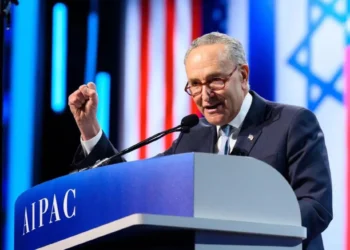
The impact of Israel’s lobby on black candidate’s primary loss
Trump plan to change his view on immigration to bend the view of healthy donors
Greek opposition leader Snubs AIPAC amid Palestinian solidarity