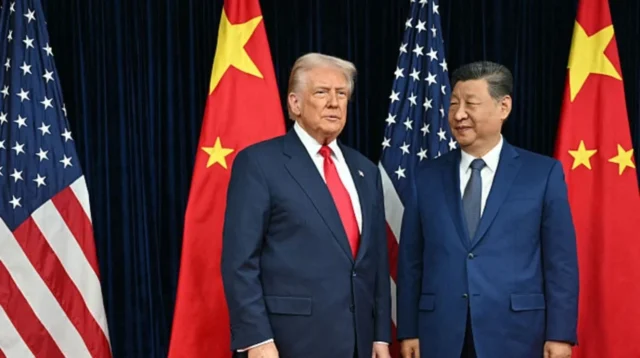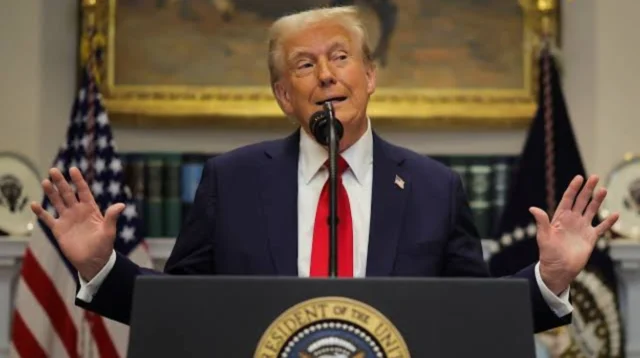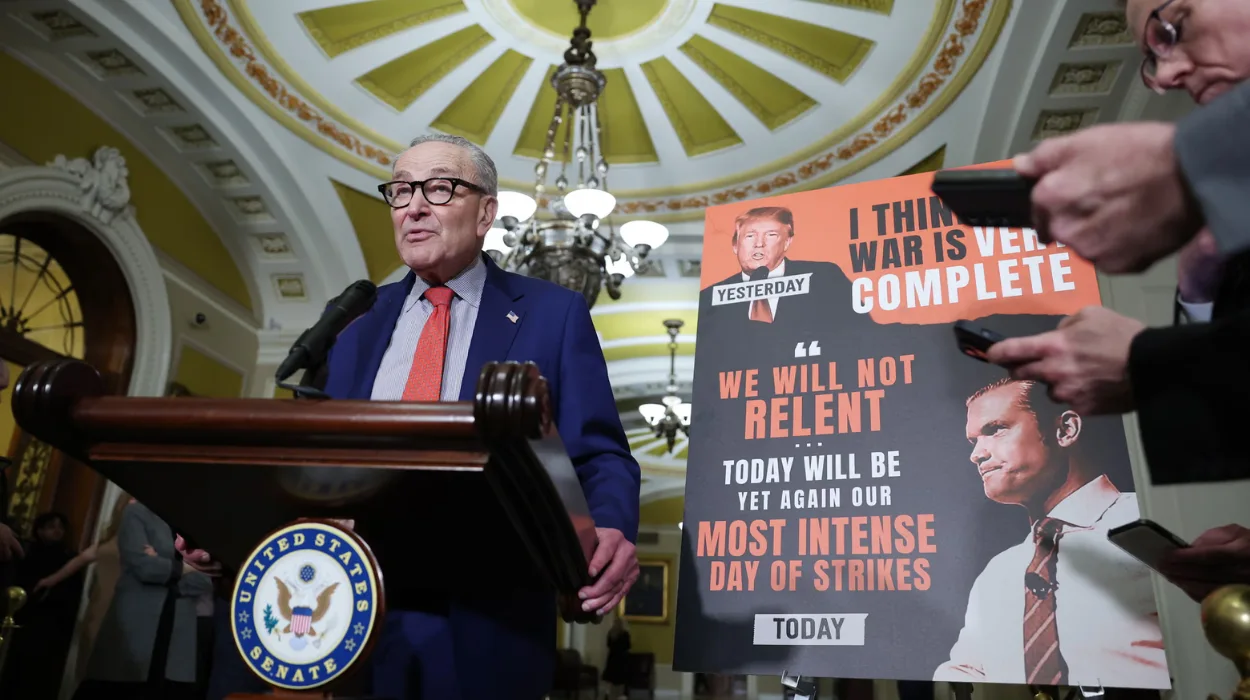
The increased tension between the United States and Iran under Donald Trump has brought a major re-calibration in the Democratic Party. What started as a strategic conflict which included airstrikes, sanctions and naval pressure has turned into a domestic political point of conflict which has compelled Democrats to review their historical approach to war and executive authority.
This scene is indicative of larger tensions that grew as the years went on in 2025, as the debate over military power, drone warfare, and sanctions regimes re-emerged in congress and policy arenas. These concerns have been further intensified by the 2026 escalation, becoming one of the main axes of intra-party identity formation.
Executive Authority and War Powers Concerns
Democratic members of Congress are increasingly describing the conflict as a constitutional one, on the growth of presidential power via legacy Authorizations for Use of Military Force. The additional extension of operations without congressional explicit consent is reminiscent of previous 2025 criticisms of executive overreach.
This framing puts the Iran war not just as a foreign policy issue but as an institutional balance test. Through the focus on legislative supervision, Democrats aim to restore a position that has been slowly lost in post-9/11 security policy.
Continuity with 2025 Security Debates
The ongoing war is a continuation of the trends set in 2025 when picketing and undercovert actions indistinguished between war and counterterrorism. Those precedents have become points of departure to critics who claim that the Iran campaign is an extension of an extremely broad security doctrine.
Progressive Democrats and the Revival of Anti-War Politics
The progressive wing of the Democratic Party has emerged as the most vocal advocate for reasserting an anti-war identity. For these actors, the Iran conflict offers an opportunity to redefine the party’s foreign policy framework in response to what they describe as systemic militarisation.
Their approach draws on both historical traditions and contemporary critiques of modern warfare, including the use of drones, economic sanctions, and indirect military pressure.
Reframing Militarism and Human Costs
Progressive leaders underscore the larger implications of continued military involvement, such as civilian deaths and destabilisation of the region. They say that the Iran war is another example of the way in which modern war is no longer on battlefields but on the economic and humanitarian level.
This view echoes the 2025 arguments about the cumulative effects of sanctions and blockades, which were increasingly considered a tool of sustained pressure, and not a tool of discrete policy.
Legal and Institutional Reforms
Reform advocates emphasize a re-examination of legal structures that permit protracted military action. Progressives insist on repealing or amending old authorisations and providing more stringent controls.
These suggestions are part of a wider attempt to institutionalise restraint, so that, in future, there would be a clearer democratic control over conflicts.
Center-Left Democrats and Strategic Restraint Debate
Whereas the progressives advocate an aggressive anti-war policy, the center-left democrats are more moderate. They do not ignore the apprehensions regarding the ongoing conflict but are also not so sure about the need to abandon military instruments completely.
This division serves to bring out a counter argument among the party on how to strike a balance between restraint and strategic necessity not least in areas that are deemed important to the US interests.
Security Interests in the Gulf Region
The center-left figures highlight the need to maintain stability in the Gulf, such as by assuring that the Gulf crosses through key waterways and by averting regional dangers. They claim that total withdrawal may result in the destruction of old alliances and security guarantees.
This stance is consistent with the previous Democratic regimes, which both engaged in diplomacy and used force selectively.
Doctrine of Principled Restraint
Instead of opposing military intervention directly, this camp promotes a doctrine of a principled restraint. This is aimed at maintaining the possibility of targeted interventions and with more definite strategic goals and accountability indicators.
The idea gained popularity during discussions on 2025 policy, with experts urging to find a compromise between interventionism and isolationism.
Trump’s War Strategy and Domestic Political Impact
The position of Trump on the conflict with Iran is closely related to his political story, which is based on the idea of strength, decisiveness, and unilaterality. His administration is trying to win over voters who value aggressive foreign policy by framing the war as a response to security threats.
The Democrats are also put in a tricky situation by this strategy as they have to criticize the war without seeming unconcerned with issues of national security.
Framing Strength Versus Weakness
Contrary to the war is often defined as a weakness of republican messaging. This sees the Democrats strike the right balance between calls of restraint and promises of strategic competence.
This framing repeats trends in 2025 where discussions about military involvement were also influenced by the perception of power and authority.
Electoral and Messaging Challenges
The Iran conflict is bringing new variables into the electoral politics especially in swing regions where foreign policy has been an issue of concern. Democrats have to work around conflicting demands of progressive activists and moderate voters, both of whom have different demands.
This juggle act highlights how challenging it is to have a coherent party message in a polarised space.
Long-Term Implications for Democratic Foreign Policy Identity
The present has very strong implications on the future course of foreign policy of the Democrats. The reaction the party had towards the Iran war might outline its approach to the strategic future years as a party that will have its electoral positioning as well as governing priorities.
The difficulty is to turn anti-war feeling into a sensible and flexible policy agenda as the world wars grow more and more intricate.
Generational Shifts and Voter Expectations
The young voters who have grown up amidst the years of conflict in the Middle East are more likely to support the idea of less military involvement, and more diplomatic focus. Since 2025, their influence in the party has been on the rise and has shaped policy debates and campaign platforms.
This generational change supports the attraction of an anti-war identity, especially in urban and progressive constituencies.
Institutionalising a New Doctrine
The biggest issue is whether the present change will be institutionally long term. A new doctrine may be built on the efforts to redefine the powers of war, improve the level of transparency, and focus on diplomacy.
There is however no easy way to translate these ideas into policy because there are entrenched interests and strategic realities in the way that often cannot be changed quickly.
A Party Between Memory and Reinvention
The Democratic Party’s engagement with the Iran war reflects a broader tension between historical memory and contemporary reinvention. Past experiences with military intervention continue to shape perceptions, while new forms of conflict challenge traditional frameworks.
As debates unfold, the party faces the task of reconciling its anti-war impulses with the demands of global leadership. Whether this moment marks a durable transformation or a temporary alignment will depend on how effectively Democrats can integrate moral critique, institutional reform, and strategic clarity into a cohesive vision that resonates both domestically and internationally.