As part of an important step in the political process for the future of Virginia and the larger context of the national redistricting process, the US Supreme Court has decided against the request by Virginia Democrats for the emergency restoration of a new congressional voting plan recently passed into law. The verdict, rendered between May 14 and May 15, 2026, has, in effect, blocked the use of four new congressional districts slated for the November 2026 mid-term elections.
The implications of this legal action go far beyond the state of Virginia and its congressional representatives of the future.
President of Judicial Crisis Network, conservative legal commentator with expertise on courts/redistricting, Carrie Severino in a post on X said,
“More like, “US Supreme Court rejects Virginia Democrats’ attempt to bypass state constitution.” The process to execute the redistricting referendum was shady from the start, thanks to state Democrats.”
More like, “US Supreme Court rejects Virginia Democrats’ attempt to bypass state constitution.”
— Carrie Severino (@JCNSeverino) May 16, 2026
The process to execute the redistricting referendum was shady from the start, thanks to state Democrats. pic.twitter.com/EAgLY3VNp3
The Timeline: From Referendum Victory to Judicial Reversal
April 21: Voters Elect a New Map
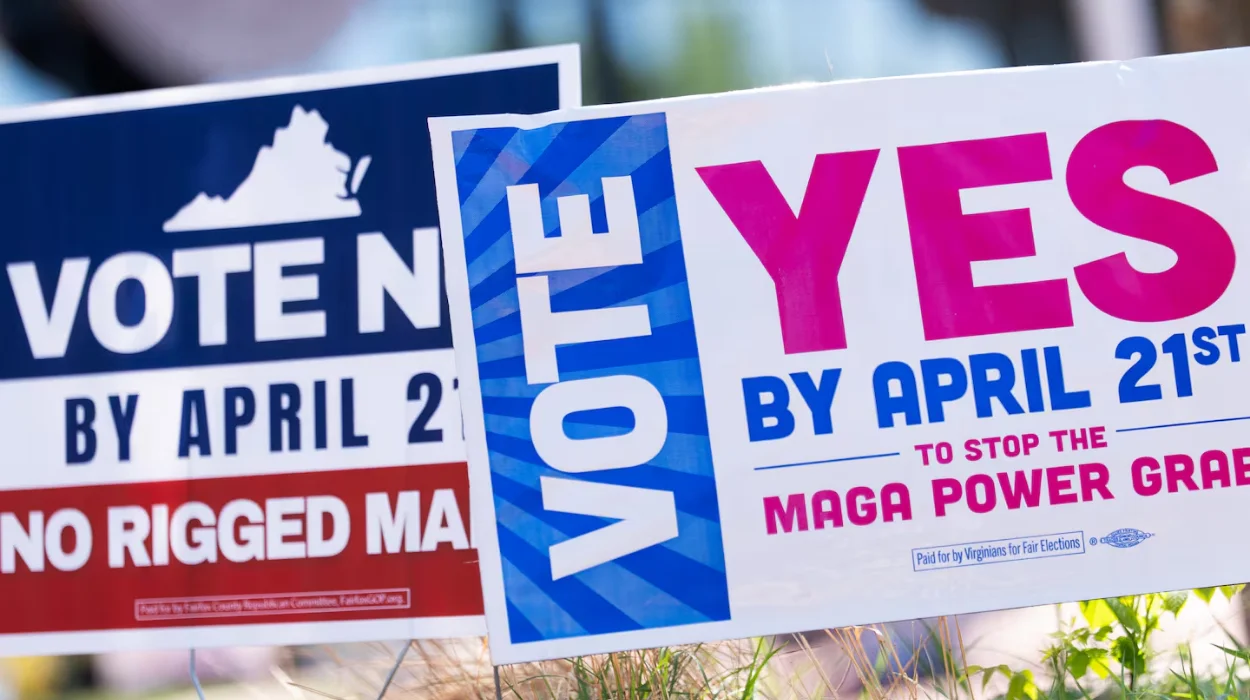
It seemed like the Virginia Democrats had made a significant breakthrough on April 21, 2026, when 51.7 percent of the electorate voted to support a new map for Congress, while 48.3 percent were against it. It is estimated that about three million people participated in this unique vote to determine the fate of their representatives in Congress.
The new map is expected to add four more Democratic-leaning districts, which could have a considerable effect on the congressional delegation from Virginia.
May 8: Virginia Supreme Court Overturns the Map
This political wave reversed very quickly. On May 8, 2026, the Supreme Court of Virginia struck down the map in a 4-3 partisan decision. The majority found that the Democratic Party had not followed the required constitutional process when they fast-tracked the legislation to put the referendum on the ballot. This decision hinged on whether the process of creating the legislation complied with the constitution, not on whether the map itself was impartial or biased.
May 14–15: U.S. Supreme Court Declines to Intervene
The Virginia Democrats, in turn, made an emergency petition to the United States Supreme Court requesting for the map’s reinstatement prior to the midterm election deadlines. The United States Supreme Court refused to reinstate the map during May 14-15, 2026. It should be noted, however, that this ruling is not a merits determination but indicates the fact that the Supreme Court does not see any pressing need to interfere in the case.
Legal Core: Why the Map Was Struck Down
In the case before the Virginia Supreme Court, neither the issue of racial gerrymandering nor partisan considerations were raised by the claimants as their reasons for challenging the results of the voting process. Rather, the main issue before the Virginia Supreme Court was the manner in which the referendum was introduced. From the information gleaned from the reporting of the court’s decision, it appears that Democrats pushed through the referendum hurriedly in order to get the map on the ballot.
This aspect of procedure is crucial. It shows that the court did not make a judgment about the fairness or constitutionality of the map in relation to the principles of redistricting but instead evaluated the process of drawing the map. This was stated by an outside observer who remarked that the court was increasingly examining not only redistricting but also its process.
Political Impact: Four Districts Gone, Power Balance Shifts
The Immediate Consequence for Virginia’s Congressional Delegation
The most immediate effect of the ruling by the United States Supreme Court is the scrapping of four additional districts created that had previously been seen to be favorable for democratic candidates. As a result, the Democrats may find it hard to win any seats come November 2026 when the midterm elections occur and continue with the current composition of the congress of the state of Virginia.
Why This Matters Beyond Virginia
Redistricting battles are increasingly shaping the political map ahead of elections nationwide. The Virginia case demonstrates how state courts, referendums, and procedural challenges can override both voter preferences and legislative strategy. It also highlights the fragile nature of redistricting victories won through ballot initiatives, where legal challenges can unravel months of political work in a matter of weeks.
Statements That Define the Political Narrative
The ruling has triggered sharp responses from both parties, reflecting the high stakes of congressional map control.
Ryan McDougle, Republican Leader of the Virginia State Senate, celebrated the U.S. Supreme Court’s decision, stating:
“You cannot violate the Constitution to change the Constitution.”
This is an indicator of the position held by the Republicans concerning the process of enacting the map, irrespective of the consent by the voters. The argument by the Republicans is not that of self-serving political considerations but that of constitutional legality.
On the other hand, the Democrats have been stressing the mandate of the voters to adopt the map through the referendum. This being the case, it is clear that the judiciary has thwarted the will of the people on grounds of procedure. There were no quotations from any Democratic source in the earlier coverage.
Broader Implications: Redistricting, Courts, and Democracy
The Rise of Judicial Scrutiny in Redistricting
This is a classic example of a growing trend across the country involving the involvement of both state and federal courts in addressing issues regarding redistricting. Courts have become the main forum in determining whether the drawing, approving, or invalidation of maps for congressional representation can take place.
The Virginia decision is another reminder that the process is as important as the result in redistricting cases. It demonstrates the fact that no matter how many people vote for approval of a map, its adoption will not stand in case there were procedural shortcomings in the process.
The Role of Referendums in Redistricting
The Virginia Referendum was different because most redistricting is carried out by either the legislature or an independent commission, not via public approval. It is interesting how 3.1 million people took part in a special election just on the issue of redistricting. This illustrates the significance that the voters place on the matter. The nullification, on the other hand, illustrates one of the difficulties that could arise when trying to implement reforms through voter initiative. Even if voters approve, the process may still be challenged due to procedural flaws.
The 2026 Midterm Landscape: What Changes Now?
With the new map blocked, Virginia will proceed with the existing congressional districts for the November 2026 midterms. This means:
- Four Democratic-leaning districts will not be contested as new seats
- The current partisan balance in Virginia’s congressional delegation remains intact
- Republican incumbents in previously competitive districts retain their electoral advantage
- Democrats must now focus on existing competitive seats rather than newly drawn ones
For the national political scene, this reduces the number of potential Democratic pickups in the House and tightens the margin for control in the upcoming Congress.
What Happens Next? Potential Paths Forward
Could Democrats Push for Another Map?
Legally, Democrats could attempt to draft a new map and seek a new referendum, but time is tight. With the November 2026 election approaching, any new process would face significant logistical and legal hurdles.
Could the Virginia Legislature Act?
The Virginia legislature could attempt to pass a new map, but doing so would require bipartisan cooperation or Democratic control of both chambers and the governor’s office. Given the current political balance, this is unlikely before the midterms.
Could Future Cases Shape Redistricting Law?
The Virginia case may eventually reach the U.S. Supreme Court again if a new map is challenged or if procedural questions are reframed. For now, the high court’s decision to decline intervention leaves the Virginia Supreme Court’s procedural ruling in place.