One of the Supreme Court’s most significant decisions involving administrative law has been handed down, increasing Donald Trump’s authority to dismiss officials at specific independent agencies, though not allowing him to dismiss Federal Reserve Governor Lisa Cook yet. It is interpreted as an overwhelming victory for the Executive Branch and an important protection for the central bank institution at the same time. Indeed, the Court has increased the power of the presidency and diminished the effectiveness of the legal provision that was protecting leaders of some independent agencies from at-will dismissal. At the same time, by exempting the Federal Reserve Board from the decision, the Supreme Court indicated that the central bank belongs to a separate constitutional domain.
What the ruling changed
The broader case centered on whether presidents can remove the heads of independent agencies without needing to show cause. The court’s majority answer, as reported across major outlets, was yes in substantially broader terms than before, which effectively narrows a nearly century-old precedent that had limited that power.
This precedent is usually cited in reporting as being approximately 90 to 91 years old, and its erosion could impact many regulators who have always worked under the protection of job security meant to keep them from being politicized. Effectively, what the decision does is transfer power from the agencies that Congress wanted to be insulated from the president into his hands. It is also seen as a victory for the idea of the unitary executive being in greater control of the executive-branch officers. This has been an argument made by conservatives for a long time, but this decision carries much more weight now.
Why Lisa Cook matters
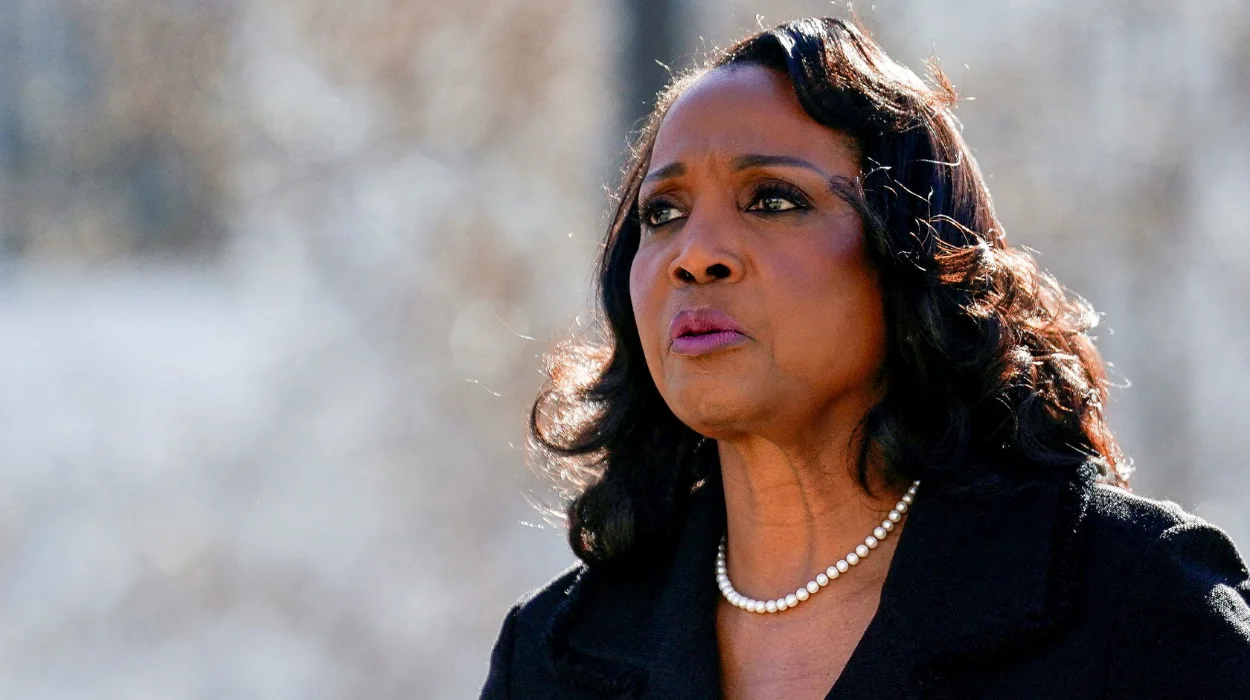
Lisa Cook, a Federal Reserve governor appointed during the Biden administration, remains in office because the court did not allow Trump to remove her immediately. That detail is crucial because it shows the justices were willing to broaden presidential removal power while still recognizing that the Fed is different from other independent agencies.
Trump had attempted to fire Cook due to accusations related to mortgage fraud, based on reports that have been mentioned earlier in the reporting on this matter. What the order from the court means is that this challenge will not be concluded by dismissing Cook; rather, Cook will continue to serve on the board even as the litigation proceeds. This is relevant not only to Cook but to the credibility of the institution, in general. A central bank that is viewed as susceptible to political interference loses credibility when it comes to interest-rate decisions.
The court’s split
Leading publications note that the general ruling took place along the lines of a 6-3 split. The ruling concerning the case of Cook, on the other hand, was described as 5-4, maintaining the status quo of Cook for the moment. These numbers highlight the extent to which the Supreme Court is polarized on the issue of finding the right balance between presidential powers and independence of agencies. The conservative majority is seen as one that is advocating for the expansion of presidential powers in relation to those of agencies, whereas the dissent seems to have cautioned against the unraveling of a system that has regulated federal agencies for generations.
The Fed exception suggests the majority is not yet ready to treat every agency the same way. That may be because the Federal Reserve occupies a special role in the economy and has long been treated as distinct in legal and political practice.
Institutional stakes
This ruling goes beyond one president, one governor, or one agency. It changes the operating environment for federal regulators across Washington by making it easier for presidents to remove top officials who were previously shielded from immediate dismissal.
This is important since the independent agencies oversee areas that impact people’s daily lives, such as labor law, competition law, communication, consumer laws, and monetary laws. With the possibility of presidents removing leaders more freely, swings between administrations would be greater regarding policies. This case poses an interesting dilemma regarding the issue of democratic accountability on one side and institutional independence on the other side. Those who favor presidential removal powers state that since the voters have elected the president, he should run the whole executive branch. Those against presidential removal powers claim that such power will politicize enforcement and undermine expertise.
Federal Reserve exception
The most closely watched part of the ruling is the Fed carve-out, because it reflects a judicial instinct to preserve central-bank independence even while expanding presidential authority elsewhere. That carve-out is why Lisa Cook remains on the board, at least for now.
Coverage from multiple outlets describes the Fed as effectively exempted from the immediate force of the ruling. In newsroom terms, that is a major nuance: Trump gained more control over many parts of the bureaucracy, but he did not get a blanket power to purge the Federal Reserve.
This matters because the Fed is often treated differently from other agencies precisely because of its macroeconomic role. Rate-setting, inflation control, and market confidence all depend on the perception that the central bank is not simply following the political needs of the White House.
The litigation is far from being finished, because Cook’s trial will go on through the court system, and the judgment implies that in the further trials the issue might be discussed in terms of how unique the Federal Reserve actually is to deserve special consideration. This means that the court did not settle for good the issue of how far a president can push with regard to dismissing independent officials. At least it made something clear: the previously accepted restrictions have been substantially diminished.
For the White House, the immediate political message is obvious. Trump can now exert stronger pressure on agencies that were historically insulated from direct presidential control. For the Fed, the message is more cautious: independence remains intact for now, but the legal foundation supporting it is under scrutiny.
Wider political impact
The timing also makes this ruling politically explosive. Trump has long favored tighter executive control, and the court’s move appears to align with that approach on key constitutional questions. The result is likely to fuel debate over whether the judiciary is tilting federal governance toward a more centralized presidency.
At the same time, the Fed exception may reassure markets and policymakers who feared a direct confrontation with the central bank. By allowing Cook to remain while litigation continues, the court avoided an immediate shock to financial institutions and kept the Fed’s governance structure from being abruptly disrupted.
The broader story, then, is not simply that Trump won or lost. It is that the court redrew the boundary between political control and institutional independence, and it did so in a way that favors the president while still treating the Federal Reserve as a special case.
Bottom line for readers
The ruling is a major expansion of presidential firing power and a major limitation on independent-agency insulation. Yet the immediate effect on Lisa Cook is the opposite of Trump’s preference: she stays at the Fed while the courts continue to weigh the case.
That combination makes this one of the most important administrative-law decisions in recent years. It strengthens the presidency, weakens old protections for regulators, and leaves the Federal Reserve standing on separate ground, at least for now.