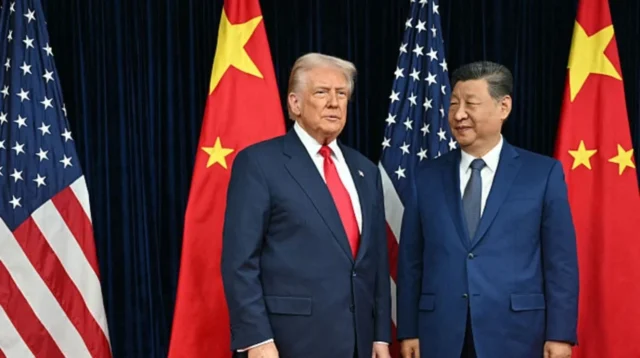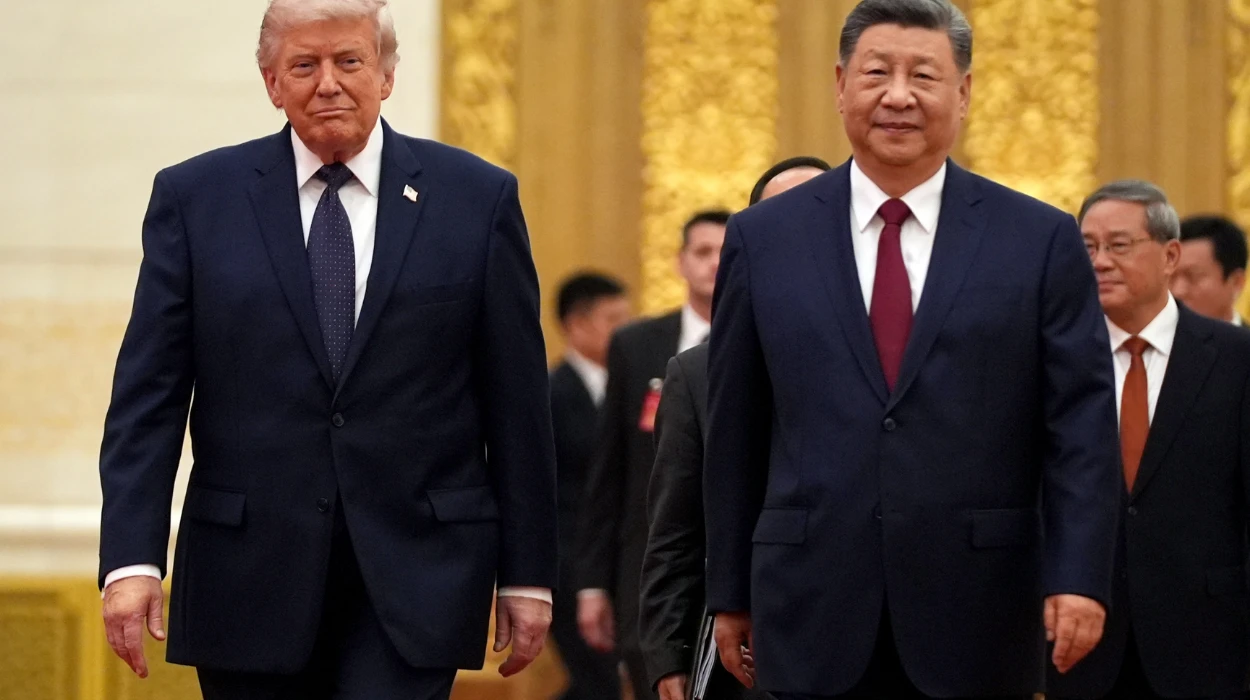
The Trump administration is preparing a major policy shift that would restore and expand overseas programs designed to counter China’s growing influence, according to reporting released this week. After spending much of last year cutting budgets, freezing initiatives, and thinning staff across parts of the foreign assistance and development ecosystem, the White House now appears ready to inject hundreds of millions of dollars back into efforts aimed at competing with Beijing on the global stage.
The funding cut is significant in that it combines the features of continuity and contradiction of the current administration’s China policy. On one side, it is consistent with the general perception of China as a strategic competitor, whose global and regional influence should be contested. However, on the other side, the move occurs after a phase of dramatic restrictions of many of the policies which are now being restored, thus marking a pattern of disruption, withdrawal and limited restoration.
According to the sources, the funding is far from being a symbolic measure. The increased funding for the U.S. initiatives abroad is justified as an attempt to increase the leverage in regions where China continues to expand its influence through investments, loans, diplomacy and development aid.
Policy Reversal and Strategic Logic
This move must be viewed in light of a geopolitical challenge that the United States faces on a continuous basis – China’s growing international clout is not being diminished despite years of condemnation from the American government. China remains committed to positioning itself as a development ally, especially for the Global South, which is seeking financial backing and development in terms of transport networks, energy systems, ports, and technological infrastructure.
Such challenges have forced the American government to think about the ramifications of reducing their ability to engage in the international arena. It is here that this additional financial backing becomes critical. Hundreds of millions of dollars might not mean much in the realm of global politics, but when it comes to foreign assistance and development, this amount of money can sustain or resurrect several development initiatives and projects.
The policy reversal also reveals the administration’s willingness to move beyond ideological slogans when strategic priorities demand it. The “America First” brand has often been associated with retrenchment, skepticism toward foreign aid, and pressure to reduce spending abroad. Yet the China challenge is forcing a more instrumental approach, where foreign assistance is treated not as charity but as a strategic asset.
Why This Matters
The significance of the shift lies in the contrast between last year’s cuts and this year’s proposed expansion. The administration had halted many initiatives during a wave of budget and personnel reductions, creating uncertainty across programs that depended on continuity and long-term planning. Now those same channels may be brought back online to support a more explicit competition with China.
This becomes important since global influence does not come from isolated declarations. Global influence comes from ongoing interactions, reliable funding, diplomacy, and delivering results. Should America backtrack too far, other countries will fill in the gap. China has already shown its willingness to jump right into wherever America backs off, particularly in those countries that want to develop their infrastructure and their economy. The increase in funds might also be designed to compensate for the harm caused by earlier cutbacks. Whenever a program is suspended or cancelled, there is deterioration of relationships, loss of goodwill among locals, and long-term plans become unfeasible.
Building trust becomes much more difficult than starting a new program. Hence, the current stance of the US administration seems to be aimed at both spending money and rebuilding its credibility in those countries that saw America as an unreliable partner.
Development Finance as Geopolitics
One of the key aspects in the story is the employment of development finance as an instrument of foreign policy. From the coverage provided, it is clear that the new funding will be used to facilitate the development of initiatives aimed at allowing the US to rival Chinese influence through providing alternatives for investment and assistance. This includes various instruments linked to lending, projects, and other forms of economic cooperation.
The new initiative is linked to a very controversial debate that has been ongoing in Washington on how to counter the growing influence of China. Some believe that the right approach is through using sanctions and containment-like policies. However, others think that the US needs to fight back and provide countries with something good in exchange for their cooperation – financial, political, technological, and consistent cooperation.
That makes the initiative especially important for countries in Africa, Asia, Latin America, and the Pacific, where China’s influence has grown through visible infrastructure projects and sustained diplomatic outreach. For many governments in these regions, the choice is not ideological but practical: which power can deliver financing faster, more flexibly, and with fewer political conditions? If the United States wants to regain influence, it must answer that question with resources, not rhetoric.
The Trump administration’s move suggests it understands that reality, at least in part. By restoring money to programs that can operate in contested regions, it is trying to rebuild the American offer in a competition that is increasingly measured in roads, ports, schools, digital networks, and debt structures rather than speeches alone.
The Cut-Then-Restore Pattern
One of the most interesting aspects of this story is how the whole sequence played out. It started with wide-ranging cuts from the administration, which then turned around and sought to reinstate some of the affected programs based on what would be needed strategically. This has been a recurring theme in this administration’s way of governing. It involves making wide-ranging cuts and then carving out exceptions based on political pressure or geopolitical reasons why the cuts are not feasible. While there is the obvious benefit for agencies and contractors of getting the additional funds, there is the problem of uncertainty because policy direction can change suddenly. Programs that are intended to fight China require consistency and predictability.
There is also a political dimension. By reviving anti-China spending, the administration can claim it is being tough on Beijing while still exercising fiscal restraint in other areas. That makes the move easier to sell domestically. It allows officials to argue that the money is not wasteful foreign aid but a strategic investment in national security and global competition.
Global Message to Beijing
The timing and symbolism of the funding increase matter as much as the money itself. Even before the details are finalized, the signal to Beijing is that Washington does not intend to abandon the contest for influence. In diplomatic terms, that is important because perceptions of resolve often shape behavior as much as actual dollar amounts.
China is likely to interpret the move as evidence that the United States is worried about losing ground in key regions. But Beijing may also see it as confirmation that its own global outreach has forced Washington into a more active posture. That means the new funding is both a response to China’s success and an acknowledgment of the strategic pressure Beijing has created.
For allies and partner countries, the signal is more complicated. Some may welcome renewed American attention, especially if they have felt caught between U.S. disengagement and Chinese assertiveness. Others may worry that the funding is part of a broader effort to force them into geopolitical alignment. Either way, the announcement underscores that development and diplomacy are now deeply intertwined with great-power competition.
Perhaps the most significant of these is the issue of how much of this proposed money will actually flow through the system and how quickly it will get there. The phrase “hundreds of millions of dollars” sounds impressive, but the actual impact will depend upon what specific programs get funded, what areas of the world are emphasized, and whether this is to be a short-term change in budget allocations or a longer-term change in policy. Another related issue is that of whether this effort will be accompanied by continuity in staffing.
Money can never replace people, and it is only by having continuity that these influence programs will have any chance of success. However, it is quite apparent that the larger trend is becoming clear. The Trump administration no longer feels comfortable with merely retrenching. It wants to use American resources in a more deliberate fashion in a struggle for global influence against China. This represents a very significant policy change.