Donald Trump’s priority voter identification push has become more than an elections message; it is now a test of party discipline, Senate math, and the power of lobbying in Washington. At the center of the fight is the SAVE America Act, a bill backed by Trump that would require proof of U.S. citizenship to register to vote and photo identification at the polls. Supporters call it a straightforward election-integrity measure, while opponents see it as a sweeping federal intrusion that could make voting harder for millions of eligible Americans.
A bill built around trust and control
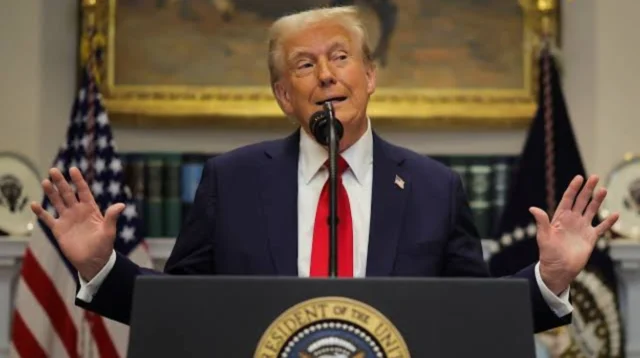
It should be easy to see why this piece of legislation holds appeal for Trump and his supporters: the bill puts the topic of election legitimacy out front and center, something he has always done to great effect with his base. The White House has explicitly called the bill absolutely necessary for “election integrity” and “voter security,” both phrases which indicate the attempt by the administration to make tougher ID laws a matter of governance, not just rhetoric. Trump has urged Congress to pass the bill and even hinted about leveraging his powers of legislation to force the issue.
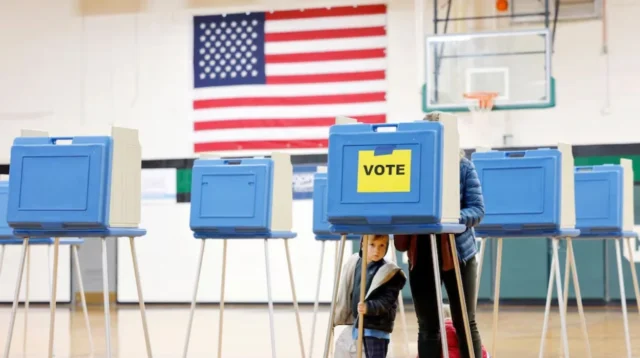
The bill itself would make documentary evidence of citizenship for the purposes of voter registration necessary, such as passports or birth certificates, as well as photo ID when voting in person. The bill would also strengthen procedures for mail-in ballots and limit what forms of ID are acceptable for voting in many states, excluding student ID in some formulations mentioned in the media.
Why the Senate is the real battlefield
The biggest obstacle is not public messaging but the Senate. Reporting indicates the bill needs 60 votes to overcome a filibuster, but Republicans hold only 53 seats, leaving the legislation dependent on Democratic support that is not forthcoming. That arithmetic has made the bill politically symbolic and procedurally fragile at the same time, a familiar pattern in modern election-law fights.
Within the GOP, the debate is exposing real divisions. Sen. Thom Tillis has said he would oppose the measure, arguing that if Republicans are serious about voter ID they should pursue legislation that encourages states to adopt it through federal funding rather than impose a rigid national mandate. Sen. Lisa Murkowski has also been publicly opposed, while some Republicans have defended the bill as essential to addressing voter fraud concerns. The split matters because it shows the party is not unified even on an issue Trump treats as a loyalty test.
The politics of pressure
The willingness of the President to put political pressure on Congress has elevated this issue into a wider test of congressional loyalty. He has linked this bill with other pieces of legislation that have to be passed by Congress, and according to some sources, threatened to refuse his signature to some legislation that is not connected with the voter ID bill until this bill makes some progress.
This approach has increased the stakes for GOP senators, who have to decide whether they want to be accused of being disloyal to the President or of being involved in passing this bill that may not even pass through the Senate. This is also a reason why lobbying has become a wider issue. This controversy is attracting attention of trade unions, liberal groups, voting rights organizations, and other lobbyists who consider this bill a threat to voters’ rights. Your article premise is especially relevant in this context because although there is much conflict within the Republican Party, the wider lobbying struggle takes place in favor of the opposition.
Supporters’ argument
Backers of the bill say it answers a basic question: who gets to vote in American elections. Trump and his allies insist the legislation is needed to prevent noncitizen voting and restore public confidence, which they argue has been weakened by years of election disputes and fraud allegations. In that framing, the bill is not about exclusion but about restoring the rules and protecting the ballot from abuse.
Some polling cited in coverage shows why this argument has political traction. A Harvard-Harris survey reported that 85% of voters believe only American citizens should vote, and 71% supported the SAVE America Act. Support was strongest among Republicans, but the reported numbers also included meaningful support among independents and even some Democrats, which helps explain why the message remains potent even if the bill itself is in trouble. Trump is clearly betting that a hard line on voter eligibility still resonates with enough voters to outweigh the procedural obstacles in Congress.
Critics’ warning
The bill solves an issue which is not evidenced on a scale large enough for federal action, according to the critics. The bill is likely to disenfranchise valid voters such as individuals with difficult access to passports and birth certificates. The opponents include voting rights activists who claim that the increased burden of proof will affect married women, elderly citizens, students, poor voters and rural citizens because they may find it difficult to connect their identification documents to the present address. Procedural burden is not the only objection from the critics.
According to them, this bill will make errors in elections administration a crime and give individuals the opportunity to sue. This will be a source of fear in the elections process as well as making the elections administration more political.
The federalism fight
A central tension in the debate is whether voting rules should be set nationally or left largely to the states. Supporters say a nationwide standard is necessary because election procedures vary too much from state to state. Critics respond that the Constitution leaves broad room for states to manage elections and that Washington should not impose one-size-fits-all rules that ignore local realities.
That federalism argument is not abstract. The bill would require states to adjust registration systems, voter-roll management, and ID verification processes, likely at significant cost and with little time to prepare. Some states already use proof-of-citizenship requirements, but the federal bill would override narrower approaches in federal contests. That is why the stakes go beyond election administration; the bill would redraw the balance between state authority and national standards.
What the lobbying battle shows
The lobbying struggle over the Save America Act legislation illustrates how election-related policies have become a permanent pressure point in Washington. On one hand, there are legislators and conservative activists aligned with President Trump who want to establish voter identification requirements as a permanent federal law. On the other hand, there are trade unions, progressive organizations, and voting rights advocates fighting against what they consider unconstitutional encroachment on Americans’ right to vote. Thus, the lobbying struggle produces a traditional, yet increasingly intense, Washington situation in which the legislation is unlikely to advance in Congress easily, but nevertheless continues to be politically relevant because of its ability to organize both its supporters and opponents. For the President, the issue becomes a part of the strategy of identity politics, political discipline, and manipulation. For the Republican Senators, it turns out to be a litmus test for party loyalty.
Though the fate of this bill in the short term is still unknown, its political importance is evident. The bill became the wedge separating the hardline attitude of President Trump from the institutional restraints of the Senate, and at the same time, it is fueling other political actors who view it as the key lobbying project. No matter whether the bill will be passed or not, the struggle will continue to affect the political rhetoric concerning voting rights, accusations of non-citizens voting and election security issues before the next election cycle. At the moment, the meaning of the introduced legislation consists not so much in the fact of its possible adoption but rather in that which it reveals – division among Republicans regarding strategies, readiness of the White House to push the issue through, and preparation of political organizations in Washington for the long-lasting struggle on voting.