Spain’s restraint in the Iran conflict cannot be understood without examining the historical context that continues to shape Madrid’s strategic thinking. The legacy of past military engagements, particularly in the Middle East, has left a lasting imprint on both political leadership and public opinion. This historical memory influences how Spain evaluates risk, alliance obligations, and the cost of participation in externally led operations.
The persistence of these experiences has created a cautious strategic culture, where decisions are filtered through lessons learned rather than immediate alliance pressure. This has become especially relevant in 2026, as NATO faces renewed stress in aligning its members during a rapidly evolving conflict.
Iraq war scars and political memory
The 2003 Iraq War remains a defining reference point in Spain’s foreign policy posture. The deployment under José María Aznar and the subsequent domestic backlash reshaped public attitudes toward military involvement abroad. The deaths of Spanish soldiers and the aftermath of the 2004 Madrid bombings reinforced skepticism toward participation in U.S.-led interventions.
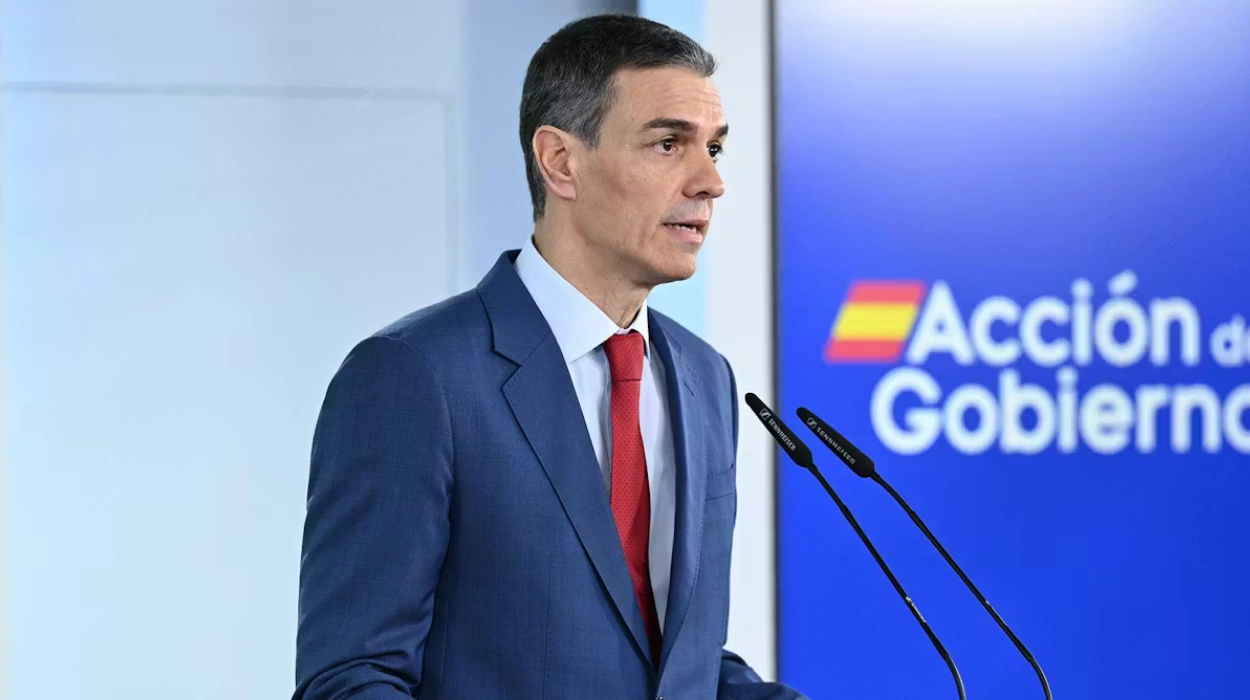
Prime Minister Pedro Sánchez has echoed this historical awareness by framing Spain’s current stance as a deliberate effort to avoid repeating past miscalculations. His government’s criticism of escalatory actions reflects a broader political consensus that prioritizes caution over rapid alignment.
Transatlantic trust deficit after Iraq
The Iraq experience also contributed to a lingering trust deficit between Spain and the United States. Spanish policymakers, alongside counterparts in France and Germany, perceived limited consultation during earlier conflicts. This perception has resurfaced in 2026, influencing Madrid’s decision to restrict operational support.
Spain’s refusal to grant full access to bases such as Naval Station Rota highlights this tension. The move signals not only a legal or procedural stance but also a deeper concern about being drawn into conflicts without sufficient strategic alignment.
Domestic politics reinforce Spain’s restraint posture
Spain’s restraint is not solely a product of historical memory; it is also driven by immediate domestic political realities. The internal political landscape places clear constraints on how far the government can go in supporting NATO operations, particularly those perceived as offensive or escalatory.
The interaction between public sentiment and coalition politics has turned foreign policy into a reflection of domestic priorities, making restraint both a strategic and political necessity.
Sánchez balancing coalition pressures
Pedro Sánchez leads a coalition government that depends on support from parties skeptical of NATO interventions. This political structure limits flexibility in foreign policy decisions, especially when military involvement risks alienating key constituencies.
By advocating diplomacy and limiting logistical support, Sánchez maintains domestic stability while signaling conditional commitment to NATO. This balancing act allows Spain to remain within the alliance framework without fully endorsing its operational direction in the Iran conflict.
Public opinion as strategic constraint
Public opinion in Spain remains strongly opposed to involvement in Middle Eastern conflicts. Surveys conducted in 2025 and early 2026 indicate a preference for neutrality and diplomatic engagement over military participation.
This sentiment creates a reinforcing cycle. Government restraint aligns with public expectations, which in turn strengthens political incentives to maintain that position. For NATO, this dynamic illustrates how domestic legitimacy can directly influence alliance behavior.
Strategic implications of Spain’s restraint for NATO operations
Spain’s decisions carry operational consequences that extend beyond political signaling. Its geographic position and infrastructure make it a critical node in NATO’s southern flank, meaning that any limitation on access affects alliance capabilities in real terms.
The Iran conflict has amplified the importance of logistics, mobility, and rapid response, turning Spain’s restraint into a tangible factor in NATO’s operational planning.
Base access and operational limitations
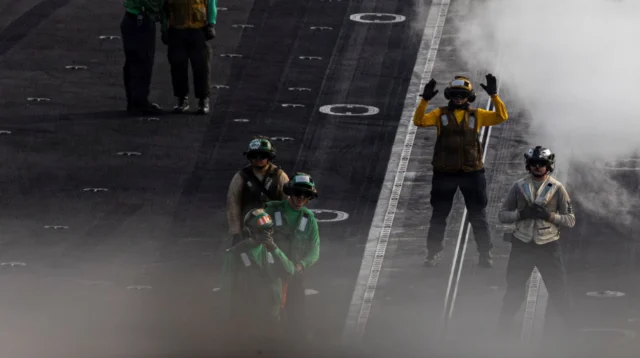
Facilities such as Morón Air Base and Naval Station Rota play a key role in enabling U.S. and NATO operations in the Mediterranean. Restrictions on their use for offensive logistics slow deployment timelines and complicate mission planning.
These limitations do not halt operations entirely but introduce inefficiencies that can affect response speed. In high-intensity scenarios, even minor delays can alter strategic calculations.
Alliance cohesion under stress
Spain’s stance raises broader questions about NATO cohesion. When one member conditions its support on legal or political criteria, it creates a precedent that others may follow. This risks fragmenting the alliance’s operational unity during crises.
The Iran conflict has therefore become a test of whether NATO can maintain coherence despite differing national priorities. Spain’s restraint illustrates the tension between collective commitments and sovereign decision-making.
Burden-sharing debates intensify within NATO
The issue of burden-sharing has re-emerged as a central theme in alliance discussions. Spain’s defense spending and operational choices have drawn scrutiny from the United States, adding another layer of complexity to the situation.
These debates are not new, but the current crisis has amplified their significance by linking financial contributions to operational reliability.
Donald Trump pressure on defense commitments
Donald Trump has renewed calls for NATO members to meet the 2 percent GDP defense spending target. Spain, spending around 1.3 percent, has been singled out as an example of insufficient commitment.
Trump’s criticism frames Spain’s restraint as part of a broader pattern of limited engagement. This rhetoric increases pressure on Madrid but also risks deepening divisions within the alliance.
Jens Stoltenberg calls for unity
NATO Secretary General Jens Stoltenberg has taken a more measured approach, emphasizing the importance of unity while acknowledging national differences. His statements reflect an effort to maintain cohesion without escalating internal tensions.
Stoltenberg’s position highlights the challenge of managing a diverse alliance. Balancing flexibility with collective action remains a central issue as the Iran conflict unfolds.
2025 developments set the stage for current tensions
The divisions seen in 2026 did not emerge suddenly. They were preceded by a year of growing friction within NATO, driven by differing priorities and external pressures.
These developments created a context in which Spain’s restraint became more likely and more consequential.
Pre-conflict strategic disagreements
Throughout 2025, NATO members faced disagreements over issues such as Ukraine support, Middle East policy, and defense spending. Spain’s cautious approach to these debates signaled its preference for autonomy within the alliance.
These earlier tensions reduced the likelihood of unified action once the Iran conflict intensified. The current situation reflects accumulated differences rather than a single point of divergence.
Southern flank vulnerabilities exposed
The Iran conflict has exposed vulnerabilities along NATO’s southern flank. With other regional actors pursuing their own strategies, Spain’s hesitation creates gaps in logistical coverage.
This forces the United States and other allies to adapt by rerouting operations or relying on alternative bases. Such adjustments increase costs and complicate coordination.
Cohesion under pressure in a changing alliance landscape
Spain’s restraint underscores a broader transformation within NATO, where unity can no longer be assumed but must be actively maintained. The alliance faces the challenge of reconciling national interests with collective responsibilities in an increasingly complex security environment.
The Iran conflict has revealed that cohesion depends not only on shared threats but also on aligned political will. As member states navigate domestic pressures and historical experiences, the ability to act collectively becomes more uncertain.
The trajectory of Spain’s stance may influence how other allies approach similar dilemmas, shaping NATO’s future responses to crises. Whether the alliance adapts through greater flexibility or faces deeper fragmentation will depend on how these tensions are managed in the months ahead, particularly as strategic decisions continue to test the balance between national autonomy and collective defense.