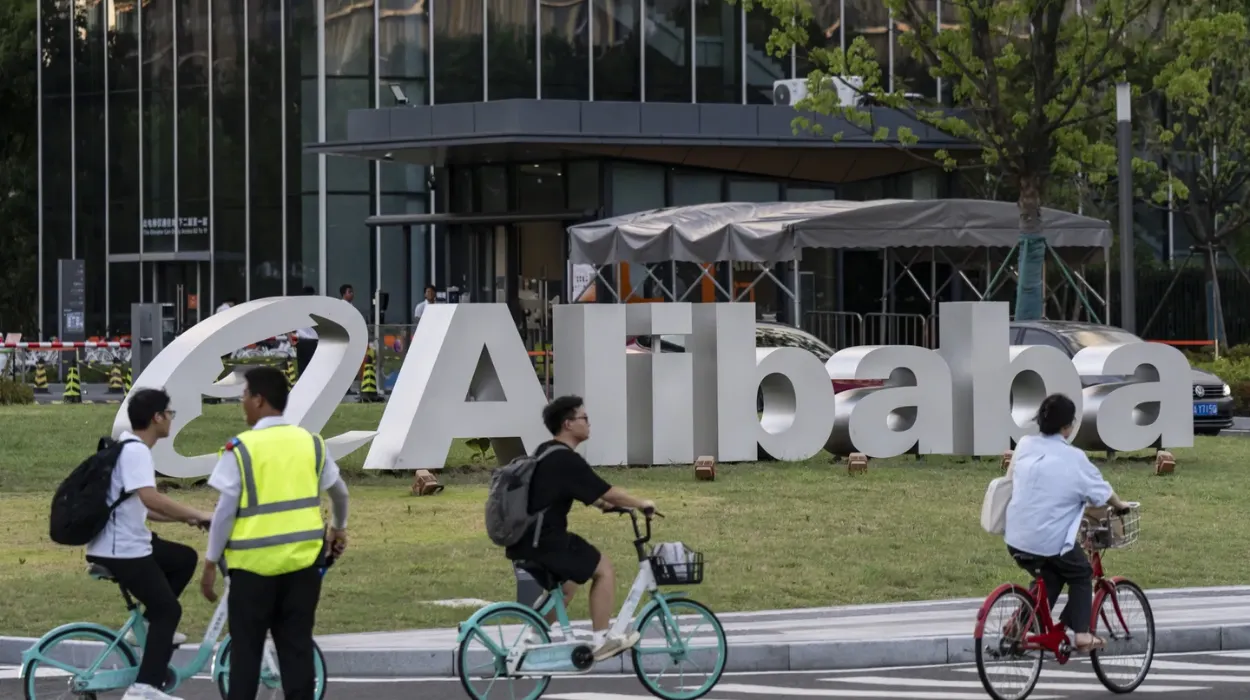
The influence machine in Washington has emerged as the newest front in the ongoing competition for supremacy in technology and security between the United States and China. In the last few days, the leading lobbying organizations in Washington, D.C., have abruptly severed all relationships with Chinese tech titans Alibaba Group Holding and Tencent Holdings, motivated not by any business reasons but rather by a new legal restriction, which is linked to the Pentagon’s ever-expanding blacklist of Chinese “military companies.” The focal point in this drama lies in the seemingly innocuous jargon that is suddenly carrying a lot of weight in Washington’s K Street: Alibaba, Tencent dumped by DC lobbyists to meet US restrictions.
It is not only a technical regulation but a very shrewd move against the Beijing-backed technology firms in terms of depriving them of a very important means through which the United States exercises its power—access to policy makers and the political process in Washington. The bottom line for Alibaba and Tencent, both of whom had invested behind-the-scenes in developing connections in Washington, is clear. It has become too expensive to represent them for the lobbyist companies that also want Pentagon contracts.
The Rule That Forced a Choice
The immediate cause was a provision contained within the latest United States defence bill legislation, popularly referred to as Section 851 in the FY2025 National Defense Authorization Act. The provision states that the Department of Defense is not allowed to have a contract with any organization where its lobbyists represent other organizations that feature in the Pentagon’s “1260H List” of Chinese military companies. This is not an attack on Alibaba and Tencent in particular or even a prohibition against American companies doing business with them. Rather, it uses conflict-of-interest provisions to compel major K Street firms to either take up defense and government contracts or continue representing Chinese organizations now considered as military-civil fusion by the Pentagon.
The 1260H list itself has been steadily expanding. Tencent was added earlier, in 2025, a reflection of U.S. concern about the company’s reach in social media, gaming, cloud and AI services. Alibaba joined the list in a June 2026 update that brought the total number of designated firms to well over 180, sweeping in major players from semiconductors to electric vehicles. For these companies, being labeled a “Chinese military company” is not just reputationally toxic; it now comes with a secondary wave of consequences via American lobbying and procurement rules.
Lobby Shops Walk Away
Following the realization of the implications of the rule, the major influence shops in Washington wasted no time. Companies that were used to building relations with Alibaba and Tencent for years and guiding them through anything ranging from congressional hearing processes to potential investments restrictions started terminating their relations with both companies. It is stated that some of the companies known to have terminated ties with Chinese technology firms include Brownstein Hyatt Farber Schreck, Mercury Public Affairs and MO Strategies, which are all influential in terms of having a vast client portfolio consisting of defense-related and corporations-based clients.
The scale of the exodus is striking. Alibaba has lost at least five lobbying firms in Washington in the wake of the Pentagon rule, while Tencent has seen four of its lobbying relationships disappear. For K Street, the calculus is straightforward. The pool of U.S. defence and federal work is large, recurring and politically safe. Chinese tech clients, by contrast, carry rising political risk, reputational blowback and new legal complications. As one senior lobbyist put it in private,
“You do not jeopardise a long-term defence book for a client the Pentagon just branded a military front.”
Publicly, the rhetoric is more measured but no less clear. One firm insider described the move as a matter of compliance rather than politics, saying in effect that
“the law now forces a binary choice and we are choosing to comply in a way that protects our U.S. government business.”
Another noted that the firm could not afford even the perception that it was “on both sides” of a strategic competition increasingly framed in near‑Cold War terms. For Alibaba and Tencent, the result is the same: their direct channels into Washington’s policy debate have abruptly narrowed.
How the Pentagon Blacklist Got Its Teeth
It is crucial to note that the list of 1260H companies did not start with the application of automatic and all-encompassing economic penalties. Rather, its initial iterations served as a way of shaming these Chinese companies that were thought by Washington to aid the People’s Liberation Army or the defense industry in China. But eventually, regulatory and legislative bodies started adding new strings to this list, thus making it a Swiss army knife of restrictions.
The linkage between the list and the issue of lobbying and Pentagon contracting is an important move in that it brings into play an effective set of inducements. The U.S. lobby shops, law firms, and consultants are dependent in large part upon their work in federal contracts and with companies that are very sensitive to any kind of national security examination.
The rational, profit-maximising response for most firms is to drop the Chinese clients. As one policy analyst observed,
“Washington has discovered that you do not always need direct sanctions when you can rewire everyone’s incentives around who they want to stand next to.”
The move also sends a signal to other Chinese companies who are not yet on the 1260H list but operate close to sectors of concern such as AI, quantum computing, cloud services and critical infrastructure. The message is that their access to U.S. lobbying capacity is contingent, fragile and subject to change with each new update from the Pentagon.
Alibaba and Tencent Push Back on the Label
Alibaba and Tencent have consistently rejected the idea that they function as arms of the Chinese military or as tools of the People’s Liberation Army. In legal and regulatory contexts, Alibaba in particular has argued that its inclusion on the military companies list is both factually wrong and commercially damaging. The company’s position, paraphrased from its public defense, is that
“Alibaba is a private, consumer‑focused technology company, not a military enterprise, and we strongly disagree with any designation that suggests otherwise.”
In their opinion, 1260H is something like an informal sanction that has a “chilling effect” on partnerships, discourages investment, and now even cuts off relations with service providers without following proper procedures and clarity inherent to financial sanctions. Tencent, which previously got into trouble with the U.S. government because of its interests in gaming and social platforms, regards the procedure as politically motivated.
An executive familiar with the company’s concerns framed it as
“policy by blacklist, where your business is redefined overnight by a Pentagon label you have little opportunity to contest.”
However, the odds of reversing these designations in the near term look slim. U.S.–China relations remain strained on multiple fronts – from advanced chips and data governance to the security of undersea cables and cloud infrastructure. Against that backdrop, backing away from a high‑profile move against two of China’s best known tech champions would be politically difficult for any U.S. administration.
A Blow to Their Washington Strategy
In the case of Alibaba and Tencent, it goes beyond merely being a symbolic blow to lose some of its top DC lobbyists. In the past decade, the two firms have silently made efforts to represent themselves in Washington, understanding the potential effect of policy decisions in America on export controls, app stores regulations, investment restrictions and data security. It wasn’t about leading the pack in town; it was about ensuring that their voices would be heard.
That infrastructure has now been hollowed out. Without established lobby firms, it becomes harder for the Chinese groups to monitor fast‑moving legislative proposals, muster coalitions against hostile draft bills, or secure meetings to explain their positions when controversies erupt. They may still speak through trade associations, friendly corporations, or diplomatic channels, but those are indirect and often diluted avenues. As one former congressional aide noted,
“When the chips are down on a contentious vote, a general industry group is no substitute for having your own lobbyist who can walk into offices and say, ‘Here is exactly how this bill hits my client.’”
The matter of timing is particularly critical. Washington is still grappling with whether or not to impose stricter limitations on U.S. investments into Chinese AI and cloud companies, stronger export controls for sophisticated computer chips and design software, and possible prohibitions or divestitures for Chinese-associated apps and platforms. In all these matters, Alibaba and Tencent have a lot riding on them – ranging from their cloud services to data transfers between countries and even financing from or partnerships with American companies.
Lobbying Firms Choose the Pentagon
From the perspective of Washington lobbyists, the choice to break ties with Alibaba and Tencent is about compliance before politics. Companies claim that they are merely making sure that their client list conforms to the newly introduced rules and avoids connections that might jeopardize their chances of government contracts. Nevertheless, the legal justification masks a more fundamental change in how K Street views its Chinese technology clients.
For years, representing Chinese giants was lucrative but sensitive work, often handled by specialist teams and sometimes kept out of the spotlight. As security concerns mounted, some lobbyists began to question whether the reputational risks outweighed the fees. The new law crystallised that hesitation into a hard constraint. As one lobbyist candidly put it,
“There comes a point where these clients are not just controversial but structurally incompatible with the rest of your business.”
It is also important to note that the law does not preclude American law firms from representing Alibaba and Tencent in court, nor does it stop them from giving any other kind of legal advice except for lobbying. Lobbying is specifically mentioned as an attempt to exert pressure on U.S. government officials and lawmakers. This way, Washington can avoid being accused of shutting down access to legal representation, which would have been very controversial, yet still prevent the Chinese companies from lobbying efforts.
Wider Signals to China’s Tech Sector
The story of Alibaba, Tencent dropped by DC lobbyists to comply with US curbs resonates far beyond the two companies themselves. For China’s broader technology ecosystem, it is another signal that the U.S. is not only trying to limit Chinese access to American chips and capital, but also to American political influence. The Pentagon’s blacklist, once a relatively obscure document, now functions as a gatekeeper to Washington’s lobbying infrastructure.
Other Chinese firms in AI, cloud computing, telecommunications equipment, autonomous vehicles and fintech will be watching closely. Those already on the 1260H list may find their own D.C. representation under pressure as lobby firms reassess their client portfolios. Those not yet on the list must weigh the risk that future designation could abruptly sever their access to the U.S. policy process, potentially in the middle of a regulatory crisis or a major acquisition.
In Beijing, these moves are likely to reinforce the view that the United States is engaged in a long-term campaign to contain China’s technological rise, not just through export controls and investment bans but through shaping narratives and limiting Chinese voices in Western policymaking capitals. Chinese regulators and officials may respond with their own informal pressures on Western firms seen as aligning too closely with U.S. security policies, adding another layer of complexity for multinationals caught between the two systems.
Markets and Perception: The Political Risk Premium
Financial markets have already priced a political risk premium into Chinese tech stocks, and this episode adds to that narrative. Tencent, for instance, has spent heavily on share buybacks in response to steep market losses driven by regulatory crackdowns at home and geopolitical fears abroad. For investors, the loss of lobbying capacity in Washington reinforces the idea that these companies operate under a constant cloud of unpredictable, politically driven decisions from Washington as well as Beijing.
Although the recently announced regulations do not explicitly prohibit investments into Alibaba and Tencent, they constitute an integral part of a broader regulatory framework. Back in 2021, the U.S. administration considered imposing a total investment ban on Alibaba and Tencent but eventually opted against this step. It shows just how close the two Chinese companies have been to facing much tougher regulation in the past. The enactment of each new rule related to the Pentagon blacklist adds to the likelihood of future actions being taken.
An institutional investor focused on emerging markets summed up the mood succinctly:
“You are no longer just analysing earnings; you are analysing whether Washington wants this company to exist in its current form five years from now.”
The loss of high‑quality lobbying representation makes it harder for Alibaba and Tencent to influence that long‑term outlook.
A Narrow Rule With Broad Consequences
While in theory this new policy could be regarded as an exclusive anti-conflict measure intended to make sure that lobbyists for Chinese military-linked companies would not simultaneously represent firms interested in Pentagon contracts, in reality, it is turning into an effective tool for the United States’ management of the strategic rivalry with China. In forcing the case of Alibaba, which was approached by DC lobbyists for compliance with U.S. restrictions, Washington is showing that it has the ability to change the incentives and behavior of private players.
For Alibaba and Tencent, the fallout is immediate and concrete: fewer advocates in Washington, diminished ability to contest hostile measures, and a fresh reminder that their global expansion depends on political decisions far from their home markets. For the broader U.S.–China technology relationship, the episode is another step toward a more fragmented, securitised landscape in which access to technologies, markets and even lobbying services is filtered through the lens of national security.
The underlying question is whether such measures will meaningfully change Beijing’s behaviour or simply accelerate a decoupling that both sides increasingly treat as inevitable. What is clear, for now, is that a line of text in a defence bill has reached across the Pacific, tugging at the business models of two of China’s most powerful companies and the calculus of Washington’s most connected lobbyists – and neither side can ignore the implications.