The Homeland Security shutdown in 2026 quickly evolved beyond a routine fiscal disagreement into a broader test of institutional resilience. What began as a funding impasse exposed structural vulnerabilities across agencies responsible for national protection. The disruption highlighted how dependent security systems are on uninterrupted governance, revealing that even temporary political deadlock can ripple across multiple layers of state function.
The episode demonstrated that homeland security is not a standalone system but one deeply embedded in administrative continuity. When that continuity breaks, the effects are not isolated, they cascade across operational, strategic, and public-confidence dimensions.
When governance disruption becomes a security issue
The shutdown showed that governance failures can translate directly into security risks. Agencies continued operating, but uncertainty around funding and compensation weakened stability. This created a gap between operational necessity and political reality, where institutions were forced to function under strain rather than stability.
The interconnected nature of DHS responsibilities
The Department of Homeland Security operates through interconnected systems. Disruptions in funding affected coordination between agencies, making it harder to maintain efficiency. Even minor interruptions in administrative support had broader operational consequences.
Operational strain across critical sectors
The Homeland Security shutdown placed visible and invisible pressure on key sectors responsible for protecting the country. While frontline operations continued, the underlying stress revealed how fragile these systems can become when institutional support is disrupted.
The strain was uneven but widespread, affecting both public-facing services and behind-the-scenes security functions that are essential to national resilience.
Transportation security and workforce fatigue
Airport security became the most visible sign of disruption. Personnel continued working without pay certainty, leading to morale issues and increased absenteeism. This created delays and raised concerns about operational effectiveness.
Security screening relies heavily on human performance. When workforce stability is compromised, the system becomes vulnerable not only to inefficiency but also to potential oversight risks.
Border management under uncertainty
Border operations continued but faced challenges in coordination and planning. Funding uncertainty affected the ability to maintain consistent enforcement and resource deployment. Border security requires sustained discipline, and instability can weaken long-term operational effectiveness.
Cybersecurity and emergency readiness challenges
Cybersecurity teams and disaster-response units faced less visible but critical strain. These functions depend on uninterrupted focus and preparedness. Financial uncertainty can distract personnel and reduce readiness levels, even without an immediate crisis.
Political dynamics shaping the crisis
The Homeland Security shutdown reflected deeper political divisions that extended beyond budgetary concerns. The crisis was shaped by competing priorities and disagreements over policy direction, turning funding into a strategic tool rather than a routine process.
This dynamic prolonged the shutdown and increased its impact on national security systems.
Fragmented legislative approach
Funding decisions were applied unevenly, creating a fragmented structure within the department. Some functions received support while others remained stalled, complicating coordination and planning.
This approach signaled that national security priorities were being negotiated rather than treated as essential obligations.
Immigration policy as the central fault line
Immigration policy became the central issue driving the shutdown. Funding debates were tied to broader disagreements over enforcement and border control, making compromise more difficult.
The linkage between policy and funding turned the shutdown into a prolonged political standoff, where operational needs were secondary to ideological positioning.
Executive intervention and its implications
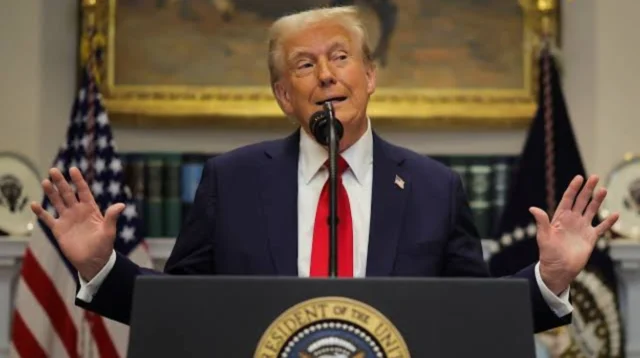
As the shutdown intensified, executive action was used to mitigate its immediate impact. These measures aimed to stabilize operations but also highlighted the limitations of relying on short-term solutions in a structurally complex system.
The intervention provided relief but did not resolve the underlying governance issues.
Temporary relief through executive action
Orders to ensure employee compensation helped maintain workforce stability. This reduced immediate operational risks and signaled recognition of the crisis at the highest level.
However, these measures were temporary and did not restore long-term planning certainty.
Structural limits of executive solutions
Executive actions cannot replace legislative funding processes. Agencies continued to face uncertainty in budgeting and operations, limiting their ability to plan effectively.
This reliance on temporary fixes raises questions about long-term governance stability in critical security sectors.
The 2025 context and cumulative pressure
The impact of the 2026 shutdown was amplified by the conditions of the previous year. Throughout 2025, homeland security institutions had already been operating under increasing pressure due to political divisions and rising operational demands.
This context reduced the system’s ability to absorb disruption, making the shutdown more consequential.
Pre-existing institutional strain
Security agencies entered 2026 with limited resilience due to prior pressures. Budget debates and policy conflicts had already strained institutional capacity, making the system more vulnerable to disruption.
Erosion of workforce confidence
Repeated uncertainty affects employee confidence over time. Workers in critical roles may begin to question institutional reliability, which can impact retention and performance.
This erosion of confidence is gradual but significant, affecting long-term operational capacity.
Public trust and the perception of security
The Homeland Security shutdown also had a broader impact on public perception. Visible disruptions brought attention to the fragility of systems that are expected to function reliably at all times.
Public confidence is a critical component of national security, and any perceived instability can have lasting effects.
Visibility of disruption
Airport delays and public reports of affected agencies made the shutdown highly visible. This visibility amplified concerns about security, even when core functions continued.
Confidence as a strategic asset
Trust in security institutions is essential for stability. When confidence weakens, it can affect public cooperation and overall resilience.
The shutdown highlighted how perception and performance are closely linked in maintaining national security.
A test of institutional resilience
The Homeland Security shutdown ultimately demonstrated that national security depends as much on governance as it does on operational capability. It revealed how quickly institutional stability can be tested when political processes falter, and how interconnected systems magnify the effects of disruption.
The more enduring question is whether such events will continue to be treated as temporary political tools or whether they will force a reconsideration of how critical security functions are protected from routine deadlock.