Menu

On the west bank of the Danube River, in a vast park, was a conference facility where the speeches and meetings were held. The location had English-language posters with catchphrases like \"Let's drain the swamp!\" and \"We win, they lose\" that would have fit in well at a Trump rally. One or more attendees donned a shirt that proclaimed Orb\u00e1n and Trump to be the \"saviors of the world\" and included their faces. <\/p>\n\n\n\n
In conclusion, the email said, \"We look forward to having you attend future events when and if your organization becomes significantly less woke.\" Similar rejections were sent to a number of other independent news organizations. The event featured speeches by three Republican members of Congress as well as video greetings from well-known Republicans including Bannon, Arizona Senate candidate Kari Lake, and Trump's former White House chief of staff Mark Meadows.<\/p>\n","post_title":"American conservatives embrace Hungary's authoritarian leader at Budapest conference","post_excerpt":"","post_status":"publish","comment_status":"closed","ping_status":"closed","post_password":"","post_name":"american-conservatives-embrace-hungarys-authoritarian-leader-at-budapest-conference","to_ping":"","pinged":"","post_modified":"2025-02-02 08:34:27","post_modified_gmt":"2025-02-02 08:34:27","post_content_filtered":"","post_parent":0,"guid":"https:\/\/dctransparency.com\/?p=7004","menu_order":0,"post_type":"post","post_mime_type":"","comment_count":"0","filter":"raw"}],"next":false,"prev":true,"total_page":60},"paged":1,"column_class":"jeg_col_2o3","class":"epic_block_3"};
On the west bank of the Danube River, in a vast park, was a conference facility where the speeches and meetings were held. The location had English-language posters with catchphrases like \"Let's drain the swamp!\" and \"We win, they lose\" that would have fit in well at a Trump rally. One or more attendees donned a shirt that proclaimed Orb\u00e1n and Trump to be the \"saviors of the world\" and included their faces. <\/p>\n\n\n\n
In conclusion, the email said, \"We look forward to having you attend future events when and if your organization becomes significantly less woke.\" Similar rejections were sent to a number of other independent news organizations. The event featured speeches by three Republican members of Congress as well as video greetings from well-known Republicans including Bannon, Arizona Senate candidate Kari Lake, and Trump's former White House chief of staff Mark Meadows.<\/p>\n","post_title":"American conservatives embrace Hungary's authoritarian leader at Budapest conference","post_excerpt":"","post_status":"publish","comment_status":"closed","ping_status":"closed","post_password":"","post_name":"american-conservatives-embrace-hungarys-authoritarian-leader-at-budapest-conference","to_ping":"","pinged":"","post_modified":"2025-02-02 08:34:27","post_modified_gmt":"2025-02-02 08:34:27","post_content_filtered":"","post_parent":0,"guid":"https:\/\/dctransparency.com\/?p=7004","menu_order":0,"post_type":"post","post_mime_type":"","comment_count":"0","filter":"raw"}],"next":false,"prev":true,"total_page":60},"paged":1,"column_class":"jeg_col_2o3","class":"epic_block_3"};
\nThe prime minister has also promoted a Christian nationalist view of Hungarian society, passing laws restricting transgender rights and adoption by same-sex couples, redefining marriage in the constitution to only cover unions between a man and a woman, and banning materials related to LGBTQ issues in schools.<\/a> Those are policies that some Trump allies would love to see him adopt if he returns to the White House next year. Trump himself has previously called same-sex marriage settled law.Orb\u00e1n\u2019s policy platform \u201cshows you what the recipe is for maintaining your national identity in a conservative way,\u201d Pappin said in an interview. \u201cConservative politicians in America had this negative mindset toward the government. They need to think about how to use government,\u201d as Orb\u00e1n has done. <\/p>\n\n\n\n On the west bank of the Danube River, in a vast park, was a conference facility where the speeches and meetings were held. The location had English-language posters with catchphrases like \"Let's drain the swamp!\" and \"We win, they lose\" that would have fit in well at a Trump rally. One or more attendees donned a shirt that proclaimed Orb\u00e1n and Trump to be the \"saviors of the world\" and included their faces. <\/p>\n\n\n\n In conclusion, the email said, \"We look forward to having you attend future events when and if your organization becomes significantly less woke.\" Similar rejections were sent to a number of other independent news organizations. The event featured speeches by three Republican members of Congress as well as video greetings from well-known Republicans including Bannon, Arizona Senate candidate Kari Lake, and Trump's former White House chief of staff Mark Meadows.<\/p>\n","post_title":"American conservatives embrace Hungary's authoritarian leader at Budapest conference","post_excerpt":"","post_status":"publish","comment_status":"closed","ping_status":"closed","post_password":"","post_name":"american-conservatives-embrace-hungarys-authoritarian-leader-at-budapest-conference","to_ping":"","pinged":"","post_modified":"2025-02-02 08:34:27","post_modified_gmt":"2025-02-02 08:34:27","post_content_filtered":"","post_parent":0,"guid":"https:\/\/dctransparency.com\/?p=7004","menu_order":0,"post_type":"post","post_mime_type":"","comment_count":"0","filter":"raw"}],"next":false,"prev":true,"total_page":60},"paged":1,"column_class":"jeg_col_2o3","class":"epic_block_3"};
The prime minister has also promoted a Christian nationalist view of Hungarian society, passing laws restricting transgender rights and adoption by same-sex couples, redefining marriage in the constitution to only cover unions between a man and a woman, and banning materials related to LGBTQ issues in schools.<\/a> Those are policies that some Trump allies would love to see him adopt if he returns to the White House next year. Trump himself has previously called same-sex marriage settled law.Orb\u00e1n\u2019s policy platform \u201cshows you what the recipe is for maintaining your national identity in a conservative way,\u201d Pappin said in an interview. \u201cConservative politicians in America had this negative mindset toward the government. They need to think about how to use government,\u201d as Orb\u00e1n has done. <\/p>\n\n\n\n On the west bank of the Danube River, in a vast park, was a conference facility where the speeches and meetings were held. The location had English-language posters with catchphrases like \"Let's drain the swamp!\" and \"We win, they lose\" that would have fit in well at a Trump rally. One or more attendees donned a shirt that proclaimed Orb\u00e1n and Trump to be the \"saviors of the world\" and included their faces. <\/p>\n\n\n\n In conclusion, the email said, \"We look forward to having you attend future events when and if your organization becomes significantly less woke.\" Similar rejections were sent to a number of other independent news organizations. The event featured speeches by three Republican members of Congress as well as video greetings from well-known Republicans including Bannon, Arizona Senate candidate Kari Lake, and Trump's former White House chief of staff Mark Meadows.<\/p>\n","post_title":"American conservatives embrace Hungary's authoritarian leader at Budapest conference","post_excerpt":"","post_status":"publish","comment_status":"closed","ping_status":"closed","post_password":"","post_name":"american-conservatives-embrace-hungarys-authoritarian-leader-at-budapest-conference","to_ping":"","pinged":"","post_modified":"2025-02-02 08:34:27","post_modified_gmt":"2025-02-02 08:34:27","post_content_filtered":"","post_parent":0,"guid":"https:\/\/dctransparency.com\/?p=7004","menu_order":0,"post_type":"post","post_mime_type":"","comment_count":"0","filter":"raw"}],"next":false,"prev":true,"total_page":60},"paged":1,"column_class":"jeg_col_2o3","class":"epic_block_3"};
Critics and officials from the European Union claim that in his 14 years in office, Orb\u00e1n has turned Hungary into a testing ground for conservative policies and undermined protections for civil society and democratic rights. By removing judges, altering election laws to his party's advantage, suppressing NGOs, and installing supporters to important positions, Orb\u00e1n has consolidated his hold on power. In 2015, during the height of the migrant crisis, his government enacted tougher immigration laws and constructed a barrier along the nation's southern border. It reduced room for opposition by strengthening its hold over official media. <\/p>\n\n\n\n The prime minister has also promoted a Christian nationalist view of Hungarian society, passing laws restricting transgender rights and adoption by same-sex couples, redefining marriage in the constitution to only cover unions between a man and a woman, and banning materials related to LGBTQ issues in schools.<\/a> Those are policies that some Trump allies would love to see him adopt if he returns to the White House next year. Trump himself has previously called same-sex marriage settled law.Orb\u00e1n\u2019s policy platform \u201cshows you what the recipe is for maintaining your national identity in a conservative way,\u201d Pappin said in an interview. \u201cConservative politicians in America had this negative mindset toward the government. They need to think about how to use government,\u201d as Orb\u00e1n has done. <\/p>\n\n\n\n On the west bank of the Danube River, in a vast park, was a conference facility where the speeches and meetings were held. The location had English-language posters with catchphrases like \"Let's drain the swamp!\" and \"We win, they lose\" that would have fit in well at a Trump rally. One or more attendees donned a shirt that proclaimed Orb\u00e1n and Trump to be the \"saviors of the world\" and included their faces. <\/p>\n\n\n\n In conclusion, the email said, \"We look forward to having you attend future events when and if your organization becomes significantly less woke.\" Similar rejections were sent to a number of other independent news organizations. The event featured speeches by three Republican members of Congress as well as video greetings from well-known Republicans including Bannon, Arizona Senate candidate Kari Lake, and Trump's former White House chief of staff Mark Meadows.<\/p>\n","post_title":"American conservatives embrace Hungary's authoritarian leader at Budapest conference","post_excerpt":"","post_status":"publish","comment_status":"closed","ping_status":"closed","post_password":"","post_name":"american-conservatives-embrace-hungarys-authoritarian-leader-at-budapest-conference","to_ping":"","pinged":"","post_modified":"2025-02-02 08:34:27","post_modified_gmt":"2025-02-02 08:34:27","post_content_filtered":"","post_parent":0,"guid":"https:\/\/dctransparency.com\/?p=7004","menu_order":0,"post_type":"post","post_mime_type":"","comment_count":"0","filter":"raw"}],"next":false,"prev":true,"total_page":60},"paged":1,"column_class":"jeg_col_2o3","class":"epic_block_3"};
Critics and officials from the European Union claim that in his 14 years in office, Orb\u00e1n has turned Hungary into a testing ground for conservative policies and undermined protections for civil society and democratic rights. By removing judges, altering election laws to his party's advantage, suppressing NGOs, and installing supporters to important positions, Orb\u00e1n has consolidated his hold on power. In 2015, during the height of the migrant crisis, his government enacted tougher immigration laws and constructed a barrier along the nation's southern border. It reduced room for opposition by strengthening its hold over official media. <\/p>\n\n\n\n The prime minister has also promoted a Christian nationalist view of Hungarian society, passing laws restricting transgender rights and adoption by same-sex couples, redefining marriage in the constitution to only cover unions between a man and a woman, and banning materials related to LGBTQ issues in schools.<\/a> Those are policies that some Trump allies would love to see him adopt if he returns to the White House next year. Trump himself has previously called same-sex marriage settled law.Orb\u00e1n\u2019s policy platform \u201cshows you what the recipe is for maintaining your national identity in a conservative way,\u201d Pappin said in an interview. \u201cConservative politicians in America had this negative mindset toward the government. They need to think about how to use government,\u201d as Orb\u00e1n has done. <\/p>\n\n\n\n On the west bank of the Danube River, in a vast park, was a conference facility where the speeches and meetings were held. The location had English-language posters with catchphrases like \"Let's drain the swamp!\" and \"We win, they lose\" that would have fit in well at a Trump rally. One or more attendees donned a shirt that proclaimed Orb\u00e1n and Trump to be the \"saviors of the world\" and included their faces. <\/p>\n\n\n\n In conclusion, the email said, \"We look forward to having you attend future events when and if your organization becomes significantly less woke.\" Similar rejections were sent to a number of other independent news organizations. The event featured speeches by three Republican members of Congress as well as video greetings from well-known Republicans including Bannon, Arizona Senate candidate Kari Lake, and Trump's former White House chief of staff Mark Meadows.<\/p>\n","post_title":"American conservatives embrace Hungary's authoritarian leader at Budapest conference","post_excerpt":"","post_status":"publish","comment_status":"closed","ping_status":"closed","post_password":"","post_name":"american-conservatives-embrace-hungarys-authoritarian-leader-at-budapest-conference","to_ping":"","pinged":"","post_modified":"2025-02-02 08:34:27","post_modified_gmt":"2025-02-02 08:34:27","post_content_filtered":"","post_parent":0,"guid":"https:\/\/dctransparency.com\/?p=7004","menu_order":0,"post_type":"post","post_mime_type":"","comment_count":"0","filter":"raw"}],"next":false,"prev":true,"total_page":60},"paged":1,"column_class":"jeg_col_2o3","class":"epic_block_3"};
A successful conservative governing agenda was sought after by American conservatives following Trump's 2020 election defeat, according to Gladden Pappin, a conservative political theorist who relocated from Dallas to Budapest and currently serves as head of the state-run research institute, the Hungarian Institute of International Affairs. \"American conservatives see a prime minister leading a government that truly carried out the campaign promises they made when they look to Hungary.\"<\/p>\n\n\n\n Critics and officials from the European Union claim that in his 14 years in office, Orb\u00e1n has turned Hungary into a testing ground for conservative policies and undermined protections for civil society and democratic rights. By removing judges, altering election laws to his party's advantage, suppressing NGOs, and installing supporters to important positions, Orb\u00e1n has consolidated his hold on power. In 2015, during the height of the migrant crisis, his government enacted tougher immigration laws and constructed a barrier along the nation's southern border. It reduced room for opposition by strengthening its hold over official media. <\/p>\n\n\n\n The prime minister has also promoted a Christian nationalist view of Hungarian society, passing laws restricting transgender rights and adoption by same-sex couples, redefining marriage in the constitution to only cover unions between a man and a woman, and banning materials related to LGBTQ issues in schools.<\/a> Those are policies that some Trump allies would love to see him adopt if he returns to the White House next year. Trump himself has previously called same-sex marriage settled law.Orb\u00e1n\u2019s policy platform \u201cshows you what the recipe is for maintaining your national identity in a conservative way,\u201d Pappin said in an interview. \u201cConservative politicians in America had this negative mindset toward the government. They need to think about how to use government,\u201d as Orb\u00e1n has done. <\/p>\n\n\n\n On the west bank of the Danube River, in a vast park, was a conference facility where the speeches and meetings were held. The location had English-language posters with catchphrases like \"Let's drain the swamp!\" and \"We win, they lose\" that would have fit in well at a Trump rally. One or more attendees donned a shirt that proclaimed Orb\u00e1n and Trump to be the \"saviors of the world\" and included their faces. <\/p>\n\n\n\n In conclusion, the email said, \"We look forward to having you attend future events when and if your organization becomes significantly less woke.\" Similar rejections were sent to a number of other independent news organizations. The event featured speeches by three Republican members of Congress as well as video greetings from well-known Republicans including Bannon, Arizona Senate candidate Kari Lake, and Trump's former White House chief of staff Mark Meadows.<\/p>\n","post_title":"American conservatives embrace Hungary's authoritarian leader at Budapest conference","post_excerpt":"","post_status":"publish","comment_status":"closed","ping_status":"closed","post_password":"","post_name":"american-conservatives-embrace-hungarys-authoritarian-leader-at-budapest-conference","to_ping":"","pinged":"","post_modified":"2025-02-02 08:34:27","post_modified_gmt":"2025-02-02 08:34:27","post_content_filtered":"","post_parent":0,"guid":"https:\/\/dctransparency.com\/?p=7004","menu_order":0,"post_type":"post","post_mime_type":"","comment_count":"0","filter":"raw"}],"next":false,"prev":true,"total_page":60},"paged":1,"column_class":"jeg_col_2o3","class":"epic_block_3"};
The Hungarian leader was invited by Trump to his Mar-a-Lago estate in March, and Trump addressed the gathering with a pre-recorded video message that touched on similar subjects. The former president praised \"so many patriots in Hungary who are proudly fighting on the frontlines of the battle to rescue Western civilization\" and referred to Orb\u00e1n as \"a great man.\" The two leaders' friendship is occurring at the same time as some of Trump's supporters are studying the Orb\u00e1n playbook in preparation for a possible White House comeback.Trump ally Steve Bannon referred to Orb\u00e1n as \"one of my heroes in the world today, in addition to President Trump\" and called Hungary \"an inspiration to the world\" in a private video message. <\/p>\n\n\n\n A successful conservative governing agenda was sought after by American conservatives following Trump's 2020 election defeat, according to Gladden Pappin, a conservative political theorist who relocated from Dallas to Budapest and currently serves as head of the state-run research institute, the Hungarian Institute of International Affairs. \"American conservatives see a prime minister leading a government that truly carried out the campaign promises they made when they look to Hungary.\"<\/p>\n\n\n\n Critics and officials from the European Union claim that in his 14 years in office, Orb\u00e1n has turned Hungary into a testing ground for conservative policies and undermined protections for civil society and democratic rights. By removing judges, altering election laws to his party's advantage, suppressing NGOs, and installing supporters to important positions, Orb\u00e1n has consolidated his hold on power. In 2015, during the height of the migrant crisis, his government enacted tougher immigration laws and constructed a barrier along the nation's southern border. It reduced room for opposition by strengthening its hold over official media. <\/p>\n\n\n\n The prime minister has also promoted a Christian nationalist view of Hungarian society, passing laws restricting transgender rights and adoption by same-sex couples, redefining marriage in the constitution to only cover unions between a man and a woman, and banning materials related to LGBTQ issues in schools.<\/a> Those are policies that some Trump allies would love to see him adopt if he returns to the White House next year. Trump himself has previously called same-sex marriage settled law.Orb\u00e1n\u2019s policy platform \u201cshows you what the recipe is for maintaining your national identity in a conservative way,\u201d Pappin said in an interview. \u201cConservative politicians in America had this negative mindset toward the government. They need to think about how to use government,\u201d as Orb\u00e1n has done. <\/p>\n\n\n\n On the west bank of the Danube River, in a vast park, was a conference facility where the speeches and meetings were held. The location had English-language posters with catchphrases like \"Let's drain the swamp!\" and \"We win, they lose\" that would have fit in well at a Trump rally. One or more attendees donned a shirt that proclaimed Orb\u00e1n and Trump to be the \"saviors of the world\" and included their faces. <\/p>\n\n\n\n In conclusion, the email said, \"We look forward to having you attend future events when and if your organization becomes significantly less woke.\" Similar rejections were sent to a number of other independent news organizations. The event featured speeches by three Republican members of Congress as well as video greetings from well-known Republicans including Bannon, Arizona Senate candidate Kari Lake, and Trump's former White House chief of staff Mark Meadows.<\/p>\n","post_title":"American conservatives embrace Hungary's authoritarian leader at Budapest conference","post_excerpt":"","post_status":"publish","comment_status":"closed","ping_status":"closed","post_password":"","post_name":"american-conservatives-embrace-hungarys-authoritarian-leader-at-budapest-conference","to_ping":"","pinged":"","post_modified":"2025-02-02 08:34:27","post_modified_gmt":"2025-02-02 08:34:27","post_content_filtered":"","post_parent":0,"guid":"https:\/\/dctransparency.com\/?p=7004","menu_order":0,"post_type":"post","post_mime_type":"","comment_count":"0","filter":"raw"}],"next":false,"prev":true,"total_page":60},"paged":1,"column_class":"jeg_col_2o3","class":"epic_block_3"};
The Hungarian leader was invited by Trump to his Mar-a-Lago estate in March, and Trump addressed the gathering with a pre-recorded video message that touched on similar subjects. The former president praised \"so many patriots in Hungary who are proudly fighting on the frontlines of the battle to rescue Western civilization\" and referred to Orb\u00e1n as \"a great man.\" The two leaders' friendship is occurring at the same time as some of Trump's supporters are studying the Orb\u00e1n playbook in preparation for a possible White House comeback.Trump ally Steve Bannon referred to Orb\u00e1n as \"one of my heroes in the world today, in addition to President Trump\" and called Hungary \"an inspiration to the world\" in a private video message. <\/p>\n\n\n\n A successful conservative governing agenda was sought after by American conservatives following Trump's 2020 election defeat, according to Gladden Pappin, a conservative political theorist who relocated from Dallas to Budapest and currently serves as head of the state-run research institute, the Hungarian Institute of International Affairs. \"American conservatives see a prime minister leading a government that truly carried out the campaign promises they made when they look to Hungary.\"<\/p>\n\n\n\n Critics and officials from the European Union claim that in his 14 years in office, Orb\u00e1n has turned Hungary into a testing ground for conservative policies and undermined protections for civil society and democratic rights. By removing judges, altering election laws to his party's advantage, suppressing NGOs, and installing supporters to important positions, Orb\u00e1n has consolidated his hold on power. In 2015, during the height of the migrant crisis, his government enacted tougher immigration laws and constructed a barrier along the nation's southern border. It reduced room for opposition by strengthening its hold over official media. <\/p>\n\n\n\n The prime minister has also promoted a Christian nationalist view of Hungarian society, passing laws restricting transgender rights and adoption by same-sex couples, redefining marriage in the constitution to only cover unions between a man and a woman, and banning materials related to LGBTQ issues in schools.<\/a> Those are policies that some Trump allies would love to see him adopt if he returns to the White House next year. Trump himself has previously called same-sex marriage settled law.Orb\u00e1n\u2019s policy platform \u201cshows you what the recipe is for maintaining your national identity in a conservative way,\u201d Pappin said in an interview. \u201cConservative politicians in America had this negative mindset toward the government. They need to think about how to use government,\u201d as Orb\u00e1n has done. <\/p>\n\n\n\n On the west bank of the Danube River, in a vast park, was a conference facility where the speeches and meetings were held. The location had English-language posters with catchphrases like \"Let's drain the swamp!\" and \"We win, they lose\" that would have fit in well at a Trump rally. One or more attendees donned a shirt that proclaimed Orb\u00e1n and Trump to be the \"saviors of the world\" and included their faces. <\/p>\n\n\n\n In conclusion, the email said, \"We look forward to having you attend future events when and if your organization becomes significantly less woke.\" Similar rejections were sent to a number of other independent news organizations. The event featured speeches by three Republican members of Congress as well as video greetings from well-known Republicans including Bannon, Arizona Senate candidate Kari Lake, and Trump's former White House chief of staff Mark Meadows.<\/p>\n","post_title":"American conservatives embrace Hungary's authoritarian leader at Budapest conference","post_excerpt":"","post_status":"publish","comment_status":"closed","ping_status":"closed","post_password":"","post_name":"american-conservatives-embrace-hungarys-authoritarian-leader-at-budapest-conference","to_ping":"","pinged":"","post_modified":"2025-02-02 08:34:27","post_modified_gmt":"2025-02-02 08:34:27","post_content_filtered":"","post_parent":0,"guid":"https:\/\/dctransparency.com\/?p=7004","menu_order":0,"post_type":"post","post_mime_type":"","comment_count":"0","filter":"raw"}],"next":false,"prev":true,"total_page":60},"paged":1,"column_class":"jeg_col_2o3","class":"epic_block_3"};
The increased support for Orb\u00e1n among the American right is a result of the millions of dollars his government has spent on US lobbying and the new relationships that have been formed between Hungarian and US conservative think groups. During his keynote address at last week's CPAC conference in Budapest, Orb\u00e1n expressed support for former President Donald Trump's reelection and characterized this year's elections in the US and the EU as aggressive. \"Restore greatness to America and Europe!\" Go Donald Trump! Orb\u00e1n started in English before continuing in Hungarian. Go, sovereigntists of Europe! Let's mount up, put on our armor, enter the combat zone, and start the election war.<\/p>\n\n\n\n The Hungarian leader was invited by Trump to his Mar-a-Lago estate in March, and Trump addressed the gathering with a pre-recorded video message that touched on similar subjects. The former president praised \"so many patriots in Hungary who are proudly fighting on the frontlines of the battle to rescue Western civilization\" and referred to Orb\u00e1n as \"a great man.\" The two leaders' friendship is occurring at the same time as some of Trump's supporters are studying the Orb\u00e1n playbook in preparation for a possible White House comeback.Trump ally Steve Bannon referred to Orb\u00e1n as \"one of my heroes in the world today, in addition to President Trump\" and called Hungary \"an inspiration to the world\" in a private video message. <\/p>\n\n\n\n A successful conservative governing agenda was sought after by American conservatives following Trump's 2020 election defeat, according to Gladden Pappin, a conservative political theorist who relocated from Dallas to Budapest and currently serves as head of the state-run research institute, the Hungarian Institute of International Affairs. \"American conservatives see a prime minister leading a government that truly carried out the campaign promises they made when they look to Hungary.\"<\/p>\n\n\n\n Critics and officials from the European Union claim that in his 14 years in office, Orb\u00e1n has turned Hungary into a testing ground for conservative policies and undermined protections for civil society and democratic rights. By removing judges, altering election laws to his party's advantage, suppressing NGOs, and installing supporters to important positions, Orb\u00e1n has consolidated his hold on power. In 2015, during the height of the migrant crisis, his government enacted tougher immigration laws and constructed a barrier along the nation's southern border. It reduced room for opposition by strengthening its hold over official media. <\/p>\n\n\n\n The prime minister has also promoted a Christian nationalist view of Hungarian society, passing laws restricting transgender rights and adoption by same-sex couples, redefining marriage in the constitution to only cover unions between a man and a woman, and banning materials related to LGBTQ issues in schools.<\/a> Those are policies that some Trump allies would love to see him adopt if he returns to the White House next year. Trump himself has previously called same-sex marriage settled law.Orb\u00e1n\u2019s policy platform \u201cshows you what the recipe is for maintaining your national identity in a conservative way,\u201d Pappin said in an interview. \u201cConservative politicians in America had this negative mindset toward the government. They need to think about how to use government,\u201d as Orb\u00e1n has done. <\/p>\n\n\n\n On the west bank of the Danube River, in a vast park, was a conference facility where the speeches and meetings were held. The location had English-language posters with catchphrases like \"Let's drain the swamp!\" and \"We win, they lose\" that would have fit in well at a Trump rally. One or more attendees donned a shirt that proclaimed Orb\u00e1n and Trump to be the \"saviors of the world\" and included their faces. <\/p>\n\n\n\n In conclusion, the email said, \"We look forward to having you attend future events when and if your organization becomes significantly less woke.\" Similar rejections were sent to a number of other independent news organizations. The event featured speeches by three Republican members of Congress as well as video greetings from well-known Republicans including Bannon, Arizona Senate candidate Kari Lake, and Trump's former White House chief of staff Mark Meadows.<\/p>\n","post_title":"American conservatives embrace Hungary's authoritarian leader at Budapest conference","post_excerpt":"","post_status":"publish","comment_status":"closed","ping_status":"closed","post_password":"","post_name":"american-conservatives-embrace-hungarys-authoritarian-leader-at-budapest-conference","to_ping":"","pinged":"","post_modified":"2025-02-02 08:34:27","post_modified_gmt":"2025-02-02 08:34:27","post_content_filtered":"","post_parent":0,"guid":"https:\/\/dctransparency.com\/?p=7004","menu_order":0,"post_type":"post","post_mime_type":"","comment_count":"0","filter":"raw"}],"next":false,"prev":true,"total_page":60},"paged":1,"column_class":"jeg_col_2o3","class":"epic_block_3"};
Despite what international observers have called an alarming backsliding of democratic rights, Prime Minister Viktor Orb\u00e1n's authoritarian government and small, central European nation have become an unlikely model for a potential Trump second term, as demonstrated by the visiting GOP dignitaries' praise for them. <\/p>\n\n\n\n The increased support for Orb\u00e1n among the American right is a result of the millions of dollars his government has spent on US lobbying and the new relationships that have been formed between Hungarian and US conservative think groups. During his keynote address at last week's CPAC conference in Budapest, Orb\u00e1n expressed support for former President Donald Trump's reelection and characterized this year's elections in the US and the EU as aggressive. \"Restore greatness to America and Europe!\" Go Donald Trump! Orb\u00e1n started in English before continuing in Hungarian. Go, sovereigntists of Europe! Let's mount up, put on our armor, enter the combat zone, and start the election war.<\/p>\n\n\n\n The Hungarian leader was invited by Trump to his Mar-a-Lago estate in March, and Trump addressed the gathering with a pre-recorded video message that touched on similar subjects. The former president praised \"so many patriots in Hungary who are proudly fighting on the frontlines of the battle to rescue Western civilization\" and referred to Orb\u00e1n as \"a great man.\" The two leaders' friendship is occurring at the same time as some of Trump's supporters are studying the Orb\u00e1n playbook in preparation for a possible White House comeback.Trump ally Steve Bannon referred to Orb\u00e1n as \"one of my heroes in the world today, in addition to President Trump\" and called Hungary \"an inspiration to the world\" in a private video message. <\/p>\n\n\n\n A successful conservative governing agenda was sought after by American conservatives following Trump's 2020 election defeat, according to Gladden Pappin, a conservative political theorist who relocated from Dallas to Budapest and currently serves as head of the state-run research institute, the Hungarian Institute of International Affairs. \"American conservatives see a prime minister leading a government that truly carried out the campaign promises they made when they look to Hungary.\"<\/p>\n\n\n\n Critics and officials from the European Union claim that in his 14 years in office, Orb\u00e1n has turned Hungary into a testing ground for conservative policies and undermined protections for civil society and democratic rights. By removing judges, altering election laws to his party's advantage, suppressing NGOs, and installing supporters to important positions, Orb\u00e1n has consolidated his hold on power. In 2015, during the height of the migrant crisis, his government enacted tougher immigration laws and constructed a barrier along the nation's southern border. It reduced room for opposition by strengthening its hold over official media. <\/p>\n\n\n\n The prime minister has also promoted a Christian nationalist view of Hungarian society, passing laws restricting transgender rights and adoption by same-sex couples, redefining marriage in the constitution to only cover unions between a man and a woman, and banning materials related to LGBTQ issues in schools.<\/a> Those are policies that some Trump allies would love to see him adopt if he returns to the White House next year. Trump himself has previously called same-sex marriage settled law.Orb\u00e1n\u2019s policy platform \u201cshows you what the recipe is for maintaining your national identity in a conservative way,\u201d Pappin said in an interview. \u201cConservative politicians in America had this negative mindset toward the government. They need to think about how to use government,\u201d as Orb\u00e1n has done. <\/p>\n\n\n\n On the west bank of the Danube River, in a vast park, was a conference facility where the speeches and meetings were held. The location had English-language posters with catchphrases like \"Let's drain the swamp!\" and \"We win, they lose\" that would have fit in well at a Trump rally. One or more attendees donned a shirt that proclaimed Orb\u00e1n and Trump to be the \"saviors of the world\" and included their faces. <\/p>\n\n\n\n In conclusion, the email said, \"We look forward to having you attend future events when and if your organization becomes significantly less woke.\" Similar rejections were sent to a number of other independent news organizations. The event featured speeches by three Republican members of Congress as well as video greetings from well-known Republicans including Bannon, Arizona Senate candidate Kari Lake, and Trump's former White House chief of staff Mark Meadows.<\/p>\n","post_title":"American conservatives embrace Hungary's authoritarian leader at Budapest conference","post_excerpt":"","post_status":"publish","comment_status":"closed","ping_status":"closed","post_password":"","post_name":"american-conservatives-embrace-hungarys-authoritarian-leader-at-budapest-conference","to_ping":"","pinged":"","post_modified":"2025-02-02 08:34:27","post_modified_gmt":"2025-02-02 08:34:27","post_content_filtered":"","post_parent":0,"guid":"https:\/\/dctransparency.com\/?p=7004","menu_order":0,"post_type":"post","post_mime_type":"","comment_count":"0","filter":"raw"}],"next":false,"prev":true,"total_page":60},"paged":1,"column_class":"jeg_col_2o3","class":"epic_block_3"};
Despite what international observers have called an alarming backsliding of democratic rights, Prime Minister Viktor Orb\u00e1n's authoritarian government and small, central European nation have become an unlikely model for a potential Trump second term, as demonstrated by the visiting GOP dignitaries' praise for them. <\/p>\n\n\n\n The increased support for Orb\u00e1n among the American right is a result of the millions of dollars his government has spent on US lobbying and the new relationships that have been formed between Hungarian and US conservative think groups. During his keynote address at last week's CPAC conference in Budapest, Orb\u00e1n expressed support for former President Donald Trump's reelection and characterized this year's elections in the US and the EU as aggressive. \"Restore greatness to America and Europe!\" Go Donald Trump! Orb\u00e1n started in English before continuing in Hungarian. Go, sovereigntists of Europe! Let's mount up, put on our armor, enter the combat zone, and start the election war.<\/p>\n\n\n\n The Hungarian leader was invited by Trump to his Mar-a-Lago estate in March, and Trump addressed the gathering with a pre-recorded video message that touched on similar subjects. The former president praised \"so many patriots in Hungary who are proudly fighting on the frontlines of the battle to rescue Western civilization\" and referred to Orb\u00e1n as \"a great man.\" The two leaders' friendship is occurring at the same time as some of Trump's supporters are studying the Orb\u00e1n playbook in preparation for a possible White House comeback.Trump ally Steve Bannon referred to Orb\u00e1n as \"one of my heroes in the world today, in addition to President Trump\" and called Hungary \"an inspiration to the world\" in a private video message. <\/p>\n\n\n\n A successful conservative governing agenda was sought after by American conservatives following Trump's 2020 election defeat, according to Gladden Pappin, a conservative political theorist who relocated from Dallas to Budapest and currently serves as head of the state-run research institute, the Hungarian Institute of International Affairs. \"American conservatives see a prime minister leading a government that truly carried out the campaign promises they made when they look to Hungary.\"<\/p>\n\n\n\n Critics and officials from the European Union claim that in his 14 years in office, Orb\u00e1n has turned Hungary into a testing ground for conservative policies and undermined protections for civil society and democratic rights. By removing judges, altering election laws to his party's advantage, suppressing NGOs, and installing supporters to important positions, Orb\u00e1n has consolidated his hold on power. In 2015, during the height of the migrant crisis, his government enacted tougher immigration laws and constructed a barrier along the nation's southern border. It reduced room for opposition by strengthening its hold over official media. <\/p>\n\n\n\n The prime minister has also promoted a Christian nationalist view of Hungarian society, passing laws restricting transgender rights and adoption by same-sex couples, redefining marriage in the constitution to only cover unions between a man and a woman, and banning materials related to LGBTQ issues in schools.<\/a> Those are policies that some Trump allies would love to see him adopt if he returns to the White House next year. Trump himself has previously called same-sex marriage settled law.Orb\u00e1n\u2019s policy platform \u201cshows you what the recipe is for maintaining your national identity in a conservative way,\u201d Pappin said in an interview. \u201cConservative politicians in America had this negative mindset toward the government. They need to think about how to use government,\u201d as Orb\u00e1n has done. <\/p>\n\n\n\n On the west bank of the Danube River, in a vast park, was a conference facility where the speeches and meetings were held. The location had English-language posters with catchphrases like \"Let's drain the swamp!\" and \"We win, they lose\" that would have fit in well at a Trump rally. One or more attendees donned a shirt that proclaimed Orb\u00e1n and Trump to be the \"saviors of the world\" and included their faces. <\/p>\n\n\n\n In conclusion, the email said, \"We look forward to having you attend future events when and if your organization becomes significantly less woke.\" Similar rejections were sent to a number of other independent news organizations. The event featured speeches by three Republican members of Congress as well as video greetings from well-known Republicans including Bannon, Arizona Senate candidate Kari Lake, and Trump's former White House chief of staff Mark Meadows.<\/p>\n","post_title":"American conservatives embrace Hungary's authoritarian leader at Budapest conference","post_excerpt":"","post_status":"publish","comment_status":"closed","ping_status":"closed","post_password":"","post_name":"american-conservatives-embrace-hungarys-authoritarian-leader-at-budapest-conference","to_ping":"","pinged":"","post_modified":"2025-02-02 08:34:27","post_modified_gmt":"2025-02-02 08:34:27","post_content_filtered":"","post_parent":0,"guid":"https:\/\/dctransparency.com\/?p=7004","menu_order":0,"post_type":"post","post_mime_type":"","comment_count":"0","filter":"raw"}],"next":false,"prev":true,"total_page":60},"paged":1,"column_class":"jeg_col_2o3","class":"epic_block_3"};
In a conference center emblazoned with catch phrases such as \"Let's drain the swamp,\" Republican after Republican spoke for strict immigration laws, restrictions on the rights of the LGBTQ community, and an opposition to \"woke ideology.\" The scenario may have been any recent GOP meeting, but it was really the third annual conference of the Conservative Political Action Conference in Hungary, some 4,000 miles distant from the US.<\/p>\n\n\n\n Despite what international observers have called an alarming backsliding of democratic rights, Prime Minister Viktor Orb\u00e1n's authoritarian government and small, central European nation have become an unlikely model for a potential Trump second term, as demonstrated by the visiting GOP dignitaries' praise for them. <\/p>\n\n\n\n The increased support for Orb\u00e1n among the American right is a result of the millions of dollars his government has spent on US lobbying and the new relationships that have been formed between Hungarian and US conservative think groups. During his keynote address at last week's CPAC conference in Budapest, Orb\u00e1n expressed support for former President Donald Trump's reelection and characterized this year's elections in the US and the EU as aggressive. \"Restore greatness to America and Europe!\" Go Donald Trump! Orb\u00e1n started in English before continuing in Hungarian. Go, sovereigntists of Europe! Let's mount up, put on our armor, enter the combat zone, and start the election war.<\/p>\n\n\n\n The Hungarian leader was invited by Trump to his Mar-a-Lago estate in March, and Trump addressed the gathering with a pre-recorded video message that touched on similar subjects. The former president praised \"so many patriots in Hungary who are proudly fighting on the frontlines of the battle to rescue Western civilization\" and referred to Orb\u00e1n as \"a great man.\" The two leaders' friendship is occurring at the same time as some of Trump's supporters are studying the Orb\u00e1n playbook in preparation for a possible White House comeback.Trump ally Steve Bannon referred to Orb\u00e1n as \"one of my heroes in the world today, in addition to President Trump\" and called Hungary \"an inspiration to the world\" in a private video message. <\/p>\n\n\n\n A successful conservative governing agenda was sought after by American conservatives following Trump's 2020 election defeat, according to Gladden Pappin, a conservative political theorist who relocated from Dallas to Budapest and currently serves as head of the state-run research institute, the Hungarian Institute of International Affairs. \"American conservatives see a prime minister leading a government that truly carried out the campaign promises they made when they look to Hungary.\"<\/p>\n\n\n\n Critics and officials from the European Union claim that in his 14 years in office, Orb\u00e1n has turned Hungary into a testing ground for conservative policies and undermined protections for civil society and democratic rights. By removing judges, altering election laws to his party's advantage, suppressing NGOs, and installing supporters to important positions, Orb\u00e1n has consolidated his hold on power. In 2015, during the height of the migrant crisis, his government enacted tougher immigration laws and constructed a barrier along the nation's southern border. It reduced room for opposition by strengthening its hold over official media. <\/p>\n\n\n\n The prime minister has also promoted a Christian nationalist view of Hungarian society, passing laws restricting transgender rights and adoption by same-sex couples, redefining marriage in the constitution to only cover unions between a man and a woman, and banning materials related to LGBTQ issues in schools.<\/a> Those are policies that some Trump allies would love to see him adopt if he returns to the White House next year. Trump himself has previously called same-sex marriage settled law.Orb\u00e1n\u2019s policy platform \u201cshows you what the recipe is for maintaining your national identity in a conservative way,\u201d Pappin said in an interview. \u201cConservative politicians in America had this negative mindset toward the government. They need to think about how to use government,\u201d as Orb\u00e1n has done. <\/p>\n\n\n\n On the west bank of the Danube River, in a vast park, was a conference facility where the speeches and meetings were held. The location had English-language posters with catchphrases like \"Let's drain the swamp!\" and \"We win, they lose\" that would have fit in well at a Trump rally. One or more attendees donned a shirt that proclaimed Orb\u00e1n and Trump to be the \"saviors of the world\" and included their faces. <\/p>\n\n\n\n In conclusion, the email said, \"We look forward to having you attend future events when and if your organization becomes significantly less woke.\" Similar rejections were sent to a number of other independent news organizations. The event featured speeches by three Republican members of Congress as well as video greetings from well-known Republicans including Bannon, Arizona Senate candidate Kari Lake, and Trump's former White House chief of staff Mark Meadows.<\/p>\n","post_title":"American conservatives embrace Hungary's authoritarian leader at Budapest conference","post_excerpt":"","post_status":"publish","comment_status":"closed","ping_status":"closed","post_password":"","post_name":"american-conservatives-embrace-hungarys-authoritarian-leader-at-budapest-conference","to_ping":"","pinged":"","post_modified":"2025-02-02 08:34:27","post_modified_gmt":"2025-02-02 08:34:27","post_content_filtered":"","post_parent":0,"guid":"https:\/\/dctransparency.com\/?p=7004","menu_order":0,"post_type":"post","post_mime_type":"","comment_count":"0","filter":"raw"}],"next":false,"prev":true,"total_page":60},"paged":1,"column_class":"jeg_col_2o3","class":"epic_block_3"};
The biggest agribusiness trade associations are on the focal point of policymakers. Just last week, over 20 agriculture ministers sent a letter together, warning that there could be \"serious disruptions in all commodity supply chains\" to Europe if the deforestation law isn't made simpler by cutting \"red tape\" and reducing \"administrative burden.\"<\/p>\n","post_title":"EU's Green Retreat: A Win for Far Right, Disaster for Rest","post_excerpt":"","post_status":"publish","comment_status":"closed","ping_status":"closed","post_password":"","post_name":"eus-green-retreat-a-win-for-far-right-disaster-for-rest","to_ping":"","pinged":"","post_modified":"2025-02-02 08:34:27","post_modified_gmt":"2025-02-02 08:34:27","post_content_filtered":"","post_parent":0,"guid":"https:\/\/dctransparency.com\/?p=7007","menu_order":0,"post_type":"post","post_mime_type":"","comment_count":"0","filter":"raw"},{"ID":7004,"post_author":"7","post_date":"2024-05-06 19:42:50","post_date_gmt":"2024-05-06 19:42:50","post_content":"\n In a conference center emblazoned with catch phrases such as \"Let's drain the swamp,\" Republican after Republican spoke for strict immigration laws, restrictions on the rights of the LGBTQ community, and an opposition to \"woke ideology.\" The scenario may have been any recent GOP meeting, but it was really the third annual conference of the Conservative Political Action Conference in Hungary, some 4,000 miles distant from the US.<\/p>\n\n\n\n Despite what international observers have called an alarming backsliding of democratic rights, Prime Minister Viktor Orb\u00e1n's authoritarian government and small, central European nation have become an unlikely model for a potential Trump second term, as demonstrated by the visiting GOP dignitaries' praise for them. <\/p>\n\n\n\n The increased support for Orb\u00e1n among the American right is a result of the millions of dollars his government has spent on US lobbying and the new relationships that have been formed between Hungarian and US conservative think groups. During his keynote address at last week's CPAC conference in Budapest, Orb\u00e1n expressed support for former President Donald Trump's reelection and characterized this year's elections in the US and the EU as aggressive. \"Restore greatness to America and Europe!\" Go Donald Trump! Orb\u00e1n started in English before continuing in Hungarian. Go, sovereigntists of Europe! Let's mount up, put on our armor, enter the combat zone, and start the election war.<\/p>\n\n\n\n The Hungarian leader was invited by Trump to his Mar-a-Lago estate in March, and Trump addressed the gathering with a pre-recorded video message that touched on similar subjects. The former president praised \"so many patriots in Hungary who are proudly fighting on the frontlines of the battle to rescue Western civilization\" and referred to Orb\u00e1n as \"a great man.\" The two leaders' friendship is occurring at the same time as some of Trump's supporters are studying the Orb\u00e1n playbook in preparation for a possible White House comeback.Trump ally Steve Bannon referred to Orb\u00e1n as \"one of my heroes in the world today, in addition to President Trump\" and called Hungary \"an inspiration to the world\" in a private video message. <\/p>\n\n\n\n A successful conservative governing agenda was sought after by American conservatives following Trump's 2020 election defeat, according to Gladden Pappin, a conservative political theorist who relocated from Dallas to Budapest and currently serves as head of the state-run research institute, the Hungarian Institute of International Affairs. \"American conservatives see a prime minister leading a government that truly carried out the campaign promises they made when they look to Hungary.\"<\/p>\n\n\n\n Critics and officials from the European Union claim that in his 14 years in office, Orb\u00e1n has turned Hungary into a testing ground for conservative policies and undermined protections for civil society and democratic rights. By removing judges, altering election laws to his party's advantage, suppressing NGOs, and installing supporters to important positions, Orb\u00e1n has consolidated his hold on power. In 2015, during the height of the migrant crisis, his government enacted tougher immigration laws and constructed a barrier along the nation's southern border. It reduced room for opposition by strengthening its hold over official media. <\/p>\n\n\n\n The prime minister has also promoted a Christian nationalist view of Hungarian society, passing laws restricting transgender rights and adoption by same-sex couples, redefining marriage in the constitution to only cover unions between a man and a woman, and banning materials related to LGBTQ issues in schools.<\/a> Those are policies that some Trump allies would love to see him adopt if he returns to the White House next year. Trump himself has previously called same-sex marriage settled law.Orb\u00e1n\u2019s policy platform \u201cshows you what the recipe is for maintaining your national identity in a conservative way,\u201d Pappin said in an interview. \u201cConservative politicians in America had this negative mindset toward the government. They need to think about how to use government,\u201d as Orb\u00e1n has done. <\/p>\n\n\n\n On the west bank of the Danube River, in a vast park, was a conference facility where the speeches and meetings were held. The location had English-language posters with catchphrases like \"Let's drain the swamp!\" and \"We win, they lose\" that would have fit in well at a Trump rally. One or more attendees donned a shirt that proclaimed Orb\u00e1n and Trump to be the \"saviors of the world\" and included their faces. <\/p>\n\n\n\n In conclusion, the email said, \"We look forward to having you attend future events when and if your organization becomes significantly less woke.\" Similar rejections were sent to a number of other independent news organizations. The event featured speeches by three Republican members of Congress as well as video greetings from well-known Republicans including Bannon, Arizona Senate candidate Kari Lake, and Trump's former White House chief of staff Mark Meadows.<\/p>\n","post_title":"American conservatives embrace Hungary's authoritarian leader at Budapest conference","post_excerpt":"","post_status":"publish","comment_status":"closed","ping_status":"closed","post_password":"","post_name":"american-conservatives-embrace-hungarys-authoritarian-leader-at-budapest-conference","to_ping":"","pinged":"","post_modified":"2025-02-02 08:34:27","post_modified_gmt":"2025-02-02 08:34:27","post_content_filtered":"","post_parent":0,"guid":"https:\/\/dctransparency.com\/?p=7004","menu_order":0,"post_type":"post","post_mime_type":"","comment_count":"0","filter":"raw"}],"next":false,"prev":true,"total_page":60},"paged":1,"column_class":"jeg_col_2o3","class":"epic_block_3"};
The story behind the EU's move away from green policies is often about \"farmers with pitchforks.\" But farmers have had many different reasons for protesting, mainly focusing on three issues. First, they face a financial squeeze because their product prices are set low by retailers. Second, high input costs, fueled by commodity speculation around the Ukraine war, are eating into their profits. Third, farmers are worried that the trade deal between the EU and South America's Mercosur bloc will lead to more imports from countries with lower environmental and animal health standards.<\/p>\n\n\n\n The biggest agribusiness trade associations are on the focal point of policymakers. Just last week, over 20 agriculture ministers sent a letter together, warning that there could be \"serious disruptions in all commodity supply chains\" to Europe if the deforestation law isn't made simpler by cutting \"red tape\" and reducing \"administrative burden.\"<\/p>\n","post_title":"EU's Green Retreat: A Win for Far Right, Disaster for Rest","post_excerpt":"","post_status":"publish","comment_status":"closed","ping_status":"closed","post_password":"","post_name":"eus-green-retreat-a-win-for-far-right-disaster-for-rest","to_ping":"","pinged":"","post_modified":"2025-02-02 08:34:27","post_modified_gmt":"2025-02-02 08:34:27","post_content_filtered":"","post_parent":0,"guid":"https:\/\/dctransparency.com\/?p=7007","menu_order":0,"post_type":"post","post_mime_type":"","comment_count":"0","filter":"raw"},{"ID":7004,"post_author":"7","post_date":"2024-05-06 19:42:50","post_date_gmt":"2024-05-06 19:42:50","post_content":"\n In a conference center emblazoned with catch phrases such as \"Let's drain the swamp,\" Republican after Republican spoke for strict immigration laws, restrictions on the rights of the LGBTQ community, and an opposition to \"woke ideology.\" The scenario may have been any recent GOP meeting, but it was really the third annual conference of the Conservative Political Action Conference in Hungary, some 4,000 miles distant from the US.<\/p>\n\n\n\n Despite what international observers have called an alarming backsliding of democratic rights, Prime Minister Viktor Orb\u00e1n's authoritarian government and small, central European nation have become an unlikely model for a potential Trump second term, as demonstrated by the visiting GOP dignitaries' praise for them. <\/p>\n\n\n\n The increased support for Orb\u00e1n among the American right is a result of the millions of dollars his government has spent on US lobbying and the new relationships that have been formed between Hungarian and US conservative think groups. During his keynote address at last week's CPAC conference in Budapest, Orb\u00e1n expressed support for former President Donald Trump's reelection and characterized this year's elections in the US and the EU as aggressive. \"Restore greatness to America and Europe!\" Go Donald Trump! Orb\u00e1n started in English before continuing in Hungarian. Go, sovereigntists of Europe! Let's mount up, put on our armor, enter the combat zone, and start the election war.<\/p>\n\n\n\n The Hungarian leader was invited by Trump to his Mar-a-Lago estate in March, and Trump addressed the gathering with a pre-recorded video message that touched on similar subjects. The former president praised \"so many patriots in Hungary who are proudly fighting on the frontlines of the battle to rescue Western civilization\" and referred to Orb\u00e1n as \"a great man.\" The two leaders' friendship is occurring at the same time as some of Trump's supporters are studying the Orb\u00e1n playbook in preparation for a possible White House comeback.Trump ally Steve Bannon referred to Orb\u00e1n as \"one of my heroes in the world today, in addition to President Trump\" and called Hungary \"an inspiration to the world\" in a private video message. <\/p>\n\n\n\n A successful conservative governing agenda was sought after by American conservatives following Trump's 2020 election defeat, according to Gladden Pappin, a conservative political theorist who relocated from Dallas to Budapest and currently serves as head of the state-run research institute, the Hungarian Institute of International Affairs. \"American conservatives see a prime minister leading a government that truly carried out the campaign promises they made when they look to Hungary.\"<\/p>\n\n\n\n Critics and officials from the European Union claim that in his 14 years in office, Orb\u00e1n has turned Hungary into a testing ground for conservative policies and undermined protections for civil society and democratic rights. By removing judges, altering election laws to his party's advantage, suppressing NGOs, and installing supporters to important positions, Orb\u00e1n has consolidated his hold on power. In 2015, during the height of the migrant crisis, his government enacted tougher immigration laws and constructed a barrier along the nation's southern border. It reduced room for opposition by strengthening its hold over official media. <\/p>\n\n\n\n The prime minister has also promoted a Christian nationalist view of Hungarian society, passing laws restricting transgender rights and adoption by same-sex couples, redefining marriage in the constitution to only cover unions between a man and a woman, and banning materials related to LGBTQ issues in schools.<\/a> Those are policies that some Trump allies would love to see him adopt if he returns to the White House next year. Trump himself has previously called same-sex marriage settled law.Orb\u00e1n\u2019s policy platform \u201cshows you what the recipe is for maintaining your national identity in a conservative way,\u201d Pappin said in an interview. \u201cConservative politicians in America had this negative mindset toward the government. They need to think about how to use government,\u201d as Orb\u00e1n has done. <\/p>\n\n\n\n On the west bank of the Danube River, in a vast park, was a conference facility where the speeches and meetings were held. The location had English-language posters with catchphrases like \"Let's drain the swamp!\" and \"We win, they lose\" that would have fit in well at a Trump rally. One or more attendees donned a shirt that proclaimed Orb\u00e1n and Trump to be the \"saviors of the world\" and included their faces. <\/p>\n\n\n\n In conclusion, the email said, \"We look forward to having you attend future events when and if your organization becomes significantly less woke.\" Similar rejections were sent to a number of other independent news organizations. The event featured speeches by three Republican members of Congress as well as video greetings from well-known Republicans including Bannon, Arizona Senate candidate Kari Lake, and Trump's former White House chief of staff Mark Meadows.<\/p>\n","post_title":"American conservatives embrace Hungary's authoritarian leader at Budapest conference","post_excerpt":"","post_status":"publish","comment_status":"closed","ping_status":"closed","post_password":"","post_name":"american-conservatives-embrace-hungarys-authoritarian-leader-at-budapest-conference","to_ping":"","pinged":"","post_modified":"2025-02-02 08:34:27","post_modified_gmt":"2025-02-02 08:34:27","post_content_filtered":"","post_parent":0,"guid":"https:\/\/dctransparency.com\/?p=7004","menu_order":0,"post_type":"post","post_mime_type":"","comment_count":"0","filter":"raw"}],"next":false,"prev":true,"total_page":60},"paged":1,"column_class":"jeg_col_2o3","class":"epic_block_3"};
If the European Commission scraps this important measure, what will remain of its green deal by 2030? Not much, except for emissions cuts. Julia Christian from the forest conservation group Fern says that if President von der Leyen gives in, it would wipe out her biggest achievement in land use from the past five years. She warns that \"almost nothing is left of the green deal.\"<\/p>\n\n\n\n The story behind the EU's move away from green policies is often about \"farmers with pitchforks.\" But farmers have had many different reasons for protesting, mainly focusing on three issues. First, they face a financial squeeze because their product prices are set low by retailers. Second, high input costs, fueled by commodity speculation around the Ukraine war, are eating into their profits. Third, farmers are worried that the trade deal between the EU and South America's Mercosur bloc will lead to more imports from countries with lower environmental and animal health standards.<\/p>\n\n\n\n The biggest agribusiness trade associations are on the focal point of policymakers. Just last week, over 20 agriculture ministers sent a letter together, warning that there could be \"serious disruptions in all commodity supply chains\" to Europe if the deforestation law isn't made simpler by cutting \"red tape\" and reducing \"administrative burden.\"<\/p>\n","post_title":"EU's Green Retreat: A Win for Far Right, Disaster for Rest","post_excerpt":"","post_status":"publish","comment_status":"closed","ping_status":"closed","post_password":"","post_name":"eus-green-retreat-a-win-for-far-right-disaster-for-rest","to_ping":"","pinged":"","post_modified":"2025-02-02 08:34:27","post_modified_gmt":"2025-02-02 08:34:27","post_content_filtered":"","post_parent":0,"guid":"https:\/\/dctransparency.com\/?p=7007","menu_order":0,"post_type":"post","post_mime_type":"","comment_count":"0","filter":"raw"},{"ID":7004,"post_author":"7","post_date":"2024-05-06 19:42:50","post_date_gmt":"2024-05-06 19:42:50","post_content":"\n In a conference center emblazoned with catch phrases such as \"Let's drain the swamp,\" Republican after Republican spoke for strict immigration laws, restrictions on the rights of the LGBTQ community, and an opposition to \"woke ideology.\" The scenario may have been any recent GOP meeting, but it was really the third annual conference of the Conservative Political Action Conference in Hungary, some 4,000 miles distant from the US.<\/p>\n\n\n\n Despite what international observers have called an alarming backsliding of democratic rights, Prime Minister Viktor Orb\u00e1n's authoritarian government and small, central European nation have become an unlikely model for a potential Trump second term, as demonstrated by the visiting GOP dignitaries' praise for them. <\/p>\n\n\n\n The increased support for Orb\u00e1n among the American right is a result of the millions of dollars his government has spent on US lobbying and the new relationships that have been formed between Hungarian and US conservative think groups. During his keynote address at last week's CPAC conference in Budapest, Orb\u00e1n expressed support for former President Donald Trump's reelection and characterized this year's elections in the US and the EU as aggressive. \"Restore greatness to America and Europe!\" Go Donald Trump! Orb\u00e1n started in English before continuing in Hungarian. Go, sovereigntists of Europe! Let's mount up, put on our armor, enter the combat zone, and start the election war.<\/p>\n\n\n\n The Hungarian leader was invited by Trump to his Mar-a-Lago estate in March, and Trump addressed the gathering with a pre-recorded video message that touched on similar subjects. The former president praised \"so many patriots in Hungary who are proudly fighting on the frontlines of the battle to rescue Western civilization\" and referred to Orb\u00e1n as \"a great man.\" The two leaders' friendship is occurring at the same time as some of Trump's supporters are studying the Orb\u00e1n playbook in preparation for a possible White House comeback.Trump ally Steve Bannon referred to Orb\u00e1n as \"one of my heroes in the world today, in addition to President Trump\" and called Hungary \"an inspiration to the world\" in a private video message. <\/p>\n\n\n\n A successful conservative governing agenda was sought after by American conservatives following Trump's 2020 election defeat, according to Gladden Pappin, a conservative political theorist who relocated from Dallas to Budapest and currently serves as head of the state-run research institute, the Hungarian Institute of International Affairs. \"American conservatives see a prime minister leading a government that truly carried out the campaign promises they made when they look to Hungary.\"<\/p>\n\n\n\n Critics and officials from the European Union claim that in his 14 years in office, Orb\u00e1n has turned Hungary into a testing ground for conservative policies and undermined protections for civil society and democratic rights. By removing judges, altering election laws to his party's advantage, suppressing NGOs, and installing supporters to important positions, Orb\u00e1n has consolidated his hold on power. In 2015, during the height of the migrant crisis, his government enacted tougher immigration laws and constructed a barrier along the nation's southern border. It reduced room for opposition by strengthening its hold over official media. <\/p>\n\n\n\n The prime minister has also promoted a Christian nationalist view of Hungarian society, passing laws restricting transgender rights and adoption by same-sex couples, redefining marriage in the constitution to only cover unions between a man and a woman, and banning materials related to LGBTQ issues in schools.<\/a> Those are policies that some Trump allies would love to see him adopt if he returns to the White House next year. Trump himself has previously called same-sex marriage settled law.Orb\u00e1n\u2019s policy platform \u201cshows you what the recipe is for maintaining your national identity in a conservative way,\u201d Pappin said in an interview. \u201cConservative politicians in America had this negative mindset toward the government. They need to think about how to use government,\u201d as Orb\u00e1n has done. <\/p>\n\n\n\n On the west bank of the Danube River, in a vast park, was a conference facility where the speeches and meetings were held. The location had English-language posters with catchphrases like \"Let's drain the swamp!\" and \"We win, they lose\" that would have fit in well at a Trump rally. One or more attendees donned a shirt that proclaimed Orb\u00e1n and Trump to be the \"saviors of the world\" and included their faces. <\/p>\n\n\n\n In conclusion, the email said, \"We look forward to having you attend future events when and if your organization becomes significantly less woke.\" Similar rejections were sent to a number of other independent news organizations. The event featured speeches by three Republican members of Congress as well as video greetings from well-known Republicans including Bannon, Arizona Senate candidate Kari Lake, and Trump's former White House chief of staff Mark Meadows.<\/p>\n","post_title":"American conservatives embrace Hungary's authoritarian leader at Budapest conference","post_excerpt":"","post_status":"publish","comment_status":"closed","ping_status":"closed","post_password":"","post_name":"american-conservatives-embrace-hungarys-authoritarian-leader-at-budapest-conference","to_ping":"","pinged":"","post_modified":"2025-02-02 08:34:27","post_modified_gmt":"2025-02-02 08:34:27","post_content_filtered":"","post_parent":0,"guid":"https:\/\/dctransparency.com\/?p=7004","menu_order":0,"post_type":"post","post_mime_type":"","comment_count":"0","filter":"raw"}],"next":false,"prev":true,"total_page":60},"paged":1,"column_class":"jeg_col_2o3","class":"epic_block_3"};
However, the farmers that work on a small scale in the bloc should not be bound by those protection rules that apply in Amazon, according to Europe\u2019s agriculture ministers. If Europe makes exceptions to its deforestation law, it raises some tough questions. How can the EU ban products from other countries that contribute to deforestation while allowing similar practices within its own borders? Why should other countries respect Europe's rules on protecting forests if Europe itself doesn't follow them? And how can we protect our remaining old-growth forests from the same industries that are causing deforestation elsewhere?<\/p>\n\n\n\n If the European Commission scraps this important measure, what will remain of its green deal by 2030? Not much, except for emissions cuts. Julia Christian from the forest conservation group Fern says that if President von der Leyen gives in, it would wipe out her biggest achievement in land use from the past five years. She warns that \"almost nothing is left of the green deal.\"<\/p>\n\n\n\n The story behind the EU's move away from green policies is often about \"farmers with pitchforks.\" But farmers have had many different reasons for protesting, mainly focusing on three issues. First, they face a financial squeeze because their product prices are set low by retailers. Second, high input costs, fueled by commodity speculation around the Ukraine war, are eating into their profits. Third, farmers are worried that the trade deal between the EU and South America's Mercosur bloc will lead to more imports from countries with lower environmental and animal health standards.<\/p>\n\n\n\n The biggest agribusiness trade associations are on the focal point of policymakers. Just last week, over 20 agriculture ministers sent a letter together, warning that there could be \"serious disruptions in all commodity supply chains\" to Europe if the deforestation law isn't made simpler by cutting \"red tape\" and reducing \"administrative burden.\"<\/p>\n","post_title":"EU's Green Retreat: A Win for Far Right, Disaster for Rest","post_excerpt":"","post_status":"publish","comment_status":"closed","ping_status":"closed","post_password":"","post_name":"eus-green-retreat-a-win-for-far-right-disaster-for-rest","to_ping":"","pinged":"","post_modified":"2025-02-02 08:34:27","post_modified_gmt":"2025-02-02 08:34:27","post_content_filtered":"","post_parent":0,"guid":"https:\/\/dctransparency.com\/?p=7007","menu_order":0,"post_type":"post","post_mime_type":"","comment_count":"0","filter":"raw"},{"ID":7004,"post_author":"7","post_date":"2024-05-06 19:42:50","post_date_gmt":"2024-05-06 19:42:50","post_content":"\n In a conference center emblazoned with catch phrases such as \"Let's drain the swamp,\" Republican after Republican spoke for strict immigration laws, restrictions on the rights of the LGBTQ community, and an opposition to \"woke ideology.\" The scenario may have been any recent GOP meeting, but it was really the third annual conference of the Conservative Political Action Conference in Hungary, some 4,000 miles distant from the US.<\/p>\n\n\n\n Despite what international observers have called an alarming backsliding of democratic rights, Prime Minister Viktor Orb\u00e1n's authoritarian government and small, central European nation have become an unlikely model for a potential Trump second term, as demonstrated by the visiting GOP dignitaries' praise for them. <\/p>\n\n\n\n The increased support for Orb\u00e1n among the American right is a result of the millions of dollars his government has spent on US lobbying and the new relationships that have been formed between Hungarian and US conservative think groups. During his keynote address at last week's CPAC conference in Budapest, Orb\u00e1n expressed support for former President Donald Trump's reelection and characterized this year's elections in the US and the EU as aggressive. \"Restore greatness to America and Europe!\" Go Donald Trump! Orb\u00e1n started in English before continuing in Hungarian. Go, sovereigntists of Europe! Let's mount up, put on our armor, enter the combat zone, and start the election war.<\/p>\n\n\n\n The Hungarian leader was invited by Trump to his Mar-a-Lago estate in March, and Trump addressed the gathering with a pre-recorded video message that touched on similar subjects. The former president praised \"so many patriots in Hungary who are proudly fighting on the frontlines of the battle to rescue Western civilization\" and referred to Orb\u00e1n as \"a great man.\" The two leaders' friendship is occurring at the same time as some of Trump's supporters are studying the Orb\u00e1n playbook in preparation for a possible White House comeback.Trump ally Steve Bannon referred to Orb\u00e1n as \"one of my heroes in the world today, in addition to President Trump\" and called Hungary \"an inspiration to the world\" in a private video message. <\/p>\n\n\n\n A successful conservative governing agenda was sought after by American conservatives following Trump's 2020 election defeat, according to Gladden Pappin, a conservative political theorist who relocated from Dallas to Budapest and currently serves as head of the state-run research institute, the Hungarian Institute of International Affairs. \"American conservatives see a prime minister leading a government that truly carried out the campaign promises they made when they look to Hungary.\"<\/p>\n\n\n\n Critics and officials from the European Union claim that in his 14 years in office, Orb\u00e1n has turned Hungary into a testing ground for conservative policies and undermined protections for civil society and democratic rights. By removing judges, altering election laws to his party's advantage, suppressing NGOs, and installing supporters to important positions, Orb\u00e1n has consolidated his hold on power. In 2015, during the height of the migrant crisis, his government enacted tougher immigration laws and constructed a barrier along the nation's southern border. It reduced room for opposition by strengthening its hold over official media. <\/p>\n\n\n\n The prime minister has also promoted a Christian nationalist view of Hungarian society, passing laws restricting transgender rights and adoption by same-sex couples, redefining marriage in the constitution to only cover unions between a man and a woman, and banning materials related to LGBTQ issues in schools.<\/a> Those are policies that some Trump allies would love to see him adopt if he returns to the White House next year. Trump himself has previously called same-sex marriage settled law.Orb\u00e1n\u2019s policy platform \u201cshows you what the recipe is for maintaining your national identity in a conservative way,\u201d Pappin said in an interview. \u201cConservative politicians in America had this negative mindset toward the government. They need to think about how to use government,\u201d as Orb\u00e1n has done. <\/p>\n\n\n\n On the west bank of the Danube River, in a vast park, was a conference facility where the speeches and meetings were held. The location had English-language posters with catchphrases like \"Let's drain the swamp!\" and \"We win, they lose\" that would have fit in well at a Trump rally. One or more attendees donned a shirt that proclaimed Orb\u00e1n and Trump to be the \"saviors of the world\" and included their faces. <\/p>\n\n\n\n In conclusion, the email said, \"We look forward to having you attend future events when and if your organization becomes significantly less woke.\" Similar rejections were sent to a number of other independent news organizations. The event featured speeches by three Republican members of Congress as well as video greetings from well-known Republicans including Bannon, Arizona Senate candidate Kari Lake, and Trump's former White House chief of staff Mark Meadows.<\/p>\n","post_title":"American conservatives embrace Hungary's authoritarian leader at Budapest conference","post_excerpt":"","post_status":"publish","comment_status":"closed","ping_status":"closed","post_password":"","post_name":"american-conservatives-embrace-hungarys-authoritarian-leader-at-budapest-conference","to_ping":"","pinged":"","post_modified":"2025-02-02 08:34:27","post_modified_gmt":"2025-02-02 08:34:27","post_content_filtered":"","post_parent":0,"guid":"https:\/\/dctransparency.com\/?p=7004","menu_order":0,"post_type":"post","post_mime_type":"","comment_count":"0","filter":"raw"}],"next":false,"prev":true,"total_page":60},"paged":1,"column_class":"jeg_col_2o3","class":"epic_block_3"};
Losing the EU's anti-deforestation law would be a big deal globally. This law is one of the top environmental achievements of the European Commission's president Ursula von der Leyen, and it has earned recognition and inspired similar actions outside the EU. The law requires that certain products like beef, soy, coffee, and cocoa can be traced back to their sources, especially in areas where deforestation is a problem. If a product's origins can't be verified, it's banned. The EU's consumption of these products has caused around 10% of global forest loss, so this law is crucial for tackling deforestation.<\/p>\n\n\n\n However, the farmers that work on a small scale in the bloc should not be bound by those protection rules that apply in Amazon, according to Europe\u2019s agriculture ministers. If Europe makes exceptions to its deforestation law, it raises some tough questions. How can the EU ban products from other countries that contribute to deforestation while allowing similar practices within its own borders? Why should other countries respect Europe's rules on protecting forests if Europe itself doesn't follow them? And how can we protect our remaining old-growth forests from the same industries that are causing deforestation elsewhere?<\/p>\n\n\n\n If the European Commission scraps this important measure, what will remain of its green deal by 2030? Not much, except for emissions cuts. Julia Christian from the forest conservation group Fern says that if President von der Leyen gives in, it would wipe out her biggest achievement in land use from the past five years. She warns that \"almost nothing is left of the green deal.\"<\/p>\n\n\n\n The story behind the EU's move away from green policies is often about \"farmers with pitchforks.\" But farmers have had many different reasons for protesting, mainly focusing on three issues. First, they face a financial squeeze because their product prices are set low by retailers. Second, high input costs, fueled by commodity speculation around the Ukraine war, are eating into their profits. Third, farmers are worried that the trade deal between the EU and South America's Mercosur bloc will lead to more imports from countries with lower environmental and animal health standards.<\/p>\n\n\n\n The biggest agribusiness trade associations are on the focal point of policymakers. Just last week, over 20 agriculture ministers sent a letter together, warning that there could be \"serious disruptions in all commodity supply chains\" to Europe if the deforestation law isn't made simpler by cutting \"red tape\" and reducing \"administrative burden.\"<\/p>\n","post_title":"EU's Green Retreat: A Win for Far Right, Disaster for Rest","post_excerpt":"","post_status":"publish","comment_status":"closed","ping_status":"closed","post_password":"","post_name":"eus-green-retreat-a-win-for-far-right-disaster-for-rest","to_ping":"","pinged":"","post_modified":"2025-02-02 08:34:27","post_modified_gmt":"2025-02-02 08:34:27","post_content_filtered":"","post_parent":0,"guid":"https:\/\/dctransparency.com\/?p=7007","menu_order":0,"post_type":"post","post_mime_type":"","comment_count":"0","filter":"raw"},{"ID":7004,"post_author":"7","post_date":"2024-05-06 19:42:50","post_date_gmt":"2024-05-06 19:42:50","post_content":"\n In a conference center emblazoned with catch phrases such as \"Let's drain the swamp,\" Republican after Republican spoke for strict immigration laws, restrictions on the rights of the LGBTQ community, and an opposition to \"woke ideology.\" The scenario may have been any recent GOP meeting, but it was really the third annual conference of the Conservative Political Action Conference in Hungary, some 4,000 miles distant from the US.<\/p>\n\n\n\n Despite what international observers have called an alarming backsliding of democratic rights, Prime Minister Viktor Orb\u00e1n's authoritarian government and small, central European nation have become an unlikely model for a potential Trump second term, as demonstrated by the visiting GOP dignitaries' praise for them. <\/p>\n\n\n\n The increased support for Orb\u00e1n among the American right is a result of the millions of dollars his government has spent on US lobbying and the new relationships that have been formed between Hungarian and US conservative think groups. During his keynote address at last week's CPAC conference in Budapest, Orb\u00e1n expressed support for former President Donald Trump's reelection and characterized this year's elections in the US and the EU as aggressive. \"Restore greatness to America and Europe!\" Go Donald Trump! Orb\u00e1n started in English before continuing in Hungarian. Go, sovereigntists of Europe! Let's mount up, put on our armor, enter the combat zone, and start the election war.<\/p>\n\n\n\n The Hungarian leader was invited by Trump to his Mar-a-Lago estate in March, and Trump addressed the gathering with a pre-recorded video message that touched on similar subjects. The former president praised \"so many patriots in Hungary who are proudly fighting on the frontlines of the battle to rescue Western civilization\" and referred to Orb\u00e1n as \"a great man.\" The two leaders' friendship is occurring at the same time as some of Trump's supporters are studying the Orb\u00e1n playbook in preparation for a possible White House comeback.Trump ally Steve Bannon referred to Orb\u00e1n as \"one of my heroes in the world today, in addition to President Trump\" and called Hungary \"an inspiration to the world\" in a private video message. <\/p>\n\n\n\n A successful conservative governing agenda was sought after by American conservatives following Trump's 2020 election defeat, according to Gladden Pappin, a conservative political theorist who relocated from Dallas to Budapest and currently serves as head of the state-run research institute, the Hungarian Institute of International Affairs. \"American conservatives see a prime minister leading a government that truly carried out the campaign promises they made when they look to Hungary.\"<\/p>\n\n\n\n Critics and officials from the European Union claim that in his 14 years in office, Orb\u00e1n has turned Hungary into a testing ground for conservative policies and undermined protections for civil society and democratic rights. By removing judges, altering election laws to his party's advantage, suppressing NGOs, and installing supporters to important positions, Orb\u00e1n has consolidated his hold on power. In 2015, during the height of the migrant crisis, his government enacted tougher immigration laws and constructed a barrier along the nation's southern border. It reduced room for opposition by strengthening its hold over official media. <\/p>\n\n\n\n The prime minister has also promoted a Christian nationalist view of Hungarian society, passing laws restricting transgender rights and adoption by same-sex couples, redefining marriage in the constitution to only cover unions between a man and a woman, and banning materials related to LGBTQ issues in schools.<\/a> Those are policies that some Trump allies would love to see him adopt if he returns to the White House next year. Trump himself has previously called same-sex marriage settled law.Orb\u00e1n\u2019s policy platform \u201cshows you what the recipe is for maintaining your national identity in a conservative way,\u201d Pappin said in an interview. \u201cConservative politicians in America had this negative mindset toward the government. They need to think about how to use government,\u201d as Orb\u00e1n has done. <\/p>\n\n\n\n On the west bank of the Danube River, in a vast park, was a conference facility where the speeches and meetings were held. The location had English-language posters with catchphrases like \"Let's drain the swamp!\" and \"We win, they lose\" that would have fit in well at a Trump rally. One or more attendees donned a shirt that proclaimed Orb\u00e1n and Trump to be the \"saviors of the world\" and included their faces. <\/p>\n\n\n\n In conclusion, the email said, \"We look forward to having you attend future events when and if your organization becomes significantly less woke.\" Similar rejections were sent to a number of other independent news organizations. The event featured speeches by three Republican members of Congress as well as video greetings from well-known Republicans including Bannon, Arizona Senate candidate Kari Lake, and Trump's former White House chief of staff Mark Meadows.<\/p>\n","post_title":"American conservatives embrace Hungary's authoritarian leader at Budapest conference","post_excerpt":"","post_status":"publish","comment_status":"closed","ping_status":"closed","post_password":"","post_name":"american-conservatives-embrace-hungarys-authoritarian-leader-at-budapest-conference","to_ping":"","pinged":"","post_modified":"2025-02-02 08:34:27","post_modified_gmt":"2025-02-02 08:34:27","post_content_filtered":"","post_parent":0,"guid":"https:\/\/dctransparency.com\/?p=7004","menu_order":0,"post_type":"post","post_mime_type":"","comment_count":"0","filter":"raw"}],"next":false,"prev":true,"total_page":60},"paged":1,"column_class":"jeg_col_2o3","class":"epic_block_3"};
If all of this keeps moving forward, the next casualty might be the world\u2019s forests. <\/p>\n\n\n\n Losing the EU's anti-deforestation law would be a big deal globally. This law is one of the top environmental achievements of the European Commission's president Ursula von der Leyen, and it has earned recognition and inspired similar actions outside the EU. The law requires that certain products like beef, soy, coffee, and cocoa can be traced back to their sources, especially in areas where deforestation is a problem. If a product's origins can't be verified, it's banned. The EU's consumption of these products has caused around 10% of global forest loss, so this law is crucial for tackling deforestation.<\/p>\n\n\n\n However, the farmers that work on a small scale in the bloc should not be bound by those protection rules that apply in Amazon, according to Europe\u2019s agriculture ministers. If Europe makes exceptions to its deforestation law, it raises some tough questions. How can the EU ban products from other countries that contribute to deforestation while allowing similar practices within its own borders? Why should other countries respect Europe's rules on protecting forests if Europe itself doesn't follow them? And how can we protect our remaining old-growth forests from the same industries that are causing deforestation elsewhere?<\/p>\n\n\n\n If the European Commission scraps this important measure, what will remain of its green deal by 2030? Not much, except for emissions cuts. Julia Christian from the forest conservation group Fern says that if President von der Leyen gives in, it would wipe out her biggest achievement in land use from the past five years. She warns that \"almost nothing is left of the green deal.\"<\/p>\n\n\n\n The story behind the EU's move away from green policies is often about \"farmers with pitchforks.\" But farmers have had many different reasons for protesting, mainly focusing on three issues. First, they face a financial squeeze because their product prices are set low by retailers. Second, high input costs, fueled by commodity speculation around the Ukraine war, are eating into their profits. Third, farmers are worried that the trade deal between the EU and South America's Mercosur bloc will lead to more imports from countries with lower environmental and animal health standards.<\/p>\n\n\n\n The biggest agribusiness trade associations are on the focal point of policymakers. Just last week, over 20 agriculture ministers sent a letter together, warning that there could be \"serious disruptions in all commodity supply chains\" to Europe if the deforestation law isn't made simpler by cutting \"red tape\" and reducing \"administrative burden.\"<\/p>\n","post_title":"EU's Green Retreat: A Win for Far Right, Disaster for Rest","post_excerpt":"","post_status":"publish","comment_status":"closed","ping_status":"closed","post_password":"","post_name":"eus-green-retreat-a-win-for-far-right-disaster-for-rest","to_ping":"","pinged":"","post_modified":"2025-02-02 08:34:27","post_modified_gmt":"2025-02-02 08:34:27","post_content_filtered":"","post_parent":0,"guid":"https:\/\/dctransparency.com\/?p=7007","menu_order":0,"post_type":"post","post_mime_type":"","comment_count":"0","filter":"raw"},{"ID":7004,"post_author":"7","post_date":"2024-05-06 19:42:50","post_date_gmt":"2024-05-06 19:42:50","post_content":"\n In a conference center emblazoned with catch phrases such as \"Let's drain the swamp,\" Republican after Republican spoke for strict immigration laws, restrictions on the rights of the LGBTQ community, and an opposition to \"woke ideology.\" The scenario may have been any recent GOP meeting, but it was really the third annual conference of the Conservative Political Action Conference in Hungary, some 4,000 miles distant from the US.<\/p>\n\n\n\n Despite what international observers have called an alarming backsliding of democratic rights, Prime Minister Viktor Orb\u00e1n's authoritarian government and small, central European nation have become an unlikely model for a potential Trump second term, as demonstrated by the visiting GOP dignitaries' praise for them. <\/p>\n\n\n\n The increased support for Orb\u00e1n among the American right is a result of the millions of dollars his government has spent on US lobbying and the new relationships that have been formed between Hungarian and US conservative think groups. During his keynote address at last week's CPAC conference in Budapest, Orb\u00e1n expressed support for former President Donald Trump's reelection and characterized this year's elections in the US and the EU as aggressive. \"Restore greatness to America and Europe!\" Go Donald Trump! Orb\u00e1n started in English before continuing in Hungarian. Go, sovereigntists of Europe! Let's mount up, put on our armor, enter the combat zone, and start the election war.<\/p>\n\n\n\n The Hungarian leader was invited by Trump to his Mar-a-Lago estate in March, and Trump addressed the gathering with a pre-recorded video message that touched on similar subjects. The former president praised \"so many patriots in Hungary who are proudly fighting on the frontlines of the battle to rescue Western civilization\" and referred to Orb\u00e1n as \"a great man.\" The two leaders' friendship is occurring at the same time as some of Trump's supporters are studying the Orb\u00e1n playbook in preparation for a possible White House comeback.Trump ally Steve Bannon referred to Orb\u00e1n as \"one of my heroes in the world today, in addition to President Trump\" and called Hungary \"an inspiration to the world\" in a private video message. <\/p>\n\n\n\n A successful conservative governing agenda was sought after by American conservatives following Trump's 2020 election defeat, according to Gladden Pappin, a conservative political theorist who relocated from Dallas to Budapest and currently serves as head of the state-run research institute, the Hungarian Institute of International Affairs. \"American conservatives see a prime minister leading a government that truly carried out the campaign promises they made when they look to Hungary.\"<\/p>\n\n\n\n Critics and officials from the European Union claim that in his 14 years in office, Orb\u00e1n has turned Hungary into a testing ground for conservative policies and undermined protections for civil society and democratic rights. By removing judges, altering election laws to his party's advantage, suppressing NGOs, and installing supporters to important positions, Orb\u00e1n has consolidated his hold on power. In 2015, during the height of the migrant crisis, his government enacted tougher immigration laws and constructed a barrier along the nation's southern border. It reduced room for opposition by strengthening its hold over official media. <\/p>\n\n\n\n The prime minister has also promoted a Christian nationalist view of Hungarian society, passing laws restricting transgender rights and adoption by same-sex couples, redefining marriage in the constitution to only cover unions between a man and a woman, and banning materials related to LGBTQ issues in schools.<\/a> Those are policies that some Trump allies would love to see him adopt if he returns to the White House next year. Trump himself has previously called same-sex marriage settled law.Orb\u00e1n\u2019s policy platform \u201cshows you what the recipe is for maintaining your national identity in a conservative way,\u201d Pappin said in an interview. \u201cConservative politicians in America had this negative mindset toward the government. They need to think about how to use government,\u201d as Orb\u00e1n has done. <\/p>\n\n\n\n On the west bank of the Danube River, in a vast park, was a conference facility where the speeches and meetings were held. The location had English-language posters with catchphrases like \"Let's drain the swamp!\" and \"We win, they lose\" that would have fit in well at a Trump rally. One or more attendees donned a shirt that proclaimed Orb\u00e1n and Trump to be the \"saviors of the world\" and included their faces. <\/p>\n\n\n\n In conclusion, the email said, \"We look forward to having you attend future events when and if your organization becomes significantly less woke.\" Similar rejections were sent to a number of other independent news organizations. The event featured speeches by three Republican members of Congress as well as video greetings from well-known Republicans including Bannon, Arizona Senate candidate Kari Lake, and Trump's former White House chief of staff Mark Meadows.<\/p>\n","post_title":"American conservatives embrace Hungary's authoritarian leader at Budapest conference","post_excerpt":"","post_status":"publish","comment_status":"closed","ping_status":"closed","post_password":"","post_name":"american-conservatives-embrace-hungarys-authoritarian-leader-at-budapest-conference","to_ping":"","pinged":"","post_modified":"2025-02-02 08:34:27","post_modified_gmt":"2025-02-02 08:34:27","post_content_filtered":"","post_parent":0,"guid":"https:\/\/dctransparency.com\/?p=7004","menu_order":0,"post_type":"post","post_mime_type":"","comment_count":"0","filter":"raw"}],"next":false,"prev":true,"total_page":60},"paged":1,"column_class":"jeg_col_2o3","class":"epic_block_3"};
The key difference points out from Pieter de Pous, the independent climate think tank E3G: \u201cUnlike with the school strikes, the Commission and EU ministers didn\u2019t even wait for the election results to come in this time. They just gave in right away.\u201d<\/p>\n\n\n\n If all of this keeps moving forward, the next casualty might be the world\u2019s forests. <\/p>\n\n\n\n Losing the EU's anti-deforestation law would be a big deal globally. This law is one of the top environmental achievements of the European Commission's president Ursula von der Leyen, and it has earned recognition and inspired similar actions outside the EU. The law requires that certain products like beef, soy, coffee, and cocoa can be traced back to their sources, especially in areas where deforestation is a problem. If a product's origins can't be verified, it's banned. The EU's consumption of these products has caused around 10% of global forest loss, so this law is crucial for tackling deforestation.<\/p>\n\n\n\n However, the farmers that work on a small scale in the bloc should not be bound by those protection rules that apply in Amazon, according to Europe\u2019s agriculture ministers. If Europe makes exceptions to its deforestation law, it raises some tough questions. How can the EU ban products from other countries that contribute to deforestation while allowing similar practices within its own borders? Why should other countries respect Europe's rules on protecting forests if Europe itself doesn't follow them? And how can we protect our remaining old-growth forests from the same industries that are causing deforestation elsewhere?<\/p>\n\n\n\n If the European Commission scraps this important measure, what will remain of its green deal by 2030? Not much, except for emissions cuts. Julia Christian from the forest conservation group Fern says that if President von der Leyen gives in, it would wipe out her biggest achievement in land use from the past five years. She warns that \"almost nothing is left of the green deal.\"<\/p>\n\n\n\n The story behind the EU's move away from green policies is often about \"farmers with pitchforks.\" But farmers have had many different reasons for protesting, mainly focusing on three issues. First, they face a financial squeeze because their product prices are set low by retailers. Second, high input costs, fueled by commodity speculation around the Ukraine war, are eating into their profits. Third, farmers are worried that the trade deal between the EU and South America's Mercosur bloc will lead to more imports from countries with lower environmental and animal health standards.<\/p>\n\n\n\n The biggest agribusiness trade associations are on the focal point of policymakers. Just last week, over 20 agriculture ministers sent a letter together, warning that there could be \"serious disruptions in all commodity supply chains\" to Europe if the deforestation law isn't made simpler by cutting \"red tape\" and reducing \"administrative burden.\"<\/p>\n","post_title":"EU's Green Retreat: A Win for Far Right, Disaster for Rest","post_excerpt":"","post_status":"publish","comment_status":"closed","ping_status":"closed","post_password":"","post_name":"eus-green-retreat-a-win-for-far-right-disaster-for-rest","to_ping":"","pinged":"","post_modified":"2025-02-02 08:34:27","post_modified_gmt":"2025-02-02 08:34:27","post_content_filtered":"","post_parent":0,"guid":"https:\/\/dctransparency.com\/?p=7007","menu_order":0,"post_type":"post","post_mime_type":"","comment_count":"0","filter":"raw"},{"ID":7004,"post_author":"7","post_date":"2024-05-06 19:42:50","post_date_gmt":"2024-05-06 19:42:50","post_content":"\n In a conference center emblazoned with catch phrases such as \"Let's drain the swamp,\" Republican after Republican spoke for strict immigration laws, restrictions on the rights of the LGBTQ community, and an opposition to \"woke ideology.\" The scenario may have been any recent GOP meeting, but it was really the third annual conference of the Conservative Political Action Conference in Hungary, some 4,000 miles distant from the US.<\/p>\n\n\n\n Despite what international observers have called an alarming backsliding of democratic rights, Prime Minister Viktor Orb\u00e1n's authoritarian government and small, central European nation have become an unlikely model for a potential Trump second term, as demonstrated by the visiting GOP dignitaries' praise for them. <\/p>\n\n\n\n The increased support for Orb\u00e1n among the American right is a result of the millions of dollars his government has spent on US lobbying and the new relationships that have been formed between Hungarian and US conservative think groups. During his keynote address at last week's CPAC conference in Budapest, Orb\u00e1n expressed support for former President Donald Trump's reelection and characterized this year's elections in the US and the EU as aggressive. \"Restore greatness to America and Europe!\" Go Donald Trump! Orb\u00e1n started in English before continuing in Hungarian. Go, sovereigntists of Europe! Let's mount up, put on our armor, enter the combat zone, and start the election war.<\/p>\n\n\n\n The Hungarian leader was invited by Trump to his Mar-a-Lago estate in March, and Trump addressed the gathering with a pre-recorded video message that touched on similar subjects. The former president praised \"so many patriots in Hungary who are proudly fighting on the frontlines of the battle to rescue Western civilization\" and referred to Orb\u00e1n as \"a great man.\" The two leaders' friendship is occurring at the same time as some of Trump's supporters are studying the Orb\u00e1n playbook in preparation for a possible White House comeback.Trump ally Steve Bannon referred to Orb\u00e1n as \"one of my heroes in the world today, in addition to President Trump\" and called Hungary \"an inspiration to the world\" in a private video message. <\/p>\n\n\n\n A successful conservative governing agenda was sought after by American conservatives following Trump's 2020 election defeat, according to Gladden Pappin, a conservative political theorist who relocated from Dallas to Budapest and currently serves as head of the state-run research institute, the Hungarian Institute of International Affairs. \"American conservatives see a prime minister leading a government that truly carried out the campaign promises they made when they look to Hungary.\"<\/p>\n\n\n\n Critics and officials from the European Union claim that in his 14 years in office, Orb\u00e1n has turned Hungary into a testing ground for conservative policies and undermined protections for civil society and democratic rights. By removing judges, altering election laws to his party's advantage, suppressing NGOs, and installing supporters to important positions, Orb\u00e1n has consolidated his hold on power. In 2015, during the height of the migrant crisis, his government enacted tougher immigration laws and constructed a barrier along the nation's southern border. It reduced room for opposition by strengthening its hold over official media. <\/p>\n\n\n\n The prime minister has also promoted a Christian nationalist view of Hungarian society, passing laws restricting transgender rights and adoption by same-sex couples, redefining marriage in the constitution to only cover unions between a man and a woman, and banning materials related to LGBTQ issues in schools.<\/a> Those are policies that some Trump allies would love to see him adopt if he returns to the White House next year. Trump himself has previously called same-sex marriage settled law.Orb\u00e1n\u2019s policy platform \u201cshows you what the recipe is for maintaining your national identity in a conservative way,\u201d Pappin said in an interview. \u201cConservative politicians in America had this negative mindset toward the government. They need to think about how to use government,\u201d as Orb\u00e1n has done. <\/p>\n\n\n\n On the west bank of the Danube River, in a vast park, was a conference facility where the speeches and meetings were held. The location had English-language posters with catchphrases like \"Let's drain the swamp!\" and \"We win, they lose\" that would have fit in well at a Trump rally. One or more attendees donned a shirt that proclaimed Orb\u00e1n and Trump to be the \"saviors of the world\" and included their faces. <\/p>\n\n\n\n In conclusion, the email said, \"We look forward to having you attend future events when and if your organization becomes significantly less woke.\" Similar rejections were sent to a number of other independent news organizations. The event featured speeches by three Republican members of Congress as well as video greetings from well-known Republicans including Bannon, Arizona Senate candidate Kari Lake, and Trump's former White House chief of staff Mark Meadows.<\/p>\n","post_title":"American conservatives embrace Hungary's authoritarian leader at Budapest conference","post_excerpt":"","post_status":"publish","comment_status":"closed","ping_status":"closed","post_password":"","post_name":"american-conservatives-embrace-hungarys-authoritarian-leader-at-budapest-conference","to_ping":"","pinged":"","post_modified":"2025-02-02 08:34:27","post_modified_gmt":"2025-02-02 08:34:27","post_content_filtered":"","post_parent":0,"guid":"https:\/\/dctransparency.com\/?p=7004","menu_order":0,"post_type":"post","post_mime_type":"","comment_count":"0","filter":"raw"}],"next":false,"prev":true,"total_page":60},"paged":1,"column_class":"jeg_col_2o3","class":"epic_block_3"};
Now the question is: Why is all of this happening? One major reason behind it is that the centre-right parties are worried about the rise of far-right groups ahead of the European parliamentary elections in June. But some people also think that it may be a strategic move to set a business-friendly environment, or \"brown,\" agenda for the next European Commission, similar to how the Fridays for Future and Extinction Rebellion youth protests in 2018 shaped a greener direction for the current Commission.<\/p>\n\n\n\n The key difference points out from Pieter de Pous, the independent climate think tank E3G: \u201cUnlike with the school strikes, the Commission and EU ministers didn\u2019t even wait for the election results to come in this time. They just gave in right away.\u201d<\/p>\n\n\n\n If all of this keeps moving forward, the next casualty might be the world\u2019s forests. <\/p>\n\n\n\n Losing the EU's anti-deforestation law would be a big deal globally. This law is one of the top environmental achievements of the European Commission's president Ursula von der Leyen, and it has earned recognition and inspired similar actions outside the EU. The law requires that certain products like beef, soy, coffee, and cocoa can be traced back to their sources, especially in areas where deforestation is a problem. If a product's origins can't be verified, it's banned. The EU's consumption of these products has caused around 10% of global forest loss, so this law is crucial for tackling deforestation.<\/p>\n\n\n\n However, the farmers that work on a small scale in the bloc should not be bound by those protection rules that apply in Amazon, according to Europe\u2019s agriculture ministers. If Europe makes exceptions to its deforestation law, it raises some tough questions. How can the EU ban products from other countries that contribute to deforestation while allowing similar practices within its own borders? Why should other countries respect Europe's rules on protecting forests if Europe itself doesn't follow them? And how can we protect our remaining old-growth forests from the same industries that are causing deforestation elsewhere?<\/p>\n\n\n\n If the European Commission scraps this important measure, what will remain of its green deal by 2030? Not much, except for emissions cuts. Julia Christian from the forest conservation group Fern says that if President von der Leyen gives in, it would wipe out her biggest achievement in land use from the past five years. She warns that \"almost nothing is left of the green deal.\"<\/p>\n\n\n\n The story behind the EU's move away from green policies is often about \"farmers with pitchforks.\" But farmers have had many different reasons for protesting, mainly focusing on three issues. First, they face a financial squeeze because their product prices are set low by retailers. Second, high input costs, fueled by commodity speculation around the Ukraine war, are eating into their profits. Third, farmers are worried that the trade deal between the EU and South America's Mercosur bloc will lead to more imports from countries with lower environmental and animal health standards.<\/p>\n\n\n\n The biggest agribusiness trade associations are on the focal point of policymakers. Just last week, over 20 agriculture ministers sent a letter together, warning that there could be \"serious disruptions in all commodity supply chains\" to Europe if the deforestation law isn't made simpler by cutting \"red tape\" and reducing \"administrative burden.\"<\/p>\n","post_title":"EU's Green Retreat: A Win for Far Right, Disaster for Rest","post_excerpt":"","post_status":"publish","comment_status":"closed","ping_status":"closed","post_password":"","post_name":"eus-green-retreat-a-win-for-far-right-disaster-for-rest","to_ping":"","pinged":"","post_modified":"2025-02-02 08:34:27","post_modified_gmt":"2025-02-02 08:34:27","post_content_filtered":"","post_parent":0,"guid":"https:\/\/dctransparency.com\/?p=7007","menu_order":0,"post_type":"post","post_mime_type":"","comment_count":"0","filter":"raw"},{"ID":7004,"post_author":"7","post_date":"2024-05-06 19:42:50","post_date_gmt":"2024-05-06 19:42:50","post_content":"\n In a conference center emblazoned with catch phrases such as \"Let's drain the swamp,\" Republican after Republican spoke for strict immigration laws, restrictions on the rights of the LGBTQ community, and an opposition to \"woke ideology.\" The scenario may have been any recent GOP meeting, but it was really the third annual conference of the Conservative Political Action Conference in Hungary, some 4,000 miles distant from the US.<\/p>\n\n\n\n Despite what international observers have called an alarming backsliding of democratic rights, Prime Minister Viktor Orb\u00e1n's authoritarian government and small, central European nation have become an unlikely model for a potential Trump second term, as demonstrated by the visiting GOP dignitaries' praise for them. <\/p>\n\n\n\n The increased support for Orb\u00e1n among the American right is a result of the millions of dollars his government has spent on US lobbying and the new relationships that have been formed between Hungarian and US conservative think groups. During his keynote address at last week's CPAC conference in Budapest, Orb\u00e1n expressed support for former President Donald Trump's reelection and characterized this year's elections in the US and the EU as aggressive. \"Restore greatness to America and Europe!\" Go Donald Trump! Orb\u00e1n started in English before continuing in Hungarian. Go, sovereigntists of Europe! Let's mount up, put on our armor, enter the combat zone, and start the election war.<\/p>\n\n\n\n The Hungarian leader was invited by Trump to his Mar-a-Lago estate in March, and Trump addressed the gathering with a pre-recorded video message that touched on similar subjects. The former president praised \"so many patriots in Hungary who are proudly fighting on the frontlines of the battle to rescue Western civilization\" and referred to Orb\u00e1n as \"a great man.\" The two leaders' friendship is occurring at the same time as some of Trump's supporters are studying the Orb\u00e1n playbook in preparation for a possible White House comeback.Trump ally Steve Bannon referred to Orb\u00e1n as \"one of my heroes in the world today, in addition to President Trump\" and called Hungary \"an inspiration to the world\" in a private video message. <\/p>\n\n\n\n A successful conservative governing agenda was sought after by American conservatives following Trump's 2020 election defeat, according to Gladden Pappin, a conservative political theorist who relocated from Dallas to Budapest and currently serves as head of the state-run research institute, the Hungarian Institute of International Affairs. \"American conservatives see a prime minister leading a government that truly carried out the campaign promises they made when they look to Hungary.\"<\/p>\n\n\n\n Critics and officials from the European Union claim that in his 14 years in office, Orb\u00e1n has turned Hungary into a testing ground for conservative policies and undermined protections for civil society and democratic rights. By removing judges, altering election laws to his party's advantage, suppressing NGOs, and installing supporters to important positions, Orb\u00e1n has consolidated his hold on power. In 2015, during the height of the migrant crisis, his government enacted tougher immigration laws and constructed a barrier along the nation's southern border. It reduced room for opposition by strengthening its hold over official media. <\/p>\n\n\n\n The prime minister has also promoted a Christian nationalist view of Hungarian society, passing laws restricting transgender rights and adoption by same-sex couples, redefining marriage in the constitution to only cover unions between a man and a woman, and banning materials related to LGBTQ issues in schools.<\/a> Those are policies that some Trump allies would love to see him adopt if he returns to the White House next year. Trump himself has previously called same-sex marriage settled law.Orb\u00e1n\u2019s policy platform \u201cshows you what the recipe is for maintaining your national identity in a conservative way,\u201d Pappin said in an interview. \u201cConservative politicians in America had this negative mindset toward the government. They need to think about how to use government,\u201d as Orb\u00e1n has done. <\/p>\n\n\n\n On the west bank of the Danube River, in a vast park, was a conference facility where the speeches and meetings were held. The location had English-language posters with catchphrases like \"Let's drain the swamp!\" and \"We win, they lose\" that would have fit in well at a Trump rally. One or more attendees donned a shirt that proclaimed Orb\u00e1n and Trump to be the \"saviors of the world\" and included their faces. <\/p>\n\n\n\n In conclusion, the email said, \"We look forward to having you attend future events when and if your organization becomes significantly less woke.\" Similar rejections were sent to a number of other independent news organizations. The event featured speeches by three Republican members of Congress as well as video greetings from well-known Republicans including Bannon, Arizona Senate candidate Kari Lake, and Trump's former White House chief of staff Mark Meadows.<\/p>\n","post_title":"American conservatives embrace Hungary's authoritarian leader at Budapest conference","post_excerpt":"","post_status":"publish","comment_status":"closed","ping_status":"closed","post_password":"","post_name":"american-conservatives-embrace-hungarys-authoritarian-leader-at-budapest-conference","to_ping":"","pinged":"","post_modified":"2025-02-02 08:34:27","post_modified_gmt":"2025-02-02 08:34:27","post_content_filtered":"","post_parent":0,"guid":"https:\/\/dctransparency.com\/?p=7004","menu_order":0,"post_type":"post","post_mime_type":"","comment_count":"0","filter":"raw"}],"next":false,"prev":true,"total_page":60},"paged":1,"column_class":"jeg_col_2o3","class":"epic_block_3"};
The main purpose of this retreat was likely to buy time, but it hasn't had the desired effect. The next law in the line is the EU's anti-deforestation law, with 20 agriculture ministers asking for it to be scaled back or suspended, citing \"administrative burdens.\"<\/p>\n\n\n\n Now the question is: Why is all of this happening? One major reason behind it is that the centre-right parties are worried about the rise of far-right groups ahead of the European parliamentary elections in June. But some people also think that it may be a strategic move to set a business-friendly environment, or \"brown,\" agenda for the next European Commission, similar to how the Fridays for Future and Extinction Rebellion youth protests in 2018 shaped a greener direction for the current Commission.<\/p>\n\n\n\n The key difference points out from Pieter de Pous, the independent climate think tank E3G: \u201cUnlike with the school strikes, the Commission and EU ministers didn\u2019t even wait for the election results to come in this time. They just gave in right away.\u201d<\/p>\n\n\n\n If all of this keeps moving forward, the next casualty might be the world\u2019s forests. <\/p>\n\n\n\n Losing the EU's anti-deforestation law would be a big deal globally. This law is one of the top environmental achievements of the European Commission's president Ursula von der Leyen, and it has earned recognition and inspired similar actions outside the EU. The law requires that certain products like beef, soy, coffee, and cocoa can be traced back to their sources, especially in areas where deforestation is a problem. If a product's origins can't be verified, it's banned. The EU's consumption of these products has caused around 10% of global forest loss, so this law is crucial for tackling deforestation.<\/p>\n\n\n\n However, the farmers that work on a small scale in the bloc should not be bound by those protection rules that apply in Amazon, according to Europe\u2019s agriculture ministers. If Europe makes exceptions to its deforestation law, it raises some tough questions. How can the EU ban products from other countries that contribute to deforestation while allowing similar practices within its own borders? Why should other countries respect Europe's rules on protecting forests if Europe itself doesn't follow them? And how can we protect our remaining old-growth forests from the same industries that are causing deforestation elsewhere?<\/p>\n\n\n\n If the European Commission scraps this important measure, what will remain of its green deal by 2030? Not much, except for emissions cuts. Julia Christian from the forest conservation group Fern says that if President von der Leyen gives in, it would wipe out her biggest achievement in land use from the past five years. She warns that \"almost nothing is left of the green deal.\"<\/p>\n\n\n\n The story behind the EU's move away from green policies is often about \"farmers with pitchforks.\" But farmers have had many different reasons for protesting, mainly focusing on three issues. First, they face a financial squeeze because their product prices are set low by retailers. Second, high input costs, fueled by commodity speculation around the Ukraine war, are eating into their profits. Third, farmers are worried that the trade deal between the EU and South America's Mercosur bloc will lead to more imports from countries with lower environmental and animal health standards.<\/p>\n\n\n\n The biggest agribusiness trade associations are on the focal point of policymakers. Just last week, over 20 agriculture ministers sent a letter together, warning that there could be \"serious disruptions in all commodity supply chains\" to Europe if the deforestation law isn't made simpler by cutting \"red tape\" and reducing \"administrative burden.\"<\/p>\n","post_title":"EU's Green Retreat: A Win for Far Right, Disaster for Rest","post_excerpt":"","post_status":"publish","comment_status":"closed","ping_status":"closed","post_password":"","post_name":"eus-green-retreat-a-win-for-far-right-disaster-for-rest","to_ping":"","pinged":"","post_modified":"2025-02-02 08:34:27","post_modified_gmt":"2025-02-02 08:34:27","post_content_filtered":"","post_parent":0,"guid":"https:\/\/dctransparency.com\/?p=7007","menu_order":0,"post_type":"post","post_mime_type":"","comment_count":"0","filter":"raw"},{"ID":7004,"post_author":"7","post_date":"2024-05-06 19:42:50","post_date_gmt":"2024-05-06 19:42:50","post_content":"\n In a conference center emblazoned with catch phrases such as \"Let's drain the swamp,\" Republican after Republican spoke for strict immigration laws, restrictions on the rights of the LGBTQ community, and an opposition to \"woke ideology.\" The scenario may have been any recent GOP meeting, but it was really the third annual conference of the Conservative Political Action Conference in Hungary, some 4,000 miles distant from the US.<\/p>\n\n\n\n Despite what international observers have called an alarming backsliding of democratic rights, Prime Minister Viktor Orb\u00e1n's authoritarian government and small, central European nation have become an unlikely model for a potential Trump second term, as demonstrated by the visiting GOP dignitaries' praise for them. <\/p>\n\n\n\n The increased support for Orb\u00e1n among the American right is a result of the millions of dollars his government has spent on US lobbying and the new relationships that have been formed between Hungarian and US conservative think groups. During his keynote address at last week's CPAC conference in Budapest, Orb\u00e1n expressed support for former President Donald Trump's reelection and characterized this year's elections in the US and the EU as aggressive. \"Restore greatness to America and Europe!\" Go Donald Trump! Orb\u00e1n started in English before continuing in Hungarian. Go, sovereigntists of Europe! Let's mount up, put on our armor, enter the combat zone, and start the election war.<\/p>\n\n\n\n The Hungarian leader was invited by Trump to his Mar-a-Lago estate in March, and Trump addressed the gathering with a pre-recorded video message that touched on similar subjects. The former president praised \"so many patriots in Hungary who are proudly fighting on the frontlines of the battle to rescue Western civilization\" and referred to Orb\u00e1n as \"a great man.\" The two leaders' friendship is occurring at the same time as some of Trump's supporters are studying the Orb\u00e1n playbook in preparation for a possible White House comeback.Trump ally Steve Bannon referred to Orb\u00e1n as \"one of my heroes in the world today, in addition to President Trump\" and called Hungary \"an inspiration to the world\" in a private video message. <\/p>\n\n\n\n A successful conservative governing agenda was sought after by American conservatives following Trump's 2020 election defeat, according to Gladden Pappin, a conservative political theorist who relocated from Dallas to Budapest and currently serves as head of the state-run research institute, the Hungarian Institute of International Affairs. \"American conservatives see a prime minister leading a government that truly carried out the campaign promises they made when they look to Hungary.\"<\/p>\n\n\n\n Critics and officials from the European Union claim that in his 14 years in office, Orb\u00e1n has turned Hungary into a testing ground for conservative policies and undermined protections for civil society and democratic rights. By removing judges, altering election laws to his party's advantage, suppressing NGOs, and installing supporters to important positions, Orb\u00e1n has consolidated his hold on power. In 2015, during the height of the migrant crisis, his government enacted tougher immigration laws and constructed a barrier along the nation's southern border. It reduced room for opposition by strengthening its hold over official media. <\/p>\n\n\n\n The prime minister has also promoted a Christian nationalist view of Hungarian society, passing laws restricting transgender rights and adoption by same-sex couples, redefining marriage in the constitution to only cover unions between a man and a woman, and banning materials related to LGBTQ issues in schools.<\/a> Those are policies that some Trump allies would love to see him adopt if he returns to the White House next year. Trump himself has previously called same-sex marriage settled law.Orb\u00e1n\u2019s policy platform \u201cshows you what the recipe is for maintaining your national identity in a conservative way,\u201d Pappin said in an interview. \u201cConservative politicians in America had this negative mindset toward the government. They need to think about how to use government,\u201d as Orb\u00e1n has done. <\/p>\n\n\n\n On the west bank of the Danube River, in a vast park, was a conference facility where the speeches and meetings were held. The location had English-language posters with catchphrases like \"Let's drain the swamp!\" and \"We win, they lose\" that would have fit in well at a Trump rally. One or more attendees donned a shirt that proclaimed Orb\u00e1n and Trump to be the \"saviors of the world\" and included their faces. <\/p>\n\n\n\n In conclusion, the email said, \"We look forward to having you attend future events when and if your organization becomes significantly less woke.\" Similar rejections were sent to a number of other independent news organizations. The event featured speeches by three Republican members of Congress as well as video greetings from well-known Republicans including Bannon, Arizona Senate candidate Kari Lake, and Trump's former White House chief of staff Mark Meadows.<\/p>\n","post_title":"American conservatives embrace Hungary's authoritarian leader at Budapest conference","post_excerpt":"","post_status":"publish","comment_status":"closed","ping_status":"closed","post_password":"","post_name":"american-conservatives-embrace-hungarys-authoritarian-leader-at-budapest-conference","to_ping":"","pinged":"","post_modified":"2025-02-02 08:34:27","post_modified_gmt":"2025-02-02 08:34:27","post_content_filtered":"","post_parent":0,"guid":"https:\/\/dctransparency.com\/?p=7004","menu_order":0,"post_type":"post","post_mime_type":"","comment_count":"0","filter":"raw"}],"next":false,"prev":true,"total_page":60},"paged":1,"column_class":"jeg_col_2o3","class":"epic_block_3"};
The green deal of the European Union has taken a major hit. There is a lot of pressure due to increased lobbying and protests by farmers, Brussels has backed off from key environmental goals. It includes cutting of the pesticide plan to half, spreading eco-friendly farming, lessening the emission of livestock and also banning toxic \u201cforever\u201d chemicals. <\/p>\n\n\n\n The main purpose of this retreat was likely to buy time, but it hasn't had the desired effect. The next law in the line is the EU's anti-deforestation law, with 20 agriculture ministers asking for it to be scaled back or suspended, citing \"administrative burdens.\"<\/p>\n\n\n\n Now the question is: Why is all of this happening? One major reason behind it is that the centre-right parties are worried about the rise of far-right groups ahead of the European parliamentary elections in June. But some people also think that it may be a strategic move to set a business-friendly environment, or \"brown,\" agenda for the next European Commission, similar to how the Fridays for Future and Extinction Rebellion youth protests in 2018 shaped a greener direction for the current Commission.<\/p>\n\n\n\n The key difference points out from Pieter de Pous, the independent climate think tank E3G: \u201cUnlike with the school strikes, the Commission and EU ministers didn\u2019t even wait for the election results to come in this time. They just gave in right away.\u201d<\/p>\n\n\n\n If all of this keeps moving forward, the next casualty might be the world\u2019s forests. <\/p>\n\n\n\n Losing the EU's anti-deforestation law would be a big deal globally. This law is one of the top environmental achievements of the European Commission's president Ursula von der Leyen, and it has earned recognition and inspired similar actions outside the EU. The law requires that certain products like beef, soy, coffee, and cocoa can be traced back to their sources, especially in areas where deforestation is a problem. If a product's origins can't be verified, it's banned. The EU's consumption of these products has caused around 10% of global forest loss, so this law is crucial for tackling deforestation.<\/p>\n\n\n\n However, the farmers that work on a small scale in the bloc should not be bound by those protection rules that apply in Amazon, according to Europe\u2019s agriculture ministers. If Europe makes exceptions to its deforestation law, it raises some tough questions. How can the EU ban products from other countries that contribute to deforestation while allowing similar practices within its own borders? Why should other countries respect Europe's rules on protecting forests if Europe itself doesn't follow them? And how can we protect our remaining old-growth forests from the same industries that are causing deforestation elsewhere?<\/p>\n\n\n\n If the European Commission scraps this important measure, what will remain of its green deal by 2030? Not much, except for emissions cuts. Julia Christian from the forest conservation group Fern says that if President von der Leyen gives in, it would wipe out her biggest achievement in land use from the past five years. She warns that \"almost nothing is left of the green deal.\"<\/p>\n\n\n\n The story behind the EU's move away from green policies is often about \"farmers with pitchforks.\" But farmers have had many different reasons for protesting, mainly focusing on three issues. First, they face a financial squeeze because their product prices are set low by retailers. Second, high input costs, fueled by commodity speculation around the Ukraine war, are eating into their profits. Third, farmers are worried that the trade deal between the EU and South America's Mercosur bloc will lead to more imports from countries with lower environmental and animal health standards.<\/p>\n\n\n\n The biggest agribusiness trade associations are on the focal point of policymakers. Just last week, over 20 agriculture ministers sent a letter together, warning that there could be \"serious disruptions in all commodity supply chains\" to Europe if the deforestation law isn't made simpler by cutting \"red tape\" and reducing \"administrative burden.\"<\/p>\n","post_title":"EU's Green Retreat: A Win for Far Right, Disaster for Rest","post_excerpt":"","post_status":"publish","comment_status":"closed","ping_status":"closed","post_password":"","post_name":"eus-green-retreat-a-win-for-far-right-disaster-for-rest","to_ping":"","pinged":"","post_modified":"2025-02-02 08:34:27","post_modified_gmt":"2025-02-02 08:34:27","post_content_filtered":"","post_parent":0,"guid":"https:\/\/dctransparency.com\/?p=7007","menu_order":0,"post_type":"post","post_mime_type":"","comment_count":"0","filter":"raw"},{"ID":7004,"post_author":"7","post_date":"2024-05-06 19:42:50","post_date_gmt":"2024-05-06 19:42:50","post_content":"\n In a conference center emblazoned with catch phrases such as \"Let's drain the swamp,\" Republican after Republican spoke for strict immigration laws, restrictions on the rights of the LGBTQ community, and an opposition to \"woke ideology.\" The scenario may have been any recent GOP meeting, but it was really the third annual conference of the Conservative Political Action Conference in Hungary, some 4,000 miles distant from the US.<\/p>\n\n\n\n Despite what international observers have called an alarming backsliding of democratic rights, Prime Minister Viktor Orb\u00e1n's authoritarian government and small, central European nation have become an unlikely model for a potential Trump second term, as demonstrated by the visiting GOP dignitaries' praise for them. <\/p>\n\n\n\n The increased support for Orb\u00e1n among the American right is a result of the millions of dollars his government has spent on US lobbying and the new relationships that have been formed between Hungarian and US conservative think groups. During his keynote address at last week's CPAC conference in Budapest, Orb\u00e1n expressed support for former President Donald Trump's reelection and characterized this year's elections in the US and the EU as aggressive. \"Restore greatness to America and Europe!\" Go Donald Trump! Orb\u00e1n started in English before continuing in Hungarian. Go, sovereigntists of Europe! Let's mount up, put on our armor, enter the combat zone, and start the election war.<\/p>\n\n\n\n The Hungarian leader was invited by Trump to his Mar-a-Lago estate in March, and Trump addressed the gathering with a pre-recorded video message that touched on similar subjects. The former president praised \"so many patriots in Hungary who are proudly fighting on the frontlines of the battle to rescue Western civilization\" and referred to Orb\u00e1n as \"a great man.\" The two leaders' friendship is occurring at the same time as some of Trump's supporters are studying the Orb\u00e1n playbook in preparation for a possible White House comeback.Trump ally Steve Bannon referred to Orb\u00e1n as \"one of my heroes in the world today, in addition to President Trump\" and called Hungary \"an inspiration to the world\" in a private video message. <\/p>\n\n\n\n A successful conservative governing agenda was sought after by American conservatives following Trump's 2020 election defeat, according to Gladden Pappin, a conservative political theorist who relocated from Dallas to Budapest and currently serves as head of the state-run research institute, the Hungarian Institute of International Affairs. \"American conservatives see a prime minister leading a government that truly carried out the campaign promises they made when they look to Hungary.\"<\/p>\n\n\n\n Critics and officials from the European Union claim that in his 14 years in office, Orb\u00e1n has turned Hungary into a testing ground for conservative policies and undermined protections for civil society and democratic rights. By removing judges, altering election laws to his party's advantage, suppressing NGOs, and installing supporters to important positions, Orb\u00e1n has consolidated his hold on power. In 2015, during the height of the migrant crisis, his government enacted tougher immigration laws and constructed a barrier along the nation's southern border. It reduced room for opposition by strengthening its hold over official media. <\/p>\n\n\n\n The prime minister has also promoted a Christian nationalist view of Hungarian society, passing laws restricting transgender rights and adoption by same-sex couples, redefining marriage in the constitution to only cover unions between a man and a woman, and banning materials related to LGBTQ issues in schools.<\/a> Those are policies that some Trump allies would love to see him adopt if he returns to the White House next year. Trump himself has previously called same-sex marriage settled law.Orb\u00e1n\u2019s policy platform \u201cshows you what the recipe is for maintaining your national identity in a conservative way,\u201d Pappin said in an interview. \u201cConservative politicians in America had this negative mindset toward the government. They need to think about how to use government,\u201d as Orb\u00e1n has done. <\/p>\n\n\n\n On the west bank of the Danube River, in a vast park, was a conference facility where the speeches and meetings were held. The location had English-language posters with catchphrases like \"Let's drain the swamp!\" and \"We win, they lose\" that would have fit in well at a Trump rally. One or more attendees donned a shirt that proclaimed Orb\u00e1n and Trump to be the \"saviors of the world\" and included their faces. <\/p>\n\n\n\n In conclusion, the email said, \"We look forward to having you attend future events when and if your organization becomes significantly less woke.\" Similar rejections were sent to a number of other independent news organizations. The event featured speeches by three Republican members of Congress as well as video greetings from well-known Republicans including Bannon, Arizona Senate candidate Kari Lake, and Trump's former White House chief of staff Mark Meadows.<\/p>\n","post_title":"American conservatives embrace Hungary's authoritarian leader at Budapest conference","post_excerpt":"","post_status":"publish","comment_status":"closed","ping_status":"closed","post_password":"","post_name":"american-conservatives-embrace-hungarys-authoritarian-leader-at-budapest-conference","to_ping":"","pinged":"","post_modified":"2025-02-02 08:34:27","post_modified_gmt":"2025-02-02 08:34:27","post_content_filtered":"","post_parent":0,"guid":"https:\/\/dctransparency.com\/?p=7004","menu_order":0,"post_type":"post","post_mime_type":"","comment_count":"0","filter":"raw"}],"next":false,"prev":true,"total_page":60},"paged":1,"column_class":"jeg_col_2o3","class":"epic_block_3"};
The EU AI Act is a necessary and promising beginning for AI legal frameworks, but it is not the end all be all. The future of artificial intelligence is yet ahead of us, ideally one that is more moral, open, and always inventive. The final language of the measure may not be seen for weeks or perhaps months. Before the legislation becomes law, it must still undergo technical revisions and get approval from the EU Parliament and member states of Europe. Tech businesses have two years to put the laws into effect after they become enforceable. The six-month restriction on AI usage will go into effect, and businesses creating foundation models will have a year to comply with the rules. <\/p>\n","post_title":"Insights on the EU's new AI act: Five key points","post_excerpt":"","post_status":"publish","comment_status":"closed","ping_status":"closed","post_password":"","post_name":"insights-on-the-eus-new-ai-act-five-key-points","to_ping":"","pinged":"","post_modified":"2025-02-02 08:34:27","post_modified_gmt":"2025-02-02 08:34:27","post_content_filtered":"","post_parent":0,"guid":"https:\/\/dctransparency.com\/?p=7010","menu_order":0,"post_type":"post","post_mime_type":"","comment_count":"0","filter":"raw"},{"ID":7007,"post_author":"7","post_date":"2024-05-08 21:36:52","post_date_gmt":"2024-05-08 21:36:52","post_content":"\n The green deal of the European Union has taken a major hit. There is a lot of pressure due to increased lobbying and protests by farmers, Brussels has backed off from key environmental goals. It includes cutting of the pesticide plan to half, spreading eco-friendly farming, lessening the emission of livestock and also banning toxic \u201cforever\u201d chemicals. <\/p>\n\n\n\n The main purpose of this retreat was likely to buy time, but it hasn't had the desired effect. The next law in the line is the EU's anti-deforestation law, with 20 agriculture ministers asking for it to be scaled back or suspended, citing \"administrative burdens.\"<\/p>\n\n\n\n Now the question is: Why is all of this happening? One major reason behind it is that the centre-right parties are worried about the rise of far-right groups ahead of the European parliamentary elections in June. But some people also think that it may be a strategic move to set a business-friendly environment, or \"brown,\" agenda for the next European Commission, similar to how the Fridays for Future and Extinction Rebellion youth protests in 2018 shaped a greener direction for the current Commission.<\/p>\n\n\n\n The key difference points out from Pieter de Pous, the independent climate think tank E3G: \u201cUnlike with the school strikes, the Commission and EU ministers didn\u2019t even wait for the election results to come in this time. They just gave in right away.\u201d<\/p>\n\n\n\n If all of this keeps moving forward, the next casualty might be the world\u2019s forests. <\/p>\n\n\n\n Losing the EU's anti-deforestation law would be a big deal globally. This law is one of the top environmental achievements of the European Commission's president Ursula von der Leyen, and it has earned recognition and inspired similar actions outside the EU. The law requires that certain products like beef, soy, coffee, and cocoa can be traced back to their sources, especially in areas where deforestation is a problem. If a product's origins can't be verified, it's banned. The EU's consumption of these products has caused around 10% of global forest loss, so this law is crucial for tackling deforestation.<\/p>\n\n\n\n However, the farmers that work on a small scale in the bloc should not be bound by those protection rules that apply in Amazon, according to Europe\u2019s agriculture ministers. If Europe makes exceptions to its deforestation law, it raises some tough questions. How can the EU ban products from other countries that contribute to deforestation while allowing similar practices within its own borders? Why should other countries respect Europe's rules on protecting forests if Europe itself doesn't follow them? And how can we protect our remaining old-growth forests from the same industries that are causing deforestation elsewhere?<\/p>\n\n\n\n If the European Commission scraps this important measure, what will remain of its green deal by 2030? Not much, except for emissions cuts. Julia Christian from the forest conservation group Fern says that if President von der Leyen gives in, it would wipe out her biggest achievement in land use from the past five years. She warns that \"almost nothing is left of the green deal.\"<\/p>\n\n\n\n The story behind the EU's move away from green policies is often about \"farmers with pitchforks.\" But farmers have had many different reasons for protesting, mainly focusing on three issues. First, they face a financial squeeze because their product prices are set low by retailers. Second, high input costs, fueled by commodity speculation around the Ukraine war, are eating into their profits. Third, farmers are worried that the trade deal between the EU and South America's Mercosur bloc will lead to more imports from countries with lower environmental and animal health standards.<\/p>\n\n\n\n The biggest agribusiness trade associations are on the focal point of policymakers. Just last week, over 20 agriculture ministers sent a letter together, warning that there could be \"serious disruptions in all commodity supply chains\" to Europe if the deforestation law isn't made simpler by cutting \"red tape\" and reducing \"administrative burden.\"<\/p>\n","post_title":"EU's Green Retreat: A Win for Far Right, Disaster for Rest","post_excerpt":"","post_status":"publish","comment_status":"closed","ping_status":"closed","post_password":"","post_name":"eus-green-retreat-a-win-for-far-right-disaster-for-rest","to_ping":"","pinged":"","post_modified":"2025-02-02 08:34:27","post_modified_gmt":"2025-02-02 08:34:27","post_content_filtered":"","post_parent":0,"guid":"https:\/\/dctransparency.com\/?p=7007","menu_order":0,"post_type":"post","post_mime_type":"","comment_count":"0","filter":"raw"},{"ID":7004,"post_author":"7","post_date":"2024-05-06 19:42:50","post_date_gmt":"2024-05-06 19:42:50","post_content":"\n In a conference center emblazoned with catch phrases such as \"Let's drain the swamp,\" Republican after Republican spoke for strict immigration laws, restrictions on the rights of the LGBTQ community, and an opposition to \"woke ideology.\" The scenario may have been any recent GOP meeting, but it was really the third annual conference of the Conservative Political Action Conference in Hungary, some 4,000 miles distant from the US.<\/p>\n\n\n\n Despite what international observers have called an alarming backsliding of democratic rights, Prime Minister Viktor Orb\u00e1n's authoritarian government and small, central European nation have become an unlikely model for a potential Trump second term, as demonstrated by the visiting GOP dignitaries' praise for them. <\/p>\n\n\n\n The increased support for Orb\u00e1n among the American right is a result of the millions of dollars his government has spent on US lobbying and the new relationships that have been formed between Hungarian and US conservative think groups. During his keynote address at last week's CPAC conference in Budapest, Orb\u00e1n expressed support for former President Donald Trump's reelection and characterized this year's elections in the US and the EU as aggressive. \"Restore greatness to America and Europe!\" Go Donald Trump! Orb\u00e1n started in English before continuing in Hungarian. Go, sovereigntists of Europe! Let's mount up, put on our armor, enter the combat zone, and start the election war.<\/p>\n\n\n\n The Hungarian leader was invited by Trump to his Mar-a-Lago estate in March, and Trump addressed the gathering with a pre-recorded video message that touched on similar subjects. The former president praised \"so many patriots in Hungary who are proudly fighting on the frontlines of the battle to rescue Western civilization\" and referred to Orb\u00e1n as \"a great man.\" The two leaders' friendship is occurring at the same time as some of Trump's supporters are studying the Orb\u00e1n playbook in preparation for a possible White House comeback.Trump ally Steve Bannon referred to Orb\u00e1n as \"one of my heroes in the world today, in addition to President Trump\" and called Hungary \"an inspiration to the world\" in a private video message. <\/p>\n\n\n\n A successful conservative governing agenda was sought after by American conservatives following Trump's 2020 election defeat, according to Gladden Pappin, a conservative political theorist who relocated from Dallas to Budapest and currently serves as head of the state-run research institute, the Hungarian Institute of International Affairs. \"American conservatives see a prime minister leading a government that truly carried out the campaign promises they made when they look to Hungary.\"<\/p>\n\n\n\n Critics and officials from the European Union claim that in his 14 years in office, Orb\u00e1n has turned Hungary into a testing ground for conservative policies and undermined protections for civil society and democratic rights. By removing judges, altering election laws to his party's advantage, suppressing NGOs, and installing supporters to important positions, Orb\u00e1n has consolidated his hold on power. In 2015, during the height of the migrant crisis, his government enacted tougher immigration laws and constructed a barrier along the nation's southern border. It reduced room for opposition by strengthening its hold over official media. <\/p>\n\n\n\n The prime minister has also promoted a Christian nationalist view of Hungarian society, passing laws restricting transgender rights and adoption by same-sex couples, redefining marriage in the constitution to only cover unions between a man and a woman, and banning materials related to LGBTQ issues in schools.<\/a> Those are policies that some Trump allies would love to see him adopt if he returns to the White House next year. Trump himself has previously called same-sex marriage settled law.Orb\u00e1n\u2019s policy platform \u201cshows you what the recipe is for maintaining your national identity in a conservative way,\u201d Pappin said in an interview. \u201cConservative politicians in America had this negative mindset toward the government. They need to think about how to use government,\u201d as Orb\u00e1n has done. <\/p>\n\n\n\n On the west bank of the Danube River, in a vast park, was a conference facility where the speeches and meetings were held. The location had English-language posters with catchphrases like \"Let's drain the swamp!\" and \"We win, they lose\" that would have fit in well at a Trump rally. One or more attendees donned a shirt that proclaimed Orb\u00e1n and Trump to be the \"saviors of the world\" and included their faces. <\/p>\n\n\n\n In conclusion, the email said, \"We look forward to having you attend future events when and if your organization becomes significantly less woke.\" Similar rejections were sent to a number of other independent news organizations. The event featured speeches by three Republican members of Congress as well as video greetings from well-known Republicans including Bannon, Arizona Senate candidate Kari Lake, and Trump's former White House chief of staff Mark Meadows.<\/p>\n","post_title":"American conservatives embrace Hungary's authoritarian leader at Budapest conference","post_excerpt":"","post_status":"publish","comment_status":"closed","ping_status":"closed","post_password":"","post_name":"american-conservatives-embrace-hungarys-authoritarian-leader-at-budapest-conference","to_ping":"","pinged":"","post_modified":"2025-02-02 08:34:27","post_modified_gmt":"2025-02-02 08:34:27","post_content_filtered":"","post_parent":0,"guid":"https:\/\/dctransparency.com\/?p=7004","menu_order":0,"post_type":"post","post_mime_type":"","comment_count":"0","filter":"raw"}],"next":false,"prev":true,"total_page":60},"paged":1,"column_class":"jeg_col_2o3","class":"epic_block_3"};
The EU AI Act is a necessary and promising beginning for AI legal frameworks, but it is not the end all be all. The future of artificial intelligence is yet ahead of us, ideally one that is more moral, open, and always inventive. The final language of the measure may not be seen for weeks or perhaps months. Before the legislation becomes law, it must still undergo technical revisions and get approval from the EU Parliament and member states of Europe. Tech businesses have two years to put the laws into effect after they become enforceable. The six-month restriction on AI usage will go into effect, and businesses creating foundation models will have a year to comply with the rules. <\/p>\n","post_title":"Insights on the EU's new AI act: Five key points","post_excerpt":"","post_status":"publish","comment_status":"closed","ping_status":"closed","post_password":"","post_name":"insights-on-the-eus-new-ai-act-five-key-points","to_ping":"","pinged":"","post_modified":"2025-02-02 08:34:27","post_modified_gmt":"2025-02-02 08:34:27","post_content_filtered":"","post_parent":0,"guid":"https:\/\/dctransparency.com\/?p=7010","menu_order":0,"post_type":"post","post_mime_type":"","comment_count":"0","filter":"raw"},{"ID":7007,"post_author":"7","post_date":"2024-05-08 21:36:52","post_date_gmt":"2024-05-08 21:36:52","post_content":"\n The green deal of the European Union has taken a major hit. There is a lot of pressure due to increased lobbying and protests by farmers, Brussels has backed off from key environmental goals. It includes cutting of the pesticide plan to half, spreading eco-friendly farming, lessening the emission of livestock and also banning toxic \u201cforever\u201d chemicals. <\/p>\n\n\n\n The main purpose of this retreat was likely to buy time, but it hasn't had the desired effect. The next law in the line is the EU's anti-deforestation law, with 20 agriculture ministers asking for it to be scaled back or suspended, citing \"administrative burdens.\"<\/p>\n\n\n\n Now the question is: Why is all of this happening? One major reason behind it is that the centre-right parties are worried about the rise of far-right groups ahead of the European parliamentary elections in June. But some people also think that it may be a strategic move to set a business-friendly environment, or \"brown,\" agenda for the next European Commission, similar to how the Fridays for Future and Extinction Rebellion youth protests in 2018 shaped a greener direction for the current Commission.<\/p>\n\n\n\n The key difference points out from Pieter de Pous, the independent climate think tank E3G: \u201cUnlike with the school strikes, the Commission and EU ministers didn\u2019t even wait for the election results to come in this time. They just gave in right away.\u201d<\/p>\n\n\n\n If all of this keeps moving forward, the next casualty might be the world\u2019s forests. <\/p>\n\n\n\n Losing the EU's anti-deforestation law would be a big deal globally. This law is one of the top environmental achievements of the European Commission's president Ursula von der Leyen, and it has earned recognition and inspired similar actions outside the EU. The law requires that certain products like beef, soy, coffee, and cocoa can be traced back to their sources, especially in areas where deforestation is a problem. If a product's origins can't be verified, it's banned. The EU's consumption of these products has caused around 10% of global forest loss, so this law is crucial for tackling deforestation.<\/p>\n\n\n\n However, the farmers that work on a small scale in the bloc should not be bound by those protection rules that apply in Amazon, according to Europe\u2019s agriculture ministers. If Europe makes exceptions to its deforestation law, it raises some tough questions. How can the EU ban products from other countries that contribute to deforestation while allowing similar practices within its own borders? Why should other countries respect Europe's rules on protecting forests if Europe itself doesn't follow them? And how can we protect our remaining old-growth forests from the same industries that are causing deforestation elsewhere?<\/p>\n\n\n\n If the European Commission scraps this important measure, what will remain of its green deal by 2030? Not much, except for emissions cuts. Julia Christian from the forest conservation group Fern says that if President von der Leyen gives in, it would wipe out her biggest achievement in land use from the past five years. She warns that \"almost nothing is left of the green deal.\"<\/p>\n\n\n\n The story behind the EU's move away from green policies is often about \"farmers with pitchforks.\" But farmers have had many different reasons for protesting, mainly focusing on three issues. First, they face a financial squeeze because their product prices are set low by retailers. Second, high input costs, fueled by commodity speculation around the Ukraine war, are eating into their profits. Third, farmers are worried that the trade deal between the EU and South America's Mercosur bloc will lead to more imports from countries with lower environmental and animal health standards.<\/p>\n\n\n\n The biggest agribusiness trade associations are on the focal point of policymakers. Just last week, over 20 agriculture ministers sent a letter together, warning that there could be \"serious disruptions in all commodity supply chains\" to Europe if the deforestation law isn't made simpler by cutting \"red tape\" and reducing \"administrative burden.\"<\/p>\n","post_title":"EU's Green Retreat: A Win for Far Right, Disaster for Rest","post_excerpt":"","post_status":"publish","comment_status":"closed","ping_status":"closed","post_password":"","post_name":"eus-green-retreat-a-win-for-far-right-disaster-for-rest","to_ping":"","pinged":"","post_modified":"2025-02-02 08:34:27","post_modified_gmt":"2025-02-02 08:34:27","post_content_filtered":"","post_parent":0,"guid":"https:\/\/dctransparency.com\/?p=7007","menu_order":0,"post_type":"post","post_mime_type":"","comment_count":"0","filter":"raw"},{"ID":7004,"post_author":"7","post_date":"2024-05-06 19:42:50","post_date_gmt":"2024-05-06 19:42:50","post_content":"\n In a conference center emblazoned with catch phrases such as \"Let's drain the swamp,\" Republican after Republican spoke for strict immigration laws, restrictions on the rights of the LGBTQ community, and an opposition to \"woke ideology.\" The scenario may have been any recent GOP meeting, but it was really the third annual conference of the Conservative Political Action Conference in Hungary, some 4,000 miles distant from the US.<\/p>\n\n\n\n Despite what international observers have called an alarming backsliding of democratic rights, Prime Minister Viktor Orb\u00e1n's authoritarian government and small, central European nation have become an unlikely model for a potential Trump second term, as demonstrated by the visiting GOP dignitaries' praise for them. <\/p>\n\n\n\n The increased support for Orb\u00e1n among the American right is a result of the millions of dollars his government has spent on US lobbying and the new relationships that have been formed between Hungarian and US conservative think groups. During his keynote address at last week's CPAC conference in Budapest, Orb\u00e1n expressed support for former President Donald Trump's reelection and characterized this year's elections in the US and the EU as aggressive. \"Restore greatness to America and Europe!\" Go Donald Trump! Orb\u00e1n started in English before continuing in Hungarian. Go, sovereigntists of Europe! Let's mount up, put on our armor, enter the combat zone, and start the election war.<\/p>\n\n\n\n The Hungarian leader was invited by Trump to his Mar-a-Lago estate in March, and Trump addressed the gathering with a pre-recorded video message that touched on similar subjects. The former president praised \"so many patriots in Hungary who are proudly fighting on the frontlines of the battle to rescue Western civilization\" and referred to Orb\u00e1n as \"a great man.\" The two leaders' friendship is occurring at the same time as some of Trump's supporters are studying the Orb\u00e1n playbook in preparation for a possible White House comeback.Trump ally Steve Bannon referred to Orb\u00e1n as \"one of my heroes in the world today, in addition to President Trump\" and called Hungary \"an inspiration to the world\" in a private video message. <\/p>\n\n\n\n A successful conservative governing agenda was sought after by American conservatives following Trump's 2020 election defeat, according to Gladden Pappin, a conservative political theorist who relocated from Dallas to Budapest and currently serves as head of the state-run research institute, the Hungarian Institute of International Affairs. \"American conservatives see a prime minister leading a government that truly carried out the campaign promises they made when they look to Hungary.\"<\/p>\n\n\n\n Critics and officials from the European Union claim that in his 14 years in office, Orb\u00e1n has turned Hungary into a testing ground for conservative policies and undermined protections for civil society and democratic rights. By removing judges, altering election laws to his party's advantage, suppressing NGOs, and installing supporters to important positions, Orb\u00e1n has consolidated his hold on power. In 2015, during the height of the migrant crisis, his government enacted tougher immigration laws and constructed a barrier along the nation's southern border. It reduced room for opposition by strengthening its hold over official media. <\/p>\n\n\n\n The prime minister has also promoted a Christian nationalist view of Hungarian society, passing laws restricting transgender rights and adoption by same-sex couples, redefining marriage in the constitution to only cover unions between a man and a woman, and banning materials related to LGBTQ issues in schools.<\/a> Those are policies that some Trump allies would love to see him adopt if he returns to the White House next year. Trump himself has previously called same-sex marriage settled law.Orb\u00e1n\u2019s policy platform \u201cshows you what the recipe is for maintaining your national identity in a conservative way,\u201d Pappin said in an interview. \u201cConservative politicians in America had this negative mindset toward the government. They need to think about how to use government,\u201d as Orb\u00e1n has done. <\/p>\n\n\n\n On the west bank of the Danube River, in a vast park, was a conference facility where the speeches and meetings were held. The location had English-language posters with catchphrases like \"Let's drain the swamp!\" and \"We win, they lose\" that would have fit in well at a Trump rally. One or more attendees donned a shirt that proclaimed Orb\u00e1n and Trump to be the \"saviors of the world\" and included their faces. <\/p>\n\n\n\n In conclusion, the email said, \"We look forward to having you attend future events when and if your organization becomes significantly less woke.\" Similar rejections were sent to a number of other independent news organizations. The event featured speeches by three Republican members of Congress as well as video greetings from well-known Republicans including Bannon, Arizona Senate candidate Kari Lake, and Trump's former White House chief of staff Mark Meadows.<\/p>\n","post_title":"American conservatives embrace Hungary's authoritarian leader at Budapest conference","post_excerpt":"","post_status":"publish","comment_status":"closed","ping_status":"closed","post_password":"","post_name":"american-conservatives-embrace-hungarys-authoritarian-leader-at-budapest-conference","to_ping":"","pinged":"","post_modified":"2025-02-02 08:34:27","post_modified_gmt":"2025-02-02 08:34:27","post_content_filtered":"","post_parent":0,"guid":"https:\/\/dctransparency.com\/?p=7004","menu_order":0,"post_type":"post","post_mime_type":"","comment_count":"0","filter":"raw"}],"next":false,"prev":true,"total_page":60},"paged":1,"column_class":"jeg_col_2o3","class":"epic_block_3"};
European businesses, such as Siemens of Germany and Airbus of France, have already voiced protests and worries about the Act, claiming it is overly restrictive and would stunt innovation and economic progress in the continent. European IT firms are finding it difficult to compete with US giants like OpenAI,<\/a> which have aggressively opposed regulations as previously indicated. On the political front, the European Parliament argues that, despite the current restrictions, this legislative framework would eventually result in long-term, sustainable development in innovation. <\/p>\n\n\n\n The EU AI Act is a necessary and promising beginning for AI legal frameworks, but it is not the end all be all. The future of artificial intelligence is yet ahead of us, ideally one that is more moral, open, and always inventive. The final language of the measure may not be seen for weeks or perhaps months. Before the legislation becomes law, it must still undergo technical revisions and get approval from the EU Parliament and member states of Europe. Tech businesses have two years to put the laws into effect after they become enforceable. The six-month restriction on AI usage will go into effect, and businesses creating foundation models will have a year to comply with the rules. <\/p>\n","post_title":"Insights on the EU's new AI act: Five key points","post_excerpt":"","post_status":"publish","comment_status":"closed","ping_status":"closed","post_password":"","post_name":"insights-on-the-eus-new-ai-act-five-key-points","to_ping":"","pinged":"","post_modified":"2025-02-02 08:34:27","post_modified_gmt":"2025-02-02 08:34:27","post_content_filtered":"","post_parent":0,"guid":"https:\/\/dctransparency.com\/?p=7010","menu_order":0,"post_type":"post","post_mime_type":"","comment_count":"0","filter":"raw"},{"ID":7007,"post_author":"7","post_date":"2024-05-08 21:36:52","post_date_gmt":"2024-05-08 21:36:52","post_content":"\n The green deal of the European Union has taken a major hit. There is a lot of pressure due to increased lobbying and protests by farmers, Brussels has backed off from key environmental goals. It includes cutting of the pesticide plan to half, spreading eco-friendly farming, lessening the emission of livestock and also banning toxic \u201cforever\u201d chemicals. <\/p>\n\n\n\n The main purpose of this retreat was likely to buy time, but it hasn't had the desired effect. The next law in the line is the EU's anti-deforestation law, with 20 agriculture ministers asking for it to be scaled back or suspended, citing \"administrative burdens.\"<\/p>\n\n\n\n Now the question is: Why is all of this happening? One major reason behind it is that the centre-right parties are worried about the rise of far-right groups ahead of the European parliamentary elections in June. But some people also think that it may be a strategic move to set a business-friendly environment, or \"brown,\" agenda for the next European Commission, similar to how the Fridays for Future and Extinction Rebellion youth protests in 2018 shaped a greener direction for the current Commission.<\/p>\n\n\n\n The key difference points out from Pieter de Pous, the independent climate think tank E3G: \u201cUnlike with the school strikes, the Commission and EU ministers didn\u2019t even wait for the election results to come in this time. They just gave in right away.\u201d<\/p>\n\n\n\n If all of this keeps moving forward, the next casualty might be the world\u2019s forests. <\/p>\n\n\n\n Losing the EU's anti-deforestation law would be a big deal globally. This law is one of the top environmental achievements of the European Commission's president Ursula von der Leyen, and it has earned recognition and inspired similar actions outside the EU. The law requires that certain products like beef, soy, coffee, and cocoa can be traced back to their sources, especially in areas where deforestation is a problem. If a product's origins can't be verified, it's banned. The EU's consumption of these products has caused around 10% of global forest loss, so this law is crucial for tackling deforestation.<\/p>\n\n\n\n However, the farmers that work on a small scale in the bloc should not be bound by those protection rules that apply in Amazon, according to Europe\u2019s agriculture ministers. If Europe makes exceptions to its deforestation law, it raises some tough questions. How can the EU ban products from other countries that contribute to deforestation while allowing similar practices within its own borders? Why should other countries respect Europe's rules on protecting forests if Europe itself doesn't follow them? And how can we protect our remaining old-growth forests from the same industries that are causing deforestation elsewhere?<\/p>\n\n\n\n If the European Commission scraps this important measure, what will remain of its green deal by 2030? Not much, except for emissions cuts. Julia Christian from the forest conservation group Fern says that if President von der Leyen gives in, it would wipe out her biggest achievement in land use from the past five years. She warns that \"almost nothing is left of the green deal.\"<\/p>\n\n\n\n The story behind the EU's move away from green policies is often about \"farmers with pitchforks.\" But farmers have had many different reasons for protesting, mainly focusing on three issues. First, they face a financial squeeze because their product prices are set low by retailers. Second, high input costs, fueled by commodity speculation around the Ukraine war, are eating into their profits. Third, farmers are worried that the trade deal between the EU and South America's Mercosur bloc will lead to more imports from countries with lower environmental and animal health standards.<\/p>\n\n\n\n The biggest agribusiness trade associations are on the focal point of policymakers. Just last week, over 20 agriculture ministers sent a letter together, warning that there could be \"serious disruptions in all commodity supply chains\" to Europe if the deforestation law isn't made simpler by cutting \"red tape\" and reducing \"administrative burden.\"<\/p>\n","post_title":"EU's Green Retreat: A Win for Far Right, Disaster for Rest","post_excerpt":"","post_status":"publish","comment_status":"closed","ping_status":"closed","post_password":"","post_name":"eus-green-retreat-a-win-for-far-right-disaster-for-rest","to_ping":"","pinged":"","post_modified":"2025-02-02 08:34:27","post_modified_gmt":"2025-02-02 08:34:27","post_content_filtered":"","post_parent":0,"guid":"https:\/\/dctransparency.com\/?p=7007","menu_order":0,"post_type":"post","post_mime_type":"","comment_count":"0","filter":"raw"},{"ID":7004,"post_author":"7","post_date":"2024-05-06 19:42:50","post_date_gmt":"2024-05-06 19:42:50","post_content":"\n In a conference center emblazoned with catch phrases such as \"Let's drain the swamp,\" Republican after Republican spoke for strict immigration laws, restrictions on the rights of the LGBTQ community, and an opposition to \"woke ideology.\" The scenario may have been any recent GOP meeting, but it was really the third annual conference of the Conservative Political Action Conference in Hungary, some 4,000 miles distant from the US.<\/p>\n\n\n\n Despite what international observers have called an alarming backsliding of democratic rights, Prime Minister Viktor Orb\u00e1n's authoritarian government and small, central European nation have become an unlikely model for a potential Trump second term, as demonstrated by the visiting GOP dignitaries' praise for them. <\/p>\n\n\n\n The increased support for Orb\u00e1n among the American right is a result of the millions of dollars his government has spent on US lobbying and the new relationships that have been formed between Hungarian and US conservative think groups. During his keynote address at last week's CPAC conference in Budapest, Orb\u00e1n expressed support for former President Donald Trump's reelection and characterized this year's elections in the US and the EU as aggressive. \"Restore greatness to America and Europe!\" Go Donald Trump! Orb\u00e1n started in English before continuing in Hungarian. Go, sovereigntists of Europe! Let's mount up, put on our armor, enter the combat zone, and start the election war.<\/p>\n\n\n\n The Hungarian leader was invited by Trump to his Mar-a-Lago estate in March, and Trump addressed the gathering with a pre-recorded video message that touched on similar subjects. The former president praised \"so many patriots in Hungary who are proudly fighting on the frontlines of the battle to rescue Western civilization\" and referred to Orb\u00e1n as \"a great man.\" The two leaders' friendship is occurring at the same time as some of Trump's supporters are studying the Orb\u00e1n playbook in preparation for a possible White House comeback.Trump ally Steve Bannon referred to Orb\u00e1n as \"one of my heroes in the world today, in addition to President Trump\" and called Hungary \"an inspiration to the world\" in a private video message. <\/p>\n\n\n\n A successful conservative governing agenda was sought after by American conservatives following Trump's 2020 election defeat, according to Gladden Pappin, a conservative political theorist who relocated from Dallas to Budapest and currently serves as head of the state-run research institute, the Hungarian Institute of International Affairs. \"American conservatives see a prime minister leading a government that truly carried out the campaign promises they made when they look to Hungary.\"<\/p>\n\n\n\n Critics and officials from the European Union claim that in his 14 years in office, Orb\u00e1n has turned Hungary into a testing ground for conservative policies and undermined protections for civil society and democratic rights. By removing judges, altering election laws to his party's advantage, suppressing NGOs, and installing supporters to important positions, Orb\u00e1n has consolidated his hold on power. In 2015, during the height of the migrant crisis, his government enacted tougher immigration laws and constructed a barrier along the nation's southern border. It reduced room for opposition by strengthening its hold over official media. <\/p>\n\n\n\n The prime minister has also promoted a Christian nationalist view of Hungarian society, passing laws restricting transgender rights and adoption by same-sex couples, redefining marriage in the constitution to only cover unions between a man and a woman, and banning materials related to LGBTQ issues in schools.<\/a> Those are policies that some Trump allies would love to see him adopt if he returns to the White House next year. Trump himself has previously called same-sex marriage settled law.Orb\u00e1n\u2019s policy platform \u201cshows you what the recipe is for maintaining your national identity in a conservative way,\u201d Pappin said in an interview. \u201cConservative politicians in America had this negative mindset toward the government. They need to think about how to use government,\u201d as Orb\u00e1n has done. <\/p>\n\n\n\n On the west bank of the Danube River, in a vast park, was a conference facility where the speeches and meetings were held. The location had English-language posters with catchphrases like \"Let's drain the swamp!\" and \"We win, they lose\" that would have fit in well at a Trump rally. One or more attendees donned a shirt that proclaimed Orb\u00e1n and Trump to be the \"saviors of the world\" and included their faces. <\/p>\n\n\n\n In conclusion, the email said, \"We look forward to having you attend future events when and if your organization becomes significantly less woke.\" Similar rejections were sent to a number of other independent news organizations. The event featured speeches by three Republican members of Congress as well as video greetings from well-known Republicans including Bannon, Arizona Senate candidate Kari Lake, and Trump's former White House chief of staff Mark Meadows.<\/p>\n","post_title":"American conservatives embrace Hungary's authoritarian leader at Budapest conference","post_excerpt":"","post_status":"publish","comment_status":"closed","ping_status":"closed","post_password":"","post_name":"american-conservatives-embrace-hungarys-authoritarian-leader-at-budapest-conference","to_ping":"","pinged":"","post_modified":"2025-02-02 08:34:27","post_modified_gmt":"2025-02-02 08:34:27","post_content_filtered":"","post_parent":0,"guid":"https:\/\/dctransparency.com\/?p=7004","menu_order":0,"post_type":"post","post_mime_type":"","comment_count":"0","filter":"raw"}],"next":false,"prev":true,"total_page":60},"paged":1,"column_class":"jeg_col_2o3","class":"epic_block_3"};
European businesses, such as Siemens of Germany and Airbus of France, have already voiced protests and worries about the Act, claiming it is overly restrictive and would stunt innovation and economic progress in the continent. European IT firms are finding it difficult to compete with US giants like OpenAI,<\/a> which have aggressively opposed regulations as previously indicated. On the political front, the European Parliament argues that, despite the current restrictions, this legislative framework would eventually result in long-term, sustainable development in innovation. <\/p>\n\n\n\n The EU AI Act is a necessary and promising beginning for AI legal frameworks, but it is not the end all be all. The future of artificial intelligence is yet ahead of us, ideally one that is more moral, open, and always inventive. The final language of the measure may not be seen for weeks or perhaps months. Before the legislation becomes law, it must still undergo technical revisions and get approval from the EU Parliament and member states of Europe. Tech businesses have two years to put the laws into effect after they become enforceable. The six-month restriction on AI usage will go into effect, and businesses creating foundation models will have a year to comply with the rules. <\/p>\n","post_title":"Insights on the EU's new AI act: Five key points","post_excerpt":"","post_status":"publish","comment_status":"closed","ping_status":"closed","post_password":"","post_name":"insights-on-the-eus-new-ai-act-five-key-points","to_ping":"","pinged":"","post_modified":"2025-02-02 08:34:27","post_modified_gmt":"2025-02-02 08:34:27","post_content_filtered":"","post_parent":0,"guid":"https:\/\/dctransparency.com\/?p=7010","menu_order":0,"post_type":"post","post_mime_type":"","comment_count":"0","filter":"raw"},{"ID":7007,"post_author":"7","post_date":"2024-05-08 21:36:52","post_date_gmt":"2024-05-08 21:36:52","post_content":"\n The green deal of the European Union has taken a major hit. There is a lot of pressure due to increased lobbying and protests by farmers, Brussels has backed off from key environmental goals. It includes cutting of the pesticide plan to half, spreading eco-friendly farming, lessening the emission of livestock and also banning toxic \u201cforever\u201d chemicals. <\/p>\n\n\n\n The main purpose of this retreat was likely to buy time, but it hasn't had the desired effect. The next law in the line is the EU's anti-deforestation law, with 20 agriculture ministers asking for it to be scaled back or suspended, citing \"administrative burdens.\"<\/p>\n\n\n\n Now the question is: Why is all of this happening? One major reason behind it is that the centre-right parties are worried about the rise of far-right groups ahead of the European parliamentary elections in June. But some people also think that it may be a strategic move to set a business-friendly environment, or \"brown,\" agenda for the next European Commission, similar to how the Fridays for Future and Extinction Rebellion youth protests in 2018 shaped a greener direction for the current Commission.<\/p>\n\n\n\n The key difference points out from Pieter de Pous, the independent climate think tank E3G: \u201cUnlike with the school strikes, the Commission and EU ministers didn\u2019t even wait for the election results to come in this time. They just gave in right away.\u201d<\/p>\n\n\n\n If all of this keeps moving forward, the next casualty might be the world\u2019s forests. <\/p>\n\n\n\n Losing the EU's anti-deforestation law would be a big deal globally. This law is one of the top environmental achievements of the European Commission's president Ursula von der Leyen, and it has earned recognition and inspired similar actions outside the EU. The law requires that certain products like beef, soy, coffee, and cocoa can be traced back to their sources, especially in areas where deforestation is a problem. If a product's origins can't be verified, it's banned. The EU's consumption of these products has caused around 10% of global forest loss, so this law is crucial for tackling deforestation.<\/p>\n\n\n\n However, the farmers that work on a small scale in the bloc should not be bound by those protection rules that apply in Amazon, according to Europe\u2019s agriculture ministers. If Europe makes exceptions to its deforestation law, it raises some tough questions. How can the EU ban products from other countries that contribute to deforestation while allowing similar practices within its own borders? Why should other countries respect Europe's rules on protecting forests if Europe itself doesn't follow them? And how can we protect our remaining old-growth forests from the same industries that are causing deforestation elsewhere?<\/p>\n\n\n\n If the European Commission scraps this important measure, what will remain of its green deal by 2030? Not much, except for emissions cuts. Julia Christian from the forest conservation group Fern says that if President von der Leyen gives in, it would wipe out her biggest achievement in land use from the past five years. She warns that \"almost nothing is left of the green deal.\"<\/p>\n\n\n\n The story behind the EU's move away from green policies is often about \"farmers with pitchforks.\" But farmers have had many different reasons for protesting, mainly focusing on three issues. First, they face a financial squeeze because their product prices are set low by retailers. Second, high input costs, fueled by commodity speculation around the Ukraine war, are eating into their profits. Third, farmers are worried that the trade deal between the EU and South America's Mercosur bloc will lead to more imports from countries with lower environmental and animal health standards.<\/p>\n\n\n\n The biggest agribusiness trade associations are on the focal point of policymakers. Just last week, over 20 agriculture ministers sent a letter together, warning that there could be \"serious disruptions in all commodity supply chains\" to Europe if the deforestation law isn't made simpler by cutting \"red tape\" and reducing \"administrative burden.\"<\/p>\n","post_title":"EU's Green Retreat: A Win for Far Right, Disaster for Rest","post_excerpt":"","post_status":"publish","comment_status":"closed","ping_status":"closed","post_password":"","post_name":"eus-green-retreat-a-win-for-far-right-disaster-for-rest","to_ping":"","pinged":"","post_modified":"2025-02-02 08:34:27","post_modified_gmt":"2025-02-02 08:34:27","post_content_filtered":"","post_parent":0,"guid":"https:\/\/dctransparency.com\/?p=7007","menu_order":0,"post_type":"post","post_mime_type":"","comment_count":"0","filter":"raw"},{"ID":7004,"post_author":"7","post_date":"2024-05-06 19:42:50","post_date_gmt":"2024-05-06 19:42:50","post_content":"\n In a conference center emblazoned with catch phrases such as \"Let's drain the swamp,\" Republican after Republican spoke for strict immigration laws, restrictions on the rights of the LGBTQ community, and an opposition to \"woke ideology.\" The scenario may have been any recent GOP meeting, but it was really the third annual conference of the Conservative Political Action Conference in Hungary, some 4,000 miles distant from the US.<\/p>\n\n\n\n Despite what international observers have called an alarming backsliding of democratic rights, Prime Minister Viktor Orb\u00e1n's authoritarian government and small, central European nation have become an unlikely model for a potential Trump second term, as demonstrated by the visiting GOP dignitaries' praise for them. <\/p>\n\n\n\n The increased support for Orb\u00e1n among the American right is a result of the millions of dollars his government has spent on US lobbying and the new relationships that have been formed between Hungarian and US conservative think groups. During his keynote address at last week's CPAC conference in Budapest, Orb\u00e1n expressed support for former President Donald Trump's reelection and characterized this year's elections in the US and the EU as aggressive. \"Restore greatness to America and Europe!\" Go Donald Trump! Orb\u00e1n started in English before continuing in Hungarian. Go, sovereigntists of Europe! Let's mount up, put on our armor, enter the combat zone, and start the election war.<\/p>\n\n\n\n The Hungarian leader was invited by Trump to his Mar-a-Lago estate in March, and Trump addressed the gathering with a pre-recorded video message that touched on similar subjects. The former president praised \"so many patriots in Hungary who are proudly fighting on the frontlines of the battle to rescue Western civilization\" and referred to Orb\u00e1n as \"a great man.\" The two leaders' friendship is occurring at the same time as some of Trump's supporters are studying the Orb\u00e1n playbook in preparation for a possible White House comeback.Trump ally Steve Bannon referred to Orb\u00e1n as \"one of my heroes in the world today, in addition to President Trump\" and called Hungary \"an inspiration to the world\" in a private video message. <\/p>\n\n\n\n A successful conservative governing agenda was sought after by American conservatives following Trump's 2020 election defeat, according to Gladden Pappin, a conservative political theorist who relocated from Dallas to Budapest and currently serves as head of the state-run research institute, the Hungarian Institute of International Affairs. \"American conservatives see a prime minister leading a government that truly carried out the campaign promises they made when they look to Hungary.\"<\/p>\n\n\n\n Critics and officials from the European Union claim that in his 14 years in office, Orb\u00e1n has turned Hungary into a testing ground for conservative policies and undermined protections for civil society and democratic rights. By removing judges, altering election laws to his party's advantage, suppressing NGOs, and installing supporters to important positions, Orb\u00e1n has consolidated his hold on power. In 2015, during the height of the migrant crisis, his government enacted tougher immigration laws and constructed a barrier along the nation's southern border. It reduced room for opposition by strengthening its hold over official media. <\/p>\n\n\n\n The prime minister has also promoted a Christian nationalist view of Hungarian society, passing laws restricting transgender rights and adoption by same-sex couples, redefining marriage in the constitution to only cover unions between a man and a woman, and banning materials related to LGBTQ issues in schools.<\/a> Those are policies that some Trump allies would love to see him adopt if he returns to the White House next year. Trump himself has previously called same-sex marriage settled law.Orb\u00e1n\u2019s policy platform \u201cshows you what the recipe is for maintaining your national identity in a conservative way,\u201d Pappin said in an interview. \u201cConservative politicians in America had this negative mindset toward the government. They need to think about how to use government,\u201d as Orb\u00e1n has done. <\/p>\n\n\n\n On the west bank of the Danube River, in a vast park, was a conference facility where the speeches and meetings were held. The location had English-language posters with catchphrases like \"Let's drain the swamp!\" and \"We win, they lose\" that would have fit in well at a Trump rally. One or more attendees donned a shirt that proclaimed Orb\u00e1n and Trump to be the \"saviors of the world\" and included their faces. <\/p>\n\n\n\n In conclusion, the email said, \"We look forward to having you attend future events when and if your organization becomes significantly less woke.\" Similar rejections were sent to a number of other independent news organizations. The event featured speeches by three Republican members of Congress as well as video greetings from well-known Republicans including Bannon, Arizona Senate candidate Kari Lake, and Trump's former White House chief of staff Mark Meadows.<\/p>\n","post_title":"American conservatives embrace Hungary's authoritarian leader at Budapest conference","post_excerpt":"","post_status":"publish","comment_status":"closed","ping_status":"closed","post_password":"","post_name":"american-conservatives-embrace-hungarys-authoritarian-leader-at-budapest-conference","to_ping":"","pinged":"","post_modified":"2025-02-02 08:34:27","post_modified_gmt":"2025-02-02 08:34:27","post_content_filtered":"","post_parent":0,"guid":"https:\/\/dctransparency.com\/?p=7004","menu_order":0,"post_type":"post","post_mime_type":"","comment_count":"0","filter":"raw"}],"next":false,"prev":true,"total_page":60},"paged":1,"column_class":"jeg_col_2o3","class":"epic_block_3"};
This AI Act is expected to have a ripple effect on other countries and important institutions, similar to how the EU's General Data Protection Regulation (GDPR) in 2018 forced nations like Brazil to follow suit. It is a ground-breaking milestone in AI ethics and legislation. It should come as no surprise that OpenAI's Sam Altman opposed the EU AI Act when it was initially proposed in the spring of last year, threatening to halt operations in Europe on the grounds that his business would have to enhance ChatGPT-4's security protections. There's no need to fear, though, as ChatGPT will continue to function throughout Europe. The amount of energy used by foreign and European businesses to train their AI models will need to be disclosed. By requiring openness, we will be able to learn more about the energy use of a business that uses AI technologies.<\/p>\n\n\n\n European businesses, such as Siemens of Germany and Airbus of France, have already voiced protests and worries about the Act, claiming it is overly restrictive and would stunt innovation and economic progress in the continent. European IT firms are finding it difficult to compete with US giants like OpenAI,<\/a> which have aggressively opposed regulations as previously indicated. On the political front, the European Parliament argues that, despite the current restrictions, this legislative framework would eventually result in long-term, sustainable development in innovation. <\/p>\n\n\n\n The EU AI Act is a necessary and promising beginning for AI legal frameworks, but it is not the end all be all. The future of artificial intelligence is yet ahead of us, ideally one that is more moral, open, and always inventive. The final language of the measure may not be seen for weeks or perhaps months. Before the legislation becomes law, it must still undergo technical revisions and get approval from the EU Parliament and member states of Europe. Tech businesses have two years to put the laws into effect after they become enforceable. The six-month restriction on AI usage will go into effect, and businesses creating foundation models will have a year to comply with the rules. <\/p>\n","post_title":"Insights on the EU's new AI act: Five key points","post_excerpt":"","post_status":"publish","comment_status":"closed","ping_status":"closed","post_password":"","post_name":"insights-on-the-eus-new-ai-act-five-key-points","to_ping":"","pinged":"","post_modified":"2025-02-02 08:34:27","post_modified_gmt":"2025-02-02 08:34:27","post_content_filtered":"","post_parent":0,"guid":"https:\/\/dctransparency.com\/?p=7010","menu_order":0,"post_type":"post","post_mime_type":"","comment_count":"0","filter":"raw"},{"ID":7007,"post_author":"7","post_date":"2024-05-08 21:36:52","post_date_gmt":"2024-05-08 21:36:52","post_content":"\n The green deal of the European Union has taken a major hit. There is a lot of pressure due to increased lobbying and protests by farmers, Brussels has backed off from key environmental goals. It includes cutting of the pesticide plan to half, spreading eco-friendly farming, lessening the emission of livestock and also banning toxic \u201cforever\u201d chemicals. <\/p>\n\n\n\n The main purpose of this retreat was likely to buy time, but it hasn't had the desired effect. The next law in the line is the EU's anti-deforestation law, with 20 agriculture ministers asking for it to be scaled back or suspended, citing \"administrative burdens.\"<\/p>\n\n\n\n Now the question is: Why is all of this happening? One major reason behind it is that the centre-right parties are worried about the rise of far-right groups ahead of the European parliamentary elections in June. But some people also think that it may be a strategic move to set a business-friendly environment, or \"brown,\" agenda for the next European Commission, similar to how the Fridays for Future and Extinction Rebellion youth protests in 2018 shaped a greener direction for the current Commission.<\/p>\n\n\n\n The key difference points out from Pieter de Pous, the independent climate think tank E3G: \u201cUnlike with the school strikes, the Commission and EU ministers didn\u2019t even wait for the election results to come in this time. They just gave in right away.\u201d<\/p>\n\n\n\n If all of this keeps moving forward, the next casualty might be the world\u2019s forests. <\/p>\n\n\n\n Losing the EU's anti-deforestation law would be a big deal globally. This law is one of the top environmental achievements of the European Commission's president Ursula von der Leyen, and it has earned recognition and inspired similar actions outside the EU. The law requires that certain products like beef, soy, coffee, and cocoa can be traced back to their sources, especially in areas where deforestation is a problem. If a product's origins can't be verified, it's banned. The EU's consumption of these products has caused around 10% of global forest loss, so this law is crucial for tackling deforestation.<\/p>\n\n\n\n However, the farmers that work on a small scale in the bloc should not be bound by those protection rules that apply in Amazon, according to Europe\u2019s agriculture ministers. If Europe makes exceptions to its deforestation law, it raises some tough questions. How can the EU ban products from other countries that contribute to deforestation while allowing similar practices within its own borders? Why should other countries respect Europe's rules on protecting forests if Europe itself doesn't follow them? And how can we protect our remaining old-growth forests from the same industries that are causing deforestation elsewhere?<\/p>\n\n\n\n If the European Commission scraps this important measure, what will remain of its green deal by 2030? Not much, except for emissions cuts. Julia Christian from the forest conservation group Fern says that if President von der Leyen gives in, it would wipe out her biggest achievement in land use from the past five years. She warns that \"almost nothing is left of the green deal.\"<\/p>\n\n\n\n The story behind the EU's move away from green policies is often about \"farmers with pitchforks.\" But farmers have had many different reasons for protesting, mainly focusing on three issues. First, they face a financial squeeze because their product prices are set low by retailers. Second, high input costs, fueled by commodity speculation around the Ukraine war, are eating into their profits. Third, farmers are worried that the trade deal between the EU and South America's Mercosur bloc will lead to more imports from countries with lower environmental and animal health standards.<\/p>\n\n\n\n The biggest agribusiness trade associations are on the focal point of policymakers. Just last week, over 20 agriculture ministers sent a letter together, warning that there could be \"serious disruptions in all commodity supply chains\" to Europe if the deforestation law isn't made simpler by cutting \"red tape\" and reducing \"administrative burden.\"<\/p>\n","post_title":"EU's Green Retreat: A Win for Far Right, Disaster for Rest","post_excerpt":"","post_status":"publish","comment_status":"closed","ping_status":"closed","post_password":"","post_name":"eus-green-retreat-a-win-for-far-right-disaster-for-rest","to_ping":"","pinged":"","post_modified":"2025-02-02 08:34:27","post_modified_gmt":"2025-02-02 08:34:27","post_content_filtered":"","post_parent":0,"guid":"https:\/\/dctransparency.com\/?p=7007","menu_order":0,"post_type":"post","post_mime_type":"","comment_count":"0","filter":"raw"},{"ID":7004,"post_author":"7","post_date":"2024-05-06 19:42:50","post_date_gmt":"2024-05-06 19:42:50","post_content":"\n In a conference center emblazoned with catch phrases such as \"Let's drain the swamp,\" Republican after Republican spoke for strict immigration laws, restrictions on the rights of the LGBTQ community, and an opposition to \"woke ideology.\" The scenario may have been any recent GOP meeting, but it was really the third annual conference of the Conservative Political Action Conference in Hungary, some 4,000 miles distant from the US.<\/p>\n\n\n\n Despite what international observers have called an alarming backsliding of democratic rights, Prime Minister Viktor Orb\u00e1n's authoritarian government and small, central European nation have become an unlikely model for a potential Trump second term, as demonstrated by the visiting GOP dignitaries' praise for them. <\/p>\n\n\n\n The increased support for Orb\u00e1n among the American right is a result of the millions of dollars his government has spent on US lobbying and the new relationships that have been formed between Hungarian and US conservative think groups. During his keynote address at last week's CPAC conference in Budapest, Orb\u00e1n expressed support for former President Donald Trump's reelection and characterized this year's elections in the US and the EU as aggressive. \"Restore greatness to America and Europe!\" Go Donald Trump! Orb\u00e1n started in English before continuing in Hungarian. Go, sovereigntists of Europe! Let's mount up, put on our armor, enter the combat zone, and start the election war.<\/p>\n\n\n\n The Hungarian leader was invited by Trump to his Mar-a-Lago estate in March, and Trump addressed the gathering with a pre-recorded video message that touched on similar subjects. The former president praised \"so many patriots in Hungary who are proudly fighting on the frontlines of the battle to rescue Western civilization\" and referred to Orb\u00e1n as \"a great man.\" The two leaders' friendship is occurring at the same time as some of Trump's supporters are studying the Orb\u00e1n playbook in preparation for a possible White House comeback.Trump ally Steve Bannon referred to Orb\u00e1n as \"one of my heroes in the world today, in addition to President Trump\" and called Hungary \"an inspiration to the world\" in a private video message. <\/p>\n\n\n\n A successful conservative governing agenda was sought after by American conservatives following Trump's 2020 election defeat, according to Gladden Pappin, a conservative political theorist who relocated from Dallas to Budapest and currently serves as head of the state-run research institute, the Hungarian Institute of International Affairs. \"American conservatives see a prime minister leading a government that truly carried out the campaign promises they made when they look to Hungary.\"<\/p>\n\n\n\n Critics and officials from the European Union claim that in his 14 years in office, Orb\u00e1n has turned Hungary into a testing ground for conservative policies and undermined protections for civil society and democratic rights. By removing judges, altering election laws to his party's advantage, suppressing NGOs, and installing supporters to important positions, Orb\u00e1n has consolidated his hold on power. In 2015, during the height of the migrant crisis, his government enacted tougher immigration laws and constructed a barrier along the nation's southern border. It reduced room for opposition by strengthening its hold over official media. <\/p>\n\n\n\n The prime minister has also promoted a Christian nationalist view of Hungarian society, passing laws restricting transgender rights and adoption by same-sex couples, redefining marriage in the constitution to only cover unions between a man and a woman, and banning materials related to LGBTQ issues in schools.<\/a> Those are policies that some Trump allies would love to see him adopt if he returns to the White House next year. Trump himself has previously called same-sex marriage settled law.Orb\u00e1n\u2019s policy platform \u201cshows you what the recipe is for maintaining your national identity in a conservative way,\u201d Pappin said in an interview. \u201cConservative politicians in America had this negative mindset toward the government. They need to think about how to use government,\u201d as Orb\u00e1n has done. <\/p>\n\n\n\n On the west bank of the Danube River, in a vast park, was a conference facility where the speeches and meetings were held. The location had English-language posters with catchphrases like \"Let's drain the swamp!\" and \"We win, they lose\" that would have fit in well at a Trump rally. One or more attendees donned a shirt that proclaimed Orb\u00e1n and Trump to be the \"saviors of the world\" and included their faces. <\/p>\n\n\n\n In conclusion, the email said, \"We look forward to having you attend future events when and if your organization becomes significantly less woke.\" Similar rejections were sent to a number of other independent news organizations. The event featured speeches by three Republican members of Congress as well as video greetings from well-known Republicans including Bannon, Arizona Senate candidate Kari Lake, and Trump's former White House chief of staff Mark Meadows.<\/p>\n","post_title":"American conservatives embrace Hungary's authoritarian leader at Budapest conference","post_excerpt":"","post_status":"publish","comment_status":"closed","ping_status":"closed","post_password":"","post_name":"american-conservatives-embrace-hungarys-authoritarian-leader-at-budapest-conference","to_ping":"","pinged":"","post_modified":"2025-02-02 08:34:27","post_modified_gmt":"2025-02-02 08:34:27","post_content_filtered":"","post_parent":0,"guid":"https:\/\/dctransparency.com\/?p=7004","menu_order":0,"post_type":"post","post_mime_type":"","comment_count":"0","filter":"raw"}],"next":false,"prev":true,"total_page":60},"paged":1,"column_class":"jeg_col_2o3","class":"epic_block_3"};
This AI Act is expected to have a ripple effect on other countries and important institutions, similar to how the EU's General Data Protection Regulation (GDPR) in 2018 forced nations like Brazil to follow suit. It is a ground-breaking milestone in AI ethics and legislation. It should come as no surprise that OpenAI's Sam Altman opposed the EU AI Act when it was initially proposed in the spring of last year, threatening to halt operations in Europe on the grounds that his business would have to enhance ChatGPT-4's security protections. There's no need to fear, though, as ChatGPT will continue to function throughout Europe. The amount of energy used by foreign and European businesses to train their AI models will need to be disclosed. By requiring openness, we will be able to learn more about the energy use of a business that uses AI technologies.<\/p>\n\n\n\n European businesses, such as Siemens of Germany and Airbus of France, have already voiced protests and worries about the Act, claiming it is overly restrictive and would stunt innovation and economic progress in the continent. European IT firms are finding it difficult to compete with US giants like OpenAI,<\/a> which have aggressively opposed regulations as previously indicated. On the political front, the European Parliament argues that, despite the current restrictions, this legislative framework would eventually result in long-term, sustainable development in innovation. <\/p>\n\n\n\n The EU AI Act is a necessary and promising beginning for AI legal frameworks, but it is not the end all be all. The future of artificial intelligence is yet ahead of us, ideally one that is more moral, open, and always inventive. The final language of the measure may not be seen for weeks or perhaps months. Before the legislation becomes law, it must still undergo technical revisions and get approval from the EU Parliament and member states of Europe. Tech businesses have two years to put the laws into effect after they become enforceable. The six-month restriction on AI usage will go into effect, and businesses creating foundation models will have a year to comply with the rules. <\/p>\n","post_title":"Insights on the EU's new AI act: Five key points","post_excerpt":"","post_status":"publish","comment_status":"closed","ping_status":"closed","post_password":"","post_name":"insights-on-the-eus-new-ai-act-five-key-points","to_ping":"","pinged":"","post_modified":"2025-02-02 08:34:27","post_modified_gmt":"2025-02-02 08:34:27","post_content_filtered":"","post_parent":0,"guid":"https:\/\/dctransparency.com\/?p=7010","menu_order":0,"post_type":"post","post_mime_type":"","comment_count":"0","filter":"raw"},{"ID":7007,"post_author":"7","post_date":"2024-05-08 21:36:52","post_date_gmt":"2024-05-08 21:36:52","post_content":"\n The green deal of the European Union has taken a major hit. There is a lot of pressure due to increased lobbying and protests by farmers, Brussels has backed off from key environmental goals. It includes cutting of the pesticide plan to half, spreading eco-friendly farming, lessening the emission of livestock and also banning toxic \u201cforever\u201d chemicals. <\/p>\n\n\n\n The main purpose of this retreat was likely to buy time, but it hasn't had the desired effect. The next law in the line is the EU's anti-deforestation law, with 20 agriculture ministers asking for it to be scaled back or suspended, citing \"administrative burdens.\"<\/p>\n\n\n\n Now the question is: Why is all of this happening? One major reason behind it is that the centre-right parties are worried about the rise of far-right groups ahead of the European parliamentary elections in June. But some people also think that it may be a strategic move to set a business-friendly environment, or \"brown,\" agenda for the next European Commission, similar to how the Fridays for Future and Extinction Rebellion youth protests in 2018 shaped a greener direction for the current Commission.<\/p>\n\n\n\n The key difference points out from Pieter de Pous, the independent climate think tank E3G: \u201cUnlike with the school strikes, the Commission and EU ministers didn\u2019t even wait for the election results to come in this time. They just gave in right away.\u201d<\/p>\n\n\n\n If all of this keeps moving forward, the next casualty might be the world\u2019s forests. <\/p>\n\n\n\n Losing the EU's anti-deforestation law would be a big deal globally. This law is one of the top environmental achievements of the European Commission's president Ursula von der Leyen, and it has earned recognition and inspired similar actions outside the EU. The law requires that certain products like beef, soy, coffee, and cocoa can be traced back to their sources, especially in areas where deforestation is a problem. If a product's origins can't be verified, it's banned. The EU's consumption of these products has caused around 10% of global forest loss, so this law is crucial for tackling deforestation.<\/p>\n\n\n\n However, the farmers that work on a small scale in the bloc should not be bound by those protection rules that apply in Amazon, according to Europe\u2019s agriculture ministers. If Europe makes exceptions to its deforestation law, it raises some tough questions. How can the EU ban products from other countries that contribute to deforestation while allowing similar practices within its own borders? Why should other countries respect Europe's rules on protecting forests if Europe itself doesn't follow them? And how can we protect our remaining old-growth forests from the same industries that are causing deforestation elsewhere?<\/p>\n\n\n\n If the European Commission scraps this important measure, what will remain of its green deal by 2030? Not much, except for emissions cuts. Julia Christian from the forest conservation group Fern says that if President von der Leyen gives in, it would wipe out her biggest achievement in land use from the past five years. She warns that \"almost nothing is left of the green deal.\"<\/p>\n\n\n\n The story behind the EU's move away from green policies is often about \"farmers with pitchforks.\" But farmers have had many different reasons for protesting, mainly focusing on three issues. First, they face a financial squeeze because their product prices are set low by retailers. Second, high input costs, fueled by commodity speculation around the Ukraine war, are eating into their profits. Third, farmers are worried that the trade deal between the EU and South America's Mercosur bloc will lead to more imports from countries with lower environmental and animal health standards.<\/p>\n\n\n\n The biggest agribusiness trade associations are on the focal point of policymakers. Just last week, over 20 agriculture ministers sent a letter together, warning that there could be \"serious disruptions in all commodity supply chains\" to Europe if the deforestation law isn't made simpler by cutting \"red tape\" and reducing \"administrative burden.\"<\/p>\n","post_title":"EU's Green Retreat: A Win for Far Right, Disaster for Rest","post_excerpt":"","post_status":"publish","comment_status":"closed","ping_status":"closed","post_password":"","post_name":"eus-green-retreat-a-win-for-far-right-disaster-for-rest","to_ping":"","pinged":"","post_modified":"2025-02-02 08:34:27","post_modified_gmt":"2025-02-02 08:34:27","post_content_filtered":"","post_parent":0,"guid":"https:\/\/dctransparency.com\/?p=7007","menu_order":0,"post_type":"post","post_mime_type":"","comment_count":"0","filter":"raw"},{"ID":7004,"post_author":"7","post_date":"2024-05-06 19:42:50","post_date_gmt":"2024-05-06 19:42:50","post_content":"\n In a conference center emblazoned with catch phrases such as \"Let's drain the swamp,\" Republican after Republican spoke for strict immigration laws, restrictions on the rights of the LGBTQ community, and an opposition to \"woke ideology.\" The scenario may have been any recent GOP meeting, but it was really the third annual conference of the Conservative Political Action Conference in Hungary, some 4,000 miles distant from the US.<\/p>\n\n\n\n Despite what international observers have called an alarming backsliding of democratic rights, Prime Minister Viktor Orb\u00e1n's authoritarian government and small, central European nation have become an unlikely model for a potential Trump second term, as demonstrated by the visiting GOP dignitaries' praise for them. <\/p>\n\n\n\n The increased support for Orb\u00e1n among the American right is a result of the millions of dollars his government has spent on US lobbying and the new relationships that have been formed between Hungarian and US conservative think groups. During his keynote address at last week's CPAC conference in Budapest, Orb\u00e1n expressed support for former President Donald Trump's reelection and characterized this year's elections in the US and the EU as aggressive. \"Restore greatness to America and Europe!\" Go Donald Trump! Orb\u00e1n started in English before continuing in Hungarian. Go, sovereigntists of Europe! Let's mount up, put on our armor, enter the combat zone, and start the election war.<\/p>\n\n\n\n The Hungarian leader was invited by Trump to his Mar-a-Lago estate in March, and Trump addressed the gathering with a pre-recorded video message that touched on similar subjects. The former president praised \"so many patriots in Hungary who are proudly fighting on the frontlines of the battle to rescue Western civilization\" and referred to Orb\u00e1n as \"a great man.\" The two leaders' friendship is occurring at the same time as some of Trump's supporters are studying the Orb\u00e1n playbook in preparation for a possible White House comeback.Trump ally Steve Bannon referred to Orb\u00e1n as \"one of my heroes in the world today, in addition to President Trump\" and called Hungary \"an inspiration to the world\" in a private video message. <\/p>\n\n\n\n A successful conservative governing agenda was sought after by American conservatives following Trump's 2020 election defeat, according to Gladden Pappin, a conservative political theorist who relocated from Dallas to Budapest and currently serves as head of the state-run research institute, the Hungarian Institute of International Affairs. \"American conservatives see a prime minister leading a government that truly carried out the campaign promises they made when they look to Hungary.\"<\/p>\n\n\n\n Critics and officials from the European Union claim that in his 14 years in office, Orb\u00e1n has turned Hungary into a testing ground for conservative policies and undermined protections for civil society and democratic rights. By removing judges, altering election laws to his party's advantage, suppressing NGOs, and installing supporters to important positions, Orb\u00e1n has consolidated his hold on power. In 2015, during the height of the migrant crisis, his government enacted tougher immigration laws and constructed a barrier along the nation's southern border. It reduced room for opposition by strengthening its hold over official media. <\/p>\n\n\n\n The prime minister has also promoted a Christian nationalist view of Hungarian society, passing laws restricting transgender rights and adoption by same-sex couples, redefining marriage in the constitution to only cover unions between a man and a woman, and banning materials related to LGBTQ issues in schools.<\/a> Those are policies that some Trump allies would love to see him adopt if he returns to the White House next year. Trump himself has previously called same-sex marriage settled law.Orb\u00e1n\u2019s policy platform \u201cshows you what the recipe is for maintaining your national identity in a conservative way,\u201d Pappin said in an interview. \u201cConservative politicians in America had this negative mindset toward the government. They need to think about how to use government,\u201d as Orb\u00e1n has done. <\/p>\n\n\n\n On the west bank of the Danube River, in a vast park, was a conference facility where the speeches and meetings were held. The location had English-language posters with catchphrases like \"Let's drain the swamp!\" and \"We win, they lose\" that would have fit in well at a Trump rally. One or more attendees donned a shirt that proclaimed Orb\u00e1n and Trump to be the \"saviors of the world\" and included their faces. <\/p>\n\n\n\n In conclusion, the email said, \"We look forward to having you attend future events when and if your organization becomes significantly less woke.\" Similar rejections were sent to a number of other independent news organizations. The event featured speeches by three Republican members of Congress as well as video greetings from well-known Republicans including Bannon, Arizona Senate candidate Kari Lake, and Trump's former White House chief of staff Mark Meadows.<\/p>\n","post_title":"American conservatives embrace Hungary's authoritarian leader at Budapest conference","post_excerpt":"","post_status":"publish","comment_status":"closed","ping_status":"closed","post_password":"","post_name":"american-conservatives-embrace-hungarys-authoritarian-leader-at-budapest-conference","to_ping":"","pinged":"","post_modified":"2025-02-02 08:34:27","post_modified_gmt":"2025-02-02 08:34:27","post_content_filtered":"","post_parent":0,"guid":"https:\/\/dctransparency.com\/?p=7004","menu_order":0,"post_type":"post","post_mime_type":"","comment_count":"0","filter":"raw"}],"next":false,"prev":true,"total_page":60},"paged":1,"column_class":"jeg_col_2o3","class":"epic_block_3"};
Your data will not be used by governments to categorize you into groups or scores that could be harmful to you. Live facial recognition technology will not be permitted for IT businesses. AI is not authorized to forecast your emotions or mood. Furthermore, it is prohibited for AI to infer someone's race, sexual orientation, or political views. Regulations like these are limiting this interruption of personal freedom and boosting technical transparency since, often, you don't even notice when this technology is being used on you.<\/p>\n\n\n\n This AI Act is expected to have a ripple effect on other countries and important institutions, similar to how the EU's General Data Protection Regulation (GDPR) in 2018 forced nations like Brazil to follow suit. It is a ground-breaking milestone in AI ethics and legislation. It should come as no surprise that OpenAI's Sam Altman opposed the EU AI Act when it was initially proposed in the spring of last year, threatening to halt operations in Europe on the grounds that his business would have to enhance ChatGPT-4's security protections. There's no need to fear, though, as ChatGPT will continue to function throughout Europe. The amount of energy used by foreign and European businesses to train their AI models will need to be disclosed. By requiring openness, we will be able to learn more about the energy use of a business that uses AI technologies.<\/p>\n\n\n\n European businesses, such as Siemens of Germany and Airbus of France, have already voiced protests and worries about the Act, claiming it is overly restrictive and would stunt innovation and economic progress in the continent. European IT firms are finding it difficult to compete with US giants like OpenAI,<\/a> which have aggressively opposed regulations as previously indicated. On the political front, the European Parliament argues that, despite the current restrictions, this legislative framework would eventually result in long-term, sustainable development in innovation. <\/p>\n\n\n\n The EU AI Act is a necessary and promising beginning for AI legal frameworks, but it is not the end all be all. The future of artificial intelligence is yet ahead of us, ideally one that is more moral, open, and always inventive. The final language of the measure may not be seen for weeks or perhaps months. Before the legislation becomes law, it must still undergo technical revisions and get approval from the EU Parliament and member states of Europe. Tech businesses have two years to put the laws into effect after they become enforceable. The six-month restriction on AI usage will go into effect, and businesses creating foundation models will have a year to comply with the rules. <\/p>\n","post_title":"Insights on the EU's new AI act: Five key points","post_excerpt":"","post_status":"publish","comment_status":"closed","ping_status":"closed","post_password":"","post_name":"insights-on-the-eus-new-ai-act-five-key-points","to_ping":"","pinged":"","post_modified":"2025-02-02 08:34:27","post_modified_gmt":"2025-02-02 08:34:27","post_content_filtered":"","post_parent":0,"guid":"https:\/\/dctransparency.com\/?p=7010","menu_order":0,"post_type":"post","post_mime_type":"","comment_count":"0","filter":"raw"},{"ID":7007,"post_author":"7","post_date":"2024-05-08 21:36:52","post_date_gmt":"2024-05-08 21:36:52","post_content":"\n The green deal of the European Union has taken a major hit. There is a lot of pressure due to increased lobbying and protests by farmers, Brussels has backed off from key environmental goals. It includes cutting of the pesticide plan to half, spreading eco-friendly farming, lessening the emission of livestock and also banning toxic \u201cforever\u201d chemicals. <\/p>\n\n\n\n The main purpose of this retreat was likely to buy time, but it hasn't had the desired effect. The next law in the line is the EU's anti-deforestation law, with 20 agriculture ministers asking for it to be scaled back or suspended, citing \"administrative burdens.\"<\/p>\n\n\n\n Now the question is: Why is all of this happening? One major reason behind it is that the centre-right parties are worried about the rise of far-right groups ahead of the European parliamentary elections in June. But some people also think that it may be a strategic move to set a business-friendly environment, or \"brown,\" agenda for the next European Commission, similar to how the Fridays for Future and Extinction Rebellion youth protests in 2018 shaped a greener direction for the current Commission.<\/p>\n\n\n\n The key difference points out from Pieter de Pous, the independent climate think tank E3G: \u201cUnlike with the school strikes, the Commission and EU ministers didn\u2019t even wait for the election results to come in this time. They just gave in right away.\u201d<\/p>\n\n\n\n If all of this keeps moving forward, the next casualty might be the world\u2019s forests. <\/p>\n\n\n\n Losing the EU's anti-deforestation law would be a big deal globally. This law is one of the top environmental achievements of the European Commission's president Ursula von der Leyen, and it has earned recognition and inspired similar actions outside the EU. The law requires that certain products like beef, soy, coffee, and cocoa can be traced back to their sources, especially in areas where deforestation is a problem. If a product's origins can't be verified, it's banned. The EU's consumption of these products has caused around 10% of global forest loss, so this law is crucial for tackling deforestation.<\/p>\n\n\n\n However, the farmers that work on a small scale in the bloc should not be bound by those protection rules that apply in Amazon, according to Europe\u2019s agriculture ministers. If Europe makes exceptions to its deforestation law, it raises some tough questions. How can the EU ban products from other countries that contribute to deforestation while allowing similar practices within its own borders? Why should other countries respect Europe's rules on protecting forests if Europe itself doesn't follow them? And how can we protect our remaining old-growth forests from the same industries that are causing deforestation elsewhere?<\/p>\n\n\n\n If the European Commission scraps this important measure, what will remain of its green deal by 2030? Not much, except for emissions cuts. Julia Christian from the forest conservation group Fern says that if President von der Leyen gives in, it would wipe out her biggest achievement in land use from the past five years. She warns that \"almost nothing is left of the green deal.\"<\/p>\n\n\n\n The story behind the EU's move away from green policies is often about \"farmers with pitchforks.\" But farmers have had many different reasons for protesting, mainly focusing on three issues. First, they face a financial squeeze because their product prices are set low by retailers. Second, high input costs, fueled by commodity speculation around the Ukraine war, are eating into their profits. Third, farmers are worried that the trade deal between the EU and South America's Mercosur bloc will lead to more imports from countries with lower environmental and animal health standards.<\/p>\n\n\n\n The biggest agribusiness trade associations are on the focal point of policymakers. Just last week, over 20 agriculture ministers sent a letter together, warning that there could be \"serious disruptions in all commodity supply chains\" to Europe if the deforestation law isn't made simpler by cutting \"red tape\" and reducing \"administrative burden.\"<\/p>\n","post_title":"EU's Green Retreat: A Win for Far Right, Disaster for Rest","post_excerpt":"","post_status":"publish","comment_status":"closed","ping_status":"closed","post_password":"","post_name":"eus-green-retreat-a-win-for-far-right-disaster-for-rest","to_ping":"","pinged":"","post_modified":"2025-02-02 08:34:27","post_modified_gmt":"2025-02-02 08:34:27","post_content_filtered":"","post_parent":0,"guid":"https:\/\/dctransparency.com\/?p=7007","menu_order":0,"post_type":"post","post_mime_type":"","comment_count":"0","filter":"raw"},{"ID":7004,"post_author":"7","post_date":"2024-05-06 19:42:50","post_date_gmt":"2024-05-06 19:42:50","post_content":"\n In a conference center emblazoned with catch phrases such as \"Let's drain the swamp,\" Republican after Republican spoke for strict immigration laws, restrictions on the rights of the LGBTQ community, and an opposition to \"woke ideology.\" The scenario may have been any recent GOP meeting, but it was really the third annual conference of the Conservative Political Action Conference in Hungary, some 4,000 miles distant from the US.<\/p>\n\n\n\n Despite what international observers have called an alarming backsliding of democratic rights, Prime Minister Viktor Orb\u00e1n's authoritarian government and small, central European nation have become an unlikely model for a potential Trump second term, as demonstrated by the visiting GOP dignitaries' praise for them. <\/p>\n\n\n\n The increased support for Orb\u00e1n among the American right is a result of the millions of dollars his government has spent on US lobbying and the new relationships that have been formed between Hungarian and US conservative think groups. During his keynote address at last week's CPAC conference in Budapest, Orb\u00e1n expressed support for former President Donald Trump's reelection and characterized this year's elections in the US and the EU as aggressive. \"Restore greatness to America and Europe!\" Go Donald Trump! Orb\u00e1n started in English before continuing in Hungarian. Go, sovereigntists of Europe! Let's mount up, put on our armor, enter the combat zone, and start the election war.<\/p>\n\n\n\n The Hungarian leader was invited by Trump to his Mar-a-Lago estate in March, and Trump addressed the gathering with a pre-recorded video message that touched on similar subjects. The former president praised \"so many patriots in Hungary who are proudly fighting on the frontlines of the battle to rescue Western civilization\" and referred to Orb\u00e1n as \"a great man.\" The two leaders' friendship is occurring at the same time as some of Trump's supporters are studying the Orb\u00e1n playbook in preparation for a possible White House comeback.Trump ally Steve Bannon referred to Orb\u00e1n as \"one of my heroes in the world today, in addition to President Trump\" and called Hungary \"an inspiration to the world\" in a private video message. <\/p>\n\n\n\n A successful conservative governing agenda was sought after by American conservatives following Trump's 2020 election defeat, according to Gladden Pappin, a conservative political theorist who relocated from Dallas to Budapest and currently serves as head of the state-run research institute, the Hungarian Institute of International Affairs. \"American conservatives see a prime minister leading a government that truly carried out the campaign promises they made when they look to Hungary.\"<\/p>\n\n\n\n Critics and officials from the European Union claim that in his 14 years in office, Orb\u00e1n has turned Hungary into a testing ground for conservative policies and undermined protections for civil society and democratic rights. By removing judges, altering election laws to his party's advantage, suppressing NGOs, and installing supporters to important positions, Orb\u00e1n has consolidated his hold on power. In 2015, during the height of the migrant crisis, his government enacted tougher immigration laws and constructed a barrier along the nation's southern border. It reduced room for opposition by strengthening its hold over official media. <\/p>\n\n\n\n The prime minister has also promoted a Christian nationalist view of Hungarian society, passing laws restricting transgender rights and adoption by same-sex couples, redefining marriage in the constitution to only cover unions between a man and a woman, and banning materials related to LGBTQ issues in schools.<\/a> Those are policies that some Trump allies would love to see him adopt if he returns to the White House next year. Trump himself has previously called same-sex marriage settled law.Orb\u00e1n\u2019s policy platform \u201cshows you what the recipe is for maintaining your national identity in a conservative way,\u201d Pappin said in an interview. \u201cConservative politicians in America had this negative mindset toward the government. They need to think about how to use government,\u201d as Orb\u00e1n has done. <\/p>\n\n\n\n On the west bank of the Danube River, in a vast park, was a conference facility where the speeches and meetings were held. The location had English-language posters with catchphrases like \"Let's drain the swamp!\" and \"We win, they lose\" that would have fit in well at a Trump rally. One or more attendees donned a shirt that proclaimed Orb\u00e1n and Trump to be the \"saviors of the world\" and included their faces. <\/p>\n\n\n\n In conclusion, the email said, \"We look forward to having you attend future events when and if your organization becomes significantly less woke.\" Similar rejections were sent to a number of other independent news organizations. The event featured speeches by three Republican members of Congress as well as video greetings from well-known Republicans including Bannon, Arizona Senate candidate Kari Lake, and Trump's former White House chief of staff Mark Meadows.<\/p>\n","post_title":"American conservatives embrace Hungary's authoritarian leader at Budapest conference","post_excerpt":"","post_status":"publish","comment_status":"closed","ping_status":"closed","post_password":"","post_name":"american-conservatives-embrace-hungarys-authoritarian-leader-at-budapest-conference","to_ping":"","pinged":"","post_modified":"2025-02-02 08:34:27","post_modified_gmt":"2025-02-02 08:34:27","post_content_filtered":"","post_parent":0,"guid":"https:\/\/dctransparency.com\/?p=7004","menu_order":0,"post_type":"post","post_mime_type":"","comment_count":"0","filter":"raw"}],"next":false,"prev":true,"total_page":60},"paged":1,"column_class":"jeg_col_2o3","class":"epic_block_3"};
Businesses such as Open AI will have to reveal how they utilize your information. Businesses are prohibited from using AI systems for social scoring, which assigns a person a score based on their behavior or other characteristics in an effort to identify and target particular demographics. Do you recall that episode of Black Mirror? The European Union does. More publicly available data on tech businesses and their AI operations, including energy use, will be made available so that you can decide which AI to support and which to avoid. <\/p>\n\n\n\n Your data will not be used by governments to categorize you into groups or scores that could be harmful to you. Live facial recognition technology will not be permitted for IT businesses. AI is not authorized to forecast your emotions or mood. Furthermore, it is prohibited for AI to infer someone's race, sexual orientation, or political views. Regulations like these are limiting this interruption of personal freedom and boosting technical transparency since, often, you don't even notice when this technology is being used on you.<\/p>\n\n\n\n This AI Act is expected to have a ripple effect on other countries and important institutions, similar to how the EU's General Data Protection Regulation (GDPR) in 2018 forced nations like Brazil to follow suit. It is a ground-breaking milestone in AI ethics and legislation. It should come as no surprise that OpenAI's Sam Altman opposed the EU AI Act when it was initially proposed in the spring of last year, threatening to halt operations in Europe on the grounds that his business would have to enhance ChatGPT-4's security protections. There's no need to fear, though, as ChatGPT will continue to function throughout Europe. The amount of energy used by foreign and European businesses to train their AI models will need to be disclosed. By requiring openness, we will be able to learn more about the energy use of a business that uses AI technologies.<\/p>\n\n\n\n European businesses, such as Siemens of Germany and Airbus of France, have already voiced protests and worries about the Act, claiming it is overly restrictive and would stunt innovation and economic progress in the continent. European IT firms are finding it difficult to compete with US giants like OpenAI,<\/a> which have aggressively opposed regulations as previously indicated. On the political front, the European Parliament argues that, despite the current restrictions, this legislative framework would eventually result in long-term, sustainable development in innovation. <\/p>\n\n\n\n The EU AI Act is a necessary and promising beginning for AI legal frameworks, but it is not the end all be all. The future of artificial intelligence is yet ahead of us, ideally one that is more moral, open, and always inventive. The final language of the measure may not be seen for weeks or perhaps months. Before the legislation becomes law, it must still undergo technical revisions and get approval from the EU Parliament and member states of Europe. Tech businesses have two years to put the laws into effect after they become enforceable. The six-month restriction on AI usage will go into effect, and businesses creating foundation models will have a year to comply with the rules. <\/p>\n","post_title":"Insights on the EU's new AI act: Five key points","post_excerpt":"","post_status":"publish","comment_status":"closed","ping_status":"closed","post_password":"","post_name":"insights-on-the-eus-new-ai-act-five-key-points","to_ping":"","pinged":"","post_modified":"2025-02-02 08:34:27","post_modified_gmt":"2025-02-02 08:34:27","post_content_filtered":"","post_parent":0,"guid":"https:\/\/dctransparency.com\/?p=7010","menu_order":0,"post_type":"post","post_mime_type":"","comment_count":"0","filter":"raw"},{"ID":7007,"post_author":"7","post_date":"2024-05-08 21:36:52","post_date_gmt":"2024-05-08 21:36:52","post_content":"\n The green deal of the European Union has taken a major hit. There is a lot of pressure due to increased lobbying and protests by farmers, Brussels has backed off from key environmental goals. It includes cutting of the pesticide plan to half, spreading eco-friendly farming, lessening the emission of livestock and also banning toxic \u201cforever\u201d chemicals. <\/p>\n\n\n\n The main purpose of this retreat was likely to buy time, but it hasn't had the desired effect. The next law in the line is the EU's anti-deforestation law, with 20 agriculture ministers asking for it to be scaled back or suspended, citing \"administrative burdens.\"<\/p>\n\n\n\n Now the question is: Why is all of this happening? One major reason behind it is that the centre-right parties are worried about the rise of far-right groups ahead of the European parliamentary elections in June. But some people also think that it may be a strategic move to set a business-friendly environment, or \"brown,\" agenda for the next European Commission, similar to how the Fridays for Future and Extinction Rebellion youth protests in 2018 shaped a greener direction for the current Commission.<\/p>\n\n\n\n The key difference points out from Pieter de Pous, the independent climate think tank E3G: \u201cUnlike with the school strikes, the Commission and EU ministers didn\u2019t even wait for the election results to come in this time. They just gave in right away.\u201d<\/p>\n\n\n\n If all of this keeps moving forward, the next casualty might be the world\u2019s forests. <\/p>\n\n\n\n Losing the EU's anti-deforestation law would be a big deal globally. This law is one of the top environmental achievements of the European Commission's president Ursula von der Leyen, and it has earned recognition and inspired similar actions outside the EU. The law requires that certain products like beef, soy, coffee, and cocoa can be traced back to their sources, especially in areas where deforestation is a problem. If a product's origins can't be verified, it's banned. The EU's consumption of these products has caused around 10% of global forest loss, so this law is crucial for tackling deforestation.<\/p>\n\n\n\n However, the farmers that work on a small scale in the bloc should not be bound by those protection rules that apply in Amazon, according to Europe\u2019s agriculture ministers. If Europe makes exceptions to its deforestation law, it raises some tough questions. How can the EU ban products from other countries that contribute to deforestation while allowing similar practices within its own borders? Why should other countries respect Europe's rules on protecting forests if Europe itself doesn't follow them? And how can we protect our remaining old-growth forests from the same industries that are causing deforestation elsewhere?<\/p>\n\n\n\n If the European Commission scraps this important measure, what will remain of its green deal by 2030? Not much, except for emissions cuts. Julia Christian from the forest conservation group Fern says that if President von der Leyen gives in, it would wipe out her biggest achievement in land use from the past five years. She warns that \"almost nothing is left of the green deal.\"<\/p>\n\n\n\n The story behind the EU's move away from green policies is often about \"farmers with pitchforks.\" But farmers have had many different reasons for protesting, mainly focusing on three issues. First, they face a financial squeeze because their product prices are set low by retailers. Second, high input costs, fueled by commodity speculation around the Ukraine war, are eating into their profits. Third, farmers are worried that the trade deal between the EU and South America's Mercosur bloc will lead to more imports from countries with lower environmental and animal health standards.<\/p>\n\n\n\n The biggest agribusiness trade associations are on the focal point of policymakers. Just last week, over 20 agriculture ministers sent a letter together, warning that there could be \"serious disruptions in all commodity supply chains\" to Europe if the deforestation law isn't made simpler by cutting \"red tape\" and reducing \"administrative burden.\"<\/p>\n","post_title":"EU's Green Retreat: A Win for Far Right, Disaster for Rest","post_excerpt":"","post_status":"publish","comment_status":"closed","ping_status":"closed","post_password":"","post_name":"eus-green-retreat-a-win-for-far-right-disaster-for-rest","to_ping":"","pinged":"","post_modified":"2025-02-02 08:34:27","post_modified_gmt":"2025-02-02 08:34:27","post_content_filtered":"","post_parent":0,"guid":"https:\/\/dctransparency.com\/?p=7007","menu_order":0,"post_type":"post","post_mime_type":"","comment_count":"0","filter":"raw"},{"ID":7004,"post_author":"7","post_date":"2024-05-06 19:42:50","post_date_gmt":"2024-05-06 19:42:50","post_content":"\n In a conference center emblazoned with catch phrases such as \"Let's drain the swamp,\" Republican after Republican spoke for strict immigration laws, restrictions on the rights of the LGBTQ community, and an opposition to \"woke ideology.\" The scenario may have been any recent GOP meeting, but it was really the third annual conference of the Conservative Political Action Conference in Hungary, some 4,000 miles distant from the US.<\/p>\n\n\n\n Despite what international observers have called an alarming backsliding of democratic rights, Prime Minister Viktor Orb\u00e1n's authoritarian government and small, central European nation have become an unlikely model for a potential Trump second term, as demonstrated by the visiting GOP dignitaries' praise for them. <\/p>\n\n\n\n The increased support for Orb\u00e1n among the American right is a result of the millions of dollars his government has spent on US lobbying and the new relationships that have been formed between Hungarian and US conservative think groups. During his keynote address at last week's CPAC conference in Budapest, Orb\u00e1n expressed support for former President Donald Trump's reelection and characterized this year's elections in the US and the EU as aggressive. \"Restore greatness to America and Europe!\" Go Donald Trump! Orb\u00e1n started in English before continuing in Hungarian. Go, sovereigntists of Europe! Let's mount up, put on our armor, enter the combat zone, and start the election war.<\/p>\n\n\n\n The Hungarian leader was invited by Trump to his Mar-a-Lago estate in March, and Trump addressed the gathering with a pre-recorded video message that touched on similar subjects. The former president praised \"so many patriots in Hungary who are proudly fighting on the frontlines of the battle to rescue Western civilization\" and referred to Orb\u00e1n as \"a great man.\" The two leaders' friendship is occurring at the same time as some of Trump's supporters are studying the Orb\u00e1n playbook in preparation for a possible White House comeback.Trump ally Steve Bannon referred to Orb\u00e1n as \"one of my heroes in the world today, in addition to President Trump\" and called Hungary \"an inspiration to the world\" in a private video message. <\/p>\n\n\n\n A successful conservative governing agenda was sought after by American conservatives following Trump's 2020 election defeat, according to Gladden Pappin, a conservative political theorist who relocated from Dallas to Budapest and currently serves as head of the state-run research institute, the Hungarian Institute of International Affairs. \"American conservatives see a prime minister leading a government that truly carried out the campaign promises they made when they look to Hungary.\"<\/p>\n\n\n\n Critics and officials from the European Union claim that in his 14 years in office, Orb\u00e1n has turned Hungary into a testing ground for conservative policies and undermined protections for civil society and democratic rights. By removing judges, altering election laws to his party's advantage, suppressing NGOs, and installing supporters to important positions, Orb\u00e1n has consolidated his hold on power. In 2015, during the height of the migrant crisis, his government enacted tougher immigration laws and constructed a barrier along the nation's southern border. It reduced room for opposition by strengthening its hold over official media. <\/p>\n\n\n\n The prime minister has also promoted a Christian nationalist view of Hungarian society, passing laws restricting transgender rights and adoption by same-sex couples, redefining marriage in the constitution to only cover unions between a man and a woman, and banning materials related to LGBTQ issues in schools.<\/a> Those are policies that some Trump allies would love to see him adopt if he returns to the White House next year. Trump himself has previously called same-sex marriage settled law.Orb\u00e1n\u2019s policy platform \u201cshows you what the recipe is for maintaining your national identity in a conservative way,\u201d Pappin said in an interview. \u201cConservative politicians in America had this negative mindset toward the government. They need to think about how to use government,\u201d as Orb\u00e1n has done. <\/p>\n\n\n\n On the west bank of the Danube River, in a vast park, was a conference facility where the speeches and meetings were held. The location had English-language posters with catchphrases like \"Let's drain the swamp!\" and \"We win, they lose\" that would have fit in well at a Trump rally. One or more attendees donned a shirt that proclaimed Orb\u00e1n and Trump to be the \"saviors of the world\" and included their faces. <\/p>\n\n\n\n In conclusion, the email said, \"We look forward to having you attend future events when and if your organization becomes significantly less woke.\" Similar rejections were sent to a number of other independent news organizations. The event featured speeches by three Republican members of Congress as well as video greetings from well-known Republicans including Bannon, Arizona Senate candidate Kari Lake, and Trump's former White House chief of staff Mark Meadows.<\/p>\n","post_title":"American conservatives embrace Hungary's authoritarian leader at Budapest conference","post_excerpt":"","post_status":"publish","comment_status":"closed","ping_status":"closed","post_password":"","post_name":"american-conservatives-embrace-hungarys-authoritarian-leader-at-budapest-conference","to_ping":"","pinged":"","post_modified":"2025-02-02 08:34:27","post_modified_gmt":"2025-02-02 08:34:27","post_content_filtered":"","post_parent":0,"guid":"https:\/\/dctransparency.com\/?p=7004","menu_order":0,"post_type":"post","post_mime_type":"","comment_count":"0","filter":"raw"}],"next":false,"prev":true,"total_page":60},"paged":1,"column_class":"jeg_col_2o3","class":"epic_block_3"};
Businesses such as Open AI will have to reveal how they utilize your information. Businesses are prohibited from using AI systems for social scoring, which assigns a person a score based on their behavior or other characteristics in an effort to identify and target particular demographics. Do you recall that episode of Black Mirror? The European Union does. More publicly available data on tech businesses and their AI operations, including energy use, will be made available so that you can decide which AI to support and which to avoid. <\/p>\n\n\n\n Your data will not be used by governments to categorize you into groups or scores that could be harmful to you. Live facial recognition technology will not be permitted for IT businesses. AI is not authorized to forecast your emotions or mood. Furthermore, it is prohibited for AI to infer someone's race, sexual orientation, or political views. Regulations like these are limiting this interruption of personal freedom and boosting technical transparency since, often, you don't even notice when this technology is being used on you.<\/p>\n\n\n\n This AI Act is expected to have a ripple effect on other countries and important institutions, similar to how the EU's General Data Protection Regulation (GDPR) in 2018 forced nations like Brazil to follow suit. It is a ground-breaking milestone in AI ethics and legislation. It should come as no surprise that OpenAI's Sam Altman opposed the EU AI Act when it was initially proposed in the spring of last year, threatening to halt operations in Europe on the grounds that his business would have to enhance ChatGPT-4's security protections. There's no need to fear, though, as ChatGPT will continue to function throughout Europe. The amount of energy used by foreign and European businesses to train their AI models will need to be disclosed. By requiring openness, we will be able to learn more about the energy use of a business that uses AI technologies.<\/p>\n\n\n\n European businesses, such as Siemens of Germany and Airbus of France, have already voiced protests and worries about the Act, claiming it is overly restrictive and would stunt innovation and economic progress in the continent. European IT firms are finding it difficult to compete with US giants like OpenAI,<\/a> which have aggressively opposed regulations as previously indicated. On the political front, the European Parliament argues that, despite the current restrictions, this legislative framework would eventually result in long-term, sustainable development in innovation. <\/p>\n\n\n\n The EU AI Act is a necessary and promising beginning for AI legal frameworks, but it is not the end all be all. The future of artificial intelligence is yet ahead of us, ideally one that is more moral, open, and always inventive. The final language of the measure may not be seen for weeks or perhaps months. Before the legislation becomes law, it must still undergo technical revisions and get approval from the EU Parliament and member states of Europe. Tech businesses have two years to put the laws into effect after they become enforceable. The six-month restriction on AI usage will go into effect, and businesses creating foundation models will have a year to comply with the rules. <\/p>\n","post_title":"Insights on the EU's new AI act: Five key points","post_excerpt":"","post_status":"publish","comment_status":"closed","ping_status":"closed","post_password":"","post_name":"insights-on-the-eus-new-ai-act-five-key-points","to_ping":"","pinged":"","post_modified":"2025-02-02 08:34:27","post_modified_gmt":"2025-02-02 08:34:27","post_content_filtered":"","post_parent":0,"guid":"https:\/\/dctransparency.com\/?p=7010","menu_order":0,"post_type":"post","post_mime_type":"","comment_count":"0","filter":"raw"},{"ID":7007,"post_author":"7","post_date":"2024-05-08 21:36:52","post_date_gmt":"2024-05-08 21:36:52","post_content":"\n The green deal of the European Union has taken a major hit. There is a lot of pressure due to increased lobbying and protests by farmers, Brussels has backed off from key environmental goals. It includes cutting of the pesticide plan to half, spreading eco-friendly farming, lessening the emission of livestock and also banning toxic \u201cforever\u201d chemicals. <\/p>\n\n\n\n The main purpose of this retreat was likely to buy time, but it hasn't had the desired effect. The next law in the line is the EU's anti-deforestation law, with 20 agriculture ministers asking for it to be scaled back or suspended, citing \"administrative burdens.\"<\/p>\n\n\n\n Now the question is: Why is all of this happening? One major reason behind it is that the centre-right parties are worried about the rise of far-right groups ahead of the European parliamentary elections in June. But some people also think that it may be a strategic move to set a business-friendly environment, or \"brown,\" agenda for the next European Commission, similar to how the Fridays for Future and Extinction Rebellion youth protests in 2018 shaped a greener direction for the current Commission.<\/p>\n\n\n\n The key difference points out from Pieter de Pous, the independent climate think tank E3G: \u201cUnlike with the school strikes, the Commission and EU ministers didn\u2019t even wait for the election results to come in this time. They just gave in right away.\u201d<\/p>\n\n\n\n If all of this keeps moving forward, the next casualty might be the world\u2019s forests. <\/p>\n\n\n\n Losing the EU's anti-deforestation law would be a big deal globally. This law is one of the top environmental achievements of the European Commission's president Ursula von der Leyen, and it has earned recognition and inspired similar actions outside the EU. The law requires that certain products like beef, soy, coffee, and cocoa can be traced back to their sources, especially in areas where deforestation is a problem. If a product's origins can't be verified, it's banned. The EU's consumption of these products has caused around 10% of global forest loss, so this law is crucial for tackling deforestation.<\/p>\n\n\n\n However, the farmers that work on a small scale in the bloc should not be bound by those protection rules that apply in Amazon, according to Europe\u2019s agriculture ministers. If Europe makes exceptions to its deforestation law, it raises some tough questions. How can the EU ban products from other countries that contribute to deforestation while allowing similar practices within its own borders? Why should other countries respect Europe's rules on protecting forests if Europe itself doesn't follow them? And how can we protect our remaining old-growth forests from the same industries that are causing deforestation elsewhere?<\/p>\n\n\n\n If the European Commission scraps this important measure, what will remain of its green deal by 2030? Not much, except for emissions cuts. Julia Christian from the forest conservation group Fern says that if President von der Leyen gives in, it would wipe out her biggest achievement in land use from the past five years. She warns that \"almost nothing is left of the green deal.\"<\/p>\n\n\n\n The story behind the EU's move away from green policies is often about \"farmers with pitchforks.\" But farmers have had many different reasons for protesting, mainly focusing on three issues. First, they face a financial squeeze because their product prices are set low by retailers. Second, high input costs, fueled by commodity speculation around the Ukraine war, are eating into their profits. Third, farmers are worried that the trade deal between the EU and South America's Mercosur bloc will lead to more imports from countries with lower environmental and animal health standards.<\/p>\n\n\n\n The biggest agribusiness trade associations are on the focal point of policymakers. Just last week, over 20 agriculture ministers sent a letter together, warning that there could be \"serious disruptions in all commodity supply chains\" to Europe if the deforestation law isn't made simpler by cutting \"red tape\" and reducing \"administrative burden.\"<\/p>\n","post_title":"EU's Green Retreat: A Win for Far Right, Disaster for Rest","post_excerpt":"","post_status":"publish","comment_status":"closed","ping_status":"closed","post_password":"","post_name":"eus-green-retreat-a-win-for-far-right-disaster-for-rest","to_ping":"","pinged":"","post_modified":"2025-02-02 08:34:27","post_modified_gmt":"2025-02-02 08:34:27","post_content_filtered":"","post_parent":0,"guid":"https:\/\/dctransparency.com\/?p=7007","menu_order":0,"post_type":"post","post_mime_type":"","comment_count":"0","filter":"raw"},{"ID":7004,"post_author":"7","post_date":"2024-05-06 19:42:50","post_date_gmt":"2024-05-06 19:42:50","post_content":"\n In a conference center emblazoned with catch phrases such as \"Let's drain the swamp,\" Republican after Republican spoke for strict immigration laws, restrictions on the rights of the LGBTQ community, and an opposition to \"woke ideology.\" The scenario may have been any recent GOP meeting, but it was really the third annual conference of the Conservative Political Action Conference in Hungary, some 4,000 miles distant from the US.<\/p>\n\n\n\n Despite what international observers have called an alarming backsliding of democratic rights, Prime Minister Viktor Orb\u00e1n's authoritarian government and small, central European nation have become an unlikely model for a potential Trump second term, as demonstrated by the visiting GOP dignitaries' praise for them. <\/p>\n\n\n\n The increased support for Orb\u00e1n among the American right is a result of the millions of dollars his government has spent on US lobbying and the new relationships that have been formed between Hungarian and US conservative think groups. During his keynote address at last week's CPAC conference in Budapest, Orb\u00e1n expressed support for former President Donald Trump's reelection and characterized this year's elections in the US and the EU as aggressive. \"Restore greatness to America and Europe!\" Go Donald Trump! Orb\u00e1n started in English before continuing in Hungarian. Go, sovereigntists of Europe! Let's mount up, put on our armor, enter the combat zone, and start the election war.<\/p>\n\n\n\n The Hungarian leader was invited by Trump to his Mar-a-Lago estate in March, and Trump addressed the gathering with a pre-recorded video message that touched on similar subjects. The former president praised \"so many patriots in Hungary who are proudly fighting on the frontlines of the battle to rescue Western civilization\" and referred to Orb\u00e1n as \"a great man.\" The two leaders' friendship is occurring at the same time as some of Trump's supporters are studying the Orb\u00e1n playbook in preparation for a possible White House comeback.Trump ally Steve Bannon referred to Orb\u00e1n as \"one of my heroes in the world today, in addition to President Trump\" and called Hungary \"an inspiration to the world\" in a private video message. <\/p>\n\n\n\n A successful conservative governing agenda was sought after by American conservatives following Trump's 2020 election defeat, according to Gladden Pappin, a conservative political theorist who relocated from Dallas to Budapest and currently serves as head of the state-run research institute, the Hungarian Institute of International Affairs. \"American conservatives see a prime minister leading a government that truly carried out the campaign promises they made when they look to Hungary.\"<\/p>\n\n\n\n Critics and officials from the European Union claim that in his 14 years in office, Orb\u00e1n has turned Hungary into a testing ground for conservative policies and undermined protections for civil society and democratic rights. By removing judges, altering election laws to his party's advantage, suppressing NGOs, and installing supporters to important positions, Orb\u00e1n has consolidated his hold on power. In 2015, during the height of the migrant crisis, his government enacted tougher immigration laws and constructed a barrier along the nation's southern border. It reduced room for opposition by strengthening its hold over official media. <\/p>\n\n\n\n The prime minister has also promoted a Christian nationalist view of Hungarian society, passing laws restricting transgender rights and adoption by same-sex couples, redefining marriage in the constitution to only cover unions between a man and a woman, and banning materials related to LGBTQ issues in schools.<\/a> Those are policies that some Trump allies would love to see him adopt if he returns to the White House next year. Trump himself has previously called same-sex marriage settled law.Orb\u00e1n\u2019s policy platform \u201cshows you what the recipe is for maintaining your national identity in a conservative way,\u201d Pappin said in an interview. \u201cConservative politicians in America had this negative mindset toward the government. They need to think about how to use government,\u201d as Orb\u00e1n has done. <\/p>\n\n\n\n On the west bank of the Danube River, in a vast park, was a conference facility where the speeches and meetings were held. The location had English-language posters with catchphrases like \"Let's drain the swamp!\" and \"We win, they lose\" that would have fit in well at a Trump rally. One or more attendees donned a shirt that proclaimed Orb\u00e1n and Trump to be the \"saviors of the world\" and included their faces. <\/p>\n\n\n\n In conclusion, the email said, \"We look forward to having you attend future events when and if your organization becomes significantly less woke.\" Similar rejections were sent to a number of other independent news organizations. The event featured speeches by three Republican members of Congress as well as video greetings from well-known Republicans including Bannon, Arizona Senate candidate Kari Lake, and Trump's former White House chief of staff Mark Meadows.<\/p>\n","post_title":"American conservatives embrace Hungary's authoritarian leader at Budapest conference","post_excerpt":"","post_status":"publish","comment_status":"closed","ping_status":"closed","post_password":"","post_name":"american-conservatives-embrace-hungarys-authoritarian-leader-at-budapest-conference","to_ping":"","pinged":"","post_modified":"2025-02-02 08:34:27","post_modified_gmt":"2025-02-02 08:34:27","post_content_filtered":"","post_parent":0,"guid":"https:\/\/dctransparency.com\/?p=7004","menu_order":0,"post_type":"post","post_mime_type":"","comment_count":"0","filter":"raw"}],"next":false,"prev":true,"total_page":60},"paged":1,"column_class":"jeg_col_2o3","class":"epic_block_3"};
A legislative framework called the EU AI Act was created to control AI research and application within the EU. It presents a risk rating system for AI systems, with a prohibition for those ranked as high risk and equivalent rules for low risk. Its objective is to guarantee the safety, morality, and respect for basic human rights of AI technology. A lot of individuals, the European Union included, as well as other nations and organizations, have expressed worry about the way artificial intelligence is developing right now. The EU then sought to enact legislation in response to that.<\/p>\n\n\n\n Businesses such as Open AI will have to reveal how they utilize your information. Businesses are prohibited from using AI systems for social scoring, which assigns a person a score based on their behavior or other characteristics in an effort to identify and target particular demographics. Do you recall that episode of Black Mirror? The European Union does. More publicly available data on tech businesses and their AI operations, including energy use, will be made available so that you can decide which AI to support and which to avoid. <\/p>\n\n\n\n Your data will not be used by governments to categorize you into groups or scores that could be harmful to you. Live facial recognition technology will not be permitted for IT businesses. AI is not authorized to forecast your emotions or mood. Furthermore, it is prohibited for AI to infer someone's race, sexual orientation, or political views. Regulations like these are limiting this interruption of personal freedom and boosting technical transparency since, often, you don't even notice when this technology is being used on you.<\/p>\n\n\n\n This AI Act is expected to have a ripple effect on other countries and important institutions, similar to how the EU's General Data Protection Regulation (GDPR) in 2018 forced nations like Brazil to follow suit. It is a ground-breaking milestone in AI ethics and legislation. It should come as no surprise that OpenAI's Sam Altman opposed the EU AI Act when it was initially proposed in the spring of last year, threatening to halt operations in Europe on the grounds that his business would have to enhance ChatGPT-4's security protections. There's no need to fear, though, as ChatGPT will continue to function throughout Europe. The amount of energy used by foreign and European businesses to train their AI models will need to be disclosed. By requiring openness, we will be able to learn more about the energy use of a business that uses AI technologies.<\/p>\n\n\n\n European businesses, such as Siemens of Germany and Airbus of France, have already voiced protests and worries about the Act, claiming it is overly restrictive and would stunt innovation and economic progress in the continent. European IT firms are finding it difficult to compete with US giants like OpenAI,<\/a> which have aggressively opposed regulations as previously indicated. On the political front, the European Parliament argues that, despite the current restrictions, this legislative framework would eventually result in long-term, sustainable development in innovation. <\/p>\n\n\n\n The EU AI Act is a necessary and promising beginning for AI legal frameworks, but it is not the end all be all. The future of artificial intelligence is yet ahead of us, ideally one that is more moral, open, and always inventive. The final language of the measure may not be seen for weeks or perhaps months. Before the legislation becomes law, it must still undergo technical revisions and get approval from the EU Parliament and member states of Europe. Tech businesses have two years to put the laws into effect after they become enforceable. The six-month restriction on AI usage will go into effect, and businesses creating foundation models will have a year to comply with the rules. <\/p>\n","post_title":"Insights on the EU's new AI act: Five key points","post_excerpt":"","post_status":"publish","comment_status":"closed","ping_status":"closed","post_password":"","post_name":"insights-on-the-eus-new-ai-act-five-key-points","to_ping":"","pinged":"","post_modified":"2025-02-02 08:34:27","post_modified_gmt":"2025-02-02 08:34:27","post_content_filtered":"","post_parent":0,"guid":"https:\/\/dctransparency.com\/?p=7010","menu_order":0,"post_type":"post","post_mime_type":"","comment_count":"0","filter":"raw"},{"ID":7007,"post_author":"7","post_date":"2024-05-08 21:36:52","post_date_gmt":"2024-05-08 21:36:52","post_content":"\n The green deal of the European Union has taken a major hit. There is a lot of pressure due to increased lobbying and protests by farmers, Brussels has backed off from key environmental goals. It includes cutting of the pesticide plan to half, spreading eco-friendly farming, lessening the emission of livestock and also banning toxic \u201cforever\u201d chemicals. <\/p>\n\n\n\n The main purpose of this retreat was likely to buy time, but it hasn't had the desired effect. The next law in the line is the EU's anti-deforestation law, with 20 agriculture ministers asking for it to be scaled back or suspended, citing \"administrative burdens.\"<\/p>\n\n\n\n Now the question is: Why is all of this happening? One major reason behind it is that the centre-right parties are worried about the rise of far-right groups ahead of the European parliamentary elections in June. But some people also think that it may be a strategic move to set a business-friendly environment, or \"brown,\" agenda for the next European Commission, similar to how the Fridays for Future and Extinction Rebellion youth protests in 2018 shaped a greener direction for the current Commission.<\/p>\n\n\n\n The key difference points out from Pieter de Pous, the independent climate think tank E3G: \u201cUnlike with the school strikes, the Commission and EU ministers didn\u2019t even wait for the election results to come in this time. They just gave in right away.\u201d<\/p>\n\n\n\n If all of this keeps moving forward, the next casualty might be the world\u2019s forests. <\/p>\n\n\n\n Losing the EU's anti-deforestation law would be a big deal globally. This law is one of the top environmental achievements of the European Commission's president Ursula von der Leyen, and it has earned recognition and inspired similar actions outside the EU. The law requires that certain products like beef, soy, coffee, and cocoa can be traced back to their sources, especially in areas where deforestation is a problem. If a product's origins can't be verified, it's banned. The EU's consumption of these products has caused around 10% of global forest loss, so this law is crucial for tackling deforestation.<\/p>\n\n\n\n However, the farmers that work on a small scale in the bloc should not be bound by those protection rules that apply in Amazon, according to Europe\u2019s agriculture ministers. If Europe makes exceptions to its deforestation law, it raises some tough questions. How can the EU ban products from other countries that contribute to deforestation while allowing similar practices within its own borders? Why should other countries respect Europe's rules on protecting forests if Europe itself doesn't follow them? And how can we protect our remaining old-growth forests from the same industries that are causing deforestation elsewhere?<\/p>\n\n\n\n If the European Commission scraps this important measure, what will remain of its green deal by 2030? Not much, except for emissions cuts. Julia Christian from the forest conservation group Fern says that if President von der Leyen gives in, it would wipe out her biggest achievement in land use from the past five years. She warns that \"almost nothing is left of the green deal.\"<\/p>\n\n\n\n The story behind the EU's move away from green policies is often about \"farmers with pitchforks.\" But farmers have had many different reasons for protesting, mainly focusing on three issues. First, they face a financial squeeze because their product prices are set low by retailers. Second, high input costs, fueled by commodity speculation around the Ukraine war, are eating into their profits. Third, farmers are worried that the trade deal between the EU and South America's Mercosur bloc will lead to more imports from countries with lower environmental and animal health standards.<\/p>\n\n\n\n The biggest agribusiness trade associations are on the focal point of policymakers. Just last week, over 20 agriculture ministers sent a letter together, warning that there could be \"serious disruptions in all commodity supply chains\" to Europe if the deforestation law isn't made simpler by cutting \"red tape\" and reducing \"administrative burden.\"<\/p>\n","post_title":"EU's Green Retreat: A Win for Far Right, Disaster for Rest","post_excerpt":"","post_status":"publish","comment_status":"closed","ping_status":"closed","post_password":"","post_name":"eus-green-retreat-a-win-for-far-right-disaster-for-rest","to_ping":"","pinged":"","post_modified":"2025-02-02 08:34:27","post_modified_gmt":"2025-02-02 08:34:27","post_content_filtered":"","post_parent":0,"guid":"https:\/\/dctransparency.com\/?p=7007","menu_order":0,"post_type":"post","post_mime_type":"","comment_count":"0","filter":"raw"},{"ID":7004,"post_author":"7","post_date":"2024-05-06 19:42:50","post_date_gmt":"2024-05-06 19:42:50","post_content":"\n In a conference center emblazoned with catch phrases such as \"Let's drain the swamp,\" Republican after Republican spoke for strict immigration laws, restrictions on the rights of the LGBTQ community, and an opposition to \"woke ideology.\" The scenario may have been any recent GOP meeting, but it was really the third annual conference of the Conservative Political Action Conference in Hungary, some 4,000 miles distant from the US.<\/p>\n\n\n\n Despite what international observers have called an alarming backsliding of democratic rights, Prime Minister Viktor Orb\u00e1n's authoritarian government and small, central European nation have become an unlikely model for a potential Trump second term, as demonstrated by the visiting GOP dignitaries' praise for them. <\/p>\n\n\n\n The increased support for Orb\u00e1n among the American right is a result of the millions of dollars his government has spent on US lobbying and the new relationships that have been formed between Hungarian and US conservative think groups. During his keynote address at last week's CPAC conference in Budapest, Orb\u00e1n expressed support for former President Donald Trump's reelection and characterized this year's elections in the US and the EU as aggressive. \"Restore greatness to America and Europe!\" Go Donald Trump! Orb\u00e1n started in English before continuing in Hungarian. Go, sovereigntists of Europe! Let's mount up, put on our armor, enter the combat zone, and start the election war.<\/p>\n\n\n\n The Hungarian leader was invited by Trump to his Mar-a-Lago estate in March, and Trump addressed the gathering with a pre-recorded video message that touched on similar subjects. The former president praised \"so many patriots in Hungary who are proudly fighting on the frontlines of the battle to rescue Western civilization\" and referred to Orb\u00e1n as \"a great man.\" The two leaders' friendship is occurring at the same time as some of Trump's supporters are studying the Orb\u00e1n playbook in preparation for a possible White House comeback.Trump ally Steve Bannon referred to Orb\u00e1n as \"one of my heroes in the world today, in addition to President Trump\" and called Hungary \"an inspiration to the world\" in a private video message. <\/p>\n\n\n\n A successful conservative governing agenda was sought after by American conservatives following Trump's 2020 election defeat, according to Gladden Pappin, a conservative political theorist who relocated from Dallas to Budapest and currently serves as head of the state-run research institute, the Hungarian Institute of International Affairs. \"American conservatives see a prime minister leading a government that truly carried out the campaign promises they made when they look to Hungary.\"<\/p>\n\n\n\n Critics and officials from the European Union claim that in his 14 years in office, Orb\u00e1n has turned Hungary into a testing ground for conservative policies and undermined protections for civil society and democratic rights. By removing judges, altering election laws to his party's advantage, suppressing NGOs, and installing supporters to important positions, Orb\u00e1n has consolidated his hold on power. In 2015, during the height of the migrant crisis, his government enacted tougher immigration laws and constructed a barrier along the nation's southern border. It reduced room for opposition by strengthening its hold over official media. <\/p>\n\n\n\n The prime minister has also promoted a Christian nationalist view of Hungarian society, passing laws restricting transgender rights and adoption by same-sex couples, redefining marriage in the constitution to only cover unions between a man and a woman, and banning materials related to LGBTQ issues in schools.<\/a> Those are policies that some Trump allies would love to see him adopt if he returns to the White House next year. Trump himself has previously called same-sex marriage settled law.Orb\u00e1n\u2019s policy platform \u201cshows you what the recipe is for maintaining your national identity in a conservative way,\u201d Pappin said in an interview. \u201cConservative politicians in America had this negative mindset toward the government. They need to think about how to use government,\u201d as Orb\u00e1n has done. <\/p>\n\n\n\n On the west bank of the Danube River, in a vast park, was a conference facility where the speeches and meetings were held. The location had English-language posters with catchphrases like \"Let's drain the swamp!\" and \"We win, they lose\" that would have fit in well at a Trump rally. One or more attendees donned a shirt that proclaimed Orb\u00e1n and Trump to be the \"saviors of the world\" and included their faces. <\/p>\n\n\n\n In conclusion, the email said, \"We look forward to having you attend future events when and if your organization becomes significantly less woke.\" Similar rejections were sent to a number of other independent news organizations. The event featured speeches by three Republican members of Congress as well as video greetings from well-known Republicans including Bannon, Arizona Senate candidate Kari Lake, and Trump's former White House chief of staff Mark Meadows.<\/p>\n","post_title":"American conservatives embrace Hungary's authoritarian leader at Budapest conference","post_excerpt":"","post_status":"publish","comment_status":"closed","ping_status":"closed","post_password":"","post_name":"american-conservatives-embrace-hungarys-authoritarian-leader-at-budapest-conference","to_ping":"","pinged":"","post_modified":"2025-02-02 08:34:27","post_modified_gmt":"2025-02-02 08:34:27","post_content_filtered":"","post_parent":0,"guid":"https:\/\/dctransparency.com\/?p=7004","menu_order":0,"post_type":"post","post_mime_type":"","comment_count":"0","filter":"raw"}],"next":false,"prev":true,"total_page":60},"paged":1,"column_class":"jeg_col_2o3","class":"epic_block_3"};
The first of its type, the European Union's AI Act was approved at the end of last year. It affects businesses, developers, and users equally and was, in my opinion, passed hurriedly. This legislation is now being implemented and will become operative in the current year as well as future ones. This measure will affect everyone, whether you're an entrepreneur, an AI enthusiast, or just a regular tech user located in Europe or somewhere else. <\/p>\n\n\n\n A legislative framework called the EU AI Act was created to control AI research and application within the EU. It presents a risk rating system for AI systems, with a prohibition for those ranked as high risk and equivalent rules for low risk. Its objective is to guarantee the safety, morality, and respect for basic human rights of AI technology. A lot of individuals, the European Union included, as well as other nations and organizations, have expressed worry about the way artificial intelligence is developing right now. The EU then sought to enact legislation in response to that.<\/p>\n\n\n\n Businesses such as Open AI will have to reveal how they utilize your information. Businesses are prohibited from using AI systems for social scoring, which assigns a person a score based on their behavior or other characteristics in an effort to identify and target particular demographics. Do you recall that episode of Black Mirror? The European Union does. More publicly available data on tech businesses and their AI operations, including energy use, will be made available so that you can decide which AI to support and which to avoid. <\/p>\n\n\n\n Your data will not be used by governments to categorize you into groups or scores that could be harmful to you. Live facial recognition technology will not be permitted for IT businesses. AI is not authorized to forecast your emotions or mood. Furthermore, it is prohibited for AI to infer someone's race, sexual orientation, or political views. Regulations like these are limiting this interruption of personal freedom and boosting technical transparency since, often, you don't even notice when this technology is being used on you.<\/p>\n\n\n\n This AI Act is expected to have a ripple effect on other countries and important institutions, similar to how the EU's General Data Protection Regulation (GDPR) in 2018 forced nations like Brazil to follow suit. It is a ground-breaking milestone in AI ethics and legislation. It should come as no surprise that OpenAI's Sam Altman opposed the EU AI Act when it was initially proposed in the spring of last year, threatening to halt operations in Europe on the grounds that his business would have to enhance ChatGPT-4's security protections. There's no need to fear, though, as ChatGPT will continue to function throughout Europe. The amount of energy used by foreign and European businesses to train their AI models will need to be disclosed. By requiring openness, we will be able to learn more about the energy use of a business that uses AI technologies.<\/p>\n\n\n\n European businesses, such as Siemens of Germany and Airbus of France, have already voiced protests and worries about the Act, claiming it is overly restrictive and would stunt innovation and economic progress in the continent. European IT firms are finding it difficult to compete with US giants like OpenAI,<\/a> which have aggressively opposed regulations as previously indicated. On the political front, the European Parliament argues that, despite the current restrictions, this legislative framework would eventually result in long-term, sustainable development in innovation. <\/p>\n\n\n\n The EU AI Act is a necessary and promising beginning for AI legal frameworks, but it is not the end all be all. The future of artificial intelligence is yet ahead of us, ideally one that is more moral, open, and always inventive. The final language of the measure may not be seen for weeks or perhaps months. Before the legislation becomes law, it must still undergo technical revisions and get approval from the EU Parliament and member states of Europe. Tech businesses have two years to put the laws into effect after they become enforceable. The six-month restriction on AI usage will go into effect, and businesses creating foundation models will have a year to comply with the rules. <\/p>\n","post_title":"Insights on the EU's new AI act: Five key points","post_excerpt":"","post_status":"publish","comment_status":"closed","ping_status":"closed","post_password":"","post_name":"insights-on-the-eus-new-ai-act-five-key-points","to_ping":"","pinged":"","post_modified":"2025-02-02 08:34:27","post_modified_gmt":"2025-02-02 08:34:27","post_content_filtered":"","post_parent":0,"guid":"https:\/\/dctransparency.com\/?p=7010","menu_order":0,"post_type":"post","post_mime_type":"","comment_count":"0","filter":"raw"},{"ID":7007,"post_author":"7","post_date":"2024-05-08 21:36:52","post_date_gmt":"2024-05-08 21:36:52","post_content":"\n The green deal of the European Union has taken a major hit. There is a lot of pressure due to increased lobbying and protests by farmers, Brussels has backed off from key environmental goals. It includes cutting of the pesticide plan to half, spreading eco-friendly farming, lessening the emission of livestock and also banning toxic \u201cforever\u201d chemicals. <\/p>\n\n\n\n The main purpose of this retreat was likely to buy time, but it hasn't had the desired effect. The next law in the line is the EU's anti-deforestation law, with 20 agriculture ministers asking for it to be scaled back or suspended, citing \"administrative burdens.\"<\/p>\n\n\n\n Now the question is: Why is all of this happening? One major reason behind it is that the centre-right parties are worried about the rise of far-right groups ahead of the European parliamentary elections in June. But some people also think that it may be a strategic move to set a business-friendly environment, or \"brown,\" agenda for the next European Commission, similar to how the Fridays for Future and Extinction Rebellion youth protests in 2018 shaped a greener direction for the current Commission.<\/p>\n\n\n\n The key difference points out from Pieter de Pous, the independent climate think tank E3G: \u201cUnlike with the school strikes, the Commission and EU ministers didn\u2019t even wait for the election results to come in this time. They just gave in right away.\u201d<\/p>\n\n\n\n If all of this keeps moving forward, the next casualty might be the world\u2019s forests. <\/p>\n\n\n\n Losing the EU's anti-deforestation law would be a big deal globally. This law is one of the top environmental achievements of the European Commission's president Ursula von der Leyen, and it has earned recognition and inspired similar actions outside the EU. The law requires that certain products like beef, soy, coffee, and cocoa can be traced back to their sources, especially in areas where deforestation is a problem. If a product's origins can't be verified, it's banned. The EU's consumption of these products has caused around 10% of global forest loss, so this law is crucial for tackling deforestation.<\/p>\n\n\n\n However, the farmers that work on a small scale in the bloc should not be bound by those protection rules that apply in Amazon, according to Europe\u2019s agriculture ministers. If Europe makes exceptions to its deforestation law, it raises some tough questions. How can the EU ban products from other countries that contribute to deforestation while allowing similar practices within its own borders? Why should other countries respect Europe's rules on protecting forests if Europe itself doesn't follow them? And how can we protect our remaining old-growth forests from the same industries that are causing deforestation elsewhere?<\/p>\n\n\n\n If the European Commission scraps this important measure, what will remain of its green deal by 2030? Not much, except for emissions cuts. Julia Christian from the forest conservation group Fern says that if President von der Leyen gives in, it would wipe out her biggest achievement in land use from the past five years. She warns that \"almost nothing is left of the green deal.\"<\/p>\n\n\n\n The story behind the EU's move away from green policies is often about \"farmers with pitchforks.\" But farmers have had many different reasons for protesting, mainly focusing on three issues. First, they face a financial squeeze because their product prices are set low by retailers. Second, high input costs, fueled by commodity speculation around the Ukraine war, are eating into their profits. Third, farmers are worried that the trade deal between the EU and South America's Mercosur bloc will lead to more imports from countries with lower environmental and animal health standards.<\/p>\n\n\n\n The biggest agribusiness trade associations are on the focal point of policymakers. Just last week, over 20 agriculture ministers sent a letter together, warning that there could be \"serious disruptions in all commodity supply chains\" to Europe if the deforestation law isn't made simpler by cutting \"red tape\" and reducing \"administrative burden.\"<\/p>\n","post_title":"EU's Green Retreat: A Win for Far Right, Disaster for Rest","post_excerpt":"","post_status":"publish","comment_status":"closed","ping_status":"closed","post_password":"","post_name":"eus-green-retreat-a-win-for-far-right-disaster-for-rest","to_ping":"","pinged":"","post_modified":"2025-02-02 08:34:27","post_modified_gmt":"2025-02-02 08:34:27","post_content_filtered":"","post_parent":0,"guid":"https:\/\/dctransparency.com\/?p=7007","menu_order":0,"post_type":"post","post_mime_type":"","comment_count":"0","filter":"raw"},{"ID":7004,"post_author":"7","post_date":"2024-05-06 19:42:50","post_date_gmt":"2024-05-06 19:42:50","post_content":"\n In a conference center emblazoned with catch phrases such as \"Let's drain the swamp,\" Republican after Republican spoke for strict immigration laws, restrictions on the rights of the LGBTQ community, and an opposition to \"woke ideology.\" The scenario may have been any recent GOP meeting, but it was really the third annual conference of the Conservative Political Action Conference in Hungary, some 4,000 miles distant from the US.<\/p>\n\n\n\n Despite what international observers have called an alarming backsliding of democratic rights, Prime Minister Viktor Orb\u00e1n's authoritarian government and small, central European nation have become an unlikely model for a potential Trump second term, as demonstrated by the visiting GOP dignitaries' praise for them. <\/p>\n\n\n\n The increased support for Orb\u00e1n among the American right is a result of the millions of dollars his government has spent on US lobbying and the new relationships that have been formed between Hungarian and US conservative think groups. During his keynote address at last week's CPAC conference in Budapest, Orb\u00e1n expressed support for former President Donald Trump's reelection and characterized this year's elections in the US and the EU as aggressive. \"Restore greatness to America and Europe!\" Go Donald Trump! Orb\u00e1n started in English before continuing in Hungarian. Go, sovereigntists of Europe! Let's mount up, put on our armor, enter the combat zone, and start the election war.<\/p>\n\n\n\n The Hungarian leader was invited by Trump to his Mar-a-Lago estate in March, and Trump addressed the gathering with a pre-recorded video message that touched on similar subjects. The former president praised \"so many patriots in Hungary who are proudly fighting on the frontlines of the battle to rescue Western civilization\" and referred to Orb\u00e1n as \"a great man.\" The two leaders' friendship is occurring at the same time as some of Trump's supporters are studying the Orb\u00e1n playbook in preparation for a possible White House comeback.Trump ally Steve Bannon referred to Orb\u00e1n as \"one of my heroes in the world today, in addition to President Trump\" and called Hungary \"an inspiration to the world\" in a private video message. <\/p>\n\n\n\n A successful conservative governing agenda was sought after by American conservatives following Trump's 2020 election defeat, according to Gladden Pappin, a conservative political theorist who relocated from Dallas to Budapest and currently serves as head of the state-run research institute, the Hungarian Institute of International Affairs. \"American conservatives see a prime minister leading a government that truly carried out the campaign promises they made when they look to Hungary.\"<\/p>\n\n\n\n Critics and officials from the European Union claim that in his 14 years in office, Orb\u00e1n has turned Hungary into a testing ground for conservative policies and undermined protections for civil society and democratic rights. By removing judges, altering election laws to his party's advantage, suppressing NGOs, and installing supporters to important positions, Orb\u00e1n has consolidated his hold on power. In 2015, during the height of the migrant crisis, his government enacted tougher immigration laws and constructed a barrier along the nation's southern border. It reduced room for opposition by strengthening its hold over official media. <\/p>\n\n\n\n The prime minister has also promoted a Christian nationalist view of Hungarian society, passing laws restricting transgender rights and adoption by same-sex couples, redefining marriage in the constitution to only cover unions between a man and a woman, and banning materials related to LGBTQ issues in schools.<\/a> Those are policies that some Trump allies would love to see him adopt if he returns to the White House next year. Trump himself has previously called same-sex marriage settled law.Orb\u00e1n\u2019s policy platform \u201cshows you what the recipe is for maintaining your national identity in a conservative way,\u201d Pappin said in an interview. \u201cConservative politicians in America had this negative mindset toward the government. They need to think about how to use government,\u201d as Orb\u00e1n has done. <\/p>\n\n\n\n On the west bank of the Danube River, in a vast park, was a conference facility where the speeches and meetings were held. The location had English-language posters with catchphrases like \"Let's drain the swamp!\" and \"We win, they lose\" that would have fit in well at a Trump rally. One or more attendees donned a shirt that proclaimed Orb\u00e1n and Trump to be the \"saviors of the world\" and included their faces. <\/p>\n\n\n\n In conclusion, the email said, \"We look forward to having you attend future events when and if your organization becomes significantly less woke.\" Similar rejections were sent to a number of other independent news organizations. The event featured speeches by three Republican members of Congress as well as video greetings from well-known Republicans including Bannon, Arizona Senate candidate Kari Lake, and Trump's former White House chief of staff Mark Meadows.<\/p>\n","post_title":"American conservatives embrace Hungary's authoritarian leader at Budapest conference","post_excerpt":"","post_status":"publish","comment_status":"closed","ping_status":"closed","post_password":"","post_name":"american-conservatives-embrace-hungarys-authoritarian-leader-at-budapest-conference","to_ping":"","pinged":"","post_modified":"2025-02-02 08:34:27","post_modified_gmt":"2025-02-02 08:34:27","post_content_filtered":"","post_parent":0,"guid":"https:\/\/dctransparency.com\/?p=7004","menu_order":0,"post_type":"post","post_mime_type":"","comment_count":"0","filter":"raw"}],"next":false,"prev":true,"total_page":60},"paged":1,"column_class":"jeg_col_2o3","class":"epic_block_3"};
The first of its type, the European Union's AI Act was approved at the end of last year. It affects businesses, developers, and users equally and was, in my opinion, passed hurriedly. This legislation is now being implemented and will become operative in the current year as well as future ones. This measure will affect everyone, whether you're an entrepreneur, an AI enthusiast, or just a regular tech user located in Europe or somewhere else. <\/p>\n\n\n\n A legislative framework called the EU AI Act was created to control AI research and application within the EU. It presents a risk rating system for AI systems, with a prohibition for those ranked as high risk and equivalent rules for low risk. Its objective is to guarantee the safety, morality, and respect for basic human rights of AI technology. A lot of individuals, the European Union included, as well as other nations and organizations, have expressed worry about the way artificial intelligence is developing right now. The EU then sought to enact legislation in response to that.<\/p>\n\n\n\n Businesses such as Open AI will have to reveal how they utilize your information. Businesses are prohibited from using AI systems for social scoring, which assigns a person a score based on their behavior or other characteristics in an effort to identify and target particular demographics. Do you recall that episode of Black Mirror? The European Union does. More publicly available data on tech businesses and their AI operations, including energy use, will be made available so that you can decide which AI to support and which to avoid. <\/p>\n\n\n\n Your data will not be used by governments to categorize you into groups or scores that could be harmful to you. Live facial recognition technology will not be permitted for IT businesses. AI is not authorized to forecast your emotions or mood. Furthermore, it is prohibited for AI to infer someone's race, sexual orientation, or political views. Regulations like these are limiting this interruption of personal freedom and boosting technical transparency since, often, you don't even notice when this technology is being used on you.<\/p>\n\n\n\n This AI Act is expected to have a ripple effect on other countries and important institutions, similar to how the EU's General Data Protection Regulation (GDPR) in 2018 forced nations like Brazil to follow suit. It is a ground-breaking milestone in AI ethics and legislation. It should come as no surprise that OpenAI's Sam Altman opposed the EU AI Act when it was initially proposed in the spring of last year, threatening to halt operations in Europe on the grounds that his business would have to enhance ChatGPT-4's security protections. There's no need to fear, though, as ChatGPT will continue to function throughout Europe. The amount of energy used by foreign and European businesses to train their AI models will need to be disclosed. By requiring openness, we will be able to learn more about the energy use of a business that uses AI technologies.<\/p>\n\n\n\n European businesses, such as Siemens of Germany and Airbus of France, have already voiced protests and worries about the Act, claiming it is overly restrictive and would stunt innovation and economic progress in the continent. European IT firms are finding it difficult to compete with US giants like OpenAI,<\/a> which have aggressively opposed regulations as previously indicated. On the political front, the European Parliament argues that, despite the current restrictions, this legislative framework would eventually result in long-term, sustainable development in innovation. <\/p>\n\n\n\n The EU AI Act is a necessary and promising beginning for AI legal frameworks, but it is not the end all be all. The future of artificial intelligence is yet ahead of us, ideally one that is more moral, open, and always inventive. The final language of the measure may not be seen for weeks or perhaps months. Before the legislation becomes law, it must still undergo technical revisions and get approval from the EU Parliament and member states of Europe. Tech businesses have two years to put the laws into effect after they become enforceable. The six-month restriction on AI usage will go into effect, and businesses creating foundation models will have a year to comply with the rules. <\/p>\n","post_title":"Insights on the EU's new AI act: Five key points","post_excerpt":"","post_status":"publish","comment_status":"closed","ping_status":"closed","post_password":"","post_name":"insights-on-the-eus-new-ai-act-five-key-points","to_ping":"","pinged":"","post_modified":"2025-02-02 08:34:27","post_modified_gmt":"2025-02-02 08:34:27","post_content_filtered":"","post_parent":0,"guid":"https:\/\/dctransparency.com\/?p=7010","menu_order":0,"post_type":"post","post_mime_type":"","comment_count":"0","filter":"raw"},{"ID":7007,"post_author":"7","post_date":"2024-05-08 21:36:52","post_date_gmt":"2024-05-08 21:36:52","post_content":"\n The green deal of the European Union has taken a major hit. There is a lot of pressure due to increased lobbying and protests by farmers, Brussels has backed off from key environmental goals. It includes cutting of the pesticide plan to half, spreading eco-friendly farming, lessening the emission of livestock and also banning toxic \u201cforever\u201d chemicals. <\/p>\n\n\n\n The main purpose of this retreat was likely to buy time, but it hasn't had the desired effect. The next law in the line is the EU's anti-deforestation law, with 20 agriculture ministers asking for it to be scaled back or suspended, citing \"administrative burdens.\"<\/p>\n\n\n\n Now the question is: Why is all of this happening? One major reason behind it is that the centre-right parties are worried about the rise of far-right groups ahead of the European parliamentary elections in June. But some people also think that it may be a strategic move to set a business-friendly environment, or \"brown,\" agenda for the next European Commission, similar to how the Fridays for Future and Extinction Rebellion youth protests in 2018 shaped a greener direction for the current Commission.<\/p>\n\n\n\n The key difference points out from Pieter de Pous, the independent climate think tank E3G: \u201cUnlike with the school strikes, the Commission and EU ministers didn\u2019t even wait for the election results to come in this time. They just gave in right away.\u201d<\/p>\n\n\n\n If all of this keeps moving forward, the next casualty might be the world\u2019s forests. <\/p>\n\n\n\n Losing the EU's anti-deforestation law would be a big deal globally. This law is one of the top environmental achievements of the European Commission's president Ursula von der Leyen, and it has earned recognition and inspired similar actions outside the EU. The law requires that certain products like beef, soy, coffee, and cocoa can be traced back to their sources, especially in areas where deforestation is a problem. If a product's origins can't be verified, it's banned. The EU's consumption of these products has caused around 10% of global forest loss, so this law is crucial for tackling deforestation.<\/p>\n\n\n\n However, the farmers that work on a small scale in the bloc should not be bound by those protection rules that apply in Amazon, according to Europe\u2019s agriculture ministers. If Europe makes exceptions to its deforestation law, it raises some tough questions. How can the EU ban products from other countries that contribute to deforestation while allowing similar practices within its own borders? Why should other countries respect Europe's rules on protecting forests if Europe itself doesn't follow them? And how can we protect our remaining old-growth forests from the same industries that are causing deforestation elsewhere?<\/p>\n\n\n\n If the European Commission scraps this important measure, what will remain of its green deal by 2030? Not much, except for emissions cuts. Julia Christian from the forest conservation group Fern says that if President von der Leyen gives in, it would wipe out her biggest achievement in land use from the past five years. She warns that \"almost nothing is left of the green deal.\"<\/p>\n\n\n\n The story behind the EU's move away from green policies is often about \"farmers with pitchforks.\" But farmers have had many different reasons for protesting, mainly focusing on three issues. First, they face a financial squeeze because their product prices are set low by retailers. Second, high input costs, fueled by commodity speculation around the Ukraine war, are eating into their profits. Third, farmers are worried that the trade deal between the EU and South America's Mercosur bloc will lead to more imports from countries with lower environmental and animal health standards.<\/p>\n\n\n\n The biggest agribusiness trade associations are on the focal point of policymakers. Just last week, over 20 agriculture ministers sent a letter together, warning that there could be \"serious disruptions in all commodity supply chains\" to Europe if the deforestation law isn't made simpler by cutting \"red tape\" and reducing \"administrative burden.\"<\/p>\n","post_title":"EU's Green Retreat: A Win for Far Right, Disaster for Rest","post_excerpt":"","post_status":"publish","comment_status":"closed","ping_status":"closed","post_password":"","post_name":"eus-green-retreat-a-win-for-far-right-disaster-for-rest","to_ping":"","pinged":"","post_modified":"2025-02-02 08:34:27","post_modified_gmt":"2025-02-02 08:34:27","post_content_filtered":"","post_parent":0,"guid":"https:\/\/dctransparency.com\/?p=7007","menu_order":0,"post_type":"post","post_mime_type":"","comment_count":"0","filter":"raw"},{"ID":7004,"post_author":"7","post_date":"2024-05-06 19:42:50","post_date_gmt":"2024-05-06 19:42:50","post_content":"\n In a conference center emblazoned with catch phrases such as \"Let's drain the swamp,\" Republican after Republican spoke for strict immigration laws, restrictions on the rights of the LGBTQ community, and an opposition to \"woke ideology.\" The scenario may have been any recent GOP meeting, but it was really the third annual conference of the Conservative Political Action Conference in Hungary, some 4,000 miles distant from the US.<\/p>\n\n\n\n Despite what international observers have called an alarming backsliding of democratic rights, Prime Minister Viktor Orb\u00e1n's authoritarian government and small, central European nation have become an unlikely model for a potential Trump second term, as demonstrated by the visiting GOP dignitaries' praise for them. <\/p>\n\n\n\n The increased support for Orb\u00e1n among the American right is a result of the millions of dollars his government has spent on US lobbying and the new relationships that have been formed between Hungarian and US conservative think groups. During his keynote address at last week's CPAC conference in Budapest, Orb\u00e1n expressed support for former President Donald Trump's reelection and characterized this year's elections in the US and the EU as aggressive. \"Restore greatness to America and Europe!\" Go Donald Trump! Orb\u00e1n started in English before continuing in Hungarian. Go, sovereigntists of Europe! Let's mount up, put on our armor, enter the combat zone, and start the election war.<\/p>\n\n\n\n The Hungarian leader was invited by Trump to his Mar-a-Lago estate in March, and Trump addressed the gathering with a pre-recorded video message that touched on similar subjects. The former president praised \"so many patriots in Hungary who are proudly fighting on the frontlines of the battle to rescue Western civilization\" and referred to Orb\u00e1n as \"a great man.\" The two leaders' friendship is occurring at the same time as some of Trump's supporters are studying the Orb\u00e1n playbook in preparation for a possible White House comeback.Trump ally Steve Bannon referred to Orb\u00e1n as \"one of my heroes in the world today, in addition to President Trump\" and called Hungary \"an inspiration to the world\" in a private video message. <\/p>\n\n\n\n A successful conservative governing agenda was sought after by American conservatives following Trump's 2020 election defeat, according to Gladden Pappin, a conservative political theorist who relocated from Dallas to Budapest and currently serves as head of the state-run research institute, the Hungarian Institute of International Affairs. \"American conservatives see a prime minister leading a government that truly carried out the campaign promises they made when they look to Hungary.\"<\/p>\n\n\n\n Critics and officials from the European Union claim that in his 14 years in office, Orb\u00e1n has turned Hungary into a testing ground for conservative policies and undermined protections for civil society and democratic rights. By removing judges, altering election laws to his party's advantage, suppressing NGOs, and installing supporters to important positions, Orb\u00e1n has consolidated his hold on power. In 2015, during the height of the migrant crisis, his government enacted tougher immigration laws and constructed a barrier along the nation's southern border. It reduced room for opposition by strengthening its hold over official media. <\/p>\n\n\n\n The prime minister has also promoted a Christian nationalist view of Hungarian society, passing laws restricting transgender rights and adoption by same-sex couples, redefining marriage in the constitution to only cover unions between a man and a woman, and banning materials related to LGBTQ issues in schools.<\/a> Those are policies that some Trump allies would love to see him adopt if he returns to the White House next year. Trump himself has previously called same-sex marriage settled law.Orb\u00e1n\u2019s policy platform \u201cshows you what the recipe is for maintaining your national identity in a conservative way,\u201d Pappin said in an interview. \u201cConservative politicians in America had this negative mindset toward the government. They need to think about how to use government,\u201d as Orb\u00e1n has done. <\/p>\n\n\n\n On the west bank of the Danube River, in a vast park, was a conference facility where the speeches and meetings were held. The location had English-language posters with catchphrases like \"Let's drain the swamp!\" and \"We win, they lose\" that would have fit in well at a Trump rally. One or more attendees donned a shirt that proclaimed Orb\u00e1n and Trump to be the \"saviors of the world\" and included their faces. <\/p>\n\n\n\n In conclusion, the email said, \"We look forward to having you attend future events when and if your organization becomes significantly less woke.\" Similar rejections were sent to a number of other independent news organizations. The event featured speeches by three Republican members of Congress as well as video greetings from well-known Republicans including Bannon, Arizona Senate candidate Kari Lake, and Trump's former White House chief of staff Mark Meadows.<\/p>\n","post_title":"American conservatives embrace Hungary's authoritarian leader at Budapest conference","post_excerpt":"","post_status":"publish","comment_status":"closed","ping_status":"closed","post_password":"","post_name":"american-conservatives-embrace-hungarys-authoritarian-leader-at-budapest-conference","to_ping":"","pinged":"","post_modified":"2025-02-02 08:34:27","post_modified_gmt":"2025-02-02 08:34:27","post_content_filtered":"","post_parent":0,"guid":"https:\/\/dctransparency.com\/?p=7004","menu_order":0,"post_type":"post","post_mime_type":"","comment_count":"0","filter":"raw"}],"next":false,"prev":true,"total_page":60},"paged":1,"column_class":"jeg_col_2o3","class":"epic_block_3"};
The Wild West of artificial intelligence is this. Whether you agree or disagree with this metaphor, there is some validity to the idea that this rapidly developing and wealthy environment lacks a sound legal and ethical foundation. Frameworks that are moral, secure, and reliable are required both today and in the future in this ever changing industry.<\/p>\n\n\n\n The first of its type, the European Union's AI Act was approved at the end of last year. It affects businesses, developers, and users equally and was, in my opinion, passed hurriedly. This legislation is now being implemented and will become operative in the current year as well as future ones. This measure will affect everyone, whether you're an entrepreneur, an AI enthusiast, or just a regular tech user located in Europe or somewhere else. <\/p>\n\n\n\n A legislative framework called the EU AI Act was created to control AI research and application within the EU. It presents a risk rating system for AI systems, with a prohibition for those ranked as high risk and equivalent rules for low risk. Its objective is to guarantee the safety, morality, and respect for basic human rights of AI technology. A lot of individuals, the European Union included, as well as other nations and organizations, have expressed worry about the way artificial intelligence is developing right now. The EU then sought to enact legislation in response to that.<\/p>\n\n\n\n Businesses such as Open AI will have to reveal how they utilize your information. Businesses are prohibited from using AI systems for social scoring, which assigns a person a score based on their behavior or other characteristics in an effort to identify and target particular demographics. Do you recall that episode of Black Mirror? The European Union does. More publicly available data on tech businesses and their AI operations, including energy use, will be made available so that you can decide which AI to support and which to avoid. <\/p>\n\n\n\n Your data will not be used by governments to categorize you into groups or scores that could be harmful to you. Live facial recognition technology will not be permitted for IT businesses. AI is not authorized to forecast your emotions or mood. Furthermore, it is prohibited for AI to infer someone's race, sexual orientation, or political views. Regulations like these are limiting this interruption of personal freedom and boosting technical transparency since, often, you don't even notice when this technology is being used on you.<\/p>\n\n\n\n This AI Act is expected to have a ripple effect on other countries and important institutions, similar to how the EU's General Data Protection Regulation (GDPR) in 2018 forced nations like Brazil to follow suit. It is a ground-breaking milestone in AI ethics and legislation. It should come as no surprise that OpenAI's Sam Altman opposed the EU AI Act when it was initially proposed in the spring of last year, threatening to halt operations in Europe on the grounds that his business would have to enhance ChatGPT-4's security protections. There's no need to fear, though, as ChatGPT will continue to function throughout Europe. The amount of energy used by foreign and European businesses to train their AI models will need to be disclosed. By requiring openness, we will be able to learn more about the energy use of a business that uses AI technologies.<\/p>\n\n\n\n European businesses, such as Siemens of Germany and Airbus of France, have already voiced protests and worries about the Act, claiming it is overly restrictive and would stunt innovation and economic progress in the continent. European IT firms are finding it difficult to compete with US giants like OpenAI,<\/a> which have aggressively opposed regulations as previously indicated. On the political front, the European Parliament argues that, despite the current restrictions, this legislative framework would eventually result in long-term, sustainable development in innovation. <\/p>\n\n\n\n The EU AI Act is a necessary and promising beginning for AI legal frameworks, but it is not the end all be all. The future of artificial intelligence is yet ahead of us, ideally one that is more moral, open, and always inventive. The final language of the measure may not be seen for weeks or perhaps months. Before the legislation becomes law, it must still undergo technical revisions and get approval from the EU Parliament and member states of Europe. Tech businesses have two years to put the laws into effect after they become enforceable. The six-month restriction on AI usage will go into effect, and businesses creating foundation models will have a year to comply with the rules. <\/p>\n","post_title":"Insights on the EU's new AI act: Five key points","post_excerpt":"","post_status":"publish","comment_status":"closed","ping_status":"closed","post_password":"","post_name":"insights-on-the-eus-new-ai-act-five-key-points","to_ping":"","pinged":"","post_modified":"2025-02-02 08:34:27","post_modified_gmt":"2025-02-02 08:34:27","post_content_filtered":"","post_parent":0,"guid":"https:\/\/dctransparency.com\/?p=7010","menu_order":0,"post_type":"post","post_mime_type":"","comment_count":"0","filter":"raw"},{"ID":7007,"post_author":"7","post_date":"2024-05-08 21:36:52","post_date_gmt":"2024-05-08 21:36:52","post_content":"\n The green deal of the European Union has taken a major hit. There is a lot of pressure due to increased lobbying and protests by farmers, Brussels has backed off from key environmental goals. It includes cutting of the pesticide plan to half, spreading eco-friendly farming, lessening the emission of livestock and also banning toxic \u201cforever\u201d chemicals. <\/p>\n\n\n\n The main purpose of this retreat was likely to buy time, but it hasn't had the desired effect. The next law in the line is the EU's anti-deforestation law, with 20 agriculture ministers asking for it to be scaled back or suspended, citing \"administrative burdens.\"<\/p>\n\n\n\n Now the question is: Why is all of this happening? One major reason behind it is that the centre-right parties are worried about the rise of far-right groups ahead of the European parliamentary elections in June. But some people also think that it may be a strategic move to set a business-friendly environment, or \"brown,\" agenda for the next European Commission, similar to how the Fridays for Future and Extinction Rebellion youth protests in 2018 shaped a greener direction for the current Commission.<\/p>\n\n\n\n The key difference points out from Pieter de Pous, the independent climate think tank E3G: \u201cUnlike with the school strikes, the Commission and EU ministers didn\u2019t even wait for the election results to come in this time. They just gave in right away.\u201d<\/p>\n\n\n\n If all of this keeps moving forward, the next casualty might be the world\u2019s forests. <\/p>\n\n\n\n Losing the EU's anti-deforestation law would be a big deal globally. This law is one of the top environmental achievements of the European Commission's president Ursula von der Leyen, and it has earned recognition and inspired similar actions outside the EU. The law requires that certain products like beef, soy, coffee, and cocoa can be traced back to their sources, especially in areas where deforestation is a problem. If a product's origins can't be verified, it's banned. The EU's consumption of these products has caused around 10% of global forest loss, so this law is crucial for tackling deforestation.<\/p>\n\n\n\n However, the farmers that work on a small scale in the bloc should not be bound by those protection rules that apply in Amazon, according to Europe\u2019s agriculture ministers. If Europe makes exceptions to its deforestation law, it raises some tough questions. How can the EU ban products from other countries that contribute to deforestation while allowing similar practices within its own borders? Why should other countries respect Europe's rules on protecting forests if Europe itself doesn't follow them? And how can we protect our remaining old-growth forests from the same industries that are causing deforestation elsewhere?<\/p>\n\n\n\n If the European Commission scraps this important measure, what will remain of its green deal by 2030? Not much, except for emissions cuts. Julia Christian from the forest conservation group Fern says that if President von der Leyen gives in, it would wipe out her biggest achievement in land use from the past five years. She warns that \"almost nothing is left of the green deal.\"<\/p>\n\n\n\n The story behind the EU's move away from green policies is often about \"farmers with pitchforks.\" But farmers have had many different reasons for protesting, mainly focusing on three issues. First, they face a financial squeeze because their product prices are set low by retailers. Second, high input costs, fueled by commodity speculation around the Ukraine war, are eating into their profits. Third, farmers are worried that the trade deal between the EU and South America's Mercosur bloc will lead to more imports from countries with lower environmental and animal health standards.<\/p>\n\n\n\n The biggest agribusiness trade associations are on the focal point of policymakers. Just last week, over 20 agriculture ministers sent a letter together, warning that there could be \"serious disruptions in all commodity supply chains\" to Europe if the deforestation law isn't made simpler by cutting \"red tape\" and reducing \"administrative burden.\"<\/p>\n","post_title":"EU's Green Retreat: A Win for Far Right, Disaster for Rest","post_excerpt":"","post_status":"publish","comment_status":"closed","ping_status":"closed","post_password":"","post_name":"eus-green-retreat-a-win-for-far-right-disaster-for-rest","to_ping":"","pinged":"","post_modified":"2025-02-02 08:34:27","post_modified_gmt":"2025-02-02 08:34:27","post_content_filtered":"","post_parent":0,"guid":"https:\/\/dctransparency.com\/?p=7007","menu_order":0,"post_type":"post","post_mime_type":"","comment_count":"0","filter":"raw"},{"ID":7004,"post_author":"7","post_date":"2024-05-06 19:42:50","post_date_gmt":"2024-05-06 19:42:50","post_content":"\n In a conference center emblazoned with catch phrases such as \"Let's drain the swamp,\" Republican after Republican spoke for strict immigration laws, restrictions on the rights of the LGBTQ community, and an opposition to \"woke ideology.\" The scenario may have been any recent GOP meeting, but it was really the third annual conference of the Conservative Political Action Conference in Hungary, some 4,000 miles distant from the US.<\/p>\n\n\n\n Despite what international observers have called an alarming backsliding of democratic rights, Prime Minister Viktor Orb\u00e1n's authoritarian government and small, central European nation have become an unlikely model for a potential Trump second term, as demonstrated by the visiting GOP dignitaries' praise for them. <\/p>\n\n\n\n The increased support for Orb\u00e1n among the American right is a result of the millions of dollars his government has spent on US lobbying and the new relationships that have been formed between Hungarian and US conservative think groups. During his keynote address at last week's CPAC conference in Budapest, Orb\u00e1n expressed support for former President Donald Trump's reelection and characterized this year's elections in the US and the EU as aggressive. \"Restore greatness to America and Europe!\" Go Donald Trump! Orb\u00e1n started in English before continuing in Hungarian. Go, sovereigntists of Europe! Let's mount up, put on our armor, enter the combat zone, and start the election war.<\/p>\n\n\n\n The Hungarian leader was invited by Trump to his Mar-a-Lago estate in March, and Trump addressed the gathering with a pre-recorded video message that touched on similar subjects. The former president praised \"so many patriots in Hungary who are proudly fighting on the frontlines of the battle to rescue Western civilization\" and referred to Orb\u00e1n as \"a great man.\" The two leaders' friendship is occurring at the same time as some of Trump's supporters are studying the Orb\u00e1n playbook in preparation for a possible White House comeback.Trump ally Steve Bannon referred to Orb\u00e1n as \"one of my heroes in the world today, in addition to President Trump\" and called Hungary \"an inspiration to the world\" in a private video message. <\/p>\n\n\n\n A successful conservative governing agenda was sought after by American conservatives following Trump's 2020 election defeat, according to Gladden Pappin, a conservative political theorist who relocated from Dallas to Budapest and currently serves as head of the state-run research institute, the Hungarian Institute of International Affairs. \"American conservatives see a prime minister leading a government that truly carried out the campaign promises they made when they look to Hungary.\"<\/p>\n\n\n\n Critics and officials from the European Union claim that in his 14 years in office, Orb\u00e1n has turned Hungary into a testing ground for conservative policies and undermined protections for civil society and democratic rights. By removing judges, altering election laws to his party's advantage, suppressing NGOs, and installing supporters to important positions, Orb\u00e1n has consolidated his hold on power. In 2015, during the height of the migrant crisis, his government enacted tougher immigration laws and constructed a barrier along the nation's southern border. It reduced room for opposition by strengthening its hold over official media. <\/p>\n\n\n\n The prime minister has also promoted a Christian nationalist view of Hungarian society, passing laws restricting transgender rights and adoption by same-sex couples, redefining marriage in the constitution to only cover unions between a man and a woman, and banning materials related to LGBTQ issues in schools.<\/a> Those are policies that some Trump allies would love to see him adopt if he returns to the White House next year. Trump himself has previously called same-sex marriage settled law.Orb\u00e1n\u2019s policy platform \u201cshows you what the recipe is for maintaining your national identity in a conservative way,\u201d Pappin said in an interview. \u201cConservative politicians in America had this negative mindset toward the government. They need to think about how to use government,\u201d as Orb\u00e1n has done. <\/p>\n\n\n\n On the west bank of the Danube River, in a vast park, was a conference facility where the speeches and meetings were held. The location had English-language posters with catchphrases like \"Let's drain the swamp!\" and \"We win, they lose\" that would have fit in well at a Trump rally. One or more attendees donned a shirt that proclaimed Orb\u00e1n and Trump to be the \"saviors of the world\" and included their faces. <\/p>\n\n\n\n In conclusion, the email said, \"We look forward to having you attend future events when and if your organization becomes significantly less woke.\" Similar rejections were sent to a number of other independent news organizations. The event featured speeches by three Republican members of Congress as well as video greetings from well-known Republicans including Bannon, Arizona Senate candidate Kari Lake, and Trump's former White House chief of staff Mark Meadows.<\/p>\n","post_title":"American conservatives embrace Hungary's authoritarian leader at Budapest conference","post_excerpt":"","post_status":"publish","comment_status":"closed","ping_status":"closed","post_password":"","post_name":"american-conservatives-embrace-hungarys-authoritarian-leader-at-budapest-conference","to_ping":"","pinged":"","post_modified":"2025-02-02 08:34:27","post_modified_gmt":"2025-02-02 08:34:27","post_content_filtered":"","post_parent":0,"guid":"https:\/\/dctransparency.com\/?p=7004","menu_order":0,"post_type":"post","post_mime_type":"","comment_count":"0","filter":"raw"}],"next":false,"prev":true,"total_page":60},"paged":1,"column_class":"jeg_col_2o3","class":"epic_block_3"};
Despite these reservations, there is a growing push to tackle aviation's impact on climate change, with some calling for stronger measures to reduce emissions from flying. The EU's monitoring program could be a first step, but IATA's response indicates that airlines want more clarity and evidence before committing to significant changes in operations.<\/p>\n","post_title":"European Union introduce the new rule about to track Non-CO\u2082 Emissions","post_excerpt":"","post_status":"publish","comment_status":"closed","ping_status":"closed","post_password":"","post_name":"european-union-introduce-the-new-rule-about-to-track-non-co%e2%82%82-emissions","to_ping":"","pinged":"","post_modified":"2025-02-02 08:34:27","post_modified_gmt":"2025-02-02 08:34:27","post_content_filtered":"","post_parent":0,"guid":"https:\/\/dctransparency.com\/?p=7015","menu_order":0,"post_type":"post","post_mime_type":"","comment_count":"0","filter":"raw"},{"ID":7010,"post_author":"7","post_date":"2024-05-10 18:35:06","post_date_gmt":"2024-05-10 18:35:06","post_content":"\n The Wild West of artificial intelligence is this. Whether you agree or disagree with this metaphor, there is some validity to the idea that this rapidly developing and wealthy environment lacks a sound legal and ethical foundation. Frameworks that are moral, secure, and reliable are required both today and in the future in this ever changing industry.<\/p>\n\n\n\n The first of its type, the European Union's AI Act was approved at the end of last year. It affects businesses, developers, and users equally and was, in my opinion, passed hurriedly. This legislation is now being implemented and will become operative in the current year as well as future ones. This measure will affect everyone, whether you're an entrepreneur, an AI enthusiast, or just a regular tech user located in Europe or somewhere else. <\/p>\n\n\n\n A legislative framework called the EU AI Act was created to control AI research and application within the EU. It presents a risk rating system for AI systems, with a prohibition for those ranked as high risk and equivalent rules for low risk. Its objective is to guarantee the safety, morality, and respect for basic human rights of AI technology. A lot of individuals, the European Union included, as well as other nations and organizations, have expressed worry about the way artificial intelligence is developing right now. The EU then sought to enact legislation in response to that.<\/p>\n\n\n\n Businesses such as Open AI will have to reveal how they utilize your information. Businesses are prohibited from using AI systems for social scoring, which assigns a person a score based on their behavior or other characteristics in an effort to identify and target particular demographics. Do you recall that episode of Black Mirror? The European Union does. More publicly available data on tech businesses and their AI operations, including energy use, will be made available so that you can decide which AI to support and which to avoid. <\/p>\n\n\n\n Your data will not be used by governments to categorize you into groups or scores that could be harmful to you. Live facial recognition technology will not be permitted for IT businesses. AI is not authorized to forecast your emotions or mood. Furthermore, it is prohibited for AI to infer someone's race, sexual orientation, or political views. Regulations like these are limiting this interruption of personal freedom and boosting technical transparency since, often, you don't even notice when this technology is being used on you.<\/p>\n\n\n\n This AI Act is expected to have a ripple effect on other countries and important institutions, similar to how the EU's General Data Protection Regulation (GDPR) in 2018 forced nations like Brazil to follow suit. It is a ground-breaking milestone in AI ethics and legislation. It should come as no surprise that OpenAI's Sam Altman opposed the EU AI Act when it was initially proposed in the spring of last year, threatening to halt operations in Europe on the grounds that his business would have to enhance ChatGPT-4's security protections. There's no need to fear, though, as ChatGPT will continue to function throughout Europe. The amount of energy used by foreign and European businesses to train their AI models will need to be disclosed. By requiring openness, we will be able to learn more about the energy use of a business that uses AI technologies.<\/p>\n\n\n\n European businesses, such as Siemens of Germany and Airbus of France, have already voiced protests and worries about the Act, claiming it is overly restrictive and would stunt innovation and economic progress in the continent. European IT firms are finding it difficult to compete with US giants like OpenAI,<\/a> which have aggressively opposed regulations as previously indicated. On the political front, the European Parliament argues that, despite the current restrictions, this legislative framework would eventually result in long-term, sustainable development in innovation. <\/p>\n\n\n\n The EU AI Act is a necessary and promising beginning for AI legal frameworks, but it is not the end all be all. The future of artificial intelligence is yet ahead of us, ideally one that is more moral, open, and always inventive. The final language of the measure may not be seen for weeks or perhaps months. Before the legislation becomes law, it must still undergo technical revisions and get approval from the EU Parliament and member states of Europe. Tech businesses have two years to put the laws into effect after they become enforceable. The six-month restriction on AI usage will go into effect, and businesses creating foundation models will have a year to comply with the rules. <\/p>\n","post_title":"Insights on the EU's new AI act: Five key points","post_excerpt":"","post_status":"publish","comment_status":"closed","ping_status":"closed","post_password":"","post_name":"insights-on-the-eus-new-ai-act-five-key-points","to_ping":"","pinged":"","post_modified":"2025-02-02 08:34:27","post_modified_gmt":"2025-02-02 08:34:27","post_content_filtered":"","post_parent":0,"guid":"https:\/\/dctransparency.com\/?p=7010","menu_order":0,"post_type":"post","post_mime_type":"","comment_count":"0","filter":"raw"},{"ID":7007,"post_author":"7","post_date":"2024-05-08 21:36:52","post_date_gmt":"2024-05-08 21:36:52","post_content":"\n The green deal of the European Union has taken a major hit. There is a lot of pressure due to increased lobbying and protests by farmers, Brussels has backed off from key environmental goals. It includes cutting of the pesticide plan to half, spreading eco-friendly farming, lessening the emission of livestock and also banning toxic \u201cforever\u201d chemicals. <\/p>\n\n\n\n The main purpose of this retreat was likely to buy time, but it hasn't had the desired effect. The next law in the line is the EU's anti-deforestation law, with 20 agriculture ministers asking for it to be scaled back or suspended, citing \"administrative burdens.\"<\/p>\n\n\n\n Now the question is: Why is all of this happening? One major reason behind it is that the centre-right parties are worried about the rise of far-right groups ahead of the European parliamentary elections in June. But some people also think that it may be a strategic move to set a business-friendly environment, or \"brown,\" agenda for the next European Commission, similar to how the Fridays for Future and Extinction Rebellion youth protests in 2018 shaped a greener direction for the current Commission.<\/p>\n\n\n\n The key difference points out from Pieter de Pous, the independent climate think tank E3G: \u201cUnlike with the school strikes, the Commission and EU ministers didn\u2019t even wait for the election results to come in this time. They just gave in right away.\u201d<\/p>\n\n\n\n If all of this keeps moving forward, the next casualty might be the world\u2019s forests. <\/p>\n\n\n\n Losing the EU's anti-deforestation law would be a big deal globally. This law is one of the top environmental achievements of the European Commission's president Ursula von der Leyen, and it has earned recognition and inspired similar actions outside the EU. The law requires that certain products like beef, soy, coffee, and cocoa can be traced back to their sources, especially in areas where deforestation is a problem. If a product's origins can't be verified, it's banned. The EU's consumption of these products has caused around 10% of global forest loss, so this law is crucial for tackling deforestation.<\/p>\n\n\n\n However, the farmers that work on a small scale in the bloc should not be bound by those protection rules that apply in Amazon, according to Europe\u2019s agriculture ministers. If Europe makes exceptions to its deforestation law, it raises some tough questions. How can the EU ban products from other countries that contribute to deforestation while allowing similar practices within its own borders? Why should other countries respect Europe's rules on protecting forests if Europe itself doesn't follow them? And how can we protect our remaining old-growth forests from the same industries that are causing deforestation elsewhere?<\/p>\n\n\n\n If the European Commission scraps this important measure, what will remain of its green deal by 2030? Not much, except for emissions cuts. Julia Christian from the forest conservation group Fern says that if President von der Leyen gives in, it would wipe out her biggest achievement in land use from the past five years. She warns that \"almost nothing is left of the green deal.\"<\/p>\n\n\n\n The story behind the EU's move away from green policies is often about \"farmers with pitchforks.\" But farmers have had many different reasons for protesting, mainly focusing on three issues. First, they face a financial squeeze because their product prices are set low by retailers. Second, high input costs, fueled by commodity speculation around the Ukraine war, are eating into their profits. Third, farmers are worried that the trade deal between the EU and South America's Mercosur bloc will lead to more imports from countries with lower environmental and animal health standards.<\/p>\n\n\n\n The biggest agribusiness trade associations are on the focal point of policymakers. Just last week, over 20 agriculture ministers sent a letter together, warning that there could be \"serious disruptions in all commodity supply chains\" to Europe if the deforestation law isn't made simpler by cutting \"red tape\" and reducing \"administrative burden.\"<\/p>\n","post_title":"EU's Green Retreat: A Win for Far Right, Disaster for Rest","post_excerpt":"","post_status":"publish","comment_status":"closed","ping_status":"closed","post_password":"","post_name":"eus-green-retreat-a-win-for-far-right-disaster-for-rest","to_ping":"","pinged":"","post_modified":"2025-02-02 08:34:27","post_modified_gmt":"2025-02-02 08:34:27","post_content_filtered":"","post_parent":0,"guid":"https:\/\/dctransparency.com\/?p=7007","menu_order":0,"post_type":"post","post_mime_type":"","comment_count":"0","filter":"raw"},{"ID":7004,"post_author":"7","post_date":"2024-05-06 19:42:50","post_date_gmt":"2024-05-06 19:42:50","post_content":"\n In a conference center emblazoned with catch phrases such as \"Let's drain the swamp,\" Republican after Republican spoke for strict immigration laws, restrictions on the rights of the LGBTQ community, and an opposition to \"woke ideology.\" The scenario may have been any recent GOP meeting, but it was really the third annual conference of the Conservative Political Action Conference in Hungary, some 4,000 miles distant from the US.<\/p>\n\n\n\n Despite what international observers have called an alarming backsliding of democratic rights, Prime Minister Viktor Orb\u00e1n's authoritarian government and small, central European nation have become an unlikely model for a potential Trump second term, as demonstrated by the visiting GOP dignitaries' praise for them. <\/p>\n\n\n\n The increased support for Orb\u00e1n among the American right is a result of the millions of dollars his government has spent on US lobbying and the new relationships that have been formed between Hungarian and US conservative think groups. During his keynote address at last week's CPAC conference in Budapest, Orb\u00e1n expressed support for former President Donald Trump's reelection and characterized this year's elections in the US and the EU as aggressive. \"Restore greatness to America and Europe!\" Go Donald Trump! Orb\u00e1n started in English before continuing in Hungarian. Go, sovereigntists of Europe! Let's mount up, put on our armor, enter the combat zone, and start the election war.<\/p>\n\n\n\n The Hungarian leader was invited by Trump to his Mar-a-Lago estate in March, and Trump addressed the gathering with a pre-recorded video message that touched on similar subjects. The former president praised \"so many patriots in Hungary who are proudly fighting on the frontlines of the battle to rescue Western civilization\" and referred to Orb\u00e1n as \"a great man.\" The two leaders' friendship is occurring at the same time as some of Trump's supporters are studying the Orb\u00e1n playbook in preparation for a possible White House comeback.Trump ally Steve Bannon referred to Orb\u00e1n as \"one of my heroes in the world today, in addition to President Trump\" and called Hungary \"an inspiration to the world\" in a private video message. <\/p>\n\n\n\n A successful conservative governing agenda was sought after by American conservatives following Trump's 2020 election defeat, according to Gladden Pappin, a conservative political theorist who relocated from Dallas to Budapest and currently serves as head of the state-run research institute, the Hungarian Institute of International Affairs. \"American conservatives see a prime minister leading a government that truly carried out the campaign promises they made when they look to Hungary.\"<\/p>\n\n\n\n Critics and officials from the European Union claim that in his 14 years in office, Orb\u00e1n has turned Hungary into a testing ground for conservative policies and undermined protections for civil society and democratic rights. By removing judges, altering election laws to his party's advantage, suppressing NGOs, and installing supporters to important positions, Orb\u00e1n has consolidated his hold on power. In 2015, during the height of the migrant crisis, his government enacted tougher immigration laws and constructed a barrier along the nation's southern border. It reduced room for opposition by strengthening its hold over official media. <\/p>\n\n\n\n The prime minister has also promoted a Christian nationalist view of Hungarian society, passing laws restricting transgender rights and adoption by same-sex couples, redefining marriage in the constitution to only cover unions between a man and a woman, and banning materials related to LGBTQ issues in schools.<\/a> Those are policies that some Trump allies would love to see him adopt if he returns to the White House next year. Trump himself has previously called same-sex marriage settled law.Orb\u00e1n\u2019s policy platform \u201cshows you what the recipe is for maintaining your national identity in a conservative way,\u201d Pappin said in an interview. \u201cConservative politicians in America had this negative mindset toward the government. They need to think about how to use government,\u201d as Orb\u00e1n has done. <\/p>\n\n\n\n On the west bank of the Danube River, in a vast park, was a conference facility where the speeches and meetings were held. The location had English-language posters with catchphrases like \"Let's drain the swamp!\" and \"We win, they lose\" that would have fit in well at a Trump rally. One or more attendees donned a shirt that proclaimed Orb\u00e1n and Trump to be the \"saviors of the world\" and included their faces. <\/p>\n\n\n\n In conclusion, the email said, \"We look forward to having you attend future events when and if your organization becomes significantly less woke.\" Similar rejections were sent to a number of other independent news organizations. The event featured speeches by three Republican members of Congress as well as video greetings from well-known Republicans including Bannon, Arizona Senate candidate Kari Lake, and Trump's former White House chief of staff Mark Meadows.<\/p>\n","post_title":"American conservatives embrace Hungary's authoritarian leader at Budapest conference","post_excerpt":"","post_status":"publish","comment_status":"closed","ping_status":"closed","post_password":"","post_name":"american-conservatives-embrace-hungarys-authoritarian-leader-at-budapest-conference","to_ping":"","pinged":"","post_modified":"2025-02-02 08:34:27","post_modified_gmt":"2025-02-02 08:34:27","post_content_filtered":"","post_parent":0,"guid":"https:\/\/dctransparency.com\/?p=7004","menu_order":0,"post_type":"post","post_mime_type":"","comment_count":"0","filter":"raw"}],"next":false,"prev":true,"total_page":60},"paged":1,"column_class":"jeg_col_2o3","class":"epic_block_3"};
IATA's position reflects the airline industry's caution in addressing the environmental impact of flying. The long-haul flights that produce substantial emissions should also be extra careful after the introduction of new rules. Now it is good for airline leaders to think about how to address emissions effectively while acknowledging the evolving nature of the underlying science.<\/p>\n\n\n\n Despite these reservations, there is a growing push to tackle aviation's impact on climate change, with some calling for stronger measures to reduce emissions from flying. The EU's monitoring program could be a first step, but IATA's response indicates that airlines want more clarity and evidence before committing to significant changes in operations.<\/p>\n","post_title":"European Union introduce the new rule about to track Non-CO\u2082 Emissions","post_excerpt":"","post_status":"publish","comment_status":"closed","ping_status":"closed","post_password":"","post_name":"european-union-introduce-the-new-rule-about-to-track-non-co%e2%82%82-emissions","to_ping":"","pinged":"","post_modified":"2025-02-02 08:34:27","post_modified_gmt":"2025-02-02 08:34:27","post_content_filtered":"","post_parent":0,"guid":"https:\/\/dctransparency.com\/?p=7015","menu_order":0,"post_type":"post","post_mime_type":"","comment_count":"0","filter":"raw"},{"ID":7010,"post_author":"7","post_date":"2024-05-10 18:35:06","post_date_gmt":"2024-05-10 18:35:06","post_content":"\n The Wild West of artificial intelligence is this. Whether you agree or disagree with this metaphor, there is some validity to the idea that this rapidly developing and wealthy environment lacks a sound legal and ethical foundation. Frameworks that are moral, secure, and reliable are required both today and in the future in this ever changing industry.<\/p>\n\n\n\n The first of its type, the European Union's AI Act was approved at the end of last year. It affects businesses, developers, and users equally and was, in my opinion, passed hurriedly. This legislation is now being implemented and will become operative in the current year as well as future ones. This measure will affect everyone, whether you're an entrepreneur, an AI enthusiast, or just a regular tech user located in Europe or somewhere else. <\/p>\n\n\n\n A legislative framework called the EU AI Act was created to control AI research and application within the EU. It presents a risk rating system for AI systems, with a prohibition for those ranked as high risk and equivalent rules for low risk. Its objective is to guarantee the safety, morality, and respect for basic human rights of AI technology. A lot of individuals, the European Union included, as well as other nations and organizations, have expressed worry about the way artificial intelligence is developing right now. The EU then sought to enact legislation in response to that.<\/p>\n\n\n\n Businesses such as Open AI will have to reveal how they utilize your information. Businesses are prohibited from using AI systems for social scoring, which assigns a person a score based on their behavior or other characteristics in an effort to identify and target particular demographics. Do you recall that episode of Black Mirror? The European Union does. More publicly available data on tech businesses and their AI operations, including energy use, will be made available so that you can decide which AI to support and which to avoid. <\/p>\n\n\n\n Your data will not be used by governments to categorize you into groups or scores that could be harmful to you. Live facial recognition technology will not be permitted for IT businesses. AI is not authorized to forecast your emotions or mood. Furthermore, it is prohibited for AI to infer someone's race, sexual orientation, or political views. Regulations like these are limiting this interruption of personal freedom and boosting technical transparency since, often, you don't even notice when this technology is being used on you.<\/p>\n\n\n\n This AI Act is expected to have a ripple effect on other countries and important institutions, similar to how the EU's General Data Protection Regulation (GDPR) in 2018 forced nations like Brazil to follow suit. It is a ground-breaking milestone in AI ethics and legislation. It should come as no surprise that OpenAI's Sam Altman opposed the EU AI Act when it was initially proposed in the spring of last year, threatening to halt operations in Europe on the grounds that his business would have to enhance ChatGPT-4's security protections. There's no need to fear, though, as ChatGPT will continue to function throughout Europe. The amount of energy used by foreign and European businesses to train their AI models will need to be disclosed. By requiring openness, we will be able to learn more about the energy use of a business that uses AI technologies.<\/p>\n\n\n\n European businesses, such as Siemens of Germany and Airbus of France, have already voiced protests and worries about the Act, claiming it is overly restrictive and would stunt innovation and economic progress in the continent. European IT firms are finding it difficult to compete with US giants like OpenAI,<\/a> which have aggressively opposed regulations as previously indicated. On the political front, the European Parliament argues that, despite the current restrictions, this legislative framework would eventually result in long-term, sustainable development in innovation. <\/p>\n\n\n\n The EU AI Act is a necessary and promising beginning for AI legal frameworks, but it is not the end all be all. The future of artificial intelligence is yet ahead of us, ideally one that is more moral, open, and always inventive. The final language of the measure may not be seen for weeks or perhaps months. Before the legislation becomes law, it must still undergo technical revisions and get approval from the EU Parliament and member states of Europe. Tech businesses have two years to put the laws into effect after they become enforceable. The six-month restriction on AI usage will go into effect, and businesses creating foundation models will have a year to comply with the rules. <\/p>\n","post_title":"Insights on the EU's new AI act: Five key points","post_excerpt":"","post_status":"publish","comment_status":"closed","ping_status":"closed","post_password":"","post_name":"insights-on-the-eus-new-ai-act-five-key-points","to_ping":"","pinged":"","post_modified":"2025-02-02 08:34:27","post_modified_gmt":"2025-02-02 08:34:27","post_content_filtered":"","post_parent":0,"guid":"https:\/\/dctransparency.com\/?p=7010","menu_order":0,"post_type":"post","post_mime_type":"","comment_count":"0","filter":"raw"},{"ID":7007,"post_author":"7","post_date":"2024-05-08 21:36:52","post_date_gmt":"2024-05-08 21:36:52","post_content":"\n The green deal of the European Union has taken a major hit. There is a lot of pressure due to increased lobbying and protests by farmers, Brussels has backed off from key environmental goals. It includes cutting of the pesticide plan to half, spreading eco-friendly farming, lessening the emission of livestock and also banning toxic \u201cforever\u201d chemicals. <\/p>\n\n\n\n The main purpose of this retreat was likely to buy time, but it hasn't had the desired effect. The next law in the line is the EU's anti-deforestation law, with 20 agriculture ministers asking for it to be scaled back or suspended, citing \"administrative burdens.\"<\/p>\n\n\n\n Now the question is: Why is all of this happening? One major reason behind it is that the centre-right parties are worried about the rise of far-right groups ahead of the European parliamentary elections in June. But some people also think that it may be a strategic move to set a business-friendly environment, or \"brown,\" agenda for the next European Commission, similar to how the Fridays for Future and Extinction Rebellion youth protests in 2018 shaped a greener direction for the current Commission.<\/p>\n\n\n\n The key difference points out from Pieter de Pous, the independent climate think tank E3G: \u201cUnlike with the school strikes, the Commission and EU ministers didn\u2019t even wait for the election results to come in this time. They just gave in right away.\u201d<\/p>\n\n\n\n If all of this keeps moving forward, the next casualty might be the world\u2019s forests. <\/p>\n\n\n\n Losing the EU's anti-deforestation law would be a big deal globally. This law is one of the top environmental achievements of the European Commission's president Ursula von der Leyen, and it has earned recognition and inspired similar actions outside the EU. The law requires that certain products like beef, soy, coffee, and cocoa can be traced back to their sources, especially in areas where deforestation is a problem. If a product's origins can't be verified, it's banned. The EU's consumption of these products has caused around 10% of global forest loss, so this law is crucial for tackling deforestation.<\/p>\n\n\n\n However, the farmers that work on a small scale in the bloc should not be bound by those protection rules that apply in Amazon, according to Europe\u2019s agriculture ministers. If Europe makes exceptions to its deforestation law, it raises some tough questions. How can the EU ban products from other countries that contribute to deforestation while allowing similar practices within its own borders? Why should other countries respect Europe's rules on protecting forests if Europe itself doesn't follow them? And how can we protect our remaining old-growth forests from the same industries that are causing deforestation elsewhere?<\/p>\n\n\n\n If the European Commission scraps this important measure, what will remain of its green deal by 2030? Not much, except for emissions cuts. Julia Christian from the forest conservation group Fern says that if President von der Leyen gives in, it would wipe out her biggest achievement in land use from the past five years. She warns that \"almost nothing is left of the green deal.\"<\/p>\n\n\n\n The story behind the EU's move away from green policies is often about \"farmers with pitchforks.\" But farmers have had many different reasons for protesting, mainly focusing on three issues. First, they face a financial squeeze because their product prices are set low by retailers. Second, high input costs, fueled by commodity speculation around the Ukraine war, are eating into their profits. Third, farmers are worried that the trade deal between the EU and South America's Mercosur bloc will lead to more imports from countries with lower environmental and animal health standards.<\/p>\n\n\n\n The biggest agribusiness trade associations are on the focal point of policymakers. Just last week, over 20 agriculture ministers sent a letter together, warning that there could be \"serious disruptions in all commodity supply chains\" to Europe if the deforestation law isn't made simpler by cutting \"red tape\" and reducing \"administrative burden.\"<\/p>\n","post_title":"EU's Green Retreat: A Win for Far Right, Disaster for Rest","post_excerpt":"","post_status":"publish","comment_status":"closed","ping_status":"closed","post_password":"","post_name":"eus-green-retreat-a-win-for-far-right-disaster-for-rest","to_ping":"","pinged":"","post_modified":"2025-02-02 08:34:27","post_modified_gmt":"2025-02-02 08:34:27","post_content_filtered":"","post_parent":0,"guid":"https:\/\/dctransparency.com\/?p=7007","menu_order":0,"post_type":"post","post_mime_type":"","comment_count":"0","filter":"raw"},{"ID":7004,"post_author":"7","post_date":"2024-05-06 19:42:50","post_date_gmt":"2024-05-06 19:42:50","post_content":"\n In a conference center emblazoned with catch phrases such as \"Let's drain the swamp,\" Republican after Republican spoke for strict immigration laws, restrictions on the rights of the LGBTQ community, and an opposition to \"woke ideology.\" The scenario may have been any recent GOP meeting, but it was really the third annual conference of the Conservative Political Action Conference in Hungary, some 4,000 miles distant from the US.<\/p>\n\n\n\n Despite what international observers have called an alarming backsliding of democratic rights, Prime Minister Viktor Orb\u00e1n's authoritarian government and small, central European nation have become an unlikely model for a potential Trump second term, as demonstrated by the visiting GOP dignitaries' praise for them. <\/p>\n\n\n\n The increased support for Orb\u00e1n among the American right is a result of the millions of dollars his government has spent on US lobbying and the new relationships that have been formed between Hungarian and US conservative think groups. During his keynote address at last week's CPAC conference in Budapest, Orb\u00e1n expressed support for former President Donald Trump's reelection and characterized this year's elections in the US and the EU as aggressive. \"Restore greatness to America and Europe!\" Go Donald Trump! Orb\u00e1n started in English before continuing in Hungarian. Go, sovereigntists of Europe! Let's mount up, put on our armor, enter the combat zone, and start the election war.<\/p>\n\n\n\n The Hungarian leader was invited by Trump to his Mar-a-Lago estate in March, and Trump addressed the gathering with a pre-recorded video message that touched on similar subjects. The former president praised \"so many patriots in Hungary who are proudly fighting on the frontlines of the battle to rescue Western civilization\" and referred to Orb\u00e1n as \"a great man.\" The two leaders' friendship is occurring at the same time as some of Trump's supporters are studying the Orb\u00e1n playbook in preparation for a possible White House comeback.Trump ally Steve Bannon referred to Orb\u00e1n as \"one of my heroes in the world today, in addition to President Trump\" and called Hungary \"an inspiration to the world\" in a private video message. <\/p>\n\n\n\n A successful conservative governing agenda was sought after by American conservatives following Trump's 2020 election defeat, according to Gladden Pappin, a conservative political theorist who relocated from Dallas to Budapest and currently serves as head of the state-run research institute, the Hungarian Institute of International Affairs. \"American conservatives see a prime minister leading a government that truly carried out the campaign promises they made when they look to Hungary.\"<\/p>\n\n\n\n Critics and officials from the European Union claim that in his 14 years in office, Orb\u00e1n has turned Hungary into a testing ground for conservative policies and undermined protections for civil society and democratic rights. By removing judges, altering election laws to his party's advantage, suppressing NGOs, and installing supporters to important positions, Orb\u00e1n has consolidated his hold on power. In 2015, during the height of the migrant crisis, his government enacted tougher immigration laws and constructed a barrier along the nation's southern border. It reduced room for opposition by strengthening its hold over official media. <\/p>\n\n\n\n The prime minister has also promoted a Christian nationalist view of Hungarian society, passing laws restricting transgender rights and adoption by same-sex couples, redefining marriage in the constitution to only cover unions between a man and a woman, and banning materials related to LGBTQ issues in schools.<\/a> Those are policies that some Trump allies would love to see him adopt if he returns to the White House next year. Trump himself has previously called same-sex marriage settled law.Orb\u00e1n\u2019s policy platform \u201cshows you what the recipe is for maintaining your national identity in a conservative way,\u201d Pappin said in an interview. \u201cConservative politicians in America had this negative mindset toward the government. They need to think about how to use government,\u201d as Orb\u00e1n has done. <\/p>\n\n\n\n On the west bank of the Danube River, in a vast park, was a conference facility where the speeches and meetings were held. The location had English-language posters with catchphrases like \"Let's drain the swamp!\" and \"We win, they lose\" that would have fit in well at a Trump rally. One or more attendees donned a shirt that proclaimed Orb\u00e1n and Trump to be the \"saviors of the world\" and included their faces. <\/p>\n\n\n\n In conclusion, the email said, \"We look forward to having you attend future events when and if your organization becomes significantly less woke.\" Similar rejections were sent to a number of other independent news organizations. The event featured speeches by three Republican members of Congress as well as video greetings from well-known Republicans including Bannon, Arizona Senate candidate Kari Lake, and Trump's former White House chief of staff Mark Meadows.<\/p>\n","post_title":"American conservatives embrace Hungary's authoritarian leader at Budapest conference","post_excerpt":"","post_status":"publish","comment_status":"closed","ping_status":"closed","post_password":"","post_name":"american-conservatives-embrace-hungarys-authoritarian-leader-at-budapest-conference","to_ping":"","pinged":"","post_modified":"2025-02-02 08:34:27","post_modified_gmt":"2025-02-02 08:34:27","post_content_filtered":"","post_parent":0,"guid":"https:\/\/dctransparency.com\/?p=7004","menu_order":0,"post_type":"post","post_mime_type":"","comment_count":"0","filter":"raw"}],"next":false,"prev":true,"total_page":60},"paged":1,"column_class":"jeg_col_2o3","class":"epic_block_3"};
The International Air Transport Association (IATA) issued a statement expressing its concern about the European Union's initiative to track non-CO\u2082 emissions from aircraft. IATA argued that the scientific understanding of these emissions and their impact on the environment is still uncertain and rapidly changing. They referred to a recent publication by the Royal Society of Chemistry, which suggested that more precise data is needed to understand the real effects of non-CO\u2082 emissions from aviation before definitive measures are put in place.<\/p>\n\n\n\n IATA's position reflects the airline industry's caution in addressing the environmental impact of flying. The long-haul flights that produce substantial emissions should also be extra careful after the introduction of new rules. Now it is good for airline leaders to think about how to address emissions effectively while acknowledging the evolving nature of the underlying science.<\/p>\n\n\n\n Despite these reservations, there is a growing push to tackle aviation's impact on climate change, with some calling for stronger measures to reduce emissions from flying. The EU's monitoring program could be a first step, but IATA's response indicates that airlines want more clarity and evidence before committing to significant changes in operations.<\/p>\n","post_title":"European Union introduce the new rule about to track Non-CO\u2082 Emissions","post_excerpt":"","post_status":"publish","comment_status":"closed","ping_status":"closed","post_password":"","post_name":"european-union-introduce-the-new-rule-about-to-track-non-co%e2%82%82-emissions","to_ping":"","pinged":"","post_modified":"2025-02-02 08:34:27","post_modified_gmt":"2025-02-02 08:34:27","post_content_filtered":"","post_parent":0,"guid":"https:\/\/dctransparency.com\/?p=7015","menu_order":0,"post_type":"post","post_mime_type":"","comment_count":"0","filter":"raw"},{"ID":7010,"post_author":"7","post_date":"2024-05-10 18:35:06","post_date_gmt":"2024-05-10 18:35:06","post_content":"\n The Wild West of artificial intelligence is this. Whether you agree or disagree with this metaphor, there is some validity to the idea that this rapidly developing and wealthy environment lacks a sound legal and ethical foundation. Frameworks that are moral, secure, and reliable are required both today and in the future in this ever changing industry.<\/p>\n\n\n\n The first of its type, the European Union's AI Act was approved at the end of last year. It affects businesses, developers, and users equally and was, in my opinion, passed hurriedly. This legislation is now being implemented and will become operative in the current year as well as future ones. This measure will affect everyone, whether you're an entrepreneur, an AI enthusiast, or just a regular tech user located in Europe or somewhere else. <\/p>\n\n\n\n A legislative framework called the EU AI Act was created to control AI research and application within the EU. It presents a risk rating system for AI systems, with a prohibition for those ranked as high risk and equivalent rules for low risk. Its objective is to guarantee the safety, morality, and respect for basic human rights of AI technology. A lot of individuals, the European Union included, as well as other nations and organizations, have expressed worry about the way artificial intelligence is developing right now. The EU then sought to enact legislation in response to that.<\/p>\n\n\n\n Businesses such as Open AI will have to reveal how they utilize your information. Businesses are prohibited from using AI systems for social scoring, which assigns a person a score based on their behavior or other characteristics in an effort to identify and target particular demographics. Do you recall that episode of Black Mirror? The European Union does. More publicly available data on tech businesses and their AI operations, including energy use, will be made available so that you can decide which AI to support and which to avoid. <\/p>\n\n\n\n Your data will not be used by governments to categorize you into groups or scores that could be harmful to you. Live facial recognition technology will not be permitted for IT businesses. AI is not authorized to forecast your emotions or mood. Furthermore, it is prohibited for AI to infer someone's race, sexual orientation, or political views. Regulations like these are limiting this interruption of personal freedom and boosting technical transparency since, often, you don't even notice when this technology is being used on you.<\/p>\n\n\n\n This AI Act is expected to have a ripple effect on other countries and important institutions, similar to how the EU's General Data Protection Regulation (GDPR) in 2018 forced nations like Brazil to follow suit. It is a ground-breaking milestone in AI ethics and legislation. It should come as no surprise that OpenAI's Sam Altman opposed the EU AI Act when it was initially proposed in the spring of last year, threatening to halt operations in Europe on the grounds that his business would have to enhance ChatGPT-4's security protections. There's no need to fear, though, as ChatGPT will continue to function throughout Europe. The amount of energy used by foreign and European businesses to train their AI models will need to be disclosed. By requiring openness, we will be able to learn more about the energy use of a business that uses AI technologies.<\/p>\n\n\n\n European businesses, such as Siemens of Germany and Airbus of France, have already voiced protests and worries about the Act, claiming it is overly restrictive and would stunt innovation and economic progress in the continent. European IT firms are finding it difficult to compete with US giants like OpenAI,<\/a> which have aggressively opposed regulations as previously indicated. On the political front, the European Parliament argues that, despite the current restrictions, this legislative framework would eventually result in long-term, sustainable development in innovation. <\/p>\n\n\n\n The EU AI Act is a necessary and promising beginning for AI legal frameworks, but it is not the end all be all. The future of artificial intelligence is yet ahead of us, ideally one that is more moral, open, and always inventive. The final language of the measure may not be seen for weeks or perhaps months. Before the legislation becomes law, it must still undergo technical revisions and get approval from the EU Parliament and member states of Europe. Tech businesses have two years to put the laws into effect after they become enforceable. The six-month restriction on AI usage will go into effect, and businesses creating foundation models will have a year to comply with the rules. <\/p>\n","post_title":"Insights on the EU's new AI act: Five key points","post_excerpt":"","post_status":"publish","comment_status":"closed","ping_status":"closed","post_password":"","post_name":"insights-on-the-eus-new-ai-act-five-key-points","to_ping":"","pinged":"","post_modified":"2025-02-02 08:34:27","post_modified_gmt":"2025-02-02 08:34:27","post_content_filtered":"","post_parent":0,"guid":"https:\/\/dctransparency.com\/?p=7010","menu_order":0,"post_type":"post","post_mime_type":"","comment_count":"0","filter":"raw"},{"ID":7007,"post_author":"7","post_date":"2024-05-08 21:36:52","post_date_gmt":"2024-05-08 21:36:52","post_content":"\n The green deal of the European Union has taken a major hit. There is a lot of pressure due to increased lobbying and protests by farmers, Brussels has backed off from key environmental goals. It includes cutting of the pesticide plan to half, spreading eco-friendly farming, lessening the emission of livestock and also banning toxic \u201cforever\u201d chemicals. <\/p>\n\n\n\n The main purpose of this retreat was likely to buy time, but it hasn't had the desired effect. The next law in the line is the EU's anti-deforestation law, with 20 agriculture ministers asking for it to be scaled back or suspended, citing \"administrative burdens.\"<\/p>\n\n\n\n Now the question is: Why is all of this happening? One major reason behind it is that the centre-right parties are worried about the rise of far-right groups ahead of the European parliamentary elections in June. But some people also think that it may be a strategic move to set a business-friendly environment, or \"brown,\" agenda for the next European Commission, similar to how the Fridays for Future and Extinction Rebellion youth protests in 2018 shaped a greener direction for the current Commission.<\/p>\n\n\n\n The key difference points out from Pieter de Pous, the independent climate think tank E3G: \u201cUnlike with the school strikes, the Commission and EU ministers didn\u2019t even wait for the election results to come in this time. They just gave in right away.\u201d<\/p>\n\n\n\n If all of this keeps moving forward, the next casualty might be the world\u2019s forests. <\/p>\n\n\n\n Losing the EU's anti-deforestation law would be a big deal globally. This law is one of the top environmental achievements of the European Commission's president Ursula von der Leyen, and it has earned recognition and inspired similar actions outside the EU. The law requires that certain products like beef, soy, coffee, and cocoa can be traced back to their sources, especially in areas where deforestation is a problem. If a product's origins can't be verified, it's banned. The EU's consumption of these products has caused around 10% of global forest loss, so this law is crucial for tackling deforestation.<\/p>\n\n\n\n However, the farmers that work on a small scale in the bloc should not be bound by those protection rules that apply in Amazon, according to Europe\u2019s agriculture ministers. If Europe makes exceptions to its deforestation law, it raises some tough questions. How can the EU ban products from other countries that contribute to deforestation while allowing similar practices within its own borders? Why should other countries respect Europe's rules on protecting forests if Europe itself doesn't follow them? And how can we protect our remaining old-growth forests from the same industries that are causing deforestation elsewhere?<\/p>\n\n\n\n If the European Commission scraps this important measure, what will remain of its green deal by 2030? Not much, except for emissions cuts. Julia Christian from the forest conservation group Fern says that if President von der Leyen gives in, it would wipe out her biggest achievement in land use from the past five years. She warns that \"almost nothing is left of the green deal.\"<\/p>\n\n\n\n The story behind the EU's move away from green policies is often about \"farmers with pitchforks.\" But farmers have had many different reasons for protesting, mainly focusing on three issues. First, they face a financial squeeze because their product prices are set low by retailers. Second, high input costs, fueled by commodity speculation around the Ukraine war, are eating into their profits. Third, farmers are worried that the trade deal between the EU and South America's Mercosur bloc will lead to more imports from countries with lower environmental and animal health standards.<\/p>\n\n\n\n The biggest agribusiness trade associations are on the focal point of policymakers. Just last week, over 20 agriculture ministers sent a letter together, warning that there could be \"serious disruptions in all commodity supply chains\" to Europe if the deforestation law isn't made simpler by cutting \"red tape\" and reducing \"administrative burden.\"<\/p>\n","post_title":"EU's Green Retreat: A Win for Far Right, Disaster for Rest","post_excerpt":"","post_status":"publish","comment_status":"closed","ping_status":"closed","post_password":"","post_name":"eus-green-retreat-a-win-for-far-right-disaster-for-rest","to_ping":"","pinged":"","post_modified":"2025-02-02 08:34:27","post_modified_gmt":"2025-02-02 08:34:27","post_content_filtered":"","post_parent":0,"guid":"https:\/\/dctransparency.com\/?p=7007","menu_order":0,"post_type":"post","post_mime_type":"","comment_count":"0","filter":"raw"},{"ID":7004,"post_author":"7","post_date":"2024-05-06 19:42:50","post_date_gmt":"2024-05-06 19:42:50","post_content":"\n In a conference center emblazoned with catch phrases such as \"Let's drain the swamp,\" Republican after Republican spoke for strict immigration laws, restrictions on the rights of the LGBTQ community, and an opposition to \"woke ideology.\" The scenario may have been any recent GOP meeting, but it was really the third annual conference of the Conservative Political Action Conference in Hungary, some 4,000 miles distant from the US.<\/p>\n\n\n\n Despite what international observers have called an alarming backsliding of democratic rights, Prime Minister Viktor Orb\u00e1n's authoritarian government and small, central European nation have become an unlikely model for a potential Trump second term, as demonstrated by the visiting GOP dignitaries' praise for them. <\/p>\n\n\n\n The increased support for Orb\u00e1n among the American right is a result of the millions of dollars his government has spent on US lobbying and the new relationships that have been formed between Hungarian and US conservative think groups. During his keynote address at last week's CPAC conference in Budapest, Orb\u00e1n expressed support for former President Donald Trump's reelection and characterized this year's elections in the US and the EU as aggressive. \"Restore greatness to America and Europe!\" Go Donald Trump! Orb\u00e1n started in English before continuing in Hungarian. Go, sovereigntists of Europe! Let's mount up, put on our armor, enter the combat zone, and start the election war.<\/p>\n\n\n\n The Hungarian leader was invited by Trump to his Mar-a-Lago estate in March, and Trump addressed the gathering with a pre-recorded video message that touched on similar subjects. The former president praised \"so many patriots in Hungary who are proudly fighting on the frontlines of the battle to rescue Western civilization\" and referred to Orb\u00e1n as \"a great man.\" The two leaders' friendship is occurring at the same time as some of Trump's supporters are studying the Orb\u00e1n playbook in preparation for a possible White House comeback.Trump ally Steve Bannon referred to Orb\u00e1n as \"one of my heroes in the world today, in addition to President Trump\" and called Hungary \"an inspiration to the world\" in a private video message. <\/p>\n\n\n\n A successful conservative governing agenda was sought after by American conservatives following Trump's 2020 election defeat, according to Gladden Pappin, a conservative political theorist who relocated from Dallas to Budapest and currently serves as head of the state-run research institute, the Hungarian Institute of International Affairs. \"American conservatives see a prime minister leading a government that truly carried out the campaign promises they made when they look to Hungary.\"<\/p>\n\n\n\n Critics and officials from the European Union claim that in his 14 years in office, Orb\u00e1n has turned Hungary into a testing ground for conservative policies and undermined protections for civil society and democratic rights. By removing judges, altering election laws to his party's advantage, suppressing NGOs, and installing supporters to important positions, Orb\u00e1n has consolidated his hold on power. In 2015, during the height of the migrant crisis, his government enacted tougher immigration laws and constructed a barrier along the nation's southern border. It reduced room for opposition by strengthening its hold over official media. <\/p>\n\n\n\n The prime minister has also promoted a Christian nationalist view of Hungarian society, passing laws restricting transgender rights and adoption by same-sex couples, redefining marriage in the constitution to only cover unions between a man and a woman, and banning materials related to LGBTQ issues in schools.<\/a> Those are policies that some Trump allies would love to see him adopt if he returns to the White House next year. Trump himself has previously called same-sex marriage settled law.Orb\u00e1n\u2019s policy platform \u201cshows you what the recipe is for maintaining your national identity in a conservative way,\u201d Pappin said in an interview. \u201cConservative politicians in America had this negative mindset toward the government. They need to think about how to use government,\u201d as Orb\u00e1n has done. <\/p>\n\n\n\n On the west bank of the Danube River, in a vast park, was a conference facility where the speeches and meetings were held. The location had English-language posters with catchphrases like \"Let's drain the swamp!\" and \"We win, they lose\" that would have fit in well at a Trump rally. One or more attendees donned a shirt that proclaimed Orb\u00e1n and Trump to be the \"saviors of the world\" and included their faces. <\/p>\n\n\n\n In conclusion, the email said, \"We look forward to having you attend future events when and if your organization becomes significantly less woke.\" Similar rejections were sent to a number of other independent news organizations. The event featured speeches by three Republican members of Congress as well as video greetings from well-known Republicans including Bannon, Arizona Senate candidate Kari Lake, and Trump's former White House chief of staff Mark Meadows.<\/p>\n","post_title":"American conservatives embrace Hungary's authoritarian leader at Budapest conference","post_excerpt":"","post_status":"publish","comment_status":"closed","ping_status":"closed","post_password":"","post_name":"american-conservatives-embrace-hungarys-authoritarian-leader-at-budapest-conference","to_ping":"","pinged":"","post_modified":"2025-02-02 08:34:27","post_modified_gmt":"2025-02-02 08:34:27","post_content_filtered":"","post_parent":0,"guid":"https:\/\/dctransparency.com\/?p=7004","menu_order":0,"post_type":"post","post_mime_type":"","comment_count":"0","filter":"raw"}],"next":false,"prev":true,"total_page":60},"paged":1,"column_class":"jeg_col_2o3","class":"epic_block_3"};
According to Jo Dardenne, aviation director of Transport & Environment \u201c Non-CO\u2082 emissions were recognised as a climate problem 25 years ago. But with delay tactics such as these, airlines are attempting to kill off any action that would allow them to address the issue.\u201d<\/p>\n\n\n\n The International Air Transport Association (IATA) issued a statement expressing its concern about the European Union's initiative to track non-CO\u2082 emissions from aircraft. IATA argued that the scientific understanding of these emissions and their impact on the environment is still uncertain and rapidly changing. They referred to a recent publication by the Royal Society of Chemistry, which suggested that more precise data is needed to understand the real effects of non-CO\u2082 emissions from aviation before definitive measures are put in place.<\/p>\n\n\n\n IATA's position reflects the airline industry's caution in addressing the environmental impact of flying. The long-haul flights that produce substantial emissions should also be extra careful after the introduction of new rules. Now it is good for airline leaders to think about how to address emissions effectively while acknowledging the evolving nature of the underlying science.<\/p>\n\n\n\n Despite these reservations, there is a growing push to tackle aviation's impact on climate change, with some calling for stronger measures to reduce emissions from flying. The EU's monitoring program could be a first step, but IATA's response indicates that airlines want more clarity and evidence before committing to significant changes in operations.<\/p>\n","post_title":"European Union introduce the new rule about to track Non-CO\u2082 Emissions","post_excerpt":"","post_status":"publish","comment_status":"closed","ping_status":"closed","post_password":"","post_name":"european-union-introduce-the-new-rule-about-to-track-non-co%e2%82%82-emissions","to_ping":"","pinged":"","post_modified":"2025-02-02 08:34:27","post_modified_gmt":"2025-02-02 08:34:27","post_content_filtered":"","post_parent":0,"guid":"https:\/\/dctransparency.com\/?p=7015","menu_order":0,"post_type":"post","post_mime_type":"","comment_count":"0","filter":"raw"},{"ID":7010,"post_author":"7","post_date":"2024-05-10 18:35:06","post_date_gmt":"2024-05-10 18:35:06","post_content":"\n The Wild West of artificial intelligence is this. Whether you agree or disagree with this metaphor, there is some validity to the idea that this rapidly developing and wealthy environment lacks a sound legal and ethical foundation. Frameworks that are moral, secure, and reliable are required both today and in the future in this ever changing industry.<\/p>\n\n\n\n The first of its type, the European Union's AI Act was approved at the end of last year. It affects businesses, developers, and users equally and was, in my opinion, passed hurriedly. This legislation is now being implemented and will become operative in the current year as well as future ones. This measure will affect everyone, whether you're an entrepreneur, an AI enthusiast, or just a regular tech user located in Europe or somewhere else. <\/p>\n\n\n\n A legislative framework called the EU AI Act was created to control AI research and application within the EU. It presents a risk rating system for AI systems, with a prohibition for those ranked as high risk and equivalent rules for low risk. Its objective is to guarantee the safety, morality, and respect for basic human rights of AI technology. A lot of individuals, the European Union included, as well as other nations and organizations, have expressed worry about the way artificial intelligence is developing right now. The EU then sought to enact legislation in response to that.<\/p>\n\n\n\n Businesses such as Open AI will have to reveal how they utilize your information. Businesses are prohibited from using AI systems for social scoring, which assigns a person a score based on their behavior or other characteristics in an effort to identify and target particular demographics. Do you recall that episode of Black Mirror? The European Union does. More publicly available data on tech businesses and their AI operations, including energy use, will be made available so that you can decide which AI to support and which to avoid. <\/p>\n\n\n\n Your data will not be used by governments to categorize you into groups or scores that could be harmful to you. Live facial recognition technology will not be permitted for IT businesses. AI is not authorized to forecast your emotions or mood. Furthermore, it is prohibited for AI to infer someone's race, sexual orientation, or political views. Regulations like these are limiting this interruption of personal freedom and boosting technical transparency since, often, you don't even notice when this technology is being used on you.<\/p>\n\n\n\n This AI Act is expected to have a ripple effect on other countries and important institutions, similar to how the EU's General Data Protection Regulation (GDPR) in 2018 forced nations like Brazil to follow suit. It is a ground-breaking milestone in AI ethics and legislation. It should come as no surprise that OpenAI's Sam Altman opposed the EU AI Act when it was initially proposed in the spring of last year, threatening to halt operations in Europe on the grounds that his business would have to enhance ChatGPT-4's security protections. There's no need to fear, though, as ChatGPT will continue to function throughout Europe. The amount of energy used by foreign and European businesses to train their AI models will need to be disclosed. By requiring openness, we will be able to learn more about the energy use of a business that uses AI technologies.<\/p>\n\n\n\n European businesses, such as Siemens of Germany and Airbus of France, have already voiced protests and worries about the Act, claiming it is overly restrictive and would stunt innovation and economic progress in the continent. European IT firms are finding it difficult to compete with US giants like OpenAI,<\/a> which have aggressively opposed regulations as previously indicated. On the political front, the European Parliament argues that, despite the current restrictions, this legislative framework would eventually result in long-term, sustainable development in innovation. <\/p>\n\n\n\n The EU AI Act is a necessary and promising beginning for AI legal frameworks, but it is not the end all be all. The future of artificial intelligence is yet ahead of us, ideally one that is more moral, open, and always inventive. The final language of the measure may not be seen for weeks or perhaps months. Before the legislation becomes law, it must still undergo technical revisions and get approval from the EU Parliament and member states of Europe. Tech businesses have two years to put the laws into effect after they become enforceable. The six-month restriction on AI usage will go into effect, and businesses creating foundation models will have a year to comply with the rules. <\/p>\n","post_title":"Insights on the EU's new AI act: Five key points","post_excerpt":"","post_status":"publish","comment_status":"closed","ping_status":"closed","post_password":"","post_name":"insights-on-the-eus-new-ai-act-five-key-points","to_ping":"","pinged":"","post_modified":"2025-02-02 08:34:27","post_modified_gmt":"2025-02-02 08:34:27","post_content_filtered":"","post_parent":0,"guid":"https:\/\/dctransparency.com\/?p=7010","menu_order":0,"post_type":"post","post_mime_type":"","comment_count":"0","filter":"raw"},{"ID":7007,"post_author":"7","post_date":"2024-05-08 21:36:52","post_date_gmt":"2024-05-08 21:36:52","post_content":"\n The green deal of the European Union has taken a major hit. There is a lot of pressure due to increased lobbying and protests by farmers, Brussels has backed off from key environmental goals. It includes cutting of the pesticide plan to half, spreading eco-friendly farming, lessening the emission of livestock and also banning toxic \u201cforever\u201d chemicals. <\/p>\n\n\n\n The main purpose of this retreat was likely to buy time, but it hasn't had the desired effect. The next law in the line is the EU's anti-deforestation law, with 20 agriculture ministers asking for it to be scaled back or suspended, citing \"administrative burdens.\"<\/p>\n\n\n\n Now the question is: Why is all of this happening? One major reason behind it is that the centre-right parties are worried about the rise of far-right groups ahead of the European parliamentary elections in June. But some people also think that it may be a strategic move to set a business-friendly environment, or \"brown,\" agenda for the next European Commission, similar to how the Fridays for Future and Extinction Rebellion youth protests in 2018 shaped a greener direction for the current Commission.<\/p>\n\n\n\n The key difference points out from Pieter de Pous, the independent climate think tank E3G: \u201cUnlike with the school strikes, the Commission and EU ministers didn\u2019t even wait for the election results to come in this time. They just gave in right away.\u201d<\/p>\n\n\n\n If all of this keeps moving forward, the next casualty might be the world\u2019s forests. <\/p>\n\n\n\n Losing the EU's anti-deforestation law would be a big deal globally. This law is one of the top environmental achievements of the European Commission's president Ursula von der Leyen, and it has earned recognition and inspired similar actions outside the EU. The law requires that certain products like beef, soy, coffee, and cocoa can be traced back to their sources, especially in areas where deforestation is a problem. If a product's origins can't be verified, it's banned. The EU's consumption of these products has caused around 10% of global forest loss, so this law is crucial for tackling deforestation.<\/p>\n\n\n\n However, the farmers that work on a small scale in the bloc should not be bound by those protection rules that apply in Amazon, according to Europe\u2019s agriculture ministers. If Europe makes exceptions to its deforestation law, it raises some tough questions. How can the EU ban products from other countries that contribute to deforestation while allowing similar practices within its own borders? Why should other countries respect Europe's rules on protecting forests if Europe itself doesn't follow them? And how can we protect our remaining old-growth forests from the same industries that are causing deforestation elsewhere?<\/p>\n\n\n\n If the European Commission scraps this important measure, what will remain of its green deal by 2030? Not much, except for emissions cuts. Julia Christian from the forest conservation group Fern says that if President von der Leyen gives in, it would wipe out her biggest achievement in land use from the past five years. She warns that \"almost nothing is left of the green deal.\"<\/p>\n\n\n\n The story behind the EU's move away from green policies is often about \"farmers with pitchforks.\" But farmers have had many different reasons for protesting, mainly focusing on three issues. First, they face a financial squeeze because their product prices are set low by retailers. Second, high input costs, fueled by commodity speculation around the Ukraine war, are eating into their profits. Third, farmers are worried that the trade deal between the EU and South America's Mercosur bloc will lead to more imports from countries with lower environmental and animal health standards.<\/p>\n\n\n\n The biggest agribusiness trade associations are on the focal point of policymakers. Just last week, over 20 agriculture ministers sent a letter together, warning that there could be \"serious disruptions in all commodity supply chains\" to Europe if the deforestation law isn't made simpler by cutting \"red tape\" and reducing \"administrative burden.\"<\/p>\n","post_title":"EU's Green Retreat: A Win for Far Right, Disaster for Rest","post_excerpt":"","post_status":"publish","comment_status":"closed","ping_status":"closed","post_password":"","post_name":"eus-green-retreat-a-win-for-far-right-disaster-for-rest","to_ping":"","pinged":"","post_modified":"2025-02-02 08:34:27","post_modified_gmt":"2025-02-02 08:34:27","post_content_filtered":"","post_parent":0,"guid":"https:\/\/dctransparency.com\/?p=7007","menu_order":0,"post_type":"post","post_mime_type":"","comment_count":"0","filter":"raw"},{"ID":7004,"post_author":"7","post_date":"2024-05-06 19:42:50","post_date_gmt":"2024-05-06 19:42:50","post_content":"\n In a conference center emblazoned with catch phrases such as \"Let's drain the swamp,\" Republican after Republican spoke for strict immigration laws, restrictions on the rights of the LGBTQ community, and an opposition to \"woke ideology.\" The scenario may have been any recent GOP meeting, but it was really the third annual conference of the Conservative Political Action Conference in Hungary, some 4,000 miles distant from the US.<\/p>\n\n\n\n Despite what international observers have called an alarming backsliding of democratic rights, Prime Minister Viktor Orb\u00e1n's authoritarian government and small, central European nation have become an unlikely model for a potential Trump second term, as demonstrated by the visiting GOP dignitaries' praise for them. <\/p>\n\n\n\n The increased support for Orb\u00e1n among the American right is a result of the millions of dollars his government has spent on US lobbying and the new relationships that have been formed between Hungarian and US conservative think groups. During his keynote address at last week's CPAC conference in Budapest, Orb\u00e1n expressed support for former President Donald Trump's reelection and characterized this year's elections in the US and the EU as aggressive. \"Restore greatness to America and Europe!\" Go Donald Trump! Orb\u00e1n started in English before continuing in Hungarian. Go, sovereigntists of Europe! Let's mount up, put on our armor, enter the combat zone, and start the election war.<\/p>\n\n\n\n The Hungarian leader was invited by Trump to his Mar-a-Lago estate in March, and Trump addressed the gathering with a pre-recorded video message that touched on similar subjects. The former president praised \"so many patriots in Hungary who are proudly fighting on the frontlines of the battle to rescue Western civilization\" and referred to Orb\u00e1n as \"a great man.\" The two leaders' friendship is occurring at the same time as some of Trump's supporters are studying the Orb\u00e1n playbook in preparation for a possible White House comeback.Trump ally Steve Bannon referred to Orb\u00e1n as \"one of my heroes in the world today, in addition to President Trump\" and called Hungary \"an inspiration to the world\" in a private video message. <\/p>\n\n\n\n A successful conservative governing agenda was sought after by American conservatives following Trump's 2020 election defeat, according to Gladden Pappin, a conservative political theorist who relocated from Dallas to Budapest and currently serves as head of the state-run research institute, the Hungarian Institute of International Affairs. \"American conservatives see a prime minister leading a government that truly carried out the campaign promises they made when they look to Hungary.\"<\/p>\n\n\n\n Critics and officials from the European Union claim that in his 14 years in office, Orb\u00e1n has turned Hungary into a testing ground for conservative policies and undermined protections for civil society and democratic rights. By removing judges, altering election laws to his party's advantage, suppressing NGOs, and installing supporters to important positions, Orb\u00e1n has consolidated his hold on power. In 2015, during the height of the migrant crisis, his government enacted tougher immigration laws and constructed a barrier along the nation's southern border. It reduced room for opposition by strengthening its hold over official media. <\/p>\n\n\n\n The prime minister has also promoted a Christian nationalist view of Hungarian society, passing laws restricting transgender rights and adoption by same-sex couples, redefining marriage in the constitution to only cover unions between a man and a woman, and banning materials related to LGBTQ issues in schools.<\/a> Those are policies that some Trump allies would love to see him adopt if he returns to the White House next year. Trump himself has previously called same-sex marriage settled law.Orb\u00e1n\u2019s policy platform \u201cshows you what the recipe is for maintaining your national identity in a conservative way,\u201d Pappin said in an interview. \u201cConservative politicians in America had this negative mindset toward the government. They need to think about how to use government,\u201d as Orb\u00e1n has done. <\/p>\n\n\n\n On the west bank of the Danube River, in a vast park, was a conference facility where the speeches and meetings were held. The location had English-language posters with catchphrases like \"Let's drain the swamp!\" and \"We win, they lose\" that would have fit in well at a Trump rally. One or more attendees donned a shirt that proclaimed Orb\u00e1n and Trump to be the \"saviors of the world\" and included their faces. <\/p>\n\n\n\n In conclusion, the email said, \"We look forward to having you attend future events when and if your organization becomes significantly less woke.\" Similar rejections were sent to a number of other independent news organizations. The event featured speeches by three Republican members of Congress as well as video greetings from well-known Republicans including Bannon, Arizona Senate candidate Kari Lake, and Trump's former White House chief of staff Mark Meadows.<\/p>\n","post_title":"American conservatives embrace Hungary's authoritarian leader at Budapest conference","post_excerpt":"","post_status":"publish","comment_status":"closed","ping_status":"closed","post_password":"","post_name":"american-conservatives-embrace-hungarys-authoritarian-leader-at-budapest-conference","to_ping":"","pinged":"","post_modified":"2025-02-02 08:34:27","post_modified_gmt":"2025-02-02 08:34:27","post_content_filtered":"","post_parent":0,"guid":"https:\/\/dctransparency.com\/?p=7004","menu_order":0,"post_type":"post","post_mime_type":"","comment_count":"0","filter":"raw"}],"next":false,"prev":true,"total_page":60},"paged":1,"column_class":"jeg_col_2o3","class":"epic_block_3"};
Some flights such as Long-haul are on top of the table that cause climate disasters. This is due to a larger number of emissions other than CO\u2082. So, leaving airlines out of the plan to fix the problem wouldn't make sense, the statement explained.<\/p>\n\n\n\n According to Jo Dardenne, aviation director of Transport & Environment \u201c Non-CO\u2082 emissions were recognised as a climate problem 25 years ago. But with delay tactics such as these, airlines are attempting to kill off any action that would allow them to address the issue.\u201d<\/p>\n\n\n\n The International Air Transport Association (IATA) issued a statement expressing its concern about the European Union's initiative to track non-CO\u2082 emissions from aircraft. IATA argued that the scientific understanding of these emissions and their impact on the environment is still uncertain and rapidly changing. They referred to a recent publication by the Royal Society of Chemistry, which suggested that more precise data is needed to understand the real effects of non-CO\u2082 emissions from aviation before definitive measures are put in place.<\/p>\n\n\n\n IATA's position reflects the airline industry's caution in addressing the environmental impact of flying. The long-haul flights that produce substantial emissions should also be extra careful after the introduction of new rules. Now it is good for airline leaders to think about how to address emissions effectively while acknowledging the evolving nature of the underlying science.<\/p>\n\n\n\n Despite these reservations, there is a growing push to tackle aviation's impact on climate change, with some calling for stronger measures to reduce emissions from flying. The EU's monitoring program could be a first step, but IATA's response indicates that airlines want more clarity and evidence before committing to significant changes in operations.<\/p>\n","post_title":"European Union introduce the new rule about to track Non-CO\u2082 Emissions","post_excerpt":"","post_status":"publish","comment_status":"closed","ping_status":"closed","post_password":"","post_name":"european-union-introduce-the-new-rule-about-to-track-non-co%e2%82%82-emissions","to_ping":"","pinged":"","post_modified":"2025-02-02 08:34:27","post_modified_gmt":"2025-02-02 08:34:27","post_content_filtered":"","post_parent":0,"guid":"https:\/\/dctransparency.com\/?p=7015","menu_order":0,"post_type":"post","post_mime_type":"","comment_count":"0","filter":"raw"},{"ID":7010,"post_author":"7","post_date":"2024-05-10 18:35:06","post_date_gmt":"2024-05-10 18:35:06","post_content":"\n The Wild West of artificial intelligence is this. Whether you agree or disagree with this metaphor, there is some validity to the idea that this rapidly developing and wealthy environment lacks a sound legal and ethical foundation. Frameworks that are moral, secure, and reliable are required both today and in the future in this ever changing industry.<\/p>\n\n\n\n The first of its type, the European Union's AI Act was approved at the end of last year. It affects businesses, developers, and users equally and was, in my opinion, passed hurriedly. This legislation is now being implemented and will become operative in the current year as well as future ones. This measure will affect everyone, whether you're an entrepreneur, an AI enthusiast, or just a regular tech user located in Europe or somewhere else. <\/p>\n\n\n\n A legislative framework called the EU AI Act was created to control AI research and application within the EU. It presents a risk rating system for AI systems, with a prohibition for those ranked as high risk and equivalent rules for low risk. Its objective is to guarantee the safety, morality, and respect for basic human rights of AI technology. A lot of individuals, the European Union included, as well as other nations and organizations, have expressed worry about the way artificial intelligence is developing right now. The EU then sought to enact legislation in response to that.<\/p>\n\n\n\n Businesses such as Open AI will have to reveal how they utilize your information. Businesses are prohibited from using AI systems for social scoring, which assigns a person a score based on their behavior or other characteristics in an effort to identify and target particular demographics. Do you recall that episode of Black Mirror? The European Union does. More publicly available data on tech businesses and their AI operations, including energy use, will be made available so that you can decide which AI to support and which to avoid. <\/p>\n\n\n\n Your data will not be used by governments to categorize you into groups or scores that could be harmful to you. Live facial recognition technology will not be permitted for IT businesses. AI is not authorized to forecast your emotions or mood. Furthermore, it is prohibited for AI to infer someone's race, sexual orientation, or political views. Regulations like these are limiting this interruption of personal freedom and boosting technical transparency since, often, you don't even notice when this technology is being used on you.<\/p>\n\n\n\n This AI Act is expected to have a ripple effect on other countries and important institutions, similar to how the EU's General Data Protection Regulation (GDPR) in 2018 forced nations like Brazil to follow suit. It is a ground-breaking milestone in AI ethics and legislation. It should come as no surprise that OpenAI's Sam Altman opposed the EU AI Act when it was initially proposed in the spring of last year, threatening to halt operations in Europe on the grounds that his business would have to enhance ChatGPT-4's security protections. There's no need to fear, though, as ChatGPT will continue to function throughout Europe. The amount of energy used by foreign and European businesses to train their AI models will need to be disclosed. By requiring openness, we will be able to learn more about the energy use of a business that uses AI technologies.<\/p>\n\n\n\n European businesses, such as Siemens of Germany and Airbus of France, have already voiced protests and worries about the Act, claiming it is overly restrictive and would stunt innovation and economic progress in the continent. European IT firms are finding it difficult to compete with US giants like OpenAI,<\/a> which have aggressively opposed regulations as previously indicated. On the political front, the European Parliament argues that, despite the current restrictions, this legislative framework would eventually result in long-term, sustainable development in innovation. <\/p>\n\n\n\n The EU AI Act is a necessary and promising beginning for AI legal frameworks, but it is not the end all be all. The future of artificial intelligence is yet ahead of us, ideally one that is more moral, open, and always inventive. The final language of the measure may not be seen for weeks or perhaps months. Before the legislation becomes law, it must still undergo technical revisions and get approval from the EU Parliament and member states of Europe. Tech businesses have two years to put the laws into effect after they become enforceable. The six-month restriction on AI usage will go into effect, and businesses creating foundation models will have a year to comply with the rules. <\/p>\n","post_title":"Insights on the EU's new AI act: Five key points","post_excerpt":"","post_status":"publish","comment_status":"closed","ping_status":"closed","post_password":"","post_name":"insights-on-the-eus-new-ai-act-five-key-points","to_ping":"","pinged":"","post_modified":"2025-02-02 08:34:27","post_modified_gmt":"2025-02-02 08:34:27","post_content_filtered":"","post_parent":0,"guid":"https:\/\/dctransparency.com\/?p=7010","menu_order":0,"post_type":"post","post_mime_type":"","comment_count":"0","filter":"raw"},{"ID":7007,"post_author":"7","post_date":"2024-05-08 21:36:52","post_date_gmt":"2024-05-08 21:36:52","post_content":"\n The green deal of the European Union has taken a major hit. There is a lot of pressure due to increased lobbying and protests by farmers, Brussels has backed off from key environmental goals. It includes cutting of the pesticide plan to half, spreading eco-friendly farming, lessening the emission of livestock and also banning toxic \u201cforever\u201d chemicals. <\/p>\n\n\n\n The main purpose of this retreat was likely to buy time, but it hasn't had the desired effect. The next law in the line is the EU's anti-deforestation law, with 20 agriculture ministers asking for it to be scaled back or suspended, citing \"administrative burdens.\"<\/p>\n\n\n\n Now the question is: Why is all of this happening? One major reason behind it is that the centre-right parties are worried about the rise of far-right groups ahead of the European parliamentary elections in June. But some people also think that it may be a strategic move to set a business-friendly environment, or \"brown,\" agenda for the next European Commission, similar to how the Fridays for Future and Extinction Rebellion youth protests in 2018 shaped a greener direction for the current Commission.<\/p>\n\n\n\n The key difference points out from Pieter de Pous, the independent climate think tank E3G: \u201cUnlike with the school strikes, the Commission and EU ministers didn\u2019t even wait for the election results to come in this time. They just gave in right away.\u201d<\/p>\n\n\n\n If all of this keeps moving forward, the next casualty might be the world\u2019s forests. <\/p>\n\n\n\n Losing the EU's anti-deforestation law would be a big deal globally. This law is one of the top environmental achievements of the European Commission's president Ursula von der Leyen, and it has earned recognition and inspired similar actions outside the EU. The law requires that certain products like beef, soy, coffee, and cocoa can be traced back to their sources, especially in areas where deforestation is a problem. If a product's origins can't be verified, it's banned. The EU's consumption of these products has caused around 10% of global forest loss, so this law is crucial for tackling deforestation.<\/p>\n\n\n\n However, the farmers that work on a small scale in the bloc should not be bound by those protection rules that apply in Amazon, according to Europe\u2019s agriculture ministers. If Europe makes exceptions to its deforestation law, it raises some tough questions. How can the EU ban products from other countries that contribute to deforestation while allowing similar practices within its own borders? Why should other countries respect Europe's rules on protecting forests if Europe itself doesn't follow them? And how can we protect our remaining old-growth forests from the same industries that are causing deforestation elsewhere?<\/p>\n\n\n\n If the European Commission scraps this important measure, what will remain of its green deal by 2030? Not much, except for emissions cuts. Julia Christian from the forest conservation group Fern says that if President von der Leyen gives in, it would wipe out her biggest achievement in land use from the past five years. She warns that \"almost nothing is left of the green deal.\"<\/p>\n\n\n\n The story behind the EU's move away from green policies is often about \"farmers with pitchforks.\" But farmers have had many different reasons for protesting, mainly focusing on three issues. First, they face a financial squeeze because their product prices are set low by retailers. Second, high input costs, fueled by commodity speculation around the Ukraine war, are eating into their profits. Third, farmers are worried that the trade deal between the EU and South America's Mercosur bloc will lead to more imports from countries with lower environmental and animal health standards.<\/p>\n\n\n\n The biggest agribusiness trade associations are on the focal point of policymakers. Just last week, over 20 agriculture ministers sent a letter together, warning that there could be \"serious disruptions in all commodity supply chains\" to Europe if the deforestation law isn't made simpler by cutting \"red tape\" and reducing \"administrative burden.\"<\/p>\n","post_title":"EU's Green Retreat: A Win for Far Right, Disaster for Rest","post_excerpt":"","post_status":"publish","comment_status":"closed","ping_status":"closed","post_password":"","post_name":"eus-green-retreat-a-win-for-far-right-disaster-for-rest","to_ping":"","pinged":"","post_modified":"2025-02-02 08:34:27","post_modified_gmt":"2025-02-02 08:34:27","post_content_filtered":"","post_parent":0,"guid":"https:\/\/dctransparency.com\/?p=7007","menu_order":0,"post_type":"post","post_mime_type":"","comment_count":"0","filter":"raw"},{"ID":7004,"post_author":"7","post_date":"2024-05-06 19:42:50","post_date_gmt":"2024-05-06 19:42:50","post_content":"\n In a conference center emblazoned with catch phrases such as \"Let's drain the swamp,\" Republican after Republican spoke for strict immigration laws, restrictions on the rights of the LGBTQ community, and an opposition to \"woke ideology.\" The scenario may have been any recent GOP meeting, but it was really the third annual conference of the Conservative Political Action Conference in Hungary, some 4,000 miles distant from the US.<\/p>\n\n\n\n Despite what international observers have called an alarming backsliding of democratic rights, Prime Minister Viktor Orb\u00e1n's authoritarian government and small, central European nation have become an unlikely model for a potential Trump second term, as demonstrated by the visiting GOP dignitaries' praise for them. <\/p>\n\n\n\n The increased support for Orb\u00e1n among the American right is a result of the millions of dollars his government has spent on US lobbying and the new relationships that have been formed between Hungarian and US conservative think groups. During his keynote address at last week's CPAC conference in Budapest, Orb\u00e1n expressed support for former President Donald Trump's reelection and characterized this year's elections in the US and the EU as aggressive. \"Restore greatness to America and Europe!\" Go Donald Trump! Orb\u00e1n started in English before continuing in Hungarian. Go, sovereigntists of Europe! Let's mount up, put on our armor, enter the combat zone, and start the election war.<\/p>\n\n\n\n The Hungarian leader was invited by Trump to his Mar-a-Lago estate in March, and Trump addressed the gathering with a pre-recorded video message that touched on similar subjects. The former president praised \"so many patriots in Hungary who are proudly fighting on the frontlines of the battle to rescue Western civilization\" and referred to Orb\u00e1n as \"a great man.\" The two leaders' friendship is occurring at the same time as some of Trump's supporters are studying the Orb\u00e1n playbook in preparation for a possible White House comeback.Trump ally Steve Bannon referred to Orb\u00e1n as \"one of my heroes in the world today, in addition to President Trump\" and called Hungary \"an inspiration to the world\" in a private video message. <\/p>\n\n\n\n A successful conservative governing agenda was sought after by American conservatives following Trump's 2020 election defeat, according to Gladden Pappin, a conservative political theorist who relocated from Dallas to Budapest and currently serves as head of the state-run research institute, the Hungarian Institute of International Affairs. \"American conservatives see a prime minister leading a government that truly carried out the campaign promises they made when they look to Hungary.\"<\/p>\n\n\n\n Critics and officials from the European Union claim that in his 14 years in office, Orb\u00e1n has turned Hungary into a testing ground for conservative policies and undermined protections for civil society and democratic rights. By removing judges, altering election laws to his party's advantage, suppressing NGOs, and installing supporters to important positions, Orb\u00e1n has consolidated his hold on power. In 2015, during the height of the migrant crisis, his government enacted tougher immigration laws and constructed a barrier along the nation's southern border. It reduced room for opposition by strengthening its hold over official media. <\/p>\n\n\n\n The prime minister has also promoted a Christian nationalist view of Hungarian society, passing laws restricting transgender rights and adoption by same-sex couples, redefining marriage in the constitution to only cover unions between a man and a woman, and banning materials related to LGBTQ issues in schools.<\/a> Those are policies that some Trump allies would love to see him adopt if he returns to the White House next year. Trump himself has previously called same-sex marriage settled law.Orb\u00e1n\u2019s policy platform \u201cshows you what the recipe is for maintaining your national identity in a conservative way,\u201d Pappin said in an interview. \u201cConservative politicians in America had this negative mindset toward the government. They need to think about how to use government,\u201d as Orb\u00e1n has done. <\/p>\n\n\n\n On the west bank of the Danube River, in a vast park, was a conference facility where the speeches and meetings were held. The location had English-language posters with catchphrases like \"Let's drain the swamp!\" and \"We win, they lose\" that would have fit in well at a Trump rally. One or more attendees donned a shirt that proclaimed Orb\u00e1n and Trump to be the \"saviors of the world\" and included their faces. <\/p>\n\n\n\n In conclusion, the email said, \"We look forward to having you attend future events when and if your organization becomes significantly less woke.\" Similar rejections were sent to a number of other independent news organizations. The event featured speeches by three Republican members of Congress as well as video greetings from well-known Republicans including Bannon, Arizona Senate candidate Kari Lake, and Trump's former White House chief of staff Mark Meadows.<\/p>\n","post_title":"American conservatives embrace Hungary's authoritarian leader at Budapest conference","post_excerpt":"","post_status":"publish","comment_status":"closed","ping_status":"closed","post_password":"","post_name":"american-conservatives-embrace-hungarys-authoritarian-leader-at-budapest-conference","to_ping":"","pinged":"","post_modified":"2025-02-02 08:34:27","post_modified_gmt":"2025-02-02 08:34:27","post_content_filtered":"","post_parent":0,"guid":"https:\/\/dctransparency.com\/?p=7004","menu_order":0,"post_type":"post","post_mime_type":"","comment_count":"0","filter":"raw"}],"next":false,"prev":true,"total_page":60},"paged":1,"column_class":"jeg_col_2o3","class":"epic_block_3"};
The environmental group Transport & Environment said that the International Air Transport Association (Iata) is using the fact that science isn't 100% certain to avoid revealing the complete environmental impact of flying.<\/p>\n\n\n\n Some flights such as Long-haul are on top of the table that cause climate disasters. This is due to a larger number of emissions other than CO\u2082. So, leaving airlines out of the plan to fix the problem wouldn't make sense, the statement explained.<\/p>\n\n\n\n According to Jo Dardenne, aviation director of Transport & Environment \u201c Non-CO\u2082 emissions were recognised as a climate problem 25 years ago. But with delay tactics such as these, airlines are attempting to kill off any action that would allow them to address the issue.\u201d<\/p>\n\n\n\n The International Air Transport Association (IATA) issued a statement expressing its concern about the European Union's initiative to track non-CO\u2082 emissions from aircraft. IATA argued that the scientific understanding of these emissions and their impact on the environment is still uncertain and rapidly changing. They referred to a recent publication by the Royal Society of Chemistry, which suggested that more precise data is needed to understand the real effects of non-CO\u2082 emissions from aviation before definitive measures are put in place.<\/p>\n\n\n\n IATA's position reflects the airline industry's caution in addressing the environmental impact of flying. The long-haul flights that produce substantial emissions should also be extra careful after the introduction of new rules. Now it is good for airline leaders to think about how to address emissions effectively while acknowledging the evolving nature of the underlying science.<\/p>\n\n\n\n Despite these reservations, there is a growing push to tackle aviation's impact on climate change, with some calling for stronger measures to reduce emissions from flying. The EU's monitoring program could be a first step, but IATA's response indicates that airlines want more clarity and evidence before committing to significant changes in operations.<\/p>\n","post_title":"European Union introduce the new rule about to track Non-CO\u2082 Emissions","post_excerpt":"","post_status":"publish","comment_status":"closed","ping_status":"closed","post_password":"","post_name":"european-union-introduce-the-new-rule-about-to-track-non-co%e2%82%82-emissions","to_ping":"","pinged":"","post_modified":"2025-02-02 08:34:27","post_modified_gmt":"2025-02-02 08:34:27","post_content_filtered":"","post_parent":0,"guid":"https:\/\/dctransparency.com\/?p=7015","menu_order":0,"post_type":"post","post_mime_type":"","comment_count":"0","filter":"raw"},{"ID":7010,"post_author":"7","post_date":"2024-05-10 18:35:06","post_date_gmt":"2024-05-10 18:35:06","post_content":"\n The Wild West of artificial intelligence is this. Whether you agree or disagree with this metaphor, there is some validity to the idea that this rapidly developing and wealthy environment lacks a sound legal and ethical foundation. Frameworks that are moral, secure, and reliable are required both today and in the future in this ever changing industry.<\/p>\n\n\n\n The first of its type, the European Union's AI Act was approved at the end of last year. It affects businesses, developers, and users equally and was, in my opinion, passed hurriedly. This legislation is now being implemented and will become operative in the current year as well as future ones. This measure will affect everyone, whether you're an entrepreneur, an AI enthusiast, or just a regular tech user located in Europe or somewhere else. <\/p>\n\n\n\n A legislative framework called the EU AI Act was created to control AI research and application within the EU. It presents a risk rating system for AI systems, with a prohibition for those ranked as high risk and equivalent rules for low risk. Its objective is to guarantee the safety, morality, and respect for basic human rights of AI technology. A lot of individuals, the European Union included, as well as other nations and organizations, have expressed worry about the way artificial intelligence is developing right now. The EU then sought to enact legislation in response to that.<\/p>\n\n\n\n Businesses such as Open AI will have to reveal how they utilize your information. Businesses are prohibited from using AI systems for social scoring, which assigns a person a score based on their behavior or other characteristics in an effort to identify and target particular demographics. Do you recall that episode of Black Mirror? The European Union does. More publicly available data on tech businesses and their AI operations, including energy use, will be made available so that you can decide which AI to support and which to avoid. <\/p>\n\n\n\n Your data will not be used by governments to categorize you into groups or scores that could be harmful to you. Live facial recognition technology will not be permitted for IT businesses. AI is not authorized to forecast your emotions or mood. Furthermore, it is prohibited for AI to infer someone's race, sexual orientation, or political views. Regulations like these are limiting this interruption of personal freedom and boosting technical transparency since, often, you don't even notice when this technology is being used on you.<\/p>\n\n\n\n This AI Act is expected to have a ripple effect on other countries and important institutions, similar to how the EU's General Data Protection Regulation (GDPR) in 2018 forced nations like Brazil to follow suit. It is a ground-breaking milestone in AI ethics and legislation. It should come as no surprise that OpenAI's Sam Altman opposed the EU AI Act when it was initially proposed in the spring of last year, threatening to halt operations in Europe on the grounds that his business would have to enhance ChatGPT-4's security protections. There's no need to fear, though, as ChatGPT will continue to function throughout Europe. The amount of energy used by foreign and European businesses to train their AI models will need to be disclosed. By requiring openness, we will be able to learn more about the energy use of a business that uses AI technologies.<\/p>\n\n\n\n European businesses, such as Siemens of Germany and Airbus of France, have already voiced protests and worries about the Act, claiming it is overly restrictive and would stunt innovation and economic progress in the continent. European IT firms are finding it difficult to compete with US giants like OpenAI,<\/a> which have aggressively opposed regulations as previously indicated. On the political front, the European Parliament argues that, despite the current restrictions, this legislative framework would eventually result in long-term, sustainable development in innovation. <\/p>\n\n\n\n The EU AI Act is a necessary and promising beginning for AI legal frameworks, but it is not the end all be all. The future of artificial intelligence is yet ahead of us, ideally one that is more moral, open, and always inventive. The final language of the measure may not be seen for weeks or perhaps months. Before the legislation becomes law, it must still undergo technical revisions and get approval from the EU Parliament and member states of Europe. Tech businesses have two years to put the laws into effect after they become enforceable. The six-month restriction on AI usage will go into effect, and businesses creating foundation models will have a year to comply with the rules. <\/p>\n","post_title":"Insights on the EU's new AI act: Five key points","post_excerpt":"","post_status":"publish","comment_status":"closed","ping_status":"closed","post_password":"","post_name":"insights-on-the-eus-new-ai-act-five-key-points","to_ping":"","pinged":"","post_modified":"2025-02-02 08:34:27","post_modified_gmt":"2025-02-02 08:34:27","post_content_filtered":"","post_parent":0,"guid":"https:\/\/dctransparency.com\/?p=7010","menu_order":0,"post_type":"post","post_mime_type":"","comment_count":"0","filter":"raw"},{"ID":7007,"post_author":"7","post_date":"2024-05-08 21:36:52","post_date_gmt":"2024-05-08 21:36:52","post_content":"\n The green deal of the European Union has taken a major hit. There is a lot of pressure due to increased lobbying and protests by farmers, Brussels has backed off from key environmental goals. It includes cutting of the pesticide plan to half, spreading eco-friendly farming, lessening the emission of livestock and also banning toxic \u201cforever\u201d chemicals. <\/p>\n\n\n\n The main purpose of this retreat was likely to buy time, but it hasn't had the desired effect. The next law in the line is the EU's anti-deforestation law, with 20 agriculture ministers asking for it to be scaled back or suspended, citing \"administrative burdens.\"<\/p>\n\n\n\n Now the question is: Why is all of this happening? One major reason behind it is that the centre-right parties are worried about the rise of far-right groups ahead of the European parliamentary elections in June. But some people also think that it may be a strategic move to set a business-friendly environment, or \"brown,\" agenda for the next European Commission, similar to how the Fridays for Future and Extinction Rebellion youth protests in 2018 shaped a greener direction for the current Commission.<\/p>\n\n\n\n The key difference points out from Pieter de Pous, the independent climate think tank E3G: \u201cUnlike with the school strikes, the Commission and EU ministers didn\u2019t even wait for the election results to come in this time. They just gave in right away.\u201d<\/p>\n\n\n\n If all of this keeps moving forward, the next casualty might be the world\u2019s forests. <\/p>\n\n\n\n Losing the EU's anti-deforestation law would be a big deal globally. This law is one of the top environmental achievements of the European Commission's president Ursula von der Leyen, and it has earned recognition and inspired similar actions outside the EU. The law requires that certain products like beef, soy, coffee, and cocoa can be traced back to their sources, especially in areas where deforestation is a problem. If a product's origins can't be verified, it's banned. The EU's consumption of these products has caused around 10% of global forest loss, so this law is crucial for tackling deforestation.<\/p>\n\n\n\n However, the farmers that work on a small scale in the bloc should not be bound by those protection rules that apply in Amazon, according to Europe\u2019s agriculture ministers. If Europe makes exceptions to its deforestation law, it raises some tough questions. How can the EU ban products from other countries that contribute to deforestation while allowing similar practices within its own borders? Why should other countries respect Europe's rules on protecting forests if Europe itself doesn't follow them? And how can we protect our remaining old-growth forests from the same industries that are causing deforestation elsewhere?<\/p>\n\n\n\n If the European Commission scraps this important measure, what will remain of its green deal by 2030? Not much, except for emissions cuts. Julia Christian from the forest conservation group Fern says that if President von der Leyen gives in, it would wipe out her biggest achievement in land use from the past five years. She warns that \"almost nothing is left of the green deal.\"<\/p>\n\n\n\n The story behind the EU's move away from green policies is often about \"farmers with pitchforks.\" But farmers have had many different reasons for protesting, mainly focusing on three issues. First, they face a financial squeeze because their product prices are set low by retailers. Second, high input costs, fueled by commodity speculation around the Ukraine war, are eating into their profits. Third, farmers are worried that the trade deal between the EU and South America's Mercosur bloc will lead to more imports from countries with lower environmental and animal health standards.<\/p>\n\n\n\n The biggest agribusiness trade associations are on the focal point of policymakers. Just last week, over 20 agriculture ministers sent a letter together, warning that there could be \"serious disruptions in all commodity supply chains\" to Europe if the deforestation law isn't made simpler by cutting \"red tape\" and reducing \"administrative burden.\"<\/p>\n","post_title":"EU's Green Retreat: A Win for Far Right, Disaster for Rest","post_excerpt":"","post_status":"publish","comment_status":"closed","ping_status":"closed","post_password":"","post_name":"eus-green-retreat-a-win-for-far-right-disaster-for-rest","to_ping":"","pinged":"","post_modified":"2025-02-02 08:34:27","post_modified_gmt":"2025-02-02 08:34:27","post_content_filtered":"","post_parent":0,"guid":"https:\/\/dctransparency.com\/?p=7007","menu_order":0,"post_type":"post","post_mime_type":"","comment_count":"0","filter":"raw"},{"ID":7004,"post_author":"7","post_date":"2024-05-06 19:42:50","post_date_gmt":"2024-05-06 19:42:50","post_content":"\n In a conference center emblazoned with catch phrases such as \"Let's drain the swamp,\" Republican after Republican spoke for strict immigration laws, restrictions on the rights of the LGBTQ community, and an opposition to \"woke ideology.\" The scenario may have been any recent GOP meeting, but it was really the third annual conference of the Conservative Political Action Conference in Hungary, some 4,000 miles distant from the US.<\/p>\n\n\n\n Despite what international observers have called an alarming backsliding of democratic rights, Prime Minister Viktor Orb\u00e1n's authoritarian government and small, central European nation have become an unlikely model for a potential Trump second term, as demonstrated by the visiting GOP dignitaries' praise for them. <\/p>\n\n\n\n The increased support for Orb\u00e1n among the American right is a result of the millions of dollars his government has spent on US lobbying and the new relationships that have been formed between Hungarian and US conservative think groups. During his keynote address at last week's CPAC conference in Budapest, Orb\u00e1n expressed support for former President Donald Trump's reelection and characterized this year's elections in the US and the EU as aggressive. \"Restore greatness to America and Europe!\" Go Donald Trump! Orb\u00e1n started in English before continuing in Hungarian. Go, sovereigntists of Europe! Let's mount up, put on our armor, enter the combat zone, and start the election war.<\/p>\n\n\n\n The Hungarian leader was invited by Trump to his Mar-a-Lago estate in March, and Trump addressed the gathering with a pre-recorded video message that touched on similar subjects. The former president praised \"so many patriots in Hungary who are proudly fighting on the frontlines of the battle to rescue Western civilization\" and referred to Orb\u00e1n as \"a great man.\" The two leaders' friendship is occurring at the same time as some of Trump's supporters are studying the Orb\u00e1n playbook in preparation for a possible White House comeback.Trump ally Steve Bannon referred to Orb\u00e1n as \"one of my heroes in the world today, in addition to President Trump\" and called Hungary \"an inspiration to the world\" in a private video message. <\/p>\n\n\n\n A successful conservative governing agenda was sought after by American conservatives following Trump's 2020 election defeat, according to Gladden Pappin, a conservative political theorist who relocated from Dallas to Budapest and currently serves as head of the state-run research institute, the Hungarian Institute of International Affairs. \"American conservatives see a prime minister leading a government that truly carried out the campaign promises they made when they look to Hungary.\"<\/p>\n\n\n\n Critics and officials from the European Union claim that in his 14 years in office, Orb\u00e1n has turned Hungary into a testing ground for conservative policies and undermined protections for civil society and democratic rights. By removing judges, altering election laws to his party's advantage, suppressing NGOs, and installing supporters to important positions, Orb\u00e1n has consolidated his hold on power. In 2015, during the height of the migrant crisis, his government enacted tougher immigration laws and constructed a barrier along the nation's southern border. It reduced room for opposition by strengthening its hold over official media. <\/p>\n\n\n\n The prime minister has also promoted a Christian nationalist view of Hungarian society, passing laws restricting transgender rights and adoption by same-sex couples, redefining marriage in the constitution to only cover unions between a man and a woman, and banning materials related to LGBTQ issues in schools.<\/a> Those are policies that some Trump allies would love to see him adopt if he returns to the White House next year. Trump himself has previously called same-sex marriage settled law.Orb\u00e1n\u2019s policy platform \u201cshows you what the recipe is for maintaining your national identity in a conservative way,\u201d Pappin said in an interview. \u201cConservative politicians in America had this negative mindset toward the government. They need to think about how to use government,\u201d as Orb\u00e1n has done. <\/p>\n\n\n\n On the west bank of the Danube River, in a vast park, was a conference facility where the speeches and meetings were held. The location had English-language posters with catchphrases like \"Let's drain the swamp!\" and \"We win, they lose\" that would have fit in well at a Trump rally. One or more attendees donned a shirt that proclaimed Orb\u00e1n and Trump to be the \"saviors of the world\" and included their faces. <\/p>\n\n\n\n In conclusion, the email said, \"We look forward to having you attend future events when and if your organization becomes significantly less woke.\" Similar rejections were sent to a number of other independent news organizations. The event featured speeches by three Republican members of Congress as well as video greetings from well-known Republicans including Bannon, Arizona Senate candidate Kari Lake, and Trump's former White House chief of staff Mark Meadows.<\/p>\n","post_title":"American conservatives embrace Hungary's authoritarian leader at Budapest conference","post_excerpt":"","post_status":"publish","comment_status":"closed","ping_status":"closed","post_password":"","post_name":"american-conservatives-embrace-hungarys-authoritarian-leader-at-budapest-conference","to_ping":"","pinged":"","post_modified":"2025-02-02 08:34:27","post_modified_gmt":"2025-02-02 08:34:27","post_content_filtered":"","post_parent":0,"guid":"https:\/\/dctransparency.com\/?p=7004","menu_order":0,"post_type":"post","post_mime_type":"","comment_count":"0","filter":"raw"}],"next":false,"prev":true,"total_page":60},"paged":1,"column_class":"jeg_col_2o3","class":"epic_block_3"};
European airlines are required to report how much CO\u2082 they emit, and they have to pay a fee for emissions from flights within Europe.<\/p>\n\n\n\n The environmental group Transport & Environment said that the International Air Transport Association (Iata) is using the fact that science isn't 100% certain to avoid revealing the complete environmental impact of flying.<\/p>\n\n\n\n Some flights such as Long-haul are on top of the table that cause climate disasters. This is due to a larger number of emissions other than CO\u2082. So, leaving airlines out of the plan to fix the problem wouldn't make sense, the statement explained.<\/p>\n\n\n\n According to Jo Dardenne, aviation director of Transport & Environment \u201c Non-CO\u2082 emissions were recognised as a climate problem 25 years ago. But with delay tactics such as these, airlines are attempting to kill off any action that would allow them to address the issue.\u201d<\/p>\n\n\n\n The International Air Transport Association (IATA) issued a statement expressing its concern about the European Union's initiative to track non-CO\u2082 emissions from aircraft. IATA argued that the scientific understanding of these emissions and their impact on the environment is still uncertain and rapidly changing. They referred to a recent publication by the Royal Society of Chemistry, which suggested that more precise data is needed to understand the real effects of non-CO\u2082 emissions from aviation before definitive measures are put in place.<\/p>\n\n\n\n IATA's position reflects the airline industry's caution in addressing the environmental impact of flying. The long-haul flights that produce substantial emissions should also be extra careful after the introduction of new rules. Now it is good for airline leaders to think about how to address emissions effectively while acknowledging the evolving nature of the underlying science.<\/p>\n\n\n\n Despite these reservations, there is a growing push to tackle aviation's impact on climate change, with some calling for stronger measures to reduce emissions from flying. The EU's monitoring program could be a first step, but IATA's response indicates that airlines want more clarity and evidence before committing to significant changes in operations.<\/p>\n","post_title":"European Union introduce the new rule about to track Non-CO\u2082 Emissions","post_excerpt":"","post_status":"publish","comment_status":"closed","ping_status":"closed","post_password":"","post_name":"european-union-introduce-the-new-rule-about-to-track-non-co%e2%82%82-emissions","to_ping":"","pinged":"","post_modified":"2025-02-02 08:34:27","post_modified_gmt":"2025-02-02 08:34:27","post_content_filtered":"","post_parent":0,"guid":"https:\/\/dctransparency.com\/?p=7015","menu_order":0,"post_type":"post","post_mime_type":"","comment_count":"0","filter":"raw"},{"ID":7010,"post_author":"7","post_date":"2024-05-10 18:35:06","post_date_gmt":"2024-05-10 18:35:06","post_content":"\n The Wild West of artificial intelligence is this. Whether you agree or disagree with this metaphor, there is some validity to the idea that this rapidly developing and wealthy environment lacks a sound legal and ethical foundation. Frameworks that are moral, secure, and reliable are required both today and in the future in this ever changing industry.<\/p>\n\n\n\n The first of its type, the European Union's AI Act was approved at the end of last year. It affects businesses, developers, and users equally and was, in my opinion, passed hurriedly. This legislation is now being implemented and will become operative in the current year as well as future ones. This measure will affect everyone, whether you're an entrepreneur, an AI enthusiast, or just a regular tech user located in Europe or somewhere else. <\/p>\n\n\n\n A legislative framework called the EU AI Act was created to control AI research and application within the EU. It presents a risk rating system for AI systems, with a prohibition for those ranked as high risk and equivalent rules for low risk. Its objective is to guarantee the safety, morality, and respect for basic human rights of AI technology. A lot of individuals, the European Union included, as well as other nations and organizations, have expressed worry about the way artificial intelligence is developing right now. The EU then sought to enact legislation in response to that.<\/p>\n\n\n\n Businesses such as Open AI will have to reveal how they utilize your information. Businesses are prohibited from using AI systems for social scoring, which assigns a person a score based on their behavior or other characteristics in an effort to identify and target particular demographics. Do you recall that episode of Black Mirror? The European Union does. More publicly available data on tech businesses and their AI operations, including energy use, will be made available so that you can decide which AI to support and which to avoid. <\/p>\n\n\n\n Your data will not be used by governments to categorize you into groups or scores that could be harmful to you. Live facial recognition technology will not be permitted for IT businesses. AI is not authorized to forecast your emotions or mood. Furthermore, it is prohibited for AI to infer someone's race, sexual orientation, or political views. Regulations like these are limiting this interruption of personal freedom and boosting technical transparency since, often, you don't even notice when this technology is being used on you.<\/p>\n\n\n\n This AI Act is expected to have a ripple effect on other countries and important institutions, similar to how the EU's General Data Protection Regulation (GDPR) in 2018 forced nations like Brazil to follow suit. It is a ground-breaking milestone in AI ethics and legislation. It should come as no surprise that OpenAI's Sam Altman opposed the EU AI Act when it was initially proposed in the spring of last year, threatening to halt operations in Europe on the grounds that his business would have to enhance ChatGPT-4's security protections. There's no need to fear, though, as ChatGPT will continue to function throughout Europe. The amount of energy used by foreign and European businesses to train their AI models will need to be disclosed. By requiring openness, we will be able to learn more about the energy use of a business that uses AI technologies.<\/p>\n\n\n\n European businesses, such as Siemens of Germany and Airbus of France, have already voiced protests and worries about the Act, claiming it is overly restrictive and would stunt innovation and economic progress in the continent. European IT firms are finding it difficult to compete with US giants like OpenAI,<\/a> which have aggressively opposed regulations as previously indicated. On the political front, the European Parliament argues that, despite the current restrictions, this legislative framework would eventually result in long-term, sustainable development in innovation. <\/p>\n\n\n\n The EU AI Act is a necessary and promising beginning for AI legal frameworks, but it is not the end all be all. The future of artificial intelligence is yet ahead of us, ideally one that is more moral, open, and always inventive. The final language of the measure may not be seen for weeks or perhaps months. Before the legislation becomes law, it must still undergo technical revisions and get approval from the EU Parliament and member states of Europe. Tech businesses have two years to put the laws into effect after they become enforceable. The six-month restriction on AI usage will go into effect, and businesses creating foundation models will have a year to comply with the rules. <\/p>\n","post_title":"Insights on the EU's new AI act: Five key points","post_excerpt":"","post_status":"publish","comment_status":"closed","ping_status":"closed","post_password":"","post_name":"insights-on-the-eus-new-ai-act-five-key-points","to_ping":"","pinged":"","post_modified":"2025-02-02 08:34:27","post_modified_gmt":"2025-02-02 08:34:27","post_content_filtered":"","post_parent":0,"guid":"https:\/\/dctransparency.com\/?p=7010","menu_order":0,"post_type":"post","post_mime_type":"","comment_count":"0","filter":"raw"},{"ID":7007,"post_author":"7","post_date":"2024-05-08 21:36:52","post_date_gmt":"2024-05-08 21:36:52","post_content":"\n The green deal of the European Union has taken a major hit. There is a lot of pressure due to increased lobbying and protests by farmers, Brussels has backed off from key environmental goals. It includes cutting of the pesticide plan to half, spreading eco-friendly farming, lessening the emission of livestock and also banning toxic \u201cforever\u201d chemicals. <\/p>\n\n\n\n The main purpose of this retreat was likely to buy time, but it hasn't had the desired effect. The next law in the line is the EU's anti-deforestation law, with 20 agriculture ministers asking for it to be scaled back or suspended, citing \"administrative burdens.\"<\/p>\n\n\n\n Now the question is: Why is all of this happening? One major reason behind it is that the centre-right parties are worried about the rise of far-right groups ahead of the European parliamentary elections in June. But some people also think that it may be a strategic move to set a business-friendly environment, or \"brown,\" agenda for the next European Commission, similar to how the Fridays for Future and Extinction Rebellion youth protests in 2018 shaped a greener direction for the current Commission.<\/p>\n\n\n\n The key difference points out from Pieter de Pous, the independent climate think tank E3G: \u201cUnlike with the school strikes, the Commission and EU ministers didn\u2019t even wait for the election results to come in this time. They just gave in right away.\u201d<\/p>\n\n\n\n If all of this keeps moving forward, the next casualty might be the world\u2019s forests. <\/p>\n\n\n\n Losing the EU's anti-deforestation law would be a big deal globally. This law is one of the top environmental achievements of the European Commission's president Ursula von der Leyen, and it has earned recognition and inspired similar actions outside the EU. The law requires that certain products like beef, soy, coffee, and cocoa can be traced back to their sources, especially in areas where deforestation is a problem. If a product's origins can't be verified, it's banned. The EU's consumption of these products has caused around 10% of global forest loss, so this law is crucial for tackling deforestation.<\/p>\n\n\n\n However, the farmers that work on a small scale in the bloc should not be bound by those protection rules that apply in Amazon, according to Europe\u2019s agriculture ministers. If Europe makes exceptions to its deforestation law, it raises some tough questions. How can the EU ban products from other countries that contribute to deforestation while allowing similar practices within its own borders? Why should other countries respect Europe's rules on protecting forests if Europe itself doesn't follow them? And how can we protect our remaining old-growth forests from the same industries that are causing deforestation elsewhere?<\/p>\n\n\n\n If the European Commission scraps this important measure, what will remain of its green deal by 2030? Not much, except for emissions cuts. Julia Christian from the forest conservation group Fern says that if President von der Leyen gives in, it would wipe out her biggest achievement in land use from the past five years. She warns that \"almost nothing is left of the green deal.\"<\/p>\n\n\n\n The story behind the EU's move away from green policies is often about \"farmers with pitchforks.\" But farmers have had many different reasons for protesting, mainly focusing on three issues. First, they face a financial squeeze because their product prices are set low by retailers. Second, high input costs, fueled by commodity speculation around the Ukraine war, are eating into their profits. Third, farmers are worried that the trade deal between the EU and South America's Mercosur bloc will lead to more imports from countries with lower environmental and animal health standards.<\/p>\n\n\n\n The biggest agribusiness trade associations are on the focal point of policymakers. Just last week, over 20 agriculture ministers sent a letter together, warning that there could be \"serious disruptions in all commodity supply chains\" to Europe if the deforestation law isn't made simpler by cutting \"red tape\" and reducing \"administrative burden.\"<\/p>\n","post_title":"EU's Green Retreat: A Win for Far Right, Disaster for Rest","post_excerpt":"","post_status":"publish","comment_status":"closed","ping_status":"closed","post_password":"","post_name":"eus-green-retreat-a-win-for-far-right-disaster-for-rest","to_ping":"","pinged":"","post_modified":"2025-02-02 08:34:27","post_modified_gmt":"2025-02-02 08:34:27","post_content_filtered":"","post_parent":0,"guid":"https:\/\/dctransparency.com\/?p=7007","menu_order":0,"post_type":"post","post_mime_type":"","comment_count":"0","filter":"raw"},{"ID":7004,"post_author":"7","post_date":"2024-05-06 19:42:50","post_date_gmt":"2024-05-06 19:42:50","post_content":"\n In a conference center emblazoned with catch phrases such as \"Let's drain the swamp,\" Republican after Republican spoke for strict immigration laws, restrictions on the rights of the LGBTQ community, and an opposition to \"woke ideology.\" The scenario may have been any recent GOP meeting, but it was really the third annual conference of the Conservative Political Action Conference in Hungary, some 4,000 miles distant from the US.<\/p>\n\n\n\n Despite what international observers have called an alarming backsliding of democratic rights, Prime Minister Viktor Orb\u00e1n's authoritarian government and small, central European nation have become an unlikely model for a potential Trump second term, as demonstrated by the visiting GOP dignitaries' praise for them. <\/p>\n\n\n\n The increased support for Orb\u00e1n among the American right is a result of the millions of dollars his government has spent on US lobbying and the new relationships that have been formed between Hungarian and US conservative think groups. During his keynote address at last week's CPAC conference in Budapest, Orb\u00e1n expressed support for former President Donald Trump's reelection and characterized this year's elections in the US and the EU as aggressive. \"Restore greatness to America and Europe!\" Go Donald Trump! Orb\u00e1n started in English before continuing in Hungarian. Go, sovereigntists of Europe! Let's mount up, put on our armor, enter the combat zone, and start the election war.<\/p>\n\n\n\n The Hungarian leader was invited by Trump to his Mar-a-Lago estate in March, and Trump addressed the gathering with a pre-recorded video message that touched on similar subjects. The former president praised \"so many patriots in Hungary who are proudly fighting on the frontlines of the battle to rescue Western civilization\" and referred to Orb\u00e1n as \"a great man.\" The two leaders' friendship is occurring at the same time as some of Trump's supporters are studying the Orb\u00e1n playbook in preparation for a possible White House comeback.Trump ally Steve Bannon referred to Orb\u00e1n as \"one of my heroes in the world today, in addition to President Trump\" and called Hungary \"an inspiration to the world\" in a private video message. <\/p>\n\n\n\n A successful conservative governing agenda was sought after by American conservatives following Trump's 2020 election defeat, according to Gladden Pappin, a conservative political theorist who relocated from Dallas to Budapest and currently serves as head of the state-run research institute, the Hungarian Institute of International Affairs. \"American conservatives see a prime minister leading a government that truly carried out the campaign promises they made when they look to Hungary.\"<\/p>\n\n\n\n Critics and officials from the European Union claim that in his 14 years in office, Orb\u00e1n has turned Hungary into a testing ground for conservative policies and undermined protections for civil society and democratic rights. By removing judges, altering election laws to his party's advantage, suppressing NGOs, and installing supporters to important positions, Orb\u00e1n has consolidated his hold on power. In 2015, during the height of the migrant crisis, his government enacted tougher immigration laws and constructed a barrier along the nation's southern border. It reduced room for opposition by strengthening its hold over official media. <\/p>\n\n\n\n The prime minister has also promoted a Christian nationalist view of Hungarian society, passing laws restricting transgender rights and adoption by same-sex couples, redefining marriage in the constitution to only cover unions between a man and a woman, and banning materials related to LGBTQ issues in schools.<\/a> Those are policies that some Trump allies would love to see him adopt if he returns to the White House next year. Trump himself has previously called same-sex marriage settled law.Orb\u00e1n\u2019s policy platform \u201cshows you what the recipe is for maintaining your national identity in a conservative way,\u201d Pappin said in an interview. \u201cConservative politicians in America had this negative mindset toward the government. They need to think about how to use government,\u201d as Orb\u00e1n has done. <\/p>\n\n\n\n On the west bank of the Danube River, in a vast park, was a conference facility where the speeches and meetings were held. The location had English-language posters with catchphrases like \"Let's drain the swamp!\" and \"We win, they lose\" that would have fit in well at a Trump rally. One or more attendees donned a shirt that proclaimed Orb\u00e1n and Trump to be the \"saviors of the world\" and included their faces. <\/p>\n\n\n\n In conclusion, the email said, \"We look forward to having you attend future events when and if your organization becomes significantly less woke.\" Similar rejections were sent to a number of other independent news organizations. The event featured speeches by three Republican members of Congress as well as video greetings from well-known Republicans including Bannon, Arizona Senate candidate Kari Lake, and Trump's former White House chief of staff Mark Meadows.<\/p>\n","post_title":"American conservatives embrace Hungary's authoritarian leader at Budapest conference","post_excerpt":"","post_status":"publish","comment_status":"closed","ping_status":"closed","post_password":"","post_name":"american-conservatives-embrace-hungarys-authoritarian-leader-at-budapest-conference","to_ping":"","pinged":"","post_modified":"2025-02-02 08:34:27","post_modified_gmt":"2025-02-02 08:34:27","post_content_filtered":"","post_parent":0,"guid":"https:\/\/dctransparency.com\/?p=7004","menu_order":0,"post_type":"post","post_mime_type":"","comment_count":"0","filter":"raw"}],"next":false,"prev":true,"total_page":60},"paged":1,"column_class":"jeg_col_2o3","class":"epic_block_3"};
According to him: \u201cThe proposal risks creating a regulatory burden that will require airlines to provide large amounts of data for all flights, with an insufficient potential for positive environmental impact.\u201d<\/p>\n\n\n\n European airlines are required to report how much CO\u2082 they emit, and they have to pay a fee for emissions from flights within Europe.<\/p>\n\n\n\n The environmental group Transport & Environment said that the International Air Transport Association (Iata) is using the fact that science isn't 100% certain to avoid revealing the complete environmental impact of flying.<\/p>\n\n\n\n Some flights such as Long-haul are on top of the table that cause climate disasters. This is due to a larger number of emissions other than CO\u2082. So, leaving airlines out of the plan to fix the problem wouldn't make sense, the statement explained.<\/p>\n\n\n\n According to Jo Dardenne, aviation director of Transport & Environment \u201c Non-CO\u2082 emissions were recognised as a climate problem 25 years ago. But with delay tactics such as these, airlines are attempting to kill off any action that would allow them to address the issue.\u201d<\/p>\n\n\n\n The International Air Transport Association (IATA) issued a statement expressing its concern about the European Union's initiative to track non-CO\u2082 emissions from aircraft. IATA argued that the scientific understanding of these emissions and their impact on the environment is still uncertain and rapidly changing. They referred to a recent publication by the Royal Society of Chemistry, which suggested that more precise data is needed to understand the real effects of non-CO\u2082 emissions from aviation before definitive measures are put in place.<\/p>\n\n\n\n IATA's position reflects the airline industry's caution in addressing the environmental impact of flying. The long-haul flights that produce substantial emissions should also be extra careful after the introduction of new rules. Now it is good for airline leaders to think about how to address emissions effectively while acknowledging the evolving nature of the underlying science.<\/p>\n\n\n\n Despite these reservations, there is a growing push to tackle aviation's impact on climate change, with some calling for stronger measures to reduce emissions from flying. The EU's monitoring program could be a first step, but IATA's response indicates that airlines want more clarity and evidence before committing to significant changes in operations.<\/p>\n","post_title":"European Union introduce the new rule about to track Non-CO\u2082 Emissions","post_excerpt":"","post_status":"publish","comment_status":"closed","ping_status":"closed","post_password":"","post_name":"european-union-introduce-the-new-rule-about-to-track-non-co%e2%82%82-emissions","to_ping":"","pinged":"","post_modified":"2025-02-02 08:34:27","post_modified_gmt":"2025-02-02 08:34:27","post_content_filtered":"","post_parent":0,"guid":"https:\/\/dctransparency.com\/?p=7015","menu_order":0,"post_type":"post","post_mime_type":"","comment_count":"0","filter":"raw"},{"ID":7010,"post_author":"7","post_date":"2024-05-10 18:35:06","post_date_gmt":"2024-05-10 18:35:06","post_content":"\n The Wild West of artificial intelligence is this. Whether you agree or disagree with this metaphor, there is some validity to the idea that this rapidly developing and wealthy environment lacks a sound legal and ethical foundation. Frameworks that are moral, secure, and reliable are required both today and in the future in this ever changing industry.<\/p>\n\n\n\n The first of its type, the European Union's AI Act was approved at the end of last year. It affects businesses, developers, and users equally and was, in my opinion, passed hurriedly. This legislation is now being implemented and will become operative in the current year as well as future ones. This measure will affect everyone, whether you're an entrepreneur, an AI enthusiast, or just a regular tech user located in Europe or somewhere else. <\/p>\n\n\n\n A legislative framework called the EU AI Act was created to control AI research and application within the EU. It presents a risk rating system for AI systems, with a prohibition for those ranked as high risk and equivalent rules for low risk. Its objective is to guarantee the safety, morality, and respect for basic human rights of AI technology. A lot of individuals, the European Union included, as well as other nations and organizations, have expressed worry about the way artificial intelligence is developing right now. The EU then sought to enact legislation in response to that.<\/p>\n\n\n\n Businesses such as Open AI will have to reveal how they utilize your information. Businesses are prohibited from using AI systems for social scoring, which assigns a person a score based on their behavior or other characteristics in an effort to identify and target particular demographics. Do you recall that episode of Black Mirror? The European Union does. More publicly available data on tech businesses and their AI operations, including energy use, will be made available so that you can decide which AI to support and which to avoid. <\/p>\n\n\n\n Your data will not be used by governments to categorize you into groups or scores that could be harmful to you. Live facial recognition technology will not be permitted for IT businesses. AI is not authorized to forecast your emotions or mood. Furthermore, it is prohibited for AI to infer someone's race, sexual orientation, or political views. Regulations like these are limiting this interruption of personal freedom and boosting technical transparency since, often, you don't even notice when this technology is being used on you.<\/p>\n\n\n\n This AI Act is expected to have a ripple effect on other countries and important institutions, similar to how the EU's General Data Protection Regulation (GDPR) in 2018 forced nations like Brazil to follow suit. It is a ground-breaking milestone in AI ethics and legislation. It should come as no surprise that OpenAI's Sam Altman opposed the EU AI Act when it was initially proposed in the spring of last year, threatening to halt operations in Europe on the grounds that his business would have to enhance ChatGPT-4's security protections. There's no need to fear, though, as ChatGPT will continue to function throughout Europe. The amount of energy used by foreign and European businesses to train their AI models will need to be disclosed. By requiring openness, we will be able to learn more about the energy use of a business that uses AI technologies.<\/p>\n\n\n\n European businesses, such as Siemens of Germany and Airbus of France, have already voiced protests and worries about the Act, claiming it is overly restrictive and would stunt innovation and economic progress in the continent. European IT firms are finding it difficult to compete with US giants like OpenAI,<\/a> which have aggressively opposed regulations as previously indicated. On the political front, the European Parliament argues that, despite the current restrictions, this legislative framework would eventually result in long-term, sustainable development in innovation. <\/p>\n\n\n\n The EU AI Act is a necessary and promising beginning for AI legal frameworks, but it is not the end all be all. The future of artificial intelligence is yet ahead of us, ideally one that is more moral, open, and always inventive. The final language of the measure may not be seen for weeks or perhaps months. Before the legislation becomes law, it must still undergo technical revisions and get approval from the EU Parliament and member states of Europe. Tech businesses have two years to put the laws into effect after they become enforceable. The six-month restriction on AI usage will go into effect, and businesses creating foundation models will have a year to comply with the rules. <\/p>\n","post_title":"Insights on the EU's new AI act: Five key points","post_excerpt":"","post_status":"publish","comment_status":"closed","ping_status":"closed","post_password":"","post_name":"insights-on-the-eus-new-ai-act-five-key-points","to_ping":"","pinged":"","post_modified":"2025-02-02 08:34:27","post_modified_gmt":"2025-02-02 08:34:27","post_content_filtered":"","post_parent":0,"guid":"https:\/\/dctransparency.com\/?p=7010","menu_order":0,"post_type":"post","post_mime_type":"","comment_count":"0","filter":"raw"},{"ID":7007,"post_author":"7","post_date":"2024-05-08 21:36:52","post_date_gmt":"2024-05-08 21:36:52","post_content":"\n The green deal of the European Union has taken a major hit. There is a lot of pressure due to increased lobbying and protests by farmers, Brussels has backed off from key environmental goals. It includes cutting of the pesticide plan to half, spreading eco-friendly farming, lessening the emission of livestock and also banning toxic \u201cforever\u201d chemicals. <\/p>\n\n\n\n The main purpose of this retreat was likely to buy time, but it hasn't had the desired effect. The next law in the line is the EU's anti-deforestation law, with 20 agriculture ministers asking for it to be scaled back or suspended, citing \"administrative burdens.\"<\/p>\n\n\n\n Now the question is: Why is all of this happening? One major reason behind it is that the centre-right parties are worried about the rise of far-right groups ahead of the European parliamentary elections in June. But some people also think that it may be a strategic move to set a business-friendly environment, or \"brown,\" agenda for the next European Commission, similar to how the Fridays for Future and Extinction Rebellion youth protests in 2018 shaped a greener direction for the current Commission.<\/p>\n\n\n\n The key difference points out from Pieter de Pous, the independent climate think tank E3G: \u201cUnlike with the school strikes, the Commission and EU ministers didn\u2019t even wait for the election results to come in this time. They just gave in right away.\u201d<\/p>\n\n\n\n If all of this keeps moving forward, the next casualty might be the world\u2019s forests. <\/p>\n\n\n\n Losing the EU's anti-deforestation law would be a big deal globally. This law is one of the top environmental achievements of the European Commission's president Ursula von der Leyen, and it has earned recognition and inspired similar actions outside the EU. The law requires that certain products like beef, soy, coffee, and cocoa can be traced back to their sources, especially in areas where deforestation is a problem. If a product's origins can't be verified, it's banned. The EU's consumption of these products has caused around 10% of global forest loss, so this law is crucial for tackling deforestation.<\/p>\n\n\n\n However, the farmers that work on a small scale in the bloc should not be bound by those protection rules that apply in Amazon, according to Europe\u2019s agriculture ministers. If Europe makes exceptions to its deforestation law, it raises some tough questions. How can the EU ban products from other countries that contribute to deforestation while allowing similar practices within its own borders? Why should other countries respect Europe's rules on protecting forests if Europe itself doesn't follow them? And how can we protect our remaining old-growth forests from the same industries that are causing deforestation elsewhere?<\/p>\n\n\n\n If the European Commission scraps this important measure, what will remain of its green deal by 2030? Not much, except for emissions cuts. Julia Christian from the forest conservation group Fern says that if President von der Leyen gives in, it would wipe out her biggest achievement in land use from the past five years. She warns that \"almost nothing is left of the green deal.\"<\/p>\n\n\n\n The story behind the EU's move away from green policies is often about \"farmers with pitchforks.\" But farmers have had many different reasons for protesting, mainly focusing on three issues. First, they face a financial squeeze because their product prices are set low by retailers. Second, high input costs, fueled by commodity speculation around the Ukraine war, are eating into their profits. Third, farmers are worried that the trade deal between the EU and South America's Mercosur bloc will lead to more imports from countries with lower environmental and animal health standards.<\/p>\n\n\n\n The biggest agribusiness trade associations are on the focal point of policymakers. Just last week, over 20 agriculture ministers sent a letter together, warning that there could be \"serious disruptions in all commodity supply chains\" to Europe if the deforestation law isn't made simpler by cutting \"red tape\" and reducing \"administrative burden.\"<\/p>\n","post_title":"EU's Green Retreat: A Win for Far Right, Disaster for Rest","post_excerpt":"","post_status":"publish","comment_status":"closed","ping_status":"closed","post_password":"","post_name":"eus-green-retreat-a-win-for-far-right-disaster-for-rest","to_ping":"","pinged":"","post_modified":"2025-02-02 08:34:27","post_modified_gmt":"2025-02-02 08:34:27","post_content_filtered":"","post_parent":0,"guid":"https:\/\/dctransparency.com\/?p=7007","menu_order":0,"post_type":"post","post_mime_type":"","comment_count":"0","filter":"raw"},{"ID":7004,"post_author":"7","post_date":"2024-05-06 19:42:50","post_date_gmt":"2024-05-06 19:42:50","post_content":"\n In a conference center emblazoned with catch phrases such as \"Let's drain the swamp,\" Republican after Republican spoke for strict immigration laws, restrictions on the rights of the LGBTQ community, and an opposition to \"woke ideology.\" The scenario may have been any recent GOP meeting, but it was really the third annual conference of the Conservative Political Action Conference in Hungary, some 4,000 miles distant from the US.<\/p>\n\n\n\n Despite what international observers have called an alarming backsliding of democratic rights, Prime Minister Viktor Orb\u00e1n's authoritarian government and small, central European nation have become an unlikely model for a potential Trump second term, as demonstrated by the visiting GOP dignitaries' praise for them. <\/p>\n\n\n\n The increased support for Orb\u00e1n among the American right is a result of the millions of dollars his government has spent on US lobbying and the new relationships that have been formed between Hungarian and US conservative think groups. During his keynote address at last week's CPAC conference in Budapest, Orb\u00e1n expressed support for former President Donald Trump's reelection and characterized this year's elections in the US and the EU as aggressive. \"Restore greatness to America and Europe!\" Go Donald Trump! Orb\u00e1n started in English before continuing in Hungarian. Go, sovereigntists of Europe! Let's mount up, put on our armor, enter the combat zone, and start the election war.<\/p>\n\n\n\n The Hungarian leader was invited by Trump to his Mar-a-Lago estate in March, and Trump addressed the gathering with a pre-recorded video message that touched on similar subjects. The former president praised \"so many patriots in Hungary who are proudly fighting on the frontlines of the battle to rescue Western civilization\" and referred to Orb\u00e1n as \"a great man.\" The two leaders' friendship is occurring at the same time as some of Trump's supporters are studying the Orb\u00e1n playbook in preparation for a possible White House comeback.Trump ally Steve Bannon referred to Orb\u00e1n as \"one of my heroes in the world today, in addition to President Trump\" and called Hungary \"an inspiration to the world\" in a private video message. <\/p>\n\n\n\n A successful conservative governing agenda was sought after by American conservatives following Trump's 2020 election defeat, according to Gladden Pappin, a conservative political theorist who relocated from Dallas to Budapest and currently serves as head of the state-run research institute, the Hungarian Institute of International Affairs. \"American conservatives see a prime minister leading a government that truly carried out the campaign promises they made when they look to Hungary.\"<\/p>\n\n\n\n Critics and officials from the European Union claim that in his 14 years in office, Orb\u00e1n has turned Hungary into a testing ground for conservative policies and undermined protections for civil society and democratic rights. By removing judges, altering election laws to his party's advantage, suppressing NGOs, and installing supporters to important positions, Orb\u00e1n has consolidated his hold on power. In 2015, during the height of the migrant crisis, his government enacted tougher immigration laws and constructed a barrier along the nation's southern border. It reduced room for opposition by strengthening its hold over official media. <\/p>\n\n\n\n The prime minister has also promoted a Christian nationalist view of Hungarian society, passing laws restricting transgender rights and adoption by same-sex couples, redefining marriage in the constitution to only cover unions between a man and a woman, and banning materials related to LGBTQ issues in schools.<\/a> Those are policies that some Trump allies would love to see him adopt if he returns to the White House next year. Trump himself has previously called same-sex marriage settled law.Orb\u00e1n\u2019s policy platform \u201cshows you what the recipe is for maintaining your national identity in a conservative way,\u201d Pappin said in an interview. \u201cConservative politicians in America had this negative mindset toward the government. They need to think about how to use government,\u201d as Orb\u00e1n has done. <\/p>\n\n\n\n On the west bank of the Danube River, in a vast park, was a conference facility where the speeches and meetings were held. The location had English-language posters with catchphrases like \"Let's drain the swamp!\" and \"We win, they lose\" that would have fit in well at a Trump rally. One or more attendees donned a shirt that proclaimed Orb\u00e1n and Trump to be the \"saviors of the world\" and included their faces. <\/p>\n\n\n\n In conclusion, the email said, \"We look forward to having you attend future events when and if your organization becomes significantly less woke.\" Similar rejections were sent to a number of other independent news organizations. The event featured speeches by three Republican members of Congress as well as video greetings from well-known Republicans including Bannon, Arizona Senate candidate Kari Lake, and Trump's former White House chief of staff Mark Meadows.<\/p>\n","post_title":"American conservatives embrace Hungary's authoritarian leader at Budapest conference","post_excerpt":"","post_status":"publish","comment_status":"closed","ping_status":"closed","post_password":"","post_name":"american-conservatives-embrace-hungarys-authoritarian-leader-at-budapest-conference","to_ping":"","pinged":"","post_modified":"2025-02-02 08:34:27","post_modified_gmt":"2025-02-02 08:34:27","post_content_filtered":"","post_parent":0,"guid":"https:\/\/dctransparency.com\/?p=7004","menu_order":0,"post_type":"post","post_mime_type":"","comment_count":"0","filter":"raw"}],"next":false,"prev":true,"total_page":60},"paged":1,"column_class":"jeg_col_2o3","class":"epic_block_3"};
Due to this rule many airline leaders are worried. According to Walsh airline, \u201cwe can't measure non-CO\u2082 emissions as precisely as we can measure CO\u2082\u201d. He also mentioned that the modern way to measure the other emissions is not reliable enough. Due to this problem it is very difficult to reduce or control emissions effectively.<\/p>\n\n\n\n According to him: \u201cThe proposal risks creating a regulatory burden that will require airlines to provide large amounts of data for all flights, with an insufficient potential for positive environmental impact.\u201d<\/p>\n\n\n\n European airlines are required to report how much CO\u2082 they emit, and they have to pay a fee for emissions from flights within Europe.<\/p>\n\n\n\n The environmental group Transport & Environment said that the International Air Transport Association (Iata) is using the fact that science isn't 100% certain to avoid revealing the complete environmental impact of flying.<\/p>\n\n\n\n Some flights such as Long-haul are on top of the table that cause climate disasters. This is due to a larger number of emissions other than CO\u2082. So, leaving airlines out of the plan to fix the problem wouldn't make sense, the statement explained.<\/p>\n\n\n\n According to Jo Dardenne, aviation director of Transport & Environment \u201c Non-CO\u2082 emissions were recognised as a climate problem 25 years ago. But with delay tactics such as these, airlines are attempting to kill off any action that would allow them to address the issue.\u201d<\/p>\n\n\n\n The International Air Transport Association (IATA) issued a statement expressing its concern about the European Union's initiative to track non-CO\u2082 emissions from aircraft. IATA argued that the scientific understanding of these emissions and their impact on the environment is still uncertain and rapidly changing. They referred to a recent publication by the Royal Society of Chemistry, which suggested that more precise data is needed to understand the real effects of non-CO\u2082 emissions from aviation before definitive measures are put in place.<\/p>\n\n\n\n IATA's position reflects the airline industry's caution in addressing the environmental impact of flying. The long-haul flights that produce substantial emissions should also be extra careful after the introduction of new rules. Now it is good for airline leaders to think about how to address emissions effectively while acknowledging the evolving nature of the underlying science.<\/p>\n\n\n\n Despite these reservations, there is a growing push to tackle aviation's impact on climate change, with some calling for stronger measures to reduce emissions from flying. The EU's monitoring program could be a first step, but IATA's response indicates that airlines want more clarity and evidence before committing to significant changes in operations.<\/p>\n","post_title":"European Union introduce the new rule about to track Non-CO\u2082 Emissions","post_excerpt":"","post_status":"publish","comment_status":"closed","ping_status":"closed","post_password":"","post_name":"european-union-introduce-the-new-rule-about-to-track-non-co%e2%82%82-emissions","to_ping":"","pinged":"","post_modified":"2025-02-02 08:34:27","post_modified_gmt":"2025-02-02 08:34:27","post_content_filtered":"","post_parent":0,"guid":"https:\/\/dctransparency.com\/?p=7015","menu_order":0,"post_type":"post","post_mime_type":"","comment_count":"0","filter":"raw"},{"ID":7010,"post_author":"7","post_date":"2024-05-10 18:35:06","post_date_gmt":"2024-05-10 18:35:06","post_content":"\n The Wild West of artificial intelligence is this. Whether you agree or disagree with this metaphor, there is some validity to the idea that this rapidly developing and wealthy environment lacks a sound legal and ethical foundation. Frameworks that are moral, secure, and reliable are required both today and in the future in this ever changing industry.<\/p>\n\n\n\n The first of its type, the European Union's AI Act was approved at the end of last year. It affects businesses, developers, and users equally and was, in my opinion, passed hurriedly. This legislation is now being implemented and will become operative in the current year as well as future ones. This measure will affect everyone, whether you're an entrepreneur, an AI enthusiast, or just a regular tech user located in Europe or somewhere else. <\/p>\n\n\n\n A legislative framework called the EU AI Act was created to control AI research and application within the EU. It presents a risk rating system for AI systems, with a prohibition for those ranked as high risk and equivalent rules for low risk. Its objective is to guarantee the safety, morality, and respect for basic human rights of AI technology. A lot of individuals, the European Union included, as well as other nations and organizations, have expressed worry about the way artificial intelligence is developing right now. The EU then sought to enact legislation in response to that.<\/p>\n\n\n\n Businesses such as Open AI will have to reveal how they utilize your information. Businesses are prohibited from using AI systems for social scoring, which assigns a person a score based on their behavior or other characteristics in an effort to identify and target particular demographics. Do you recall that episode of Black Mirror? The European Union does. More publicly available data on tech businesses and their AI operations, including energy use, will be made available so that you can decide which AI to support and which to avoid. <\/p>\n\n\n\n Your data will not be used by governments to categorize you into groups or scores that could be harmful to you. Live facial recognition technology will not be permitted for IT businesses. AI is not authorized to forecast your emotions or mood. Furthermore, it is prohibited for AI to infer someone's race, sexual orientation, or political views. Regulations like these are limiting this interruption of personal freedom and boosting technical transparency since, often, you don't even notice when this technology is being used on you.<\/p>\n\n\n\n This AI Act is expected to have a ripple effect on other countries and important institutions, similar to how the EU's General Data Protection Regulation (GDPR) in 2018 forced nations like Brazil to follow suit. It is a ground-breaking milestone in AI ethics and legislation. It should come as no surprise that OpenAI's Sam Altman opposed the EU AI Act when it was initially proposed in the spring of last year, threatening to halt operations in Europe on the grounds that his business would have to enhance ChatGPT-4's security protections. There's no need to fear, though, as ChatGPT will continue to function throughout Europe. The amount of energy used by foreign and European businesses to train their AI models will need to be disclosed. By requiring openness, we will be able to learn more about the energy use of a business that uses AI technologies.<\/p>\n\n\n\n European businesses, such as Siemens of Germany and Airbus of France, have already voiced protests and worries about the Act, claiming it is overly restrictive and would stunt innovation and economic progress in the continent. European IT firms are finding it difficult to compete with US giants like OpenAI,<\/a> which have aggressively opposed regulations as previously indicated. On the political front, the European Parliament argues that, despite the current restrictions, this legislative framework would eventually result in long-term, sustainable development in innovation. <\/p>\n\n\n\n The EU AI Act is a necessary and promising beginning for AI legal frameworks, but it is not the end all be all. The future of artificial intelligence is yet ahead of us, ideally one that is more moral, open, and always inventive. The final language of the measure may not be seen for weeks or perhaps months. Before the legislation becomes law, it must still undergo technical revisions and get approval from the EU Parliament and member states of Europe. Tech businesses have two years to put the laws into effect after they become enforceable. The six-month restriction on AI usage will go into effect, and businesses creating foundation models will have a year to comply with the rules. <\/p>\n","post_title":"Insights on the EU's new AI act: Five key points","post_excerpt":"","post_status":"publish","comment_status":"closed","ping_status":"closed","post_password":"","post_name":"insights-on-the-eus-new-ai-act-five-key-points","to_ping":"","pinged":"","post_modified":"2025-02-02 08:34:27","post_modified_gmt":"2025-02-02 08:34:27","post_content_filtered":"","post_parent":0,"guid":"https:\/\/dctransparency.com\/?p=7010","menu_order":0,"post_type":"post","post_mime_type":"","comment_count":"0","filter":"raw"},{"ID":7007,"post_author":"7","post_date":"2024-05-08 21:36:52","post_date_gmt":"2024-05-08 21:36:52","post_content":"\n The green deal of the European Union has taken a major hit. There is a lot of pressure due to increased lobbying and protests by farmers, Brussels has backed off from key environmental goals. It includes cutting of the pesticide plan to half, spreading eco-friendly farming, lessening the emission of livestock and also banning toxic \u201cforever\u201d chemicals. <\/p>\n\n\n\n The main purpose of this retreat was likely to buy time, but it hasn't had the desired effect. The next law in the line is the EU's anti-deforestation law, with 20 agriculture ministers asking for it to be scaled back or suspended, citing \"administrative burdens.\"<\/p>\n\n\n\n Now the question is: Why is all of this happening? One major reason behind it is that the centre-right parties are worried about the rise of far-right groups ahead of the European parliamentary elections in June. But some people also think that it may be a strategic move to set a business-friendly environment, or \"brown,\" agenda for the next European Commission, similar to how the Fridays for Future and Extinction Rebellion youth protests in 2018 shaped a greener direction for the current Commission.<\/p>\n\n\n\n The key difference points out from Pieter de Pous, the independent climate think tank E3G: \u201cUnlike with the school strikes, the Commission and EU ministers didn\u2019t even wait for the election results to come in this time. They just gave in right away.\u201d<\/p>\n\n\n\n If all of this keeps moving forward, the next casualty might be the world\u2019s forests. <\/p>\n\n\n\n Losing the EU's anti-deforestation law would be a big deal globally. This law is one of the top environmental achievements of the European Commission's president Ursula von der Leyen, and it has earned recognition and inspired similar actions outside the EU. The law requires that certain products like beef, soy, coffee, and cocoa can be traced back to their sources, especially in areas where deforestation is a problem. If a product's origins can't be verified, it's banned. The EU's consumption of these products has caused around 10% of global forest loss, so this law is crucial for tackling deforestation.<\/p>\n\n\n\n However, the farmers that work on a small scale in the bloc should not be bound by those protection rules that apply in Amazon, according to Europe\u2019s agriculture ministers. If Europe makes exceptions to its deforestation law, it raises some tough questions. How can the EU ban products from other countries that contribute to deforestation while allowing similar practices within its own borders? Why should other countries respect Europe's rules on protecting forests if Europe itself doesn't follow them? And how can we protect our remaining old-growth forests from the same industries that are causing deforestation elsewhere?<\/p>\n\n\n\n If the European Commission scraps this important measure, what will remain of its green deal by 2030? Not much, except for emissions cuts. Julia Christian from the forest conservation group Fern says that if President von der Leyen gives in, it would wipe out her biggest achievement in land use from the past five years. She warns that \"almost nothing is left of the green deal.\"<\/p>\n\n\n\n The story behind the EU's move away from green policies is often about \"farmers with pitchforks.\" But farmers have had many different reasons for protesting, mainly focusing on three issues. First, they face a financial squeeze because their product prices are set low by retailers. Second, high input costs, fueled by commodity speculation around the Ukraine war, are eating into their profits. Third, farmers are worried that the trade deal between the EU and South America's Mercosur bloc will lead to more imports from countries with lower environmental and animal health standards.<\/p>\n\n\n\n The biggest agribusiness trade associations are on the focal point of policymakers. Just last week, over 20 agriculture ministers sent a letter together, warning that there could be \"serious disruptions in all commodity supply chains\" to Europe if the deforestation law isn't made simpler by cutting \"red tape\" and reducing \"administrative burden.\"<\/p>\n","post_title":"EU's Green Retreat: A Win for Far Right, Disaster for Rest","post_excerpt":"","post_status":"publish","comment_status":"closed","ping_status":"closed","post_password":"","post_name":"eus-green-retreat-a-win-for-far-right-disaster-for-rest","to_ping":"","pinged":"","post_modified":"2025-02-02 08:34:27","post_modified_gmt":"2025-02-02 08:34:27","post_content_filtered":"","post_parent":0,"guid":"https:\/\/dctransparency.com\/?p=7007","menu_order":0,"post_type":"post","post_mime_type":"","comment_count":"0","filter":"raw"},{"ID":7004,"post_author":"7","post_date":"2024-05-06 19:42:50","post_date_gmt":"2024-05-06 19:42:50","post_content":"\n In a conference center emblazoned with catch phrases such as \"Let's drain the swamp,\" Republican after Republican spoke for strict immigration laws, restrictions on the rights of the LGBTQ community, and an opposition to \"woke ideology.\" The scenario may have been any recent GOP meeting, but it was really the third annual conference of the Conservative Political Action Conference in Hungary, some 4,000 miles distant from the US.<\/p>\n\n\n\n Despite what international observers have called an alarming backsliding of democratic rights, Prime Minister Viktor Orb\u00e1n's authoritarian government and small, central European nation have become an unlikely model for a potential Trump second term, as demonstrated by the visiting GOP dignitaries' praise for them. <\/p>\n\n\n\n The increased support for Orb\u00e1n among the American right is a result of the millions of dollars his government has spent on US lobbying and the new relationships that have been formed between Hungarian and US conservative think groups. During his keynote address at last week's CPAC conference in Budapest, Orb\u00e1n expressed support for former President Donald Trump's reelection and characterized this year's elections in the US and the EU as aggressive. \"Restore greatness to America and Europe!\" Go Donald Trump! Orb\u00e1n started in English before continuing in Hungarian. Go, sovereigntists of Europe! Let's mount up, put on our armor, enter the combat zone, and start the election war.<\/p>\n\n\n\n The Hungarian leader was invited by Trump to his Mar-a-Lago estate in March, and Trump addressed the gathering with a pre-recorded video message that touched on similar subjects. The former president praised \"so many patriots in Hungary who are proudly fighting on the frontlines of the battle to rescue Western civilization\" and referred to Orb\u00e1n as \"a great man.\" The two leaders' friendship is occurring at the same time as some of Trump's supporters are studying the Orb\u00e1n playbook in preparation for a possible White House comeback.Trump ally Steve Bannon referred to Orb\u00e1n as \"one of my heroes in the world today, in addition to President Trump\" and called Hungary \"an inspiration to the world\" in a private video message. <\/p>\n\n\n\n A successful conservative governing agenda was sought after by American conservatives following Trump's 2020 election defeat, according to Gladden Pappin, a conservative political theorist who relocated from Dallas to Budapest and currently serves as head of the state-run research institute, the Hungarian Institute of International Affairs. \"American conservatives see a prime minister leading a government that truly carried out the campaign promises they made when they look to Hungary.\"<\/p>\n\n\n\n Critics and officials from the European Union claim that in his 14 years in office, Orb\u00e1n has turned Hungary into a testing ground for conservative policies and undermined protections for civil society and democratic rights. By removing judges, altering election laws to his party's advantage, suppressing NGOs, and installing supporters to important positions, Orb\u00e1n has consolidated his hold on power. In 2015, during the height of the migrant crisis, his government enacted tougher immigration laws and constructed a barrier along the nation's southern border. It reduced room for opposition by strengthening its hold over official media. <\/p>\n\n\n\n The prime minister has also promoted a Christian nationalist view of Hungarian society, passing laws restricting transgender rights and adoption by same-sex couples, redefining marriage in the constitution to only cover unions between a man and a woman, and banning materials related to LGBTQ issues in schools.<\/a> Those are policies that some Trump allies would love to see him adopt if he returns to the White House next year. Trump himself has previously called same-sex marriage settled law.Orb\u00e1n\u2019s policy platform \u201cshows you what the recipe is for maintaining your national identity in a conservative way,\u201d Pappin said in an interview. \u201cConservative politicians in America had this negative mindset toward the government. They need to think about how to use government,\u201d as Orb\u00e1n has done. <\/p>\n\n\n\n On the west bank of the Danube River, in a vast park, was a conference facility where the speeches and meetings were held. The location had English-language posters with catchphrases like \"Let's drain the swamp!\" and \"We win, they lose\" that would have fit in well at a Trump rally. One or more attendees donned a shirt that proclaimed Orb\u00e1n and Trump to be the \"saviors of the world\" and included their faces. <\/p>\n\n\n\n In conclusion, the email said, \"We look forward to having you attend future events when and if your organization becomes significantly less woke.\" Similar rejections were sent to a number of other independent news organizations. The event featured speeches by three Republican members of Congress as well as video greetings from well-known Republicans including Bannon, Arizona Senate candidate Kari Lake, and Trump's former White House chief of staff Mark Meadows.<\/p>\n","post_title":"American conservatives embrace Hungary's authoritarian leader at Budapest conference","post_excerpt":"","post_status":"publish","comment_status":"closed","ping_status":"closed","post_password":"","post_name":"american-conservatives-embrace-hungarys-authoritarian-leader-at-budapest-conference","to_ping":"","pinged":"","post_modified":"2025-02-02 08:34:27","post_modified_gmt":"2025-02-02 08:34:27","post_content_filtered":"","post_parent":0,"guid":"https:\/\/dctransparency.com\/?p=7004","menu_order":0,"post_type":"post","post_mime_type":"","comment_count":"0","filter":"raw"}],"next":false,"prev":true,"total_page":60},"paged":1,"column_class":"jeg_col_2o3","class":"epic_block_3"};
He suggested that the EU should make this new rule optional for airlines <\/a>and limit its focus to flights within the EU, instead of flights leaving Europe.<\/p>\n\n\n\n Due to this rule many airline leaders are worried. According to Walsh airline, \u201cwe can't measure non-CO\u2082 emissions as precisely as we can measure CO\u2082\u201d. He also mentioned that the modern way to measure the other emissions is not reliable enough. Due to this problem it is very difficult to reduce or control emissions effectively.<\/p>\n\n\n\n According to him: \u201cThe proposal risks creating a regulatory burden that will require airlines to provide large amounts of data for all flights, with an insufficient potential for positive environmental impact.\u201d<\/p>\n\n\n\n European airlines are required to report how much CO\u2082 they emit, and they have to pay a fee for emissions from flights within Europe.<\/p>\n\n\n\n The environmental group Transport & Environment said that the International Air Transport Association (Iata) is using the fact that science isn't 100% certain to avoid revealing the complete environmental impact of flying.<\/p>\n\n\n\n Some flights such as Long-haul are on top of the table that cause climate disasters. This is due to a larger number of emissions other than CO\u2082. So, leaving airlines out of the plan to fix the problem wouldn't make sense, the statement explained.<\/p>\n\n\n\n According to Jo Dardenne, aviation director of Transport & Environment \u201c Non-CO\u2082 emissions were recognised as a climate problem 25 years ago. But with delay tactics such as these, airlines are attempting to kill off any action that would allow them to address the issue.\u201d<\/p>\n\n\n\n The International Air Transport Association (IATA) issued a statement expressing its concern about the European Union's initiative to track non-CO\u2082 emissions from aircraft. IATA argued that the scientific understanding of these emissions and their impact on the environment is still uncertain and rapidly changing. They referred to a recent publication by the Royal Society of Chemistry, which suggested that more precise data is needed to understand the real effects of non-CO\u2082 emissions from aviation before definitive measures are put in place.<\/p>\n\n\n\n IATA's position reflects the airline industry's caution in addressing the environmental impact of flying. The long-haul flights that produce substantial emissions should also be extra careful after the introduction of new rules. Now it is good for airline leaders to think about how to address emissions effectively while acknowledging the evolving nature of the underlying science.<\/p>\n\n\n\n Despite these reservations, there is a growing push to tackle aviation's impact on climate change, with some calling for stronger measures to reduce emissions from flying. The EU's monitoring program could be a first step, but IATA's response indicates that airlines want more clarity and evidence before committing to significant changes in operations.<\/p>\n","post_title":"European Union introduce the new rule about to track Non-CO\u2082 Emissions","post_excerpt":"","post_status":"publish","comment_status":"closed","ping_status":"closed","post_password":"","post_name":"european-union-introduce-the-new-rule-about-to-track-non-co%e2%82%82-emissions","to_ping":"","pinged":"","post_modified":"2025-02-02 08:34:27","post_modified_gmt":"2025-02-02 08:34:27","post_content_filtered":"","post_parent":0,"guid":"https:\/\/dctransparency.com\/?p=7015","menu_order":0,"post_type":"post","post_mime_type":"","comment_count":"0","filter":"raw"},{"ID":7010,"post_author":"7","post_date":"2024-05-10 18:35:06","post_date_gmt":"2024-05-10 18:35:06","post_content":"\n The Wild West of artificial intelligence is this. Whether you agree or disagree with this metaphor, there is some validity to the idea that this rapidly developing and wealthy environment lacks a sound legal and ethical foundation. Frameworks that are moral, secure, and reliable are required both today and in the future in this ever changing industry.<\/p>\n\n\n\n The first of its type, the European Union's AI Act was approved at the end of last year. It affects businesses, developers, and users equally and was, in my opinion, passed hurriedly. This legislation is now being implemented and will become operative in the current year as well as future ones. This measure will affect everyone, whether you're an entrepreneur, an AI enthusiast, or just a regular tech user located in Europe or somewhere else. <\/p>\n\n\n\n A legislative framework called the EU AI Act was created to control AI research and application within the EU. It presents a risk rating system for AI systems, with a prohibition for those ranked as high risk and equivalent rules for low risk. Its objective is to guarantee the safety, morality, and respect for basic human rights of AI technology. A lot of individuals, the European Union included, as well as other nations and organizations, have expressed worry about the way artificial intelligence is developing right now. The EU then sought to enact legislation in response to that.<\/p>\n\n\n\n Businesses such as Open AI will have to reveal how they utilize your information. Businesses are prohibited from using AI systems for social scoring, which assigns a person a score based on their behavior or other characteristics in an effort to identify and target particular demographics. Do you recall that episode of Black Mirror? The European Union does. More publicly available data on tech businesses and their AI operations, including energy use, will be made available so that you can decide which AI to support and which to avoid. <\/p>\n\n\n\n Your data will not be used by governments to categorize you into groups or scores that could be harmful to you. Live facial recognition technology will not be permitted for IT businesses. AI is not authorized to forecast your emotions or mood. Furthermore, it is prohibited for AI to infer someone's race, sexual orientation, or political views. Regulations like these are limiting this interruption of personal freedom and boosting technical transparency since, often, you don't even notice when this technology is being used on you.<\/p>\n\n\n\n This AI Act is expected to have a ripple effect on other countries and important institutions, similar to how the EU's General Data Protection Regulation (GDPR) in 2018 forced nations like Brazil to follow suit. It is a ground-breaking milestone in AI ethics and legislation. It should come as no surprise that OpenAI's Sam Altman opposed the EU AI Act when it was initially proposed in the spring of last year, threatening to halt operations in Europe on the grounds that his business would have to enhance ChatGPT-4's security protections. There's no need to fear, though, as ChatGPT will continue to function throughout Europe. The amount of energy used by foreign and European businesses to train their AI models will need to be disclosed. By requiring openness, we will be able to learn more about the energy use of a business that uses AI technologies.<\/p>\n\n\n\n European businesses, such as Siemens of Germany and Airbus of France, have already voiced protests and worries about the Act, claiming it is overly restrictive and would stunt innovation and economic progress in the continent. European IT firms are finding it difficult to compete with US giants like OpenAI,<\/a> which have aggressively opposed regulations as previously indicated. On the political front, the European Parliament argues that, despite the current restrictions, this legislative framework would eventually result in long-term, sustainable development in innovation. <\/p>\n\n\n\n The EU AI Act is a necessary and promising beginning for AI legal frameworks, but it is not the end all be all. The future of artificial intelligence is yet ahead of us, ideally one that is more moral, open, and always inventive. The final language of the measure may not be seen for weeks or perhaps months. Before the legislation becomes law, it must still undergo technical revisions and get approval from the EU Parliament and member states of Europe. Tech businesses have two years to put the laws into effect after they become enforceable. The six-month restriction on AI usage will go into effect, and businesses creating foundation models will have a year to comply with the rules. <\/p>\n","post_title":"Insights on the EU's new AI act: Five key points","post_excerpt":"","post_status":"publish","comment_status":"closed","ping_status":"closed","post_password":"","post_name":"insights-on-the-eus-new-ai-act-five-key-points","to_ping":"","pinged":"","post_modified":"2025-02-02 08:34:27","post_modified_gmt":"2025-02-02 08:34:27","post_content_filtered":"","post_parent":0,"guid":"https:\/\/dctransparency.com\/?p=7010","menu_order":0,"post_type":"post","post_mime_type":"","comment_count":"0","filter":"raw"},{"ID":7007,"post_author":"7","post_date":"2024-05-08 21:36:52","post_date_gmt":"2024-05-08 21:36:52","post_content":"\n The green deal of the European Union has taken a major hit. There is a lot of pressure due to increased lobbying and protests by farmers, Brussels has backed off from key environmental goals. It includes cutting of the pesticide plan to half, spreading eco-friendly farming, lessening the emission of livestock and also banning toxic \u201cforever\u201d chemicals. <\/p>\n\n\n\n The main purpose of this retreat was likely to buy time, but it hasn't had the desired effect. The next law in the line is the EU's anti-deforestation law, with 20 agriculture ministers asking for it to be scaled back or suspended, citing \"administrative burdens.\"<\/p>\n\n\n\n Now the question is: Why is all of this happening? One major reason behind it is that the centre-right parties are worried about the rise of far-right groups ahead of the European parliamentary elections in June. But some people also think that it may be a strategic move to set a business-friendly environment, or \"brown,\" agenda for the next European Commission, similar to how the Fridays for Future and Extinction Rebellion youth protests in 2018 shaped a greener direction for the current Commission.<\/p>\n\n\n\n The key difference points out from Pieter de Pous, the independent climate think tank E3G: \u201cUnlike with the school strikes, the Commission and EU ministers didn\u2019t even wait for the election results to come in this time. They just gave in right away.\u201d<\/p>\n\n\n\n If all of this keeps moving forward, the next casualty might be the world\u2019s forests. <\/p>\n\n\n\n Losing the EU's anti-deforestation law would be a big deal globally. This law is one of the top environmental achievements of the European Commission's president Ursula von der Leyen, and it has earned recognition and inspired similar actions outside the EU. The law requires that certain products like beef, soy, coffee, and cocoa can be traced back to their sources, especially in areas where deforestation is a problem. If a product's origins can't be verified, it's banned. The EU's consumption of these products has caused around 10% of global forest loss, so this law is crucial for tackling deforestation.<\/p>\n\n\n\n However, the farmers that work on a small scale in the bloc should not be bound by those protection rules that apply in Amazon, according to Europe\u2019s agriculture ministers. If Europe makes exceptions to its deforestation law, it raises some tough questions. How can the EU ban products from other countries that contribute to deforestation while allowing similar practices within its own borders? Why should other countries respect Europe's rules on protecting forests if Europe itself doesn't follow them? And how can we protect our remaining old-growth forests from the same industries that are causing deforestation elsewhere?<\/p>\n\n\n\n If the European Commission scraps this important measure, what will remain of its green deal by 2030? Not much, except for emissions cuts. Julia Christian from the forest conservation group Fern says that if President von der Leyen gives in, it would wipe out her biggest achievement in land use from the past five years. She warns that \"almost nothing is left of the green deal.\"<\/p>\n\n\n\n The story behind the EU's move away from green policies is often about \"farmers with pitchforks.\" But farmers have had many different reasons for protesting, mainly focusing on three issues. First, they face a financial squeeze because their product prices are set low by retailers. Second, high input costs, fueled by commodity speculation around the Ukraine war, are eating into their profits. Third, farmers are worried that the trade deal between the EU and South America's Mercosur bloc will lead to more imports from countries with lower environmental and animal health standards.<\/p>\n\n\n\n The biggest agribusiness trade associations are on the focal point of policymakers. Just last week, over 20 agriculture ministers sent a letter together, warning that there could be \"serious disruptions in all commodity supply chains\" to Europe if the deforestation law isn't made simpler by cutting \"red tape\" and reducing \"administrative burden.\"<\/p>\n","post_title":"EU's Green Retreat: A Win for Far Right, Disaster for Rest","post_excerpt":"","post_status":"publish","comment_status":"closed","ping_status":"closed","post_password":"","post_name":"eus-green-retreat-a-win-for-far-right-disaster-for-rest","to_ping":"","pinged":"","post_modified":"2025-02-02 08:34:27","post_modified_gmt":"2025-02-02 08:34:27","post_content_filtered":"","post_parent":0,"guid":"https:\/\/dctransparency.com\/?p=7007","menu_order":0,"post_type":"post","post_mime_type":"","comment_count":"0","filter":"raw"},{"ID":7004,"post_author":"7","post_date":"2024-05-06 19:42:50","post_date_gmt":"2024-05-06 19:42:50","post_content":"\n In a conference center emblazoned with catch phrases such as \"Let's drain the swamp,\" Republican after Republican spoke for strict immigration laws, restrictions on the rights of the LGBTQ community, and an opposition to \"woke ideology.\" The scenario may have been any recent GOP meeting, but it was really the third annual conference of the Conservative Political Action Conference in Hungary, some 4,000 miles distant from the US.<\/p>\n\n\n\n Despite what international observers have called an alarming backsliding of democratic rights, Prime Minister Viktor Orb\u00e1n's authoritarian government and small, central European nation have become an unlikely model for a potential Trump second term, as demonstrated by the visiting GOP dignitaries' praise for them. <\/p>\n\n\n\n The increased support for Orb\u00e1n among the American right is a result of the millions of dollars his government has spent on US lobbying and the new relationships that have been formed between Hungarian and US conservative think groups. During his keynote address at last week's CPAC conference in Budapest, Orb\u00e1n expressed support for former President Donald Trump's reelection and characterized this year's elections in the US and the EU as aggressive. \"Restore greatness to America and Europe!\" Go Donald Trump! Orb\u00e1n started in English before continuing in Hungarian. Go, sovereigntists of Europe! Let's mount up, put on our armor, enter the combat zone, and start the election war.<\/p>\n\n\n\n The Hungarian leader was invited by Trump to his Mar-a-Lago estate in March, and Trump addressed the gathering with a pre-recorded video message that touched on similar subjects. The former president praised \"so many patriots in Hungary who are proudly fighting on the frontlines of the battle to rescue Western civilization\" and referred to Orb\u00e1n as \"a great man.\" The two leaders' friendship is occurring at the same time as some of Trump's supporters are studying the Orb\u00e1n playbook in preparation for a possible White House comeback.Trump ally Steve Bannon referred to Orb\u00e1n as \"one of my heroes in the world today, in addition to President Trump\" and called Hungary \"an inspiration to the world\" in a private video message. <\/p>\n\n\n\n A successful conservative governing agenda was sought after by American conservatives following Trump's 2020 election defeat, according to Gladden Pappin, a conservative political theorist who relocated from Dallas to Budapest and currently serves as head of the state-run research institute, the Hungarian Institute of International Affairs. \"American conservatives see a prime minister leading a government that truly carried out the campaign promises they made when they look to Hungary.\"<\/p>\n\n\n\n Critics and officials from the European Union claim that in his 14 years in office, Orb\u00e1n has turned Hungary into a testing ground for conservative policies and undermined protections for civil society and democratic rights. By removing judges, altering election laws to his party's advantage, suppressing NGOs, and installing supporters to important positions, Orb\u00e1n has consolidated his hold on power. In 2015, during the height of the migrant crisis, his government enacted tougher immigration laws and constructed a barrier along the nation's southern border. It reduced room for opposition by strengthening its hold over official media. <\/p>\n\n\n\n The prime minister has also promoted a Christian nationalist view of Hungarian society, passing laws restricting transgender rights and adoption by same-sex couples, redefining marriage in the constitution to only cover unions between a man and a woman, and banning materials related to LGBTQ issues in schools.<\/a> Those are policies that some Trump allies would love to see him adopt if he returns to the White House next year. Trump himself has previously called same-sex marriage settled law.Orb\u00e1n\u2019s policy platform \u201cshows you what the recipe is for maintaining your national identity in a conservative way,\u201d Pappin said in an interview. \u201cConservative politicians in America had this negative mindset toward the government. They need to think about how to use government,\u201d as Orb\u00e1n has done. <\/p>\n\n\n\n On the west bank of the Danube River, in a vast park, was a conference facility where the speeches and meetings were held. The location had English-language posters with catchphrases like \"Let's drain the swamp!\" and \"We win, they lose\" that would have fit in well at a Trump rally. One or more attendees donned a shirt that proclaimed Orb\u00e1n and Trump to be the \"saviors of the world\" and included their faces. <\/p>\n\n\n\n In conclusion, the email said, \"We look forward to having you attend future events when and if your organization becomes significantly less woke.\" Similar rejections were sent to a number of other independent news organizations. The event featured speeches by three Republican members of Congress as well as video greetings from well-known Republicans including Bannon, Arizona Senate candidate Kari Lake, and Trump's former White House chief of staff Mark Meadows.<\/p>\n","post_title":"American conservatives embrace Hungary's authoritarian leader at Budapest conference","post_excerpt":"","post_status":"publish","comment_status":"closed","ping_status":"closed","post_password":"","post_name":"american-conservatives-embrace-hungarys-authoritarian-leader-at-budapest-conference","to_ping":"","pinged":"","post_modified":"2025-02-02 08:34:27","post_modified_gmt":"2025-02-02 08:34:27","post_content_filtered":"","post_parent":0,"guid":"https:\/\/dctransparency.com\/?p=7004","menu_order":0,"post_type":"post","post_mime_type":"","comment_count":"0","filter":"raw"}],"next":false,"prev":true,"total_page":60},"paged":1,"column_class":"jeg_col_2o3","class":"epic_block_3"};
The main leader of the airline industry group wrote a letter to the European Union. In this letter he expresses the industry's concern. He used to be in charge of British Airways and thinks the EU's new rule is too strict.<\/p>\n\n\n\n He suggested that the EU should make this new rule optional for airlines <\/a>and limit its focus to flights within the EU, instead of flights leaving Europe.<\/p>\n\n\n\n Due to this rule many airline leaders are worried. According to Walsh airline, \u201cwe can't measure non-CO\u2082 emissions as precisely as we can measure CO\u2082\u201d. He also mentioned that the modern way to measure the other emissions is not reliable enough. Due to this problem it is very difficult to reduce or control emissions effectively.<\/p>\n\n\n\n According to him: \u201cThe proposal risks creating a regulatory burden that will require airlines to provide large amounts of data for all flights, with an insufficient potential for positive environmental impact.\u201d<\/p>\n\n\n\n European airlines are required to report how much CO\u2082 they emit, and they have to pay a fee for emissions from flights within Europe.<\/p>\n\n\n\n The environmental group Transport & Environment said that the International Air Transport Association (Iata) is using the fact that science isn't 100% certain to avoid revealing the complete environmental impact of flying.<\/p>\n\n\n\n Some flights such as Long-haul are on top of the table that cause climate disasters. This is due to a larger number of emissions other than CO\u2082. So, leaving airlines out of the plan to fix the problem wouldn't make sense, the statement explained.<\/p>\n\n\n\n According to Jo Dardenne, aviation director of Transport & Environment \u201c Non-CO\u2082 emissions were recognised as a climate problem 25 years ago. But with delay tactics such as these, airlines are attempting to kill off any action that would allow them to address the issue.\u201d<\/p>\n\n\n\n The International Air Transport Association (IATA) issued a statement expressing its concern about the European Union's initiative to track non-CO\u2082 emissions from aircraft. IATA argued that the scientific understanding of these emissions and their impact on the environment is still uncertain and rapidly changing. They referred to a recent publication by the Royal Society of Chemistry, which suggested that more precise data is needed to understand the real effects of non-CO\u2082 emissions from aviation before definitive measures are put in place.<\/p>\n\n\n\n IATA's position reflects the airline industry's caution in addressing the environmental impact of flying. The long-haul flights that produce substantial emissions should also be extra careful after the introduction of new rules. Now it is good for airline leaders to think about how to address emissions effectively while acknowledging the evolving nature of the underlying science.<\/p>\n\n\n\n Despite these reservations, there is a growing push to tackle aviation's impact on climate change, with some calling for stronger measures to reduce emissions from flying. The EU's monitoring program could be a first step, but IATA's response indicates that airlines want more clarity and evidence before committing to significant changes in operations.<\/p>\n","post_title":"European Union introduce the new rule about to track Non-CO\u2082 Emissions","post_excerpt":"","post_status":"publish","comment_status":"closed","ping_status":"closed","post_password":"","post_name":"european-union-introduce-the-new-rule-about-to-track-non-co%e2%82%82-emissions","to_ping":"","pinged":"","post_modified":"2025-02-02 08:34:27","post_modified_gmt":"2025-02-02 08:34:27","post_content_filtered":"","post_parent":0,"guid":"https:\/\/dctransparency.com\/?p=7015","menu_order":0,"post_type":"post","post_mime_type":"","comment_count":"0","filter":"raw"},{"ID":7010,"post_author":"7","post_date":"2024-05-10 18:35:06","post_date_gmt":"2024-05-10 18:35:06","post_content":"\n The Wild West of artificial intelligence is this. Whether you agree or disagree with this metaphor, there is some validity to the idea that this rapidly developing and wealthy environment lacks a sound legal and ethical foundation. Frameworks that are moral, secure, and reliable are required both today and in the future in this ever changing industry.<\/p>\n\n\n\n The first of its type, the European Union's AI Act was approved at the end of last year. It affects businesses, developers, and users equally and was, in my opinion, passed hurriedly. This legislation is now being implemented and will become operative in the current year as well as future ones. This measure will affect everyone, whether you're an entrepreneur, an AI enthusiast, or just a regular tech user located in Europe or somewhere else. <\/p>\n\n\n\n A legislative framework called the EU AI Act was created to control AI research and application within the EU. It presents a risk rating system for AI systems, with a prohibition for those ranked as high risk and equivalent rules for low risk. Its objective is to guarantee the safety, morality, and respect for basic human rights of AI technology. A lot of individuals, the European Union included, as well as other nations and organizations, have expressed worry about the way artificial intelligence is developing right now. The EU then sought to enact legislation in response to that.<\/p>\n\n\n\n Businesses such as Open AI will have to reveal how they utilize your information. Businesses are prohibited from using AI systems for social scoring, which assigns a person a score based on their behavior or other characteristics in an effort to identify and target particular demographics. Do you recall that episode of Black Mirror? The European Union does. More publicly available data on tech businesses and their AI operations, including energy use, will be made available so that you can decide which AI to support and which to avoid. <\/p>\n\n\n\n Your data will not be used by governments to categorize you into groups or scores that could be harmful to you. Live facial recognition technology will not be permitted for IT businesses. AI is not authorized to forecast your emotions or mood. Furthermore, it is prohibited for AI to infer someone's race, sexual orientation, or political views. Regulations like these are limiting this interruption of personal freedom and boosting technical transparency since, often, you don't even notice when this technology is being used on you.<\/p>\n\n\n\n This AI Act is expected to have a ripple effect on other countries and important institutions, similar to how the EU's General Data Protection Regulation (GDPR) in 2018 forced nations like Brazil to follow suit. It is a ground-breaking milestone in AI ethics and legislation. It should come as no surprise that OpenAI's Sam Altman opposed the EU AI Act when it was initially proposed in the spring of last year, threatening to halt operations in Europe on the grounds that his business would have to enhance ChatGPT-4's security protections. There's no need to fear, though, as ChatGPT will continue to function throughout Europe. The amount of energy used by foreign and European businesses to train their AI models will need to be disclosed. By requiring openness, we will be able to learn more about the energy use of a business that uses AI technologies.<\/p>\n\n\n\n European businesses, such as Siemens of Germany and Airbus of France, have already voiced protests and worries about the Act, claiming it is overly restrictive and would stunt innovation and economic progress in the continent. European IT firms are finding it difficult to compete with US giants like OpenAI,<\/a> which have aggressively opposed regulations as previously indicated. On the political front, the European Parliament argues that, despite the current restrictions, this legislative framework would eventually result in long-term, sustainable development in innovation. <\/p>\n\n\n\n The EU AI Act is a necessary and promising beginning for AI legal frameworks, but it is not the end all be all. The future of artificial intelligence is yet ahead of us, ideally one that is more moral, open, and always inventive. The final language of the measure may not be seen for weeks or perhaps months. Before the legislation becomes law, it must still undergo technical revisions and get approval from the EU Parliament and member states of Europe. Tech businesses have two years to put the laws into effect after they become enforceable. The six-month restriction on AI usage will go into effect, and businesses creating foundation models will have a year to comply with the rules. <\/p>\n","post_title":"Insights on the EU's new AI act: Five key points","post_excerpt":"","post_status":"publish","comment_status":"closed","ping_status":"closed","post_password":"","post_name":"insights-on-the-eus-new-ai-act-five-key-points","to_ping":"","pinged":"","post_modified":"2025-02-02 08:34:27","post_modified_gmt":"2025-02-02 08:34:27","post_content_filtered":"","post_parent":0,"guid":"https:\/\/dctransparency.com\/?p=7010","menu_order":0,"post_type":"post","post_mime_type":"","comment_count":"0","filter":"raw"},{"ID":7007,"post_author":"7","post_date":"2024-05-08 21:36:52","post_date_gmt":"2024-05-08 21:36:52","post_content":"\n The green deal of the European Union has taken a major hit. There is a lot of pressure due to increased lobbying and protests by farmers, Brussels has backed off from key environmental goals. It includes cutting of the pesticide plan to half, spreading eco-friendly farming, lessening the emission of livestock and also banning toxic \u201cforever\u201d chemicals. <\/p>\n\n\n\n The main purpose of this retreat was likely to buy time, but it hasn't had the desired effect. The next law in the line is the EU's anti-deforestation law, with 20 agriculture ministers asking for it to be scaled back or suspended, citing \"administrative burdens.\"<\/p>\n\n\n\n Now the question is: Why is all of this happening? One major reason behind it is that the centre-right parties are worried about the rise of far-right groups ahead of the European parliamentary elections in June. But some people also think that it may be a strategic move to set a business-friendly environment, or \"brown,\" agenda for the next European Commission, similar to how the Fridays for Future and Extinction Rebellion youth protests in 2018 shaped a greener direction for the current Commission.<\/p>\n\n\n\n The key difference points out from Pieter de Pous, the independent climate think tank E3G: \u201cUnlike with the school strikes, the Commission and EU ministers didn\u2019t even wait for the election results to come in this time. They just gave in right away.\u201d<\/p>\n\n\n\n If all of this keeps moving forward, the next casualty might be the world\u2019s forests. <\/p>\n\n\n\n Losing the EU's anti-deforestation law would be a big deal globally. This law is one of the top environmental achievements of the European Commission's president Ursula von der Leyen, and it has earned recognition and inspired similar actions outside the EU. The law requires that certain products like beef, soy, coffee, and cocoa can be traced back to their sources, especially in areas where deforestation is a problem. If a product's origins can't be verified, it's banned. The EU's consumption of these products has caused around 10% of global forest loss, so this law is crucial for tackling deforestation.<\/p>\n\n\n\n However, the farmers that work on a small scale in the bloc should not be bound by those protection rules that apply in Amazon, according to Europe\u2019s agriculture ministers. If Europe makes exceptions to its deforestation law, it raises some tough questions. How can the EU ban products from other countries that contribute to deforestation while allowing similar practices within its own borders? Why should other countries respect Europe's rules on protecting forests if Europe itself doesn't follow them? And how can we protect our remaining old-growth forests from the same industries that are causing deforestation elsewhere?<\/p>\n\n\n\n If the European Commission scraps this important measure, what will remain of its green deal by 2030? Not much, except for emissions cuts. Julia Christian from the forest conservation group Fern says that if President von der Leyen gives in, it would wipe out her biggest achievement in land use from the past five years. She warns that \"almost nothing is left of the green deal.\"<\/p>\n\n\n\n The story behind the EU's move away from green policies is often about \"farmers with pitchforks.\" But farmers have had many different reasons for protesting, mainly focusing on three issues. First, they face a financial squeeze because their product prices are set low by retailers. Second, high input costs, fueled by commodity speculation around the Ukraine war, are eating into their profits. Third, farmers are worried that the trade deal between the EU and South America's Mercosur bloc will lead to more imports from countries with lower environmental and animal health standards.<\/p>\n\n\n\n The biggest agribusiness trade associations are on the focal point of policymakers. Just last week, over 20 agriculture ministers sent a letter together, warning that there could be \"serious disruptions in all commodity supply chains\" to Europe if the deforestation law isn't made simpler by cutting \"red tape\" and reducing \"administrative burden.\"<\/p>\n","post_title":"EU's Green Retreat: A Win for Far Right, Disaster for Rest","post_excerpt":"","post_status":"publish","comment_status":"closed","ping_status":"closed","post_password":"","post_name":"eus-green-retreat-a-win-for-far-right-disaster-for-rest","to_ping":"","pinged":"","post_modified":"2025-02-02 08:34:27","post_modified_gmt":"2025-02-02 08:34:27","post_content_filtered":"","post_parent":0,"guid":"https:\/\/dctransparency.com\/?p=7007","menu_order":0,"post_type":"post","post_mime_type":"","comment_count":"0","filter":"raw"},{"ID":7004,"post_author":"7","post_date":"2024-05-06 19:42:50","post_date_gmt":"2024-05-06 19:42:50","post_content":"\n In a conference center emblazoned with catch phrases such as \"Let's drain the swamp,\" Republican after Republican spoke for strict immigration laws, restrictions on the rights of the LGBTQ community, and an opposition to \"woke ideology.\" The scenario may have been any recent GOP meeting, but it was really the third annual conference of the Conservative Political Action Conference in Hungary, some 4,000 miles distant from the US.<\/p>\n\n\n\n Despite what international observers have called an alarming backsliding of democratic rights, Prime Minister Viktor Orb\u00e1n's authoritarian government and small, central European nation have become an unlikely model for a potential Trump second term, as demonstrated by the visiting GOP dignitaries' praise for them. <\/p>\n\n\n\n The increased support for Orb\u00e1n among the American right is a result of the millions of dollars his government has spent on US lobbying and the new relationships that have been formed between Hungarian and US conservative think groups. During his keynote address at last week's CPAC conference in Budapest, Orb\u00e1n expressed support for former President Donald Trump's reelection and characterized this year's elections in the US and the EU as aggressive. \"Restore greatness to America and Europe!\" Go Donald Trump! Orb\u00e1n started in English before continuing in Hungarian. Go, sovereigntists of Europe! Let's mount up, put on our armor, enter the combat zone, and start the election war.<\/p>\n\n\n\n The Hungarian leader was invited by Trump to his Mar-a-Lago estate in March, and Trump addressed the gathering with a pre-recorded video message that touched on similar subjects. The former president praised \"so many patriots in Hungary who are proudly fighting on the frontlines of the battle to rescue Western civilization\" and referred to Orb\u00e1n as \"a great man.\" The two leaders' friendship is occurring at the same time as some of Trump's supporters are studying the Orb\u00e1n playbook in preparation for a possible White House comeback.Trump ally Steve Bannon referred to Orb\u00e1n as \"one of my heroes in the world today, in addition to President Trump\" and called Hungary \"an inspiration to the world\" in a private video message. <\/p>\n\n\n\n A successful conservative governing agenda was sought after by American conservatives following Trump's 2020 election defeat, according to Gladden Pappin, a conservative political theorist who relocated from Dallas to Budapest and currently serves as head of the state-run research institute, the Hungarian Institute of International Affairs. \"American conservatives see a prime minister leading a government that truly carried out the campaign promises they made when they look to Hungary.\"<\/p>\n\n\n\n Critics and officials from the European Union claim that in his 14 years in office, Orb\u00e1n has turned Hungary into a testing ground for conservative policies and undermined protections for civil society and democratic rights. By removing judges, altering election laws to his party's advantage, suppressing NGOs, and installing supporters to important positions, Orb\u00e1n has consolidated his hold on power. In 2015, during the height of the migrant crisis, his government enacted tougher immigration laws and constructed a barrier along the nation's southern border. It reduced room for opposition by strengthening its hold over official media. <\/p>\n\n\n\n The prime minister has also promoted a Christian nationalist view of Hungarian society, passing laws restricting transgender rights and adoption by same-sex couples, redefining marriage in the constitution to only cover unions between a man and a woman, and banning materials related to LGBTQ issues in schools.<\/a> Those are policies that some Trump allies would love to see him adopt if he returns to the White House next year. Trump himself has previously called same-sex marriage settled law.Orb\u00e1n\u2019s policy platform \u201cshows you what the recipe is for maintaining your national identity in a conservative way,\u201d Pappin said in an interview. \u201cConservative politicians in America had this negative mindset toward the government. They need to think about how to use government,\u201d as Orb\u00e1n has done. <\/p>\n\n\n\n On the west bank of the Danube River, in a vast park, was a conference facility where the speeches and meetings were held. The location had English-language posters with catchphrases like \"Let's drain the swamp!\" and \"We win, they lose\" that would have fit in well at a Trump rally. One or more attendees donned a shirt that proclaimed Orb\u00e1n and Trump to be the \"saviors of the world\" and included their faces. <\/p>\n\n\n\n In conclusion, the email said, \"We look forward to having you attend future events when and if your organization becomes significantly less woke.\" Similar rejections were sent to a number of other independent news organizations. The event featured speeches by three Republican members of Congress as well as video greetings from well-known Republicans including Bannon, Arizona Senate candidate Kari Lake, and Trump's former White House chief of staff Mark Meadows.<\/p>\n","post_title":"American conservatives embrace Hungary's authoritarian leader at Budapest conference","post_excerpt":"","post_status":"publish","comment_status":"closed","ping_status":"closed","post_password":"","post_name":"american-conservatives-embrace-hungarys-authoritarian-leader-at-budapest-conference","to_ping":"","pinged":"","post_modified":"2025-02-02 08:34:27","post_modified_gmt":"2025-02-02 08:34:27","post_content_filtered":"","post_parent":0,"guid":"https:\/\/dctransparency.com\/?p=7004","menu_order":0,"post_type":"post","post_mime_type":"","comment_count":"0","filter":"raw"}],"next":false,"prev":true,"total_page":60},"paged":1,"column_class":"jeg_col_2o3","class":"epic_block_3"};
The European Union introduced the new rule starting from January 2025. According to it, the European Union will require airlines to measure and report emissions from planes taking off within the EU, not just carbon dioxide but other emissions too.<\/p>\n\n\n\n The main leader of the airline industry group wrote a letter to the European Union. In this letter he expresses the industry's concern. He used to be in charge of British Airways and thinks the EU's new rule is too strict.<\/p>\n\n\n\n He suggested that the EU should make this new rule optional for airlines <\/a>and limit its focus to flights within the EU, instead of flights leaving Europe.<\/p>\n\n\n\n Due to this rule many airline leaders are worried. According to Walsh airline, \u201cwe can't measure non-CO\u2082 emissions as precisely as we can measure CO\u2082\u201d. He also mentioned that the modern way to measure the other emissions is not reliable enough. Due to this problem it is very difficult to reduce or control emissions effectively.<\/p>\n\n\n\n According to him: \u201cThe proposal risks creating a regulatory burden that will require airlines to provide large amounts of data for all flights, with an insufficient potential for positive environmental impact.\u201d<\/p>\n\n\n\n European airlines are required to report how much CO\u2082 they emit, and they have to pay a fee for emissions from flights within Europe.<\/p>\n\n\n\n The environmental group Transport & Environment said that the International Air Transport Association (Iata) is using the fact that science isn't 100% certain to avoid revealing the complete environmental impact of flying.<\/p>\n\n\n\n Some flights such as Long-haul are on top of the table that cause climate disasters. This is due to a larger number of emissions other than CO\u2082. So, leaving airlines out of the plan to fix the problem wouldn't make sense, the statement explained.<\/p>\n\n\n\n According to Jo Dardenne, aviation director of Transport & Environment \u201c Non-CO\u2082 emissions were recognised as a climate problem 25 years ago. But with delay tactics such as these, airlines are attempting to kill off any action that would allow them to address the issue.\u201d<\/p>\n\n\n\n The International Air Transport Association (IATA) issued a statement expressing its concern about the European Union's initiative to track non-CO\u2082 emissions from aircraft. IATA argued that the scientific understanding of these emissions and their impact on the environment is still uncertain and rapidly changing. They referred to a recent publication by the Royal Society of Chemistry, which suggested that more precise data is needed to understand the real effects of non-CO\u2082 emissions from aviation before definitive measures are put in place.<\/p>\n\n\n\n IATA's position reflects the airline industry's caution in addressing the environmental impact of flying. The long-haul flights that produce substantial emissions should also be extra careful after the introduction of new rules. Now it is good for airline leaders to think about how to address emissions effectively while acknowledging the evolving nature of the underlying science.<\/p>\n\n\n\n Despite these reservations, there is a growing push to tackle aviation's impact on climate change, with some calling for stronger measures to reduce emissions from flying. The EU's monitoring program could be a first step, but IATA's response indicates that airlines want more clarity and evidence before committing to significant changes in operations.<\/p>\n","post_title":"European Union introduce the new rule about to track Non-CO\u2082 Emissions","post_excerpt":"","post_status":"publish","comment_status":"closed","ping_status":"closed","post_password":"","post_name":"european-union-introduce-the-new-rule-about-to-track-non-co%e2%82%82-emissions","to_ping":"","pinged":"","post_modified":"2025-02-02 08:34:27","post_modified_gmt":"2025-02-02 08:34:27","post_content_filtered":"","post_parent":0,"guid":"https:\/\/dctransparency.com\/?p=7015","menu_order":0,"post_type":"post","post_mime_type":"","comment_count":"0","filter":"raw"},{"ID":7010,"post_author":"7","post_date":"2024-05-10 18:35:06","post_date_gmt":"2024-05-10 18:35:06","post_content":"\n The Wild West of artificial intelligence is this. Whether you agree or disagree with this metaphor, there is some validity to the idea that this rapidly developing and wealthy environment lacks a sound legal and ethical foundation. Frameworks that are moral, secure, and reliable are required both today and in the future in this ever changing industry.<\/p>\n\n\n\n The first of its type, the European Union's AI Act was approved at the end of last year. It affects businesses, developers, and users equally and was, in my opinion, passed hurriedly. This legislation is now being implemented and will become operative in the current year as well as future ones. This measure will affect everyone, whether you're an entrepreneur, an AI enthusiast, or just a regular tech user located in Europe or somewhere else. <\/p>\n\n\n\n A legislative framework called the EU AI Act was created to control AI research and application within the EU. It presents a risk rating system for AI systems, with a prohibition for those ranked as high risk and equivalent rules for low risk. Its objective is to guarantee the safety, morality, and respect for basic human rights of AI technology. A lot of individuals, the European Union included, as well as other nations and organizations, have expressed worry about the way artificial intelligence is developing right now. The EU then sought to enact legislation in response to that.<\/p>\n\n\n\n Businesses such as Open AI will have to reveal how they utilize your information. Businesses are prohibited from using AI systems for social scoring, which assigns a person a score based on their behavior or other characteristics in an effort to identify and target particular demographics. Do you recall that episode of Black Mirror? The European Union does. More publicly available data on tech businesses and their AI operations, including energy use, will be made available so that you can decide which AI to support and which to avoid. <\/p>\n\n\n\n Your data will not be used by governments to categorize you into groups or scores that could be harmful to you. Live facial recognition technology will not be permitted for IT businesses. AI is not authorized to forecast your emotions or mood. Furthermore, it is prohibited for AI to infer someone's race, sexual orientation, or political views. Regulations like these are limiting this interruption of personal freedom and boosting technical transparency since, often, you don't even notice when this technology is being used on you.<\/p>\n\n\n\n This AI Act is expected to have a ripple effect on other countries and important institutions, similar to how the EU's General Data Protection Regulation (GDPR) in 2018 forced nations like Brazil to follow suit. It is a ground-breaking milestone in AI ethics and legislation. It should come as no surprise that OpenAI's Sam Altman opposed the EU AI Act when it was initially proposed in the spring of last year, threatening to halt operations in Europe on the grounds that his business would have to enhance ChatGPT-4's security protections. There's no need to fear, though, as ChatGPT will continue to function throughout Europe. The amount of energy used by foreign and European businesses to train their AI models will need to be disclosed. By requiring openness, we will be able to learn more about the energy use of a business that uses AI technologies.<\/p>\n\n\n\n European businesses, such as Siemens of Germany and Airbus of France, have already voiced protests and worries about the Act, claiming it is overly restrictive and would stunt innovation and economic progress in the continent. European IT firms are finding it difficult to compete with US giants like OpenAI,<\/a> which have aggressively opposed regulations as previously indicated. On the political front, the European Parliament argues that, despite the current restrictions, this legislative framework would eventually result in long-term, sustainable development in innovation. <\/p>\n\n\n\n The EU AI Act is a necessary and promising beginning for AI legal frameworks, but it is not the end all be all. The future of artificial intelligence is yet ahead of us, ideally one that is more moral, open, and always inventive. The final language of the measure may not be seen for weeks or perhaps months. Before the legislation becomes law, it must still undergo technical revisions and get approval from the EU Parliament and member states of Europe. Tech businesses have two years to put the laws into effect after they become enforceable. The six-month restriction on AI usage will go into effect, and businesses creating foundation models will have a year to comply with the rules. <\/p>\n","post_title":"Insights on the EU's new AI act: Five key points","post_excerpt":"","post_status":"publish","comment_status":"closed","ping_status":"closed","post_password":"","post_name":"insights-on-the-eus-new-ai-act-five-key-points","to_ping":"","pinged":"","post_modified":"2025-02-02 08:34:27","post_modified_gmt":"2025-02-02 08:34:27","post_content_filtered":"","post_parent":0,"guid":"https:\/\/dctransparency.com\/?p=7010","menu_order":0,"post_type":"post","post_mime_type":"","comment_count":"0","filter":"raw"},{"ID":7007,"post_author":"7","post_date":"2024-05-08 21:36:52","post_date_gmt":"2024-05-08 21:36:52","post_content":"\n The green deal of the European Union has taken a major hit. There is a lot of pressure due to increased lobbying and protests by farmers, Brussels has backed off from key environmental goals. It includes cutting of the pesticide plan to half, spreading eco-friendly farming, lessening the emission of livestock and also banning toxic \u201cforever\u201d chemicals. <\/p>\n\n\n\n The main purpose of this retreat was likely to buy time, but it hasn't had the desired effect. The next law in the line is the EU's anti-deforestation law, with 20 agriculture ministers asking for it to be scaled back or suspended, citing \"administrative burdens.\"<\/p>\n\n\n\n Now the question is: Why is all of this happening? One major reason behind it is that the centre-right parties are worried about the rise of far-right groups ahead of the European parliamentary elections in June. But some people also think that it may be a strategic move to set a business-friendly environment, or \"brown,\" agenda for the next European Commission, similar to how the Fridays for Future and Extinction Rebellion youth protests in 2018 shaped a greener direction for the current Commission.<\/p>\n\n\n\n The key difference points out from Pieter de Pous, the independent climate think tank E3G: \u201cUnlike with the school strikes, the Commission and EU ministers didn\u2019t even wait for the election results to come in this time. They just gave in right away.\u201d<\/p>\n\n\n\n If all of this keeps moving forward, the next casualty might be the world\u2019s forests. <\/p>\n\n\n\n Losing the EU's anti-deforestation law would be a big deal globally. This law is one of the top environmental achievements of the European Commission's president Ursula von der Leyen, and it has earned recognition and inspired similar actions outside the EU. The law requires that certain products like beef, soy, coffee, and cocoa can be traced back to their sources, especially in areas where deforestation is a problem. If a product's origins can't be verified, it's banned. The EU's consumption of these products has caused around 10% of global forest loss, so this law is crucial for tackling deforestation.<\/p>\n\n\n\n However, the farmers that work on a small scale in the bloc should not be bound by those protection rules that apply in Amazon, according to Europe\u2019s agriculture ministers. If Europe makes exceptions to its deforestation law, it raises some tough questions. How can the EU ban products from other countries that contribute to deforestation while allowing similar practices within its own borders? Why should other countries respect Europe's rules on protecting forests if Europe itself doesn't follow them? And how can we protect our remaining old-growth forests from the same industries that are causing deforestation elsewhere?<\/p>\n\n\n\n If the European Commission scraps this important measure, what will remain of its green deal by 2030? Not much, except for emissions cuts. Julia Christian from the forest conservation group Fern says that if President von der Leyen gives in, it would wipe out her biggest achievement in land use from the past five years. She warns that \"almost nothing is left of the green deal.\"<\/p>\n\n\n\n The story behind the EU's move away from green policies is often about \"farmers with pitchforks.\" But farmers have had many different reasons for protesting, mainly focusing on three issues. First, they face a financial squeeze because their product prices are set low by retailers. Second, high input costs, fueled by commodity speculation around the Ukraine war, are eating into their profits. Third, farmers are worried that the trade deal between the EU and South America's Mercosur bloc will lead to more imports from countries with lower environmental and animal health standards.<\/p>\n\n\n\n The biggest agribusiness trade associations are on the focal point of policymakers. Just last week, over 20 agriculture ministers sent a letter together, warning that there could be \"serious disruptions in all commodity supply chains\" to Europe if the deforestation law isn't made simpler by cutting \"red tape\" and reducing \"administrative burden.\"<\/p>\n","post_title":"EU's Green Retreat: A Win for Far Right, Disaster for Rest","post_excerpt":"","post_status":"publish","comment_status":"closed","ping_status":"closed","post_password":"","post_name":"eus-green-retreat-a-win-for-far-right-disaster-for-rest","to_ping":"","pinged":"","post_modified":"2025-02-02 08:34:27","post_modified_gmt":"2025-02-02 08:34:27","post_content_filtered":"","post_parent":0,"guid":"https:\/\/dctransparency.com\/?p=7007","menu_order":0,"post_type":"post","post_mime_type":"","comment_count":"0","filter":"raw"},{"ID":7004,"post_author":"7","post_date":"2024-05-06 19:42:50","post_date_gmt":"2024-05-06 19:42:50","post_content":"\n In a conference center emblazoned with catch phrases such as \"Let's drain the swamp,\" Republican after Republican spoke for strict immigration laws, restrictions on the rights of the LGBTQ community, and an opposition to \"woke ideology.\" The scenario may have been any recent GOP meeting, but it was really the third annual conference of the Conservative Political Action Conference in Hungary, some 4,000 miles distant from the US.<\/p>\n\n\n\n Despite what international observers have called an alarming backsliding of democratic rights, Prime Minister Viktor Orb\u00e1n's authoritarian government and small, central European nation have become an unlikely model for a potential Trump second term, as demonstrated by the visiting GOP dignitaries' praise for them. <\/p>\n\n\n\n The increased support for Orb\u00e1n among the American right is a result of the millions of dollars his government has spent on US lobbying and the new relationships that have been formed between Hungarian and US conservative think groups. During his keynote address at last week's CPAC conference in Budapest, Orb\u00e1n expressed support for former President Donald Trump's reelection and characterized this year's elections in the US and the EU as aggressive. \"Restore greatness to America and Europe!\" Go Donald Trump! Orb\u00e1n started in English before continuing in Hungarian. Go, sovereigntists of Europe! Let's mount up, put on our armor, enter the combat zone, and start the election war.<\/p>\n\n\n\n The Hungarian leader was invited by Trump to his Mar-a-Lago estate in March, and Trump addressed the gathering with a pre-recorded video message that touched on similar subjects. The former president praised \"so many patriots in Hungary who are proudly fighting on the frontlines of the battle to rescue Western civilization\" and referred to Orb\u00e1n as \"a great man.\" The two leaders' friendship is occurring at the same time as some of Trump's supporters are studying the Orb\u00e1n playbook in preparation for a possible White House comeback.Trump ally Steve Bannon referred to Orb\u00e1n as \"one of my heroes in the world today, in addition to President Trump\" and called Hungary \"an inspiration to the world\" in a private video message. <\/p>\n\n\n\n A successful conservative governing agenda was sought after by American conservatives following Trump's 2020 election defeat, according to Gladden Pappin, a conservative political theorist who relocated from Dallas to Budapest and currently serves as head of the state-run research institute, the Hungarian Institute of International Affairs. \"American conservatives see a prime minister leading a government that truly carried out the campaign promises they made when they look to Hungary.\"<\/p>\n\n\n\n Critics and officials from the European Union claim that in his 14 years in office, Orb\u00e1n has turned Hungary into a testing ground for conservative policies and undermined protections for civil society and democratic rights. By removing judges, altering election laws to his party's advantage, suppressing NGOs, and installing supporters to important positions, Orb\u00e1n has consolidated his hold on power. In 2015, during the height of the migrant crisis, his government enacted tougher immigration laws and constructed a barrier along the nation's southern border. It reduced room for opposition by strengthening its hold over official media. <\/p>\n\n\n\n The prime minister has also promoted a Christian nationalist view of Hungarian society, passing laws restricting transgender rights and adoption by same-sex couples, redefining marriage in the constitution to only cover unions between a man and a woman, and banning materials related to LGBTQ issues in schools.<\/a> Those are policies that some Trump allies would love to see him adopt if he returns to the White House next year. Trump himself has previously called same-sex marriage settled law.Orb\u00e1n\u2019s policy platform \u201cshows you what the recipe is for maintaining your national identity in a conservative way,\u201d Pappin said in an interview. \u201cConservative politicians in America had this negative mindset toward the government. They need to think about how to use government,\u201d as Orb\u00e1n has done. <\/p>\n\n\n\n On the west bank of the Danube River, in a vast park, was a conference facility where the speeches and meetings were held. The location had English-language posters with catchphrases like \"Let's drain the swamp!\" and \"We win, they lose\" that would have fit in well at a Trump rally. One or more attendees donned a shirt that proclaimed Orb\u00e1n and Trump to be the \"saviors of the world\" and included their faces. <\/p>\n\n\n\n In conclusion, the email said, \"We look forward to having you attend future events when and if your organization becomes significantly less woke.\" Similar rejections were sent to a number of other independent news organizations. The event featured speeches by three Republican members of Congress as well as video greetings from well-known Republicans including Bannon, Arizona Senate candidate Kari Lake, and Trump's former White House chief of staff Mark Meadows.<\/p>\n","post_title":"American conservatives embrace Hungary's authoritarian leader at Budapest conference","post_excerpt":"","post_status":"publish","comment_status":"closed","ping_status":"closed","post_password":"","post_name":"american-conservatives-embrace-hungarys-authoritarian-leader-at-budapest-conference","to_ping":"","pinged":"","post_modified":"2025-02-02 08:34:27","post_modified_gmt":"2025-02-02 08:34:27","post_content_filtered":"","post_parent":0,"guid":"https:\/\/dctransparency.com\/?p=7004","menu_order":0,"post_type":"post","post_mime_type":"","comment_count":"0","filter":"raw"}],"next":false,"prev":true,"total_page":60},"paged":1,"column_class":"jeg_col_2o3","class":"epic_block_3"};
Airlines have faced criticism for contributing to climate change through CO\u2082 emissions, but the effects of other emissions, like aircraft condensation trails (contrails), nitrogen oxides, and sulfur, are less well-known or tracked.<\/p>\n\n\n\n The European Union introduced the new rule starting from January 2025. According to it, the European Union will require airlines to measure and report emissions from planes taking off within the EU, not just carbon dioxide but other emissions too.<\/p>\n\n\n\n The main leader of the airline industry group wrote a letter to the European Union. In this letter he expresses the industry's concern. He used to be in charge of British Airways and thinks the EU's new rule is too strict.<\/p>\n\n\n\n He suggested that the EU should make this new rule optional for airlines <\/a>and limit its focus to flights within the EU, instead of flights leaving Europe.<\/p>\n\n\n\n Due to this rule many airline leaders are worried. According to Walsh airline, \u201cwe can't measure non-CO\u2082 emissions as precisely as we can measure CO\u2082\u201d. He also mentioned that the modern way to measure the other emissions is not reliable enough. Due to this problem it is very difficult to reduce or control emissions effectively.<\/p>\n\n\n\n According to him: \u201cThe proposal risks creating a regulatory burden that will require airlines to provide large amounts of data for all flights, with an insufficient potential for positive environmental impact.\u201d<\/p>\n\n\n\n European airlines are required to report how much CO\u2082 they emit, and they have to pay a fee for emissions from flights within Europe.<\/p>\n\n\n\n The environmental group Transport & Environment said that the International Air Transport Association (Iata) is using the fact that science isn't 100% certain to avoid revealing the complete environmental impact of flying.<\/p>\n\n\n\n Some flights such as Long-haul are on top of the table that cause climate disasters. This is due to a larger number of emissions other than CO\u2082. So, leaving airlines out of the plan to fix the problem wouldn't make sense, the statement explained.<\/p>\n\n\n\n According to Jo Dardenne, aviation director of Transport & Environment \u201c Non-CO\u2082 emissions were recognised as a climate problem 25 years ago. But with delay tactics such as these, airlines are attempting to kill off any action that would allow them to address the issue.\u201d<\/p>\n\n\n\n The International Air Transport Association (IATA) issued a statement expressing its concern about the European Union's initiative to track non-CO\u2082 emissions from aircraft. IATA argued that the scientific understanding of these emissions and their impact on the environment is still uncertain and rapidly changing. They referred to a recent publication by the Royal Society of Chemistry, which suggested that more precise data is needed to understand the real effects of non-CO\u2082 emissions from aviation before definitive measures are put in place.<\/p>\n\n\n\n IATA's position reflects the airline industry's caution in addressing the environmental impact of flying. The long-haul flights that produce substantial emissions should also be extra careful after the introduction of new rules. Now it is good for airline leaders to think about how to address emissions effectively while acknowledging the evolving nature of the underlying science.<\/p>\n\n\n\n Despite these reservations, there is a growing push to tackle aviation's impact on climate change, with some calling for stronger measures to reduce emissions from flying. The EU's monitoring program could be a first step, but IATA's response indicates that airlines want more clarity and evidence before committing to significant changes in operations.<\/p>\n","post_title":"European Union introduce the new rule about to track Non-CO\u2082 Emissions","post_excerpt":"","post_status":"publish","comment_status":"closed","ping_status":"closed","post_password":"","post_name":"european-union-introduce-the-new-rule-about-to-track-non-co%e2%82%82-emissions","to_ping":"","pinged":"","post_modified":"2025-02-02 08:34:27","post_modified_gmt":"2025-02-02 08:34:27","post_content_filtered":"","post_parent":0,"guid":"https:\/\/dctransparency.com\/?p=7015","menu_order":0,"post_type":"post","post_mime_type":"","comment_count":"0","filter":"raw"},{"ID":7010,"post_author":"7","post_date":"2024-05-10 18:35:06","post_date_gmt":"2024-05-10 18:35:06","post_content":"\n The Wild West of artificial intelligence is this. Whether you agree or disagree with this metaphor, there is some validity to the idea that this rapidly developing and wealthy environment lacks a sound legal and ethical foundation. Frameworks that are moral, secure, and reliable are required both today and in the future in this ever changing industry.<\/p>\n\n\n\n The first of its type, the European Union's AI Act was approved at the end of last year. It affects businesses, developers, and users equally and was, in my opinion, passed hurriedly. This legislation is now being implemented and will become operative in the current year as well as future ones. This measure will affect everyone, whether you're an entrepreneur, an AI enthusiast, or just a regular tech user located in Europe or somewhere else. <\/p>\n\n\n\n A legislative framework called the EU AI Act was created to control AI research and application within the EU. It presents a risk rating system for AI systems, with a prohibition for those ranked as high risk and equivalent rules for low risk. Its objective is to guarantee the safety, morality, and respect for basic human rights of AI technology. A lot of individuals, the European Union included, as well as other nations and organizations, have expressed worry about the way artificial intelligence is developing right now. The EU then sought to enact legislation in response to that.<\/p>\n\n\n\n Businesses such as Open AI will have to reveal how they utilize your information. Businesses are prohibited from using AI systems for social scoring, which assigns a person a score based on their behavior or other characteristics in an effort to identify and target particular demographics. Do you recall that episode of Black Mirror? The European Union does. More publicly available data on tech businesses and their AI operations, including energy use, will be made available so that you can decide which AI to support and which to avoid. <\/p>\n\n\n\n Your data will not be used by governments to categorize you into groups or scores that could be harmful to you. Live facial recognition technology will not be permitted for IT businesses. AI is not authorized to forecast your emotions or mood. Furthermore, it is prohibited for AI to infer someone's race, sexual orientation, or political views. Regulations like these are limiting this interruption of personal freedom and boosting technical transparency since, often, you don't even notice when this technology is being used on you.<\/p>\n\n\n\n This AI Act is expected to have a ripple effect on other countries and important institutions, similar to how the EU's General Data Protection Regulation (GDPR) in 2018 forced nations like Brazil to follow suit. It is a ground-breaking milestone in AI ethics and legislation. It should come as no surprise that OpenAI's Sam Altman opposed the EU AI Act when it was initially proposed in the spring of last year, threatening to halt operations in Europe on the grounds that his business would have to enhance ChatGPT-4's security protections. There's no need to fear, though, as ChatGPT will continue to function throughout Europe. The amount of energy used by foreign and European businesses to train their AI models will need to be disclosed. By requiring openness, we will be able to learn more about the energy use of a business that uses AI technologies.<\/p>\n\n\n\n European businesses, such as Siemens of Germany and Airbus of France, have already voiced protests and worries about the Act, claiming it is overly restrictive and would stunt innovation and economic progress in the continent. European IT firms are finding it difficult to compete with US giants like OpenAI,<\/a> which have aggressively opposed regulations as previously indicated. On the political front, the European Parliament argues that, despite the current restrictions, this legislative framework would eventually result in long-term, sustainable development in innovation. <\/p>\n\n\n\n The EU AI Act is a necessary and promising beginning for AI legal frameworks, but it is not the end all be all. The future of artificial intelligence is yet ahead of us, ideally one that is more moral, open, and always inventive. The final language of the measure may not be seen for weeks or perhaps months. Before the legislation becomes law, it must still undergo technical revisions and get approval from the EU Parliament and member states of Europe. Tech businesses have two years to put the laws into effect after they become enforceable. The six-month restriction on AI usage will go into effect, and businesses creating foundation models will have a year to comply with the rules. <\/p>\n","post_title":"Insights on the EU's new AI act: Five key points","post_excerpt":"","post_status":"publish","comment_status":"closed","ping_status":"closed","post_password":"","post_name":"insights-on-the-eus-new-ai-act-five-key-points","to_ping":"","pinged":"","post_modified":"2025-02-02 08:34:27","post_modified_gmt":"2025-02-02 08:34:27","post_content_filtered":"","post_parent":0,"guid":"https:\/\/dctransparency.com\/?p=7010","menu_order":0,"post_type":"post","post_mime_type":"","comment_count":"0","filter":"raw"},{"ID":7007,"post_author":"7","post_date":"2024-05-08 21:36:52","post_date_gmt":"2024-05-08 21:36:52","post_content":"\n The green deal of the European Union has taken a major hit. There is a lot of pressure due to increased lobbying and protests by farmers, Brussels has backed off from key environmental goals. It includes cutting of the pesticide plan to half, spreading eco-friendly farming, lessening the emission of livestock and also banning toxic \u201cforever\u201d chemicals. <\/p>\n\n\n\n The main purpose of this retreat was likely to buy time, but it hasn't had the desired effect. The next law in the line is the EU's anti-deforestation law, with 20 agriculture ministers asking for it to be scaled back or suspended, citing \"administrative burdens.\"<\/p>\n\n\n\n Now the question is: Why is all of this happening? One major reason behind it is that the centre-right parties are worried about the rise of far-right groups ahead of the European parliamentary elections in June. But some people also think that it may be a strategic move to set a business-friendly environment, or \"brown,\" agenda for the next European Commission, similar to how the Fridays for Future and Extinction Rebellion youth protests in 2018 shaped a greener direction for the current Commission.<\/p>\n\n\n\n The key difference points out from Pieter de Pous, the independent climate think tank E3G: \u201cUnlike with the school strikes, the Commission and EU ministers didn\u2019t even wait for the election results to come in this time. They just gave in right away.\u201d<\/p>\n\n\n\n If all of this keeps moving forward, the next casualty might be the world\u2019s forests. <\/p>\n\n\n\n Losing the EU's anti-deforestation law would be a big deal globally. This law is one of the top environmental achievements of the European Commission's president Ursula von der Leyen, and it has earned recognition and inspired similar actions outside the EU. The law requires that certain products like beef, soy, coffee, and cocoa can be traced back to their sources, especially in areas where deforestation is a problem. If a product's origins can't be verified, it's banned. The EU's consumption of these products has caused around 10% of global forest loss, so this law is crucial for tackling deforestation.<\/p>\n\n\n\n However, the farmers that work on a small scale in the bloc should not be bound by those protection rules that apply in Amazon, according to Europe\u2019s agriculture ministers. If Europe makes exceptions to its deforestation law, it raises some tough questions. How can the EU ban products from other countries that contribute to deforestation while allowing similar practices within its own borders? Why should other countries respect Europe's rules on protecting forests if Europe itself doesn't follow them? And how can we protect our remaining old-growth forests from the same industries that are causing deforestation elsewhere?<\/p>\n\n\n\n If the European Commission scraps this important measure, what will remain of its green deal by 2030? Not much, except for emissions cuts. Julia Christian from the forest conservation group Fern says that if President von der Leyen gives in, it would wipe out her biggest achievement in land use from the past five years. She warns that \"almost nothing is left of the green deal.\"<\/p>\n\n\n\n The story behind the EU's move away from green policies is often about \"farmers with pitchforks.\" But farmers have had many different reasons for protesting, mainly focusing on three issues. First, they face a financial squeeze because their product prices are set low by retailers. Second, high input costs, fueled by commodity speculation around the Ukraine war, are eating into their profits. Third, farmers are worried that the trade deal between the EU and South America's Mercosur bloc will lead to more imports from countries with lower environmental and animal health standards.<\/p>\n\n\n\n The biggest agribusiness trade associations are on the focal point of policymakers. Just last week, over 20 agriculture ministers sent a letter together, warning that there could be \"serious disruptions in all commodity supply chains\" to Europe if the deforestation law isn't made simpler by cutting \"red tape\" and reducing \"administrative burden.\"<\/p>\n","post_title":"EU's Green Retreat: A Win for Far Right, Disaster for Rest","post_excerpt":"","post_status":"publish","comment_status":"closed","ping_status":"closed","post_password":"","post_name":"eus-green-retreat-a-win-for-far-right-disaster-for-rest","to_ping":"","pinged":"","post_modified":"2025-02-02 08:34:27","post_modified_gmt":"2025-02-02 08:34:27","post_content_filtered":"","post_parent":0,"guid":"https:\/\/dctransparency.com\/?p=7007","menu_order":0,"post_type":"post","post_mime_type":"","comment_count":"0","filter":"raw"},{"ID":7004,"post_author":"7","post_date":"2024-05-06 19:42:50","post_date_gmt":"2024-05-06 19:42:50","post_content":"\n In a conference center emblazoned with catch phrases such as \"Let's drain the swamp,\" Republican after Republican spoke for strict immigration laws, restrictions on the rights of the LGBTQ community, and an opposition to \"woke ideology.\" The scenario may have been any recent GOP meeting, but it was really the third annual conference of the Conservative Political Action Conference in Hungary, some 4,000 miles distant from the US.<\/p>\n\n\n\n Despite what international observers have called an alarming backsliding of democratic rights, Prime Minister Viktor Orb\u00e1n's authoritarian government and small, central European nation have become an unlikely model for a potential Trump second term, as demonstrated by the visiting GOP dignitaries' praise for them. <\/p>\n\n\n\n The increased support for Orb\u00e1n among the American right is a result of the millions of dollars his government has spent on US lobbying and the new relationships that have been formed between Hungarian and US conservative think groups. During his keynote address at last week's CPAC conference in Budapest, Orb\u00e1n expressed support for former President Donald Trump's reelection and characterized this year's elections in the US and the EU as aggressive. \"Restore greatness to America and Europe!\" Go Donald Trump! Orb\u00e1n started in English before continuing in Hungarian. Go, sovereigntists of Europe! Let's mount up, put on our armor, enter the combat zone, and start the election war.<\/p>\n\n\n\n The Hungarian leader was invited by Trump to his Mar-a-Lago estate in March, and Trump addressed the gathering with a pre-recorded video message that touched on similar subjects. The former president praised \"so many patriots in Hungary who are proudly fighting on the frontlines of the battle to rescue Western civilization\" and referred to Orb\u00e1n as \"a great man.\" The two leaders' friendship is occurring at the same time as some of Trump's supporters are studying the Orb\u00e1n playbook in preparation for a possible White House comeback.Trump ally Steve Bannon referred to Orb\u00e1n as \"one of my heroes in the world today, in addition to President Trump\" and called Hungary \"an inspiration to the world\" in a private video message. <\/p>\n\n\n\n A successful conservative governing agenda was sought after by American conservatives following Trump's 2020 election defeat, according to Gladden Pappin, a conservative political theorist who relocated from Dallas to Budapest and currently serves as head of the state-run research institute, the Hungarian Institute of International Affairs. \"American conservatives see a prime minister leading a government that truly carried out the campaign promises they made when they look to Hungary.\"<\/p>\n\n\n\n Critics and officials from the European Union claim that in his 14 years in office, Orb\u00e1n has turned Hungary into a testing ground for conservative policies and undermined protections for civil society and democratic rights. By removing judges, altering election laws to his party's advantage, suppressing NGOs, and installing supporters to important positions, Orb\u00e1n has consolidated his hold on power. In 2015, during the height of the migrant crisis, his government enacted tougher immigration laws and constructed a barrier along the nation's southern border. It reduced room for opposition by strengthening its hold over official media. <\/p>\n\n\n\n The prime minister has also promoted a Christian nationalist view of Hungarian society, passing laws restricting transgender rights and adoption by same-sex couples, redefining marriage in the constitution to only cover unions between a man and a woman, and banning materials related to LGBTQ issues in schools.<\/a> Those are policies that some Trump allies would love to see him adopt if he returns to the White House next year. Trump himself has previously called same-sex marriage settled law.Orb\u00e1n\u2019s policy platform \u201cshows you what the recipe is for maintaining your national identity in a conservative way,\u201d Pappin said in an interview. \u201cConservative politicians in America had this negative mindset toward the government. They need to think about how to use government,\u201d as Orb\u00e1n has done. <\/p>\n\n\n\n On the west bank of the Danube River, in a vast park, was a conference facility where the speeches and meetings were held. The location had English-language posters with catchphrases like \"Let's drain the swamp!\" and \"We win, they lose\" that would have fit in well at a Trump rally. One or more attendees donned a shirt that proclaimed Orb\u00e1n and Trump to be the \"saviors of the world\" and included their faces. <\/p>\n\n\n\n In conclusion, the email said, \"We look forward to having you attend future events when and if your organization becomes significantly less woke.\" Similar rejections were sent to a number of other independent news organizations. The event featured speeches by three Republican members of Congress as well as video greetings from well-known Republicans including Bannon, Arizona Senate candidate Kari Lake, and Trump's former White House chief of staff Mark Meadows.<\/p>\n","post_title":"American conservatives embrace Hungary's authoritarian leader at Budapest conference","post_excerpt":"","post_status":"publish","comment_status":"closed","ping_status":"closed","post_password":"","post_name":"american-conservatives-embrace-hungarys-authoritarian-leader-at-budapest-conference","to_ping":"","pinged":"","post_modified":"2025-02-02 08:34:27","post_modified_gmt":"2025-02-02 08:34:27","post_content_filtered":"","post_parent":0,"guid":"https:\/\/dctransparency.com\/?p=7004","menu_order":0,"post_type":"post","post_mime_type":"","comment_count":"0","filter":"raw"}],"next":false,"prev":true,"total_page":60},"paged":1,"column_class":"jeg_col_2o3","class":"epic_block_3"};
Global airlines sent the secret letter to the European Union to weaken its proposed rules. These rules are related to track the system that affects climate change due to emission of hazardous gasses other than carbon dioxide (CO\u2082), such as the vapor trails planes leave behind. <\/p>\n\n\n\n Airlines have faced criticism for contributing to climate change through CO\u2082 emissions, but the effects of other emissions, like aircraft condensation trails (contrails), nitrogen oxides, and sulfur, are less well-known or tracked.<\/p>\n\n\n\n The European Union introduced the new rule starting from January 2025. According to it, the European Union will require airlines to measure and report emissions from planes taking off within the EU, not just carbon dioxide but other emissions too.<\/p>\n\n\n\n The main leader of the airline industry group wrote a letter to the European Union. In this letter he expresses the industry's concern. He used to be in charge of British Airways and thinks the EU's new rule is too strict.<\/p>\n\n\n\n He suggested that the EU should make this new rule optional for airlines <\/a>and limit its focus to flights within the EU, instead of flights leaving Europe.<\/p>\n\n\n\n Due to this rule many airline leaders are worried. According to Walsh airline, \u201cwe can't measure non-CO\u2082 emissions as precisely as we can measure CO\u2082\u201d. He also mentioned that the modern way to measure the other emissions is not reliable enough. Due to this problem it is very difficult to reduce or control emissions effectively.<\/p>\n\n\n\n According to him: \u201cThe proposal risks creating a regulatory burden that will require airlines to provide large amounts of data for all flights, with an insufficient potential for positive environmental impact.\u201d<\/p>\n\n\n\n European airlines are required to report how much CO\u2082 they emit, and they have to pay a fee for emissions from flights within Europe.<\/p>\n\n\n\n The environmental group Transport & Environment said that the International Air Transport Association (Iata) is using the fact that science isn't 100% certain to avoid revealing the complete environmental impact of flying.<\/p>\n\n\n\n Some flights such as Long-haul are on top of the table that cause climate disasters. This is due to a larger number of emissions other than CO\u2082. So, leaving airlines out of the plan to fix the problem wouldn't make sense, the statement explained.<\/p>\n\n\n\n According to Jo Dardenne, aviation director of Transport & Environment \u201c Non-CO\u2082 emissions were recognised as a climate problem 25 years ago. But with delay tactics such as these, airlines are attempting to kill off any action that would allow them to address the issue.\u201d<\/p>\n\n\n\n The International Air Transport Association (IATA) issued a statement expressing its concern about the European Union's initiative to track non-CO\u2082 emissions from aircraft. IATA argued that the scientific understanding of these emissions and their impact on the environment is still uncertain and rapidly changing. They referred to a recent publication by the Royal Society of Chemistry, which suggested that more precise data is needed to understand the real effects of non-CO\u2082 emissions from aviation before definitive measures are put in place.<\/p>\n\n\n\n IATA's position reflects the airline industry's caution in addressing the environmental impact of flying. The long-haul flights that produce substantial emissions should also be extra careful after the introduction of new rules. Now it is good for airline leaders to think about how to address emissions effectively while acknowledging the evolving nature of the underlying science.<\/p>\n\n\n\n Despite these reservations, there is a growing push to tackle aviation's impact on climate change, with some calling for stronger measures to reduce emissions from flying. The EU's monitoring program could be a first step, but IATA's response indicates that airlines want more clarity and evidence before committing to significant changes in operations.<\/p>\n","post_title":"European Union introduce the new rule about to track Non-CO\u2082 Emissions","post_excerpt":"","post_status":"publish","comment_status":"closed","ping_status":"closed","post_password":"","post_name":"european-union-introduce-the-new-rule-about-to-track-non-co%e2%82%82-emissions","to_ping":"","pinged":"","post_modified":"2025-02-02 08:34:27","post_modified_gmt":"2025-02-02 08:34:27","post_content_filtered":"","post_parent":0,"guid":"https:\/\/dctransparency.com\/?p=7015","menu_order":0,"post_type":"post","post_mime_type":"","comment_count":"0","filter":"raw"},{"ID":7010,"post_author":"7","post_date":"2024-05-10 18:35:06","post_date_gmt":"2024-05-10 18:35:06","post_content":"\n The Wild West of artificial intelligence is this. Whether you agree or disagree with this metaphor, there is some validity to the idea that this rapidly developing and wealthy environment lacks a sound legal and ethical foundation. Frameworks that are moral, secure, and reliable are required both today and in the future in this ever changing industry.<\/p>\n\n\n\n The first of its type, the European Union's AI Act was approved at the end of last year. It affects businesses, developers, and users equally and was, in my opinion, passed hurriedly. This legislation is now being implemented and will become operative in the current year as well as future ones. This measure will affect everyone, whether you're an entrepreneur, an AI enthusiast, or just a regular tech user located in Europe or somewhere else. <\/p>\n\n\n\n A legislative framework called the EU AI Act was created to control AI research and application within the EU. It presents a risk rating system for AI systems, with a prohibition for those ranked as high risk and equivalent rules for low risk. Its objective is to guarantee the safety, morality, and respect for basic human rights of AI technology. A lot of individuals, the European Union included, as well as other nations and organizations, have expressed worry about the way artificial intelligence is developing right now. The EU then sought to enact legislation in response to that.<\/p>\n\n\n\n Businesses such as Open AI will have to reveal how they utilize your information. Businesses are prohibited from using AI systems for social scoring, which assigns a person a score based on their behavior or other characteristics in an effort to identify and target particular demographics. Do you recall that episode of Black Mirror? The European Union does. More publicly available data on tech businesses and their AI operations, including energy use, will be made available so that you can decide which AI to support and which to avoid. <\/p>\n\n\n\n Your data will not be used by governments to categorize you into groups or scores that could be harmful to you. Live facial recognition technology will not be permitted for IT businesses. AI is not authorized to forecast your emotions or mood. Furthermore, it is prohibited for AI to infer someone's race, sexual orientation, or political views. Regulations like these are limiting this interruption of personal freedom and boosting technical transparency since, often, you don't even notice when this technology is being used on you.<\/p>\n\n\n\n This AI Act is expected to have a ripple effect on other countries and important institutions, similar to how the EU's General Data Protection Regulation (GDPR) in 2018 forced nations like Brazil to follow suit. It is a ground-breaking milestone in AI ethics and legislation. It should come as no surprise that OpenAI's Sam Altman opposed the EU AI Act when it was initially proposed in the spring of last year, threatening to halt operations in Europe on the grounds that his business would have to enhance ChatGPT-4's security protections. There's no need to fear, though, as ChatGPT will continue to function throughout Europe. The amount of energy used by foreign and European businesses to train their AI models will need to be disclosed. By requiring openness, we will be able to learn more about the energy use of a business that uses AI technologies.<\/p>\n\n\n\n European businesses, such as Siemens of Germany and Airbus of France, have already voiced protests and worries about the Act, claiming it is overly restrictive and would stunt innovation and economic progress in the continent. European IT firms are finding it difficult to compete with US giants like OpenAI,<\/a> which have aggressively opposed regulations as previously indicated. On the political front, the European Parliament argues that, despite the current restrictions, this legislative framework would eventually result in long-term, sustainable development in innovation. <\/p>\n\n\n\n The EU AI Act is a necessary and promising beginning for AI legal frameworks, but it is not the end all be all. The future of artificial intelligence is yet ahead of us, ideally one that is more moral, open, and always inventive. The final language of the measure may not be seen for weeks or perhaps months. Before the legislation becomes law, it must still undergo technical revisions and get approval from the EU Parliament and member states of Europe. Tech businesses have two years to put the laws into effect after they become enforceable. The six-month restriction on AI usage will go into effect, and businesses creating foundation models will have a year to comply with the rules. <\/p>\n","post_title":"Insights on the EU's new AI act: Five key points","post_excerpt":"","post_status":"publish","comment_status":"closed","ping_status":"closed","post_password":"","post_name":"insights-on-the-eus-new-ai-act-five-key-points","to_ping":"","pinged":"","post_modified":"2025-02-02 08:34:27","post_modified_gmt":"2025-02-02 08:34:27","post_content_filtered":"","post_parent":0,"guid":"https:\/\/dctransparency.com\/?p=7010","menu_order":0,"post_type":"post","post_mime_type":"","comment_count":"0","filter":"raw"},{"ID":7007,"post_author":"7","post_date":"2024-05-08 21:36:52","post_date_gmt":"2024-05-08 21:36:52","post_content":"\n The green deal of the European Union has taken a major hit. There is a lot of pressure due to increased lobbying and protests by farmers, Brussels has backed off from key environmental goals. It includes cutting of the pesticide plan to half, spreading eco-friendly farming, lessening the emission of livestock and also banning toxic \u201cforever\u201d chemicals. <\/p>\n\n\n\n The main purpose of this retreat was likely to buy time, but it hasn't had the desired effect. The next law in the line is the EU's anti-deforestation law, with 20 agriculture ministers asking for it to be scaled back or suspended, citing \"administrative burdens.\"<\/p>\n\n\n\n Now the question is: Why is all of this happening? One major reason behind it is that the centre-right parties are worried about the rise of far-right groups ahead of the European parliamentary elections in June. But some people also think that it may be a strategic move to set a business-friendly environment, or \"brown,\" agenda for the next European Commission, similar to how the Fridays for Future and Extinction Rebellion youth protests in 2018 shaped a greener direction for the current Commission.<\/p>\n\n\n\n The key difference points out from Pieter de Pous, the independent climate think tank E3G: \u201cUnlike with the school strikes, the Commission and EU ministers didn\u2019t even wait for the election results to come in this time. They just gave in right away.\u201d<\/p>\n\n\n\n If all of this keeps moving forward, the next casualty might be the world\u2019s forests. <\/p>\n\n\n\n Losing the EU's anti-deforestation law would be a big deal globally. This law is one of the top environmental achievements of the European Commission's president Ursula von der Leyen, and it has earned recognition and inspired similar actions outside the EU. The law requires that certain products like beef, soy, coffee, and cocoa can be traced back to their sources, especially in areas where deforestation is a problem. If a product's origins can't be verified, it's banned. The EU's consumption of these products has caused around 10% of global forest loss, so this law is crucial for tackling deforestation.<\/p>\n\n\n\n However, the farmers that work on a small scale in the bloc should not be bound by those protection rules that apply in Amazon, according to Europe\u2019s agriculture ministers. If Europe makes exceptions to its deforestation law, it raises some tough questions. How can the EU ban products from other countries that contribute to deforestation while allowing similar practices within its own borders? Why should other countries respect Europe's rules on protecting forests if Europe itself doesn't follow them? And how can we protect our remaining old-growth forests from the same industries that are causing deforestation elsewhere?<\/p>\n\n\n\n If the European Commission scraps this important measure, what will remain of its green deal by 2030? Not much, except for emissions cuts. Julia Christian from the forest conservation group Fern says that if President von der Leyen gives in, it would wipe out her biggest achievement in land use from the past five years. She warns that \"almost nothing is left of the green deal.\"<\/p>\n\n\n\n The story behind the EU's move away from green policies is often about \"farmers with pitchforks.\" But farmers have had many different reasons for protesting, mainly focusing on three issues. First, they face a financial squeeze because their product prices are set low by retailers. Second, high input costs, fueled by commodity speculation around the Ukraine war, are eating into their profits. Third, farmers are worried that the trade deal between the EU and South America's Mercosur bloc will lead to more imports from countries with lower environmental and animal health standards.<\/p>\n\n\n\n The biggest agribusiness trade associations are on the focal point of policymakers. Just last week, over 20 agriculture ministers sent a letter together, warning that there could be \"serious disruptions in all commodity supply chains\" to Europe if the deforestation law isn't made simpler by cutting \"red tape\" and reducing \"administrative burden.\"<\/p>\n","post_title":"EU's Green Retreat: A Win for Far Right, Disaster for Rest","post_excerpt":"","post_status":"publish","comment_status":"closed","ping_status":"closed","post_password":"","post_name":"eus-green-retreat-a-win-for-far-right-disaster-for-rest","to_ping":"","pinged":"","post_modified":"2025-02-02 08:34:27","post_modified_gmt":"2025-02-02 08:34:27","post_content_filtered":"","post_parent":0,"guid":"https:\/\/dctransparency.com\/?p=7007","menu_order":0,"post_type":"post","post_mime_type":"","comment_count":"0","filter":"raw"},{"ID":7004,"post_author":"7","post_date":"2024-05-06 19:42:50","post_date_gmt":"2024-05-06 19:42:50","post_content":"\n In a conference center emblazoned with catch phrases such as \"Let's drain the swamp,\" Republican after Republican spoke for strict immigration laws, restrictions on the rights of the LGBTQ community, and an opposition to \"woke ideology.\" The scenario may have been any recent GOP meeting, but it was really the third annual conference of the Conservative Political Action Conference in Hungary, some 4,000 miles distant from the US.<\/p>\n\n\n\n Despite what international observers have called an alarming backsliding of democratic rights, Prime Minister Viktor Orb\u00e1n's authoritarian government and small, central European nation have become an unlikely model for a potential Trump second term, as demonstrated by the visiting GOP dignitaries' praise for them. <\/p>\n\n\n\n The increased support for Orb\u00e1n among the American right is a result of the millions of dollars his government has spent on US lobbying and the new relationships that have been formed between Hungarian and US conservative think groups. During his keynote address at last week's CPAC conference in Budapest, Orb\u00e1n expressed support for former President Donald Trump's reelection and characterized this year's elections in the US and the EU as aggressive. \"Restore greatness to America and Europe!\" Go Donald Trump! Orb\u00e1n started in English before continuing in Hungarian. Go, sovereigntists of Europe! Let's mount up, put on our armor, enter the combat zone, and start the election war.<\/p>\n\n\n\n The Hungarian leader was invited by Trump to his Mar-a-Lago estate in March, and Trump addressed the gathering with a pre-recorded video message that touched on similar subjects. The former president praised \"so many patriots in Hungary who are proudly fighting on the frontlines of the battle to rescue Western civilization\" and referred to Orb\u00e1n as \"a great man.\" The two leaders' friendship is occurring at the same time as some of Trump's supporters are studying the Orb\u00e1n playbook in preparation for a possible White House comeback.Trump ally Steve Bannon referred to Orb\u00e1n as \"one of my heroes in the world today, in addition to President Trump\" and called Hungary \"an inspiration to the world\" in a private video message. <\/p>\n\n\n\n A successful conservative governing agenda was sought after by American conservatives following Trump's 2020 election defeat, according to Gladden Pappin, a conservative political theorist who relocated from Dallas to Budapest and currently serves as head of the state-run research institute, the Hungarian Institute of International Affairs. \"American conservatives see a prime minister leading a government that truly carried out the campaign promises they made when they look to Hungary.\"<\/p>\n\n\n\n Critics and officials from the European Union claim that in his 14 years in office, Orb\u00e1n has turned Hungary into a testing ground for conservative policies and undermined protections for civil society and democratic rights. By removing judges, altering election laws to his party's advantage, suppressing NGOs, and installing supporters to important positions, Orb\u00e1n has consolidated his hold on power. In 2015, during the height of the migrant crisis, his government enacted tougher immigration laws and constructed a barrier along the nation's southern border. It reduced room for opposition by strengthening its hold over official media. <\/p>\n\n\n\n The prime minister has also promoted a Christian nationalist view of Hungarian society, passing laws restricting transgender rights and adoption by same-sex couples, redefining marriage in the constitution to only cover unions between a man and a woman, and banning materials related to LGBTQ issues in schools.<\/a> Those are policies that some Trump allies would love to see him adopt if he returns to the White House next year. Trump himself has previously called same-sex marriage settled law.Orb\u00e1n\u2019s policy platform \u201cshows you what the recipe is for maintaining your national identity in a conservative way,\u201d Pappin said in an interview. \u201cConservative politicians in America had this negative mindset toward the government. They need to think about how to use government,\u201d as Orb\u00e1n has done. <\/p>\n\n\n\n On the west bank of the Danube River, in a vast park, was a conference facility where the speeches and meetings were held. The location had English-language posters with catchphrases like \"Let's drain the swamp!\" and \"We win, they lose\" that would have fit in well at a Trump rally. One or more attendees donned a shirt that proclaimed Orb\u00e1n and Trump to be the \"saviors of the world\" and included their faces. <\/p>\n\n\n\n In conclusion, the email said, \"We look forward to having you attend future events when and if your organization becomes significantly less woke.\" Similar rejections were sent to a number of other independent news organizations. The event featured speeches by three Republican members of Congress as well as video greetings from well-known Republicans including Bannon, Arizona Senate candidate Kari Lake, and Trump's former White House chief of staff Mark Meadows.<\/p>\n","post_title":"American conservatives embrace Hungary's authoritarian leader at Budapest conference","post_excerpt":"","post_status":"publish","comment_status":"closed","ping_status":"closed","post_password":"","post_name":"american-conservatives-embrace-hungarys-authoritarian-leader-at-budapest-conference","to_ping":"","pinged":"","post_modified":"2025-02-02 08:34:27","post_modified_gmt":"2025-02-02 08:34:27","post_content_filtered":"","post_parent":0,"guid":"https:\/\/dctransparency.com\/?p=7004","menu_order":0,"post_type":"post","post_mime_type":"","comment_count":"0","filter":"raw"}],"next":false,"prev":true,"total_page":60},"paged":1,"column_class":"jeg_col_2o3","class":"epic_block_3"};
In short, the future of TikTok in the US is unclear. It is good for a company to get rid of its lobbyists and consultants before taking any crucial step. These people should have advised others to be kinder especially, when American expressed their concerns about privacy and democracy. Other companies must learn from the TikTok misstep in order to repeat the same mistake. <\/p>\n","post_title":"TikTok's missteps in America: Key lessons for global companies","post_excerpt":"","post_status":"publish","comment_status":"closed","ping_status":"closed","post_password":"","post_name":"tiktoks-missteps-in-america-key-lessons-for-global-companies","to_ping":"","pinged":"","post_modified":"2025-02-02 08:34:27","post_modified_gmt":"2025-02-02 08:34:27","post_content_filtered":"","post_parent":0,"guid":"https:\/\/dctransparency.com\/?p=7019","menu_order":0,"post_type":"post","post_mime_type":"","comment_count":"0","filter":"raw"},{"ID":7015,"post_author":"7","post_date":"2024-05-13 11:43:31","post_date_gmt":"2024-05-13 11:43:31","post_content":"\n Global airlines sent the secret letter to the European Union to weaken its proposed rules. These rules are related to track the system that affects climate change due to emission of hazardous gasses other than carbon dioxide (CO\u2082), such as the vapor trails planes leave behind. <\/p>\n\n\n\n Airlines have faced criticism for contributing to climate change through CO\u2082 emissions, but the effects of other emissions, like aircraft condensation trails (contrails), nitrogen oxides, and sulfur, are less well-known or tracked.<\/p>\n\n\n\n The European Union introduced the new rule starting from January 2025. According to it, the European Union will require airlines to measure and report emissions from planes taking off within the EU, not just carbon dioxide but other emissions too.<\/p>\n\n\n\n The main leader of the airline industry group wrote a letter to the European Union. In this letter he expresses the industry's concern. He used to be in charge of British Airways and thinks the EU's new rule is too strict.<\/p>\n\n\n\n He suggested that the EU should make this new rule optional for airlines <\/a>and limit its focus to flights within the EU, instead of flights leaving Europe.<\/p>\n\n\n\n Due to this rule many airline leaders are worried. According to Walsh airline, \u201cwe can't measure non-CO\u2082 emissions as precisely as we can measure CO\u2082\u201d. He also mentioned that the modern way to measure the other emissions is not reliable enough. Due to this problem it is very difficult to reduce or control emissions effectively.<\/p>\n\n\n\n According to him: \u201cThe proposal risks creating a regulatory burden that will require airlines to provide large amounts of data for all flights, with an insufficient potential for positive environmental impact.\u201d<\/p>\n\n\n\n European airlines are required to report how much CO\u2082 they emit, and they have to pay a fee for emissions from flights within Europe.<\/p>\n\n\n\n The environmental group Transport & Environment said that the International Air Transport Association (Iata) is using the fact that science isn't 100% certain to avoid revealing the complete environmental impact of flying.<\/p>\n\n\n\n Some flights such as Long-haul are on top of the table that cause climate disasters. This is due to a larger number of emissions other than CO\u2082. So, leaving airlines out of the plan to fix the problem wouldn't make sense, the statement explained.<\/p>\n\n\n\n According to Jo Dardenne, aviation director of Transport & Environment \u201c Non-CO\u2082 emissions were recognised as a climate problem 25 years ago. But with delay tactics such as these, airlines are attempting to kill off any action that would allow them to address the issue.\u201d<\/p>\n\n\n\n The International Air Transport Association (IATA) issued a statement expressing its concern about the European Union's initiative to track non-CO\u2082 emissions from aircraft. IATA argued that the scientific understanding of these emissions and their impact on the environment is still uncertain and rapidly changing. They referred to a recent publication by the Royal Society of Chemistry, which suggested that more precise data is needed to understand the real effects of non-CO\u2082 emissions from aviation before definitive measures are put in place.<\/p>\n\n\n\n IATA's position reflects the airline industry's caution in addressing the environmental impact of flying. The long-haul flights that produce substantial emissions should also be extra careful after the introduction of new rules. Now it is good for airline leaders to think about how to address emissions effectively while acknowledging the evolving nature of the underlying science.<\/p>\n\n\n\n Despite these reservations, there is a growing push to tackle aviation's impact on climate change, with some calling for stronger measures to reduce emissions from flying. The EU's monitoring program could be a first step, but IATA's response indicates that airlines want more clarity and evidence before committing to significant changes in operations.<\/p>\n","post_title":"European Union introduce the new rule about to track Non-CO\u2082 Emissions","post_excerpt":"","post_status":"publish","comment_status":"closed","ping_status":"closed","post_password":"","post_name":"european-union-introduce-the-new-rule-about-to-track-non-co%e2%82%82-emissions","to_ping":"","pinged":"","post_modified":"2025-02-02 08:34:27","post_modified_gmt":"2025-02-02 08:34:27","post_content_filtered":"","post_parent":0,"guid":"https:\/\/dctransparency.com\/?p=7015","menu_order":0,"post_type":"post","post_mime_type":"","comment_count":"0","filter":"raw"},{"ID":7010,"post_author":"7","post_date":"2024-05-10 18:35:06","post_date_gmt":"2024-05-10 18:35:06","post_content":"\n The Wild West of artificial intelligence is this. Whether you agree or disagree with this metaphor, there is some validity to the idea that this rapidly developing and wealthy environment lacks a sound legal and ethical foundation. Frameworks that are moral, secure, and reliable are required both today and in the future in this ever changing industry.<\/p>\n\n\n\n The first of its type, the European Union's AI Act was approved at the end of last year. It affects businesses, developers, and users equally and was, in my opinion, passed hurriedly. This legislation is now being implemented and will become operative in the current year as well as future ones. This measure will affect everyone, whether you're an entrepreneur, an AI enthusiast, or just a regular tech user located in Europe or somewhere else. <\/p>\n\n\n\n A legislative framework called the EU AI Act was created to control AI research and application within the EU. It presents a risk rating system for AI systems, with a prohibition for those ranked as high risk and equivalent rules for low risk. Its objective is to guarantee the safety, morality, and respect for basic human rights of AI technology. A lot of individuals, the European Union included, as well as other nations and organizations, have expressed worry about the way artificial intelligence is developing right now. The EU then sought to enact legislation in response to that.<\/p>\n\n\n\n Businesses such as Open AI will have to reveal how they utilize your information. Businesses are prohibited from using AI systems for social scoring, which assigns a person a score based on their behavior or other characteristics in an effort to identify and target particular demographics. Do you recall that episode of Black Mirror? The European Union does. More publicly available data on tech businesses and their AI operations, including energy use, will be made available so that you can decide which AI to support and which to avoid. <\/p>\n\n\n\n Your data will not be used by governments to categorize you into groups or scores that could be harmful to you. Live facial recognition technology will not be permitted for IT businesses. AI is not authorized to forecast your emotions or mood. Furthermore, it is prohibited for AI to infer someone's race, sexual orientation, or political views. Regulations like these are limiting this interruption of personal freedom and boosting technical transparency since, often, you don't even notice when this technology is being used on you.<\/p>\n\n\n\n This AI Act is expected to have a ripple effect on other countries and important institutions, similar to how the EU's General Data Protection Regulation (GDPR) in 2018 forced nations like Brazil to follow suit. It is a ground-breaking milestone in AI ethics and legislation. It should come as no surprise that OpenAI's Sam Altman opposed the EU AI Act when it was initially proposed in the spring of last year, threatening to halt operations in Europe on the grounds that his business would have to enhance ChatGPT-4's security protections. There's no need to fear, though, as ChatGPT will continue to function throughout Europe. The amount of energy used by foreign and European businesses to train their AI models will need to be disclosed. By requiring openness, we will be able to learn more about the energy use of a business that uses AI technologies.<\/p>\n\n\n\n European businesses, such as Siemens of Germany and Airbus of France, have already voiced protests and worries about the Act, claiming it is overly restrictive and would stunt innovation and economic progress in the continent. European IT firms are finding it difficult to compete with US giants like OpenAI,<\/a> which have aggressively opposed regulations as previously indicated. On the political front, the European Parliament argues that, despite the current restrictions, this legislative framework would eventually result in long-term, sustainable development in innovation. <\/p>\n\n\n\n The EU AI Act is a necessary and promising beginning for AI legal frameworks, but it is not the end all be all. The future of artificial intelligence is yet ahead of us, ideally one that is more moral, open, and always inventive. The final language of the measure may not be seen for weeks or perhaps months. Before the legislation becomes law, it must still undergo technical revisions and get approval from the EU Parliament and member states of Europe. Tech businesses have two years to put the laws into effect after they become enforceable. The six-month restriction on AI usage will go into effect, and businesses creating foundation models will have a year to comply with the rules. <\/p>\n","post_title":"Insights on the EU's new AI act: Five key points","post_excerpt":"","post_status":"publish","comment_status":"closed","ping_status":"closed","post_password":"","post_name":"insights-on-the-eus-new-ai-act-five-key-points","to_ping":"","pinged":"","post_modified":"2025-02-02 08:34:27","post_modified_gmt":"2025-02-02 08:34:27","post_content_filtered":"","post_parent":0,"guid":"https:\/\/dctransparency.com\/?p=7010","menu_order":0,"post_type":"post","post_mime_type":"","comment_count":"0","filter":"raw"},{"ID":7007,"post_author":"7","post_date":"2024-05-08 21:36:52","post_date_gmt":"2024-05-08 21:36:52","post_content":"\n The green deal of the European Union has taken a major hit. There is a lot of pressure due to increased lobbying and protests by farmers, Brussels has backed off from key environmental goals. It includes cutting of the pesticide plan to half, spreading eco-friendly farming, lessening the emission of livestock and also banning toxic \u201cforever\u201d chemicals. <\/p>\n\n\n\n The main purpose of this retreat was likely to buy time, but it hasn't had the desired effect. The next law in the line is the EU's anti-deforestation law, with 20 agriculture ministers asking for it to be scaled back or suspended, citing \"administrative burdens.\"<\/p>\n\n\n\n Now the question is: Why is all of this happening? One major reason behind it is that the centre-right parties are worried about the rise of far-right groups ahead of the European parliamentary elections in June. But some people also think that it may be a strategic move to set a business-friendly environment, or \"brown,\" agenda for the next European Commission, similar to how the Fridays for Future and Extinction Rebellion youth protests in 2018 shaped a greener direction for the current Commission.<\/p>\n\n\n\n The key difference points out from Pieter de Pous, the independent climate think tank E3G: \u201cUnlike with the school strikes, the Commission and EU ministers didn\u2019t even wait for the election results to come in this time. They just gave in right away.\u201d<\/p>\n\n\n\n If all of this keeps moving forward, the next casualty might be the world\u2019s forests. <\/p>\n\n\n\n Losing the EU's anti-deforestation law would be a big deal globally. This law is one of the top environmental achievements of the European Commission's president Ursula von der Leyen, and it has earned recognition and inspired similar actions outside the EU. The law requires that certain products like beef, soy, coffee, and cocoa can be traced back to their sources, especially in areas where deforestation is a problem. If a product's origins can't be verified, it's banned. The EU's consumption of these products has caused around 10% of global forest loss, so this law is crucial for tackling deforestation.<\/p>\n\n\n\n However, the farmers that work on a small scale in the bloc should not be bound by those protection rules that apply in Amazon, according to Europe\u2019s agriculture ministers. If Europe makes exceptions to its deforestation law, it raises some tough questions. How can the EU ban products from other countries that contribute to deforestation while allowing similar practices within its own borders? Why should other countries respect Europe's rules on protecting forests if Europe itself doesn't follow them? And how can we protect our remaining old-growth forests from the same industries that are causing deforestation elsewhere?<\/p>\n\n\n\n If the European Commission scraps this important measure, what will remain of its green deal by 2030? Not much, except for emissions cuts. Julia Christian from the forest conservation group Fern says that if President von der Leyen gives in, it would wipe out her biggest achievement in land use from the past five years. She warns that \"almost nothing is left of the green deal.\"<\/p>\n\n\n\n The story behind the EU's move away from green policies is often about \"farmers with pitchforks.\" But farmers have had many different reasons for protesting, mainly focusing on three issues. First, they face a financial squeeze because their product prices are set low by retailers. Second, high input costs, fueled by commodity speculation around the Ukraine war, are eating into their profits. Third, farmers are worried that the trade deal between the EU and South America's Mercosur bloc will lead to more imports from countries with lower environmental and animal health standards.<\/p>\n\n\n\n The biggest agribusiness trade associations are on the focal point of policymakers. Just last week, over 20 agriculture ministers sent a letter together, warning that there could be \"serious disruptions in all commodity supply chains\" to Europe if the deforestation law isn't made simpler by cutting \"red tape\" and reducing \"administrative burden.\"<\/p>\n","post_title":"EU's Green Retreat: A Win for Far Right, Disaster for Rest","post_excerpt":"","post_status":"publish","comment_status":"closed","ping_status":"closed","post_password":"","post_name":"eus-green-retreat-a-win-for-far-right-disaster-for-rest","to_ping":"","pinged":"","post_modified":"2025-02-02 08:34:27","post_modified_gmt":"2025-02-02 08:34:27","post_content_filtered":"","post_parent":0,"guid":"https:\/\/dctransparency.com\/?p=7007","menu_order":0,"post_type":"post","post_mime_type":"","comment_count":"0","filter":"raw"},{"ID":7004,"post_author":"7","post_date":"2024-05-06 19:42:50","post_date_gmt":"2024-05-06 19:42:50","post_content":"\n In a conference center emblazoned with catch phrases such as \"Let's drain the swamp,\" Republican after Republican spoke for strict immigration laws, restrictions on the rights of the LGBTQ community, and an opposition to \"woke ideology.\" The scenario may have been any recent GOP meeting, but it was really the third annual conference of the Conservative Political Action Conference in Hungary, some 4,000 miles distant from the US.<\/p>\n\n\n\n Despite what international observers have called an alarming backsliding of democratic rights, Prime Minister Viktor Orb\u00e1n's authoritarian government and small, central European nation have become an unlikely model for a potential Trump second term, as demonstrated by the visiting GOP dignitaries' praise for them. <\/p>\n\n\n\n The increased support for Orb\u00e1n among the American right is a result of the millions of dollars his government has spent on US lobbying and the new relationships that have been formed between Hungarian and US conservative think groups. During his keynote address at last week's CPAC conference in Budapest, Orb\u00e1n expressed support for former President Donald Trump's reelection and characterized this year's elections in the US and the EU as aggressive. \"Restore greatness to America and Europe!\" Go Donald Trump! Orb\u00e1n started in English before continuing in Hungarian. Go, sovereigntists of Europe! Let's mount up, put on our armor, enter the combat zone, and start the election war.<\/p>\n\n\n\n The Hungarian leader was invited by Trump to his Mar-a-Lago estate in March, and Trump addressed the gathering with a pre-recorded video message that touched on similar subjects. The former president praised \"so many patriots in Hungary who are proudly fighting on the frontlines of the battle to rescue Western civilization\" and referred to Orb\u00e1n as \"a great man.\" The two leaders' friendship is occurring at the same time as some of Trump's supporters are studying the Orb\u00e1n playbook in preparation for a possible White House comeback.Trump ally Steve Bannon referred to Orb\u00e1n as \"one of my heroes in the world today, in addition to President Trump\" and called Hungary \"an inspiration to the world\" in a private video message. <\/p>\n\n\n\n A successful conservative governing agenda was sought after by American conservatives following Trump's 2020 election defeat, according to Gladden Pappin, a conservative political theorist who relocated from Dallas to Budapest and currently serves as head of the state-run research institute, the Hungarian Institute of International Affairs. \"American conservatives see a prime minister leading a government that truly carried out the campaign promises they made when they look to Hungary.\"<\/p>\n\n\n\n Critics and officials from the European Union claim that in his 14 years in office, Orb\u00e1n has turned Hungary into a testing ground for conservative policies and undermined protections for civil society and democratic rights. By removing judges, altering election laws to his party's advantage, suppressing NGOs, and installing supporters to important positions, Orb\u00e1n has consolidated his hold on power. In 2015, during the height of the migrant crisis, his government enacted tougher immigration laws and constructed a barrier along the nation's southern border. It reduced room for opposition by strengthening its hold over official media. <\/p>\n\n\n\n The prime minister has also promoted a Christian nationalist view of Hungarian society, passing laws restricting transgender rights and adoption by same-sex couples, redefining marriage in the constitution to only cover unions between a man and a woman, and banning materials related to LGBTQ issues in schools.<\/a> Those are policies that some Trump allies would love to see him adopt if he returns to the White House next year. Trump himself has previously called same-sex marriage settled law.Orb\u00e1n\u2019s policy platform \u201cshows you what the recipe is for maintaining your national identity in a conservative way,\u201d Pappin said in an interview. \u201cConservative politicians in America had this negative mindset toward the government. They need to think about how to use government,\u201d as Orb\u00e1n has done. <\/p>\n\n\n\n On the west bank of the Danube River, in a vast park, was a conference facility where the speeches and meetings were held. The location had English-language posters with catchphrases like \"Let's drain the swamp!\" and \"We win, they lose\" that would have fit in well at a Trump rally. One or more attendees donned a shirt that proclaimed Orb\u00e1n and Trump to be the \"saviors of the world\" and included their faces. <\/p>\n\n\n\n In conclusion, the email said, \"We look forward to having you attend future events when and if your organization becomes significantly less woke.\" Similar rejections were sent to a number of other independent news organizations. The event featured speeches by three Republican members of Congress as well as video greetings from well-known Republicans including Bannon, Arizona Senate candidate Kari Lake, and Trump's former White House chief of staff Mark Meadows.<\/p>\n","post_title":"American conservatives embrace Hungary's authoritarian leader at Budapest conference","post_excerpt":"","post_status":"publish","comment_status":"closed","ping_status":"closed","post_password":"","post_name":"american-conservatives-embrace-hungarys-authoritarian-leader-at-budapest-conference","to_ping":"","pinged":"","post_modified":"2025-02-02 08:34:27","post_modified_gmt":"2025-02-02 08:34:27","post_content_filtered":"","post_parent":0,"guid":"https:\/\/dctransparency.com\/?p=7004","menu_order":0,"post_type":"post","post_mime_type":"","comment_count":"0","filter":"raw"}],"next":false,"prev":true,"total_page":60},"paged":1,"column_class":"jeg_col_2o3","class":"epic_block_3"};
So when TikTok got its users to do something together, it wasn't just annoying to politicians' assistants; it was a big warning sign. Many of the people joining in didn't even know what they were protesting. A company from another country showed how it could easily control its users to help itself, proving it knew all along how much power it had over politics. Suddenly, people in the US were more worried about China messing with elections, instead of just Russia.<\/p>\n\n\n\n In short, the future of TikTok in the US is unclear. It is good for a company to get rid of its lobbyists and consultants before taking any crucial step. These people should have advised others to be kinder especially, when American expressed their concerns about privacy and democracy. Other companies must learn from the TikTok misstep in order to repeat the same mistake. <\/p>\n","post_title":"TikTok's missteps in America: Key lessons for global companies","post_excerpt":"","post_status":"publish","comment_status":"closed","ping_status":"closed","post_password":"","post_name":"tiktoks-missteps-in-america-key-lessons-for-global-companies","to_ping":"","pinged":"","post_modified":"2025-02-02 08:34:27","post_modified_gmt":"2025-02-02 08:34:27","post_content_filtered":"","post_parent":0,"guid":"https:\/\/dctransparency.com\/?p=7019","menu_order":0,"post_type":"post","post_mime_type":"","comment_count":"0","filter":"raw"},{"ID":7015,"post_author":"7","post_date":"2024-05-13 11:43:31","post_date_gmt":"2024-05-13 11:43:31","post_content":"\n Global airlines sent the secret letter to the European Union to weaken its proposed rules. These rules are related to track the system that affects climate change due to emission of hazardous gasses other than carbon dioxide (CO\u2082), such as the vapor trails planes leave behind. <\/p>\n\n\n\n Airlines have faced criticism for contributing to climate change through CO\u2082 emissions, but the effects of other emissions, like aircraft condensation trails (contrails), nitrogen oxides, and sulfur, are less well-known or tracked.<\/p>\n\n\n\n The European Union introduced the new rule starting from January 2025. According to it, the European Union will require airlines to measure and report emissions from planes taking off within the EU, not just carbon dioxide but other emissions too.<\/p>\n\n\n\n The main leader of the airline industry group wrote a letter to the European Union. In this letter he expresses the industry's concern. He used to be in charge of British Airways and thinks the EU's new rule is too strict.<\/p>\n\n\n\n He suggested that the EU should make this new rule optional for airlines <\/a>and limit its focus to flights within the EU, instead of flights leaving Europe.<\/p>\n\n\n\n Due to this rule many airline leaders are worried. According to Walsh airline, \u201cwe can't measure non-CO\u2082 emissions as precisely as we can measure CO\u2082\u201d. He also mentioned that the modern way to measure the other emissions is not reliable enough. Due to this problem it is very difficult to reduce or control emissions effectively.<\/p>\n\n\n\n According to him: \u201cThe proposal risks creating a regulatory burden that will require airlines to provide large amounts of data for all flights, with an insufficient potential for positive environmental impact.\u201d<\/p>\n\n\n\n European airlines are required to report how much CO\u2082 they emit, and they have to pay a fee for emissions from flights within Europe.<\/p>\n\n\n\n The environmental group Transport & Environment said that the International Air Transport Association (Iata) is using the fact that science isn't 100% certain to avoid revealing the complete environmental impact of flying.<\/p>\n\n\n\n Some flights such as Long-haul are on top of the table that cause climate disasters. This is due to a larger number of emissions other than CO\u2082. So, leaving airlines out of the plan to fix the problem wouldn't make sense, the statement explained.<\/p>\n\n\n\n According to Jo Dardenne, aviation director of Transport & Environment \u201c Non-CO\u2082 emissions were recognised as a climate problem 25 years ago. But with delay tactics such as these, airlines are attempting to kill off any action that would allow them to address the issue.\u201d<\/p>\n\n\n\n The International Air Transport Association (IATA) issued a statement expressing its concern about the European Union's initiative to track non-CO\u2082 emissions from aircraft. IATA argued that the scientific understanding of these emissions and their impact on the environment is still uncertain and rapidly changing. They referred to a recent publication by the Royal Society of Chemistry, which suggested that more precise data is needed to understand the real effects of non-CO\u2082 emissions from aviation before definitive measures are put in place.<\/p>\n\n\n\n IATA's position reflects the airline industry's caution in addressing the environmental impact of flying. The long-haul flights that produce substantial emissions should also be extra careful after the introduction of new rules. Now it is good for airline leaders to think about how to address emissions effectively while acknowledging the evolving nature of the underlying science.<\/p>\n\n\n\n Despite these reservations, there is a growing push to tackle aviation's impact on climate change, with some calling for stronger measures to reduce emissions from flying. The EU's monitoring program could be a first step, but IATA's response indicates that airlines want more clarity and evidence before committing to significant changes in operations.<\/p>\n","post_title":"European Union introduce the new rule about to track Non-CO\u2082 Emissions","post_excerpt":"","post_status":"publish","comment_status":"closed","ping_status":"closed","post_password":"","post_name":"european-union-introduce-the-new-rule-about-to-track-non-co%e2%82%82-emissions","to_ping":"","pinged":"","post_modified":"2025-02-02 08:34:27","post_modified_gmt":"2025-02-02 08:34:27","post_content_filtered":"","post_parent":0,"guid":"https:\/\/dctransparency.com\/?p=7015","menu_order":0,"post_type":"post","post_mime_type":"","comment_count":"0","filter":"raw"},{"ID":7010,"post_author":"7","post_date":"2024-05-10 18:35:06","post_date_gmt":"2024-05-10 18:35:06","post_content":"\n The Wild West of artificial intelligence is this. Whether you agree or disagree with this metaphor, there is some validity to the idea that this rapidly developing and wealthy environment lacks a sound legal and ethical foundation. Frameworks that are moral, secure, and reliable are required both today and in the future in this ever changing industry.<\/p>\n\n\n\n The first of its type, the European Union's AI Act was approved at the end of last year. It affects businesses, developers, and users equally and was, in my opinion, passed hurriedly. This legislation is now being implemented and will become operative in the current year as well as future ones. This measure will affect everyone, whether you're an entrepreneur, an AI enthusiast, or just a regular tech user located in Europe or somewhere else. <\/p>\n\n\n\n A legislative framework called the EU AI Act was created to control AI research and application within the EU. It presents a risk rating system for AI systems, with a prohibition for those ranked as high risk and equivalent rules for low risk. Its objective is to guarantee the safety, morality, and respect for basic human rights of AI technology. A lot of individuals, the European Union included, as well as other nations and organizations, have expressed worry about the way artificial intelligence is developing right now. The EU then sought to enact legislation in response to that.<\/p>\n\n\n\n Businesses such as Open AI will have to reveal how they utilize your information. Businesses are prohibited from using AI systems for social scoring, which assigns a person a score based on their behavior or other characteristics in an effort to identify and target particular demographics. Do you recall that episode of Black Mirror? The European Union does. More publicly available data on tech businesses and their AI operations, including energy use, will be made available so that you can decide which AI to support and which to avoid. <\/p>\n\n\n\n Your data will not be used by governments to categorize you into groups or scores that could be harmful to you. Live facial recognition technology will not be permitted for IT businesses. AI is not authorized to forecast your emotions or mood. Furthermore, it is prohibited for AI to infer someone's race, sexual orientation, or political views. Regulations like these are limiting this interruption of personal freedom and boosting technical transparency since, often, you don't even notice when this technology is being used on you.<\/p>\n\n\n\n This AI Act is expected to have a ripple effect on other countries and important institutions, similar to how the EU's General Data Protection Regulation (GDPR) in 2018 forced nations like Brazil to follow suit. It is a ground-breaking milestone in AI ethics and legislation. It should come as no surprise that OpenAI's Sam Altman opposed the EU AI Act when it was initially proposed in the spring of last year, threatening to halt operations in Europe on the grounds that his business would have to enhance ChatGPT-4's security protections. There's no need to fear, though, as ChatGPT will continue to function throughout Europe. The amount of energy used by foreign and European businesses to train their AI models will need to be disclosed. By requiring openness, we will be able to learn more about the energy use of a business that uses AI technologies.<\/p>\n\n\n\n European businesses, such as Siemens of Germany and Airbus of France, have already voiced protests and worries about the Act, claiming it is overly restrictive and would stunt innovation and economic progress in the continent. European IT firms are finding it difficult to compete with US giants like OpenAI,<\/a> which have aggressively opposed regulations as previously indicated. On the political front, the European Parliament argues that, despite the current restrictions, this legislative framework would eventually result in long-term, sustainable development in innovation. <\/p>\n\n\n\n The EU AI Act is a necessary and promising beginning for AI legal frameworks, but it is not the end all be all. The future of artificial intelligence is yet ahead of us, ideally one that is more moral, open, and always inventive. The final language of the measure may not be seen for weeks or perhaps months. Before the legislation becomes law, it must still undergo technical revisions and get approval from the EU Parliament and member states of Europe. Tech businesses have two years to put the laws into effect after they become enforceable. The six-month restriction on AI usage will go into effect, and businesses creating foundation models will have a year to comply with the rules. <\/p>\n","post_title":"Insights on the EU's new AI act: Five key points","post_excerpt":"","post_status":"publish","comment_status":"closed","ping_status":"closed","post_password":"","post_name":"insights-on-the-eus-new-ai-act-five-key-points","to_ping":"","pinged":"","post_modified":"2025-02-02 08:34:27","post_modified_gmt":"2025-02-02 08:34:27","post_content_filtered":"","post_parent":0,"guid":"https:\/\/dctransparency.com\/?p=7010","menu_order":0,"post_type":"post","post_mime_type":"","comment_count":"0","filter":"raw"},{"ID":7007,"post_author":"7","post_date":"2024-05-08 21:36:52","post_date_gmt":"2024-05-08 21:36:52","post_content":"\n The green deal of the European Union has taken a major hit. There is a lot of pressure due to increased lobbying and protests by farmers, Brussels has backed off from key environmental goals. It includes cutting of the pesticide plan to half, spreading eco-friendly farming, lessening the emission of livestock and also banning toxic \u201cforever\u201d chemicals. <\/p>\n\n\n\n The main purpose of this retreat was likely to buy time, but it hasn't had the desired effect. The next law in the line is the EU's anti-deforestation law, with 20 agriculture ministers asking for it to be scaled back or suspended, citing \"administrative burdens.\"<\/p>\n\n\n\n Now the question is: Why is all of this happening? One major reason behind it is that the centre-right parties are worried about the rise of far-right groups ahead of the European parliamentary elections in June. But some people also think that it may be a strategic move to set a business-friendly environment, or \"brown,\" agenda for the next European Commission, similar to how the Fridays for Future and Extinction Rebellion youth protests in 2018 shaped a greener direction for the current Commission.<\/p>\n\n\n\n The key difference points out from Pieter de Pous, the independent climate think tank E3G: \u201cUnlike with the school strikes, the Commission and EU ministers didn\u2019t even wait for the election results to come in this time. They just gave in right away.\u201d<\/p>\n\n\n\n If all of this keeps moving forward, the next casualty might be the world\u2019s forests. <\/p>\n\n\n\n Losing the EU's anti-deforestation law would be a big deal globally. This law is one of the top environmental achievements of the European Commission's president Ursula von der Leyen, and it has earned recognition and inspired similar actions outside the EU. The law requires that certain products like beef, soy, coffee, and cocoa can be traced back to their sources, especially in areas where deforestation is a problem. If a product's origins can't be verified, it's banned. The EU's consumption of these products has caused around 10% of global forest loss, so this law is crucial for tackling deforestation.<\/p>\n\n\n\n However, the farmers that work on a small scale in the bloc should not be bound by those protection rules that apply in Amazon, according to Europe\u2019s agriculture ministers. If Europe makes exceptions to its deforestation law, it raises some tough questions. How can the EU ban products from other countries that contribute to deforestation while allowing similar practices within its own borders? Why should other countries respect Europe's rules on protecting forests if Europe itself doesn't follow them? And how can we protect our remaining old-growth forests from the same industries that are causing deforestation elsewhere?<\/p>\n\n\n\n If the European Commission scraps this important measure, what will remain of its green deal by 2030? Not much, except for emissions cuts. Julia Christian from the forest conservation group Fern says that if President von der Leyen gives in, it would wipe out her biggest achievement in land use from the past five years. She warns that \"almost nothing is left of the green deal.\"<\/p>\n\n\n\n The story behind the EU's move away from green policies is often about \"farmers with pitchforks.\" But farmers have had many different reasons for protesting, mainly focusing on three issues. First, they face a financial squeeze because their product prices are set low by retailers. Second, high input costs, fueled by commodity speculation around the Ukraine war, are eating into their profits. Third, farmers are worried that the trade deal between the EU and South America's Mercosur bloc will lead to more imports from countries with lower environmental and animal health standards.<\/p>\n\n\n\n The biggest agribusiness trade associations are on the focal point of policymakers. Just last week, over 20 agriculture ministers sent a letter together, warning that there could be \"serious disruptions in all commodity supply chains\" to Europe if the deforestation law isn't made simpler by cutting \"red tape\" and reducing \"administrative burden.\"<\/p>\n","post_title":"EU's Green Retreat: A Win for Far Right, Disaster for Rest","post_excerpt":"","post_status":"publish","comment_status":"closed","ping_status":"closed","post_password":"","post_name":"eus-green-retreat-a-win-for-far-right-disaster-for-rest","to_ping":"","pinged":"","post_modified":"2025-02-02 08:34:27","post_modified_gmt":"2025-02-02 08:34:27","post_content_filtered":"","post_parent":0,"guid":"https:\/\/dctransparency.com\/?p=7007","menu_order":0,"post_type":"post","post_mime_type":"","comment_count":"0","filter":"raw"},{"ID":7004,"post_author":"7","post_date":"2024-05-06 19:42:50","post_date_gmt":"2024-05-06 19:42:50","post_content":"\n In a conference center emblazoned with catch phrases such as \"Let's drain the swamp,\" Republican after Republican spoke for strict immigration laws, restrictions on the rights of the LGBTQ community, and an opposition to \"woke ideology.\" The scenario may have been any recent GOP meeting, but it was really the third annual conference of the Conservative Political Action Conference in Hungary, some 4,000 miles distant from the US.<\/p>\n\n\n\n Despite what international observers have called an alarming backsliding of democratic rights, Prime Minister Viktor Orb\u00e1n's authoritarian government and small, central European nation have become an unlikely model for a potential Trump second term, as demonstrated by the visiting GOP dignitaries' praise for them. <\/p>\n\n\n\n The increased support for Orb\u00e1n among the American right is a result of the millions of dollars his government has spent on US lobbying and the new relationships that have been formed between Hungarian and US conservative think groups. During his keynote address at last week's CPAC conference in Budapest, Orb\u00e1n expressed support for former President Donald Trump's reelection and characterized this year's elections in the US and the EU as aggressive. \"Restore greatness to America and Europe!\" Go Donald Trump! Orb\u00e1n started in English before continuing in Hungarian. Go, sovereigntists of Europe! Let's mount up, put on our armor, enter the combat zone, and start the election war.<\/p>\n\n\n\n The Hungarian leader was invited by Trump to his Mar-a-Lago estate in March, and Trump addressed the gathering with a pre-recorded video message that touched on similar subjects. The former president praised \"so many patriots in Hungary who are proudly fighting on the frontlines of the battle to rescue Western civilization\" and referred to Orb\u00e1n as \"a great man.\" The two leaders' friendship is occurring at the same time as some of Trump's supporters are studying the Orb\u00e1n playbook in preparation for a possible White House comeback.Trump ally Steve Bannon referred to Orb\u00e1n as \"one of my heroes in the world today, in addition to President Trump\" and called Hungary \"an inspiration to the world\" in a private video message. <\/p>\n\n\n\n A successful conservative governing agenda was sought after by American conservatives following Trump's 2020 election defeat, according to Gladden Pappin, a conservative political theorist who relocated from Dallas to Budapest and currently serves as head of the state-run research institute, the Hungarian Institute of International Affairs. \"American conservatives see a prime minister leading a government that truly carried out the campaign promises they made when they look to Hungary.\"<\/p>\n\n\n\n Critics and officials from the European Union claim that in his 14 years in office, Orb\u00e1n has turned Hungary into a testing ground for conservative policies and undermined protections for civil society and democratic rights. By removing judges, altering election laws to his party's advantage, suppressing NGOs, and installing supporters to important positions, Orb\u00e1n has consolidated his hold on power. In 2015, during the height of the migrant crisis, his government enacted tougher immigration laws and constructed a barrier along the nation's southern border. It reduced room for opposition by strengthening its hold over official media. <\/p>\n\n\n\n The prime minister has also promoted a Christian nationalist view of Hungarian society, passing laws restricting transgender rights and adoption by same-sex couples, redefining marriage in the constitution to only cover unions between a man and a woman, and banning materials related to LGBTQ issues in schools.<\/a> Those are policies that some Trump allies would love to see him adopt if he returns to the White House next year. Trump himself has previously called same-sex marriage settled law.Orb\u00e1n\u2019s policy platform \u201cshows you what the recipe is for maintaining your national identity in a conservative way,\u201d Pappin said in an interview. \u201cConservative politicians in America had this negative mindset toward the government. They need to think about how to use government,\u201d as Orb\u00e1n has done. <\/p>\n\n\n\n On the west bank of the Danube River, in a vast park, was a conference facility where the speeches and meetings were held. The location had English-language posters with catchphrases like \"Let's drain the swamp!\" and \"We win, they lose\" that would have fit in well at a Trump rally. One or more attendees donned a shirt that proclaimed Orb\u00e1n and Trump to be the \"saviors of the world\" and included their faces. <\/p>\n\n\n\n In conclusion, the email said, \"We look forward to having you attend future events when and if your organization becomes significantly less woke.\" Similar rejections were sent to a number of other independent news organizations. The event featured speeches by three Republican members of Congress as well as video greetings from well-known Republicans including Bannon, Arizona Senate candidate Kari Lake, and Trump's former White House chief of staff Mark Meadows.<\/p>\n","post_title":"American conservatives embrace Hungary's authoritarian leader at Budapest conference","post_excerpt":"","post_status":"publish","comment_status":"closed","ping_status":"closed","post_password":"","post_name":"american-conservatives-embrace-hungarys-authoritarian-leader-at-budapest-conference","to_ping":"","pinged":"","post_modified":"2025-02-02 08:34:27","post_modified_gmt":"2025-02-02 08:34:27","post_content_filtered":"","post_parent":0,"guid":"https:\/\/dctransparency.com\/?p=7004","menu_order":0,"post_type":"post","post_mime_type":"","comment_count":"0","filter":"raw"}],"next":false,"prev":true,"total_page":60},"paged":1,"column_class":"jeg_col_2o3","class":"epic_block_3"};
Over the past decade, the public and politicians have worried too much. They are concerned about how social media can change what people believe, how they act, and even how they vote. They also think that different foreign countries might use these sites to cause trouble. <\/p>\n\n\n\n So when TikTok got its users to do something together, it wasn't just annoying to politicians' assistants; it was a big warning sign. Many of the people joining in didn't even know what they were protesting. A company from another country showed how it could easily control its users to help itself, proving it knew all along how much power it had over politics. Suddenly, people in the US were more worried about China messing with elections, instead of just Russia.<\/p>\n\n\n\n In short, the future of TikTok in the US is unclear. It is good for a company to get rid of its lobbyists and consultants before taking any crucial step. These people should have advised others to be kinder especially, when American expressed their concerns about privacy and democracy. Other companies must learn from the TikTok misstep in order to repeat the same mistake. <\/p>\n","post_title":"TikTok's missteps in America: Key lessons for global companies","post_excerpt":"","post_status":"publish","comment_status":"closed","ping_status":"closed","post_password":"","post_name":"tiktoks-missteps-in-america-key-lessons-for-global-companies","to_ping":"","pinged":"","post_modified":"2025-02-02 08:34:27","post_modified_gmt":"2025-02-02 08:34:27","post_content_filtered":"","post_parent":0,"guid":"https:\/\/dctransparency.com\/?p=7019","menu_order":0,"post_type":"post","post_mime_type":"","comment_count":"0","filter":"raw"},{"ID":7015,"post_author":"7","post_date":"2024-05-13 11:43:31","post_date_gmt":"2024-05-13 11:43:31","post_content":"\n Global airlines sent the secret letter to the European Union to weaken its proposed rules. These rules are related to track the system that affects climate change due to emission of hazardous gasses other than carbon dioxide (CO\u2082), such as the vapor trails planes leave behind. <\/p>\n\n\n\n Airlines have faced criticism for contributing to climate change through CO\u2082 emissions, but the effects of other emissions, like aircraft condensation trails (contrails), nitrogen oxides, and sulfur, are less well-known or tracked.<\/p>\n\n\n\n The European Union introduced the new rule starting from January 2025. According to it, the European Union will require airlines to measure and report emissions from planes taking off within the EU, not just carbon dioxide but other emissions too.<\/p>\n\n\n\n The main leader of the airline industry group wrote a letter to the European Union. In this letter he expresses the industry's concern. He used to be in charge of British Airways and thinks the EU's new rule is too strict.<\/p>\n\n\n\n He suggested that the EU should make this new rule optional for airlines <\/a>and limit its focus to flights within the EU, instead of flights leaving Europe.<\/p>\n\n\n\n Due to this rule many airline leaders are worried. According to Walsh airline, \u201cwe can't measure non-CO\u2082 emissions as precisely as we can measure CO\u2082\u201d. He also mentioned that the modern way to measure the other emissions is not reliable enough. Due to this problem it is very difficult to reduce or control emissions effectively.<\/p>\n\n\n\n According to him: \u201cThe proposal risks creating a regulatory burden that will require airlines to provide large amounts of data for all flights, with an insufficient potential for positive environmental impact.\u201d<\/p>\n\n\n\n European airlines are required to report how much CO\u2082 they emit, and they have to pay a fee for emissions from flights within Europe.<\/p>\n\n\n\n The environmental group Transport & Environment said that the International Air Transport Association (Iata) is using the fact that science isn't 100% certain to avoid revealing the complete environmental impact of flying.<\/p>\n\n\n\n Some flights such as Long-haul are on top of the table that cause climate disasters. This is due to a larger number of emissions other than CO\u2082. So, leaving airlines out of the plan to fix the problem wouldn't make sense, the statement explained.<\/p>\n\n\n\n According to Jo Dardenne, aviation director of Transport & Environment \u201c Non-CO\u2082 emissions were recognised as a climate problem 25 years ago. But with delay tactics such as these, airlines are attempting to kill off any action that would allow them to address the issue.\u201d<\/p>\n\n\n\n The International Air Transport Association (IATA) issued a statement expressing its concern about the European Union's initiative to track non-CO\u2082 emissions from aircraft. IATA argued that the scientific understanding of these emissions and their impact on the environment is still uncertain and rapidly changing. They referred to a recent publication by the Royal Society of Chemistry, which suggested that more precise data is needed to understand the real effects of non-CO\u2082 emissions from aviation before definitive measures are put in place.<\/p>\n\n\n\n IATA's position reflects the airline industry's caution in addressing the environmental impact of flying. The long-haul flights that produce substantial emissions should also be extra careful after the introduction of new rules. Now it is good for airline leaders to think about how to address emissions effectively while acknowledging the evolving nature of the underlying science.<\/p>\n\n\n\n Despite these reservations, there is a growing push to tackle aviation's impact on climate change, with some calling for stronger measures to reduce emissions from flying. The EU's monitoring program could be a first step, but IATA's response indicates that airlines want more clarity and evidence before committing to significant changes in operations.<\/p>\n","post_title":"European Union introduce the new rule about to track Non-CO\u2082 Emissions","post_excerpt":"","post_status":"publish","comment_status":"closed","ping_status":"closed","post_password":"","post_name":"european-union-introduce-the-new-rule-about-to-track-non-co%e2%82%82-emissions","to_ping":"","pinged":"","post_modified":"2025-02-02 08:34:27","post_modified_gmt":"2025-02-02 08:34:27","post_content_filtered":"","post_parent":0,"guid":"https:\/\/dctransparency.com\/?p=7015","menu_order":0,"post_type":"post","post_mime_type":"","comment_count":"0","filter":"raw"},{"ID":7010,"post_author":"7","post_date":"2024-05-10 18:35:06","post_date_gmt":"2024-05-10 18:35:06","post_content":"\n The Wild West of artificial intelligence is this. Whether you agree or disagree with this metaphor, there is some validity to the idea that this rapidly developing and wealthy environment lacks a sound legal and ethical foundation. Frameworks that are moral, secure, and reliable are required both today and in the future in this ever changing industry.<\/p>\n\n\n\n The first of its type, the European Union's AI Act was approved at the end of last year. It affects businesses, developers, and users equally and was, in my opinion, passed hurriedly. This legislation is now being implemented and will become operative in the current year as well as future ones. This measure will affect everyone, whether you're an entrepreneur, an AI enthusiast, or just a regular tech user located in Europe or somewhere else. <\/p>\n\n\n\n A legislative framework called the EU AI Act was created to control AI research and application within the EU. It presents a risk rating system for AI systems, with a prohibition for those ranked as high risk and equivalent rules for low risk. Its objective is to guarantee the safety, morality, and respect for basic human rights of AI technology. A lot of individuals, the European Union included, as well as other nations and organizations, have expressed worry about the way artificial intelligence is developing right now. The EU then sought to enact legislation in response to that.<\/p>\n\n\n\n Businesses such as Open AI will have to reveal how they utilize your information. Businesses are prohibited from using AI systems for social scoring, which assigns a person a score based on their behavior or other characteristics in an effort to identify and target particular demographics. Do you recall that episode of Black Mirror? The European Union does. More publicly available data on tech businesses and their AI operations, including energy use, will be made available so that you can decide which AI to support and which to avoid. <\/p>\n\n\n\n Your data will not be used by governments to categorize you into groups or scores that could be harmful to you. Live facial recognition technology will not be permitted for IT businesses. AI is not authorized to forecast your emotions or mood. Furthermore, it is prohibited for AI to infer someone's race, sexual orientation, or political views. Regulations like these are limiting this interruption of personal freedom and boosting technical transparency since, often, you don't even notice when this technology is being used on you.<\/p>\n\n\n\n This AI Act is expected to have a ripple effect on other countries and important institutions, similar to how the EU's General Data Protection Regulation (GDPR) in 2018 forced nations like Brazil to follow suit. It is a ground-breaking milestone in AI ethics and legislation. It should come as no surprise that OpenAI's Sam Altman opposed the EU AI Act when it was initially proposed in the spring of last year, threatening to halt operations in Europe on the grounds that his business would have to enhance ChatGPT-4's security protections. There's no need to fear, though, as ChatGPT will continue to function throughout Europe. The amount of energy used by foreign and European businesses to train their AI models will need to be disclosed. By requiring openness, we will be able to learn more about the energy use of a business that uses AI technologies.<\/p>\n\n\n\n European businesses, such as Siemens of Germany and Airbus of France, have already voiced protests and worries about the Act, claiming it is overly restrictive and would stunt innovation and economic progress in the continent. European IT firms are finding it difficult to compete with US giants like OpenAI,<\/a> which have aggressively opposed regulations as previously indicated. On the political front, the European Parliament argues that, despite the current restrictions, this legislative framework would eventually result in long-term, sustainable development in innovation. <\/p>\n\n\n\n The EU AI Act is a necessary and promising beginning for AI legal frameworks, but it is not the end all be all. The future of artificial intelligence is yet ahead of us, ideally one that is more moral, open, and always inventive. The final language of the measure may not be seen for weeks or perhaps months. Before the legislation becomes law, it must still undergo technical revisions and get approval from the EU Parliament and member states of Europe. Tech businesses have two years to put the laws into effect after they become enforceable. The six-month restriction on AI usage will go into effect, and businesses creating foundation models will have a year to comply with the rules. <\/p>\n","post_title":"Insights on the EU's new AI act: Five key points","post_excerpt":"","post_status":"publish","comment_status":"closed","ping_status":"closed","post_password":"","post_name":"insights-on-the-eus-new-ai-act-five-key-points","to_ping":"","pinged":"","post_modified":"2025-02-02 08:34:27","post_modified_gmt":"2025-02-02 08:34:27","post_content_filtered":"","post_parent":0,"guid":"https:\/\/dctransparency.com\/?p=7010","menu_order":0,"post_type":"post","post_mime_type":"","comment_count":"0","filter":"raw"},{"ID":7007,"post_author":"7","post_date":"2024-05-08 21:36:52","post_date_gmt":"2024-05-08 21:36:52","post_content":"\n The green deal of the European Union has taken a major hit. There is a lot of pressure due to increased lobbying and protests by farmers, Brussels has backed off from key environmental goals. It includes cutting of the pesticide plan to half, spreading eco-friendly farming, lessening the emission of livestock and also banning toxic \u201cforever\u201d chemicals. <\/p>\n\n\n\n The main purpose of this retreat was likely to buy time, but it hasn't had the desired effect. The next law in the line is the EU's anti-deforestation law, with 20 agriculture ministers asking for it to be scaled back or suspended, citing \"administrative burdens.\"<\/p>\n\n\n\n Now the question is: Why is all of this happening? One major reason behind it is that the centre-right parties are worried about the rise of far-right groups ahead of the European parliamentary elections in June. But some people also think that it may be a strategic move to set a business-friendly environment, or \"brown,\" agenda for the next European Commission, similar to how the Fridays for Future and Extinction Rebellion youth protests in 2018 shaped a greener direction for the current Commission.<\/p>\n\n\n\n The key difference points out from Pieter de Pous, the independent climate think tank E3G: \u201cUnlike with the school strikes, the Commission and EU ministers didn\u2019t even wait for the election results to come in this time. They just gave in right away.\u201d<\/p>\n\n\n\n If all of this keeps moving forward, the next casualty might be the world\u2019s forests. <\/p>\n\n\n\n Losing the EU's anti-deforestation law would be a big deal globally. This law is one of the top environmental achievements of the European Commission's president Ursula von der Leyen, and it has earned recognition and inspired similar actions outside the EU. The law requires that certain products like beef, soy, coffee, and cocoa can be traced back to their sources, especially in areas where deforestation is a problem. If a product's origins can't be verified, it's banned. The EU's consumption of these products has caused around 10% of global forest loss, so this law is crucial for tackling deforestation.<\/p>\n\n\n\n However, the farmers that work on a small scale in the bloc should not be bound by those protection rules that apply in Amazon, according to Europe\u2019s agriculture ministers. If Europe makes exceptions to its deforestation law, it raises some tough questions. How can the EU ban products from other countries that contribute to deforestation while allowing similar practices within its own borders? Why should other countries respect Europe's rules on protecting forests if Europe itself doesn't follow them? And how can we protect our remaining old-growth forests from the same industries that are causing deforestation elsewhere?<\/p>\n\n\n\n If the European Commission scraps this important measure, what will remain of its green deal by 2030? Not much, except for emissions cuts. Julia Christian from the forest conservation group Fern says that if President von der Leyen gives in, it would wipe out her biggest achievement in land use from the past five years. She warns that \"almost nothing is left of the green deal.\"<\/p>\n\n\n\n The story behind the EU's move away from green policies is often about \"farmers with pitchforks.\" But farmers have had many different reasons for protesting, mainly focusing on three issues. First, they face a financial squeeze because their product prices are set low by retailers. Second, high input costs, fueled by commodity speculation around the Ukraine war, are eating into their profits. Third, farmers are worried that the trade deal between the EU and South America's Mercosur bloc will lead to more imports from countries with lower environmental and animal health standards.<\/p>\n\n\n\n The biggest agribusiness trade associations are on the focal point of policymakers. Just last week, over 20 agriculture ministers sent a letter together, warning that there could be \"serious disruptions in all commodity supply chains\" to Europe if the deforestation law isn't made simpler by cutting \"red tape\" and reducing \"administrative burden.\"<\/p>\n","post_title":"EU's Green Retreat: A Win for Far Right, Disaster for Rest","post_excerpt":"","post_status":"publish","comment_status":"closed","ping_status":"closed","post_password":"","post_name":"eus-green-retreat-a-win-for-far-right-disaster-for-rest","to_ping":"","pinged":"","post_modified":"2025-02-02 08:34:27","post_modified_gmt":"2025-02-02 08:34:27","post_content_filtered":"","post_parent":0,"guid":"https:\/\/dctransparency.com\/?p=7007","menu_order":0,"post_type":"post","post_mime_type":"","comment_count":"0","filter":"raw"},{"ID":7004,"post_author":"7","post_date":"2024-05-06 19:42:50","post_date_gmt":"2024-05-06 19:42:50","post_content":"\n In a conference center emblazoned with catch phrases such as \"Let's drain the swamp,\" Republican after Republican spoke for strict immigration laws, restrictions on the rights of the LGBTQ community, and an opposition to \"woke ideology.\" The scenario may have been any recent GOP meeting, but it was really the third annual conference of the Conservative Political Action Conference in Hungary, some 4,000 miles distant from the US.<\/p>\n\n\n\n Despite what international observers have called an alarming backsliding of democratic rights, Prime Minister Viktor Orb\u00e1n's authoritarian government and small, central European nation have become an unlikely model for a potential Trump second term, as demonstrated by the visiting GOP dignitaries' praise for them. <\/p>\n\n\n\n The increased support for Orb\u00e1n among the American right is a result of the millions of dollars his government has spent on US lobbying and the new relationships that have been formed between Hungarian and US conservative think groups. During his keynote address at last week's CPAC conference in Budapest, Orb\u00e1n expressed support for former President Donald Trump's reelection and characterized this year's elections in the US and the EU as aggressive. \"Restore greatness to America and Europe!\" Go Donald Trump! Orb\u00e1n started in English before continuing in Hungarian. Go, sovereigntists of Europe! Let's mount up, put on our armor, enter the combat zone, and start the election war.<\/p>\n\n\n\n The Hungarian leader was invited by Trump to his Mar-a-Lago estate in March, and Trump addressed the gathering with a pre-recorded video message that touched on similar subjects. The former president praised \"so many patriots in Hungary who are proudly fighting on the frontlines of the battle to rescue Western civilization\" and referred to Orb\u00e1n as \"a great man.\" The two leaders' friendship is occurring at the same time as some of Trump's supporters are studying the Orb\u00e1n playbook in preparation for a possible White House comeback.Trump ally Steve Bannon referred to Orb\u00e1n as \"one of my heroes in the world today, in addition to President Trump\" and called Hungary \"an inspiration to the world\" in a private video message. <\/p>\n\n\n\n A successful conservative governing agenda was sought after by American conservatives following Trump's 2020 election defeat, according to Gladden Pappin, a conservative political theorist who relocated from Dallas to Budapest and currently serves as head of the state-run research institute, the Hungarian Institute of International Affairs. \"American conservatives see a prime minister leading a government that truly carried out the campaign promises they made when they look to Hungary.\"<\/p>\n\n\n\n Critics and officials from the European Union claim that in his 14 years in office, Orb\u00e1n has turned Hungary into a testing ground for conservative policies and undermined protections for civil society and democratic rights. By removing judges, altering election laws to his party's advantage, suppressing NGOs, and installing supporters to important positions, Orb\u00e1n has consolidated his hold on power. In 2015, during the height of the migrant crisis, his government enacted tougher immigration laws and constructed a barrier along the nation's southern border. It reduced room for opposition by strengthening its hold over official media. <\/p>\n\n\n\n The prime minister has also promoted a Christian nationalist view of Hungarian society, passing laws restricting transgender rights and adoption by same-sex couples, redefining marriage in the constitution to only cover unions between a man and a woman, and banning materials related to LGBTQ issues in schools.<\/a> Those are policies that some Trump allies would love to see him adopt if he returns to the White House next year. Trump himself has previously called same-sex marriage settled law.Orb\u00e1n\u2019s policy platform \u201cshows you what the recipe is for maintaining your national identity in a conservative way,\u201d Pappin said in an interview. \u201cConservative politicians in America had this negative mindset toward the government. They need to think about how to use government,\u201d as Orb\u00e1n has done. <\/p>\n\n\n\n On the west bank of the Danube River, in a vast park, was a conference facility where the speeches and meetings were held. The location had English-language posters with catchphrases like \"Let's drain the swamp!\" and \"We win, they lose\" that would have fit in well at a Trump rally. One or more attendees donned a shirt that proclaimed Orb\u00e1n and Trump to be the \"saviors of the world\" and included their faces. <\/p>\n\n\n\n In conclusion, the email said, \"We look forward to having you attend future events when and if your organization becomes significantly less woke.\" Similar rejections were sent to a number of other independent news organizations. The event featured speeches by three Republican members of Congress as well as video greetings from well-known Republicans including Bannon, Arizona Senate candidate Kari Lake, and Trump's former White House chief of staff Mark Meadows.<\/p>\n","post_title":"American conservatives embrace Hungary's authoritarian leader at Budapest conference","post_excerpt":"","post_status":"publish","comment_status":"closed","ping_status":"closed","post_password":"","post_name":"american-conservatives-embrace-hungarys-authoritarian-leader-at-budapest-conference","to_ping":"","pinged":"","post_modified":"2025-02-02 08:34:27","post_modified_gmt":"2025-02-02 08:34:27","post_content_filtered":"","post_parent":0,"guid":"https:\/\/dctransparency.com\/?p=7004","menu_order":0,"post_type":"post","post_mime_type":"","comment_count":"0","filter":"raw"}],"next":false,"prev":true,"total_page":60},"paged":1,"column_class":"jeg_col_2o3","class":"epic_block_3"};
On the initial stage this may be a smart move, because Uber did the same and strategy work. But TikTok missed one big thing that Uber belongs to America and TikTokis not. By approaching tomAmercian politics from the wrong way, TikTok makes the situation worse for itself. This showed another big problem that people worry TikTok might cause for everyone.<\/p>\n\n\n\n Over the past decade, the public and politicians have worried too much. They are concerned about how social media can change what people believe, how they act, and even how they vote. They also think that different foreign countries might use these sites to cause trouble. <\/p>\n\n\n\n So when TikTok got its users to do something together, it wasn't just annoying to politicians' assistants; it was a big warning sign. Many of the people joining in didn't even know what they were protesting. A company from another country showed how it could easily control its users to help itself, proving it knew all along how much power it had over politics. Suddenly, people in the US were more worried about China messing with elections, instead of just Russia.<\/p>\n\n\n\n In short, the future of TikTok in the US is unclear. It is good for a company to get rid of its lobbyists and consultants before taking any crucial step. These people should have advised others to be kinder especially, when American expressed their concerns about privacy and democracy. Other companies must learn from the TikTok misstep in order to repeat the same mistake. <\/p>\n","post_title":"TikTok's missteps in America: Key lessons for global companies","post_excerpt":"","post_status":"publish","comment_status":"closed","ping_status":"closed","post_password":"","post_name":"tiktoks-missteps-in-america-key-lessons-for-global-companies","to_ping":"","pinged":"","post_modified":"2025-02-02 08:34:27","post_modified_gmt":"2025-02-02 08:34:27","post_content_filtered":"","post_parent":0,"guid":"https:\/\/dctransparency.com\/?p=7019","menu_order":0,"post_type":"post","post_mime_type":"","comment_count":"0","filter":"raw"},{"ID":7015,"post_author":"7","post_date":"2024-05-13 11:43:31","post_date_gmt":"2024-05-13 11:43:31","post_content":"\n Global airlines sent the secret letter to the European Union to weaken its proposed rules. These rules are related to track the system that affects climate change due to emission of hazardous gasses other than carbon dioxide (CO\u2082), such as the vapor trails planes leave behind. <\/p>\n\n\n\n Airlines have faced criticism for contributing to climate change through CO\u2082 emissions, but the effects of other emissions, like aircraft condensation trails (contrails), nitrogen oxides, and sulfur, are less well-known or tracked.<\/p>\n\n\n\n The European Union introduced the new rule starting from January 2025. According to it, the European Union will require airlines to measure and report emissions from planes taking off within the EU, not just carbon dioxide but other emissions too.<\/p>\n\n\n\n The main leader of the airline industry group wrote a letter to the European Union. In this letter he expresses the industry's concern. He used to be in charge of British Airways and thinks the EU's new rule is too strict.<\/p>\n\n\n\n He suggested that the EU should make this new rule optional for airlines <\/a>and limit its focus to flights within the EU, instead of flights leaving Europe.<\/p>\n\n\n\n Due to this rule many airline leaders are worried. According to Walsh airline, \u201cwe can't measure non-CO\u2082 emissions as precisely as we can measure CO\u2082\u201d. He also mentioned that the modern way to measure the other emissions is not reliable enough. Due to this problem it is very difficult to reduce or control emissions effectively.<\/p>\n\n\n\n According to him: \u201cThe proposal risks creating a regulatory burden that will require airlines to provide large amounts of data for all flights, with an insufficient potential for positive environmental impact.\u201d<\/p>\n\n\n\n European airlines are required to report how much CO\u2082 they emit, and they have to pay a fee for emissions from flights within Europe.<\/p>\n\n\n\n The environmental group Transport & Environment said that the International Air Transport Association (Iata) is using the fact that science isn't 100% certain to avoid revealing the complete environmental impact of flying.<\/p>\n\n\n\n Some flights such as Long-haul are on top of the table that cause climate disasters. This is due to a larger number of emissions other than CO\u2082. So, leaving airlines out of the plan to fix the problem wouldn't make sense, the statement explained.<\/p>\n\n\n\n According to Jo Dardenne, aviation director of Transport & Environment \u201c Non-CO\u2082 emissions were recognised as a climate problem 25 years ago. But with delay tactics such as these, airlines are attempting to kill off any action that would allow them to address the issue.\u201d<\/p>\n\n\n\n The International Air Transport Association (IATA) issued a statement expressing its concern about the European Union's initiative to track non-CO\u2082 emissions from aircraft. IATA argued that the scientific understanding of these emissions and their impact on the environment is still uncertain and rapidly changing. They referred to a recent publication by the Royal Society of Chemistry, which suggested that more precise data is needed to understand the real effects of non-CO\u2082 emissions from aviation before definitive measures are put in place.<\/p>\n\n\n\n IATA's position reflects the airline industry's caution in addressing the environmental impact of flying. The long-haul flights that produce substantial emissions should also be extra careful after the introduction of new rules. Now it is good for airline leaders to think about how to address emissions effectively while acknowledging the evolving nature of the underlying science.<\/p>\n\n\n\n Despite these reservations, there is a growing push to tackle aviation's impact on climate change, with some calling for stronger measures to reduce emissions from flying. The EU's monitoring program could be a first step, but IATA's response indicates that airlines want more clarity and evidence before committing to significant changes in operations.<\/p>\n","post_title":"European Union introduce the new rule about to track Non-CO\u2082 Emissions","post_excerpt":"","post_status":"publish","comment_status":"closed","ping_status":"closed","post_password":"","post_name":"european-union-introduce-the-new-rule-about-to-track-non-co%e2%82%82-emissions","to_ping":"","pinged":"","post_modified":"2025-02-02 08:34:27","post_modified_gmt":"2025-02-02 08:34:27","post_content_filtered":"","post_parent":0,"guid":"https:\/\/dctransparency.com\/?p=7015","menu_order":0,"post_type":"post","post_mime_type":"","comment_count":"0","filter":"raw"},{"ID":7010,"post_author":"7","post_date":"2024-05-10 18:35:06","post_date_gmt":"2024-05-10 18:35:06","post_content":"\n The Wild West of artificial intelligence is this. Whether you agree or disagree with this metaphor, there is some validity to the idea that this rapidly developing and wealthy environment lacks a sound legal and ethical foundation. Frameworks that are moral, secure, and reliable are required both today and in the future in this ever changing industry.<\/p>\n\n\n\n The first of its type, the European Union's AI Act was approved at the end of last year. It affects businesses, developers, and users equally and was, in my opinion, passed hurriedly. This legislation is now being implemented and will become operative in the current year as well as future ones. This measure will affect everyone, whether you're an entrepreneur, an AI enthusiast, or just a regular tech user located in Europe or somewhere else. <\/p>\n\n\n\n A legislative framework called the EU AI Act was created to control AI research and application within the EU. It presents a risk rating system for AI systems, with a prohibition for those ranked as high risk and equivalent rules for low risk. Its objective is to guarantee the safety, morality, and respect for basic human rights of AI technology. A lot of individuals, the European Union included, as well as other nations and organizations, have expressed worry about the way artificial intelligence is developing right now. The EU then sought to enact legislation in response to that.<\/p>\n\n\n\n Businesses such as Open AI will have to reveal how they utilize your information. Businesses are prohibited from using AI systems for social scoring, which assigns a person a score based on their behavior or other characteristics in an effort to identify and target particular demographics. Do you recall that episode of Black Mirror? The European Union does. More publicly available data on tech businesses and their AI operations, including energy use, will be made available so that you can decide which AI to support and which to avoid. <\/p>\n\n\n\n Your data will not be used by governments to categorize you into groups or scores that could be harmful to you. Live facial recognition technology will not be permitted for IT businesses. AI is not authorized to forecast your emotions or mood. Furthermore, it is prohibited for AI to infer someone's race, sexual orientation, or political views. Regulations like these are limiting this interruption of personal freedom and boosting technical transparency since, often, you don't even notice when this technology is being used on you.<\/p>\n\n\n\n This AI Act is expected to have a ripple effect on other countries and important institutions, similar to how the EU's General Data Protection Regulation (GDPR) in 2018 forced nations like Brazil to follow suit. It is a ground-breaking milestone in AI ethics and legislation. It should come as no surprise that OpenAI's Sam Altman opposed the EU AI Act when it was initially proposed in the spring of last year, threatening to halt operations in Europe on the grounds that his business would have to enhance ChatGPT-4's security protections. There's no need to fear, though, as ChatGPT will continue to function throughout Europe. The amount of energy used by foreign and European businesses to train their AI models will need to be disclosed. By requiring openness, we will be able to learn more about the energy use of a business that uses AI technologies.<\/p>\n\n\n\n European businesses, such as Siemens of Germany and Airbus of France, have already voiced protests and worries about the Act, claiming it is overly restrictive and would stunt innovation and economic progress in the continent. European IT firms are finding it difficult to compete with US giants like OpenAI,<\/a> which have aggressively opposed regulations as previously indicated. On the political front, the European Parliament argues that, despite the current restrictions, this legislative framework would eventually result in long-term, sustainable development in innovation. <\/p>\n\n\n\n The EU AI Act is a necessary and promising beginning for AI legal frameworks, but it is not the end all be all. The future of artificial intelligence is yet ahead of us, ideally one that is more moral, open, and always inventive. The final language of the measure may not be seen for weeks or perhaps months. Before the legislation becomes law, it must still undergo technical revisions and get approval from the EU Parliament and member states of Europe. Tech businesses have two years to put the laws into effect after they become enforceable. The six-month restriction on AI usage will go into effect, and businesses creating foundation models will have a year to comply with the rules. <\/p>\n","post_title":"Insights on the EU's new AI act: Five key points","post_excerpt":"","post_status":"publish","comment_status":"closed","ping_status":"closed","post_password":"","post_name":"insights-on-the-eus-new-ai-act-five-key-points","to_ping":"","pinged":"","post_modified":"2025-02-02 08:34:27","post_modified_gmt":"2025-02-02 08:34:27","post_content_filtered":"","post_parent":0,"guid":"https:\/\/dctransparency.com\/?p=7010","menu_order":0,"post_type":"post","post_mime_type":"","comment_count":"0","filter":"raw"},{"ID":7007,"post_author":"7","post_date":"2024-05-08 21:36:52","post_date_gmt":"2024-05-08 21:36:52","post_content":"\n The green deal of the European Union has taken a major hit. There is a lot of pressure due to increased lobbying and protests by farmers, Brussels has backed off from key environmental goals. It includes cutting of the pesticide plan to half, spreading eco-friendly farming, lessening the emission of livestock and also banning toxic \u201cforever\u201d chemicals. <\/p>\n\n\n\n The main purpose of this retreat was likely to buy time, but it hasn't had the desired effect. The next law in the line is the EU's anti-deforestation law, with 20 agriculture ministers asking for it to be scaled back or suspended, citing \"administrative burdens.\"<\/p>\n\n\n\n Now the question is: Why is all of this happening? One major reason behind it is that the centre-right parties are worried about the rise of far-right groups ahead of the European parliamentary elections in June. But some people also think that it may be a strategic move to set a business-friendly environment, or \"brown,\" agenda for the next European Commission, similar to how the Fridays for Future and Extinction Rebellion youth protests in 2018 shaped a greener direction for the current Commission.<\/p>\n\n\n\n The key difference points out from Pieter de Pous, the independent climate think tank E3G: \u201cUnlike with the school strikes, the Commission and EU ministers didn\u2019t even wait for the election results to come in this time. They just gave in right away.\u201d<\/p>\n\n\n\n If all of this keeps moving forward, the next casualty might be the world\u2019s forests. <\/p>\n\n\n\n Losing the EU's anti-deforestation law would be a big deal globally. This law is one of the top environmental achievements of the European Commission's president Ursula von der Leyen, and it has earned recognition and inspired similar actions outside the EU. The law requires that certain products like beef, soy, coffee, and cocoa can be traced back to their sources, especially in areas where deforestation is a problem. If a product's origins can't be verified, it's banned. The EU's consumption of these products has caused around 10% of global forest loss, so this law is crucial for tackling deforestation.<\/p>\n\n\n\n However, the farmers that work on a small scale in the bloc should not be bound by those protection rules that apply in Amazon, according to Europe\u2019s agriculture ministers. If Europe makes exceptions to its deforestation law, it raises some tough questions. How can the EU ban products from other countries that contribute to deforestation while allowing similar practices within its own borders? Why should other countries respect Europe's rules on protecting forests if Europe itself doesn't follow them? And how can we protect our remaining old-growth forests from the same industries that are causing deforestation elsewhere?<\/p>\n\n\n\n If the European Commission scraps this important measure, what will remain of its green deal by 2030? Not much, except for emissions cuts. Julia Christian from the forest conservation group Fern says that if President von der Leyen gives in, it would wipe out her biggest achievement in land use from the past five years. She warns that \"almost nothing is left of the green deal.\"<\/p>\n\n\n\n The story behind the EU's move away from green policies is often about \"farmers with pitchforks.\" But farmers have had many different reasons for protesting, mainly focusing on three issues. First, they face a financial squeeze because their product prices are set low by retailers. Second, high input costs, fueled by commodity speculation around the Ukraine war, are eating into their profits. Third, farmers are worried that the trade deal between the EU and South America's Mercosur bloc will lead to more imports from countries with lower environmental and animal health standards.<\/p>\n\n\n\n The biggest agribusiness trade associations are on the focal point of policymakers. Just last week, over 20 agriculture ministers sent a letter together, warning that there could be \"serious disruptions in all commodity supply chains\" to Europe if the deforestation law isn't made simpler by cutting \"red tape\" and reducing \"administrative burden.\"<\/p>\n","post_title":"EU's Green Retreat: A Win for Far Right, Disaster for Rest","post_excerpt":"","post_status":"publish","comment_status":"closed","ping_status":"closed","post_password":"","post_name":"eus-green-retreat-a-win-for-far-right-disaster-for-rest","to_ping":"","pinged":"","post_modified":"2025-02-02 08:34:27","post_modified_gmt":"2025-02-02 08:34:27","post_content_filtered":"","post_parent":0,"guid":"https:\/\/dctransparency.com\/?p=7007","menu_order":0,"post_type":"post","post_mime_type":"","comment_count":"0","filter":"raw"},{"ID":7004,"post_author":"7","post_date":"2024-05-06 19:42:50","post_date_gmt":"2024-05-06 19:42:50","post_content":"\n In a conference center emblazoned with catch phrases such as \"Let's drain the swamp,\" Republican after Republican spoke for strict immigration laws, restrictions on the rights of the LGBTQ community, and an opposition to \"woke ideology.\" The scenario may have been any recent GOP meeting, but it was really the third annual conference of the Conservative Political Action Conference in Hungary, some 4,000 miles distant from the US.<\/p>\n\n\n\n Despite what international observers have called an alarming backsliding of democratic rights, Prime Minister Viktor Orb\u00e1n's authoritarian government and small, central European nation have become an unlikely model for a potential Trump second term, as demonstrated by the visiting GOP dignitaries' praise for them. <\/p>\n\n\n\n The increased support for Orb\u00e1n among the American right is a result of the millions of dollars his government has spent on US lobbying and the new relationships that have been formed between Hungarian and US conservative think groups. During his keynote address at last week's CPAC conference in Budapest, Orb\u00e1n expressed support for former President Donald Trump's reelection and characterized this year's elections in the US and the EU as aggressive. \"Restore greatness to America and Europe!\" Go Donald Trump! Orb\u00e1n started in English before continuing in Hungarian. Go, sovereigntists of Europe! Let's mount up, put on our armor, enter the combat zone, and start the election war.<\/p>\n\n\n\n The Hungarian leader was invited by Trump to his Mar-a-Lago estate in March, and Trump addressed the gathering with a pre-recorded video message that touched on similar subjects. The former president praised \"so many patriots in Hungary who are proudly fighting on the frontlines of the battle to rescue Western civilization\" and referred to Orb\u00e1n as \"a great man.\" The two leaders' friendship is occurring at the same time as some of Trump's supporters are studying the Orb\u00e1n playbook in preparation for a possible White House comeback.Trump ally Steve Bannon referred to Orb\u00e1n as \"one of my heroes in the world today, in addition to President Trump\" and called Hungary \"an inspiration to the world\" in a private video message. <\/p>\n\n\n\n A successful conservative governing agenda was sought after by American conservatives following Trump's 2020 election defeat, according to Gladden Pappin, a conservative political theorist who relocated from Dallas to Budapest and currently serves as head of the state-run research institute, the Hungarian Institute of International Affairs. \"American conservatives see a prime minister leading a government that truly carried out the campaign promises they made when they look to Hungary.\"<\/p>\n\n\n\n Critics and officials from the European Union claim that in his 14 years in office, Orb\u00e1n has turned Hungary into a testing ground for conservative policies and undermined protections for civil society and democratic rights. By removing judges, altering election laws to his party's advantage, suppressing NGOs, and installing supporters to important positions, Orb\u00e1n has consolidated his hold on power. In 2015, during the height of the migrant crisis, his government enacted tougher immigration laws and constructed a barrier along the nation's southern border. It reduced room for opposition by strengthening its hold over official media. <\/p>\n\n\n\n The prime minister has also promoted a Christian nationalist view of Hungarian society, passing laws restricting transgender rights and adoption by same-sex couples, redefining marriage in the constitution to only cover unions between a man and a woman, and banning materials related to LGBTQ issues in schools.<\/a> Those are policies that some Trump allies would love to see him adopt if he returns to the White House next year. Trump himself has previously called same-sex marriage settled law.Orb\u00e1n\u2019s policy platform \u201cshows you what the recipe is for maintaining your national identity in a conservative way,\u201d Pappin said in an interview. \u201cConservative politicians in America had this negative mindset toward the government. They need to think about how to use government,\u201d as Orb\u00e1n has done. <\/p>\n\n\n\n On the west bank of the Danube River, in a vast park, was a conference facility where the speeches and meetings were held. The location had English-language posters with catchphrases like \"Let's drain the swamp!\" and \"We win, they lose\" that would have fit in well at a Trump rally. One or more attendees donned a shirt that proclaimed Orb\u00e1n and Trump to be the \"saviors of the world\" and included their faces. <\/p>\n\n\n\n In conclusion, the email said, \"We look forward to having you attend future events when and if your organization becomes significantly less woke.\" Similar rejections were sent to a number of other independent news organizations. The event featured speeches by three Republican members of Congress as well as video greetings from well-known Republicans including Bannon, Arizona Senate candidate Kari Lake, and Trump's former White House chief of staff Mark Meadows.<\/p>\n","post_title":"American conservatives embrace Hungary's authoritarian leader at Budapest conference","post_excerpt":"","post_status":"publish","comment_status":"closed","ping_status":"closed","post_password":"","post_name":"american-conservatives-embrace-hungarys-authoritarian-leader-at-budapest-conference","to_ping":"","pinged":"","post_modified":"2025-02-02 08:34:27","post_modified_gmt":"2025-02-02 08:34:27","post_content_filtered":"","post_parent":0,"guid":"https:\/\/dctransparency.com\/?p=7004","menu_order":0,"post_type":"post","post_mime_type":"","comment_count":"0","filter":"raw"}],"next":false,"prev":true,"total_page":60},"paged":1,"column_class":"jeg_col_2o3","class":"epic_block_3"};
Instead TikTok takes serious action. They hired lobbyists that talk with the government in favor of them. They also involved American Young users to talk to lawmakers and convince them that they don't want TikTok to get banned. Many youngsters did it and some lawmakers received many hundred calls in just one day. <\/p>\n\n\n\n On the initial stage this may be a smart move, because Uber did the same and strategy work. But TikTok missed one big thing that Uber belongs to America and TikTokis not. By approaching tomAmercian politics from the wrong way, TikTok makes the situation worse for itself. This showed another big problem that people worry TikTok might cause for everyone.<\/p>\n\n\n\n Over the past decade, the public and politicians have worried too much. They are concerned about how social media can change what people believe, how they act, and even how they vote. They also think that different foreign countries might use these sites to cause trouble. <\/p>\n\n\n\n So when TikTok got its users to do something together, it wasn't just annoying to politicians' assistants; it was a big warning sign. Many of the people joining in didn't even know what they were protesting. A company from another country showed how it could easily control its users to help itself, proving it knew all along how much power it had over politics. Suddenly, people in the US were more worried about China messing with elections, instead of just Russia.<\/p>\n\n\n\n In short, the future of TikTok in the US is unclear. It is good for a company to get rid of its lobbyists and consultants before taking any crucial step. These people should have advised others to be kinder especially, when American expressed their concerns about privacy and democracy. Other companies must learn from the TikTok misstep in order to repeat the same mistake. <\/p>\n","post_title":"TikTok's missteps in America: Key lessons for global companies","post_excerpt":"","post_status":"publish","comment_status":"closed","ping_status":"closed","post_password":"","post_name":"tiktoks-missteps-in-america-key-lessons-for-global-companies","to_ping":"","pinged":"","post_modified":"2025-02-02 08:34:27","post_modified_gmt":"2025-02-02 08:34:27","post_content_filtered":"","post_parent":0,"guid":"https:\/\/dctransparency.com\/?p=7019","menu_order":0,"post_type":"post","post_mime_type":"","comment_count":"0","filter":"raw"},{"ID":7015,"post_author":"7","post_date":"2024-05-13 11:43:31","post_date_gmt":"2024-05-13 11:43:31","post_content":"\n Global airlines sent the secret letter to the European Union to weaken its proposed rules. These rules are related to track the system that affects climate change due to emission of hazardous gasses other than carbon dioxide (CO\u2082), such as the vapor trails planes leave behind. <\/p>\n\n\n\n Airlines have faced criticism for contributing to climate change through CO\u2082 emissions, but the effects of other emissions, like aircraft condensation trails (contrails), nitrogen oxides, and sulfur, are less well-known or tracked.<\/p>\n\n\n\n The European Union introduced the new rule starting from January 2025. According to it, the European Union will require airlines to measure and report emissions from planes taking off within the EU, not just carbon dioxide but other emissions too.<\/p>\n\n\n\n The main leader of the airline industry group wrote a letter to the European Union. In this letter he expresses the industry's concern. He used to be in charge of British Airways and thinks the EU's new rule is too strict.<\/p>\n\n\n\n He suggested that the EU should make this new rule optional for airlines <\/a>and limit its focus to flights within the EU, instead of flights leaving Europe.<\/p>\n\n\n\n Due to this rule many airline leaders are worried. According to Walsh airline, \u201cwe can't measure non-CO\u2082 emissions as precisely as we can measure CO\u2082\u201d. He also mentioned that the modern way to measure the other emissions is not reliable enough. Due to this problem it is very difficult to reduce or control emissions effectively.<\/p>\n\n\n\n According to him: \u201cThe proposal risks creating a regulatory burden that will require airlines to provide large amounts of data for all flights, with an insufficient potential for positive environmental impact.\u201d<\/p>\n\n\n\n European airlines are required to report how much CO\u2082 they emit, and they have to pay a fee for emissions from flights within Europe.<\/p>\n\n\n\n The environmental group Transport & Environment said that the International Air Transport Association (Iata) is using the fact that science isn't 100% certain to avoid revealing the complete environmental impact of flying.<\/p>\n\n\n\n Some flights such as Long-haul are on top of the table that cause climate disasters. This is due to a larger number of emissions other than CO\u2082. So, leaving airlines out of the plan to fix the problem wouldn't make sense, the statement explained.<\/p>\n\n\n\n According to Jo Dardenne, aviation director of Transport & Environment \u201c Non-CO\u2082 emissions were recognised as a climate problem 25 years ago. But with delay tactics such as these, airlines are attempting to kill off any action that would allow them to address the issue.\u201d<\/p>\n\n\n\n The International Air Transport Association (IATA) issued a statement expressing its concern about the European Union's initiative to track non-CO\u2082 emissions from aircraft. IATA argued that the scientific understanding of these emissions and their impact on the environment is still uncertain and rapidly changing. They referred to a recent publication by the Royal Society of Chemistry, which suggested that more precise data is needed to understand the real effects of non-CO\u2082 emissions from aviation before definitive measures are put in place.<\/p>\n\n\n\n IATA's position reflects the airline industry's caution in addressing the environmental impact of flying. The long-haul flights that produce substantial emissions should also be extra careful after the introduction of new rules. Now it is good for airline leaders to think about how to address emissions effectively while acknowledging the evolving nature of the underlying science.<\/p>\n\n\n\n Despite these reservations, there is a growing push to tackle aviation's impact on climate change, with some calling for stronger measures to reduce emissions from flying. The EU's monitoring program could be a first step, but IATA's response indicates that airlines want more clarity and evidence before committing to significant changes in operations.<\/p>\n","post_title":"European Union introduce the new rule about to track Non-CO\u2082 Emissions","post_excerpt":"","post_status":"publish","comment_status":"closed","ping_status":"closed","post_password":"","post_name":"european-union-introduce-the-new-rule-about-to-track-non-co%e2%82%82-emissions","to_ping":"","pinged":"","post_modified":"2025-02-02 08:34:27","post_modified_gmt":"2025-02-02 08:34:27","post_content_filtered":"","post_parent":0,"guid":"https:\/\/dctransparency.com\/?p=7015","menu_order":0,"post_type":"post","post_mime_type":"","comment_count":"0","filter":"raw"},{"ID":7010,"post_author":"7","post_date":"2024-05-10 18:35:06","post_date_gmt":"2024-05-10 18:35:06","post_content":"\n The Wild West of artificial intelligence is this. Whether you agree or disagree with this metaphor, there is some validity to the idea that this rapidly developing and wealthy environment lacks a sound legal and ethical foundation. Frameworks that are moral, secure, and reliable are required both today and in the future in this ever changing industry.<\/p>\n\n\n\n The first of its type, the European Union's AI Act was approved at the end of last year. It affects businesses, developers, and users equally and was, in my opinion, passed hurriedly. This legislation is now being implemented and will become operative in the current year as well as future ones. This measure will affect everyone, whether you're an entrepreneur, an AI enthusiast, or just a regular tech user located in Europe or somewhere else. <\/p>\n\n\n\n A legislative framework called the EU AI Act was created to control AI research and application within the EU. It presents a risk rating system for AI systems, with a prohibition for those ranked as high risk and equivalent rules for low risk. Its objective is to guarantee the safety, morality, and respect for basic human rights of AI technology. A lot of individuals, the European Union included, as well as other nations and organizations, have expressed worry about the way artificial intelligence is developing right now. The EU then sought to enact legislation in response to that.<\/p>\n\n\n\n Businesses such as Open AI will have to reveal how they utilize your information. Businesses are prohibited from using AI systems for social scoring, which assigns a person a score based on their behavior or other characteristics in an effort to identify and target particular demographics. Do you recall that episode of Black Mirror? The European Union does. More publicly available data on tech businesses and their AI operations, including energy use, will be made available so that you can decide which AI to support and which to avoid. <\/p>\n\n\n\n Your data will not be used by governments to categorize you into groups or scores that could be harmful to you. Live facial recognition technology will not be permitted for IT businesses. AI is not authorized to forecast your emotions or mood. Furthermore, it is prohibited for AI to infer someone's race, sexual orientation, or political views. Regulations like these are limiting this interruption of personal freedom and boosting technical transparency since, often, you don't even notice when this technology is being used on you.<\/p>\n\n\n\n This AI Act is expected to have a ripple effect on other countries and important institutions, similar to how the EU's General Data Protection Regulation (GDPR) in 2018 forced nations like Brazil to follow suit. It is a ground-breaking milestone in AI ethics and legislation. It should come as no surprise that OpenAI's Sam Altman opposed the EU AI Act when it was initially proposed in the spring of last year, threatening to halt operations in Europe on the grounds that his business would have to enhance ChatGPT-4's security protections. There's no need to fear, though, as ChatGPT will continue to function throughout Europe. The amount of energy used by foreign and European businesses to train their AI models will need to be disclosed. By requiring openness, we will be able to learn more about the energy use of a business that uses AI technologies.<\/p>\n\n\n\n European businesses, such as Siemens of Germany and Airbus of France, have already voiced protests and worries about the Act, claiming it is overly restrictive and would stunt innovation and economic progress in the continent. European IT firms are finding it difficult to compete with US giants like OpenAI,<\/a> which have aggressively opposed regulations as previously indicated. On the political front, the European Parliament argues that, despite the current restrictions, this legislative framework would eventually result in long-term, sustainable development in innovation. <\/p>\n\n\n\n The EU AI Act is a necessary and promising beginning for AI legal frameworks, but it is not the end all be all. The future of artificial intelligence is yet ahead of us, ideally one that is more moral, open, and always inventive. The final language of the measure may not be seen for weeks or perhaps months. Before the legislation becomes law, it must still undergo technical revisions and get approval from the EU Parliament and member states of Europe. Tech businesses have two years to put the laws into effect after they become enforceable. The six-month restriction on AI usage will go into effect, and businesses creating foundation models will have a year to comply with the rules. <\/p>\n","post_title":"Insights on the EU's new AI act: Five key points","post_excerpt":"","post_status":"publish","comment_status":"closed","ping_status":"closed","post_password":"","post_name":"insights-on-the-eus-new-ai-act-five-key-points","to_ping":"","pinged":"","post_modified":"2025-02-02 08:34:27","post_modified_gmt":"2025-02-02 08:34:27","post_content_filtered":"","post_parent":0,"guid":"https:\/\/dctransparency.com\/?p=7010","menu_order":0,"post_type":"post","post_mime_type":"","comment_count":"0","filter":"raw"},{"ID":7007,"post_author":"7","post_date":"2024-05-08 21:36:52","post_date_gmt":"2024-05-08 21:36:52","post_content":"\n The green deal of the European Union has taken a major hit. There is a lot of pressure due to increased lobbying and protests by farmers, Brussels has backed off from key environmental goals. It includes cutting of the pesticide plan to half, spreading eco-friendly farming, lessening the emission of livestock and also banning toxic \u201cforever\u201d chemicals. <\/p>\n\n\n\n The main purpose of this retreat was likely to buy time, but it hasn't had the desired effect. The next law in the line is the EU's anti-deforestation law, with 20 agriculture ministers asking for it to be scaled back or suspended, citing \"administrative burdens.\"<\/p>\n\n\n\n Now the question is: Why is all of this happening? One major reason behind it is that the centre-right parties are worried about the rise of far-right groups ahead of the European parliamentary elections in June. But some people also think that it may be a strategic move to set a business-friendly environment, or \"brown,\" agenda for the next European Commission, similar to how the Fridays for Future and Extinction Rebellion youth protests in 2018 shaped a greener direction for the current Commission.<\/p>\n\n\n\n The key difference points out from Pieter de Pous, the independent climate think tank E3G: \u201cUnlike with the school strikes, the Commission and EU ministers didn\u2019t even wait for the election results to come in this time. They just gave in right away.\u201d<\/p>\n\n\n\n If all of this keeps moving forward, the next casualty might be the world\u2019s forests. <\/p>\n\n\n\n Losing the EU's anti-deforestation law would be a big deal globally. This law is one of the top environmental achievements of the European Commission's president Ursula von der Leyen, and it has earned recognition and inspired similar actions outside the EU. The law requires that certain products like beef, soy, coffee, and cocoa can be traced back to their sources, especially in areas where deforestation is a problem. If a product's origins can't be verified, it's banned. The EU's consumption of these products has caused around 10% of global forest loss, so this law is crucial for tackling deforestation.<\/p>\n\n\n\n However, the farmers that work on a small scale in the bloc should not be bound by those protection rules that apply in Amazon, according to Europe\u2019s agriculture ministers. If Europe makes exceptions to its deforestation law, it raises some tough questions. How can the EU ban products from other countries that contribute to deforestation while allowing similar practices within its own borders? Why should other countries respect Europe's rules on protecting forests if Europe itself doesn't follow them? And how can we protect our remaining old-growth forests from the same industries that are causing deforestation elsewhere?<\/p>\n\n\n\n If the European Commission scraps this important measure, what will remain of its green deal by 2030? Not much, except for emissions cuts. Julia Christian from the forest conservation group Fern says that if President von der Leyen gives in, it would wipe out her biggest achievement in land use from the past five years. She warns that \"almost nothing is left of the green deal.\"<\/p>\n\n\n\n The story behind the EU's move away from green policies is often about \"farmers with pitchforks.\" But farmers have had many different reasons for protesting, mainly focusing on three issues. First, they face a financial squeeze because their product prices are set low by retailers. Second, high input costs, fueled by commodity speculation around the Ukraine war, are eating into their profits. Third, farmers are worried that the trade deal between the EU and South America's Mercosur bloc will lead to more imports from countries with lower environmental and animal health standards.<\/p>\n\n\n\n The biggest agribusiness trade associations are on the focal point of policymakers. Just last week, over 20 agriculture ministers sent a letter together, warning that there could be \"serious disruptions in all commodity supply chains\" to Europe if the deforestation law isn't made simpler by cutting \"red tape\" and reducing \"administrative burden.\"<\/p>\n","post_title":"EU's Green Retreat: A Win for Far Right, Disaster for Rest","post_excerpt":"","post_status":"publish","comment_status":"closed","ping_status":"closed","post_password":"","post_name":"eus-green-retreat-a-win-for-far-right-disaster-for-rest","to_ping":"","pinged":"","post_modified":"2025-02-02 08:34:27","post_modified_gmt":"2025-02-02 08:34:27","post_content_filtered":"","post_parent":0,"guid":"https:\/\/dctransparency.com\/?p=7007","menu_order":0,"post_type":"post","post_mime_type":"","comment_count":"0","filter":"raw"},{"ID":7004,"post_author":"7","post_date":"2024-05-06 19:42:50","post_date_gmt":"2024-05-06 19:42:50","post_content":"\n In a conference center emblazoned with catch phrases such as \"Let's drain the swamp,\" Republican after Republican spoke for strict immigration laws, restrictions on the rights of the LGBTQ community, and an opposition to \"woke ideology.\" The scenario may have been any recent GOP meeting, but it was really the third annual conference of the Conservative Political Action Conference in Hungary, some 4,000 miles distant from the US.<\/p>\n\n\n\n Despite what international observers have called an alarming backsliding of democratic rights, Prime Minister Viktor Orb\u00e1n's authoritarian government and small, central European nation have become an unlikely model for a potential Trump second term, as demonstrated by the visiting GOP dignitaries' praise for them. <\/p>\n\n\n\n The increased support for Orb\u00e1n among the American right is a result of the millions of dollars his government has spent on US lobbying and the new relationships that have been formed between Hungarian and US conservative think groups. During his keynote address at last week's CPAC conference in Budapest, Orb\u00e1n expressed support for former President Donald Trump's reelection and characterized this year's elections in the US and the EU as aggressive. \"Restore greatness to America and Europe!\" Go Donald Trump! Orb\u00e1n started in English before continuing in Hungarian. Go, sovereigntists of Europe! Let's mount up, put on our armor, enter the combat zone, and start the election war.<\/p>\n\n\n\n The Hungarian leader was invited by Trump to his Mar-a-Lago estate in March, and Trump addressed the gathering with a pre-recorded video message that touched on similar subjects. The former president praised \"so many patriots in Hungary who are proudly fighting on the frontlines of the battle to rescue Western civilization\" and referred to Orb\u00e1n as \"a great man.\" The two leaders' friendship is occurring at the same time as some of Trump's supporters are studying the Orb\u00e1n playbook in preparation for a possible White House comeback.Trump ally Steve Bannon referred to Orb\u00e1n as \"one of my heroes in the world today, in addition to President Trump\" and called Hungary \"an inspiration to the world\" in a private video message. <\/p>\n\n\n\n A successful conservative governing agenda was sought after by American conservatives following Trump's 2020 election defeat, according to Gladden Pappin, a conservative political theorist who relocated from Dallas to Budapest and currently serves as head of the state-run research institute, the Hungarian Institute of International Affairs. \"American conservatives see a prime minister leading a government that truly carried out the campaign promises they made when they look to Hungary.\"<\/p>\n\n\n\n Critics and officials from the European Union claim that in his 14 years in office, Orb\u00e1n has turned Hungary into a testing ground for conservative policies and undermined protections for civil society and democratic rights. By removing judges, altering election laws to his party's advantage, suppressing NGOs, and installing supporters to important positions, Orb\u00e1n has consolidated his hold on power. In 2015, during the height of the migrant crisis, his government enacted tougher immigration laws and constructed a barrier along the nation's southern border. It reduced room for opposition by strengthening its hold over official media. <\/p>\n\n\n\n The prime minister has also promoted a Christian nationalist view of Hungarian society, passing laws restricting transgender rights and adoption by same-sex couples, redefining marriage in the constitution to only cover unions between a man and a woman, and banning materials related to LGBTQ issues in schools.<\/a> Those are policies that some Trump allies would love to see him adopt if he returns to the White House next year. Trump himself has previously called same-sex marriage settled law.Orb\u00e1n\u2019s policy platform \u201cshows you what the recipe is for maintaining your national identity in a conservative way,\u201d Pappin said in an interview. \u201cConservative politicians in America had this negative mindset toward the government. They need to think about how to use government,\u201d as Orb\u00e1n has done. <\/p>\n\n\n\n On the west bank of the Danube River, in a vast park, was a conference facility where the speeches and meetings were held. The location had English-language posters with catchphrases like \"Let's drain the swamp!\" and \"We win, they lose\" that would have fit in well at a Trump rally. One or more attendees donned a shirt that proclaimed Orb\u00e1n and Trump to be the \"saviors of the world\" and included their faces. <\/p>\n\n\n\n In conclusion, the email said, \"We look forward to having you attend future events when and if your organization becomes significantly less woke.\" Similar rejections were sent to a number of other independent news organizations. The event featured speeches by three Republican members of Congress as well as video greetings from well-known Republicans including Bannon, Arizona Senate candidate Kari Lake, and Trump's former White House chief of staff Mark Meadows.<\/p>\n","post_title":"American conservatives embrace Hungary's authoritarian leader at Budapest conference","post_excerpt":"","post_status":"publish","comment_status":"closed","ping_status":"closed","post_password":"","post_name":"american-conservatives-embrace-hungarys-authoritarian-leader-at-budapest-conference","to_ping":"","pinged":"","post_modified":"2025-02-02 08:34:27","post_modified_gmt":"2025-02-02 08:34:27","post_content_filtered":"","post_parent":0,"guid":"https:\/\/dctransparency.com\/?p=7004","menu_order":0,"post_type":"post","post_mime_type":"","comment_count":"0","filter":"raw"}],"next":false,"prev":true,"total_page":60},"paged":1,"column_class":"jeg_col_2o3","class":"epic_block_3"};
There was a chance for things to get better. US officials wanted to check TikTok's technology carefully. Since everyone cares about keeping data safe, TikTok could have used this to its advantage. It could have done more to protect data and support research on its app. If TikTok had worked with US leaders and been open about everything, it could have made positive changes in the tech industry.<\/p>\n\n\n\n Instead TikTok takes serious action. They hired lobbyists that talk with the government in favor of them. They also involved American Young users to talk to lawmakers and convince them that they don't want TikTok to get banned. Many youngsters did it and some lawmakers received many hundred calls in just one day. <\/p>\n\n\n\n On the initial stage this may be a smart move, because Uber did the same and strategy work. But TikTok missed one big thing that Uber belongs to America and TikTokis not. By approaching tomAmercian politics from the wrong way, TikTok makes the situation worse for itself. This showed another big problem that people worry TikTok might cause for everyone.<\/p>\n\n\n\n Over the past decade, the public and politicians have worried too much. They are concerned about how social media can change what people believe, how they act, and even how they vote. They also think that different foreign countries might use these sites to cause trouble. <\/p>\n\n\n\n So when TikTok got its users to do something together, it wasn't just annoying to politicians' assistants; it was a big warning sign. Many of the people joining in didn't even know what they were protesting. A company from another country showed how it could easily control its users to help itself, proving it knew all along how much power it had over politics. Suddenly, people in the US were more worried about China messing with elections, instead of just Russia.<\/p>\n\n\n\n In short, the future of TikTok in the US is unclear. It is good for a company to get rid of its lobbyists and consultants before taking any crucial step. These people should have advised others to be kinder especially, when American expressed their concerns about privacy and democracy. Other companies must learn from the TikTok misstep in order to repeat the same mistake. <\/p>\n","post_title":"TikTok's missteps in America: Key lessons for global companies","post_excerpt":"","post_status":"publish","comment_status":"closed","ping_status":"closed","post_password":"","post_name":"tiktoks-missteps-in-america-key-lessons-for-global-companies","to_ping":"","pinged":"","post_modified":"2025-02-02 08:34:27","post_modified_gmt":"2025-02-02 08:34:27","post_content_filtered":"","post_parent":0,"guid":"https:\/\/dctransparency.com\/?p=7019","menu_order":0,"post_type":"post","post_mime_type":"","comment_count":"0","filter":"raw"},{"ID":7015,"post_author":"7","post_date":"2024-05-13 11:43:31","post_date_gmt":"2024-05-13 11:43:31","post_content":"\n Global airlines sent the secret letter to the European Union to weaken its proposed rules. These rules are related to track the system that affects climate change due to emission of hazardous gasses other than carbon dioxide (CO\u2082), such as the vapor trails planes leave behind. <\/p>\n\n\n\n Airlines have faced criticism for contributing to climate change through CO\u2082 emissions, but the effects of other emissions, like aircraft condensation trails (contrails), nitrogen oxides, and sulfur, are less well-known or tracked.<\/p>\n\n\n\n The European Union introduced the new rule starting from January 2025. According to it, the European Union will require airlines to measure and report emissions from planes taking off within the EU, not just carbon dioxide but other emissions too.<\/p>\n\n\n\n The main leader of the airline industry group wrote a letter to the European Union. In this letter he expresses the industry's concern. He used to be in charge of British Airways and thinks the EU's new rule is too strict.<\/p>\n\n\n\n He suggested that the EU should make this new rule optional for airlines <\/a>and limit its focus to flights within the EU, instead of flights leaving Europe.<\/p>\n\n\n\n Due to this rule many airline leaders are worried. According to Walsh airline, \u201cwe can't measure non-CO\u2082 emissions as precisely as we can measure CO\u2082\u201d. He also mentioned that the modern way to measure the other emissions is not reliable enough. Due to this problem it is very difficult to reduce or control emissions effectively.<\/p>\n\n\n\n According to him: \u201cThe proposal risks creating a regulatory burden that will require airlines to provide large amounts of data for all flights, with an insufficient potential for positive environmental impact.\u201d<\/p>\n\n\n\n European airlines are required to report how much CO\u2082 they emit, and they have to pay a fee for emissions from flights within Europe.<\/p>\n\n\n\n The environmental group Transport & Environment said that the International Air Transport Association (Iata) is using the fact that science isn't 100% certain to avoid revealing the complete environmental impact of flying.<\/p>\n\n\n\n Some flights such as Long-haul are on top of the table that cause climate disasters. This is due to a larger number of emissions other than CO\u2082. So, leaving airlines out of the plan to fix the problem wouldn't make sense, the statement explained.<\/p>\n\n\n\n According to Jo Dardenne, aviation director of Transport & Environment \u201c Non-CO\u2082 emissions were recognised as a climate problem 25 years ago. But with delay tactics such as these, airlines are attempting to kill off any action that would allow them to address the issue.\u201d<\/p>\n\n\n\n The International Air Transport Association (IATA) issued a statement expressing its concern about the European Union's initiative to track non-CO\u2082 emissions from aircraft. IATA argued that the scientific understanding of these emissions and their impact on the environment is still uncertain and rapidly changing. They referred to a recent publication by the Royal Society of Chemistry, which suggested that more precise data is needed to understand the real effects of non-CO\u2082 emissions from aviation before definitive measures are put in place.<\/p>\n\n\n\n IATA's position reflects the airline industry's caution in addressing the environmental impact of flying. The long-haul flights that produce substantial emissions should also be extra careful after the introduction of new rules. Now it is good for airline leaders to think about how to address emissions effectively while acknowledging the evolving nature of the underlying science.<\/p>\n\n\n\n Despite these reservations, there is a growing push to tackle aviation's impact on climate change, with some calling for stronger measures to reduce emissions from flying. The EU's monitoring program could be a first step, but IATA's response indicates that airlines want more clarity and evidence before committing to significant changes in operations.<\/p>\n","post_title":"European Union introduce the new rule about to track Non-CO\u2082 Emissions","post_excerpt":"","post_status":"publish","comment_status":"closed","ping_status":"closed","post_password":"","post_name":"european-union-introduce-the-new-rule-about-to-track-non-co%e2%82%82-emissions","to_ping":"","pinged":"","post_modified":"2025-02-02 08:34:27","post_modified_gmt":"2025-02-02 08:34:27","post_content_filtered":"","post_parent":0,"guid":"https:\/\/dctransparency.com\/?p=7015","menu_order":0,"post_type":"post","post_mime_type":"","comment_count":"0","filter":"raw"},{"ID":7010,"post_author":"7","post_date":"2024-05-10 18:35:06","post_date_gmt":"2024-05-10 18:35:06","post_content":"\n The Wild West of artificial intelligence is this. Whether you agree or disagree with this metaphor, there is some validity to the idea that this rapidly developing and wealthy environment lacks a sound legal and ethical foundation. Frameworks that are moral, secure, and reliable are required both today and in the future in this ever changing industry.<\/p>\n\n\n\n The first of its type, the European Union's AI Act was approved at the end of last year. It affects businesses, developers, and users equally and was, in my opinion, passed hurriedly. This legislation is now being implemented and will become operative in the current year as well as future ones. This measure will affect everyone, whether you're an entrepreneur, an AI enthusiast, or just a regular tech user located in Europe or somewhere else. <\/p>\n\n\n\n A legislative framework called the EU AI Act was created to control AI research and application within the EU. It presents a risk rating system for AI systems, with a prohibition for those ranked as high risk and equivalent rules for low risk. Its objective is to guarantee the safety, morality, and respect for basic human rights of AI technology. A lot of individuals, the European Union included, as well as other nations and organizations, have expressed worry about the way artificial intelligence is developing right now. The EU then sought to enact legislation in response to that.<\/p>\n\n\n\n Businesses such as Open AI will have to reveal how they utilize your information. Businesses are prohibited from using AI systems for social scoring, which assigns a person a score based on their behavior or other characteristics in an effort to identify and target particular demographics. Do you recall that episode of Black Mirror? The European Union does. More publicly available data on tech businesses and their AI operations, including energy use, will be made available so that you can decide which AI to support and which to avoid. <\/p>\n\n\n\n Your data will not be used by governments to categorize you into groups or scores that could be harmful to you. Live facial recognition technology will not be permitted for IT businesses. AI is not authorized to forecast your emotions or mood. Furthermore, it is prohibited for AI to infer someone's race, sexual orientation, or political views. Regulations like these are limiting this interruption of personal freedom and boosting technical transparency since, often, you don't even notice when this technology is being used on you.<\/p>\n\n\n\n This AI Act is expected to have a ripple effect on other countries and important institutions, similar to how the EU's General Data Protection Regulation (GDPR) in 2018 forced nations like Brazil to follow suit. It is a ground-breaking milestone in AI ethics and legislation. It should come as no surprise that OpenAI's Sam Altman opposed the EU AI Act when it was initially proposed in the spring of last year, threatening to halt operations in Europe on the grounds that his business would have to enhance ChatGPT-4's security protections. There's no need to fear, though, as ChatGPT will continue to function throughout Europe. The amount of energy used by foreign and European businesses to train their AI models will need to be disclosed. By requiring openness, we will be able to learn more about the energy use of a business that uses AI technologies.<\/p>\n\n\n\n European businesses, such as Siemens of Germany and Airbus of France, have already voiced protests and worries about the Act, claiming it is overly restrictive and would stunt innovation and economic progress in the continent. European IT firms are finding it difficult to compete with US giants like OpenAI,<\/a> which have aggressively opposed regulations as previously indicated. On the political front, the European Parliament argues that, despite the current restrictions, this legislative framework would eventually result in long-term, sustainable development in innovation. <\/p>\n\n\n\n The EU AI Act is a necessary and promising beginning for AI legal frameworks, but it is not the end all be all. The future of artificial intelligence is yet ahead of us, ideally one that is more moral, open, and always inventive. The final language of the measure may not be seen for weeks or perhaps months. Before the legislation becomes law, it must still undergo technical revisions and get approval from the EU Parliament and member states of Europe. Tech businesses have two years to put the laws into effect after they become enforceable. The six-month restriction on AI usage will go into effect, and businesses creating foundation models will have a year to comply with the rules. <\/p>\n","post_title":"Insights on the EU's new AI act: Five key points","post_excerpt":"","post_status":"publish","comment_status":"closed","ping_status":"closed","post_password":"","post_name":"insights-on-the-eus-new-ai-act-five-key-points","to_ping":"","pinged":"","post_modified":"2025-02-02 08:34:27","post_modified_gmt":"2025-02-02 08:34:27","post_content_filtered":"","post_parent":0,"guid":"https:\/\/dctransparency.com\/?p=7010","menu_order":0,"post_type":"post","post_mime_type":"","comment_count":"0","filter":"raw"},{"ID":7007,"post_author":"7","post_date":"2024-05-08 21:36:52","post_date_gmt":"2024-05-08 21:36:52","post_content":"\n The green deal of the European Union has taken a major hit. There is a lot of pressure due to increased lobbying and protests by farmers, Brussels has backed off from key environmental goals. It includes cutting of the pesticide plan to half, spreading eco-friendly farming, lessening the emission of livestock and also banning toxic \u201cforever\u201d chemicals. <\/p>\n\n\n\n The main purpose of this retreat was likely to buy time, but it hasn't had the desired effect. The next law in the line is the EU's anti-deforestation law, with 20 agriculture ministers asking for it to be scaled back or suspended, citing \"administrative burdens.\"<\/p>\n\n\n\n Now the question is: Why is all of this happening? One major reason behind it is that the centre-right parties are worried about the rise of far-right groups ahead of the European parliamentary elections in June. But some people also think that it may be a strategic move to set a business-friendly environment, or \"brown,\" agenda for the next European Commission, similar to how the Fridays for Future and Extinction Rebellion youth protests in 2018 shaped a greener direction for the current Commission.<\/p>\n\n\n\n The key difference points out from Pieter de Pous, the independent climate think tank E3G: \u201cUnlike with the school strikes, the Commission and EU ministers didn\u2019t even wait for the election results to come in this time. They just gave in right away.\u201d<\/p>\n\n\n\n If all of this keeps moving forward, the next casualty might be the world\u2019s forests. <\/p>\n\n\n\n Losing the EU's anti-deforestation law would be a big deal globally. This law is one of the top environmental achievements of the European Commission's president Ursula von der Leyen, and it has earned recognition and inspired similar actions outside the EU. The law requires that certain products like beef, soy, coffee, and cocoa can be traced back to their sources, especially in areas where deforestation is a problem. If a product's origins can't be verified, it's banned. The EU's consumption of these products has caused around 10% of global forest loss, so this law is crucial for tackling deforestation.<\/p>\n\n\n\n However, the farmers that work on a small scale in the bloc should not be bound by those protection rules that apply in Amazon, according to Europe\u2019s agriculture ministers. If Europe makes exceptions to its deforestation law, it raises some tough questions. How can the EU ban products from other countries that contribute to deforestation while allowing similar practices within its own borders? Why should other countries respect Europe's rules on protecting forests if Europe itself doesn't follow them? And how can we protect our remaining old-growth forests from the same industries that are causing deforestation elsewhere?<\/p>\n\n\n\n If the European Commission scraps this important measure, what will remain of its green deal by 2030? Not much, except for emissions cuts. Julia Christian from the forest conservation group Fern says that if President von der Leyen gives in, it would wipe out her biggest achievement in land use from the past five years. She warns that \"almost nothing is left of the green deal.\"<\/p>\n\n\n\n The story behind the EU's move away from green policies is often about \"farmers with pitchforks.\" But farmers have had many different reasons for protesting, mainly focusing on three issues. First, they face a financial squeeze because their product prices are set low by retailers. Second, high input costs, fueled by commodity speculation around the Ukraine war, are eating into their profits. Third, farmers are worried that the trade deal between the EU and South America's Mercosur bloc will lead to more imports from countries with lower environmental and animal health standards.<\/p>\n\n\n\n The biggest agribusiness trade associations are on the focal point of policymakers. Just last week, over 20 agriculture ministers sent a letter together, warning that there could be \"serious disruptions in all commodity supply chains\" to Europe if the deforestation law isn't made simpler by cutting \"red tape\" and reducing \"administrative burden.\"<\/p>\n","post_title":"EU's Green Retreat: A Win for Far Right, Disaster for Rest","post_excerpt":"","post_status":"publish","comment_status":"closed","ping_status":"closed","post_password":"","post_name":"eus-green-retreat-a-win-for-far-right-disaster-for-rest","to_ping":"","pinged":"","post_modified":"2025-02-02 08:34:27","post_modified_gmt":"2025-02-02 08:34:27","post_content_filtered":"","post_parent":0,"guid":"https:\/\/dctransparency.com\/?p=7007","menu_order":0,"post_type":"post","post_mime_type":"","comment_count":"0","filter":"raw"},{"ID":7004,"post_author":"7","post_date":"2024-05-06 19:42:50","post_date_gmt":"2024-05-06 19:42:50","post_content":"\n In a conference center emblazoned with catch phrases such as \"Let's drain the swamp,\" Republican after Republican spoke for strict immigration laws, restrictions on the rights of the LGBTQ community, and an opposition to \"woke ideology.\" The scenario may have been any recent GOP meeting, but it was really the third annual conference of the Conservative Political Action Conference in Hungary, some 4,000 miles distant from the US.<\/p>\n\n\n\n Despite what international observers have called an alarming backsliding of democratic rights, Prime Minister Viktor Orb\u00e1n's authoritarian government and small, central European nation have become an unlikely model for a potential Trump second term, as demonstrated by the visiting GOP dignitaries' praise for them. <\/p>\n\n\n\n The increased support for Orb\u00e1n among the American right is a result of the millions of dollars his government has spent on US lobbying and the new relationships that have been formed between Hungarian and US conservative think groups. During his keynote address at last week's CPAC conference in Budapest, Orb\u00e1n expressed support for former President Donald Trump's reelection and characterized this year's elections in the US and the EU as aggressive. \"Restore greatness to America and Europe!\" Go Donald Trump! Orb\u00e1n started in English before continuing in Hungarian. Go, sovereigntists of Europe! Let's mount up, put on our armor, enter the combat zone, and start the election war.<\/p>\n\n\n\n The Hungarian leader was invited by Trump to his Mar-a-Lago estate in March, and Trump addressed the gathering with a pre-recorded video message that touched on similar subjects. The former president praised \"so many patriots in Hungary who are proudly fighting on the frontlines of the battle to rescue Western civilization\" and referred to Orb\u00e1n as \"a great man.\" The two leaders' friendship is occurring at the same time as some of Trump's supporters are studying the Orb\u00e1n playbook in preparation for a possible White House comeback.Trump ally Steve Bannon referred to Orb\u00e1n as \"one of my heroes in the world today, in addition to President Trump\" and called Hungary \"an inspiration to the world\" in a private video message. <\/p>\n\n\n\n A successful conservative governing agenda was sought after by American conservatives following Trump's 2020 election defeat, according to Gladden Pappin, a conservative political theorist who relocated from Dallas to Budapest and currently serves as head of the state-run research institute, the Hungarian Institute of International Affairs. \"American conservatives see a prime minister leading a government that truly carried out the campaign promises they made when they look to Hungary.\"<\/p>\n\n\n\n Critics and officials from the European Union claim that in his 14 years in office, Orb\u00e1n has turned Hungary into a testing ground for conservative policies and undermined protections for civil society and democratic rights. By removing judges, altering election laws to his party's advantage, suppressing NGOs, and installing supporters to important positions, Orb\u00e1n has consolidated his hold on power. In 2015, during the height of the migrant crisis, his government enacted tougher immigration laws and constructed a barrier along the nation's southern border. It reduced room for opposition by strengthening its hold over official media. <\/p>\n\n\n\n The prime minister has also promoted a Christian nationalist view of Hungarian society, passing laws restricting transgender rights and adoption by same-sex couples, redefining marriage in the constitution to only cover unions between a man and a woman, and banning materials related to LGBTQ issues in schools.<\/a> Those are policies that some Trump allies would love to see him adopt if he returns to the White House next year. Trump himself has previously called same-sex marriage settled law.Orb\u00e1n\u2019s policy platform \u201cshows you what the recipe is for maintaining your national identity in a conservative way,\u201d Pappin said in an interview. \u201cConservative politicians in America had this negative mindset toward the government. They need to think about how to use government,\u201d as Orb\u00e1n has done. <\/p>\n\n\n\n On the west bank of the Danube River, in a vast park, was a conference facility where the speeches and meetings were held. The location had English-language posters with catchphrases like \"Let's drain the swamp!\" and \"We win, they lose\" that would have fit in well at a Trump rally. One or more attendees donned a shirt that proclaimed Orb\u00e1n and Trump to be the \"saviors of the world\" and included their faces. <\/p>\n\n\n\n In conclusion, the email said, \"We look forward to having you attend future events when and if your organization becomes significantly less woke.\" Similar rejections were sent to a number of other independent news organizations. The event featured speeches by three Republican members of Congress as well as video greetings from well-known Republicans including Bannon, Arizona Senate candidate Kari Lake, and Trump's former White House chief of staff Mark Meadows.<\/p>\n","post_title":"American conservatives embrace Hungary's authoritarian leader at Budapest conference","post_excerpt":"","post_status":"publish","comment_status":"closed","ping_status":"closed","post_password":"","post_name":"american-conservatives-embrace-hungarys-authoritarian-leader-at-budapest-conference","to_ping":"","pinged":"","post_modified":"2025-02-02 08:34:27","post_modified_gmt":"2025-02-02 08:34:27","post_content_filtered":"","post_parent":0,"guid":"https:\/\/dctransparency.com\/?p=7004","menu_order":0,"post_type":"post","post_mime_type":"","comment_count":"0","filter":"raw"}],"next":false,"prev":true,"total_page":60},"paged":1,"column_class":"jeg_col_2o3","class":"epic_block_3"};
The honor of the app promised to keep American data safe from China. But still leaders are worried about the safety of their private data. They didn't trust TikTok, partly because of concerns about how Huawei handled data in the past.<\/p>\n\n\n\n There was a chance for things to get better. US officials wanted to check TikTok's technology carefully. Since everyone cares about keeping data safe, TikTok could have used this to its advantage. It could have done more to protect data and support research on its app. If TikTok had worked with US leaders and been open about everything, it could have made positive changes in the tech industry.<\/p>\n\n\n\n Instead TikTok takes serious action. They hired lobbyists that talk with the government in favor of them. They also involved American Young users to talk to lawmakers and convince them that they don't want TikTok to get banned. Many youngsters did it and some lawmakers received many hundred calls in just one day. <\/p>\n\n\n\n On the initial stage this may be a smart move, because Uber did the same and strategy work. But TikTok missed one big thing that Uber belongs to America and TikTokis not. By approaching tomAmercian politics from the wrong way, TikTok makes the situation worse for itself. This showed another big problem that people worry TikTok might cause for everyone.<\/p>\n\n\n\n Over the past decade, the public and politicians have worried too much. They are concerned about how social media can change what people believe, how they act, and even how they vote. They also think that different foreign countries might use these sites to cause trouble. <\/p>\n\n\n\n So when TikTok got its users to do something together, it wasn't just annoying to politicians' assistants; it was a big warning sign. Many of the people joining in didn't even know what they were protesting. A company from another country showed how it could easily control its users to help itself, proving it knew all along how much power it had over politics. Suddenly, people in the US were more worried about China messing with elections, instead of just Russia.<\/p>\n\n\n\n In short, the future of TikTok in the US is unclear. It is good for a company to get rid of its lobbyists and consultants before taking any crucial step. These people should have advised others to be kinder especially, when American expressed their concerns about privacy and democracy. Other companies must learn from the TikTok misstep in order to repeat the same mistake. <\/p>\n","post_title":"TikTok's missteps in America: Key lessons for global companies","post_excerpt":"","post_status":"publish","comment_status":"closed","ping_status":"closed","post_password":"","post_name":"tiktoks-missteps-in-america-key-lessons-for-global-companies","to_ping":"","pinged":"","post_modified":"2025-02-02 08:34:27","post_modified_gmt":"2025-02-02 08:34:27","post_content_filtered":"","post_parent":0,"guid":"https:\/\/dctransparency.com\/?p=7019","menu_order":0,"post_type":"post","post_mime_type":"","comment_count":"0","filter":"raw"},{"ID":7015,"post_author":"7","post_date":"2024-05-13 11:43:31","post_date_gmt":"2024-05-13 11:43:31","post_content":"\n Global airlines sent the secret letter to the European Union to weaken its proposed rules. These rules are related to track the system that affects climate change due to emission of hazardous gasses other than carbon dioxide (CO\u2082), such as the vapor trails planes leave behind. <\/p>\n\n\n\n Airlines have faced criticism for contributing to climate change through CO\u2082 emissions, but the effects of other emissions, like aircraft condensation trails (contrails), nitrogen oxides, and sulfur, are less well-known or tracked.<\/p>\n\n\n\n The European Union introduced the new rule starting from January 2025. According to it, the European Union will require airlines to measure and report emissions from planes taking off within the EU, not just carbon dioxide but other emissions too.<\/p>\n\n\n\n The main leader of the airline industry group wrote a letter to the European Union. In this letter he expresses the industry's concern. He used to be in charge of British Airways and thinks the EU's new rule is too strict.<\/p>\n\n\n\n He suggested that the EU should make this new rule optional for airlines <\/a>and limit its focus to flights within the EU, instead of flights leaving Europe.<\/p>\n\n\n\n Due to this rule many airline leaders are worried. According to Walsh airline, \u201cwe can't measure non-CO\u2082 emissions as precisely as we can measure CO\u2082\u201d. He also mentioned that the modern way to measure the other emissions is not reliable enough. Due to this problem it is very difficult to reduce or control emissions effectively.<\/p>\n\n\n\n According to him: \u201cThe proposal risks creating a regulatory burden that will require airlines to provide large amounts of data for all flights, with an insufficient potential for positive environmental impact.\u201d<\/p>\n\n\n\n European airlines are required to report how much CO\u2082 they emit, and they have to pay a fee for emissions from flights within Europe.<\/p>\n\n\n\n The environmental group Transport & Environment said that the International Air Transport Association (Iata) is using the fact that science isn't 100% certain to avoid revealing the complete environmental impact of flying.<\/p>\n\n\n\n Some flights such as Long-haul are on top of the table that cause climate disasters. This is due to a larger number of emissions other than CO\u2082. So, leaving airlines out of the plan to fix the problem wouldn't make sense, the statement explained.<\/p>\n\n\n\n According to Jo Dardenne, aviation director of Transport & Environment \u201c Non-CO\u2082 emissions were recognised as a climate problem 25 years ago. But with delay tactics such as these, airlines are attempting to kill off any action that would allow them to address the issue.\u201d<\/p>\n\n\n\n The International Air Transport Association (IATA) issued a statement expressing its concern about the European Union's initiative to track non-CO\u2082 emissions from aircraft. IATA argued that the scientific understanding of these emissions and their impact on the environment is still uncertain and rapidly changing. They referred to a recent publication by the Royal Society of Chemistry, which suggested that more precise data is needed to understand the real effects of non-CO\u2082 emissions from aviation before definitive measures are put in place.<\/p>\n\n\n\n IATA's position reflects the airline industry's caution in addressing the environmental impact of flying. The long-haul flights that produce substantial emissions should also be extra careful after the introduction of new rules. Now it is good for airline leaders to think about how to address emissions effectively while acknowledging the evolving nature of the underlying science.<\/p>\n\n\n\n Despite these reservations, there is a growing push to tackle aviation's impact on climate change, with some calling for stronger measures to reduce emissions from flying. The EU's monitoring program could be a first step, but IATA's response indicates that airlines want more clarity and evidence before committing to significant changes in operations.<\/p>\n","post_title":"European Union introduce the new rule about to track Non-CO\u2082 Emissions","post_excerpt":"","post_status":"publish","comment_status":"closed","ping_status":"closed","post_password":"","post_name":"european-union-introduce-the-new-rule-about-to-track-non-co%e2%82%82-emissions","to_ping":"","pinged":"","post_modified":"2025-02-02 08:34:27","post_modified_gmt":"2025-02-02 08:34:27","post_content_filtered":"","post_parent":0,"guid":"https:\/\/dctransparency.com\/?p=7015","menu_order":0,"post_type":"post","post_mime_type":"","comment_count":"0","filter":"raw"},{"ID":7010,"post_author":"7","post_date":"2024-05-10 18:35:06","post_date_gmt":"2024-05-10 18:35:06","post_content":"\n The Wild West of artificial intelligence is this. Whether you agree or disagree with this metaphor, there is some validity to the idea that this rapidly developing and wealthy environment lacks a sound legal and ethical foundation. Frameworks that are moral, secure, and reliable are required both today and in the future in this ever changing industry.<\/p>\n\n\n\n The first of its type, the European Union's AI Act was approved at the end of last year. It affects businesses, developers, and users equally and was, in my opinion, passed hurriedly. This legislation is now being implemented and will become operative in the current year as well as future ones. This measure will affect everyone, whether you're an entrepreneur, an AI enthusiast, or just a regular tech user located in Europe or somewhere else. <\/p>\n\n\n\n A legislative framework called the EU AI Act was created to control AI research and application within the EU. It presents a risk rating system for AI systems, with a prohibition for those ranked as high risk and equivalent rules for low risk. Its objective is to guarantee the safety, morality, and respect for basic human rights of AI technology. A lot of individuals, the European Union included, as well as other nations and organizations, have expressed worry about the way artificial intelligence is developing right now. The EU then sought to enact legislation in response to that.<\/p>\n\n\n\n Businesses such as Open AI will have to reveal how they utilize your information. Businesses are prohibited from using AI systems for social scoring, which assigns a person a score based on their behavior or other characteristics in an effort to identify and target particular demographics. Do you recall that episode of Black Mirror? The European Union does. More publicly available data on tech businesses and their AI operations, including energy use, will be made available so that you can decide which AI to support and which to avoid. <\/p>\n\n\n\n Your data will not be used by governments to categorize you into groups or scores that could be harmful to you. Live facial recognition technology will not be permitted for IT businesses. AI is not authorized to forecast your emotions or mood. Furthermore, it is prohibited for AI to infer someone's race, sexual orientation, or political views. Regulations like these are limiting this interruption of personal freedom and boosting technical transparency since, often, you don't even notice when this technology is being used on you.<\/p>\n\n\n\n This AI Act is expected to have a ripple effect on other countries and important institutions, similar to how the EU's General Data Protection Regulation (GDPR) in 2018 forced nations like Brazil to follow suit. It is a ground-breaking milestone in AI ethics and legislation. It should come as no surprise that OpenAI's Sam Altman opposed the EU AI Act when it was initially proposed in the spring of last year, threatening to halt operations in Europe on the grounds that his business would have to enhance ChatGPT-4's security protections. There's no need to fear, though, as ChatGPT will continue to function throughout Europe. The amount of energy used by foreign and European businesses to train their AI models will need to be disclosed. By requiring openness, we will be able to learn more about the energy use of a business that uses AI technologies.<\/p>\n\n\n\n European businesses, such as Siemens of Germany and Airbus of France, have already voiced protests and worries about the Act, claiming it is overly restrictive and would stunt innovation and economic progress in the continent. European IT firms are finding it difficult to compete with US giants like OpenAI,<\/a> which have aggressively opposed regulations as previously indicated. On the political front, the European Parliament argues that, despite the current restrictions, this legislative framework would eventually result in long-term, sustainable development in innovation. <\/p>\n\n\n\n The EU AI Act is a necessary and promising beginning for AI legal frameworks, but it is not the end all be all. The future of artificial intelligence is yet ahead of us, ideally one that is more moral, open, and always inventive. The final language of the measure may not be seen for weeks or perhaps months. Before the legislation becomes law, it must still undergo technical revisions and get approval from the EU Parliament and member states of Europe. Tech businesses have two years to put the laws into effect after they become enforceable. The six-month restriction on AI usage will go into effect, and businesses creating foundation models will have a year to comply with the rules. <\/p>\n","post_title":"Insights on the EU's new AI act: Five key points","post_excerpt":"","post_status":"publish","comment_status":"closed","ping_status":"closed","post_password":"","post_name":"insights-on-the-eus-new-ai-act-five-key-points","to_ping":"","pinged":"","post_modified":"2025-02-02 08:34:27","post_modified_gmt":"2025-02-02 08:34:27","post_content_filtered":"","post_parent":0,"guid":"https:\/\/dctransparency.com\/?p=7010","menu_order":0,"post_type":"post","post_mime_type":"","comment_count":"0","filter":"raw"},{"ID":7007,"post_author":"7","post_date":"2024-05-08 21:36:52","post_date_gmt":"2024-05-08 21:36:52","post_content":"\n The green deal of the European Union has taken a major hit. There is a lot of pressure due to increased lobbying and protests by farmers, Brussels has backed off from key environmental goals. It includes cutting of the pesticide plan to half, spreading eco-friendly farming, lessening the emission of livestock and also banning toxic \u201cforever\u201d chemicals. <\/p>\n\n\n\n The main purpose of this retreat was likely to buy time, but it hasn't had the desired effect. The next law in the line is the EU's anti-deforestation law, with 20 agriculture ministers asking for it to be scaled back or suspended, citing \"administrative burdens.\"<\/p>\n\n\n\n Now the question is: Why is all of this happening? One major reason behind it is that the centre-right parties are worried about the rise of far-right groups ahead of the European parliamentary elections in June. But some people also think that it may be a strategic move to set a business-friendly environment, or \"brown,\" agenda for the next European Commission, similar to how the Fridays for Future and Extinction Rebellion youth protests in 2018 shaped a greener direction for the current Commission.<\/p>\n\n\n\n The key difference points out from Pieter de Pous, the independent climate think tank E3G: \u201cUnlike with the school strikes, the Commission and EU ministers didn\u2019t even wait for the election results to come in this time. They just gave in right away.\u201d<\/p>\n\n\n\n If all of this keeps moving forward, the next casualty might be the world\u2019s forests. <\/p>\n\n\n\n Losing the EU's anti-deforestation law would be a big deal globally. This law is one of the top environmental achievements of the European Commission's president Ursula von der Leyen, and it has earned recognition and inspired similar actions outside the EU. The law requires that certain products like beef, soy, coffee, and cocoa can be traced back to their sources, especially in areas where deforestation is a problem. If a product's origins can't be verified, it's banned. The EU's consumption of these products has caused around 10% of global forest loss, so this law is crucial for tackling deforestation.<\/p>\n\n\n\n However, the farmers that work on a small scale in the bloc should not be bound by those protection rules that apply in Amazon, according to Europe\u2019s agriculture ministers. If Europe makes exceptions to its deforestation law, it raises some tough questions. How can the EU ban products from other countries that contribute to deforestation while allowing similar practices within its own borders? Why should other countries respect Europe's rules on protecting forests if Europe itself doesn't follow them? And how can we protect our remaining old-growth forests from the same industries that are causing deforestation elsewhere?<\/p>\n\n\n\n If the European Commission scraps this important measure, what will remain of its green deal by 2030? Not much, except for emissions cuts. Julia Christian from the forest conservation group Fern says that if President von der Leyen gives in, it would wipe out her biggest achievement in land use from the past five years. She warns that \"almost nothing is left of the green deal.\"<\/p>\n\n\n\n The story behind the EU's move away from green policies is often about \"farmers with pitchforks.\" But farmers have had many different reasons for protesting, mainly focusing on three issues. First, they face a financial squeeze because their product prices are set low by retailers. Second, high input costs, fueled by commodity speculation around the Ukraine war, are eating into their profits. Third, farmers are worried that the trade deal between the EU and South America's Mercosur bloc will lead to more imports from countries with lower environmental and animal health standards.<\/p>\n\n\n\n The biggest agribusiness trade associations are on the focal point of policymakers. Just last week, over 20 agriculture ministers sent a letter together, warning that there could be \"serious disruptions in all commodity supply chains\" to Europe if the deforestation law isn't made simpler by cutting \"red tape\" and reducing \"administrative burden.\"<\/p>\n","post_title":"EU's Green Retreat: A Win for Far Right, Disaster for Rest","post_excerpt":"","post_status":"publish","comment_status":"closed","ping_status":"closed","post_password":"","post_name":"eus-green-retreat-a-win-for-far-right-disaster-for-rest","to_ping":"","pinged":"","post_modified":"2025-02-02 08:34:27","post_modified_gmt":"2025-02-02 08:34:27","post_content_filtered":"","post_parent":0,"guid":"https:\/\/dctransparency.com\/?p=7007","menu_order":0,"post_type":"post","post_mime_type":"","comment_count":"0","filter":"raw"},{"ID":7004,"post_author":"7","post_date":"2024-05-06 19:42:50","post_date_gmt":"2024-05-06 19:42:50","post_content":"\n In a conference center emblazoned with catch phrases such as \"Let's drain the swamp,\" Republican after Republican spoke for strict immigration laws, restrictions on the rights of the LGBTQ community, and an opposition to \"woke ideology.\" The scenario may have been any recent GOP meeting, but it was really the third annual conference of the Conservative Political Action Conference in Hungary, some 4,000 miles distant from the US.<\/p>\n\n\n\n Despite what international observers have called an alarming backsliding of democratic rights, Prime Minister Viktor Orb\u00e1n's authoritarian government and small, central European nation have become an unlikely model for a potential Trump second term, as demonstrated by the visiting GOP dignitaries' praise for them. <\/p>\n\n\n\n The increased support for Orb\u00e1n among the American right is a result of the millions of dollars his government has spent on US lobbying and the new relationships that have been formed between Hungarian and US conservative think groups. During his keynote address at last week's CPAC conference in Budapest, Orb\u00e1n expressed support for former President Donald Trump's reelection and characterized this year's elections in the US and the EU as aggressive. \"Restore greatness to America and Europe!\" Go Donald Trump! Orb\u00e1n started in English before continuing in Hungarian. Go, sovereigntists of Europe! Let's mount up, put on our armor, enter the combat zone, and start the election war.<\/p>\n\n\n\n The Hungarian leader was invited by Trump to his Mar-a-Lago estate in March, and Trump addressed the gathering with a pre-recorded video message that touched on similar subjects. The former president praised \"so many patriots in Hungary who are proudly fighting on the frontlines of the battle to rescue Western civilization\" and referred to Orb\u00e1n as \"a great man.\" The two leaders' friendship is occurring at the same time as some of Trump's supporters are studying the Orb\u00e1n playbook in preparation for a possible White House comeback.Trump ally Steve Bannon referred to Orb\u00e1n as \"one of my heroes in the world today, in addition to President Trump\" and called Hungary \"an inspiration to the world\" in a private video message. <\/p>\n\n\n\n A successful conservative governing agenda was sought after by American conservatives following Trump's 2020 election defeat, according to Gladden Pappin, a conservative political theorist who relocated from Dallas to Budapest and currently serves as head of the state-run research institute, the Hungarian Institute of International Affairs. \"American conservatives see a prime minister leading a government that truly carried out the campaign promises they made when they look to Hungary.\"<\/p>\n\n\n\n Critics and officials from the European Union claim that in his 14 years in office, Orb\u00e1n has turned Hungary into a testing ground for conservative policies and undermined protections for civil society and democratic rights. By removing judges, altering election laws to his party's advantage, suppressing NGOs, and installing supporters to important positions, Orb\u00e1n has consolidated his hold on power. In 2015, during the height of the migrant crisis, his government enacted tougher immigration laws and constructed a barrier along the nation's southern border. It reduced room for opposition by strengthening its hold over official media. <\/p>\n\n\n\n The prime minister has also promoted a Christian nationalist view of Hungarian society, passing laws restricting transgender rights and adoption by same-sex couples, redefining marriage in the constitution to only cover unions between a man and a woman, and banning materials related to LGBTQ issues in schools.<\/a> Those are policies that some Trump allies would love to see him adopt if he returns to the White House next year. Trump himself has previously called same-sex marriage settled law.Orb\u00e1n\u2019s policy platform \u201cshows you what the recipe is for maintaining your national identity in a conservative way,\u201d Pappin said in an interview. \u201cConservative politicians in America had this negative mindset toward the government. They need to think about how to use government,\u201d as Orb\u00e1n has done. <\/p>\n\n\n\n On the west bank of the Danube River, in a vast park, was a conference facility where the speeches and meetings were held. The location had English-language posters with catchphrases like \"Let's drain the swamp!\" and \"We win, they lose\" that would have fit in well at a Trump rally. One or more attendees donned a shirt that proclaimed Orb\u00e1n and Trump to be the \"saviors of the world\" and included their faces. <\/p>\n\n\n\n In conclusion, the email said, \"We look forward to having you attend future events when and if your organization becomes significantly less woke.\" Similar rejections were sent to a number of other independent news organizations. The event featured speeches by three Republican members of Congress as well as video greetings from well-known Republicans including Bannon, Arizona Senate candidate Kari Lake, and Trump's former White House chief of staff Mark Meadows.<\/p>\n","post_title":"American conservatives embrace Hungary's authoritarian leader at Budapest conference","post_excerpt":"","post_status":"publish","comment_status":"closed","ping_status":"closed","post_password":"","post_name":"american-conservatives-embrace-hungarys-authoritarian-leader-at-budapest-conference","to_ping":"","pinged":"","post_modified":"2025-02-02 08:34:27","post_modified_gmt":"2025-02-02 08:34:27","post_content_filtered":"","post_parent":0,"guid":"https:\/\/dctransparency.com\/?p=7004","menu_order":0,"post_type":"post","post_mime_type":"","comment_count":"0","filter":"raw"}],"next":false,"prev":true,"total_page":60},"paged":1,"column_class":"jeg_col_2o3","class":"epic_block_3"};
Additionally, people were stressed about the safety of their personal data. They were worried about who could see their personal information and if their personal content could be used for bad things on the big social media sites. Congress has discussed this topic again and again, especially focusing on the companies like Meta and Google. But with TikTok, the worry is even bigger because many American lawmakers think the Chinese government could force TikTok to give them American users' data. In China, laws passed in 2017 and 2021 say that Chinese organizations have to help the government with spying if they're asked to.<\/p>\n\n\n\n The honor of the app promised to keep American data safe from China. But still leaders are worried about the safety of their private data. They didn't trust TikTok, partly because of concerns about how Huawei handled data in the past.<\/p>\n\n\n\n There was a chance for things to get better. US officials wanted to check TikTok's technology carefully. Since everyone cares about keeping data safe, TikTok could have used this to its advantage. It could have done more to protect data and support research on its app. If TikTok had worked with US leaders and been open about everything, it could have made positive changes in the tech industry.<\/p>\n\n\n\n Instead TikTok takes serious action. They hired lobbyists that talk with the government in favor of them. They also involved American Young users to talk to lawmakers and convince them that they don't want TikTok to get banned. Many youngsters did it and some lawmakers received many hundred calls in just one day. <\/p>\n\n\n\n On the initial stage this may be a smart move, because Uber did the same and strategy work. But TikTok missed one big thing that Uber belongs to America and TikTokis not. By approaching tomAmercian politics from the wrong way, TikTok makes the situation worse for itself. This showed another big problem that people worry TikTok might cause for everyone.<\/p>\n\n\n\n Over the past decade, the public and politicians have worried too much. They are concerned about how social media can change what people believe, how they act, and even how they vote. They also think that different foreign countries might use these sites to cause trouble. <\/p>\n\n\n\n So when TikTok got its users to do something together, it wasn't just annoying to politicians' assistants; it was a big warning sign. Many of the people joining in didn't even know what they were protesting. A company from another country showed how it could easily control its users to help itself, proving it knew all along how much power it had over politics. Suddenly, people in the US were more worried about China messing with elections, instead of just Russia.<\/p>\n\n\n\n In short, the future of TikTok in the US is unclear. It is good for a company to get rid of its lobbyists and consultants before taking any crucial step. These people should have advised others to be kinder especially, when American expressed their concerns about privacy and democracy. Other companies must learn from the TikTok misstep in order to repeat the same mistake. <\/p>\n","post_title":"TikTok's missteps in America: Key lessons for global companies","post_excerpt":"","post_status":"publish","comment_status":"closed","ping_status":"closed","post_password":"","post_name":"tiktoks-missteps-in-america-key-lessons-for-global-companies","to_ping":"","pinged":"","post_modified":"2025-02-02 08:34:27","post_modified_gmt":"2025-02-02 08:34:27","post_content_filtered":"","post_parent":0,"guid":"https:\/\/dctransparency.com\/?p=7019","menu_order":0,"post_type":"post","post_mime_type":"","comment_count":"0","filter":"raw"},{"ID":7015,"post_author":"7","post_date":"2024-05-13 11:43:31","post_date_gmt":"2024-05-13 11:43:31","post_content":"\n Global airlines sent the secret letter to the European Union to weaken its proposed rules. These rules are related to track the system that affects climate change due to emission of hazardous gasses other than carbon dioxide (CO\u2082), such as the vapor trails planes leave behind. <\/p>\n\n\n\n Airlines have faced criticism for contributing to climate change through CO\u2082 emissions, but the effects of other emissions, like aircraft condensation trails (contrails), nitrogen oxides, and sulfur, are less well-known or tracked.<\/p>\n\n\n\n The European Union introduced the new rule starting from January 2025. According to it, the European Union will require airlines to measure and report emissions from planes taking off within the EU, not just carbon dioxide but other emissions too.<\/p>\n\n\n\n The main leader of the airline industry group wrote a letter to the European Union. In this letter he expresses the industry's concern. He used to be in charge of British Airways and thinks the EU's new rule is too strict.<\/p>\n\n\n\n He suggested that the EU should make this new rule optional for airlines <\/a>and limit its focus to flights within the EU, instead of flights leaving Europe.<\/p>\n\n\n\n Due to this rule many airline leaders are worried. According to Walsh airline, \u201cwe can't measure non-CO\u2082 emissions as precisely as we can measure CO\u2082\u201d. He also mentioned that the modern way to measure the other emissions is not reliable enough. Due to this problem it is very difficult to reduce or control emissions effectively.<\/p>\n\n\n\n According to him: \u201cThe proposal risks creating a regulatory burden that will require airlines to provide large amounts of data for all flights, with an insufficient potential for positive environmental impact.\u201d<\/p>\n\n\n\n European airlines are required to report how much CO\u2082 they emit, and they have to pay a fee for emissions from flights within Europe.<\/p>\n\n\n\n The environmental group Transport & Environment said that the International Air Transport Association (Iata) is using the fact that science isn't 100% certain to avoid revealing the complete environmental impact of flying.<\/p>\n\n\n\n Some flights such as Long-haul are on top of the table that cause climate disasters. This is due to a larger number of emissions other than CO\u2082. So, leaving airlines out of the plan to fix the problem wouldn't make sense, the statement explained.<\/p>\n\n\n\n According to Jo Dardenne, aviation director of Transport & Environment \u201c Non-CO\u2082 emissions were recognised as a climate problem 25 years ago. But with delay tactics such as these, airlines are attempting to kill off any action that would allow them to address the issue.\u201d<\/p>\n\n\n\n The International Air Transport Association (IATA) issued a statement expressing its concern about the European Union's initiative to track non-CO\u2082 emissions from aircraft. IATA argued that the scientific understanding of these emissions and their impact on the environment is still uncertain and rapidly changing. They referred to a recent publication by the Royal Society of Chemistry, which suggested that more precise data is needed to understand the real effects of non-CO\u2082 emissions from aviation before definitive measures are put in place.<\/p>\n\n\n\n IATA's position reflects the airline industry's caution in addressing the environmental impact of flying. The long-haul flights that produce substantial emissions should also be extra careful after the introduction of new rules. Now it is good for airline leaders to think about how to address emissions effectively while acknowledging the evolving nature of the underlying science.<\/p>\n\n\n\n Despite these reservations, there is a growing push to tackle aviation's impact on climate change, with some calling for stronger measures to reduce emissions from flying. The EU's monitoring program could be a first step, but IATA's response indicates that airlines want more clarity and evidence before committing to significant changes in operations.<\/p>\n","post_title":"European Union introduce the new rule about to track Non-CO\u2082 Emissions","post_excerpt":"","post_status":"publish","comment_status":"closed","ping_status":"closed","post_password":"","post_name":"european-union-introduce-the-new-rule-about-to-track-non-co%e2%82%82-emissions","to_ping":"","pinged":"","post_modified":"2025-02-02 08:34:27","post_modified_gmt":"2025-02-02 08:34:27","post_content_filtered":"","post_parent":0,"guid":"https:\/\/dctransparency.com\/?p=7015","menu_order":0,"post_type":"post","post_mime_type":"","comment_count":"0","filter":"raw"},{"ID":7010,"post_author":"7","post_date":"2024-05-10 18:35:06","post_date_gmt":"2024-05-10 18:35:06","post_content":"\n The Wild West of artificial intelligence is this. Whether you agree or disagree with this metaphor, there is some validity to the idea that this rapidly developing and wealthy environment lacks a sound legal and ethical foundation. Frameworks that are moral, secure, and reliable are required both today and in the future in this ever changing industry.<\/p>\n\n\n\n The first of its type, the European Union's AI Act was approved at the end of last year. It affects businesses, developers, and users equally and was, in my opinion, passed hurriedly. This legislation is now being implemented and will become operative in the current year as well as future ones. This measure will affect everyone, whether you're an entrepreneur, an AI enthusiast, or just a regular tech user located in Europe or somewhere else. <\/p>\n\n\n\n A legislative framework called the EU AI Act was created to control AI research and application within the EU. It presents a risk rating system for AI systems, with a prohibition for those ranked as high risk and equivalent rules for low risk. Its objective is to guarantee the safety, morality, and respect for basic human rights of AI technology. A lot of individuals, the European Union included, as well as other nations and organizations, have expressed worry about the way artificial intelligence is developing right now. The EU then sought to enact legislation in response to that.<\/p>\n\n\n\n Businesses such as Open AI will have to reveal how they utilize your information. Businesses are prohibited from using AI systems for social scoring, which assigns a person a score based on their behavior or other characteristics in an effort to identify and target particular demographics. Do you recall that episode of Black Mirror? The European Union does. More publicly available data on tech businesses and their AI operations, including energy use, will be made available so that you can decide which AI to support and which to avoid. <\/p>\n\n\n\n Your data will not be used by governments to categorize you into groups or scores that could be harmful to you. Live facial recognition technology will not be permitted for IT businesses. AI is not authorized to forecast your emotions or mood. Furthermore, it is prohibited for AI to infer someone's race, sexual orientation, or political views. Regulations like these are limiting this interruption of personal freedom and boosting technical transparency since, often, you don't even notice when this technology is being used on you.<\/p>\n\n\n\n This AI Act is expected to have a ripple effect on other countries and important institutions, similar to how the EU's General Data Protection Regulation (GDPR) in 2018 forced nations like Brazil to follow suit. It is a ground-breaking milestone in AI ethics and legislation. It should come as no surprise that OpenAI's Sam Altman opposed the EU AI Act when it was initially proposed in the spring of last year, threatening to halt operations in Europe on the grounds that his business would have to enhance ChatGPT-4's security protections. There's no need to fear, though, as ChatGPT will continue to function throughout Europe. The amount of energy used by foreign and European businesses to train their AI models will need to be disclosed. By requiring openness, we will be able to learn more about the energy use of a business that uses AI technologies.<\/p>\n\n\n\n European businesses, such as Siemens of Germany and Airbus of France, have already voiced protests and worries about the Act, claiming it is overly restrictive and would stunt innovation and economic progress in the continent. European IT firms are finding it difficult to compete with US giants like OpenAI,<\/a> which have aggressively opposed regulations as previously indicated. On the political front, the European Parliament argues that, despite the current restrictions, this legislative framework would eventually result in long-term, sustainable development in innovation. <\/p>\n\n\n\n The EU AI Act is a necessary and promising beginning for AI legal frameworks, but it is not the end all be all. The future of artificial intelligence is yet ahead of us, ideally one that is more moral, open, and always inventive. The final language of the measure may not be seen for weeks or perhaps months. Before the legislation becomes law, it must still undergo technical revisions and get approval from the EU Parliament and member states of Europe. Tech businesses have two years to put the laws into effect after they become enforceable. The six-month restriction on AI usage will go into effect, and businesses creating foundation models will have a year to comply with the rules. <\/p>\n","post_title":"Insights on the EU's new AI act: Five key points","post_excerpt":"","post_status":"publish","comment_status":"closed","ping_status":"closed","post_password":"","post_name":"insights-on-the-eus-new-ai-act-five-key-points","to_ping":"","pinged":"","post_modified":"2025-02-02 08:34:27","post_modified_gmt":"2025-02-02 08:34:27","post_content_filtered":"","post_parent":0,"guid":"https:\/\/dctransparency.com\/?p=7010","menu_order":0,"post_type":"post","post_mime_type":"","comment_count":"0","filter":"raw"},{"ID":7007,"post_author":"7","post_date":"2024-05-08 21:36:52","post_date_gmt":"2024-05-08 21:36:52","post_content":"\n The green deal of the European Union has taken a major hit. There is a lot of pressure due to increased lobbying and protests by farmers, Brussels has backed off from key environmental goals. It includes cutting of the pesticide plan to half, spreading eco-friendly farming, lessening the emission of livestock and also banning toxic \u201cforever\u201d chemicals. <\/p>\n\n\n\n The main purpose of this retreat was likely to buy time, but it hasn't had the desired effect. The next law in the line is the EU's anti-deforestation law, with 20 agriculture ministers asking for it to be scaled back or suspended, citing \"administrative burdens.\"<\/p>\n\n\n\n Now the question is: Why is all of this happening? One major reason behind it is that the centre-right parties are worried about the rise of far-right groups ahead of the European parliamentary elections in June. But some people also think that it may be a strategic move to set a business-friendly environment, or \"brown,\" agenda for the next European Commission, similar to how the Fridays for Future and Extinction Rebellion youth protests in 2018 shaped a greener direction for the current Commission.<\/p>\n\n\n\n The key difference points out from Pieter de Pous, the independent climate think tank E3G: \u201cUnlike with the school strikes, the Commission and EU ministers didn\u2019t even wait for the election results to come in this time. They just gave in right away.\u201d<\/p>\n\n\n\n If all of this keeps moving forward, the next casualty might be the world\u2019s forests. <\/p>\n\n\n\n Losing the EU's anti-deforestation law would be a big deal globally. This law is one of the top environmental achievements of the European Commission's president Ursula von der Leyen, and it has earned recognition and inspired similar actions outside the EU. The law requires that certain products like beef, soy, coffee, and cocoa can be traced back to their sources, especially in areas where deforestation is a problem. If a product's origins can't be verified, it's banned. The EU's consumption of these products has caused around 10% of global forest loss, so this law is crucial for tackling deforestation.<\/p>\n\n\n\n However, the farmers that work on a small scale in the bloc should not be bound by those protection rules that apply in Amazon, according to Europe\u2019s agriculture ministers. If Europe makes exceptions to its deforestation law, it raises some tough questions. How can the EU ban products from other countries that contribute to deforestation while allowing similar practices within its own borders? Why should other countries respect Europe's rules on protecting forests if Europe itself doesn't follow them? And how can we protect our remaining old-growth forests from the same industries that are causing deforestation elsewhere?<\/p>\n\n\n\n If the European Commission scraps this important measure, what will remain of its green deal by 2030? Not much, except for emissions cuts. Julia Christian from the forest conservation group Fern says that if President von der Leyen gives in, it would wipe out her biggest achievement in land use from the past five years. She warns that \"almost nothing is left of the green deal.\"<\/p>\n\n\n\n The story behind the EU's move away from green policies is often about \"farmers with pitchforks.\" But farmers have had many different reasons for protesting, mainly focusing on three issues. First, they face a financial squeeze because their product prices are set low by retailers. Second, high input costs, fueled by commodity speculation around the Ukraine war, are eating into their profits. Third, farmers are worried that the trade deal between the EU and South America's Mercosur bloc will lead to more imports from countries with lower environmental and animal health standards.<\/p>\n\n\n\n The biggest agribusiness trade associations are on the focal point of policymakers. Just last week, over 20 agriculture ministers sent a letter together, warning that there could be \"serious disruptions in all commodity supply chains\" to Europe if the deforestation law isn't made simpler by cutting \"red tape\" and reducing \"administrative burden.\"<\/p>\n","post_title":"EU's Green Retreat: A Win for Far Right, Disaster for Rest","post_excerpt":"","post_status":"publish","comment_status":"closed","ping_status":"closed","post_password":"","post_name":"eus-green-retreat-a-win-for-far-right-disaster-for-rest","to_ping":"","pinged":"","post_modified":"2025-02-02 08:34:27","post_modified_gmt":"2025-02-02 08:34:27","post_content_filtered":"","post_parent":0,"guid":"https:\/\/dctransparency.com\/?p=7007","menu_order":0,"post_type":"post","post_mime_type":"","comment_count":"0","filter":"raw"},{"ID":7004,"post_author":"7","post_date":"2024-05-06 19:42:50","post_date_gmt":"2024-05-06 19:42:50","post_content":"\n In a conference center emblazoned with catch phrases such as \"Let's drain the swamp,\" Republican after Republican spoke for strict immigration laws, restrictions on the rights of the LGBTQ community, and an opposition to \"woke ideology.\" The scenario may have been any recent GOP meeting, but it was really the third annual conference of the Conservative Political Action Conference in Hungary, some 4,000 miles distant from the US.<\/p>\n\n\n\n Despite what international observers have called an alarming backsliding of democratic rights, Prime Minister Viktor Orb\u00e1n's authoritarian government and small, central European nation have become an unlikely model for a potential Trump second term, as demonstrated by the visiting GOP dignitaries' praise for them. <\/p>\n\n\n\n The increased support for Orb\u00e1n among the American right is a result of the millions of dollars his government has spent on US lobbying and the new relationships that have been formed between Hungarian and US conservative think groups. During his keynote address at last week's CPAC conference in Budapest, Orb\u00e1n expressed support for former President Donald Trump's reelection and characterized this year's elections in the US and the EU as aggressive. \"Restore greatness to America and Europe!\" Go Donald Trump! Orb\u00e1n started in English before continuing in Hungarian. Go, sovereigntists of Europe! Let's mount up, put on our armor, enter the combat zone, and start the election war.<\/p>\n\n\n\n The Hungarian leader was invited by Trump to his Mar-a-Lago estate in March, and Trump addressed the gathering with a pre-recorded video message that touched on similar subjects. The former president praised \"so many patriots in Hungary who are proudly fighting on the frontlines of the battle to rescue Western civilization\" and referred to Orb\u00e1n as \"a great man.\" The two leaders' friendship is occurring at the same time as some of Trump's supporters are studying the Orb\u00e1n playbook in preparation for a possible White House comeback.Trump ally Steve Bannon referred to Orb\u00e1n as \"one of my heroes in the world today, in addition to President Trump\" and called Hungary \"an inspiration to the world\" in a private video message. <\/p>\n\n\n\n A successful conservative governing agenda was sought after by American conservatives following Trump's 2020 election defeat, according to Gladden Pappin, a conservative political theorist who relocated from Dallas to Budapest and currently serves as head of the state-run research institute, the Hungarian Institute of International Affairs. \"American conservatives see a prime minister leading a government that truly carried out the campaign promises they made when they look to Hungary.\"<\/p>\n\n\n\n Critics and officials from the European Union claim that in his 14 years in office, Orb\u00e1n has turned Hungary into a testing ground for conservative policies and undermined protections for civil society and democratic rights. By removing judges, altering election laws to his party's advantage, suppressing NGOs, and installing supporters to important positions, Orb\u00e1n has consolidated his hold on power. In 2015, during the height of the migrant crisis, his government enacted tougher immigration laws and constructed a barrier along the nation's southern border. It reduced room for opposition by strengthening its hold over official media. <\/p>\n\n\n\n The prime minister has also promoted a Christian nationalist view of Hungarian society, passing laws restricting transgender rights and adoption by same-sex couples, redefining marriage in the constitution to only cover unions between a man and a woman, and banning materials related to LGBTQ issues in schools.<\/a> Those are policies that some Trump allies would love to see him adopt if he returns to the White House next year. Trump himself has previously called same-sex marriage settled law.Orb\u00e1n\u2019s policy platform \u201cshows you what the recipe is for maintaining your national identity in a conservative way,\u201d Pappin said in an interview. \u201cConservative politicians in America had this negative mindset toward the government. They need to think about how to use government,\u201d as Orb\u00e1n has done. <\/p>\n\n\n\n On the west bank of the Danube River, in a vast park, was a conference facility where the speeches and meetings were held. The location had English-language posters with catchphrases like \"Let's drain the swamp!\" and \"We win, they lose\" that would have fit in well at a Trump rally. One or more attendees donned a shirt that proclaimed Orb\u00e1n and Trump to be the \"saviors of the world\" and included their faces. <\/p>\n\n\n\n In conclusion, the email said, \"We look forward to having you attend future events when and if your organization becomes significantly less woke.\" Similar rejections were sent to a number of other independent news organizations. The event featured speeches by three Republican members of Congress as well as video greetings from well-known Republicans including Bannon, Arizona Senate candidate Kari Lake, and Trump's former White House chief of staff Mark Meadows.<\/p>\n","post_title":"American conservatives embrace Hungary's authoritarian leader at Budapest conference","post_excerpt":"","post_status":"publish","comment_status":"closed","ping_status":"closed","post_password":"","post_name":"american-conservatives-embrace-hungarys-authoritarian-leader-at-budapest-conference","to_ping":"","pinged":"","post_modified":"2025-02-02 08:34:27","post_modified_gmt":"2025-02-02 08:34:27","post_content_filtered":"","post_parent":0,"guid":"https:\/\/dctransparency.com\/?p=7004","menu_order":0,"post_type":"post","post_mime_type":"","comment_count":"0","filter":"raw"}],"next":false,"prev":true,"total_page":60},"paged":1,"column_class":"jeg_col_2o3","class":"epic_block_3"};
US leaders are different as compared to leaders in other countries. They don't like to put strict rules on businesses. They were against the business selling TikTok apps. Because this action makes people less confident in business dealing and limits free speech. But they agree that if they do make rules, it should really help the public.<\/p>\n\n\n\n Additionally, people were stressed about the safety of their personal data. They were worried about who could see their personal information and if their personal content could be used for bad things on the big social media sites. Congress has discussed this topic again and again, especially focusing on the companies like Meta and Google. But with TikTok, the worry is even bigger because many American lawmakers think the Chinese government could force TikTok to give them American users' data. In China, laws passed in 2017 and 2021 say that Chinese organizations have to help the government with spying if they're asked to.<\/p>\n\n\n\n The honor of the app promised to keep American data safe from China. But still leaders are worried about the safety of their private data. They didn't trust TikTok, partly because of concerns about how Huawei handled data in the past.<\/p>\n\n\n\n There was a chance for things to get better. US officials wanted to check TikTok's technology carefully. Since everyone cares about keeping data safe, TikTok could have used this to its advantage. It could have done more to protect data and support research on its app. If TikTok had worked with US leaders and been open about everything, it could have made positive changes in the tech industry.<\/p>\n\n\n\n Instead TikTok takes serious action. They hired lobbyists that talk with the government in favor of them. They also involved American Young users to talk to lawmakers and convince them that they don't want TikTok to get banned. Many youngsters did it and some lawmakers received many hundred calls in just one day. <\/p>\n\n\n\n On the initial stage this may be a smart move, because Uber did the same and strategy work. But TikTok missed one big thing that Uber belongs to America and TikTokis not. By approaching tomAmercian politics from the wrong way, TikTok makes the situation worse for itself. This showed another big problem that people worry TikTok might cause for everyone.<\/p>\n\n\n\n Over the past decade, the public and politicians have worried too much. They are concerned about how social media can change what people believe, how they act, and even how they vote. They also think that different foreign countries might use these sites to cause trouble. <\/p>\n\n\n\n So when TikTok got its users to do something together, it wasn't just annoying to politicians' assistants; it was a big warning sign. Many of the people joining in didn't even know what they were protesting. A company from another country showed how it could easily control its users to help itself, proving it knew all along how much power it had over politics. Suddenly, people in the US were more worried about China messing with elections, instead of just Russia.<\/p>\n\n\n\n In short, the future of TikTok in the US is unclear. It is good for a company to get rid of its lobbyists and consultants before taking any crucial step. These people should have advised others to be kinder especially, when American expressed their concerns about privacy and democracy. Other companies must learn from the TikTok misstep in order to repeat the same mistake. <\/p>\n","post_title":"TikTok's missteps in America: Key lessons for global companies","post_excerpt":"","post_status":"publish","comment_status":"closed","ping_status":"closed","post_password":"","post_name":"tiktoks-missteps-in-america-key-lessons-for-global-companies","to_ping":"","pinged":"","post_modified":"2025-02-02 08:34:27","post_modified_gmt":"2025-02-02 08:34:27","post_content_filtered":"","post_parent":0,"guid":"https:\/\/dctransparency.com\/?p=7019","menu_order":0,"post_type":"post","post_mime_type":"","comment_count":"0","filter":"raw"},{"ID":7015,"post_author":"7","post_date":"2024-05-13 11:43:31","post_date_gmt":"2024-05-13 11:43:31","post_content":"\n Global airlines sent the secret letter to the European Union to weaken its proposed rules. These rules are related to track the system that affects climate change due to emission of hazardous gasses other than carbon dioxide (CO\u2082), such as the vapor trails planes leave behind. <\/p>\n\n\n\n Airlines have faced criticism for contributing to climate change through CO\u2082 emissions, but the effects of other emissions, like aircraft condensation trails (contrails), nitrogen oxides, and sulfur, are less well-known or tracked.<\/p>\n\n\n\n The European Union introduced the new rule starting from January 2025. According to it, the European Union will require airlines to measure and report emissions from planes taking off within the EU, not just carbon dioxide but other emissions too.<\/p>\n\n\n\n The main leader of the airline industry group wrote a letter to the European Union. In this letter he expresses the industry's concern. He used to be in charge of British Airways and thinks the EU's new rule is too strict.<\/p>\n\n\n\n He suggested that the EU should make this new rule optional for airlines <\/a>and limit its focus to flights within the EU, instead of flights leaving Europe.<\/p>\n\n\n\n Due to this rule many airline leaders are worried. According to Walsh airline, \u201cwe can't measure non-CO\u2082 emissions as precisely as we can measure CO\u2082\u201d. He also mentioned that the modern way to measure the other emissions is not reliable enough. Due to this problem it is very difficult to reduce or control emissions effectively.<\/p>\n\n\n\n According to him: \u201cThe proposal risks creating a regulatory burden that will require airlines to provide large amounts of data for all flights, with an insufficient potential for positive environmental impact.\u201d<\/p>\n\n\n\n European airlines are required to report how much CO\u2082 they emit, and they have to pay a fee for emissions from flights within Europe.<\/p>\n\n\n\n The environmental group Transport & Environment said that the International Air Transport Association (Iata) is using the fact that science isn't 100% certain to avoid revealing the complete environmental impact of flying.<\/p>\n\n\n\n Some flights such as Long-haul are on top of the table that cause climate disasters. This is due to a larger number of emissions other than CO\u2082. So, leaving airlines out of the plan to fix the problem wouldn't make sense, the statement explained.<\/p>\n\n\n\n According to Jo Dardenne, aviation director of Transport & Environment \u201c Non-CO\u2082 emissions were recognised as a climate problem 25 years ago. But with delay tactics such as these, airlines are attempting to kill off any action that would allow them to address the issue.\u201d<\/p>\n\n\n\n The International Air Transport Association (IATA) issued a statement expressing its concern about the European Union's initiative to track non-CO\u2082 emissions from aircraft. IATA argued that the scientific understanding of these emissions and their impact on the environment is still uncertain and rapidly changing. They referred to a recent publication by the Royal Society of Chemistry, which suggested that more precise data is needed to understand the real effects of non-CO\u2082 emissions from aviation before definitive measures are put in place.<\/p>\n\n\n\n IATA's position reflects the airline industry's caution in addressing the environmental impact of flying. The long-haul flights that produce substantial emissions should also be extra careful after the introduction of new rules. Now it is good for airline leaders to think about how to address emissions effectively while acknowledging the evolving nature of the underlying science.<\/p>\n\n\n\n Despite these reservations, there is a growing push to tackle aviation's impact on climate change, with some calling for stronger measures to reduce emissions from flying. The EU's monitoring program could be a first step, but IATA's response indicates that airlines want more clarity and evidence before committing to significant changes in operations.<\/p>\n","post_title":"European Union introduce the new rule about to track Non-CO\u2082 Emissions","post_excerpt":"","post_status":"publish","comment_status":"closed","ping_status":"closed","post_password":"","post_name":"european-union-introduce-the-new-rule-about-to-track-non-co%e2%82%82-emissions","to_ping":"","pinged":"","post_modified":"2025-02-02 08:34:27","post_modified_gmt":"2025-02-02 08:34:27","post_content_filtered":"","post_parent":0,"guid":"https:\/\/dctransparency.com\/?p=7015","menu_order":0,"post_type":"post","post_mime_type":"","comment_count":"0","filter":"raw"},{"ID":7010,"post_author":"7","post_date":"2024-05-10 18:35:06","post_date_gmt":"2024-05-10 18:35:06","post_content":"\n The Wild West of artificial intelligence is this. Whether you agree or disagree with this metaphor, there is some validity to the idea that this rapidly developing and wealthy environment lacks a sound legal and ethical foundation. Frameworks that are moral, secure, and reliable are required both today and in the future in this ever changing industry.<\/p>\n\n\n\n The first of its type, the European Union's AI Act was approved at the end of last year. It affects businesses, developers, and users equally and was, in my opinion, passed hurriedly. This legislation is now being implemented and will become operative in the current year as well as future ones. This measure will affect everyone, whether you're an entrepreneur, an AI enthusiast, or just a regular tech user located in Europe or somewhere else. <\/p>\n\n\n\n A legislative framework called the EU AI Act was created to control AI research and application within the EU. It presents a risk rating system for AI systems, with a prohibition for those ranked as high risk and equivalent rules for low risk. Its objective is to guarantee the safety, morality, and respect for basic human rights of AI technology. A lot of individuals, the European Union included, as well as other nations and organizations, have expressed worry about the way artificial intelligence is developing right now. The EU then sought to enact legislation in response to that.<\/p>\n\n\n\n Businesses such as Open AI will have to reveal how they utilize your information. Businesses are prohibited from using AI systems for social scoring, which assigns a person a score based on their behavior or other characteristics in an effort to identify and target particular demographics. Do you recall that episode of Black Mirror? The European Union does. More publicly available data on tech businesses and their AI operations, including energy use, will be made available so that you can decide which AI to support and which to avoid. <\/p>\n\n\n\n Your data will not be used by governments to categorize you into groups or scores that could be harmful to you. Live facial recognition technology will not be permitted for IT businesses. AI is not authorized to forecast your emotions or mood. Furthermore, it is prohibited for AI to infer someone's race, sexual orientation, or political views. Regulations like these are limiting this interruption of personal freedom and boosting technical transparency since, often, you don't even notice when this technology is being used on you.<\/p>\n\n\n\n This AI Act is expected to have a ripple effect on other countries and important institutions, similar to how the EU's General Data Protection Regulation (GDPR) in 2018 forced nations like Brazil to follow suit. It is a ground-breaking milestone in AI ethics and legislation. It should come as no surprise that OpenAI's Sam Altman opposed the EU AI Act when it was initially proposed in the spring of last year, threatening to halt operations in Europe on the grounds that his business would have to enhance ChatGPT-4's security protections. There's no need to fear, though, as ChatGPT will continue to function throughout Europe. The amount of energy used by foreign and European businesses to train their AI models will need to be disclosed. By requiring openness, we will be able to learn more about the energy use of a business that uses AI technologies.<\/p>\n\n\n\n European businesses, such as Siemens of Germany and Airbus of France, have already voiced protests and worries about the Act, claiming it is overly restrictive and would stunt innovation and economic progress in the continent. European IT firms are finding it difficult to compete with US giants like OpenAI,<\/a> which have aggressively opposed regulations as previously indicated. On the political front, the European Parliament argues that, despite the current restrictions, this legislative framework would eventually result in long-term, sustainable development in innovation. <\/p>\n\n\n\n The EU AI Act is a necessary and promising beginning for AI legal frameworks, but it is not the end all be all. The future of artificial intelligence is yet ahead of us, ideally one that is more moral, open, and always inventive. The final language of the measure may not be seen for weeks or perhaps months. Before the legislation becomes law, it must still undergo technical revisions and get approval from the EU Parliament and member states of Europe. Tech businesses have two years to put the laws into effect after they become enforceable. The six-month restriction on AI usage will go into effect, and businesses creating foundation models will have a year to comply with the rules. <\/p>\n","post_title":"Insights on the EU's new AI act: Five key points","post_excerpt":"","post_status":"publish","comment_status":"closed","ping_status":"closed","post_password":"","post_name":"insights-on-the-eus-new-ai-act-five-key-points","to_ping":"","pinged":"","post_modified":"2025-02-02 08:34:27","post_modified_gmt":"2025-02-02 08:34:27","post_content_filtered":"","post_parent":0,"guid":"https:\/\/dctransparency.com\/?p=7010","menu_order":0,"post_type":"post","post_mime_type":"","comment_count":"0","filter":"raw"},{"ID":7007,"post_author":"7","post_date":"2024-05-08 21:36:52","post_date_gmt":"2024-05-08 21:36:52","post_content":"\n The green deal of the European Union has taken a major hit. There is a lot of pressure due to increased lobbying and protests by farmers, Brussels has backed off from key environmental goals. It includes cutting of the pesticide plan to half, spreading eco-friendly farming, lessening the emission of livestock and also banning toxic \u201cforever\u201d chemicals. <\/p>\n\n\n\n The main purpose of this retreat was likely to buy time, but it hasn't had the desired effect. The next law in the line is the EU's anti-deforestation law, with 20 agriculture ministers asking for it to be scaled back or suspended, citing \"administrative burdens.\"<\/p>\n\n\n\n Now the question is: Why is all of this happening? One major reason behind it is that the centre-right parties are worried about the rise of far-right groups ahead of the European parliamentary elections in June. But some people also think that it may be a strategic move to set a business-friendly environment, or \"brown,\" agenda for the next European Commission, similar to how the Fridays for Future and Extinction Rebellion youth protests in 2018 shaped a greener direction for the current Commission.<\/p>\n\n\n\n The key difference points out from Pieter de Pous, the independent climate think tank E3G: \u201cUnlike with the school strikes, the Commission and EU ministers didn\u2019t even wait for the election results to come in this time. They just gave in right away.\u201d<\/p>\n\n\n\n If all of this keeps moving forward, the next casualty might be the world\u2019s forests. <\/p>\n\n\n\n Losing the EU's anti-deforestation law would be a big deal globally. This law is one of the top environmental achievements of the European Commission's president Ursula von der Leyen, and it has earned recognition and inspired similar actions outside the EU. The law requires that certain products like beef, soy, coffee, and cocoa can be traced back to their sources, especially in areas where deforestation is a problem. If a product's origins can't be verified, it's banned. The EU's consumption of these products has caused around 10% of global forest loss, so this law is crucial for tackling deforestation.<\/p>\n\n\n\n However, the farmers that work on a small scale in the bloc should not be bound by those protection rules that apply in Amazon, according to Europe\u2019s agriculture ministers. If Europe makes exceptions to its deforestation law, it raises some tough questions. How can the EU ban products from other countries that contribute to deforestation while allowing similar practices within its own borders? Why should other countries respect Europe's rules on protecting forests if Europe itself doesn't follow them? And how can we protect our remaining old-growth forests from the same industries that are causing deforestation elsewhere?<\/p>\n\n\n\n If the European Commission scraps this important measure, what will remain of its green deal by 2030? Not much, except for emissions cuts. Julia Christian from the forest conservation group Fern says that if President von der Leyen gives in, it would wipe out her biggest achievement in land use from the past five years. She warns that \"almost nothing is left of the green deal.\"<\/p>\n\n\n\n The story behind the EU's move away from green policies is often about \"farmers with pitchforks.\" But farmers have had many different reasons for protesting, mainly focusing on three issues. First, they face a financial squeeze because their product prices are set low by retailers. Second, high input costs, fueled by commodity speculation around the Ukraine war, are eating into their profits. Third, farmers are worried that the trade deal between the EU and South America's Mercosur bloc will lead to more imports from countries with lower environmental and animal health standards.<\/p>\n\n\n\n The biggest agribusiness trade associations are on the focal point of policymakers. Just last week, over 20 agriculture ministers sent a letter together, warning that there could be \"serious disruptions in all commodity supply chains\" to Europe if the deforestation law isn't made simpler by cutting \"red tape\" and reducing \"administrative burden.\"<\/p>\n","post_title":"EU's Green Retreat: A Win for Far Right, Disaster for Rest","post_excerpt":"","post_status":"publish","comment_status":"closed","ping_status":"closed","post_password":"","post_name":"eus-green-retreat-a-win-for-far-right-disaster-for-rest","to_ping":"","pinged":"","post_modified":"2025-02-02 08:34:27","post_modified_gmt":"2025-02-02 08:34:27","post_content_filtered":"","post_parent":0,"guid":"https:\/\/dctransparency.com\/?p=7007","menu_order":0,"post_type":"post","post_mime_type":"","comment_count":"0","filter":"raw"},{"ID":7004,"post_author":"7","post_date":"2024-05-06 19:42:50","post_date_gmt":"2024-05-06 19:42:50","post_content":"\n In a conference center emblazoned with catch phrases such as \"Let's drain the swamp,\" Republican after Republican spoke for strict immigration laws, restrictions on the rights of the LGBTQ community, and an opposition to \"woke ideology.\" The scenario may have been any recent GOP meeting, but it was really the third annual conference of the Conservative Political Action Conference in Hungary, some 4,000 miles distant from the US.<\/p>\n\n\n\n Despite what international observers have called an alarming backsliding of democratic rights, Prime Minister Viktor Orb\u00e1n's authoritarian government and small, central European nation have become an unlikely model for a potential Trump second term, as demonstrated by the visiting GOP dignitaries' praise for them. <\/p>\n\n\n\n The increased support for Orb\u00e1n among the American right is a result of the millions of dollars his government has spent on US lobbying and the new relationships that have been formed between Hungarian and US conservative think groups. During his keynote address at last week's CPAC conference in Budapest, Orb\u00e1n expressed support for former President Donald Trump's reelection and characterized this year's elections in the US and the EU as aggressive. \"Restore greatness to America and Europe!\" Go Donald Trump! Orb\u00e1n started in English before continuing in Hungarian. Go, sovereigntists of Europe! Let's mount up, put on our armor, enter the combat zone, and start the election war.<\/p>\n\n\n\n The Hungarian leader was invited by Trump to his Mar-a-Lago estate in March, and Trump addressed the gathering with a pre-recorded video message that touched on similar subjects. The former president praised \"so many patriots in Hungary who are proudly fighting on the frontlines of the battle to rescue Western civilization\" and referred to Orb\u00e1n as \"a great man.\" The two leaders' friendship is occurring at the same time as some of Trump's supporters are studying the Orb\u00e1n playbook in preparation for a possible White House comeback.Trump ally Steve Bannon referred to Orb\u00e1n as \"one of my heroes in the world today, in addition to President Trump\" and called Hungary \"an inspiration to the world\" in a private video message. <\/p>\n\n\n\n A successful conservative governing agenda was sought after by American conservatives following Trump's 2020 election defeat, according to Gladden Pappin, a conservative political theorist who relocated from Dallas to Budapest and currently serves as head of the state-run research institute, the Hungarian Institute of International Affairs. \"American conservatives see a prime minister leading a government that truly carried out the campaign promises they made when they look to Hungary.\"<\/p>\n\n\n\n Critics and officials from the European Union claim that in his 14 years in office, Orb\u00e1n has turned Hungary into a testing ground for conservative policies and undermined protections for civil society and democratic rights. By removing judges, altering election laws to his party's advantage, suppressing NGOs, and installing supporters to important positions, Orb\u00e1n has consolidated his hold on power. In 2015, during the height of the migrant crisis, his government enacted tougher immigration laws and constructed a barrier along the nation's southern border. It reduced room for opposition by strengthening its hold over official media. <\/p>\n\n\n\n The prime minister has also promoted a Christian nationalist view of Hungarian society, passing laws restricting transgender rights and adoption by same-sex couples, redefining marriage in the constitution to only cover unions between a man and a woman, and banning materials related to LGBTQ issues in schools.<\/a> Those are policies that some Trump allies would love to see him adopt if he returns to the White House next year. Trump himself has previously called same-sex marriage settled law.Orb\u00e1n\u2019s policy platform \u201cshows you what the recipe is for maintaining your national identity in a conservative way,\u201d Pappin said in an interview. \u201cConservative politicians in America had this negative mindset toward the government. They need to think about how to use government,\u201d as Orb\u00e1n has done. <\/p>\n\n\n\n On the west bank of the Danube River, in a vast park, was a conference facility where the speeches and meetings were held. The location had English-language posters with catchphrases like \"Let's drain the swamp!\" and \"We win, they lose\" that would have fit in well at a Trump rally. One or more attendees donned a shirt that proclaimed Orb\u00e1n and Trump to be the \"saviors of the world\" and included their faces. <\/p>\n\n\n\n In conclusion, the email said, \"We look forward to having you attend future events when and if your organization becomes significantly less woke.\" Similar rejections were sent to a number of other independent news organizations. The event featured speeches by three Republican members of Congress as well as video greetings from well-known Republicans including Bannon, Arizona Senate candidate Kari Lake, and Trump's former White House chief of staff Mark Meadows.<\/p>\n","post_title":"American conservatives embrace Hungary's authoritarian leader at Budapest conference","post_excerpt":"","post_status":"publish","comment_status":"closed","ping_status":"closed","post_password":"","post_name":"american-conservatives-embrace-hungarys-authoritarian-leader-at-budapest-conference","to_ping":"","pinged":"","post_modified":"2025-02-02 08:34:27","post_modified_gmt":"2025-02-02 08:34:27","post_content_filtered":"","post_parent":0,"guid":"https:\/\/dctransparency.com\/?p=7004","menu_order":0,"post_type":"post","post_mime_type":"","comment_count":"0","filter":"raw"}],"next":false,"prev":true,"total_page":60},"paged":1,"column_class":"jeg_col_2o3","class":"epic_block_3"};
According to TikTok, the law is just a show for politics, and they might be onto something. Furthermore, drama may be involved in Politics but it's a big deal to criticize China. It's one of the few things that both major US parties agree on. But TikTok seemed really confident before this law passed, showing they don't really get America or Americans.<\/p>\n\n\n\n US leaders are different as compared to leaders in other countries. They don't like to put strict rules on businesses. They were against the business selling TikTok apps. Because this action makes people less confident in business dealing and limits free speech. But they agree that if they do make rules, it should really help the public.<\/p>\n\n\n\n Additionally, people were stressed about the safety of their personal data. They were worried about who could see their personal information and if their personal content could be used for bad things on the big social media sites. Congress has discussed this topic again and again, especially focusing on the companies like Meta and Google. But with TikTok, the worry is even bigger because many American lawmakers think the Chinese government could force TikTok to give them American users' data. In China, laws passed in 2017 and 2021 say that Chinese organizations have to help the government with spying if they're asked to.<\/p>\n\n\n\n The honor of the app promised to keep American data safe from China. But still leaders are worried about the safety of their private data. They didn't trust TikTok, partly because of concerns about how Huawei handled data in the past.<\/p>\n\n\n\n There was a chance for things to get better. US officials wanted to check TikTok's technology carefully. Since everyone cares about keeping data safe, TikTok could have used this to its advantage. It could have done more to protect data and support research on its app. If TikTok had worked with US leaders and been open about everything, it could have made positive changes in the tech industry.<\/p>\n\n\n\n Instead TikTok takes serious action. They hired lobbyists that talk with the government in favor of them. They also involved American Young users to talk to lawmakers and convince them that they don't want TikTok to get banned. Many youngsters did it and some lawmakers received many hundred calls in just one day. <\/p>\n\n\n\n On the initial stage this may be a smart move, because Uber did the same and strategy work. But TikTok missed one big thing that Uber belongs to America and TikTokis not. By approaching tomAmercian politics from the wrong way, TikTok makes the situation worse for itself. This showed another big problem that people worry TikTok might cause for everyone.<\/p>\n\n\n\n Over the past decade, the public and politicians have worried too much. They are concerned about how social media can change what people believe, how they act, and even how they vote. They also think that different foreign countries might use these sites to cause trouble. <\/p>\n\n\n\n So when TikTok got its users to do something together, it wasn't just annoying to politicians' assistants; it was a big warning sign. Many of the people joining in didn't even know what they were protesting. A company from another country showed how it could easily control its users to help itself, proving it knew all along how much power it had over politics. Suddenly, people in the US were more worried about China messing with elections, instead of just Russia.<\/p>\n\n\n\n In short, the future of TikTok in the US is unclear. It is good for a company to get rid of its lobbyists and consultants before taking any crucial step. These people should have advised others to be kinder especially, when American expressed their concerns about privacy and democracy. Other companies must learn from the TikTok misstep in order to repeat the same mistake. <\/p>\n","post_title":"TikTok's missteps in America: Key lessons for global companies","post_excerpt":"","post_status":"publish","comment_status":"closed","ping_status":"closed","post_password":"","post_name":"tiktoks-missteps-in-america-key-lessons-for-global-companies","to_ping":"","pinged":"","post_modified":"2025-02-02 08:34:27","post_modified_gmt":"2025-02-02 08:34:27","post_content_filtered":"","post_parent":0,"guid":"https:\/\/dctransparency.com\/?p=7019","menu_order":0,"post_type":"post","post_mime_type":"","comment_count":"0","filter":"raw"},{"ID":7015,"post_author":"7","post_date":"2024-05-13 11:43:31","post_date_gmt":"2024-05-13 11:43:31","post_content":"\n Global airlines sent the secret letter to the European Union to weaken its proposed rules. These rules are related to track the system that affects climate change due to emission of hazardous gasses other than carbon dioxide (CO\u2082), such as the vapor trails planes leave behind. <\/p>\n\n\n\n Airlines have faced criticism for contributing to climate change through CO\u2082 emissions, but the effects of other emissions, like aircraft condensation trails (contrails), nitrogen oxides, and sulfur, are less well-known or tracked.<\/p>\n\n\n\n The European Union introduced the new rule starting from January 2025. According to it, the European Union will require airlines to measure and report emissions from planes taking off within the EU, not just carbon dioxide but other emissions too.<\/p>\n\n\n\n The main leader of the airline industry group wrote a letter to the European Union. In this letter he expresses the industry's concern. He used to be in charge of British Airways and thinks the EU's new rule is too strict.<\/p>\n\n\n\n He suggested that the EU should make this new rule optional for airlines <\/a>and limit its focus to flights within the EU, instead of flights leaving Europe.<\/p>\n\n\n\n Due to this rule many airline leaders are worried. According to Walsh airline, \u201cwe can't measure non-CO\u2082 emissions as precisely as we can measure CO\u2082\u201d. He also mentioned that the modern way to measure the other emissions is not reliable enough. Due to this problem it is very difficult to reduce or control emissions effectively.<\/p>\n\n\n\n According to him: \u201cThe proposal risks creating a regulatory burden that will require airlines to provide large amounts of data for all flights, with an insufficient potential for positive environmental impact.\u201d<\/p>\n\n\n\n European airlines are required to report how much CO\u2082 they emit, and they have to pay a fee for emissions from flights within Europe.<\/p>\n\n\n\n The environmental group Transport & Environment said that the International Air Transport Association (Iata) is using the fact that science isn't 100% certain to avoid revealing the complete environmental impact of flying.<\/p>\n\n\n\n Some flights such as Long-haul are on top of the table that cause climate disasters. This is due to a larger number of emissions other than CO\u2082. So, leaving airlines out of the plan to fix the problem wouldn't make sense, the statement explained.<\/p>\n\n\n\n According to Jo Dardenne, aviation director of Transport & Environment \u201c Non-CO\u2082 emissions were recognised as a climate problem 25 years ago. But with delay tactics such as these, airlines are attempting to kill off any action that would allow them to address the issue.\u201d<\/p>\n\n\n\n The International Air Transport Association (IATA) issued a statement expressing its concern about the European Union's initiative to track non-CO\u2082 emissions from aircraft. IATA argued that the scientific understanding of these emissions and their impact on the environment is still uncertain and rapidly changing. They referred to a recent publication by the Royal Society of Chemistry, which suggested that more precise data is needed to understand the real effects of non-CO\u2082 emissions from aviation before definitive measures are put in place.<\/p>\n\n\n\n IATA's position reflects the airline industry's caution in addressing the environmental impact of flying. The long-haul flights that produce substantial emissions should also be extra careful after the introduction of new rules. Now it is good for airline leaders to think about how to address emissions effectively while acknowledging the evolving nature of the underlying science.<\/p>\n\n\n\n Despite these reservations, there is a growing push to tackle aviation's impact on climate change, with some calling for stronger measures to reduce emissions from flying. The EU's monitoring program could be a first step, but IATA's response indicates that airlines want more clarity and evidence before committing to significant changes in operations.<\/p>\n","post_title":"European Union introduce the new rule about to track Non-CO\u2082 Emissions","post_excerpt":"","post_status":"publish","comment_status":"closed","ping_status":"closed","post_password":"","post_name":"european-union-introduce-the-new-rule-about-to-track-non-co%e2%82%82-emissions","to_ping":"","pinged":"","post_modified":"2025-02-02 08:34:27","post_modified_gmt":"2025-02-02 08:34:27","post_content_filtered":"","post_parent":0,"guid":"https:\/\/dctransparency.com\/?p=7015","menu_order":0,"post_type":"post","post_mime_type":"","comment_count":"0","filter":"raw"},{"ID":7010,"post_author":"7","post_date":"2024-05-10 18:35:06","post_date_gmt":"2024-05-10 18:35:06","post_content":"\n The Wild West of artificial intelligence is this. Whether you agree or disagree with this metaphor, there is some validity to the idea that this rapidly developing and wealthy environment lacks a sound legal and ethical foundation. Frameworks that are moral, secure, and reliable are required both today and in the future in this ever changing industry.<\/p>\n\n\n\n The first of its type, the European Union's AI Act was approved at the end of last year. It affects businesses, developers, and users equally and was, in my opinion, passed hurriedly. This legislation is now being implemented and will become operative in the current year as well as future ones. This measure will affect everyone, whether you're an entrepreneur, an AI enthusiast, or just a regular tech user located in Europe or somewhere else. <\/p>\n\n\n\n A legislative framework called the EU AI Act was created to control AI research and application within the EU. It presents a risk rating system for AI systems, with a prohibition for those ranked as high risk and equivalent rules for low risk. Its objective is to guarantee the safety, morality, and respect for basic human rights of AI technology. A lot of individuals, the European Union included, as well as other nations and organizations, have expressed worry about the way artificial intelligence is developing right now. The EU then sought to enact legislation in response to that.<\/p>\n\n\n\n Businesses such as Open AI will have to reveal how they utilize your information. Businesses are prohibited from using AI systems for social scoring, which assigns a person a score based on their behavior or other characteristics in an effort to identify and target particular demographics. Do you recall that episode of Black Mirror? The European Union does. More publicly available data on tech businesses and their AI operations, including energy use, will be made available so that you can decide which AI to support and which to avoid. <\/p>\n\n\n\n Your data will not be used by governments to categorize you into groups or scores that could be harmful to you. Live facial recognition technology will not be permitted for IT businesses. AI is not authorized to forecast your emotions or mood. Furthermore, it is prohibited for AI to infer someone's race, sexual orientation, or political views. Regulations like these are limiting this interruption of personal freedom and boosting technical transparency since, often, you don't even notice when this technology is being used on you.<\/p>\n\n\n\n This AI Act is expected to have a ripple effect on other countries and important institutions, similar to how the EU's General Data Protection Regulation (GDPR) in 2018 forced nations like Brazil to follow suit. It is a ground-breaking milestone in AI ethics and legislation. It should come as no surprise that OpenAI's Sam Altman opposed the EU AI Act when it was initially proposed in the spring of last year, threatening to halt operations in Europe on the grounds that his business would have to enhance ChatGPT-4's security protections. There's no need to fear, though, as ChatGPT will continue to function throughout Europe. The amount of energy used by foreign and European businesses to train their AI models will need to be disclosed. By requiring openness, we will be able to learn more about the energy use of a business that uses AI technologies.<\/p>\n\n\n\n European businesses, such as Siemens of Germany and Airbus of France, have already voiced protests and worries about the Act, claiming it is overly restrictive and would stunt innovation and economic progress in the continent. European IT firms are finding it difficult to compete with US giants like OpenAI,<\/a> which have aggressively opposed regulations as previously indicated. On the political front, the European Parliament argues that, despite the current restrictions, this legislative framework would eventually result in long-term, sustainable development in innovation. <\/p>\n\n\n\n The EU AI Act is a necessary and promising beginning for AI legal frameworks, but it is not the end all be all. The future of artificial intelligence is yet ahead of us, ideally one that is more moral, open, and always inventive. The final language of the measure may not be seen for weeks or perhaps months. Before the legislation becomes law, it must still undergo technical revisions and get approval from the EU Parliament and member states of Europe. Tech businesses have two years to put the laws into effect after they become enforceable. The six-month restriction on AI usage will go into effect, and businesses creating foundation models will have a year to comply with the rules. <\/p>\n","post_title":"Insights on the EU's new AI act: Five key points","post_excerpt":"","post_status":"publish","comment_status":"closed","ping_status":"closed","post_password":"","post_name":"insights-on-the-eus-new-ai-act-five-key-points","to_ping":"","pinged":"","post_modified":"2025-02-02 08:34:27","post_modified_gmt":"2025-02-02 08:34:27","post_content_filtered":"","post_parent":0,"guid":"https:\/\/dctransparency.com\/?p=7010","menu_order":0,"post_type":"post","post_mime_type":"","comment_count":"0","filter":"raw"},{"ID":7007,"post_author":"7","post_date":"2024-05-08 21:36:52","post_date_gmt":"2024-05-08 21:36:52","post_content":"\n The green deal of the European Union has taken a major hit. There is a lot of pressure due to increased lobbying and protests by farmers, Brussels has backed off from key environmental goals. It includes cutting of the pesticide plan to half, spreading eco-friendly farming, lessening the emission of livestock and also banning toxic \u201cforever\u201d chemicals. <\/p>\n\n\n\n The main purpose of this retreat was likely to buy time, but it hasn't had the desired effect. The next law in the line is the EU's anti-deforestation law, with 20 agriculture ministers asking for it to be scaled back or suspended, citing \"administrative burdens.\"<\/p>\n\n\n\n Now the question is: Why is all of this happening? One major reason behind it is that the centre-right parties are worried about the rise of far-right groups ahead of the European parliamentary elections in June. But some people also think that it may be a strategic move to set a business-friendly environment, or \"brown,\" agenda for the next European Commission, similar to how the Fridays for Future and Extinction Rebellion youth protests in 2018 shaped a greener direction for the current Commission.<\/p>\n\n\n\n The key difference points out from Pieter de Pous, the independent climate think tank E3G: \u201cUnlike with the school strikes, the Commission and EU ministers didn\u2019t even wait for the election results to come in this time. They just gave in right away.\u201d<\/p>\n\n\n\n If all of this keeps moving forward, the next casualty might be the world\u2019s forests. <\/p>\n\n\n\n Losing the EU's anti-deforestation law would be a big deal globally. This law is one of the top environmental achievements of the European Commission's president Ursula von der Leyen, and it has earned recognition and inspired similar actions outside the EU. The law requires that certain products like beef, soy, coffee, and cocoa can be traced back to their sources, especially in areas where deforestation is a problem. If a product's origins can't be verified, it's banned. The EU's consumption of these products has caused around 10% of global forest loss, so this law is crucial for tackling deforestation.<\/p>\n\n\n\n However, the farmers that work on a small scale in the bloc should not be bound by those protection rules that apply in Amazon, according to Europe\u2019s agriculture ministers. If Europe makes exceptions to its deforestation law, it raises some tough questions. How can the EU ban products from other countries that contribute to deforestation while allowing similar practices within its own borders? Why should other countries respect Europe's rules on protecting forests if Europe itself doesn't follow them? And how can we protect our remaining old-growth forests from the same industries that are causing deforestation elsewhere?<\/p>\n\n\n\n If the European Commission scraps this important measure, what will remain of its green deal by 2030? Not much, except for emissions cuts. Julia Christian from the forest conservation group Fern says that if President von der Leyen gives in, it would wipe out her biggest achievement in land use from the past five years. She warns that \"almost nothing is left of the green deal.\"<\/p>\n\n\n\n The story behind the EU's move away from green policies is often about \"farmers with pitchforks.\" But farmers have had many different reasons for protesting, mainly focusing on three issues. First, they face a financial squeeze because their product prices are set low by retailers. Second, high input costs, fueled by commodity speculation around the Ukraine war, are eating into their profits. Third, farmers are worried that the trade deal between the EU and South America's Mercosur bloc will lead to more imports from countries with lower environmental and animal health standards.<\/p>\n\n\n\n The biggest agribusiness trade associations are on the focal point of policymakers. Just last week, over 20 agriculture ministers sent a letter together, warning that there could be \"serious disruptions in all commodity supply chains\" to Europe if the deforestation law isn't made simpler by cutting \"red tape\" and reducing \"administrative burden.\"<\/p>\n","post_title":"EU's Green Retreat: A Win for Far Right, Disaster for Rest","post_excerpt":"","post_status":"publish","comment_status":"closed","ping_status":"closed","post_password":"","post_name":"eus-green-retreat-a-win-for-far-right-disaster-for-rest","to_ping":"","pinged":"","post_modified":"2025-02-02 08:34:27","post_modified_gmt":"2025-02-02 08:34:27","post_content_filtered":"","post_parent":0,"guid":"https:\/\/dctransparency.com\/?p=7007","menu_order":0,"post_type":"post","post_mime_type":"","comment_count":"0","filter":"raw"},{"ID":7004,"post_author":"7","post_date":"2024-05-06 19:42:50","post_date_gmt":"2024-05-06 19:42:50","post_content":"\n In a conference center emblazoned with catch phrases such as \"Let's drain the swamp,\" Republican after Republican spoke for strict immigration laws, restrictions on the rights of the LGBTQ community, and an opposition to \"woke ideology.\" The scenario may have been any recent GOP meeting, but it was really the third annual conference of the Conservative Political Action Conference in Hungary, some 4,000 miles distant from the US.<\/p>\n\n\n\n Despite what international observers have called an alarming backsliding of democratic rights, Prime Minister Viktor Orb\u00e1n's authoritarian government and small, central European nation have become an unlikely model for a potential Trump second term, as demonstrated by the visiting GOP dignitaries' praise for them. <\/p>\n\n\n\n The increased support for Orb\u00e1n among the American right is a result of the millions of dollars his government has spent on US lobbying and the new relationships that have been formed between Hungarian and US conservative think groups. During his keynote address at last week's CPAC conference in Budapest, Orb\u00e1n expressed support for former President Donald Trump's reelection and characterized this year's elections in the US and the EU as aggressive. \"Restore greatness to America and Europe!\" Go Donald Trump! Orb\u00e1n started in English before continuing in Hungarian. Go, sovereigntists of Europe! Let's mount up, put on our armor, enter the combat zone, and start the election war.<\/p>\n\n\n\n The Hungarian leader was invited by Trump to his Mar-a-Lago estate in March, and Trump addressed the gathering with a pre-recorded video message that touched on similar subjects. The former president praised \"so many patriots in Hungary who are proudly fighting on the frontlines of the battle to rescue Western civilization\" and referred to Orb\u00e1n as \"a great man.\" The two leaders' friendship is occurring at the same time as some of Trump's supporters are studying the Orb\u00e1n playbook in preparation for a possible White House comeback.Trump ally Steve Bannon referred to Orb\u00e1n as \"one of my heroes in the world today, in addition to President Trump\" and called Hungary \"an inspiration to the world\" in a private video message. <\/p>\n\n\n\n A successful conservative governing agenda was sought after by American conservatives following Trump's 2020 election defeat, according to Gladden Pappin, a conservative political theorist who relocated from Dallas to Budapest and currently serves as head of the state-run research institute, the Hungarian Institute of International Affairs. \"American conservatives see a prime minister leading a government that truly carried out the campaign promises they made when they look to Hungary.\"<\/p>\n\n\n\n Critics and officials from the European Union claim that in his 14 years in office, Orb\u00e1n has turned Hungary into a testing ground for conservative policies and undermined protections for civil society and democratic rights. By removing judges, altering election laws to his party's advantage, suppressing NGOs, and installing supporters to important positions, Orb\u00e1n has consolidated his hold on power. In 2015, during the height of the migrant crisis, his government enacted tougher immigration laws and constructed a barrier along the nation's southern border. It reduced room for opposition by strengthening its hold over official media. <\/p>\n\n\n\n The prime minister has also promoted a Christian nationalist view of Hungarian society, passing laws restricting transgender rights and adoption by same-sex couples, redefining marriage in the constitution to only cover unions between a man and a woman, and banning materials related to LGBTQ issues in schools.<\/a> Those are policies that some Trump allies would love to see him adopt if he returns to the White House next year. Trump himself has previously called same-sex marriage settled law.Orb\u00e1n\u2019s policy platform \u201cshows you what the recipe is for maintaining your national identity in a conservative way,\u201d Pappin said in an interview. \u201cConservative politicians in America had this negative mindset toward the government. They need to think about how to use government,\u201d as Orb\u00e1n has done. <\/p>\n\n\n\n On the west bank of the Danube River, in a vast park, was a conference facility where the speeches and meetings were held. The location had English-language posters with catchphrases like \"Let's drain the swamp!\" and \"We win, they lose\" that would have fit in well at a Trump rally. One or more attendees donned a shirt that proclaimed Orb\u00e1n and Trump to be the \"saviors of the world\" and included their faces. <\/p>\n\n\n\n In conclusion, the email said, \"We look forward to having you attend future events when and if your organization becomes significantly less woke.\" Similar rejections were sent to a number of other independent news organizations. The event featured speeches by three Republican members of Congress as well as video greetings from well-known Republicans including Bannon, Arizona Senate candidate Kari Lake, and Trump's former White House chief of staff Mark Meadows.<\/p>\n","post_title":"American conservatives embrace Hungary's authoritarian leader at Budapest conference","post_excerpt":"","post_status":"publish","comment_status":"closed","ping_status":"closed","post_password":"","post_name":"american-conservatives-embrace-hungarys-authoritarian-leader-at-budapest-conference","to_ping":"","pinged":"","post_modified":"2025-02-02 08:34:27","post_modified_gmt":"2025-02-02 08:34:27","post_content_filtered":"","post_parent":0,"guid":"https:\/\/dctransparency.com\/?p=7004","menu_order":0,"post_type":"post","post_mime_type":"","comment_count":"0","filter":"raw"}],"next":false,"prev":true,"total_page":60},"paged":1,"column_class":"jeg_col_2o3","class":"epic_block_3"};
One of the great topics to discuss in business and politics is about a popular app, tiktok. The current President of the US just signed a law. According to this law the owner of this app, a Chinese company called ByteDance, should sell the app to non-Chinese companies. If the app does not sell according to instruction then it will be banned in nine months. <\/p>\n\n\n\n According to TikTok, the law is just a show for politics, and they might be onto something. Furthermore, drama may be involved in Politics but it's a big deal to criticize China. It's one of the few things that both major US parties agree on. But TikTok seemed really confident before this law passed, showing they don't really get America or Americans.<\/p>\n\n\n\n US leaders are different as compared to leaders in other countries. They don't like to put strict rules on businesses. They were against the business selling TikTok apps. Because this action makes people less confident in business dealing and limits free speech. But they agree that if they do make rules, it should really help the public.<\/p>\n\n\n\n Additionally, people were stressed about the safety of their personal data. They were worried about who could see their personal information and if their personal content could be used for bad things on the big social media sites. Congress has discussed this topic again and again, especially focusing on the companies like Meta and Google. But with TikTok, the worry is even bigger because many American lawmakers think the Chinese government could force TikTok to give them American users' data. In China, laws passed in 2017 and 2021 say that Chinese organizations have to help the government with spying if they're asked to.<\/p>\n\n\n\n The honor of the app promised to keep American data safe from China. But still leaders are worried about the safety of their private data. They didn't trust TikTok, partly because of concerns about how Huawei handled data in the past.<\/p>\n\n\n\n There was a chance for things to get better. US officials wanted to check TikTok's technology carefully. Since everyone cares about keeping data safe, TikTok could have used this to its advantage. It could have done more to protect data and support research on its app. If TikTok had worked with US leaders and been open about everything, it could have made positive changes in the tech industry.<\/p>\n\n\n\n Instead TikTok takes serious action. They hired lobbyists that talk with the government in favor of them. They also involved American Young users to talk to lawmakers and convince them that they don't want TikTok to get banned. Many youngsters did it and some lawmakers received many hundred calls in just one day. <\/p>\n\n\n\n On the initial stage this may be a smart move, because Uber did the same and strategy work. But TikTok missed one big thing that Uber belongs to America and TikTokis not. By approaching tomAmercian politics from the wrong way, TikTok makes the situation worse for itself. This showed another big problem that people worry TikTok might cause for everyone.<\/p>\n\n\n\n Over the past decade, the public and politicians have worried too much. They are concerned about how social media can change what people believe, how they act, and even how they vote. They also think that different foreign countries might use these sites to cause trouble. <\/p>\n\n\n\n So when TikTok got its users to do something together, it wasn't just annoying to politicians' assistants; it was a big warning sign. Many of the people joining in didn't even know what they were protesting. A company from another country showed how it could easily control its users to help itself, proving it knew all along how much power it had over politics. Suddenly, people in the US were more worried about China messing with elections, instead of just Russia.<\/p>\n\n\n\n In short, the future of TikTok in the US is unclear. It is good for a company to get rid of its lobbyists and consultants before taking any crucial step. These people should have advised others to be kinder especially, when American expressed their concerns about privacy and democracy. Other companies must learn from the TikTok misstep in order to repeat the same mistake. <\/p>\n","post_title":"TikTok's missteps in America: Key lessons for global companies","post_excerpt":"","post_status":"publish","comment_status":"closed","ping_status":"closed","post_password":"","post_name":"tiktoks-missteps-in-america-key-lessons-for-global-companies","to_ping":"","pinged":"","post_modified":"2025-02-02 08:34:27","post_modified_gmt":"2025-02-02 08:34:27","post_content_filtered":"","post_parent":0,"guid":"https:\/\/dctransparency.com\/?p=7019","menu_order":0,"post_type":"post","post_mime_type":"","comment_count":"0","filter":"raw"},{"ID":7015,"post_author":"7","post_date":"2024-05-13 11:43:31","post_date_gmt":"2024-05-13 11:43:31","post_content":"\n Global airlines sent the secret letter to the European Union to weaken its proposed rules. These rules are related to track the system that affects climate change due to emission of hazardous gasses other than carbon dioxide (CO\u2082), such as the vapor trails planes leave behind. <\/p>\n\n\n\n Airlines have faced criticism for contributing to climate change through CO\u2082 emissions, but the effects of other emissions, like aircraft condensation trails (contrails), nitrogen oxides, and sulfur, are less well-known or tracked.<\/p>\n\n\n\n The European Union introduced the new rule starting from January 2025. According to it, the European Union will require airlines to measure and report emissions from planes taking off within the EU, not just carbon dioxide but other emissions too.<\/p>\n\n\n\n The main leader of the airline industry group wrote a letter to the European Union. In this letter he expresses the industry's concern. He used to be in charge of British Airways and thinks the EU's new rule is too strict.<\/p>\n\n\n\n He suggested that the EU should make this new rule optional for airlines <\/a>and limit its focus to flights within the EU, instead of flights leaving Europe.<\/p>\n\n\n\n Due to this rule many airline leaders are worried. According to Walsh airline, \u201cwe can't measure non-CO\u2082 emissions as precisely as we can measure CO\u2082\u201d. He also mentioned that the modern way to measure the other emissions is not reliable enough. Due to this problem it is very difficult to reduce or control emissions effectively.<\/p>\n\n\n\n According to him: \u201cThe proposal risks creating a regulatory burden that will require airlines to provide large amounts of data for all flights, with an insufficient potential for positive environmental impact.\u201d<\/p>\n\n\n\n European airlines are required to report how much CO\u2082 they emit, and they have to pay a fee for emissions from flights within Europe.<\/p>\n\n\n\n The environmental group Transport & Environment said that the International Air Transport Association (Iata) is using the fact that science isn't 100% certain to avoid revealing the complete environmental impact of flying.<\/p>\n\n\n\n Some flights such as Long-haul are on top of the table that cause climate disasters. This is due to a larger number of emissions other than CO\u2082. So, leaving airlines out of the plan to fix the problem wouldn't make sense, the statement explained.<\/p>\n\n\n\n According to Jo Dardenne, aviation director of Transport & Environment \u201c Non-CO\u2082 emissions were recognised as a climate problem 25 years ago. But with delay tactics such as these, airlines are attempting to kill off any action that would allow them to address the issue.\u201d<\/p>\n\n\n\n The International Air Transport Association (IATA) issued a statement expressing its concern about the European Union's initiative to track non-CO\u2082 emissions from aircraft. IATA argued that the scientific understanding of these emissions and their impact on the environment is still uncertain and rapidly changing. They referred to a recent publication by the Royal Society of Chemistry, which suggested that more precise data is needed to understand the real effects of non-CO\u2082 emissions from aviation before definitive measures are put in place.<\/p>\n\n\n\n IATA's position reflects the airline industry's caution in addressing the environmental impact of flying. The long-haul flights that produce substantial emissions should also be extra careful after the introduction of new rules. Now it is good for airline leaders to think about how to address emissions effectively while acknowledging the evolving nature of the underlying science.<\/p>\n\n\n\n Despite these reservations, there is a growing push to tackle aviation's impact on climate change, with some calling for stronger measures to reduce emissions from flying. The EU's monitoring program could be a first step, but IATA's response indicates that airlines want more clarity and evidence before committing to significant changes in operations.<\/p>\n","post_title":"European Union introduce the new rule about to track Non-CO\u2082 Emissions","post_excerpt":"","post_status":"publish","comment_status":"closed","ping_status":"closed","post_password":"","post_name":"european-union-introduce-the-new-rule-about-to-track-non-co%e2%82%82-emissions","to_ping":"","pinged":"","post_modified":"2025-02-02 08:34:27","post_modified_gmt":"2025-02-02 08:34:27","post_content_filtered":"","post_parent":0,"guid":"https:\/\/dctransparency.com\/?p=7015","menu_order":0,"post_type":"post","post_mime_type":"","comment_count":"0","filter":"raw"},{"ID":7010,"post_author":"7","post_date":"2024-05-10 18:35:06","post_date_gmt":"2024-05-10 18:35:06","post_content":"\n The Wild West of artificial intelligence is this. Whether you agree or disagree with this metaphor, there is some validity to the idea that this rapidly developing and wealthy environment lacks a sound legal and ethical foundation. Frameworks that are moral, secure, and reliable are required both today and in the future in this ever changing industry.<\/p>\n\n\n\n The first of its type, the European Union's AI Act was approved at the end of last year. It affects businesses, developers, and users equally and was, in my opinion, passed hurriedly. This legislation is now being implemented and will become operative in the current year as well as future ones. This measure will affect everyone, whether you're an entrepreneur, an AI enthusiast, or just a regular tech user located in Europe or somewhere else. <\/p>\n\n\n\n A legislative framework called the EU AI Act was created to control AI research and application within the EU. It presents a risk rating system for AI systems, with a prohibition for those ranked as high risk and equivalent rules for low risk. Its objective is to guarantee the safety, morality, and respect for basic human rights of AI technology. A lot of individuals, the European Union included, as well as other nations and organizations, have expressed worry about the way artificial intelligence is developing right now. The EU then sought to enact legislation in response to that.<\/p>\n\n\n\n Businesses such as Open AI will have to reveal how they utilize your information. Businesses are prohibited from using AI systems for social scoring, which assigns a person a score based on their behavior or other characteristics in an effort to identify and target particular demographics. Do you recall that episode of Black Mirror? The European Union does. More publicly available data on tech businesses and their AI operations, including energy use, will be made available so that you can decide which AI to support and which to avoid. <\/p>\n\n\n\n Your data will not be used by governments to categorize you into groups or scores that could be harmful to you. Live facial recognition technology will not be permitted for IT businesses. AI is not authorized to forecast your emotions or mood. Furthermore, it is prohibited for AI to infer someone's race, sexual orientation, or political views. Regulations like these are limiting this interruption of personal freedom and boosting technical transparency since, often, you don't even notice when this technology is being used on you.<\/p>\n\n\n\n This AI Act is expected to have a ripple effect on other countries and important institutions, similar to how the EU's General Data Protection Regulation (GDPR) in 2018 forced nations like Brazil to follow suit. It is a ground-breaking milestone in AI ethics and legislation. It should come as no surprise that OpenAI's Sam Altman opposed the EU AI Act when it was initially proposed in the spring of last year, threatening to halt operations in Europe on the grounds that his business would have to enhance ChatGPT-4's security protections. There's no need to fear, though, as ChatGPT will continue to function throughout Europe. The amount of energy used by foreign and European businesses to train their AI models will need to be disclosed. By requiring openness, we will be able to learn more about the energy use of a business that uses AI technologies.<\/p>\n\n\n\n European businesses, such as Siemens of Germany and Airbus of France, have already voiced protests and worries about the Act, claiming it is overly restrictive and would stunt innovation and economic progress in the continent. European IT firms are finding it difficult to compete with US giants like OpenAI,<\/a> which have aggressively opposed regulations as previously indicated. On the political front, the European Parliament argues that, despite the current restrictions, this legislative framework would eventually result in long-term, sustainable development in innovation. <\/p>\n\n\n\n The EU AI Act is a necessary and promising beginning for AI legal frameworks, but it is not the end all be all. The future of artificial intelligence is yet ahead of us, ideally one that is more moral, open, and always inventive. The final language of the measure may not be seen for weeks or perhaps months. Before the legislation becomes law, it must still undergo technical revisions and get approval from the EU Parliament and member states of Europe. Tech businesses have two years to put the laws into effect after they become enforceable. The six-month restriction on AI usage will go into effect, and businesses creating foundation models will have a year to comply with the rules. <\/p>\n","post_title":"Insights on the EU's new AI act: Five key points","post_excerpt":"","post_status":"publish","comment_status":"closed","ping_status":"closed","post_password":"","post_name":"insights-on-the-eus-new-ai-act-five-key-points","to_ping":"","pinged":"","post_modified":"2025-02-02 08:34:27","post_modified_gmt":"2025-02-02 08:34:27","post_content_filtered":"","post_parent":0,"guid":"https:\/\/dctransparency.com\/?p=7010","menu_order":0,"post_type":"post","post_mime_type":"","comment_count":"0","filter":"raw"},{"ID":7007,"post_author":"7","post_date":"2024-05-08 21:36:52","post_date_gmt":"2024-05-08 21:36:52","post_content":"\n The green deal of the European Union has taken a major hit. There is a lot of pressure due to increased lobbying and protests by farmers, Brussels has backed off from key environmental goals. It includes cutting of the pesticide plan to half, spreading eco-friendly farming, lessening the emission of livestock and also banning toxic \u201cforever\u201d chemicals. <\/p>\n\n\n\n The main purpose of this retreat was likely to buy time, but it hasn't had the desired effect. The next law in the line is the EU's anti-deforestation law, with 20 agriculture ministers asking for it to be scaled back or suspended, citing \"administrative burdens.\"<\/p>\n\n\n\n Now the question is: Why is all of this happening? One major reason behind it is that the centre-right parties are worried about the rise of far-right groups ahead of the European parliamentary elections in June. But some people also think that it may be a strategic move to set a business-friendly environment, or \"brown,\" agenda for the next European Commission, similar to how the Fridays for Future and Extinction Rebellion youth protests in 2018 shaped a greener direction for the current Commission.<\/p>\n\n\n\n The key difference points out from Pieter de Pous, the independent climate think tank E3G: \u201cUnlike with the school strikes, the Commission and EU ministers didn\u2019t even wait for the election results to come in this time. They just gave in right away.\u201d<\/p>\n\n\n\n If all of this keeps moving forward, the next casualty might be the world\u2019s forests. <\/p>\n\n\n\n Losing the EU's anti-deforestation law would be a big deal globally. This law is one of the top environmental achievements of the European Commission's president Ursula von der Leyen, and it has earned recognition and inspired similar actions outside the EU. The law requires that certain products like beef, soy, coffee, and cocoa can be traced back to their sources, especially in areas where deforestation is a problem. If a product's origins can't be verified, it's banned. The EU's consumption of these products has caused around 10% of global forest loss, so this law is crucial for tackling deforestation.<\/p>\n\n\n\n However, the farmers that work on a small scale in the bloc should not be bound by those protection rules that apply in Amazon, according to Europe\u2019s agriculture ministers. If Europe makes exceptions to its deforestation law, it raises some tough questions. How can the EU ban products from other countries that contribute to deforestation while allowing similar practices within its own borders? Why should other countries respect Europe's rules on protecting forests if Europe itself doesn't follow them? And how can we protect our remaining old-growth forests from the same industries that are causing deforestation elsewhere?<\/p>\n\n\n\n If the European Commission scraps this important measure, what will remain of its green deal by 2030? Not much, except for emissions cuts. Julia Christian from the forest conservation group Fern says that if President von der Leyen gives in, it would wipe out her biggest achievement in land use from the past five years. She warns that \"almost nothing is left of the green deal.\"<\/p>\n\n\n\n The story behind the EU's move away from green policies is often about \"farmers with pitchforks.\" But farmers have had many different reasons for protesting, mainly focusing on three issues. First, they face a financial squeeze because their product prices are set low by retailers. Second, high input costs, fueled by commodity speculation around the Ukraine war, are eating into their profits. Third, farmers are worried that the trade deal between the EU and South America's Mercosur bloc will lead to more imports from countries with lower environmental and animal health standards.<\/p>\n\n\n\n The biggest agribusiness trade associations are on the focal point of policymakers. Just last week, over 20 agriculture ministers sent a letter together, warning that there could be \"serious disruptions in all commodity supply chains\" to Europe if the deforestation law isn't made simpler by cutting \"red tape\" and reducing \"administrative burden.\"<\/p>\n","post_title":"EU's Green Retreat: A Win for Far Right, Disaster for Rest","post_excerpt":"","post_status":"publish","comment_status":"closed","ping_status":"closed","post_password":"","post_name":"eus-green-retreat-a-win-for-far-right-disaster-for-rest","to_ping":"","pinged":"","post_modified":"2025-02-02 08:34:27","post_modified_gmt":"2025-02-02 08:34:27","post_content_filtered":"","post_parent":0,"guid":"https:\/\/dctransparency.com\/?p=7007","menu_order":0,"post_type":"post","post_mime_type":"","comment_count":"0","filter":"raw"},{"ID":7004,"post_author":"7","post_date":"2024-05-06 19:42:50","post_date_gmt":"2024-05-06 19:42:50","post_content":"\n In a conference center emblazoned with catch phrases such as \"Let's drain the swamp,\" Republican after Republican spoke for strict immigration laws, restrictions on the rights of the LGBTQ community, and an opposition to \"woke ideology.\" The scenario may have been any recent GOP meeting, but it was really the third annual conference of the Conservative Political Action Conference in Hungary, some 4,000 miles distant from the US.<\/p>\n\n\n\n Despite what international observers have called an alarming backsliding of democratic rights, Prime Minister Viktor Orb\u00e1n's authoritarian government and small, central European nation have become an unlikely model for a potential Trump second term, as demonstrated by the visiting GOP dignitaries' praise for them. <\/p>\n\n\n\n The increased support for Orb\u00e1n among the American right is a result of the millions of dollars his government has spent on US lobbying and the new relationships that have been formed between Hungarian and US conservative think groups. During his keynote address at last week's CPAC conference in Budapest, Orb\u00e1n expressed support for former President Donald Trump's reelection and characterized this year's elections in the US and the EU as aggressive. \"Restore greatness to America and Europe!\" Go Donald Trump! Orb\u00e1n started in English before continuing in Hungarian. Go, sovereigntists of Europe! Let's mount up, put on our armor, enter the combat zone, and start the election war.<\/p>\n\n\n\n The Hungarian leader was invited by Trump to his Mar-a-Lago estate in March, and Trump addressed the gathering with a pre-recorded video message that touched on similar subjects. The former president praised \"so many patriots in Hungary who are proudly fighting on the frontlines of the battle to rescue Western civilization\" and referred to Orb\u00e1n as \"a great man.\" The two leaders' friendship is occurring at the same time as some of Trump's supporters are studying the Orb\u00e1n playbook in preparation for a possible White House comeback.Trump ally Steve Bannon referred to Orb\u00e1n as \"one of my heroes in the world today, in addition to President Trump\" and called Hungary \"an inspiration to the world\" in a private video message. <\/p>\n\n\n\n A successful conservative governing agenda was sought after by American conservatives following Trump's 2020 election defeat, according to Gladden Pappin, a conservative political theorist who relocated from Dallas to Budapest and currently serves as head of the state-run research institute, the Hungarian Institute of International Affairs. \"American conservatives see a prime minister leading a government that truly carried out the campaign promises they made when they look to Hungary.\"<\/p>\n\n\n\n Critics and officials from the European Union claim that in his 14 years in office, Orb\u00e1n has turned Hungary into a testing ground for conservative policies and undermined protections for civil society and democratic rights. By removing judges, altering election laws to his party's advantage, suppressing NGOs, and installing supporters to important positions, Orb\u00e1n has consolidated his hold on power. In 2015, during the height of the migrant crisis, his government enacted tougher immigration laws and constructed a barrier along the nation's southern border. It reduced room for opposition by strengthening its hold over official media. <\/p>\n\n\n\n The prime minister has also promoted a Christian nationalist view of Hungarian society, passing laws restricting transgender rights and adoption by same-sex couples, redefining marriage in the constitution to only cover unions between a man and a woman, and banning materials related to LGBTQ issues in schools.<\/a> Those are policies that some Trump allies would love to see him adopt if he returns to the White House next year. Trump himself has previously called same-sex marriage settled law.Orb\u00e1n\u2019s policy platform \u201cshows you what the recipe is for maintaining your national identity in a conservative way,\u201d Pappin said in an interview. \u201cConservative politicians in America had this negative mindset toward the government. They need to think about how to use government,\u201d as Orb\u00e1n has done. <\/p>\n\n\n\n On the west bank of the Danube River, in a vast park, was a conference facility where the speeches and meetings were held. The location had English-language posters with catchphrases like \"Let's drain the swamp!\" and \"We win, they lose\" that would have fit in well at a Trump rally. One or more attendees donned a shirt that proclaimed Orb\u00e1n and Trump to be the \"saviors of the world\" and included their faces. <\/p>\n\n\n\n In conclusion, the email said, \"We look forward to having you attend future events when and if your organization becomes significantly less woke.\" Similar rejections were sent to a number of other independent news organizations. The event featured speeches by three Republican members of Congress as well as video greetings from well-known Republicans including Bannon, Arizona Senate candidate Kari Lake, and Trump's former White House chief of staff Mark Meadows.<\/p>\n","post_title":"American conservatives embrace Hungary's authoritarian leader at Budapest conference","post_excerpt":"","post_status":"publish","comment_status":"closed","ping_status":"closed","post_password":"","post_name":"american-conservatives-embrace-hungarys-authoritarian-leader-at-budapest-conference","to_ping":"","pinged":"","post_modified":"2025-02-02 08:34:27","post_modified_gmt":"2025-02-02 08:34:27","post_content_filtered":"","post_parent":0,"guid":"https:\/\/dctransparency.com\/?p=7004","menu_order":0,"post_type":"post","post_mime_type":"","comment_count":"0","filter":"raw"}],"next":false,"prev":true,"total_page":60},"paged":1,"column_class":"jeg_col_2o3","class":"epic_block_3"};
One of the great topics to discuss in business and politics is about a popular app, tiktok. The current President... Global airlines sent the secret letter to the European Union to weaken its proposed rules. These rules are related to... The Wild West of artificial intelligence is this. Whether you agree or disagree with this metaphor, there is some validity... The green deal of the European Union has taken a major hit. There is a lot of pressure due to... In a conference center emblazoned with catch phrases such as "Let's drain the swamp," Republican after Republican spoke for strict...Criticism and controversy<\/h2>\n\n\n\n
Nationalist rhetoric and populism<\/h2>\n\n\n\n
Criticism and controversy<\/h2>\n\n\n\n
Nationalist rhetoric and populism<\/h2>\n\n\n\n
Criticism and controversy<\/h2>\n\n\n\n
Authoritarian leanings<\/h2>\n\n\n\n
Nationalist rhetoric and populism<\/h2>\n\n\n\n
Criticism and controversy<\/h2>\n\n\n\n
Authoritarian leanings<\/h2>\n\n\n\n
Nationalist rhetoric and populism<\/h2>\n\n\n\n
Criticism and controversy<\/h2>\n\n\n\n
Authoritarian leanings<\/h2>\n\n\n\n
Nationalist rhetoric and populism<\/h2>\n\n\n\n
Criticism and controversy<\/h2>\n\n\n\n
Embrace of viktor orb\u00e1n<\/h2>\n\n\n\n
Authoritarian leanings<\/h2>\n\n\n\n
Nationalist rhetoric and populism<\/h2>\n\n\n\n
Criticism and controversy<\/h2>\n\n\n\n
Embrace of viktor orb\u00e1n<\/h2>\n\n\n\n
Authoritarian leanings<\/h2>\n\n\n\n
Nationalist rhetoric and populism<\/h2>\n\n\n\n
Criticism and controversy<\/h2>\n\n\n\n
Embrace of viktor orb\u00e1n<\/h2>\n\n\n\n
Authoritarian leanings<\/h2>\n\n\n\n
Nationalist rhetoric and populism<\/h2>\n\n\n\n
Criticism and controversy<\/h2>\n\n\n\n
The budapest conference<\/h2>\n\n\n\n
Embrace of viktor orb\u00e1n<\/h2>\n\n\n\n
Authoritarian leanings<\/h2>\n\n\n\n
Nationalist rhetoric and populism<\/h2>\n\n\n\n
Criticism and controversy<\/h2>\n\n\n\n
The budapest conference<\/h2>\n\n\n\n
Embrace of viktor orb\u00e1n<\/h2>\n\n\n\n
Authoritarian leanings<\/h2>\n\n\n\n
Nationalist rhetoric and populism<\/h2>\n\n\n\n
Criticism and controversy<\/h2>\n\n\n\n
The budapest conference<\/h2>\n\n\n\n
Embrace of viktor orb\u00e1n<\/h2>\n\n\n\n
Authoritarian leanings<\/h2>\n\n\n\n
Nationalist rhetoric and populism<\/h2>\n\n\n\n
Criticism and controversy<\/h2>\n\n\n\n
The budapest conference<\/h2>\n\n\n\n
Embrace of viktor orb\u00e1n<\/h2>\n\n\n\n
Authoritarian leanings<\/h2>\n\n\n\n
Nationalist rhetoric and populism<\/h2>\n\n\n\n
Criticism and controversy<\/h2>\n\n\n\n
The budapest conference<\/h2>\n\n\n\n
Embrace of viktor orb\u00e1n<\/h2>\n\n\n\n
Authoritarian leanings<\/h2>\n\n\n\n
Nationalist rhetoric and populism<\/h2>\n\n\n\n
Criticism and controversy<\/h2>\n\n\n\n
The budapest conference<\/h2>\n\n\n\n
Embrace of viktor orb\u00e1n<\/h2>\n\n\n\n
Authoritarian leanings<\/h2>\n\n\n\n
Nationalist rhetoric and populism<\/h2>\n\n\n\n
Criticism and controversy<\/h2>\n\n\n\n
The budapest conference<\/h2>\n\n\n\n
Embrace of viktor orb\u00e1n<\/h2>\n\n\n\n
Authoritarian leanings<\/h2>\n\n\n\n
Nationalist rhetoric and populism<\/h2>\n\n\n\n
Criticism and controversy<\/h2>\n\n\n\n
The budapest conference<\/h2>\n\n\n\n
Embrace of viktor orb\u00e1n<\/h2>\n\n\n\n
Authoritarian leanings<\/h2>\n\n\n\n
Nationalist rhetoric and populism<\/h2>\n\n\n\n
Criticism and controversy<\/h2>\n\n\n\n
The budapest conference<\/h2>\n\n\n\n
Embrace of viktor orb\u00e1n<\/h2>\n\n\n\n
Authoritarian leanings<\/h2>\n\n\n\n
Nationalist rhetoric and populism<\/h2>\n\n\n\n
Criticism and controversy<\/h2>\n\n\n\n
The budapest conference<\/h2>\n\n\n\n
Embrace of viktor orb\u00e1n<\/h2>\n\n\n\n
Authoritarian leanings<\/h2>\n\n\n\n
Nationalist rhetoric and populism<\/h2>\n\n\n\n
Criticism and controversy<\/h2>\n\n\n\n
The budapest conference<\/h2>\n\n\n\n
Embrace of viktor orb\u00e1n<\/h2>\n\n\n\n
Authoritarian leanings<\/h2>\n\n\n\n
Nationalist rhetoric and populism<\/h2>\n\n\n\n
Criticism and controversy<\/h2>\n\n\n\n
The budapest conference<\/h2>\n\n\n\n
Embrace of viktor orb\u00e1n<\/h2>\n\n\n\n
Authoritarian leanings<\/h2>\n\n\n\n
Nationalist rhetoric and populism<\/h2>\n\n\n\n
Criticism and controversy<\/h2>\n\n\n\n
The budapest conference<\/h2>\n\n\n\n
Embrace of viktor orb\u00e1n<\/h2>\n\n\n\n
Authoritarian leanings<\/h2>\n\n\n\n
Nationalist rhetoric and populism<\/h2>\n\n\n\n
Criticism and controversy<\/h2>\n\n\n\n
Enforcement and penalties<\/h2>\n\n\n\n
The budapest conference<\/h2>\n\n\n\n
Embrace of viktor orb\u00e1n<\/h2>\n\n\n\n
Authoritarian leanings<\/h2>\n\n\n\n
Nationalist rhetoric and populism<\/h2>\n\n\n\n
Criticism and controversy<\/h2>\n\n\n\n
Enforcement and penalties<\/h2>\n\n\n\n
The budapest conference<\/h2>\n\n\n\n
Embrace of viktor orb\u00e1n<\/h2>\n\n\n\n
Authoritarian leanings<\/h2>\n\n\n\n
Nationalist rhetoric and populism<\/h2>\n\n\n\n
Criticism and controversy<\/h2>\n\n\n\n
Ethical and societal implications<\/h2>\n\n\n\n
Enforcement and penalties<\/h2>\n\n\n\n
The budapest conference<\/h2>\n\n\n\n
Embrace of viktor orb\u00e1n<\/h2>\n\n\n\n
Authoritarian leanings<\/h2>\n\n\n\n
Nationalist rhetoric and populism<\/h2>\n\n\n\n
Criticism and controversy<\/h2>\n\n\n\n
Ethical and societal implications<\/h2>\n\n\n\n
Enforcement and penalties<\/h2>\n\n\n\n
The budapest conference<\/h2>\n\n\n\n
Embrace of viktor orb\u00e1n<\/h2>\n\n\n\n
Authoritarian leanings<\/h2>\n\n\n\n
Nationalist rhetoric and populism<\/h2>\n\n\n\n
Criticism and controversy<\/h2>\n\n\n\n
Transparency and accountability measures<\/h2>\n\n\n\n
Ethical and societal implications<\/h2>\n\n\n\n
Enforcement and penalties<\/h2>\n\n\n\n
The budapest conference<\/h2>\n\n\n\n
Embrace of viktor orb\u00e1n<\/h2>\n\n\n\n
Authoritarian leanings<\/h2>\n\n\n\n
Nationalist rhetoric and populism<\/h2>\n\n\n\n
Criticism and controversy<\/h2>\n\n\n\n
Transparency and accountability measures<\/h2>\n\n\n\n
Ethical and societal implications<\/h2>\n\n\n\n
Enforcement and penalties<\/h2>\n\n\n\n
The budapest conference<\/h2>\n\n\n\n
Embrace of viktor orb\u00e1n<\/h2>\n\n\n\n
Authoritarian leanings<\/h2>\n\n\n\n
Nationalist rhetoric and populism<\/h2>\n\n\n\n
Criticism and controversy<\/h2>\n\n\n\n
Transparency and accountability measures<\/h2>\n\n\n\n
Ethical and societal implications<\/h2>\n\n\n\n
Enforcement and penalties<\/h2>\n\n\n\n
The budapest conference<\/h2>\n\n\n\n
Embrace of viktor orb\u00e1n<\/h2>\n\n\n\n
Authoritarian leanings<\/h2>\n\n\n\n
Nationalist rhetoric and populism<\/h2>\n\n\n\n
Criticism and controversy<\/h2>\n\n\n\n
Regulatory framework and requirements<\/h2>\n\n\n\n
Transparency and accountability measures<\/h2>\n\n\n\n
Ethical and societal implications<\/h2>\n\n\n\n
Enforcement and penalties<\/h2>\n\n\n\n
The budapest conference<\/h2>\n\n\n\n
Embrace of viktor orb\u00e1n<\/h2>\n\n\n\n
Authoritarian leanings<\/h2>\n\n\n\n
Nationalist rhetoric and populism<\/h2>\n\n\n\n
Criticism and controversy<\/h2>\n\n\n\n
Regulatory framework and requirements<\/h2>\n\n\n\n
Transparency and accountability measures<\/h2>\n\n\n\n
Ethical and societal implications<\/h2>\n\n\n\n
Enforcement and penalties<\/h2>\n\n\n\n
The budapest conference<\/h2>\n\n\n\n
Embrace of viktor orb\u00e1n<\/h2>\n\n\n\n
Authoritarian leanings<\/h2>\n\n\n\n
Nationalist rhetoric and populism<\/h2>\n\n\n\n
Criticism and controversy<\/h2>\n\n\n\n
Regulatory framework and requirements<\/h2>\n\n\n\n
Transparency and accountability measures<\/h2>\n\n\n\n
Ethical and societal implications<\/h2>\n\n\n\n
Enforcement and penalties<\/h2>\n\n\n\n
The budapest conference<\/h2>\n\n\n\n
Embrace of viktor orb\u00e1n<\/h2>\n\n\n\n
Authoritarian leanings<\/h2>\n\n\n\n
Nationalist rhetoric and populism<\/h2>\n\n\n\n
Criticism and controversy<\/h2>\n\n\n\n
Scope and definition of AI<\/h2>\n\n\n\n
Regulatory framework and requirements<\/h2>\n\n\n\n
Transparency and accountability measures<\/h2>\n\n\n\n
Ethical and societal implications<\/h2>\n\n\n\n
Enforcement and penalties<\/h2>\n\n\n\n
The budapest conference<\/h2>\n\n\n\n
Embrace of viktor orb\u00e1n<\/h2>\n\n\n\n
Authoritarian leanings<\/h2>\n\n\n\n
Nationalist rhetoric and populism<\/h2>\n\n\n\n
Criticism and controversy<\/h2>\n\n\n\n
Scope and definition of AI<\/h2>\n\n\n\n
Regulatory framework and requirements<\/h2>\n\n\n\n
Transparency and accountability measures<\/h2>\n\n\n\n
Ethical and societal implications<\/h2>\n\n\n\n
Enforcement and penalties<\/h2>\n\n\n\n
The budapest conference<\/h2>\n\n\n\n
Embrace of viktor orb\u00e1n<\/h2>\n\n\n\n
Authoritarian leanings<\/h2>\n\n\n\n
Nationalist rhetoric and populism<\/h2>\n\n\n\n
Criticism and controversy<\/h2>\n\n\n\n
Scope and definition of AI<\/h2>\n\n\n\n
Regulatory framework and requirements<\/h2>\n\n\n\n
Transparency and accountability measures<\/h2>\n\n\n\n
Ethical and societal implications<\/h2>\n\n\n\n
Enforcement and penalties<\/h2>\n\n\n\n
The budapest conference<\/h2>\n\n\n\n
Embrace of viktor orb\u00e1n<\/h2>\n\n\n\n
Authoritarian leanings<\/h2>\n\n\n\n
Nationalist rhetoric and populism<\/h2>\n\n\n\n
Criticism and controversy<\/h2>\n\n\n\n
Scope and definition of AI<\/h2>\n\n\n\n
Regulatory framework and requirements<\/h2>\n\n\n\n
Transparency and accountability measures<\/h2>\n\n\n\n
Ethical and societal implications<\/h2>\n\n\n\n
Enforcement and penalties<\/h2>\n\n\n\n
The budapest conference<\/h2>\n\n\n\n
Embrace of viktor orb\u00e1n<\/h2>\n\n\n\n
Authoritarian leanings<\/h2>\n\n\n\n
Nationalist rhetoric and populism<\/h2>\n\n\n\n
Criticism and controversy<\/h2>\n\n\n\n
Scope and definition of AI<\/h2>\n\n\n\n
Regulatory framework and requirements<\/h2>\n\n\n\n
Transparency and accountability measures<\/h2>\n\n\n\n
Ethical and societal implications<\/h2>\n\n\n\n
Enforcement and penalties<\/h2>\n\n\n\n
The budapest conference<\/h2>\n\n\n\n
Embrace of viktor orb\u00e1n<\/h2>\n\n\n\n
Authoritarian leanings<\/h2>\n\n\n\n
Nationalist rhetoric and populism<\/h2>\n\n\n\n
Criticism and controversy<\/h2>\n\n\n\n
Scope and definition of AI<\/h2>\n\n\n\n
Regulatory framework and requirements<\/h2>\n\n\n\n
Transparency and accountability measures<\/h2>\n\n\n\n
Ethical and societal implications<\/h2>\n\n\n\n
Enforcement and penalties<\/h2>\n\n\n\n
The budapest conference<\/h2>\n\n\n\n
Embrace of viktor orb\u00e1n<\/h2>\n\n\n\n
Authoritarian leanings<\/h2>\n\n\n\n
Nationalist rhetoric and populism<\/h2>\n\n\n\n
Criticism and controversy<\/h2>\n\n\n\n
Scope and definition of AI<\/h2>\n\n\n\n
Regulatory framework and requirements<\/h2>\n\n\n\n
Transparency and accountability measures<\/h2>\n\n\n\n
Ethical and societal implications<\/h2>\n\n\n\n
Enforcement and penalties<\/h2>\n\n\n\n
The budapest conference<\/h2>\n\n\n\n
Embrace of viktor orb\u00e1n<\/h2>\n\n\n\n
Authoritarian leanings<\/h2>\n\n\n\n
Nationalist rhetoric and populism<\/h2>\n\n\n\n
Criticism and controversy<\/h2>\n\n\n\n
Scope and definition of AI<\/h2>\n\n\n\n
Regulatory framework and requirements<\/h2>\n\n\n\n
Transparency and accountability measures<\/h2>\n\n\n\n
Ethical and societal implications<\/h2>\n\n\n\n
Enforcement and penalties<\/h2>\n\n\n\n
The budapest conference<\/h2>\n\n\n\n
Embrace of viktor orb\u00e1n<\/h2>\n\n\n\n
Authoritarian leanings<\/h2>\n\n\n\n
Nationalist rhetoric and populism<\/h2>\n\n\n\n
Criticism and controversy<\/h2>\n\n\n\n
Scope and definition of AI<\/h2>\n\n\n\n
Regulatory framework and requirements<\/h2>\n\n\n\n
Transparency and accountability measures<\/h2>\n\n\n\n
Ethical and societal implications<\/h2>\n\n\n\n
Enforcement and penalties<\/h2>\n\n\n\n
The budapest conference<\/h2>\n\n\n\n
Embrace of viktor orb\u00e1n<\/h2>\n\n\n\n
Authoritarian leanings<\/h2>\n\n\n\n
Nationalist rhetoric and populism<\/h2>\n\n\n\n
Criticism and controversy<\/h2>\n\n\n\n
Scope and definition of AI<\/h2>\n\n\n\n
Regulatory framework and requirements<\/h2>\n\n\n\n
Transparency and accountability measures<\/h2>\n\n\n\n
Ethical and societal implications<\/h2>\n\n\n\n
Enforcement and penalties<\/h2>\n\n\n\n
The budapest conference<\/h2>\n\n\n\n
Embrace of viktor orb\u00e1n<\/h2>\n\n\n\n
Authoritarian leanings<\/h2>\n\n\n\n
Nationalist rhetoric and populism<\/h2>\n\n\n\n
Criticism and controversy<\/h2>\n\n\n\n
Scope and definition of AI<\/h2>\n\n\n\n
Regulatory framework and requirements<\/h2>\n\n\n\n
Transparency and accountability measures<\/h2>\n\n\n\n
Ethical and societal implications<\/h2>\n\n\n\n
Enforcement and penalties<\/h2>\n\n\n\n
The budapest conference<\/h2>\n\n\n\n
Embrace of viktor orb\u00e1n<\/h2>\n\n\n\n
Authoritarian leanings<\/h2>\n\n\n\n
Nationalist rhetoric and populism<\/h2>\n\n\n\n
Criticism and controversy<\/h2>\n\n\n\n
Scope and definition of AI<\/h2>\n\n\n\n
Regulatory framework and requirements<\/h2>\n\n\n\n
Transparency and accountability measures<\/h2>\n\n\n\n
Ethical and societal implications<\/h2>\n\n\n\n
Enforcement and penalties<\/h2>\n\n\n\n
The budapest conference<\/h2>\n\n\n\n
Embrace of viktor orb\u00e1n<\/h2>\n\n\n\n
Authoritarian leanings<\/h2>\n\n\n\n
Nationalist rhetoric and populism<\/h2>\n\n\n\n
Criticism and controversy<\/h2>\n\n\n\n
Scope and definition of AI<\/h2>\n\n\n\n
Regulatory framework and requirements<\/h2>\n\n\n\n
Transparency and accountability measures<\/h2>\n\n\n\n
Ethical and societal implications<\/h2>\n\n\n\n
Enforcement and penalties<\/h2>\n\n\n\n
The budapest conference<\/h2>\n\n\n\n
Embrace of viktor orb\u00e1n<\/h2>\n\n\n\n
Authoritarian leanings<\/h2>\n\n\n\n
Nationalist rhetoric and populism<\/h2>\n\n\n\n
Criticism and controversy<\/h2>\n\n\n\n
Scope and definition of AI<\/h2>\n\n\n\n
Regulatory framework and requirements<\/h2>\n\n\n\n
Transparency and accountability measures<\/h2>\n\n\n\n
Ethical and societal implications<\/h2>\n\n\n\n
Enforcement and penalties<\/h2>\n\n\n\n
The budapest conference<\/h2>\n\n\n\n
Embrace of viktor orb\u00e1n<\/h2>\n\n\n\n
Authoritarian leanings<\/h2>\n\n\n\n
Nationalist rhetoric and populism<\/h2>\n\n\n\n
Criticism and controversy<\/h2>\n\n\n\n
Scope and definition of AI<\/h2>\n\n\n\n
Regulatory framework and requirements<\/h2>\n\n\n\n
Transparency and accountability measures<\/h2>\n\n\n\n
Ethical and societal implications<\/h2>\n\n\n\n
Enforcement and penalties<\/h2>\n\n\n\n
The budapest conference<\/h2>\n\n\n\n
Embrace of viktor orb\u00e1n<\/h2>\n\n\n\n
Authoritarian leanings<\/h2>\n\n\n\n
Nationalist rhetoric and populism<\/h2>\n\n\n\n
Criticism and controversy<\/h2>\n\n\n\n
Scope and definition of AI<\/h2>\n\n\n\n
Regulatory framework and requirements<\/h2>\n\n\n\n
Transparency and accountability measures<\/h2>\n\n\n\n
Ethical and societal implications<\/h2>\n\n\n\n
Enforcement and penalties<\/h2>\n\n\n\n
The budapest conference<\/h2>\n\n\n\n
Embrace of viktor orb\u00e1n<\/h2>\n\n\n\n
Authoritarian leanings<\/h2>\n\n\n\n
Nationalist rhetoric and populism<\/h2>\n\n\n\n
Criticism and controversy<\/h2>\n\n\n\n
Scope and definition of AI<\/h2>\n\n\n\n
Regulatory framework and requirements<\/h2>\n\n\n\n
Transparency and accountability measures<\/h2>\n\n\n\n
Ethical and societal implications<\/h2>\n\n\n\n
Enforcement and penalties<\/h2>\n\n\n\n
The budapest conference<\/h2>\n\n\n\n
Embrace of viktor orb\u00e1n<\/h2>\n\n\n\n
Authoritarian leanings<\/h2>\n\n\n\n
Nationalist rhetoric and populism<\/h2>\n\n\n\n
Criticism and controversy<\/h2>\n\n\n\n
Scope and definition of AI<\/h2>\n\n\n\n
Regulatory framework and requirements<\/h2>\n\n\n\n
Transparency and accountability measures<\/h2>\n\n\n\n
Ethical and societal implications<\/h2>\n\n\n\n
Enforcement and penalties<\/h2>\n\n\n\n
The budapest conference<\/h2>\n\n\n\n
Embrace of viktor orb\u00e1n<\/h2>\n\n\n\n
Authoritarian leanings<\/h2>\n\n\n\n
Nationalist rhetoric and populism<\/h2>\n\n\n\n
Criticism and controversy<\/h2>\n\n\n\n
Scope and definition of AI<\/h2>\n\n\n\n
Regulatory framework and requirements<\/h2>\n\n\n\n
Transparency and accountability measures<\/h2>\n\n\n\n
Ethical and societal implications<\/h2>\n\n\n\n
Enforcement and penalties<\/h2>\n\n\n\n
The budapest conference<\/h2>\n\n\n\n
Embrace of viktor orb\u00e1n<\/h2>\n\n\n\n
Authoritarian leanings<\/h2>\n\n\n\n
Nationalist rhetoric and populism<\/h2>\n\n\n\n
Criticism and controversy<\/h2>\n\n\n\n
Scope and definition of AI<\/h2>\n\n\n\n
Regulatory framework and requirements<\/h2>\n\n\n\n
Transparency and accountability measures<\/h2>\n\n\n\n
Ethical and societal implications<\/h2>\n\n\n\n
Enforcement and penalties<\/h2>\n\n\n\n
The budapest conference<\/h2>\n\n\n\n
Embrace of viktor orb\u00e1n<\/h2>\n\n\n\n
Authoritarian leanings<\/h2>\n\n\n\n
Nationalist rhetoric and populism<\/h2>\n\n\n\n
Criticism and controversy<\/h2>\n\n\n\n
Scope and definition of AI<\/h2>\n\n\n\n
Regulatory framework and requirements<\/h2>\n\n\n\n
Transparency and accountability measures<\/h2>\n\n\n\n
Ethical and societal implications<\/h2>\n\n\n\n
Enforcement and penalties<\/h2>\n\n\n\n
The budapest conference<\/h2>\n\n\n\n
Embrace of viktor orb\u00e1n<\/h2>\n\n\n\n
Authoritarian leanings<\/h2>\n\n\n\n
Nationalist rhetoric and populism<\/h2>\n\n\n\n
Criticism and controversy<\/h2>\n\n\n\n
Scope and definition of AI<\/h2>\n\n\n\n
Regulatory framework and requirements<\/h2>\n\n\n\n
Transparency and accountability measures<\/h2>\n\n\n\n
Ethical and societal implications<\/h2>\n\n\n\n
Enforcement and penalties<\/h2>\n\n\n\n
The budapest conference<\/h2>\n\n\n\n
Embrace of viktor orb\u00e1n<\/h2>\n\n\n\n
Authoritarian leanings<\/h2>\n\n\n\n
Nationalist rhetoric and populism<\/h2>\n\n\n\n
Criticism and controversy<\/h2>\n\n\n\n
Scope and definition of AI<\/h2>\n\n\n\n
Regulatory framework and requirements<\/h2>\n\n\n\n
Transparency and accountability measures<\/h2>\n\n\n\n
Ethical and societal implications<\/h2>\n\n\n\n
Enforcement and penalties<\/h2>\n\n\n\n
The budapest conference<\/h2>\n\n\n\n
Embrace of viktor orb\u00e1n<\/h2>\n\n\n\n
Authoritarian leanings<\/h2>\n\n\n\n
Nationalist rhetoric and populism<\/h2>\n\n\n\n
Criticism and controversy<\/h2>\n\n\n\n
Scope and definition of AI<\/h2>\n\n\n\n
Regulatory framework and requirements<\/h2>\n\n\n\n
Transparency and accountability measures<\/h2>\n\n\n\n
Ethical and societal implications<\/h2>\n\n\n\n
Enforcement and penalties<\/h2>\n\n\n\n
The budapest conference<\/h2>\n\n\n\n
Embrace of viktor orb\u00e1n<\/h2>\n\n\n\n
Authoritarian leanings<\/h2>\n\n\n\n
Nationalist rhetoric and populism<\/h2>\n\n\n\n
Criticism and controversy<\/h2>\n\n\n\n
Scope and definition of AI<\/h2>\n\n\n\n
Regulatory framework and requirements<\/h2>\n\n\n\n
Transparency and accountability measures<\/h2>\n\n\n\n
Ethical and societal implications<\/h2>\n\n\n\n
Enforcement and penalties<\/h2>\n\n\n\n
The budapest conference<\/h2>\n\n\n\n
Embrace of viktor orb\u00e1n<\/h2>\n\n\n\n
Authoritarian leanings<\/h2>\n\n\n\n
Nationalist rhetoric and populism<\/h2>\n\n\n\n
Criticism and controversy<\/h2>\n\n\n\n
Scope and definition of AI<\/h2>\n\n\n\n
Regulatory framework and requirements<\/h2>\n\n\n\n
Transparency and accountability measures<\/h2>\n\n\n\n
Ethical and societal implications<\/h2>\n\n\n\n
Enforcement and penalties<\/h2>\n\n\n\n
The budapest conference<\/h2>\n\n\n\n
Embrace of viktor orb\u00e1n<\/h2>\n\n\n\n
Authoritarian leanings<\/h2>\n\n\n\n
Nationalist rhetoric and populism<\/h2>\n\n\n\n
Criticism and controversy<\/h2>\n\n\n\n
Scope and definition of AI<\/h2>\n\n\n\n
Regulatory framework and requirements<\/h2>\n\n\n\n
Transparency and accountability measures<\/h2>\n\n\n\n
Ethical and societal implications<\/h2>\n\n\n\n
Enforcement and penalties<\/h2>\n\n\n\n
The budapest conference<\/h2>\n\n\n\n
Embrace of viktor orb\u00e1n<\/h2>\n\n\n\n
Authoritarian leanings<\/h2>\n\n\n\n
Nationalist rhetoric and populism<\/h2>\n\n\n\n
Criticism and controversy<\/h2>\n\n\n\n

TikTok’s missteps in America: Key lessons for global companies
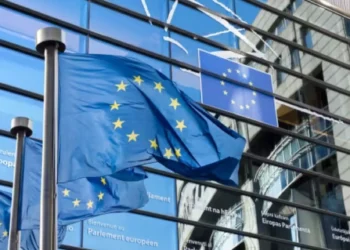
European Union introduce the new rule about to track Non-CO₂ Emissions

Insights on the EU’s new AI act: Five key points

EU’s Green Retreat: A Win for Far Right, Disaster for Rest
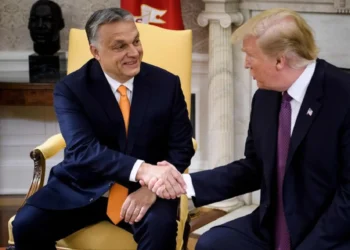
American conservatives embrace Hungary’s authoritarian leader at Budapest conference