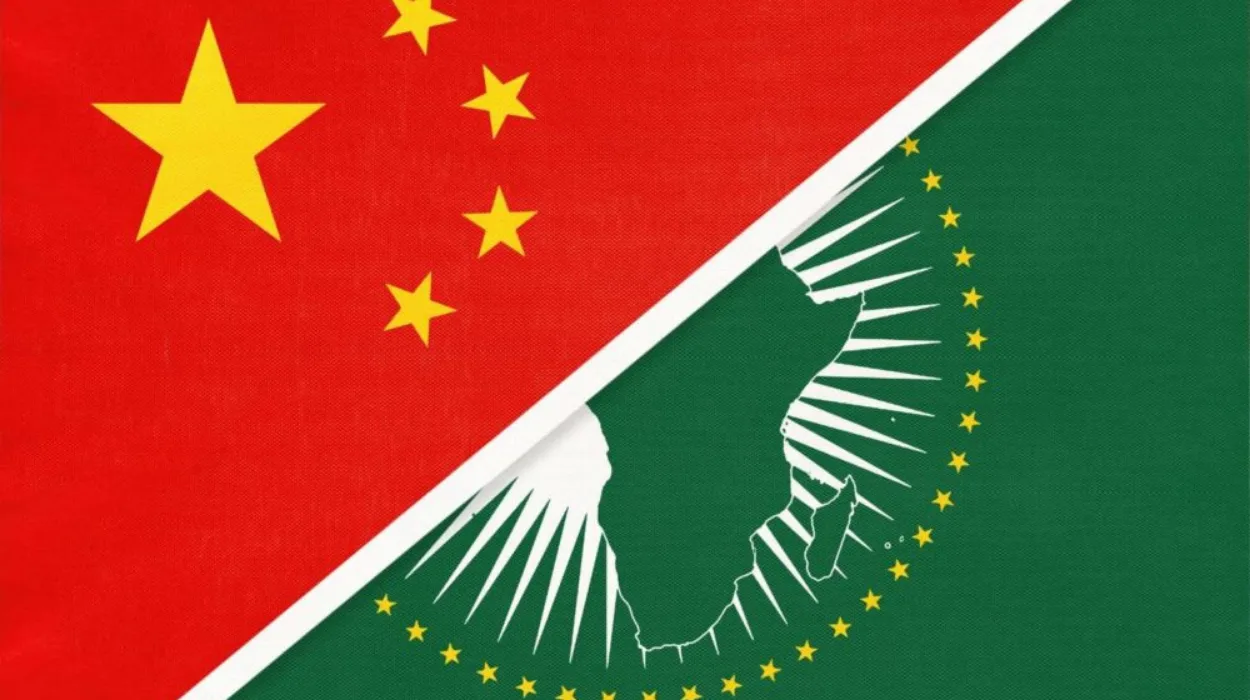
China’s announcement of 100% tariff‑free access for South African goods starting 1 May 2026 comes at a critical moment for Pretoria, which faces mounting pressure from Washington. This initiative, embedded in the Framework Agreement on Economic Partnership for Shared Development (CAEPa), extends duty‑free access to 53 African countries under WTO‑compatible rules. Chinese authorities have emphasized that the arrangement does not require reciprocal tariff cuts from South Africa, offering Pretoria a rare opportunity for market expansion without immediate concessions. With South Africa exporting roughly $47.7 billion worth of goods to China in 2024, the zero‑tariff policy is both a commercial lifeline and a strategic anchor, positioning Beijing as a stable long-term trading partner amid US-related uncertainties.
The timing also underscores the political significance of the move. South Africa had recently claimed it was disinvited from the 2026 G7 summit in Evian, allegedly due to US pressure on France, a claim contested by Washington and Paris. Vincent Magwenya, the South African presidential spokesperson, stated that “due to sustained pressure, France has had to withdraw its invitation,” framing the episode as an example of the influence the US can exert over international forums. In this context, China’s offer provides Pretoria a counterbalance to Western leverage, highlighting Beijing’s willingness to provide predictable access at a time when US trade and diplomatic conditions appear increasingly volatile.
Reconfiguring South Africa’s trade geometry
South Africa’s trade relationship with China has long surpassed that with the United States, making Beijing the country’s largest trading partner and central to its logistics and export networks. The zero‑tariff initiative is expected to expand duty‑free access for agricultural products, minerals, and manufactured goods while incentivizing Chinese investment in local value‑addition sectors such as processing, packaging, and renewable-energy-linked infrastructure. Deputy Minister Alexandra Abrahams noted that the tariff-free measures “should attract more Chinese capital into South African manufacturing and agriculture,” emphasizing the potential for long-term investment based on reliable market access.
Macroeconomically, the policy comes at a pivotal moment. South Africa’s 2025 real GDP grew modestly at 1.1%, while export-dependent sectors contended with domestic structural challenges. The zero‑tariff pathway into China’s 1.4‑billion-consumer market could partially offset the drag from US-linked shocks, including a 30% tariff on South African exports and delays in AGOA renewal. Vehicle exports to the US have reportedly fallen by over 80% since the imposition of tariffs, and losses in citrus and table-grape sectors threaten tens of thousands of jobs. While China cannot fully substitute the complexity and breadth of Western markets, its offer provides a strategic buffer against trade-related vulnerabilities.
Diversifying trade amid US pressure
Washington’s approach toward South Africa over the past two years has included both economic and foreign-policy pressure. The combination of tariffs and AGOA uncertainty has raised concerns among Pretoria officials that these measures could reduce growth by roughly one percentage point. Beyond trade, the US has expressed unease with South Africa’s alignment with BRICS, its stance on the Israel–Gaza conflict, and its perceived tilt toward non-Western powers. The G7 disinvitation episode crystallized the leverage the US continues to wield over European allies, reinforcing the rationale for South Africa to diversify its economic partnerships and anchor some trade flows firmly with Beijing.
What Beijing hopes to gain
China’s zero‑tariff move is strategically calculated. By offering duty-free access without demanding reciprocal concessions, Beijing portrays itself as a reliable partner amid US transactional approaches. Chinese officials have highlighted the CAEPa framework’s broader goal of deepening South–South cooperation, positioning South Africa as a key participant and regional leader. The policy strengthens Beijing’s economic foothold in southern Africa while signaling to other African nations that China will accommodate their exports without imposing Western-style conditionalities.
Investment flows complement the tariff-free access. Chinese state-linked enterprises and mixed-ownership firms have expanded in South African mining, energy, and logistics sectors, and Beijing has announced project-financing guarantees and new investment packages through economic cooperation dialogues. These measures emphasize long-term engagement rather than short-term trade deals, providing Pretoria an incentive to embed Chinese capital more deeply into domestic value chains. While Beijing frames the initiative as multilateral and non-confrontational, the timing coincides with US-related tensions, amplifying the political resonance for South African policymakers.
Balancing influence and sovereignty
South Africa faces a nuanced challenge: managing relations with Washington without ceding too much economic leverage, while simultaneously deepening ties with Beijing to secure trade stability. US markets remain critical for high-value manufactured exports despite tariffs, while China offers a growing consumer base and a more supportive stance on BRICS integration. Policymakers must weigh the economic and political consequences of each relationship, ensuring that engagement with one does not unnecessarily compromise the other.
The likely outcome is a sector-specific strategy: agricultural and mineral exports may rely heavily on Beijing’s tariff-free access, whereas high-value manufactured goods may continue to target US markets, even at elevated costs. The broader question is whether South Africa can sustain this tightrope approach as Washington increasingly leverages trade and diplomatic forums to signal policy preferences. Future alignments will hinge on the consistency with which each power respects South Africa’s sovereignty, economic choices, and diplomatic autonomy, shaping the contours of Pretoria’s international positioning in an era of intensifying US–China rivalry.