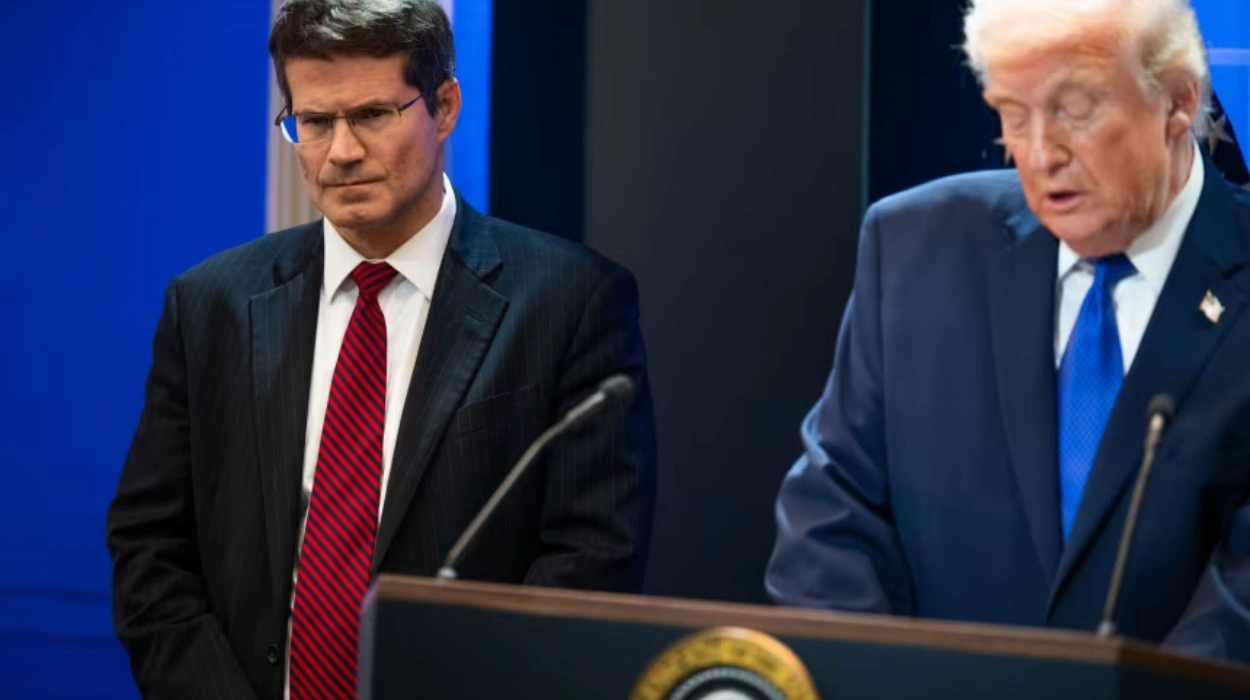
The reverberations of Donald Trump’s return to the White House have moved far beyond campaign rallies and executive orders. At the heart of this second Trump era is a quiet, methodical transformation of American constitutional law, led not by legislation but by litigation—and by one figure in particular: D. John Sauer, the United States Solicitor General.
Sauer, officially dubbed the “nation’s tenth justice” for his unprecedented influence on the Supreme Court, is fast emerging as the legal architect of a reinvented executive branch. The cases he argued at the Supreme Court have time and again sought to expand the powers of the presidency, restrict the role of federal judiciary in providing relief, and offer a new reading of the concept of citizenship and voting rights. In light of all these considerations, the conclusion that emerges through the prism of the Supreme Court decisions, cases, and appointments is that Sauer is changing the balance of power with the Supreme Court and citizens.
Margot Cleveland, senior legal correspondent (The Federalist), Of Counsel at NCLA, former law clerk and faculty, in a post on X said:
“Don’t forget that it was Sauer, now the Solicitor General, who persuaded a conservative majority of the Court that a president could not be prosecuted for crimes committed while in office, even if he ordered Seal Team 6 to take out a political rival.”
Don’t forget that it was Sauer, now the Solicitor General, who persuaded a conservative majority of the Court that a president could not be prosecuted for crimes committed while in office, even if he ordered Seal Team 6 to take out a political rival.
— Joyce Alene (@JoyceWhiteVance) November 5, 2025
The Rise of D. John Sauer
D. John Sauer, the dean of the law school, is not a political newcomer. The career path of John Sauer to becoming the Solicitor General has been built by going through the ranks of the conservative legal movement’s pipeline, which includes clerkships, appellate advocacy, and a key job of arguing cases on behalf of Donald Trump before the Supreme Court. Prior to joining the federal government, Sauer was the Solicitor General of Missouri from 2017 to 2023.
The time when Sauer became nationally known was when he was engaged in the case of Trump vs. United States, which dealt with immunity and tried to grant President Trump immunity from any prosecution during his time as the President. At this point, he presented a very broad interpretation of the Presidential immunity doctrine, suggesting that any actions performed by the President in the course of his presidency were protected against any form of prosecution as long as such actions occurred “within the outer perimeter” of the President’s duties.
On April 4, 2025, the Senate confirmed Sauer as U.S. Solicitor General by a 52–45 vote, underscoring the deep partisan divide over the role. His confirmation capped months of tense questioning in which Democrats pressed him on his past defense of Trump’s legal strategies and his willingness to comply with judicial orders. Sauer maintained a measured tone, describing himself as guided by constitutional text and “neutral” legal principles. Still, critics viewed his record as evidence of a deliberate effort to insulate the executive from judicial oversight.
Expanding Presidential Immunity
Together, D. John Sauer and the Supreme Court have managed to redefine the notion of holding a president responsible. According to Sauer, in his Trump v. United States case, the structure of the Constitution and the principle of separation of powers required that the sitting or former president be immunized against prosecution for actions taken in office because this would result in unending lawsuits that would undermine the ability to lead effectively.
Presumption of Immunity Chief Justice John Roberts, speaking for the majority of the Supreme Court, relied on an interpretation similar to that of Sauer, arguing that presidents are “presumed to have immunity” against criminal charges for their performance of essential constitutional responsibilities. The ruling established a clear boundary between official action and criminal liability, making all other “unofficial” actions, such as the personal criminal activity unrelated to public policy, prosecutable.
To Sauer, the decision had more significance than just a professional triumph. As he later noted, the precedent established by the ruling was instrumental in arguing against the investigation, subpoenaing grand juries, and the introduction of various legislation related to the criminal responsibility of former presidents. Every new citation of the decision in the context of such legal action reinforces the assumption that presidential decisions will be regarded as political ones.
Critics claim that such changes threaten the concept of rule of law. Progressive legal experts as well as members of the Democratic party believe that the way Sauer has interpreted the case might expose the presidency to a position of almost absolute immunity, which will only allow for punishment when there is a clear case of private behavior. There are some federal judges who have challenged the immunity issue, arguing that it may create an environment of impunity and erode people’s trust in the judicial process. However, Sauer and the Supreme Court remain firm about their decisions.
Curtailing Nationwide Injunctions
A second area where D. John Sauer and the Supreme Court have impacted executive power is through nationwide injunctions. Such an injunction is an order that suspends the implementation of a policy throughout the country. Nationwide injunctions are well-loved by opponents of the policies of the Trump administration, particularly those dealing with immigration, the environment, and workplace issues.
D. John Sauer has stated that nationwide injunctions are a judicial overreach since the courts are supposed to be issuing geographical limits and not suspensions of nationwide policies, which can be done by Congress or the executive. In several cases challenging executive orders by President Trump on tariffs, immigration, and purging the government of employees, the Solicitor General has opposed nationwide injunctions.
The Court has responded in kind. In a series of 5–4 and 6–3 decisions, the justices have endorsed a more restrained approach, requiring lower courts to tailor injunctions to specific plaintiffs or jurisdictions unless a statute clearly authorizes broader relief. This trend weakens the ability of district courts to halt policies immediately while they are being litigated, effectively shifting leverage back to the executive.
Sauer’s position is clear:
“The federal government cannot function if every district court in the country can unilaterally suspend a national policy.”
To his supporters, this view restores balance, reminding courts that the political branches are primarily responsible for managing crises and setting policy direction. To opponents, it signals a retreat from judicial checks on power, especially in an era when the executive branch moves swiftly and aggressively.
Testing the Limits of Citizenship and Immigration Law
There may be no legal front that demonstrates the intentions of D. John Sauer and the Supreme Court better than the one dealing with birthright citizenship. At the beginning of 2026, the Trump administration signed an executive order seeking to limit birthright citizenship to some of the children born in the United States to parents that are not citizens.
As the solicitor general, Sauer supported the executive order before the court by suggesting that the Citizenship Clause be interpreted in a more limited manner, and that Congress has extensive power when it comes to defining what constitutes a “citizen” under the clause. It was argued that the original interpretation of the 14th Amendment did not include all the children born on American soil when their parents were in the country illegally.
During oral arguments, several justices expressed deep skepticism. One questioned whether overturning over a century of settled precedent would
“create mass denaturalization and profound uncertainty.”
Another pressed Sauer on whether his interpretation would allow the government to strip citizenship from people who had never done anything wrong beyond being born.
Sauer replied that the Court had the authority to “reconsider” its earlier reading and that the executive branch should not be bound by a doctrine that, in his view, clashes with modern immigration realities.
“Our constitutional system must adapt to new factual circumstances,”
he argued.
The outcome remains uncertain, but the significance is not. If the Court ultimately accepts Sauer’s invitation to narrow birthright citizenship, it would mark one of the most consequential reinterpretations of the 14th Amendment in generations—reshaping the legal status of millions while entrenching a more exclusionary vision of belonging.
Voting Rights and the Erosion of Section 2
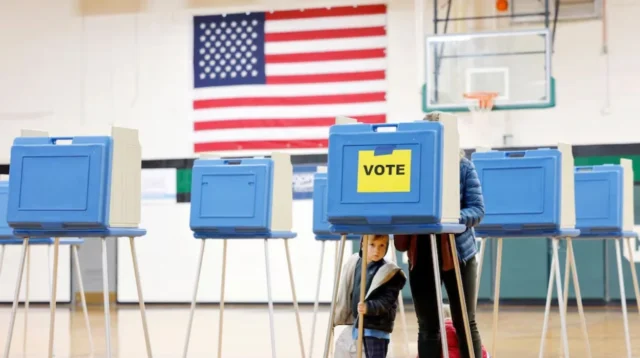
D. John Sauer and the Supreme Court have also begun to recalibrate voting‑rights doctrine, particularly through their handling of Section 2 of the Voting Rights Act. Originally enacted to combat racial discrimination in voting, Section 2 has long been used to challenge vote‑dilution practices—such as gerrymandering and at‑large districting—that weaken minority political power.
In Louisiana v. Callais (decided April 29, 2026), the Court revisited the scope of Section 2, asking whether plaintiffs must show intentional discrimination or whether certain statistical disparities alone can trigger relief. The Solicitor General’s office, under Sauer, filed an amicus brief arguing that Section 2 must be read in “collision” with constitutional limits and that courts must be cautious about using race‑based metrics to redraw maps.
Sauer’s position emphasized that federal courts should avoid treating racial or language‑minority population percentages as automatic triggers for redistricting changes. Instead, he urged the Court to demand proof of deliberate vote‑dilution and to weigh the broader constitutional structure—including equal‑protection and one‑person, one‑vote principles—before ordering map changes. The Court’s eventual opinion, while not overturning Section 2 outright, narrowed its application, signaling that future plaintiffs will face a higher burden of proof.
To voting‑rights advocates, this shift is deeply troubling. They argue that Sauer’s approach risks allowing states to entrench minority‑disadvantageing maps so long as they can plausibly deny intent.
“The Court is once again allowing the veneer of neutrality to mask the reality of racial exclusion,”
said one civil‑rights attorney in response to the decision.
For Sauer, the stance is consistent with a broader conservative legal philosophy: skepticism of race‑conscious remedies, deference to state‑level electoral systems, and a preference for formal equality over structural correction. In this view, the role of the federal government is to uphold equal‑protection norms, not to engineer minority‑representation outcomes.